



Abstract
Given that qualitative and mixed methods have been used to address social justice issues, counseling psychologists have been drawn to these research designs to advance knowledge in the field. However, qualitative and mixed methods are rarely used in counseling psychology to examine the experiences of LGBTQ individuals. This content analysis reviewed all qualitative and mixed methods studies conducted with LGBTQ individuals between 2009 and 2019 in three leading counseling psychology journals. Results from 24 studies revealed: (a) an increase in LGBTQ-related topics; (b) an overreliance in grounded theory as a research design, diverse analytical approaches, overreliance on semi-structure interviews, and increased disclosure of reflexivity and trustworthiness; and (c) an overwhelming representation of White, cisgender, gay and lesbian, middle class, college educated, English-speaking, Christian, mainland United States residents. We pose a call to action for the next decade of qualitative and mixed methods research with LGBTQ individuals in counseling psychology.
Research indicates that there is a paucity of research using qualitative and mixed methods with LGBTQ individuals in counseling psychology. A content analysis of three leading counseling psychology journals revealed that LGBTQ research that uses qualitative and mixed methods continue to overwhelmingly represent the experiences of White, cisgender, gay and lesbian, middle class, college educated, English-speaking, Christian, mainland United States residents. We propose that counseling psychology must increase the use of qualitative and mixed methods, and in doing so, diversify topics, focus on participants’ diversity, and bolster intervention research.Significance of the Scholarship to the Public
There has been progress on issues related to LGBTQ individuals in the United States in the last ten years (e.g., the passage of marriage equality in 2015). Yet, this marginalized group continues to experience a great deal of minority stress (Meyer, 2003), resulting in increased negative physical and mental health outcomes such as depression, anxiety, suicidal ideation, and overall distress (e.g., Cochran et al., 2003; Sutter & Perrin, 2016). Research shows that quantitative methods are often used to understand the experiences of minority stress among LGBTQ individuals (Eisenberg et al., 2018). Because qualitative and mixed methods research has traditionally addressed social justice issues (e.g., Beer et al., 2012; Fine, 2013), these methods have been used among counseling psychologists. In addition, research indicates a lack of diversity within participants’ demographics in LGBTQ studies in counseling psychology (Singh & Shelton, 2011). Given that no content analysis has been published with the goal of uncovering how qualitative and mixed methods studies with LGBTQ individuals have been conducted in counseling psychology, the purpose of this study was to better understand how counseling psychology has used these methods to advance its core professional values in relation to LGBTQ individuals.
Review of Selected Qualitative Methodologies and Analyses
There are a number of qualitative methodologies and analyses that are important to explore in this paper. Grounded theory seeks to use participants’ stories and descriptions to generate an explanation, or discover a theory (Corbin & Strauss, 2007; Creswell & Poth, 2016). This qualitative methodology includes several distinct approaches, such as traditional grounded theory, evolved grounded theory, and constructivist grounded theory (Chun Tie et al., 2019). The constructivist grounded theory approach by Charmaz is perhaps one of the most widely used approaches to grounded theory (see in-depth review in Charmaz, 2014). A phenomenological approach is most commonly used to describe the characteristics of a phenomenon that has occurred within a group of individuals and the personal perspective of the individuals who have experienced the phenomenon (see in-depth review in Creswell & Poth, 2016). Consensual qualitative research (CQR) provides a step-by-step approach to be used during the collection, coding, and analysis of data (Yeh & Inman, 2007). CQR uses elements from a phenomenological approach, grounded theory, and comprehensive process analysis and is often used in semi-structured interviews (see in-depth review in Hill & Lambert, 2004). Furthermore, thematic analysis is used for identifying, analyzing, and reporting patterns within a dataset (Braun & Clarke, 2006, 2013). Thematic analysis is not tied to a particular epistemological or theoretical perspective, making it flexible to look at patterns across datasets without being restricted to a specific framework (see in-depth review in Braun & Clarke, 2006; 2013).
Review of Mixed Methodologies
Research using mixed methodologies offers a unique paradigm and tradition that is distinct from qualitative or quantitative work. Most commonly, mixed methods research has been presented as the use of both qualitative and quantitative approaches (Levitt et al., 2018). However, some researchers argue that mixed methods also include within-research paradigms, such as using two qualitative approaches (e.g., in-depth interviews and focus groups; e.g., Johnson et al., 2007; Morse, 2010). In addition, some scholars use typology-based designs, depending on the purpose of their study (Creswell & Plano Clark, 2017). These typologies often focus on timing (i.e., the sequence in which the methods are implemented), priority (i.e., the weighted importance of the methods when considering research questions), and level of interaction (i.e., the relationship between the qualitative and quantitative components of the study; Creswell & Plano Clark, 2017). Furthermore, other researchers have proposed the use of a transformative approach to mixed methods (e.g., Mertens et al., 2009). This approach focuses on addressing social issues related to power and privilege with the goal of focusing on the strengths of oppressed communities (e.g., racial and ethnic minorities, sexual and gender diverse people; see in-depth review in Mertens, 2009).
Qualitative Research, Mixed Methods Research, and Counseling Psychology Values
Qualitative and mixed methods research involves a broad and extensive category of empirical methods used to analyze emergent patterns associated with a particular phenomenon (e.g., Hanson et al., 2005; Levitt et al., 2017). In counseling psychology, qualitative methodologies (e.g., Yeh & Inman, 2007; Levitt et al., 2018) and mixed methods designs (Bartholomew & Lockard, 2018) have been used to explore social issues grounded in core counseling psychology values. As a profession, counseling psychology is rooted in respect for diversity, human dignity, social justice, and in providing a voice to oppressed communities. In fact, factors that separate counseling psychology from other fields include the focus on person–environment interactions, individual and societal growth, positive coping, resilience, strengths in the context of cultural environments, and understanding the impact of culture and ethnicity on counseling (Packard, 2009; Scheel et al., 2018).
Because qualitative and mixed methods have been used to address social justice issues such as power, privilege, and systemic injustice (e.g., Beer et al., 2012; Cadaret et al., 2018; Fine, 2013), they align with counseling psychology values. These two methods can therefore help promote core counseling psychology values by better understanding and bringing forth ways of challenging systemic policies and actions that oppress and dehumanize individuals and communities. Specific to LGBTQ issues, these methodologies complement quantitative methodologies and provide counseling psychologists an opportunity to uncover and address how stigma and stress contribute to increased negative mental health outcomes among members of these communities.
LGBTQ Issues in Counseling Psychology and Qualitative and Mixed Methods Research
LGBTQ individuals face heightened identity-related stigma and stress (i.e., minority stress) greater than that of their heterosexual and cisgender counterparts (Meyer, 2003). This daily stress is chronic and linked to negative mental and physical health experiences (Kelleher, 2009). As a result of this heightened and chronic identity-related stress, LGBTQ people experience increased depression, anxiety, suicidal ideation, as well as higher rates of mental health diagnoses (Budge et al., 2013; Cochran et al., 2003; Sutter & Perrin, 2016). Specifically, transgender individuals experience disproportionate levels of distress when compared to their cisgender counterparts (see review in Abreu et al., 2021). This distress is particularly salient during anti-LGBTQ sociopolitical climates, in which LGBTQ people experience increased depression, anxiety, hypervigilance, harassment, and discrimination (e.g., Gonzalez et al., 2018a, 2018b; Riggle et al., 2018). This is particularly true for transgender individuals of color (see Abreu et al., 2021). Research examining minority stress experiences and LGBTQ coping responses to these stressors, is almost exclusively quantitative (Eisenberg et al., 2018). Researchers must acknowledge that some measures used to assess LGBTQ experiences often do not fully consider the lived experiences of LGBTQ people (Eisenberg et al., 2018) and, thus, a qualitative or mixed methods approach might be more appropriate. For example, Bieschke et al. (2007) reviewed the empirical research on LGBTQ individuals and found that qualitative research is rarely used to examine the experiences of LGBTQ individuals in counseling. Taken together, this finding is alarming given research that shows that LGBTQ individuals are two to four times more likely than their cisgender and heterosexual counterparts to seek and utilize counseling services (Bieschke et al., 2007).
In a response to the concerns raised by Bieschke et al. (2007), Singh and Shelton (2011) published a content analysis in which they reviewed all of the qualitative studies previously conducted with LGBTQ individuals between 1998 and 2008 in counseling journals (i.e., Journal of Counseling & Development [JCD], Journal of LGBT Issues in Counseling) and counseling psychology journals (i.e., Journal of Counseling Psychology [JCP], The Counseling Psychologist [TCP]). In their review, Singh and Shelton (2011) found a total of 12 studies that had used qualitative methodologies to learn more about the experiences of LGBTQ individuals. Major findings revealed: (a) a variety in topics (e.g., school and bullying, conversion therapy, death and grieving, substance use and recovery, spirituality, intersection of racial and sexual identities, graduate mentoring relationships); (b) five areas of methodological research approaches (i.e., grounded theory, constant comparative approach, consensual qualitative approach, phenomenology, and mixed methods approaches); (c) a lack of delineation between the sexual identities of participants; (d) a lack of transgender participants across studies; (e) an underrepresentation of ethnic and racial minorities, with the majority of studies not reporting the racial and ethnic composition of participants; (f) a lack of attention to the intersectionality of sexual and gender identity and race and ethnicity; (g) no representation of international populations; (h) interviewing as the main form of data collection; (i) a lack of details about the steps involved in data analysis; and (j) a focus on pure empirical studies, with no studies addressing interventions. Singh and Shelton (2011) outlined a series of recommendations to be addressed in future LGBTQ qualitative research, including: (a) expanding the use of qualitative research to explore topics with LGBTQ people; (b) increasing research with LGBTQ ethnic and racial minorities to better understand their unique experiences, given the multiple oppressed identities they navigate; (c) developing reporting standards when using qualitative methodologies with LGBTQ studies; (d) increasing the use of reflexivity when analyzing qualitative data with LGBTQ participants; (e) increasing visibility of bi+, transgender, and gender diverse participants; (f) increasing qualitative training in counseling programs; and (g) using more research traditions.
Given the documented lack of qualitative and mixed methods studies to better understand the experiences of LGBTQ individuals, it is necessary to report on any research progress made using these methods since the content analysis by Singh and Shelton (2011). To our knowledge, no content analysis has ever been published with the goal of uncovering how qualitative and mixed methods studies have been conducted exclusively in the field of counseling psychology to illustrate the experiences of LGBTQ individuals.
Current Study
Based on the literature reviewed, a content analysis of LGBTQ research in leading counseling psychology journals is needed for a variety of reasons. First, the persistence of minority stress related health disparities for LGBTQ individuals compared to their heterosexual and cisgender counterparts suggests that counseling psychologists need to better understand the experiences of LGBTQ people. Second, counseling psychologists’ historical use of qualitative and mixed methods research to promote equity, including capturing the experiences of LGBTQ individuals, renders it important to assess the published qualitative and mixed methods counseling psychology studies to date. Finally, the lack of diversity in demographics reported in qualitative studies in the last decade (Singh & Shelton, 2011), suggests that an updated analysis is needed to determine any new trends.
We acknowledge a systematic review published by O’Shaughnessy and Speir (2018) of empirical studies published between 2000 and 2015 about effective therapeutic interventions with LGBQ clients. However, our systematic review is different in that we seek to: (a) uncover all of the topics that have been explored in qualitative and mixed methods studies with LGBTQ individuals; (b) provide a thorough analysis of how qualitative and mixed methods have been used to uncover the experiences of LGBTQ individuals, not only in the context of effective therapeutic interventions; (c) breakdown each study’s participant demographics to uncover how other identities and experiences intersect with LGBTQ identities; and (d) conduct a review exclusively within counseling psychology journals with the goal of grounding our analysis and conclusions on core counseling psychology values. To summarize, the purpose of the present study is to provide a content analysis of how counseling psychology journals have used qualitative and mixed methods research to illustrate the experiences of LGBTQ individuals in the last decade (2009–2019). Specifically, this paper aimed to answer the following research questions: Research Question 1: What topics have been explored in qualitative and mixed methods studies with LGBTQ research in the past decade? Research Question 2: How have researchers in the past decade conducted qualitative and mixed methods studies with LGBTQ participants? Research Question 3: What are the demographics of participants in LGBTQ qualitative and mixed methods studies in counseling psychology journals in the past decade?
Method
This content analysis examined the advances of LGBTQ qualitative and mixed methods research in counseling psychology from 2009 to 2019 in three leading counseling psychology journals: JCP, TCP, and Counselling Psychology Quarterly (CPQ). For the purpose of this paper, we defined content analysis as summarizing messages that rely on scientific data, including attention to objectivity, a priori design, reliability, and validity, among other messages that can be measured through human coders (Neuendorf, 2011). Specifically, we examined topics covered, how the qualitative and mixed methods studies were conducted, and participant demographics in LGBTQ qualitative and mixed methods studies in counseling psychology. Although LGBTQ counseling-related studies that use qualitative and mixed methods might be published in other journals, JCP, TCP, and CPQ were selected because they are counseling psychology’s most prestigious, top-tier journals. JCP is considered to be the leading counseling psychology journal, with the longest publication history in counseling-related scholarship (Buboltz et al., 2010; Lee et al., 2013) and TCP is the official journal of the American Psychological Association’s (APA) Society of Counseling Psychology (Division 17). CPQ was additionally selected for its focus on the international advancement of counseling psychology. It was our goal to concentrate on journals whose aims are to showcase research that promotes counseling psychology as a scientific discipline.
Inclusion and exclusion criteria were established first. Next, two methods were used to determine what articles were included in the final analysis: electronic and visual search strategies. We first conducted an electronic search of online databases of each of the journals’ full texts using keywords related to LGBTQ qualitative and mixed methods research. Then, we used a thorough search of the table of contents of each journal. Because the methodology of all articles was not easily identifiable by simply reading the title and/or the abstract of the article, we checked the methodology of every LGBTQ study to make sure it met criteria for inclusion.
Inclusion and Exclusion Criteria and Article Search
Inclusion and Exclusion Criteria
Inclusion criteria included studies that: (a) were empirically based, (b) used qualitative or mixed methodologies, (c) reported original research findings, (c) focused exclusively on LGBTQ individuals (e.g., studies with allies and family members of LGBTQ individuals were excluded), and (d) were published in one of the three leading counseling psychology journals (i.e., JCP, TCP, CPQ). The analysis spanned from the first issue of 2009 to the last issue of 2019. We also included articles that were available as “online first” by the end of 2019. Given that the content analysis of qualitative studies with LGBTQ participants by Singh and Shelton (2011) reviewed articles between 1998 to 2008, we chose to focus on studies from 2009 to 2019. Because we wanted to capture all studies that included any form of qualitative data, we decided to include mixed methods studies. Exclusion criteria included articles that: (a) were not empirically based, (b) did not use a qualitative or mixed methodology, (c) did not focus exclusively on LGBTQ individuals, and (d) were not published in JCP, TCP, or CPQ.
Electronic Search Strategy
The first step in searching for articles that met inclusion criteria was to engage in an electronic search strategy, in which the first five authors conducted full-text electronic searches of JCP, TCP, and CPQ. For the searches, variations of keywords related to sexual and/or gender identity (i.e., LGBT, GLBT, LGB, GLB, GLBTQ, gay, homosexuality, male homosexuality, bisexuality, lesbianism, transgender, sexual orientation, sexual identity, men who have sex with men, MSM, and sexual minority) in combination with the term qualitative research and mixed methods (i.e., qualitative research, qualitative methodology, qual research, qual methodology, mixed methods, and mixed methodology) were used. The electronic search resulted in a total of 94 articles, including 15 articles from JCP, 58 articles from TCP, and 21 articles from CPQ. The articles were assigned by journal to one of three pairs for review, with some authors assigned to more than one pair. Each member of the pair independently reviewed each article of the assigned journal by scanning the full text to make sure the study was exclusively focused on LGBTQ individuals and used qualitative or mixed methodology. Articles that did not exclusively use qualitative or mixed methodology or whose focus was not on LGBTQ individuals were removed. Each pair engaged in discussions to come to an agreement about what articles to include and exclude. When there was disagreement concerning the inclusion of an article, Abreu, who is an experienced researcher and has experience conducting literature reviews, met with both authors to reach a consensus. We then identified all duplicate articles, which are articles that appeared more than one time after a search for the variations of the keywords listed above was conducted. Although databases use algorithms to remove duplicate records, this is not always effective and researchers must manually remove duplicates (Rathbone et al., 2015). When all duplicate articles were removed, 24 articles remained: 11 articles from JCP, 12 articles from TCP, and one from CPQ.
Visual Search
The second step in identifying articles that met inclusion criteria was to engage in a visual strategy, which sought to increase rigor and make sure that the researchers had found all articles that met criteria from the electronic search. Townsend, Mitchell, Ward, and Audette reviewed the table of contents of all articles published in JCP, TCP, and CPQ between 2009 and 2019 in search for titles that referenced any form of sexual and gender diversity (e.g., LGBTQ, trans, gay, lesbian, queer, men who have sex with men). Teams then read the abstracts of all identified articles, and information about their contents were carefully scrutinized. If the abstract mentioned any form of sexual and/or gender identity and there was indication that it was an empirical study, either by explicitly mentioning it was a qualitative or mixed methods study or by indicating qualitative or mixed methodology (e.g., grounded theory, thematic analysis, mixed methods), the article was included in the final search pool. If the abstract only mentioned the population of interest (e.g., LGBTQ, trans, lesbian, queer) but it was unclear what type of methodology was used, the coding team examined the article’s full text to determine if it met inclusion criteria. The team engaged in discussions to make sure each article met criteria to be included in the final pool. At the end of these discussions, the same 24 articles found in the electronic search remained: 11 articles from JCP, 12 articles from TCP, and one from CPQ. After this search strategy was finalized, the first four authors reviewed each of the 24 articles again to make sure all of them met original inclusion criteria. Because this search targeted each article directly from the journal’s table of contents, no duplicates were found.
Researchers Positionality
The coding team was composed of six individuals, whom all independently reviewed each of the articles included in the final pool and were involved in the writing process. Abreu, an assistant professor of counseling psychology self-identifies as a Latinx, first-generation, immigrant, cisgender, queer man. Townsend and Mitchell self-identify as African American, cisgender, heterosexual, female counseling psychologists. Ward self-identifies as a White, cisgender, queer, female, counseling psychology doctoral student and Audette self-identifies as a White, cisgender, bisexual, female, counseling psychologist. Gonzalez, an assistant professor of counseling psychology, who self-identifies as a Latinx, cisgender, heterosexual woman, was not involved in the coding process but was involved in the writing process given her expertise in qualitative research with LGBTQ individuals.
Given the researchers’ diverse identities, the team engaged in multiple discussions about potential biases and assumptions that may emerge as a result of their own lived experiences. This process provided a system of peer examination that was crucial in making decisions on how to best organize and present the data, as well as provide relevant recommendations for improvement. For example, early in the coding process Abreu named the absence of transgender or gender nonbinary members in the team and the need to challenge one’s ideas of gender as binary when coding for this demographic. In addition, because Abreu was born outside of the United States and English is his second language, he worked closely with Townsend and Mitchell to provide recommendations in the discussion related to the lack of international and non-English studies.
Coding
The first five authors read and coded every article independently for: (a) topics explored, (b) methodological information (i.e., research designs and methodologies, research analyses approach, data collection, recruitment and sampling strategies, reflexivity/positionality, and trustworthiness), and (c) demographic information (i.e., sample size, race and ethnicity, sexual identity, sex and gender, education, socioeconomic status, language, geographic location, and religion and spirituality). All information was kept in an Excel table. The five authors met biweekly over a period of one and a half months for 60 to 90 min to discuss the progress. For example, during the first two weeks the authors coded all demographic information for each article and afterward came together to develop a consensual agreement about the identified findings. This process was used for each research question. Although the coding team read each article’s full text, given our focus on topics explored, methodology, and participants’ demographics, most of the information was derived from the abstract, introduction, and methods sections of each article.
Although the information for Research Questions 2 and 3 was easier to find and code (e.g., studies explicitly reported participants’ sexual orientation), Research Question 1 required finding patterns in different parts of the abstract (including keywords), introduction, and/or methods in order to code for all topics explored in each article. To code for this research question, topics explored were analyzed for content using a conventional approach to qualitative content analysis (Hsieh & Shannon, 2005). This approach involved highlighting words and sentences from each article that appeared to capture the topics explored, labeling codes that emerged, and sorting codes into categories before creating final categories across studies (Hsieh & Shannon, 2005). Each of the articles could be coded in more than one category. Although this information was mostly found toward the end of the articles’ introduction, the coding team carefully read the entire article to make sure no additional topics were missed. Townsend and Mitchell served as the main coders. That is, they read each of the articles independently and highlighted and extracted units of text that expressed one or more categories. Afterward, the two authors met to discuss and come to a consensus on their selected categories and the frequencies for each category. Once a consensus was reached among Townsend and Mitchell, Abreu served as the auditor. Abreu was given the finalized categories and frequencies to check that these were captured accurately. Minor discrepancies found by the auditor (e.g., the frequency for two categories was off by one) were discussed with the coders and revisions were made accordingly until a final frequency count was reached.
Results
In the past 10 years (2009 to 2019), a total of 24 LGBTQ qualitative methods (n = 22) and mixed methods (n = 2) studies were published in the three selected journals. TCP (n = 12) and JCP (n = 11) had a near-equal number of published studies, whereas CPQ published only one. All studies were empirical. The number of articles published per year varied from a low of one article published per year in 2010, 2011, 2012, and 2016 to a high of five articles published in 2015. Additional work was published in 2009 (n = 2), 2013 (n = 2), 2014 (n = 2), 2017 (n = 2), 2018 (n = 4), and 2019 (n = 3).
This section presents the results of the content analysis by research question. Supplemental Table 1 includes the references for the studies included in this content analysis as well as comprehensive details for each study. It should be noted that two sets of studies utilized the same sample of participants: (a) Moradi et al. (2019) and Tebbe et al. (2018), and (b) Budge et al. (2010) and Budge et al. (2013). When participant counts or percentages were reported, each participant was counted only once. Results involving participant numbers were reported for the 22 qualitative articles first, then separately for the two mixed methods articles. This was done due to the large discrepancy in sample sizes between methodologies.
Topics Explored
The first research question asked: What topics have been explored in qualitative and mixed methods studies with LGBTQ research in the past decade? Studies in this review covered a broad range of LGBTQ-related topics, including intersectionality (n = 11), coping (n = 7), gender identity development (n = 6), transitioning (n = 6), career (n = 4), minority stress (n = 4), sexual objectification (n = 3), help-seeking/psychotherapy (n = 2), family relations (n = 2), religion and spirituality (n = 2), resilience (n = 2), acculturation (n = 1), anti-LGBTQ legislation (n = 1), assault/violence (n = 1), coming out (n = 1), disability (n = 1), microaggression (n = 1), positive psychology (n = 1), severe mental illness (n = 1), sexual orientation change efforts (n = 1), training/professional development (n = 1), and treatment (n = 1).
Conducting Qualitative and Mixed Methods Studies
The second research question asked: How have researchers in the past decade conducted qualitative and mixed methods studies with LGBTQ participants? The following sections present the findings to our second research question as reported in each article in terms of: (a) research designs and methodologies, (b) research analyses approach, (c) type of data collection, (d) recruitment and sampling strategies, (e) reflexivity/positionality, and (f) procedures used to establish trustworthiness.
Research Designs and Methodologies
Three types of research designs and methodologies were reported, with most studies (n = 11) using a grounded theory approach, followed by phenomenological approach (n = 3) and extended case method (n = 1). Some studies provided more nuanced and specific information about the research designs and methodologies that were used. Of the 11 studies that reported using a grounded theory approach, two studies used a constructivist paradigm , one study used a social constructivist paradigm, and one used a hermeneutic epistemological framework. The remaining seven studies that reported using grounded theory did not specify what approach was used. Of the three studies using a phenomenological approach, one study used an interpretivist/constructivist paradigm, one used a transcendental approach, and one used a psychological phenomenology approach. Furthermore, one of the mixed methods studies ued an explanatory design (i.e., the quantitative component preceding the qualitative component) and the other one used an exploratory design (i.e., the qualitative component preceding the quantitative preceding; Creswell & Plano Clark, 2017).
Research Analysis Approaches
Regarding data analysis approaches, studies used constant comparative analysis (n = 10) , theoretical coding analysis (n = 6) , thematic analysis (n = 5) , CQR (n = 3), across-case analysis (n = 1), directed content analysis (n = 1), and Duquesne analysis (n = 1). Of the two studies using a mixed methods approach, one identified their analysis approach as thematic analysis and the other one did not identify a research tradition.
Type of Data Collection
The most common form of data collection was semi-structured interviews (n = 14), followed by focus groups (n = 4), semi-structured and follow-up interviews (n = 2), surveys (n = 2), a combination of methods including life/history questionnaire and semi-structured interviews (n = 1), and semi-structured interviews, focus groups, and primary investigator’s self-reflections and memos (n = 1).
Recruitment and Sampling Strategies
All studies but one reported recruitment and sampling procedures. The one study that did not report recruitment and sampling procedures, shared that they utilized a convenience sample, but did not report how that sample was recruited. Most of the studies (n = 14) used purposive sampling alone , followed by purposive and snowball sampling (n = 5), convenience sampling (n = 2), and convenience and snowball sampling (n = 3) to recruit participants.
Reflexivity/Positionality
Most studies addressed reflexivity and positionality in their methodology (n = 18), compared to four studies that did not. Of those four qualitative studies, all four studies reported having discussed biases or otherwise took a reflexive approach as part of their data analysis. In addition, researchers in 18 studies specifically disclosed their LGBTQ identity when discussing positionality and reflexivity. Furthermore, 15 studies discussed their positionality as counseling psychologists or counseling psychologists-in-training. For the mixed methods studies, neither studies discussed their reflexivity or positionality. In addition, neither mixed methods studies reported having discussed biases or otherwise taking a reflexive approach in preparing for or completing data analysis.
Trustworthiness
All but one study reported on various procedures used to establish trustworthiness. Specifically, studies used various forms of member checking including providing participants with copies of the transcripts and analyses to solicit feedback, asking closing questions to ensure participants’ experiences were accurately captured, and conducting follow-up interviews. Other studies established validity by using audit trails, inquiry auditing, and internal and external auditors. In addition, in one study the researchers described immersing themselves in the participants’ culture as a way of establishing trustworthiness, and another study used identified observers to provide comfort to the focus group members and create an environment of honesty and trust among researchers and participants.
Demographic Characteristics
The third research question asked: What are the demographics of participants in LGBTQ qualitative and mixed methods studies in counseling psychology journals in the past decade? The following sections report on: (a) sample size across studies, (b) race and ethnicity breakdown, (c) sexual identity breakdown, (d) sex and gender breakdown, (e) education, (f) socioeconomic status, (g) language, (h) geographic location, and (i) religion and spirituality.
Sample Size
The qualitative studies ranged in sample size from 9 participants to 82 participants, with a total of 394 participants across all qualitative studies (M = 19.7, SD = 15.23). The two mixed methods studies had 506 and 1,612 participants, for a total of 2,118 participants (M = 1,059, SD = 553). Only nine of the 24 studies reported information about saturation for their sample size, defined as the point where no new information emerged from the data (Creswell & Poth, 2016).
Race and Identity
Reported Race and Ethnicity for Qualitative Studies

Note. n = 22 studies.
Reported Race and Ethnicity Minorities for Mixed Methods Studies
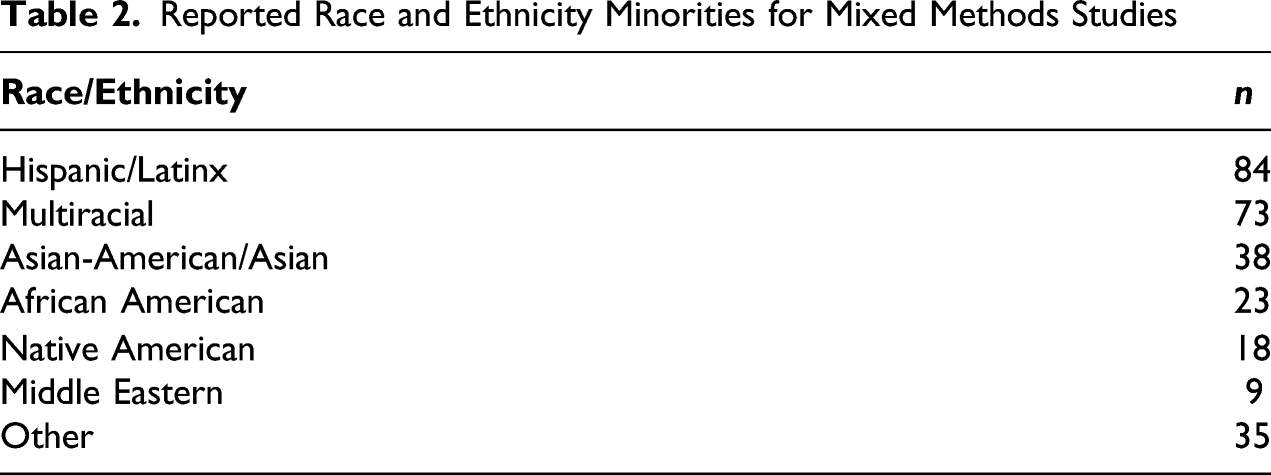
Sexual Identity
Reported Sexual Identities for Qualitative Studies

Note. n = 22 studies.
Sex and Gender Identity
Regarding sex and gender identity, studies varied on how they reported these two demographics, with the majority of the studies reporting binary identities (i.e., male and female for sex and men and women for gender). Some studies conflated sex and gender when reporting these categories (e.g., reporting female and male as gender). Only five of the 16 studies that focused specifically on either LGBTQ participants broadly or sexual minorities (participants in eight studies were solely transgender and/or gender diverse individuals) reported participants’ cisgender identity. That is, the majority of the studies in this review did not specifically assess or state that participants were cisgender and instead left cisgender identities as unmarked and the assumed default. Therefore, the information below should be interpreted with caution. The majority of qualitative studies (n = 18) did not report sex, with only four studies reporting this demographic, for a total of 26 participants: transgender (n = 11), male (n = 9), and female (n = 6). Both mixed methods studies reported sex for all their participants: males (n = 1330), females (n = 783), and intersex (n = 5).
Reported Gender Diversity for Qualitative Studies

Note. n = 20 studies.
Reported Gender Diversity for Mixed Methods Studies

Education Level
Reported Education Level for Qualitative Studies

Note. n = 16 studies. This figure includes the following studies: Brown et al., 2012; Budge et al., 2010, 2013; Burkard et al., 2009; Carroll & Tuason, 2015; Dispenza et al., 2019; Elder et al., 2015; Flores et al., 2018; Fuks et al., 2018; Goldberg et al., 2016; Jackman et al., 2018; Katz-Wise et al., 2015; Levitt et al., 2009; Moradi et al., 2019; Ollen et al., 2017; Tebbe et al., 2018.
Reported Education Level for Mixed Methods Studies

Socioeconomic Status
Most qualitative studies (n = 14) did not report income or socioeconomic information. On the other hand, four qualitative studies reported income ranges, two provided socioeconomic status (SES), one reported individual income ranges, and one reported income means and standard deviations by type of couple (gay, lesbian, heterosexual). Participants across the four studies that reported income ranges included between $0 and $20,000 (n = 30), $21,000 and $40,000 (n = 12), and $40,000 and $80,000 (n = 11). In one study, nine participants reported incomes of $12,000 to $59,999 (without specific information about the nine participants’ income range), and four participants did not report their income. Furthermore, two studies reported class to include lower class (n = 3), working class (n = 7), middle class (n = 9), and upper–middle class (n = 2). It should be noted that although two studies reported class, the sample for these two studies was the same. Neither of the mixed methods studies reported SES or income information.
Language
Most qualitative studies (n = 21) either did not report a language recruitment criterion, shared that only English speakers were eligible to participate, or did not report participants’ linguistic characteristics. Only one qualitative study described the linguistic characteristics of their participants. Four studies required participants to be able to speak English. Neither of the mixed methods studies reported the language recruitment criteria, nor languages spoken by their participants.
States, Territories, and Countries
Reported United States Regions for Qualitative Studies

Note. n = 21 studies. This figure includes the following studies: Brown et al., 2012; Budge et al., 2010, 2013, 2015, 2017; Charles & Arndt, 2013; Dispenza et al., 2019; Elder et al., 2015; Flores et al., 2018; Goldberg et al., 2016; Jackman et al., 2018; Katz-Wise & Budge, 2015; Levitt et al., 2009; Moradi et al., 2019; Ollen et al., 2017; Shelton & Delgado-Romero, 2011; Tebbe et al., 2018.
Reported United States Regions for Mixed Methods Studies

Religion and Spirituality
Reported Religion for Qualitative Studies
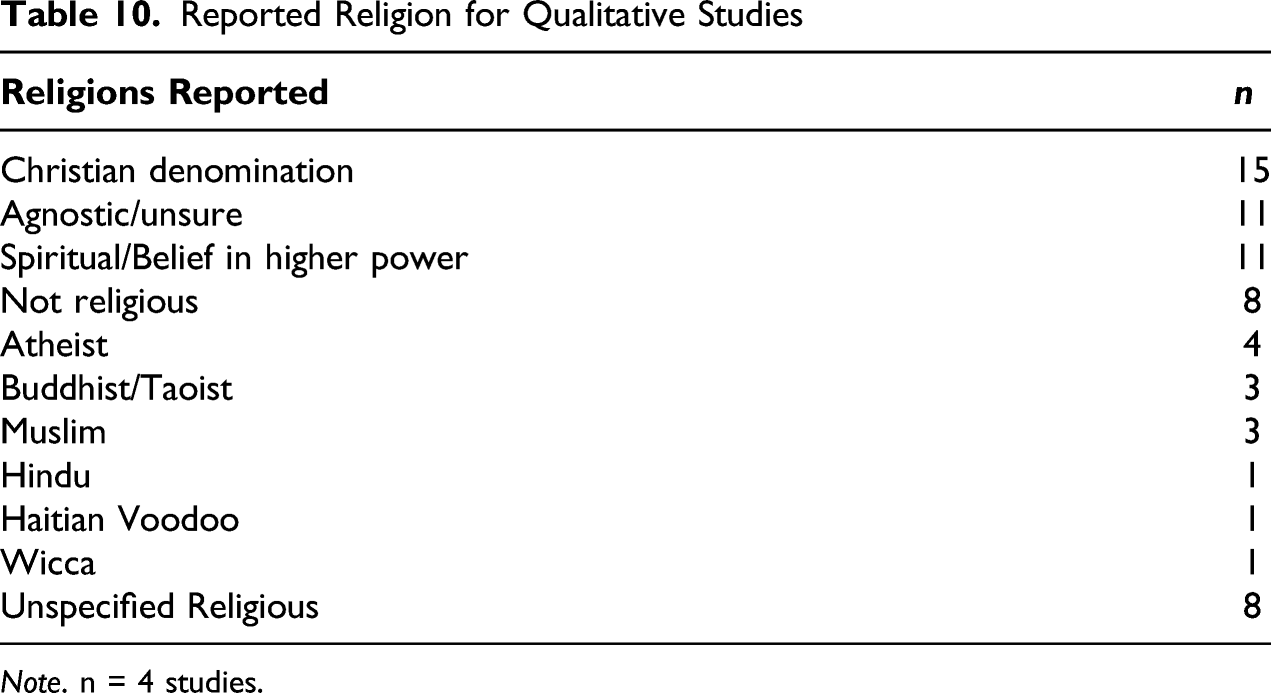
Note. n = 4 studies.
Discussion
This study aimed to uncover the progress in using qualitative and mixed methods to study LGBTQ individuals in the last decade (between 2009 and 2019) in the field of counseling psychology. Specifically, we aimed to shed light on the topics that have been explored, how studies have been conducted, and participants’ demographic characteristics. Noticeably, both JCP and TCP had a significant increase in the publication of qualitative and mixed methods studies with LGBTQ individuals in the last decade. Specifically, JCP grew from no published studies between 1998 and 2008 to publishing 11 studies between 2009 and 2019, TCP went from 2 published studies between 1998 and 2008 to publishing 12 studies between 2009 and 2019, and CPQ went from no published studies between 1998 and 2008 to publishing one study between 2009 and 2019.
A New Call to Action: Recommendations for the Future of LGBTQ Qualitative and Mixed Methods Research in Counseling Psychology
The following sections reflect on the progress made on qualitative and mixed methods research with LGBTQ participants in counseling psychology between 2009 and 2019 and provide recommendations for future qualitative and mixed methods studies with this population. It should be noted that these recommendations reflect important trends we observed in this content analysis but are not meant to be exhaustive.
Topics
Some of the topics in the current review are similar to topics explored in the last decade (e.g., religion and spirituality, parenting), however, we noticed an increase in topics explored including career, sexual objectification, transitioning, resilience, disability, and acculturation, among others. In the next decade, we urge researchers to consider increasing the use of qualitative and mixed methodologies to advance research in social justice areas that are underrepresented and align with the core values of counseling psychology. For example, given the uprising of anti-immigrant sentiments in the United States (e.g., Sherkat & Lehman, 2018), counseling psychologists are well-positioned to create healing spaces for LGBTQ immigrants.
Conducting Qualitative Methods and Mixed Methods Studies
Just as in the findings by Singh and Shelton (2011), no intervention studies were found in our review. Also similar to the findings by Singh and Shelton (2011), not all studies in this content analysis identified a research design and methodology, and most of the studies used grounded theory. In addition, we were only able to find two studies that used a mixed methods approach. However, a positive trend also immerged in which there was an increase in reported data analysis approaches.
Most of the studies in this content analysis used interviews as the only form of data collection, as similarly reported by Singh and Shelton (2011). In addition, a positive trend in the last decade has been a significant increase in researchers’ explicit statements on how they used reflexivity/positionality to reflect on their own biases. In the next decade, the following recommendations should be considered when conducting qualitative and mixed methods studies in counseling psychology with LGBTQ individuals: 1) Focus on learning more about intervention outcomes. We posit that counseling psychologists have a unique opportunity to lead the efforts of exploring more about interventions to enhance the well-being of LGBTQ individuals. As long as counseling psychologists continue to be passive observers of the experiences of LGBTQ individuals, they will miss unique opportunities to promote LGBTQ liberation. For example, future studies should address the need for community-based research methods (e.g., participatory action research) in intervention research. 2) Consider using an array of qualitative research traditions outside of grounded theory. Although it is apparent that grounded theory has helped advance our knowledge of LGBTQ issues through qualitative studies, other research traditions might help uncover lived experiences of specific members of this oppressed community. For example, using a case study approach might allow researchers to immerse themselves in the naturalistic environment of undocumented, Black, transgender individuals and help shed light on the specific experiences of this community (Stake, 2005). 3) Consider using more mixed methods approaches to better understand the experiences of LGBTQ individuals. Mixed methods studies offer rich approaches while demonstrating methodological flexibility (e.g., Ivankova & Wingo, 2018). 4) Consider increasing the use of focus groups. Focus groups create a peer-centered environment that allows participants who share common experiences to easily build rapport and be vulnerable in a safe environment (Capielo Rosario et al., 2020; Krueger & Casey, 2008). 5) Consider explicitly unpacking researchers’ sexual and gender identity and counseling psychology identity when discussing reflexivity/positionality. Although we cannot assume that all researchers who publish LGBTQ studies in counseling psychology journals are LGBTQ and/or trained counseling psychologists, we suggest that a nuanced discussion about these identities can help counseling psychology journals identify how to move LGBTQ research forward in an equitable way.
Demographic Characteristics
Although some advances in diversifying LGBTQ research in counseling psychology were observed in this content analysis (e.g., increased bi+, transgender, gender diverse visibility), findings show that most of the knowledge about LGBTQ individuals in qualitative and mixed methods studies continues to largely rely on White, cisgender, gay and lesbian, middle class, educated, English-speaking, Christian, mainland United States residents. If counseling psychology as a profession seeks to live up to its core values, it must recruit participants to capture a wide spectrum of intersecting identities to accurately represent the experiences of all LGBTQ individuals. In future research, we urge counseling psychologists to consider using qualitative and mixed methods to: 1) Explore the lived experiences of sexual minority individuals who are the most stigmatized. Given that we found an increased number of other reported sexual identities, such as asexual, queer, pansexual, and demisexual, among others, researchers should use qualitative and mixed methods studies to center the experiences of those who have been less represented within the umbrella of sexual minority. 2) Explore the experiences of and ways to advocate for transgender and gender diverse individuals. Acknowledging gender on a continuum rather than as dichotomous, binary, and stagnant presents an important opportunity for future qualitative and mixed methods research in counseling psychology to learn more about the experiences of these individuals who are the most marginalized. 3) Along with the previous recommendation, it is important to inquire and report about all participants’ gender identity and not only report transgender and gender diverse identities. By not directly assessing and naming cisgender identity, researchers contribute to cisnormativity and further marginalize transgender and gender diverse individuals (Ansara & Hegarty, 2013; Galupo, 2017). 4) Shed light on the experiences of those who do not have a higher education. Currently, most of what we know about LGBTQ individuals through qualitative and mixed methods studies in counseling psychology is from individuals who have at least some college education. 5) Explore the experiences of LGBTQ participants from lower SES backgrounds. Future qualitative and mixed methods studies should collect data about participants’ SES and discuss ways in which this demographic, as well as classism, affects LGBTQ participants’ experiences. 6) Advocate for more linguistically diverse samples of participants. This might also require increasing diverse faculty in counseling psychology; especially researchers who are able to connect and disseminate findings using participants’ native language. 7) Assess for participants’ religion and spirituality. The lack of assessment of this demographic is especially surprising given that participants’ narratives frequently mentioned religiosity and/or spirituality as part of their experiences.
Counseling Psychology Journals
Given the recommendations provided in the previous section, we would like to provide some direction for how counseling psychology journals could enforce these recommendations. Specifically, we posit that counseling psychology journals should: 1) Update their manuscript submission guidelines and carefully screen manuscripts to make sure qualitative and mixed methods studies are following guidelines, such as the APA Publications and Communications Board Working Group’s standards (see Levitt et al., 2018). 2) Create their own guidelines for qualitative and mixed method studies to make sure they are in line with the core values of the profession. 3) Make an open call to researchers (e.g., develop special issues) to explore the experiences of underrepresented or simply absent groups of individuals within the LGBTQ umbrella and whose experiences would be best highlighted by using qualitative and mixed methods studies.
Strengths and Limitations
In this content analysis we sought to explore and identify areas in which counseling psychology has bridged the gaps in LGBTQ qualitative and mixed methods research in the last decade. There were several strengths and limitations of this study that are important to address. To our knowledge, this is the only study available that has analyzed the state of qualitative and mixed methods research with LGBTQ individuals in counseling psychology between 2009 and 2019. We explored valuable accounts of history and cultural trends in counseling psychology that researchers can use to enhance their understanding of evolving research with LGBTQ participants. An additional strength of this study was the diversity within the research team, including race, ethnicity, sexual orientation, and gender identity. These diverse identities allowed for rich conversations about what the future of qualitative and mixed methods studies with LGBTQ individuals should focus on.
The study also included limitations that must be addressed. The researchers chose to focus on the top three journals in counseling psychology. This is a limitation because the LGBTQ community is widely researched in journals by other disciplines, such as public health and other mental health professions (e.g., Journal of LGBT Health Research, Psychology of Sexual Orientation and Gender Diversity). Therefore, there might be important studies not reflected in this analysis. However, given counseling psychology’s history of advocating for a wide range of methods to explore the experiences of marginalized groups, it was important to provide a critical analysis of how the field of counseling psychology was living up to its core values of diversity and social justice. Another important limitation was the focus on studies with exclusively LGBTQ participants. Research shows that family members experience stigma by being associated with an LGBTQ individual (Robinson & Brewster, 2016). Also, other studies have focused on the relationship between LGBTQ individuals and their family members (e.g., Abreu et al., 2020). Because of our decision to only focus on studies with LGBTQ participants, studies that captured the experiences of allies and family members were excluded and, thus, important aspects of LGBTQ research are not represented in this analysis.
Implications for Advocacy, Education/Training, Research, and Practice
It is not enough to increase the number of articles published, there must also be a continued demand for the inclusion of LGBTQ research that uses qualitative and mixed methodologies so they can be represented and respected in education and training. This includes continued advocacy for diverse research methods in undergraduate and graduate training. Faculty should provide an inclusive culture where qualitative research is offered and encouraged as part of the curriculum. Although this may seem easy and already implemented, an article by Rubin et al. (2018) reported that only 39% of graduate psychology students in their study were offered a qualitative research method course in the last five years; of these students, only 13% reported the course was required, whereas 17% reported it as an elective. Teaching qualitative research early in psychology programs leads to a sense of understanding and knowledge that may likely increase students’ use of qualitative research when they enter graduate school. In addition, regarding tenure and promotion of faculty in counseling psychology programs who do research with LGBTQ communities (specially LGBTQ communities who share other oppressed identities), departments should explicitly value and welcome the use of qualitative and mixed methodologies. This is important because if we are to advance research in this area within the next decade, researchers must feel that their scholarship is respected.
There is a need to present qualitative methods as rigurous approaches to conducting research. Additionally, there is a need to educate others about the unique benefits that mixed methods research provide, in which the strengths of both qualitative and quantitative methods can be used. Furthermore, programs should provide opportunities for research with marginalized communities to implement interventions grounded in social justice.
We recommend that practitioners base their interventions on studies that use multiple methodological approaches, including qualitative and mixed methods. However, given the lack of diversity within the LGBTQ participants in this review, practitioners need to be cautious about who is being represented in this body of research before implementing interventions that might be harmful to LGBTQ individuals who share multiple marginalized identities. We recommend that practitioners consult with the new APA Guidelines for Psychological Practice With Sexual Minority Persons (Nakamura et al., 2022) and Guidelines for Psychological Practice with Transgender and Gender Nonconforming People (APA, 2015).
Supplemental Material
sj-pdf-1-tcp-10.1177_00110000221092481 – Supplemental Material for LGBTQ Qualitative and Mixed Methods Research in Counseling Psychology: A Content Analysis
Supplemental Material, sj-pdf-1-tcp-10.1177_00110000221092481 for LGBTQ Qualitative and Mixed Methods Research in Counseling Psychology: A Content Analysis by Roberto L. Abreu, Diamonique Townsend, Y’Londa Mitchell, Jessica Ward, Lillian Audette and Kirsten A. Gonzalez in The Counseling Psychologist
Supplemental Material
sj-pdf-2-tcp-10.1177_00110000221092481 – Supplemental Material for LGBTQ Qualitative and Mixed Methods Research in Counseling Psychology: A Content Analysis
Supplemental Material, sj-pdf-2-tcp-10.1177_00110000221092481 for LGBTQ Qualitative and Mixed Methods Research in Counseling Psychology: A Content Analysis by Roberto L. Abreu, Diamonique Townsend, Y’Londa Mitchell, Jessica Ward, Lillian Audette and Kirsten A. Gonzalez in The Counseling Psychologist
Footnotes
Author Note
Roberto L. Abreu, Department of Psychology, University of Florida; Diamonique Townsend, Department of Psychology, Tennessee State University; Y’Londa Mitchell, Department of Psychology, Tennessee State University; Jessica Ward, Department of Psychology, Tennessee State University; Lillian Audette, Department of Psychology, Tennessee State University; Kirsten A. Gonzalez, Department of Psychology, University of Tennessee, Knoxville.
ORCID iDs

Supplemental Material
Supplemental material for this article is available online.
Author Biography
References
Supplementary Material
Please find the following supplemental material available below.
For Open Access articles published under a Creative Commons License, all supplemental material carries the same license as the article it is associated with.
For non-Open Access articles published, all supplemental material carries a non-exclusive license, and permission requests for re-use of supplemental material or any part of supplemental material shall be sent directly to the copyright owner as specified in the copyright notice associated with the article.
