



Abstract
The COVID-19 pandemic dealt a major disruption to the lives of college students, impacting their well-being and academic experiences. This two-point, longitudinal study (Wave 2 N = 286) investigated how the pandemic impacted college students, how students coped, and how their resilience and coping profiles were associated with their well-being, academic performance, and attitudes toward seeking professional psychological help. Latent Profile Analyses showed that students’ coping profiles changed after the pandemic started. Compared to Active Copers—those who used more active coping strategies during the pandemic, (a) Withdrawal Copers had poorer academic performance and reported lower levels of happiness and life satisfaction, more loneliness, and less favorable help-seeking attitudes; and (b) Undifferentiated Copers reported lower levels of happiness, more loneliness, and less favorable help-seeking attitudes. Using the convergent mixed-methods design and a combination of person- and variable-centered approaches, our findings have important implications for practice, advocacy, education, training, and future research.
Keywords
Our research suggests that campus-wide campaigns and targeted interventions directed at helping students develop an active coping profile and resilience could be instrumental to alleviate the burdens of the pandemic, boost students’ well-being and academic success, and potentially build protection against other stressors or future threats. Our findings also support the importance of promoting favorable attitudes towards seeking professional psychological help, which could influence behavioral intentions and increase service uptake among students who would not do so otherwise.Significance of the Scholarship to the Public
On January 30, 2020, the World Health Organization (WHO, 2020) officially declared the Coronavirus Disease-2019 (COVID-19) as a “public health emergency of international concern.” At the time, under 8,000 cases and 200 deaths were reported. Three years later, the numbers ballooned to more than 700 million confirmed cases and six million deaths worldwide (WHO, n.d.). The rapid spread of the COVID-19 pandemic and the subsequent containment measures dealt an unprecedented disruption to the global economy and led to the sharpest economic downturn in the United States since the Second World War (The World Bank, 2020). Physical distancing was widely implemented through curfews, closing of schools and businesses, travel restrictions, and stay-at-home orders (Gostin & Wiley, 2020), all of which deeply affected many facets of people’s lives. As noted in the U.S. Surgeon General’s Advisory (2021), young adults have experienced a great deal of pandemic impacts. Understanding the scope of the pandemic impacts, our students’ resilience and responses to pandemic stressors, as well as the relationships with well-being, academic success, and help-seeking attitudes could help us identify areas of targeted interventions. Because the literature that addressed all our variables of interest in college student populations was fairly limited following the onset of the COVID-19 pandemic, below we presented the U.S. and global scholarship on college students or emerging adults. Doing so allowed us to identify the gaps in the literature and design a study to understand and advocate for students in need of more services and support at our institution.
Pandemic Stressors for College Students
College students have been experiencing adverse impacts on their well-being and academic experiences due to the COVID-19 pandemic. The rapid shift to entirely online learning at the beginning of the pandemic was a shock to the education system. Colleges/universities—and their students—faced a multitude of challenges in trying to adapt to remote learning (e.g., students experiencing frustrations with e-learning, lacking self-regulation skills, losing motivation, having to take experiential courses—such as labs—virtually, delaying graduation dates, or losing internships; Aguilera-Hermida, 2020; Aucejo et al., 2020; Sahu, 2020; Tasso et al., 2021). The struggles with remote learning and inability to focus on academic activities have been identified as some of the common academic difficulties that students experienced due to the pandemic (Kecojevic et al., 2020). Other commonly reported pandemic-related stressors for college students included social isolation (Saltzman et al., 2020), financial pressure (Chegg.org, 2020), job loss (Aucejo et al., 2020), and daily life challenges (e.g., obtaining medication; Kecojevic et al., 2020). The American Psychological Association (APA) Stress in America 2020 survey found that 67% of Generation Z adults in college (ages 18–23) expressed that “the coronavirus pandemic made planning for their future feel impossible” (p. 4), which deepened the feelings of despair amidst the pandemic and had a negative impact on students’ well-being.
Pandemic Impacts on Students’ Well-Being
According to the Health-Related Quality of Life (HRQOL) program in the Division of Population Health of the Centers for Disease Control and Prevention, “there is no consensus around a single definition of well-being, but there is general agreement that at minimum, well-being includes the presence of positive emotions and moods (e.g., contentment, happiness), the absence of negative emotions (e.g., depression, anxiety), satisfaction with life, fulfillment and positive functioning” (HRQOL, 2023). Based on this model, we operationally defined students’ well-being to include factors such as sense of happiness, perceived stress, loneliness, life satisfaction, and academic functioning (e.g., grade point average [GPA]). As would be expected, the pandemic stressors were found to be related to poorer well-being. For example, academic struggles and financial losses were related to higher levels of depression during the pandemic (e.g., Kecojevic et al., 2020). In a national study (Chegg.org, 2020), about one-third of the college students surveyed during the pandemic reported symptoms of depression, almost half suffered from anxiety, and more than half indicated that they were moderately to extremely worried about their psychological well-being. Most alarmingly, nearly a quarter (23%) of the college students disclosed that they knew of someone who had suicidal thoughts.
The extant scholarship suggests that the compounding effects of the pandemic stressors on the well-being of students may disproportionately affect certain groups of students. Black and Latinx students, compared to White and Asian students, reported greater severity of the financial impact of the pandemic (Reyes-Portillo et al., 2022). Additionally, a latent profile analysis (LPA) conducted with data from seven U.S. universities found that female students, Asian students, those with poorer health or lower family income, and those who knew a family or community member infected with COVID-19 were more likely to be in the high psychological impact group, reporting more worry and distress during the pandemic lockdown than did their peers (Browning et al., 2021). Furthermore, a two-point longitudinal study (Wave 1: October 2019–February 2020; Wave 2: June/July 2020) with 419 U.S. first-year college students revealed that those with prepandemic symptoms of anxiety and depression had higher odds of experiencing moderate to severe symptoms after the lockdown (Fruehwirth et al., 2021). Similar trends were seen among undergraduate students in Greece (Panteli et al., 2022). These suggest that the state of psychological well-being prior to the start of the pandemic was predictive of psychological experiences during the pandemic, which is very concerning considering that college campuses already faced a mental health crisis before the pandemic began (see Chen et al., 2019).
Resilience
Despite this bleak picture of college student mental health, resilience (i.e., “the ability to bounce back or recover from stress;” Smith et al., 2008, p. 194) could be one of the key factors that can assist in alleviating pandemic-related stress. Although it has been studied as an outcome, resilience is actually an adaptive process, rather than an inborn trait, and can build across a lifetime (Luthar & Cicchetti, 2000). Past research has shown that resilience was negatively associated with loneliness among a group of nursing students in the Philippines during the lockdown (Labrague et al., 2021) and positively related to life satisfaction and subjective well-being among a sample of college students in the United Kingdom (Denovan & Macaskill, 2017). Higher levels of resilience were protective against anxiety and depression in a sample of U.S. postdoctoral research fellows (Gloria & Steindhart, 2016). Cohn et al. (2009) found that in a sample of U.S. college students, resilience fully explained the impact of positive emotions on life satisfaction—that is, positive emotions improved one’s life satisfaction through enhancing one’s level of resilience. Taken all together, the extant literature suggests that it is important to examine the role of resilience in students’ well-being.
Furthermore, past research has examined the relationship between resilience and academic performance. One study found that U.S. college students who felt that their academics were affected by stress had lower GPA and reported lower level of resilience and coping self-efficacy as compared to students who did not think stress affected their academic performance (Frazier et al., 2019). Another study with U.S. college students suggested that students’ resilience influenced their use of regulatory strategies (such as time management and self-regulation), which, in turn, predicted their academic performance (Johnson et al., 2015).
Examining the relationship between resilience and attitudes toward seeking professional psychological help may be vital to understanding students’ actual help-seeking behaviors. One study, based on four focus groups with adults in the United States concluded that the relationship between resilience, stigma, and help-seeking was multidirectional (Crowe et al., 2016). Some participants identified that being stigmatized led to a decreased likelihood of help-seeking, which subsequently affected their resilience, while others believed that help-seeking may lead to (a) being stigmatized and becoming less resilient, or (b) becoming more resilient and having less stigma (Crowe et al., 2016). In short, more research is needed to unpack the relationship between resilience and help-seeking attitudes and behaviors.
Finally, the ability to bounce back after a stressor may also depend on one’s coping strategies. In a study with two samples of U.S. undergraduate students, resilience (as measured by the Brief Resilience Scale) was positively correlated with active coping and negatively associated with maladaptive coping methods (e.g., denial; Smith et al., 2008). Similarly, among a group of 1,743 Chinese undergraduate students, high levels of resilience were related to the use of active coping styles (e.g., seeking support) during the pandemic (Wu et al., 2020).
Coping
Coping, similar to many other psychological constructs, has been defined (and thus measured) differently by researchers. In this study, we adopted the operational definition of coping theorized by Amirkhan (1990) as problem-solving, seeking support, and avoidance behaviors that people engage in to deal with stressors. A review of stress theories and models by Bhattacharjee and Ghosh (2022) underscored that individuals’ response to stressful events (e.g., problem-solving or avoidance) may explain the subsequent well-being outcomes. For example, a study by Dwyer and Cummings (2001) showed that those who perceived the most stress used avoidance coping more, which may have offered shorter-term relief. However, such coping strategies were linked to increased likelihood of loneliness, whereas the opposite relationship was found for support-seeking coping strategies (Deckx et al., 2018). Relatedly, problem-solving strategies such as planning were associated with higher life satisfaction among students (Buser & Kearney, 2017). Overall, more research is needed to determine the impact of various coping strategies on positive well-being indicators. However, to our knowledge, no previous research has examined how ways of coping among U.S. college students relate to positive indices of well-being—such as levels of happiness or life satisfaction—during the pandemic.
The literature suggested that the student coping strategies were related to their academic experiences. For example, a study with 808 undergraduates in Spain found that student academic engagement, cumulative GPA, and active coping (e.g., problem-solving and support-seeking) were all positively related to each other, while poor academic performance was associated with social withdrawal (Vizoso et al., 2018). Similarly, another study showed that avoidance coping predicted external academic locus of control (i.e., feeling as if academic outcomes are out of one’s control), which was related to lower first-year college GPA (Boyraz et al., 2019).
In short, the literature underscores the importance of active coping strategies (e.g., problem-solving and support-seeking) in promoting student well-being and academic success (Buser & Kearney, 2017; Deckx et al., 2018; Vizoso et al., 2018). However, high levels of pandemic-related stress may have pushed students to use all kinds of coping strategies (Dwyer & Cummings, 2001) and made it difficult (or even impossible) to adopt certain “active” coping strategies. Thus, the current study aimed to explore students’ coping profiles by utilizing a person-centered approach (i.e., LPA). Doing so allowed us to create a fuller picture of students’ coping patterns before and after the pandemic began and explore their relationships with students’ well-being, academic performance, and help-seeking attitudes.
In a study with 618 Chinese women with breast cancer, Li et al. (2017) categorized their participants into three coping profiles based on the pattern of their coping strategies: (a) Adaptive Copers—those who used the most adaptive coping strategies such as acceptance, planning, and positive reframing; (b) Negative Copers—those that used the most maladaptive strategies (e.g., self-blame, rumination, and catastrophizing); and (c) Inconsistent Copers—those who used moderate levels of both adaptive and maladaptive coping styles. The Adaptive Copers reported the lowest levels of anxiety and depression, as compared to the other two coping profiles (Li et al., 2017). In another study by Tam (2008), four coping profiles were identified within their sample of 1,116 Chinese adolescents: (a) Active Copers, those who scored highest on active coping strategies such as seeking support; (b) Active/Internal Copers, who scored moderately high on both active and internal coping strategies such as acceptance; (c) Internal/Withdrawal Copers, who scored high on both internal and withdrawing coping strategies such as avoidance; and (d) Undifferentiated Copers, who scored moderately on all three types of coping. Tam (2008) reported that Active Copers and Active-Internal Copers had significantly lower perceived stress as compared to Internal-Withdrawal Copers and Undifferentiated Copers. Based on our literature review, we did not find any studies on coping profiles of U.S. young adults or college students. There leaves a gap in the literature with respect to our understanding of the coping patterns of U.S. college students in the context of the COVID-19 pandemic and how coping may relate to students’ adjustment outcomes.
Barriers to Seeking Mental Health Care
In addition to identifying coping styles, it is important to understand the factors that are related to students’ help-seeking behaviors, especially during a stressful time like the COVID-19 pandemic. Despite the higher rates of mental illness among college-age adults (aged 18–25 years) compared to older adults (National Institute of Mental Health, 2022), many students with mental health problems do not receive the mental health care that they need and may suffer in silence. Previous research suggested that college students with higher suicidal ideation had lower intentions to seek professional help (Yakunina et al., 2010). In the context of the pandemic, a study that used national suicide data in the United States found that suicide deaths among college-age young adults (aged 18–24 years) significantly increased during the first 10 months of the pandemic, compared to expected deaths modeled with prepandemic data (4,203 vs. 4,009 respectively; Bridge et al., 2023). Among a nonclinical population of undergraduate and graduate students in Texas, over 50% of the survey respondents reported worse mental health during the pandemic and about 25% reported serious psychological distress, while only about 7–18% sought in-person, or virtual mental health services (Villatoro et al., 2023).
One factor that can hinder a student from seeking the mental health care that they need is their attitudes toward seeking professional psychological help. It is not surprising that people who held more favorable help-seeking attitudes were more likely to actually seek and receive the care they needed (Mojtabai et al., 2016). Those who perceived higher levels of stress expressed more positive attitudes toward seeking help (Kuo et al., 2006). Another study found that, after controlling for demographic characteristics (e.g., age, race, and income), help-seeking attitudes were positively related to posttraumatic stress and growth following a natural disaster (Shigemoto et al., 2019). Thus, it is important to examine factors related to help-seeking attitudes among college students during such a turbulent time for mental health.
In sum, the pandemic literature points to increases in mental health symptoms among college students. The scope of the literature, however, remains scarce with respect to U.S. college students’ coping patterns, resilience, and their relationships with subjective well-being, academic success, and help-seeking, as well as any changes after the pandemic started.
Current Study
The current mixed-methods study with a pragmatic approach is guided by the following research questions: (1) How has the COVID-19 pandemic affected college students’ well-being, academic performance, coping, resilience, and attitudes toward seeking professional and psychological help? (2) How were students’ coping profiles before and after the start of the pandemic? (3) How did students’ resilience and coping profiles relate to their well-being, academic performance, and attitudes toward help-seeking? and (4) How did indices of wellness and academic outcomes relate to students’ attitudes toward seeking counseling? We used web-based survey data from two waves to explore these research questions and understand factors that contributed to our students’ well-being. Given the existing literature on past epidemics and the emerging evidence on pandemic impacts, we anticipated to see decline in well-being among students during the spread of COVID-19. However, our study was largely exploratory and specific hypotheses were not formulated with regards to coping profiles or their relationships with well-being, academic success, and help-seeking attitudes.
The convergent mixed-methods design of our study allowed us to qualitatively and quantitatively illustrate the pandemic impacts on college students’ lives, well-being, and academic experiences. To our knowledge, our study is the first to identify latent coping patterns using U.S. college students from before and since the onset of the pandemic. The longitudinal nature of this study enabled us to explore how student coping profiles may have changed in the context of the pandemic. Moreover, our study sought to shed light on whether students with different coping profiles and levels of resilience differed in their well-being, academic performance, and help-seeking attitudes. Assessing resilience and patterns of coping strategies that students adopted in the face of pandemic-related stress can help to inform targeted interventions. Finally, this study aimed to expand the current literature on contributing factors to improve student help-seeking attitudes. Such research may benefit the work of counselors, psychologists, and educators because resilience, coping, and help-seeking attitudes are individual characteristics that may be modifiable through interventions and psychoeducation.
Method
Participants and Procedures
Approval from the university’s Institutional Review Board was obtained prior to the start of data collection. Informed consent was obtained from every student who agreed to participate in the study. Students were informed that “student ID may be used to link responses from this survey to information maintained by the University,” thus their survey responses were not anonymous, but kept confidential. Only the principal investigator (PI) and research analyst had access to student records, and data were analyzed anonymously by research team members. To minimize the risk of loss of confidentiality, the data were stored on a password protected server with restricted access and in a locked cabinet in a locked office, as outlined in the consent form.
The initial survey was part of a biannual new student survey that has been implemented by a large, Mid-Atlantic university for decades. Students who were admitted for Fall 2016 were invited to participate in the study during the summer (June–August) in 2016, and those admitted for Spring 2017 were invited to participate during the winter break of 2016–2017 (December 2016–January 2017). During this first wave of data collection (Summer 2016 and Winter 2016–2017), the survey was sent via email to incoming undergraduate students after they attended new student orientation sessions, but before they matriculated at the university. No incentives were provided. The survey was closed at 8am on the first day of classes.
In total, 3,057 students participated in the Wave 1 survey that assessed expectations, aspirations, perceived stress levels, coping strategies, resilience, and life satisfaction (response rate = 57% for the summer cohort and 52% for the winter cohort). The average age of the participants was 18.74 years (SD = 2.58). This sample represented every college at the university across 127 different majors, as well as students with undeclared majors and those in a first-year transitional program—a fall semester program offered to students admitted for the spring semester, which allows them to take classes, live on campus, and access university resources in the fall.
Three and a half to 4 years later (between April and May of 2020), we followed up with the survey participants who had expressed an interest in being contacted for subsequent studies, and incentives were provided in the form of a raffle of 10 prizes (e.g., Apple Air Pods). The plans for Wave 2 were underway well before COVID-19 was declared a global pandemic. However, once the pandemic began, the research team made the decision to incorporate new measures and items to the Wave 2 survey to capture the impacts of the pandemic. In total, 286 students completed the Wave 2 survey (response rate = 27%; age M = 22.54 years, SD = 2.20). This sample also represented every college at the university across 91 different majors.
Demographics of Each Sample a
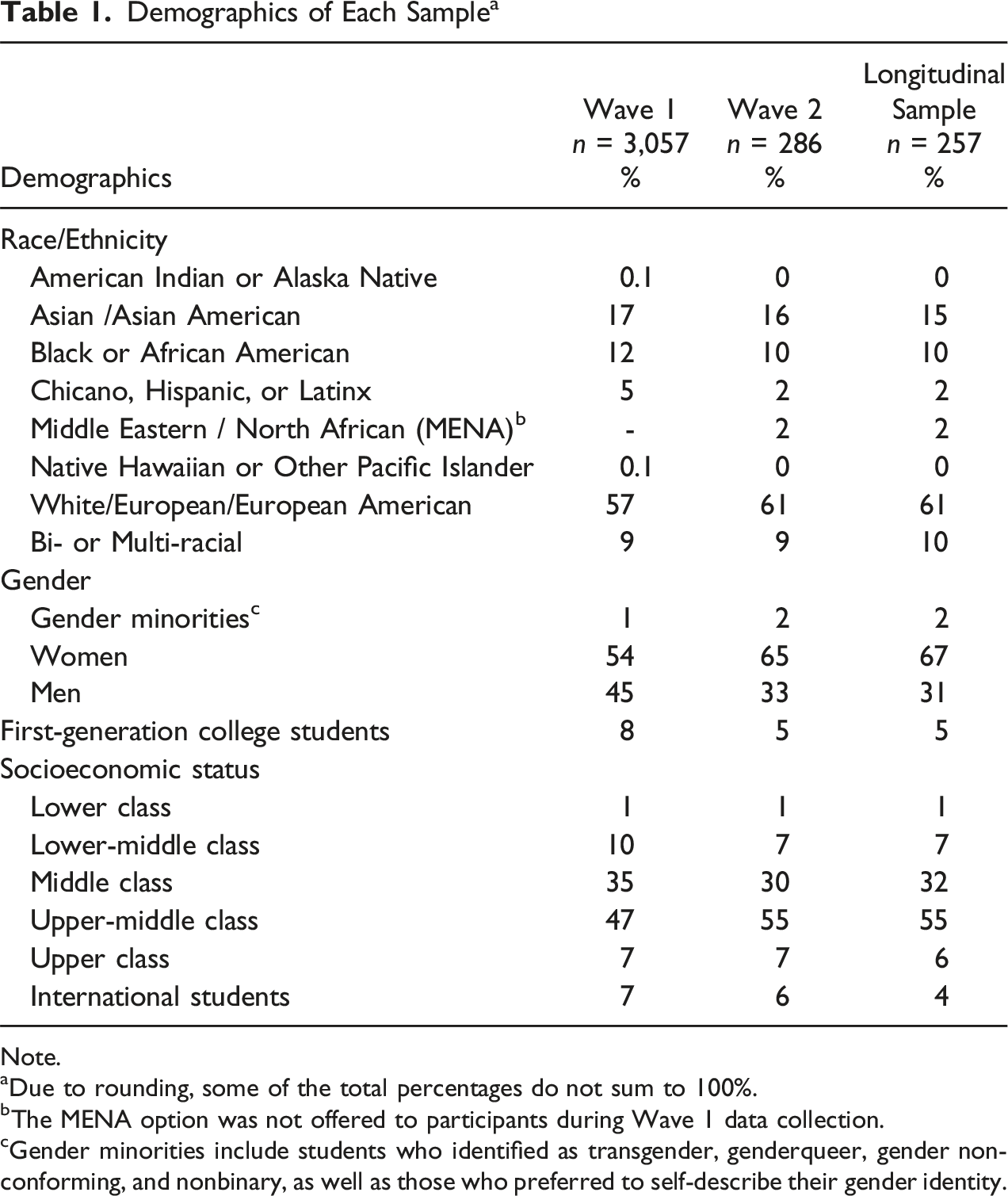
Note.
aDue to rounding, some of the total percentages do not sum to 100%.
bThe MENA option was not offered to participants during Wave 1 data collection.
cGender minorities include students who identified as transgender, genderqueer, gender nonconforming, and nonbinary, as well as those who preferred to self-describe their gender identity.
The Wave 2 survey also included a checklist about the negative impacts of the pandemic on various aspects of students’ lives (e.g., academic performance, plans for after graduation, financial situation, and mental/physical health), and an open-ended item that captured the students’ perspective on the impacts of the pandemic in their own words. Out of the sample who completed the Wave 2 survey (n = 286), a total of 258 students responded to this open-ended question. In addition, two students provided responses to other open-ended questions in the survey, describing the impact of the pandemic they were experiencing. Therefore, a total of 260 students provided a written response about pandemic impacts.
Measures
Measures Used in Both Waves
Demographics
We included questions about students’ identities with respect to race/ethnicity, gender, and first-generation college student status. We also assessed students’ socioeconomic status (SES) by using a ladder with 10 rungs, where the higher rungs represented higher SES (Adler et al., 2000). For reporting purposes, rungs 1–2 were categorized as lower class, 3–4 as lower-middle class, 5–6 as middle class, 7–8 as upper-middle class, and 9–10 as upper class. In addition, data on students’ majors and countries of origin were pulled from the university record keeping system.
Coping Strategy Indicator
To measure student coping strategies, we utilized the Coping Strategies Indicator (CSI; Amirkhan, 1990). The CSI consists of 33 items and three subscales (Problem-Solving, Seeking Social Support, and Avoidance), rated on a 3-point Likert-type scale 1 (not at all) to 3 (a lot), with higher scores representing a stronger tendency to use these three coping strategies. Example items are “Brainstormed all possible solutions before deciding what to do” for the Problem-Solving subscale, “Went to a friend for advice on how to change the situation” for the Seeking Support subscale, and “Buried yourself in a hobby or sports activity to avoid the problem” for the Avoidance subscale. Amirkhan (1990) reported Cronbach’s alpha coefficients of .89 for the Problem-Solving, .93 for the Seeking Support, and .84 for Avoidance. Evidence of the scale’s validity using community samples reported by Amirkhan (1990) included significant positive correlations between (a) the Problem-Solving subscale and Problem Focused component of the Ways of Coping Checklist (WCC; Lazarus & Folkman, 1984); (b) the Seeking Social Support subscale and the Seeks Social Support component of the WCC; and (c) the Avoidance subscale and Wishful Thinking & Avoidance components of the WCC. The reliability coefficients for the three subscales during Wave 1 and 2 of the study were as follows: Problem-Solving α = .86 and .89, Seeking Social Support α = .91 and .93, and Avoidance α = .81 and .78, respectively.
Brief Resilience Scale
This 6-item measure assesses one’s ability to recover from stress (e.g., “I tend to bounce back quickly after hard times.”). Items were rated on a Likert-type scale of 1 (strongly disagree) to 5 (strongly agree), with higher scores indicating greater resilience. Smith et al. (2008) reported internal consistency estimates for four different samples ranging from .80 to .91 (including .84 and .87 for two separate samples of U.S. undergraduate students). They also described the convergent validity of the measure: the Brief Resilience Scale (BRS; Smith et al., 2008) was positively correlated with other measures of resilience (e.g., Connor-Davidson Resilience Scale; Connor & Davidson, 2003). For our sample in Wave 1, α = .88, and in Wave 2, α = .89.
Perceived Stress Scale
The Perceieved Stress Scale (PSS; Cohen & Williamson, 1988) was used to assess participants’ perceived level of stress in life, using a 5-point Likert scale from 0 (never) to 4 (very often) with higher scores indicating higher levels of perceived stress. The brief PSS version has 4 items loading on a single factor (e.g., “In the last month, how often have you felt difficulties were piling up so high that you could not overcome them?”). Using samples of U.S. residents, Cohen and Williamson (1988) reported a reliability coefficient of .78 and that the scale was correlated with self-reports of the amount of stress experienced in a typical week (assessed with one item) and poorer health (measured with a single item). Among a sample of German college students, the reliability estimate for the 4-item PSS was .83 (Harrer et al., 2018). For this study, the Cronbach’s alpha for the 4-item PSS was .78 in Wave 1, and .76 in Wave 2.
Subjective Happiness Scale
The Subjective Happiness Scale (SHS; Lyubomirsky & Lepper, 1999) measures participants’ perceived happiness in daily life, with higher scores indicating higher levels of perceived happiness in life. It is a single-factor scale with 4 items assessed on a 7-point Likert-type scale (e.g., “In general, I consider myself: 1 [not a very happy person] to 7 [a very happy person]”). Lyubomirsky and Lepper (1999) reported internal consistency coefficients for the SHS ranging from .84 to .94 across U.S. college samples, and convergent validity of the measure through positive correlations with the Satisfaction with Life Scale (SWLS; Diener et al., 1985). In this study, α was .88 and .90 in Wave 1 and 2, respectively.
Satisfaction With Life Scale
The Satisfaction With Life Scale (SWLS; Diener et al., 1985) was designed to measure subjective well-being through one’s satisfaction with their life. The SWLS consists of five items (e.g., “In most ways my life is close to my ideal”). Participants responded on a 7-point Likert-type scale from 1 (strongly disagree) to 7 (strongly agree), with higher scores indicating higher life satisfaction. Evidence of validity included correlations with the Bradburn Affect Balance Scale (see Diener et al., 1985) and nonself-report measures of life satisfaction (Diener et al., 2013). Cronbach’s alpha for a sample of U.S. undergraduate students was .87 (Keum et al., 2023). For our sample, α = .87 in Wave 1, and α = .85 in Wave 2.
Attitudes Toward Seeking Professional Psychological Help–Short Form
The Attitudes Toward Seeking Professional Psychological Help−Short From (ATSPPH-SF; Fischer & Farina, 1995) consists of 10 items that measure one’s attitude toward seeking professional help for mental health concerns. Items were scored on a Likert-type scale of 0 (strongly disagree) to 3 (strongly agree), with higher sum scores indicating more favorable attitudes toward seeking professional help (e.g., “I would want to get psychological help if I were worried or upset for a long period of time.”). Favorable help-seeking attitudes were positively related to recent utilization of mental healthcare as well as utilization intensity among college students (Elhai et al., 2008). Fischer and Farina (1995) reported the Cronbach’s alpha of the short form as .84 among a sample of U.S. college students, and that the ATSPPH-SF was highly correlated with the full ATSPPH. For our sample, α = .83 and .86 for Wave 1 and 2, respectively.
Academic Performance
Students’ semester and cumulative GPA were pulled from the university record keeping system. To measure academic performance before the pandemic, we used their first semester end GPA (end of Fall 2016 for students who completed the survey in Summer 2016, and end of Spring 2017 for students who completed the survey in Winter 2016–2017). Because the COVID-19 pandemic caused a sudden shift to a fully online learning environment, the university offered students the option to take all their classes as pass/fail. This would mean that any passing grades would not be counted in the GPA, while failing grades would. Therefore, we decided to use student cumulative GPA at the end of Spring 2020 (instead of Spring 2020 semester end GPA) to measure their overall academic performance after the pandemic started.
Measures in Wave 2 Only
Three Item Loneliness Scale
This measure was developed as a shortened form of the Revised University of California, Los Angeles Loneliness Scale (R-UCLA; Russell et al., 1980), which assesses how often respondents feel isolated. Items were measured on a 3-point Likert-type scale 1 (hardly ever) to 3 (often), with higher scores indicating greater loneliness. The R-UCLA Loneliness Scale’s concurrent validity was established by significant correlations with the Beck Depression Inventory (Beck, 1967, as cited in Russell et al., 1980). Hughes et al. (2004) reported that the Three Item Loneliness Scale (TILS; Hughes et al., 2004) had acceptable reliability (α = .72) in older adult samples and was highly correlated with scores on the R-UCLA. Among a sample of U.S. undergraduate students, the internal consistency was .82 (Abebe et al., 2024). For our sample in Wave 2, α = .85.
Negative Impacts of COVID-19: A Checklist and an Open-Ended Question
Students’ experiences of negative impacts from the pandemic on various aspects of their lives (e.g., academic experience, academic performance, academic plans, plans for after graduation, mental/physical health, financial situation, access to food/housing/health care, and relationships) were assessed using a checklist constructed based on information from WHO updates or the existing literature on past outbreaks such as Severe Acute Respiratory Syndrome (e.g., Main et al., 2011). Students were allowed to check all that apply. To allow students to describe their experiences, we also asked an open-ended question: “Please describe the negative impact that COVID-19 pandemic has had on your life.”
Results
To answer the first research question regarding pandemic impacts and changes in students’ well-being, academic performance, coping, resilience, and help-seeking attitudes, we present the results from the checklist and open-ended question regarding pandemic impacts, as well as t tests on changes in students' coping styles and well-being after the pandemic started. To answer the second and third research questions, we used a combination of a person-centered approach (i.e., LPA) to explore students’ coping profiles and variable-centered approaches (i.e., Multivariate Analysis of Variance [MANOVA] and regressions) to further understand how resilience and coping profiles were associated with well-being, educational success, and help-seeking attitudes. Finally, a regression analysis was conducted to answer the fourth research question and assess how students’ help-seeking attitudes were related to their wellness and academic outcomes.
Considerations were given to the sample size for the person-centered and variable-centered analytic approaches. Sample size and power calculations are an ongoing area of development in growth mixture modeling (e.g., LPA; Masyn, 2013). Sample size is dependent on the number of profiles and separation (distance) between the latent profiles, which is not known before conducting the analysis (Tein et al., 2013). For our study, the identification of distinct profiles indicates that our sample was large enough for the analysis. For the multiple regressions, power analysis was conducted using G*Power (Version 3.1.9.7) that yielded small effect size. For an effect size of .15 on the dependent variables, with an alpha of .05 and power of .95, a minimum of 146 participants would have been needed. In addition, we assessed missing patterns of the measures. Research has shown that bias can increase at higher rates of missing values (e.g., 20–60%; Dong & Peng, 2013). However, in our study, the percentages of missing values were very small (ranging from 0% to less than 1%). Therefore, after assessing whether the missingness was completely at random using Little’s test (Little, 1988), multiple imputations were conducted using IBM SPSS Statistics (Version 27) in order to maintain sample size and power. Examination of the distribution of the variables showed no substantial deviation from normality; the skewness and kurtosis statistics were all less than 1 in absolute value (Kline, 2016).
Research Question (1): Pandemic Impacts & Changes after the Pandemic Began
Negative Pandemic Impacts: Checklist
The data from the checklist were collated to examine the proportion of students who endorsed each of the checklist categories of negative pandemic impacts. The majority of students (82%) indicated that their academic experience was negatively affected, while 52% and 46% reported impacts specifically on their academic performance and academic plans, respectively. About 58% selected negative impacts on their plan(s) for after graduation. Furthermore, about one third of the students (33%) endorsed pandemic impacts on their finances, while 8% and 14% indicated that their access to food and housing was negatively affected, respectively. Finally, approximately 60% checked impacts on relationships with others, 64% endorsed impacts on physical health, and nearly 70% selected impacts on mental health. Although the results from checklist gave a high-level overview of how the pandemic affected students, the findings from the open-ended question provided further in-depth insight into students’ experiences.
Pandemic Impacts: Qualitative Data
The research team consisted of the PI, research analyst, and graduate/undergraduate research assistants—a diverse group with respect to age, gender, race/ethnicity, and training. The PI had extensive experiences conducting and teaching qualitative or mixed methods research. The team was asked to keep reflexive journals throughout the data analysis process to reflect on their own experiences with the COVID-19 pandemic. Personal and professional challenges related to the study were discussed during the research team meetings (e.g., as working parents whose young children had to engage in prolonged remote learning, or someone who grieved the loss of loved ones to COVID-19). This practice helped us to ensure that our presentation of the participants’ responses was not influenced by the research team’s perspectives or beliefs.
The qualitative analysis involved the thematic analysis approach following the steps outlined by Braun and Clarke (2006) and Braun et al. (2021), using the NVivo software. The iterative analytical processes included immersing in the data before beginning coding, then generating initial codes, identifying themes, and reviewing themes. Coding was done by two members of the research team and was audited by a third team member. Out of 260 cases that provided a response, both coders reviewed 195 cases (75%) in order to calculate kappa and determine interrater agreement. Level of agreement was acceptable with kappa values ranging from 0.74 to 1.00 across the 12 themes identified. After the kappa values for all codes reached acceptable levels, the remaining data were coded by one of the coders and audited by another team member. Overall, 11 of the themes pertained to negative impacts, and one theme applied to positive pandemic impacts, which are presented below.
Loss of Important Experiences
Many noted that their senior year was disrupted, and expressed a sense of loss for the traditional senior events and activities that they missed. For example, a student shared: “College graduation is a very important part of my life as a first-generation college student, and that’s been not only taken from me but the experience of graduation and commencement has been taken from my family.” Following is a quote from a student describing the immense loss they were feeling because of missing out on their senior year, and opportunities to socialize and maintain relationships with others: “I do not know how many friends I will have seen for the last time in person as life after our undergraduate experience will make us drift apart.” Others talked about important personal events that they were looking forward to that had to be canceled (e.g., wedding and trips to visit family).
Impacts on Academics
Students shared that being away from the physical academic environment and the shift to online learning was a difficult adjustment. Some felt unheard or uncared for by professors that they found difficult to connect with, while others felt like the course load in virtual learning was significantly higher, which affected their motivation. Some students who were taking hands-on classes (e.g., art, music, and labs) noted that the course materials did not translate well when switched to online, while others shared their losses of academic opportunities when internships were canceled, or funding stopped. For example, a student shared: It has interrupted my studies because the classes I am taking were not designed to be administered online. I also have never taken an online class before, so it has been a big adjustment in the middle of the semester. It has reduced the time I spend talking to my professors and classmates.
For some, the difficulties with switching to complete online learning included limited access to essential supplies and technology: “Everything is virtual. At my apartment, I have no scanner, high-capacity printer, or reliable internet. I frequently miss parts of my classes when the internet falters and I am rarely able to participate in class now.”
Many students also talked about the pandemic impacts on their academic performance, worrying that they would earn lower grades than would be typical for them. For example, a student commented, “I feel like I have suffered with school because I do not do as well in an online environment compared to in person classes.” Another student shared: “There is no satisfaction in learning anymore. If the professors hadn’t lightened the work load and lowered expectations, I would almost certainly be failing.” Relatedly, as a result of the sudden switch to online classes, the university offered students the option of a pass/fail grade or the regular letter grade. Because of the difficulties that students were facing with remote learning, some resorted to taking a pass/fail grade, ultimately reducing the overall number of opportunities they would have to improve their final GPA.
Impacts on Future Plans
Students reported that the pandemic was causing them to rethink their academic plan, in some cases pushing back their planned graduation date. Cancellations of graduate entry examinations also affected students’ timeline for graduate school applications. Some who hoped to start graduate school in the fall were not sure if they would want to attend as they had planned, and even if they did, they were worried about being able to find graduate assistantships or jobs to support themselves. Many of the students who had a prospective job opportunity said that their job offer was rescinded, or the hiring process was stalled or delayed. For example, one student shared, “I applied for an administrative assistant job at [a university]. I was able to complete the interview, but then there was a hiring freeze. Now I don't have a concrete plan of what to do for work and it's really scary.” Those who were excited to start searching for a job were left discouraged by the economic impact of the pandemic and the increased unemployment rates. Some were even worried that the field that they chose as their major may not be hiring for the foreseeable future. Others were unsure if they should be looking for job opportunities, fearing that it would not be safe to be out in the workplace. With a lot of plans being thrown off by the pandemic, some students experienced feelings of despair: “Being uncertain about the future is [the] worst.”
Impacts on Work
Some students, who were already working full-time or part-time, expressed impacts on their employment: being unable to balance all their work responsibilities with school or parenting, having difficulty separating work time and recreational time, and experiencing a decreased work efficiency. For others, the impact was an increase or change to their work responsibilities: I've had a significant increase in my workload because people have been scared to return to work… This pandemic has put the weight and stress of lack of employees on the shoulders of the ones willing to work or need to work for financial reasons.
Similarly, another student reported the impacts of the extra work and time demands on their mental health: “I have found it difficult to stay motivated and am considered an essential worker, so I’ve had more on my plate now… than I did before. My mental health has suffered.”
Impacts on Financial Situation
Some students experienced financial instability because they lost their job, got furloughed, had their hours reduced, or had loved ones and family members experiencing these impacts, while others were unsure how they would continue to pay for their college education. Some shared difficulties they were having in receiving unemployment benefits or governmental support/stimulus: “Though I now live alone and cover my own expenses, I was claimed as a dependent on my mom’s taxes last year when I was a 20-year-old college student and so I am ineligible for the stimulus checks.” Another student shared that they were not qualified for unemployment benefits even though they lost their job: “I was working as a substitute teacher at a private school but, COVID-19 has shut down the school. Now, I have no income coming in and am struggling to get unemployment benefits because I was in school last semester.”
Impact on Access to Basic Needs
Several students talked about the difficulty in obtaining food during the pandemic. Additionally, some students talked about being forced to move out of on-campus or near campus accommodations because of the containment measures in place which, unfortunately, left some students unsure of where they would be living or scrambling to move back in with parents: “I had to apply for emergency housing because my brother is immunocompromised, and I am not able to return home to my family.” In some cases, students moved back to unsafe living situations (e.g., moving back to live with abusive parents) for lack of other options.
Impact on Access to Health Care
Students expressed experiencing delays or inability to receive needed medical care due to closing of care facilities or out of fear for personal safety: “I am chronically ill and take medication that stops my immune system from being able to fight, so when I got sick with COVID-19 symptoms, I got really scared because I couldn't get a doctors [sic] appointment or any help.” Some students also discussed their inability to receive mental health care because of a lack of access: “My mental health has been deteriorating dramatically and I have no access to any institutions that offer help at this point.” Some also shared their discomfort with telehealth options: “There's no chance of me finding a new therapist like I was seeking before because video chat makes me hugely uncomfortable.”
Impacts on Interpersonal Relationships
Many expressed that not being able to see their friends, partners, and family members left them feeling isolated and that phone calls or video calls were not enough or the same as in-person visits. A student described the sense of isolation and the consequence of that as follows: “Negatively impacted mental health due to separating myself from my support group”—a sentiment shared by many. Some students who were living with essential workers said that they were not able to spend time with other family members because of the need to quarantine. Others reported having to move back home abruptly and said that their relationship with their family members or loved ones was strained since the pandemic began: “I feel more isolated and burdened… I have a worse relationship with my family. I am more unhappy with my life.”
Impacts on Physical Health
Physical health impact (e.g., ability to exercise) was reported by the participants. Some students experienced changes to their eating habits (e.g., eating too much or not enough, eating unhealthily, skipping meals), sleeping patterns (e.g., difficulty with sleeping, sleeping more or less), or levels of physical activity that they were engaged in. Several students mentioned that they had contracted COVID-19. Some students also reported an increase in substance and alcohol use as a way to cope, while others described the health problems resulting from online learning: The end of the semester is always the busiest. I am stuck in front of my desk and having online meetings and virtual modules to complete for all my classes, I have headaches each day and do not sleep as much as I did during the semester, ironically. Before the pandemic, I was waking up early to exercise at the gym on campus with friends; however, now I am unable to wake up early and I am not exercising. Also, I found that I am trying to fit in more work now that I am always home and have more time. This is leading me to skip most of my meals and only eating a small portion once every day.
Impacts on Mental Health
Many students reported experiencing some type of psychological distress: increased level of general stress, panic attacks, anxiety, depression; lack of motivation/apathy; having mixed emotions; struggling with uncertainty; and experiencing overall unhappiness. Some students talked about having too much time alone or not enough time alone, which impacted their mental health. Some also described feelings of worry and fear about their own or loved ones’ well-being: I’m constantly worried about my family, as I have members of my family who are immunocompromised, including my younger brother. I am anxious constantly. I have a hard time focusing on my work, which honestly feels pointless. I miss my friends. I’m worried about my stuff that got left behind… but I’m too worried about getting sick that I don’t want to get it. My depression has gotten worse.
A few students described losing loved ones to COVID-19, or losing loved ones for non-COVID reasons but being unable to grieve at funeral services because of COVID restrictions. The losses appeared to have taken a negative toll on students’ mental health. For example, a student shared: My younger sister recently passed away in December, so COVID-19 has exacerbated my grieving process and my anxiety has increased. My [home country] community is being hit hard in my hometown, so it has been extremely difficult to hear of heavy news. My uncle recently lost his cousin and uncle within the past 2 weeks. Although his cousin did not pass away from the coronavirus, the funeral was still limited to 10 people due to social distancing precautions.
Logistical Challenges
Numerous students shared about the many logistical challenges they faced as a result of the pandemic. These challenges included disruptions to their routines and the loss of freedom of movement/travel that they once took for granted: “It has negatively broken my routine. I like to keep everyday consistent with how the days go and that keeps me calm, but since COVID-19, there has been no consistency and [broken routine] has made me feel uneasy.” These impacts were often discussed in association with other impacts: “My routine is ruined and my mental health is directly connected to my routine, so that has been affected.”
Positive Experiences
Finally, a small number of students shared positive pandemic impacts. They appreciated not having to commute, having more time to pursue hobbies or engage in self-care, and spending more time with their families. Some expressed their recognition of privilege and good fortune: “While I am affected by the COVID-19 pandemic, the effect is pretty minor all things considered. I am very thankful that I have not been affected greatly.” Some students acknowledged their resilience and ability to withstand the adverse impacts, while others expressed hope that things will improve in the future.
Changes in Students’ Coping Styles & Well-Being Before and After the Pandemic Began
Descriptive Statistics of Study Variables and Changes Across Time
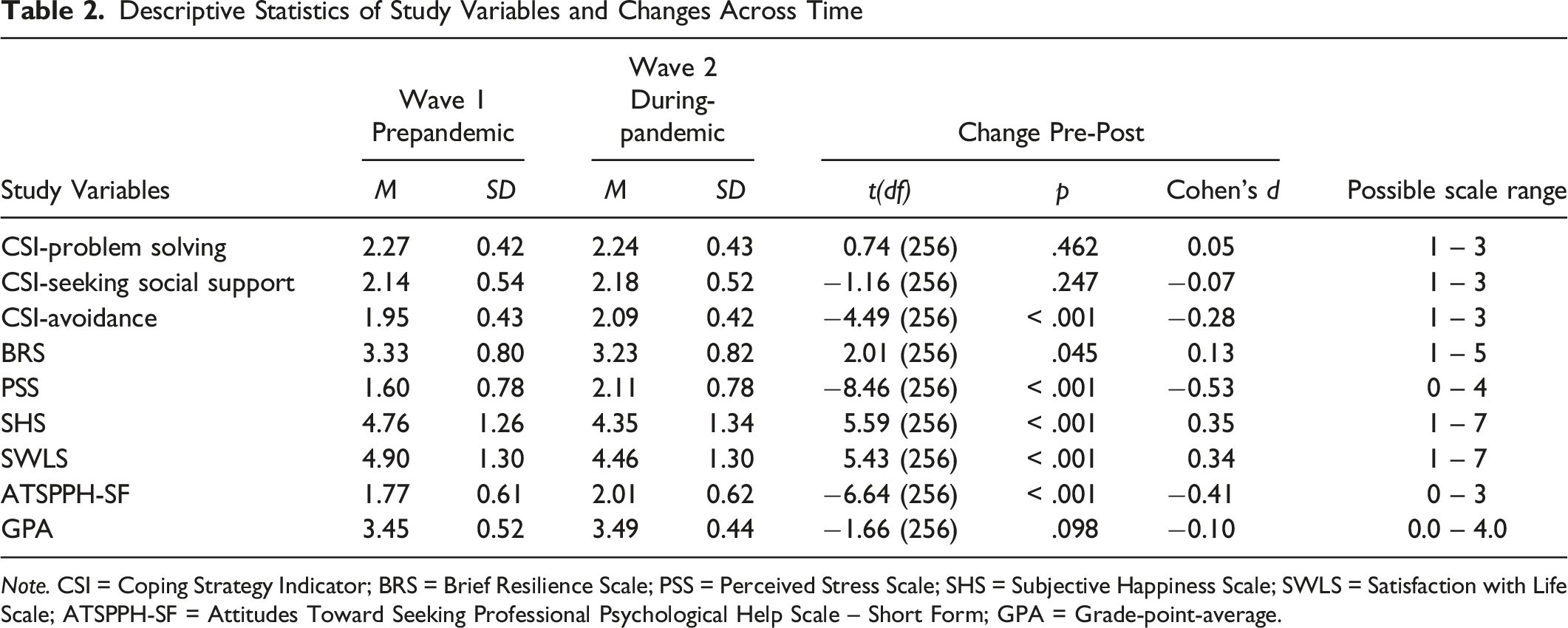
Note. CSI = Coping Strategy Indicator; BRS = Brief Resilience Scale; PSS = Perceived Stress Scale; SHS = Subjective Happiness Scale; SWLS = Satisfaction with Life Scale; ATSPPH-SF = Attitudes Toward Seeking Professional Psychological Help Scale – Short Form; GPA = Grade-point-average.
Research Questions (2) and (3): Coping Profiles and Students’ Well-Being
Wave 1
Following recommendations provided by Masyn (2013) and using MPlus (Version 7.1), we conducted LPA with the three CSI subscale scores to examine students’ coping profiles and their relationship to indices of well-being. The LPA process involved testing a series of models in order to identify the best fitting model that provides useful classification of students into distinct profiles. A variety of indicators were used to determine model fit and compare models: the Consistent Akaike’s Information Criterion (CAIC), the Bayesian Information Criterion (BIC), the sample-adjusted BIC (saBIC), the parametric bootstrapped likelihood ratio test (BLRT), and the approximate Correct Model Probability (cmP). Lower values of information criteria (i.e., CAIC, BIC, and saBIC) indicate greater model fit. A significant BLRT suggests that the k profile solution has an improvement in model fit over the k-1 solution. Lastly, cmP is calculated using BIC values and represents the probability that a solution is “correct” relative to all other solutions, assuming that the true model is in the set of solutions (Masyn, 2013). The largest cmP lends support for selecting the corresponding solution.
LPA Fit indices for Wave 1 and Wave 2

Note. LL = Log-likelihood; npar = Number of parameters estimated; CAIC = Consistent Akaike’s Information Criterion; BIC = Bayesian Information Criterion; saBIC = Sample-size adjusted BIC; BLRT = Bootstrapped Likelihood Ratio Test; cmP = correct model Probability. Bolded values reflect “best” fit for the respective criterion or indicator.
Considering all of the indicators, the 2-profile solution was selected (see Figure 1). The two profiles were distinctly and meaningfully delineated. Profile one (63%, n = 163) was characterized by higher levels of problem-solving (M = 2.50 vs. M = 1.86) and support-seeking (M = 2.24 vs. M = 1.96), relative to profile two (37%, n = 94). Also, profile one participants reported lower avoidance (M = 1.85 vs. M = 2.13) than those in profile two. Given their higher endorsement of problem-solving and support-seeking, as well as lower endorsement of avoidance, profile one participants were named as Active Copers, and their profile two counterparts as Internal/Withdrawal Copers Coping Profiles at Wave 1 & 2.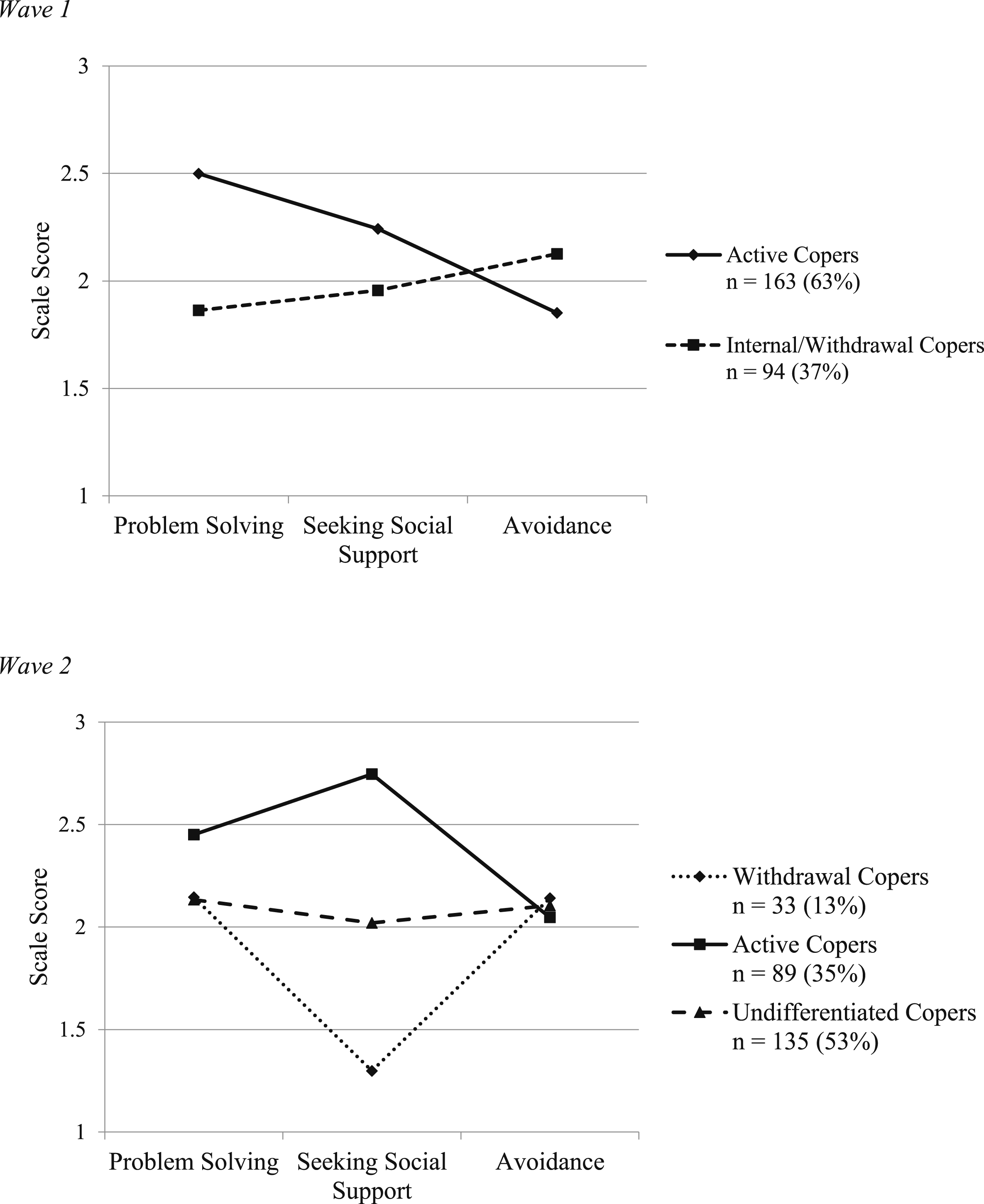
Wave 2
We repeated the LPA process described earlier with the three CSI subscales with the goal of identifying if and how the students’ coping profiles differed after the pandemic began (see Table 3). Even though the BLRT favored the 2-profile solution, the CAIC, BIC, saBIC, and cmP supported the 3-profile solution as the best model among the models tested. Classification diagnostic criteria for the 3-profile model also provided support for three distinct profiles. The mcaP were closely matched to the model estimated classification proportions. The AvePP and OCC were above their respective thresholds of .70 and 5, respectively, suggesting that each participant was correctly classified into one of the three profiles. The entropy was .84, indicating strong global classification precision.
The three profiles that emerged represented three distinct coping profiles (see Figure 1). First, 53% of the sample (n = 135) were classified into profile one. This profile was labeled Undifferentiated Copers as they showed relatively moderate use of problem-solving (M = 2.13), support-seeking (M = 2.02), and avoidance (M = 2.11) strategies, as compared to the other profiles. Profile two, Withdrawal Copers represented 13% of the sample (n = 33) and were characterized by the lowest level of support-seeking (M = 1.30) among all three profiles, and reported slightly higher on avoidance coping strategies (M = 2.14) than the other two profiles and similar levels of problem-solving (M = 2.14) as Undifferentiated Copers. Finally, 35% of the sample (n = 89) were named Active Copers; this group of students were characterized by the highest endorsement of problem-solving (M = 2.45) and support-seeking coping strategies (M = 2.75) and the lowest level of avoidance (M = 2.05), relative to the other two profiles.
Regression Analyses of Resilience and Coping Profiles Predicting Well-Being, Academic Performance, and Attitudes Toward Seeking Professional Psychological Help
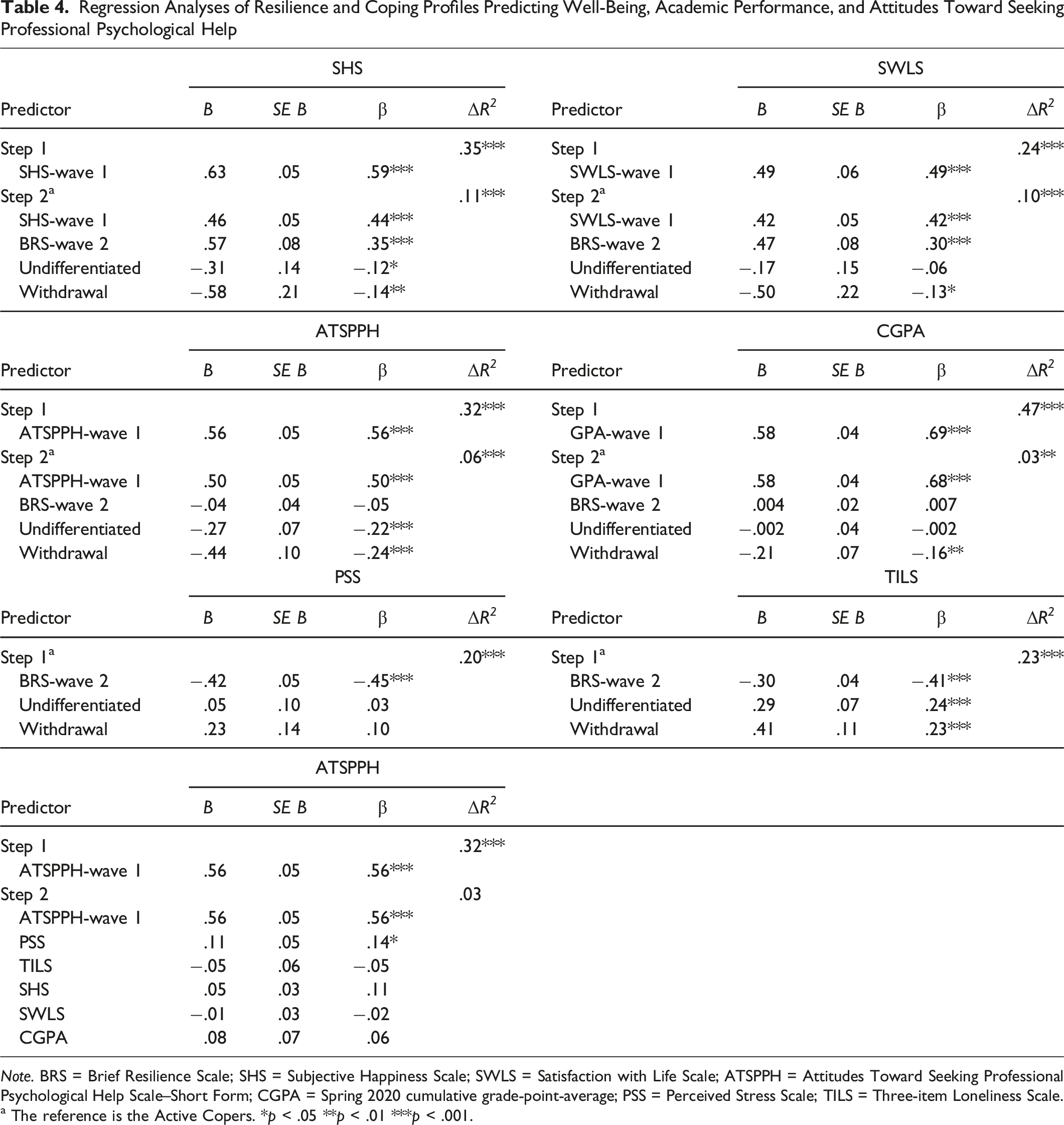
Note. BRS = Brief Resilience Scale; SHS = Subjective Happiness Scale; SWLS = Satisfaction with Life Scale; ATSPPH = Attitudes Toward Seeking Professional Psychological Help Scale–Short Form; CGPA = Spring 2020 cumulative grade-point-average; PSS = Perceived Stress Scale; TILS = Three-item Loneliness Scale.
a The reference is the Active Copers. *p < .05 **p < .01 ***p < .001.
The control variables were significant predictors in each of their respective models. Controlling for levels during Wave 1 where possible, those who reported higher levels of resilience also reported higher levels of subjective happiness and life satisfaction, as well as lower levels of stress and sense of loneliness. Additionally, the Undifferentiated Coping profile (as compared to the Active Coping profile) significantly predicted subjective happiness, help-seeking attitudes, and loneliness. Specifically, students who were undifferentiated in their coping profile were less happy, held less favorable help-seeking attitudes, and were lonelier than those who mostly coped actively. The Withdrawal Coping profile (as compared to the Active Coping profile) significantly predicted subjective happiness, life satisfaction, help-seeking attitudes, cumulative GPA, and loneliness. Specifically, those who coped by generally withdrawing from others reported lower levels of happiness and life satisfaction, held more negative help-seeking attitudes, had poorer academic performance, and were lonelier than students who coped actively.
Research Question (4): Help-seeking Attitudes, Well-being, and Academic Success
We conducted a regression analysis to examine the effects of Wave 2 perceived stress, loneliness, subjective happiness, life satisfaction, and academic performance on Wave 2 help-seeking attitudes (see Table 4). The overall effect was significant. After controlling for help-seeking attitudes at Wave 1, only PSS significantly predicted ATSPPH-SF at Wave 2, with higher levels of perceived stress predicting more favorable attitudes toward seeking professional psychological help. However, the R2 change did not reach significance at the .05 level.
Discussion
The purpose of the current study was to examine college students’ coping profiles, resilience, well-being, academic success, and attitudes toward seeking professional psychological help before and after the COVID-19 pandemic started. Although many researchers have examined the pandemic impacts, none that we know of has previously employed a convergent mixed-methods research design with a pragmatist paradigm and a combination of person- and variable-centered approaches to document the impacts of the pandemic on college students’ well-being and academic experiences longitudinally. The study findings add to the literature on college students’ resilience, coping, and experiences during the pandemic, which may inform future intervention efforts to improve students’ psychosocial health and educational outcomes.
Our study unpacked how the pandemic negatively affected students’ academic and educational experiences; mental, physical, social, and financial health; and access to resources. Some of these findings were consistent with the existing pandemic literature on college students (e.g., Kecojevic et al., 2020; Sahu, 2020). Our qualitative data corroborated the quantitative findings and provided richer contexts for students’ experiences. For example, while more than 8 in 10 students endorsed the checklist option for impacts on their academic experiences, the qualitative findings shed light on the specific challenges that students faced. Some expressed that they missed out on hands-on learning experiences or felt unheard in online settings, while others did not have access to reliable technology at home to effectively participate in virtual classes. Such disparities may have led to differential learning outcomes.
In addition, the quantitative data revealed that various aspects of students’ lives (e.g., finances and access to food or housing) were affected by COVID-19, whereas the qualitative data illuminated the multifaceted and interrelated nature of pandemic impacts. For instance, the students’ accounts revealed that the switch to virtual learning meant having to stay online for an extended amount of time, which impacted their routines, eating habits, sleep and exercise patterns, and motivation—which, in turn, negatively affected their mental/physical health and academic performance. Also, while the size of our sample limited our ability to investigate how certain students’ sociocultural backgrounds and the intersections of such variables could be associated with pandemic impact experiences and well-being, our qualitative data provided insights into how disadvantaged student groups (e.g., international students and financially vulnerable students) may have experienced disproportionate and multiple pandemic impacts.
Finally, even though we did not inquire about positive pandemic impacts because our data were collected during the early pandemic lockdown, our open-ended question allowed students to describe the impacts they experienced in their own words. As a result, a small number of our participants did report positive pandemic experiences unprompted, suggesting that some students were already experiencing posttraumatic growth. The findings on the negative as well as positive pandemic impacts are important contributions of our study.
While the qualitative results helped us understand students’ struggles, the quantitative data revealed how students’ coping profiles have changed over time and how coping was associated with students’ well-being and academic success. To our knowledge, our study was the first to examine coping profiles of U.S. emerging adults before and after the pandemic started. Most of the extant research on coping assessed the effects of specific types of coping (e.g., avoidance) on outcomes. However, with the exception of a few studies (e.g., Doron et al., 2014; Li et al., 2017; Tam, 2008), there is a lack of research that employed a person-centered analytic approach and applied group level analysis. The results from this study help to fill that void. Our findings suggest categorizing participants into profiles is possible and may yield meaningful insights regarding coping outcomes. The longitudinal design of our study also allowed us to uniquely assess the evolution of coping profiles after the pandemic started.
Our findings showed that after the pandemic started, Active Copers reported better well-being, more favorable attitudes toward seeking help, and better academic performance than did the Withdrawal or Undifferentiated Copers. Withdrawal Copers, in particular, may have an increased risk of experiencing negative mental health effects in response to pandemic stress. It should be noted that these students were the least likely to seek social support and endorsed the highest level of loneliness across the three coping profiles. Furthermore, when students were surveyed right before they started their first year of college, the two coping profiles differed on all three dimensions of coping. However, after the pandemic started, the use of problem-solving and support-seeking strategies—but not avoidance—set the Active Copers apart from the Withdrawal Copers or Undifferentiated Copers. On average, the frequency for students to use avoidance coping increased significantly after the pandemic began. This echoed the findings by Dwyer and Cummings (2001) who reported that those with higher stress levels used avoidance coping more because this strategy may have offered shorter-term relief and that students may be pushed to use all kinds of strategies to manage a highly stressful situation (our Wave 2 survey took place during the pandemic lockdown).
Another important contribution of this study is the findings on resilience, which appeared to play a critical role in students’ psychosocial outcomes. In our study, resilience was associated with positive endorsement of subjective happiness and satisfaction with life, as well as lower endorsement of perceived stress and loneliness. These results are consistent with prior findings which suggested that students with higher level of resilience were better equipped to handle stressors (Gloria & Steindhart, 2016). It is worth noting that despite these desirable outcomes, resilience was not associated with help-seeking attitudes or GPA. Future researchers should examine how other factors, such as mental health stigma or social support, may explain the relationship between resilience and help-seeking attitudes as well as academic performance.
Lastly, to our knowledge this is one of the few studies that has examined factors related to college students’ attitudes toward seeking professional help during the pandemic. The results indicated that those with more favorable help-seeking attitudes before enrolling at the university were more agreeable to seeking mental health support that could help them cope with adverse pandemic impacts. Although, on average, students’ help-seeking attitudes improved following the onset of the pandemic, our findings underscored that prepandemic views of help-seeking may have a greater deal of explanatory power when it comes to pandemic-time help-seeking attitudes, more so than one’s perception of stress levels during the pandemic. This suggested that attitudinal interventions could be instrumental in getting students the help they need.
In sum, our use of a mix of research methodological tools in this study was advantageous as it allowed us to triangulate qualitative and quantitative data (see Heppner et al., 2016). On the one hand, the qualitative data deepened and enriched our understanding of the phenomenon under investigation. On the other hand, the quantitative data allowed us to paint a big picture of the pandemic impacts experienced by college students, describe the relationships among our variables of interest, and compare the data collected from the same students before and after the pandemic started. Together, the rich data allowed us to describe students’ experiences of the pandemic more fully and in greater depth than if we had utilized a mono method.
Limitations
Overall, our research made substantial contributions to the growing COVID-19 and coping/well-being literature. However, the generalizability of the results may be limited given the relatively small sample size at follow-up. Our small sample size also limited our ability to examine group differences, even though we believe it is important to investigate whether students from marginalized backgrounds suffered from more negative pandemic impacts than did their peers with more privileged backgrounds. The sample size is also a potential limitation with respect to LPA, although the fact that different profiles did emerge based on a variety of fit indices suggests that our sample was large enough to detect group memberships. In addition, our research findings may not be generalizable to students on other campuses, or in other countries (e.g., those who attend 2-year U.S. community colleges with fewer resources, or schools in regions with much higher COVID-19 infection rates or death tolls). The relatively low response rates may limit the representativeness of our samples as well. However, our ability to compare our study samples with the undergraduate student population at the institution was limited due to differences in the measures used. For example, the institutional data for gender is based on a binary male/female option, whereas our survey included a more comprehensive list of different gender identities. Similarly, we allowed international students to identify their racial/ethnic backgrounds and added the MENA option in the Wave-2 survey, which was not available in our university student survey.
We also note that the interpretation of the coping profiles of the two Waves should be made with caution as there could be developmental explanations for the observed shift. As sources of stress change at different stages of life, individual coping responses may also vary (Lazarus & Folkman, 1984). Therefore, the change in some students’ coping profiles may be related to their status as college seniors. At the same time, our qualitative data suggested that some of the coping strategies (e.g., alcohol use and support seeking) were affected by the lockdown. Finally, the number of analyses in the study may have increased the risk for Type I error. However, it is important to note that almost all of the results would remain the same when using a more conservative alpha (e.g., 0.01) to determine significance.
Implications for Practice, Advocacy, Education, Training, and Research
The COVID-19 pandemic has had detrimental effects on college students’ well-being. Yet, despite the adversity, students’ resilience and use of an active coping profile appeared to protect some from negative pandemic impacts. Coping profiles were also related to cumulative GPA. To inform our student programs and advocate for student mental health support, these important research findings were presented to our university administrators and directors in Student Affairs, as well as counselors and psychologists at our Counseling Center. In addition, we shared our ongoing research findings with our student newspaper, which published an article about how certain active coping strategies (e.g., seeking support) may help students deal with pandemic impacts. We used our research to educate our students about the benefits of developing an active coping profile. Our findings suggested that facilitating adoption of an Active Coping profile that includes a blend of problem solving and seeking social support, while minimizing avoidance, may help students learn ways to manage stress and academic demands.
Our findings also have implications for mental health practitioners to utilize strengths-based approaches that encourage college students to recognize ways in which they can build up their resilience, and for administrators to implement educational interventions. When it comes to building resilience, “there is value in interventions at all developmental transitions, not just in the earliest years” (Luthar & Cicchetti, 2000, p. 876). The experimental literature supports that resilience educational interventions can be effective in significantly reducing college students’ perceived stress and depressive symptoms (Enrique Roig et al., 2020; Steinhardt & Dolbier, 2008) and boosting well-being and happiness (Enrique Roig et al., 2020; The Ohio State University College of Medicine, 2022). Institutions of higher education may explore resilience initiatives that are aimed at training mental health advocates and creating a system to link students who may be in need of support with their peers who have conquered the challenges (e.g., The Ohio State University College of Medicine, 2022).
We know that not all students who may need or benefit from mental health services would seek support from university counseling centers. In fact, 86% of 565 college counseling centers that contributed data to the Center for Collegiate Mental Health (CCMH) experienced a reduction in the number of clients served during 2020 to 2021 (CCMH, 2022). This decline may be related to the limited availability of counseling services during the pandemic lockdown and may partially explain students’ Withdrawal Coping profile membership. In our study, those with a Withdrawal Coping profile endorsed lower likelihood of seeking support, as well as poorer well-being and academic performance. Thus, a broader, public health approach is warranted (Harris et al., 2022) to foster partnerships between college counselors, psychologists, academic departments, and resident assistants to identify at risk students and taking mental health resources to them. For example, delivering targeted workshops or reaching out to affinity groups may help reach withdrawn or underserved students, who may already be at a disadvantage in developing resilience due to a lack of resources (see Hobfoll et al., 2015).
In conclusion, our research shows that studies that utilize mixed-methods research design with a pragmatist paradigm and a combination of person- and variable-centered approaches may enrich our understanding of the factors that affect student well-being. Future research should qualitatively and quantitatively document long-term (e.g., grief), negative and positive pandemic impacts on college students’ health, academic trajectories, and career success. More research is needed to examine the role of Active Coping profiles in alleviating pandemic-related burdens such as loneliness and how active coping may promote resilience and posttraumatic growth. Carefully designed theory-based longitudinal studies can further illuminate the processes of various resilient trajectories (see Infurna & Luthar, 2018) and how resilience may be associated with students’ help-seeking attitudes and academic success. Even though no one can predict what types of threats may emerge in the future, through research-based psychosocial interventions and education, students can learn about different ways of responding to stressors and develop coping profiles that may boost their well-being and academic success—leading to more happiness, less loneliness, and better life satisfaction.
Footnotes
Author’s Note
This research received Institutional Review Board approval from the home institution. All research participants provided informed consent. No external funding was received for this research, and the authors certify that there is no conflict of interest to be reported.
