




Abstract
Travis Hirshi’s control theory hypothesizes that weak attachment to social control mechanisms increase the likelihood of crime and delinquency commission. The current study examined the effect of family structure and attachment on adolescent substance use, specifically hard liquor and drug use. Youth respondents between the ages of 15 and 18 years from the National Survey of Youth were included in the analyses (N = 1,036). The sample on which analyses were conducted comprised female (n = 498) and male (n = 538) respondents. For both male and female respondents, findings revealed that the family attachment variable emerged as a more significant predictor of adolescent alcohol and marijuana use (p < .05) when compared with the family structure variable.
Family structures throughout the United States have changed dramatically over the past 30 years. Historically, family structures have comprised families where both biological parents lived in the home (Aseltine, 1995; Belknap, 2001; Chesney-Lind, 1997). As time evolved, traditional family structures dissipated and more single-parent homes emerged. Researchers have argued that increases in adolescent delinquency, specifically female delinquency, are the result of broken family structures and weak attachment to social bonds (Gottfredson & Hirshi, 1990). Although much of the historical research focused on adolescent males from low-socioeconomic backgrounds, within the last 30 years, juvenile delinquency has become more prevalent across all socioeconomic classes and gender, and range from nonserious to serious and violent offending.
Specifically, adolescent drug use is a major societal concern, particularly for females due in large part to their recent proliferation (Egley, Howell, & Major, 2004; Hoffman, 1994; Snyder & Sickmund, 2006) and also because of their increased participation in serious and violent crimes (Miller & Decker, 2001; Peterson, Miller, & Esbensen, 2001). Females account for more than 20% of juvenile crime (Snyder & Sickmund, 2006). Unlike male violence, which has either decreased or remained constant since the early 1990s, female violence generally is on the rise and may be attributable, at least in part, to alcohol and drug use (Snyder & Sickmund, 2006). Despite the continued growth in adolescent serious and violent crime, little is known about whether factors predicated on social control’s attachment concept account for variations in adolescent substance use.
Criminological theories have traditionally focused on explaining male delinquency while lacking sufficient explanations of female crime (Belknap, 2001; Campbell, 1987; Chesney-Lind, 1997; Heimer & De Coster, 1999; Hughes, 2005; Smith & Paternoster, 1987). In recent years, there has been a growing body of research indicating that traditional male-oriented theories explain female delinquency (Cottledge, Cintrón, & Sorensen, 2008). When compared with other predictors of substance use, peer associations and family characteristics are among the strongest predictors of adolescent delinquency (Ardelt & Day, 2002; Baier & Wright, 2001; Rebellon, 2002). Moving beyond traditional characteristics such as concentrated poverty and male-oriented delinquency, this study examines the effect of family structure and attachment on adolescent hard liquor and marijuana use.
The purpose of this study was to address the effects of family structure and parental attachment on adolescent substance use, paying close attention to female populations. In addition, as a comparison group, the effects on males were also analyzed. Although research on the effects of attachment on social control mechanisms is complex (Heimer, 1996), one of the strengths of this study is that it attempts to overcome some of the limitations of previous research by examining the relationship between family attachment and family structure and adolescent substance use. To address this gap in the literature, this study examines how well variables suggested by a male-centered criminological theory—Hirshi’s (1969) social bond theory—explain adolescent alcohol and marijuana use. Hirshi’s social bond theory was the ideal theory to test in the current study.
Theoretical Perspectives
In the early 1900s, America experienced an invariable amount of female adolescent offending ranging typically within the boundaries of status offenses (running away), and as a result, theoretical explanations were limited. During the 1960s and 1970s, an influx of crimes committed by females has continued to proliferate in violence and seriousness (Small, 2000; Snyder & Sickmund, 2006; Steffensmeier & Allan, 1996). This increase spurred national concern, and attention was placed on the need to study and explain female delinquency. Most early theoretical explanations included the idea that females were maladjusted and in need of protection (Pollak, 1950). In the late 1960s, as a response to constant increases in female delinquency, alternative explanations of female crime began to surface, including Freda Adler’s (1975) explanation of female crime as a result of increased liberation and opportunity afforded by the women’s liberation movement.
In 1969, Travis Hirshi introduced control theory. Hirshi’s theory drew on the previous research of Nye, Short, and Olson (1958) and introduced four major theoretical concepts explaining delinquency (attachment, commitment, involvement, and belief). Hirshi’s theory, like others generated at that time, focused exclusively on urban, lower-class males. Specifically, Hirshi argued that weak ties to social mechanisms (family, community, work, and school) increased the likelihood of involvement in crime and delinquency compared with others with high attachment, commitment, involvement, and beliefs (Nye et al., 1958; Reiss & Rhodes, 1963). To date, Hirshi’s control theory concepts are among the most tested in the field and are appropriate for testing the relationship here.
Previous Research
Research on the relationship between family structure and crime and delinquency is not new (Shaw & McKay, 1931). However, when studied, family structure and parental attachment studies have primarily focused on female status offending (Belknap, 2001; Chesney-Lind, 1997). Recalling that historically, research on crime has been male dominated and then generalized to female populations, it is necessary to add to the literature empirical data on female-specific delinquency (Vold, Bernard, & Snipes, 2002). Although, empirical data supporting the relationship between family structures and juvenile delinquency are recent, efforts in understanding the role of family structure on female delinquency, specifically, hard liquor and marijuana use is limited.
Although proponents continue to argue that gender-specific theories are needed to explain female delinquency and criminality (Chesney-Lind, 1997), in several more recent studies, traditional male-oriented theories have enjoyed a degree of success in explaining variations in female crime (Agnew, 2001; Cottledge et al., 2008; Gottfredson & Hirshi, 1990). Specifically, Gottfredson and Hirshi (1990), in applying their general theory of crime to female populations, found that those who exhibited low self-control were likely to commit delinquent acts, although the particular acts were likely to be of the less serious variety (i.e., status offenses). Similarly, Agnew (2001), in applying his general strain theory to females, found that, females like males were affected by strain concepts. Agnew did find that females, when compared with males, experienced different types of strain such as those related to physical and sexual abuse.
Previous research has found that juvenile delinquency is more likely to occur among juveniles from broken homes, specifically, identifying children from single-parent homes (Rankin & Kern, 1997; Rebellon, 2002). Relevant to the content of the current examination, Demuth and Brown (2004) found that higher rates of delinquency existed among juveniles who lived with one natural parent when compared with those living with both natural parents.
In 1994, Hoffman studied the age effects of family structure on adolescent marijuana use and found that recent changes in family structures significantly explained adolescent marijuana use largely as the result of decreased family attachment. In a similar study, Rosenbaum (1989) studied family dysfunction and female delinquency to test the significance of single-parent homes on delinquency. Measuring family dysfunction with several attachment variables, Rosenbaum found that there was a significant relationship between status offenses and family dysfunction (p < .05), thereby concluding that when juveniles have strong attachment with parents, they were less likely to become delinquent. Although significant, Rosenbaum further revealed that the attachment variable was only significantly related to status offenses. Rankin and Wells (1990) also conducted a study on family attachment and delinquency and found that strong parental attachment decreased the likelihood of youthful delinquency.
The relationship between family attachment and youthful delinquency has also been implicated in the literature. Although a major caveat of the Gifford-Smith, Dodge, Dishion, and McCord (2005) study is the all-male sample, the study provides support for family and peer pressure as well as the need for more studies focusing on female populations. Specifically, in their study of attachment to parents, Gifford-Smith et al. analyzed the videotaped dialogue of 186 adolescent boys and their friends, and found that the influence of family members and peers, along with age, gender, prior record of delinquency, attachment to parents, and attitudes toward delinquency were all significantly related to delinquent behavior.
In their study of the relationship between family structure and attachment, researchers have consistently found that in the presence of weak parental attachment, family structure was not significantly related to delinquency (Jang & Johnson, 2001; Kierkus & Baer, 2003). As the result of the link between family structure and juvenile delinquency, it is important that extended research on female delinquency outside of status offending be conducted. The purpose of this study was to address the effects of both family structure and parental attachment on adolescent substance use.
Although empirical data supporting the relationship between family structures and attachment and juvenile delinquency are recent, efforts in understanding the role of family structure on female delinquency, specifically, alcohol and marijuana use are limited. The fact remains that a large proportion of empirical studies have been conducted on male-only samples. Within the context of this review on adolescent alcohol and drug use, it was hard to distinguish the literature. However, one of the few studies examining the effects of family structure on female drug use was conducted by Smith and Paternoster (1987). When studying the relationship between drug use and family structure, these researchers found that family intactness had a significant relationship on female marijuana use.
Although the general link between family structure and attachment on adolescent delinquency is well established, questions remain regarding the strength of this link. This void suggests the need for specified research on family structure and attachment, which attempts to explain the continuous increases in female alcohol and marijuana use (Anderson & Holmes, 1999).To address this gap in the literature, this study examines how well variables suggested by a male-centered criminological theory—Hirshi’s (1969) social control theory—explain adolescent alcohol and marijuana use (Akers & Sellers, 2004). Specifically, the current study examines the link between family structure and attachment on substance use across two categories: alcohol and marijuana use. This study also examines gender differences and what effect social control variables have on male and female adolescents and their use of substances, if any at all. Hirshi’s social control theory was relevant for the scope and purpose of this study and as such was the ideal theory to test.
The Current Study
The purpose of this study was to examine the effects of family structure and family attachment on adolescent alcohol and marijuana use and to report gender differences found, if any at all. Although this study primarily focused on females, males were included as a comparison group. The dependent variables were adolescent use of hard liquor and marijuana. The independent variables included measures of family structure and family attachment as well as a number of relevant control variables. As such, a partial test of Travis Hirshi’s (1969) control theory was conducted to see whether parental attachment and family structure concepts predicted female alcohol and marijuana use. It was predicted that females who reported less attachment to family were more likely to report alcohol and marijuana use. It was also predicted that adolescents who reported not living with both natural parents would be more likely to report hard liquor use compared with those living with both natural parents.
Method
National Survey of Youth (NSY) Data
The NSY data were collected through interviews of youth that included questions about the youth’s family, education, employment, future aspirations, and peer relationships. Data were gathered in phone interviews with 1,725 youths aged 15 to 21 years, where participation in the survey was voluntary. Of those, 53.2% (918) were male and 46.8% (807) were female. For the purpose of this study, respondents aged 15 to 18 years old were included as they met the inclusion criterion of adolescent status (N = 1,036).
The original purpose of the NSY data was to measure the frequency and seriousness of delinquent activity among American youth. This study used variables within this data set to test theoretical assumptions on adolescent alcohol and marijuana use, primarily focusing on female substance use.
Research Design
A secondary data analysis was conducted using the NSY (1980) data. As such, this was an ex post facto causal comparative study using data from a nationally representative sample. In this two-group design, data were examined to study the relationship between family structure and attachment on adolescent alcohol and marijuana use. As such, adolescents between the ages of 15 and 18 years were included in the analyses (N = 1,036). For the purpose of this study, female alcohol and marijuana delinquency were analyzed and compared with male respondents. The first group comprised female respondents (n1 = 498) and the second male respondents (n2 = 538). The statistical power of this study was increased with the use of a representative sample, a comparison group, and the appropriate statistical analyses of the major hypotheses (Shaddish, Cook, & Campbell, 2002). In addition, classifications for independent and dependent variables were mutually exclusive (Riedel, 2000). Descriptive statistics, chi-square (χ2) and logistic regression analyses were used to estimate the strength of the relationship between the outcome and predictor variables. The research hypotheses addressed in this study were as follows:
Hypothesis 1: Adolescents who do not live with both biological parents are more likely to use marijuana than adolescents who live with both biological parents.
Hypothesis 2: Adolescents who do not live with both biological parents are more likely to use hard liquor than adolescents who live with both biological parents.
Hypothesis 3: Adolescents who report low attachment to parents are more likely to use marijuana than adolescents who report high attachment to parents.
Hypothesis 4: Adolescents who report low attachment to parents are more likely to use hard liquor than adolescents who report high attachment to parents.
Definition of Subsample
NSY female adolescent respondents aged between 15 and 18 years (n1 = 498) represented the targeted population for this study, and male respondents (n2 = 538) comprised the comparison group. There were a representative number of both female (48.1%) and male respondents (51.9%), signifying no significance difference in gender makeup. Although race was not a primary factor in this present analysis, the sample comprised of Whites (76.9%), African Americans (16.1%), Hispanic (5.2%), American Indian (0.6%), Asian (1.1%), and all Others (0.1%). The nature of the NSY survey matched respondents by age to increase power related to statistical conclusion validity (Shaddish et al., 2002). For the purpose of this study, adolescent substance use was defined by respondents who responded “yes” to the question of ever using hard liquor and marijuana.
Variables of the Study
Predictor Variables
Predictor variables included in this study were guided by prior empirical validations of social control theory. Social control concepts are measured, according to Hirshi (1969), by the strength of attachment, commitment, involvement, and beliefs to institutions of social control, including family, church, schools, and police. Tests of relationships between these variables and alcohol and marijuana delinquency were conducted. Missing data were analyzed as a separate group, and logistic regression was used to further assess the effect of the predictor variables on the outcome variable. The results of these analyses revealed that missing cases were not a major concern in the current study.
Family structure and family attachment comprised the predictor variables for the current analyses. Family structure was reported by youth based on responses to the question “With whom are you now living?” The original family structure variable that comprised 15 possible responses was recoded to include two family groups: (a) both biological parents and (b) alternative family structure. The family attachment variable comprised an amalgamation of two variables and was measured by asking youth whether they felt close to their father and mother and how much time did the adolescent spend with their parents on a weekly basis. The composite variable indicates an accurate representation of the youth’s perception of level of family attachment. Responses for this question were dichotomous (1 = low, 2 = high). Low family attachment was defined by adolescent reports of spending less than 3 hr per week with family, and high family attachment was measured with reports of spending more than 3 hr per week with family.
Outcome Variables
For the purpose of this research, there were two outcome variables: alcohol and marijuana use. These variables were measured by the respondent’s report of their level of participation in each. All responses were dichotomized and recoded (1 = low, 2 = high). Low participation was measured by the respondent’s report of 1 to 3 uses and high participation was measured as any use more than 3 times.
Control Variables
Control variables were included in the model to account for their possible influence on the relationship between the predictors and outcomes. Following the statistically significant chi-square (χ2) and phi (Φ) estimations, logistic regression analyses were conducted on the relationship between family structure and attachment on alcohol and marijuana use, respectively.
The age and race/ethnicity of the respondents were used as control variables. The control variable “age” was retained as a continuous variable. For the purpose of this study, several original variables were recoded for the final statistical analyses. For example, the race/ethnicity measure (N = 1,036) was originally reported with six classifications, White, Black, Hispanic, American Indian, Asian, and Other, and were subsequently recoded as majority group to represent White respondents and as minority group to represent Black, Hispanic, American Indian, Asian, and Other race respondents. The race/ethnicity measure was reconfigured where White respondents were coded as the value of “0” and minority group respondents were coded as the value of “1.”
Data Analyses
As the variables selected for inclusion in this study were dichotomous (yes/no), nonparametric statistics, chi-square (χ2), and logistic regression were the primary analytic methods. Variables selected for inclusion based on the above criterion were tested for statistical significance. Simple correlations via the phi (Φ) statistic were calculated to discover the associations or relationships among the predictor variables, family structure and family attachment, and substance abuse, where the a priori significance criteria was α = .05; chi-square (χ2) analyses were used to confirm statistical significance. The results of these analyses guided the selection of the predictors in the final logistic regression model.
Results
Age
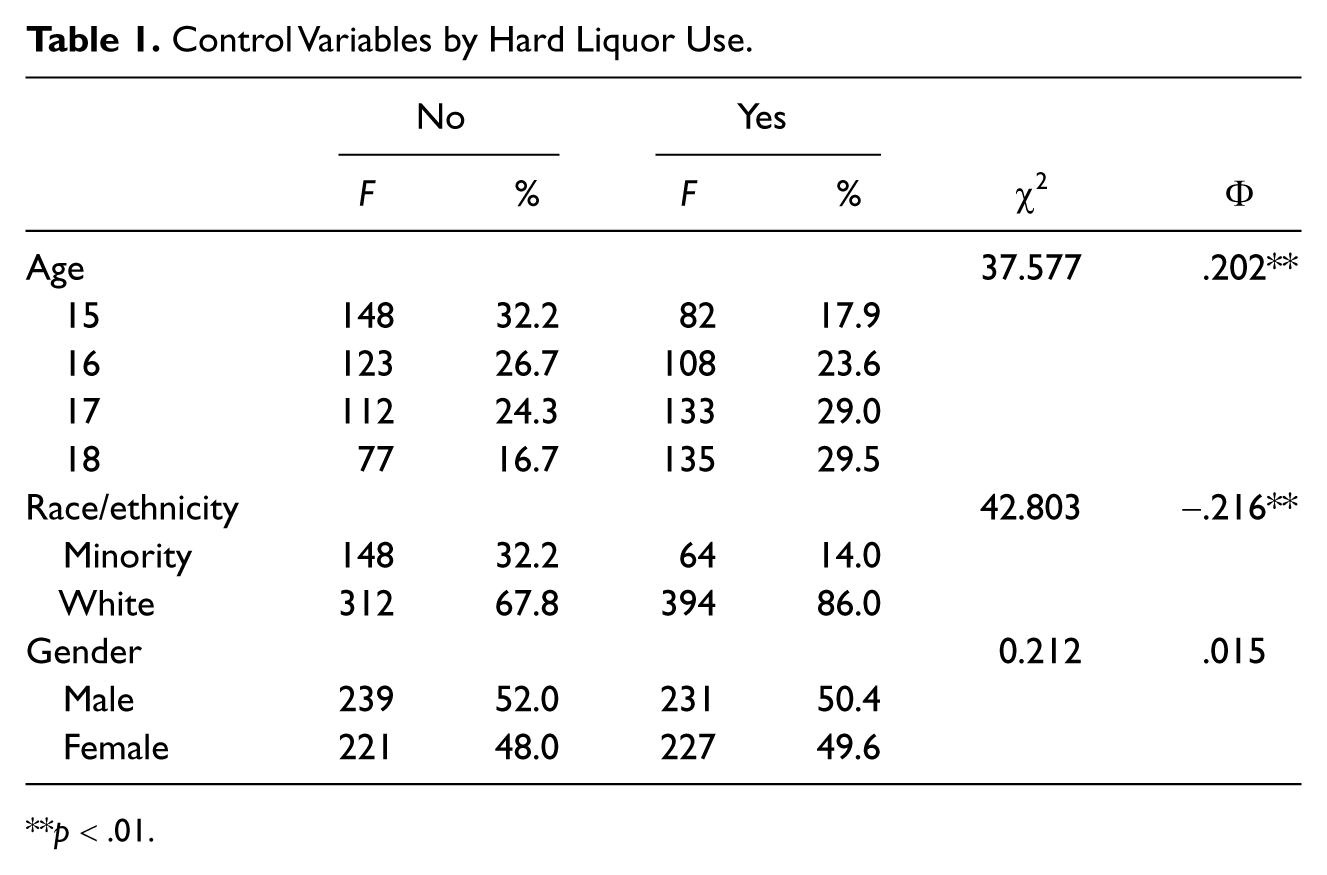
For control variable age, several patterns emerged. Respondents in this study ranged from 15 to 18 years of age with the average age of respondents being 16.5 years (N = 1,036) and varied according to substance use. For respondents who reported not using hard liquor (n = 460), most respondents were 15 years old (32.2%). For respondents who reported using hard liquor (n = 458), most (58.5%) were between the ages of 17 and 18 years. Similar results are reported for marijuana use.
No significant differences in mean age of male and female respondents were found. However, age differences were found in respondents according to their reported participation in alcohol and marijuana use. For females who reported hard liquor and substance use, the most common ages ranged consistently between 16 and 18 years. For males who reported hard liquor and marijuana use, there were variations depending on the substance reported. Most males who reported using marijuana were between the ages of 17 and 18 years. Consistent with other research, a larger number of older males reported using marijuana compared with younger males. Tables 1 and 2 provide information for the control variables.
Control Variables by Hard Liquor Use.
p < .01.
Control Variables by Marijuana Use.

p < .01.
Even prior to estimating the relationship between age and substance use, preliminary observations revealed differences between users and nonusers for both hard liquor and marijuana use. Independent t-test analyses were conducted for age, to examine the means between the reported users and nonusers. Results supported the preliminary observation that the mean age for users and nonsubstance users did differ significantly. These results are similar to previous findings, where older youth are more likely than younger youth to use hard liquor and marijuana.
Race/Ethnicity
Within the total sample of 1,036 respondents, there were five categories of race/ethnicity for which respondents answered (Anglo, 76.9%; Black, 16.1%; Hispanic, 5.2%; American Indian, 0.6%; and Asian, 1.1%). The original responses were recoded as two responses indicating White and minority responses. White respondents were recoded “1” and minority respondents were recoded “2.” Majority group respondents (76.9%) comprised the largest proportion of the sample, whereas minority group respondents (23.1%) comprised the smaller portion. The results revealed significant differences between White and minority groups; however, these results were not in the expected direction. Specifically, White respondents were more likely to use hard liquor when compared with their minority counterparts. For marijuana use, the results revealed a little difference by majority/minority status and showed that slightly more minorities (n = 188) reported using marijuana compared with Whites (n = 177). Chi-square analysis showed that there were no significant differences in the observed and expected values for the “race” and “marijuana use” responses, χ2 = .013, Φ = .004.
Family Structure
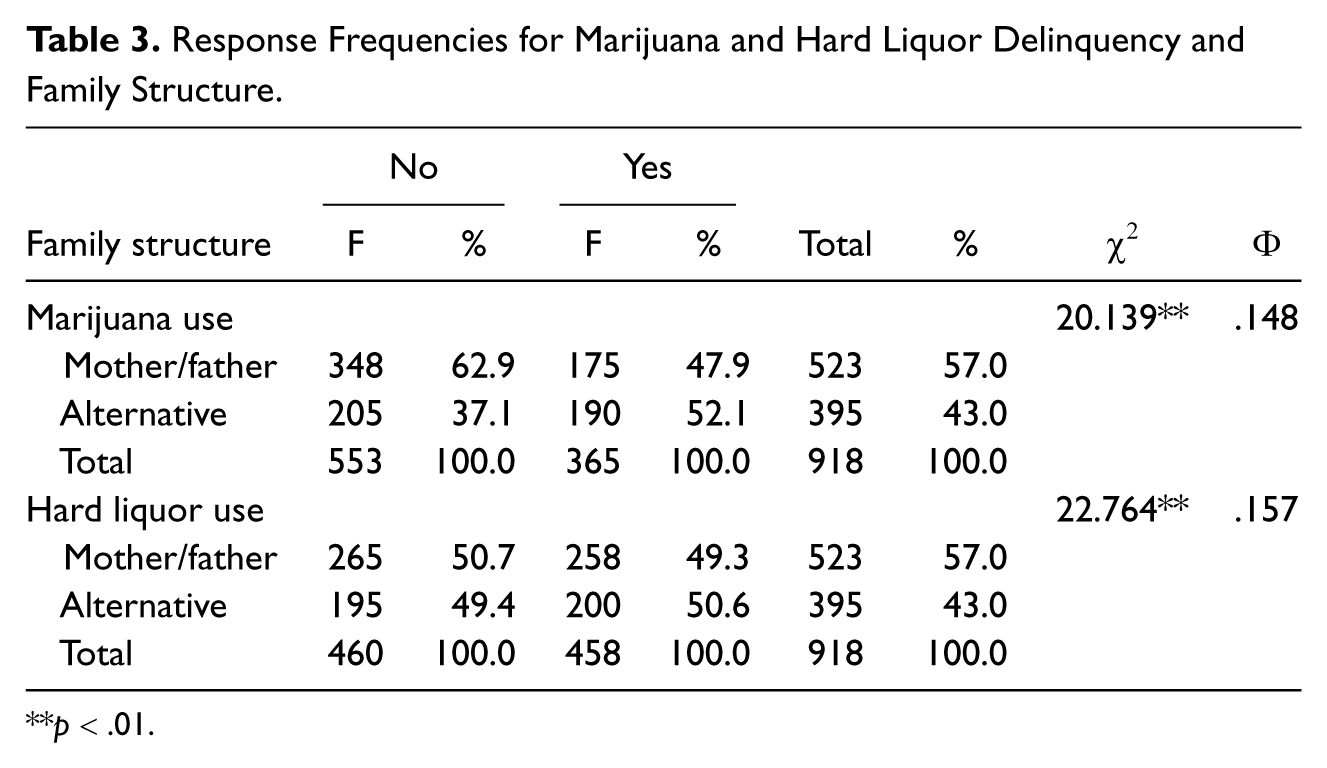
Examination of the predictor and outcome variables showed that the observed and expected values for family structure varied significantly across adolescent marijuana use. The chi-square analysis comparing the differences between the observed and expected values among the outcome variable “marijuana use” and the predictor variable “family structure” revealed a significant difference, χ2 = 20.139, Φ = .148. Although these two variables were not independent of each other, the phi statistic revealed only a mild association between the two, explaining only 2% of the associated variance between these variables. These results revealed a weak association between family structure and marijuana use in the past 3 years. This weak association may be explained largely as a result of the family structure variable representing an indirect social control measure. Although weak, these findings showed that adolescent respondents who reported living in alternative family structures were more likely to use marijuana than respondents living with both natural parents. Adolescent respondents who reported living with both biological parents (n =175) were less likely to report marijuana use compared with adolescents who did not (n = 190). The examination of the effects of family structure on adolescent marijuana use can be found in Table 3.
Response Frequencies for Marijuana and Hard Liquor Delinquency and Family Structure.
p < .01.
Examination of the predictor and outcome variables showed that the observed and expected values for family structure varied significantly across adolescent hard liquor use. The chi-square analysis comparing the differences between the observed and expected values among the outcome variable “hard liquor” and the predictor variable “family structure” revealed a significant difference, χ2 = 26.764, Φ = .157. Although these two variables were not independent of each other, the phi statistic revealed only a mild association between the two, explaining only 2.5% of the associated variance between these variables. Regarding the effect of family structure on hard liquor–use delinquency, the overall effect was not significant. Specifically, the data revealed that for “hard liquor” use, adolescents who reported living with both their biological parents (n = 258) were in fact more likely to report hard liquor use when compared with other respondents (n = 200). The examination of the effects of family structure on hard liquor use can be found in Table 3.
Family Attachment
Examination of the predictor and outcome variables showed that the observed and expected values for family attachment varied significantly across marijuana use. Results revealed significant differences between respondents who reported “low” levels of family attachment compared with those who reported “high” levels of family attachment and marijuana use. Specifically, 355 (66.5%) of respondents reporting high family attachment reported no hard liquor use compared with the 179 (33.5%) who reported use. Likewise, 166 (52.7%) of youth reporting low family attachment reported using hard liquor compared with 149 (47.3%) who did not. Chi-square analysis showed that were significant differences in the observed and expected values for family attachment and marijuana use responses, χ2 = 30.207, Φ = –.189. These results revealed that family attachment was significantly related to whether respondents had used marijuana in the past 3 years. Respondents who reported low family attachment were more likely to use marijuana than respondents who reported high family attachment.
Similar results are found regarding the relationship between family attachment and reported hard liquor use. The relationship between family attachment and hard liquor use on adolescent marijuana use was statistically significant (p < .05), and the results can be found in Table 4. Specifically, results revealed significant differences between respondents who reported low levels of family attachment compared with those who reported high levels of family attachment. Specifically, 306 (69.7%) of the respondents reporting high family attachment reported no hard liquor use compared with the 133 (30.3%) who reported use. Likewise, 212 (51.7%) of youth reporting low family attachment reported using hard liquor compared with 198 (48.3%) who did not. Examination of the predictor and outcome variables showed that the observed and expected values for family attachment varied significantly across hard liquor use. Chi-square analysis showed that there were significant differences in the observed and expected values for the “family attachment” and “hard liquor” use responses, χ2 = 40.289, Φ = –.218. The variance component was χ2 = 40.289, Φ = –.218. These results revealed that family attachment was significantly related to whether respondents had used hard liquor in the past 3 years. Specifically, respondents who reported low family attachment were more likely to use hard liquor than those respondents who reported high family attachment.
Response Frequencies for Marijuana and Hard Liquor Delinquency and Family Attachment.

p < .01.
Logistic Regression Results
Marijuana use
Marijuana use was the outcome variable associated with several social control measures, including family attachment and family structure. Following the statistically significant chi-square (χ2) and phi (Φ) estimations, logistic regression was conducted to determine which of the predictor variables best predicted adolescent marijuana use. Logistic regression was chosen because of the dichotomous nature of the outcome variable of marijuana use. All of the original five variables were used as predictor variables in the final logistic regression model and met the inclusion criterion for the exploration, including the three control variables: age, gender, and White/minority status. Control variables were included in the model to account for their possible influence on the relationship between the predictors and outcomes.
Table 5 presents the results of the logistic regression model predicting marijuana use. In this model, family attachment and family structure, in addition to control variables (age, race/ethnicity, and gender) were included as predictor variables. Multicollinearity within the correlation matrix was not strong (i.e., Φ < .80) and did not prevent inclusion of the chosen variables from contributing significantly to the logistic regression model (Schroeder, Sjoquist, & Stephan, 1990).
Specifically, the logistic regression model predicting marijuana use accounted for 8% of the variance (Nagelkerke R2 = .083) and resulted in correctly classifying 65% of the respondents. Of the five variables entered into the logistic regression model, three emerged as significant predictors of marijuana use—family attachment, family structure, and age. The “family attachment” variable emerged as the most significant predictor (p = .000) of adolescent marijuana use. Specifically, those respondents who reported not living with both natural parents were approximately 2 times more likely to use marijuana in the past 3 years compared with respondents who lived with both biological parents. Family structure (p = .002) also significantly predicted adolescent marijuana use. Adolescent respondents who reported living in alternative family structures were approximately 2 times more likely to use marijuana than respondents who reported living with both natural parents. The final predictor of marijuana use was the “age” control variable (p = .003). Surprisingly, age of the respondent emerged as a significant predictor of participation in marijuana use, indicating that older respondents were more likely to report marijuana use compared with younger respondents. Gender and race/ethnicity were not significant predictors of marijuana use.
Multivariate Logistic Regression Model for Marijuana Use (N = 1,036).

Note: CI = confidence interval.
p < .05. ***p < .001.
Hard liquor use
Hard liquor use was the outcome variable associated with two social control measures, family structure and family attachment. Following the statistically significant chi-square (χ2) and phi (Φ) estimations, logistic regression was conducted to determine which of the predictor variables best predicted adolescent hard liquor use. All of the original five variables were used as predictor variables in the final logistic regression model, including the two control variables: age and White/minority status. All five predictors were entered into the model and met the inclusion criterion for the exploration. Control variables were included in the model to account for their possible influence on the relationship between the predictors and outcomes.
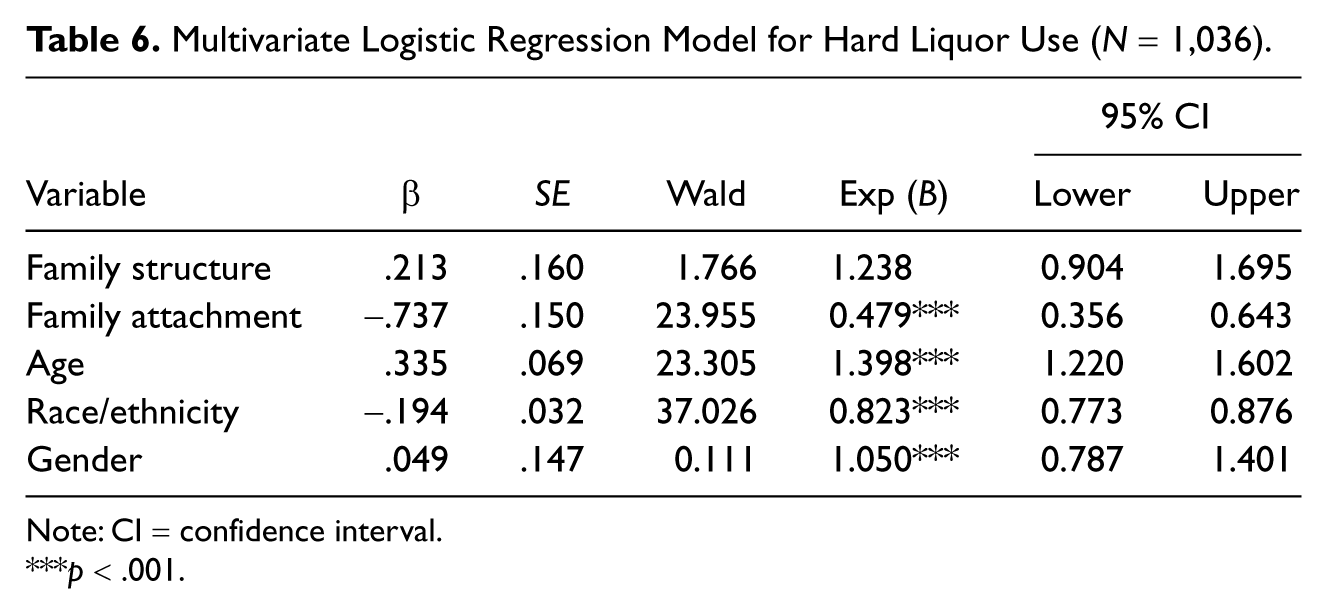
Table 6 presents the results of the logistic regression model predicting hard liquor use. For this regression model, each predictor variable represented one measure of each of the research hypothesis. Multicollinearity within the correlation matrix was not strong (i.e., Φ < .80) and did not prevent inclusion of the chosen variables from contributing significantly to the logistic regression model (Schroeder et al., 1990). Specifically, the logistic regression model predicting hard liquor use accounted for 15.2% of the variance (Nagelkerke R2 = .152) and resulted in correctly classifying 64% of the respondents. Of the five variables included, three variables, including family attachment (p = .01), age (p = .01), and ethnicity (p = .01), emerged as significant predictors of adolescent hard liquor use. Specifically, those respondents who reported having lower attachment to their parents were approximately 2 times more likely to have ever used hard liquor compared with respondents who reported high family attachment.
Multivariate Logistic Regression Model for Hard Liquor Use (N = 1,036).
Note: CI = confidence interval.
p < .001.
In addition to Hirshi’s (1969) assertion that people who were less attached to social control institutions were more likely to be delinquent/criminal, these findings further suggest that family attachment was a significant predictor of female hard liquor use and may also suggest a causal relationship. Similar to low family attachment, age, race/ethnicity, and gender were also significant predictors of adolescent hard liquor use. Those respondents who reported being less attached to their parents were approximately 2 times more likely to have ever used hard liquor compared with those who reported higher family attachment.
Although the family structure variable was a robust measure of social control, family structure was not a significant predictor of adolescent hard liquor use. Even though no statistical significance for this variable emerged at the p < .05 level, respondents from alternative family structure were still approximately 2 times as likely to report hard liquor use compared with respondents who lived with both natural parents. As shown by the results of this model, Hirshi’s (1969) social control theory was supported. In addition to adding support, these findings extend the correlational relationship between social control factors and hard liquor use to that of a likely causal relationship between the variables as theoretically predicted.
Supplemental Analyses
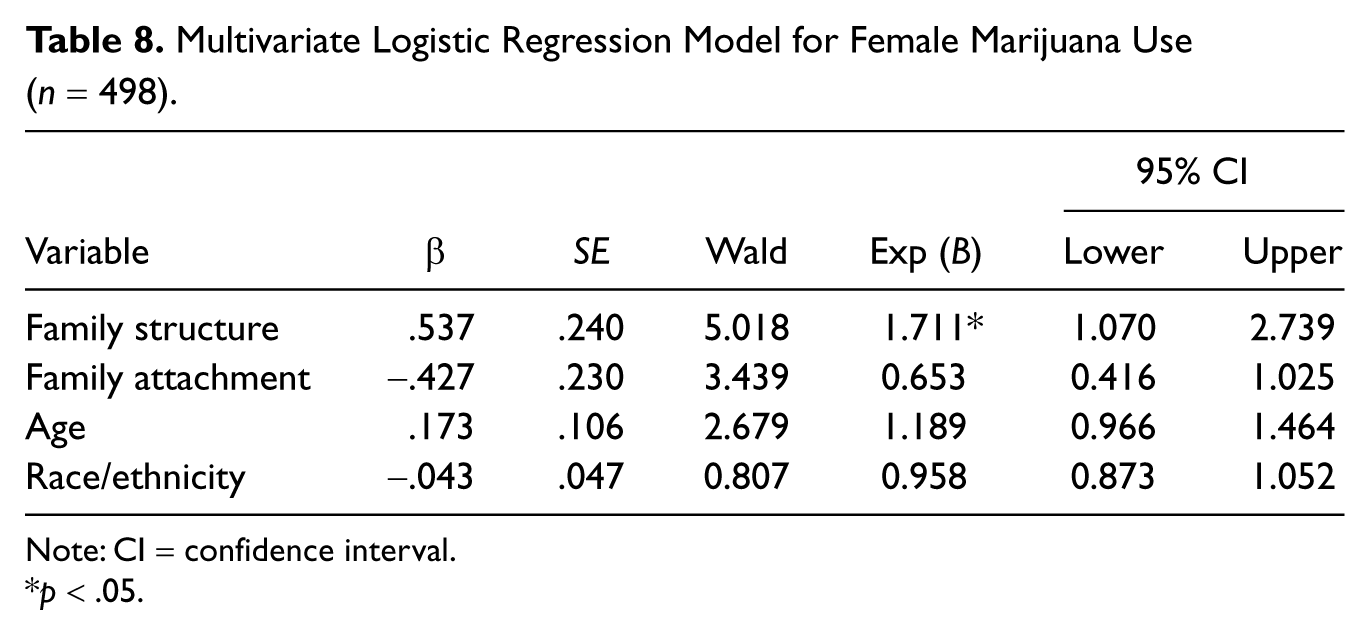
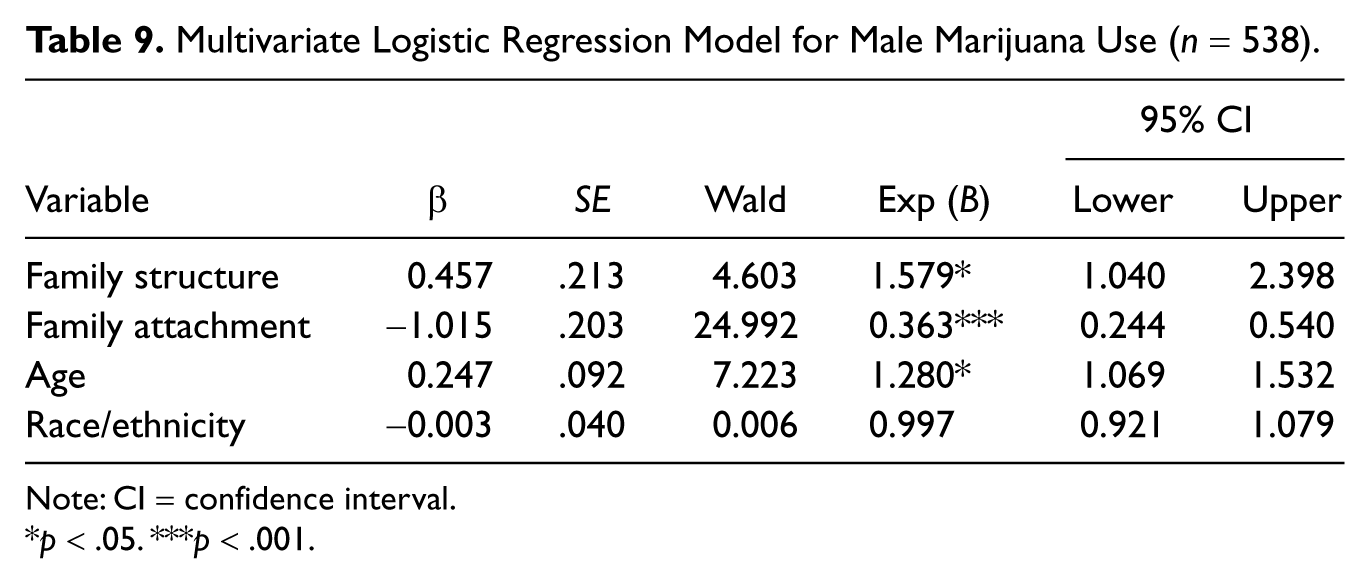
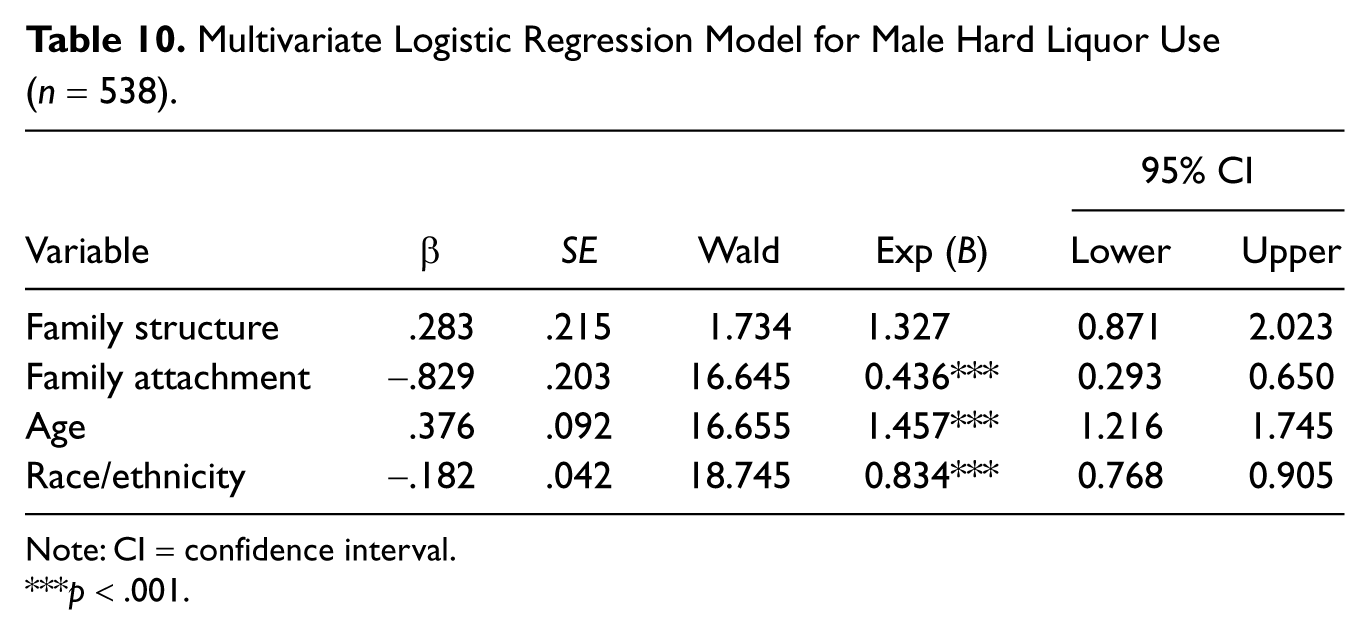
The relationship between family attachment and adolescent hard liquor and marijuana use was supported. Family structure was supported as a predictor of adolescent marijuana use. When compared, no significant differences in reported hard liquor use and marijuana use were found for male and female respondents (see Tables 7, 8, 9, and 10). For the family structure predictor, results revealed significant differences between male and female respondents who reported living with both biological parents and those who reported not living with both biological parents. Specifically, data revealed that approximately, 54.2% of females who reported not living with their biological parents reported marijuana use. Although significant differences were found for males as well, the percentage of males reporting marijuana use was equally distributed when compared by family structure. Specifically, 50% of males who reported not living with their biological parents reported marijuana use.
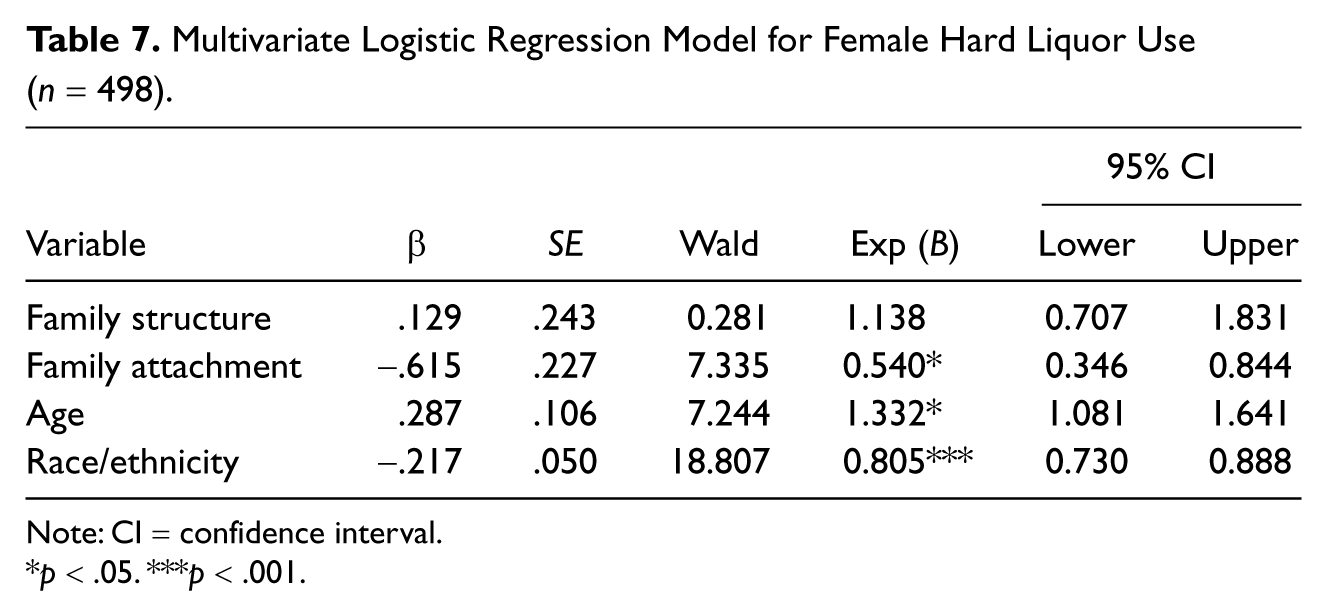
Multivariate Logistic Regression Model for Female Hard Liquor Use (n = 498).
Note: CI = confidence interval.
p < .05. ***p < .001.
Multivariate Logistic Regression Model for Female Marijuana Use (n = 498).
Note: CI = confidence interval.
p < .05.
Multivariate Logistic Regression Model for Male Marijuana Use (n = 538).
Note: CI = confidence interval.
p < .05. ***p < .001.
Multivariate Logistic Regression Model for Male Hard Liquor Use (n = 538).
Note: CI = confidence interval.
p < .001.
Three variables including the two control variables emerged as significant predictors of female hard liquor use, including family attachment (p = .052), age (p < .05), and race/ethnicity (p < .001; see Table 7). Specifically, female respondents reporting low family attachment were approximately 2 times more likely to use hard liquor than females reporting high family attachment. Regarding female “marijuana” use, family structure emerged as a significant predictor (p < .05), whereas family attachment (p = .064) was a marginal predictor of female marijuana use only when significance was relaxed to .10 (see Table 8).
For male “marijuana use,” family structure and attachment variables emerged as significant predictors (see Table 9). Family attachment emerged as the most significant predictor of male marijuana use (p < .01) when compared with family structure (p < .05). Similar to female results, results for male “hard liquor” use show that family attachment and age and race/ethnicity emerge as significant predictors of male hard liquor use.
Male respondents reporting low family attachment were also 2 times more likely to use hard liquor compared with males who reported high family attachment (see Table 10). Family structure was not a significant predictor of male or female hard liquor use.
Surprisingly though, male respondents who reported not living with both biological parents were still almost 1.5 times more likely to use hard liquor than respondents who did not live with both biological parents. Overall, the results showed that both male and female respondents with low family attachment were more likely to report using hard liquor and marijuana when compared with respondents who reported high family attachment.
Limitations
There were many advantages to conducting secondary data analyses, including availability of data, speed of statistical analyses, validity of instrument variables, and costs. Although there were advantages, limitations surrounding the use of secondary data are common (Reidel, 2010). The fact that this study used secondary data analysis on data previously collected is problematic. Test concepts were thereby limited to existing variables included in the data set. To account for these differences, multiple concepts were used to measure “family structure” and the “attachment” concept of Hirshi’s control theory.
The current study did not directly address all aspects of Hirshi’s (1969) control theory. Specifically, Hirshi’s theory introduced four major proponents explaining the relationship with social control mechanisms and delinquency, and this study was limited to analyses of the attachment variable. Third, although similar analyses have been conducted, this study focused on data from a single NSY year (1980). Although the data are now more than 10 years old, this study was an exploratory data analysis of a traditional criminological theory and its application to adolescent hard liquor and marijuana use, with specific attention to females. Consequently, the generalizability of these findings is limited, and future research would benefit from the comparison of data from multiple years.
Future Implications
The argument for the need of gendered theory was not supported by the findings of this study. However, it is true that female delinquency continues to increase. With this in mind, perhaps, policy implications surrounding female delinquency should be addressed with traditional criminological theory, albeit contrary arguments by feminist theorists. In light of the findings, suggestions for addressing female hard liquor and marijuana use are likely associated with histories of abuse and other social factors put forth in the literature. Quantitative and qualitative examinations will add to the depth of the research on female substance use and inform policy and practice concerning this juvenile population. The present study demonstrated that the application of Travis Hirshi’s control theory offered an empirically significant explanation of adolescent hard liquor and marijuana use for female and male adolescents. However, based on the results of this study, future research endeavors should include a replication with a larger sample size using male and female comparison groups.
Conclusion
The current study predicted that adolescents with weak family attachment and alternative family structures would be more likely to report hard liquor and marijuana use compared with adolescents with strong family attachment and those who live with both biological parents. The current research remained reasonably consistent with the predictions. The predictor variables suggested by Hirshi’s control theory were related in the predicted direction and emerged as significant predictors of adolescent hard liquor and marijuana use. Consistent with previous research, the significance of the family structure variable is decreased with the inclusion of the family attachment variable (Anderson & Holmes, 1999). Respondents did not vary significantly across gender, and as such, Hirshi’s control concepts emerged as significant predictors for female and male adolescent hard liquor and marijuana use. The fact that females are underrepresented in criminological research is undisputed here (Belknap, 2001; Campbell, 1987; Chesney-Lind, 1997). However, the results of this exploratory study revealed that Hirshi’s (1969) control theory does offer an explanation of female hard liquor and marijuana use. Thus, like Hirshi, these findings suggest that adolescent respondents who report weak family attachment are more likely to participate in delinquency, specifically, hard liquor and marijuana use as outlined here. The findings from this study support a broad literature that has found empirical support for Hirshi’s control theory.
Footnotes
Declaration of Conflicting Interests
The author(s) declared no potential conflicts of interest with respect to the research, authorship, and/or publication of this article.
Funding
The author(s) received no financial support for the research, authorship, and/or publication of this article.