




Abstract
We explore how identity processing styles affect the relationship between self-control and delinquency. We use data from the National Longitudinal Survey of Children and Youth (NLSCY) to examine whether the effects of the diffuse-avoidant, normative, and informational identity styles mediate and interact with the relationship between self-control and delinquency. Our results show that self-control is associated with the three identity styles and that identity styles mediate and moderate the effect of self-control on different types of delinquency. Self-control is partially mediated in predicting different types of delinquency and is fully mediated when predicting heavy marijuana use. In addition, interactive effects of identity styles and self-control are observed for drug and alcohol use but not crimes against persons and property.
Introduction
It is axiomatic within the criminological literature that low levels of self-control are associated with myriad negative behaviors and developmental outcomes, including delinquent behaviors, accidents, unplanned parenthood, and failure in school (Gottfredson, 2006; Gottfredson & Hirschi, 1990). In the social psychological literature on identity, similar problems and outcomes are associated with the diffuse-avoidant identity style (Adams et al., 2005). According to Berzonsky (1989, 1990, 1997), individuals with a diffuse-avoidant identity processing style avoid making decisions and dealing with identity conflicts for as long as possible under the assumption that things will “work themselves out” (see Berzonsky & Ferrari, 2009). They view the future as distant and decide things as they happen.
This identity style contrasts sharply with two others: the informational and normative identity processing styles. Those with an informational identity style deal with identity issues and decision making by deliberately seeking out and evaluating information from a variety of sources (Berzonsky, 2003; Soenens, Duriez, & Gossens, 2005). They tend to intentionally suspend judgment to take extended periods of time to think and learn about the problem at hand and are reflective and critical of their own self-views. On the other hand, those with a normative identity style make identity relevant decisions by internalizing and conforming to the expectations and values of significant others, such as parents or close friends, in a relatively automatic fashion (Berzonsky, 1997; Soenens et al., 2005).
To date, the literature is sparse on the relationships between the identity styles and delinquency (Adams et al., 2005). Yet, low self-control and the diffuse-avoidant identity style appear to be conceptually related and empirical associations between the two have been reported. Berzonsky, Branje, and Meeus (2007) examined the relationship between identity styles and self-control, finding a negative relationship between the diffuse-avoidant identity style and self-control and a positive relationship between the normative identity style and self-control. An unexpected negative relationship was also observed between the informational identity style and self-control. In addition, identity styles and low self-control have similar developmental roots in parenting practices. Parents who use less effective parenting styles and who do not monitor or support their children tend to raise children with lower levels of self-control (Hay, 2001; Simons, Simons, Burt, Brody, & Cutrona, 2005) and a diffuse-avoidant identity style (Berzonsky, 2004; Smits et al., 2008). Conversely, parents who use more effective parenting practices where they provide a nurturing environment, monitor their children’s behavior, and hold high expectations for their children tend to raise children with higher levels of self-control as well as normative and informational identity styles.
Although identity styles and low self-control are related, they are also theoretically and analytically distinct. More specifically, they differ (a) in the extent to which they imply the use of agency in decision making and (b) in the cognitive processes that underlie the concepts. Identity styles refer specifically to one’s orientation to self and others as one makes identity-relevant decisions. These decisions are specific to how one negotiates and orients himself or herself to decisions about relationships, worldviews, and occupations/education. Self-control on the other hand refers to one’s ability to resist temptation or to control one’s behaviors. While specific identity styles may be more amenable to certain levels of self-control (as reflected by moderate correlations reported in Berzonsky et al., 2007, and in the current paper), theoretically, each identity style can be used by an individual regardless of one’s level of self-control. For example, an individual with a diffuse-avoidant identity style may or may not have low levels of self-control. This individual may use a diffuse-avoidant identity style (i.e., “go with the flow”) but also practice high levels of self-control by participating in disciplined activities such as working out, doing homework, or practicing a musical instrument. On the other hand, it is likely that if a child grows up with low self-control she or he may resort to a diffuse-avoidant identity style as it theoretically requires the least amount of work to maintain this passive orientation. Therefore, although the diffuse-avoidant identity style is complementary with low levels of self-control, there are also many examples where an individual can have a strong diffuse-avoidant identity style but also high self-control. Similar examples can be thought of for the other identity styles: Different levels of self-control are possible among individuals with the same identity style orientation.
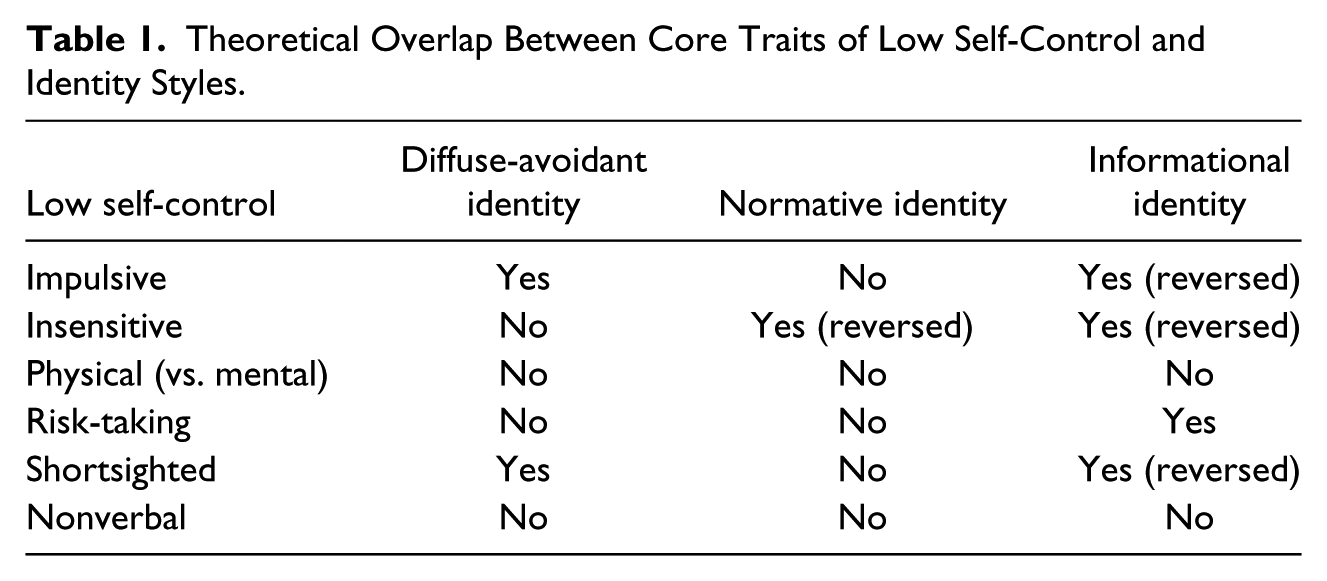
A more direct theoretical test of the similarities and differences between low self-control and identity styles is to examine whether the core traits of low self-control overlap with the description of identity styles. As Table 1 shows, there is only a moderate overlap, and many of the core traits of low self-control are not theoretical components of the three identity styles. Even where there is the most overlap, between the informational identity style and low self-control, there is little reason to think that the low self-control is a good measure of the informational identity style or that the informational identity style scale would measure self-control in any consistent manner, particularly when looking at the empirical evidence. Beyond these theoretical distinctions, we empirically test the conceptual difference between low self-control and identity styles through factor analysis and Cronbach’s alpha. The results presented later will show conceptual and construct distinctions.
Theoretical Overlap Between Core Traits of Low Self-Control and Identity Styles.
The goal of this study is to examine the relationship between low self-control and adolescent delinquency with a specific focus on the effects of identity styles. We investigate the hypothesis that the relationship between low self-control and delinquency previously reported (Pratt & Cullen, 2000) will be partially mediated and moderated when adolescents with different levels of diffuse-avoidant, normative, and informational identity styles are identified. The mediation of low self-control by identity styles would suggest that low self-control plays a role in the development of identity styles, and, therefore, part of the reason low self-control is related to delinquent behavior is because it promotes the development of identity styles that are conducive to such behaviors or limits the development of identity styles that prevent delinquency. We further examine whether identity styles interact with low self-control, which would indicate that identity styles qualify how low self-control is manifested in behaviors. The use of an identity style that is more conforming, such as the normative identity style would likely lead to nondeviant expressions of low self-control, such as overeating or procrastination. Equally, the use of identity styles that are less conforming, more exploratory, or less self-directed, such as the informational and diffuse-avoidant identity style, would likely lead to deviant expressions of low self-control.
A second goal of the current study is to examine whether identity styles contribute to a general or specific theory of adolescent delinquency. Past research linking identity styles to behavioral and cognitive outcomes reveals that the diffuse-avoidant identity style generally predicts negative outcomes while the normative identity style generally predicts positive outcomes (Adams et al., 2005; Berzonsky et al., 2007). On the other hand, the relationship between the informational identity style and behavioral/cognitive outcomes is more specific and tends to require different explanations for different outcomes. By examining the relationship between identity styles and various forms of delinquency, we can test whether the patterns are general or specific to some forms of delinquency but not others.
Identity Styles and Adolescent Delinquency
Scholars studying identity development argue that involvement in delinquency can be understood as a form of normal identity exploration (Dworkin, 2005). According to Berzonsky (1989, 1990, 1997), individuals construct their identity as a dialectical sociocognitive process in which the self is gradually revised and reconstructed over one’s life course. The concept and measurement of identity processing styles capture one’s cognitive and relational orientation to decision making as one engages in the process of constructing their identity. The concept thus reflects the ways in which individuals understand their relationships with others and how much stock they place in the opinions of others when making decisions. They also account for the willingness of individuals to seek out, explore, and reevaluate how they should approach solving questions pertaining to the three main identity domains (worldviews, relationships, and occupation) identified by Marcia (1966).
Berzonsky’s (1989) theory of identity processing posits three main identity styles. These identity styles are based on variations in how individuals approach the tasks of monitoring, using, testing, and reconstructing their (self-constructed) identity. These three identity styles are the informational style, the normative style, and the diffuse-avoidant style. Theoretically, the diffuse-avoidant identity style is expected to be the most criminogenic. Individuals with a diffuse-avoidant identity style are more likely to “go with the flow” and make unplanned decisions based on situational demands and rewards (Berzonsky, 1997). They should fall more easily for the temptations of delinquency when an opportunity comes their way and place less emphasis on the future legal and social consequences of illegal activities (Berzonsky et al., 2007; Berzonsky & Ferrari, 2009). In contrast, individuals with a normative identity style should generally be opposed to deviance. They are expected to endorse social convention, conformity, and should abide by the rules given by their parents and their schools (Soenens et al., 2005). They should also seek out nondelinquent peers who support them in their views and who provide relationships that do not question their conformity to societal expectations. Finally, it is not clear whether an informational identity style should be associated with higher or lower involvement in delinquency. On one hand, individuals with an informational identity style might consider delinquent behavior to be new and exciting experiences that are congruent with their desire to explore various role identities and not simply conform to norms without informed exploration (Berzonsky, 1992). On the other hand, they tend to be successful planners and high achievers (Berzonsky & Kuk, 2000). They are less likely to be influenced by others if they disagree with them and are skilled at monitoring their own behavior (Berzonsky & Kuk, 2000).
Few studies have examined the relationships between identity styles and delinquency. The most relevant is Adams et al. (2005). Based on a sample of 1,450 Canadian students aged 12-19, they found that adolescents with a diffuse-avoidant identity style had higher levels of delinquency than those with normative or informational identity styles, and that those with an informational identity style had higher levels of delinquency than those with a normative identity style. Adams et al., however, did not use a measure of self-control in their model to examine the dynamics of its relationship with identity styles. In addition, they measured the relationship between identity styles and a latent “delinquency” variable, thereby not examining the relationships between identity styles and different types of delinquent behaviors.
Self-Control and Identity Styles: Developmental Associations
According to Gottfredson and Hirschi (1990), most delinquent behaviors involve short-term rewards and long-term costs. Delinquents are more vulnerable to the temptation of quick and easy rewards from illegal activities while nondelinquents control themselves by considering future consequences. Gottfredson and Hirschi used the term low self-control to describe the main causal factor explaining delinquent behaviors. Adolescents with low self-control, they argue, were inadequately supervised and socialized by their parents when they were younger, never learned that breaking rules has consequences, and tend to live their lives in the present moment looking for instant gratifications. These individuals “will tend to be impulsive, insensitive, physical (as opposed to mental), risk-taking, short-sighted, and non-verbal” (1990, p. 90). Gottfredson and Hirschi also acknowledged that not everybody who has low self-control will do delinquent acts (p. 91). Rather, when low self-control is coupled with opportunities for crime, delinquent acts are very likely. Although studies show that criminal opportunities significantly interact with low self-control, they also show that opportunities do not explain all of the relationship between self-control and delinquent behaviors (Hay & Forrest, 2008). Thus, there should be other explanations about why low self-control is associated with delinquency for some people but not others. We argue that variation in identity styles is one of these explanations.
Identity styles and self-control are developmentally related (Berzonsky, 2004; Simons et al., 2005). Two important questions, however, are whether one develops before the other; and whether the development of one influences the development of the other? Literature on self-control suggests that it develops in childhood by the age of 10 to 12 (Pratt, Turner, & Piquero, 2004) and that although self-control varies within individuals over time, differences between individuals are relatively stable. Identity styles on the other hand develop after puberty and solidify as individuals move toward later adolescence (Berzonsky et al., 2007). Because self-control develops prior to identity styles, it might influence the development of identity styles. Thus, if (a) self-control is associated with identity styles and (b) the effects of identity styles partially or totally mediate the relationship between self-control and delinquency, then a plausible explanation is that self-control contributes to the development of identity styles that increase or decrease adolescents’ propensity for delinquency.
The Current Study and Hypotheses
The primary goal of the current study is to examine the mediating and interactive effects of identity styles in the relationship between low self-control and adolescent delinquency. The secondary goal is to examine whether identity styles contribute to a general or specific theory of adolescent delinquency by looking at different types of delinquencies. Based on prior studies of low self-control and identity styles, we developed a series of hypotheses. We organize these hypotheses in two groups: main effects and interactive effects.
Main Effect Hypotheses
Interactive Effect Hypotheses
Method
The analyses are based on data from the third and fourth cycles of the NLSCY. Cycle 3 was collected between the years 1998 and 1999 and Cycle 4 was collected between the years 2000 and 2001. The NLSCY is a Canadian longitudinal survey conducted by Statistics Canada beginning in 1994. The survey reports child/adolescent development and well-being from birth to early adulthood. The subsample that was used in the current study consists of youth 16 to 17 years of age who answered questions about their identity styles. Although we use data from two cycles, the analyses are cross-sectional because identity styles were only measured at one time point. The measures of identity styles, crime, substance use, and parental monitoring come from Wave IV, and the measures for self-control and parental support come from Wave III because the questions were not asked in Wave IV. All results have been weighted to be representative of the Canadian population of 16- and 17-year-old adolescents (nonweighted results were similar).
Measurement
The dependent variables are based on self-reported delinquent behaviors. For each type of delinquency, a binary variable was created and coded “1” if the respondent engaged in the behavior during the last year and “0” otherwise. The six types of delinquent behaviors are violence (fighting with someone to the point where they needed care for their injuries; hitting someone with a weapon during a fight; assaulting someone with the idea of seriously hurting him or her); theft (stealing something from a store, school, or parents; breaking or sneaking into a house or building with the idea of stealing something; stealing a car, motorbike, or motorboat); vandalism (damaging or destroying anything that didn’t belong to you; setting fire on purpose to a building, a car, or something else not belonging to you); heavy drinking (being drunk at least once per week); heavy marijuana use (using marijuana at least once per week); and hard drug use (using hallucinogens such as Lysergic Acid Diethylamide [LSD], acid, or magic mushrooms; using glue or solvents; using drugs without a prescription or advice from a doctor: downers, uppers, tranquilizers, Ritalin; using crack cocaine, heroin, speed, or ecstasy).
The main independent variables are low self-control and identity styles. Low self-control and identity styles were both constructed as latent variables using confirmatory factor analysis and reliability analysis. Each measure loaded on a single factor and yielded alpha coefficients of acceptable levels (0.6 or more). Furthermore, to test for construct distinctions between self-control and the normative and diffuse-avoidant identity style, we ran two exploratory factor analyses where low self-control items were loaded with the normative and diffuse-avoidant identity style items. The exploratory factor analysis showed that the items loaded in two distinct constructs in the rotated component matrix. In addition, a second test was run to ensure construct distinction where the items were loaded in a similar manner into a reliability analysis. In these tests, the Cronbach’s alpha coefficients did not increase with the addition of low self-control items to the normative and diffuse-avoidant identity styles indicating that self-control items were not a part of the same construct. The alpha coefficient was the same at .75 for the diffuse-avoidant identity style and was reduced from .65 to .58 for the normative identity style.
Low self-control is based on eight items measured with a Likert scale asking about the extent to which the respondent is impulsive, inattentive, and easily distracted (list of items for all scales available from the authors). The items used in this study are similar to those used in the Behavioral Problem Index (BPI; Zill & Peterson, 1986) and have been used in other studies testing the relationship between low self-control and delinquency (Pratt et al., 2004). They include, “I am impulsive, I act without thinking”; “I cannot settle to anything for long”; “I have difficulty waiting for my turn”; “I often can’t sit still, am restless, or hyperactive”; “I am easily distracted”; “I fidget”; “I can’t concentrate, can’t pay attention”; “I cannot settle to anything for long”; “I am inattentive.” The Cronbach’s alpha for the low self-control scale is .807. Although the indicators of low self-control available in the NLSCY do not fully reflect Gottfredson and Hirschi’s (1990) conceptualization of low self-control, we are confident in our measure for three reasons. First, the high Cronbach’s alpha indicates good internal consistency: The items are strongly related with the latent variable of low self-control. Second, previous research shows that low self-control has very consistent effects on delinquency even when measured with different scales (Pratt & Cullen, 2000). Third, our measure of low self-control is strongly associated with the six types of delinquency in our study, as theoretically predicted.
Respondents were asked questions from a revised version of the Identity Style Inventory (ISI-3) developed by Berzonsky (1989, 1992). The diffuse-avoidant identity style consists of 10 items that ask about the extent to which the individual puts off or avoids making decisions about identity-relevant problems and stresses. In addition, the questions ask how much the individual discounts the future and assumes that things will work themselves out instead of dealing with problems. Examples of these items are, “It doesn’t pay to worry about values in advance; I decide things as they happen”; “Many times, by not concerning myself with personal problems, they work themselves out”; and “When I have to make a decision, I try to wait as long as possible in order to see what will happen.” The Cronbach’s alpha for the diffuse-avoidant identity style scale is .75.
The normative identity style is based on nine items asking about how much the individual relies on, and conforms to, the prescriptions and expectations of significant others in their lives when making identity-relevant decisions. They also ask whether the individual questions the beliefs and values that he or she was raised with and how much his or her beliefs are rooted in the views of his or her parents or close friends. Examples of these items are, “I prefer to deal with situations the way that other people expect me to”; “I’ve more or less always operated according to the values with which I was brought up”; “I’ve always had purpose in my life”; “I was brought up to know what to strive for”; and “I find it’s best for me to rely on the advice of close friends or relatives when I have a problem.” The Cronbach’s alpha for the normative identity style scale is .65.
The informational identity style is based on 11 items assessing the extent to which individuals pursue information, actively seek advice from others, and take time in making their decisions when faced with identity-relevant problems. Examples of these items are, “I’ve spent a great deal of time thinking seriously about what I should do with my life”; “I’ve spent a good deal of time reading and talking to others about religious ideas”; “When I have a personal problem, I try to analyze the situation in order to understand it”; and “I like to have the responsibility for handling problems in my life that require me to think on my own.” The Cronbach’s alpha for the informational identity style scale is .75.
We also include four control variables in our analyses: gender, socioeconomic status (SES), race, and parenting style. Gender is a dichotomous variable coded “1” for males and “0” for females. SES is measured based on the adolescents’ household, is derived from five indicators, and was developed by Statistics Canada in the NLSCY Data. The five indicators that make up SES are both parents’ level of education, prestige of both parents’ job; and level of household income. Each case was assigned a value between 1.5 and −1.5 where the higher the score the higher the SES. Race was constructed as a binary variable, White or non-White. Using a binary variable for this was necessary because of the racial homogeneity of our sample (92% White) and the smaller sample sizes if we were to use a race variable with more categories. Parenting styles is a four-category variable. Although different classifications of parenting styles are possible, we rely on Baumrind’s (1991) typology of authoritative, authoritarian, indulgent, and neglectful parenting styles. Other scholars have used a similar typology in studies of delinquency or identity styles (e.g. Berzonsky, 2004; Simons et al., 2005). The parenting style typology was constructed by cross-tabulating high and low scores of child-reported parental monitoring by child-reported parental responsiveness. The child-monitoring scale was constructed using four items asking adolescents about how much their parents know where they are going, who they are with, and what time they should be home (Cronbach’s alpha = .74). The parental responsiveness scale was constructed using seven items asking adolescents about how much their parents listen, praise, and appreciate them (Cronbach’s alpha = . 91). Parents are considered authoritative if they display above-average levels of monitoring and control of their children and above-average levels of responsiveness and affection for them. They are considered authoritarian if they display above-average levels of monitoring and control of their children but below-average levels of responsiveness and affection. They are considered indulgent if they display below-average levels of monitoring and control of their children but above-average levels of responsiveness and affection. Finally, they are considered neglectful if they display below-average levels of monitoring and control of their children and below-average levels of responsiveness and affection. In the analysis, the authoritative parenting style is used as the reference category because it is often considered the most adequate parenting style (Steinberg & Morris, 2001).
Analysis
We use binary logistic regression to estimate the likelihood that the respondents engaged or not in different types of delinquent behavior during the last year. The analysis is performed using a stepwise method where variables are added at each consecutive step to test the mediation and interaction hypotheses. In the first equation, a baseline model is established estimating the effects of low self-control, gender, race, SES, and parenting style. In the second equation, the three identity styles are added to see whether their effects mediate the effect of low self-control on delinquency. In the third step, interaction terms between identity styles and low self-control are tested; significant interactions indicate that the effect of self-control on delinquency is moderated by identity styles (the third step is only shown if significant interactions are found).
To determine whether the mediation effect is significant, we have calculated the Sobel test statistic (Sobel, 1982), which is a formal test of significance for mediation models and has been recommended as the best test for mediation effects by Mackinnon, Lockwood, Hoffman, West, and Sheets (2002) compared with 14 other methods. This test allows us to judge whether X2 uniquely accounted for the change in X1’s relationship to Y, above the effect of simply reducing the variance. The Sobel test is conducted by comparing the product of the indirect effect of X1 on X2 and X2 on Y and dividing it by the product of the standard error of the same coefficients (Preacher & Hayes, 2004). The test helps to identify which identity style is most responsible for the mediation effects (All Sobel test were calculated using online software provided by K. J. Preacher G. J. Leonardelli. The software can be found at http://www.quantpsy.org/sobel/sobel.htm). In addition, in line with the widely agreed on criteria for a mediational model (see Mackinnon et al., 2002), the authors have estimated models (supplementary analysis not shown) to ensure that (a) low self-control (X1) is related to delinquency (Y), (b) low self-control (X1) is related to identity styles independently (X2) in a multivariate model, and (c) identity styles (X2) are related to delinquency (Y). All mediation effects we present in the current study are supported by a statistically significant Sobel test.
Results
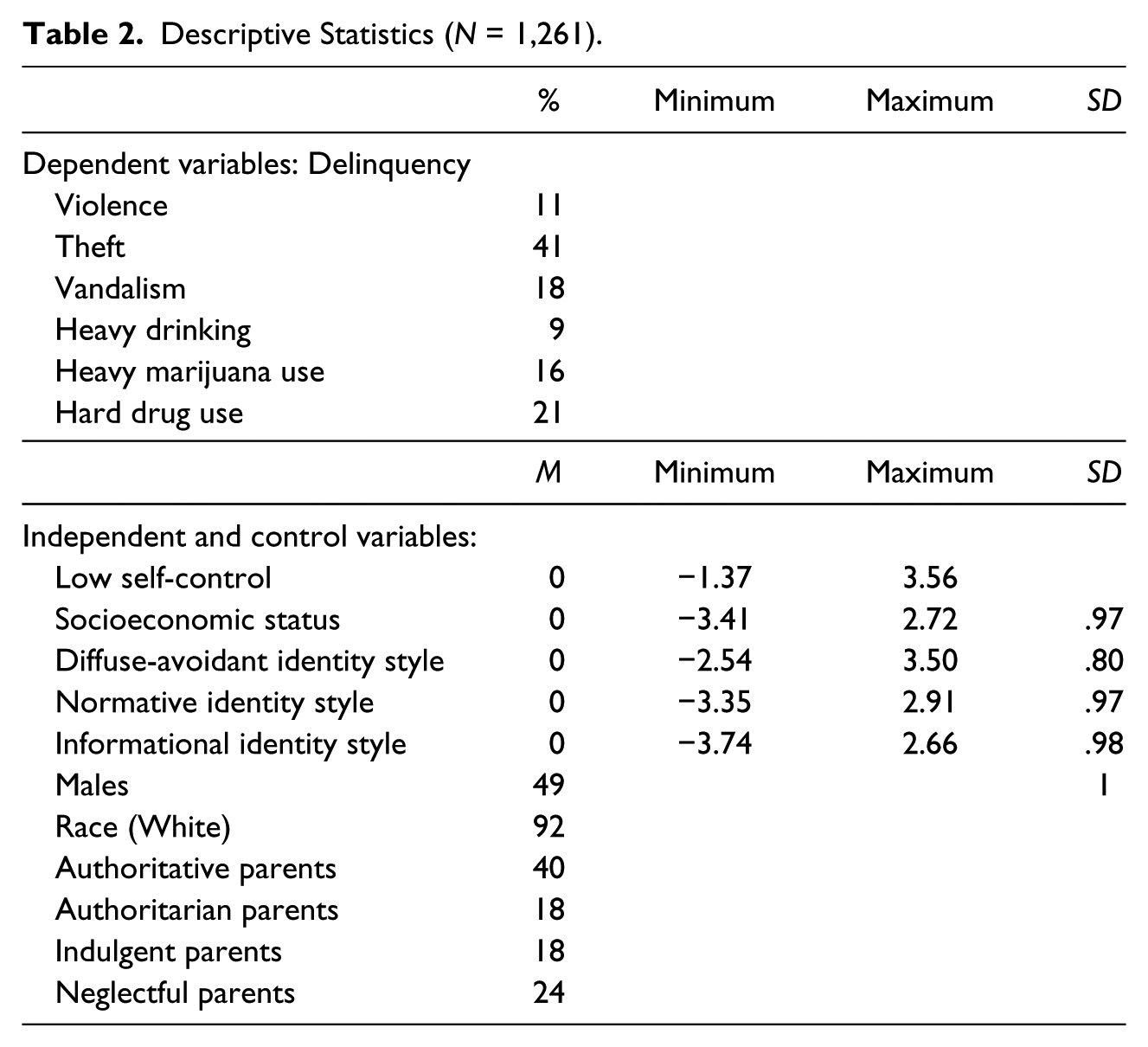
Descriptive statistics are presented in Table 2. Respondents reported being involved in delinquent behavior fairly often: 11% committed acts of violence, 41% committed theft, and 18% committed vandalism. Respondents also engaged in heavy drinking (9%), heavy marijuana use (16%), and hard drug use (21%). Bivarite correlations (not presented in a table) show that low self-control is positively correlated with the diffuse-avoidant identity style (r = .25; p < .01) and is negatively correlated with the informational (r = −.14; p < .05) and normative (r = −.15; p < .05) identity styles. These correlations are in the theoretically predicted directions and suggest that the development of low self-control may be related to the development of identity styles. They are not strong enough, however, to indicate that low self-control and identity styles are referring to the same concept. Furthermore, in analysis not shown here, we used ordinary least squares (OLS) regression models to test the relationship between low self-control (IV) and each of the identity styles (DV), controlling for gender, race, SES, and parenting styles. Low self-control was significantly related (p < .05) to each of the identity styles (b = −.096 for normative identity; b = −.102 for informational identity; b = .227 for diffuse-avoidant identity). These results help to establish the foundations to interpret the results for mediation.
Descriptive Statistics (N = 1,261).
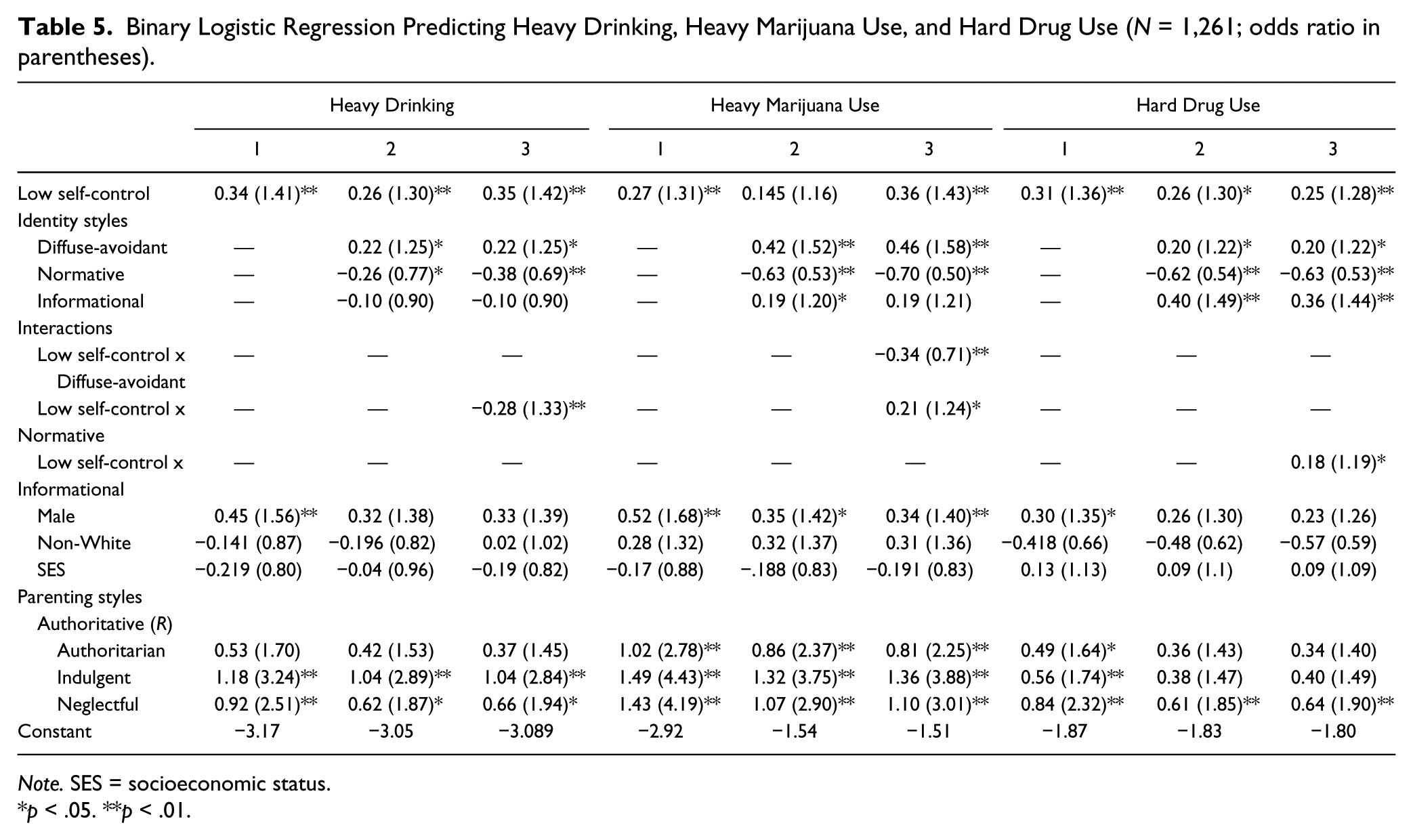
Results from our binary logistic regression analyses are presented in Tables 4 and 5. In Step 1, where identity styles are not included, low self-control has strong negative effects on all six types of delinquency. The odds ratios range from 1.29 to 1.46, indicating that one unit increase in low self-control (one unit equals one standard deviation from the mean) is associated with 29% to 46% increase in the odds of different types of delinquency.
Bivarite Correlations Between Independent Variables.
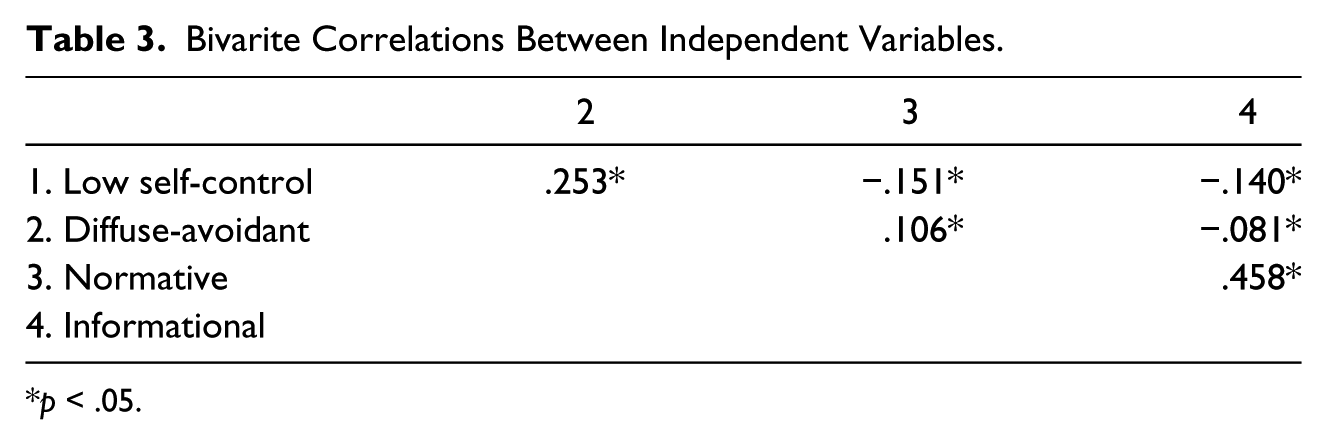
p < .05.
Binary Logistic Regression Predicting Violence, Theft, and Vandalism (N = 1,261; odds ratio in parentheses).

Note. SES = socioeconomic status.
p < .05. **p < .01.
Binary Logistic Regression Predicting Heavy Drinking, Heavy Marijuana Use, and Hard Drug Use (N = 1,261; odds ratio in parentheses).
Note. SES = socioeconomic status.
p < .05. **p < .01.
When identity styles are entered in Step 2, several patterns emerge. First, the effects of low self-control on delinquent behaviors are either partially or fully mediated for every type of delinquent behavior. The effects of low self-control are fully mediated by the effects of identity styles on the likelihood of heavy marijuana use, and partially mediated on the likelihood of violence, theft, vandalism, heavy drinking, and hard drug use. In the models where low self-control is partially mediated, the percentage change in odds ratios for the effects of self-control are 20% for violence, 36% for theft, 39% for vandalism, 27% for heavy drinking, and 17% for hard drug use. Furthermore, the Sobel test of significant mediation, which detects mediation above the effect of simply reducing variance by adding variables, shows that the normative and diffuse-avoidant identity styles were primarily responsible for the mediation (results of Sobel test available from the authors). These findings are consistent with the hypothesis that low self-control is related to the development of identity styles, specifically, the normative and diffuse-avoidant identity styles, and that the relationship between low self-control and delinquency is partly attributable to variations in the identity styles of adolescents.
We also observe many interesting relationships between identity styles and delinquency. The diffuse-avoidant identity style is strongly associated with greater likelihood of delinquency for the six types of delinquent behaviors. Based on the odds ratios, an increase in one unit on the diffuse-avoidant scale (one standard deviation above the mean) is associated with a percentage increase of 14% in the odds of violence, 27% for theft, 80% for vandalism, 25% for heavy drinking, 58% for heavy marijuana use, and 22% for hard drug use. In contrast, the normative identity style is strongly associated with lower likelihood of delinquency for the six types of delinquent behaviors. Based on the odds ratios, an increase in one unit on the normative scale is associated with a percentage reduction of 24% in the odds of violence, 44% for theft, 37% for vandalism, 31% for heavy drinking, 21% for heavy marijuana use, and 47% for hard drug use. The informational identity style is not consistently associated with delinquency: It is associated with higher risks of heavy marijuana use (20%) and hard drug use (49%), but there is no relationship with the other types of delinquency.
We also examine whether low self-control and identity styles have interactive effects on delinquency (the third step). Interestingly, we observe interactive effects for the three types of delinquency related with alcohol and drug use but only additive effects for the types of delinquency related with violence and property crimes. To better understand the interactive patterns, we created a figure with four quadrants showing predicted probabilities based on equation 3.
Figure 1 shows the interactive effects of low self-control and the normative identity style on heavy drinking. Adolescents with a low normative identity style have high levels of heavy drinking when they have low self-control (.18), but they have much lower levels of heavy drinking when they have high self-control (.06). In contrast, the levels of self-control do not matter for adolescents with strong normative identity: They always have low levels of heavy drinking. Thus, low self-control does not lead to excessive drinking when individuals have strong normative identities, but it does otherwise.
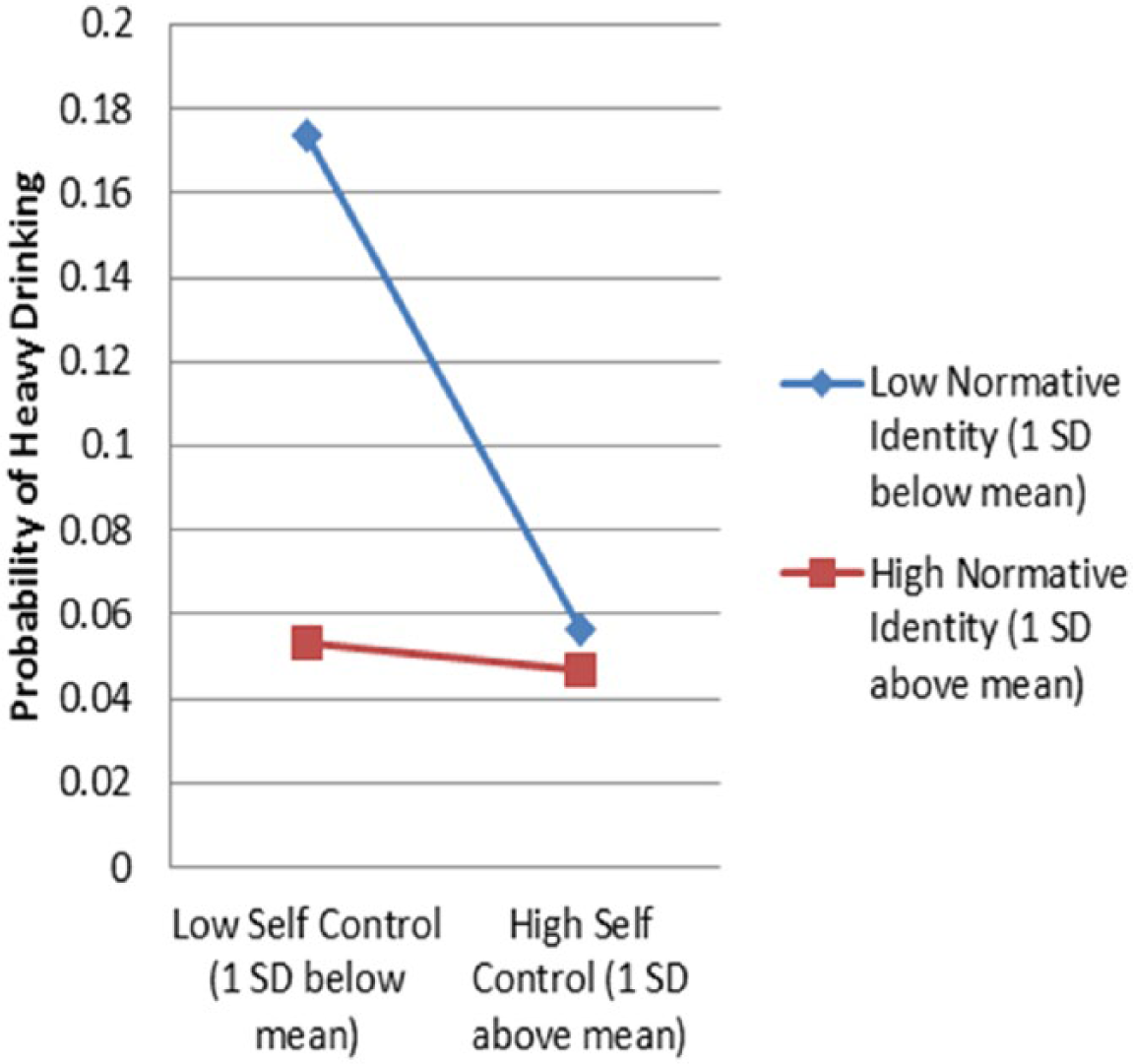
Predicted probabilities of heavy drinking by levels of self-control and normative identity style.
Figure 2 shows the interactive effects of low self-control and the diffuse-avoidant identity style on heavy marijuana use. Adolescents with a high diffuse-avoidant identity style are very likely to engage in heavy marijuana use, regardless of their levels of self-control (predicted probabilities around .33-.34). In contrast, adolescents with a low diffuse-identity style have very low probability of engaging in heavy marijuana use if they also have high self-control (.09), but they will do so more often when they have low self-control (.28). Thus, high self-control does not guarantee low levels of marijuana use: Adolescents with a diffuse-avoidant identity have high levels of heavy marijuana use even when they have high self-control. Figure 3 shows a weak interaction effect between low self-control and the normative identity style on heavy marijuana use. Adolescents with a high normative identity style and high self-control are particularly unlikely to engage in heavy marijuana use (.08). The two slopes are very similar, however.
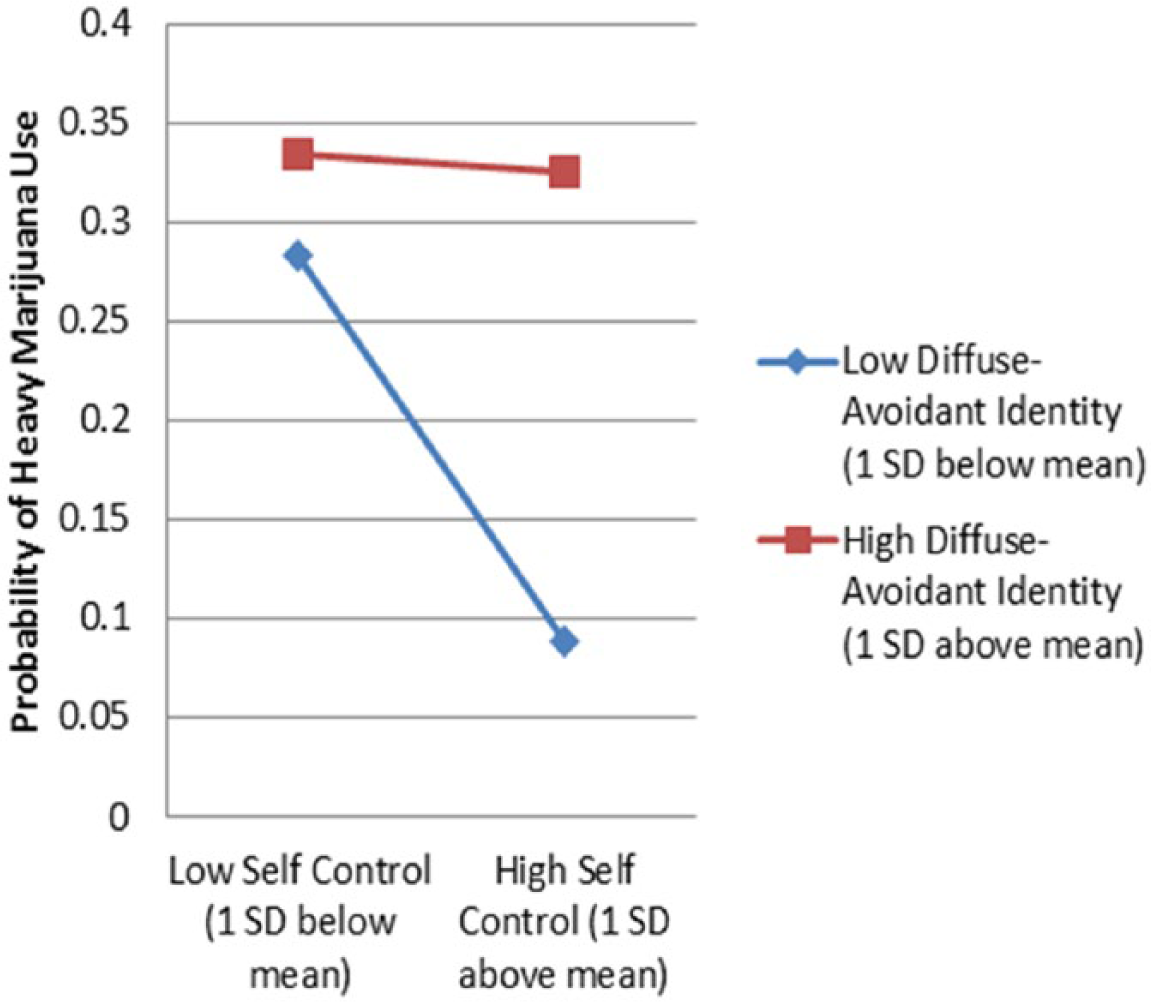
Predicted probabilities of heavy marijuana use by levels of self-control and diffuse-avoidant identity style.
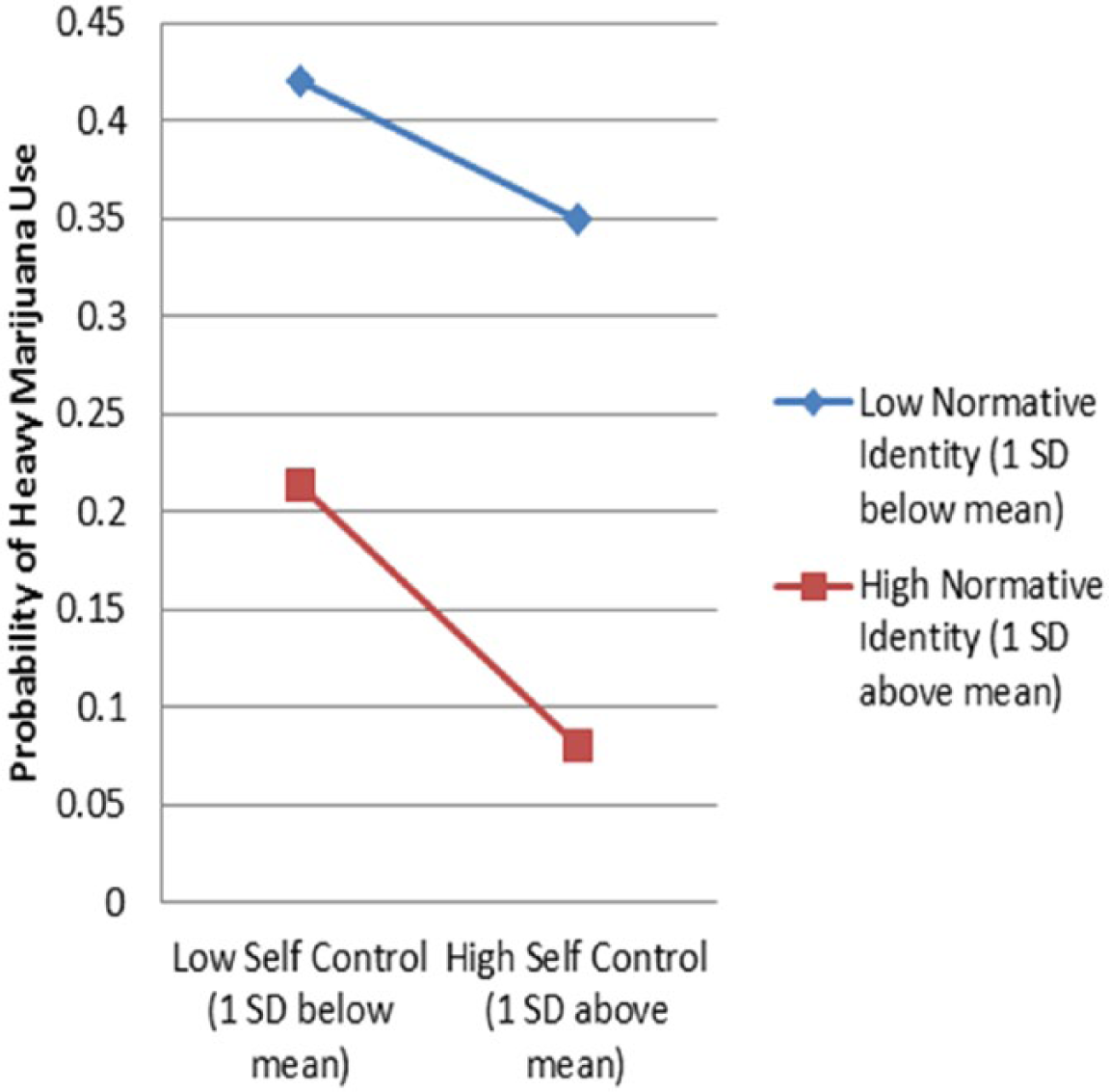
Predicted probabilities of heavy marijuana use by levels of self-control and normative identity style.
Figure 4 shows the interactive effects of low self-control and informational identity style on hard drug use. Adolescents with a low informational identity style have similar levels of hard drug use, whether they have high or low self-control (predicted probabilities of hard drug use: .12 vs. .14). In contrast, adolescents with a high informational identity style combined with low self-control have much higher levels of hard drug use (.32). Thus, low self-control alone does not lead to particularly high levels of hard drug use, but it does in the presence of an informational identity style.
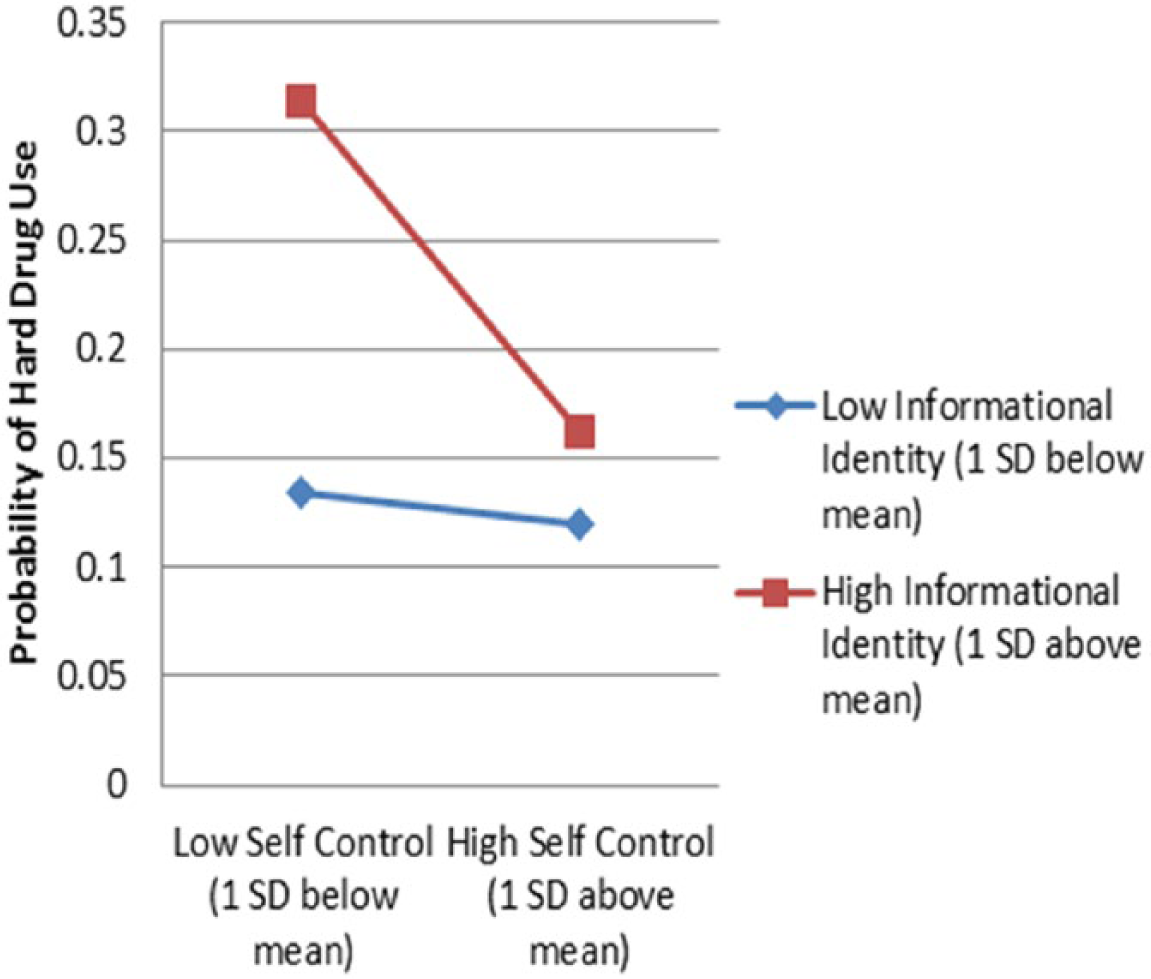
Predicted probabilities of hard drug use by levels of self-control and informational identity style.
Finally, we also observe some interesting effects from the control variables. Males are more likely to commit violence and vandalism. Males are also more likely to engage in heavy drinking, heavy marijuana use, and hard drugs use, but the patterns become statistically nonsignificant for heavy drinking and hard drugs when identity styles are controlled for. In comparison with adolescents who have authoritative parents, those with authoritarian parents are more likely to commit violence and to engage in heavy marijuana use and hard drug use. Adolescents with indulgent parents are more likely to engage in all types of delinquent behaviors with the exception of theft. Adolescents with neglectful parents are more likely to engage in violence, heavy drinking, heavy marijuana use, and hard drug use. Race is not associated with delinquency in our analysis, but it is likely because 92% of the respondents are Whites, so there is limited variance to study race effects. Respondents from families with higher socioeconomic status are less likely to commit violence but are more likely to commit theft. There is no socioeconomic effect for other types of delinquency.
Supplementary Analyses
A reviewer suggested replicating our results using two general scales of delinquency: a frequency scale and a variety scale. The frequency scale goes from 0 to 24 and is a sum of the frequency of delinquent behaviors of all types combined. The variety scale goes from 0 to 6 and is a sum of each type of delinquent behaviors combined (e.g., if a respondent has committed theft, heavy drinking, and heavy marijuana use, she or he would have a score of 3). We do not present these analyses in tables because of space limitation but we summarize the main results. Low self-control is significantly associated with both outcomes, and the effect is partially mediated by the inclusion of the three identity styles (from b = .146, p < .01 to b = .091, p < .01, 37% change for frequency score; b = .207, p < .001 to b = .14, p < .001, 32% change for variety score). The diffuse-avoidant identity style is positively associated with both the outcomes (b = .146, p < .001 for frequency score; b = .211, p < .001 for variety score), and the normative identity style is negatively associated with both the outcomes (b = −.230, p < .001 for frequency score; b = −.292, p < .001 for variety score). The informational identity style is unrelated with both outcomes. We did not observe interactive effects between low self-control and identity styles on the two scales of general delinquency. These results are consistent with our previous results regarding the mediating effects of identity styles, but they do not show interactive patterns. They also show that it is important to examine specific delinquent behaviors in addition to general measures to detect more specific patterns.
Discussion
Results from the current study show that identity styles are predictive of adolescent delinquency and that they help to explain the relationship between low self-control and delinquency. In every model, identity styles, at least partially, mediated the effect of low self-control on delinquency (H1 is supported). This finding is consistent with the view that low self-control influences the development of identity styles and thus identity styles help to explain how low self-control is related to crime. Furthermore, the results show that identity styles predict delinquent behaviors in theoretically expected ways. Specifically, the normative and diffuse-identity styles seem to have general effects across all types of delinquency, while the informational identity style has inconsistent effects, suggesting a need for specific explanations. Finally, identity styles were found to moderate self-control in some models and not in others, lending partial support for the hypothesis that identity styles would be responsible for delinquent versus nondelinquent manifestations of low self-control.
Low Self-Control
Consistent with Berzonsky et al. (2007), we found that low self-control is negatively associated with the normative identity style and positively associated with the diffuse-avoidant identity style. Contrary to the findings of Berzonsky et al., however, we found that the informational identity style is negatively associated with low self-control. Berzonsky et al. suggested that they found the opposite relationship because their study is based on a sample of early adolescents, but that in samples of older adolescents, low self-control and the informational identity should be negatively related. Our findings support this hypothesis and we expect that the relationship should be even stronger during adulthood when identity styles are solidified. Although our results confirm that low self-control is an important explanation for delinquency, they also suggest that the net effect of low self-control on delinquency becomes weaker when identity styles are included in our analyses. Adolescents with low self-control are more likely to have a diffuse-avoidant identity style, both of which contribute to their high involvement in delinquency. Adolescents with high self-control are more likely to have a normative identity style, both of which contributing to their low involvement in delinquency.
The complexity of the relationships between low self-control, identity styles, and delinquency is apparent in our analyses of drinking and substance use. For example, adolescents with high or low levels of self-control have low levels of heavy drinking when they have a strong normative identity, but they have high levels of heavy drinking when low self-control is combined with low normative identity. In other words, the level of self-control alone is not sufficient to explain variations in heavy drinking; one must also not care about conforming to the expectations and values of significant others such as parents or close friends (low normative identity) to engage in higher levels of heavy drinking. Similarly, adolescents with high or low levels of self-control have high levels of heavy marijuana use when they have high diffuse-avoidant identity style. When they have a low diffuse-avoidant identity style, however, only adolescents with low self-control have high levels of heavy marijuana use, while adolescents with high self-control engage in that behavior much less frequently. High self-control alone is not sufficient to prevent marijuana smoking when adolescents are confused about their identity and like to “go with the flow” when making decisions. In fact, the “go with the flow” attitude of adolescents with a diffuse-avoidant identity style might make them more prone to be influenced by their peers. Finally, adolescents with low self-control are much more likely to use hard drugs when they have an informational identity style; there is only a small difference between adolescents with high or low self-control otherwise. This suggests that the carelessness toward long-term consequences and search for short-term rewards associated with low self-control combined with the desire for exploration and new experiences associated with the informational identity style make the use of hard drugs a very attractive activity for these adolescents.
Diffuse-Avoidant Identity Style
The diffuse-avoidant identity style is an important criminogenic factor for all types of delinquent behaviors studied (H2 is supported). It also has an interactive effect with low self-control on heavy marijuana use as explained above (H5 is not supported: We do not find general evidence that low self-control combined with the diffuse-avoidant identity is particularly criminogenic, above and beyond their additive main effects). The effects of the diffuse-avoidant identity style are net of the effect of low self-control because this variable is included in our analyses. Although we cannot directly measure why adolescents with a diffuse-avoidant identity style are so involved in delinquency, some hypotheses should be considered in future research. As we mentioned before, they should be more vulnerable to the influences of deviant peers. They should also be less successful in school and be more likely to have abandoned high school before graduating. Their beliefs about what is moral or immoral might be more confused than those of other adolescents.
Normative Identity Style
The normative identity style is an important preventive factor from delinquency, for all types of delinquent behaviors studied (H3 is partially supported: The normative identity style is associated with lower levels of delinquency, but the patterns are not stronger for violence or property offending as we predicted). It also has an interactive effect with low self-control for heavy drinking as explained above and also a weak interaction for heavy marijuana use (H6 is mostly not supported: A normative identity is not enough to limit the manifestations of low self-control to nondelinquent activities as we predicted). Here again, the effects of the normative identity style are net of the effect of low self-control because this variable is controlled for. There are different hypotheses that could account for these patterns. Adolescents with a normative identity should select peers who share similar conformist worldviews and reject deviant acquaintances. They should be hardworking and successful at school to please their family and because it is a traditional path to success later in life. They should also care more about keeping a good reputation. Their beliefs about what is moral or immoral should be clear in their mind and fairly conventional.
Informational Identity Style
Overall, the informational identity style is not related very much with delinquency (H4 is mostly supported). Adolescents with an informational identity style are more likely to engage in heavy marijuana and hard drugs use, particularly when they also have low self-control (H7 is supported for hard drug use, but not for heavy drinking or heavy marijuana use). It is also possible that the effects of the informational identity style are criminogenic for some reasons (e.g., identity exploration, search for new experiences, thrill-seeking) and preventive for other reasons (e.g., planning, self-monitoring, achievement) and that these effects cancel each other out. The strong relationship with hard drug use, however, suggests that the informational identity style can still be important to understand specific forms of deviant behavior, particularly the deviant behaviors of adolescents who do not fit the stereotype of the delinquent: the well-informed, socially skilled, conscientious, high-achieving adolescents.
Limitations and Ideas for Future Research
The results of this study should be interpreted in light of some limitations. First, the cross-sectional nature of the data raises questions about the causal linkages between low self-control, identity styles, and delinquent behaviors. Although theory and previous research helped inform our interpretation of the results, future research based on longitudinal models are required to get a better understanding of the nature of the causal and mediation relationships between low self-control, identity styles, and delinquency. Second, the measures of low self-control and identity styles can be improved. For low self-control, other behavioral and psychological indicators could be included. The identity styles indicators have also recently been improved to more strongly differentiate between the normative and informational orientations (Berzonsky et al., 2011). If the theory is valid, we would expect to see more consistent interactions and stronger mediation of low self-control by identity styles, but it is an empirical question. Third, it is possible that the results of the current study only apply to adolescents aged 16 to 17, and patterns could be different for individuals who are younger or older. It may be that there are specific developmental processes that are unique to the 16- to 17-year-old age group that influences their identity style orientation, as well as how they perceive their relationship with their parents, or their tendency to commit delinquency. A replication of this study looking at early, middle, and late adolescents is needed to make claims about adolescent delinquency in general. An analysis with adult respondents would also be instructive.
The results in this study indicate that part of the reason low self-control predicts delinquency is because it contributes to the development of identity styles that are criminogenic and because identity styles sometimes alter how individuals manifest low self-control. Identity styles should also be useful in helping to account for other important criminogenic relationships. For example, an interesting question for General Strain Theory (Agnew, 1992) is to understand why some people who experience high levels of strain do not take part in delinquency. Agnew (1992) argued that delinquent behavior is only one way of dealing with strain and that there are many personality variables that can differentiate between delinquent and nondelinquent adaptations to strain. People with a diffuse-avoidant identity style should react to strain in delinquent ways more often than those with normative and informational identity styles. Studies examining the relationship between delinquent peers and delinquent behavior may also benefit by considering how identity styles influence the selection of friends or the likelihood of being influenced by delinquent peers. Adolescents with a normative identity style should be less likely to form friendships with delinquent peers because of their conforming nature but may be most likely to be influenced by deviant peers once those friendships are established. Adolescents with a diffuse-avoidant identity style should be easily influenced by deviant peers in general, while those with an informational identity style should be influenced only in certain contexts and for specific forms of deviance.
Research on crime and deviance has not focused on how identity formation orientations can have an impact on the risk of individuals to take part in crime. The measurement and conceptualization of identity styles within various theoretical contexts offer promising avenues for future research and may be particularly useful as an intervening explanatory variable.
Footnotes
Appendix
Items used in self-control measure
Diffuse identity-avoidant identity style
Normative identity style
Informational identity style
Acknowledgements
We thank Statistics Canada Research Data Centre at the University of Western Ontario for access to data.
Declaration of Conflicting Interests
The author(s) declared no potential conflicts of interest with respect to the research, authorship, and/or publication of this article.
Funding
The author(s) received no financial support for the research, authorship, and/or publication of this article.