



Abstract
While there is substantial research on community-police relations, most studies examine the abstract outcome of “negative perceptions of police.” This study, however, examines over- and under-policing as two distinct, yet not mutually exclusive, constructs, suggesting that there is more to strained police-community relations than citizens perceiving the police “negatively.” Using the Project on Human Development in Chicago Neighborhoods Community Survey, we assess the relationship between race and ethnicity and perceptions of over- and under-policing and explore how these associations are conditioned by neighborhood characteristics. Results reveal racialized perceptions of over- and underpolicing. Furthermore, while levels of both under- and over-policing vary across neighborhoods, the relationship between these outcomes and individual-level race/ethnicity was robust. Implications for policy and research are discussed.
The numerous recent shootings of unarmed Black men, women, and children by police serve as a vivid reminder of the continued strained relationship between communities of Color and the criminal justice system. Moreover, the targeting of marginalized communities and people of Color is evidenced by various policing strategies such as stop-and-frisk and zero tolerance policing, which scholars have criticized heavily (Alpert et al., 2005; Gelman et al., 2007). These realities have sparked substantial discussion, social protests, and indeed a global Black Lives Matter movement aimed at recognizing and rectifying the institutional racism of our social systems (Hall et al., 2016; Kirby, 2020; Palmer, 2012; Tolliver et al., 2016). While research suggests many Americans hold generally positive perceptions of the police (e.g., Callanan & Rosenberger, 2011; Wu, 2014), these perceptions vary drastically by race/ethnicity, with citizens of Color holding less positive views than Whites (Kahn & Martin, 2016; Peck, 2015; Weitzer & Tuch, 2004). Given these perpetual dynamics, research aimed at understanding police-community relations has proliferated in criminological literature (Brunson & Weitzer, 2009; Skogan, 2018; Stewart et al., 2009), particularly in regard to understanding citizens’ of Color experiences with police.
Compared to their White counterparts, Black Americans have an increased likelihood of being stopped by police, have more overall law enforcement contact, and face greater threats of force by police (Bureau of Justice Statistics, 2018). These statistics suggest communities of Color are targeted, harassed, and over-policed throughout America (Evans et al., 2014; Weisburd et al., 2015). Black Americans’ perceptions tend to include experiences of being over-policed, which stems from law enforcement’s “disproportionate attention to real or perceived or potential criminal activity suspect of racial minorities” (Perry, 2006, p. 416). On the other hand, research finds that police may ignore communities of Color as a result of their belief that these citizens are responsible for the crime and disorder that occurs within their neighborhoods (Gau et al., 2012; Klinger, 1997). Indeed, Black communities tend to criticize law enforcement for lack of adequate response when they are victimized or in need of assistance (Ben-Porat, 2008; Rios, 2011). Therefore, negative perceptions of police may be fueled by perceptions of either being over-policed—that is, unjustly targeted and harassed—or being under-policed—powered by feeling neglected by law enforcement—or perhaps a combination of both. Understanding the distinct experiences that result in negative views of police is vital, as the way individuals perceive the police is highly relevant to their trust in police as well as overall community-police relations (Carr et al., 2007; Torres, 2017).
There is substantial research focused on community-police relations, much of which examines the sources and correlates of “negative perceptions of policing” (Kochel, 2012; Renauer & Covelli, 2011). This construct, however, tends to subsume the distinct concepts of over- and under-policing. Specifically, perceptions of policing are often measured via survey items asking about one’s degree of trust in police or confidence in police performance” (e.g., Corsaro et al., 2015; Johnson et al., 2017; Nofziger & Williams, 2005); however, trust and confidence in police could derive from experiences of either over- or under-policing or a combination of both. For example, while over-policing may contribute to negative perceptions of police due to the targeting and stigmatization of communities, under-policing may contribute to these perceptions of police through the neglect of community needs (Ben-Porat, 2008). Thus, while both fuel negative feelings, the factors leading to such perceptions may differ. As such, we attempt to disentangle the complex nature of these negative perceptions by examining the concepts of over- and under-policing separately. We argue that these are two distinct, albeit potentially related constructs, and that negative perceptions of police are more complex than typically explored in the literature.
Using data from the Project on Human Development in Chicago Neighborhoods (PHDCN) Community Survey, we assess the relationship between race/ethnicity and perceptions of both over- and under-policing as well as explore how these associations are conditioned by neighborhood characteristics. By unpacking the factors associated with each distinct form of negative policing, more focused policies may be developed to improve community-police relations. For instance, such empirical evidence may inform interventions to reduce feelings of over-policing and improve trust and faith in police, or likewise, to ensure adequate attention and care among law enforcement officers when dealing with such populations. We begin, however, with a brief overview of the historical context of policing in marginalized communities as well as a review of the distinction between perceptions of over- and under-policing.
Police and Communities of Color
The strained relationship between police and people of Color in America has a long history, dating back to the pre-Civil War era, including enforcing the Fugitive Slave Act (Reichel, 1988; Walker, 1980). Mistreatment of communities of Color continued in post-slavery America in multiple ways, including Black Codes and Jim Crow laws, whereby people of Color were subjected to “a police state in which every aspect of shared public life was proscribed” (Bass, 2001, p. 161). It was not until the Civil Rights Movement of the 1960s, however, that concerns over the treatment of people of Color by police officers became national discourse (Brandl et al., 1994). Even then, negative perceptions were perpetuated as citizens witnessed police suppressing, fighting, and arresting Civil Rights protestors throughout this era (Alexander, 2011; Braga et al., 2019). The “war on drugs” in the 1970s and 1980s perpetuated a “tough on crime” philosophy which strengthened discriminatory police practices such as targeting and aggressively enforcing drug laws on people of Color (Bass, 2001). Such policies fueled the modern era of mass incarceration and disproportionate imprisonment of people of Color, with Black Americans accounting for nearly 40% of the incarcerated population but only encompassing approximately 13% of the general population (Federal Bureau of Prisons, 2020; also see Sawyer & Wagner, 2020).
In 1994, the Violent Crime Control and Law Enforcement Act (“Crime Bill”) was passed which allotted $30.2 billion US dollars to law enforcement and crime prevention programs (Evans & Owens, 2007). Though the 1990s saw one of the most substantial reductions in crime rates in recent decades (Zimring, 2006), perceptions of crime victimization, especially in Black communities, was high (Wheelock & Hartmann, 2007). The Crime Bill came as a response to the general public’s fear of the “super predator,” perceptions of increasing violent crime rates (Pizarro et al., 2007), and of little attention being focused on high crime areas (Wheelock & Hartmann, 2007). As such, the Crime Bill was largely supported by Black members of congress and the Congressional Black Caucus in hopes it would bring greater peace and order to Black communities (McBride, 2016; Rosenfeld, 2020; Wheelock & Hartmann, 2007), largely because the crack-cocaine epidemic was perceived as victimizing and destroying the Black community (Ray & Galston, 2020). In actuality, the Crime Bill contributed to aggressive policing strategies and mass incarceration (Rosenfeld, 2020), the burden of which fell largely on citizens of Color (Alexander, 2011), deepening the wedge between the community and law enforcement. However, it was the reasoning of many politicians to vote in favor of the 1994 Crime Bill because “Blacks have suffered more from being left unprotected or underprotected by law enforcement authorities than being mistreated as suspects or defendants. . .” (Kennedy, 2012, p. x). Thus, the Crime Bill, rather than mitigating the fears of citizens, amplified aggressive policing tactics (Meeks, 2005) that further harmed our most vulnerable communities, resulting in even poorer police-community relations.
Over- and Under-Policing Paradox
The distinction between over- and under-policing is grounded in Rios’ (2011) ethnographic investigation of Black and Latino adolescent boys in Oakland, California. Rios (2011) purports that the life-long targeting, harassing, and criminalization of Black and Latino adolescent boys leads to their social exclusion and restriction from legitimate opportunities, thus subjecting these youth to a life of street crime (also see Anderson, 1999; Crowther, 2013). In addition, he argues that police withhold their services and protection from certain areas, leaving residents to fend for themselves, which often result in even greater crime and deviance. It is plain to see how both of these scenarios, especially when experienced simultaneously, would result in aversive views of police.
In Oakland, Black and Latino neighborhoods are in close proximity of each other, and tend to share similar subcultures, experiences, and treatment from police (Rios, 2011). In the context of these communities, Rios (2011) further describes the “over-under-policing paradox.” On the one hand, these boys are harassed and targeted by police, as their actions and communities are under constant surveillance and scrutiny. Yet, their communities are also largely unprotected, neglected, and ignored when police are needed most. Rios describes the implications of police determining which spaces will and will not be privy to their intervention: “. . .in this apartment complex, young boys, as early as age six, learned from police the spatial terrain in which they could be deviant and commit crime. Criminalization created spatial demarcation; police set parameters for where individuals could loiter or commit crime. The consequences of ‘playing’ or ‘hanging out’ beyond the established limits of invisible and marginalized spaces included brutalization, harassment, and arrest. For the older boys, this spatial demarcation structured the rules of governing the code of the street: gang members were allowed to commit violence and victimize others, as long as the acts were committed within the confines of the apartment complex, which law enforcement underpoliced” (p. 56).
While Rios’ (2011) research demonstrates the marginalization of communities of Color in Oakland, California specifically, over- and under-policing of such communities occurs throughout the country (Brunson & Miller, 2006; Fagan et al., 2016). Bell (2016) offers another illustration of the over- and under-policing of communities of Color, based in a history of strained police-community relations in Washington, DC. In her ethnographic assessment of Black mothers, she finds that though these women may call on the police as an attempt to control partners or children, they largely felt mistrust toward police due to their perceptions that police do not care about, take seriously, or respond to their needs. Importantly, this mistrust was cultivated by a history of targeting and stigmatizing communities of Color (Bell, 2016). The fact that individuals can simultaneously feel as though the police are targeting and harassing them unnecessarily (i.e., when no crime is taking place) and as though the police are unresponsive or neglectful when they have been victimized and are in need, captures the complexity of this paradox. Both aspects contribute to an aversive relationship with police among citizens who live within these communities and fall victim to the over- and under-policing paradox.
The effects of both police harassment (over-policing) and neglect (under-policing) are extremely troubling. Residents of these communities have an increased likelihood of being victimized either by other civilians or the police. The following sections review what is known about the outcomes and implications of over- and under-policing.
Over-policing
A large body of literature examines the sources and impact of various forms of over-policing. For example, disproportionate targeting of communities of Color has been found to stem from policing strategies such as stop-and-frisk and zero tolerance policing (Meares, 2015). Legitimized by Terry V. Ohio (White & Supreme Court of The United States, 1967/1968), the stop-and-frisk tactic, also known as a Terry Stop, allows officers to pat down or search citizens based on “reasonable suspicion” (Butler, 2014). 1 The New York Police Department (NYPD) is well-known for heavily implementing this tactic, reporting 532,911 stop-and-frisk incidents in a single year (Butler, 2014), and has faced criticism for disproportionate use of this tactic within communities of Color (Gelman et al., 2007; Goel et al., 2016; Hanink, 2013). Beyond New York City, research examining stop-and-frisks in other areas of the country, such as Chicago and Los Angeles, also suggests this practice is used far more commonly on Blacks than on Whites (Ayres & Borowsky, 2008; Unger, 2014). Moreover, zero tolerance policing, a strategy which strictly enforces laws against minor, incivility crimes, such as public intoxication, loitering, and panhandling, with the aim of deterring more serious crime (Dixon, 1998; Wilson & Kelling, 1982), is also known to target communities of Color (Cunneen, 1999) and result in perceptions of over-policing (Rios, 2011).
In addition to the effect such policing tactics have on arrest and incarceration rates within communities of Color, they also have negative attitudinal, psychological, and relational implications. Specifically, men of Color are more likely to experience fear, anxiety, and worry in highly policed neighborhoods), (Anderson, 2013; Brunson & Weitzer, 2009; Goffman, 2009; Sewell et al., 2016), and criminogenic behavior, negative psychological effects, and diminished physical well-being are also linked to police harassment and targeting (Del Toro et al., 2019; Geller et al., 2014; Ward et al., 2014). Research suggests that these policing tactics, which target communities of Color and harass their citizens, have contributed to citizens’ overall dissatisfaction with police and poorer community-police relations (Carr et al., 2007; Fagan et al., 2010; Harcourt & Ludwig, 2007; Torres, 2017).
Under-policing
Scholars have discussed many plausible reasons that marginalized communities are under-policed. Weitzer (2010), for instance, suggests that police may neglect neighborhoods with high proportions of citizens of Color since crime in these areas tend not to affect other communities (also see Weitzer & Tuch, 1999). Similarly, in an examination of Native American citizen-police relations, Perry (2006) found that police often deny citizens’ calls for services and fail to take seriously the concerns of this population due to their perception that Native Americans are always up to “no good.” Similarly, others have noted that police fail to provide adequate service to communities that they view as responsible for the occurring crime and disorder (Gau et al., 2012; Klinger, 1997).
Research suggests that under-policing also has negative implications for citizens. Specifically under-policing has been linked to increased vulnerability to violence (Crowther, 2013), decreased willingness to call on the police when in need (Carr et al., 2007; Kane, 2005), and tendencies to handle crime problems themselves (Kubrin & Weitzer, 2003a, 2003b; also see Torres, 2017). Thus, police neglect serves to further marginalize the most vulnerable communities, leaving them to find ways to fend for themselves, many of which are criminalized. Being under-policed often leads to strained community-police relations as individuals feel as though they cannot trust police to help them when they need service or protection (Carr et al., 2007; Durose et al., 2005; Kearns, 2017). Neighborhood characteristics have been shown to impact police-citizen interactions (Cao et al., 1996; Davis, 2000; Gallagher et al., 2001; Sampson & Bartusch, 1998; Stone & Pettigrew, 2000; Weitzer, 2000), therefore, the influence of over- and under-policing on the relationship between communities of Color and police must be considered in context, thus the role of place must not be overlooked.
The Role of Place
Race and place are highly connected as communities of Color are largely concentrated in space and segregated from others (Massey & Denton, 1993; Wilson, 1987). These areas tend to be disadvantaged in a number of ways that are conducive to crime. As Capers (2009) states, “crime tends to be high in minority neighborhoods not because of the presence of minorities, but largely because the neighborhoods themselves tend to be criminogenic due to disproportionate lack of educational opportunities, jobs, services, and concern” (p. 49). Police often employ place-based strategies such as hot spots policing in areas with higher crime levels which further contributes to the targeting of citizens of Color (Rinehart Kochel, 2011). Thus, the context of place is an important factor when considering citizen’s perceptions of police.
A large body of literature has found that neighborhood characteristics are often stronger predictors of perceptions of police compared to the influence of race (e.g., Apple & O’Brien, 1983; Stewart et al., 2009; Weitzer, 1999). Neighborhood characteristics such as concentrated disadvantage, legal cynicism, and collective efficacy may impact the relationship between citizen’s race/ethnicity and their perceptions of police. For example, Schafer et al. (2003) found that while race played a significant role in citizen’s perceptions of police, the introduction of neighborhood context variables (e.g., quality of life, culture) diminished the power of race effects (also see Cao et al., 1996). Conversely, some research has found that race has a stronger effect on citizens’ dissatisfaction with police compared to the influence of class and neighborhood characteristics (Lai & Zhao, 2010; Weitzer & Tuch, 2004; Wu et al., 2009). Other scholarship finds that both race/ethnicity and neighborhood context play important roles in how citizens perceive the police (Schuck et al., 2008; Wentz & Schlimgen, 2012). Thus, the full complexity of the race, place, and policing relationships remain unknown.
Race and place are largely linked in terms of the social and economic structure of neighborhoods and the lived experiences of racial and ethnic groups (Peterson & Krivo, 2010; Sampson & Wilson, 1995). Research finds that living in a location of concentrated disadvantage—that is, areas marked with high rates of poverty, economic disadvantage, residential and commercial turnover, and limited social services—affects residents in a multitude of ways including viewing police more aversively, being more likely to experience violence, having lower education, facing negative health outcomes, and harboring feelings of legal cynicism (Browning & Cagney, 2002; Kubrin & Weitzer, 2003a, 2003b; Reisig & Parks, 2000; Reisig et al., 2011; Sampson & Bartusch, 1998; Wodtke et al., 2011). On the other hand, collective efficacy, defined as “mutual trust and the willingness to intervene for the common good” (Sampson et al., 1997, p. 919), has been shown to reduce not only crime but other social ills including health problems (Browning & Cagney, 2002) and children’s behavioral and school problems (Hoy et al., 2002). High levels of collective efficacy also strengthen community-police relationships such that citizens trust the police and have a greater willingness to call on police in times of need (Nix et al., 2015; Warner & Burchfield, 2011; Weisburd et al., 2015). Continuing to disentangle the relationship between race/ethnicity, the influence of neighborhood characteristics, and the various perceptions of police is vital to develop empirically informed, culturally competent policy recommendations to improve police-community relations. The present study aids such aims.
Current Study
The primary goal of the present work is to disentangle the concepts of over- and under-policing. While these concepts are often subsumed within measures of negative perceptions of police, they are indeed distinct, and therefore warrant additional empirical attention. In particular, we believe understanding which factors are associated with over- and under-policing explicitly will better inform policy changes to improve police-community relationships. In addition, we aim to further explore the relationship between race, perceptions of police, and neighborhood context. The current assessment will address two over-arching research questions: (1) what is the relationship between race/ethnicity and perceptions of over- and under-policing, distinctly? And, (2) do these relationships vary by neighborhood context? Answering these questions will shed light on the differential impacts of aggressive versus negligent policing strategies for communities of Color and thus potentially inform culturally competent policy changes.
Methods
Data
The present study employs the Project on Human Development in Chicago Neighborhoods (PHDCN) Community Survey (Earls et al., 2007). The original purpose of the PHDCN was to investigate the influence of neighborhoods, schools, and families on youth development and behaviors, including delinquency, drug use, and violence (Earls & Visher, 1997). The city of Chicago, IL was selected for its sociodemographic diversity. The original researchers combined the 847 census tracts of Chicago into 343 neighborhood clusters based on their geographical contiguity and social homogeneity based on racial/ethnic composition, socioeconomics, housing density, and family structure. A three-stage random sampling strategy resulted in final sample of 8,782 adults across the 343 neighborhood clusters (Earls et al., 2007). Due to missingness on demographics and central variables of interests, the current analysis is limited to 7,489 adults nested within 342 neighborhood clusters. 2
Measures
Dependent Variables. The present study has two outcomes of interests: citizens’ perceptions of over-policing and under-policing. Over-policing is operationalized by the question, “How much of a problem is excessive use of force by the police (in your neighborhood)?” (1 = not a problem to 3 = a big problem, reverse coded from original). 3 Under-policing is captured by a factor score combining five items: “How much of a problem is police not patrolling area or responding to calls from area?” (1 = not a problem to 3 = a big problem, reverse coded from original); “Police in neighborhood are responsive to local issues”; “Police are doing a good job in dealing with problems that really concern people in the neighborhood”; “Police are not doing a good job preventing crime in the neighborhood” (reverse coded); “Police do a good job in responding to people in neighborhood after being victims of crime” (1 = strongly agree to 5 = strongly disagree) (α = .81). 4 Thus, a higher score indicates greater perceptions of under-policing. 5
Citizen Factors (Level-1 Variables). Level-1 variables are those in which individual survey respondents are the unit of analysis. Our primary level-1 factor of interest is citizen’s race or ethnicity. We utilized the race and ethnicity dummy variables created by the original investigators for White, Black, and Latinx, with White serving as the reference category. Other citizen characteristics are included as controls. Gender is a dummy variable with male serving as the reference category. Age is a continuous variable calculated from date of birth to the date of survey administration. Dummy variables were also created for home ownership (1 = yes), marital status (1 = yes), and employment status (1 = yes). Education is captured by the question, “What is your highest grade or school level completed?” (1 = high school or less to 4 = graduate school or more). Income is captured by the item, “What was your total combined family income from all sources for the past 12 months?” (1 = less than $5,000 to 15 = $150,000 or more).
Community Factors (Level-2 Variables). 6 Level-2 variables are those in which neighborhood cluster-aggregated survey responses are the unit of analysis. Concentrated disadvantage is measured by a factor derived from the percentage of the neighborhood population living below the poverty line, on public assistance, with female-headed households, unemployed, less than 18 years of age, and African American. Ethnic heterogeneity is measured by a factor capturing percentage of Latinxs and other foreign-born individuals in the neighborhood cluster. Residential stability is captured by a factor created from the questions: “Do you live in the same house as you did in 1985?” and “Is this an owner-occupied home?” (Earls et al., 2007).
Collective efficacy is operationalized by combining items from two indicators, social cohesion and informal social control. Social cohesion is captured by five items asking residents how much they agreed with the following statements: “this is a close-knit neighborhood;” “people around here are willing to help their neighbors;” “people in this neighborhood generally don’t get along with each other;” “people in this neighborhood don’t share the same values,” and “people in this neighborhood can be trusted.” Informal social control follows the same pattern, asking citizens’ reactions to the following: “neighbors would do something if a group of neighborhood children skip school and hang out on the street corner;” “neighbors would do something if some children spray-paint graffiti on a local building;” “people in the neighborhood would scold a child if the child shows disrespect to an adult;” “neighbors would break up a fight in front of your house where someone was being beaten or threatened;” and “neighborhood residents would organize to keep closest fire station open if it were to be closed down by city because of budget cuts.” Social cohesion and informal social control were combined into a factor score by the original investigators as a composite measure of collective efficacy. A higher score, thus, indicates higher levels of collective efficacy (Earls et al., 2007; Sampson et al., 1997).
Following Sampson and Bartusch (1998), legal cynicism is measured by five item factor: “Laws are made to be broken,” “It’s okay to do anything you want as long as you don’t hurt anyone,” “To make money, there are no right and wrong ways anymore, only easy ways and hard ways,” “Fighting between friends or within families is nobody else’s business,” and “Nowadays a person has to live pretty much for today and let tomorrow take care of itself” (Earls et al., 2007). Given the present interest in race, percentage of African Americans is also controlled for in each neighborhood cluster.
Analytical Strategy
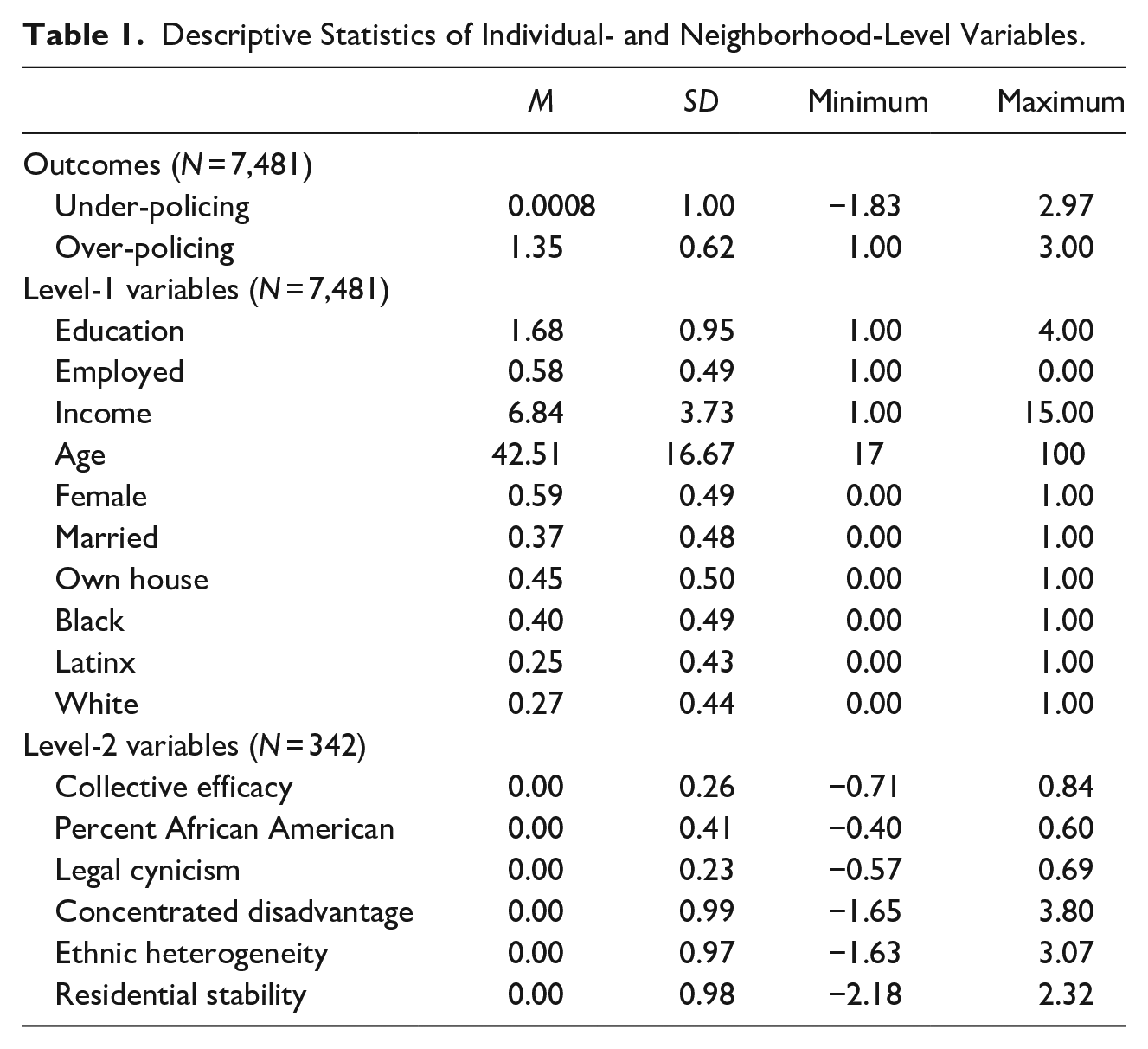
The analysis employs hierarchical linear modeling (HLM) to explore how under- and over-policing relate to both individual and neighborhood level characteristics. HLM is appropriate for simultaneously examining both within-individual and between-neighborhood level variance components on continuous and categorical outcome variables (Baumer & Amio, 2011; Hedeker, 2015; Raudenbush & Bryk, 2002). Due to the nested nature of the data, individuals within the same neighborhood may share more similarities than individuals in another neighborhood, and therefore may not provide fully independent observations (Raudenbush & Bryk, 2002). Because ordinary least-squares (OLS) and other regression techniques assume error terms to be uncorrelated across observations, they are likely to provide biased estimates of standard errors when analyzing nested data and are therefore inappropriate to test our research questions with the given data (Raudenbush & Bryk, 2002). Therefore, this study employs a series of HLM regressions that account for the nested structure of the data and the resulting dependence of individuals’ responses within neighborhoods that are estimated simultaneously (e.g., level-1 and level-2 models). All analyses were conducted using HLM 7.0. Missingness on individual items ranged from 0% to 27.7% (i.e., income). Multiple imputation was employed to handle missing values (Rubin, 1987; van Buuren, 2012). Diagnostics suggest none of the present measures suffer from problematic multicollinearity. 7 Descriptive statistics for all the variables of interests are presented in Table 1.
Descriptive Statistics of Individual- and Neighborhood-Level Variables.
Results
Our analysis followed Raudenbush and Bryk’s (2002) stepwise structure. We first analyzed HLM ANOVA unconditional models with no predictors in order to estimate the proportion of variance in the outcome measures that exists between neighborhoods. 8 These models indicated that under-policing varies significantly across neighborhoods (χ2 = 509.44, p < .01), as does over-policing (χ2 = 581.63, p < .01), and the intraclass correlation indicates that 25% of the variance in under-policing, and 33% of the variance in over-policing is between neighborhoods.
Next, we utilized means-as-outcomes, or HLM ANCOVA, models to determine if the neighborhood level (i.e., level-2) variables explained any differences in the individual level (i.e., level-1) under- and over-policing scores. 9 The under-policing model indicates that individuals who reside in neighborhoods with less collective efficacy (b = −0.84, p < .01) and greater concentrated disadvantage (b = 0.20, p < .01), ethnic heterogeneity (b = 0.12, p < .01), and residential stability (b = 0.56, p < .01) tend to have higher perceptions of under-policing. Moreover, the residual variance between neighborhoods is much smaller here (0.03) than in the unconditioned model (0.26). Indeed, this model suggests that 88% of the between neighborhood variance in under-policing is accounted for by these level-2 variables. In regard to over-policing, those who reside in neighborhoods with less collective efficacy (b = −0.21, p < .01), and greater percent of African Americans (b = 0.09, p = .04), legal cynicism (b = 0.15, p < .01), and ethnic heterogeneity (b = 0.08, p < .01) tend to have higher perceptions of over-policing. Adding these level-2 predictors decreased the residual variance between neighborhoods from 0.14 (in the unconditioned model) to 0.01, and the model suggests that 92% of the between neighborhood variance in over-policing is accounted for by these level-2 variables.
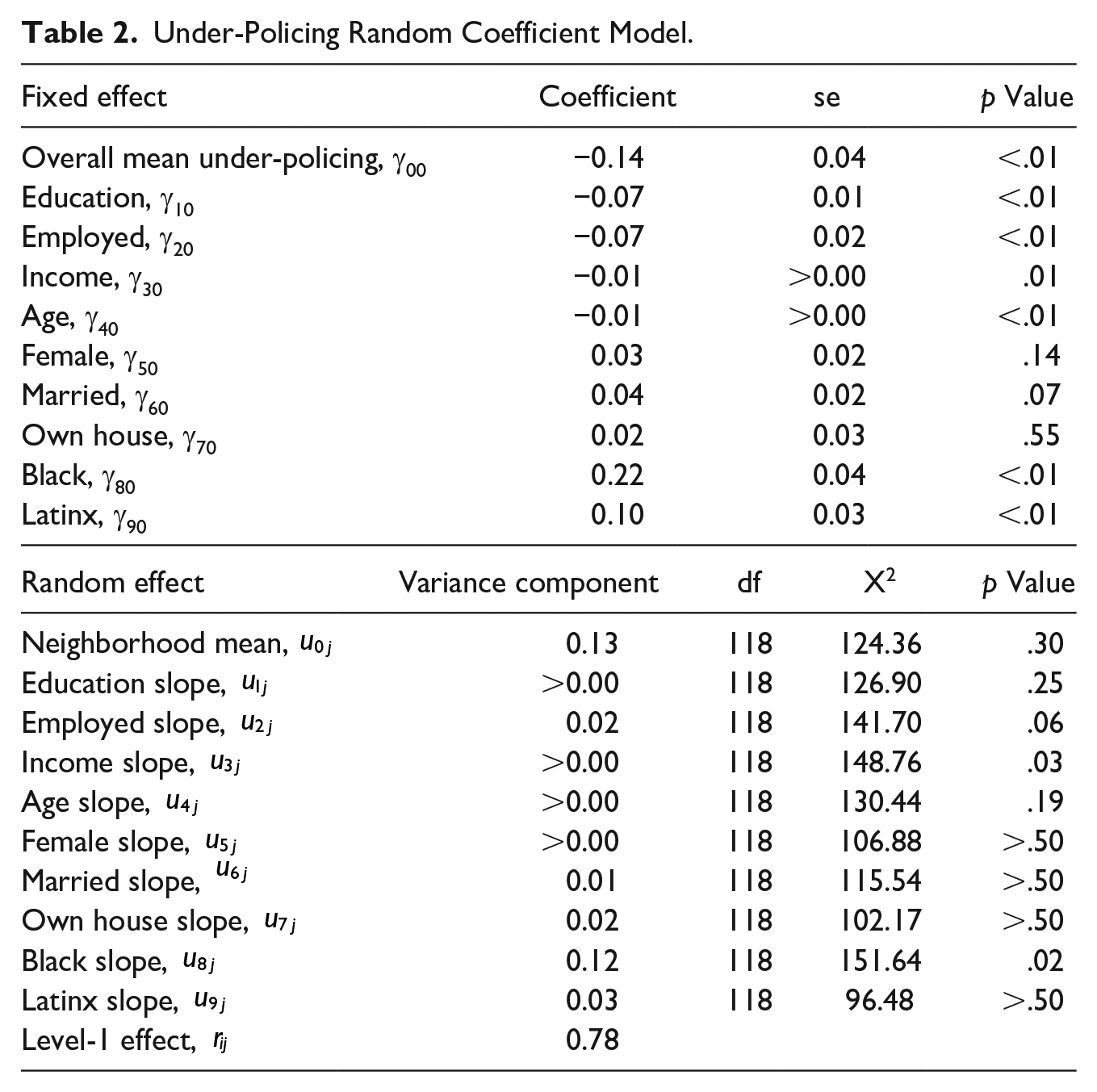
The next models were expanded ANCOVA models to analyze the relationship between under- and over-policing and race/ethnicity within the 342 neighborhoods controlling for level-1 demographics. Tables 2 and 3 present the results for under-and over-policing models, respectively. Results indicate that on average, race/ethnicity is significantly related to perceptions of both under- and over-policing within neighborhoods. Specifically, compared to Whites, Blacks score 0.23 higher on the under-policing measure, while Latinxs score 0.10 higher. For the over-policing measure, both Blacks and Latinxs score 0.14 higher than Whites. The estimated variance among the means for under- and over-policing indicate that significant differences exist among the neighborhood means for both outcomes, however the estimated variance of slopes for race/ethnicity and under- and over-policing are not significant, indicating that the relationship between these variances does not significantly differ across neighborhoods.
Under-Policing Random Coefficient Model.
Over-Policing Random Coefficient Model.

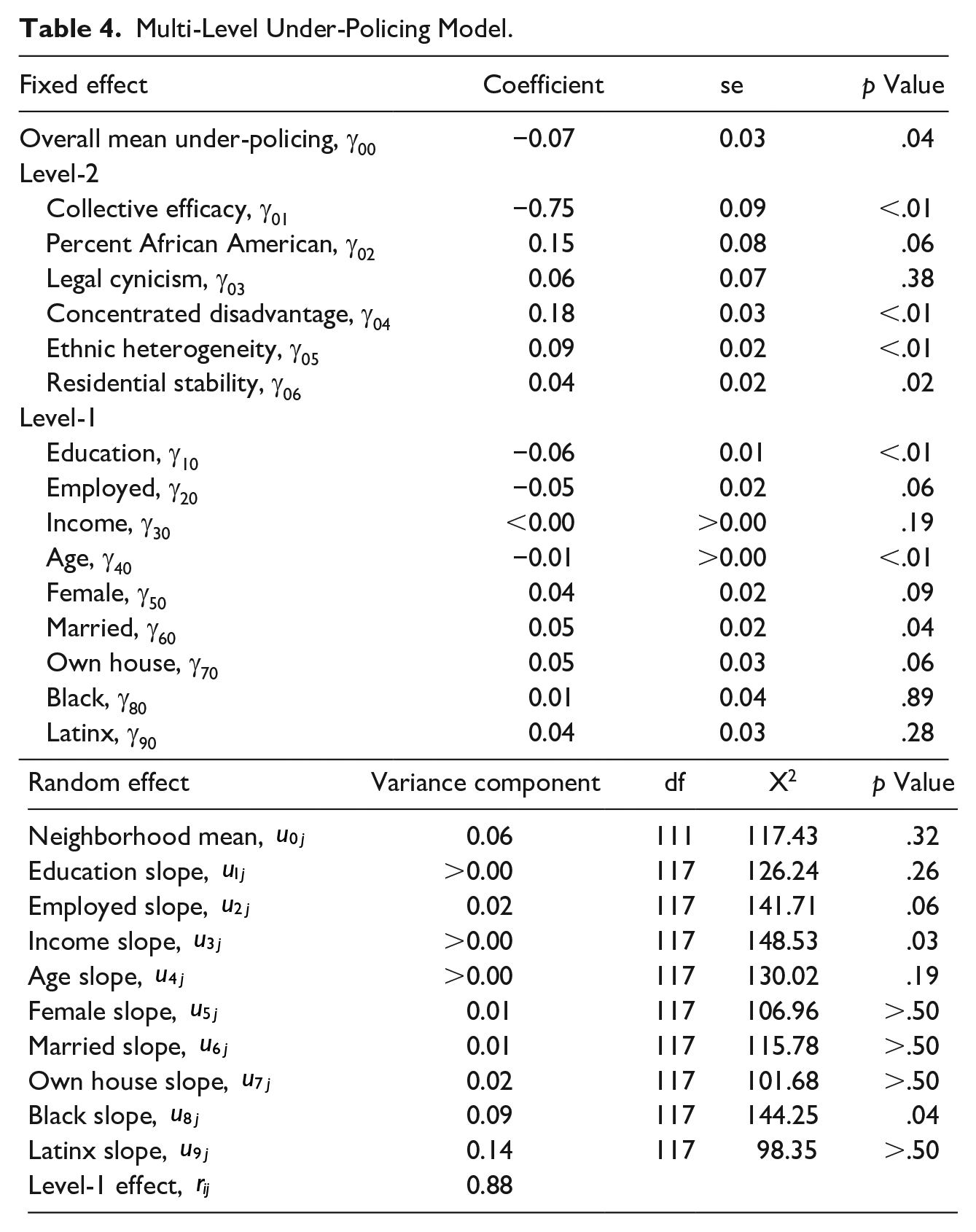
Having estimated the variability of the regression equations across neighborhoods, we then sought to build an explanatory model to account for this variability. The results of the final under-policing model are displayed in Table 4 and the final over-policing model in Table 5. Looking first at under-policing in Table 4, the model suggests that each of the neighborhood variables has a significant relationship with neighborhood mean under-policing scores, except for percent African American, which is marginally significant, and legal cynicism. Specifically, we see that as neighborhoods increase one standard deviation in concentrated disadvantage, ethnic heterogeneity, and residential stability, their mean under-policing score is predicted to increase by 0.20, 0.10, and 0.04 respectively. And, though the relationship is only marginally significant, for every 10% increase in African American neighborhood population, under-policing scores increase by 0.15. These relationships are shown in Figure 1.
Multi-Level Under-Policing Model.
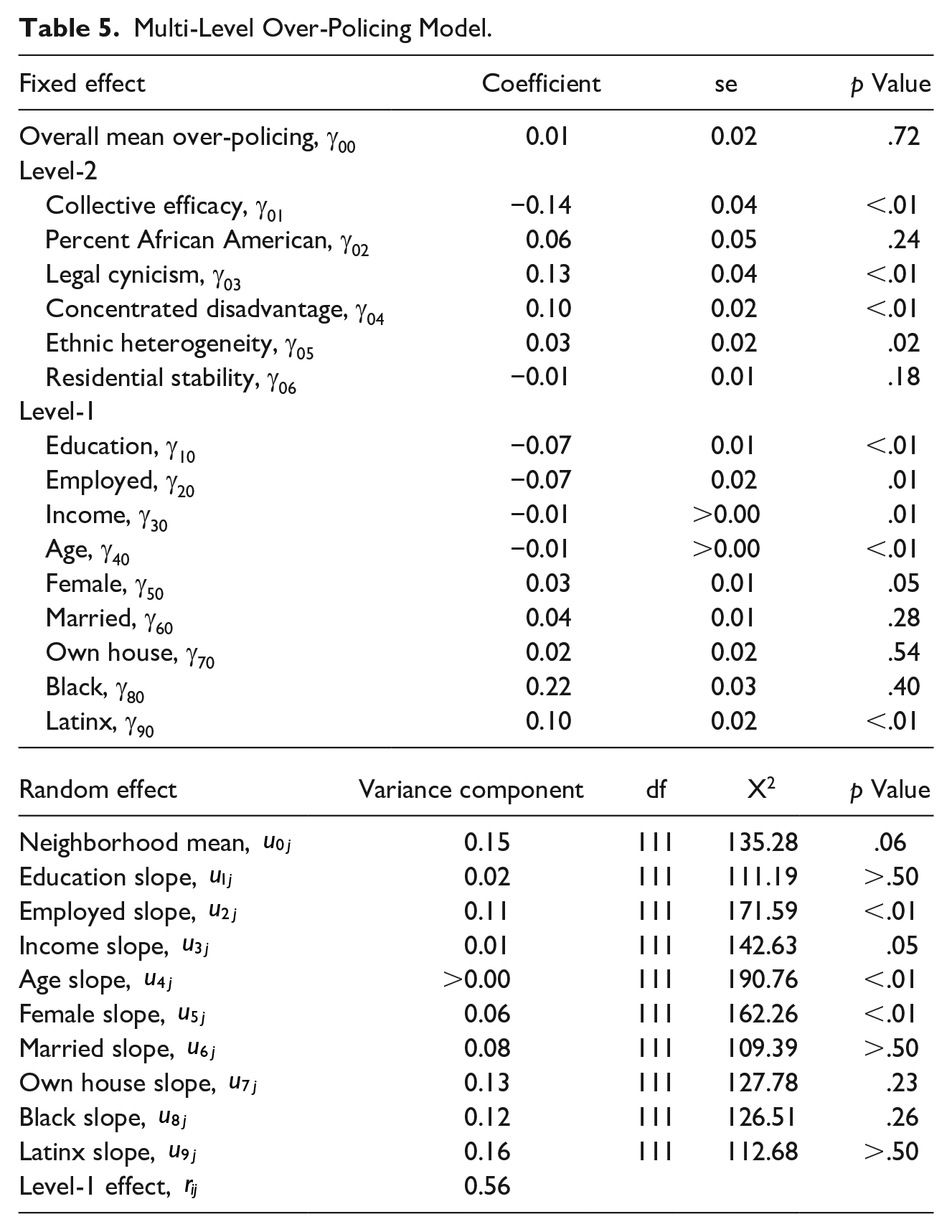
Multi-Level Over-Policing Model.

Level-2 variables on under-policing.
These relationships are similar for over-policing, though residential stability nor percent African American are significantly related to this outcome. In Table 5, we see neighborhood mean over-policing scores increase in neighborhoods with higher concentrated disadvantage (0.10 increase per standard deviation) and ethnic heterogeneity (0.03 increase per standard deviation) and decrease in neighborhoods with higher collective efficacy (0.14 decrease per standard deviation). Considering the proportion reduction in variance from the random regression model, we see that roughly 13% of the variation in neighborhood mean under-policing scores is explained by these level-2 variables. In contrast, around 65% of the variation in neighborhood over-policing is explained by the same variables. These relationships are shown in Figure 2.
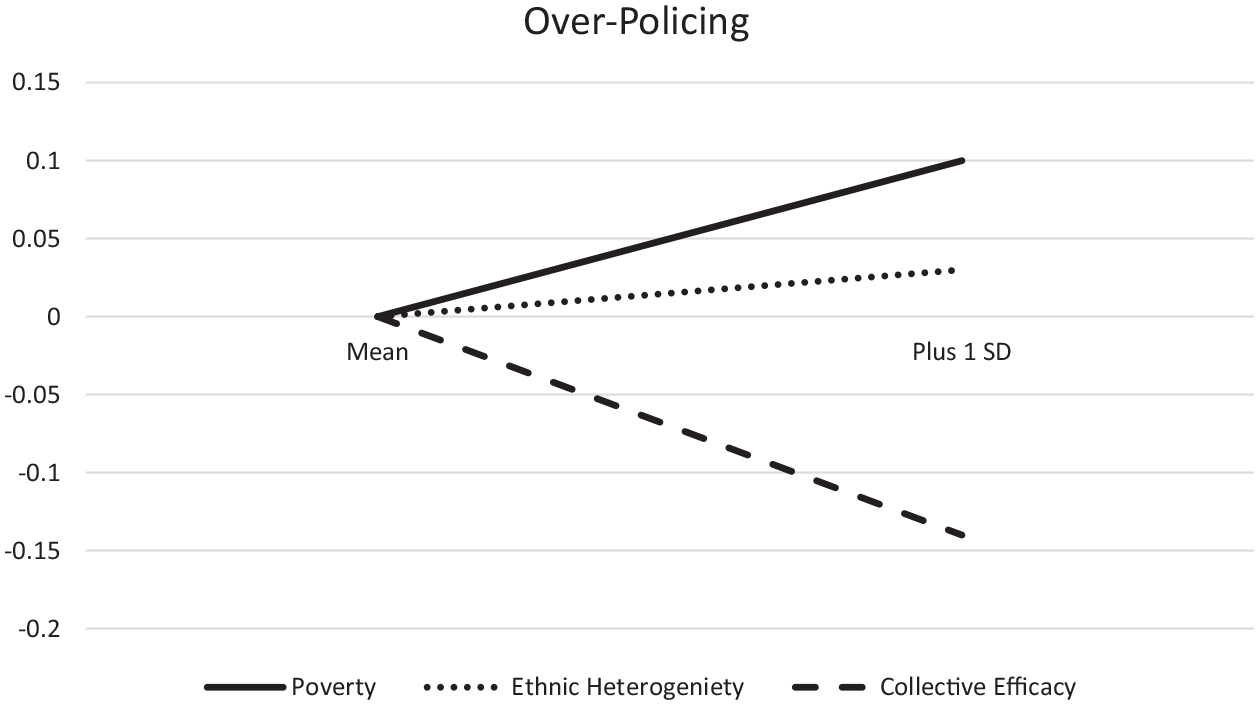
Level-2 variables on over-policing.
Discussion
Our results add to the already established notion that citizen perceptions of police vary by race/ethnicity as people of Color perceived greater levels of both under- and over-policing than Whites, controlling for neighborhood characteristics. By considering under- and over-policing separately, our analysis suggests that these concepts, though not mutually exclusive, are indeed distinct and are experienced differently based on citizen and neighborhood characteristics. Specifically, while all participants of Color perceived both over-, in terms of excessive use of force, and under-policing more strongly than Whites, Black and Latinx participants reported equally higher perceptions of excessive use of force, but Blacks felt greater levels of under-policing than did Latinx participants. Moreover, levels of neighborhood disadvantage and ethnic heterogeneity were the only two neighborhood variables that related similarly to both under- and over-policing. Interestingly, perceptions of under-policing were also positively related to residential stability and neighborhood proportion of African Americans though over-policing, in terms of excessive use of force, was not; and over-policing was negatively related to collective efficacy, while under-policing had no relationship with collective efficacy.
Of additional note, some may find the high levels of under-policing among the Black citizens surprising. This, however, is likely due the time of data collection. The 1994 Crime Bill, which was partially a response to the perceived neglect by police in Black communities, contributed to substantial increases of police officers in such communities (Ray & Galston, 2020). The PHDCN Community Survey was collected only 1 year after the Crime Bill, providing context to the revealed perceptions of Black citizens. Modern data would likely uncover different patterns, particularly given the increased use of deadly force in communities of Color. While our findings provide evidence for the distinction between over- and under-policing, additional research is needed to further parse out these concepts and their associations to race/ethnicity and place across time.
Overall, our results support the notion that under- and over-policing are indeed two separate and unique concepts, that should be explored independently, rather than subsumed within the perhaps overly simplistic notion of “negative perceptions of police.” That is, whereas prior studies commonly use measures of police satisfaction that subsume aspects of both under- and over-policing (e.g., Huebner et al., 2004; Schafer et al., 2003); our results indicate that these concepts are unique and relate to individual and neighborhood correlates of crime distinctly. Looking at these factors independently may help explain why communities are unsatisfied with police and provide more detailed insight into how this problem can be addressed. Specifically, negative relations with police may develop due to perceptions of being ignored and neglected and/or being targeted and harassed. Previous literature has uncovered that feelings of being over- and/or under-policed contributes to a lack of trust and confidence in police (Gau et al., 2012; Perry, 2006; Torres, 2017). Thus, understanding the details of what leads individuals to lack trust, confidence, and view police in a negative light can aid the development of more useful remedies to strained community-police relations.
This study further suggests that race and ethnicity robustly influence one’s perceptions of police, regardless of neighborhood characteristics, which have been found to influence perceptions of police generally (Cao et al., 1996; Davis, 2000; Gallagher et al., 2001; Sampson & Bartusch, 1998; Stone & Pettigrew, 2000; Weitzer, 2000). This finding has important policy implications as it suggests that race/ethnicity is a foremost factor when it comes to community-police relations. This again highlights the need for race-based, culturally specific means to address the strained relationships between citizens and police. For example, since aggressive policing strategies have been shown to target marginalized communities and increase chances of excessive use of force (Smith & Holmes, 2014), and thus erode the relationship between marginalized communities and police (Carr et al., 2007; Torres, 2017), these tactics should be replaced with community-oriented approaches that aim to increase trust between citizens and police. Additionally, programs such as the Denver, Colorado STAR unit reduces over-policing by responding to low-level 911 calls with social workers, mental health specialists, and medical professionals instead of police (Beaty, 2020). Such programs better respond to citizens’ needs for services as well as lower the burden on police to solve social ills, allowing them more time and resources to better serve the community. This study reinforces the notion that the relationship between citizens of Color and the police needs further cultivation. Implementing police-community partnerships that encourage positive interactions between communities of Color and police, as well as other social services, may be a step forward toward nurturing this historically tarnished relationship.
In the midst of composing this manuscript, the Black Lives Matter movement gained tremendous momentum following the deaths of George Floyd and Breonna Taylor, which exposed the disproportionate killings of unarmed Black Americans due to excessive use of force to many who were previously unaware. Support for criminal justice reform and racial justice are rising across the country (Queally, 2020) and support for radical changes to policing are being seriously considered to prevent the targeting and neglect of communities of Color (e.g., “defund” or “abolish” the police). 10 In conjunction with the COVID-19 pandemic, Los Angeles and New York City have already begun to cut police funding by up to $100 million dollars due to questions over the status quo of the current police tactics and strategies (Beinart, 2020). Brunson (2020) notes that the protests and calls to defund the police are focused on the concept of over-policing; however, he warns that these movements ignore the equally detrimental phenomenon of under-policing. Thus, this research sheds light on the complexities of over- and under-policing on communities of Color and perceptions of police that we are seeing resonate in recent events. Furthermore, we cannot have valid reforms without empirical evidence shedding light on how communities of Color are affected by policing strategies. Understanding the differences between over- and under-policing is a step towards better comprehending how marginalized communities are (mis)treated, aiding in informing such shifts in policing policies. The continued strained relationship between communities of Color and police necessitate modifications in how police approach these communities so that productive, just, and equitable police-community relationships can be fostered. The findings of this study may aid in doing so.
Limitations
Our analysis adds important insight into the complexities between race/ethnicity, place, and citizen’s perceptions of police; however, the study is limited in a number of ways. The use of secondary data limits the aptness of some measures. While excessive use of force is an important concept related to over-policing (Cunneen, 1999), it does not fully capture the breadth and depth of being over-policed. As such, our results regarding over-policing should be interpreted with caution as the measure may be more reflective of use of force specifically, than over-policing generally. Future research would benefit from the use of a more extensive measure of over-policing experiences, such as attempting to capture excessive surveillance, increased arrests, pat downs and frisks, and other aggressive policing strategies (Crowther, 2013; Perry, 2006). The use of secondary data also involved the use of an ordinal measure as a continuous one, and a comparison between a single-item measure (over-policing) and a factored index measure (under-policing). While not be ideal, additional analyses indicate the use of these measures is not especially problematic to our analysis.
Furthermore, the sample is limited to neighborhoods and citizens in Chicago, IL. Therefore, our results are only relevant to this geographic area and lack generalizability to the rest of the United States, though previous research has suggested that communities of Color in other areas are also over- and under-policed (e.g., Boyles, 2015; Butler, 2017; Cobbina, 2019; Rios, 2011). Finally, the data were collected in 1995, 25 years from the time of authorship. Much has happened since the PHDCN Community Survey was collected that could have impacted responses, such as the shooting of numerous unarmed people of Color, protests, and the evolution of the Black Lives Matter movement. Moreover, the 1994 Crime Bill was passed a year before this data was collected, therefore, the effects of the bill (e.g., aggressive policing) may or may not have been fully felt at the time of data collection.
Conclusion
Communities of Color remain the most targeted by police in the United States. Tactics such as stop-and-frisk and zero tolerance policing are examples of strategies that lead to over-policing people of Color and these strategies continue today. Moreover, when police are needed most by these targeted communities, the police often neglect and ignore them. This study assessed if perceptions of being over- and under-policed varied by race/ethnicity and neighborhood characteristics. The findings contribute to the literature two ways. First, we demonstrate that over- and under-policing are distinct, albeit overlapping concepts; thus, supporting the notion for researchers to move beyond the standard of examining “negative perceptions of police” as a singular construct. Second, this research further emphasized the varied experiences between Blacks, Latinxs, and Whites in their perceptions of police, as conditioned by neighborhood characteristics. These results add to the complex findings around race/ethnicity, place, and policing, and support the need for additional investigation into these intricate and varied relationships. Future research should continue to disentangle over- and under-policing to better understand the experiences people of Color face when interacting with police officers.
Footnotes
Appendix
Policing Item Frequencies.

| Over-policing | Not a problem | Somewhat a problem | Big problem |
|---|---|---|---|
| How much of a problem is excessive use of force by police in your neighborhood? | 74.7% | 16.6% | 8.7% |
| Under-policing | Not a problem | Somewhat a problem | Big problem |
| How much of a problem is police not patrolling the area or responding to calls? | 58.8% | 24.1% | 17.1% |
| Under-policing | Strongly agree | Agree | Neither | Disagree | Strongly disagree |
|---|---|---|---|---|---|
| The police are responsive to local issues | 8.9% | 59.3% | 10.0% | 18.3% | 3.5% |
| The police do a good job with problems that concern people | 6.7% | 55.0% | 11.1% | 22.6% | 4.6% |
| The police do not do a good job preventing crime | 5.0% | 27.9% | 11.7% | 50.3% | 5.1% |
| The police do a good job responding to victims after a crime | 6.5% | 61.8% | 11.7% | 16.6% | 3.4% |
Declaration of Conflicting Interests
The author(s) declared no potential conflicts of interest with respect to the research, authorship, and/or publication of this article.
Funding
The author(s) received no financial support for the research, authorship, and/or publication of this article.
