



Abstract
Aside from providing education on complex subjects, peer-led trainer models can also improve the effectiveness of policies. Sexual violence remains a problem within corrections, despite passage of the Prison Rape Elimination Act (PREA). To acquire insight into ways of improving this policy, focus group data were collected from (n = 16) male and (n = 16) female residents of a Southeastern United States prison system who had recently completed a peer-led trainer model on PREA. Thematic analysis of the data revealed how PREA could be improved by training staff to be more knowledgeable of the traumas endured by sexual assault victims, and by guaranteeing the privacy of victims who report their abuse. Policy implications are discussed.
Keywords
Sexual victimization in institutional facilities has been and continues to remain a serious problem for the United States correctional system (H. P. Smith et al., 2023). Between the middle and latter parts of the 20th century, prevalence rates of sexual violence in prisons, jails, and other forms of corrections ranged from lows of 1.1% (Davis, 1968) to highs of 28% (Lockwood, 1980). More recently, Rantala (2018) found that reports of sexual misconduct nearly tripled between 2011 and 2015 from 8,768 to 24,661, with 10% of these allegations eventually being substantiated. A meta-analytic synthesis of the literature on sexual misconduct in corrections estimated the rate of prison-based sexual victimization to be 12.4% (Caravaca-Sánchez et al., 2022). Sexual-based forms of misconduct in corrections not only place in jeopardy the health of incarcerated persons (IPs), but they can create budget crippling deficits for administrators, and reduce the effectiveness of disease prevention programs (Caravaca-Sánchez et al., 2022).
Concern over sexual victimization within the American correctional system prompted the United States Congress in 2003 to unanimously pass the Prison Rape Elimination Act (PREA) (H. P. Smith et al., 2023). PREA applies a zero-tolerance stance toward any form of sexual misconduct occurring across the entire spectrum of corrections, including in county jails, state and federal prisons, juvenile detention agencies, as well as alternative custodial settings such as military and tribal facilities (H. P. Smith et al., 2023). Training and financial support are provided by the federal government to these corrections agencies to ensure PREA meets its ultimate objective of eradicating sexual abuse from the correctional system (Rantala, 2018). To supplement this training, a number of corrections systems across the United States have also started implementing what are called peer-led trainer models to educate new residents on the nuances of this federal legislation. Peer-led trainer models have been praised for not only providing needed education on complex topics, but for also helping to improve the efficiency of policies (Miller & Gray, 2010; South et al., 2017). It is through the critical insight offered by participants that this latter goal can be achieved.
Grounded on the principles of homophily, peer-led training models involve the exchange of information between a learner and an individual who has specialized knowledge on a subject, both of whom share similar social characteristics (South et al., 2017). These types of educational seminars, contrary to ones where teacher and learner are demographically different, are more effective in achieving the above goals because trust is established between peers (Miller & Gray, 2010; South et al., 2017). Given the complexity of the PREA statute, coupled with the fact that sexual violence remains a problem within corrections despite the existence of this policy, rather than have staff serve as the trainers, peer-led seminars may be a viable alternative. Though the benefits of these educational models have been seen in other organizational domains such as healthcare, their value in improving the effectiveness of PREA through participant insight has yet to be determined. To address this research void, focus group data were gathered from a sample of 32, 16 male and 16 female, prison residents who participated in a peer-led trainer seminar on PREA. Information supplied by these respondents, who each suggested critical ways of strengthening PREA’s ability to prevent sexual victimization, may be of value to policy-makers who are strategizing best practices in creating safe carceral facilities free of sexual violence.
Research on the Prison Rape Elimination Act
On September 4, 2003, former President George W. Bush signed into law the Prison Rape Elimination Act (H. P. Smith et al., 2023). PREA’s primary goals are to standardize reporting procedures across all corrections agencies in order to document every instance of sexual violence, and to eliminate all sexual misconduct from the correctional system (Rudes et al., 2021). To remain compliant with the policy, each correctional agency in the United States must report sexual misconduct to national databases, establish channels through which reports can be submitted, and guarantee the safety of those who file sexual assault claims (H. P. Smith et al., 2023). Departments of corrections are additionally required to classify individuals most at-risk for sexual assault, receive education and training on PREA standards, adjudicate assailants, and provide necessary treatment to victims (Rantala, 2018; Rudes et al., 2021). Successful enforcement of the PREA statute, though also resting in the hands of frontline custodial staff, is principally shouldered by IPs since they arguably possess the greatest insight concerning acts of sexual violence taking place in institutional facilities (H. P. Smith et al., 2023).
Recognizing this point, an increasing number of scholars over the past few years have started researching what incarcerated persons believe is needed to properly enforce the PREA legislation (Marcellen & McCoy, 2021; Rudes et al., 2021; H. P. Smith, 2020; H. Smith, 2021). What has been found across this body of literature, fundamentally, is that certain barriers are preventing PREA from realizing its goals. Those barriers consist of victims failing to report for fear of retaliation, distrust dividing corrections staff and incarcerated persons, high rates of voluntary turnover among correctional officers, leading to the unavailability of staff to enforce PREA, and the policy not being assigned a high degree of importance by either correctional administrators, staff, or carceral residents. According to Rudes et al. (2021), these issues can hinder the “productive implementation and use of PREA” (p. 241).
While insightful, this research provides only partial understandings of how corrections systems can better align with PREA in order to eliminate sexual deviance. Mainly this is because the information gathered in these studies did not reflect the perspectives of residents undergoing a peer-led training for PREA. Environmental psychology suggests that all learning takes place in physical environments, and that when individuals are engaged in informational seminars, it is here where ideas, thoughts, and even solutions to problems have a greater chance of developing (Graetz, 2006). Researchers who can capitalize on this by collecting data from residents who are participating in peer-led models in real-time may be able to acquire rich information that can lead to improvements in PREA’s enforcement. This information could specifically be used to make improvements in PREA at the initial stages of its implementation that could then filter downward to the rest of the corrections system.
Peer-led Trainer Models for the Prison Rape Elimination Act
Peer-led trainer models are primarily based on Knowles’ Adult Learning Theory. Knowles’ work in particular rests on a rejection of content-driven forms of information delivery for adults that is a common feature of adolescent education. Specifically, Knowles (1980) viewed childhood learning techniques (i.e., pedagogy) as passive means of knowledge transmission that offered little utility for adults who sought applicable, practical, and experiential forms of learning, mainly for the purposes of achieving desired outcomes. As such, adult learning (i.e., andragogy) techniques posit that adults are more self-directed than children, that the environmental setting is fundamental to learning, and that the collaboration between adult teachers and learners is essential to achieving pre-defined goals (Knowles, 1980). Roger (2003) further argued that andragogy-based forms of education require a focus on specific problems, rely on the experience of teachers, and empower adult learners to analyze and check teaching materials for accuracy and relevance. Roger (2003) adds that ideas that are viewed as innovative generate the most interest from learners, and that early adopters represent a prime approach to dispersing information successfully within organizational settings. Early adopters are adults within an organization who facilitate the transfer of information between units (Roger, 2003). Peer-led trainer models therefore combine Knowles’ notion of adult learning through peers with Roger’s (2003) concept of internalized information to create transformative knowledge distribution networks.
Peer-led trainer models have been deemed successful in disseminating information in an array of settings, including nutrition education for low-income families (Miller & Gray, 2010), surgical and psychotherapy skill development (Prager & Takahashi, 2022; Vlachou et al., 2022), as well as leadership (Lacerenza et al., 2017). Studies have also found how peer-led models can improve organizational adherence to policy, with Priftanji et al. (2018) finding that after medical students participated in a peer-led trainer model on medical malpractices, lawsuits against their hospital for failure to abide by American Medical Association standards declined. Peer-led models are typically oriented toward affecting change in perceptions, behaviors, and knowledge at the systematic level, and other studies have also indicated that they can be effective. For example, in Poitras et al.’s (2021) systematic review of studies documenting the education of healthcare professionals, they found evidence that peer-led trainer models not only facilitated knowledge dissemination, but also improved organizational operations.
In the criminal justice system, peer-led trainer models are relatively prevalent in policing (Birzer, 2003; Molinaro et al., 2019; Weaver et al., 2022) and courts (Becan et al., 2019; Substance Abuse and Mental Health Services Administration, 2023), though empirical studies within the context of corrections are limited. This is problematic since peer-led training naturally occurs in jails and prisons (despite not being officially documented), and because peer-led models are conducive to the correctional milieu. Jails, prisons, and other detention agencies are resource deficient environments that can benefit from the low costs of these models, a desirable outcome for correctional administrators (Power & Smith, 2014). Regarding custodial populations, rather than recruit, hire, and financially compensate an outside trainer, a peer-led model that uses incarcerated persons as educational resources could provide enormous economic benefits to a corrections system (H. P. Smith, 2023). Further, when imprisoned individuals are placed in the role of trainer, they can remain physically present with learners, which can be salient for sensitive content (H. P. Smith, 2023).
Additionally, jails and prisons are unique contexts that house distinctive cultures, making consideration of the social context important to the learning process. Devilly (2005) argues that incarcerated populations may distrust external teachers, potentially viewing them as “authority figures attached to the correctional organization” (p. 231). Devilly (2005) further explains how peers “are deemed credible sources of information because they have experienced similar struggles and are, therefore, able to ‘speak the same language’ by offering practical support” (p. 231). This places value on these fellow instructors as “credible messengers” (Austria & Peterson, 2017) who are uniquely positioned to provide new information to peers.
A review of existing peer-led trainer models in corrections indicates an increased application to the institutional setting. In the United States, for example, peer safety companions are a common strategy used to prevent suicide in prison (Tartaro & Klenk, 2023). Here, incarcerated peer observers are provided training on communications strategies, symptoms of mental illness, and procedures useful in helping to prevent these undesirable events. These peers can serve as “suicide companions, if qualified and trained through a formal program that is part of a suicide prevention plan” (American Correctional Association, 2016, p. 42). Additional corrections-based examples of peer-led trainer models include the “Holistic Radicalization Prevention Initiative” (HOPE) program in Europe, and the “Alternative to Violence” (AVP) workshop in the United States, each focused on violence reduction through peer-based education (Sloane, 2002).
In terms of other peer-led models in corrections, Devilly et al. (2005) categorized them as: (1) HIV/AIDS education and prerelease HIV prevention programs; (2) Drug and alcohol abuse programs; (3) Sexual assault prevention; (4) Suicide, self-injurious behaviors, and violence reduction; and finally, (5) Prison orientation procedures. Considering how valuable peer-led trainer seminars have been across other organizational contexts, a need arises to analyze what unique benefit these educational models can offer with respect to the Prison Rape Elimination Act. Focus group data gathered from newly admitted prison residents who had recently participated in a peer-led training on PREA can illuminate important insight into how to effectively implement and enforce this federal legislation. Importantly, the focus of the current study centers on knowledge-based outcomes related to PREA for incarcerated people, with recognition that the intervention was conducted by trained peers.
Current Focus
To date, there is no study that has examined the transfer of knowledge between peers in relation to the Prison Rape Elimination Act (PREA). While the unique context of prison, coupled with the tenants of adult learning, indicate that peer-led trainer programs are a natural fit, there is very little in terms of empirical evidence. This is surprising when considering the need to examine how knowledge regarding sexual violence prevention is exchanged between vulnerable carceral populations. While there are no current studies of this kind, it is worth noting how many of the existing peer-led models in corrections coalesce around PREA-related topics such as violence, victimization, and self-injury/suicide. The current study is the first to our knowledge to explore application of the peer-led model within a PREA context using a focus group approach. With this, the main question of interest to this study is:
R1)-How do incarcerated persons perceive and interpret peer-led training in relation to the enforcement of the Prison Rape Elimination Act?
Method
Study Setting and Procedure
Reception & Evaluation (R&E) centers are where prison residents are screened for physical and mental health problems, education levels, and risk factors such as gang affiliation prior to being assigned to a specific prison (Power & Smith, 2014). Ever since codification of the Prison Rape Elimination Act, many corrections systems have embedded a new orientation component into the R&E, which centers around sexual violence prevention. In these orientations, peer educators, consisting of longer-tenured incarcerated persons, provide mentorship to new residents on issues of sexual victimization, and how PREA needs to be properly enforced in order to prevent sexual-based forms of misconduct (H. P. Smith, 2023). Specifically, they breakdown in detail the intricate components of the law, instruct new residents on the expectations of the policy, provide guidance on how to prevent sexual misconduct, relay any experiences they may have had with PREA, translate abstract jargon into more comprehensible terms, and always make themselves available during incarceration to answer follow-up questions.
Additionally included in the peer-led PREA training is an intake education. During this intake, attendants receive a brochure on PREA, and are required to view a short video on the law. Afterwards, a “comprehensive orientation” takes place in which more information on sexual violence and PREA is provided by peer trainers, along with new residents viewing a longer video, and receiving additional assistance from peer educators. The length of the orientation is typically 8 hours. Once completed, incarcerated persons are afforded the opportunity to pose questions to their peer trainers. All materials for the training were developed by Just Detention International (JDI), an agency that plays an integral role in implementing PREA standards.
The current study utilized focus groups to acquire nuanced understandings of how respondents perceived the peer-led PREA training, and what they believed could be done to improve the efficacy of this law. Focus groups were used in a previous prison-based study of peer-led models by Sirdifield (2006), who endorsed their efficiency at understanding prison resident attitudes and behaviors. Sirdifield (2006) added that focus groups do not discriminate against participants, and allow members to comment on the statements of others, which is crucial in helping to improve the quality of the data. Moreover, it has been recognized that focus groups can provide more in-depth understandings of knowledge formation, as participants react to and engage with their peers (Kitzinger, 1995). Contrary to one-on-one, individualized interviewing, focus groups are also a time-efficient means of data collection since information can be acquired from multiple participants simultaneously (Krueger, 1998). Though peer-led training seminars have grown in popularity, their utility in relation to improving the efficacy of PREA has not been determined. Whether these programs offer any educational and practical value can best be assessed through the direct experiential knowledge of participants.
It has been suggested that to reach full saturation of information, at least three focus groups, each containing between 6 and 12 participants, be conducted (Krueger, 1998). In this study, a total of four groups were held, two for the male sample, and two for the female sample. Each had eight members, to produce a final analytical sample size of 32. All focus groups were conducted during the month of April, 2017, with each one being held in a private room within the R&E center where no correctional staff were present to protect the privacy and confidentiality of research participants. On two separate occasions, each R&E center was visited by research staff in order to conduct the focus groups, which lasted between 45 and 60 minutes. Other than respondent race, ethnicity, and age, no other identifying information of theirs was gathered, with these demographics reported in Table 1. Prior to collecting any data, the project was approved by the host corrections system, as well as a university’s human subjects review board panel. All interviews were moderated by the lead author with the assistance of the co-author who helped record session notes. Per prison system regulations, no audio recordings of the focus groups were allowed; hence, the research staff had to manually write responses.
Sample Characteristics.
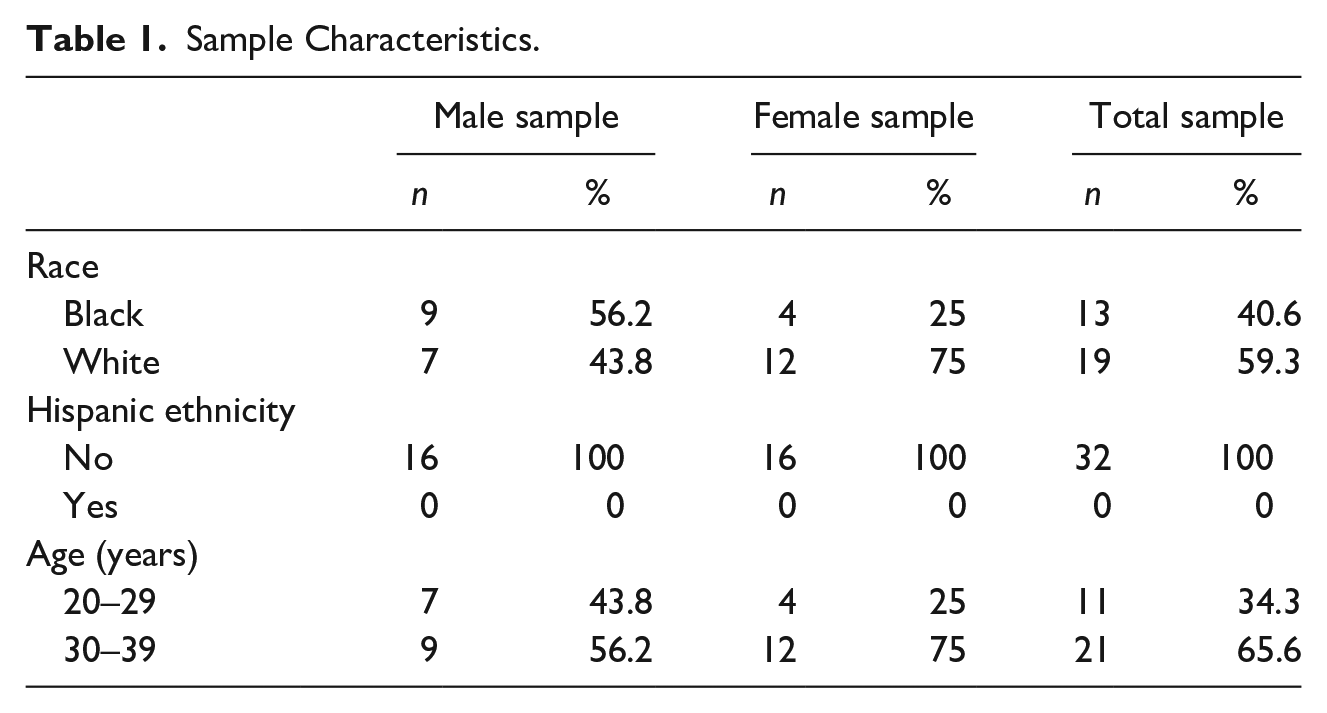
Participants in this study included 16 male (n = 16) and 16 female (n = 16) incarcerated persons who were being processed by their respective prison Reception and Evaluation (R&E) centers, which are located in a southeastern U.S. state. Respondent recruitment relied upon a purposive strategy where prospective sample members must have met the following eligibility criteria: (1) They were to have been admitted to the R&E within the previous 14 days of the focus groups; (2) They must have been currently undergoing a screening for housing assignment; and finally, (3)-They must have completed the peer-led PREA training. Correctional staff helped identify prospective sample members by asking them if they were willing to be interviewed, while ensuring that they did not unduly influence their decision. Focus group members signed consent forms indicating their voluntary willingness to participate in this study. Compensation of any kind was not afforded to our sample, yet it was explained that study results would be used to enhance prison safety, particularly in relation to sexual violence.
The State Department of Corrections where the study was conducted maintains a file on the demographics of newly admitted residents, broken down by year. For 2017, comparisons were drawn between our sample demographics and those of the remaining population. Regarding race, 1,750 Black or African American males between the ages of 20 and 39 years were incarcerated, equating to roughly 50% of this male population. Exactly 361 Caucasian females between this same age range were incarcerated, amounting to 80.7% of this population. These figures are roughly equivalent to our sample. Between both sexes and races, 3,985 incarcerated persons were between the ages of 20 and 39 years, amounting to 71.2% of the entire 5,593 newly admitted custodial population members for year 2017. This is a sizable majority of the entire population, and with our sample being completely composed of people between this age range, this reflects to a degree the age characteristics of all individuals admitted to the system.
Focus Group Questions and Data Analytic Strategy
Three total questions were posed to respondents, including (e.g., “What are your general thoughts on the peer-led PREA training you completed,” “What do you think are its biggest strengths and weaknesses,” and finally, “Do you have any suggestions for improvement”?). All three were developed by the research staff, and though they have no a priori empirical grounding, they best matched the ultimate intentions of this study, which was to acquire detailed understandings of participant impressions of the peer-led training, and how PREA could be better enforced. These questions were also reviewed by two correctional officers in the R&E centers for clarity and consistency. Though novel, we believe these questions provide the best opportunity to gather nuanced insight into our research questions, yet we nevertheless encourage scholars to replicate them in future studies to determine their usefulness.
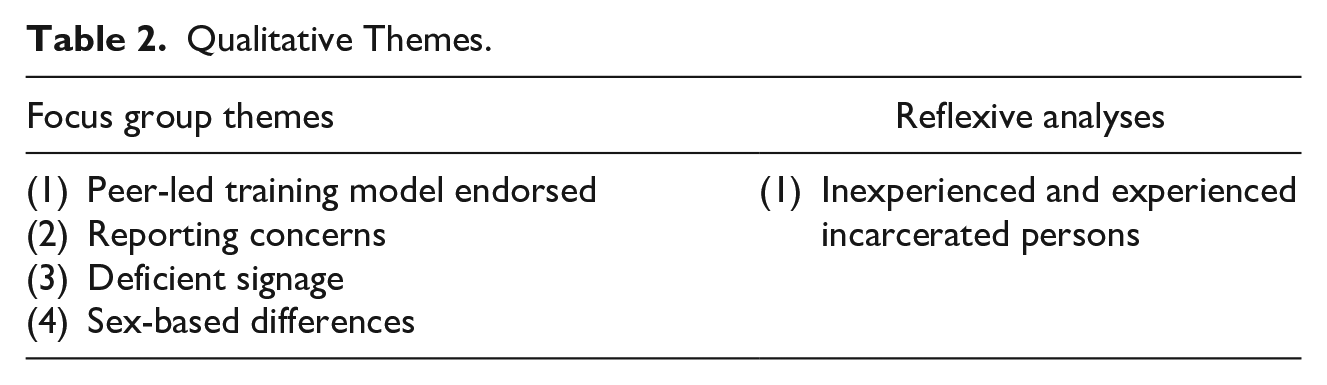
All focus group data were coded and examined via thematic analysis, a technique that has been utilized in previous research on PREA (H. Smith, 2021). This follows Braun and Clarke’s (2006) five phases of familiarization with data: (1) Generating initial codes; (2) Searching for themes; (3) Reviewing themes; (4) Defining and naming themes; and finally, (5) Producing a final report of the themes. Focus group data were entered into a database and analyzed using ATLAS.ti. Initial codes focused on themes such as training materials and knowledge transference. Secondary coding explored themes of convergence and divergence in sample member responses (Power & Smith 2014). Thematic saturation was identified when no additional themes emerged (Braun & Clarke, 2013). A final component of the analysis centered on reflexivity, which is described as “the researcher’s reflective and thoughtful engagement with their data, and their reflexive engagement with the analytic process” (Braun & Clarke, 2019, p. 594). Both members of the research team approached the entire data analytic process from a purely inquisitive standpoint since it was the sample members who possessed the knowledge we sought on the subject of peer-led PREA training. Neither member of the research team held any pre-conceived notions of either PREA or research participants. We only aimed to privilege their voices in order to acquire as in-depth an understanding as possible of the topic. All data were therefore analyzed impartially, with themes emerging from these analyses reported in Table 2.
Qualitative Themes.
Results
Participants expressed support for the peer-led model, though there were several sex and incarcerated person-centric differences that emerged in the focus groups. Themes centered around issues of institutional safety, reporting practices, the snitch label, and empowerment. These themes are now examined in more detail. When citing a direct quotation from a sample member, the label of (R), denoting a respondent, is used to safeguard their privacy.
Peer-led Model Endorsed, Reporting Concerns, and Deficient Signage
Every single participant in this study (32/32; 100%) held the unanimous consensus that PREA materials and training were professional, relevant, and appropriate, including having a clean, comfortable, and private room in which to hold the training. The use of incarcerated people in the training video, coupled with the presence of a “PREA peer educator” in the room, provided a nuanced and necessary “inmate perspective that went beyond statistics” (R. 1). One respondent explained that “Having an inmate who has been around sit in with us and answer questions or give advice is powerful, and these educators need to be in each institution ‘cause we are going to get assigned different prisons to go to and this could help us’” (R. 3). Despite this optimism for the training itself, all participants conveyed a concern over a perceived lack of reporting of sexual violations by other incarcerated persons, which could be the result of them fearing repercussion should they report. When discussing the underlying bases of fear, the most frequently cited terms by respondents were “embarrassed,” “pride,” “afraid,” and “scared.” Notwithstanding this concern, all study participants were adamant that “sexual abuse should not be done” (R. 14) and “we have the right to report it” (R. 17).
The peer-led model was viewed as effective in providing content, with nuances being understood. One area where every participant gravitated was the notion that prison inhabitants were not obligated to participate in a sexual assault investigation, but they could still receive medical and mental health treatment if necessary. On this point, one respondent stated that “officers need to understand that we are not compelled to do anything, and I am going to make sure that my friends back here know that. . .Some don’t trust anyone, but they still need to know that they can get help when they need it” (R. 14). These participants also summarized the peer model as practical, yet voiced issues over a need for privacy when reporting sexual violence, a need for increased knowledge on behalf of administrative staff with regard to sexual violence prevention, and that an improved system was needed to handle assault reports discreetly. Specifically, they expressed ambivalence toward having a designated phone number and kiosk where victims could report violations. On the one hand, these devices could facilitate the reporting process, yet on the other, their location raised serious questions. One respondent summarized these mixed feelings as such: Look man, I know we are in prison, and I have been locked up most of my life. You learn to not trust people. It’s good we have a number and the kiosk, but I ain’t about to be standing there talking on that phone or on that kiosk in the middle of the dorm typing shit. You in prison, people all around you, listening and watching. That will bring you more trouble than it’s worth (R. 7).
The peer-led trainer model also provided the opportunity for participants to engage with the Peer Educator to identify weaknesses in sexual assault reporting procedures. Here, all 32 respondents highlighted an overreliance on reporting from incarcerated persons at the expense of prevention strategies. The following account emphasizes this theme: “Having the inmate here to tell us our rights and answer questions was great, but we need to know that we will be protected in the first place. Like is it expected that something might happen and then we have to just deal with it ourselves?” (R. 22). Another theme voiced by the entire sample involved a lack of signage regarding PREA throughout the R&E milieu. Regarding this, respondent 17 said that in this “room, with the video and the trainer, I feel like PREA is working, but out there, where people are getting a haircut, prison clothes, photo ID, and medical, I don’t see nothing.”
Overall, it would appear from these collective responses that the females and males in our sample held favorable views of the peer-led PREA training. Respondents valued receiving real-world and practical information from relatable and knowledgeable peer sources. By receiving information this way, study participants felt empowered to express their views on PREA. From these responses, there appeared to be similarities between both the male and female samples. However, there were also some sex-specific responses too, which are now reviewed.
Sex-Based Differences
Thematic analysis of the data produced key differences between males and females. All male respondents explicitly rejected the “snitch” label in reporting, particularly when the physical force was obvious, and the victim fought back. These males held little expectations that reporting sexual violence would lead to negative consequences from other prison residents, with respondent 9 explaining that “If that (sexual abuse) happened to me, I would snitch to hell and back,” to which then Respondent 11 replied: “that’s not snitching.” In overt hypothetical cases with behavioral markers of physical violence, male respondents stated that the method of reporting was less salient. One participant stated that if “I see someone attacking someone, snitching just ain’t a thing, I’m telling the first officer I can find” (R. 13). For every member of the male focus groups, the peer-led model promoted a dialogue regarding the dangerous, predatorial prison resident who must be stopped at all costs. The prison system under consideration had recently introduced the use of a “pink suit” to identify individuals found guilty of a sexual offense while incarcerated, and participants strongly endorsed this measure to effectively identify risk within a facility. Regarding this, respondent 14 said: See I can see these guys in pink jumpsuits, and I know what I am dealing with. They all need to be put together in one dorm away from all of us. But then you get a cesspool, like a sex offender’s classroom, where they all learn from each other. You also gotta figure that the one that doing the rape needs help too. Something happened to them during childhood. They think – my parents or neighbor did something to me (sexual abuse), so why can’t I do it to someone else? (R. 2).
In contrast, all female participants prioritized the role of sexual harassment, broken intimate relationships, and bullying via cliques. There was consensus that within the female prison system, sexual violations never included physical force or violence. Instead, predators preyed on the emotions of the vulnerable in order to exploit services from them. This included reflections on both current and previous incarceration experiences. All females in this study further indicated that sexual violations within their prison were often “consensual, gone wrong” (R. 27). Respondent 24 summarized this process as such: What happens is that it begins with flirtation, and then women are in a relationship, like a relationship with other women here in prison or with staff. Then a third party gets involved and things get messy. Like they break up or go with this new person and you have a messy break up. Officers get involved and you could lose everything, your release date, your children, your visitation with your kids.
The role of correctional officers was far more important to female respondents when compared to the male sample. Every single female interviewed expressed disappointment and frustration in getting their needs met by correctional officers, and a general sense of disconnection between staff and the prison population. Here, respondent 26 had the following to say: Back here you got officers just arguing and bickering with people. Like we argue with them over requests for toilet paper or equal time for phone calls and favoritism. How are we expected to go to them to talk about sexual harassment or abuse? They just be shouting and hollering that nothing gets done. This stops PREA from happening properly.
Female participants further perceived that officers used PREA to target non-sexual female relationships, with one respondent saying “You might be touching your friend’s hair or giving them a hug, and an officer will say something, it’s like, ‘you better be careful or PREA is going to get you’” (R. 4). Another respondent recalled a faulty reporting process that occurred during a previous prison sentence: “I was getting sexually harassed by this girl and so I wrote it in a grievance. . .The next couple of days I started getting taunts from other inmates and staff who knew what I wrote. I’m not sure the Warden ever got the grievance” (R. 5).
According to our findings, both males and females in this study praised the peer-led PREA training. However, they seemed to differ with respect to their evaluations of staff, and the origins of sexual misconduct in their respective institutions. In addition to analyses of respondent statements, this study also observed and recorded the physical mannerisms of respondents since these could be just as informative as their actual statements in revealing how they felt about the peer-led training, and PREA itself. These reflexive observations are chronicled below.
Reflexivity: Inexperienced and Experienced Incarcerated Persons
Field notes of the focus groups revealed the presence of two divergent responses with regard to PREA, the peer-led training sessions, and sexual misconduct, bifurcated according to length of incarceration. Neophytes to the system with less than 1 year of total incarceration experience across their lifespan (11/32; 34.3%) displayed body language reflective of hypervigilance, anxiety, and severe concern over their safety. This group was alert to their vulnerability, less likely to engage in dialogue, and appeared to be oriented toward absorbing information regarding PREA. In contrast, longer-tenured and more seasoned veterans of the system, having been incarcerated for at least 1 year throughout their lifetime, appeared more relaxed and casual when responding to questions. In fact, some of the best responses to our questions emanated directly from them. A subset of this veteran group had been imprisoned on numerous occasions, and given their wealth of experience with system operations, appeared almost bored, cynical, and irritated (though they still nevertheless provided insightful feedback on PREA). One female participant explained how she had already viewed the PREA video seven times, while one male respondent had viewed it 15 times. They had seen these videos with such frequency that they sometimes had to “educate staff on PREA” (R. 17).
During the focus groups, less experienced respondents migrated toward more seasoned residents for guidance with their current incarceration experience. Having a peer-led PREA trainer, who served as both mentor and adviser, was instrumental in helping the newly admitted residents acclimate to their environment. Routinely, the more experienced individuals voiced the sentiment that their goal was to “do my time, and get out of prison,” and that involvement in the quasi-consensual (i.e., repaying of drug or gambling debts with sex) or fully consensual sexual relationship carried the risk of extending their sentence. As such, they had absolutely no desire to jeopardize their release date, and they communicated this to new residents. Experienced prison inhabitants, further, echoed many of the sentiments expressed by the Peer Educator, such as “don’t borrow or buy something that you can’t pay back” (R. 12), which reinforced general institutional safety practices for neophytes. There was a measure of empowerment in these exchanges as experienced residents reflected on how PREA could represent a positive change. One respondent said, “To me, PREA shows that changing culture in prison is possible. It was like the Wild, Wild West back here in the day. Now, if you follow the rules of the road in prison you can stay safe” (R. 1). In total then, it would appear from the viewpoints of our study participants that they valued the peer-led training, with many less experienced respondents using more seasoned incarcerated persons as sources of knowledge and safety.
Discussion
The current study explored the use of a peer-led training model as part of the implementation of the Prison Rape Elimination Act (PREA). Using a thematic analytical approach, several themes emerged that provide the opportunity for policy formation. The peer model demonstrated considerable efficacy, as incarcerated individuals undergoing the training were provided a PREA orientation that was guided by a much-valued Peer Educator. This centers on the worthiness of a peer who has been trained in PREA protocols. Devilly (2005) found that incarcerated peers possess specific knowledge about prison risks, and because of this, were best positioned to educate new residents. A study by Grinstead et al. (1997) used a stratified randomized strategy to assess the role of peer-led groups in HIV prevention among 2,295 males incarcerated in a state prison system. The researchers found that peer-led groups were as effective as professional-led programs in changing attitudes and behaviors, with participants voicing a much stronger desire for peer-led interventions. Similarly, Brannon and Troyer (1991) reported reductions in recidivism within a sample of individuals convicted of sex violations, where peer-group counseling (with staff oversight) was the preferred method of treatment.
The peer-led trainer model in this study produced valuable feedback that could be maximized to improve the efficiency of the PREA legislation. Though prior research has studied members of the custodial population to better understand way of strengthening PREA (see Rudes et al., 2021; H. P. Smith, 2020; H. Smith, 2021), these studies did not conduct focus groups with IPs who participated in a peer-led training seminar on the legislation. Adopting such an approach can provide valuable knowledge regarding ways to enhance PREA’s ability to eradicate sexual deviance from corrections (Graetz, 2006). One specific policy deriving from the current study related to signage on PREA, which, to participants, was conspicuously absent in the R&E centers. In response, the researchers brought this concern to the attention of staff working in a centralized PREA office. The PREA Peer Educators in both the male and female receiving centers were provided materials (i.e., poster boards and large markers) to construct signs in accordance with correctional needs, which were then displayed prominently throughout the orientation buildings. This process of noting a problem and responding to it is highly reflective of an emerging methodological trend termed Participatory Action Research (PAR) (Ferdik & Smith, 2017), in which academics and practitioners partner together to change policy. Another product of the peer-led trainer model involved the restrictions of the prison milieu, where participants expressed concern over reporting sexual violations via a phone call or kiosk in the presence of others. While interventions at the time of the research were limited, the post-COVID era has produced the introduction of electronic tablets for education, programming, and other needs of custodial populations. Future research would therefore benefit from measuring and understanding reporting practices related to these new technologies.
While there was much consensus between participants in helping to improve PREA, differences in how focus group participants perceived the training and law were seen along lines of sexual identity and length of sentence. Referring to the former, males perceived less value in interpersonal relationships and centered their views on physical cues of harm, victim resistance, and a subset of predatorial individuals who needed to be removed from general population. Male participants rejected the snitch label, and held poor views of correctional officers as effective reporting resources. In contrast, the females in this study valued greatly interpersonal relationships, and cited basic needs, emotional support through affection, and dysfunctional breakups as dominant themes. For them, correctional staff played critical roles in the prevention of sexual violence. Male participants, instead, essentially viewed correctional officers as just figureheads. These findings align with decades of research noting how males and females tend to have misaligning priorities (Banning & Lahm, 2014; Panton, 1974). These studies have consistently found that males seem to be more preoccupied with, and driven by, adherence to institutional regulations, while females value interpersonal connections with others. Further, whereas males are more anti-social, their female counterparts place in higher regard emotional bonds, according to Panton (1974).
With respect to staff and the role they need to play in preventing all forms of sexual violence in every institutional facility, regardless of cell assignment, there is one clear policy implication. Johnson (2002) made the remark that all correctional officers, irrespective of the institution where they work, need to attend to the needs of every custodial resident in order to safeguard their welfare during imprisonment. If males are viewing officers as inefficient, while females depend on social bonds established with them, then staff need to customize their interactive approach with each resident in order to fully understand their needs. By doing this, a voice is provided to imprisoned populations, which, in turn, can lead to improved safety within carceral agencies.
Unexpectedly, different opinions were voiced regarding the training based on prior incarceration experiences. Devilly (2005) has argued that “orienting new offenders to the policies, procedures, and realities of prison life is another avenue for peer education. Many offenders feel they have been cheated by the system and by society in general, often fighting against the prison environment upon reception” (p. 227). Devilly (2005) adds that the experiential knowledge of like-minded, but more seasoned peers, would be an asset for newly admitted residents. In fact, in a review of the literature, it was found that peer-led orientation programs where resident-led group meetings were held to provide information on unit rules, rights, and privileges, as well as information on educational, vocational, and medical resources, were highly valued by those new to the corrections systems (South et al., 2017). The current study lends support for experienced peers to engage in the peer-led process, as they were largely viewed as credible messengers who reinforced the materials and viewpoints of the PREA peer educator. The experiences of veteran incarcerated persons empowered neophytes by reinforcing a code of incarceration that reduced risk, and provided a measure of safety. Interactions between seasoned and new residents further reinforced the specific PREA materials, knowledge, and guidance that was provided by the PREA Peer Educator.
Limitations and Future Research
While the current study produced key themes that can be linked to policy implications, it is not without limitations. First, the questions posed to respondents were research-team created, and thus do not have an empirical backing to affirm their usefulness. Any replications of this study should use these questions on future samples to test their reliability and validity. Second, data were collected nearly 10 years ago, and may not hold any applicability to current correctional climates. Though this is a concern, recent scholarship (H. P. Smith et al., 2023) indicates that incarcerated persons continue to express concern over their welfare; therefore, these results may still hold utility in today’s correctional environment. It is also worth noting that data from this study are only now being reported because this research is part of a larger, multi-year data collection effort on PREA that recently concluded. The authors are now beginning to report findings from the entire project.
Third, though the main purpose of qualitative research is to generate grounded-theory understandings of social phenomena, rather than generalize findings, still, with only 32 individuals being interviewed, our findings may not be applied to other correctional populations. Fourth, while the IRB protocols allowed for the inclusion of the PREA Peer Educator’s perceptions in the research, there was a small number of assigned educators, making specific identification of their responses unethical (and thus we did not include these valuable perceptions). Additionally, the goal of the current study was to develop an understanding of PREA within a peer-led model, and there was no inclusion of incarcerated person characteristics such as most serious crime, sentence length, or other criminological variables. It is likely that a portion of participants in the study have been convicted of a crime that involves sexual violence. Extensions of this research could triangulate data sources, whereby including criminal history, and other individualized incarceration experiences in order to contextualize further our results.
Conclusion
As a final remark, the peer-led trainer model in this study demonstrated efficacy in properly educating newly admitted residents on the fundamentals of PREA. Participants valued the emphasis on rights, relevant content, and institutional responses to sexual violence, though they raised concerns over some practical aspects of the law. The role of the PREA peer education, coupled with the presence of knowledgeable incarcerated persons with past imprisonment histories, validated the peer-led model, particularly with respect to topics such as snitching, consensual relationships, and the informal rules of prison. To increase safety standards within institutional facilities, it is recommended that corrections systems continue to leverage the resources peer-led training models can offer, particularly in reference to complex policies such as the Prison Rape Elimination Act.
Footnotes
Declaration of Conflicting Interests
The author(s) declared no potential conflicts of interest with respect to the research, authorship, and/or publication of this article.
Funding
The author(s) received no financial support for the research, authorship, and/or publication of this article.

Data Availability
Data reported in this study were not presented at any other venue, including other journal outlets, or at conference presentations. The findings from this study have exclusively been reported to this journal alone. Further, none of the data were posted on public forums such as listervs, or other websites as this would have violated the terms of the Institutional Review Board requirements. Only within this specific manuscript submitted exclusively to the Crime and Delinquency have findings from our data been shared.
In accordance with the human subjects panel that reviewed our study, data are stored solely on the password protected University-issued laptop of the lead author. As part of Institutional Review Board requirements, we were not permitted the opportunity to share the raw data in any public forums as this was perceived as a violation of the anonymity and confidentiality of research participants. However, should a third-party be interested in collaborating on future research projects from these data, the lead author would be willing to do this, all the while maintaining private and confidential the data by keeping them stored on the aforementioned University-issued password protected computer. Finally, none of the work associated with this study was pre-registered.