



Abstract
Seemingly, we live in a world where people are free to decide which network members to activate for what sorts of tasks. This is the principle of ‘networked individualism’, where personal autonomy is central to the organization of personal networks. Yet is this autonomy overstated? Applying correspondence analysis (CA) to network survey data from Singapore, this article posits that while networked individualism is a modern trend, categories such as gender, ethnicity and class, do, in addition to personal autonomy, structure how people match role relationships to tasks. Unlike most studies, which examine the link between social categories and role relationships, or the link between role relationships and tasks, this work incorporates all elements under the rubric of a single study.
Introduction
The defining characteristic of contemporary communities is their personal nature – personal in two senses: (1) every person has a network of family and friends to call his/her own, and (2) every person is assumed to be responsible for cultivating that network. Rainie and Wellman (2012: 125) explain it this way: Networked individualism downloads the responsibility – and the burden – of maintaining personal networks on the individual. … Active networking is more important than going along with the group. Acquiring resources depends substantially on personal skill, individual motivation, and maintaining the right connections.
I have no argument with the concept of personal agency. However, I wonder if it is sometimes overstated, as mobilizing network support often takes place within specific structural contexts that work to restrict people’s options and actions. In this article, I argue that while modern individuals are free to choose whom they wish to consult for different kinds of help (Wellman and Wortley, 1990), social categories such as gender, ethnicity and class (Tilly, 1998) have an important role shaping how they match role relationships (e.g. spouse, friend, neighbour) with support tasks (e.g. providing financial aid).
Contextualizing ‘networked individualism’
At one time, neighbourhoods and community formation went hand-in-hand, but studies show that people are increasingly adopting specialized strategies. Rather than wait for the neighbourhood to supply all their needs, they are mobilizing different kinds of role relationships for different kinds of tasks: parents, adult children, spouses and siblings are consulted for financial aid, emotional aid and helping with large and small services (such as childcare and home repairs); friends act as confidants and social companions; neighbours are asked to help in emergencies (Wellman and Wortley, 1990). That people are especially likely to shop in ‘specialized interpersonal boutiques’ (rather than at ‘general stores’) (Wellman and Wortley, 1990: 583) is an important observation, but not a new finding.
What needs further investigation is how people may match network members and their roles to tasks differently depending on their social locations. That is to say, even as people build specialized systems of social support based on autonomous decisions, structural forces constrain the context within which those autonomous decisions are made. Empirically, this would mean having to study not just how people match role relationships to tasks, but consequently to ask how structural factors such as (in this case) gender norms/scripts, ethnic hierarchies/culture and class differences affect the organization of social support.
On the one hand, a great deal of research analyses the link between a person’s characteristics and his/her access to specific network members; for example, women are more likely than men to name kin, and minorities are less likely than others to name friends (Bastani, 2007; Small, 2009). On the other hand, there has been much research into the link between specific network members and specific tasks; for example, kin provide financial and emotional aid, while co-workers provide advice (Freeman and Ruan, 1997). Yet few studies combine both strands of investigation under the rubric of a single study. The lack of integration is understandable as it is difficult to deal simultaneously with multiple axes. Theoretically and empirically, we would need a data structure that permits (for instance) a visual summary of social categories, role relationships and tasks interacting as a tripartite system. My proposed solution is to rely on correspondence analysis and their attendant maps.
While social categories reflect individual attributes, they also define boundaries for individual action. Tilly (1998: 115) notes that social categories are ‘containers that comprise meanings, memories, social networks, and practices that accumulate separately within them’. These meanings are attached to gender, ethnic and class categories, thus affecting how individuals behave, interact, allocate resources and build communities with one another.
For example, the gender script, comprising the cultural expectation that ‘work’ is men’s domain and ‘home’ is women’s domain (Coser, 1991), profoundly affects how men and women organize their social worlds. For one, women have traditionally been kin-keepers (Wellman and Wellman, 1992).
Race/ethnicity is another important form of social organization (Wimmer, 2008). The ways that ethnic groups organize their communities are shaped by such factors as socioeconomic circumstance and culture (Sarkisian and Gerstel, 2004). Scholars show that disorganization within minority families are at least partially due to situations of economic disadvantage, curtailing their active participation in social exchanges; they have nothing much to give, hence cannot participate as fully as they would like to (Roschelle, 1997). Not to be forgotten in all this, is the role of ethnic culture itself. Beyond values, culture is a ‘toolkit of habits, skills and styles’ (Swidler, 1986: 273) that structures how different groups organize. There is an aspect to culture that, once established, becomes routinized scripts for action (Swidler, 1986).
Class is the third expression of opportunities and constraints. In contexts of poverty, people have little to exchange; hence, they must engage in social support in a truncated way. Their poverty makes them unattractive network members; they are either excluded from networks or withdraw voluntarily to preserve a modicum of status and reputation (Offer, 2012). By contrast, being both socially and geographically mobile, the wealthy (and well-educated) have access to large, diverse networks of non-kin (Fischer, 1982; McPherson et al., 2006).
Norms, structure and culture
Once we have established the potential importance of structure on networking decisions, we must consider how different kinds of social categories produce such different kinds of associations for tasks. I argue that categories do not all work the same way; rather, different categories have unique parameters within which people organize their social support. As my study shows, the social categories within which individuals are located observably modify how they match different kinds of role relationships to different kinds of support tasks.
The setting of the study is Singapore, a country where gender, ethnic and class are major social divisions. Not that they aren’t in other countries, but Singapore is unique in some respects.
First, although women are no less educated than men in Singapore, they are much less likely to be in paid work: the most recent statistics show that labour force participation is 57% for females and 75% for males; this gendered pattern is consistent in the sample for all ethnic groups. Thus, there appears a great under-utilization of the formal human capital investments of Singaporean women. Does Asian patriarchy play a role? How do gender norms and segregated roles within the household affect the organization of women’s social support? This analysis will probe into how women may be matching role relationships to tasks differently from men.
There is also race and ethnicity. The Singapore population comprises three principal ‘racial’ groups – Chinese, Malays and Indians. Drawing on distinct socio-historical experiences, each ‘race’ is characterized by a unique ethnic culture, blending different languages, communities and religious practices, dress, etc. Yet a major characteristic that differentiates ethnic groups in Singapore is socioeconomic: Chinese and Indians are much wealthier and better educated than the Malays (Rahim, 1998). This draws us into a familiar debate: if social networking practices are different between ethnic groups, is it ethnic culture or socioeconomic circumstance that makes it so (Offer, 2012; Roschelle, 1997; Sarkisian and Gerstel, 2004)?
Much sociological research leans towards socioeconomic explanations for ethnic differences. Roschelle (1997: 75, 80) notes: ‘The research from the structural perspective is clearly more robust than the research from the cultural approach [as] much of the literature, especially from the cultural perspective, tends to be extremely small, non-representative samples.’ Two studies in particular (Offer, 2012; Sarkisian and Gerstel, 2004) underscore that what seem like cultural effects are often, in fact, structural effects of material disadvantage cloaked in culture.
As socioeconomic circumstance is closely tied to race/ethnicity in Singapore, the analysis may reveal something about whether social support patterns among minorities have more to do with ethnic culture or with material disadvantage. When we compare the correspondence maps of Malays and low-educated individuals, if the maps are similar, we can conclude that cultural differences incorporate material characteristics. But if the maps are observably different, we have a case for cultural characteristics working as an independent system. Contrary to the literature, which consistently highlights the role of material situations accounting for ethnic variations in social organization, my results suggest that ethnic culture also plays an important role.
Finally, there is the issue of class itself. My proxy of class is education measured on three levels (low, mid, high). While class and race are highly correlated in Singapore, they are not coterminous as there are rich and poor in every ethnic group. The well-educated are more likely to live in private housing (as opposed to government-built public housing apartments). In terms of social support, we would expect them to have larger friendship networks than the less well off (McPherson et al., 2006). Yet, beyond the abstract idea of ‘network size’ itself, how do different classes actually organize their social worlds? If well-educated individuals form networks to preserve advantages, and less well-educated individuals form networks to hoard sparse opportunities (Tilly, 1998), what patterns of social support reflect/facilitate this?
Data and methods
Data source
The data source is a stratified random sample of 1143 Singapore citizens and residents aged between 25 and 55. As many adults live with their parents, the study relied on a Kish grid system to select which adult in each selected household to interview. A reputable research company developed the sample from information supplied by the Department of Statistics. The data were collected between February and August 2005. Ethnic minorities (Malays and Indians) were over-sampled to yield a sufficient number of cases in those population categories. Each interview lasted about an hour and was conducted at the door of the respondents’ homes.
The most common age range was 40–44 years (21.4%), with other age ranges well represented. Males and females constituted 47% and 53% of the sample. Chinese made up 69%; Malays, 19%; Indians, 12%. The sample distinguished between three educational groups: 31% had ‘low’ levels of education (no formal education or some secondary education), 51% had ‘middle’ levels of education (completed secondary school, technical school, or pre-university) and 19% had ‘high’ levels of education (polytechnic or university graduates). A comparison with national percentages shows close compatibility (Table 1). There are slight deviations on age, e.g. the sample is a bit older (but the difference is not glaring). There are also differences in ethnic distributions; but as mentioned earlier, this is due to an over-sampling of minorities. There is strong equivalence on both employment distributions. There are slight deviations on education: the well-educated are less represented in the sample, but, again, the percentage difference relative to the general population is not substantial.
Sample characteristics (N = 1143).
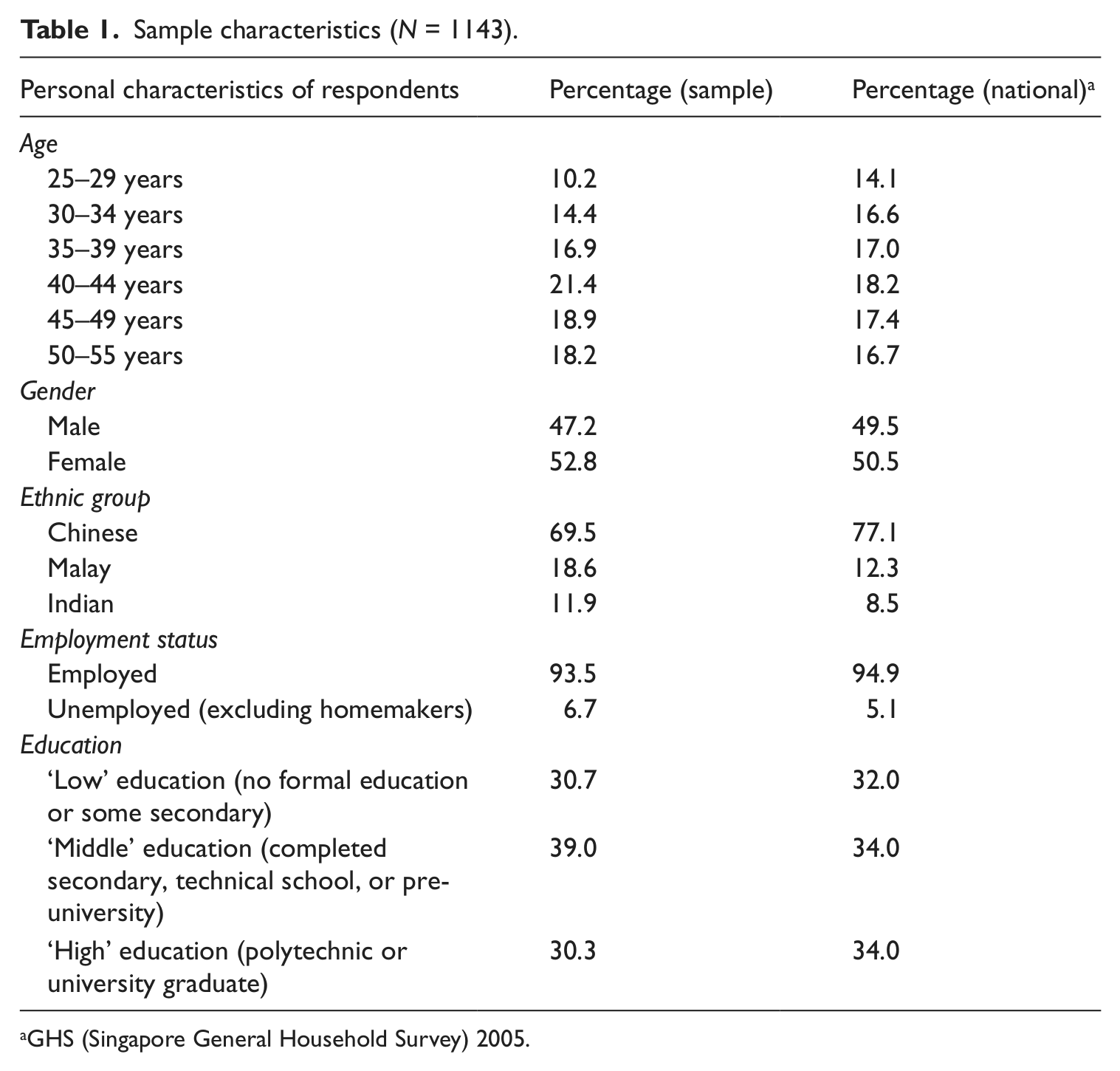
GHS (Singapore General Household Survey) 2005.
Although the original survey comprised 14 name generators, I use the six questions that most closely resemble those in Freeman and Ruan’s study (1997) which examines the relationship between a select set of role relationships (e.g. co-worker, friend, neighbour) and tasks (e.g. keeping watch over the home, helping in illness, borrowing money, feeling down, receiving advice, problems with spouse): 1
Can you give me the names or initials of the person whom you will ask or have asked to look after your house? [HOUSE]
Looking back over the past six months, who were the people with whom you discussed matters that are important to you? [IMPT]
Suppose you feel just a bit down or depressed, and you wanted to talk to someone about it. Who could you turn to? [DOWN]
You mentioned that you would ask someone you know to lend the money to you. Can you tell me who this person would be? [MONEY]
Thinking of the past six months, who were the two or three people with whom you spent the most time doing social activities? [SOCI]
You mentioned that you came to know about this job through a friend/person. Can you tell me the name or initials of this friend/person? [JOB]
In the survey, ‘name interpreters’ follow the name generators; these incorporate such items as network members’ gender, ethnicity, age, housing type, education and role relationship. For the present study, the last is especially important.
The 1143 respondents were linked to 4578 unique (within-ego) network members, an average of four unique names per respondent over six questions. As some names repeat themselves over the name generators, it is necessary also to think in terms of number of ‘ties’ per respondent: the 1143 respondents were linked to some 6818 ties (over six questions). A tie-wise approach is needed to formulate tables summarizing the link between role relationships and tasks (Table 2).
Relationship between role relations and tasks.
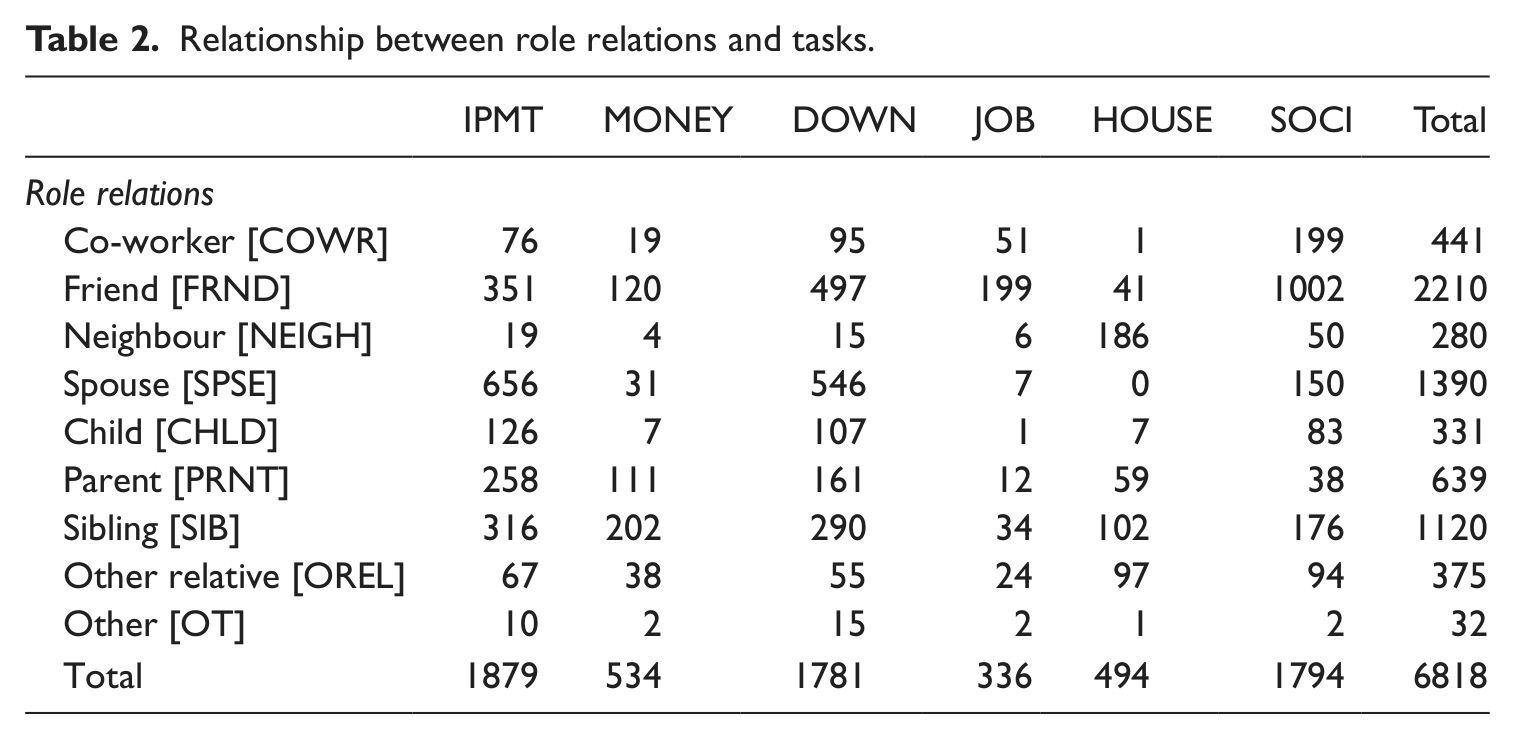
In classifying the roles, I have adopted the nine-category strategy used by Freeman and Ruan (1997): (1) co-worker (COWR), (2) friend (FRND), (3) neighbour (NEIGH), (4) spouse (SPSE), (5) child (CHLD), (6) parent (PRNT), (7) sibling (SIB), (8) other relative (OREL) and (9) others (OT).
Correspondence analysis
There is a mind-boggling mathematics to correspondence analysis (CA) (Greenacre, 1984), but for the present purpose, it is sufficient to grasp the main idea. Briefly stated, CA places associated categories on a two-dimensional plane: the closer the categories, the stronger their association. In this study, the use of a correspondence map offers the simultaneous examination of three kinds of relationships: (1) the ways tasks are associated with role relationships; (2) the ways tasks are associated with each other; and (3) the ways role relationships are associated with each other (Freeman and Ruan, 1997: 95). Interpreting a CA map is an exercise in seeing how the data points cluster and separate (Greenacre, 1984). The technique is exploratory rather than confirmatory.
The first step in correspondence analysis is to put the data in the form of a contingency table. I organize the data in nine rows of role relationships and six columns of tasks (Table 2). The numbers in the cells form the basis of the CA map. They may be thought of as ‘masses’. These ‘masses’ are used in the calculation of weighted distances. Masses affect the centroid, the centre of a cluster of points. A large mass pulls the centroid towards its location, giving rise to distinctive clusters of associated categories (Greenacre, 1984). CA relies on such methods as (1) metric scaling (MS) and (2) singular value decomposition (SVD) (see Freeman and Ruan, 1997: 96). The aim of SVD is to transform the original data into three new matrices U, V and d. The U matrix reorganizes and reproduces the patterning of variation in the rows of the original data. The V matrix reorganizes and reproduces the variation in the columns. The d matrix is a diagonal matrix that contains the singular values; these values provide an index of the amount of variance captured by successive columns of U and V. Metric scaling (MS) is a counterpart of the SVD procedure whereby m new variables (equal to the number of columns in the original table) are produced. These new variables capture all of the variance contained in the original table, but they reorganize the data so that that earlier columns in the U and V matrices account for more of the variance. The aim of CA is data simplification. Hence, if the first few columns of the U and V matrices capture the overwhelming majority of the variance in the data, we can drop the later columns and reduce the dimensionality of the problem (see Freeman and Ruan, 1997: 96). In this study, two dimensions (horizontal X and vertical Y) accounted for more than 80% of the data’s variance.
Iterative proportional fitting (IPF)
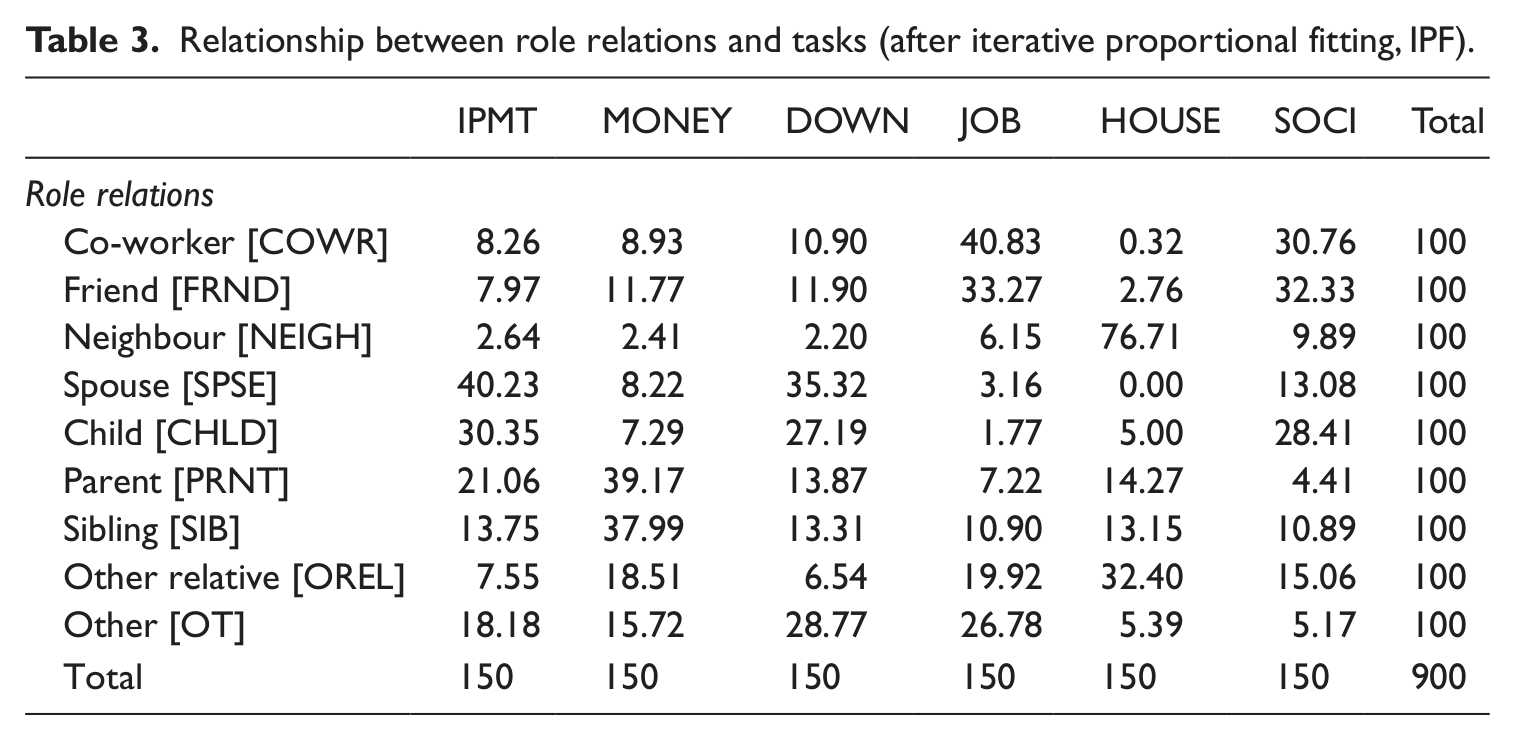
Like Freeman and Ruan (1997), I applied iterative proportional fitting (IPF) to the data to circumvent the problem of unequal marginal totals. In the IPF procedure, the marginal totals are fixed: for example, 150 for each of the six questions and 100 for each of the nine roles, making the grand total 900 ties (Table 3). Fixing the marginals on both rows and columns would mean iterating the number of responses to those we would expect to see if each question had produced exactly 150 responses and each role had been chosen 100 times. What IPF does here, as Bishop et al. (1975) explain, is ‘to fit homogeneous margins to a simple two-way table … and thus bring out features of the interaction pattern that are not easily discernible in the raw data’ (Freeman and Ruan, 1997: 98; emphasis added). In CA, the focus should not be the overall tendencies of respondents to report various specific tasks and role relationships but rather, the ‘basic nucleus’ of the association (Mosteller, 1968, cited in Freeman and Ruan, 1997). 2 Since the ‘basic nucleus’ is expunged of the impact of unequal marginal totals, it is especially valuable for understanding the real association between role relationships and tasks. Table 3 shows the iterated data (i.e. post-IPF). These data translate into a correspondence map (e.g. Figure 1).
Relationship between role relations and tasks (after iterative proportional fitting, IPF).
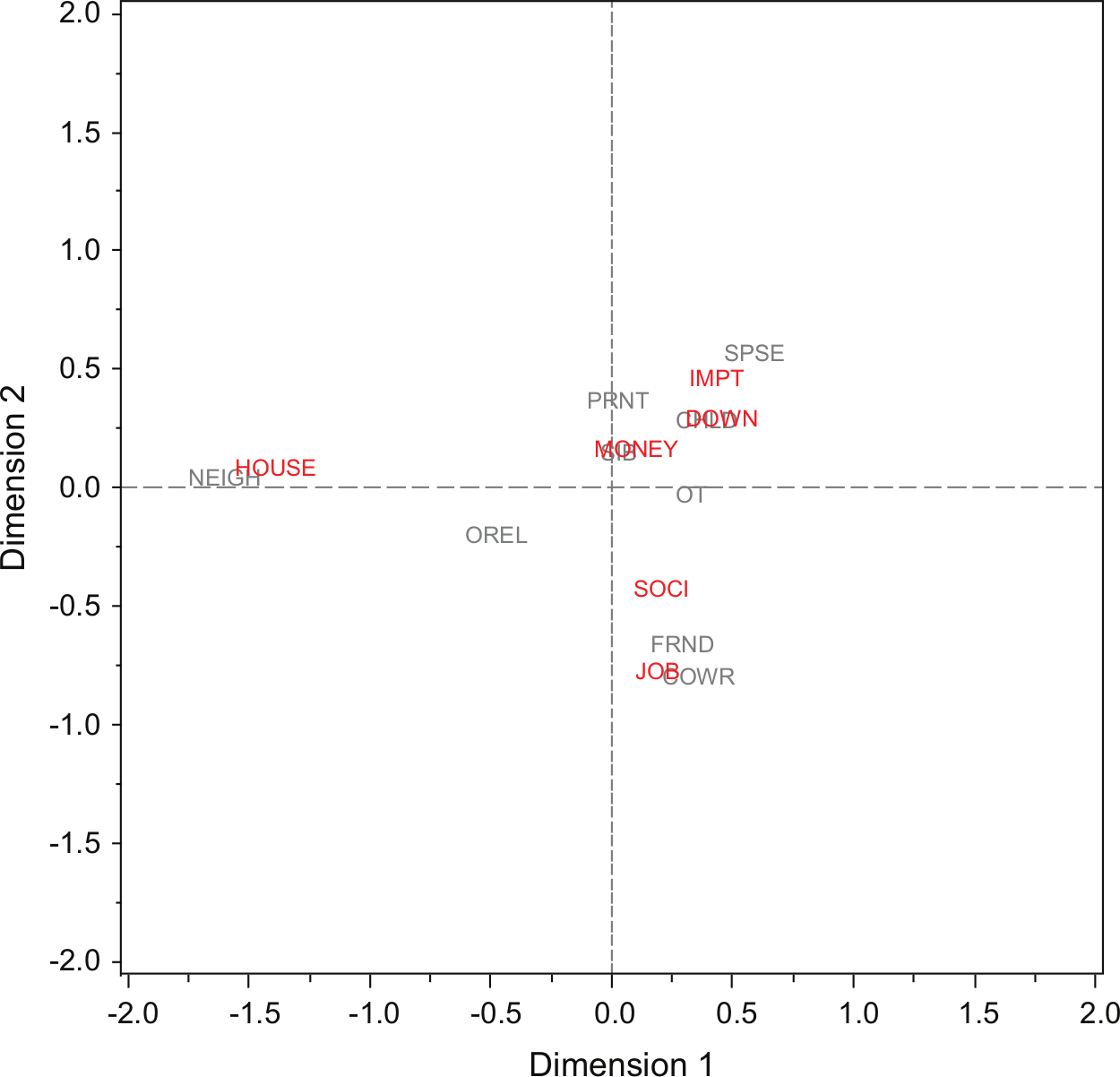
General CA map.
In this study, along with analysing role–task associations as a whole, I further stratify the data by three social categories: gender, race/ethnicity and education. This means having separate contingency tables (and separate IPF-iterated CA maps) for each category of gender, race/ethnicity and education.
The study is not without limitations. For one, the design is not yet adequate for causal inference. Hence any conclusions drawn must pertain only to the sample. Establishing significance between point estimates on the correspondence maps requires building confidence ellipses through a bootstrapping strategy, still relatively new and highly technical (Ringrose, 2011).
Another limitation is the use of two forms of support, perceived support (e.g. HOUSE, DOWN and MONEY) and received support (e.g. IMPT, SOCI, JOB). Research indicates that one does not necessarily lead to another (Smith, 2008), but it seems reasonable to expect that people will name those who will actually provide support in times of need.
A third limitation is that the methodology does not allow me to examine interaction effects between gender and ethnicity (and/or class). Thus, in highlighting the unique attributes of the three categories, I do not consider combinations of identities (e.g. how ‘Malay-women’ or ‘rich-Chinese-men’ organize their social worlds). The results should be viewed in light of these limitations.
Results and discussion
General patterns
Kin predominate in Singaporean networks. Immediate and extended kin comprising spouses, children, parents, siblings and other relatives make up 51.6% of network members (Table 4). This pre-eminence is not unique to Singapore: in North America, 50% of intimate networks comprise kin (Rainie and Wellman, 2012); in Japan, the percentage is about 45% (Otani, 1999); in (urban) China, the percentage is about 40% (Ruan et al., 1997).
Network composition.
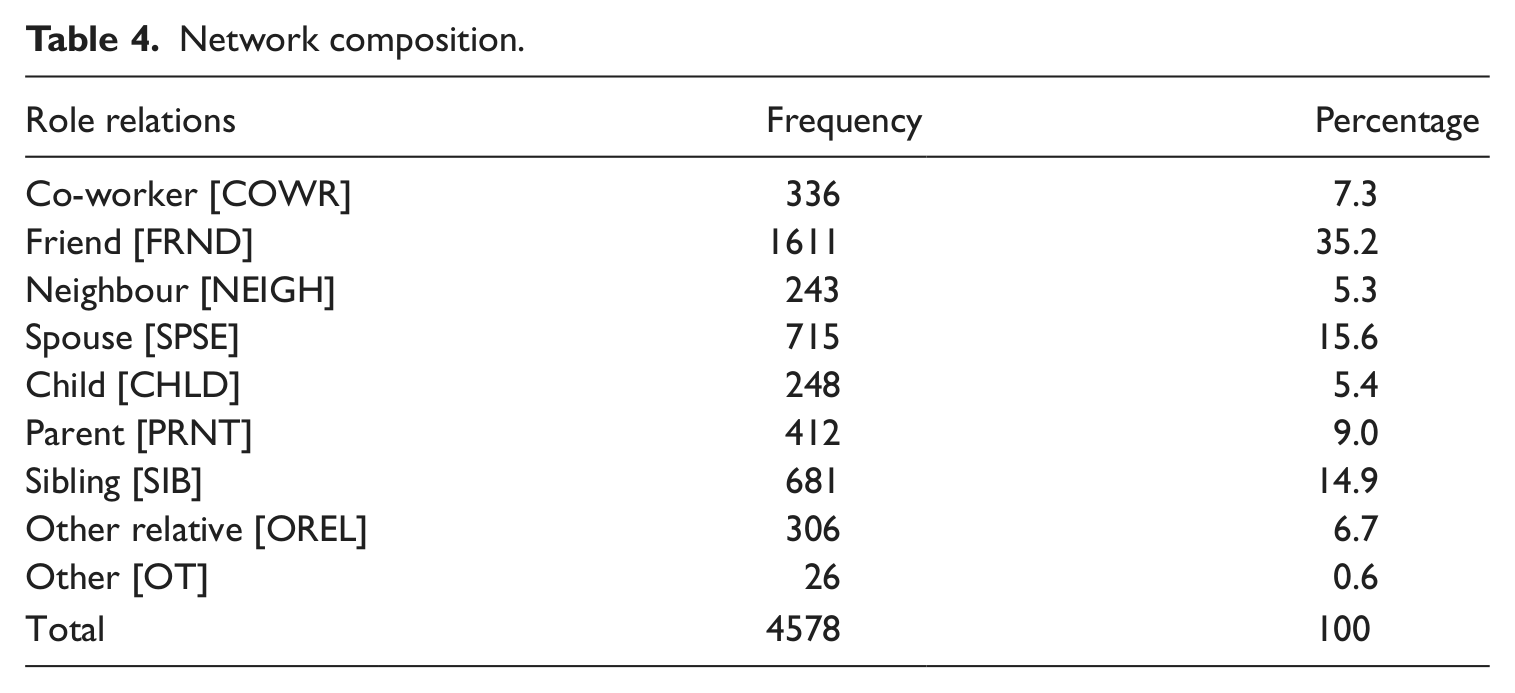
Although Singaporean networks centre on kin, non-kin play a strong complementary role: among non-kin, ‘friends’ are most popular (35.2%), followed by other relatives (6.7%), neighbours (5.3%), co-workers (7.3%) and others (.6%) (Table 4). The prevalence of friendship may be due to the inclusive nature of the role relationship: ‘friend’, which serves as a catch-all term for everyone who is not a neighbour, co-worker or professional service provider (Fischer, 1982). It may also be due to the proliferation of ICTs (e.g. internet and email), which has expanded people’s ties to a wider circle of non-kin (Rainie and Wellman, 2012).
Despite high levels of physical accessibility, due to Singapore’s relatively small size, personal networks are not a case of ‘everyone-helping-everyone-else’, but a case of respondents adopting a specialized approach, seeking out different kinds of network members for different kinds of tasks, as explained below.
Kin help with emotional, financial and important matters
As Figure 1 shows, respondents used the vertical Y dimension to separate emotional problems, important matters and financial matters at the top from social activities and job searches at the bottom. There is a strong distinction in how kin and non-kin (as role relationships) are matched to respective tasks. Kin (parent, spouse, child and sibling) are matched to private matters connected with emotions, important matters and money, while non-kin (friend and co-worker) are matched to tasks of a more public and instrumental nature, including social activities and job searches.
When we look at the kinship cluster, we see that whereas spouses, children and siblings discuss important matters, emotions and money, parents occupy a central position as a ‘jack-of-all-trades’, being sought for all three tasks simultaneously.
Extended kin do not play a significant role in personal networks. They are latent relations that Wellman and Wellman (1992) describe as rarely supportive. The correspondence map suggests that kinship in Singapore is focused primarily on the nuclear family (comprised of spouses, children, parents and siblings), rather than a more elaborate system incorporating distant relatives. ‘Family comes first’ (Bastani, 2007), but it is the ‘nuclear’ family rather than ‘The Family’ (constructed by stereotypical writings on Asian families) that defines family relations in Singapore.
Neighbours keep a look out on the home, but little else
As Figure 1 shows, respondents used the first dimension (X) to separate the house problem on the left from all other problems on the right, suggesting that keeping watch over the home is a task perceived as distinct from all other tasks. This pattern of exclusivity is replicated in other countries: in Australia, Hungary, Italy, Great Britain, the United States, the Netherlands and Germany, neighbours are called on to watch over each other’s homes, but little else (Freeman and Ruan, 1997). The specialized role of neighbours in house watching in Singapore may be partially attributed to high-density living where at least 85% of Singaporeans live in high-rise state-built housing, thus making neighbours a convenient source of accessible help.
Low levels of neighbouring in Chinese-dominated Singapore (Chinese make up 75% of the population) may seem puzzling when juxtaposed with more active levels of neighbouring among Chinese in the mainland, where, as Freeman and Ruan (1997) note, it is common for neighbours to be both watchers of the home and confidants. The authors attribute this to Chinese lack of residential mobility. In contrast, Singaporeans are more residentially mobile, each move expressing the aspiration for larger and better housing (Department of Statistics, 2006).
Friends and co-workers are sources of social companionship and job opportunity
Figure 1 indicates that friends and co-workers are important sources of job opportunity, corroborating Granovetter’s (1995) earlier observation that jobs originate from network sources outside the familiar terrain of family. That social [SOCI] and friend [FRND] are located near to each other suggests that friends are also sought for social companionship.
It is surprising that friends are not located near to feeling down [DOWN] or important matters [IMPT], especially since friends provide such support among mainland Chinese, Australians, British, Americans, Austrians and Germans (Freeman and Ruan, 1997). Further qualitative research is needed to explain this distinct pattern in Singapore, but one possible reason is that while friends talk about emotional and important matters, they frame and report this in terms of a social experience whereby such matters are discussed in the context of sociable activities.
Overall, the analysis reveals strong evidence of specialization. We see that nuclear families are self-sufficient units providing emotional care, advice and financial support. They are distinct from neighbours who are more likely to help with only house watching. Meanwhile, friends and co-workers add such elements as job information and social companionship. Together, the entire network of kin and non-kin provide the ‘bonding’ and ‘bridging’ social capital Putnam (2000) identifies as useful for everyday life.
Variations by gender
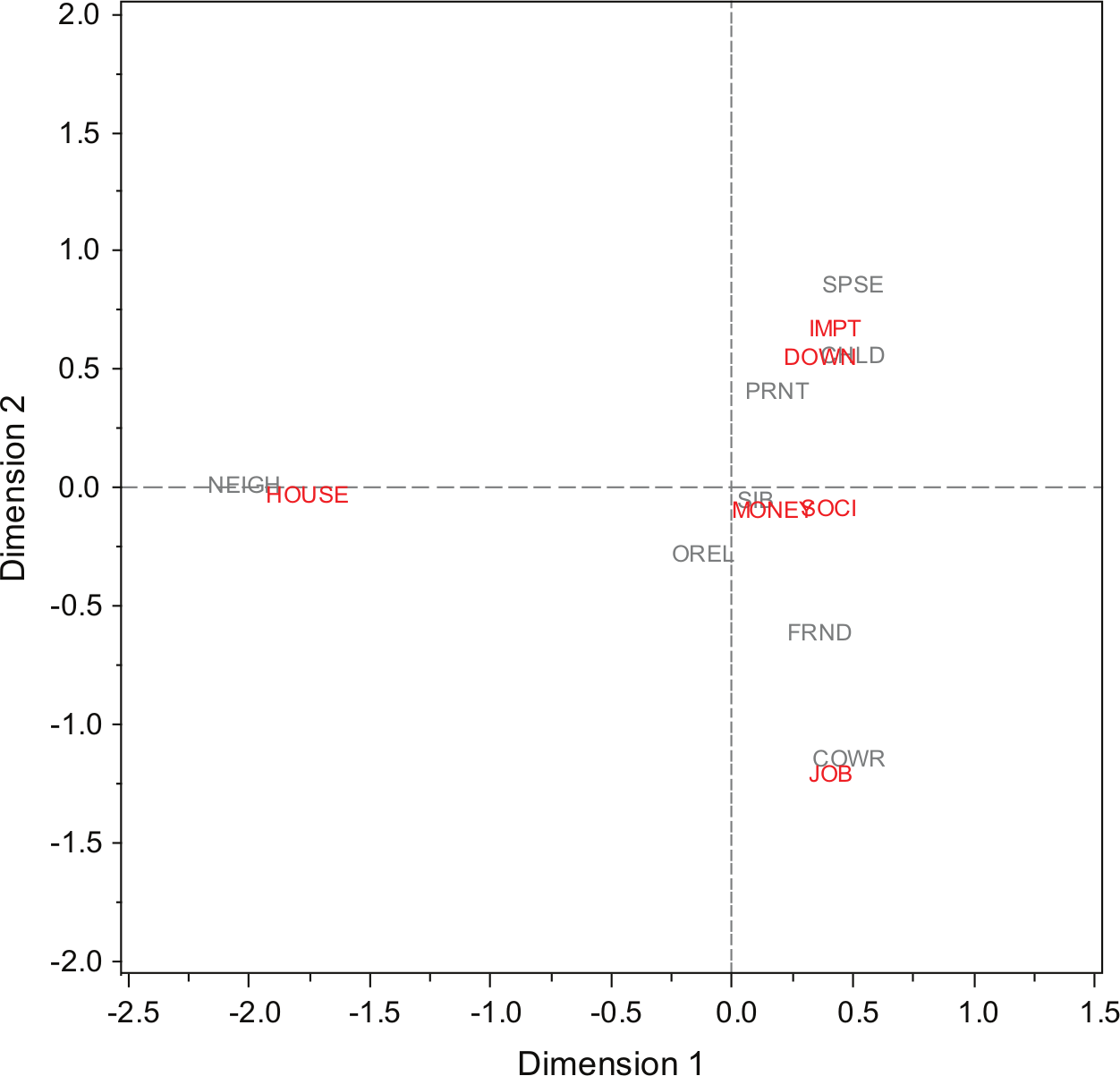
Figures 2 and 3 show the matching of role relationships and tasks by men and women respectively. Female respondents report that neighbours are guardians over the home; kin help with emotional, financial and important matters; friends and co-workers provide social companionship and job-seeking assistance (Figure 3). Among male respondents, the patterns are a little more specialized: neighbours watch over the home; friends and co-workers are sources of job support; spouses and children provide emotional aid and help with important matters; parents and siblings help with financial matters and provide social companionship (Figure 2).
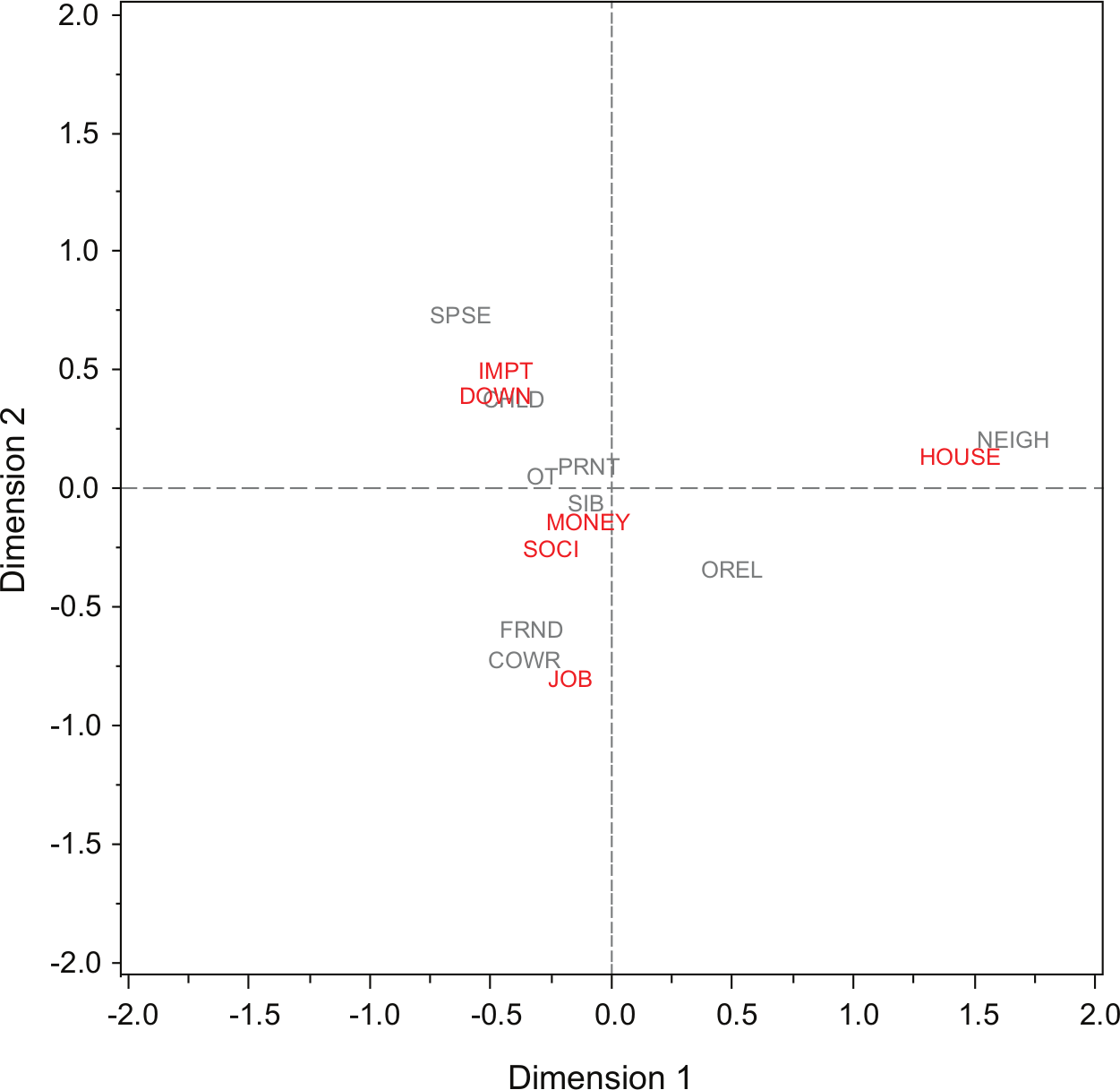
CA map for males.
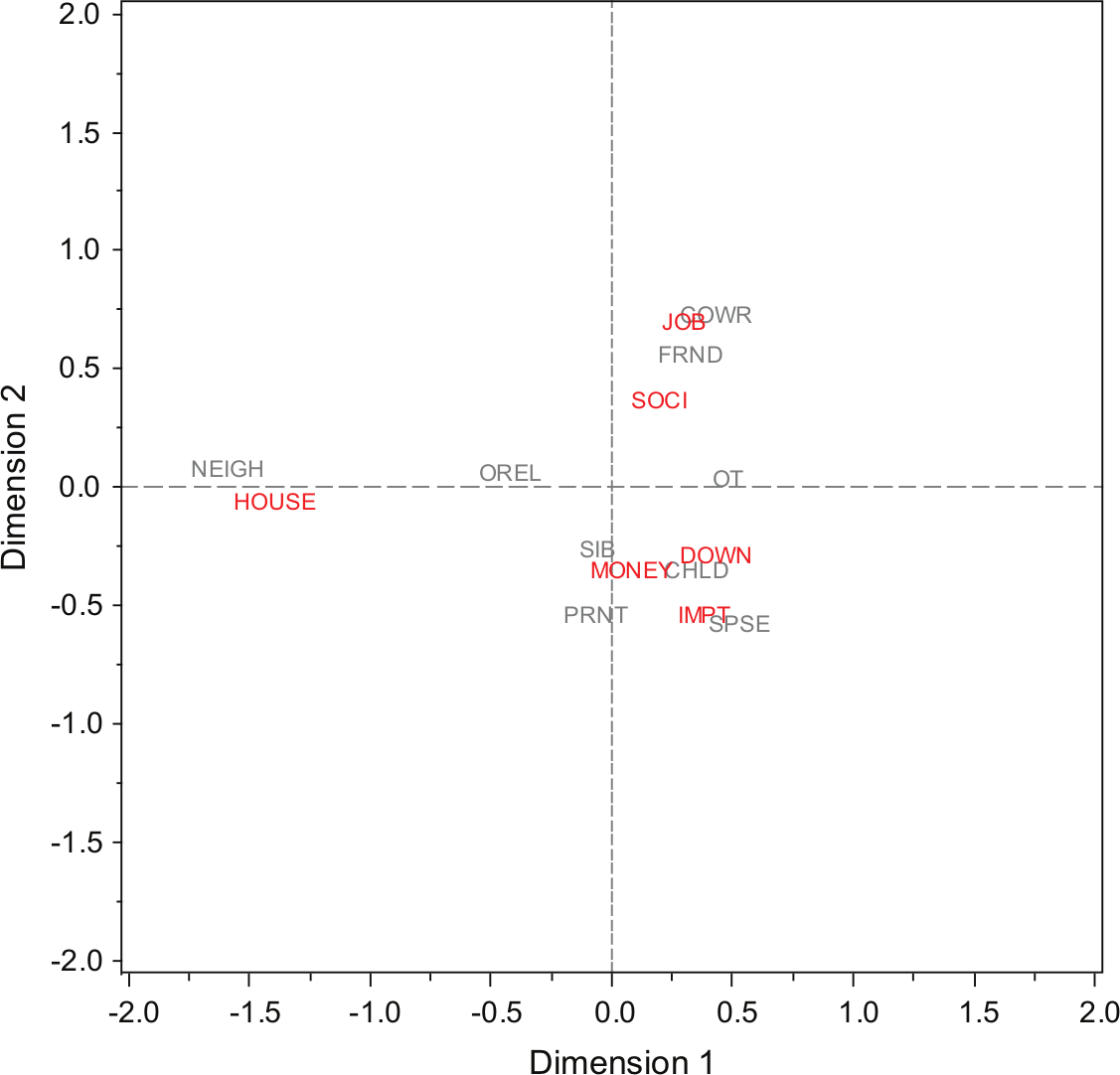
CA map for females.
The major difference between the male and female maps is the structuring of kinship: whereas women tend to create one tightly-knit cluster by combining important matters, feeling down, (borrowing) money, child, parent, sibling and spouse, men divide their kinship worlds into two, turning to children when feeling down and for important matters, but seeking out parents and siblings for money matters and social companionship. This suggests that women are more likely to operate in an integrated kin world, whereas men are more selective of the kin they involve.
Not unlike the situation in North America, Singaporean mothers are ‘central switchboards’ communicating with kin near and far, keeping family and community together, not only for themselves, but also for their husbands and children (Bott, 1957; Moore, 1990; Wellman and Wellman, 1992: 390). Meanwhile, men are more likely to confine the discussion of important and emotional matters to the nuclear family (spouse and child), preferring not to share these issues with parents or siblings. Beyond the nuclear family, parents and siblings are relied upon for the more instrumental forms of social support such as borrowing money.
This is not to say that extended kin are unimportant to men; they turn to the extended family for socializing. Among women, socializing includes non-kin (i.e. friends) as well. Their greater participation in voluntary associations (the sample verifies this) may account for some of this.
When it comes to money matters, men turn to their siblings, while women turn to their children. The clustering of [MONEY], [DOWN] and [CHLD] in the female map suggests that children are consulted for both financial and emotional matters. One may imagine the following scenario: the wife commiserates with the children over financial challenges, while the husband seeks financial aid from his kinsmen. Implicit is the ‘gender script’, where the man plays the role of breadwinner, while the woman plays the role of housekeeper.
Whereas women are likely to discuss important matters with their spouse, men do not turn to their wives so readily. Arguably, this is due to an Asian patriarchy, which dictates that while a wife needs to consult her husband, she need not be consulted in return (Chao, 1983). Accordingly, the correspondence map for men shows a marginal position for the spouse, located on the top left quadrant, away from most of the roles and activities. Despite the Asian gender script that requires women to discuss important matters with their husbands as a form of respect and to avoid ‘acting apart’ from their husbands’ authority (Chao, 1983: 91), Singaporean women are, in fact, more likely to discuss important matters with their children. Thus the Asian patriarchy is reinforced by another aspect of the gender script: that wives care for children. As such, the social distance between a husband and wife can be greater than the social distance between a wife and her children.
Whereas men tend to include others [OT] when seeking financial aid, women tend to incorporate kin only. Greater labour market involvement among men may account for some of this; in the sample, labour force participation rates among men supersede those of women in all ethnic groups. Workplaces open a range of networks to men, affording them the opportunity to seek out external sources of help, apart from kin (Fischer, 1982).
The public and private aspects of men and women’s social lives pose an interesting paradox. On one hand, men are public in that they actively engage external sources to help with financial matters. On the other hand, they are private, preferring to rely on only the most immediate kin for emotional support and important matters. Women access both public and private worlds as well, but do so differently: they are more likely to involve a wider range of kin for a broader variety of issues, such as money, feeling down and discussing important matters. At the same time, they more actively maintain ties to friends than men.
Variations by ethnicity
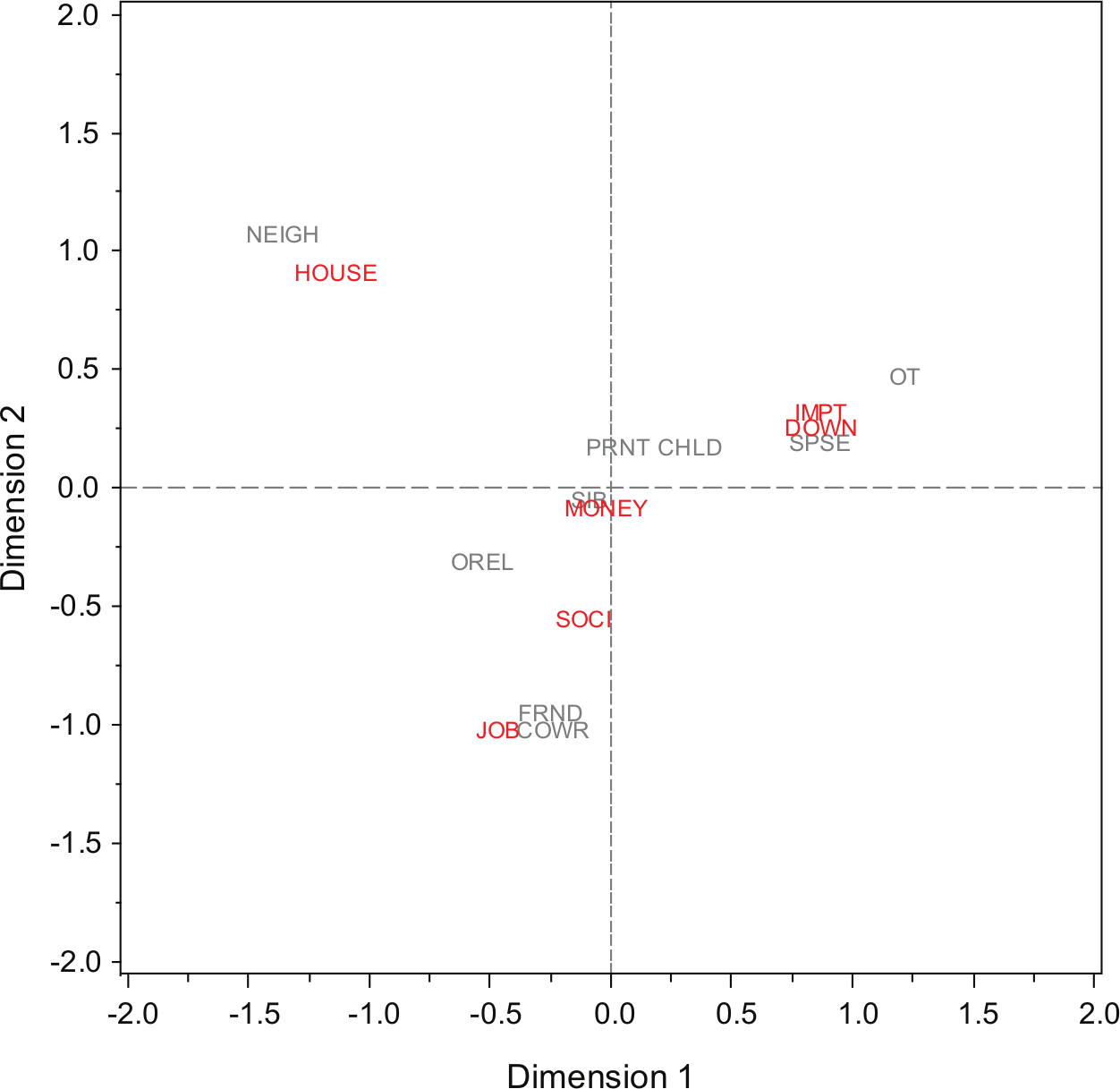
Whereas all ethnic groups use the first dimension to separate the house problem from the rest of the tasks, the separation seems more pronounced among Chinese and Indians than among Malays (see Figures 4, 5 and 6). The maps show that whereas for Malays social and friend, job and co-worker are located on the same side of the X-axis as house and neighbour, this is less the case for Chinese and Indians. This suggests that Malays are especially likely to integrate neighbouring with the rest of their social worlds. These patterns corroborate findings that neighbouring is a salient aspect in the worlds of economically disadvantaged ethnic minorities (Lee and Campbell, 1999).
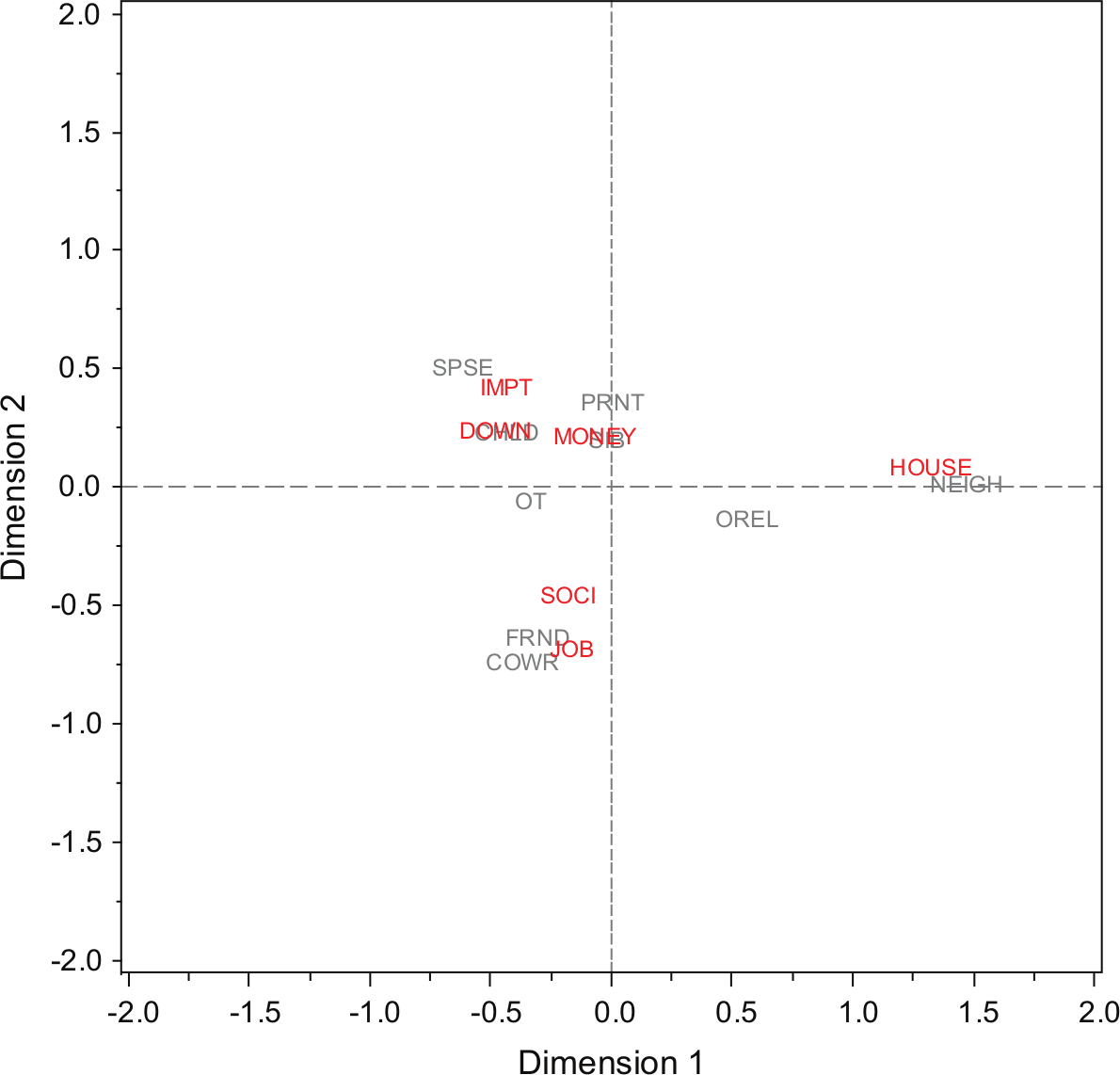
CA map for Chinese.
CA map for Malays.
CA map for Indians.
It is also found that whereas Chinese and Indians are more likely to turn to their children when feeling down, Malays are more likely to turn to their spouses. This is not surprising, as within Malay culture, marriages are ‘based on relationships of complementarity where, while tasks are divided and shared, status differences between men and women are not as closely discerned as in a patrilineal or patriarchal-ordered family system’ (Karim, 1990: 26). Swift (2001: 121) notes: ‘It is impossible to live in close contact with Malay families without realizing that affection is in fact a very important factor in the relations between husband and wife.’
This contrasts to Chinese families where status differences between husband and wife are more strongly emphasized. There is a common saying in Chinese culture: The husband sings, the wife follows (Chao, 1983: 91). The rule for a Chinese woman is compliance to her husband, so that even if the marriage is not ideal, the couple must make the best of it, since divorce is not socially accepted (Chao, 1983: 60).
Malays are not as likely as Chinese to turn to their children when feeling down. According to Tham (1979: 94), children in Malay culture are often regarded as ‘not knowing’, especially in matters pertaining to right and wrong; they are treated as children until they have reached the age of puberty. The theme of the ‘unknowing child’ is reiterated in Rosaldo’s (1980) study of the Ilonggot (Filipinos). A common Malay phrase says budak-budak jangan masuk campur hal orang tua, or children should not get involved in what adults are talking about. Another common phrase, orang tua makan garam lebih banyak, literally translates as adults have ‘eaten more salt’ than children, meaning that adults have more life experience.
Chinese are more likely to keep important matters and feeling down apart, while Malays and Indians are more likely to integrate them. The correspondence maps suggest that among Malays, important matters and feeling down are parallel problems, in the sense that in both situations the spouse is called upon to help. A cynical interpretation of the conflation of important matters and feeling down is that Malays deal with important matters ‘emotionally’ (rather than stoically). Stereotypes of Malays as ‘emotional’ appear in the mass media (Holden, 2001). Of course, these stereotypes do not reflect natural dispositions, but are a social construction of British racial ideology during the time of empire.
For socializing, Chinese turn to friends, co-workers and others (with no relatives); Malays turn to friends, co-workers and other relatives; Indians turn predominantly to kin. These are congruent with accounts that ethnic minorities have more kin-centred networks (McPherson et al., 2006; Tigges et al., 1998). In Singapore, a possible factor in Malays’ closer bonds with kin is their common Islamic faith, the sharing of socioeconomic status within and across families and the communitarian spirit (gotong royong, meaning mutual aid) that characterizes Malay culture (Geertz, 1983).
Are the patterns among Malays a feature of socioeconomic circumstance or culture? There appears some evidence of both. On one hand, there is a notable similarity between the maps of the Malays and the low educated: in both cases, neighbours are watchers over the home, co-workers and friends are sources of job information, other relatives have no distinct role and close kin help with a range of issues. On the other hand, there are differences in the detailed organization of kinship itself, and here, cultural differences are arguably more prevalent. The low educated tend to adopt a clustering strategy in social support: spouses, children, siblings are together involved in providing help with finances, emotional matters and important matters. By contrast, the Malay map suggests a bifurcation of the kinship world: for one, spouses alone help with important matters and provide emotional aid (earlier I noted that this may be due to marriage complementarity norms within Malay marriage). At the same time, it appears that children [CHLD] are less intimately involved in the provision of emotional aid [DOWN] and/or discussing important matters [IMPT]. This could be due (as discussed earlier) to the notion of the ‘unknowing child’ within Malay culture (Rosaldo, 1980).
Variations by education
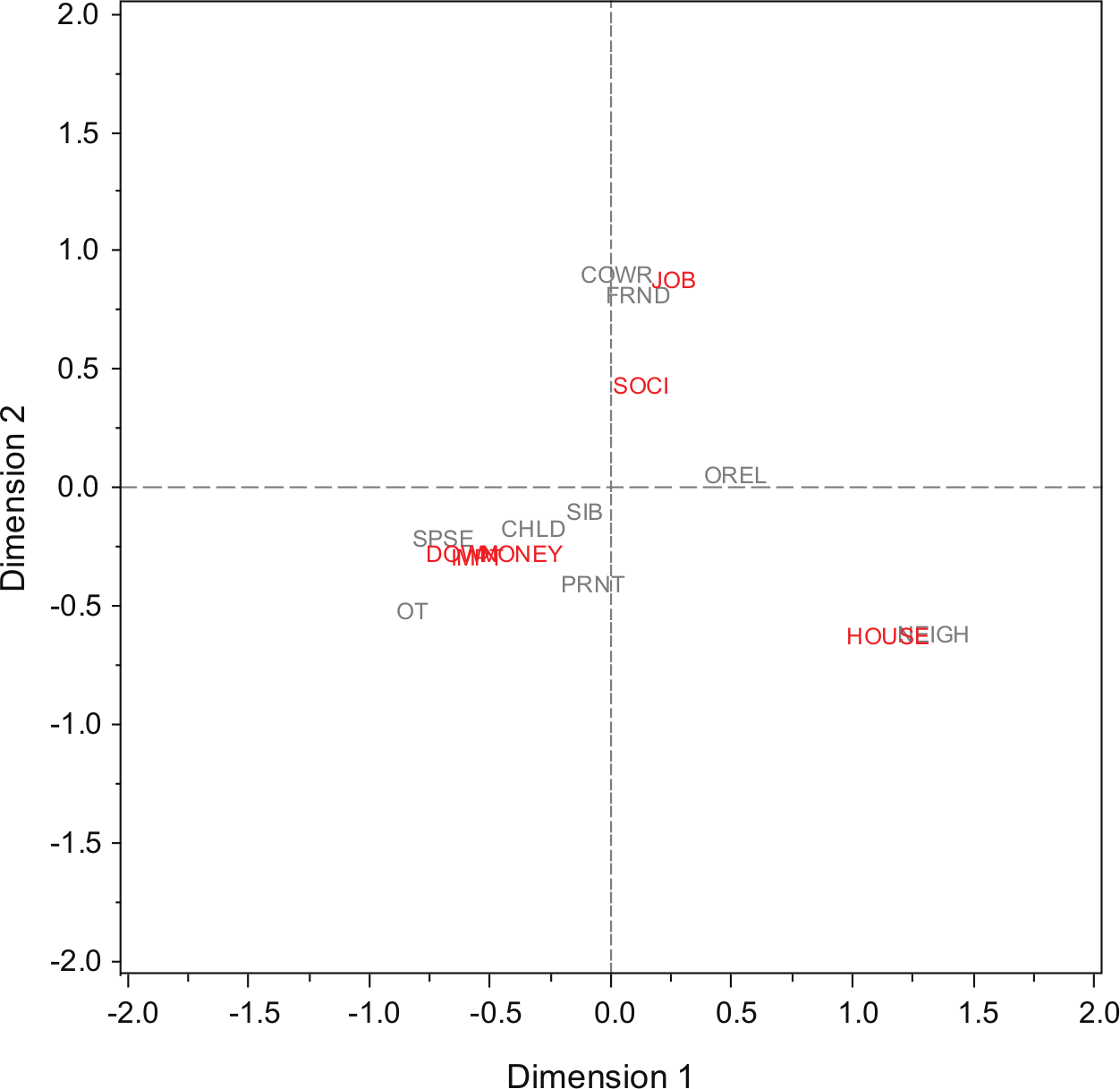
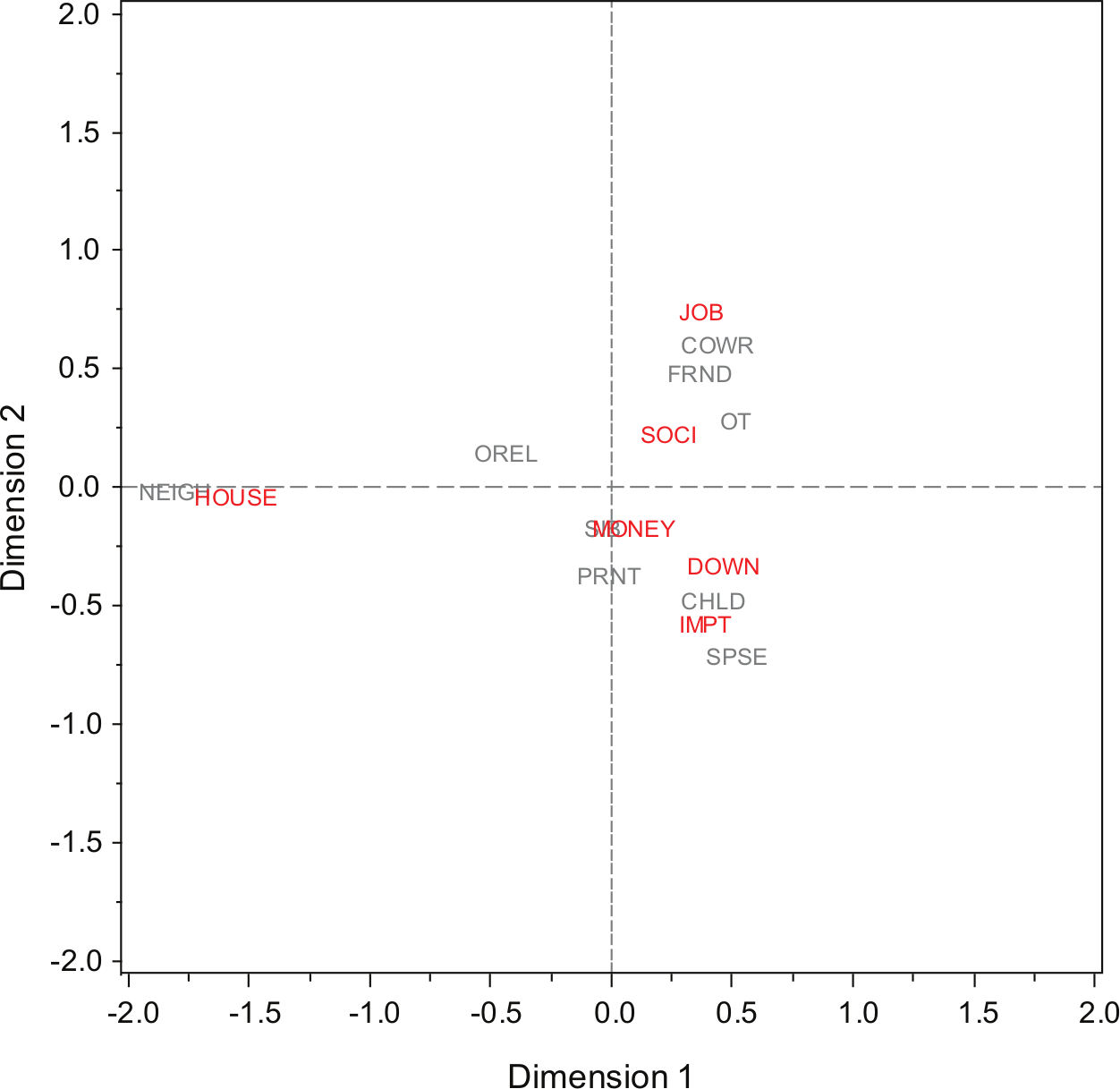
Although neighbouring is closely associated with home watching in all subgroups (Figures 7, 8 and 9), the separation of the house–neighbour cluster from all other clusters is especially apparent among the highly educated. Among the low educated (Figure 7), money problems, being down and important matters emerge as problems to be solved collectively by close kin, particularly spouses and children. The close reliance on kin in such matters is less apparent among the higher educated, who, as Figures 8 and 9 show, are more likely to separate money problems from emotional matters or important matters.
CA map for low educated group.
CA map for middle educated group.
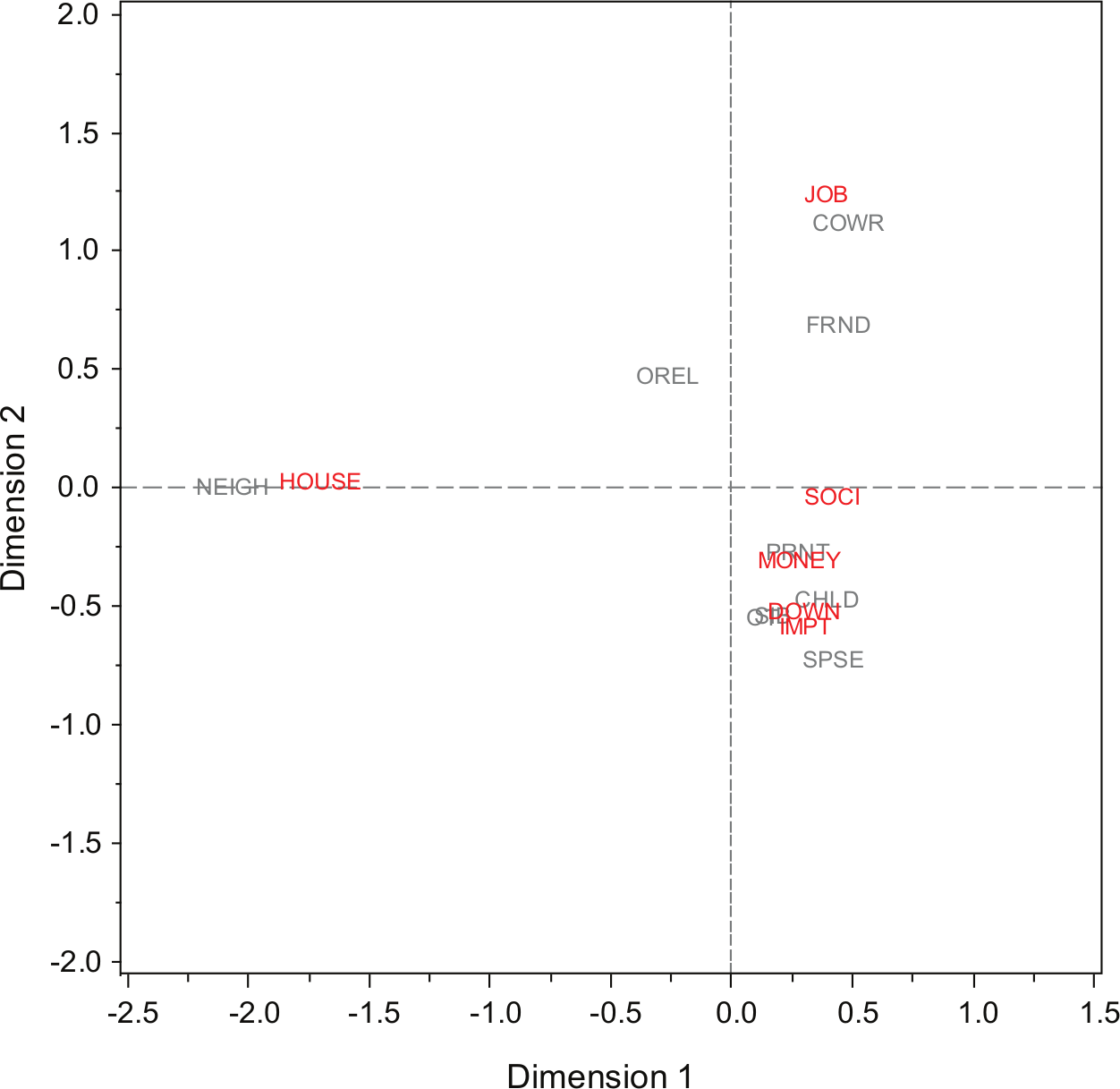
CA map for highly educated group.
The close clustering of feeling down, important matters and money, child and spouse reveals a unique aspect of the social worlds of low educated respondents. Financial matters, emotional matters and matters of importance are treated as a common ‘pool’ of problems to be solved, and spouses and children are invoked as problem-solvers, creating a ‘huddling-effect’ within the nuclear family. As money is a scarce resource among the low educated, emotional stresses mix with the daily need to secure basic provisions. Huddling may be a common practice among the low educated as they have limited ability to purchase services in the market (e.g. by consulting professional others like bankers). They also have fewer resources to share with others and, hence, are less attractive as network members (e.g. as friends) (Offer, 2012).
Among the middle and highly educated, there is a clear separation of money problems from emotional matters and discussions of important matters, suggesting that for them, money is a less pressing concern requiring fewer emotional and mental energies.
The subgroups rely on different strategies to solve money matters: the low educated rely on spouses and children; the middle educated turn to siblings; the well educated count on parents. For the low educated, financial matters represent a joint project for the immediate family to solve. For the middle educated, siblings are singled out as financial providers, but we need further qualitative work to understand this. For the highly educated, parents are the financial providers, and in this, there may be a cohort effect at work: highly educated Singaporeans tend to be younger; they are the post-1965 generation who benefited from the country’s rapid developmental trajectory in education and economy. Therefore, the clustering of money and parents paints a picture of the well-educated young relying on the supplementary resources of parents to strengthen their financial base. In Singapore, as in the United States (Lareau, 2003), well-educated children tend themselves to have well-educated parents. While the poor hoard sparse opportunities, the rich accumulate them (Tilly, 1998).
Whereas the highly educated are likely to consult with kin and ‘others’ when feeling down, the middle and low educated consult with kin only, reinforcing the notion that low-SES worlds are predominantly kin-centred. It appears that the highly educated have both kin and professional organizations to rely on for emotional support.
Friends are important sources of job opportunities, particularly for the low educated (Figure 7). As educational levels increase between Figures 7, 8 and 9, friend [FRND] is increasingly de-coupled from job [JOB]. Apparently, the acquisition of formal qualifications makes well-educated respondents less dependent on friends for jobs; instead they turn to formal, meritocratic channels. The low educated, by contrast, have few formal qualifications to fall back on, so are more reliant on friends.
Conclusions
Analysing the ways gender, ethnic and educational groups match role relationships with tasks reveals something about the structural forces that inform networked individualism. I argue that people do not autonomously decide how to organize their social worlds apart from the constraints and opportunities imposed (and afforded) by such categories as gender, ethnicity and class. The latter are not mere individual attributes; they are contextualizing frames for social action and behaviour.
There are at least three scenarios of how structure may intersect with agency: (1) structures pre-exist and therefore shape how people build personal communities; (2) people build communities based on preferences; and (3) people use the ‘rules’ implied in gender, ethnicity and class to build communities of preference. The last mentioned, (3), points to the structuration theory offered by Giddens (1984) concerning how agency and structure may interact in everyday life. All three scenarios may apply at one point or another.
How do different kinds of structure intersect with the patterning of role relationships and tasks in personal networks? Observing correspondence maps, I suggest that gender, ethnicity and class are distinctive systems that give rise to distinctive patterns of role–task matching. Delving deeper into ‘structure’ itself, I propose that history, categories and culture factor into the organization of social support.
Country comparisons are relevant. A highlight in Freeman and Ruan’s (1997) analysis of China is that kin are very important sources of financial help (thus differing from countries where people rely on formal organizations). The patterns are similar in Singapore where kin are providers of financial support. It may be that, culturally, Chinese (whether in China or Singapore) prefer to consult among kin, as financial matters may prove to be too sensitive for public knowledge. Chinese are prone to say: ‘Don’t wash your dirty linen in public’. Indeed, the importance of kinship in China extends beyond financial matters to the use of job contacts, where 58% of job contacts are ties to family. The percentage of kin invoked as job contacts is much lower in the United States, at 21% (Son, 2013). So, then, in Chinese societies, kinship structures do have a special role in catering to instrumental needs.
The way that networked individualism intersects with structure will be diverse across societies. Complex histories, structures and cultures go hand in hand with complex patterns of the organization of social support networks. Our task, as researchers, would be to carefully work out which aspects of the macro structure go with which aspects of routine exchanges.
Personal preferences remain relevant to the organization of social support; the theory of networked individualism itself predicts a situation of autonomous individuals matching roles to tasks in ways they see fit, but let us not forget the role of such contextual factors as gender scripts, racial hierarchies and class divisions.
Ultimately, then, there is a need to consider networked individualism in context.
Footnotes
Acknowledgements
I thank Barry Wellman, Kay Axhausen, Teresa Tan, Fadzli Baharom Adzahar, Joonmo Son, Feng Qiushi and the two anonymous reviewers for their helpful comments. Elizabeth Thompson provided editorial assistance.
Funding
This research was funded by the National University of Singapore’s (NUS) University Research Fund (R-111- 000-051-112).