



Abstract
A core capability for sociologists who wish to respond to the complex interconnected social, cultural, political and economic challenges will be the ability to transcend disciplinary boundaries and to work with diverse perspectives. Thus those who inform the argument for this article include De Waal and Dawkins (primatology and philosophy), Kymlicka and Donaldson (animal rights and shared habitat), Hirschman and Hannah Arendt (on economics and politics), Amartya Sen (on economics and morality), Stuart Hall (on identity) and Martha Nussbaum (on social justice). The work of Stiglitz on wellbeing stocks is extended through drawing on Vandana Shiva (on the intersections spanning economics, politics and the environment) and a recognition of our interconnectedness as part of a living system. This provides the basis for intersectional policy approaches to address violence against the planet and violence against those without a voice. This capability is important if we are to inform praxis on governing the Anthropocene, in order to protect both human and animal rights along with their shared and separate habitats.
Introduction
This article highlights the empirical contradictions and theoretical tensions that have implications for social and environmental justice. The a priori guidelines for democracy, ethics and governance need to regenerate government, institutions, laws and international relations so that they protect this generation and the next. This requires new architectures, such as local participatory democracy and governance enabled by combining the potential of the Aarhus Convention and the UN Declaration of the Rights of Indigenous People that could enable monitoring ‘from below’ so that who and what ‘we the people’ decide to include or exclude will shape local and post-national regional decisions on consumption rights and responsibilities.
This architecture and others discussed in the literature provide examples that can be adapted, supported and extended as a means to achieve a posteriori approaches to ethics, democracy and governance. These could be scaled up and extended to protect the fabric of life for this generation and the next. This critical review of the literature aims to identify the need to recognize our interconnectedness, dependency and hybridity and the implications it has for governing the Anthropocene. The article provides an outline of the landscape of this complex field, defined by intersections spanning social, cultural, political, economic and environmental contributions from the social and natural sciences. A case is made for those who are not protected by the social contract, including young people, non-citizens, the disabled, sentient beings and the environment on which we all depend.
Theoretical perspectives
The landscape of decisions can be passed on as a contested wasteland with shrinking potential in the interests of a powerful minority or as biodiverse habitat for all. The choice to design a different future remains the right and the responsibility of cosmopolitan citizens who recognize that a planetary passport to protect current and future citizens is a design choice that needs to be translated into everyday praxis. The focus on anthropocentric humanism and human rights has led to an unethical divide or boundary between the human and the animal (Irvine, 2007; Stanescu, 2012). The human being is seen as the controller of nature. But the divided nature of control and compete is only one part of the story. The continuum of relationships with nature and with animals needs to be seen as co-evolving. Cooperation and nurturing are the other side of the story. We need to recognize the connections across the stereotypical feminine and masculine principles of empathy and connecting versus conflict and competition, and that these approaches to social engagement are both important for evolution (De Waal, 2009).
The idealist argument by Nussbaum (2006) argues for the right of sentient beings to a quality of life worth living based on their intrinsic rights to exist. Recent research on the capabilities of primates and other animals demonstrates that Aristotle’s work needs to be expanded to show more solidarity with other creatures, some of whom can indeed understand the difference between fairness and unfairness (De Waal, 2009). If animals can understand fairness and unfairness and are capable of empathy, then surely it is time to rethink the social contract, which is far too narrowly defined. The social contract extends rights and expects responsibilities to be fulfilled in return. But what about those who are voiceless, disabled, too young or without citizenship rights? What about prisoners? Rights are given only as a basis of reciprocity to those who are capable of giving something. We need to rethink human rights and responsibilities as we evolved from animals and we need to relearn empathy and appreciate that reciprocity is not the only basis for empathy. The lessons suggested in George Orwell’s novel 1984 about the importance of emotional connections ought to be heeded. In some instances animals will help even if they are going to receive nothing in return. Primates and several other species evolved through their ability to form bonds of trust in groups as a result of reciprocity and these basic pillars of morality are based on empathy and reciprocity (De Waal, 2009). Cooperation and nurturing is equally important when designing social policy to address the big issues of the day, namely poverty and climate change that will affect biospheres that span national boundaries. Identity is a matter not merely of biology and self-perception, but also social interaction and a sense of self. The ability to draw the line in social systems needs to be based on decisions that are made on the basis of questioning what to include or exclude. Just as cells can open or close to allow in nutrients and to expel toxins, boundaries need to be open or closed according to context in social systems. This requires considering our values and realizing that we see the world in terms of these values.
‘We are the boundaries’ according to Haraway (1991, 1992, 2010). She exhorts those without a voice to be the designers. We can choose to destroy the environment or to be stewards based on rewiring our brains through thinking about our thinking, cooperating and nurturing. Intersectional policy approaches to address violence against the planet and violence against those without a voice become increasingly important if we are to successfully protect both human and animal rights, their shared and separate habitats (Donaldson and Kymlicka, 2011; Mathews, 1991, 2010), if we are to govern the Anthropocene (McIntyre-Mills et al., 2017).
Our sense of space, time and identity are changing as our awareness of interconnectivity is rediscovered. The work of Stuart Hall (Hall, 1992, 1997) on cultural identity and representation discussed the diversity within the modern state and stressed the need to consider the way resources are distributed and consumed within nation-states by asking: What is the social, cultural, economic and environmental context? Who gets what, when, why, and so what?
Boundaries are sociological constructions. In biological systems the most basic boundary is the membrane of a cell which opens and closes according to context. In the hierarchy of systems (Boulding, 1956) biological systems are above inorganic systems because they are (a) open and responsive to their environment and (b) able to adapt and learn as self-evolving systems (see McIntyre-Mills, 2014a, 2014b, 2017, for more details). The webs of relationships that are fostered across all forms of inorganic and organic life are recognized in physics (Gunaratne, 2009; Turok, 2012). Each particle is in motion and it is the movement and flows of energy that make life possible. The transfer of information flows across all living systems.
Sociologists need to work together with many stakeholders who can contribute diverse ways of knowing, including non-anthropocentric approaches informed by an understanding of nature and other life forms. In terms of personal praxis as sociologists it will require our learning the ability to be inclusive by enabling everyone to feel that they are respected and heard. This requires giving time and developing the ability to communicate respectfully across diverse participants in sociological conversations that span diverse cultures, interests, experiences and discipline-based knowledge.
The consumption of resources
Research needs to break new ground on understanding social and cultural relationships and power dynamics across diverse groups as they relate to wellbeing and environmental stewardship in new economies that support environmental abundance and biodiversity (Pauli, 2010) but also addresses the plea made by Pikketty (2015) for more transparency, who makes it quite clear that doing more with less is something that elites could learn from the poor. In particular further praxis is needed to explore the wider potential of Max-Neef’s Human Development Index (1991) as it relates to regeneration, sustainability, human capital and capacity building locally and regionally on ways to scale up engagement on the question: How should we live?
The use of the less powerful sentient beings and the planet as a resource for plunder is not a new phenomenon. Planetary Passport (McIntyre-Mills, 2017) addresses the questions: Can the social, economic and environmental deterioration of life chances experienced by the majority on this planet be understood as systemic silencing based on power and control? How can we prevent the extent of plunder evident in the so-called ‘Panama Papers’ (Chakraboritty, 2016) that revealed the extent to which wealth is hidden in offshore accounts and forms of accounting that are anything but accountable to the majority? In this book the widening gap between the rich and poor is explained as being in the interests of the wealthy who control governance systems as a ‘plunderbund’ (see Hay, 2013). The issue is how is this possible? Harari (2011) sketches out the idea that human beings evolved through their ability to create grand narratives about what constitutes reality and what can be considered right and legal. This is why it is important to reconsider ‘what the problems are represented to be’ (Bacchi, 2009).
Cultural memory refers to a practical record of what works, why and how to support living systems. It is rooted in respect for norms and values. First Nations remember their stories by referring directly to landmarks, rather than recording history in books. The plants, animals, rocks and rivers hold stories and act as memos for thinking. The Aboriginal sacred text is the land. They are its caretakers and in ideal terms according to Rose (1992) they see some life forms ‘as family’ (Rose, 2013) which makes all the difference as to how they relate to living systems. Memory is coded in the landscape to help oral cultures to retain knowledge to enable them to survive and to thrive (Kelly, 2016).
As Major Sumner, an Ngarrindjeri Aboriginal elder in South Australia and custodian of the Murray River, stresses: we are the land and the land is us. Re-establishing relationships with the land is at the heart of effective cultural ecosystem management. Many non-Aboriginal people desire more environmentally sustainable lives, but little is known about the influences of choices around what constitutes the effective management of land, water and food sources. Government response to human wellbeing is often based on economic development, which inadvertently increases consumerism, resulting in greater environmental degradation. Stewardship like all concepts is shaped by assumptions and values. Flannery (2012) considers that stewardship is based on awareness that the land and biologically diverse ecosystems are a cultural heritage on which the wellbeing of current and future generations depends. Anthropocentric versus non-anthropocentric stewardship needs to be carefully considered to ensure that human consumption is not at the expense of environmental considerations and future generations of life (Parker, 2012) because we are interdependent and vulnerable.
The challenges are to address planetary issues. Thus when framing research it is important to realize that the wellbeing of individual citizens cannot be protected unless the global commons is protected. Research needs to address a different approach to the way in which we live our lives in terms of our consumption of energy resources, fresh water, transport and meat consumption and the implications for wellbeing and sustainable living (Pretty, 2013). Thus new local forms of engagement and governance (Held, 2004) are needed to protect residents against environmental hazards and the subsequent economic and social consequences. Major challenges in local communities include the need to achieve or maintain: (a) access to safe housing (including energy and water), appropriate education and employment; within (b) liveable cities; that are in turn supported by (c) sustainable regions. Some scholars (Dryzek, 2010) argue that a lack of cultural understanding about our interlinked and entangled lives affects human rights insofar as it shapes access to water, energy and food security. There is a groundswell of democracy that seeks to save the planet from our consumption choices, but little is known about those consumption choices and what motivates people to consume excessively. It has been argued that after a certain point, increased consumption does not lead to more happiness (Pretty, 2013). Thus, increased consumption, driven by increased economic growth, does not make people happier. Indeed, in more egalitarian societies, all people consume less and are less status conscious (Wilkinson and Pickett, 2009). Thus, the link between greater equality or wellbeing and the prevention of global warming appears to involve ‘limiting consumerism’ (Wilkinson and Pickett, 2009: 221). It is assumed that greater social and economic equality will provide the key to reducing the cultural pressure to consume. These are policy challenges locally and regionally that need to be addressed if this agenda is to be advanced. Specifically, it will require balancing individual and community needs to achieve sustainable human rights within and beyond nation-states.
The globalized market needs post-national controls to ensure control of the movement of funds (see McIntyre-Mills et al., 2014). By recognizing that we are part of overlapping biospheres, rather than competing nation-states, a way forward may be possible. But enabling the transformation of identity through governance and public education is the challenge for ethical systemic governance. This has become increasingly difficult as governments focus on political survival, rather than addressing the social, economic and environmental crises. Morality becomes politically disposable, because of a lack of understanding of our interconnected existence. Strong cosmopolitans recognize the need to contain capitalism. Our so-called containment anxiety – linked with our identity and need to define ourselves – cannot be addressed by living a schizophrenic existence in which we see ourselves as benefiting at the expense of other nation-states. We already have regional conflicts fuelled by energy shortages and competition for the last of the non-renewables. Satellite monitoring from above seems to be more of a priority at the moment by the USA than space travel. Digital communications are already widely used but their potential is under-tapped, as stressed in this article and other research on wellbeing, representation, accountability and sustainability (McIntyre-Mills and de Vries, 2011, 2013).
Stiglitz, the ex-head of the World Bank, along with his colleagues (Stiglitz et al., 2010), has adopted similar ideas based on his experiences in response to an invitation from Sarkozy to address the poverty and global financial issues facing Europe. It recognizes the systemic social, economic and environmental challenges. Stiglitz et al. (2010: 15) use a multidimensional measure of wellbeing. These are as follows: (1) material living standards (income, consumption and wealth), (2) health, (3) education, (4) personal activities including work, (5) political voice and governance, (6) social connections and relationships, (7) environment (present and future conditions) and (8) insecurity, of an economic as well as a physical nature. Leisure should also be valued. According to Stiglitz et al., the essence of the commissioned work’s findings is that wealth needs to include stocks for the future – social, economic and environmental. Together with vulnerability to job loss, many people across the world also face risks associated with fires, flood and drought.
The implications of greed and lavish consumption on others and the environment
The will to make a difference is the challenge, according to David Held et al. (2005: 33–34), who calculate the amounts in American dollars required to make a difference to the life chances of others: We may lack the will but it cannot be said that we lack the means. … What do we require to make a substantial difference to the basic wellbeing of the world’s poorest? Again the statistics are available. … Required would be $6 billion per annum on basic education, 9 billion per annum for water and sanitation, 12 billion per annum for the reproductive health of women, 13 billion per annum for basic health nutrition. … These figures are substantial, but when judged against the major consumption expenditure in the US and EU they are not beyond our reach. Moreover if all the OECD agricultural subsidies were removed and spent on the world’s poorest peoples this would release some 300 billion per annum. … In addition a small shift between military and aid budgets – 900 billion and 50 billion a year globally would make a marked difference to the human security agenda.
But the Sydney Peace Prize winner Vandana Shiva (2002) sums up the challenge for this century as one of preventing the commodification of life and stresses the need to learn from nature and across disciplinary specializations. The ability to see the big picture in terms of what we value and why, ranging from social thinkers to physicists, should be encouraged: … all the indications are that the universe is at its simplest at the smallest and the largest scales. … One can draw further parallels with the selfish, individualistic behaviours that are often the root cause of our environmental and financial crises. Within physics I see the idea of a ‘multiverse’ as a similarly fragmented perspective, representing a loss of confidence in the prospects for basic science. Yet I believe all of these crises will ultimately be helpful if they force us, like the quantum physicist, to remake our world in more basic and far sighted ways. … If we can only link our intelligence to our hearts, the doors are wide open to a brighter future, to a more unified planet … to quantum technologies that extend our perception. (Turok, 2012: 256–257)
According to Shiva (1988, 2002, 2011) multinational companies and the World Bank and the World Trade Organization have made it possible to patent the conditions of life and to link the so-called Green Revolution in India with terminator seeds that do not self-generate because they have been genetically modified, resulting in spiralling costs associated with the purchasing of seeds and the pesticides needed (despite the claims by the manufacturers). Shiva (2011) argues that this has led to many farmers being unable to afford to buy seed and that some are driven to suicide. Shiva argues furthermore that the attempt to criminalize farmers who store old varieties of seed could lead to undermining the seed diversity and that this could lead to increased food insecurity as a result of vulnerable monocultures of foods. The idea that the very basis for life – seeds and genes – can be patented is part of the process of commodifying people, animals and the fabric of life. Patents supported by international trade undermine both the developed and the developing world through eroding human and planetary health. Shiva’s (1988) praxis (like Gandhi’s) is to find ways to intervene where it is most needed.
The Open Democracy Forum was the starting point for research in response to David Held et al.’s (2005) proposal shared through Open Democracy that the core challenge of the day is to address the vast differences in standards of living between rich and poor through reforming world trade and using the market to address global warming by means of a global covenant that prevents unilateral interventions. In response to his critics Held claims that the resources exist for a reformed United Nations to make a difference, if there is a will. But the UN according to Scruton (2005: 47–48) is corrupt, the bureaucrats are overpaid and he argues that national sovereignty is the only way to make a difference through controlling corruption. But nationalist responses fall short of correcting the market failures and Held did not anticipate the extent of the market failures that have actually occurred. The problem is not only concerning externalities that are not factored into calculations of the degradation to the environment, it also involves shifting the extraction of profit to where labour is cheaper and where governments and citizens are less likely to complain about degradation of the environment and short-term profits at the expense of future generations. This undermines not only the conditions of employment so that full-time employment becomes less available, but also the very fabric of life on which all economic development depends. This is aided by the lack of control of the market and the movement of funds (see McIntyre-Mills et al., 2014).
Where to from here? How do we work democratically with this complexity and how do we govern this complexity (Flood and Romm, 1996)? Perhaps we merely need a simpler approach, namely recognition that what we do to others and to the environment, we do to ourselves. Stuart Hall (see Akomfrah, 2013) stresses the notion of identity today as one that requires a long narrative response to explain our origins. Where we live, where our parents live and where we came from and why. If we accept a strong version of cosmopolitanism along the lines suggested by Martha Nussbaum (2006) in Frontiers of Justice, then we must accept that immigration is tied to the notion of separate nation-states that are no longer relevant.
Empirical evidence to support solidarity and post-national regional biospheres
The way in which excessive consumption of energy resources impacts on the size of our carbon footprint is defined in terms of the IPCC formula, namely E (Emissions) = Population × Consumption per Person × Energy Efficiency × Energy Emissions. The IPCC formula suggests that the privileged lives of some could lead to existential risk for people and the planet (Bostrom, 2011; Meadows and Randers, 1992). This has implications for the way we live and the need to change our way of life through rethinking our relationships with others and the environment. Representation, accountability and sustainability challenges need to be met through addressing consumption choices that are currently very unequal. The gaps between rich and poor, the powerful and the powerless have become wider and wider (Stiglitz, 2012). Hirschman (1970) could be characterized as striving to reveal ‘in the small new ways of seeing the whole’ (Alderman, 2014: 9). He contributed to reframing the way in which areas of concern were perceived and the possibilities for doing things differently.
In times of crisis, Hirschman (1970) suggested three options – ‘loyalty, voice or exit’. Although it was possible for him to apply all three options to great acclaim in his lifetime – to exit totalitarian states and to demonstrate alternative ways of doing things – times have changed, because the challenges we face today cannot be addressed by working within the boundaries of a nation-state or deciding to ‘exit’ a nation-state that has become totalitarian.
Currently we need to think critically about taken-for-granted structures. We need to take the liberative potential of small-scale projects (as suggested by Hirschman) and try to think of their potential as a way to do things differently. In contrast, Hannah Arendt (1972 [1969]) emphasizes both potential and risks through drawing attention to evidence of the banality of evil. She considered the broad context and the structures that lead people to make unethical choices. Arendt’s (1972 [1969]) work Crises of the Republic on how lies and spin contribute to undermining democracy remains relevant as does her report on Eichmann’s trial. Arendt stressed the implications of being part of an unquestioned monstrous system that becomes an unquestioned culture and a taken-for-granted system of bureaucracy. To avoid taking things for granted it is important to develop critical thinking based on the capability to think at a meta level about the implications of choices (Van Gigch, 2003), but also to have in place constitutional structures that protect social and environmental justice for this generation and the next (Jessop, 2009).
Discussion of future directions
Wellbeing is now widely located in mainstream transdisciplinary literature that reframes what we value as a society, hence research needs to build on the work of Joseph Stiglitz, Amartya Sen, Ann Florini, Danielle Archibugi, Yoland Wadsworth, Deborah Rose Bird, Mike Hulme, Carol Graham and Jenneth Parker of the Schumacher Institute, for example (see Parker, 2012; Schumacher, 1973). Significant research needs to contribute to developing insight and foresight. It needs to strive to foster and manage diverse forms of knowledge including verbal, visual, physical, musical, mathematical, introspective and interpersonal (Gardner, 2008) and thus develop human capacity to address complex socioenvironmental challenges (Ehrlich and Ehrlich, 2013).
Democracy is in need of improvement (Giddens, 2009; Hulme, 2009). The specific challenge is to match forms of appropriate stewardship participation that are accessible to diverse groups and not viewed with cynicism (Cooke, 2004). What are so-called wicked problems? What are so-called tame problems? Why is it problematic to think of taming or tacking problems as opposed to recognizing our need to live in harmony with others and the environment?
The Australian Public Service Commission 2007 report entitled Taming Wicked Problems is problematic. So-called wicked problems comprise many diverse variables that are entangled and that are viewed differently by diverse stakeholders (Rittel and Webber, 1984). But the notion of ‘tackling wicked problems’ needs to be critically analysed in terms of the unexamined policy discourses. The complexity of ‘wicked’ social, economic and environmental challenges needs to be informed by the contributions of transdisciplinary and mixed methods research (Mertens, 2015) that takes into account the rights of the voiceless and an understanding that the wellbeing of humanity is dependent on the global commons and human capability to protect it (McIntyre-Mills, 2017). Instead of merely making ethical exhortations or constructing legal frames of reference, the strong cosmopolitan engages in praxis based on rethinking notions of boundaries based on perceptions of ‘purity and danger’ (Douglas, 1978). This means that participatory action research is perhaps one of the greatest contributions made by cosmopolitan researchers. In this respect the terms intra, inter and cross disciplinary need to be explored.
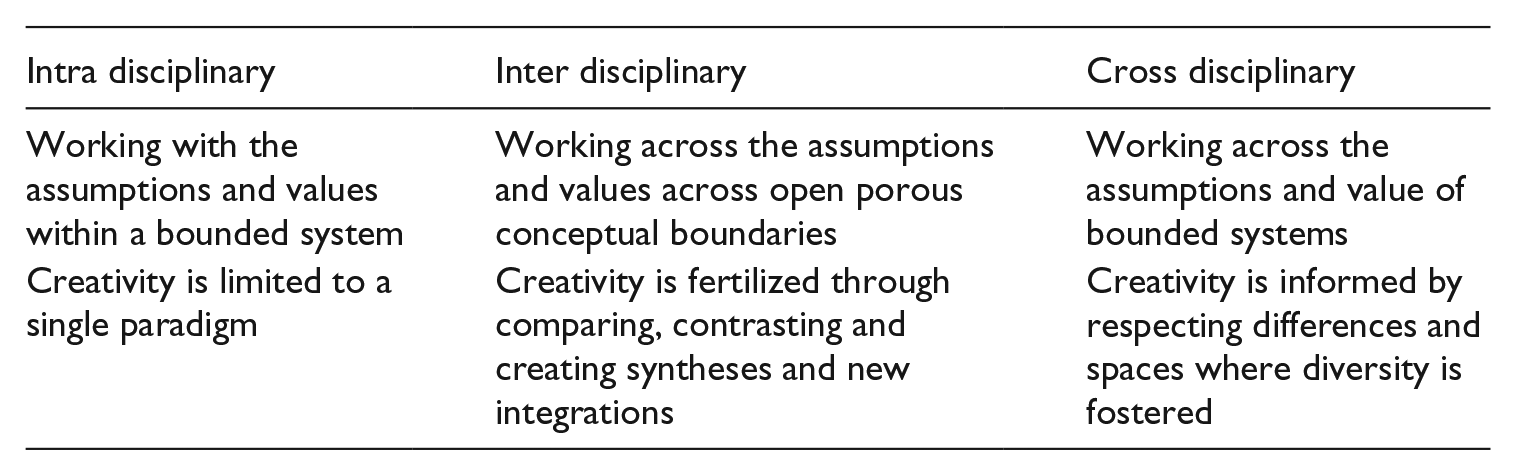
All three of these approaches have a role to play in developing responses to wicked problems that pose paradoxical challenges rather than ‘either-or dilemmas’. Wicked problems require engagement with diverse stakeholders so that the complexity of a policy response matches the complexity of the stakeholders.
In Flannery’s (2012) Quarterly Essay on Australia’s extinction crisis many wicked problems are raised in relation to our attitudes to stewardship. In his book The Future Eaters (2002 [1994]) he explains that we have eliminated many of the herbivores that used to provide the manure for our land. As the land deteriorates and dries out, it becomes more vulnerable to bush fires. The Aboriginal use of fire management to reduce fuel load in the less hot months helped to reduce the risks. Flannery (2012: 54) explains their vital role in protecting the land. Stewardship activities such as reducing fuel load protect not only the environment but also the creatures that live in it. Without stewardship we all become increasingly vulnerable. He criticizes the tendency to polarize green movements and sustainability through politics. Sustaining the social and environmental fabric of which we are part ought to underpin our policy designs for governance. Participatory action research on democracy and governance to enhance sustainable living and wellbeing is discussed in the ‘Contemporary Systems Series’ (McIntyre-Mills, 2014b, 2017; McIntyre-Mills et al., 2014, 2017), which explores the suggestion made by Florini (2003) in The Coming Democracy that the Aarhus Convention (1998) on freedom of environmental information and participation could be usefully extended to support the nexus between sustaining human and environmental wellbeing and resilience.
The Human Development Index needs to support the engagement process and to help people to think about their wellbeing. It is called the ‘being, having, doing and interacting index’. The responses need to be used as the basis for developing indicators to:
Deepen our understanding of how people perceive local climate challenges and experiences (Hulme, 2009; Nazarea, 2006; Vaske and Kobrin, 2001);
Explore the habits and a range of emotions and related behaviours (Hoggett, 2010) that potentially shape attitudes towards consumption with a particular focus on discourses about rights and responsibilities;
Explore the kinds of engagement (narrative, the arts and scenarios) that could encourage people to explore diverse ideas about what constitutes living well through providing opportunities to ‘talk back’ (hooks, 1989); and
Explore the extent to which engagement with the land enables participants to identify with movements such as post-materialism, slow living, eating local food, reducing energy usage, reusing, recycling and the protection of biodiversity.
First, research needs to contribute to the integration of wellbeing and environmental theories to create a meaningful approach to this area. Second, it needs to explore the perceived implications for vulnerability, wellbeing, resilience and the stewardship of diversity. Third, it needs to draw on diverse ways of knowing (Cruz et al., 2009) that could support regional governance (Weir, 2012) to support effective environmental management. We know that environmental sustainability and human wellbeing are intimately linked, but there is little knowledge about how this linkage can be built upon to improve both areas. Attempts to address climate change are often based on policy information that is not grounded in citizen experiences and fails to address what we do know about human behaviour or choices. The inherent link between engagement in civil society and community wellbeing (rather than the economic bottom line) needs to be the focus of research. Interdisciplinary research needs to bring together multiple areas looking for new solutions and new ways to foster awareness of ecosystems and the need to govern the Anthropocene (McIntyre-Mills et al., 2017).
Fourth, praxis needs to examine the impact of participation at the local level through awareness-raising about the implications of consumption choices on wellbeing and ‘wellbeing stocks’ (Stiglitz et al., 2010). It also needs to contribute to developing insight and foresight. How can we increase engagement in the environment that balances individual and collective wellbeing and simultaneously protects the environment when we know little about this nexus? Stewardship for future generations underpins the philosophy of Aboriginal custodians of the land and their dreaming sites. However, there is evidence that many non-Aboriginal urban citizens wish to spend more time living slower lives, walking wherever possible, riding bikes, growing local food, recycling and reusing and consuming less, instead of living stressful, competitive lives that save time, but waste resources as they are reliant on fast food in ‘throw away’ containers, fast travel and a ‘time is money attitude’ (McIntyre-Mills, 2012, 2013; McIntyre-Mills and De Vries, 2013; McIntyre-Mills et al., 2014). These findings clearly link environmental health and human wellbeing and raise the question of what can we learn from mobile and egalitarian, place-attached people (Vaske and Kobrin, 2001) whose history is recorded in the landscape (Guddemi, 2006; Rose, 2005)?
Finally and most importantly, there is the need to rediscover stewardship rights and responsibilities (Flannery, 2012) and to become accountable. These goals are considered essential for the governance of sustainable resources by Ann Florini (2003) and Carol Graham (2011) of the Brookings Institute. More applied research is needed at the interface of capacity building, knowledge and biodiversity management, consciousness studies and systemic governance (McIntyre-Mills, 2010, 2014b) in order to contribute to new ways to address the systemic social, economic and environmental challenges we face today. In these works the tension between ‘the fox and the hedgehog’ is discussed (to draw on Berlin and Hardy, 1979; Crowder, 2003). The wily fox is pragmatic and learns from experience. The hedgehog defends itself according to a single tactic and one grand theory about the world. In reconsidering boundaries, it is necessary to steer away from hedgehog approaches and try to remain open to experiences.
Testing out ideas requires preserving freedom, space for doubt, diversity and disagreement to the extent that diversity does not undermine the right to freedoms of others. An open approach to design and to research could be extended through acknowledging the praxis knowledge associated with reading the environment and living systems of which we are part. Research needs to span consciousness, cultural studies and systemic praxis to link the notion of relationships between humans and the land as a source of wellbeing and the broader societal need for environmental protection and effective ecosystem management. ‘Transformation from Wall Street to wellbeing’ (McIntyre-Mills et al., 2014) discusses current research on an alternative architecture for governance. The concept ‘Wall Street’ is used to symbolize economic rationalism, and ‘wellbeing’ to symbolize a reframed approach to ‘being interconnected’ and through treading lightly. Participatory action research explores whether the proposed architecture for engagement in participatory democracy and governance (Archibugi, 2010; Gaventa, 2001) could enable people to gain greater awareness of the implications of excessive consumption (Pretty, 2013; Urry, 2010) for stewardship (see Australian Government Caring for our Country, 2013; Lui, 1993). The book (McIntyre-Mills et al., 2014) argues that social, economic and environmental accounting could be assisted by means of participation to make this so-called triple bottom line accountability viable across the boundaries of nation-states. Thus participatory action research grasps the nettle to: address the challenge posed by the Earth Charter: ‘Everyone shares responsibility for the present and future wellbeing of the human family and the larger living world’ (cited by Hayden, 2010: 368). The challenge is to move beyond the rhetoric of cosmopolitan citizenship and to address both justice and sovereignty. The nation-state needs to be held to account by an Earth Charter that is supported by overlapping regional institutions (supported by inclusive regional research institutions, policies, the rule of law including parliaments and courts).
The global financial crisis and the environmental melt down seem to be seen as two problems – not one. Human beings cannot achieve new growth through increased extraction of profit. Instead, they need to live elegantly and well through redistribution and simpler lifestyles supported by green economies, reciprocal sharing of resources and skills in green communities, supported by energy-efficient systems. The hypothesis is that participation through awareness and consciousness-raising (McIntyre-Mills, 2010) will influence the way in which people think about boundaries. It could help them to remake connections with others and the environment through valuing the environment and engaging in healthy relationships (Wynne, 1996). This hypothesis is based on the notion of neural plasticity in that the brain shapes the environment and, in turn, is shaped by the environment (Bateson, 1972; Beer, 1994; Capra, 1996; Greenfield, 2000).
The research (McIntyre-Mills et al., 2014, 2017) tests the principle of subsidiarity, namely that decisions need to be taken at the lowest level possible through the wellbeing and environmental stewardship score card that adapts and extends the Max-Neef Human Development Index. The latter provides the architecture for applying the Aarhus Convention (1998) based on the right to participate and the right to freedom of information on issues pertaining to local environmental wellbeing concerns. The engagement architecture that we develop and test enables diverse opinions to be mapped and scored in terms of social, economic and environmental indicators of what works why and how to support personal and environmental wellbeing through exploring perceptions. These perceptions will help policy makers narrow the gap between haves, wants and needs when addressing service delivery. The companion volume, Systemic Ethics and Non-anthropocentric Stewardship (McIntyre-Mills, 2014b), explores the need to develop the capacity to ‘join up the dots’ through participatory democracy and governance and through working across disciplines while preserving space for difference, based on the axiom that freedom and diversity need to be fostered to the extent that they do not undermine the rights of others in this generation or future generations of life. Hybridity and our connection with the land are understood by Aboriginal Australians. We read our past in the landscape and we create its future through our choices.
Possibilities and risks: Constructing and deconstructing narratives of the state
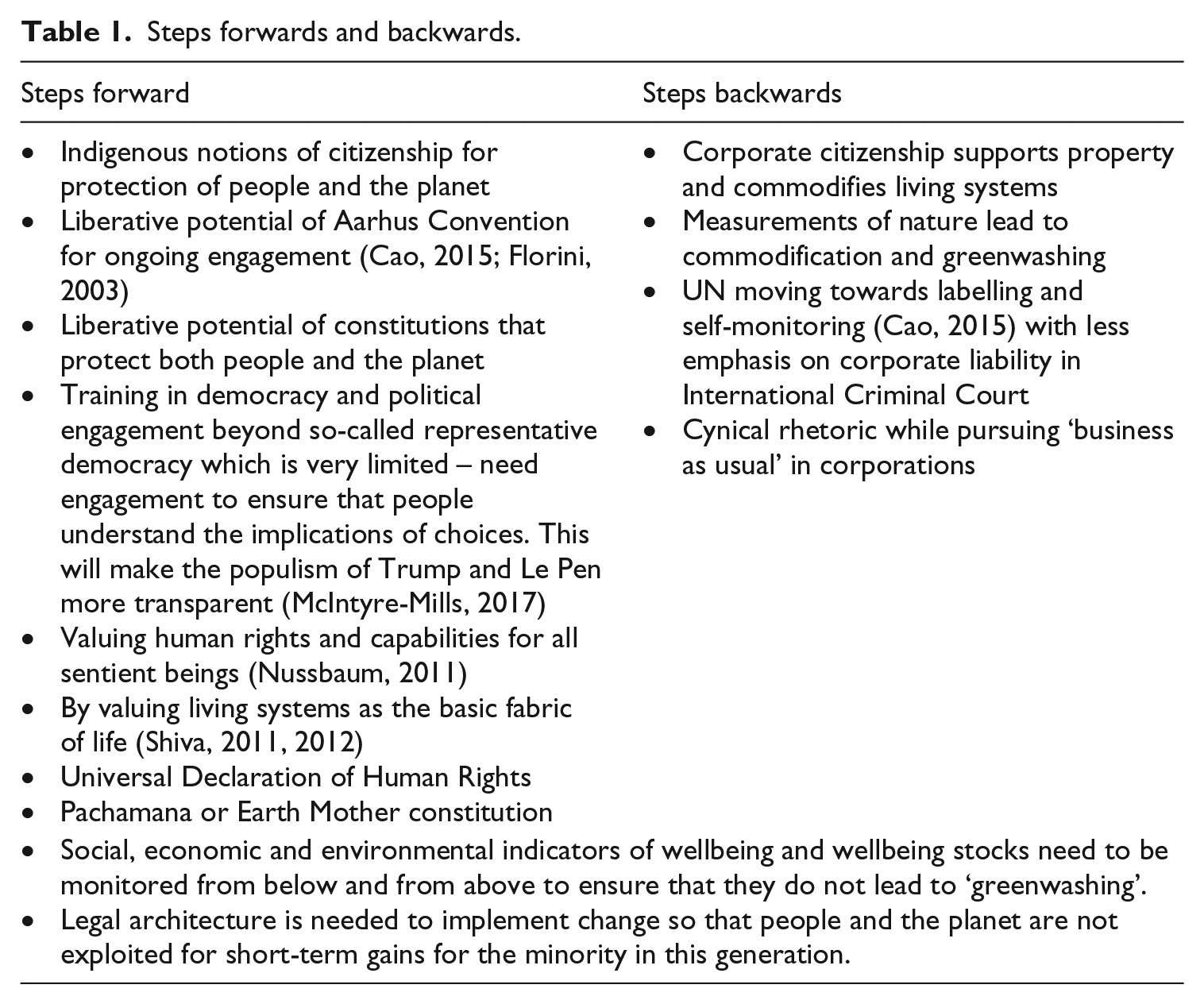
How can we achieve cultural transformation of consumption patterns? There is little doubt that accelerated climate change will adversely affect wellbeing and sustainability in Australia (Flannery, 2005; Pretty, 2013; Stiglitz et al., 2010) – particularly if we continue to consume at current rates (Davies and World Institute, 2008) – resulting in significant devastation and a compromised quality of life. The impact of climate change has been underestimated (Ellis et al., 2016; Lovelock, 2009; Rockström et al., 2009). Local solutions need to be explored more deeply, in order to provide lessons for regeneration. Indigenous cultures teach us about stewardship and relationships with the land, but these relationships have been lost in non-Aboriginal cultures, which is one of the reasons why the UN First Nations legislation can be used strategically as a means to co-create webs of meaning and to regenerate narratives of being custodians of the land. Our interconnectedness and interdependency need to be recognized in ways that protect both people and the planet. Alternative ways of framing human–nature relationships in legal, ethical and spiritual terms are illustrated by the Bolivian 1 and Ecuadorean constitutions in line with their belief in Mother Earth or ‘Pachamana’. Despite the fact that the rhetoric is undermined by the political reality of ‘business as usual’, it provides a first step. The next step is providing the necessary ‘planetary passport’ that aims to inspire loyalty to the planet as well as acting as a monitoring system to protect living systems. The concepts of stewardship and resilience are important notions through which to explore the nexus across wellbeing, consumption choices and the environment. We need to develop a deeper understanding of how the intangible aspects of perceived wellbeing can be measured. But we also need to measure them in relation to the link between wellbeing and sustainability (Stiglitz et al., 2010) while being mindful of the potential for the market to colonize the approach as summed up in Table 1.
Steps forwards and backwards.
The number of refugees
The social contract refers to protection of citizens within the boundaries of a nation-state. According to the United Nations High Commissioner for Refugees, Antonio Guterres (2014), for the first time since the Second World War, the global figure for displaced persons has now passed 50 million and, by 2050, this figure could be as high as 150 million (Rusbridger, 2015: 13). And yet the needs of the displaced are not addressed through the current architectures of democracy, governance and education. Surely it is time to reframe the social contract and to support public education to enable people to join up the dots.
As Guterres (2014) notes, there are more displaced people today than after the Second World War: Within a few years, Syria has gone from being the world’s second largest refugee-hosting to becoming its fastest refugee producing country. … UNHCR has registered far over 2.3 million Syrians as refugees in the region, and governments estimate the total number of those who fled at over 3 million. … Few refugee influxes have generated this profound an impact on their host countries, with dramatic demographic, economic and social consequences. The pressure is felt heavily in all areas of daily life, as budget deficits are increasing, growth suffers and jobs, salaries and price levels are affected across the region, leaving local families struggling to make ends meet.
The discourse above remains rooted in the notion that bounded nation-states are inevitable. The argument developed in this article is that the nation-state needs to take as a given that the cosmopolitan human rights come first and that nation-states serve regional needs. They need to be seen as part of an overlapping region with responsibility at a regional level for food security and human security. The costs of climate change will place a heavy burden not only on the state but on the surrounding regions. How do we move from the containerist approach that undermines justice through limiting compassion to citizens at the expense of human rights? Bohman (2005: 111, 102) stresses Arendt’s concept of ‘the capacity to begin a democratic dialogue’, but: For democracy to promote justice, it must already be just. Call this the democratic circle. While it can never be said to disappear, the circle can become virtuous through what I refer to as the ‘democratic minimum’: the achievement of a democratic arrangement sufficient for citizens to exercise their creative powers to re-shape democracy according to the demands of justice – that is the capacity to initiate democratic deliberation [challenges for sociological praxis]. (cited in McIntyre-Mills, 2014b: 31)
The greatest challenges for sociological praxis are the consequences of inaction that will potentially pose an existential risk to humanity. Sociologists need to address these challenges in their research and as policy advisers. The challenges include representation of the increasingly diverse populations within nation-states along with accountability to ensure that resources (e.g. water, food and energy) are used fairly, equitably and sustainably in local and regional biospheres. How can governance protect the global commons and the collective good? How can complex social, economic and environmental challenges that are perceived differently by different stakeholders with different values be addressed?
The work of Ann Florini provides possibilities as does the work of Danielle Archibugi. Florini (2003) suggests the potential of the Aarhus Convention could be scaled up to enhance accountability. It is taken for granted these days that the silo approach to the nation-state is acceptable. But given the entangled nature of globalization and the need to protect the global commons we can no longer address socioeconomic and environmental challenges within bounded areas. In an era of social, economic and environmental convergence of risk we need to accept the possibility of new forms of governance to protect those who are not protected by the nation-state, because they are not citizens.
Strong cosmopolitans such as Archibugi (2010: 319) stress the need for global democracy to support global governance by means of a constitution spanning nation-states and thus creating ‘overlapping spheres of power’. Just as decisions are made at the nation-state level by legal systems buttressed by constitutional law: At the global level, similar institutions should also have the task of deciding on the decision-making clout of the stakeholders and of assigning competencies. (Archibugi, 2010: 320)
Unlike the federalist or confederal model, Archibugi argues that global constitutions replace sovereignty at the national level and instead of ‘one state one vote’, the principle of ‘one individual one vote’ prevails for global citizens. Archibugi envisages that citizens and their governments would participate in decisions and that an international court would make decisions and that ‘the member states would accept the compulsory jurisdiction of the international courts’. Archibugi stresses that each state would ‘retain their own armed forces’, but that humanitarian interventions could draw on the resources of many states and could be ‘managed by cosmopolitan institutions’.
According to Dean (2009), the Marxist argument against cosmopolitanism is that normative and legal arguments are inadequate to address the class inequalities within and between nation-states. But the cosmopolitan response is one of promoting social democracy and redistribution of energy resources through governance. Beardsworth (2011: 168), for instance, draws on the work of Chevalier that: … proposes a new Marshall Plan for the developing world in the context of the explosive interaction between population growth and a world of scarce resources. (Chevalier, 2009: 142)
The problem is that the greatest emitters per capita need to accept their responsibility to developing nations who need to consider development as a way out of poverty. In light of the above, how then can we develop a way forward to create transnational webs of shared meaning that are buttressed by governance to protect the global commons and the public good (Levin, 2006)?
Held et al. (2005) proposed that the core challenges of the day are to address the vast differences in the standard of living between the rich and the poor through reforming world trade and through using the market to address global warming by means of a global covenant that prevents unilateral interventions. As noted above, the market failures Held et al. (2005: 15) anticipated fall short of what has actually occurred. The problem is not only one of externalities that are not factored into calculations of the degradation to the environment, it is a way of thinking and ‘being in the world’ that shifts the extraction of profit to where labour is cheaper and where governments and citizens are less likely to complain about degradation of the environment. Short-term profits are made at the expense of future generations. This undermines the conditions of employment so that full-time employment becomes less available.
Arguments for and against the national, transnational and supranational organizations have been raised by idealists, pragmatists and realists. A way to bridge the divide is through expanding pragmatism to consider the consequences for current and future generations by addressing wellbeing and developing governance systems to ensure that stocks for the future are developed through limiting the way in which production processes and distribution practices benefit the minority at the expense of the majority.
A sustainable local community is determined by a sustainable region in which food, energy and water supplies are considered as major determinants for wellbeing. No community can be expected to transform from a high carbon lifestyle (or aspiring to this lifestyle) without feeling part of the design process and owning the decisions as to how resources should be used. Young people, the disabled, asylum seekers and sentient beings (Nussbaum, 2006) along with future generations live ‘precarious lives’ (Butler, 2005). Those perceived as different are not protected (Young, 2011). The ability to show compassion underpins cosmopolitanism (Butler, 2011). Butler’s work stresses ‘the need to rethink the human as a site of interdependency’. She emphasizes that humanity needs to be able to ask for assistance and we need to be able to anticipate that we will be heard and that people will respond with compassion. Unless this is possible it leads to a life that can be unbearable. Do we wish to live in a world where we do not want to help one another and in which we deny the pain of sentient beings (Butler, 2011)? If we are prepared to recognize not our resilience, but our mutual vulnerability, it provides a basis for stewardship. We are all reliant on others and need to be able to depend on our connections with others. What if we could acknowledge our vulnerability and what if we could foster a sense of caring for others that recognizes our humanity and our links with others? ‘Species’ as a concept is a central concern for the book Planetary Passport (McIntyre-Mills, 2017), which is discussed in relation to the issue of categorization, membership, displacement and decision-making (in terms of state sovereignty, territory, colonization and its implications for human, animal and plant life). As urbanization encroaches on the wild spaces and displaces other forms of life, relationships that are anthropocentric need to be reframed to enable regeneration and sustainable living that is non-anthropocentric.
Thus Planetary Passport makes a case for recognizing our hybridity and interconnectedness. The attitudes to animals has been shaped by the ‘us/them’ and ‘zero sum’ approach, and it is now being applied to human beings who are unwanted. The contributions made by Donaldson and Kymlicka (2011) to animal rights through exploring our relationships with other animals need to be given centre stage in redressing the current political impasse in animal rights. Donaldson and Kymlicka (2011: 253) cite scholars who think that the collapse of habitat and food resources will occur first and then the ethical choices will change. They re-emphasize that by 2025 there will be insufficient water and land to support meat eating and that meat diets are unhealthy. (They could have added that meat has been linked with sugar 2 as two of the most carcinogenic substances.) Surely if all that separates us from other primates is a small percentage of the genome – then we need to respect our connections with other creatures and we need to take seriously the contribution we should be making as stewards of the environment and other creatures by recognizing and appreciating the biodiversity of which we are a strand.
The challenges of governance need to be addressed by working across disciplines. Gibbons et al. (1994) argue that the ability to work across boundaries is vital for ‘The new production of knowledge’ and vital for ‘the dynamics of research’ to address current complex challenges. The so-called ‘tragedy of the commons’ argument developed by Hardin (1968) is a construction informed by simplistic thinking. Ironically, it is often used as the starting point for environmental thinking, but in fact it originated as an argument developed by Locke in support of the enclosure movement and private property in Britain. The argument being that contained areas of land are cared for better than the areas of land that are held in common and shared. But ironically it is the privatization and commodification of land and natural resources that have led to environmental pollution and degradation. The lack of trust between nations has evoked the rhetoric of nationalism and state protectionism. This has led to ‘seeing like a state’ (Scott, 1998), which in turn leads to the argument for competition and the zero sum approach which argues that one nation can profit at the expense of others. The organizational philosophy and governance arguments that flow from this philosophy are based on limited disciplinary paradigms that can profit at the expense of others. Ideally, a universal respect for social and environmental justice could enable subsidiarity as a means to support freedom (Follesdal, 2006; Poe, 2010) to the extent that it does not undermine the quality of life of this generation or the next.
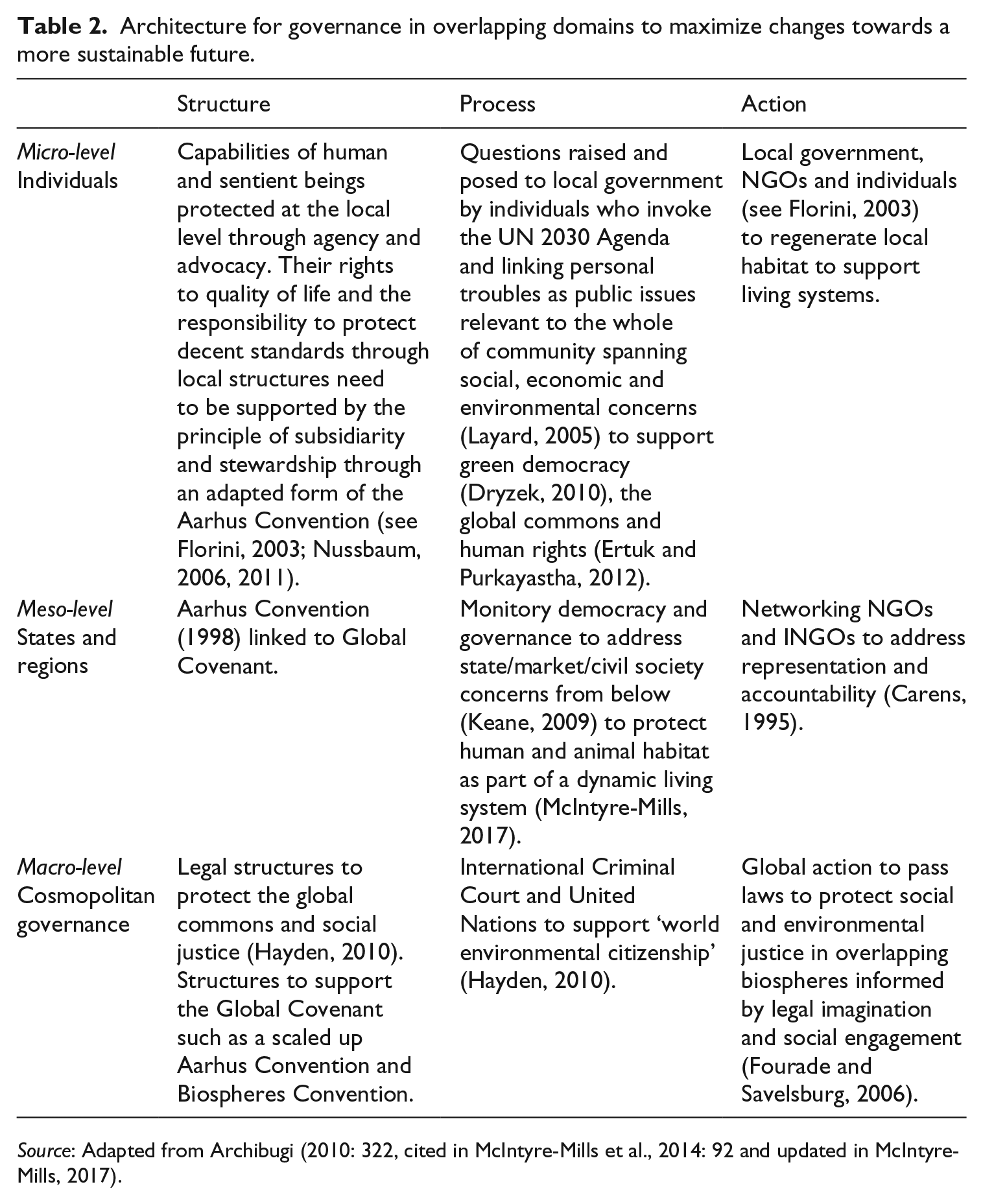
Dualist thinking pervades our consciousness and is reflected in socially unjust and environmentally unsustainable designs for society. Designs need to be supported by constitutions, based on a priori norms, and consequentialist or a posteriori approaches, based on testing out ideas within context and with future generations in mind (see Table 2). Global axioms to protect future generations and the poor of this generation need to guide legal constructs and legal decisions at the local level. The principle of subsidiarity could rest comfortably with global axioms – provided that the caveat is made that people at the local level can be free and diverse to the
Architecture for governance in overlapping domains to maximize changes towards a more sustainable future.
Source: Adapted from Archibugi (2010: 322, cited in McIntyre-Mills et al., 2014: 92 and updated in McIntyre-Mills, 2017).
Making and invoking treaties and conventions that control commodification need to be a priority and need to be ongoing if justice is to be maintained. The approach could be buttressed through federations supported by, for example, the Lisbon Treaty (Horvath and Odor, 2010), which requires that social, economic and environmental legal considerations be met. Unfortunately the structural and process mechanisms of the EU are not able to manage the distribution of power or funding (Rhodes, 1997). Clearly if the EU is to survive it needs to be supported by a means to balance individual and national interests with the collective good of the union. More and more members of the union are disenchanted for a number of reasons.
Conclusion
To sum up: first, the article develops the argument that international law needs to underpin governance within and across nation-states within regions to enable regeneration of the environment on which we depend. Currently we are at an impasse as representative democracy does not achieve governance for the people. It has been high-jacked to support corporate interests as a result of governments being elected with funding and support from capital at the expense of people and the environment. Second, the article responds to the issues of the day, namely poverty, unemployment and climate change, characterized by the UK leaving the European Union, because voters in the regional areas were concerned about employment and immigration. These issues need a post-national regional response to welfare rather than containerist populist responses.
The election of Trump and the crisis in Europe (Habermas, 2013) need to be understood systemically as a result of international policy that is becoming increasingly containerist and less cosmopolitan in its approach. The battle will be to protect living systems by human beings who can be co-opted by states, corporations or populism. Unfortunately co-optation tends to prevail. Both voluntary and post-national structuralist interventions are needed to protect people and the planet. Voluntarism involves everyday choices about how we live our lives and what we decide to consume. Structuralism provides the legal and governance framework to ensure representation and accountability. Rorty stressed in 1999 that democracy was losing the plot and that it needed to pay more attention to the traditional issues that the Left used to address, namely job creation. But he did not anticipate the extent to which the cosmopolitan agenda would be threatened by fear as a result of the numbers of ISIS inspired attacks. So creating more job opportunities (although vital) needs to occur alongside a robust willingness to keep reinventing democracy and governance to keep up with the current challenges. Representative democracy based on voting in a government for a term of office does not achieve representation of the increasingly diverse nation-states of Europe, America, Africa or Australia. Mobility has resulted in more and more people living in increasingly diverse city contexts. Levels of tolerance always decline when people compete for scarce resources that are increasingly exploited in ways that are unsustainable for people and the planet.
A case is made for a new form of democracy and governance that is based on reconsidering the boundaries of who is protected and what is valued. Currently the social contract only protects those who fit the criterion of citizen. Young people, non-citizens, the disabled, sentient beings and the environment on which we all depend are not protected by the social contract. Protection of rights in response to perceived responsibilities to the state does not go far enough, because contractual reciprocity does not protect the vulnerable, the voiceless or the land. Thus boundaries need to be reconsidered to reflect our dependence on one another and the land and to protect the wellbeing of current and future generations of life. A new architecture for democracy and governance needs to extend solidarity and protection to all forms of life within a region (see Table 2), rather than limiting protection and thus limiting human security which is dependent on biospheres not national boundaries expressed in policy design and our everyday praxis decisions about how and what we consume. Sociology needs to support intersectional understanding that human beings are part of a living system and that decisions that undermine life chances will result in violence that poses an ‘existential risk’ (Bostrom, 2011).
Footnotes
Funding
This research received no specific grant from any funding agency in the public, commercial, or not-for-profit sectors.