



Abstract
The popularisation of the Social Licence to Operate in measuring the acceptance of mining projects has stimulated the development of critical studies that question how the practical use of this management model has favoured the reduction of risks for the business without generating gains for the community. We propose in this article that the integration of Social Impact Assessment in Social Licence to Operate contributes to deepening the understanding of the social acceptance of mineral projects, especially in contexts of vulnerability. The objective of this research is to discuss the social acceptance of mining projects integrating the results of Social Licence to Operate and Social Impact Assessment approaches applied in a mineral project in the Brazilian Amazon. The methodological procedures of this research included document analysis, survey application, and interviews. The results show that Social Impact Assessment, by enabling the understanding of the local context and social impacts, serves as a complementary instrument to Social Licence to Operate measurement models. By giving voice to the local community, the use of Social Impact Assessment shows means that could effectively contribute to local development, based on actions involving the company and local government in order to act in the most sensitive areas that impact the community, such as its economic, social, environmental, and cultural challenges.
Introduction
The Social Licence to Operate (SLO) has stood out in recent years as an essential management strategy for extractive industries. In this context, measuring community trust in the company emerges as a central theme to ensure social acceptance (Moffat and Zhang, 2014). As such, studies testing SLO models have multiplied in a number of countries (Cruz et al., 2021; Zhang et al., 2015). Considering that such models were originally produced in developed countries and widely applied in territories such as Australia and Canada, some studies question the validity or explanatory capacity of these models to adequately interpret the conflictive scenarios between companies and communities in mining territories, particularly when it comes to contexts of vulnerability (Santiago et al., 2021). It is also argued that SLO measurement models based on trust and acceptance made it possible to explore a commercial niche for researchers, accelerating the popularisation of models in literature, without opposing critical perspectives in academic production (Owen, 2016).
The models are criticised for presenting results that benefit minimising risks to businesses to the detriment of risks to the community (Kemp at al., 2016; Owen and Kemp, 2018). The constituent factors of trust enable businesses to build strategies to reduce project acceptance risks while muting social risks that negatively impact the community. Thus, the application of SLO models can contribute to masking local contradictions and problems of power asymmetry between the company and the community (Demajorovic et al., 2019). In this context, researchers question the effectiveness of the SLO in adequately measuring the legitimacy of social acceptance of projects.
In order to deeply discuss the legitimacy of mining projects, many scholars advocate the integration of Social Impact Assessment (SIA) into SLO (Esteves et al., 2017; Hanna and Vanclay, 2013; Jijelava and Vanclay, 2018). Applying SIA allows the balancing of perspectives of risk for both business and the community and increases the legitimacy of project acceptance by the community (Hanna and Vanclay, 2013). We also argue that a constructivist and participatory approach to identifying and deepening the understanding of the positive and negative impacts of mining will contribute to bringing a critical eye to the matter, which can address other constitutive elements of SLO processes as well. However, few studies have applied SIA and SLO in real cases to discuss the complementarity of these two approaches.
The objective of this research is to discuss the social acceptance of mining projects integrating the results of SLO and SIA approaches applied in a mineral project in the Brazilian Amazon. We propose linking the results of the model for measuring social acceptance to evaluate the SLO with the results from the SIA that were simultaneously applied in the territory. Based on the descriptive analysis of the results achieved with the quantitative model of SLO in the territory, we expand the discussion of trust and acceptance of the project from a participatory process, valuing the perception of the most vulnerable and affected stakeholders. Furthermore, we show how integrating SLO and SIA as complementary management tools enable company managers and local government to choose means that could effectively contribute to local development. The article is structured as follows. In the next section, we critically review the evolution of SLO measurement models and the contribution of SIA to balancing the risk for business and community. In the following two sections, we describe the methodology and the background information on the case study. Next, we present the results focusing on how the social impacts identified by the local community enable to deepen the discussion of trust and acceptance in the territory. The article concludes with a brief discussion of the potential benefits of the integration of SIA and SLO for local development.
Evolution of SLO measurement models and their application within the context of the Amazon
The need to obtain SLO was recently ranked as the top risk facing mining for three consecutive years (Ernst & Young, 2021). Considering the financial risks of disruptions and the inherent costs of conflict (Moffat and Zhang, 2014), there are great benefits for extractive industries in being able to measure SLO status of projects.
In basic terms, SLO is explained as the social acceptance granted by a community to mineral exploration activities (Litmanen et al., 2016), and much of the research on the topic focuses on effectively measuring social acceptance (Mercer-Mapstone et al., 2018). To that end, quantitative studies have sought to model the critical elements of SLO, showing that it can be measured through surveys of the perceptions of local communities (Moffat and Zhang, 2014). Research also highlights the critical importance of the community’s trust in the company as a predecessor to acceptance (Lacey et al., 2017; Moffat and Zhang, 2014). Communities trust companies that demonstrate integrity and competence in managing operational risk and meeting people’s expectations (Cruz et al., 2021). Furthermore, the local communities’ perceptions of distributional fairness, procedural fairness, quality of relationship, and environmental protection are some of the common elements that explain trust building in several studies, which in turn influences the acceptance process (Lacey et al., 2017; Mercer-Mapstone et al., 2018).
Most published studies, however, have been conducted in developed countries, to the detriment of developing countries where mineral projects have been expanding at a faster rate (Santiago et al., 2021). In these regions, often characterised by social fragility, acceptance processes can mute risks and other factors that influence SLO. This situation is aggravated by the disproportionate influence of the representatives of the mineral sector on the regulatory and monitoring agencies at the federal and local levels, amplifying the socio-environmental impacts and the territory’s vulnerability (Milanez et al., 2022). In this context, one of the areas in the world scenario that stands out for its fast-growing mineral exploration is precisely the Brazilian Amazon (Sonter et al., 2017). In this region, fraught with contradictions in its occupation while being of vital importance for ecosystem services, few studies have evaluated the relationship of its communities with mineral projects. Pimenta et al. (2021) proposed and tested a model for measuring the critical factors of social acceptance to evaluate SLO in the municipality of Parauapebas in the Brazilian Amazon. In his model, besides testing the constructs of procedural fairness, distributional fairness, and relationship, the authors included environmental protection in the evaluation of community trust in the mining project.
The results prove that the variables of relationship, procedural fairness, distributional fairness, and environmental protection positively influence trust, and this in turn has a direct influence on social acceptance. Similar results were identified in the study by Cruz et al. (2021) in the same region, indicating that procedural fairness, company–community interactions, and improvements in social infrastructure were positively related to community trust in the company, while negative impacts on the environment negatively affected company acceptance. The validation of these models has been used to legitimise mining operations in different contexts. Their results also indicate ways for companies to improve the performance of the constructs in order to increase project trust and acceptance. However, if the validation of the models proves to be a useful tool for companies in reducing the risk to the business, it can be asked what the benefit of using this tool for the communities would be.
The critical perspective on the application of SLO models
Critical studies of SLO have warned about the ambiguity of the term and its ability to effectively attest to the legitimacy of companies in the community (Eabrasu et al., 2021). It is also criticised for its use as a tool to diminish community opposition to the project, diverting focus from the social and environmental impacts most relevant to communities (Jijelava and Vanclay, 2018), as well as failing to provide clear indication of the social and environmental performance of projects (Eabrasu et al., 2021). Owen and Kemp (2018) state that a shortcoming of SLO is its focus on community posed risks to the business, to the detriment of risks posed to the community. As such, it appears to be used by businesses as a rhetorical device to suggest project approval, while lacking meaningful utility to stakeholders (Wright and Bice, 2017). Economic dependence of mining municipalities coupled with the asymmetry of power between communities and companies worsen the scenario, while on the contrary allowing projects to ensure their social acceptance while hiding risks and silencing conflicts (Demajorovic et al., 2019; Demajorovic et al., 2019; Meesters and Behagel, 2017). It must be considered that communities with high socioeconomic vulnerability and low coping capacity (Climent-Gil et al., 2018) can generate false acceptance, especially when the harmful consequences of the company’s activities are covered up or disguised (Meesters and Behagel, 2017). The community accepts the project even without possessing genuine identification with the company (Demajorovic et al., 2019). Given these contradictions between acceptance and vulnerability, which remain unrevealed in quantitative models, the proposition of the integration of SIA with the SLO process stands out in the literature aiming to offer a deeper understanding of what underlies the processes of social acceptance.
Integration of SIA into SLO
By prioritising reputation in the application of SLO models, the issue of social impacts generated to the community takes a back seat. This is compounded by the difficulty companies have in identifying and understanding the real social impacts generated in the community by mining projects. For Owen and Kemp (2018), there is a big difference between what the company assumes to be its main impacts and what is effectively perceived by the community. This partial understanding hinders the action of companies to effectively deal with the social issues and damages generated (Kemp et al., 2016).
An important contribution to a broader and more integrated understanding of social impacts in mining is the research by Mancini and Sala (2018). Organised into six categories: economy, income, and security; employment and education; land use and territorial aspects; environment, health and safety; demography; and human rights, the research shows the predominance of negative impacts of the activity over positive impacts. The increased recognition of the social impacts of mining, in turn, has stimulated interest in new methodologies to mitigate the negative consequences of mineral exploration, expanding the possibilities for the application of SIA in the sector (Harvey and Bice, 2014; Michell and McManus, 2013). However, beyond the identification of social impacts, Esteves et al. (2012) advocate the inclusion of the mitigation of social risks generated by companies as a fundamental criterion in the process of obtaining SLO (2020). Without disregarding the importance and relevance of quantitative processes for measuring social acceptance, it is necessary to understand their limitations in not being able to treat the impact as a socially constructed reality in which the changes caused by projects are felt in different ways by the various stakeholders affected (Esteves et al., 2012), resulting in an incomplete assessment.
Thus, a constructivist approach to SIA which aims to understand social acceptance in a deep, qualitative, and contextual way is necessary to give voice to those affected, favouring a transdisciplinary approach and allowing the risks present in the project to be truly captured and considered. Starting from a bottom-up process, it is necessary to understand the power disparities, since the level of power is related to the actor’s ability to influence the planning, development, and execution of the mining enterprise. In this context, the participatory processes inherent in a constructivist SIA contribute to the gathering of in-depth and quality information, which can assist in decision-making and favour actions that promote long-term benefits (Joyce and Macfarlane, 2001). As argued by Chowdhury (2021), bringing the perspective of marginalised groups into the strategic decision of mining firms is the only way to reduce impacts and assure benefits to the local community. The inclusion of local people in the assessment process brings local knowledge that provides valuable information about the natural and social environment that would not be available in a top-down process, ensuring greater legitimacy, credibility, and balance to the planning and decision-making in the territory (Esteves et al., 2017). These spaces can also stimulate long-term partnerships with civil society and public bodies, favouring the development of social projects with greater links to the territory’s sustainability (Lane et al., 1997). These potential benefits of SIA enhance the eligibility of the acceptance process to the extent that they ensure that the decision-making of companies is not unilateral but shared in its development and implementation.
Methodological procedures
Research strategy
In the last 30 years, mining has expanded significantly in the Brazilian Amazon, especially in the southern Pará. In this region, it was implemented the largest iron ore mining project in the world (Cruz et al., 2021) and other mining projects including copper (Matlaba et al., 2017), manganese, bauxite, and nickel (Medeiros, 2016). However, only two recent publications were dedicated to the application of SLO measurement models in this territory (Cruz et al., 2021; Pimenta et al., 2021). The authors validated trust between companies and the community as a central element to explain the acceptance of mineral projects in this region. Nevertheless, in neither case did the research go deep into a critical analysis of the results by considering how the local context and the positive and negative social impacts of the project influence the local community perception influencing the trust and acceptance in the territory.
The chosen research strategy was a case study, following Eisenhardt’s (1989) recommendations on the uniqueness of the focal phenomenon. In addition to the importance of the project as a supplier of the world iron market, it is located in the Amazon region, an area of great international interest due to its importance in relation to the ecosystem services provided. Furthermore, the case study allowed us to explore the complementarity of both approaches and the potential benefits of integrating SLO and SIA. The research was applied in five communities that suffer the most direct influence from the mining project. The prioritisation of these communities considered their proximity to the mine, dam, and the two railroads operated by the mining company. In Figure 1, the communities are indicated by the blue dots, the mines appear as grey dots, and the orange and purple lines are the Carajás Railroad and the S11D railway branch, respectively.
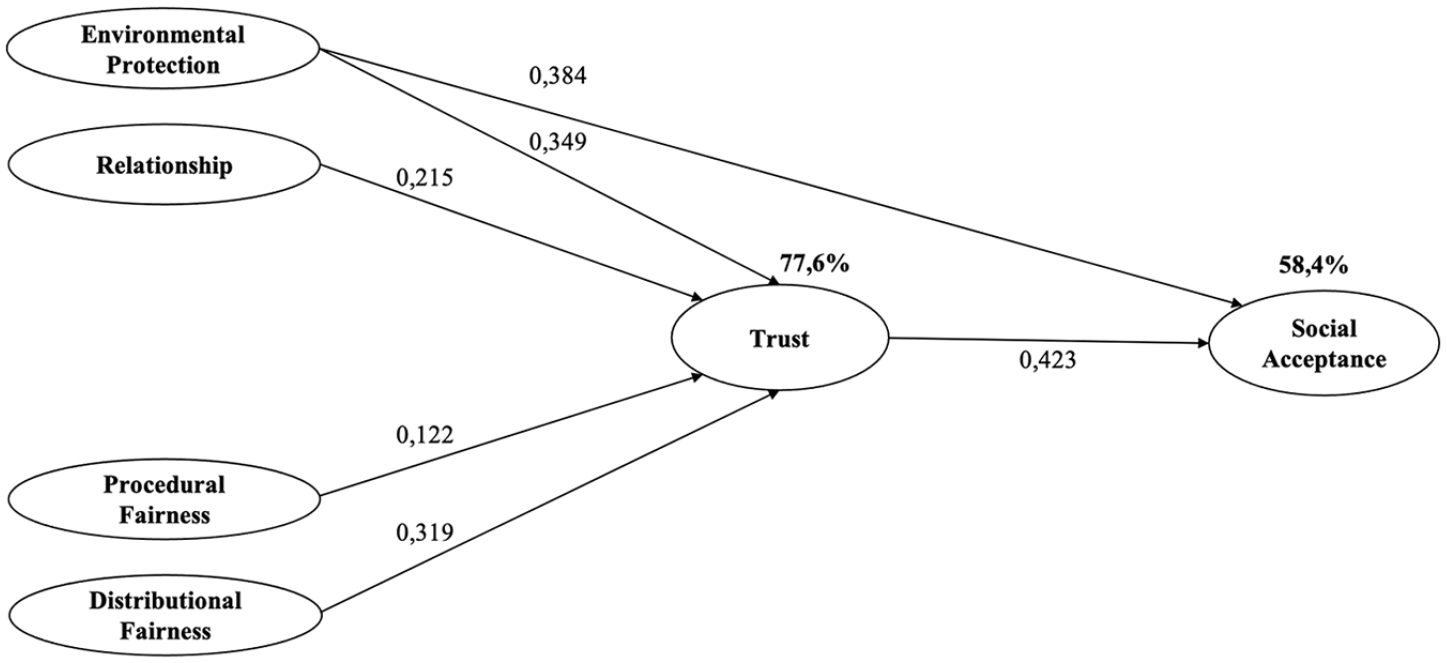
Map of the communities and the main mining operations in the Parauapebas/PA.
Being qualitative in nature, the research is based on the SLO model developed and applied by Pimenta et al. (2021) and is divided into two phases: a descriptive analysis of the survey used in the territory in applying the SLO model and an interpretation of the results of trust and acceptance of the model through in-depth interviews with the community.
Survey application and descriptive analysis
The survey from which the SLO model was tested (Pimenta et al., 2021) was built from scales of variables observed from previous studies in the literature. The questions of each construct were translated and adapted to the circumstances of the Brazilian scenario, having been validated by experts in the mining sector. Thus, each construct of the model of Figure 2 was related to a set of questions which were consolidated into a questionnaire with 33 statements on a 7-point Likert-type scale (Pimenta et al., 2021).
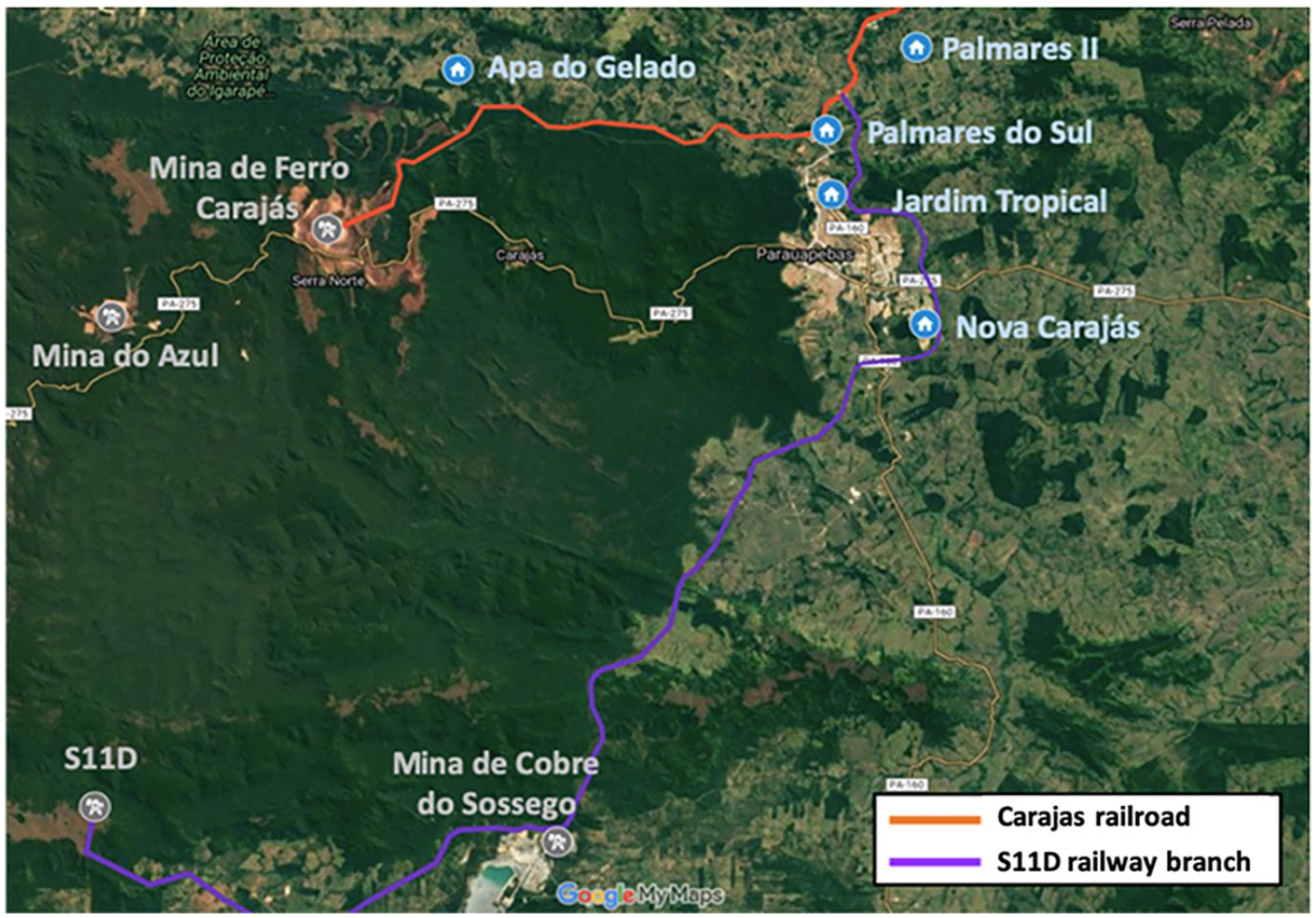
The Carajas project SLO measurement model.
The survey questionnaire was sent to community leaders and other residents of the communities. In all, 340 respondents were considered for the analyses. We highlight that this value is higher than the minimum required of 95 respondents for the statistical representativeness of models with four predecessors, according to Ringle, Silva, and Bido (2014). In addition, most studies available in the literature that applied similar SLO models used a sample of 100 and 200 participants (Lacey et al., 2017; Moffat and Zhang, 2014).
Aiming to deepen the understanding of the community’s perception, descriptive analyses were performed on the results of the averages of the constructs. These averages revealed the performance of each of the constructs that make up the constitutive factors of SLO, making it possible to understand which local elements favour or hinder the trust and acceptance of the mineral project by the community.
Identifying social impacts: qualitative analysis of impacts
In order to understand the results of the constructs in depth, we incorporated the SIA process from a constructivist approach so as to include the local community’s understanding and interpretation of the impacts generated by mining. Initially work focused on the baseline study as advocated by Aledo and Dominguez-Gomez (2018). A deep and detailed understanding of the interaction of the mining project in the evolution of the sociocultural context contributes to a better understanding of the results of social acceptance. The documents analysed were the mining company’s reports (sustainability reports and territory studies), external reports (media reports and reports from civil society organisations), and public database. Semi-structured interviews with multiple stakeholders were subsequently conducted in the same five communities where the SLO model was measured, as shown in the Table 1.
Categories, groups, composition, and quantity of stakeholders interviewed.

During the interviews, respondents were asked to indicate and explain the impacts generated by mining activity, resulting in 122 positive and negative impacts that were grouped by the constructs of the SLO model applied: relationship, procedural fairness, distributional fairness, and environmental protection. Considering the large number of impacts identified, those identified by three or more communities were prioritised, resulting in 25 impacts. Through the triangulation of the baseline study, the descriptive analysis of the survey and the content of the interviews, how the interpretation of the impacts by the community relates to Trust and Social Acceptance in the project was discussed.
The Parauapebas background
In the 1980s, the Brazilian government launched a programme to integrate the Brazilian Amazon into the national economy that included projects for mineral exploration in the region. This programme involved the installation of a complex in the region, with the construction of a mine, hydroelectric plant, railroad, and port, operated by the state-owned Vale do Rio Doce Company (Instituto Brasileiro de Geografia e Estatística (IBGE), 2016), that would together become the world’s largest iron exploration project worldwide with most of its production destined for the foreign market (Carneiro, 2019; Corrêa and Carmo, 2010).
The enormity of the project attracted a growing number of people who quickly outgrew an infrastructure designed for 5000 inhabitants. The large influx of migrants turned the area into an area of disorderly occupation, giving rise to large neighbourhoods without health clinics, appropriate schools, or basic sanitation (Congilio, 2019; Trindade, 2012). One of the characteristics of this occupation was a large male contingent in the area (Wanderley, 2012).
The intensity of the migratory process caused the city to grow from 36,000 inhabitants in 1991 to 213,000 (IBGE, 2016). At the same time, the continuous growth of production made the gross domestic product (GDP) expand significantly, consolidating Parauapebas as the 71st richest municipality among 5570 in the country (IBGE, 2010).7471 The data on the contribution of the Financial Compensation for the Exploration of Mineral Resources (CFEM) also show a significant increase in recent years, jumping from 77 million in reais currency to 471 million, as shown in Figure 3. CFEM was created by the 1988 Constitution as a mechanism to compensate local governments for the impact of mining activities. This compensation mechanism is a product-specific tax over net sales of mining establishments. This tax was raised from 2% to 3.5% in 2017. (Agência Nacional da Mineração (ANM), 2021).
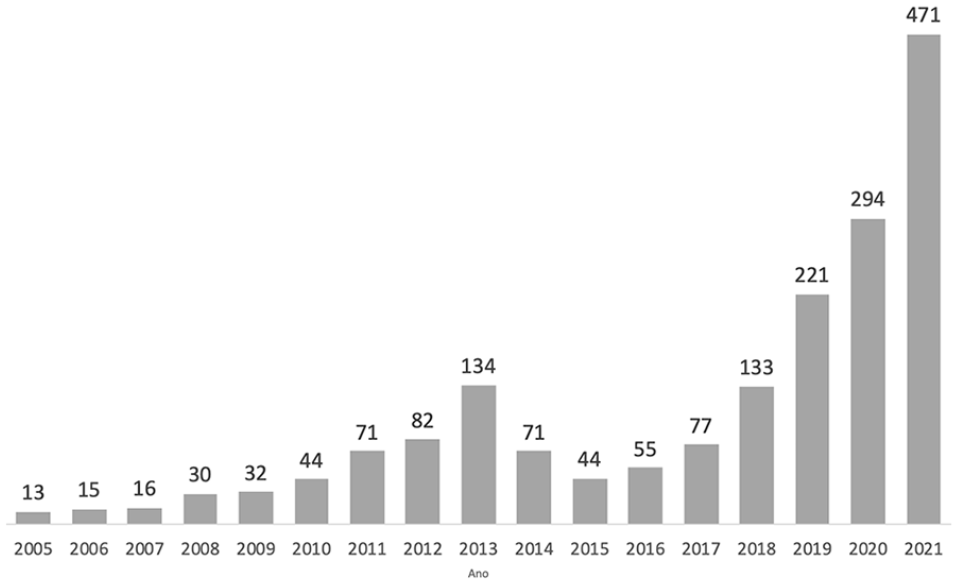
CFEM collection in Parauapebas (in millions of US$).
Despite the economic growth, the evolution of the socioeconomic indicators is contradictory, especially when compared to municipal revenue. One aspect that stands out is the low contribution of the revenue generated from these activities towards economic diversification, as shown in table 2.
Participation in the activities of the Parauapebas economy.

Source: IBGE (2019).
Table 2 show an increase in the industrial participation in the municipality, leveraged by mining, jumping from 67% to 74%, while the contribution of services decreased from 25% to 19% and agriculture maintained a contribution below 1% during the period. Agriculture stands out due to the fact that the territory was originally an important hub of food production. From 2000 to 2019, rice production decreased by 45% and coffee by 13.36% (Loureiro, 2022). Another fact that is significant in the municipality is violence. The homicide rate is 60.5 per 100,000 inhabitants (Instituto de Pesquisa Econômica Aplicada (IPEA), 2013), registering the 10th highest homicide rate in the state and the 86th in Brazil, among the 1663 municipalities analysed (Coelho, 2015).
The HDI (M)–Human Development Index of the municipality, in 2010, resulted in 0.72 points against 0.55 in 2000, being the 1454th position among the 5565 municipalities in the national ranking (IPEA, 2020). This result presents an important evolution in relation to the State, which evolved from 0.51 to 0.65 in the same period (IPEA, 2020). Even so, the ranking of the efficiency level of the Brazilian municipalities strengthens the argument of the socioeconomic contradictions. Parauapebas ranks 5108th out of a total of 5281 municipalities analysed in Brazil (Folha De São Paulo, 2016). The ranking measured the quality of the management of the municipalities in the areas of education, health, and sanitation, taking into account the available revenue in the municipality. In conclusion, the economic and social data indicate that the great wealth produced in the municipality has not managed to be transformed into sustainable local development generating equitable benefits for the company and the community.
Results
Descriptive analysis of the constructs
As outlined, the SLO measurement model was validated in Parauapebas. Distributional fairness, procedural fairness, relationship, and environmental protection account for the population’s trust in the project, which in turn explains their acceptance. However, by focusing on the validation of the model, the results do not make it possible to understand how the poor performances of the constructs impact trust and social acceptance. The following chart presents the results of the average scores for each construct (Figure 4). Using the 7-point Likert-type scale from the data collection, the results were ranked according to Boutilier’s (2017) SLO scale.
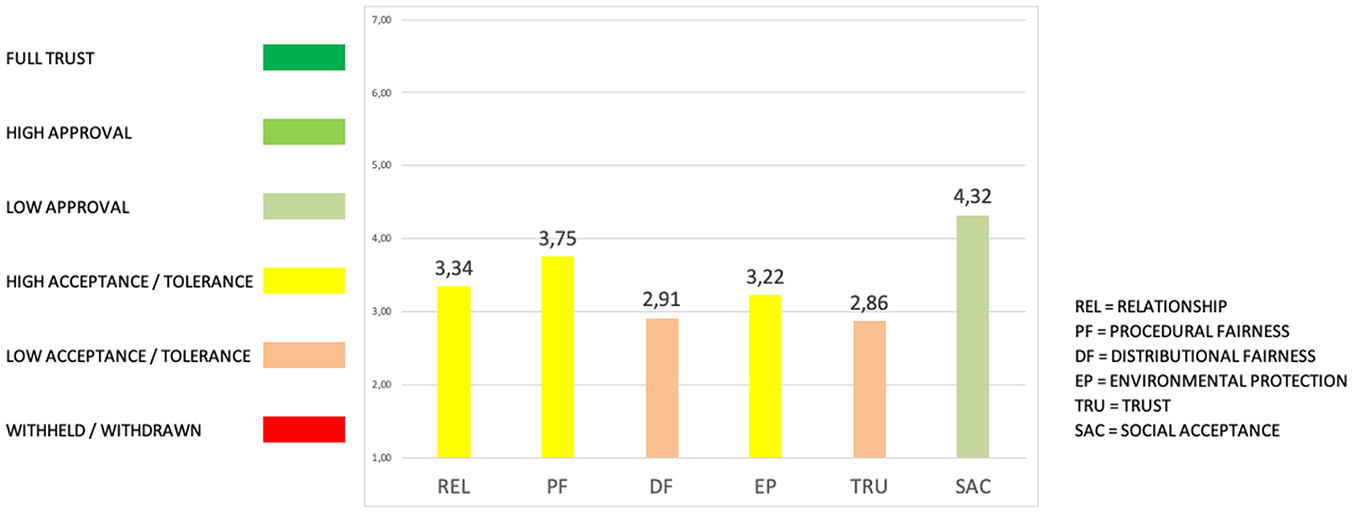
Average results of the constructs of the social acceptance model of Pimenta et al. (2021).
It is noticeable according figure 4 that among the variables that precede trust, distributional fairness is the one that presents the lowest average, being the item, most poorly evaluated by the community, with the average of the variables observed equal to 2.91. In other words, the community does not perceive that the benefits of mining are distributed among the population in a fair way.
Environmental protection, with an average of 3.22, and relationship, with an average of 3.34, present slightly better results, but are still critical averages, below the point of impartiality, which would be a mark of 4. Procedural fairness has an average of 3.75 and is also below the point of impartiality. However, it is the best-performing latent variable in this group.
These low evaluations of the distributional fairness, environmental protection, relationship, and procedural fairness latent variables help in the understanding of the performance of the trust construct, which has the worst average score of all constructs in the model, with a score of 2.86. In practice, this means that the majority of the population negatively evaluates the performance of the mining company in these aspects, having low trust in it and judging the subjects of distributional fairness and environmental protection as the most poorly evaluated constructs.
However, contrary to the low level of trust and these preceding constructs, Social acceptance was the construct that had the highest average throughout the model, with the value of 4.32, marking a low approval level. This shows that despite a poor average evaluation of the mining company in other aspects, the majority of the population tends to be slightly favourable to the existence, continuity, and even expansion of mining in the region.
The results achieved with the descriptive analysis make several conclusions possible. From the SLO perspective, the success of a given operation is built dependent on the acceptance and approval of the community, and with these results, we can affirm that the mining company has acceptance in the territory. The averages recorded also make it possible to indicate to the company which constructs favour or threaten the trust process in order to guide actions to improve its performance. However, what stands out in the results is the detachment of the acceptance process from its constituent factors, even with the validated model. All constructs except acceptance are at a low or medium tolerance level. As such, considering the evolution of the territory’s socioeconomic contradictions since the installation of the project and the absence of constructs that explain acceptance being in the region of approval, we propose that there is a fragile SLO process. Furthermore, with trust having reached one of the lowest regions on the analysed scale, and acceptance one the highest, according to Figure 4, we argue that the measurement of social acceptance may be insufficient to adequately analyse the communities’ perception of mining activities. It is likely that there are other factors in the territory which can directly influence social acceptance. The next section presents the main social impacts mapped to the local population, to understand how this perception of impact helps to explain the differences found in the construct results.
Analysis of SIA in relation to the constructs of the SLO model
Seeking to understand the performances presented by the constructs that make up the SLO model qualitatively, the 122 impacts were analysed in order to understand their correlation with each construct, as shown in the Table 3.
Quantity of positive and negative impacts related to the constructs, and percentage relative to the total impacts identified.

Table 3 highlights the discrepancy when comparing the identification of positive impacts to negative impacts, and the weight of the negative perception of social and economic impacts. It is inferred that the large predominance of negative impacts over positive ones helps in the understanding of the low confidence of the population in the project but not the highest evaluation of acceptance.
Next, we explore the 25 social impacts identified by more than three communities, and their significance in the perception of the respondents, to further explore the disconnect between trust and acceptance.
Distributional fairness
Distributional fairness refers to the extent to which the benefits of mining are perceived to be fairly distributed within a community (Zhang et al., 2015). People either express greater satisfaction or tend to reject mining, according to the benefits and impacts they experience (Lacey et al., 2017), as shown in table 4.
Correlation of social impacts with the construct of distributional fairness.

Among the impacts identified in this category, tax collection and the investment in urban infrastructure and social projects for income generation stand out as positive (Esteves and Vanclay, 2009). Nevertheless, these positive impacts are not enough to reduce the predominant negative perception in this construct.
The first issue raised by the community is the difficulty of inclusion of the community as employees of the company and its suppliers. The community affirms that the mining company does not hire local labour, preferring to bring in workers from outside the municipality. Besides that, there is a series of impacts resulting from the large migratory flow attracted by the mining activity. The fact that the mining company favours hiring external labour and does not take responsibility for the impacts of the large migratory flow that it causes, especially of unskilled males, generates the feeling of unfair treatment and abandonment of the community by the mining company.
The high migratory flow of the male public is related to issues such as the increase of alcohol abuse, drug use, and crime in the town, in addition to the increased vulnerability of young people, especially girls. The interviewees reported that during the cycles of large construction sites, when a large contingent of workers hired by the companies outsourced by the mining company arrives, sexual exploitation increases, including that of children and adolescents, the school dropout rate increases, and the rate of sexually transmitted diseases and teenage pregnancy rises.
When the outsourced workers arrive, many young girls stop going to school. They marry the workers, they marry in a manner of speaking, they get together. Soon they get pregnant, and the guys leave town for a new job with the outsourcing contractor.
A second fundamental aspect is the criticism made that the high municipal revenue is exclusively related to the mining activity, which generates insecurity in relation to the future of the territory when considering the end of the operation in the region. The economic dependence of the town in relation to the mining company makes people, in the perception of the community, accept the mineral activity despite all the impacts it causes as it is the only option for the economic survival of the town, with no other outlook seen by those interviewed. According to the interviewees, this dependence also generates unequal standards of environmental policing, with there being more tolerance with the company’s impacts than those generated by the community.
As for the social projects, although positive aspects appear in the interviewees’ statements, such as the emergence of cooperatives aimed at training and relocation of local labour, they are much criticised due to the scarcity of resources to meet the demands needed to contribute to local development. One of the main criticisms refers to the fact that the company does not recognise the local agricultural vocation. According to the interviewees, the community has a vocation and tradition of fruit cultivation, and paradoxically a dairy cattle project was financed. Besides that, the low productivity of the initiative due to the lack of technical advice and financing of the necessary inputs results in low income from rural production, causing workers to migrate their profession and seek jobs related to the mineral activity, emptying of the fields and aggravating the loss of the agricultural tradition.
They do (social projects), but like that. . . it doesn’t change anything in the end. Sometimes we feel that the projects are a mouthpiece for us to stop complaining about the problems that the ‘mining company’ causes here in the neighbourhood.
Relationship
The quality of relationships between company and community is key to achieving SLO (Hall et al., 2015). Authors argue that a strong relationship needs to be established between company and community, so that the community can have trust and acceptance of its activities (Mercer-Mapstone et al., 2017), as shown in table 5.
Correlation of social impacts with the construct of relationship.

The relationship construct had a performance of 3.34 (high tolerance). The main positive aspect raised by the interviewees was the restructuring of the community relations area, which has managed to improve dialogue. Before the existence of professionals from the mining company who were trained and focused exclusively on the relationship with the community, this relationship took place through an outsourced security company. A noticeable improvement was felt when the constant truculence of these companies was replaced by the listening of the community relations professionals. Still, the community affirms that their demands do not reach the decision-makers, and this results in ineffective actions for the territory. Furthermore, the community says that the mining company is far from transparent about its plans for the future that they do not feel part of these plans, and that they are not informed or participating in the decision-making. A concrete example of this is reported by the community neighbouring the railway line, which states that the mining company did not inform them about the route of the line and allowed the sale of land very close to the line, causing great financial and quality of life losses to the residents who purchased the land.
Environmental protection
Several studies present environmental factors as important issues in SLO analysis and point out that part of the trust is built on local community expectations that mining will make appropriate environmental decisions. Therefore, residents’ assessment of how the company is monitoring and mitigating negative environmental effects during mining operations is also a relevant factor, as shown in table 6.
Correlation of social impacts to the environmental protection construct.

With a performance of 3.22 (high tolerance), the environmental protection construct has several negative impacts in the perception of the community. The railway appears as a generator of multiple impacts, including noise, stress, dust, and cracks in homes due to ground shaking. For the residents, this contributes to the distancing of the company and the government from responsibility for the damage caused. The lack of solutions to the problems generates indignation in the community, which complains that it does not understand why the company fails to take steps to solve these recurring problems. The negative feeling of neglect by the mining company in relation to the wellbeing of the community is evident in the case of dust, which in the opinion of the interviewees could be solved simply by covering the waggons.
With regard to water, the interviews revealed that the community identifies both a decrease in the availability of water and a reduction in its quality. According to the interviewees, the expansion of mining activity caused the tailings dam to overflow and contaminate the river, making the water unsuitable for consumption, while the company limits itself to stating that the water quality is within the standards required by legislation. The other reason for the decrease in water availability, pointed out by the community in another neighbourhood, was the construction process of the railway that used large volumes of water in its development and compacted the soil for the installation of the tracks, damaging the water table. The result is crop loss and high cost to the local government, which needs to constantly supply water tankers to the community.
It says that the water is good, that there is nothing in it, but then we go to cook the fish and the fish doesn’t cook – it turns to rubber. How can there be nothing in the water? It smells, it has colour . . . I don’t trust it.
Another aspect that causes indignation is the feeling that environmental policing is much more flexible with the company than with the community:
Even now it received authorisation to deforest there near the dam, to expand the dam there, but here we can’t take out a tree, burn a field to plant, because we’ll get fined.
Procedural fairness
Procedural fairness is the perceived fairness of the processes used to make and implement decisions (Zhang et al., 2015), that is, procedural fairness assesses whether individuals feel that there are channels to express and influence mining company decision-making (Lacey et al., 2017), as shown in table 7.
Correlation of social impacts with the construct of procedural fairness.

Procedural fairness showed a performance of 3.75 (high tolerance). A positive aspect pointed out by the interviewees, particularly in recent years, is the freedom they have to oppose and express themselves in relation to the actions of the mining company. For the interviewees, the autonomy and organisation of the social opposition movements are positive because they represent channels of expression of the feeling of injustice in relation to the mining project.
However, these channels are not enough to impose changes in the decision-making processes that promote unbiased decisions by the mining company. An example of this is the impact of increased insecurity in the local community due to the proximity of the tailings dam (17). Different views were observed between the mining company and the community. The former minimises any kind of effective risk to the community due to this proximity, while the latter states that the increase in mineral exploration has led to an increase in the amount of tailings in the dam which, in turn, has presented episodes of overflowing in rainy seasons. The community claims that the Samarco dam collapse in the state of Minas Gerais has aroused great insecurity in those who live near this type of infrastructure. The feeling of insecurity is aggravated by the lack of transparency of the mining company, which does not consult or inform the local community about its projects and actions. In addition, there is also a lack of confidence in the public authorities’ supervision, since the local community considers that the supervision is not adequate due to the fact that the local economy depends on mining. The problem of corruption is also raised by the community, and the poor effectiveness of the company’s action in responding to the demands presented by the residents. The community believes that it should be the responsibility of the mining company not only to pay taxes but to collaborate in a fairer process of distribution of resources in the territory in order to guarantee the population’s access to the benefits of mining.
The mining company pays its taxes and says: OK, I’ve done my part. But I see it like this. . . it profits a lot from the exploitation of this land, right? It’s not right for it to know that the resources don’t go to the population and just wash its hands of the matter.
Conclusion
Based on the limitations found in the use of SLO measurement models, this research started from the premise that integrating SIA into SLO enables a deeper and more contextualised understanding of social acceptance, contributing by identifying and acting on the underlying causes that build trust in and acceptance of mineral projects in contexts of vulnerability. The low performance of the constructs preceding trust results in a nearly neutral social acceptance (low approval), which demonstrates a fragile social licence. This, coupled with the fact that the company disregards any deeper understanding of the local context, amplifies both the risks for the business and the community, as shown by Owen and Kemp (2012).
The integration of the two approaches in a real case made it possible to broaden the discussion of the contradictions inherent in the processes of social acceptance of mineral projects. This research reaffirms the economic dimension of mining projects pointed out by Mancini and Sala (2018) as the main generator of positive and negative impacts of mining in the perception of the community. The worst performance of the construct distributional fairness shows that although the community perceives income, employment, and tax revenue as positive (Esteves and Vanclay, 2009), these are not sufficient for effective local development. The data reveal that the company and suppliers do not value the local workforce in their hiring processes, hindering employment rates in the town. Also, the fast-growing migration process, especially by men, leaves a legacy of increasing vulnerability of women and adolescents.
The economic dependency of the community is exacerbated as wealth is not transformed into economic diversification, while traditional activities such as agriculture are losing their significance in the municipality. Compensatory social projects also do not help in transforming this scenario as they are not very inclusive and are decontextualised from local traditions and knowledge, as shown in this article, confirming Esteves et al. (2017) regarding the unequal distribution of benefits in mining territories. According to the perception of the community, social projects operate as a strategy of appeasement by the mining company with regard to conflicts with the local community (Meesters and Behagel, 2017).
Environmental protection also challenges the building of trust, because as in Mancini and Sala’s (2018) study, no mention of positive impacts was indicated by residents. Trust in the company is shaken by a multitude of negative health impacts: dust, noise, cracks in homes, and lower water quality and supply. The indignation generated is amplified by the denial of responsibility for these impacts, or actions for their mitigation, transferring this responsibility to local authorities.
When it comes to relationship and procedural fairness, these factors are shown to be dubious in nature. On one hand, there is the improvement in the channel of dialogue with residents, through the professionalisation of the relationship area, with the community feeling the freedom to be able to express problems with the company. It is important to highlight this favourable aspect as the operation began in the middle of a military dictatorship when freedom and free speech were curtailed throughout the country. For decades, the company used to delegate the task of conducting the relationship with the community to the security area. On the other hand, the confidence in the effectiveness of this dialogue is undermined by the challenges of transforming the use of this communication channel into actions that meet the demands presented, such as those in the case of the railway track and the disregard for the feeling of insecurity generated by the recent dam breaks experienced in the country, in addition to the challenge of ensuring transparency of the decision-making processes.
Despite the several weaknesses identified in the construction of trust in the project, the result of the evaluation of social acceptance is not negative. With a score of 4.32 on a scale of 7, the social acceptance of the Parauapebas mining project reinforces the idea of the capacity of mining projects to often guarantee their acceptance in scenarios that hide risks and conflicts (Demajorovic et al., 2019; Meesters and Behagel, 2017). The excessive economic dependence that increases over the years (Coelho, 2015) along with a low coping capacity (Climent-Gil et al., 2018) become key factors of acceptance, which helps in the understanding of the scenario of slight approval by the community even without trust in the company itself. Such a contradiction corroborates the assertion that the models help legitimise the companies’ discourse of acceptance, without relying on any meaningful utility for the community, as Wright and Bice (2017) claim.
This research also indicates that by giving voice to the community, it is possible to expand the explanation of acceptance stemming from the local vulnerability associated with the institutional fragility created in the territory. The interviewees point out the absence of public authorities to guarantee mediation between the company and the community, making it possible for neither the company nor local government to take responsibility for certain negative impacts. The interviews reveal a certain resignation in relation to the weaknesses of the actions of public authorities to respond to their demands, focusing their expectations for improvement almost exclusively on the mining company. In this scenario, the continuity of the operation and its acceptance is understood as the only solution for the future. Therefore, it is inferred that by incorporating SIA into the interpretation of SLO, we point to an acceptance much more aligned with resignation than legitimation, contributing to the perpetuation of risks to the community.
It is important to highlight that the weaknesses pointed out in the acceptance measurement model applied in Parauapebas do not invalidate the contribution of the SLO to improve the relationship between mineral projects and the community. By making it possible to identify in different contexts the constitutive attributes of trust and acceptance of projects, the SLO models discussed here can serve as a management tool for mining companies and help them in their engagement with the local population by prioritising actions that improve relationships, distributive justice, and lower environmental impact. Still, the effectiveness of this process can be benefitted by adding an in-depth and contextualised analysis of the perception of the impacts felt by the community, considering, as Chowdhury (2021) argues, that the perspective of marginalised groups is effectively incorporated into the strategic decision of firms.
Future studies could include other aspects that influence trust and acceptance in contexts of vulnerability beyond the relationship between company and community, such as local public mismanagement and government corruption, which stood out in SIA but were not considered in the SLO model of social acceptance. Also, the complementarity of approaches helps to prioritise actions and projects aligned with local expectations and needs. The use of SIA shows paths that could effectively contribute to local development through actions involving the company and local government, in order to act in the most sensitive areas that impact the community, such as the economic, social, environmental, and cultural challenges. Transparency in decision-making processes, social projects that are connected to local traditions and demands, strengthening of governance and trust in public institutions, mitigation of environmental impacts, and investments in activities favouring economic diversification from the income generated in the municipality emerge as driving factors of trust and transformation for an effective SLO process.
Footnotes
Declaration of conflicting interests
The authors declared no potential conflicts of interest with respect to the research, authorship, and/or publication of this article.
Funding
The authors disclosed receipt of the following financial support for the research, authorship, and/or publication of this article: The authors gratefully acknowledge the financial support of the Department of Innovation and Sustainability of Vale Company to this Research Project. This study was financed in part by the Coordenação de Aperfeiçoamento de Pessoal de Nível Superior–Brasil (CAPES)–Finance Code 001 (grant no. 88881.623508/2021-01).
