




Abstract
Research suggests that the limits of teacher autonomy are defined by educational policies. Educational policies, however, are driven by political culture. This study examines the relationship between teacher autonomy and political culture and how this relationship varies with teacher and school characteristics. Using the 2011–2012 Schools and Staffing Survey, the three-level hierarchical linear modeling (HLM) analysis demonstrates that political culture was significantly associated with teacher autonomy. According to Elazar’s three-part cultural typology, the moralistic culture is associated with a higher level of teacher autonomy, the traditionalistic culture is associated with lower levels of teacher autonomy, and the individualistic culture is in-between. Also, the more traditionalistic the culture, the stronger the association between positive school climate and teacher autonomy. As teacher autonomy relates positively to teacher job satisfaction and retention, this study suggests that policy makers consider a moralistic approach in creating educational policies.
Keywords
Introduction
Teacher autonomy is defined by Gwaltney (2012) as “the degree to which teaching provides substantial freedom, independence, power, and discretion to participate in scheduling, selecting, and executing administrative, instructional, and socialization and sorting activities both in the classroom and in the school organization at large” (p. 22). It is commonly acknowledged that teacher autonomy is one of the key components of both teachers’ sense of professionalism (Talbert & McLaughlin, 1994) and empowerment (Short & Rinehart, 1992). It is positively associated with teachers’ job motivation (Ingersoll & Smith, 2004; Pearson & Moomaw, 2005), job satisfaction (Skaalvik & Skaalvik, 2014), commitment (Ingersoll & Merrill, 2011), and retention (Ingersoll & May, 2011; Pearson & Hall, 1993). As the teacher is the most important school-based factor affecting student learning and achievement (Carey, 2004; Rivkin et al., 2000; Rowan et al., 2002), examining the factors that affect and shape teacher autonomy is essential.
The literature has found that teacher autonomy is significantly defined by educational policies. For example, a policy of standardizing curricula shifts the responsibility for developing curricula from individual teachers to governing bodies or outside experts (Helgøy & Homme, 2007; Naylor, 2011; Wills & Sandholtz, 2009). It may cause lack of trust or a sense of “shrinking space” of professional autonomy among teachers (Crocco & Costigan, 2007). High-stakes testing policies may force teachers to “teach to the tests” (Naylor, 2011), limiting their ability to individualize instruction (Wills & Sandholtz, 2009). Market- and competition-oriented policies may force teachers to spend time planning and documenting their work (Helgøy & Homme, 2007), which pushes the core task of teaching to the side (Ballet et al., 2006; Helgøy & Homme, 2007).
Educational policy, in turn, does not exist in a vacuum; it is shaped by more fundamental characteristics of the political environment. One such characteristic is political culture. Political culture, traditionally defined as the set of attitudes, beliefs, and values that citizens and policy makers hold regarding political institutions and the policy processes (Elazar, 1984; Heck et al., 2014; Lipsitez, 1986; Marshall et al., 1989), is seen as the driving force of public policy, including educational policy (Iannaccone, 1988).
We know then that teacher autonomy is affected by educational policy and that political culture is the “soil” on which educational policy grows. Examining the linkage between political culture and teacher autonomy then becomes important because it is to delve deeper than an analysis of policy, shedding light on how a more fundamental characteristic shapes outcomes. In this article, we are interested in examining whether teacher autonomy is associated with political culture and which type of political culture is associated with higher levels of teacher autonomy.
In addition to policies, institutional factors have also been found to influence teacher autonomy. These include factors such as school sector (e.g., public, charter, private; Gwaltney, 2012; Kreis & Brockopp, 1986; Ni, 2012), school level (Pearson & Hall, 1993; Pearson & Moomaw, 2005), school climate (Cancro, 1992), subjects taught (Grossman & Stodolsky, 1995; Gwaltney, 2012), and program complexity (Prichard & Moore, 2016). For example, we know that private school teachers tend to sense higher autonomy than their public school peers (Gwaltney, 2012; Kreis & Brockopp, 1986). Therefore, we are also interested in examining any moderating influence that political culture might have on these relationships between institutional factors and teacher autonomy.
Because the state is the locus in which educational policies are made (Heck et al., 2014; Timar & Kirp, 1988), in this article, we measure political culture at the state level. Adopting a taxonomy of political culture pioneered by Elazar (1984) and using a three-level hierarchical linear model (which includes teacher-, school-, and state-level factors), we find that state political culture is significantly associated with teacher autonomy. Specifically, teachers in moralistic states report higher levels of autonomy. In addition, state political culture moderates the degree to which one institutional factor, school climate, influences on teacher autonomy. These results underline the importance of considering political-cultural factors in education reform and educational policy making and suggest that promoting a moralistic culture—including promoting equity, wide political participation, and collaboration and support—may be conducive to an improved educational environment for teachers’ work.
To our knowledge, no other study has quantitatively compared teacher autonomy as an outcome across different state political cultures. This study sheds light on the political root of one of the core aspects of teachers’ work. The findings may provide insights and new direction for future educational reform.
Conceptual Framework
Elazar’s Political Culture Theory
Based on decades of long observation, interviews, and extensive studies of numerous related data, especially the earliest immigration and settlement patterns, Daniel Elazar (1966, 1984) identified three types of political culture in the United States: individualistic, moralistic, and traditionalistic. Elazar (1984) claimed that each of these cultures was tied to certain geographic locations and has its own characteristics (see Figure 1 and Table 1).
The Updated Political Culture Index and Elazar’s Three-Part State Political Culture Typology.
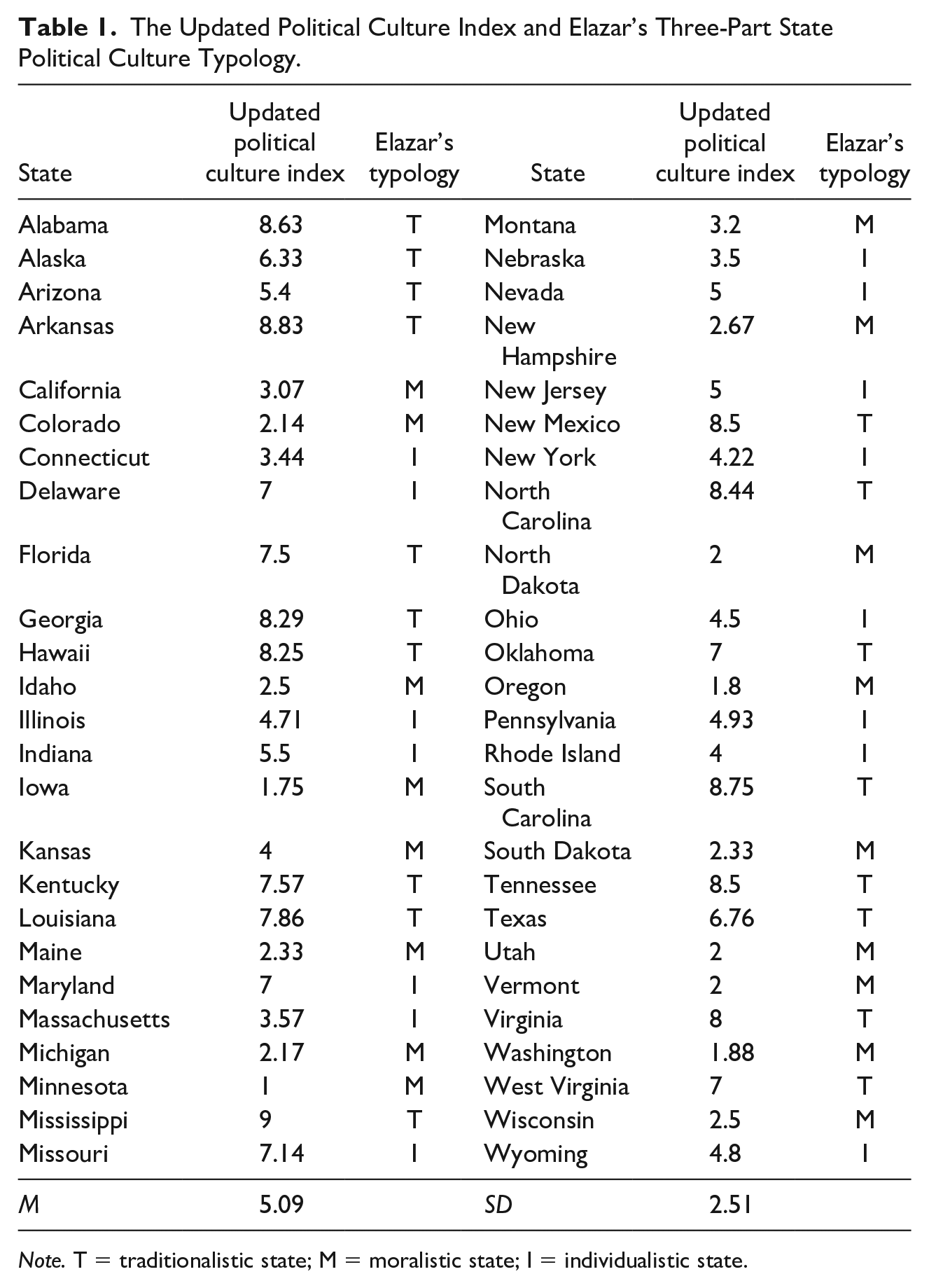
Note. T = traditionalistic state; M = moralistic state; I = individualistic state.
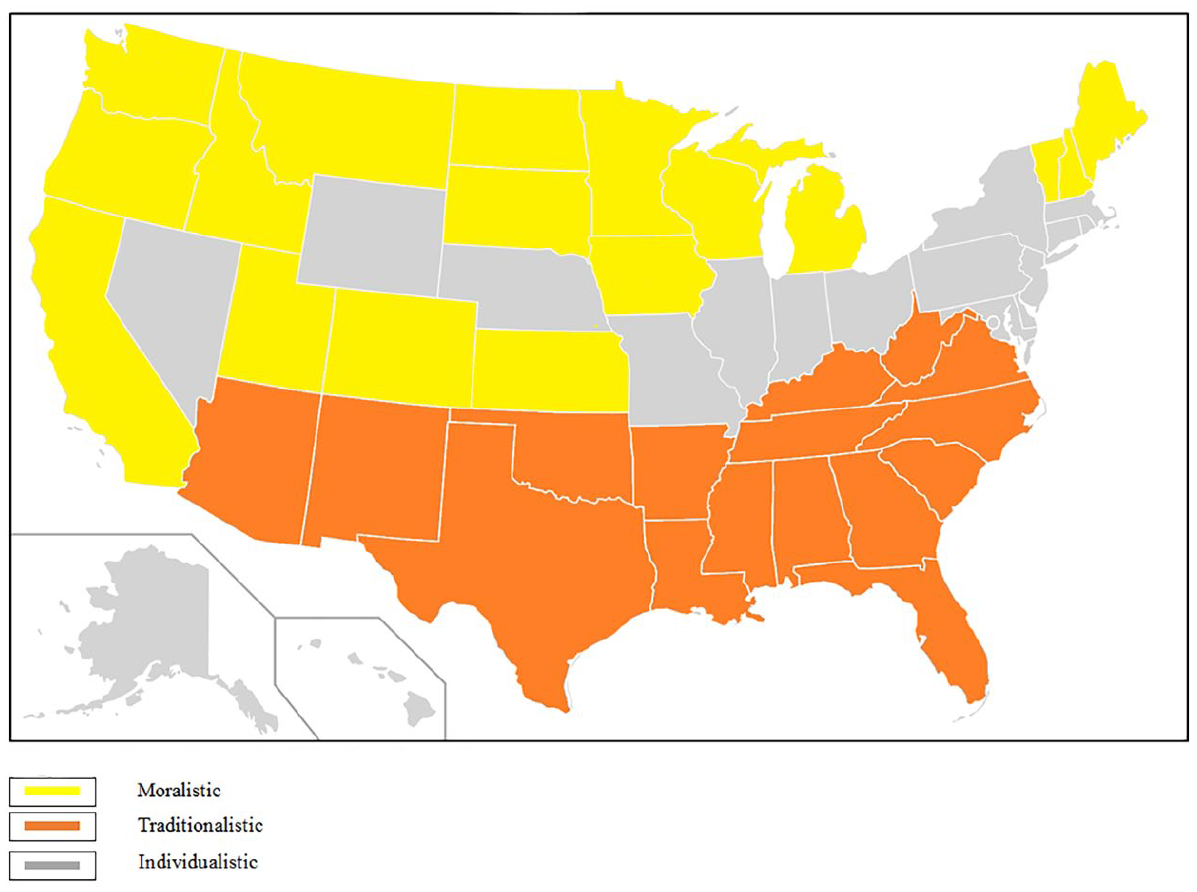
Dominant political culture, by state.
According to Elazar (1984), the individualistic political culture emphasizes the concept of the market. The market is seen as the most effective mechanism to respond to diverse public demands (Heck, 2004). Government is small in this culture and exists mainly to ensure that the market is working properly. The pursuit of the public good is not emphasized (Heck et al., 2014). Professional politicians are the active force in the political process, while non-politicians are excluded. This type of culture is associated with states such as Connecticut, Delaware, Illinois, Indiana, Ohio, Nebraska, Nevada, and Maryland.
In the moralistic political culture, the common good is important. The main role of the government is to promote the public good, emphasizing equity. The common citizen is regarded as the primary political actor, and wide political participation is encouraged. Moralistic culture promotes government intervention, especially from local government, in both social and economic life (Elazar, 1984). Midwestern and far Western states like Michigan, Minnesota, North Dakota, Wisconsin, Colorado, Montana, and Washington are characterized as moralistic states.
In the traditionalistic political culture, political power is confined to a relatively “small and self-perpetuating” elite group (Elazar, 1984, p. 119). The goal of this political system is maintaining the existing order. Elites primarily determine public policies and actions. Political participation is very narrow and grassroots-level participation is limited. The traditionalistic culture is dominant in the southern states such as Alabama, Georgia, Louisiana, Mississippi, North Carolina, South Carolina, Tennessee, and Texas.
Substantial empirical research shows the associations of Elazar’s political culture types with political behavior, institutional structure, and political process, as well as policy outcomes. For example, research demonstrates that regions associated with the moralistic culture tend to have highest voter turnout, largest number of local governments in proportion to population, largest government expenditures per capita in social welfare, and the most innovative programs and policies. The traditionalistic states tend to score the least on these dimensions, while the individualistic states often fall in between (Breaux & Shaffer, 2012; Elazar, 1966; Fitzpatrick & Hero, 1988; Fowler & Breen, 2013; Hanson, 1980; Johnson, 1976; Mead, 2004; Morgan & Watson, 1991; Sharkansky, 1969).
The Impact of Political Culture on Educational Policy
Literature also suggests that educational policy is heavily influenced by political culture. Marshall et al. (1989) find that political culture causes differences in educational policies and programs, including curricular programs and types of student assessment. Lee (1997) also finds that political culture is associated with the level of state educational reform activism. Specifically, traditionalist states are more active in adopting regulatory educational reforms (e.g., establishing teacher certification standards). In contrast, moralistic and individualistic states are more active in supportive educational reforms (e.g., substantive changes in curriculum and assessment).
Febey and Louis (2008) and Louis et al. (2014) conducted in-depth qualitative studies examining how political culture affects the enactment of educational accountability and standards policies in several states. They claim political culture shaped the types of educational policies that states pursued, the stakeholders involved, the specific policy levers employed, and the policy consequences. In the analysis of Febey and Louis (2008), North Carolina’s policy-making progress has historically behaved in a way that is consistent with Elazar’s traditionalistic state, with its governor, state legislature, and state board of education as the primary actors making educational policy decisions with limited grassroots participation. Minnesota and Iowa, consistent with moralistic culture, insisted on local control, wide political participation, and resisted top-down policies that would apply universally across the state. Louis et al. (2014) document further that Nebraska, consistent with individualistic culture, also insisted on local control but paid less attention to educational equity issues.
Research Focus
To illuminate the relationship between political culture and teacher autonomy, we ask the following research questions:
Method
Data
The Schools and Staffing Survey (SASS) was conducted by the U.S. Census Bureau and sponsored by the National Center for Education Statistics (NCES) of the Institute of Education Sciences within the U.S. Department of Education. It is the largest survey in America on the characteristics and conditions of public and private K-12 schools as well as their teachers and administrators, covering all 50 states and the District of Columbia. SASS was conducted by NCES 7 times between 1987 and 2011. 1 About every 3 years, SASS sampled from American teachers using a stratified, probability proportionate to size (PPS) sample design.
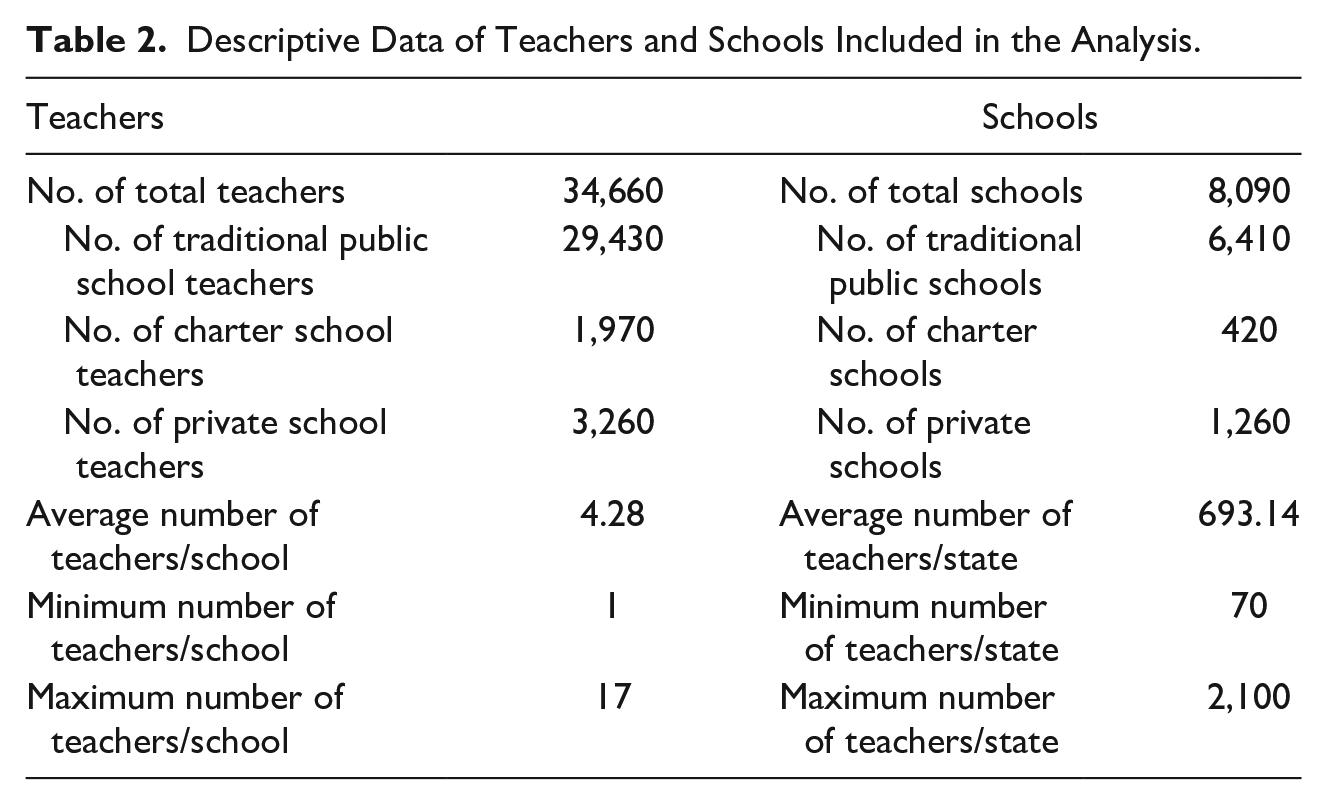
The survey data examined in this study came from two questionnaires within the 2011–2012 SASS: the Teacher Questionnaire and the Private School Teacher Questionnaire. Only full-time teachers were included in the analysis. We removed teachers in the District of Columbia from the sample because there is no corresponding political culture index for the District of Columbia. The descriptive statistics of this sample are presented in Table 2. 2
Descriptive Data of Teachers and Schools Included in the Analysis.
Measure of Teacher Autonomy
Teacher autonomy is measured by the “Schools and Staffing Survey–Scale for Teacher Autonomy” (SASS-STA), which was created by Gwaltney (2012) using the 1999–2000 and 2003–2004 SASS. This scale allows us to consistently measure teacher autonomy across the country, which we need to do cross-state analysis. To our knowledge, this is the only existing scale that can serve our research purpose.
The scale is comprised of four factors spanning a total of 13 survey items. These four factors are (a) classroom control over student teaching and assessment, (b) school-wide influence over organizational and staff development, (c) classroom control over curriculum development, and (d) school-wide influence over school mode of operation. The survey items contained in each factor, alongside the Likert-type scales, model fit, and measures of reliability of this scale, are reported in Table 3.
Variables, Survey Items and Model Fit.
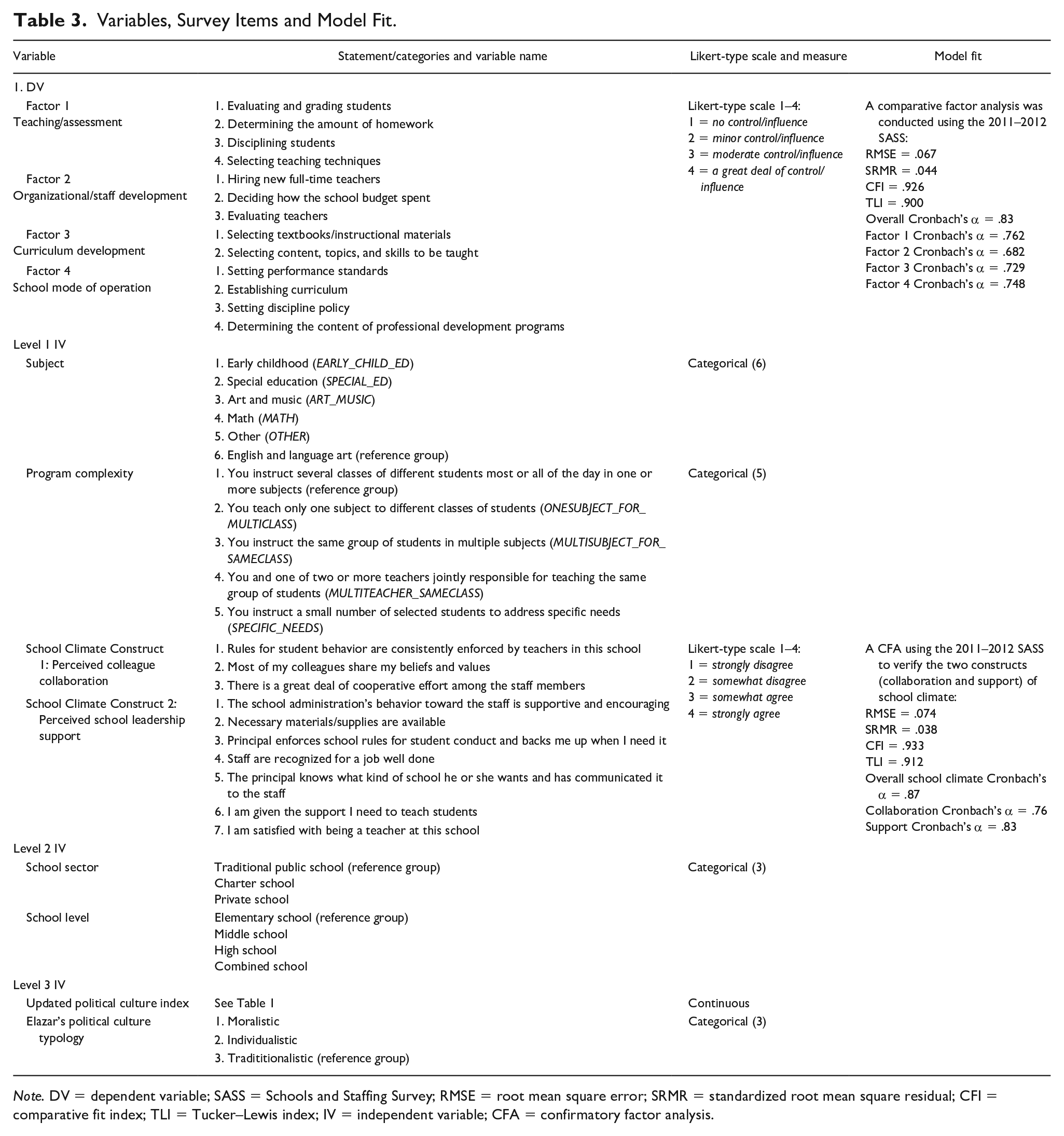
Note. DV = dependent variable; SASS = Schools and Staffing Survey; RMSE = root mean square error; SRMR = standardized root mean square residual; CFI = comparative fit index; TLI = Tucker–Lewis index; IV = independent variable; CFA = confirmatory factor analysis.
To precisely examine the relationship between political culture and teacher autonomy, we examine each of the four teacher autonomy factors separately. We calculate a mean score across all the items in each factor to compute one representative score for that factor.
Predictors
There are three levels of predictors included in the analysis: teacher-, school-, and state-level variables (see Table 3). Teacher-level variables we include are subject taught, program complexity, and teacher perception of school climate. School-level predictors we include are school sector and school level. We include only those institutional factors found to be associated with teacher autonomy in our extensive literature review; other factors such as teachers’ age, gender, teaching experience, teacher qualification, tenure status, and union membership have been found to have no impact on teacher autonomy (Gwaltney, 2012; Jiang & Ma, 2012; Pearson & Hall, 1993; Pearson & Moomaw, 2005; Prichard & Moore, 2016), and thus were not included in the analysis.
School climate
Xie (2008) selected 10 items from the 2003–2004 SASS to measure school climate and sorted them into two constructs based on a confirmative factor analysis. This study adopts the same 10 items and two constructs that Xie (2008) used and names them (a) “teacher-perceived colleague collaboration” and (b) “teacher-perceived school leadership support.” These were treated as two independent variables at Level 1. The value of the independent variable is the mean score of the items under each construct. The items contained in each construct, alongside the Likert-type scale, model fit, and measures of reliability of this scale, are reported in Table 3.
Political culture
The sole state-level factor is political culture. This variable was added in two ways: unidimensionally and multidimensionally. In the multidimensional approach, we simply include a separate dummy variable for each of Elazar’s three political culture types. In the unidimensional approach, we construct a single index of political culture to capture political culture in one continuous variable.
One of the biggest challenges to Elazar’s three-part political culture theory is that it does not lead to a precise measurement. Sharkansky (1969) quantified Elazar’s political culture theory and developed a scale from 1 to 9, where 1 is considered highly moralistic, 5 is pure individualistic, and 9 highly traditionalistic 3 (see Table 4). Based on this scale and the map of Distribution of Political Cultures Within the States that Elazar created in 1966 (Elazar, 1966, p. 97), he then calculated a political culture index for each state. 4 A lower score indicates a more moralistic culture and a higher score indicates a more traditionalistic one. A score close to 5 indicates a more individualistic culture. Because Elazar updated his culture map, the map of the Distribution of Political Cultures Within the States, in 1984, the political culture index should be updated as well. Thus, we adopted Sharkansky’s calculation method and updated the political culture index according to the newer map that Elazar created. We updated this index in 2017 for the purpose of this study (see Table 1).
Sharkansky’s Integer Mapping to Each Culture Type.
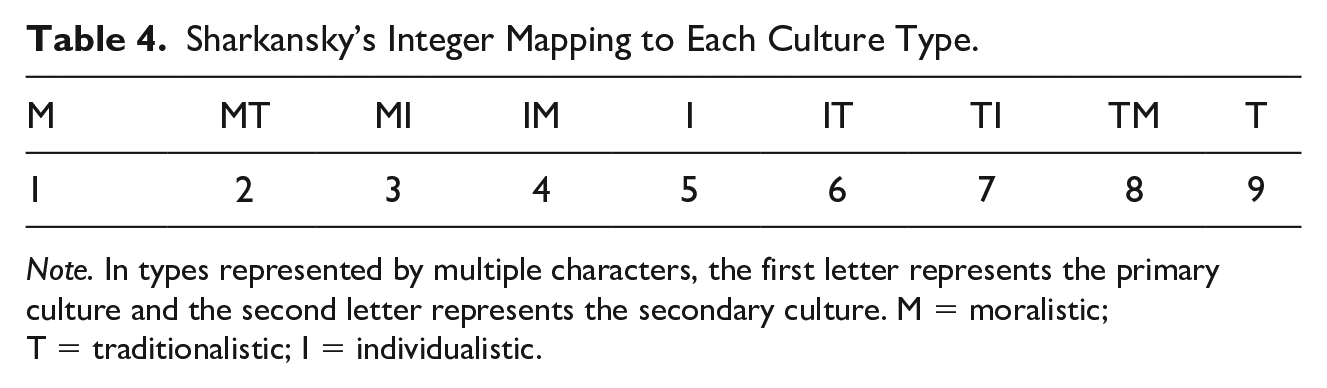
Note. In types represented by multiple characters, the first letter represents the primary culture and the second letter represents the secondary culture. M = moralistic; T = traditionalistic; I = individualistic.
The shortcoming of Sharkansky’s index is that it views political culture in a linear scale. Particularly, the individualistic culture is forced to be at the midpoint of the other two. Mondak and Canache (2014) argue that “nuance may be lost if state political culture is forced to fit in an exclusively unidimensional scale” (p. 31). To avoid the loss of nuance while still being able to use a more precise numerical estimate of political culture, we use both the unidimensional and multidimensional approaches and test whether both approaches reach the same conclusions.
It is worth discussing whether Elazar and Sharkansky’s culture index may be outdated. We note that culture is comparatively stable. The core political culture values of states remain similar over decades (Lieske, 2010; Morgan & Watson, 1991). For example, in closely following Elazar’s historical analysis, Johnson (1976) used the religious census data 5 for the period 1906–1936 and calculated the indices for moralistic, individualist, and traditionalistic cultures. Morgan and Watson (1991) later used the 1980 census to duplicate Johnson’s (1976) study. Even though the census data were about 50 years apart, Morgan and Watson (1991) found that “state political culture operationalized with religious affiliation data did not show much change from a similar formulation for the 1906-1936 period” (p. 47). Similarly, Lieske (1993) used the 1980 census to identify 10 American subcultures and he duplicated his own study using the 2000 census in 2010. He concluded that the results with the 2000 census suggest a remarkable degree of continuity with those identified with the 1980 census (Lieske, 2010).
Thus, it is reasonable to assume that the political culture index that was derived from Elazar’s (1984) revision could still be relevant to teacher autonomy in 2011–2012. The accuracy of Elazar’s political culture theory is tested by numerous extensive empirical analyses. It is not surprising that Elazar’s culture theory and Sharkansky’s political culture index are still widely used in current literature (e.g., Dincer & Johnston, 2017; Fisher, 2016; Fowler & Breen, 2013; Heck et al., 2014; Louis et al., 2014; Mondak & Canache, 2014; Pena, 2015). Furthermore, as Elazar documented in detail the characteristics of each culture, this theory possesses great explanatory power. Compared with other existing culture theories, Elazar’s political culture theory is the best fit for the purpose of this study.
Data Analysis
For each of the four teacher autonomy factors, a series of three-level models were run to reach the final models. Because we used two indices (unidimensional and multidimensional) for the political culture variable for each factor, there are a total of eight final models. The modeling process allows for estimation of variability associated with each of the three levels—teachers, schools, and states. We use full maximum-likelihood estimation due to the large sample size. All the continuous variables below, including teacher-perceived colleague collaboration, leadership support, and the updated political culture index, are grand mean centered.
At Level 1, teacher autonomy is modeled as a function of teacher-level predictors plus a random teacher error:
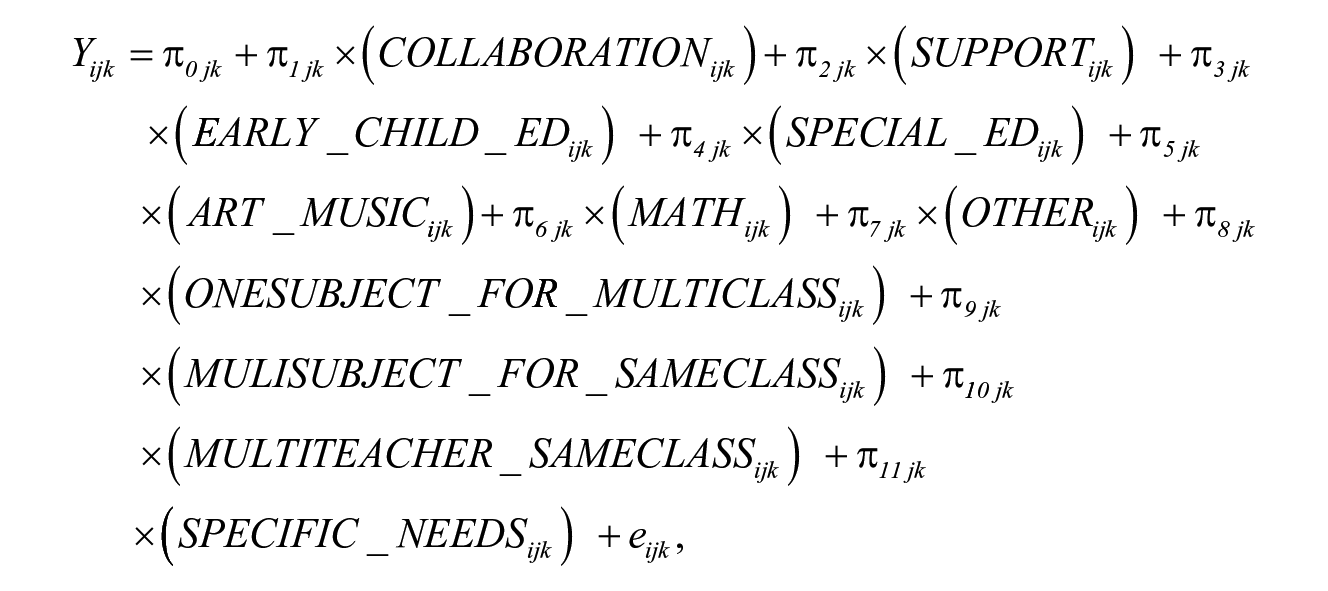
where Yijk is the teacher autonomy perceived by teacher i in school j within state k; π0jk is the intercept for school j in state k; π njk (n = 1–11) are the corresponding Level 1 coefficients that indicate the direction and strength of association between each teacher-level characteristic and teacher autonomy in school jk; and eijk is the Level 1 random effect. COLLABORATION is teacher-perceived colleague collaboration. SUPPORT is teacher-perceived school leadership support. The next five variables are dummies indicating school subject. The last four are dummy variables indicating program complexity (see Table 3 for definitions).
At Level 2, the parameters from Level 1 become outcome variables. The Level 2 model examines the variation in teacher autonomy due to school factors:

where βp0k is the intercept for state k in modeling the school effect π pjk ; Xqjk is a measured characteristic for school j in state k (in this analysis, it includes school sector and school level); β pqk represents the effect of Xqjk on the pth teacher parameter; and rpjk is a random effect for school i.
To test inter-level interactions, π1jk and π2jk, the impacts of teacher-perceived colleague collaboration and school leadership support on factors of teacher autonomy are allowed to vary randomly at both school and state levels (in addition to π0jk, the intercept parameter). 6 The Wald tests were conducted to determine whether these effects should be treated as having a random component or considered fixed. Following the Wald tests, we then check the p values of each school characteristic parameter β pqk in each of the equations for π0jk, π1jk, and π2jk and remove the statistically insignificant variables; if all of these parameters are statistically insignificant, that would imply that the given π does not vary across school level or type.
At Level 3, a similar modeling process is repeated for the state factor. Any of the Level 2 variables that were added on the intercept π0jk are allowed to vary randomly at Level 3 (we only add the random component to the intercept term because we are interested in how state-level factors affect teacher autonomy, not how they affect the relationship between school characteristics and teacher characteristics that affect teacher autonomy). The Wald tests are conducted one more time to determine whether the random effects (upqk) at Level 3 should be kept random or be fixed.
Finally, each Level 2 outcome (i.e., each β pqj coefficient) is predicted by the state-level factor. As there is only one state-level predictor, namely, state political culture, the general Level 3 model is written as follows:

where γpq0 is the intercept term in the state-level model for β pqk ; γ pq is the corresponding Level 3 coefficient that represents the direction and strength of association between state political culture and β pqk ; and upqk is an L3 random effect that represents the deviation of state j’s coefficient, β pqi , from its predicted value.
Political culture (in both its unidimensional and multidimensional form) is added as a predictor of the Level 2 intercept as well as the randomly varying Level 2 coefficients. We then examine whether the coefficients for the political culture variable are significantly different from zero and, if not, the political culture variable is removed from that model.
For each model, the Akaike Information Criterion (AIC) and Bayesian Information Criterion (BIC) are calculated and used to select the best fitting model.
The coefficient of our main interest is γ001, which represents the direct effect of political culture on teacher autonomy. We are also interested in the moderating impact of political culture on the relationship of various teacher- and school-level characteristics with teacher autonomy, captured by the parameters γn01 and γ0q1.
Results
Tables 5 and 6 show estimation results from the eight final models. They indicate that political culture is significantly associated with the four factors of teacher autonomy. The model with unidimensional political culture index illustrates that, after controlling for other variables in the model, a one-unit increase in the political culture index is associated with decreases of 0.02, 0.03, 0.07, and 0.04 points, respectively, in teachers’ teaching and assessment autonomy, organizational and staff development autonomy, teachers’ perceived curriculum development, and school mode of operation autonomy (see summary in Table 7). These coefficients are equivalent to saying that a one standard deviation increase in the political culture index (an increase of 2.51 units) is associated with decreases of 0.05, 0.08, 0.18, and 0.1 points in the four teacher autonomy factors, respectively. These findings show that, when political culture moves from moralistic toward individualistic and traditionalistic, teacher autonomy significantly decreases.
Final Models With the Unidimensional Political Culture Construct of the Four Factors of Teacher Autonomy.
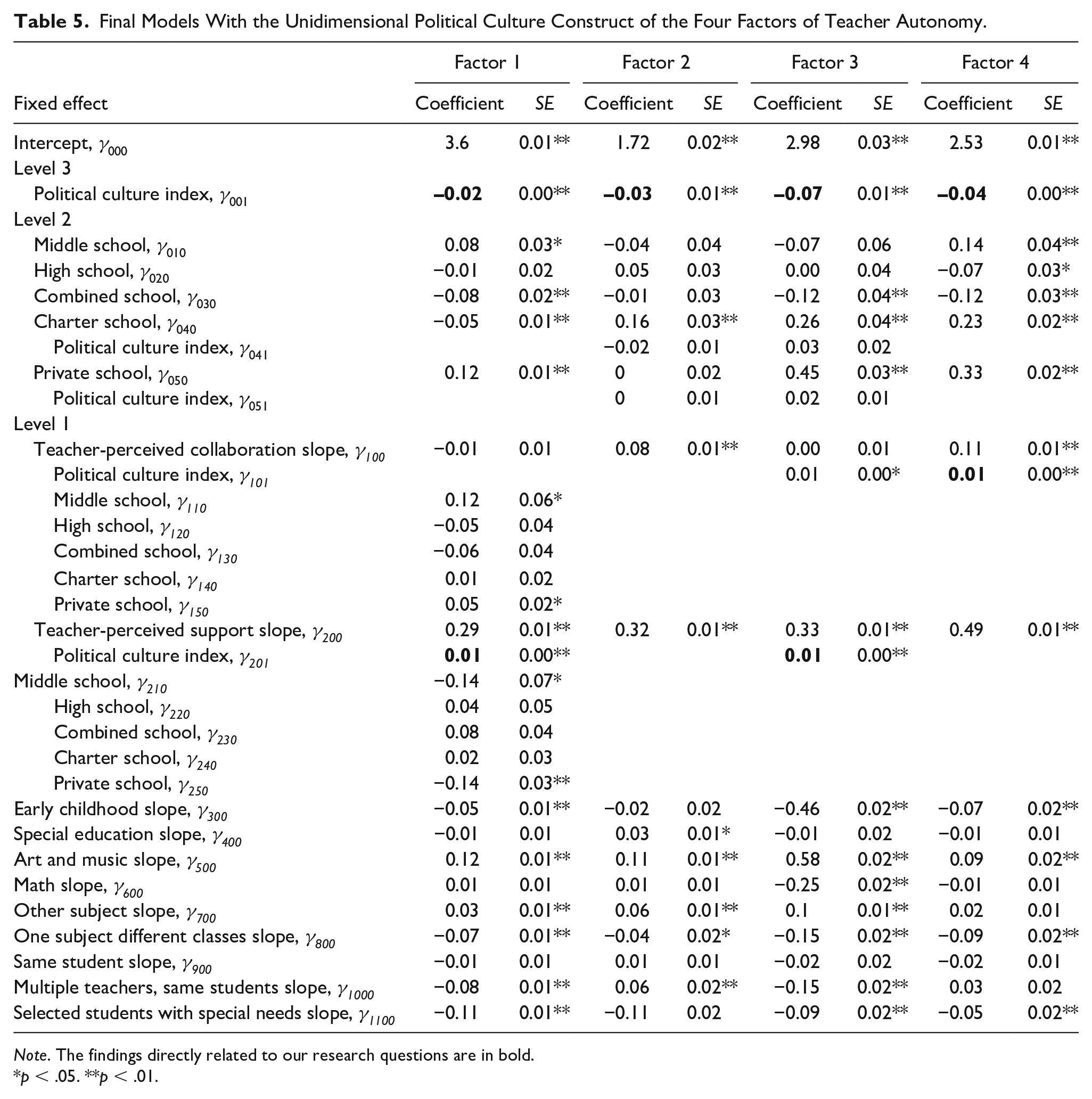
Note. The findings directly related to our research questions are in bold.
p < .05. **p < .01.
Final Models With the Multidimensional Political Culture Construct of the Four Factors of Teacher Autonomy.

The * or ** in the column right next to these bold-faced values indicate their significance.
p < .05. **p < .01.
The Summary of the Results of the Models With Unidimensional and Multidimensional Political Culture Construct.
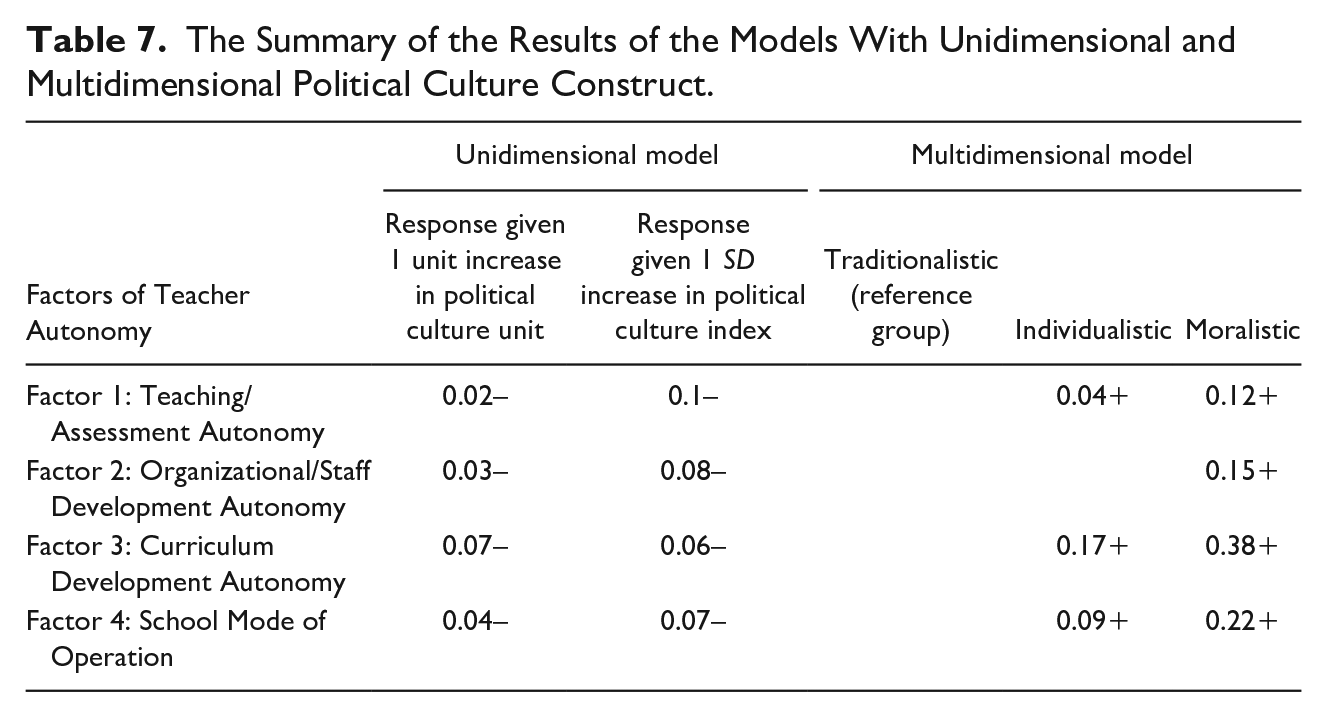
The model using the multidimensional political culture index affirms these findings and shows that after controlling for other variables in the model, on average, teachers working in an individualistic and moralistic culture reported 0.04 and 0.12 points higher teaching and assessment autonomy compared with teachers in traditionalistic cultures. In organizational and staff development autonomy, teachers in a moralistic culture reported 0.15 points higher scores compared with teachers from a traditionalistic culture (there was no statistically significant difference between individualistic and traditionalistic in this measure). Teachers in individualistic and moralistic cultures also reported 0.17 and 0.38 points higher curriculum development autonomy, and 0.09 and 0.22 points higher school mode of operation autonomy (see summary in Table 7).
In addition, we find that two factors of teacher autonomy (teaching and assessment and curriculum development) are positively associated with teacher-perceived school support and collaboration. Also, political culture moderates these relationships. A one-unit increase in the political culture index leads both of these positive associations to become stronger by 0.01 unit (i.e., a one standard deviation increase in political culture index leads these to become stronger by 0.025 unit). The model with the multidimensional construct reaffirms this finding. For teaching and assessment autonomy, in individualistic and moralistic cultures, the association was, respectively, 0.04 and 0.07 units weaker than in the traditionalistic culture. For curriculum development autonomy, the association was, respectively, 0.06 and 0.08 units weaker than in the traditionalistic culture (see Tables 5 and 6).
We find that the school mode of operation autonomy is positively associated with teacher-perceived school collaboration and that political culture also moderates this relationship. A one-unit increase in the political culture index leads to an increase of 0.01 in the strength of this relationship (again, this implies that a one standard deviation increase in the index results in a 0.025 unit increase in the association). Using the multidimensional index, in individualistic and moralistic cultures, this association was 0.04 and 0.05 units weaker than in traditionalistic culture (see Tables 5 and 6).
The influence of factors such as school sector, school level, school climate, subject taught, and program complexity on teacher autonomy are largely similar to those in previous studies (see Tables 5 and 6). One new interesting finding is when teachers teach more than one subject, they sense higher autonomy. While discussions of these influences are beyond the scope of this study, we point out that political culture does not moderate the associations of these other institutional factors (other than school climate) with teacher autonomy.
One limitation of this analysis is that we did not control for aggregate impacts stemming from federal government policies. Marshall et al. (1989) note that state political culture is more salient to educational policy making when nationwide policy reforms are not active. In 2011–2012, influential federal policies such as No Child Left Behind (NCLB) and Race to the Top (RTTT) were actively affecting state-level educational policy. These policies demand standardized tests and curriculum, and in the absence of these, we would likely observe more heterogeneity in state educational practices. Thus, if the impact of these federal policies could be controlled for, the relationship between state political culture and teacher autonomy could actually be stronger than documented here.
Discussion
We found that teacher autonomy is significantly associated with state political culture. The moralistic culture is associated with higher levels of teacher autonomy, the traditionalistic culture is associated with lower levels of teacher autonomy, and the individualistic culture is in-between. We posit that the characteristics of political culture influence the level of autonomy that teachers perceive.
There are several possible reasons why the moralistic culture is associated with higher levels of teacher autonomy. First, the moralistic culture has the highest rate of political participation (Breaux & Shaffer, 2012; Fitzpatrick & Hero, 1988; Hanson, 1980; Morgan & Watson, 1991), and it is reasonable to posit that teachers in moralistic cultures have the most opportunities to participate in educational policy and decision making. Febey and Louis (2008) write that Minnesota, a moralistic state, historically involves educators in educational policy making: The teachers union, Minnesota Association of School Administrators, and the Minnesota School Board Association all work with legislators on key education committees.
As moralistic political cultures also emphasize local control and have a larger number of local governments proportionally than individualistic or traditionalistic states (Johnson, 1976), they are more likely to resist implementation of statewide standardization and accountability systems. In the early 1990s, Iowa (a moralistic state) initially rejected the federally demanded movement toward statewide accountability standards, believing local districts were best suited to develop standards (Lindaman, 2003). At the micro level, Iowan teachers and administrators also resisted this movement, arguing that a statewide test would “take away their freedom to teach in a way that would best serve their students” (Febey & Louis, 2008, p. 64). Likewise, two Minnesotan high schools Febey and Louis (2008) studied showed little systematic response to the statewide accountability system.
Moreover, because moralistic cultures encourage innovative policies (Morgan & Watson, 1991), schools and policy makers may pursue policies or programs that better fit local teachers’ needs. Furthermore, moralistic governments spend the most resources on the common good (Boeckelman, 1991; Elazar, 1984; Fitzpatrick & Hero, 1988; Morgan & Watson, 1991), and thus may spend more on public education and teachers’ work.
In addition to affecting educational policy making, political culture may also affect the environment for teachers directly, and moralistic cultures exhibit characteristics more conducive to perception of teacher autonomy. As moralistic cultures emphasize collective effort and not competition (Elazar, 1984), there may be more effort in schools to increase cooperation and reduce competition among teachers. In addition, because the moralistic culture emphasizes equity and equality (Fitzpatrick & Hero, 1988; Kincaid, 1980), teachers may be less subject to rigid evaluation and comparison.
The traditionalistic culture is associated with the lowest levels of teacher autonomy, and part of this finding can be explained as the converse of the preceding discussion. We know that political participation is lowest in traditionalistic states, and these states are also most likely to feature top-down policy processes as well as statewide and scripted standards, which reduce teacher autonomy. In North Carolina (a traditionalistic state), for example, where policy-making power “is concentrated in the governor’s office” (Louis et al., 2014, p. 126), only the Public School Forum of North Carolina 7 exists as an avenue for teachers to possibly insert their voices into educational policy making through their leaders (Louis et al., 2014); the state also has a long history of high-stakes accountability dating back to before NCLB.
We also posit that ranking and competition are likely inevitable in traditionalistic cultures, which use these mechanisms to select elites. Teachers may have to spend time measuring and ranking students, and teachers themselves are likely subject to evaluations. In addition, traditionalistic states are more likely to implement regulatory policies rather than supportive and innovative ones (Breaux & Shaffer, 2012; Elazar, 1984; Fitzpatrick & Hero, 1988; Lee, 1997). Consequently, their educational policies and programs are not as likely to accommodate local or individual needs. Each of these characteristics limits teacher autonomy.
We also find that teacher autonomy in individualistic cultures falls between that in moralistic and traditionalistic cultures, which is not surprising given that “on most variables, the individualistic states lie between the moralistic and traditionalistic states” (Fitzpatrick & Hero, 1988, p. 150). Teachers in these cultures may have more chances to participate policy making than those in traditionalistic cultures, but probably less than those in moralistic ones. Also, because of their belief in local control and commitment to decentralizing power, individualistic states may be reluctant to mandate statewide accountability systems. Louis et al. (2014) write that in Nebraska (an individualistic state), teachers and school and district administrators were not fundamentally opposed to test-based accountability (as moralists would be) but insisted that they should be the ones to design those systems.
However, the individualist emphasis on the free market and competition poses potential autonomy-reducing mechanisms unique to the individualistic culture. First, teachers are often seen as “entrepreneurs” in the education market and must spend time and energy documenting their work to look good to their “consumers.” These activities greatly add to teachers’ workload and reduce their time for focusing on teaching-centered activities (Naylor, 2011). Second, because equity is not a concern for the individualistic state, it is possible that some teachers (e.g., in rural schools) are not equally supported and thus sense lower autonomy. Louis et al. (2014) report that Nebraska largely ignored issues of inequality and efficiency and failed to distribute resources in an equitable fashion, creating a rural and urban divide.
Our other major finding in this study is that political culture affects the association between teacher autonomy and two institutional factors (teacher-perceived school leadership support and colleague collaboration). These two constructs significantly associate with teacher autonomy, but the strength of these associations is moderated by political culture. The further a state’s culture is away from moralistic, the stronger the associations of teacher-perceived school leadership support and colleague collaboration with teacher autonomy. It is possible that teachers in the individualistic and traditionalistic culture have less space to exercise professional judgments as discussed earlier, and in these environments, colleague collaboration and school leadership support can mean more to teachers in cultivating a sense of autonomy. Nevertheless, further study is needed to thoroughly explain this phenomenon.
Conclusion
This study provides empirical evidence that political culture is associated with teacher-perceived autonomy, and finds that teachers report the highest level of autonomy in a moralistic culture. We pose several possible explanations for this finding. We suggest that moralistic cultures exhibit increased opportunity for teacher participation in policy making, emphasis on local control over educational policy, policy leanings toward innovation, more investment in education, encouragement of support and collaboration in schools, and reduced focus on competition and performance-based metrics which take attention away from teaching activity.
This study suggests that to increase autonomy, policy makers and school leaders should consider adopting practices consistent with the moralistic political culture. These strategies include investing more in education; providing more opportunities for teachers to participate in educational policy and school decision making; lessening evaluation, standardized testing, and market-oriented practices; and providing more leadership support as well as encouraging cooperation at the school level.
Footnotes
Acknowledgements
We thank Dr. Jung Bae and Dr. Jun Liu for comments that greatly improved the manuscript.
Declaration of Conflicting Interests
The author(s) declared no potential conflicts of interest with respect to the research, authorship, and/or publication of this article.
Funding
The author(s) received no financial support for the research, authorship, and/or publication of this article.
