



Abstract
This study critically explores how urban inequalities shape the educational experiences of migrant and refugee students in Zeytinburnu, an ethnically diverse and economically marginalized district of Istanbul. Informed by Bronfenbrenner’s ecological systems theory, a multi-stakeholder ethnographic design was employed to capture perspectives from administrators, teachers, municipal officers, experts, and students. Through content analysis, six interrelated themes emerged—cultural integration, discrimination and prejudice, economic hardship, educational disruption, language barriers, and social exclusion—highlighting how structural and contextual dynamics such as child labour and limited language support deepen school-based marginalization. The findings demonstrate that inequality is reproduced not only through institutional mechanisms but also through neighbourhood-level deprivation and weak social integration networks. The study argues that equitable educational reform requires interventions that extend beyond schools, addressing the socio-urban conditions that shape students’ opportunities for inclusion and learning.
Keywords
Introduction
Urban education has long served as a mirror of broader social inequalities, reflecting how spatial disadvantage and institutional mechanisms jointly reproduce exclusion in metropolitan contexts (Anyon, 1997; Lipman, 2011). In Turkey, where more than 2.6 million Syrians and substantial numbers of migrants from Afghanistan, Iraq, and other conflict zones reside (AIDA, 2025; ReliefWeb, 2024), these dynamics have intensified. Istanbul—hosting over half a million registered Syrians—embodies the tensions of urban diversity and deprivation: neighbourhoods marked by poverty, informal labour, and precarious housing have become the frontline of educational inequality (Turkish Ministry of Interior, 2024). Within such spaces, schooling functions not merely as a pathway to mobility but as a contested terrain where inclusion, exclusion, and adaptation are negotiated daily.
Migrants and refugees frequently inhabit urban marginality shaped by unstable employment, cultural differentiation, socio-economic and ethnic segregation, high crime rates, informal labour markets, and chronic educational disparities (Ball et al., 1996; De Haas et al., 2019; Phillimore & Goodson, 2006; Saporito & Lareau, 1999; Zorlu & Latten, 2009). These neighbourhood characteristics are often mirrored in schools: institutions with high concentrations of migrant students consistently display lower academic achievement, higher dropout, and reduced continuity (Crowder & South, 2003; Duncan, 1994; Sykes, 2011; Sykes & Musterd, 2011). Community cohesion, cultural adaptation, and shared values are equally decisive, shaping the extent to which students can thrive in such environments (Ainsworth, 2002). These interdependencies between neighbourhood and school underscore the need to examine educational inequality through a spatial-institutional lens, connecting what happens inside classrooms to the socio-urban conditions beyond them.
Bronfenbrenner’s (1979) ecological systems theory offers a valuable lens for analyzing such interconnections across multiple levels of influence. Previous research has applied this framework to highlight how displacement undermines dignity (Wells et al., 2018), how immigrant parents’ well-being depends on urban social networks (Isik-Ercan et al., 2024; Paat, 2013), and how family–school dynamics shape refugee children’s early education (Buell et al., 2020). Yet these studies often remain bounded by a single domain—family, school, or policy—thus overlooking the complex interactions among these systems. This analytical gap limits our understanding of how urban institutions mediate inequality through overlapping structures of exclusion. Collectively, these studies highlight the utility of Bronfenbrenner’s ecological model in illuminating the multi-layered influences on migrant children’s development. Yet they remain limited in scope: some focus solely on families, others on young children, and still others on the perspectives of parents, teachers, or policy environments. To the best of our knowledge, no study has yet integrated the perspectives of all key stakeholders—students, teachers, school leaders, social service professionals, municipal staff, and policymakers—within a single ecological framework.
This study responds to these limitations by applying a holistic ecological perspective to the educational experiences of migrants in a disadvantaged urban district of Istanbul where the migrant population is highly concentrated. By integrating the perspectives of students, teachers, school leaders, social service professionals, municipal officers, and local authorities, the study offers a multi-scalar account of how inequality is produced and sustained across micro-, meso-, exo-, and macrosystem levels. Ultimately, it seeks to situate migrant education within the socio-spatial realities of urban poverty, advancing a more comprehensive understanding of how structural inequalities are reproduced—and potentially transformed—within the everyday practices of schooling. The aim of this study is to extend ecological research by situating migrant education within the broader socio-spatial conditions of urban poverty and migration, thus offering a multi-layered account of how inequalities are both generated and sustained.
Accordingly, the study is guided by two research questions:
How do language barriers, discrimination, economic hardship, educational disruption, and social exclusion shape the educational experiences of migrant and refugee students across the micro-, meso-, exo-, and macrosystem levels?
How do key stakeholders—including students, teachers, administrators, social service professionals, municipal staff, and local authorities—perceive and interpret the main educational challenges faced by migrant and refugee students in Zeytinburnu?
These questions frame the study’s contribution to the literature and provide the basis for the theoretical framework and literature review that follows.
Theoretical Framework: Bronfenbrenner’s Ecological Systems Theory
Bronfenbrenner’s ecological systems theory (EST) provides an analytical lens for systematically examining the complex layers of factors that affect migrant and refugee students’ educational experiences. Given the complexity of the adaptation processes these migrant students undergo, it is essential to consider their immediate educational environment and the broader societal and cultural contexts that indirectly shape their academic journeys. EST enables this comprehensive view by clearly delineating nested contexts, highlighting the interplay between various environmental influences. EST offers a comprehensive framework for analyzing human development through multiple environmental influences (Bronfenbrenner, 1979). It conceptualizes development as occurring within nested systems—microsystem, mesosystem, exosystem, macrosystem, and chronosystem—that interact dynamically over time (Bronfenbrenner, 2000). See Figure 1 for a visual representation.
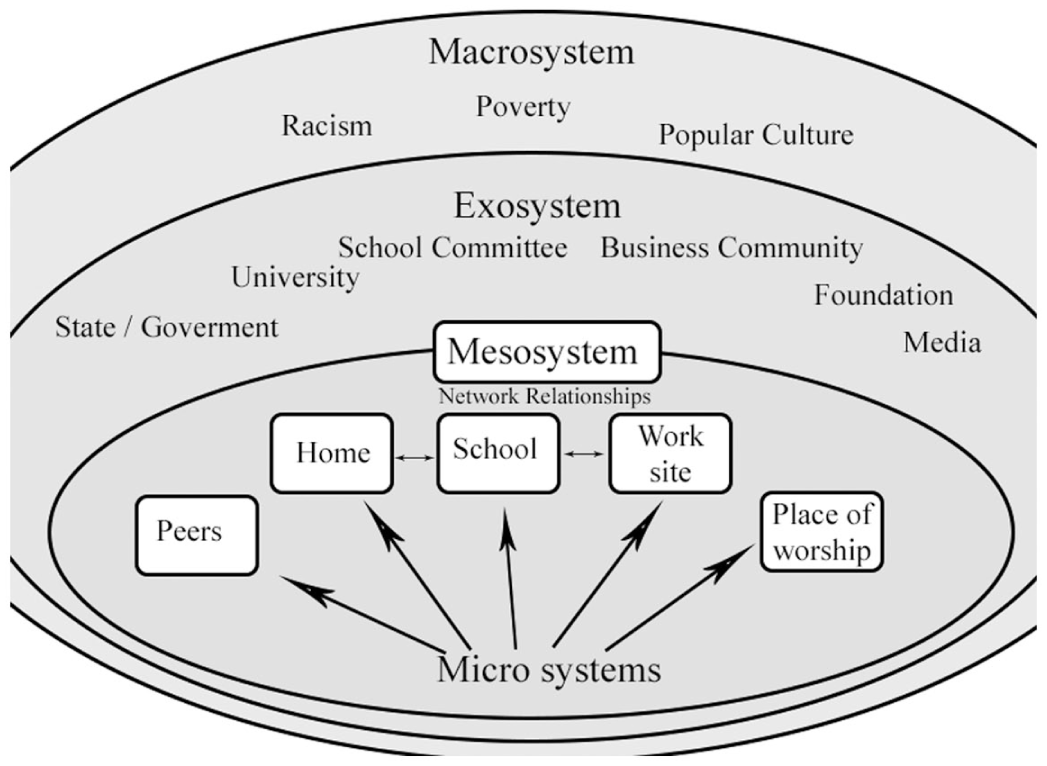
Bronfenbrenner’s ecological systems theory.
The microsystem includes immediate settings like family, school, and peer interactions, shaping development through direct engagement (Bronfenbrenner, 1979). Positive relationships, such as supportive parenting and teacher interactions, enhance cognitive, emotional, and social growth (Tudge & Rosa, 2020). Negative factors like parental neglect, teacher bias, and peer exclusion adversely affect development (Leonard, 2011). The mesosystem encompasses interactions between microsystems affecting developmental outcomes (Bronfenbrenner, 1979). Examples include parent-teacher communication impacting academic success, while community–school collaborations determine resource access (Leonard, 2011). A cohesive mesosystem fosters resilience and educational opportunities, whereas weak connections hinder success (Sadownik, 2023). The exosystem comprises broader societal elements indirectly affecting development, including parental workplaces, school policies, and local governance (Bronfenbrenner, 2000). Parental employment conditions influence educational involvement, whereas school funding affects resource availability (Tudge & Rosa, 2020). Additionally, healthcare and social services shaped by exosystemic factors contribute to developmental outcomes (Leonard, 2011). The macrosystem refers to larger cultural, economic, and political contexts affecting all systems (Bronfenbrenner, 1979). Cultural norms, economic structures, and legal policies shape individual experiences and institutional responses to diversity and inclusion in education (Leonard, 2011; Sadownik, 2023). Economic inequality and national educational policies also determine resource allocation among different societal groups (Bronfenbrenner & Morris, 2007). Bronfenbrenner’s EST illuminates environmental influences shaping migrant and refugee students’ educational challenges. It may be argued that all conditions expressed within the layers of the ecological system—from family relations to policy decisions—cannot be disentangled from the spatial contexts in which they are embedded. Therefore, any study of the educational experiences of migrant and refugee students should consider ecological system layers in conjunction with neighbourhood effects, analyzing in-school and out-of-school conditions together.
Understanding Challenges Beyond the Classroom
Numerous factors affect migrant and refugee students both in and outside school, starting with language barriers. These hinder participation and social integration, leading to academic and social challenges (Dryden-Peterson, 2015; Taylor & Sidhu, 2012) and fostering feelings of alienation (Rose, 2019). Yet, difficulties extend well beyond learning. Cioran (2016) observed that cultural differences often isolate migrant children from local peers, while limited pluralism exacerbates this problem. Moreover, the absence of a cohesive state-level integration policy forces local schools and communities to address these issues with minimal institutional support (Eryaman & Evran, 2019). The situation is particularly challenging for Syrian students in Turkey, where instruction is mainly in Turkish. In contrast, Lebanon and Jordan provide instruction in Arabic, which facilitates educational adaptation (Taştan & Çelik, 2017). Turkey’s lack of native-language instruction negatively affects both academic outcomes and psychological well-being (Bang, 2017; Kılıc & Gokce, 2020).
Language barriers also persist in other social contexts. For instance, Karen refugee women in Australia viewed language proficiency as their primary obstacle to integration (Watkins et al., 2012). Limited language education combined with cultural gender norms further intensifies these challenges (Dryden-Peterson, 2015; Taylor & Sidhu, 2012; Watkins et al., 2012).
In addition to language barriers, Syrian refugees’ psychological and sociocultural adaptation in Turkey is shaped by economic conditions, pre-migration expectations, religion, and host-community attitudes (Şafak-Ayvazoğlu et al., 2021). Economic instability and uncertainty about their stay delay adaptation, while discrimination and prejudice further harm mental health and integration prospects. These psychosocial challenges present major obstacles for refugee students. Trauma and displacement create insecurity, exclusion, and low motivation, all of which negatively affect academic performance (Celik et al., 2023). Teachers may misinterpret these struggles, unintentionally deepening students’ isolation at school (Szente et al., 2006).
Sociocultural differences, particularly regarding religion, also shape peer interactions. While shared beliefs can foster solidarity, religious identity may also deepen divides if perceived as clashing with secular norms (Şafak-Ayvazoğlu et al., 2021). Challenges are also evident in higher education. In Germany, refugee students face bureaucratic barriers, language difficulties, and limited financial aid (Streitwieser et al., 2018). Although initiatives like Integra and Welcome offer support, institutional gaps persist. A similar situation exists in Turkey, where the long-term integration of Syrian refugees remains difficult. Initially regarded as temporary guests, many now require sustainable social and economic policies (Akar & Erdoğdu, 2019). Nevertheless, discrimination in employment, a lack of affordable housing, and insufficient social support continue to obstruct integration (Phillimore, 2021).
Integration challenges are further shaped by cultural and gender norms. Refugee women encounter additional barriers such as childcare, household responsibilities, and social expectations that limit their access to formal education (Watkins et al., 2012). Consequently, they are excluded from key language programs and integration opportunities. Limited community integration also negatively affects refugee children. Katz and Redmond (2010) described exclusion as being worsened by racism and ethnocultural trauma, while Ertaş and Kıraç (2017) observed that Syrian children in Turkish schools experience severe social exclusion. Similarly, Levent and Çayak (2017) found that cultural differences often lead to bullying. Negative perceptions of refugees reinforce isolation and hinder sociocultural adaptation (Şafak-Ayvazoğlu et al., 2021). These dynamics also restrict access to school support, increase overcrowding, and create curriculum mismatches (Ndibalema, 2024).
Political discourse in Turkey significantly shapes public perceptions of refugees. During periods of political tension, hostile rhetoric influences Turkish students’ attitudes toward immigrant peers (Graham et al., 2016; McCarthy, 2018), fostering discrimination, damaging school relationships (Graham et al., 2016), and promoting segregation (Dryden-Peterson, 2015). Such rhetoric also undermines refugee students’ participation in education. Evidence from both Turkey and Germany demonstrates that hostile political discourse reduces engagement and weakens integration (Secen & Öztürk, 2024). Ultimately, political debates lower refugees’ acceptance in schools and adversely affect academic achievement (Morrice, 2013; Pinson & Arnot, 2007). Economic instability further compounds these difficulties. Many refugee families live in poverty, leaving students without essential resources (Roxas, 2011). In Zeytinburnu (an urban decay area in Istanbul), for example, poverty is widespread and many immigrants work informally (Buğra, 2018). As a result, refugee children often contribute to household income, delaying their education (Miller et al., 2018). Financial hardship not only restricts access to education but also increases alienation by limiting participation in social and academic life (Şafak-Ayvazoğlu et al., 2021). The lack of digital resources and internet access has further excluded refugee students, particularly during the COVID-19 pandemic (Ndibalema, 2024).
Parental involvement is another critical factor shaping refugee students’ educational experiences. Many families, unfamiliar with the host country’s education system and constrained by language barriers, struggle to participate in their children’s schooling (Celik et al., 2023). Economic pressures frequently push children into work, thereby raising dropout rates as survival takes precedence over education. Similarly, Uzun and Bütün (2016) highlighted the generally low parental engagement among refugee families in Turkey.
Taken together, these challenges illustrate the complex interplay of factors across multiple environmental contexts. To conceptualize and categorize these, this study applies Bronfenbrenner’s ecological systems framework. Figure 2 maps the educational challenges identified in the literature onto the microsystem, mesosystem, exosystem, and macrosystem, highlighting their varied and interconnected influences. This ecological perspective demonstrates that most studies address these issues in isolation, rather than recognizing their broader, interrelated nature.
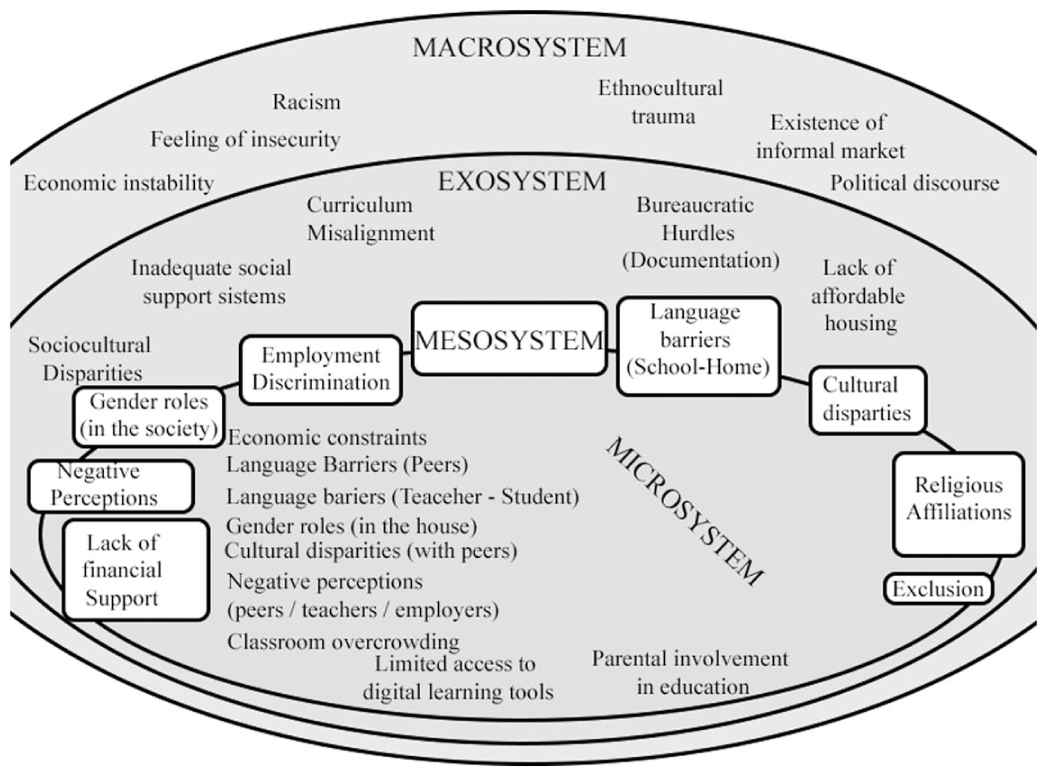
Educational challenges of migrant and refugee students in the ecological systems.
As illustrated in Figure 2, previous studies have predominantly focussed on specific components of ecological systems, addressing challenges related to only specific subsystems of these systems. This study adopts a more holistic approach, aiming to identify the challenges across different layers of the ecological system and explore their interconnections.
Method
This ethnographic study investigates the challenges faced by migrant and refugee students in the educational system in Zeytinburnu, a district in Istanbul, Turkey. This study aims to explore the experiences of various stakeholders in micro-, meso-, exo-, and macrosystems.
Ethnography is an immersive approach that enables researchers to gain in-depth insights through direct engagement with participants (Fetterman, 2009). This methodology ensures that the study captures not only the educational aspects of migrant and refugee integration but also their social and cultural experiences, contributing to a comprehensive understanding of their challenges (Schensul & LeCompte, 1999).
Rationale for Conducting the Study in Zeytinburnu
Zeytinburnu, near central Istanbul, has long been a migration hub—first for internal migrants, then for Turkish-origin immigrants from the Balkans and Central Asia (Özservet, 2013). Since 2011, it has also become a major destination for Syrian refugees (Narli, 2018). Unlike wealthier districts with better-resourced schools, Zeytinburnu’s schools face shortages, overwhelmed teachers, and limited support for migrant students (Sayar & Baran, 2023). Concentrated poverty further deepens these issues, creating systemic barriers to academic success and long-term integration for migrant and refugee children (Bozok & Bozok, 2019).
Structural challenges in Zeytinburnu affect refugee and migrant education across multiple levels. At the micro level, teacher-student interactions, peer networks, and school environments shape learning. Teachers often lack training for diverse classrooms, and segregation between native and migrant students limits integration (Sayar & Baran, 2023). At the meso level, school policies, family support, and community involvement influence educational access. Economic instability prevents many families from supporting their children academically, reinforcing disadvantage (Buğra, 2018). At the macro level, national policies, local governance, and economic conditions frame the broader educational context (Elicin, 2018). Zeytinburnu was chosen for this study due to its socio-spatial profile, reflecting broader urban challenges in İstanbul. As one of the city’s most densely populated migrant areas—with migrants comprising 8.45% of the population (Eliçin, 2019)—it offers a critical case for examining how urban decline, poverty, and educational inequality shape migrant and refugee students’ experiences.
Participant Selection and Research Focus
Participant selection followed an iterative ethnographic approach, starting broadly and gradually narrowing the focus based on emerging themes (Fetterman, 2009). In line with the exploratory nature of ethnographic inquiry, a rigid sampling technique was not employed; rather, participant selection remained adaptive and iterative throughout the research process (Morse, 2004). Initially, the research team visited several schools and social service providers in Zeytinburnu to develop a broader understanding of migrant and refugee education in the district. As the study progressed, the research focus was refined toward participants who had more direct experience with the most visible and persistent integration-related challenges, particularly in vocational and technical high school settings. Rather than aiming for statistical generalization, the study sought depth and contextual variation through a multi-stakeholder participant structure, enabling the collection of information-rich accounts from actors directly involved in migrant and refugee students’ educational experiences in Zeytinburnu.
The main inclusion criteria for student participants were: (a) current enrolment in public schools in Zeytinburnu; (b) migrant or refugee background (Syrian, Afghan, Turkmen, Uzbek, or Kazakh) or Turkish peers in the same classrooms; (c) variation in gender and age (10–12th grades); and (d) different lengths of stay in Turkey, ranging from <2 years to more than 10 years. For teachers and school administrators, the criteria included (a) having direct teaching or administrative responsibilities in schools with high proportions of migrant students and (b) willingness to reflect on their professional experiences with migrant education. Municipal and NGO staff were selected based on their direct involvement in social support services for migrants and refugees in the district.
The research team obtained initial approval from the Provincial Directorate of National Education. School administrators were approached in person and invited to collaborate. Teachers who expressed interest facilitated access to classrooms, where both students and parents (for minors) were informed about the study. Participation was voluntary, and written informed consent was obtained from all participants and, where applicable, their guardians. The mayor’s office also issued a formal invitation to municipal staff, and participation was based on individual willingness.
To ensure clarity and transparency, the participant pool is presented in two separate tables.
Table 1 presents the adult participants included in the study, comprising school administrators, teachers, municipal experts, NGO professionals, and the Mayor of Zeytinburnu. In total, 28 adult participants took part: four principals, eight assistant principals, four experts, 11 teachers, and the Mayor. Their roles, workplaces, areas of expertise, and years of professional experience reflect the study’s multi-stakeholder design and provide a broad institutional perspective on migrant and refugee student integration in the district. School types are coded as Sch1–Sch4: Sch1 refers to vocational upper secondary schools, Sch2 to Imam Hatip upper secondary schools, Sch3 to primary schools (grades 1–4), and Sch4 to secondary schools (grades 5–8). Vocational schools combine technical training with general education; Imam Hatip schools offer religious and standard curricula; primary schools focus on basic literacy and numeracy; and secondary schools prepare students for upper secondary education.
Adult Participants.
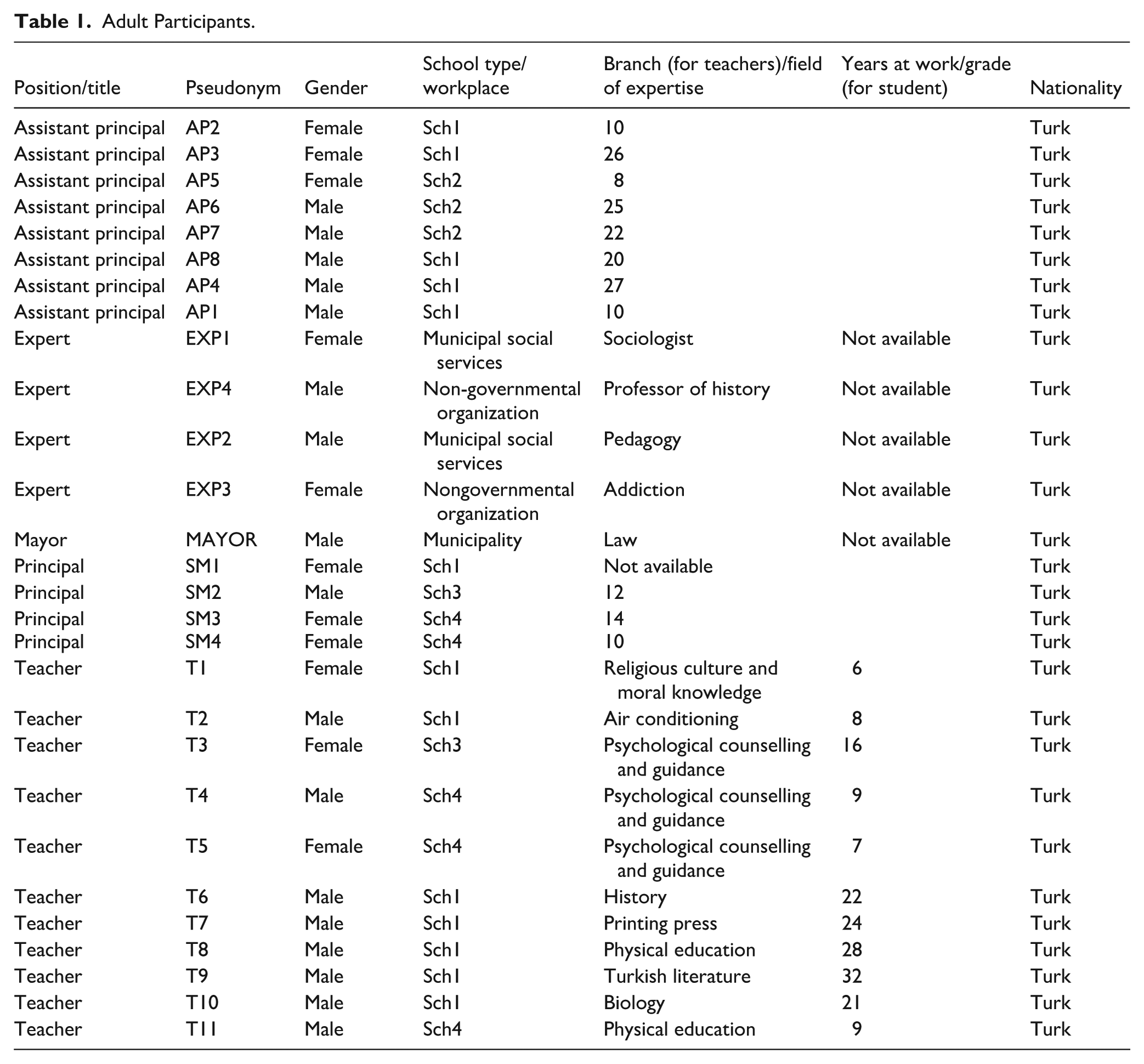
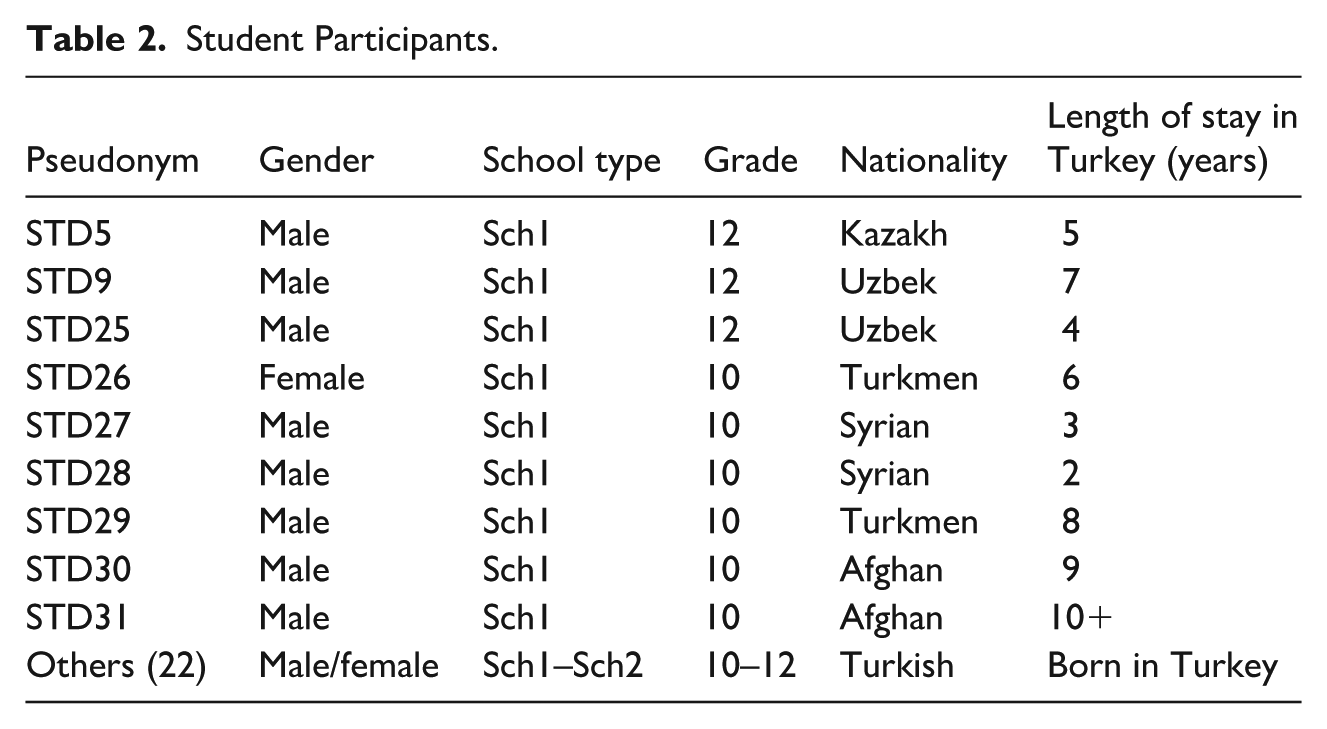
Table 2 presents the student participants included in the study. A total of 31 students took part, including nine migrant or refugee students and 22 Turkish students. The table shows variation in gender, school type, grade level, nationality, and length of stay in Turkey, allowing the study to capture student experiences from different social and educational positions. While the migrant and refugee student group consisted of students from Syrian, Afghan, Turkmen, Uzbek, and Kazakh backgrounds, the Turkish students provided an important comparative perspective on peer relations, school climate, and integration processes.
Student Participants.
Data Collection
Data were collected for an 8-month period, employing multiple qualitative methods to ensure triangulation and enhance validity (Denzin & Lincoln, 2011). A combination of interviews, focus groups, and field observations allowed for a nuanced understanding of the experiences of migrant and refugee students in Zeytinburnu. Fieldwork was conducted primarily in school settings and municipal or social service environments in the district, enabling the researchers to examine how educational challenges were experienced and discussed across different institutional contexts. The semi-structured interview protocol was constructed after an extensive review of the literature on migration and education. An initial pool of questions was developed and subsequently validated by three academic experts in educational administration, sociology of education, and history of education. Based on their feedback, the items were refined to ensure conceptual clarity and contextual relevance. A pilot study with undergraduate, graduate, and doctoral students resembling the target population further improved the instrument’s appropriateness.
While the instrument benefitted from expert validation and piloting, the direct involvement of migrant students and families in the design phase was limited. This constitutes a methodological limitation, as the perspectives of those most affected were not systematically incorporated during the early stages of instrument development. To mitigate this, subsequent interviews and focus groups allowed migrant participants to shape the direction of the conversations, and emerging themes were iteratively integrated into later interview rounds. Semi-structured interviews were conducted with 59 participants, including school administrators, municipal officials, social service professionals, teachers, and students. Interview questions were guided by Bronfenbrenner’s ecological systems theory and addressed challenges across family life, school environments, bureaucratic encounters, social networks, and economic conditions. Focus groups were organized with students and teachers who shared similar experiences, creating opportunities for collective exploration of recurring themes. These sessions encouraged participants to discuss common social and economic obstacles and their influence on education.
Data Analysis
Data were analyzed through a multistep content analysis process, which involved organizing transcripts and field notes into themes and patterns (Saldana, 2011). This method was well-suited to identifying recurring themes related to migrant and refugee student integration while retaining ethnographic depth. The analysis involved a three-stage coding system. First, line-by-line coding generated initial codes. Next, axial coding revealed relationships among codes, forming broader categories. Finally, selective coding refined key themes into a cohesive narrative. Through this thematic coding process, recurring patterns across interviews, focus groups, and field notes were identified, compared, and consolidated into broader thematic categories. A constant comparison approach ensured cultural grounding by continuously checking new data against existing themes for consistency and variation (Strauss & Corbin, 1990). This upheld the ethnographic principle of interpreting data within broader cultural systems rather than as isolated elements (Schensul & LeCompte, 1999). The iterative analysis continued until no substantially new themes were emerging from the data and the existing thematic structure had become sufficiently stable across participant groups.
The analysis revealed six main themes representing the educational challenges of migrant and refugee students: cultural integration, discrimination and prejudice, economic hardships, educational disruption, language barriers, and social exclusion. These were mapped onto Bronfenbrenner’s ecological systems (micro, meso, exo, and macro) to show how challenges align with different contexts. A coding protocol was developed with definitions and examples to guide each stage of analysis—initial, axial, and selective coding. Codes were grouped into thematic categories such as language barriers (“language problems,” “communication difficulties”), economic hardships (“child labour,” “low wages”), discrimination (“verbal abuse,” “mockery”), social exclusion (“harassment,” “drug-related issues”), educational disruption (“absenteeism,” “crowded classrooms”), and cultural integration (“cultural differences,” “multiculturalism”). These clear criteria supported consistency and enabled systematic mapping of the ecological model.
Table 3 illustrates how each identified theme is associated with specific ecological system layers.
Themes Mapped onto Bronfenbrenner’s Ecological Systems Theory.
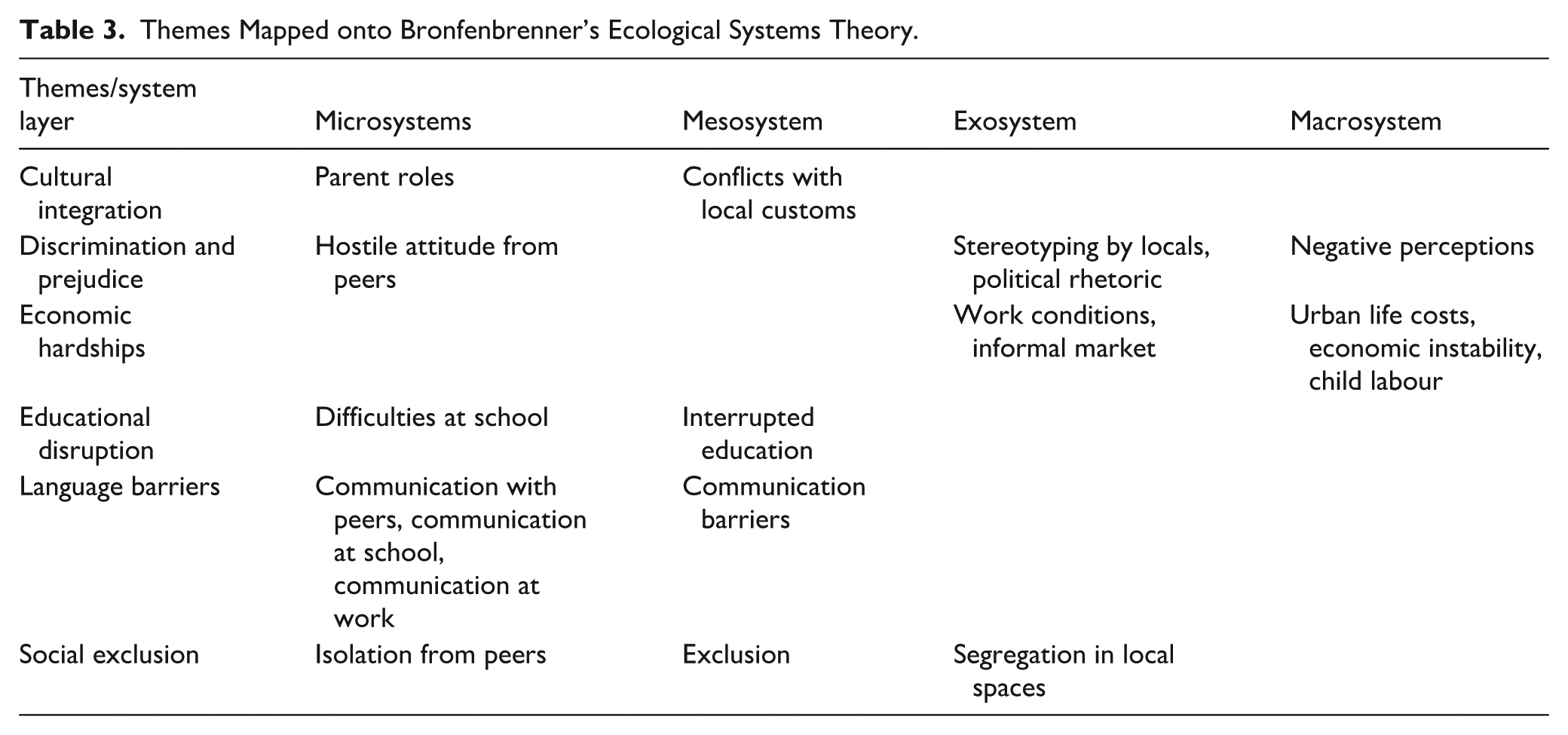
As shown in Table 3, migrant and refugee students’ educational experiences are influenced by interconnected challenges spanning multiple ecological systems.
Reflexivity and Positioning
Two researchers independently coded the data and compared interpretations to reach a consensus, reducing individual bias and enhancing reliability (Miles, 1994). This cross-checking process also supported the refinement of thematic categories by enabling the researchers to compare coding decisions and resolve interpretive differences collaboratively. Coding discrepancies were addressed through discussion and refinement. Reflective journalling was also used to manage researcher bias, with analysts recording their positions, reflections, and potential influences in regularly reviewed journals (Lincoln & Guba, 1988). Additionally, periodic peer debriefing sessions with external experts provided critical feedback to ensure the validity and integrity of the findings (Pink, 2020).
Ethical Considerations
This study was approved by the Institutional Review Board of Yıldız Technical University (approval date: 1 December 2022, protocol number: 2022.12). All participants were fully informed about the objectives, procedures, and potential risks of the study before giving their consent. Written informed consent was obtained from all adult participants, while parental consent and student assent were required for minors. Special attention was paid to the power dynamics inherent in this research context. Teachers and students were never interviewed together to avoid placing students under pressure or influencing their responses. Similarly, Turkish and migrant/refugee students were not placed in the same focus groups. Instead, focus groups were composed of participants with similar backgrounds and experiences, which created a safer environment for open and honest discussion. This design ensured that students did not feel constrained by the presence of authority figures or by peers from different social positions. In all student interviews, participation was strictly voluntary, and students were reminded that they could withdraw at any time without consequences. For migrant and refugee participants, additional emphasis was placed on voluntariness and the protection of their right to decline sensitive questions. Participants were also informed that they were free to skip any question they found uncomfortable and that the interviews would proceed at a pace that respected their emotional comfort and sense of safety.
During interviews with minors, a school counselor was present to provide immediate support if sensitive or potentially traumatic issues emerged. This arrangement ensured student well-being and ethical safeguarding. At the same time, the presence of a counsellor may have influenced the willingness of some students to share certain personal experiences. This is acknowledged as a methodological limitation. To further protect participants, interviews were conducted in safe and familiar settings (e.g. classrooms or municipal offices). These settings were intentionally chosen to reduce anxiety and to help participants speak in environments they already knew and trusted. When distress signals were observed, interviewers were prepared to pause or discontinue the session. Particular care was taken when discussions involved discrimination, work-related exploitation, family hardship, or other potentially distressing experiences, and participants were not encouraged to elaborate on issues they preferred not to discuss. Only pseudonyms were used in transcripts and reports, and all identifying details were removed to guarantee confidentiality. All research data, including audio files and transcripts, were stored on encrypted and password-protected devices accessible only to the research team, ensuring compliance with ethical guidelines for the protection of vulnerable populations.
Findings
The research findings were organized in alignment with the theoretical framework underpinning the study. Accordingly, the identified challenges were presented concerning the micro, meso, exo, and macro systems defined within the ecological model. In relation to the first research question, the findings show how migrant and refugee students’ educational challenges are distributed across multiple ecological layers. In relation to the second research question, the accounts of students, teachers, school leaders, municipal experts, and local authorities illustrate how these challenges are perceived, interpreted, and negotiated by different stakeholders in Zeytinburnu.
Challenges Faced by Migrant and Refugee Students in the Microsystem
One of the most persistent challenges faced by migrant and refugee students in their educational journey is the language barrier. School administrators and teachers consistently highlight that the inability to speak Turkish severely limits students’ ability to engage with the curriculum, resulting in academic struggles and social isolation. One SM4 noted, “They struggle a lot in classes because they don’t know Turkish.” Furthermore, teachers observed that linguistic barriers often lead to classroom disruptions and behavioral problems, as students who cannot follow lessons become disengaged. “Not knowing the language disrupts the classroom,” T8 explained. This shows how a seemingly individual challenge such as language deficiency expands into collective classroom problems, where lack of comprehension leads to disengagement, which in turn results in disruptive behaviour and reduced learning opportunities for everyone.
Beyond linguistic difficulties, cultural integration presents another major obstacle for migrant and refugee students, particularly in their interactions with local Turkish students. As one school administrator, AP7, stated, “They can’t get along with Turkish students due to cultural differences.” Migrant students often form tight-knit groups, isolating themselves from their Turkish peers. Teacher T5 observed, “They gather among themselves and stay away from Turkish students.” Here, cultural distance translates into social distance, reinforcing divisions that already exist due to language barriers. Teachers interpret this as a lack of integration, while students may experience it as a coping mechanism that provides them with solidarity and protection among peers.
This segregation is especially pronounced in social settings, such as sports. For instance, a physical education teacher, T11, recounted an incident: “I recently saw some students playing a [soccer] game. Some students sat on the sidelines. I asked them why they weren’t playing. They said, ‘Teacher, Syrians and Afghans are playing a national game’. The ones who are not playing are Turks. We have become foreigners in our own country.” The quote illustrates how even recreational spaces reproduce cultural boundaries, creating symbolic separations that can deepen feelings of alienation. STD27’s words shed some light on why this divide may exist: “So, like, when I was in middle school, I wanna share this thing that happened in the schoolyard. I was just sitting with a friend, and this little kid came over and started, you know, mocking us, like saying ‘Syrian, Syrian’. We didn’t really react, but after a while my friend told him to just leave. And the moment he said that, this other group of Turkish students showed up and pushed my friend. He fell down, and, like, broke his ankle.” The physical education teacher perceives the tendency of foreign students to form separate groups and exclude Turkish students from their games as a negative behaviour. Although he himself experiences a sense of being positioned as a foreigner in his own country, such past experiences may nevertheless contribute to migrant and refugee students establishing solidarity networks among themselves and refraining from including Turkish students in these groups.
Economic hardship also plays a central role in shaping the educational experiences of migrant and refugee students. According to EXP3, a social service expert, many students are forced to work instead of attending school because of financial pressures. “Children don’t go to school; they work in textile factories. A child means money for them [Migrant and refugee parents]. A source of income. Even if they go to school, they work during the summer holidays. They work alongside going to school.” These financial burdens place additional pressure on children, making it difficult for them to focus on their education. Thus, financial constraints directly translate into educational inequalities, as children’s role as income earners overshadows their role as learners.
Consequently, migrant students often find themselves balancing work and school, leading to irregular attendance and poor academic performance. A Syrian student, STD27, shared his experience: “I work five days a week, sometimes on Saturdays. I earn 1000 TL, and I give half of it to my father. It’s hard, but we need the money.” This financial dependency forces many young students to prioritize earning an income over their education, thereby limiting their future opportunities. At the same time, this testimony reflects the resilience of students who take on responsibilities beyond their age, demonstrating agency and commitment to family survival, even though this comes at the cost of their educational attainment.
Social exclusion further compounds these difficulties, keeping refugees and migrants at the bottom of the informal economy and performing dangerous, and exploitative labour for low wages. STD27, who worked part-time in a textile workshop, described experiencing discrimination in the workplace: “It happened at the place I work, but I didn’t say anything. There’s a woman, much older than me, around fifty years old. She said they [the government-to-be] would send you away, that they [Turkish people] don’t want you, and so on. . . She says Syrians are like this, Syrians are like that. I won’t say anything.” This account shows how economic exploitation is intertwined with social exclusion, where discrimination at work not only undermines students’ dignity but also reinforces their marginal status in society.
Refugee labour is frequently exploited in marginal jobs, often involving hazardous conditions, such as carrying heavy loads or handling toxic chemicals in the textile industry. STD9, an Uzbek student, shared his personal experience: “When I was 13, I was injured by scissors that were stuck in my arm while working. The boss sent me to the hospital alone and told me to say that I had fallen if anyone asked how I got hurt. They made sure I wouldn’t admit that it happened at work.” His older brother also suffered a shoulder injury while lifting heavy loads, and despite receiving medical treatment, he was eventually dismissed by his employer without compensation or support. These examples underline the cycle where poverty leads to child labour, which in turn results in dangerous working conditions, and injuries then create further vulnerability by cutting off even that source of income.
In addition to financial and social hardships, educational disruptions caused by age disparity in classrooms pose significant challenges. Many refugee children arrive in Turkey having missed years of formal education, leading to older students being placed in classes with much younger peers. A teacher described an extreme case: “At age 12, he had to start first grade because he hadn’t gone to school before.” Such disparities create difficulties for both students and teachers, thereby complicating classroom dynamics. This mismatch between chronological age and grade level generates frustration for older children and complicates peer relationships, further reinforcing isolation.
School principal SM2 elaborated on the issue, explaining how the combination of age differences and language barriers makes maintaining classroom order even more complicated: “The biggest problem, in terms of challenges, is of course the language issue, which is already fundamental. However, international students who have not been sent to school for an extended period are even more critical issues. A child is 12 or 13 years old, has never attended school before, and must be in first grade. Depending on parental preferences, first-graders are typically 6 or 7 years old, sometimes even 5 years old.”
This significant age gap affects academic and social interactions, further complicating classroom management. “A 6-year-old child is in the same class as a 12- or 13-year-old child. This negatively affects classroom dynamics, not only due to the language barrier but also because of the age difference,” the SM2 explained. Additionally, physical and emotional disparities among students create further challenges in maintaining classroom discipline and fostering peer relationships. “Physically, when a much younger child is in the same class with older ones, it can lead to various difficulties, including disruptions in classroom order and students’ communication.” Here again, the interaction between age, language, and social maturity creates a layered set of barriers, where each factor reinforces the difficulty of the other.
Some schools have introduced transitional language acquisition classes to mitigate these challenges. However, these efforts are often insufficient due to the overwhelming number of students requiring support. Despite such interventions, age and language disparities frequently result in feelings of isolation among older refugee students, making it difficult for them to connect with their younger peers. This further hinders their ability to adapt to the curriculum and succeed academically. Nevertheless, these transitional classes also represent a form of institutional resilience, as schools attempt to adapt their structures to meet the needs of a highly diverse student body, even if resources remain inadequate.
In response to the research questions, the microsystem findings show that language barriers, peer exclusion, interrupted schooling, and classroom-level inequalities directly shape students’ everyday educational experiences.
Challenges Faced by Migrant and Refugee Students in the Mesosystem
The mesosystem plays a crucial role in shaping the experiences of migrant and refugee students, as it encompasses interactions between various micro-level environments, such as schools, families, and communities. One of the most alarming challenges within this system is the use of violence to control migrant communities in specific neighbourhoods. The so-called “Abiler” (older brothers), young men between the ages of 20 and 30, assume roles such as resolving disputes, enforcing social norms, and engaging in illegal activities, including drug selling. These “Abiler” serve as role models for younger students, negatively influencing social dynamics. The power dynamics at play were illustrated in a focus group discussion:
“They are everywhere and can’t just stay still.”
“Honestly, in our neighborhood, there isn’t a single Syrian.”
“How do you keep them away from your neighborhood?”
“The older brothers. They beat them [refugees and migrants] up, you know. We also fight them.”
The socio-spatial conditions of Zeytinburnu enable such violent actions, as the “Abiler” wield significant control over neighbourhood dynamics. These acts of violence are perceived as a means of maintaining social order; however, they deepen the division between local Turkish residents and migrant communities, making social and educational integration more difficult. Thus, what begins as a mechanism of informal control transforms into a structural barrier that limits migrant students’ safe participation in both community life and educational settings.
Another major challenge in the mesosystem is the extension of language barriers beyond academic struggles to home-school communication. These barriers further isolate students from their peers and broader school communities. Teachers often express frustration in their attempts to communicate with migrant families. One teacher shared their experience as follows: “I call her mother, but we can’t communicate because she doesn’t know Turkish.”
For migrant and refugee students, navigating the educational system becomes particularly challenging in contexts where language learning support is insufficient to meet their needs. The inability to communicate with teachers and peers hinders students’ academic and social integration. This indicates that language barriers not only disrupt classroom learning but also weaken the crucial bridge between family and school, preventing parents from engaging in their children’s education.
Social exclusion remains pervasive in the mesosystem, affecting schools and the broader community. Many residents of Zeytinburnu maintain a distant attitude toward refugees, exacerbating their feelings of social isolation. As SM4, a school manager, explained, “The local community is very distant toward Syrians.” Here, the interplay between community attitudes and school climate demonstrates how prejudices in the neighbourhood spill over into the classroom, reproducing exclusion across multiple social spaces.
These mesosystem-level challenges illustrate how the interactions between school, family, and community reinforce the marginalization of migrant and refugee students. At the same time, some teachers and school leaders attempt to counteract these dynamics through extra efforts in family communication or community outreach, which can be seen as small but important examples of resilience within the mesosystem.
In response to the research questions, the mesosystem findings show that weak family-school-community linkages and neighbourhood tensions deepen educational disadvantage and shape how different stakeholders interpret integration problems.
Challenges Faced by Migrant and Refugee Students in the Exosystem
The exosystem shapes the educational experiences of migrant and refugee students through external structures such as economic policies, labour markets, and bureaucratic processes. These systemic influences often create additional barriers for students, making it difficult for them to succeed academically and socially. In other words, the exosystem demonstrates how factors that operate outside of the immediate control of students and their families still have powerful consequences for their daily school lives.
One of the most pressing challenges is the deep-rooted cultural differences that intersect with economic hardships. As EXP3 explained, children who start working alongside adults at an early age miss out on education and are exposed to harmful habits. Drug use, particularly among Afghan migrants, is a significant concern. Afghan Paste, a sedative narcotic substance, is considered a cultural norm among Afghan communities in Turkey. Similar to smoking or alcohol use in other societies, Afghan Paste is consumed by placing a small pouch between the lips and gums. The sale of this substance has been banned in Turkey, leading to its smuggling into the country. During this process, smugglers bring not only Afghan Paste but also other narcotic substances such as marijuana, methamphetamine, and heroin, further exacerbating the drug problem. Children in workplaces are introduced to Afghan Paste and may eventually transition to harder drugs such as marijuana and methamphetamine. This example shows how cultural practices, when intersecting with poverty and weak regulatory enforcement, can escalate into health and educational crises, where early substance use undermines children’s capacity to attend and succeed in school.
The economic environment in Zeytinburnu exacerbates these issues, as the prevalence of informal labour markets significantly impacts the educational opportunities of migrant students. EXP1 described the situation as follows: “The socio-economic level is very low. There are many job opportunities in the textile sector here. This is a disadvantage because families earn their living by working in the textile industry. The region receives a large number of migrants. Families also tend to have multiple children. So where is the child? The child works as an ortacı [a helper or assistant in textile workshops]. Child labor is prevalent here. Families do not send their children to school. Moreover, parents have low levels of education. Every house has a textile workshop on the ground floor. Even if families send their children to school, the children do not want to go anyway.”
The need for children to contribute to household income strains their education. Many migrant families are employed in precarious, low-paying jobs, particularly in the textile industry, forcing children to work at the expense of their education. This economic instability perpetuates cycles of poverty, making it difficult for families to prioritize education over their immediate financial needs. Here, the exosystem demonstrates how macro-level labour market structures translate directly into the daily routines of children, where the imperative to contribute financially overrides their educational trajectories.
Furthermore, inadequate living conditions amplify these economic struggles. T5 noted that it is common for multiple families to share a single household due to financial constraints: “Several families live in one house and face financial difficulties.” These overcrowded housing arrangements intensify stress, limit space for studying, and contribute to tensions both within families and between neighbours, thereby further weakening children’s educational focus.
Beyond financial hardships, systemic barriers in the Turkish education system pose significant obstacles for refugee students to access education. Centralized exams, such as the High School Entrance Exam (Lise Giriş Sınavı), are critical for determining students’ educational pathways (Atilgan, 2018). Due to their limited proficiency in Turkish, refugee students often receive low scores on these exams, placing them in vocational and technical schools with lower academic reputations than their Turkish peers. Many students reported that they did not actively choose these schools and were assigned to fields in which they lacked interest or skills. Bureaucratic obstacles further exacerbate these challenges, as obtaining the necessary documents prevents some students from participating in centralized exams. This shows how institutional mechanisms—standardized testing and bureaucratic requirements—systematically disadvantage refugee students, funnelling them into lower-status educational tracks and thereby restricting their long-term mobility. Yet, the very act of sitting for these exams despite language and systemic barriers also reveals resilience, as students persist in engaging with a system that often excludes them.
In response to the research questions, the exosystem findings show that labour market pressures, bureaucratic barriers, and limited institutional support shape students’ schooling beyond the classroom.
Challenges Faced by Migrant and Refugee Students in the Macrosystem
Discrimination and prejudice have emerged as pervasive issues affecting migrant and refugee students, both within the school environment and in the broader community. The affordances provided by the socio-political and economic landscape of Zeytinburnu significantly shape these dynamics, often manifesting as hostile attitudes toward refugees. Economic anxiety and political rhetoric catalyze these negative perceptions. For instance, the Turkish student, STD3, expressed frustration at the presence of Syrians: “Syrians shouldn’t come here. Honestly, we are tired of them.”
Similarly, AP4, a school administrator, highlighted how refugees are often scapegoated with broader societal issues: “The economic crisis happened because of the Syrians.”
These examples demonstrate how macro-level discourses filter down into everyday conversations, transforming abstract national debates into interpersonal hostility in classrooms and neighbourhoods.
Political discourse plays a crucial role in shaping these hostile attitudes. During the study period, the political parties in Turkey held contrasting views on refugee issues. The ruling party supported the acceptance of refugees, while opposition parties advocated their deportation, sometimes using hate speech. This political environment influences students’ perceptions. For example, a Turkish student (STD6) commented: “Whoever sends the Syrians and Afghans back, let them win the election.”
Thus, political polarization does not remain in the realm of policy-making but directly shapes young people’s identities and prejudices, reinforcing divisions between migrant and Turkish students.
Significant cultural differences further exacerbate these tensions, particularly in the attitudes of Afghan, Syrian, and Pakistani migrants toward women. As EXP1 explained, in many of these communities, marrying girls at a young age and cousin marriages are common. Women are often kept away from public life, adhering to strict religious rules that require them to cover their bodies with garments such as chadors or burkas. While similar practices, such as the headscarf, exist in Turkey, Turkish women generally play a more active role in public life. These cultural differences often lead to incidents of harassment, in which women who do not fully cover themselves are subjected to inappropriate comments or physical harassment due to their clothing. Here, cultural norms intersect with gendered expectations, producing conflict, that is, perceived by locals as a threat to social cohesion and women’s rights.
EXP1 also reported cases of child sexual abuse within refugee families, with victims exhibiting behavioral disorders such as bedwetting, nail-biting, and aggression. Turks perceive these attitudes toward women as societal threats, further intensifying cultural clashes. The testimony of STD23 illustrates the extent of this exclusion: “When you’re walking on the street, they all stare at you. I even remember turning around and warning them, like, ‘What are you looking at?’. . . Thoughts come to your mind like we either have to kill them or leave [the country]. People are thinking that way now.”
This testimony highlights how macro-level fears and cultural stereotypes escalate into extreme exclusionary narratives, where refugees are no longer perceived as neighbours but as existential threats.
The Mayor further emphasized the broader societal challenges posed by the influx of refugees, stating: “Our city has been historically welcoming to migrants, but the scale of the current influx, particularly from Syria and Afghanistan, has placed a significant strain on local resources. This has created a divide between long-term residents and newcomers, creating exclusion and tension.”
This highlights the institutional awareness of the barriers refugees face in achieving social integration, reinforcing the broader exclusion patterns noted in schools and the community. At the same time, the Mayor’s words indicate that there is still an official recognition of historical traditions of hospitality, suggesting that macro-level resilience could be mobilized if political and economic resources were allocated more effectively.
In response to the research questions, the macrosystem findings show that political rhetoric, cultural conflict, and economic anxiety create broader conditions of exclusion that affect both educational inclusion and stakeholder perceptions.
Discussion
This study explored educational challenges faced by migrant and refugee students using Bronfenbrenner’s ecological systems theory (EST). Whereas prior scholarship often isolates analysis at the school (microsystem), neighbourhood (exosystem), or policy (macrosystem) levels, our findings demonstrate how these layers are mutually constitutive, producing cumulative (and often compounding) effects on students’ academic and social lives. By thematically analyzing the perspectives of students, educators, administrators, and social workers in Zeytinburnu, we illuminate how urban inequality is reproduced across ecological levels. Situated in one of Istanbul’s most densely populated, migrant-concentrated districts, Zeytinburnu’s precarious housing, informal textile workshops, and low household incomes create fertile ground for educational disadvantage. These conditions anchor the study’s themes in concrete socio-spatial realities rather than abstract categories, revealing how local political economy shapes school trajectories. Beyond its local specificity, the case of Zeytinburnu also speaks to broader debates on demographic change, institutional equity, and the capacity of urban educational systems to provide equal opportunities in increasingly multicultural settings.
Microsystem: Classroom Relations and Immediate Interactions
Consistent with earlier studies (Bang, 2017; Dryden-Peterson, 2015; Kılıc & Gokce, 2020; Taştan & Çelik, 2017; Taylor & Sidhu, 2012; Watkins et al., 2012), language barriers impede participation and social integration, fuelling disengagement and behavioural issues. Our data extend this by showing that challenges are not reducible to language: interrupted schooling during displacement produces age/grade mismatches, unsettling peer dynamics and undermining motivation; economic pressure pushes some students prematurely into work, lowering expectations from schooling; and high-stakes exams and misplacement amplify alienation.
Cultural differences (Cioran, 2016) and experiences of exclusion (Rose, 2019) encourage insular peer clustering, which, while protective, can deepen segregation—echoing findings on marginalization and bullying (Ertaş & Kıraç, 2017; Levent & Çayak, 2017; Şafak-Ayvazoğlu et al., 2021; Uzun & Bütün, 2016). Although teachers’ socio-emotional and language supports are crucial (Buell et al., 2019), our evidence indicates some teachers hold negative attitudes, shaped not only by classroom management pressures but also by wider socio-economic stressors and hostile political narratives (see Macrosystem), aligning with concerns about misinterpretation of refugee students’ behaviours (Szente et al., 2006).
Mesosystem: Family–School–Community Linkages
The mesosystem emphasizes the connections between microsystems, such as the interaction between families and schools, and the findings illustrate the weakness of these interconnections in the case of migrant education. Language difficulties hindered meaningful home–school ties (Celik et al., 2023; Uzun & Bütün, 2016). A novel contribution is the identification of neighbourhood informal power structures (“Abiler”) that operate as extra-institutional regulators, often normalizing violence and segregation, thereby mediating school–community relations in spatially uneven ways. Contrary to Paat’s (2013) expectation that strong reciprocal ties improve outcomes, weak institutional linkages created vacuums filled by informal actors with deleterious consequences. Moreover, as previous research has shown, childcare responsibilities and cultural norms limit refugee women’s participation in education (Watkins et al., 2012). This study finds that gendered expectations in migrant communities also influence broader mesosystem dynamics, especially when intersecting with the values of the host community. These gender-based tensions contribute to peer conflicts and social withdrawal within schools, adding complexity to school-community interactions.
Exosystem: Institutional Constraints and Urban Economies
Exosystemic forces—labour markets, school policies, municipal services—deeply affected schooling. Echoing earlier work (Miller & Rasco, 2004; Ndibalema, 2024; Roxas, 2011), economic pressure drew youth into informal textile work, disrupting education. In Zeytinburnu, the textile sector functioned as both magnet and trap, confirming the patterns noted in Buğra (2018) and extending the literature by documenting exploitation and substance abuse among working youth. The exposure of young students to hazardous working conditions and narcotics illustrates how workplace experiences can shape school behavior, echoing concerns about precarious labour reinforcing cycles of marginalization.
The centralized, high-stakes examination regime further institutionalized inequality (Atilgan, 2018): linguistic disadvantage and disrupted prior schooling channelled students into vocational tracks, paralleling patterns observed in Germany (Streitwieser et al., 2018). These placements often fail to reflect students’ interests or capabilities and are influenced by bureaucratic and documentation hurdles, reinforcing structural barriers to social mobility. While these structural barriers weigh heavily on migrant students, institutional support mechanisms remain limited. Although some municipalities and NGOs have offered Turkish language courses and sporadic social cohesion programs, participants emphasized that these services are insufficient, unevenly distributed, and rarely sustained. In schools, guidance and counselling services are overstretched, often unable to address the specific psychosocial needs of migrant youth. The absence of systematic support structures magnifies the educational burden carried by students and teachers, underscoring the urgent need for targeted interventions. Consistent with Isik-Ercan and Edwards (2020), parental precarity in urban economies weakened social support networks—our data show how this intersects with child labour to heighten risk. This underscores the exosystemic interplay between household economics, labour markets, and educational inequality.
The Macrosystem: Ideological Tensions and Political Discourse
Macrosystemic currents—cultural norms, political rhetoric, economic frames—cascade into lower levels. This study reaffirms the critical role of political discourse in shaping public and institutional attitudes toward migrants (McCarthy, 2018; Morrice, 2013; Pinson & Arnot, 2007). Hostile political rhetoric exacerbates exclusionary attitudes among Turkish students, with discriminatory behavior often justified by references to national economic hardship or social instability. These findings are consistent with Secen and Öztürk (2024) and underscore how anti-refugee sentiment undermines efforts at school integration. Additionally, broader cultural conflicts surrounding gender roles (Şafak-Ayvazoğlu et al., 2021) feed tensions in schools and public life. The clash between migrant norms, such as child marriage or restrictions on women’s visibility, and secular Turkish values contributes to both peer conflict and social suspicion. These cultural frictions are further intensified by cases of harassment and abuse, which not only affect the school climate but also fuel broader xenophobic attitudes in the community. Our findings align with Paat (2013) and Miller and Rasco (2004), who both highlight how macrosystemic forces—cultural norms, political ideologies, and institutional practices—cascade down to influence families, schools, and children’s daily lives. In Zeytinburnu, these macro-level narratives manifest as localized hostility, further entrenching disadvantage across other ecological systems.
Inter-Systemic Interactions: The Ecology of Disadvantage
Crucially, this study does not treat these systems as isolated entities. Instead, it highlights how experiences in one domain reverberate across other domains. For example, economic instability (macrosystem) leads to child labour (exosystem), which manifests as school absenteeism and behavioral issues (microsystem). Similarly, hostile political discourse (macrosystem) influences peer relations and social exclusion within classrooms (microsystem), echoing the findings of Katz and Redmond (2010). Parental disengagement, stemming from economic stress and language barriers (mesosystem), exacerbates academic failure and dropout rates (microsystem), as shown by Ainsworth (2002), Crowder and South (2003), and Duncan (1994). These cascading effects reflect what Leonard (2011) describes as ecological systems’ nested and reciprocal nature.
This research addresses a clear gap in the literature and makes several contributions to both ecological systems theory and the scholarship on migrant and refugee education. First, while earlier studies largely emphasized language barriers, this study shows that educational challenges are also shaped by age mismatches resulting from interrupted schooling during forced migration, premature entry into the labour market that lowers students’ expectations of education, and inappropriate school placements linked to centralized examinations. Second, whereas prior research has noted weak family–school cooperation, our findings reveal that neighbourhood-level informal actors, such as local “Abiler,” intervene in ways that disrupt school–community relations, an underexplored mesosystemic factor. Third, although child labour has been documented, this study uniquely situates it in the specific context of Zeytinburnu’s textile workshops, where exploitation intersects with exposure to narcotics, illustrating the exosystemic risks of local economies. Fourth, beyond acknowledging the role of political discourse, this study provides direct evidence—through students’ voices and the perspectives of local stakeholders—of how hostile rhetoric translates into classroom-level discrimination and peer conflict. Finally, methodologically, this research extends the field by integrating the perspectives of multiple stakeholders—students, teachers, administrators, social workers, and even the municipal mayor—offering a more holistic and contextually grounded account of how interlocking systems sustain educational inequalities. In this sense, the study contributes not only to the literature on migrant and refugee education, but also to broader urban education debates about how educational institutions respond to shifting demographics and persistent inequalities in multicultural urban contexts.
At the same time, it is important to avoid portraying migrant students solely through a deficit lens. The study also revealed resilience and resourcefulness: students built peer support networks, families mobilized community ties to sustain schooling, and religious and cultural associations provided informal safety nets. These forms of social capital not only mitigated exclusion but also enabled some students to thrive academically and socially despite structural barriers. Recognizing these assets is crucial for developing balanced policies that value migrant students’ contributions as much as their vulnerabilities.
Conclusion
This study set out to examine the educational experiences of migrant and refugee students through the lens of Bronfenbrenner’s ecological systems theory. By investigating how these experiences unfold across the micro-, meso-, exo-, and macrosystem levels, this study reveals a deeply interwoven ecology of disadvantage that shapes the daily lives of these students.
At the microsystem level, language barriers, cultural differences, and classroom disruptions hinder students’ academic engagement and peer relationships. Age disparities caused by disrupted educational trajectories further complicate classroom dynamics, leading to exclusion and low motivation among students. The mesosystem level exposes weak connections between school, family, and community, characterized by limited parental involvement, language-based communication gaps, and local power structures that perpetuate violence and segregation.
Moving outward, the exosystem presents structural barriers, such as precarious labour markets, lack of institutional support, and rigid exam systems that funnel students into low-status vocational paths. Economic pressures force students into child labour or informal work environments, which not only disrupt their education but also expose them to exploitation and psychological harm. At the macrosystem level, political discourse, cultural clashes, and economic instability create a hostile environment that reinforces negative stereotypes and fuels societal exclusion. These ideological and structural forces shape public attitudes, institutional practices, and everyday interactions, directly impacting educational inclusion in the long term.
Importantly, these findings highlight that these systems do not operate in isolation. Events in one layer, such as political rhetoric or economic crises, have tangible effects on other layers, influencing how students are perceived, treated, and supported in schools. Thus, addressing the educational needs of migrant and refugee students requires an integrated, multi-systemic approach that goes beyond the classroom to consider the full spectrum of socio-cultural, economic, and political contexts shaping their lives.
By offering a holistic ecological analysis, this study contributes to a nuanced understanding of educational inequality and calls for interventions that recognize the interconnected nature of the challenges that migrant and refugee students face.
Policy Implications and Suggestions
In increasingly multicultural urban contexts, reducing educational inequality requires not only supportive policies but also sustained leadership at the school and local governance levels to coordinate inclusive practices across different ecological layers.
At the microsystem level, school leaders and teachers can strengthen integration through peer-based initiatives rather than additional costly programs. For example, pairing migrant and local students in informal language mentoring sessions during breaks or after school creates both linguistic support and social connection without requiring extra funding.
Within the mesosystem, parent–school relations can be enhanced through the use of volunteer parent ambassadors drawn from migrant families. These individuals, familiar with both the school and community languages, can mediate communication and reduce misunderstandings. Such an initiative relies on recognition and coordination rather than financial investment. In this process, school leaders can play a key coordinating role in building more inclusive and trust-based relations between schools and families.
The exosystem findings point to the risks associated with unsafe neighbourhood environments. Municipal actors, school administrations, and local community stakeholders can respond by designating existing community spaces—such as libraries, sports clubs, or even trusted local shops—as safe study areas. This makes use of existing infrastructure and provides protective micro-environments for young people without heavy financial costs. Such efforts can be further strengthened when supported by inclusive leadership at both the school and municipal levels.
At the macrosystem level, combating prejudice requires not only national campaigns but also locally generated narratives. Empowering students to design small-scale anti-discrimination projects, such as posters or performances, helps counter political hostility with inclusive messages rooted in everyday school life.
Taken together, these suggestions highlight that reducing educational inequalities does not always demand large-scale reforms. Small, locally grounded measures—peer mentoring, parent ambassadors, safe neighbourhood spaces, and student-led narratives—can yield meaningful change by aligning with the ecological layers that shape migrant and refugee students’ lives. However, these initiatives alone cannot resolve the deeper structural inequalities embedded in housing, employment, and national integration frameworks. Therefore, they should be viewed as complementary to broader systemic reforms that address the root causes of exclusion. Only by combining bottom-up community initiatives with top-down structural interventions can more equitable educational opportunities be achieved. Only by combining bottom-up community initiatives with coordinated institutional leadership and top-down structural interventions can more equitable educational opportunities be achieved.
Limitations
This study is not a direct investigation of migrant and refugee students’ challenges, but rather an exploration of their educational experiences as seen through the perspectives of multiple stakeholders. As such, the representation of migrants and refugees reflects their proportion within the Zeytinburnu context. While this approach captures the broader ecology of education, it may have limited the visibility of certain issues specific to migrant and refugee groups.
A further limitation is the underrepresentation of women. Female migrants and refugees were not fully included in the dataset, not due to researcher neglect but because the fieldwork was restricted to a vocational and technical high school where female enrolment is structurally low. Moreover, a significant number of female students declined participation, which further constrained their voices.
Although teachers and school administrators were interviewed across different types of schools, student interviews were deliberately limited to high schools and equivalent institutions. This decision was made to avoid age-related challenges in interviewing younger children. While this ensured greater reliability of student narratives, it also narrowed the focus to adolescent experiences, leaving the perspectives of younger age groups outside the scope of the study.
The use of focus groups and interviews, while valuable for generating rich qualitative insights, also introduced challenges related to participant dynamics. Despite efforts to separate groups (e.g. teachers and students, Turkish and migrant participants), some power imbalances and self-censorship may have influenced the openness of responses.
Finally, while measures were taken to ensure data security and ethical sensitivity, the reliance on field notes and interview transcripts means that some nuances of interaction and non-verbal communication may not have been fully captured. This reliance on textual data limits the scope of analysis compared to multimodal or longitudinal approaches.
Future Delimiters
Future studies should seek to prioritize the direct voices of migrant and refugee students, with particular attention to gender balance, by engaging with multiple school types and community settings where female participation is higher. Expanding the scope beyond adolescent groups would also enhance the transferability of the findings and provide a more comprehensive picture of educational inequalities across age cohorts.
Methodologically, incorporating longitudinal observations and mixed-method designs could help capture both immediate experiences and their evolution over time. Including additional data sources—such as classroom observations, policy documents, or quantitative indicators—would enrich the triangulation of findings.
Finally, future research should explore the intersection of ecological layers more explicitly by analyzing how local political discourse, labour market conditions, and family–school relations interact simultaneously in shaping migrant students’ educational pathways. Such an integrated approach could address some of the blind spots left by the present study and contribute to more holistic policy design.
Footnotes
Acknowledgements
The authors wish to thank the school administrators, municipal officers, and teachers of Zeytinburnu for their valuable participation in this study.

Ethical Considerations
This study was approved by the Institutional Review Board of Yıldız Technical University (approval date: 1 December 2022, protocol number: 2022.12).
Consent to Participate
Written informed consent was obtained from all adult participants. For minors, parental consent and student assent were obtained.
Funding
The authors received no financial support for the research, authorship, and/or publication of this article.
Declaration of Conflicting Interests
The authors declared no potential conflicts of interest with respect to the research, authorship, and/or publication of this article.
Data Availability Statement
Data supporting the findings of this study are not publicly available due to confidentiality agreements but may be shared upon reasonable request to the corresponding author.