



Abstract
Keywords
Introduction
Pressured to meet policy demands in the face of fiscal stress, district leaders are increasingly turning to innovative policy tools, like collaboration with external partners, in an effort to bolster the efficiency and efficacy of education service provision (Bifulco et al., 2009; Finnigan et al., 2015; O’Toole & Meier, 2004; Wells et al., 2013). Several types of collaborative arrangements have been explored in the literature. Two of the most prominent are research-practice partnerships (RPPs) and public-private partnerships. Research-practice partnerships are mutually beneficial collaborations between practitioners and those in the research community designed to address district challenges and improve outcomes (Coburn et al., 2013, p. 2). Public-private partnerships are typically formal, contractual arrangements between public school districts and private or nonprofit organizations. These arrangements can range from the use of private actors to provide school lunch to the private provision of public education (DiMartino, 2014; Patrinos et al., 2009).
A third type of collaboration, which has received less attention, is interdistrict collaboration. Whereas RPPs function to promote the role and incorporation of research into educational practice (Coburn & Penuel, 2016), interdistrict collaborations are often established to deal with the financial and governance challenges faced by districts. Interdistrict collaborations, with complexity that can range from a simple agreement to district consolidation, have been identified as an important policy tool that district leaders, especially those in fiscally-distressed and segregated districts, can use to achieve savings from economies of scale, the sharing of resources, and integration of students (Boger & Orfield, 2005; Frankenberg et al., 2017; Holme & Finnigan, 2013). However, as Finnigan et al. (2015, p. 782) note, “few have paid serious attention to the potential of regional educational policy — that is, inter-district cooperation and collaboration — to promote opportunity for children.”
Even among scholars in public policy and public administration who study the formation of public service networks, education has received scant attention. Prior work on regionalism and public service networks has focused predominantly on economic development (Carr et al., 2017; Feiock et al., 2012; Hawkins et al., 2016; Kim et al., 2018; Lee et al., 2012) and emergency management networks among local governments (Andrew et al., 2016; Andrew & Carr, 2013; Jung et al., 2017). We look to fill in this gap by examining a unique data set of nearly 300 interdistrict collaborations established in the state of Iowa over a period of 10 years. In Iowa, all governmental entities are required to file formal interlocal agreements with the Secretary of State. Thus, each instance of a school district collaborating with another is recorded and officially filed with the Office of the Secretary of State providing an opportunity to track the formation and evolution of interdistrict networks over time.
Networks of collaborative relationships are often viewed through the lens of social capital (Adler & Kwon, 2002; Nahapiet & Ghoshal, 1998). Social capital is an asset that accrues to an individual or organization by way of their connections to others (Bourdieu, 1986; Burt, 2004; Lin, 2001). Social capital can exist both internally, within a school or district due to the structure of the social relationships among the teachers (Moolenaar & Daly, 2012; Siciliano, 2017; Spillane et al., 2012) and district leaders (Daly & Finnigan, 2011; Moolenaar et al., 2010; Woodland & Mazur, 2019), as well as externally, through relationships with outside actors (Leana & Pil, 2006; Meier & O’Toole, 2001; Uzzi, 1996).
External social capital is an important factor in determining organizational success as ties to outside actors potentially provide access to resources, opportunities, information, and innovative ideas (Burt, 2005; Granovetter, 1973; Hansen, 1999; Heller & Firestone, 1995; Reagans & McEvily, 2003). Prior research has emphasized the factors that lead to success in RPPs (Coburn & Penuel, 2016), how networking behavior and social capital influence school and district performance (Meier & O; oole, 2003; Pil & Leana, 2009), and the mechanisms needed to promote learning from external partners (Farrell et al., 2018). However, much less attention has been paid to the factors that facilitate or hinder the establishment of these collaborative relationships in the first place. In this study, we explain the formation of the interdistrict network through a stochastic actor-oriented model.
We model and test a range of mechanisms that may be associated with the establishment of interdistrict collaboration including lack of resources, district size, physical distance between districts, homophily, and a number of self-organizing tendencies often present in networks such as closure and popularity. Given the strong empirical evidence linking networks to performance (Provan & Milward, 1995; Raab, Mannak, & Cambre, 2015; and Siciliano et al., 2020), it is of theoretical and practical relevance to understand what drives districts to develop collaborative ties and to identify the factors that may leave some districts out of these important networks.
Antecedents For Intergovernmental Collaboration
Significant scholarly attention has been aimed at the government characteristics that are conducive to interlocal collaboration, with an emphasis on municipalities (Andrew, 2009; Chen & Thurmaier, 2009). That segment of the literature has focused almost exclusively on general-purpose governments (i.e., cities, counties), leaving open the question of what drives school district collaboration.
Since social capital is a “social-structural resource,” (Nahapiet & Ghoshal, 1998, p. 244), several education studies have explored structural components of social networks among school leaders. For example, Gibbons (2004) found that professional norms and values were affected by the density of teacher advice and friendship networks, and Spillane and Kim (2012) examined the centrality of school leaders within elementary school instructional advice networks. However, existing research has largely neglected the structural aspects of interdistrict networks. For example, in one of the only studies that considered relationships among districts (as opposed to networks within districts), O’Toole and Meier (2004) analyzed school district superintendent managerial networking. However, O’Toole and Meier (2004) did not collect network data (in the traditional sense of identifying interactions among a set of actors in a bounded network), but instead measured the frequency of interactions superintendents had with a number of generic actors such as “school board members, local business leaders, other school superintendents, state legislators, and the Texas Education Agency” (p. 479). While their work finds that the network behavior of district leadership impacts student performance, it does not address the mechanisms by which these relationships form.
In the following section, we draw on network theory, institutional collective action theory, and empirical research on interlocal collaboration to devise a set of hypotheses and models to better understand the drivers of collaboration among school districts.
Network Closure/Transitivity
While collaboration can foster a number of benefits, there are risks that leaders consider and strategically attempt to mitigate. The extant literature on the determinants of intergovernmental and cross-sector cooperation have identified three primary risks that arise through collaborative arrangements; namely, the costs associated with coordination, division of responsibilities, and enforcement (Carr et al., 2017; Carr & Hawkins, 2013). Social obligations can be enforced by achieving network closure (Burt, 2004; Coleman, 1988; Granovetter, 1973). Network closure is thus a key strategy for reducing coordination uncertainty and ameliorating opportunistic behavior and the risk of defection when forming new ties (Berardo & Scholz, 2010).
Network closure, or triadic closure, occurs when three actors all have connections with each other. Simmel (1950) argued that such three-actor configurations were fundamentally different from dyadic ones in several important ways. Most relevant here, is the role that closed triads can play in ameliorating conflict and suppressing individual self-interest (Simmel, 1950; Krackhardt, 1999). In an effort to reduce risks associated with collaboration, actors may seek to form highly-clustered network structures that improve each actor's ability to keep their new collaborator in check (Andrew & Carr, 2013; Park & Rethemeyer, 2012). Having a shared partner (i.e., triadic closure) not only facilitates opportunities to interact through introductions but also decreases enforcement costs (i.e., the costs associated with ensuring that obligations are being met), as a participant's actions (or lack of actions) are easily shared with other collaborators (Shrestha & Feiock, 2016; Gulati, 1995; Uzzi, 1996). Cohesive structures built through triadic closure thus establish the trust and accountability needed for effective collaboration in a variety of settings, including public education (Acar et al., 2012; Muijs et al., 2011). We therefore expect a tendency toward clustering to arise in interdistrict collaboration networks. More specifically, we expect to find that two school districts are more likely to form a tie with one another if they have existing connections to a common third party, creating a closed triad.
Preferential Attachment
A selection process where network members prefer forming relationships with already-popular actors to access knowledge and information more efficiently is known as “preferential attachment” (Barabási & Albert, 1999). The costliness of information is “the key to the costs of transacting, which consist of the costs of measuring the valuable attributes of what is being exchanged and the costs of protecting rights and policing and enforcing agreements” (North, 1990, p. 27). To reduce the costs associated with information acquisition and monitoring, and to alleviate concerns about obligation shirking, organizations may opt to work with well-connected actors because their visibility within the network signals trustworthiness and improved access to knowledge resources (Berardo & Scholz, 2010; Robins et al., 2012).
Propinquity
Both individuals and organizations tend to interact and work with those that are in their immediate proximity (Preciado et al., 2012; Small & Adler, 2019; Spillane et al., 2017). There are several reasons for this. First, as the physical distance between collaborators decreases, so does the cost of exchanging information. Consequently, the likelihood of collaborating and sharing resources or services increase (Owen-Smith & Powell, 2004; Post, 2004; Siciliano & Wukich, 2015). Second, organizations that operate in the same geographic environment also operate in similar cultural and political environments. Such similarity fosters familiarity among the actors and helps to align their interests (Atouba & Shumate, 2015; Shumate et al., 2005).
Scholars that have previously studied social and professional networks as a mechanism through which policy diffusion occurs have found geographical proximity to play a statistically significant role. For example, Mintrom and Vergari (1998) examined policy entrepreneurs and state-level reform of school choice, positing that policy entrepreneurs will “most often develop their ideas for policy innovation through their conversations and interactions” with members of policy networks (p. 130). The authors found that a state's likelihood of considering legislative reform on school choice increased when neighboring states were undergoing similar considerations. Other empirical studies have found that a local government's inclination to collaborate is directly affected by its physical location. For example, Chen, Ma, and Feiock (2019) found that provincial governments are more likely to participate in an interprovincial agreement if their jurisdictions were geographically contiguous, while Gerber et al. (2013) similarly concluded that the chances of collaborating for regional planning between local governments in California decreased as the geographic distance between cities increased. We therefore expect school districts that are geographically close to one another to be more likely to form a cooperative bond.
Resources
Fiscal indicators, such as median household income and taxable property value, have been shown to be significant predictors of intergovernmental collaboration (LeRoux & Carr, 2007). Jurisdictions that have a greater proportion of low-income residents are prone to fiscal stress due to higher demand for public services, and municipalities with high-need populations or financial strain induced by state-imposed tax and expenditure limitations have been shown to be more likely than wealthier communities to work with another municipality (Bel et al., 2010; Schoute et al., 2018; Warner & Hefetz, 2002).
Further, in cases where economies of scale can be leveraged to improve the efficiency of public service provision, local authorities are inclined to view collaboration as a viable cost-saving strategy (Bel & Sebő, 2019; LeRoux et al., 2010; MacManus & Caruson, 2008; Morgan & Hirlinger, 1991). In the context of school district consolidations, education scholars have closely examined the cost reductions that result from merging, concluding that these savings are often a critical component of the consolidation decision-making process (Duncombe & Yinger, 2007; Tholkes, 1991).
Similarly, we expect that a lack of resources incentivizes collaboration among public schools. Education scholars have found that different forms of cooperation between school districts, ranging from voluntary interlocal agreements to district consolidation, have resulted in increased resource efficiency (Holme & Finnigan, 2013). Financial resources will be assessed in the forthcoming analysis by a district's number of students that are eligible for free or reduced-price lunch, student-to-teacher ratio, average teacher salary, and spending per student. Each serves as a proxy for a community's general level of affluence. Relative to well-resourced school districts, financially-constrained districts are unable to employ as many teachers, cannot offer comparable salaries, and have fewer funds to spend on students. These limitations result in larger classroom sizes (i.e., higher student-to-teacher ratios), lower teacher salaries, and lower levels of spending per student.
Homophily
Similarity forms the basis of both interpersonal (Byrne, 1971; McPherson et al., 2001) and interorganizational relationships (Dye et al., 1963; Gerber et al., 2013; Liebman et al., 1963). Districts that seek to engage in collaboration must establish trust, align expectations, and reconcile the preferences of their various constituencies. To increase trust, organizations often elect to work with those that are similar to themselves (LeRoux, 2008). The costs associated with collective action between similar constituencies tend to decrease when the populations being represented exhibit homogeneous characteristics (Post, 2004). Communities with homogenous social, economic, and political attributes are more likely to hold a set of common policy objectives, values, and outlooks, and are consequently more likely to collaborate with one another due to stronger perceptions of trust and compatibility (Atouba & Shumate, 2015; Kahne et al., 2001).
Consequently, we expect interdistrict collaboration to exhibit homophilic tendencies. To determine if this is the case for public school districts, we examine how the probability of cooperation is affected by district similarity on the following attributes: total students enrolled, non-white students enrolled, students that are eligible to receive free or reduced-price lunch, student-to-teacher ratio, average teacher salary, years of teaching experience, and number of teachers with an advanced degree. It is important to distinguish here the difference between factors that operate at the actor level and those at the dyadic level. For Hypotheses 4 and 5, the variables of interest resided with a single school district and are believed to influence a district's overall willingness or interest in collaboration. Those same variables can be used to assess the level of homophily or similarity between two districts and thus can be used to determine the effect of having, for instance, similar percentages of students on free or reduced-price lunch on the likelihood of two districts collaborating.
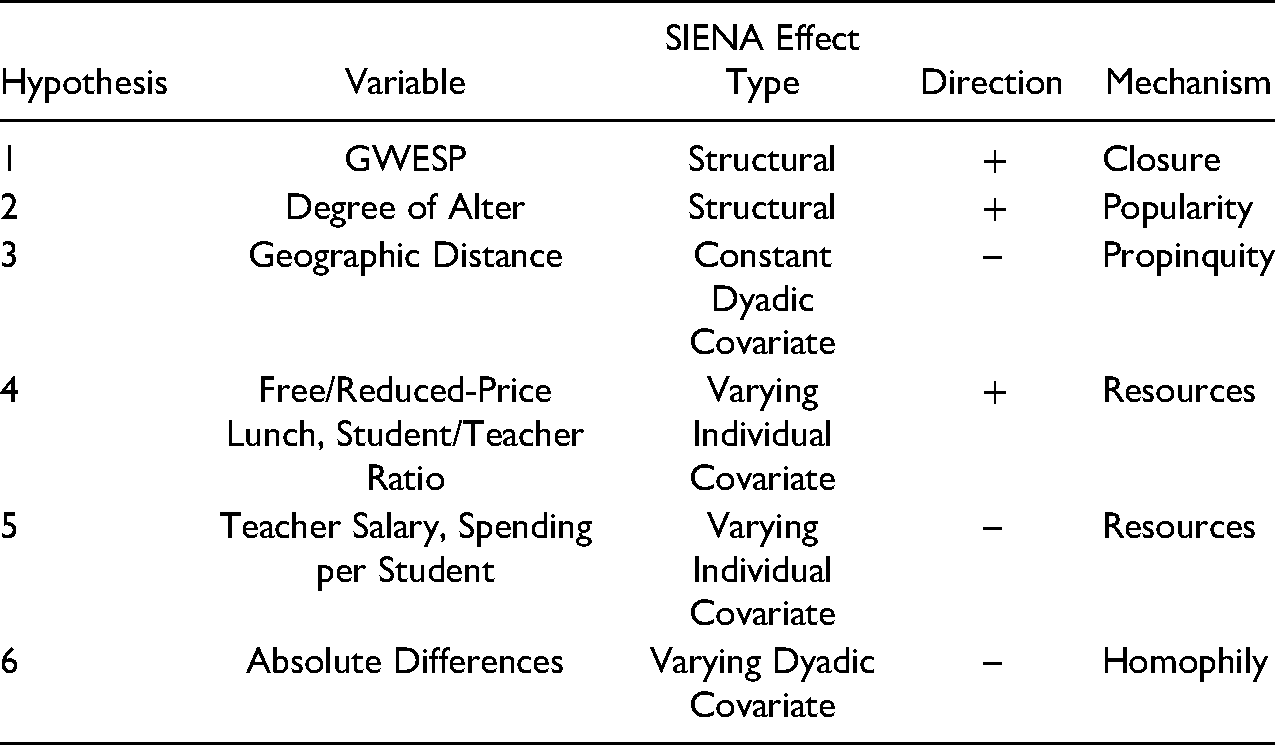
Table 1 provides a summary of each hypothesized relationship, the variables used to operationalize each relationship, relationship direction, and proposed causal mechanisms. The table also includes the specific effect type used in our stochastic actor-oriented model (SAOM) as implemented through RSiena.
Summary of Hypothesized Relationships.
Data and Methods
Data Sources
Chapter 28E of the Iowa Code requires that intergovernmental and intersector collaborations be filed with the state government. The Secretary of State maintains an online repository of all agreements, which includes a photocopy of the agreement along with textual metadata provided by the filer. Each agreement's listing displays its internal filing number, filing date, expiration date, service type, a short summary of its purpose, and each participant's name, organization type, county, and state region. The Iowa Code also requires that any amendment or termination of an agreement be filed with the Secretary of State, as per Section 8 of Chapter 28E. Ending an agreement prior to its initial expiration date only requires filing a short-form termination notice with the date and filing number of the agreement being terminated.
The forthcoming analysis includes agreement metadata from the 2007 − 2008 school year through the 2016–2017 school year, obtained via a custom web scraping script. Typographical and organization classification errors were manually corrected to ensure that only public school districts were included in the analysis (e.g., the Des Moines Area Community College system was flagged as a K-12 school district, despite being a two-year community college).
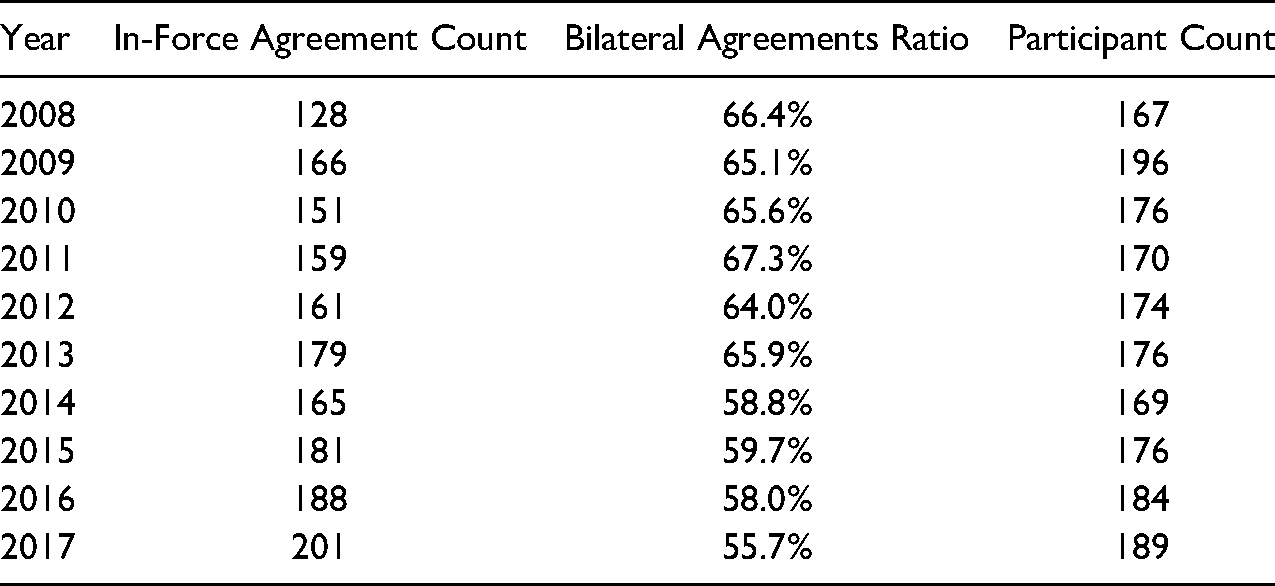
The data on interlocal agreements was then linked to administrative data from the Iowa Department of Education to capture a range of school district attributes. There were 205 interdistrict agreements (i.e., where at least two school districts were signatories) that were newly filed during the 10 school years covered by our data. The number of interdistrict agreements that were in force (i.e., active) over these 10 years ranged from 128 to 201. Note that agreements filed prior to the 2007–2008 school year that were in force for any amount of time during the observation period were also accounted for. In other words, the starting network for the 2007–2008 school year includes all prior agreements that were still active in that year. Table 2 summarizes the number of in-force agreements, the percentage of in-force agreements that are bilateral (i.e., involve two school districts), and the number of school districts that are actively participating in the interdistrict education network. Though there were 364 public school districts in 2008, 31 have since been dissolved or merged into neighboring districts. The 333 districts used in the current study have been active since 2008 and still operate at the time of writing.
Interdistrict Agreement Descriptive Statistics.
Summary of Agreement Topics
Gaining a substantive understanding of the topics covered by the interdistrict agreements required reading each of the 284 agreements used in our analysis. The agreements were read twice: first to establish a list of all potential agreement categories, and second to classify agreements into their appropriate category (summarized in Table 3). During the first reading, we recorded the specific language used in the agreement to describe its purpose. This list was then reduced by combining similar topics. For example, agreements created to coordinate the use of grounds, facilities, or equipment were collapsed into a single topic. In several instances, details about all three would often be provided in the same agreement (e.g., two school districts sharing the use of a baseball field, gymnasium, and the equipment used to maintain both). Once the categories were identified, each agreement was reviewed a second time and placed into a specific category.
Summary of Agreement Topics.

The broad “improving academic outcomes” topic is composed of agreements concerned with: academic advancement and student needs programs (which aim to bolster academic advancement, and establish and operate programs that assist students with special needs), admitting students from different districts (which facilitate the admittance of students from external school districts), and sharing K–12 school teachers. For example, an agreement between the Urbandale Community School District and five other public school districts established a jointly-administered program to serve “students in grades 9–12 who are identified as at-risk of dropping out of school.” The program, governed by the superintendents of each participating school district, provides students identified as “at-risk or as potential or returning dropouts” with a quality education via “appropriate alternative instructional programming beyond the costs of providing instruction for students in a regular curriculum.”
To similarly benefit from economies of scale, smaller school districts often pool administrative responsibilities commonly tasked to human resource departments, such as “conducting research and surveys of wages, salaries, and employee benefits for comparable positions in school districts and businesses, both within and outside the state of Iowa” and “handling personnel grievances upon request.”
The third-largest category concerns juvenile court services (JCS) and school-based supervision programs. Chapter 15 of the 441 Iowa Administrative Code (IAC) defines “school-based supervision” as “a program that provides for salaried staff, known as juvenile court school liaisons, to be hired by providers.” These liaisons “provide on-site services at middle and high schools to children experiencing truancy or other behavior problems at school and at home or in the community” and “assist with behavior and classroom management, conflict resolution, school attendance, and violence prevention” (IAC 441–151.31.232).
Network Attributes and Modeling
The interdistrict agreements were transformed into panel network data set by identifying which school districts collaborate in a given year. We created 10 adjacency matrices (one for each year) based on whether two school districts were both signatory to the same agreement. For example, an agreement filed in 2017 involved two parties: the St. Ansgar Community School District and the Osage Community School District. The agreement's purpose is to provide for a fourth-year high school Spanish class to be offered at Osage to residents of both school districts. Osage agrees to reimburse St. Ansgar, at the end of each semester, $200 per enrolled student and $200 for faculty transportation costs. Thus, a tie was created between St. Ansgar and Osage in 2017. The specified goal to “jointly share services of school personnel, or acquire and share the use of classrooms, laboratories, equipment and facilities” represents a typical arrangement.
Figure 1 provides a visualization of the interdistrict agreement network as it existed in 2008.
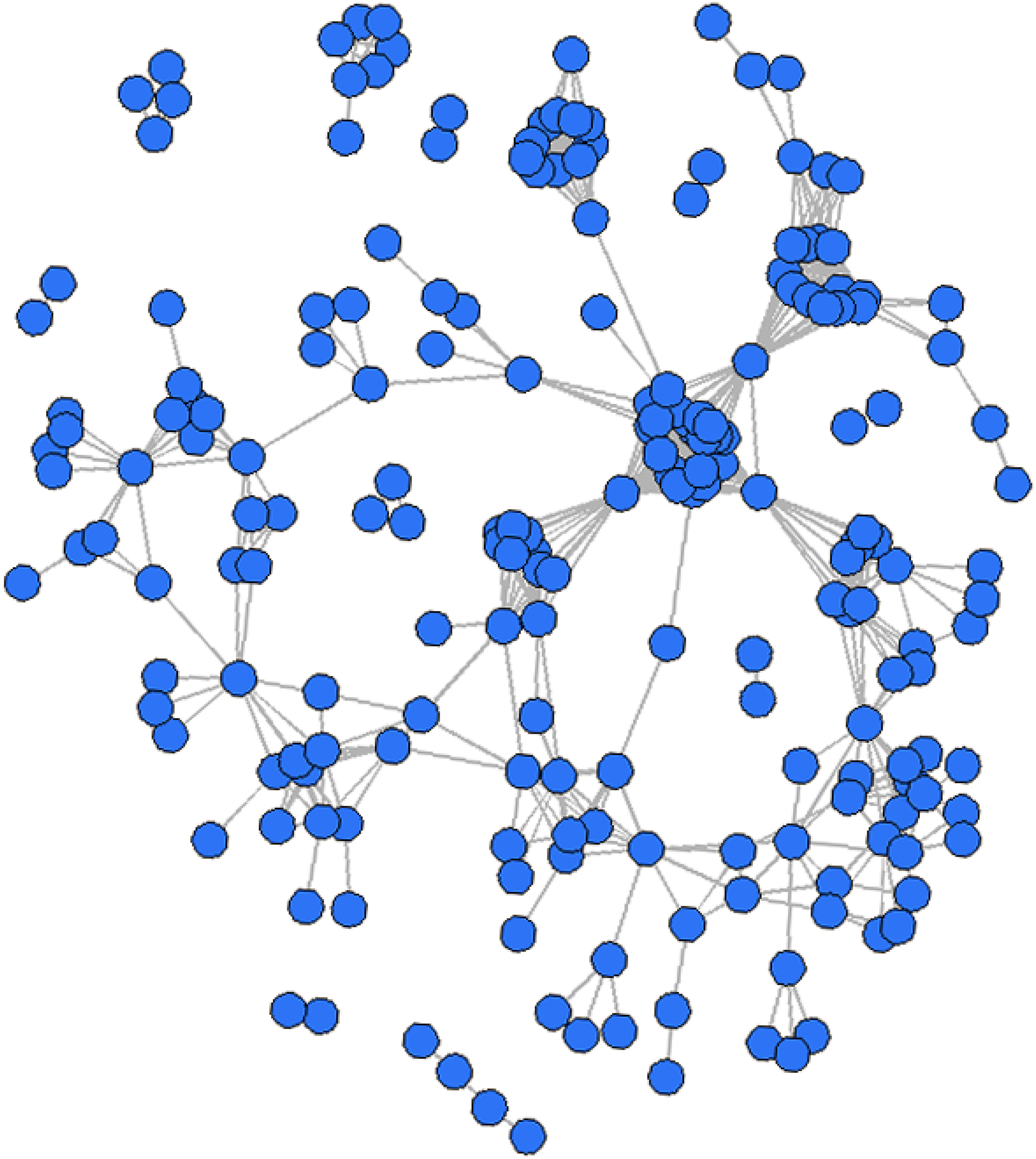
Interdistrict network, 2008.
Tie dissolution was accounted for by determining, for each year, if an existing agreement had reached its expiration date or was cancelled via a termination notice filed with the Secretary of State. Many interdistrict collaborations specify that its duration is indefinite, meaning it will remain in force until the school board of at least one district adopts a termination resolution. Once a termination resolution is filed with the Secretary of State or the specified agreement length (as noted in the agreement itself) has been reached, the tie between the collaborating districts is dissolved in that year. School districts that never participated in an interdistrict agreement (i.e., school districts that do not have an active tie with any other school district) were included in the network as isolates.
To explore the formation and evolution of cooperative relationships between public school districts in Iowa we use RSiena (“Simulation Investigation for Empirical Network Analysis”). RSiena is a statistical tool capable of estimating stochastic actor-oriented models (SAOM), which were specifically developed for use with panels of network observations. SIENA models are continuous-time Markov chains models where parameters are estimated through a series of simulations and tie changes are determined by the current state of the network (Snijders et al., 2010). These models are described as “actor-oriented” because networks are assumed to evolve through each actor's decision to create, dissolve, or maintain ties with other actors. Although the data is composed of annual slices of the interlocal education network, changes in the network occur continuously. Each school district (“ego”) evaluates a utility function to determine if it should form, maintain, or dissolve a tie with every other school district (“alter”). SIENA estimates the weights of the terms included in that evaluation function, which can include variables that capture network structures, node attributes, and tie (or “dyadwise”) attributes (Snijders & Pickup, 2018).
Based on the assumption that a tie's existence is determined by the sender of the tie, SIENA models were originally developed for directed networks. Scholars have since extended these models to non-directed networks, which require adjustments to the timing and choice processes because the formation of a tie can no longer be based solely on the utility considerations of the tie's sender (Snijders & Pickup, 2018). In the interdistrict network, individual schools take the initiative in proposing new or dissolving existing ties. For tie formation, the other school district must agree, while tie dissolution does not require confirmation. This unilateral initiative and reciprocal confirmation modeling choice best approximates the process of cooperative agreement formation in practice, and “is in most cases the most appealing simple representation of the coordination required to create and maintain non-directed ties” (Snijders & Pickup, 2018, p. 233). Given this representation of network formation, we explore three main categories of predictor variables, which map onto our hypotheses: structural effects, actor attribute effects, and homophily effects.
Structural Effects
A network's structural effects can be conceptualized as explanatory variables that depend on the structure of the network itself. These endogenous terms control for dependencies inherent in the data by capturing self-organizing network properties. Self-organization in networks occurs when the pattern of existing ties in the network influences the formation of other ties (Lusher et al., 2013). The variables are known as structural effects, because the attributes of the actors forming the tie are not taken into consideration.
As posited in our first hypothesis, one of the most important structural effects is that of network closure or transitivity whereby actors who share a common third partner are more likely to interact. Network transitivity is operationalized via a geometrically weighted edgewise shared partners (GWESP) term. The GWESP effect is calculated by counting the number of triangle configurations in the neighborhood of each actor and weighted to account for the decreasing marginal impact of having additional shared partners (Ripley et al., 2020, p. 127; Snijders et al., 2006). Another prevalent factor of self-organization in networks is preferential attachment (Hypothesis 2). Preferential attachment is the process by which actors tend to form connections with already well-connected actors (Barabási & Albert, 1999). This process produces actors who vary significantly in their number of ties in the network. Preferential attachment is measured via the square root of alter popularity, defined as the sum of the degrees of the alter nodes to whom a school district is tied. Finally, we include two other structural measures in our model. First, the network isolate term captures the effect of a school district being an isolate (i.e., having a degree of zero). Second, the density parameter, known as degree, is included in the model to capture the overall tendency for ties to form in the network. The degree parameter functions similarly to an intercept term in a standard linear model.
Actor Attribute Effects
Actor attribute effects are included in the model to assess how certain organizational characteristics influence the tendency to form ties. The Iowa Department of Education maintains data on all 333 public K-12 school districts in the state and publishes annual district-level counts of total students enrolled, non-white students enrolled, students that are eligible to receive free or reduced-price lunch, full-time teachers, and teachers with an advanced degree. Total instruction expenditures, average teacher salary, and average years of teaching experience for each school district are tracked and made available to the public as well.
Four of these variables measure school district resources. A higher number of students that are eligible to receive free or reduced-price lunch and higher student-to-teacher ratios are indicative of resource-constrained districts (Hypothesis 4), while higher teacher salaries and spending per student levels are indicative of well-resourced districts (Hypothesis 5) (Tables 4 and 5).
School District Attributes Descriptive Statistics.
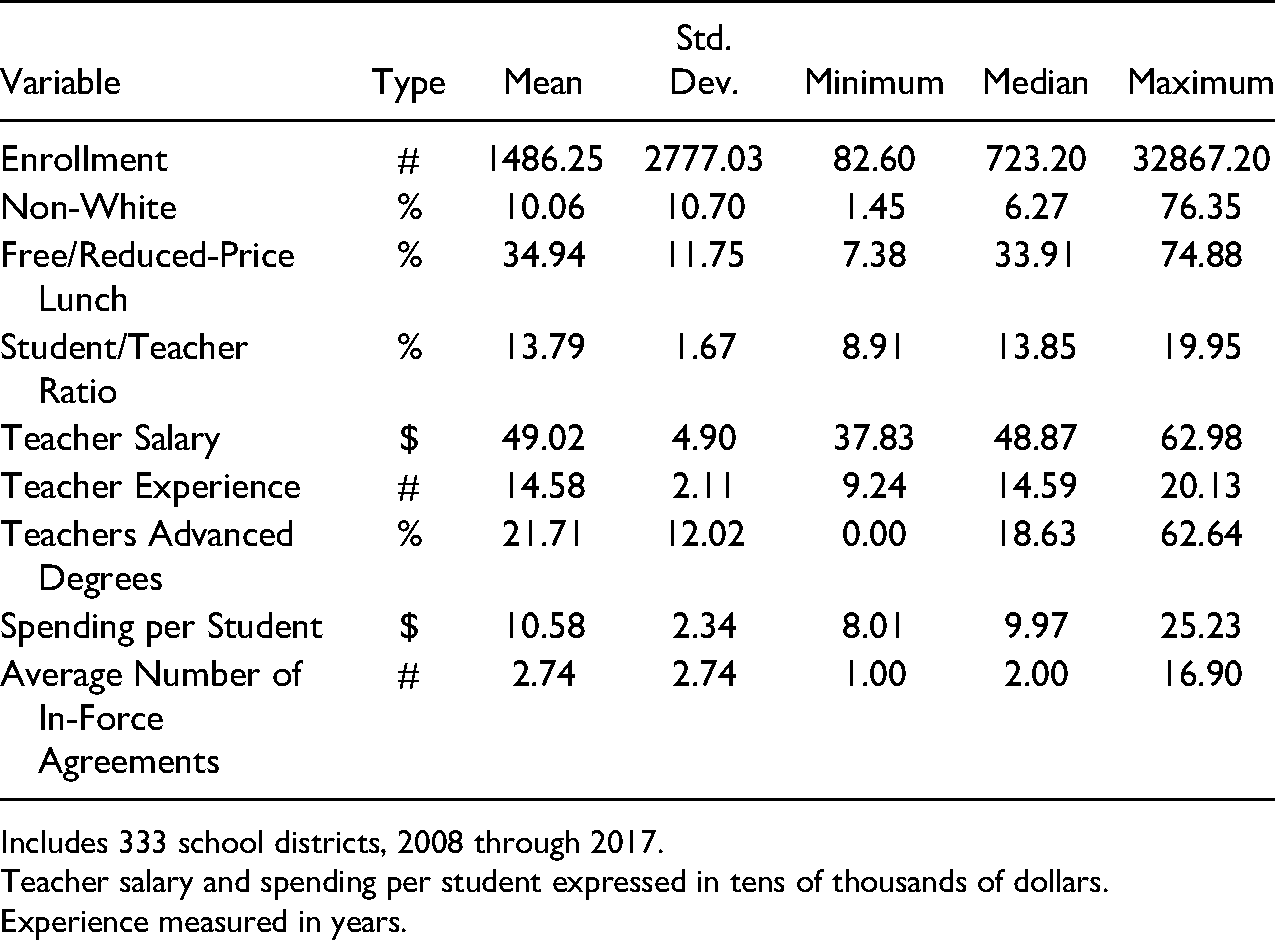
Includes 333 school districts, 2008 through 2017.
Teacher salary and spending per student expressed in tens of thousands of dollars.
Experience measured in years.
School District Attributes Descriptive Statistics, Logged Variables Only.
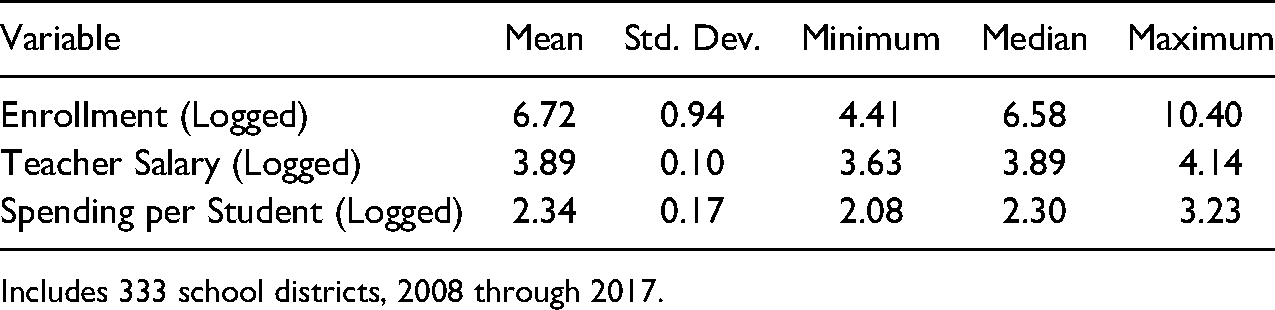
Includes 333 school districts, 2008 through 2017.
Homophily Effects
Homophily effects are used to capture the tendency for school districts with similar attributes to interact with one another. Hypothesis 6 posits that decreases in homophily reduces the likelihood of collaboration between school districts. To determine how the likelihood of tie formation changes as districts in a given dyad diverge from one another, we calculated the absolute value of the difference between each pair of school districts for the following district-level measurements: total students enrolled, non-white students enrolled, students that are eligible to receive free or reduced-price lunch, student-to-teacher ratio, average teacher salary, years of teaching experience, and number of teachers with an advanced degree.
In addition to homophily based on attributes, we also consider similarity in location. Our third hypothesis suggests that school districts in close geographic proximity will be more likely to form collaborative relationships. Using school district longitude and latitude, we created a distance matrix that reflects, in kilometers, how far each district is from one other. Geographic coordinates were determined using the Google Maps API and a list of addresses for each school districts’ administrative office was obtained through the Iowa Department of Education.
Results
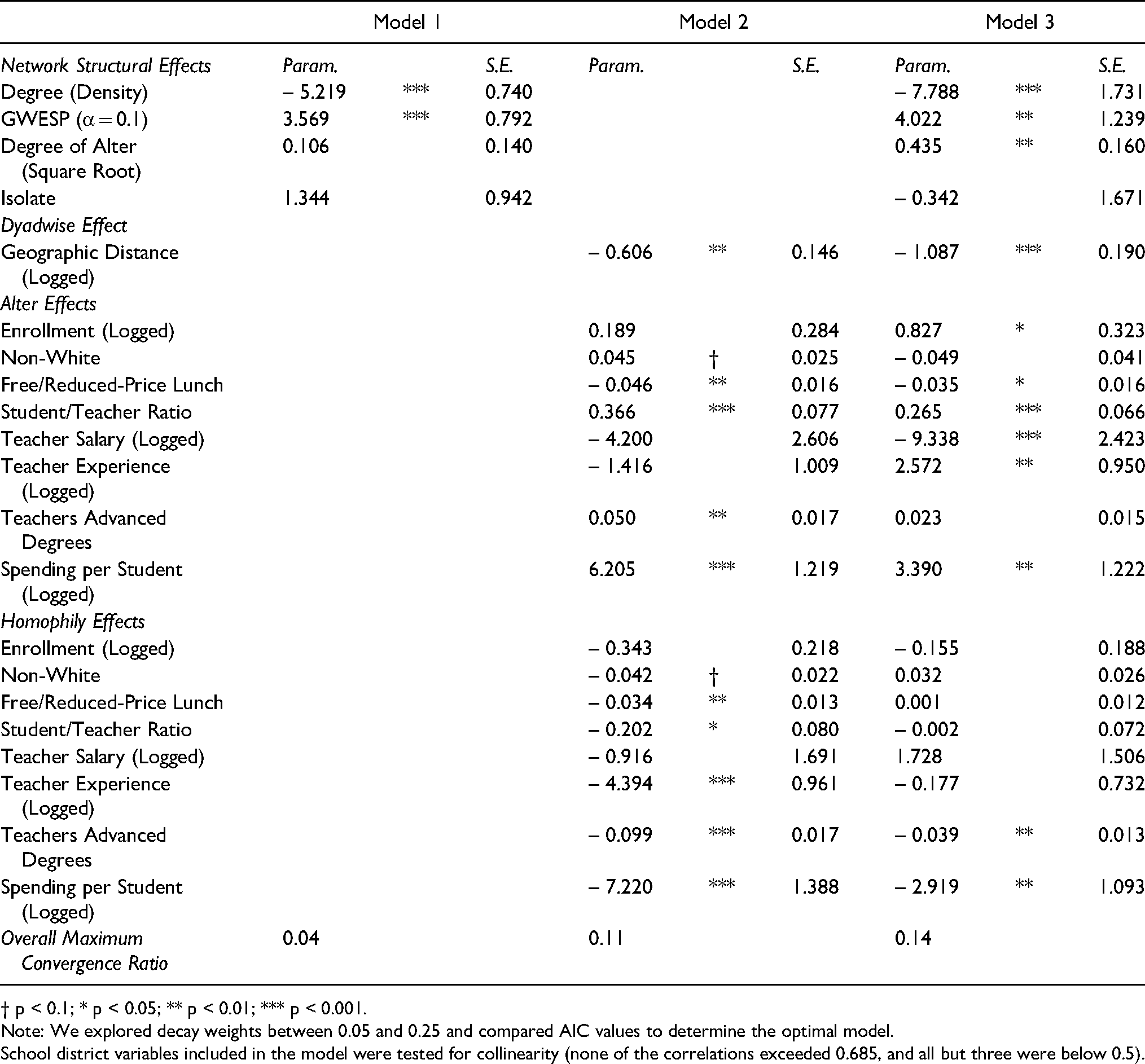
Model diagnostics and goodness of fit tests that were conducted on each of the models presented in Table 6 returned satisfactory results. Overall convergence ratios were all below 0.2, an indicator of model fit, and the convergence t-ratios for all terms in each model were well below 0.1 (Ripley et al., 2020). Goodness of fit plots can be found in the appendix. The discussion that follows is based on Model 3 (see Table 6).
Interdistrict Network SIENA Models.
† p < 0.1; * p < 0.05; ** p < 0.01; *** p < 0.001.
Note: We explored decay weights between 0.05 and 0.25 and compared AIC values to determine the optimal model.
School district variables included in the model were tested for collinearity (none of the correlations exceeded 0.685, and all but three were below 0.5).
Structural Effects
Providing support for Hypothesis 1, the network transitivity measure, GWESP, was found to be positive and significant (p < 0.001). As hypothesized, school districts are more likely to form a relationship with another school district if they share a mutual collaborator. This aligns with prior evidence and theory and suggests that having common partners can provide school districts introductions and endorsements, thereby lessening uncertainty and risk. In support of Hypothesis 2, school districts are also inclined toward associating themselves with popular districts (p < 0.05). A school district's well-connectedness serves as a heuristic for both its capacity and reputation, reducing information and monitoring costs.
Actor Attribute Effects
When determining whether to form, maintain, or dissolve a collaborative relationship, our analysis shows that school districts look to the characteristics of their partners. Hypotheses 4 and 5 find mixed support in the findings: school districts with higher levels of students being eligible for free or reduced-price lunch were less likely to form interdistrict ties (p < 0.05), while districts with higher levels of per-student spending were more likely to form interdistrict ties (p < 0.01). However, districts with higher student-to-teacher ratios were significantly more likely to form collaborative ties (p < 0.01) and districts with higher average teacher salary were significantly less likely to form collaborative relationships (p < 0.01). These mixed findings will be discussed in more detail below.
Though we had no expectations with respect to the control variables, our results suggest that school districts with a higher number of enrolled students have an increased probability of engaging with the interdistrict education network. Previous research has found that municipalities located within a highly-populated metropolitan area are more likely to use interlocal agreements (Morgan & Hirlinger, 1991). This could be because demand for public services increases with a region's population and that larger municipalities have the administrative capacity to pursue cooperative relationships (Kwon & Feiock, 2010; LeRoux & Carr, 2007).
Homophily Effects
Overall, our SIENA models provide support for Hypothesis 6. For each of the seven independent variables included, an increase in absolute differences (i.e., a reduction in homophily) in Model 2 decreased the likelihood of interdistrict collaboration. In Model 3, which includes network structural effects, two homophily terms reached statistical significance: school districts tend to work with districts that are similar to them on the number of teachers with an advanced degree (p < 0.01) and on spending per student (p < 0.05). Geographic distance was also found to be statistically significant (p < 0.001). As anticipated, an increase in the physical distance between two given school districts reduces their chances of collaborating. This finding provides strong support for Hypothesis 3. Table 7 below summarizes our results.
Summary of Results.

Discussion and Conclusion
Fiscal stress and the constant search for efficiency have led public school districts to seek partnerships with one another. These partnerships create interdistrict networks whose composition and structure shape performance. While existing research has focused on examining research-practice partnerships and public-private partnerships, the origins and evolution of interdistrict networks have received much less attention. Relying on a state statute that requires all instances of local government collaboration to be filed with the Iowa Secretary of State's office, we were able to create a comprehensive view of the interdistrict network that formed between the 2007–2008 school year through the 2016–2017 school year (Figure 2).

Interdistrict network, 2017.
Using this network, we sought to explore the formation of interdistrict collaborations and the factors that promote or inhibit the formation of ties among districts. Our model of tie formation considered five major factors: network closure, preferential attachment, resource/fiscal capacity, homophily, and propinquity. We find that school districts that share a common partner or are geographically close to one another are more likely to form collaborative ties. This enables leveraging the benefits from reduced costs in sharing and allows for the development of additional efficiencies. The increase of close physical and strong relational ties may reduce transaction costs and support the efficiency of interaction. Closed triads also engender trust and relational predictability. However, these well-trodden relationships may limit access to novel information that may not be contained within “closed” geographic regions and, in this sense, inhibit the flow of innovations (Burt, 2004).
We also find evidence that similar contexts, in terms of student and teacher demographics, shape tie formation. These similarities can support relatability, a sense of common interests, and the perception of comparable status. At the same time, the organizational learning literature suggests that, as with closed networks, this may reduce novel information or ideas that question existing assumptions. For example, Argis and Schon (1974) argue that systems will operate on existing assumptions unless those assumptions are challenged through interacting with others that bring new perspectives (which may be less likely to occur when limiting interactions to those who are similar). Assuming these collaborations are meant to address identified problems or enhance the performance of the district, then by only collaborating with others that are similar, these ties might actually constrain change and learning.
In terms of fiscal capacity and resources, we found mixed results. As our hypotheses suggested, school districts with higher student-to-teacher ratios were more likely to cooperate with another district, and districts with higher teacher salaries were less likely to form collaborative ties. However, school districts with a higher number of students being eligible for free or reduced-price lunch, and districts with higher per-student spending levels, were less likely to form interdistrict ties.
Status may provide a plausible explanation for these mixed findings. Low socioeconomic status school districts being less likely to form ties overall may be due to differences in status; districts with lower socioeconomic status may perceive themselves, and be perceived as, lower status. Podolny (1993) and Chung et al. (2000) examined this organizational phenomenon in their studies on strategic alliance and concluded that ties are more likely to occur between organizations of similar status and that cross-status ties are less likely due to mismatch in perceived value and social position. One district attribute associated with capacity to learn from external partners is strategic knowledge leadership (Farrell et al., 2018, p. 6), in particular their willingness to engage with an external partner; to the extent that school districts with limited resources are unable to expend the time and effort needed to establish cooperative agreements, they may be excluded from interdistrict networks and further exacerbate issues of fiscal stress.
In addition, the measures that were used in the foregoing analysis to determine which districts were more “resourced” may not reflect the total amount of available resources. While our general assumption was that less-resourced districts reach out more, and more-resourced districts reach out less, it is important to consider alternative operationalization approaches. For example, higher percentages of students that qualify for free- or reduced-price lunch and higher student-to-teacher ratios are both assumed to be indicative of less resources — but both could be attributable to other factors that may actually reflect “higher resources” (e.g., the former could be explained by districts setting higher income thresholds and the latter because the schools are effective and therefore popular).
Limitations and Future Research
Ties between nodes were inferred from two participants being signatory to the same agreement. Thus, all of the network data used in the analysis is non-directed. Given the nature of the filed agreements, we consequently assume equal reciprocity, though the variance in directionality and strength could be significant (e.g., agreements that are more contractual in nature are not distinguished from agreements that stipulate joint provision). This assumption restricts the depth of our hypotheses, leaving potential nuance untested. For example, while we expected that a lack of resources incentivized collaboration among public schools, we cannot empirically determine or predict the type and extent of resources being transferred from a high-resource to low-resource district. Related, we cannot identify the underlying mechanism by which low-resourced districts or low-status districts may be left out of collaborative arrangements. One of two things could be happening: low-resource districts could lack any slack resources and thus turn all efforts internally due to the time and costs associated with collaboration. Alternatively, low-resource districts could actively be searching for collaboration but be perceived by high-resource peers as riskier partners and thus less likely to be involved in collaborative arrangements. Thus, further research is needed.
While understanding the antecedents of network formation is theoretically interesting, it carries potentially important implications for policy and strategic leadership. Future research can examine how network characteristics or a school district's position within the education network reduces the cost of providing education or improves student outcomes. Such knowledge can help policymakers incentivize this type of interlocal collaboration and promote particular structural configurations known to be beneficial (Whetsell et al., 2020). For example, to what extent does a school district's participation in an interlocal agreement affect their students’ academic outcomes? Given agreements involving school resource officers and student discipline, does intergovernmental collaboration lower the number of suspensions and expulsions a school district issues, all else equal? The intergovernmental management literature needs to ultimately move in this direction to help districts identify when and through what structural arrangements the expected or assumed benefits of collaboration may be witnessed.
Further, there may be a political dimension that may be of interest to explore. Perhaps the composition (e.g., political affiliation, policy positions, tenure on board, etc.) of school boards when agreements are entered into have some influence on the formation and termination of ties. It is possible that collaborative relationships between districts reflect political alignments or other expediencies and as such would make for interesting future work. Finally, districts confronted with reduced resources and pressure for improving outcomes may lead to interdistrict competition around talent and resources, in turn affecting the formation of collaborative ties. Drawing on literature around coopetition (Bouncken et al., 2015), a mix of competitive and collaborative relationships developed for strategic advantage, may provide additional insight into the dynamics of interdistrict collaboration.
Implications for District Leaders and Policy Makers
Our data, analysis, and results suggest several important implications for district leaders and education policy makers. Here we will highlight three.
Create opportunities to intentionally disrupt existing relational patterns. Our work suggests that districts that are close to one another and have similar demographic profiles tend to form collaborative ties. Although these relationships may afford opportunity for efficiencies, these same relations may well constrain access to novel information and the resources of new communities. In addition, it may also be the case that similar professional development opportunities may have been provided to both systems meaning the knowledge base and capacities available to address deep and pressing issues may well be the same in both districts. Given our findings, district leaders may benefit by investing the effort necessary to build relations with districts in different geographic and contextual settings.
Further, in regard to issues related to equity, it may be the case that if districts continue to primarily interact with other districts serving similar student populations, there may be limited opportunity to challenge existing belief structures which may unintentionally reinforce structural inequities and diminished outcomes for some groups. Therefore, actively seeking collaborative ties with districts that differ in a host of ways may provide additional benefits. This is not to say there is no value in building and strengthening ongoing ties with similar districts that are nearby as those relationships clearly have value, but intentionally diversifying a “districts’ portfolio of ties” may well open up new and unrealized opportunities and resources.
Challenge deficit mindsets through leveraging existing strengths and funds of knowledge. Our findings indicate that districts that serve students from lower socioeconomic status were less likely to form ties. As we argue, this may have to do with perceptions of status and perhaps that these districts often have their focus on the perceived numerous challenges facing districts that are under-resourced and serving traditionally marginalized populations. This combination may make the formation of ties with other districts even more challenging. Districts that serve underserved students may lower expectations and limit programming for students. These two factors are related to an internal “deficit model” perspective which may govern theories of action and perceptions around what is possible both within the district and in the community. Intentionally shifting mindsets to ones of strength and growth may support the recognition of the strengths that exist within the district and shift deficit thinking of the surrounding community into a focus on funds of knowledge (Gonzalez et al., 2005).
These mindset and theory of action shifts may enhance the sense of agency and efficacy of the educators to be able to shift belief structures that lift the overall perception of the district and community and as such highlight strengths a district will bring to a partnership. Further, actively, intentionally, and thoughtfully engaging around strengths within the system builds on a growing body of work around positive organizational scholarship, which suggests the transformative power of a strengths-based approach (Daly & Chrispeels, 2006). Perhaps when districts come from a place of building on strengths, they not only may reach out more, but also be even more attractive partners for other districts.
Support intermediary organizations to support “matchmaking.” We know there is great potential in districts connecting with other districts (e.g., CORE Districts in California) and this idea is rooted in the notion of opportunities for exchanges and learning from one another.
Although our work suggests that relationships between districts do form, there are also a host of districts that do not have formal relationships with other districts or support agencies and as such may be at a disadvantage in terms of access to novel knowledge resources. We also know there is a growing set of intermediary organizations or “knowledge brokers” that are entering the education space. These organizations or research practice partnerships (universities, foundations, non-profit, districts, etc.) may provide some opportunities for the introduction of new knowledge into districts. As such the future work of both practitioners and policy makers is going to be in developing relationships for short term needs as well as longer term partnerships that provide an ongoing source of mutual support. A growing body of work suggests the future of districts and educational improvement will reside in partnership work requiring both district leaders and policy makers to support the conditions for successful partnership to form and sustain.
Footnotes
Appendix
The following goodness-of-fit plots are used to determine whether a model adequately reproduces the observed networks' characteristics. Figures A1 and A3 show the degree and triad type distributions (centered and scaled), respectively. Figures A2 and A4 show the same distributions without centering and scaling.
Declaration of Conflicting Interests
The author(s) declared no potential conflicts of interest with respect to the research, authorship, and/or publication of this article.
Funding
The author(s) received no financial support for the research, authorship, and/or publication of this article.
