



Abstract
To what extent do cereal spokes-characters make eye contact with children versus adults, and does their eye contact influence choice? In study 1, the shelf placement and eye positioning of 86 cereal spokes-characters were evaluated in 10 grocery stores in the Eastern United States. We calculated the average height of cereal boxes on the shelf for adult- versus children-oriented cereals (48 in. vs. 23 in.) and the inflection angle of spokes-characters’ gaze (0.4° vs. −9.6°). We found that cereal characters on child- (adult-) oriented cereals make incidental eye contact at children’s (adults’) eye level. In Study 2, we showed that eye contact with cereal spokes-characters increased feelings of trust and connection to the brand, as well as choice of the brand over competitors. Currently, many of the cereals targeted toward children are of the heavily sugared, less healthy variety. One potential application of this finding would be to use eye contact with spokes-characters to promote healthy choices and healthier food consumption.
Introduction
Cereal is the second most widely advertised food to children besides fast food (Federal Trade Commission, 2008), and cereal companies spend more money marketing their products to children than any other packaged food sector (Kunkel et al., 2004). In the United States, US$3 billion in total is spent annually on packaging designed for children, since packaging is regarded as particularly important to attract consumers (Page, Montgomery, Ponder, & Richard, 2008). Children’s cereal boxes, in particular, often feature a spokes-character to promote the brand. While these characters have been shown to be effective in promoting a product (Nestle, 2006), little research has been done on questions related to positioning of the character on the package, their gaze, the height of the box on the shelf, and the impact of these on feelings of trust and on one’s ultimate choice.
By taking into account the average shelving height of a box and the direction of the gaze of spokes-characters on cereal boxes, Study 1 focuses on the extent to which spokes-characters’ eyes make eye contact with children versus adults. Study 2 enables us to determine how this influences choice.
Eye contact from spokes-characters could significantly affect cereal sales. Furthermore, spokes-characters are mostly used for less healthy, high-sugar cereals, potentially encouraging increased purchase and consumption of less healthy cereals. Lessons learned from this study could be applicable for marketing healthier cereal more effectively to children to change consumption behaviors.
To better understand how cereal is marketed in grocery stores, it is important to note that child and family cereals comprise approximately 50% of the shelf space in the average grocery store’s cereal aisle (Wilkie, Desrochers, & Gundlach, 2002). The positioning of cereals on the shelf is highly important to cereal companies, which accordingly pay slotting fees to the supermarkets to secure profitable shelf space for their products (Wilkie et al., 2002). Cereal marketed to families is typically placed at eye level, which is known to be a profitable location (Harris et al., 2009). In an experiment performed by a team of researchers at the University of Chicago in 1994, moving toothbrushes from the top shelf of a store to eye level increased their sales by 8% and their profits by 6% (Drèze, 1994). This prime middle shelf is typically 51 to 53 inches off the floor, as the average eye height for women in the United States is 59 inches and for men in the United States 64 inches (Drèze, 1994). Cereal marketed to children is generally placed on lower shelves than adults’ cereal, so that it can be in their range of vision as they walk down the supermarket aisle (Harris et al., 2009).
Apart from shelf placement, cereal companies devote US$56.3 million a year (24.6% of their youth marketing budget) to premiums, cross-licensing agreements, and celebrity endorsements that appear prominently on product packaging, which in turn affects consumer purchasing (Harris et al., 2009). Price promotions, multi-unit promotions, special displays, and health messages on the box all encourage impulsive purchase behaviors and influence the relative value of products when compared with different alternatives (Abratt & Goodey, 1990; Dijksterhuis et al., 2005;Wansink, Kent, & Hoch, 1998).
A prominent marketing feature on many cereal boxes is the use of spokes-characters. Cartoon characters in particular have been shown to create a strong aura of trust among children (Van Auken & Lional, 1985). By the age of 2 years, children are able to identify frequently seen characters, and to demonstrate desire for those characters and their related products that they see on television, packaging and promotions (Gunnarsdottir & Thorsdottir, 2010). Children are attracted to characters that they can identify with, aspire to, or emulate (Lapierre, Vaala, & Linebarger, 2011). Combined with the nostalgia that they elicit in consumers, these characters’ relevance and apparent experience with the product they are promoting create consumer trust, which then leads to a positive brand attitude (Garretson & Niedrich, 2004). But are these the only factors that create a sense of trust in the spokes-character? Eye contact could increase trust toward the spokes-character, which could then create a more positive attitude toward the cereal brand. The purpose of the two current studies was to explore the degree to which adult and child cereal spokes-characters make eye contact with consumers as they walk down the grocery store aisle, and to examine whether this could have an effect on consumer attitudes and behavior.
Spokes-characters are especially common on cereals marketed to children, which tend to be less healthful than cereals marketed to adults (Harris & Graff, 2012). On average, child brands contain 33% sugar, 5.1% fiber, and 525 mg of sodium; they have 56% more sugar, 52% less fiber, and 50% more sodium than adult brands (Harris & Graff, 2012). Furthermore, spokes-characters are most often featured on the less healthy cereals within the child brand subset; only 2 cereals in the top 10 family and child cereals rated as “most nutritious” feature spokes-characters, whereas 8 of the 10 least nutritious cereals feature spokes-characters (Harris & Graff, 2012).
In a cluttered environment with a wide variety of alternatives, spokes-characters can be a salient feature that helps the relevant cereals stand out in the crowded cereal aisle (Hoch, Bradlow, & Wansink, 1999). Because of their similarity to humans, characters can help draw attention to the cereals (Frischen, Bayliss, & Tipper, 2007). Facial features have been shown to draw covert attention (Dolan et al., 1996; Wojciulik, Kanwisher, & Driver, 1998), attention that is not evinced in head or eye movement (Posner, 1980). Emotional stimuli in general can be processed without explicit attention due to their salience (Pessoa, 2005). Faces in particular are salient to a human observer, and tend to draw neural response in visual processing areas of the human brain (Morris, Friston, & Dolan, 1997; Walker, Cootes, & Taylor, 1998). This can occur overtly, or without conscious attention (Critchley et al., 2000; Palermo & Rhodes, 2007). In other words, even without being explicitly noticed, faces in their environment can be noticed and registered by human observers.
Given their propensity to draw attention or be registered even without conscious attention, the potential effects of spokes-characters on choice and evaluation are important. The familiarity of many spokes-characters can increase preference and choice (Cantril & Gaudet, 1939; Maslow, 1937). This is because familiarity generates positive feelings (Crandall, 1967; Zajonc, 1980). Repeated exposure, strengthened by the greater attention these characters draw, would generate greater processing fluency (Bornstein, 1989). Such fluency will in turn generate positive affect, which can translate to heightened evaluations (Reber, Winkielman, & Schwarz, 1998; Winkielman & Cacioppo, 2001; Winkielman, Schwarz, Fazendeiro, & Reber, 2003). In sum, repeated exposure to and familiarity with spokes-characters may generate favorable evaluations of cereals featuring them.
While these effects of spokes-character are general and may occur whenever such characters are used, the current investigation aims to examine whether eye contact by characters may enhance their effects, and whether this effect of eye contact is used in companies’ choice of the direction of gaze of cereals targeted at different audiences (adults vs. children). The eyes specifically play the most important part in the process of facial recognition, and are thus the most salient feature of spokes-characters (Lam & Yan, 1996). Eye contact has been shown to cause people to view others as more attentive, assertive, socially skilled, competent, and credible (Kleinke, 1986). Furthermore, the feeling of being watched can increase socially desirable behavior (Diener & Walbom, 1976; Wicklund & Duval, 1971), as people routinely attempt to control the way that others perceive them through impression management (Leary & Kowalski, 1990). Eye contact specifically has been shown to increase social cooperation and trustworthy behavior. Even eye contact from representations of eyes, rather than real human eyes, can have these effects (Bateson, Nettle, & Roberts, 2006; Burnham & Hare, 2007). For instance, in Burnham and Hare’s research, people being watched by the robot Kismet (Breazeal & Scassellati, 1999) contributed 29% more to a public good than did people not being watched.
If people are aware that eye contact is related to more trustworthy behavior, they should display increased trust given eye contact. This has indeed been shown to be the case, with eye contact increasing trust and positive regard (Bayliss & Tipper, 2006; Mason, Tatkow, & Macrae, 2005). People seek each other’s gaze when seeking friendship, and eye contact has been known to enhance people’s level of comfort (Lefebvre, 1975; Kleck & Nuessle, 2011). Given that representations of eyes, rather than actual human gaze, has been shown to produce similar effects (Bateson et al., 2006; Burnham & Hare, 2007), eye contact from spokes-characters should similarly increase trust, generate positive feeling, and consequently aid persuasion. This could significantly contribute to cereal sales, should it be found that there indeed is eye contact as children walk down the aisle.
The current work presents two studies examining the use of eye contact in cereal marketing. In Study 1, we examine whether spokes-characters’ eyes on cereal boxes are positioned to have eye contact with their target, with cereals oriented at children and cereals oriented at adults displaying characters’ eyes looking at an angle that would establish eye contact with their target audience. Study 2 examines whether such eye contact can lead to more favorable evaluations and increased choice of cereals.
Study 1: Do Cereal Characters Make Eye Contact?
The purpose of our first study was to examine whether cereal spokes-characters make eye contact (whether intentional or not) with consumers. Specifically, we examine whether the angle of gaze of spokes-characters on child-oriented cereals is such that it would create incidental eye contact with children. We examine this by checking whether the angle of gaze from spokes-characters’ eyes is such that it would create eye contact with children as they pass at the center of the aisle, where most people walk while surveying products (Drèze, 1994).
Method
Sixty-five different types of cereal featuring 86 different spokes-characters were evaluated across 10 different grocery stores in New York and Connecticut, including Stop & Shop, Shop Rite, Tops, Wegmans, and Walmart. For each spokes-character, the final metric calculated was the height of the spokes-character’s gaze 4 feet away. This is the height at which a person’s eyes would need to be as they walked down the center of the aisle to make eye contact with the character. There were three main steps to calculating this height. First, the angle of each spokes-character’s gaze had to be calculated trigonometrically. Next, the average height of spokes-characters’ eyes on the supermarket shelf had to be determined. Finally, these two measurements were used to calculate the height of the spokes-character’s gaze 4 feet away.
Coding criteria
To determine which brands of cereal were marketed to children versus adults, the criteria from the Rudd Center for Food Policy and Obesity’s Cereal FACTS were used (Harris et al., 2009). The categorization was primarily determined by brands’ television advertising. To be classified as a children’s brand, one of two criteria needed to be satisfied regarding television advertising: Either children had to have been exposed to significantly more television ads for the cereal than adults were, or the message had to appeal specifically to children. If there were no ads shown on television, the website for the brand was examined; if the website was designed for kids to go on by themselves, the cereal was also classified as a children’s cereal.
Finally, any brand featuring licensed characters that are popular among children (e.g., Dora the Explorer) was designated as a children’s cereal. Cereal brands were defined as being marketed to adults if there was nothing in their marketing materials to indicate that children should or would want to consume the product, or if the product was marketed to parents, addressing them directly with reasons to feed the product to their children in television advertisements.
Calculation of the angle and height of each spokes-character’s gaze
To calculate the angle of the spokes-characters’ gazes, it was assumed that their eyeballs were three-dimensional and spherical (see Figure 1). The angle of gaze of the spokes-characters was produced by calculating the tangent of the distance between the center of the eye and the center of the pupil divided by the diameter of the eye (assumed depth). These dimensions are shown in Figure 1. We used enlarged pictures of spokes-characters to measure the dimensions.
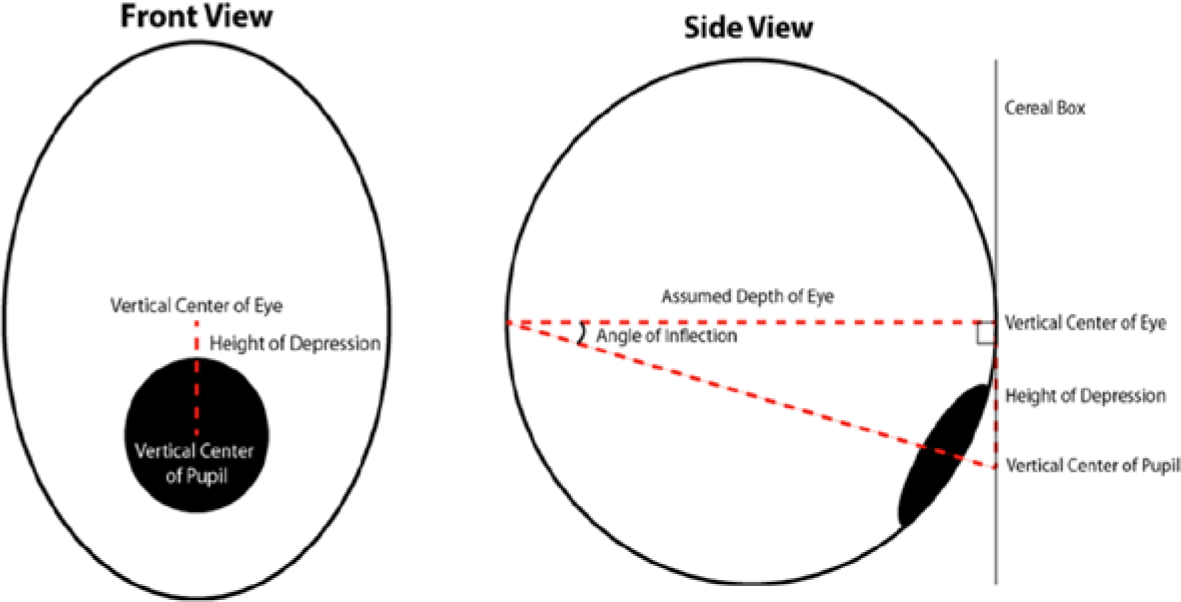
Calculating the angle of inflection of a spoke-character’s gaze.
Once the angle of gaze was determined, the height of the gaze of each character at the center of the aisle was calculated. The average height of each spokes-character’s eyes on the grocery store shelf was measured. Using the already calculated angle of its gaze, we trigonometrically determined how high its gaze would reach 4 feet away (see Figure 2), the height at which a person’s eyes needed to be to make eye contact with the spokes-character. A detailed explanation of the procedure can be read in the Methodological Appendix.
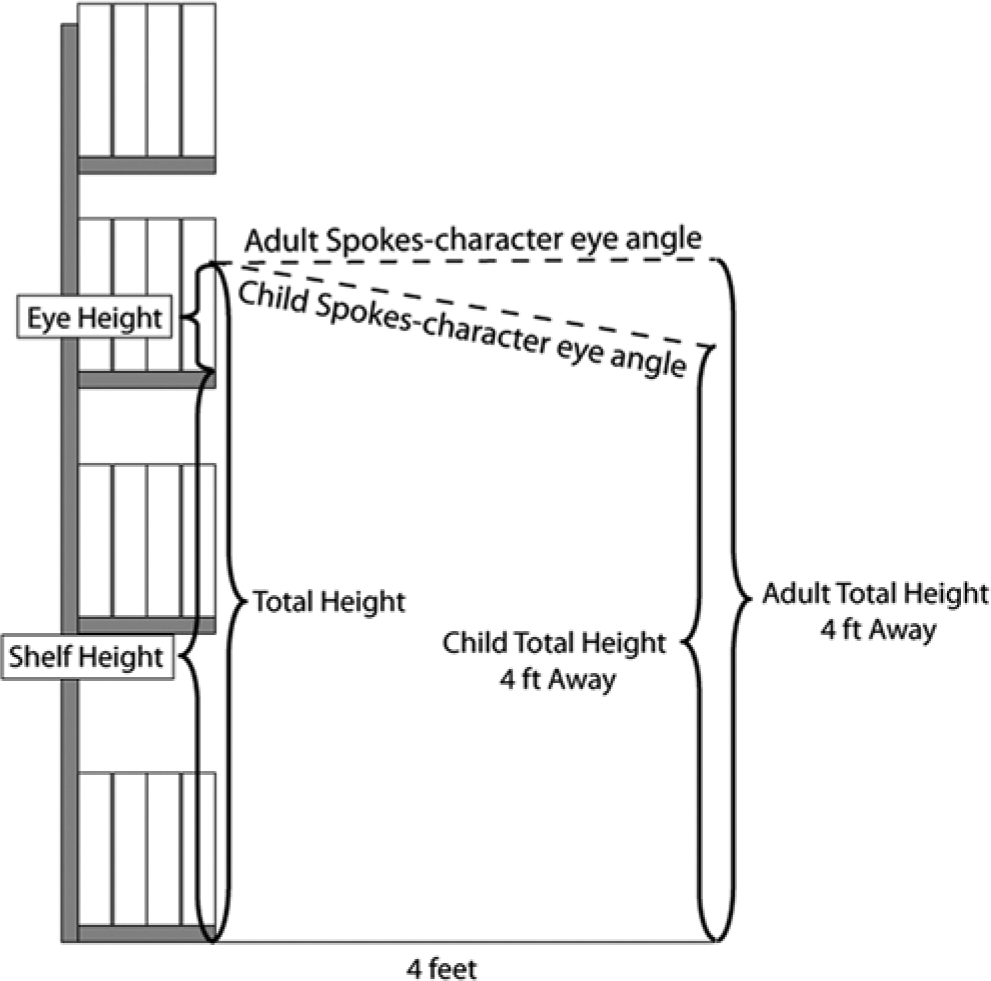
Calculating the height of a gaze from 4 feet.
Results and Discussion
A total of 65 different cereals were evaluated; 45 of these were children’s cereals, while 20 were adult cereals. Among the 65 cereals evaluated, there were often multiple characters per box, resulting in a total of 86 different spokes-characters: 57 were directed toward children and 29 toward adults. The average eye angle of inflection for children’s cereal spokes-characters was downward −9.67°. In contrast, the average eye angle of inflection for adult’s cereal spokes-characters was slightly upward: 0.43°. As Table 1 indicates, this inflection difference between children cereals and adult cereals was highly significant (t = −6.01, p < .0001).
Placement Height and Eye Inflection Angles Differ Greatly Between Adult- and Children-Oriented Cereals.
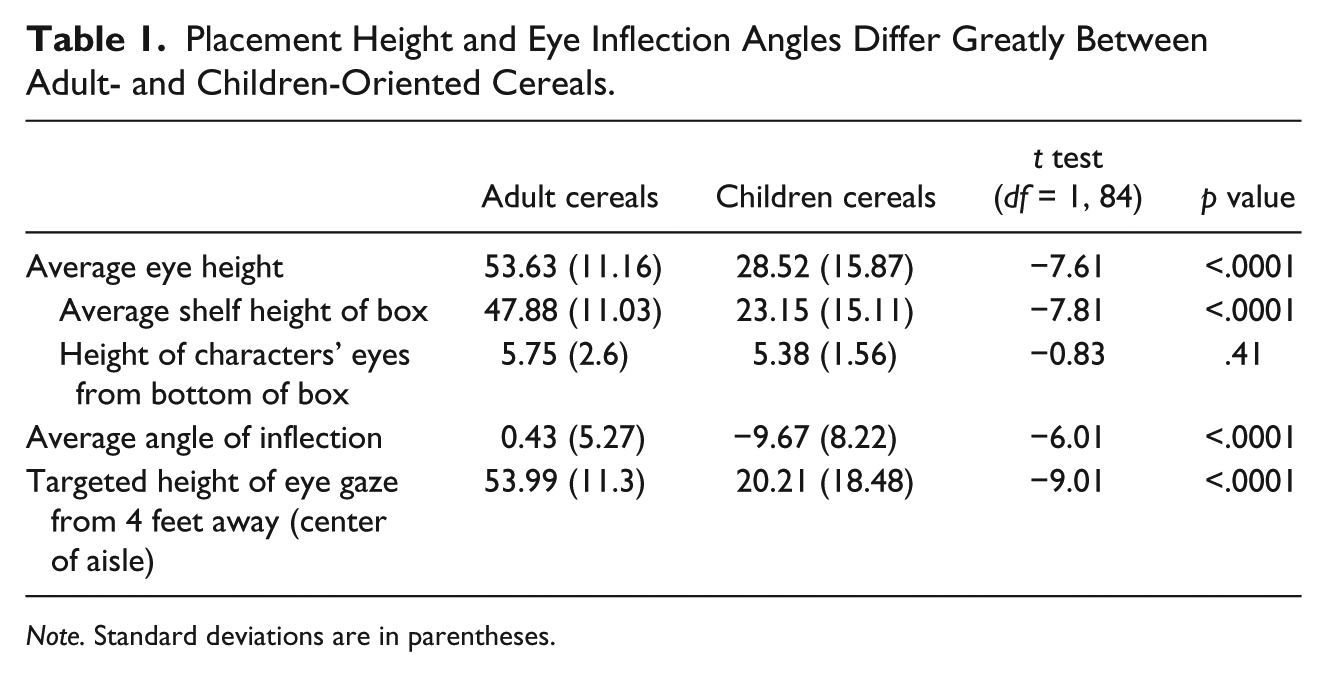
Note. Standard deviations are in parentheses.
In terms of placement, children’s cereals were mostly placed on the bottom two shelves, while adults’ cereal was generally displayed on the top two shelves, confirming previously reported findings from other studies (Harris et al., 2009). The height of the eyes of the characters on the cereal boxes did not vary widely between different kinds of cereal (t = −0.83, p = .4). However, the average height of the spokes-character’s gaze 4 feet away, the height at which a human being’s eye would need to be to make eye contact with the spokes-character, differed widely between adults’ and children’s cereals. For cereal marketed to adults, the average height was 53.99 inches, while the average gaze height for cereal marketed to children was 20.21 inches (t = −9.01, p < .0001), indicating that spokes-characters’ eyes—in this sample of stores—were targeted at different heights depending on whether they were adult or children cereals.
As the results regarding average height 4 feet away show, cereal spokes-characters marketed to adults make eye contact with adults, while spokes-characters on children’s cereal boxes make eye contact with children. Although the study supports this contention, the question remains whether eye contact does indeed serve to increase positive feelings and choice. Although the proposition is supported by prior research, it remains to be seen whether it is empirically borne out in this less life-like—often cartoon-like—context. We tested this in our next study.
Study 2: Does Eye Contact With Cereal Spokes-Characters Influence Choice?
The fact that cereals aimed at children make incidental eye contact with children has practical implications to the extent that eye contact indeed fosters more positive attitudes toward a product and increases choice. However, though such effects make theoretical sense, there is currently no evidence that we know of to support its occurrence. The current study aimed to examine whether creating eye contact can indeed help boost feelings of trust and connection with a brand. For this purpose, we had people evaluate cereal boxes with a spokes-character that either made eye contact or did not, and then had them report on their feelings of trust and connection. We also examined the influence of eye contact on preference and choice, examining whether people would prefer a cereal that establishes eye contact over a similar alternative where the spokes-character does not look at the person.
Method
Participants were students at a large private Northeastern university (N = 63). Participants were asked to view and rate a box of Trix Cereal. The image on the box was manipulated such that in one version, the rabbit was looking downward toward the cereal and, in another, toward the person reading the questionnaire (see Figure 3). Images were manipulated using Photoshop CC (Adobe 2013). Participants were randomly assigned to either the down or eye-contact condition.
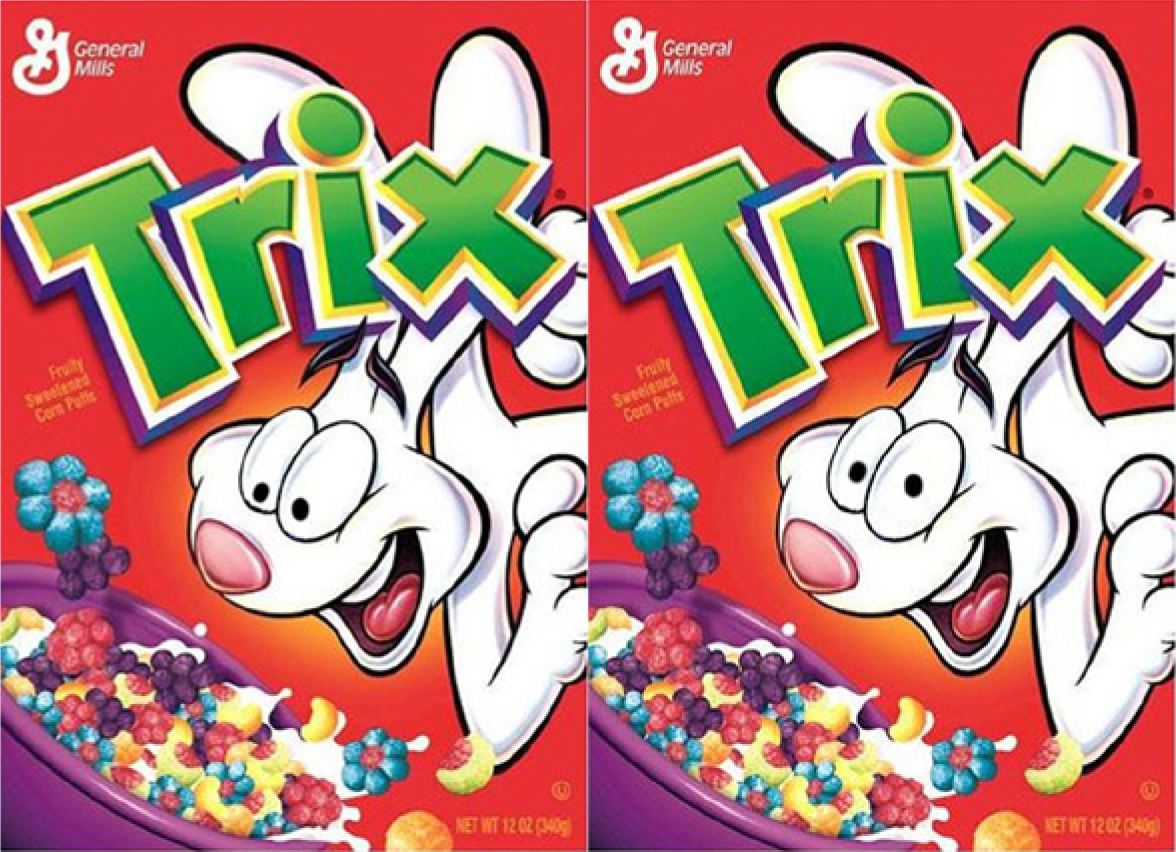
Cereal images used in Study 3 (original on left).
Participants were asked to look at the cereal, and then rate it on several dimensions, including trust, connection, and attention. Specifically, participants were asked to rate their agreement to the statements: “I trust this brand,” “I feel connected to this brand,” and “This box is attention-getting.” Agreement was rated on a nine-point scale anchored by strongly disagree (= 1) and strongly agree (= 9).
We also asked participants whether they would choose Trix or Fruity Pebbles cereal. Finally, we asked participants to report on their general liking for Trix, by rating their agreement to the statement “I generally like Trix.”
Results and Discussion
Trust and connection were both higher for the eye-contact condition, while attention was similar between the two conditions. Differences were tested via t tests. Participants viewing eye-contact cereal boxes reported feeling greater connection to the cereal (6.63) than did participants viewing control boxes (5.67), t(61) = −2, p = .05. Feelings of trust were also marginally higher for the eye-contact (6.63) than the control (5.06) condition: t(61) = −1.88, p = .065. However, reported attention was not altered (p > .1).
Choice of Trix over Fruity Pebbles was tested with a general linear model controlling for general liking for Trix and its interaction with eye contact. Choice of Trix was increased for the eye-contact condition, from 48.38% to 61.29%, F(1, 58) = 4.28, p = .04. Means and standard deviations for all variables are shown in Table 2, along with t tests (F test for choice).
Cereal Spokes-Characters Who Make Eye Contact Generate Higher Trust Ratings and Choice.
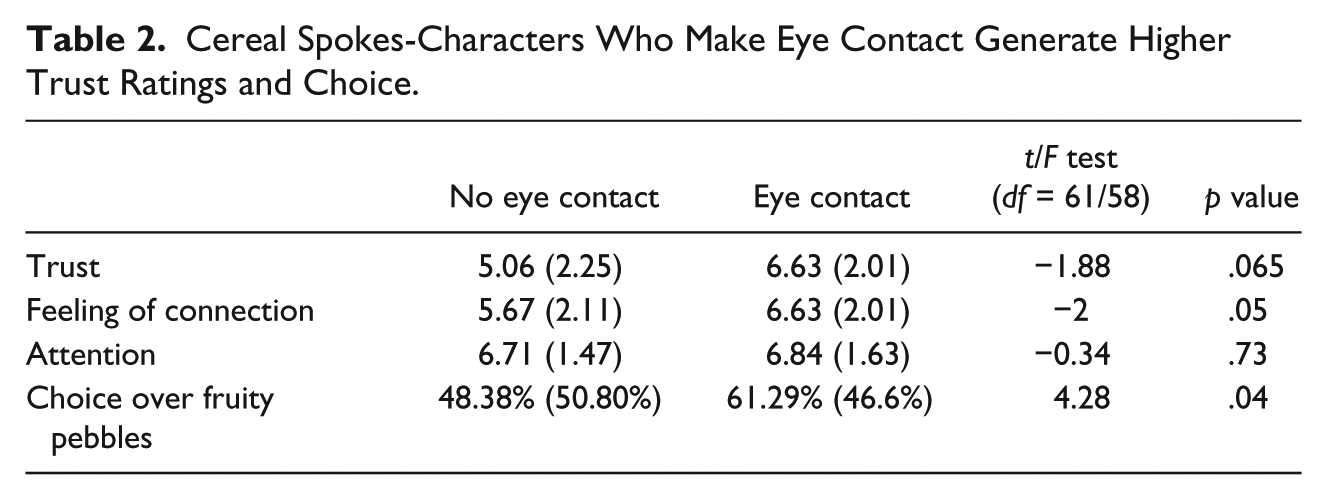
Eye contact, then, appears to increase feelings of trust and connection to a brand, as well as choice of the brand over competing brands. Thus, the study supports the notion that cereal box spokes-characters that create eye contact may indeed increase positive feelings toward the product, as well inducing choice over other products.
General Discussion and Implications
These findings are significant because they expose another layer to in-store marketing, in which the characters draw the consumer in not just by their presence at eye level but also by maintaining eye contact. Although cartoonish spokes-characters are often looking down at cereal in their bowl, their eyes can create incidental eye contact with their target audience, with children’s (adults’) cereals eyes making eye contact with children (adults). Through this eye contact, consumers may gain trust in the spokes-character, which in turn could transfer to more favorable brand perception (Kleinke, 1986).
Spokes-characters making eye contact can thus serve as a useful advertising tool to draw in both adults and children. Making eye contact with the spokes-character on the cereal box fosters positive interpersonal feelings, which may transfer to the cereal itself (Kelly et al., 2010). A child going shopping with his parents and making eye contact with Tony the Tiger or Toucan Sam may begin to feel positive feelings and a sense of connection with the characters, which may translate to the child’s feelings toward the cereal itself. Eye contact thus not only has the potential to sell more cereal but may also create more loyal customers through fostering positive feelings and a sense of trust and connection.
Eye contact can have other implications for helping promote better product choices. The human brain contains neurons that respond selectively to stimuli involving faces and eyes, so it is possible that such images can induce the feeling of being watched (Emery, 2000; Haxby, Hoffman, & Gobbini, 2000). Indeed, images of eyes have been shown to motivate cooperative behavior, likely because participants in those studies felt as if they were being watched (Bateson et al., 2006). Research has also shown that people perform tasks better when looking at a mirror, due to objective self-awareness (Wicklund & Duval, 1971). Self-awareness in the shopper could be invoked by the feeling of being observed. This awareness could make the shopper more conscious of his or her body and health, inspiring healthier choices. These possibilities can be examined in future studies.
One problem in the use of spokes-characters to market any type of food is the issue of children’s vulnerability to influence (Cowburn & Boxer, 2007). Numerous studies have confirmed that children do not have the cognitive capacity to understand that marketing presents a potentially biased point of view until the age of 7 or 8 years, and do not automatically access their knowledge about marketing biases until the age of 14 years (Harris & Graff, 2012). Thus, there is general concern that marketing techniques aimed at children could be exploitative. However, it is unclear whether companies do indeed deliberately use spokes-character eye contact with the intention of influence over children.
The impact of eye contact on product perceptions can potentially be used to improve public health by changing dietary habits toward healthier food consumption, as well as being used by companies wanting to increase sales of healthier cereal. Cereals featuring spokes-characters aimed at children tend to have higher sugar content and a significantly lower amount of protein and fiber than cereals without spokes-characters (Berry & McMullen, 2008). To promote children to eat more healthily, cereal companies could use well-known or new spokes-characters on their cereals that are lower in sugar or include more healthy ingredients, and ensure that they are making eye contact with children. Tony the Tiger has kicked off this trend by representing not only Frosted Flakes but also Frosted Flakes with reduced sugar and Frosted Flakes with reduced sugar and added fiber. The potential connection with cereal characters representing healthy cereals could be a way to empower consumers to make healthy choices from a young age, helping set healthier choice patterns for later in life.
Cereals marketed toward adults generally have lower sugar and higher fiber levels than cereals marketed toward children. Such healthier cereal could be made to feature more spokes-characters that not only gaze at adults but also make eye contact with children, enhancing the chance children would choose such cereal, and consequently encouraging healthier choices and consumption. As eye contact appears to produce positive effects on adults as well as children, eye contact from spokes-characters can be used to promote healthier choices among adults as well. Companies marketing healthier cereal alternatives that tend to less often feature spokes-characters could begin using such characters more extensively to help promote their product.
Limitations and Future Research
One limitation of the current study is that only 10 supermarkets across two states were surveyed; shelf height in other areas of the country, other countries, or at different supermarkets could vary, producing different results.
Importantly, we do not state or mean to infer that spokes-characters are deliberately designed to direct their gaze downward to make eye contact with children. In most cases, it instead appears that they are gazing at a bowl of cereal in front of them, at their spoon, or at cereal floating around them in the air. In Figure 3, for instance, it can be seen that the Trix Rabbit is clearly staring down at the cereal. Regardless, in some of these cases their gaze meets the eyes of small children as they walk down the aisle, although the picture of the cereal on the box could detract from the overall effect of eye contact. It is also important to note that having their gaze directed downward may be unique to their appearances on cereal boxes: These characters’ direction of gaze is varied in online and television advertisements, as well as in advergames (Kellogg, 2012; Nickelodeon, 2012).
Another limitation is that there is likely a difference between eye-contact effects found in a lab study, as in Study 2, versus effects found in front of a shopping shelf. In a supermarket, many packages compete for visual attention, depending upon their visual salience and contrast with other packages. Average time looking at a package in the grocery store is also much shorter than it would be in a laboratory setting. Accordingly, future research should examine whether the current effects translate to a field setting.
Future research could further develop our understanding of the use of eye contact to market foods to children and if this changes under different levels of hunger (Wansink, Tal, & Shimizu, 2012) or times of the day (Tal & Wansink, 2013). A study could be conducted to determine overall sales of cereals based on how effectively their spokes-characters make eye contact with their consumers. The second study in the current article has shown that eye contact increases choice in a lab setting with a young adult population. Future research should demonstrate such effects specifically for children, as well as examine whether the results hold in an actual retail setting such that the findings translate into increases in overall sales. Further, an examination of how spokes-character gaze has evolved over time could be combined with sales data, to see if eye contact truly has served as a useful tool for marketing purposes in the past.
Eye tracking studies could be performed to determine where exactly the eyes of children and adults are directed under three separate conditions: as they walk down supermarket cereal aisles, when they are shown individual cereal boxes, and when they are shown just pictures of the spokes-characters themselves. An exploration of the appeal of spokes-characters to different ages and genders would also be relevant to determine the ideal marketing strategy for cereal companies. The appeal of spokes-characters with varying colors, shapes, and eye size could be tested to determine the type of eyes that are most effective at building spokes-character trust.
It would also be interesting to test the differences between the eyes of human spokes-characters and animal spokes-characters as well as animated versus non-animated characters, to determine in which cases eye contact fosters a higher sense of trust. Human spokes-characters, which are typically only used to market adult cereal, could be better tools for marketing, given that their target audience is just like them, as opposed to animated characters, which children may not be able relate to as easily.
Finally, further studies could be conducted taking consumption into account, to see if using spokes-character eye contact on healthier cereals can indeed encourage children to eat the healthier cereals instead of cereals with higher levels of sugar. Such studies could also determine whether altering the angle of the characters’ gaze could help encourage children to choose healthier cereals.
Conclusion
Eye contact from spokes-characters on cereal boxes can arouse positive feelings of trust and connection, which may transfer onto the brand itself. The discovery that the spokes-characters marketed to children make incidental eye contact with them as they walk down the cereal aisle may lead them to be more strongly connected to these cereals. Importantly, this insight should be utilized by healthier brands to promote healthier choices and potentially encourage healthier food consumption (Wansink, Shimizu, & Brumberg, 2013). Moreover, using spokes-characters on healthy packaged goods targeted toward adults might be a useful way to introduce adults to healthier categories or brands they would have otherwise overlooked during a busy shopping trip (Wansink, 2005; Wansink, 2014).
Footnotes
Methodological Appendix
Acknowledgements
The authors are grateful for the tireless work of the Cornell Food and Brand Lab, and its researchers and students.
Authors’ Note
The first two authors contributed equally and are listed according to alphabetical order
Declaration of Conflicting Interests
The author(s) declared no potential conflicts of interest with respect to the research, authorship, and/or publication of this article.
Funding
The author(s) received no financial support for the research, authorship, and/or publication of this article.