



Abstract
Fostering nature connection may promote psychological well-being and enhance proenvironmental attitudes. However, there is limited understanding of what factors influence a person’s nature connection. Using survey responses from 1,000 residents of a large Australian city, we describe the relationship between nature connection and nature experiences at different stages in life, that is, past nature experiences that occurred during childhood, and current, everyday nature experiences. Both past childhood nature experiences and duration of current nature experiences significantly predicted nature connection. The positive relationship between duration of current nature experiences and nature connection was not significantly moderated by past childhood nature experiences. Hence, current nature experiences are associated with high levels of nature connection, even among those lacking childhood nature experiences. This research empirically demonstrates the positive relationship between nature connection and nature experiences, and suggests that it may be equally important to promote nature experiences at any life stage if increasing nature connection is the goal.
The study of the human–nature relationship seeks to reveal how people identify themselves with nature and how people form relationships with nature (Restall & Conrad, 2015). The human–nature relationship has been explored from a variety of perspectives, such as the biophilia hypothesis (Wilson, 1984), therapeutic landscapes (Bell, Foley, Houghton, Maddrell, & Williams, 2018; Gesler, 1992, 1993), and place attachment (Scannell & Gifford, 2016), and has been labeled many things within the literature, for example, love and care for nature (Perkins, 2010), inclusion of nature in self (Schultz, 2001), connectivity with nature (Dutcher, Finley, Luloff, & Johnson, 2007), nature relatedness (Nisbet, Zelenski, & Murphy, 2008), and emotional affinity toward nature (Kals, Schumacher, & Montada, 1999). Collectively, this body of work can be referred to as nature connection, with the multiple perspectives each providing a unique contribution to our understanding of nature connection.
Nature connection refers to individuals’ subjective sense of their relationship with nature and encompasses the affective, cognitive, and experiential aspects of that relationship (Cleary, Fielding, Bell, Murray, & Roiko, 2017; Mayer & Frantz, 2004). The concept of nature connection seems to be receiving increasing interest within multiple disciplines (e.g., psychology, sociology, environmental management, public health, tourism, geography, education, and urban planning). This may be, in part, owing to the relatively recent emergence of numerous established scales that measure nature connection. The most commonly used nature connection measures tend to be the single-item “Inclusion of Nature in Self Scale” (Schultz, 2001), the “Nature Relatedness Scale” (Nisbet et al., 2008), and the “Connection to Nature Scale” developed by Mayer and Frantz (2004; for a review, see Restall & Conrad, 2015).
Consistent with the conceptualization of nature connection, scales measuring this construct tend to measure, to varying degrees, the cognitive, behavioral, and the affective aspects of the human–nature connection. There is debate in the literature about what components each of the nature connection scales measure (Perrin & Benassi, 2009; Tam, 2013). In general, the affective domain of nature connection is the most commonly assessed domain by these scales, an example item being “I feel very connected to all living things and the earth.” The “Nature Relatedness Scale” is one of the few scales designed to also measure the behavioral domain of the relationship with scale items such as “My ideal vacation spot would be a remote, wilderness area” and “I take notice of wildlife wherever I am.”
There has been a rapid rise in nature connection–related publications over the past 10 years (Ives et al., 2017). The resulting evidence base identifies the associations between higher levels of nature connection and a range of positive mental health outcomes such as increased psychological well-being (Capaldi, Passmore, Nisbet, Zelenski, & Dopko, 2015; Nisbet, Zelenski, & Murphy, 2011) and reduced anxiety (Martyn & Brymer, 2016), as well as numerous proenvironmental outcomes such as increased environmental concern (Nisbet & Gick, 2008), development of biospheric values (Martin & Czellar, 2017), and willingness to engage in prosocial and sustainable behaviors (Dutcher et al., 2007; Zelenski, Dopko, & Capaldi, 2015). These reported associations make nature connection a construct of relevance and interest to both public health and environment sectors. As a result, objectives related to enhancing nature connection are starting to appear within various plans and policies, particularly environmental policies (HM Government, 2018; Victoria State Government, 2017), coupled with the recent establishment of numerous nature connection–enhancing initiatives (e.g., International Union for Conservation of Nature’s “#Nature For All” program, The Wildlife Trusts “30 Days Wild” campaign).
Nature connection–enhancing initiatives are often delivered with urban residents as the target audience. Given that urban environments contain fewer opportunities for nature experiences, city dwellers are considered at risk with regard to low nature connection and suffering from a nature disconnect (Frumkin et al., 2017). This phenomenon has also been termed the “extinction of experience” or a “nature deficit” within the literature and is seen as a key threat to both human and environmental health (Soga & Gaston, 2016). Given estimates that 66% of the earth’s residents will be living in urban areas by 2050 (United Nations, Department of Economic and Social Affairs, 2014), there is a pressing need to better understand how urban residents connect to nature. Such an understanding could help to inform the design and delivery of urban environments and experiences that foster nature connection and, hence, promote both well-being and environmental outcomes.
Despite the increased research focus on nature connection, there is still limited understanding of what factors enhance and maintain a person’s nature connection. To date, only a small number of studies have explored potential pathways that may promote nature connection. For example, Ernst and Theimer (2011) investigated the effect of participation in seven varied forms of environmental education on students’ levels of nature connection in the United States. Participation in two of the seven types of environmental education was shown to significantly enhance levels of nature connection. It is worth noting that both the successful environmental education programs, field trips and summer camp, occurred in outdoor nature settings. This finding is consistent with previous environmental education research where experience of natural areas has been identified as an important precursor to environmental commitment and nature connection (Braun & Dierkes, 2017; Chawla, 1998; Tanner, 1980). This finding of the positive relationship between education in outdoor nature settings and increased nature connection is also consistent with other research that has shown positive associations between nature experiences and nature connection (Lin, Fuller, Bush, Gaston, & Shanahan, 2014; Mayer, Frantz, Bruehlman-Senecal, & Dolliver, 2008; Wolsko & Lindberg, 2013).
Nature experiences can be considered either as those that have occurred in the distant past, for example, during childhood, or those that have occurred in the recent past and, hence, better reflect an individual’s current nature experiences. In addition to the role that nature experiences may play in fostering nature connection, they also have the added benefit of promoting multiple positive health effects (Frumkin et al., 2017) and equity outcomes through their potential to be universally accessible. Nature experiences and their relationship with nature connection, therefore, warrant further investigation. Hence, this article focuses on the roles that recent adult urban nature experiences and past childhood nature experiences may play in predicting current nature connection levels. The existing evidence on the links between nature connection and both adult and childhood nature experiences is discussed in detail below.
Nature Connection and Adult Nature Experiences
Frequent and direct experience of nature is suggested in the literature as a potential pathway to developing a person’s connection with nature (Restall & Conrad, 2015), and a small number of studies have explored this pathway. For example, a U.S. study surveyed visitors (N = 372, female = 58.1%) to six different locations chosen to represent varying degrees of “natural” and urban settings. The Implicit Association Test was used to assess nature connection. By recording reaction time, this test measures people’s automatic associations between pairs of concepts presented on a computer screen. The study revealed positive associations between implicitly measured nature connection and nature experiences such as time spent on hiking trails and beaches, whereas there was no significant relationship with time in less “natural” settings such as golf courses, gyms, and libraries (Schultz & Tabanico, 2007). A U.K. study used the biological values concept as a framework for identifying types of nature experiences that may be related to nature connection (Lumber, Richardson, & Sheffield, 2017). Biological values were developed by Kellert (2012) to underpin the biophilia hypothesis (Wilson, 1984). Using a sample with almost 70% females (N = 321), the study found that nature connection was predicted by nature experiences structured around five of the nine biological values, namely, naturalistic (contact), aesthetic (beauty), humanistic (emotion), symbolic (meaning), and moralistic (compassion). Another study of adults and university students living in a small city in the United States (N = 410, female = 60.7%) used a shortened version of the Connectedness to Nature Scale by Mayer and Frantz (2004), to assess the effect of various outdoor recreation activities on nature connection. Participation in what were considered to be “appreciative” outdoor recreation activities (e.g., sailing, jogging, dog walking, cross-country skiing) were significantly associated with higher levels of nature connection, whereas participation in motorized outdoor recreation (e.g., jet skiing, off road vehicle driving) were not (Wolsko & Lindberg, 2013). Similarly, a study of U.S. students (N = 76, female = 67%) showed that students who walked through a nature reserve reported a stronger nature connection in comparison with students who walked through an urban environment (Mayer et al., 2008).
The Monitoring Engagement with the Natural Environment survey collects cross-sectional, nationwide data on how English adults (>16 years) engage with the natural environment. Analysis of a nonrepresentative, subset of this sample (n = 4,515, female = 52.2%) showed that visits to coastal and rural environments were associated with greater recalled nature connection as compared with visits to urban green space (Wyles et al., 2017). Furthermore, visits to sites that were designated as protected areas also had stronger associations with recalled nature connection as opposed to sites that held no such designated status. This finding suggests that both type and quality of the nature experience are associated with nature connection.
Although the above studies provide interesting insight into the types of nature experiences that relate to nature connection, it can be argued that for the average city dweller, activities such as sailing, hiking, and visits to national parks may not be easily accessible, particularly on a frequent or daily basis. We, therefore, need to understand nature connection within an urban context, in particular, teasing apart the relationship between nature connection and local, routine urban nature experiences or, what some authors term, everyday nature or nearby nature (Bell, Westley, Lovell, & Wheeler, 2018; Nisbet & Zelenski, 2011).
We know of only two studies that have investigated this relationship. A study of adults (18-70 years) living in Brisbane, Australia (N = 1,479, female = 50%), showed that both frequency and duration of visits to urban parks were significantly associated with nature connection, as measured by the Nature Relatedness Scale (Lin et al., 2014). A study of visitors to urban parks in Bogotá, Colombia (N = 300, female = 50.3%, M age 43.47 years, SD = 18.73 years), found that nature connection, as measured by the Connectedness to Nature Scale, was higher among visitors to larger urban parks as opposed to smaller district parks (Scopelliti et al., 2016). However, both studies looked at the associations between nature connection and a very defined form of urban nature experience, that of a visit to a public urban park. Of the few studies that have adopted a broad definition of urban nature none has specifically assessed the effects of exposure to diverse forms of urban nature on nature connection.
Nature Connection and Childhood Nature Experiences
Childhood nature experiences have also been hypothesized as an important influencing factor on the development of an individual’s relationship with nature (Chawla, 2009; Cheng & Monroe, 2012). Qualitative data from interviews with adult environmentalists from the United States and Scandinavia highlighted childhood nature experiences as the foundation of current relationships with nature (Chawla, 1999). However, most studies in this field tend to focus on adult environmental attitudes as the outcome variable, as opposed to nature connection (Chawla & Derr, 2012; Evans, Otto, & Kaiser, 2018; Wells & Lekies, 2017). For example, in the United States, Wells and Lekies (2006) sampled adult urban residents (N = 2,004, female = 56%, M age 45 years, SD = 15.98 years) to investigate the relationship between childhood nature experiences and adult environmental attitudes and behaviors. They revealed that proenvironmental attitudes and behaviors among their adult sample were more strongly predicted by retrospectively reported wild (e.g., camping, forest hikes), as opposed to domesticated (e.g., gardening), childhood nature experiences. Although there are some overlaps between nature connection and environmental attitudes or values, nature connection “differs theoretically and operationally from other explanations of environmental values” (Dutcher et al., 2007, p. 1). Hence, reported effects of childhood nature experiences on environmental values cannot be generalized directly to nature connection outcomes.
Only a small number of studies have investigated the relationship between retrospectively reported childhood nature experiences and current nature connection levels. A survey of environmental volunteers in the United States (N = 145, female = 65%, M age = 51 years) found that almost all volunteers reported a moderate to high level of nature connection, as measured via a single-item survey question, and most of them reported first becoming interested in nature during their childhood years (less than 10 years old; Guiney & Oberhauser, 2009). A Canadian study of university students (N = 308, female = 79%) showed that nature connection correlated positively and significantly with self-recalled positive childhood nature experiences (Windhorst & Williams, 2015). Adults from the United States (N = 185, female = 63.8%, M age = 33.4 years, SD = 13.2 years) who reported more frequent childhood nature contact scored significantly higher on nature connection than did those who reported less childhood nature contact (Tam, 2013).
Very few studies have directly measured nature connection among children. For example, a cross-sectional study of 30 grade school children (10-12 years) in the United States revealed negative associations between nature connection, as measured via the Implicit Association Test, and the hours that children reported playing indoors, watching television, and playing video games (Bruni & Schultz, 2010). There seem to be equally few studies that have measured nature connection among adolescents directly, for example, a study of high school students in Europe (N = 403, female = 59.3%, age = 15-19 years) showed that nature connection was significantly associated with nature contact (Müller, Kals, & Pansa, 2009). That said, Bragg, Wood, Barton, and Pretty (2013) have recently developed a methodology for measuring nature connection among children in the United Kingdom and, hence, this approach may become more common in future studies.
Overall, the evidence base on childhood nature experiences and nature connection is meager and dominated by cross-sectional study designs that tend to use small samples, the majority of which consisted of female and student participants. Although the current evidence base highlights the potential importance of childhood nature experiences on nature connection, there is a need for further investigation of this relationship, particularly among general populations.
Nature Experiences at Different Stages in Life
Very few studies have assessed the association of both childhood and adult nature experiences simultaneously on current nature connection levels. This inhibits our understanding of how nature connection may be shaped across the life course. One of the few studies to assess childhood and adult nature experiences simultaneously revealed moderate, positive associations between nature connection and both adult and childhood nature exposures (Pensini, Horn, & Caltabiano, 2016). The study used a small German student sample (N = 141, female = 64.5%) that was not representative of the general population. Although the results cannot be generalized, they do provide some insight into the role of nature experiences at different stages in life.
Similarly, a cross-sectional study of French adults (N = 4,639) showed that adult nature experiences are predicted by childhood nature experience and nature connection, as measured via an adapted Inclusion of Nature in Self Scale (Colléony, Prévot, Saint Jalme, & Clayton, 2017). However, childhood nature experiences in the study were measured via a single-item survey question asking respondents to state whether they grew up in a large, medium, or small city, village, or hamlet. This is an unrefined measure of childhood nature experiences that assumes that living in smaller urban areas results in more nature experiences and, hence, fails to capture any information on the quantity or quality of these childhood nature experiences. Similarly, such a simple proxy of childhood nature experiences also fails to account for the role of family values toward nature, which has been suggested as an important influencing factor (Chawla, 1999; Windhorst & Williams, 2015).
Currently, there is little known about how occurrence of nature experiences at different stages in life is related to an individual’s current nature connection. As described above, childhood nature experiences have been shown to be associated with adult nature connection. However, it may be that certain adults can come to develop a relationship with nature through current nature experiences, even when previous childhood nature experiences are lacking. For example, qualitative, map-aided interviews with English adults highlighted the importance of “biographic time” in how people value and use nature spaces (Bell, Wheeler, & Phoenix, 2017). Biographic time refers to how one’s sense of self can be shaped by lifetime experiences. Although numerous interviewees highlighted the importance of childhood nature experiences in shaping their current relationship with nature, others spoke of how their relationship with nature was formed later in life, triggered by life events such as relocating to areas with more accessible nature, relationship changes, or parenthood. The relationship between first-time adult nature experiences and nature connection is underexplored. Much remains unknown as to what are the optimal stages in life for nature experiences to occur for a nature connection to be formed. Such clarity would help inform the design and delivery of urban environments that promote nature connection outcomes among urban residents.
The Current Study
Cultivation of nature connection among urban residents requires an understanding of how past nature experiences and current contact with nature in urban environments are associated with an individual’s nature connection. The current evidence base identifies positive associations between nature connection and adult and childhood nature experiences, but several gaps remain. The aim of the present study is to address these noted limitations, first, by assessing both adult and childhood nature experiences simultaneously as potential predictors of nature connection among a large representative urban sample. This may shed light on whether childhood nature experiences are a prerequisite to adult nature connection or whether nature connection can be cultivated through adult nature experiences alone. Second, adult nature experiences are measured within the context of everyday, accessible urban nature experiences (as opposed to visits to national parks) and are not restricted by a narrow definition of urban nature (e.g., visits to urban parks) but include contact with all types of nature within an urban environment (e.g., street trees, pocket parks), and consider both private and public forms of urban nature. For the purposes of this study, urban nature is considered to be all the plants and wildlife living in the urban environment. Urban nature includes both blue and green spaces, private and public spaces, and can vary in its degree of “naturalness,” from more natural or wild spaces, such as urban forests and coastlines, to more managed and designed forms, such as urban parks and canals. Third, this study uses a comprehensive measure of childhood nature experiences that looks beyond simple location of the childhood home (rural vs. urban), to include measures of family nature values, as well as access to nature in the home and school settings. Finally, these relationships are assessed while controlling for key factors that have been shown to be associated with nature connection such as gender, age, feelings of financial security, and spirituality (Trigwell, Francis, & Bagot, 2014). Hence, this study explores the following research questions:
Method
Participants and Procedure
Located on the east coast, and with a population of more than 1 million, Brisbane is Australia’s third largest city. Brisbane has a subtropical climate and is Australia’s most biologically diverse capital city. Although considered to have a relatively high amount of urban nature, a rapidly growing population places increasing pressure on these existing nature spaces (Garden, McAlpine, & Possingham, 2010). A survey of adult urban residents living in Brisbane, Australia (aged 18-90 years), was administered online via a social research company to suitable potential respondents in May 2017 (N = 1,000). This time of year was chosen for data collection as it occurs following several public holidays when people are likely to have returned to a typical routine. In addition, in Brisbane, May is a time of the year that is conducive to outdoor activity following the end of the high summer temperatures.
A definition of urban nature was provided at the start of the survey and read as follows: “All cities contain nature. Parks, street trees, riverside walkways, creeks, bushland reserves, sports fields and even home gardens are all part of what makes up nature in Brisbane City. Urban nature includes all the plants and wildlife that live in the city.” This definition was provided to ensure that all respondents had a shared understanding of urban nature that was beyond urban parks and not exclusive to public forms of green or blue space.
More than half the sample identified as female (52.5%), which reflects the population (female 50.7%). Data were collected only from residents above 18 years old and an even spread of ages was obtained (18-24 years 11%, 25-34 years 18.6%, 35-44 years 19.6%, 45-54 years 17.7%, 55-64 years 15.6%, above 65 years 17.5%; Supplemental Table S1). Respondents who completed the survey in full received minor monetary compensation. This research was conducted in accordance with the National Statement on Ethical Conduct in Human Research and received ethics approval from Griffith University Human Research Ethics Committee (project number 2016/085). Informed consent was obtained from all survey respondents.
Constructs and Measures
Early environmental experiences
The Early Environmental Experiences Scale was used to measure childhood nature experiences (Hinds, 2018). The wording of the original scale was adapted to make it more relevant to the Australian context (e.g., inclusion of Australian relevant landscapes such as creeks and bushland). Respondents read four statements and rated how true each statement was with regard to their own childhood (1 = very untrue, 5 = very true). The scale includes items relating to family nature values (“When I was younger my parents were interested in nature and the outdoors”), access to nature as a child (“I had access to a garden when I was young, My early school/s had green play areas”), and time spent in nature as a child (“I remember playing outdoors [e.g., at the beach or creeks, in the bush, fields or forests] while I was growing up”). The mean of all items provides a score representing childhood nature experiences, where a higher score indicates greater levels of childhood nature experience.
Childhood home setting
As an additional measure of childhood nature experiences, we followed the approach used by Weinstein et al. (2015), and collected data on the childhood home setting by asking respondents “Thinking back to when you were growing up, do you consider that you grew up in an area that was . . . ” with response options of 1 = mostly surrounded by a high density of buildings (e.g., large cities, city center), 2 = mostly surrounded by medium to low density of buildings (e.g., smaller towns, city suburbs), and 3 = mostly surrounded by nature areas (farmlands, coastlines, forests, mountains, bush). This categorical variable was dummy coded to form two predictor variables for an urban and rural childhood setting with the “medium to low density” category, which had the highest frequency, as the comparison group.
Adult nature experiences at home
Participants were asked about their everyday urban nature experiences within two settings: their home and their city. Four single-item variables were used to measure various aspects of home nature experiences. These included duration of contact with home outdoor areas, level of greenness of home outdoor areas, greenness of views from the home, and level of satisfaction with nature around the home. First respondents were asked whether they had access to a privately owned outdoor space (e.g., backyard, balcony, garden, veranda). Those who did (n = 951), then reported, using a weekly timescale, the typical duration of time spent in their private outdoor area (“During a typical week how much time would you spend in this private outdoor area” paired with the following responses: no time, less than 30 min a week, 30 min to 4 hr a week, more than 4 hr and less than 10 hr a week, more than 10 hr and less than 25 hr a week, more than 25 hr a week [approx. 3 hr a day]). Three additional single-item variables measured the quality of home outdoor/nature experiences. First, respondents reported the level of greenness of the private outdoor area (“What approximate percentage of this private outdoor area is covered with plants? [e.g., grass, trees, shrubs, potted plants]” paired with the following responses: 0% [no plants], 1%-20%, 21%-40%, 41%-60%, 61%-80%, 81%-100%). Those who did not have access to a private outdoor area (n = 49) were automatically scored as spending zero time there and as having zero greenery. Second, respondents were asked to report on the views from their homes (1 = very urban, 5 = very natural). The final variable, which measured satisfaction with home nature experiences, asked respondents to rate their satisfaction with nature within 20 m of their home (1 = extremely dissatisfied, 7 = extremely satisfied), with people who reported having no nature near their home (n = 15) being excluded from the analysis of this variable.
Adult nature experiences within the city
Three single-item variables were used to measure various aspects of adult nature experiences within the city: duration of contact with city nature, level of satisfaction with city nature, and perceived accessibility of city nature. The first variable, duration of adult nature experiences within the city setting, was assessed by asking respondents to report the duration of contact with nature they experience during a typical week (“During a typical week how much time do you approximately spend in contact with nature,” paired with the following responses: no time, less than 30 min a week, 30 min to 4 hr a week, more than 4 hr and less than 10 hr a week, more than 10 hr and less than 25 hr a week, more than 25 hr a week [approx. 3 hr a day]). The second variable, which measured satisfaction with city nature experiences, asked respondents to rate their level of satisfaction, using a 7-point scale, with nature in their suburb (1 = extremely dissatisfied, 7 = extremely satisfied). The third variable, which measured accessibility of city nature experiences, asked respondents to rate how easy or difficult it is to access nature in their suburb (1 = extremely difficult, 7 = extremely easy).
Nature connection
The dependent variable of nature connection was measured using the shortened six-item Nature Relatedness Scale (Nisbet & Zelenski, 2013). This scale measures the affective (“I feel very connected to all living things and the earth”) and experiential (“I take notice of wildlife wherever I am”) aspects of an individual’s nature connection. Respondents used a 5-point Likert-type scale to rate their level of agreement (1 = strongly disagree, 5 = strongly agree) with each of the six statements. The average of all items was used as the measure of nature connection, with higher scores reflecting a greater level of nature connection.
Adult nature experiences—type of activity
To give insight into the type of activity that occurs most often during contact with nature, respondents were asked to rank up to three main activities that occur during the time they spend in contact with nature. Respondents were provided with a list of 10 activity types alongside an “other” option. The activity types included “work,” “transport,” “health and fitness,” “rest and relaxation,” “social interaction,” “chores,” “education,” “spiritual/cultural,” “animal interactions,” and “hobbies.” Full descriptions of each activity type can be found in Supplemental Table S2. Note that this question was included to provide contextual information but is not included in the regression analyses.
Control variables
Typical control variables such as age, gender, and feelings of financial security were collected. In addition, some research has identified associations between spirituality and nature connection (Kamitsis & Francis, 2013; Trigwell et al., 2014). Hence, to account for the potential effect of spirituality, survey respondents were asked whether they regularly attended a place of worship (0 = no, 1 = yes). The full survey questionnaire can be found in Supplemental Table S2.
Analysis Strategy
Descriptive statistics of the data provided an overview of the sample and informed the analytical approach. This involved computing Pearson’s correlations to explore the bivariate relationships between nature connection and the various predictor variables measuring childhood and adult nature experiences. This helped to determine suitable variables for inclusion in the regression analysis, which was conducted to assess the strength of associations between nature connection and childhood and adult nature experiences while controlling for potential confounding variables (Research Questions 1-3). The last research question sought to explore whether the relationship between adult nature experiences and current nature connection is moderated by childhood nature experience. To address this question, nature connection was regressed on predictor variables of adult nature experience and childhood nature experience with the interaction term of these two predictor variables included in the model (Research Question 4).
Standard parametric assumptions were tested and satisfied. However, it is worth noting that some of the independent variables were negatively skewed. For example, the satisfaction scores for both nature around the home, D(1,000) = 0.267, p < .001, and nature in the suburb, D(1,000) = 0.288, p < .001, displayed a negative skew with most respondents reporting that they were moderately or extremely satisfied with nature in their suburb or around their home. Given that parametric tests are robust to deviations from Gaussian distributions when the sample sizes are large (Motulsky, 2013), it was deemed that the validity of the statistical inferences would not be compromised. Furthermore, bootstrapping was used where appropriate to counter such normality breaches. All statistical analysis was completed in 2017 using IBM SPSS Statistics 25.
Results
Factor Analyses of Scales
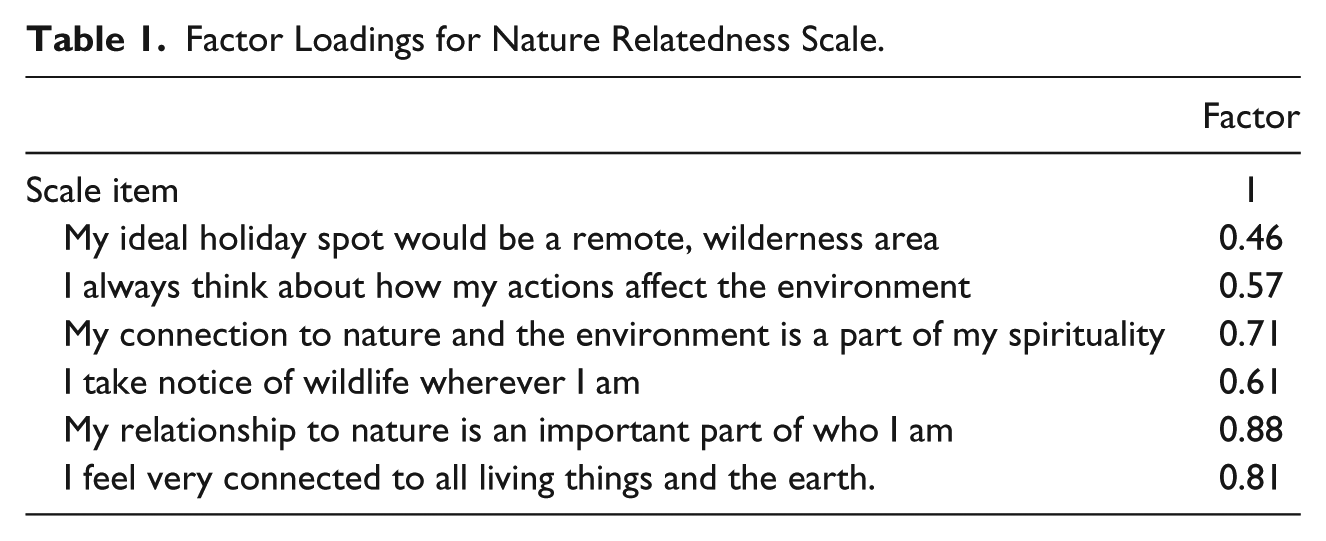
To explore the structure and reliability of the Nature Relatedness Scale and the Early Environmental Experiences Scale, we performed principal axis factor analyses. For the Nature Relatedness Scale, we used an orthogonal rotated solution (varimax) that revealed one factor with an eigenvalue of 3.31 that accounted for 55.1% of the variance. All items loaded positively on this factor, with loadings ranging from 0.46 to 0.88 (average factor loading = 0.67; Table 1). The reliability of this six-item scale was satisfactory (Cronbach’s α = .83) and similar to previous studies (Nisbet & Zelenski, 2013).
Factor Loadings for Nature Relatedness Scale.
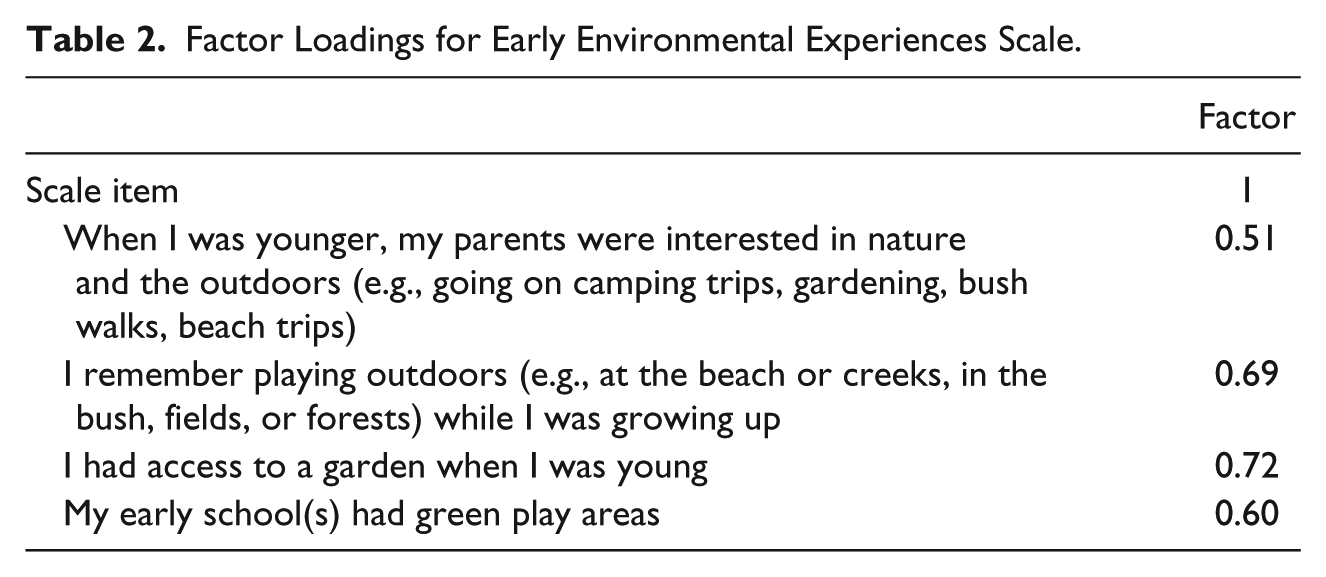
For the Early Environmental Experiences Scale, we again used an orthogonal rotated solution (varimax) that revealed one factor with an eigenvalue of 2.19 that accounted for 54.8% of the variance. All items loaded positively on this factor, with loadings ranging from 0.51 to 0.72 (average factor loading = 0.63; Table 2). The reliability of this four-item scale was satisfactory (Cronbach’s α = .71).
Factor Loadings for Early Environmental Experiences Scale.
Descriptive Statistics
Analysis of the ranking of the types of activities that participants reported engaging in during nature contact revealed that “rest and relaxation” received the most rankings in total, whereas “physical activity” received the highest number of first place rankings (Figure 1). Pearson’s correlation coefficients between the dependent variable of nature connection and the independent variables measuring childhood nature experiences and adult nature experiences in both home and city settings are shown in Table 3. Neither accessibility to nor satisfaction with nature within the city showed a significant correlation with nature connection, r(985) = .04, p = .176, and r(985) = .06, p = .080, respectively. Similarly, views from the home setting were not significantly correlated with nature connection, r(985) = .06, p = .080. Hence, these three proposed predictor variables were not included within the subsequent regression analysis. All other predictor variables were significantly correlated with nature connection, although the strength of each association was weak. Duration of adult nature experiences in the city had the strongest correlation with nature connection, r(985) = .28, p < .001, followed by the Early Environmental Experiences Scale, r(985) = .19, p < .001, and duration of nature experiences at home, r(985) = .19, p < .001.
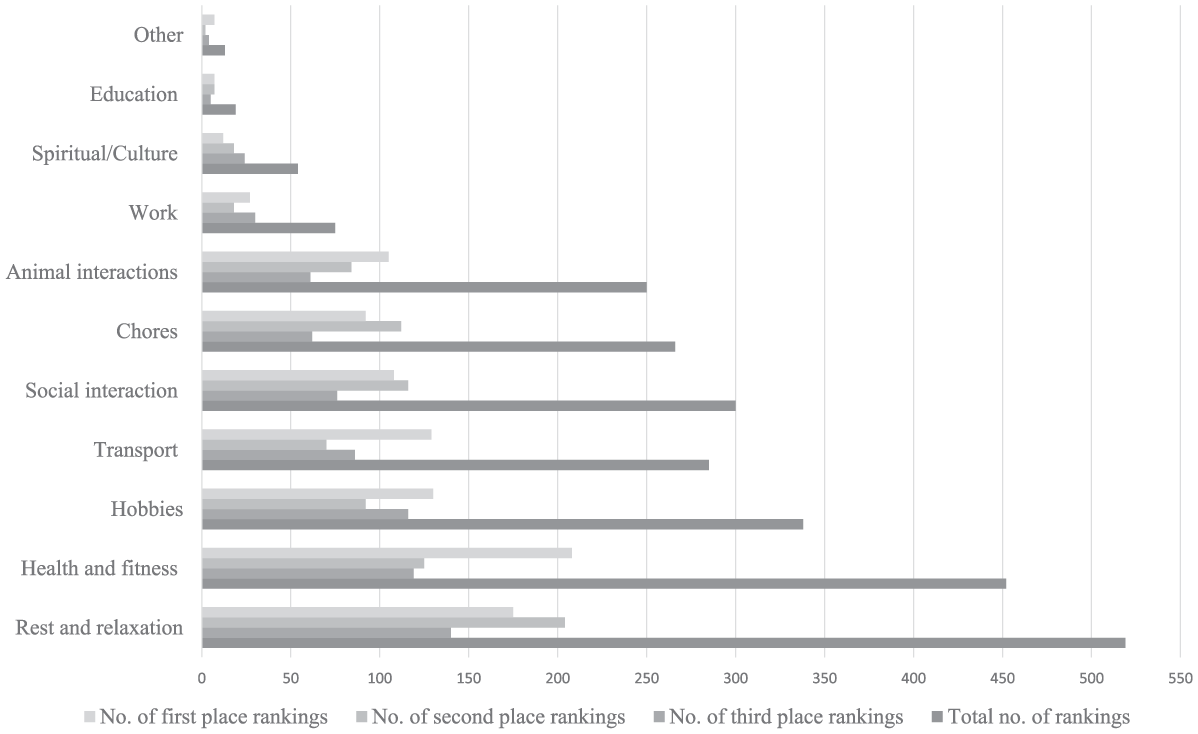
Ranking results for the three main purposes for participants’ contact with nature.
Pearson’s Correlations Between Nature Connection and Variables Measuring Different Aspects of Childhood and Adult Nature Experiences (N = 985).
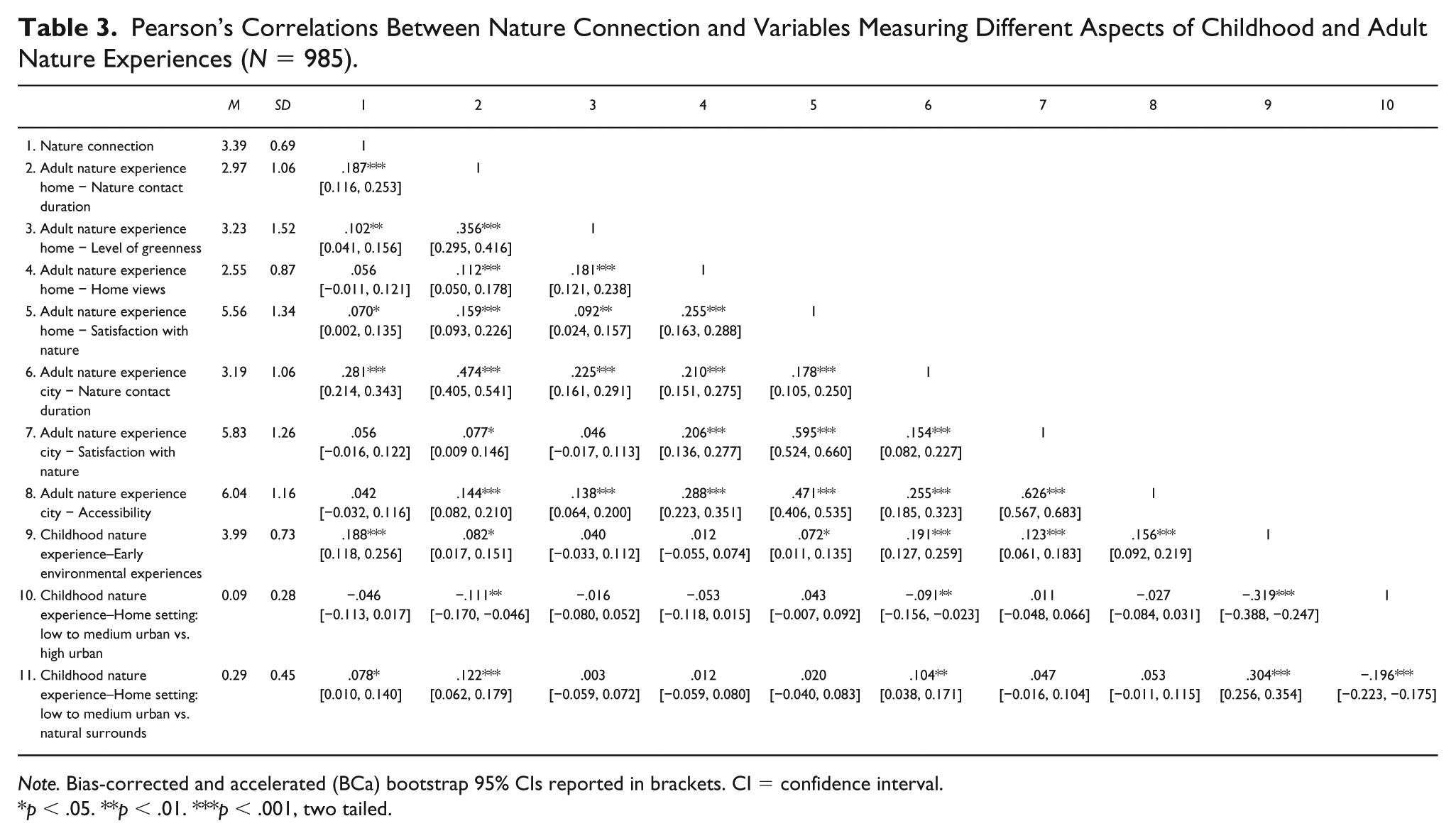
Note. Bias-corrected and accelerated (BCa) bootstrap 95% CIs reported in brackets. CI = confidence interval.
p < .05. **p < .01. ***p < .001, two tailed.
Regression Analysis
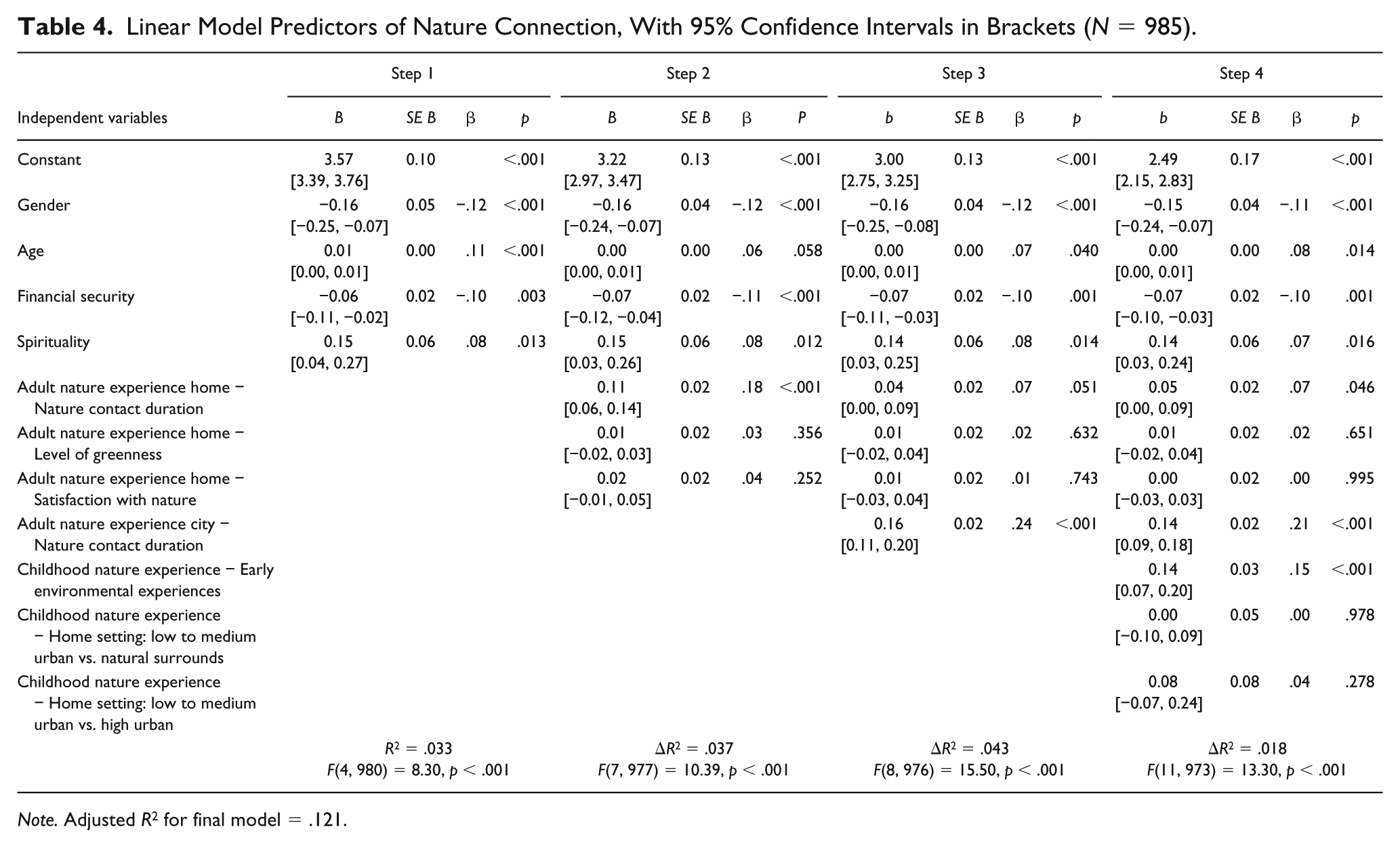
The results of the regression analysis are presented in Table 4. The first step included the control variables of gender, age, feelings of financial security, and spirituality (R2 = .033, F(4, 980) = 8.30, p < .001). The second step included three separate variables measuring various aspects of adult nature experiences at home, namely, weekly duration of contact with home nature, level of greenness of home nature, and satisfaction with nature around the home (Research Question 2; ΔR2 = .037, F(7, 977) = 10.39, p < .001). The third step included one variable measuring adult nature experiences in the city, namely, weekly duration of adult nature experiences in the city (Research Question 3; ΔR2 = .043, F(8, 976) = 15.50, p < .001). Other variables measuring adult nature experiences in the city, such as accessibility of and satisfaction with city nature, were not included in the regression models as the correlation analyses showed that these variables did not significantly correlate with nature connection. The fourth and final step included three separate variables measuring childhood nature experiences. These variables were the Early Environmental Experiences Scale and two dummy coded variables for childhood home setting (i.e., natural surrounds and high urban; Research Question 1; ΔR2 = .018, F(11, 973) = 13.30, p < .001).
Linear Model Predictors of Nature Connection, With 95% Confidence Intervals in Brackets (N = 985).
Note. Adjusted R2 for final model = .121.
The strength of the evidence base on associations between adult nature experiences and nature connection is comparable with the evidence base on associations between childhood nature experiences and nature connection. Hence, sequencing of steps within the model was based first on the number of variables per step followed by strength of correlations between the independent variables and nature connection (Table 3). Hierarchical regression was chosen to help differentiate between the effect of childhood versus adult nature experiences and city-based versus home-based adult nature experiences. Although there was minimum change in the significance and effects of variables across the four models, it was revealed that the inclusion of duration of adult nature experiences in the city contributed the greatest improvement to model fit (ΔR2 = .043 for Step 3). Only duration of time spent in contact with nature, both at home and at the city level, as well as the Early Environmental Experiences Scale emerged as significant predictors of nature connection. The final model accounted for approximately 12% of the variation in nature connection levels (adjusted R2 = .121). The Durbin–Watson value was 1.90 indicating that multicollinearity was not an issue.
Moderation Analysis
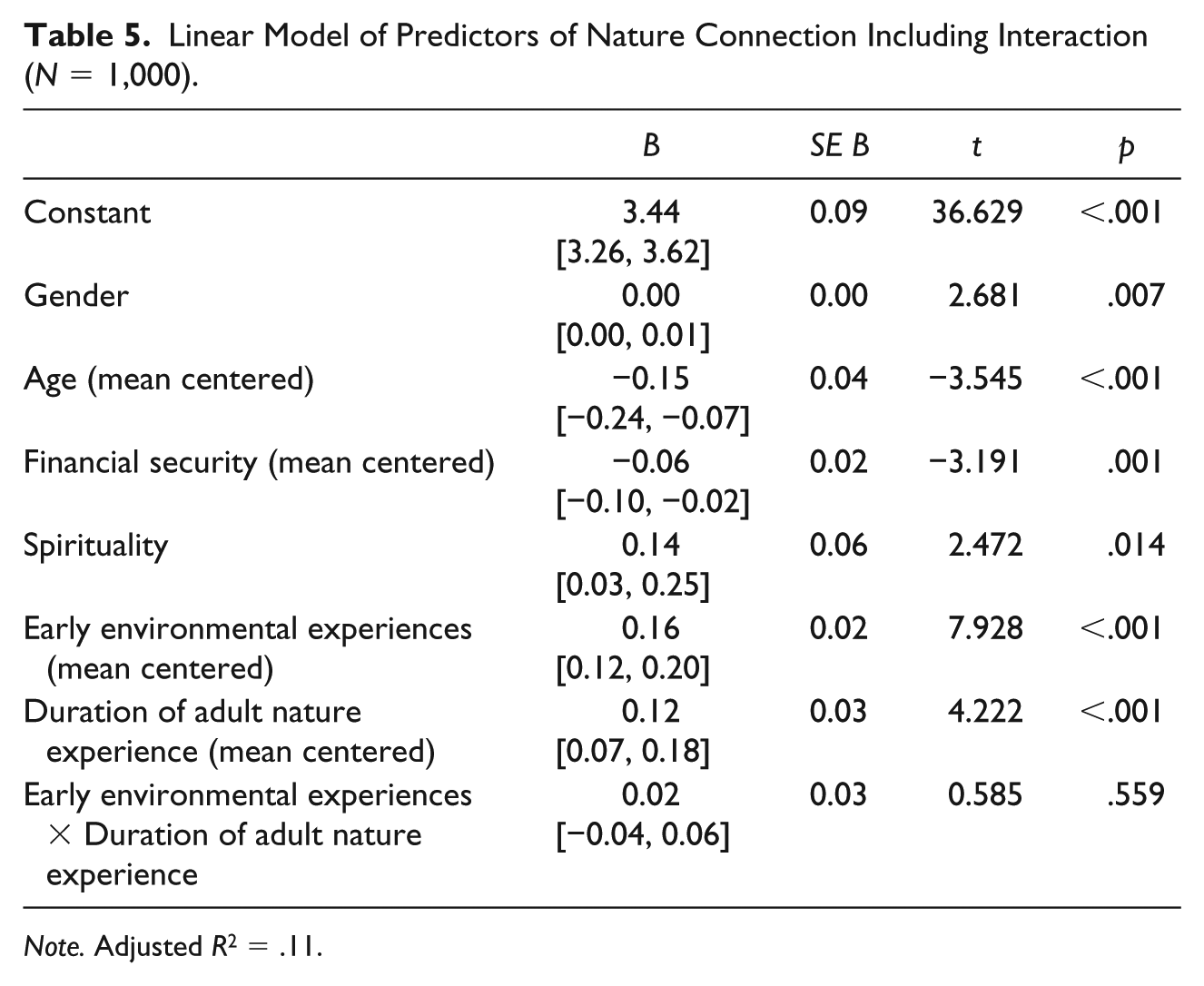
The final research question (Research Question 4) sought to explore whether the relationship between adult nature experiences and current nature connection is moderated by childhood nature experience. The Early Environmental Experiences Scale was significantly, although weakly, correlated with duration of adult nature experiences in both home, r(985) = .08, p < .05, and city settings, r(985) = .19, p < .001 (Table 3), which would suggest that childhood nature experiences may play a moderating role. To investigate this potential moderating role, nature connection was regressed on mean-centered predictor variables of duration of adult nature experience in the city and the Early Environmental Experiences Scale. The predictor variable of duration of adult nature experience in the city was chosen for this analysis as it had the strongest effect size of all the adult nature experience variables (b = 0.14, 95% confidence interval [CI] = [0.09, 0.18]). The interaction term of these two predictor variables was included to assess whether the positive association between high nature connection and high duration of adult nature experience is moderated by the level of nature experienced during childhood. This interaction was investigated while controlling for age, gender, spirituality, and financial security. The interaction effect proved nonsignificant, b = 0.02, 95% CI = [−0.04, 0.06], t = 0.585, p = .559, indicating that the relationship between duration of adult nature experiences and nature connection is not moderated by childhood nature experiences (Table 5).
Linear Model of Predictors of Nature Connection Including Interaction (N = 1,000).
Note. Adjusted R2 = .11.
Discussion
The aim of this study was to investigate potential predictors of nature connection through testing the effect of nature experiences, both past experiences that occurred during childhood and urban nature experiences that occur during a routine week within home and city settings. Consistent with past research, we found that both adult and childhood nature experiences have a positive relationship, of comparable strength, with current nature connection levels (Cheng & Monroe, 2012; Lin et al., 2014; Restall & Conrad, 2015; Windhorst & Williams, 2015). Given the cross-sectional study design, it is not possible to determine the direction of this effect, and although we suggest that spending time in nature may enhance nature connection, it may also be the case that having a high level of nature connection encourages people to spend time in nature. Furthermore, although childhood and adult nature experiences were shown to be significant predictors of nature connection, they only explain a relatively small proportion of the overall variability in nature connection. Given the subjectivity of one’s relationship with nature, influenced by cultural differences and prevailing social constructions of nature, it is likely that there are many other factors that may influence this complex construct. Nevertheless, deepening our understanding of the role that childhood and adult urban nature experiences play in shaping nature connection may help inform the design and delivery of nature connection enhancing experiences within our cities.
The current study extends past research by assessing childhood and adult nature experiences simultaneously and testing the moderating effect that childhood nature experiences may play on the relationship between adult urban nature experiences and nature connection. The results of our survey with a large sample of adults living in Brisbane revealed that childhood nature experience was not a significant moderator of the positive relationship between duration of adult urban nature experiences in the city and nature connection. This finding suggests that people can develop their relationship with nature throughout various stages in life and that childhood nature experiences are not necessarily a prerequisite to adult nature connection.
Currently, there is substantial focus on connecting children with nature as evidenced by the establishment of initiatives such as Forest Schools and Nature Play Programs. The aim of such programs is to increase childhood nature experiences through outdoor learning or unstructured outdoor play. This focus on children’s nature connection is driven by concern over “nature deficit disorder,” which is believed to be a critical problem facing modern children who are growing up in the age of technology and within urban environments with predominantly indoor lifestyles (Louv, 2008). Such efforts serve an important role, particularly for children living in urban environments with reduced opportunities for nature experiences. However, the findings from this study suggest that equal attention needs to be given to promoting adult nature experiences and fostering adult nature connection.
Nature connection initiatives should consider the opportunity to engage adults with nature, particularly those who may not have prior familiarity with nature. The design of such adult nature initiatives will need to be tailored to suit the age, ability, and cultural and social context of the target adult population, especially given that certain urban adult groups may face more barriers to engaging with nature than others. For example, numerous studies show that people who infrequently engage with nature are more likely to be female, older, in poor health, of lower socioeconomic status, and of ethnic minority status (Boyd, White, Bell, & Burt, 2018; Lin et al., 2014; Roe, Aspinall, & Ward Thompson, 2016). Encouragingly, in Europe, multiple organizations are now working closely with diverse ethnic and refugee groups living in cities, to cocreate activities that support first-, second-, and third-generation migrants to access and connect with urban nature in new, and often unfamiliar, settings (Rishbeth, Blachnicka Ciacek, Bynon, & Stapf, 2017). Similarly, a number of nature connection initiatives already tailor their activities to accommodate diverse ages and abilities. For example, community greening and gardening initiatives, such as those run by Thrive or Green Gyms by The Conservation Volunteers, provide age- and ability-appropriate nature connection activities. Dementia Adventure, a nature-based program in the United Kingdom, provides activities that connect people living with dementia to nature (Morgan, 2018). Tailored and cocreated nature connection activities such as these, may be an effective way of connecting diverse urban adult populations with nature.
Our findings show that duration of adult nature experiences, both those that occur at home and those within the wider city environment, are significant predictors of nature connection. This supports previous findings that suggest that people’s nature connection may be developed through frequent and direct contact with nature (Lin et al., 2014; Restall & Conrad, 2015; Russell et al., 2013; Scopelliti et al., 2016). The majority of respondents in our study reported that rest and relaxation was one of the main purposes for spending time in contact with nature. This may explain why our results show that duration of nature experience is associated with nature connection. It may be that spending time in nature for rest and relaxation allows for appreciative and mindful nature experiences, which have been shown to be associated with nature connection (Howell, Dopko, Passmore, & Buro, 2011; Wolsko & Lindberg, 2013).
We used a rather simple ranking survey question as an attempt to provide insight into how people in our sample spent time in nature. Future research could investigate what type of nature (e.g., private vs. public nature) supports different types of activities. For example, home nature may support social activities or activities for rest and relaxation, whereas public nature may be more suited for physical activity or for traveling from one location to another. These different types of activities experienced in different types of urban nature may have varying relationships with nature connection, and should be investigated. We recommend study designs and indicators that can tease apart how different types of urban nature experiences relate to nature connection. Such study designs could use qualitative methods, such as time-use diaries, map-aided interviews, and emplaced interviews—those conducted within the place under study—or smartphone technologies and specific apps that collect real-time data on how people experience urban nature. The latter may be a particularly effective method for collecting data from young adults and adolescents (Bakolis et al., 2018; MacKerron & Mourato, 2013). Such approaches may help reveal how people interact with different types of urban nature and how these various types of experiences relate to nature connection.
In addition to duration of contact, we also tested other variables that measured different aspects of adult urban nature experiences, for example, satisfaction with nature or level of greenness. However, only duration of contact proved to be a significant predictor of nature connection. This suggests that, with regard to our study sample, initiatives that seek to enhance nature connection should focus on increasing people’s duration of time in contact with nature, whereas focus on other aspects, for example, enhancing people’s satisfaction with nature, may not prove as effective. Urban greening initiatives should, therefore, consider, at the core of their design, the human experience of that nature space, seeking to optimize contact with, and ultimately connection to, nature. That said, it is recognized that Brisbane, the setting of this study, is considered to have a high level of urban nature (Shanahan et al., 2016), and that the satisfaction with and accessibility of nature at the city level were both rated highly by most of this study’s participants. It would, therefore, be interesting to see how these results would compare with a city that has greater variability in residents’ perceived accessibility, quality, and satisfaction with urban nature. In settings with lower access to, quality of, and satisfaction with urban nature, it may be that simply increasing duration of exposure to existing urban nature may not prove effective at enhancing nature connection. Indeed, encouraging people to spend time in nature that they perceive as low quality or are dissatisfied with may even have an adverse effect on nature connection levels, whereby people experience fear or discomfort in the setting (Skår, 2010), or even a sense of solastalgia in cases where the degradation of a familiar space leads to distress and loss of place attachment (Albrecht et al., 2007). It is, therefore, important to consider how urban nature spaces are perceived and understood by local residents, prior to implementing nature connection–enhancing initiatives.
This study adopted a broad definition of urban nature that included “all the plants and wildlife that live in the city.” Our findings show that contact with this everyday or nearby nature has a positive relationship with nature connection. Dunn, Gavin, Sanchez, and Solomon (2006) previously wrote of the dependency of global conservation on urban people’s ability to experience urban nature. This study extends this thought to the dependency of humankind’s very connection to nature on urban people’s ability to experience urban nature. Hence, we need to adopt a broad perspective and think “beyond the park” when it comes to designing initiatives that engage urban residents with nature in their city. Such thinking is starting to be reflected in the literature, with studies now exploring how urban residents use and engage with a variety of urban nature types, such as wild spaces (Threlfall & Kendal, 2018), urban forests (de Oliveira et al., 2013), blue spaces (Gascon, Zijlema, Vert, White, & Nieuwenhuijsen, 2017), and community and private gardens (Farahani, Maller, & Phelan, 2018; Guitart, Pickering, & Byrne, 2012). All aspects of nature within the city should be considered as a potential opportunity for people to experience nature and develop their nature connection. Incorporation of such thinking across the multiple disciplines and sectors working within the space of urban nature and green infrastructure could help promote cobenefits where enhanced nature connection is delivered alongside the objectives of sustainable and livable cities.
Finally, although growing at a rapid pace, the nature connection research field is still considered to be in its infancy with much still to be explored about this complex construct. The majority of studies on nature connection and the development of scales to measure nature connection have been derived mainly from Westernized cultures. Future work should seek to explore how people from diverse cultures perceive and understand their relationship with nature. Such work may require the adaptation of current nature connection measures to be relevant to the cultural context of the target population. Other valuable suggestions have also been made within the literature about how to move the nature connection research field forward, for example, through building a spatial understanding of nature connection (Klaniecki, Leventon, & Abson, 2018).
Fostering nature connection may promote the important dual outcomes of improved psychological well-being and enhanced proenvironmental attitudes and behaviors. Nature connection–enhancing initiatives may particularly be of benefit among urban residents who are thought to be at risk from a “nature disconnect.” With additional research, findings from this study may inform the creation of urban environments that enable people to experience nature and grow their nature connection, in turn, promoting the dual outcomes of improved psychological well-being and enhanced proenvironmental attitudes and behaviors. Furthermore, enhancing nature connection through increased nature exposure will also support more widely acknowledged health and well-being benefits from nature contact (Hartig, Mitchell, De Vries, & Frumkin, 2014), complementing existing healthy city agendas.
Limitations
Although causality cannot be inferred from correlation analysis of cross-sectional data, we have attempted to shed light on the underlying causal processes by investigating the moderating effect of childhood nature experiences on the relationship between adult nature experiences and nature connection. However, use of cross-sectional data in this way has been received with caution in the literature (Markevych et al., 2017). That said, such analysis may still be of value as long as the analysis is supported by “relevant theory and previous empirical findings on components of the assumed process in question” (Markevych et al., 2017, p. 310), which is the case in this study. Further investigations on this topic should employ longitudinal study designs that track individuals over their life course assessing how changing nature experiences affect their nature connection levels. Given the subjectivity of one’s nature connection, such a design should ideally be coupled with a qualitative line of inquiry to better understand how certain types of nature experiences shape nature connection in comparison with others. The explanatory power of our models was quite low, suggesting that there may be a number of other factors associated with nature connection. Nature connection is still an emerging research field with much still to learn about the factors that shape an individual’s nature connection. In addition, this study used a number of variables that were single-item measures (e.g., satisfaction with nature). Such measures were chosen to produce a survey questionnaire that was of a reasonable length. However, we recognize that single-item measures are vulnerable to mono-operation bias that can undermine construct validity. This research field would benefit from succinct and validated measures that assess constructs such as perceived quality of urban nature experiences. Finally, this study attempted to tease apart the effects of contact with public forms of urban nature in comparison with private forms of urban nature (e.g., privately owned outdoor spaces). This, however, fails to account for communal nature spaces that people living in apartment or housing complexes may have access to. That said, given that less than 5% of the sample had no access to a private outdoor space, it is unlikely that communal nature spaces would have significantly affected the results of this study. Nevertheless, such forms of urban nature should be considered in future studies. Similarly, the effects of indoor nature (e.g., potted plants, green walls) on nature connection were not accounted for in this study.
Conclusion
Nature connection holds promise for its potential to enhance well-being and promote proenvironmental attitudes and behaviors among adult urban residents. Using online survey responses from 1,000 residents of a large metropolitan city in Australia, we showed that past childhood and duration of current urban nature experiences at home and in the city were likely to have a significant influence on how connected these adults feel to nature. We also showed that the positive relationship between duration of current adult urban nature experiences and nature connection was not significantly moderated by past childhood nature experiences. This finding suggests that people lacking experience of nature during childhood can still come to have a high sense of nature connection through experiencing nature as an adult. These findings are timely, given the growing number of nature connection objectives starting to appear in planning and policy documents. This research empirically demonstrates the positive relationship between nature experiences and nature connection, and suggests that it may be equally important to promote nature experiences at any stage in life if the goal is to increase connection with nature. Furthermore, our findings suggest that spending time in contact with everyday or nearby urban nature, both at home and in the city, may be a key tool for connecting urban residents with nature.
Supplemental Material
Supplemental_Material_Survey_EBS2.4 – Supplemental material for Predictors of Nature Connection Among Urban Residents: Assessing the Role of Childhood and Adult Nature Experiences
Supplemental material, Supplemental_Material_Survey_EBS2.4 for Predictors of Nature Connection Among Urban Residents: Assessing the Role of Childhood and Adult Nature Experiences by Anne Cleary, Kelly S. Fielding, Zoe Murray and Anne Roiko in Environment and Behavior
Footnotes
Declaration of Conflicting Interests
The author(s) declared no potential conflicts of interest with respect to the research, authorship, and/or publication of this article.
Funding
The author(s) received no financial support for the research, authorship, and/or publication of this article.
Supplemental Material
Supplemental material for this article is available online.

Author Biographies
References
Supplementary Material
Please find the following supplemental material available below.
For Open Access articles published under a Creative Commons License, all supplemental material carries the same license as the article it is associated with.
For non-Open Access articles published, all supplemental material carries a non-exclusive license, and permission requests for re-use of supplemental material or any part of supplemental material shall be sent directly to the copyright owner as specified in the copyright notice associated with the article.
