



Abstract
Academic self-concept predicts students’ future goals and is affected by a student’s relative success compared with his or her peer group. This exploratory study used structural equation modeling to examine the contributions of the perceived level of difficulty of the curriculum, in addition to the contributions of social comparison and achievement in schoolwork, to academic self-concept among students enrolled in advanced coursework. Along with school achievement, perceived difficulty and social comparison also predicted academic self-concept. The final model indicated that students differentiate between learner self-concept, which is how students perceived their ability to understand new ideas or knowledge, and student self-concept, which is how they perceived their abilities to succeed in school-related tasks. Of these two constructs, student self-concept was a better predictor of future goals; however, the overall effect was small.
Keywords
Academic self-concept represents how students feel about themselves as learners in school contexts (Hoge & Renzulli, 1993) and has implications for both student achievement and well-being (e.g., Altmann & Dupont, 1988; Marsh, 1991; Marsh, Smith, & Barnes, 1984). As a measure of students’ confidence in their academic abilities, their academic self-concept informs their perception about not only their current tasks and school-related activities but also their future goals and academic ambitions (Ahmavaara & Houston, 2007; Marsh, 1991). In general, students with low academic self-concept may select academic and career paths that are less rigorous or challenging, creating a potential loss of skills and advancement for both the individual and society (Ahmavaara & Houston, 2007; Marsh, 1991). Therefore, this study explored the relationships of various factors (including ability, achievement, social comparison, and perceived difficulty of coursework) on academic self-concept and the subsequent relationship of academic self-concept with future educational aspirations. The model discussed in the article incorporates social comparison theories of academic self-concept and applies Dweck’s (1986) goal orientation theories.
Goal and Motivation Theories
Dweck’s (1986) theories about achievement and motivation have been highly influential in educational research. Specifically, Dweck stated that people have internal theories of intelligence that can range from entity to incremental or malleable. Entity theories of intelligence focus on a belief that intelligence is fixed (Dweck, 1986). People with this type of view tend to have performance goal orientations, in which final products, performances, and the ability to compare oneself favorably to others tend to be the motivating factors in achievement (Dweck & Leggett, 1988; Grant & Dweck, 2003). People with these characteristics have been associated with negative educational outcomes such as learned helplessness and underachievement (Dweck & Leggett, 1988; Grant & Dweck, 2003). On the other hand, incremental theories of intelligence are based on the belief that intelligence is malleable and can be changed by environment and behaviors (Dweck, 1986). This type of theory is linked to learning goal orientation, in which understanding, growth, and learning tend to be the motivating factors in achievement (Dweck & Leggett, 1988; Grant & Dweck, 2003). People with these characteristics have been shown to have more positive educational outcomes, such as task commitment and persistence in the face of obstacles (Dweck & Leggett, 1988; Grant & Dweck, 2003). This theory has applications to how students construct their academic self-concepts and to the conceptualization of academic self-concept from a theoretical perspective.
Structure of Academic Self-Concept
Academic self-concept has long been theorized to be multidimensional and hierarchical (e.g., Lewis & Knight, 2000; Marsh & Parker, 1984). Traditionally, it has been conceptualized to include subject-specific domains, such as language and mathematics (Marsh, 1992). However, the current study took a different approach to add to this theoretical base, defining academic self-concept as a combination of how students feel about their capacity for learning (learner self-concept) and how they feel about their abilities in school-related tasks (student self-concept). As students develop self-concepts concerning their abilities, they distinguish between the capacities to perform in school (student self-concept) and their capabilities to develop new learning and understanding (learner self-concept). Thus, this theoretical framework conceptualizes self-concept through the lens of goal orientations, which relates to motivational theory (e.g., Dweck, 1986; Grant & Dweck, 2003; Mueller & Dweck, 1998). Using the theoretical framework of goal orientation, learner self-concept is analogous to learning goal orientation, in which students are focused on development and mastery. Student self-concept, in contrast, is analogous to performance goal orientation, in which students focus on outcomes, in this case, grades in school. Theoretically, both of these factors contribute to general academic self-concept, which, in turn, affects general self-concept (e.g., Pyryt & Mendaglio, 1994).
Social Comparison Theories of Academic Self-Concept
In addition to investigating patterns in the structure of academic self-concept, research (Marsh, 1991, 2004; Marsh & Hau, 2004) has focused on the factors affecting academic self-concept, specifically on social comparison. Social comparison theories involve the idea that a student’s academic self-concept is derived from how a student compares his or her academic ability to that of other students in the peer group (Dijkstra, Kuyper, van der Werf, Buunk, & van der Zee, 2008). One way to investigate social comparison is to measure students’ comparison orientation or tendency to compare themselves to others (Gibbons & Buunk, 1999). Gibbons and Buunk identified two types of comparison orientation: ability comparison orientation and opinion comparison orientation. Ability comparison orientation refers to the tendency for people to compare their abilities and achievement with those of others, whereas opinion comparison orientation refers to the tendency for people to compare their ideas and beliefs with those of others (Gibbons & Buunk, 1999). This inclination toward comparison interacts with relative achievement and contributes to academic self-concept. For example, a student with a high level of achievement who readily compares his or her achievement with that of others would theoretically have a higher academic self-concept than a similarly achieving student who does not tend to compare his or her achievement with others. In contrast, such comparative tendencies would result in even lower self-concept for low-achieving students who compare their achievement with that of other students.
Social comparison theories such as the big-fish–little-pond effect predict lower academic self-concepts for students who are placed in classes or schools where the average ability levels of the other students is high, and higher academic self-concepts for students who are placed in classes or schools where the average ability levels of the other students is low (Marsh et al., 2008). However, social comparison theories do not take into account additional pressures placed on students who are grouped with more academically talented peers, including increases in the complexity and rigor of curriculum (Wilson, 2008a, 2008b). The increased difficulty of the content and higher expectations for schoolwork may also cause a decline in academic self-concept. When academically talented students are grouped together for instruction, generally, the intent is to raise the level of academic challenge, as compared to regular classes. For example, honors classes, Advanced Placement (AP; College Board, 2010) courses or International Baccalaureate (IB; International Baccalaureate Organization, 2010) programs all involve homogeneously grouping high school students to deliver more academically rigorous content. Therefore, as students move into more academically rigorous programs, their academic performance may suffer or the amount of effort required to maintain high levels of achievement may increase, potentially contributing to a decline in the students’ perceptions of their own academic abilities (academic self-concept). Thus, the lower academic self-concept that results from placements into higher achieving schools or classes may result from social comparison or from the increased challenge and rigor of the class.
Academic Self-Concept and Academic Ability
In addition to social comparison and course rigor, student ability level and achievement are also related to academic self-concept (e.g., Marsh, 2004; Marsh et al., 1984). There is a substantial body of research (e.g., Marsh, 2004; Pyryt & Mendaglio, 1994) documenting the positive correlation between intellectual ability and academic self-concept. These robust findings have been documented in cross-cultural contexts (e.g., Akande, 1997, Hotulainen & Schofield, 2003) and using a variety of research methodologies (e.g., Marsh, 2004; Pajares & Graham, 1999). There is also a well-documented relationship between students’ achievement and academic self-concept (e.g., Altmann & Dupont, 1988; Marsh et al., 1984). This relationship is often described as reciprocal, in that prior successes in achievement lead to higher academic self-concept, which leads to higher achievement (Marsh, Byrne, & Yeung, 1999).
Academically talented students have been shown to have academic self-concept that is higher than (Lüdtke, Köller, Marsh, & Trautwein, 2005; Pajares & Graham, 1999; Pyryt & Mendaglio, 1994) or similar to (Bouffard & Couture, 2003; Vlahovic-Stetic, Vidovic, & Arambasic, 1999) average-achieving students. Additionally, there are group differences in patterns of academic self-concept among students of varying abilities (Pyryt & Mendaglio, 1994). However, the results are contradictory. For example, Akande (1997) and Dai (2001) found that girls had lower academic self-concept than their male counterparts among average-ability students, whereas Hotulainen and Schofield (2003) and Pajares and Graham (1999) did not find the same pattern among high-ability students.
In looking beyond group differences, few studies have examined the specific effects of programming and curriculum on the academic self-concept of students. However, programming differences can be assumed to have existed in some studies, such as the large studies conducted in Germany and other international contexts (Marsh, 2004; Marsh & Hau, 2004). Thus, the effect of programming involving advanced coursework or rigorous curriculum on academic self-concept has not been explored adequately.
Studies regarding the academic self-concept of the academically talented population specifically have documented a decline in academic self-concept when talented students are grouped together for instruction (Gibbons, Benbow, & Gerrard, 1994; Marsh, 1987, 1991; Zeidner & Schleyer, 1999a, 1999b, 1999c, 1999d). However, these drops in academic self-concept may not result in overall negative effects for talented students (Plucker et al., 2004). It should be noted that research documenting this decline in academic self-concept is relative only to the academically talented students studied; therefore, a comparison has not been made to the general population of students. According to social comparison theories, the decline in academic self-concept is generally attributed to a shift to a new, higher performing peer group (Lüdtke et al., 2005; Marsh 1987, 1991). Specifically, when a student is moved into a program for academically talented students, the new peer group generally has a higher ability and achievement level than the previous experiences of the student. Thus, in comparison, the student may begin to feel that his or her own level of academic ability is lower, causing a drop in academic self-concept. However, the introduction of more challenging curriculum may also contribute to this drop in academic self-concept (Wilson, 2008a, 2008b).
Academic Self-Concept and Future Goals
Finally, academic self-concept has been shown to predict students’ choices for the future (Ahmavaara & Houston, 2007; Koumi, 2000). A student’s confidence in his or her abilities in academic settings has an influence on how he or she plans for the future. For secondary school students with high potential for academic excellence, academic self-concept may have implications for future education, careers, and fulfillment (Koumi, 2000). Students who experience a decline in academic self-concept often lower their future goals and expectations (Koumi, 2000), which may have long-term implications for life achievements.
Theorized Model
Building on the various lines of research regarding academic self-concept, the model hypothesized in this study provides a comprehensive approach to investigating these constructs among academically talented students (see Figure 1). First, we hypothesized that achievement would mediate the relationship between ability and academic self-concept (Akande, 1997, Hotulainen & Schofield, 2003; Marsh, 2004; Pyryt & Mendaglio, 1994). The model also included the separate influences of social comparisons (Marsh, 1991, 2004; Marsh & Hau, 2004) and perceived challenges of the curriculum (Wilson, 2008a, 2008b) on students’ academic self-concept, which had not been previously documented in the research. Finally, this study also investigated a new conception of academic self-concept, which distinguished students’ learning self-concept from their school self-concept. These domains aligned with Dweck’s (1986) theories regarding goal orientation. Both of these facets of self-concept were then theorized to influence students’ future goals, in line with previous research (e.g., Marsh 2004; Pyryt & Mendaglio, 1994) regarding academic self-concept.
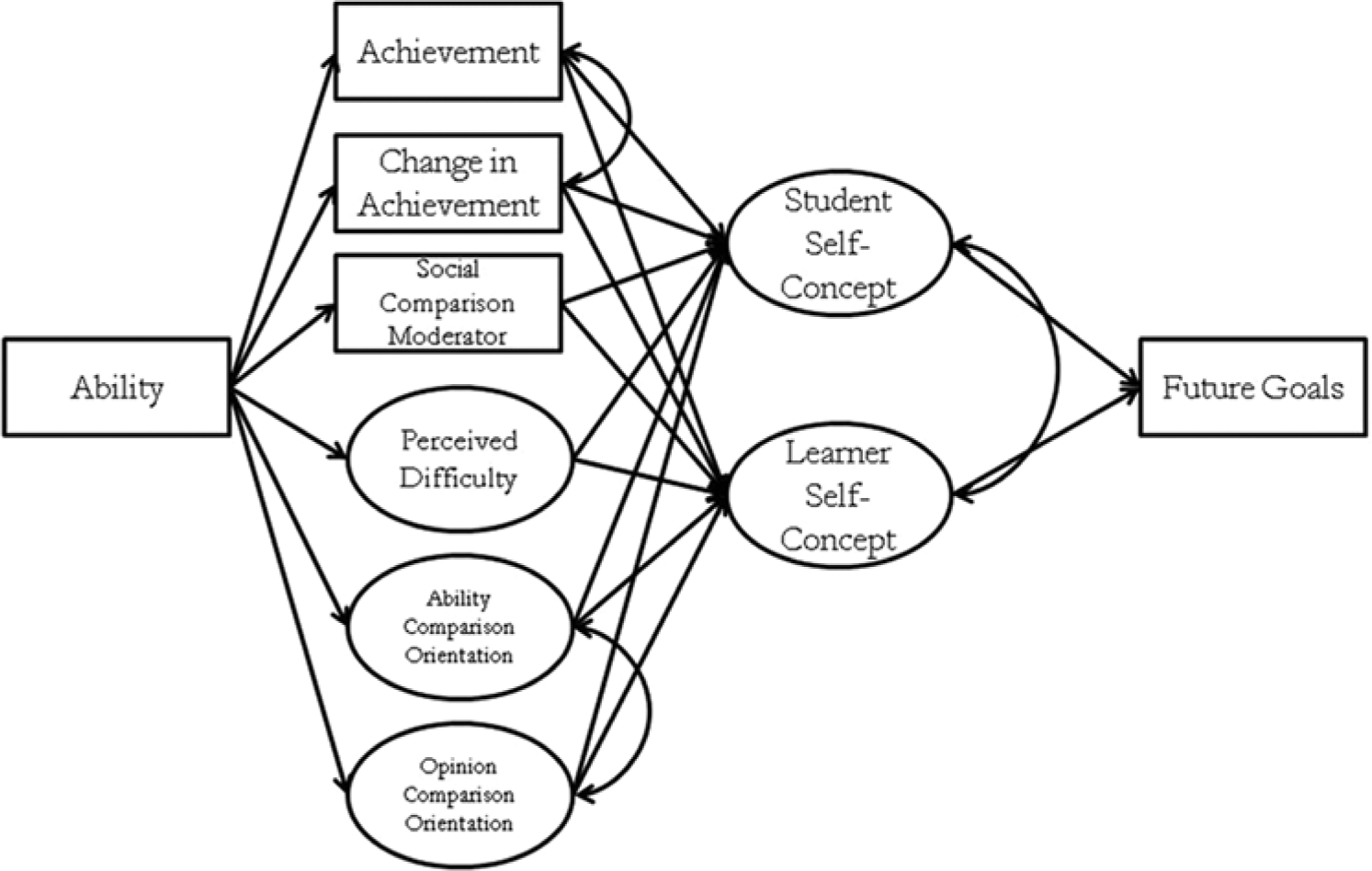
Theoretical model.
Understanding the effects of both perceived difficulty and social comparison is particularly important for educators of students in advanced courses given the combined emphasis of both increasing the challenge level of the curriculum and grouping with other academically accomplished students. Thus, studying the effects of both course rigor and social comparisons on the academic self-concept of students in AP courses and the IB program provides a unique contribution to the literature.
Although AP and IB programs are the most widely used programming options for academically talented secondary school students, there is some disagreement as to their appropriateness for gifted learners (e.g., Callahan, 2003). Acceleration of this type represents only one way that schools can introduce additional rigor into the curriculum (e.g., Colangelo, Assouline, & Gross, 2004). Ideally, students in accelerated coursework such as AP courses or IB programs should have the opportunity to gain college credit, experience an increase in the difficulty of the curriculum, and be placed with similarly high-achieving peers (College Board, 2010; International Baccalaureate Organization, 2010). However, there is evidence that the programming for academically talented students, particularly in secondary schools, may not meet the needs of this population. The courses may lack sufficient challenge and rigor, and open-enrollment policies allow for inclusion of students who may not have high abilities or achievement levels (e.g., Baines & Stanley, 2002; Callahan, 2003; Hertberg-Davis, Callahan, & Kyburg, 2006; Olszewski-Kubilius, 2010). Despite these potential limitations, AP courses and IB programs provided the context for this study as they represented the most common way to address the needs of talented high school students.
Method
This study investigated which variables contributed to students’ academic self-concept and if academic self-concepts influenced a student’s future aspirations. The theoretical model (see Figure 1) delineates the relationship of ability (self-reported SAT scores) to achievement (self-reported grades), change in achievement, social comparison, perceived difficulty, and comparison orientation. Then each of those factors was hypothesized to influence academic self-concept, which was theorized to comprise two separate components: learner self-concept and student self-concept. Finally, the two dimensions of academic self-concept (learner and student) were theorized to influence future goals.
Figure 1 highlights the key features of this exploratory study. Primarily, the theoretical model included the unique contributions of the perceived rigor of the program (perceived difficulty) and ability comparison as well as the interaction of ability comparison orientation and school-centered achievement. If the social comparison moderator were positive and the product of the two variables was positive, then the joint effects of comparison orientation and achievement would be more positive than would be predicted by the simple additive effects of the two variables separately. On the other hand, if the social comparison moderator was positive and the product of the two variables was negative, then the joint effects of comparison orientation and achievement would be more negative than would be predicted by the simple additive effects of the two variables separately. Additionally, the social comparison moderator predicted both domains of academic self-concept, including both student and learner self-concepts. When taken as a whole, this model explores both the structure of academic self-concept and the unique factors affecting self-concept. This allowed the researchers to begin investigating the validity of the hypothesized theories.
Sample
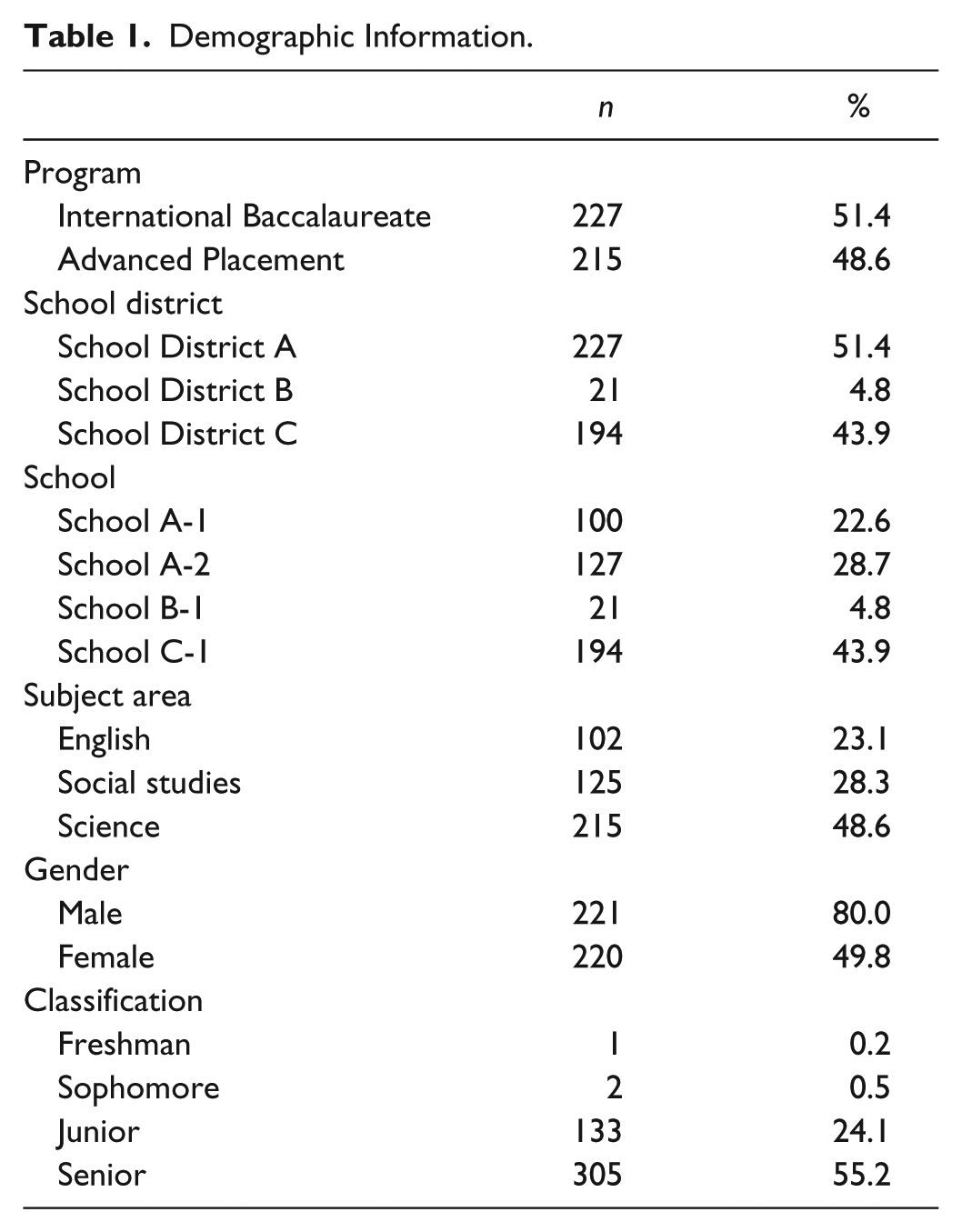
A total of 442 students from three demographically similar school districts in north Texas (see Tables 1 and 2) participated in the study. School District A, in which the IB students were enrolled, had a well-established IB program that had been in existence for over a decade. The other two districts (B and C) had been recognized for superior performance on AP exams. All three districts were predominately upper middle-class, had large majority-race populations, were located in suburban areas, and had high performance on state-mandated standardized tests (Texas Education Agency, 2009). Each of these schools had an open enrollment policy for the AP courses or the IB program; however, the IB program had guidelines and requirements (e.g., GPA) for students to remain in the program. Although enrollment in AP courses or IB programs was not predicated on identification measures traditionally associated with gifted programming, such as standardized test scores, teacher recommendations, or portfolios, this was the primary mode of providing programming for gifted secondary school students in each of the three districts.
Demographic Information.
School District Demographic Information.
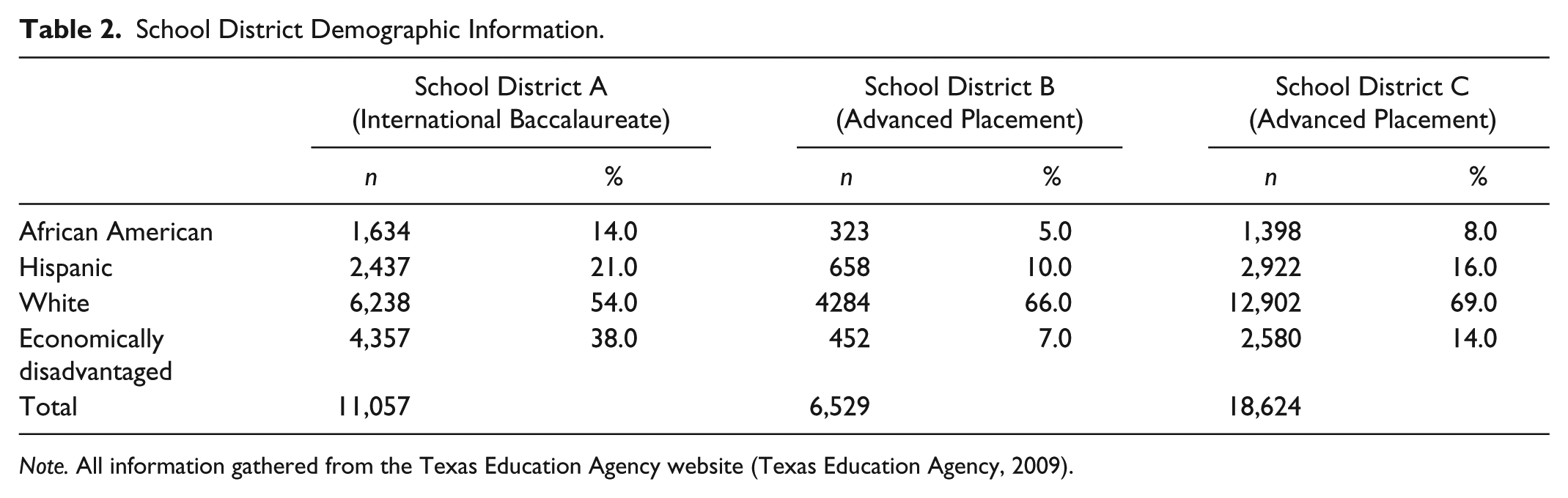
Note. All information gathered from the Texas Education Agency website (Texas Education Agency, 2009).
Juniors and seniors constituted the preponderance of students enrolled in AP courses, and pre-AP courses were offered in the first 2 years of high school. The IB program was also completed in the final 2 years of high school, with a pre-IB program offered beginning in seventh grade. The IB program was comprehensive: Students were required to enroll in the full program of courses to participate, whereas the AP coursework allowed students to choose to enroll in one or more AP classes.
The distribution of students between IB and AP was roughly evenly split with 227 and 215 students, respectively. The distribution for gender was similar, male (n = 211) and female (n = 220). The majority of students were seniors (n = 305) or juniors (n = 133), with very few sophomores (n = 2) or freshmen (n = 1). No ethnic information was collected from individual students; however, the advanced classes at each of the schools roughly reflected the demographic profile of the school districts, with small percentages of minority race students (personal communication, Director of Advanced Academics, 2009).
Instrumentation
The instruments used in this study include the Perceived Challenge and Self-Concept Scale (PCSC; Wilson, 2008a) and the Iowa–Netherlands Comparison Orientation Measure (INCOM; Gibbons & Buunk, 1999). During the development of the PCSC, experts in the field of gifted education and in academic self-concept provided content validation (Wilson 2008a, 2008b). In addition, prior exploratory factor analyses and confirmatory factor analyses conducted with university students provided support for the use of this instrument (Wilson 2008a, 2008b). The PCSC was designed to minimize social comparison in the measurement of academic self-concept; thus, questions reflect how students feel about their own academic performance, rather than how they feel about their academic performance compared with others (Wilson, 2008a).
The PCSC measures three factors: perceived level of difficulty, learner self-concept, and student self-concept. Each of these factors had an acceptable reliability for this sample, measured by Cronbach’s alpha ranging from .84 to .88 (see Table 3). Perceived level of difficulty measures how much students feel their coursework challenges them. Learner self-concept measures how confident a student is in his or her ability to grow intellectually and learn new things and is analogous to learning orientation (Dweck, 1986). Student self-concept measures how confident a student is in his or her abilities in school-related tasks and is analogous to performance orientation (Dweck, 1986). Learner self-concept is concerned with competence in learning and an internal state of growth in understanding (e.g., “I am good at learning new things”), whereas student self-concept is more concerned with academic performance (e.g., “I make good grades”). Prior studies supported the hypothesized factor structure (Wilson, 2008a, 2008b). Table 3 contains the specific item wordings and item means for the PCSC.
Reliability Estimates.
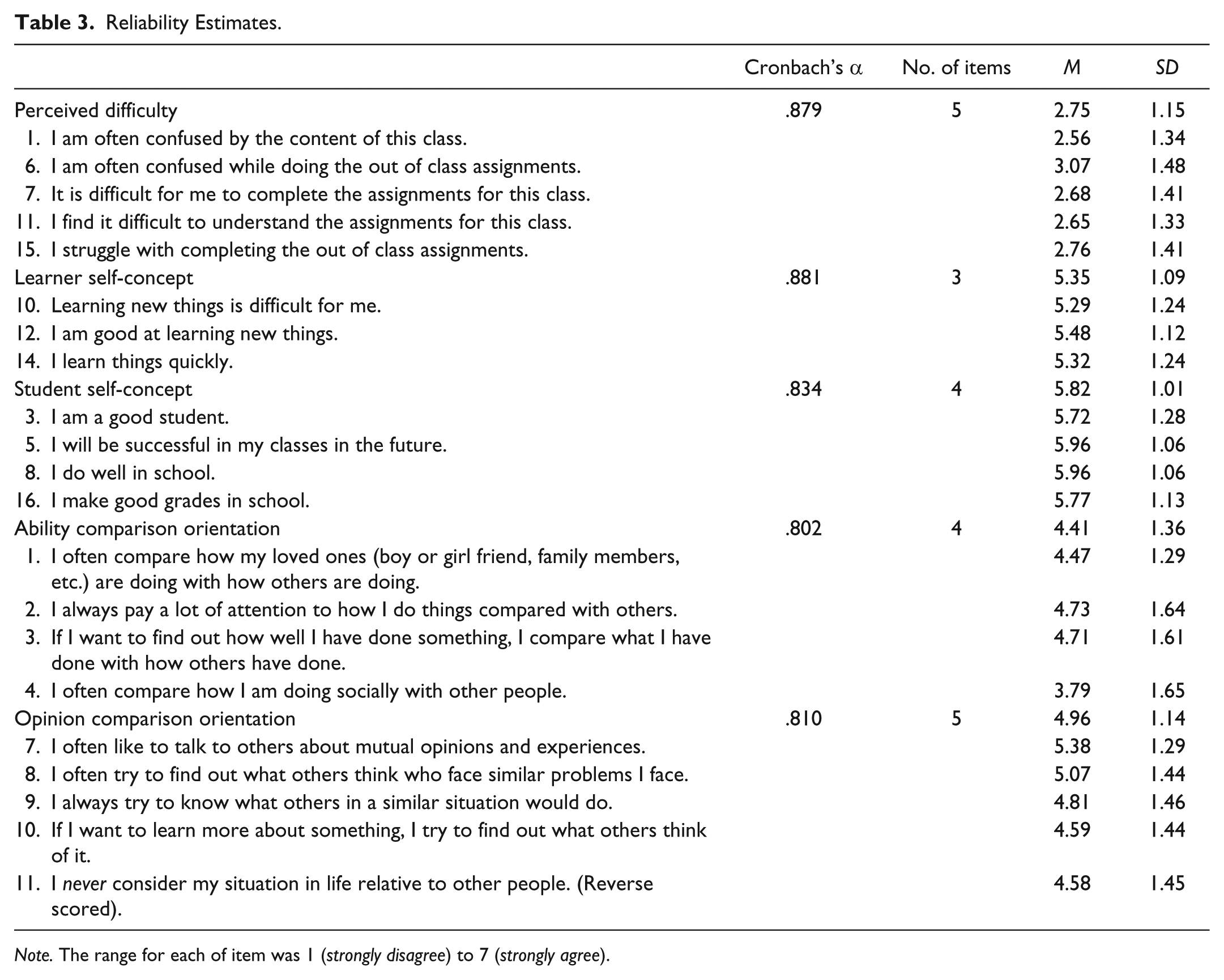
Note. The range for each of item was 1 (strongly disagree) to 7 (strongly agree).
The INCOM measures two process factors: ability comparison orientation and opinion comparison orientation. Ability comparison orientation is the tendency of students to compare their abilities with others (e.g., “If I want to find out how well I have done something, I compare what I have done with how others have done”; Gibbons & Buunk, 1999, p. 142). The scores from the three-item ability comparison orientation scale exhibited an internal reliability of .78 in this sample. Opinion comparison orientation measures students’ tendency to compare their opinions with others (e.g., “I often talk to others about mutual opinions and experiences”; Gibbons & Buunk, 1999, p. 142). The scores from the four-item opinion comparison orientation scale exhibited an internal reliability of .82 in this sample. This instrument has been previously validated using a cross-cultural sample and appeared psychometrically adequate (Gibbons & Buunk, 1999). Table 3 contains the specific INCOM items and their means in this sample.
In addition to the two instruments, the survey contained several other questions. Students’ ability was measured by self-reported SAT scores on all three subscales. The SAT is measured on a scale ranging from 600 to 2,400. The students reported their comprehensive score, which included reading, math, and writing scores (M = 1862.63, SD = 247.28; see Table 4 for descriptive statistics). If students did not report an SAT score, they were not included in the analysis. The students’ achievement was measured by asking the students to report their grades in AP or IB classes on a 10-point scale: all As (10); mostly As (9); more As than Bs (8); more Bs than As (7); mostly Bs, some As and Cs (6); more Bs than Cs (5); more Cs than Bs (4); more Cs than Ds (3); more Ds than Cs (2); and mostly Ds and Fs (1). To account for differences between schools in grading practices (e.g., awarding additional GPA points for students in advanced courses), students were not asked to report their GPA as calculated by their school but rather asked to report the grades that they received in courses (e.g., more As than Bs; M = 8.01, SD = 1.44). The students’ change in achievement was measured by a single item asking students to rate their change in achievement since beginning to take AP or IB courses on a 7-point scale, ranging from much worse to much better (M = 4.70, SD = 1.44). Fewer than a quarter of the students (17.2%, n = 75) indicated lower levels of academic achievement, with only 2% (n = 9) indicating much worse performance. Approximately one third of the sample (34.4%, n = 152) felt that their achievement was about the same. The remaining students believed their academic achievement was somewhat better (14.5%, n = 64), better (19.2%, n = 85), or much better (13.6%, n = 59). The variable of future goals was measured by asking students to indicate what level of education they plan to obtain, ranging from high school diploma/GED (1) to doctoral-level degree (5; M = 4.22, SD = 0.80). Less than a quarter of the sample (22.2%, n = 94) indicated a bachelor’s degree, and approximately equal frequencies of students chose master’s (36.2%, n = 160) and doctoral degrees (37.1%, n = 164). As each of these variables was only measured with one item each, the reliability of the responses was limited. Table 4 presents the descriptive statistics for each variable.
Variable Means and Standard Deviations.
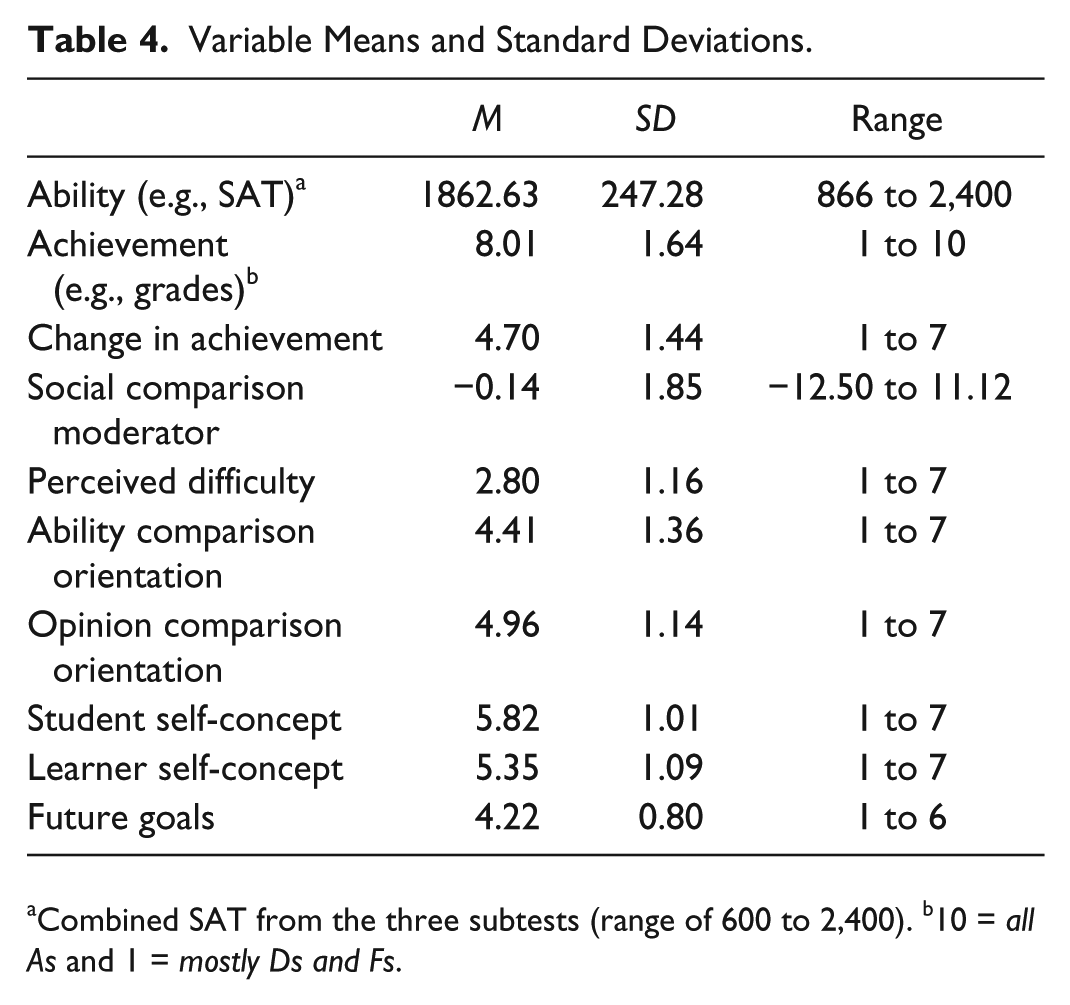
Combined SAT from the three subtests (range of 600 to 2,400). b10 = all As and 1 = mostly Ds and Fs.
The moderator of social comparison variable was a measure of the interaction between students’ achievement, as compared with that of their classmates, and their tendency to compare themselves with others. Thus, the moderator was calculated by taking the product of their group mean (school level)–centered ability comparison orientation and their group mean (school level)–centered level of achievement. This variable was calculated based on recommendations by Marsh, Wen, and Hau (2004, 2006) concerning the creation of interaction variables in structural equation modeling. As the moderational effects of social comparison on self-concept were a result of both students’ tendencies to compare themselves with others and their relative achievement among their peer group, the moderator of social comparison calculated the product of the two constructs (achievement and ability comparison orientation). For students who had both positive achievement and ability comparison orientation in comparison with their peers, the moderator was positive, which gave an additional increase to their academic self-concept. For students who had both negative achievement and ability comparison orientation in comparison with their peers, the moderator was also positive. For this group of students, this positive moderator dampened the negative effect of the two constructs on academic self-concept. Finally if the scores on the two measures were opposite in sign (i.e., the achievement was negative and the ability comparison orientation was positive or the ability comparison orientation was negative and the achievement was positive), then the moderator was negative. This negative moderator brought the academic self-concept either closer to the mean or farther away, depending on the magnitudes of the lower order coefficients.
To clarify the meaning of the social comparison moderator, Table 5 outlines five hypothetical participants in the study. Student A is a high-achieving student who tends to compare herself to others more frequently than her classmates do. It would be expected that her student self-concept would be higher than predicted by her achievement and comparison orientation separately due to social comparison theories, and the social comparison moderator models this amplification. On the other hand, Student D is a comparatively low-achieving student who does not tend to compare himself to his peers. Thus, despite his low achievement, he will have a higher student self-concept than otherwise predicted, because his relative rank in achievement is not as salient to him. The moderator variable in his case is positive and provides a slight boost to his predicted student self-concept. Student B is a high-achieving student who does not compare himself to others as frequently as his peers. The social comparison moderator, in this case, serves to minimize the effect of his relative achievement, as it is negative and causes a decrease in the predicted student self-concept. The benefit of having higher self-concept than his peers is dampened by this student’s decreased tendency to compare himself to others. Student C is a low-achieving student who tends to compare herself to others frequently, and thus, will have a lower self-concept. The negative effects of her relative low achievements are magnified by her tendency to compare with others.
Scores of Theoretical Students From Model.
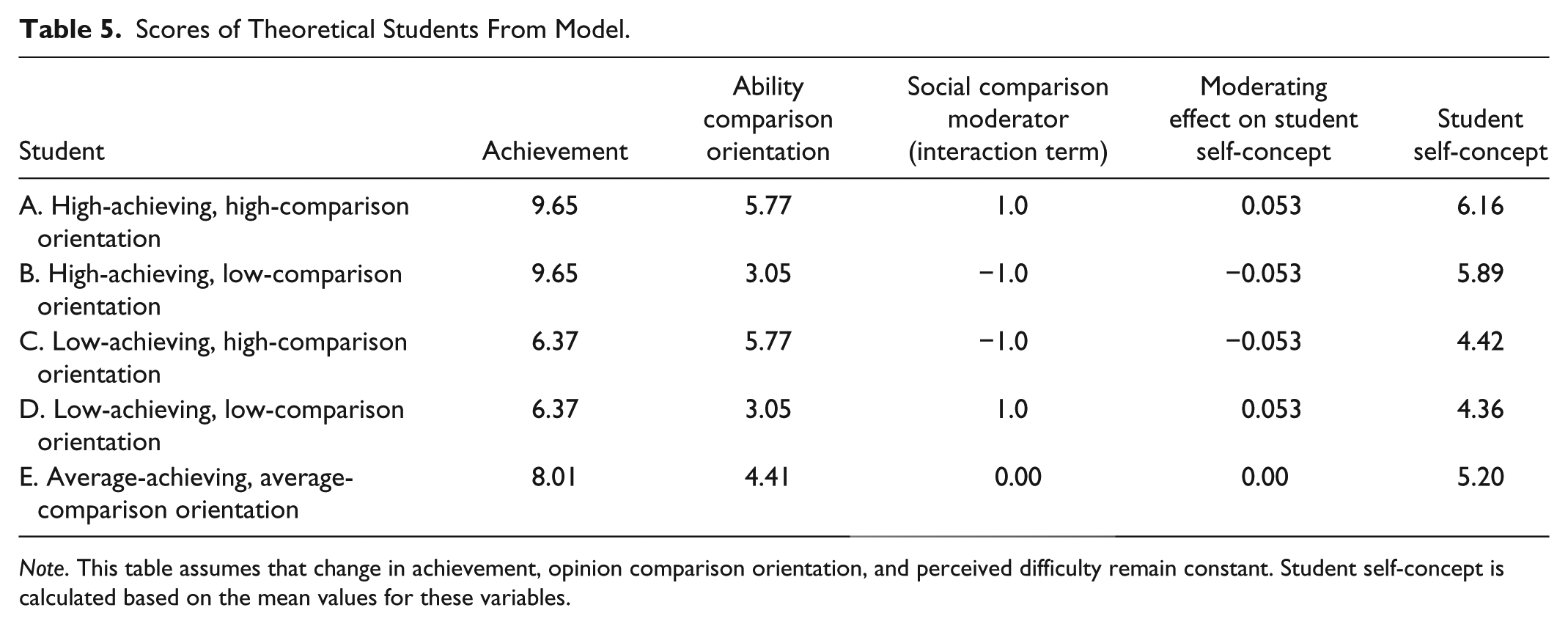
Note. This table assumes that change in achievement, opinion comparison orientation, and perceived difficulty remain constant. Student self-concept is calculated based on the mean values for these variables.
Procedure
To test the theoretical model (see Figure 1), researchers asked students enrolled in at least one course designated AP or IB to complete a three-part survey. The first part of the survey included the PCSC (Wilson, 2008a), the second part included the INCOM (Gibbons & Buunk, 1999), and the third part asked a series of demographic questions. The survey was administered during either an AP science class or an advanced-level IB class. The offerings were coordinated in such a way as to ensure that students were asked to complete the survey only once.
The data gathered from the participants were analyzed using structural equation modeling. First, correlational data and reliability information were gathered about each instrument individually. Based on that information, a measurement model was constructed, as recommended by Anderson and Gerbing (1988). From this measurement model, a structural model was analyzed, trimmed, and interpreted (Kline, 2005), based on the data from this sample of students. This exploratory study developed a model of academic self-concept based on new and existing theories.
Results
The results indicated that both perceived difficulty and social comparison predicted academic self-concept. First, we present the results of the measurement model, then we present the results of the structural model.
Measurement Model
The measurement model consisted of five latent variables (learner self-concept, student self-concept, ability orientation, comparison orientation, and perceived difficulty) and the observed indicators (individual items on each of the scales) that theoretically correspond to these variables. The original measurement model included all indicator variables for five factors: ability comparison orientation, opinion comparison orientation, perceived difficulty, student self-concept, and learner self-concept. The original measurement model included five items on the ability comparison orientation factor (1, 2, 3, 4, and 5 from the INCOM), six items on the opinion comparison orientation factor (6, 7, 8, 9, 10, and 11 from the INCOM), four items on the student self-concept factor (3, 5, 8, and 16 from the PCSC), three items on the learner self-concept factor (10, 12, and 14 from the PCSC), and six items on the perceived difficulty factor (1, 6, 7, 9, 11, and 15 from the PCSC). Specific information and the wordings of each item can be found in Table 3.
The original measurement model did not provide a good fit to the data (see Table 6). The chi-square test was statistically significant and the comparative fit index (CFI; CFI = .925) and the root mean square error of approximation (RMSEA; RMSEA = .07), which are both based on the noncentrality parameter and ideal sensitive to large sample sizes, indicated that the original measurement model exhibited less than an ideal fit (Brown, 2006).
Fit of Models.
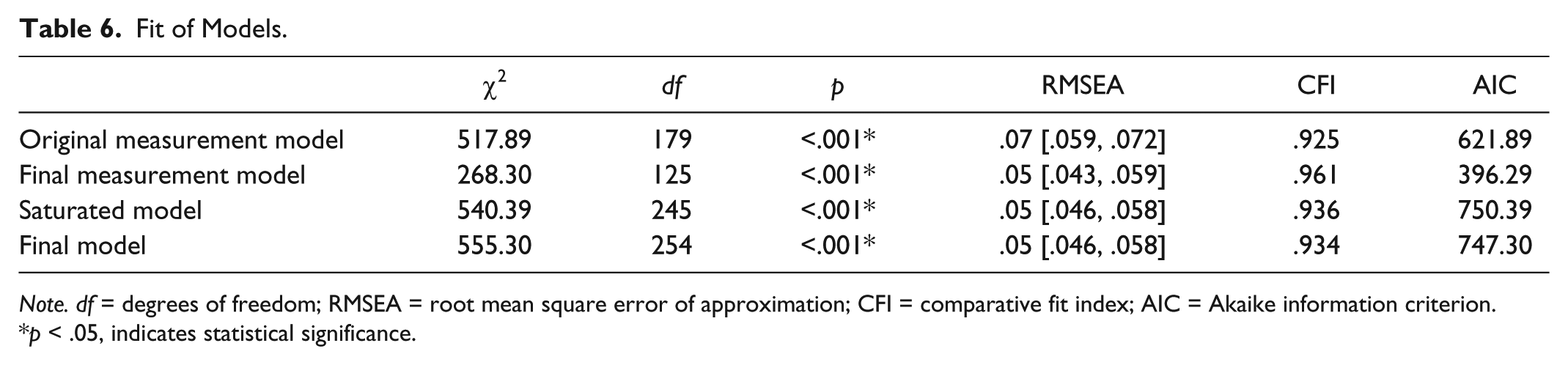
Note. df = degrees of freedom; RMSEA = root mean square error of approximation; CFI = comparative fit index; AIC = Akaike information criterion.
p < .05, indicates statistical significance.
After examining the results of the confirmatory factor analysis, the modification indices, and the standardized residual matrices, we eliminated three items from the measurement model: Item 9 (“I struggle with completing the work for my [AP/IB] classes”; β = .833, SE = .097, R2 = .405) from the PCSC and Items 6 (“I compare myself with others with respect to what I have accomplished in life”; β = .518, SE = .069, R2 = .260) and 5 (“I am not the type of person who compares themselves with others”; β = .844, SE = .072, R2 = .610) from the INCOM. Based on these data, the measurement of learner and student self-concept remains exploratory at this stage and warrants further study in future research. The final measurement model is depicted in Figure 2.
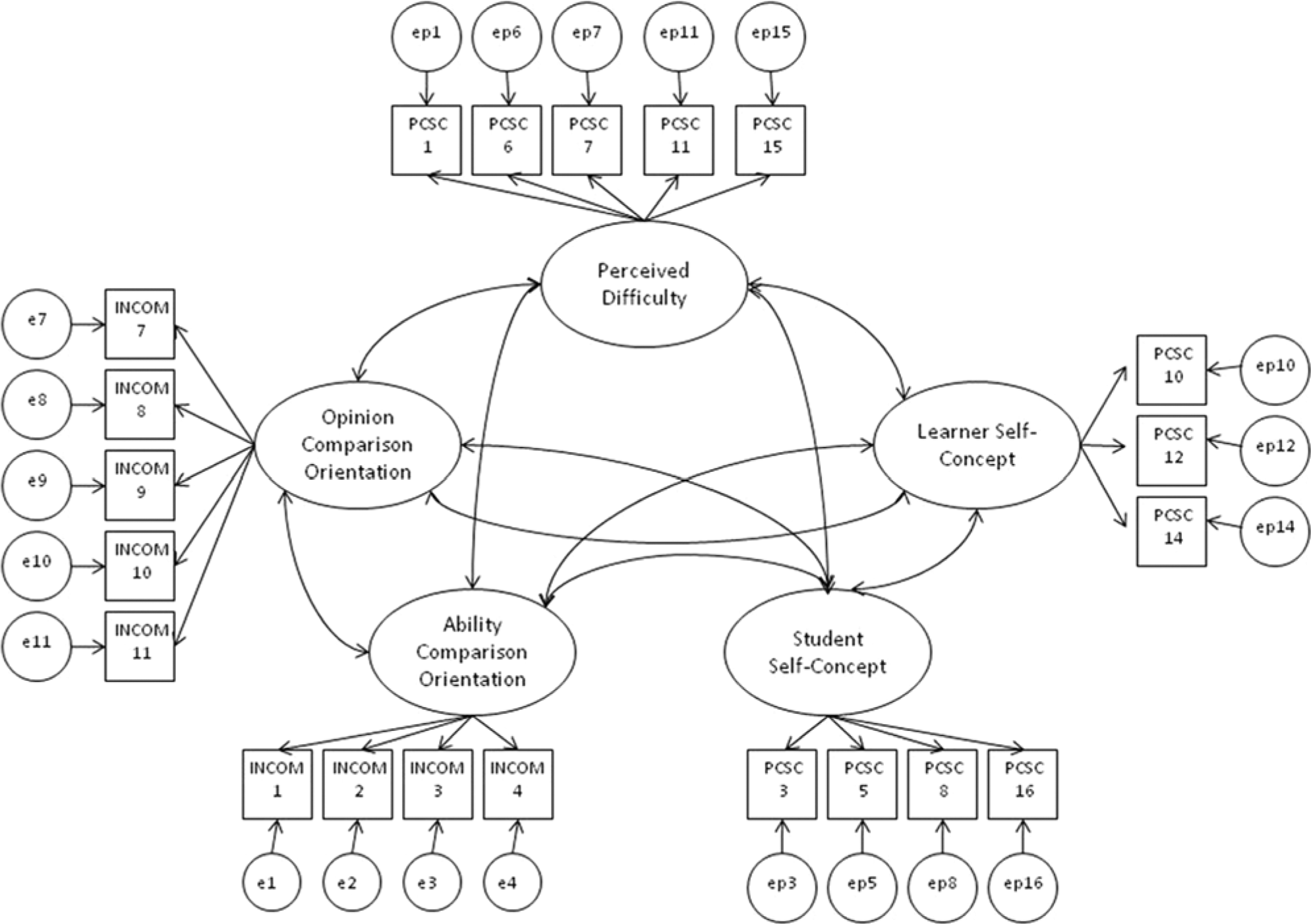
Final measurement model.
Table 3 contains the items for the final measurement model. This model represented a better fit than the original model (see Table 6). Although the chi-square test was still statistically significant, this test is sensitive to large sample sizes (Thompson, 2004). The RMSEA (.05) indicated an adequate fit, given that RMSEA values below .05 are considered indicative of a good-fitting model (Brown, 2006). The CFI (.96) was also adequate; CFI values above .95 are indicative of good fit (Brown, 2006). Thus, this model was chosen as the measurement model for subsequent analyses.
Saturated Model
The next step in specifying the structural equation model was to create a saturated model that included the latent interaction term (Kline, 2005). An examination of the goodness of fit for the saturated model showed that the chi-square test was statistically significant and the RMSEA (.055) and CFI (.95) indicated an adequately fitting model (see Table 6).
Final Model
The next step in specifying the model was to create a final, trimmed model from the saturated model. This involved retaining all of the paths in the theoretical model (Figure 1) in addition to any omitted paths from the saturated model that were statistically significant (Kline, 2005). However, none of the nonhypothesized paths were statistically significant in the saturated model; therefore, only paths from the theoretical model were retained. Finally, all of the covariances from the saturated model were retained as part of the model, except for the covariance between ability comparison orientation and the social comparison moderator variable because it was not statistically significant. Figure 3 depicts the final model.
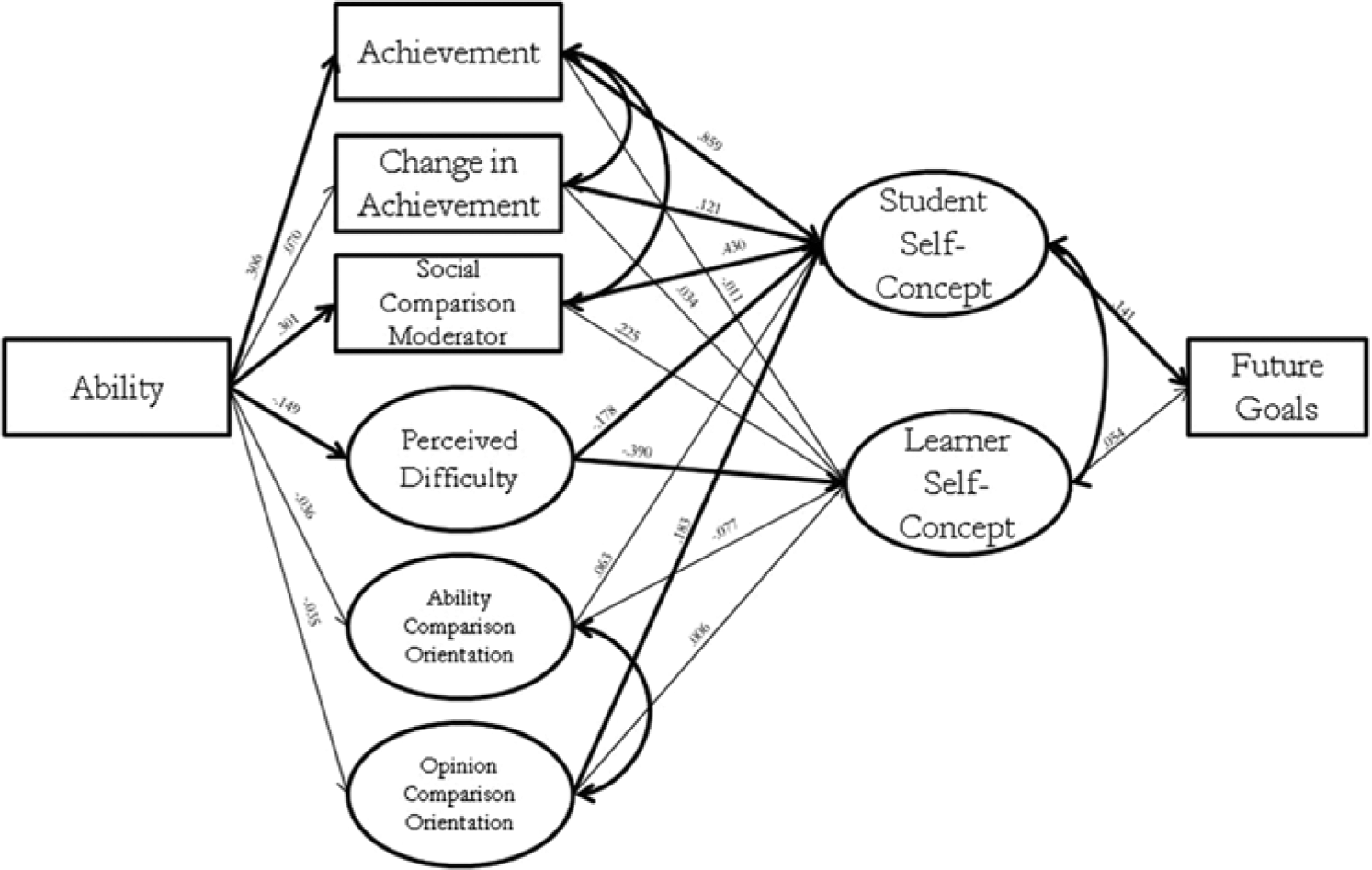
Final structural model with standardized path estimates.
The chi-square test for the final hybrid model was statistically significant (see Table 7); however, the RMSEA (.05) and the CFI (.95) indicated adequate fit (Brown, 2006). Several hypothesized paths were not statistically significant (ability to change in achievement, ability comparison orientation, and opinion comparison orientation; achievement, change in achievement, social comparison, ability comparison orientation, and opinion comparison orientation to learner self-concept; and learner self-concept to future goals), but all of the hypothesized covariances were statistically significant (see Table 8).
Final Model Path Estimates.
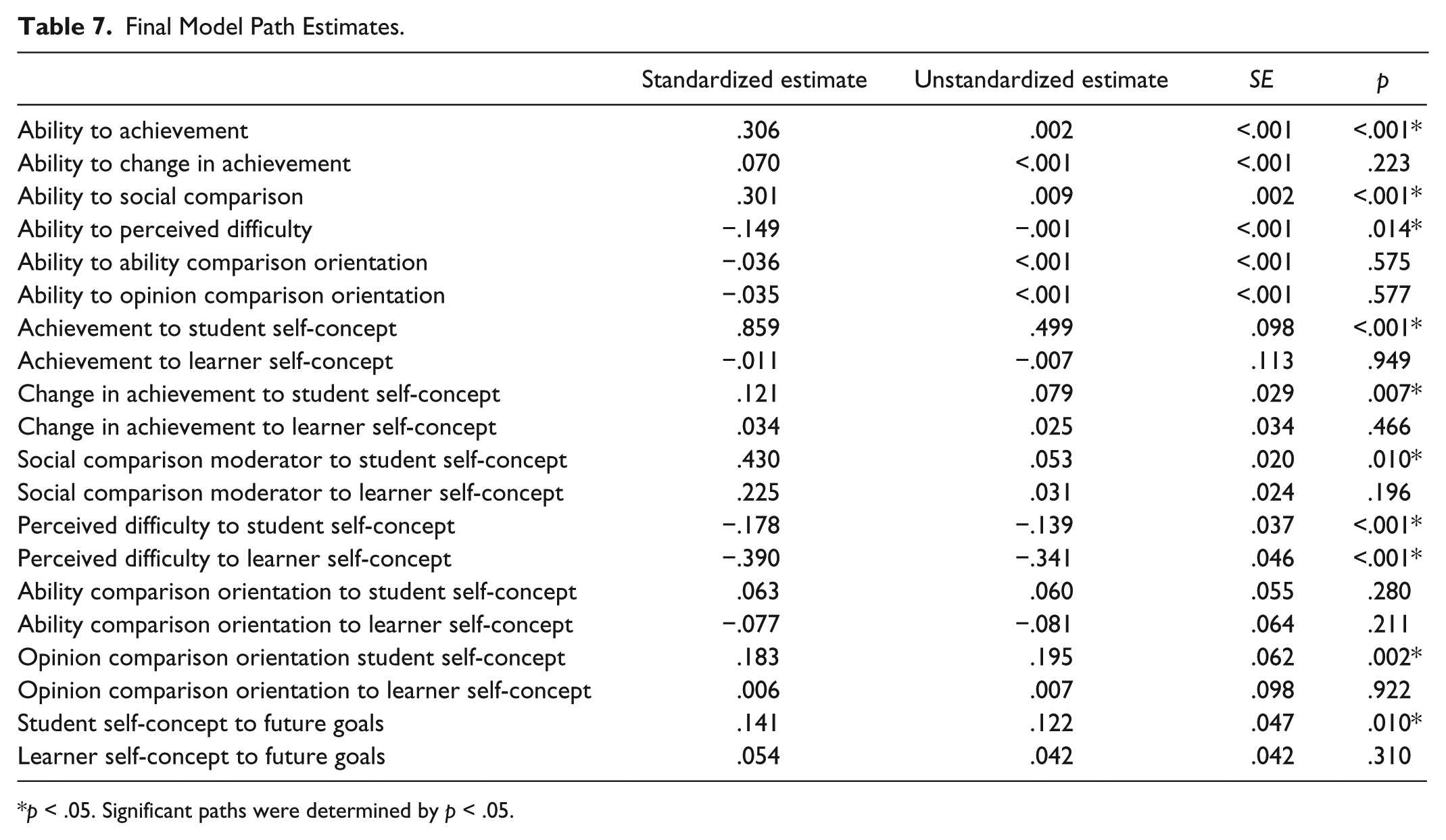
p < .05. Significant paths were determined by p < .05.
Covariances of Final Model.
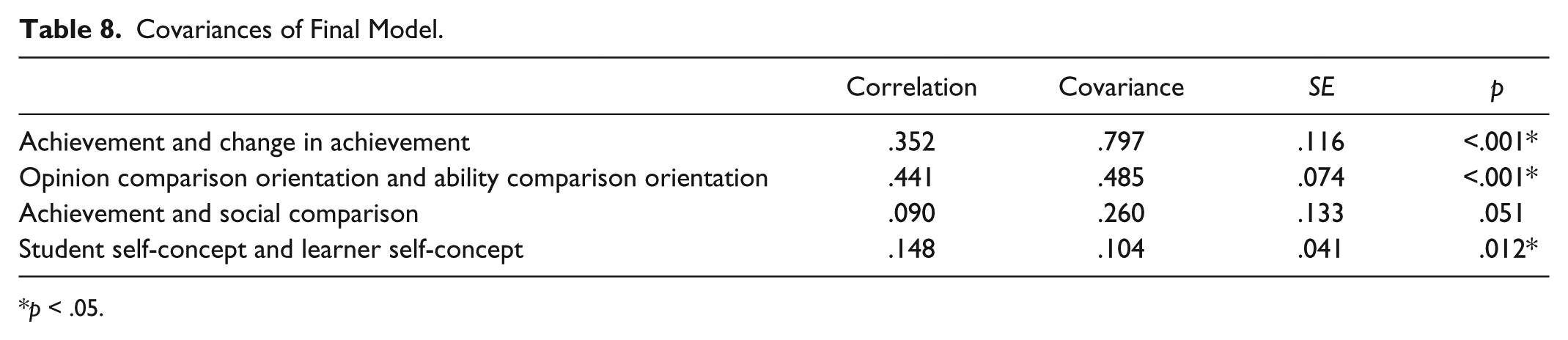
p < .05.
Although only some of the specified paths were statistically significant, the final model represented the same a priori theoretical model. Specifically, ability predicted student achievement, social comparison, and perceived level of difficulty of coursework. These variables were also predictive of student self-concept, which in turn predicted future goals. In other words, both perceived difficulty and social comparison influenced academic self-concept, which related to students’ future goals.
We conducted multiple group analyses to examine potential differences by gender and program. No differences were found in the multiple group analysis. For this sample of students, there were no differences in the patterns of academic self-concept between students in the AP courses and IB programs or between male and female students.
Ability as a predictor of factors in the model
Ability, as measured by self-reported SAT scores, was a statistically significant predictor of achievement (.306) and perceived difficulty (−.149). Although SAT scores have been shown to be highly correlated with high school grades (e.g., Kobrin, Camara, & Milewski, 2002), in this study, SAT did predict how much change in achievement a student perceived when entering more rigorous coursework. The simple bivariate correlations between self-reported SAT and current grades (.263) and previous grades (.225) were relatively small for this sample.
Predictors of student self-concept
Achievement (.86), change in achievement (.12), perceived difficulty (−.18), opinion comparison orientation (.18), and social comparison (.43) were all statistically significant predictors of student self-concept. In this study, achievement, or self-reported GPA, was the strongest predictor of student self-concept. Thus, self-reported GPA, which is the students’ perception of their academic achievement in terms of grades, was a strong predictor of their academic self-concept. Perceived difficulty also was a negative predictor of student self-concept, which helps provide evidence for the hypothesized theory of course rigor contributing to a student’s academic self-concept.
Opinion comparison orientation positively predicted student self-concept (.183), indicating that after controlling for the other variables in the model, students who compared their opinions to those of others had higher student self-concepts than students who were less inclined to make these comparisons. Thus, students who were more conscious of others’ opinions in relation to their own had higher self-concepts.
The social comparison moderator was also a statistically significant predictor of student self-concept. This supports the social comparison theory of academic self-concept, in that there was an increase to student self-concept for students who were high achieving and tended to compare themselves to others frequently and for those students who were low achieving but did not tend to compare themselves to others. The social comparison moderator also provided a decrease in student self-concept for students who either had low achievement and tended to engage in high levels of ability comparison or had high achievement but did not compare themselves to others.
Student and learner self-concepts
Student self-concept and learner self-concept had a weak correlation (.115), which is especially noteworthy considering the theoretical similarities between the two constructs. These results indicated that academic self-concept was not a one-dimensional construct and that students enrolled in advanced coursework consider their ability to learn to be different from their ability to do well in school. Thus, learner and student self-concept, which roughly correspond to performance and learning goal orientations (Dweck, 1986, 2006) were shown to be distinct constructs. On the other hand, student self-concept was shown to have a stronger relationship with long-term goals and positive educational outcomes, which is somewhat contradictory to previous research directly measuring these goal orientations (Dweck & Legett, 1988; Grant & Dweck, 2003). According to Dweck (1986, 2006), people tend to be either more mastery goal oriented or more performance goal oriented. However, in the current model, student self-concept and learner self-concept are not mutually exclusive. Therefore, a student may have both strong student self-concept and learner self-concept. These results suggest that student self-concept and learner self-concept appear to function differently from performance and learning goals. This warrants further research to investigate the measurement of these constructs as well as their relationships with academic and career related outcomes.
Predictors of learner self-concept
In this final model, the only statistically significant predictor for learner self-concept was perceived difficulty. The less difficult the students perceived their coursework to be, the more capable they felt about their ability to learn new information. It is interesting to note that this path estimate (−.39) was much stronger than the path between perceived difficulty and student self-concept (−.18) for this sample. Thus, students’ perceptions of course difficulty were more closely related to their conceptions of themselves as learners rather than on their abilities to perform on school tasks. This might be due to the internal process of learning inherent to learner self-concept that is put into doubt as students encounter difficulty or challenges in coursework. Encountering difficulty or challenge in coursework was more linked to an internal conflict of understanding and learning, corresponding to a change in learner self-concept, rather than the external perception–based student self-concept. Achievement, change in achievement, and social comparison were not significant predictors of learner self-concept. These constructs, therefore, may be more closely associated with doing well in school rather than with the more abstract concept of perceptions of ability to learn new information. However, the differences in patterns (i.e., relative significance of perceived difficulty, social comparison moderation, and achievement) between learner self-concept and student self-concept might be an artifact of the limitations of the measurement rather than actual differences in the construct. Given the exploratory nature of this study, additional research should investigate the measurement of these constructs and their relationships.
Future goals
In this sample, only student self-concept (.141) was a statistically significant predictor of future goals, the level of educational attainment that students were planning to pursue. Thus, how students perceive themselves at school-related tasks may be more important in their plans regarding higher education than their perceptions of themselves as learners; however, this path was weak.
Discussion
Model Fit
The models explored in this study demonstrated the unique contributions of each of the factors to academic self-concept and future goals in this sample of students and the potential of this model to represent a multifaceted approach to academic self-concept among academically talented students. In the analysis of the regression weights, it is important to consider the number of variables in the model and their influences on each other. Thus, interpretation of these weights must be made with caution. These exploratory findings suggest the need for future studies concerning the structure of academic self-concept that may have implications for researchers and practitioners in the field of gifted education.
Ability
One finding from this exploratory study was how ability, as measured by self-reported SAT scores, predicted both achievement and perceived difficulty. It is not surprising that students in this study who were enrolled in accelerated coursework (i.e., IB and AP) and reported high SAT scores also reported high grades and low levels of perceived difficulty with their coursework. Ability was not, however a predictor of how students perceived their change in achievement. Students may have interpreted their achievement based on information other than their grades, as there was only a moderate correlation between these two variables. There was also not a direct path from ability to either facet of academic self-concept in the final model. The other variables in the model fully mediated the relationship between ability and academic self-concept. Further research could investigate how talented students interpret their own levels of achievement and how this affects their academic self-concepts.
Perceived Difficulty
In addition to ability, perceived difficulty provided some interesting preliminary findings. The mean level of perceived difficulty for this sample of students was 2.80 (SD = 1.16) on a 7-point Likert-type scale. This indicated that the perceived level of difficulty was quite low, despite the fact that the courses were open-enrollment and not limited to students formally identified as gifted. Few students enrolled in these courses indicated that the course material was difficult or challenging. At each of the schools, the AP courses or IB program were the most rigorous courses offered at the school and represented the primary method in which gifted students were served. This finding suggests that AP courses and IB programs may not provide sufficient challenge for the most academically advanced students, consistent with the findings from previous research (e.g., Callahan, 2003).
Student Self-Concept
In addition to ability and perceived difficulty, student self-concept, or participants’ perceptions of their ability in school-related tasks, was an important factor. Since both perceived difficulty and factors associated with social comparison (i.e., ability and opinion comparison orientations, achievement, and social comparison moderator) were predictors of student self-concept, findings from this study supported both social comparison and curriculum challenge as predictors of academic self-concept. The results suggest that these students derived their student self-concept from both their social contexts and the difficulty of their coursework. Thus, future investigations concerning the academic self-concept of gifted learners should consider both of these sources.
Given that student self-concept was predicted by many of the variables in the model and also predicted future goals, it appeared to be a more salient factor than learner self-concept. Students’ perceptions of achievement affected students’ confidence in their own abilities at school-related tasks to a greater degree than their confidence to learn new things. In this study, it was this confidence in school abilities that was most predictive of students’ plans to pursue higher education. This is consistent with earlier findings (Ahmavaara & Houston, 2007; Marsh, 1991).
Student and Learner Self-Concepts
The results of this exploratory study also suggested that student self-concept and learner self-concept represented separate domains of academic self-concept. Previous research has emphasized the multidimensionality of academic self-concept (e.g., Lewis & Knight, 2000; Marsh & Parker, 1984; Trautwein, Lüdtke, Köller, & Baumert, 2006), but much of this literature has focused on dimensions of subject area self-concepts (e.g., Marsh, 1992; Shavelson, Hubner, & Stanton, 1976; Skaalvik & Skaalvik, 2002). The results of the present research and modeling may suggest that another dimension be added to academic self-concept. This would involve a distinction between perceiving oneself to be competent in school-related tasks and performance and perceiving oneself as being competent at learning new things and developing understanding. However, further research is needed to consider how student and learner self-concepts are explicitly related to each other and to other theories. Dweck’s (2006) research on students’ implicit theories of intelligence or ability and the internal/external frame of reference theory (Skaalvik & Skaalvik, 2002) provide potential theoretical foundations for this new, multifaceted conception of learner and student self-concepts. It is also possible that the constructs found in this study are idiosyncratic or sample specific.
Future Goals
Finally, this exploratory study examined the relationship of academic self-concept and future outcomes of students. Much of the research has focused on the importance of academic self-concept to future goals, aspirations, and educational attainment of students (e.g., Ahmavaara & Houston, 2007; Garg, Melanson, & Levin, 2007; Koumi, 2000). Students’ perceptions of their school performance were more important to future educational aspirations than their perceptions of their ability to learn new concepts. Students’ self-confidence in their abilities at school was a better predictor of the level of education that they wished to pursue than their confidence in their ability to learn. The effect of this relationship is quite small (.141), although it was consistent with other studies (e.g., Ahmavaara & Houston, 2007).
Limitations
Several limitations exist in this exploratory study. The sample was taken from three suburban schools in north Texas; therefore, the results may not be generalizable to other populations and settings. The ability (SAT scores) and achievement (GPA) scores were self-reported and thus can be interpreted not as true ability and achievement but rather as each student’s disclosure of his or her ability or achievement. The self-reported nature of all measures may have artificially inflated the magnitudes of the correlations among these variables. In addition, SAT scores and GPA may not be the most valid measures of ability and achievement. Future research should consider this model using other data, including multiple sources or measures of ability and achievement.
In the measures of social comparison and comparison orientation, the students did not specify with which group(s) of students they were more likely to compare themselves. For example, a student enrolled in one AP class may be comparing himself or herself to students in regular classes, whereas another student in the same AP class may be comparing himself or herself to students in advanced classes. Future research should examine the effects of learner and student self-concepts on more robust models of social comparisons. In addition, longitudinal measures of future goals would provide greater insight into the structure and causation of social comparison to academic self-concept.
The differences between AP courses and IB programs also may have affected the results of this study. On one hand, AP classes are implemented throughout the country in diverse manners. Whereas one school district may offer 30 or more AP courses, other districts may only have a few courses available. The quality and training of teachers of AP courses also vary greatly. On the other hand, IB programs have an articulated curriculum and maintain greater degrees of consistency across the country. IB programs also tend to have more formal admission procedures and guidelines for remaining in the program. Thus, students in IB programs and AP courses may not exhibit similar patterns of academic self-concept across larger samples.
The PCSC was initially developed with a university student sample, but this study enrolled high school students taking academically advanced courses. It is possible that the structure of the instrument functions differently for each population. This study measured the factors of academic self-concept at one point in time. Future studies should adopt a longitudinal approach to these same factors to measure the development of academic self-concept over time. This would provide more information about an initial drop in self-concept when high-ability students are grouped together.
Implications and Future Research
This research is exploratory in nature. Given the limitations of the present study, further research is needed to confirm and validate the findings. Therefore, it would be premature to make inferences for implications to practitioners based on the findings. However, this initial study suggests multiple directions for future research. The constructs of student and learner self-concept, the contributions of perceived difficulty and social comparison to academic self-concept, and the low levels of perceived difficulty in coursework reported by students all merit additional examination.
Specifically, future studies concerning academic self-concept of students enrolled in advanced coursework should consider the possible constructs of student and learner self-concept as separate, pertaining to being “good at performance in school tasks (i.e., grades)” or “good at learning new things,” respectively. Stronger measurement of these constructs should be combined with measures of subject-specific self-concept and with other theories and direct measures of Dweck’s theories (2006). As Dweck’s research (1986, 2006) has shown, factors associated with learning goal orientation are linked with positive educational outcomes; future research should investigate if these positive outcomes, such as gains in achievement and persistence in challenging tasks, extend to students with higher learner self-concepts.
Researchers exploring the structure of academic self-concept and social comparison theories should begin to consider the effect of more rigorous coursework as well. As this research moves forward, teachers, administrators, and counselors for students in advanced programs may also want to consider the implications of the findings to develop specific interventions for students encountering more rigorous coursework. Future research should also look at these constructs longitudinally, with specific measures of the curricular challenge.
The most salient and direct finding from this study was the low reported difficulty of the curriculum from students enrolled in the most academically rigorous programs in their schools. This suggests that these students may not be adequately challenged by their coursework. Educators, administrators, and counselors who oversee curricular decisions for advanced students should consider these findings and evaluate the academic rigor of current programs, particularly at the secondary level. Given the rise of AP courses and IB programs across the country (College Board, 2010; International Baccalaureate Organization, 2010), their appropriateness for advanced students should be further investigated (Callahan, 2003).
Footnotes
Declaration of Conflicting Interests
The author(s) declared no potential conflicts of interest with respect to the research, authorship, and/or publication of this article.
Funding
The author(s) received no financial support for the research, authorship, and/or publication of this article.