




Abstract
We conducted a meta-analysis exploring ethnic minority students enrolled in gifted/advanced programs with an emphasis on their academic achievement outcomes. A comprehensive search based on the Transparent Reporting of Systematic Reviews and Meta-Analysis checklist, was performed to retrieve articles within a 30-year time period (1983-2014), which resulted in 13 articles that were included in this meta-analysis. We analyzed the data using Comprehensive Meta-Analysis and presented the findings with descriptive information about gifted programs and statistical information, including effect size of each gifted program and overall effect size. Statistically significant positive overall intervention effect sizes were found; however, descriptive data revealed issues with the current state of research on gifted ethnic minority students.
The inequitable representation of African American and Hispanic/Latina(o) students (hereafter, referred to as underserved students) in gifted education programs is a long-standing national concern (Erwin & Worrell, 2012; Ford, 2013; McBee, 2010). The Office for Civil Rights (2012), which monitors the composition of both special education and gifted education programs, has reported an array of statistics depicting the extent to which representation in gifted education programs is inequitable across the United States. African Americans, for instance, comprise 19% of the nation’s total school population, yet represent only 10% of students in gifted education programs. Furthermore, Hispanic students account for 25% of the total student population and only 16% of students in programs for those considered gifted.
Many scholars, educators, and policy makers assert that underserved students are overlooked for participation in gifted programs due to a variety of issues that prevent them from maximizing their talents (Ford, 2013). Those operating under this basic assumption perceive that the key to increasing academic achievement for all students is to figure out how to identify students who have the “potential” to receive gifted education programming (Brown et al., 2005; Ford, 2013; VanTassel-Baska, 2006). Others, however, are more in favor of a “gifted education programs for all students” approach that exposes all students to a more challenging curriculum (Brown et al., 2005; Ford, 2013; VanTassel-Baska, 2006). Both rationales seem to suggest that gifted education programming provides the best learning experience for all students, regardless of their backgrounds. Although this may be true, the research literature to date reveals that students have differential experiences in gifted programs based on ethnicity (Briggs, Reis, & Sullivan, 2008; Ford, 1998; Yoon & Gentry, 2009). Specifically, many ethnic minorities report negative experiences in gifted programs for a variety of reasons, including a lack of ethnically diverse representation among students and educators (Fries-Britt, 1997, 1998; Kimberly, 2014). These findings raise concerns regarding the belief that gifted programs are beneficial for all students. Indeed, until strong, consistent evidence is produced that demonstrates positive outcomes associated with particular aspects of gifted education programs as it pertains to underserved students, it could be argued that policies moving in that direction are somewhat baseless.
Given the widely known representation disparities among students, increasing ethnic minority student participation in the most rigorous courses, namely gifted education programming, seems like an endeavor worthy of pursuit. However, there is very little known about the extent to which ethnic minority students find academic success in gifted education programs. What is known is that ethnic minority students experience tremendous difficulties in predominantly White educational spaces (Covay, 2013; Webb & Linn, 2016). As such, it may not necessarily be a given that learning in gifted education programs, an example of a majority-White learning context, is academically beneficial for ethnic minority students.
One of the more powerful methods for estimating intervention effectiveness based on outcomes is by conducting a meta-analysis. As such, the current study attempts to contribute to a stronger research base by conducting a meta-analysis using studies with underserved students who have participated in gifted education programming. More specifically, the current study addressed the following research questions:
Literature Review
Since the passing of the No Child Left Behind Act, the emphasis on closing achievement gaps has been at the forefront of discourse in public education, including gifted education. In the seminal research study, “Mind the Other Gap,” for example, Plucker, Burroughs, and Song (2010b) determined the achievement gap between the highest academically successful underserved and White students, otherwise known as the “excellence gap,” the authors contend it could take decades to close the gap. We are now, however, living in an age in which schools are not only feeling increased pressure to close the achievement gap but also to produce students ready to succeed in college postgraduation. Many ethnic minority students, in particular, are entering college underprepared to succeed in college-level courses (Carter, Locks, & Winkle-Wagner, 2013; Fries-Britt, 1998). As a result, they often begin their collegiate experience registering for remedial courses as a means to improve skills they should have mastered in high school (Hirschman, 2016; Strayhorn, Lo, Travers, & Tillman-Kelly, 2015). Unfortunately, remedial courses do not count toward degree completion, resulting in extended time to degree. Some students, fearing exorbitant student loan debt, drop out of school without graduating. Given these potentially devastating outcomes for students unable to handle the transition from high school to college, it is not difficult to understand the emphasis being placed on college readiness in K-12 educational policy and practice.
A number of scholars have pushed equitable access to gifted education programs for ethnic minority students as a way to engage and better prepare them for academic success in K-12 and beyond (Ford & Moore, 2013; Tomlinson & Jarvis, 2014). For example, some scholars contend that increased access to gifted programming has the potential to combat underachievement among ethnic minority students (Ford & Moore, 2013) and close the achievement gap between them and White students (Ford, 2011; Ford, Moore, & Whiting, 2006). The argument in support of this assumption is that any student who is not being challenged in the classroom has the potential to disengage from learning. The remedy for this, then, is to increase access to more rigorous curriculum for ethnic minority students in order to address these concerns. In theory, increased access to gifted education programming as an intervention designed to increase student learning may work well. For example, schools have been found to achieve positive results when all students are exposed to advanced courses and programs (Pitts, 1986; Renzulli & Reis, 2002; VanTassel-Baska, 2006). However, given that most gifted education programs are composed of predominantly White students in most schools and the often painful student experience of being the only or one of the few ethnic minority students in predominantly White learning environments, more evidence is needed before this can be asserted as “best practice” for all students, regardless of ethnicity (Briggs et al., 2008; Covay, 2013; Yoon & Gentry, 2009).
Asher (1986) brought attention to the potential utility of meta-analysis in gifted education, and in 2003, he asserted that meta-analysis might be a way to gauge the effectiveness of gifted education programming in a way that is less biased than other methods in use at the time. Over the years, the number of meta-analyses in gifted education has grown and investigated a variety of topics, with some focused on program outcomes. Unfortunately, the meta-analysis research in gifted education as it relates to ethnic minority students is glaringly absent for what seems to be reasons having to do with quality of gifted education research, as well as simply an emphasis on other student variables.
In our review of the gifted education meta-analysis literature, we found that many of the studies took a color-blind approach and did not highlight underserved students in any way that would shed light on outcomes specific to them. For example, Neber, Finsterwald, and Urban (2001) analyzed 12 studies that focused on outcomes related to cooperative learning among gifted students in mixed ability and similarly gifted students. Although the authors found evidence to suggest that mixed ability groups have the potential to produce better outcomes—important results—students’ race was never mentioned. The same can be said for Kim (2005) who investigated the relationship between IQ scores and creativity test scores. This study reported age and gender, but student race was not highlighted. Finally, in an important meta-analysis highlighting the academic and socioemotional effects of acceleration on high-ability learners by Steenbergen-Hu and Moon (2011), aptitude, grade, and age were the primary student background variables explored and, once again, racial background was not reported. A lack of racial background in relation to outcomes among gifted students is not uncommon at all. In fact, none of the research studies we found mentioned race as a variable used when deciding which studies to include/exclude in their meta-analysis.
Any meta-analysis is dependent on the criteria selected for inclusion. Although none of the meta-analyses related to gifted education research we found concentrated on race or ethnicity, this does not mean it is not an important variable worthy of investigation. In fact, there is no shortage of scholars who contend that the emphasis on ethnicity in gifted education research is woefully lacking considering the underrepresentation of specific ethnic groups of students receiving services (Callahan, 2005; Oakland & Rossen, 2005). Nonetheless, for whatever reason, ethnicity as a variable of considerable importance remains absent in gifted education meta-analysis research to date. The implication this conspicuous absence has on gifted education policy making is particularly problematic.
In addition to failing to highlight ethnicity in gifted meta-analysis scholarship, the way in which scholars chose to define gifted education seemed to also serve as a barrier to meta-analyses that could shed light on underserved students’ academic performance in gifted education programs. Many underserved students are unable to participate in gifted programming as a function of factors related to the recruitment process, which includes the very definition of the term gifted. For example, many studies have found that underserved students have difficulty scoring as well as their peers on standardized tests, which contributes to their low representation in gifted programs (Hoffman & Lowitzki, 2005; Seidman, 2005). Similarly, when standardized scores are used as a criteria for inclusion in meta-analyses, it stands to reason that the numbers of ethnic minority students would also be limited (Baldwin, 2005; Callahan, 2005; Lohman, 2005).
Given the vastly different gifted education policies and implementations from state to state and district to district, many meta-analyses excluded some studies in favor of those in which definitions of gifted education were most alike. To combat this, the current study widened the array of in-school programming described in this study: Individualized Education Program (IEP), Talent Development Program, Gifted and Talented Education (GATE) program, Lighthouse Gifted Program, Self-directed Mathematics Program for math achievement in gifted minority students (e.g., Allday, 2011; Giessman, Gambrell, & Stebbins, 2013; Jones, 2010; LaRose, 1986; Lynch & Mills, 1990). There is a number of out-of-school programming described in the literature, as well, such as summer courses and research internships (Fraleigh-Lohrfink, Schneider, Whittington, & Feinberg, 2013), in addition to parent education and support (including parent meetings and seminars); peer support (using peer helpers in the after-school classes); academic enrichment (participating in academic enrichment activities after school at local high schools), and individualized talent development programs (Olszewski-Kubilius, Lee, Ngoi, & Ngoi, 2004).
To be clear, there is scholarship centered on underserved students’ academic achievement as a function of participating in gifted education programs. Cornell, Delcourt, Goldberg, and Bland (1995), for example, compared the academic performance of African American, Hispanic, and White students identified as gifted versus those placed in general education classes. The gifted ethnic minority students in their study scored significantly higher on measures of academic achievement than those in general education classes. Olszewski-Kubilius et al. (2004) using data collected from students enrolled in Project EXCITE, a university–school district gifted program collaboration, the researchers found that ethnic minority students who participated in their programming performed well on math and science achievement tests. Indeed, other more recent research studies have documented underserved students’ performance in gifted education programs (see Lovelace, 2008; Plucker et al., 2010a), which seems to suggest a lack of interest in investigating these students’ experience using meta-analysis research methods, as opposed to an inability to do so as a function of a lack of available studies.
Based on findings from individual studies, we have a limited understanding of underserved students’ academic performance in gifted education programs. However, patterns and degrees of effectiveness across different programs is relatively unknown. Underserved students may have a unique experience in gifted education programs regardless of program factors; however, without an understanding of programmatic factors, some interventions found to be effective in one context may not be effective in another. The fact that, as a whole, the current gifted education meta-analysis scholarship has failed to highlight ethnic minority students’ academic outcomes prevents educators and policy makers from developing interventions and establishing policies meant to help these students that are grounded in findings associated with a form of research that is not beholden to context. Without such information, much of what is done on behalf of underserved gifted students is either based on what has been found to be effective with White students or with underserved students in unique environments unlike many others.
To that end, the purpose of this study was to conduct a meta-analysis exploring underserved students enrolled in gifted/advanced programs with particular attention given to program characteristics as a means of determining particular programmatic factors shown to improve students’ academic performance. Such information has the potential to assist those interested in designing programs and policies that challenge all students, while simultaneously prioritizing program aspects found to be associated with underserved students’ academic success. According to the National Association for Gifted Children (2010), Gifted individuals are those who demonstrate outstanding levels of aptitude (defined as an exceptional ability to reason and learn) or competence (documented performance or achievement in top 10% or rarer) in one or more domains. Domains include any structured area of activity with its own symbol system (e.g., mathematics, music, and language) and/or set of sensorimotor skills (e.g., painting, dance, and sports). (para. 10)
Method
Search Strategy and Criteria for Inclusion
We used a comprehensive search to retrieve articles from the international research literature within the past 30 years (1983-2014), according to the Transparent Reporting of Systematic Reviews and Meta-Analysis (PRISMA) checklist (Moher, Liberati, Tetzlaff, Altman, & The PRISMA Group, 2009). The search included journal articles, conference papers, books, dissertations, government reports, and unpublished papers. First, the majority of records were identified through online database searches, including the ERIC ProQuest, ERIC EBSCO, Academic Search Elite, PsycINFO (via EBSCOhost), Academic Search Premier, Science Direct, and ProQuest Digital Dissertation databases.
In our initial search of articles, the second and third authors brainstormed keywords such as “gifted education,” “program,” “interventions,” “(ethnic) minority,” “underrepresented students,” “gifted,” “high-achieving,” “high-potential,” “(academic) achievement,” “(academic) performance,” “(academic) success,” and “outcomes.” Then, we independently conducted article searches using an Excel spreadsheet to record the article search history. Prior to a search, each of us typed in the name of an online database and specific keywords, recording the number of articles as well as titles and abstracts of each article. In addition, the third author expanded on the keywords by adding additional search terms through consultations with a senior university librarian. Additional keywords used were “talented,” “(high) ability,” “cognitive ability,” “creativity,” “critical thinking,” “problem solving,” “reasoning,” “advanced placement,” “enrichment programs,” “acceleration,” “underserved,” “African American” (and other specific ethnic minority groups), and individual subjects such as “math,” “science,” “reading,” and “English.”
We conducted a number of additional searches. The second author reviewed all of the complete tables of contents of gifted-specific journals (e.g., Gifted Child Quarterly, Parenting for High Potential, Teaching for High Potential, and Gifted Child Today) within the target period. She added titles and abstracts (when available) of the articles to the Excel spreadsheet that fit with this study’s purpose. Additionally, she sent a request by e-mail to the University of Iowa’s Belin-Blank Center to solicit suggestions of published articles or reports that might contain relevant research or for copies of unpublished research. Then, she contacted two experts in the field of gifted education research, asking them to review the bibliography and provide feedback. According to the experts’ suggestions, the third author expanded her search to contact professional organizations such as the Center for Gifted Education Policy under the American Psychology Association and the Department of Education. She visited other gifted education-related websites of private organizations including Gifted Development Center (http://www.gifteddevelopment.com) that provided reports, links to sources, and names of gifted education programs. She performed general Web searches using standard search engines such as Google and Google Scholar. Finally, the authors thoroughly reviewed reference lists from books, dissertations, studies, and other meta-analyses for potential inclusion.
On completion of these searches, we discussed our findings and combined our data; the broad search we conducted resulted in the collection of 2,933 reports. Next, we screened to identify duplicated articles—the same study that each of us collected and the same study reported in a conference paper and a journal article. We exported our data to EndNote, and using the function of deleting duplicated data, we removed 1,610 articles. This screening process resulted in a total of 1,323 reports. Then, we together scanned the primary titles, abstracts, and keywords of the remaining articles to select potential full text articles for further scrutiny. When the authors agreed on specific titles and abstracts, the full text of those articles were included. In this process, we excluded conceptual articles that were not empirically oriented such as literature reviews, introduction to theories or models, or case studies. This process resulted in the collection of 314 reports. Then, we also excluded qualitative-oriented studies using qualitative data collection methods such as interviews and focus groups. This process resulted in obtaining the full text of 272 articles, in preparation for the eligibility assessment that followed.
To select articles for this meta-analysis, we employed rigorous criteria that focused on research studies that clearly reported the impact programs/interventions had on ethnic minority gifted students’ academic performance and cognitive ability. Specifically, studies were required to have (a) been published in the English language between January 1, 1983, and December 31, 2014; (b) been concerned with K-12 student populations; (c) used student achievement (or success, performance, etc.) as the dependent variable presenting changes in participants’ academic performance and abilities (other measures such as anxiety measures, motivation, or self-efficacy measures were not included in the analysis); (d) used gifted education, intervention(s), and/or program(s) as independent variables (e.g., we investigated programs’ effects on changes in specific academic content areas [e.g., mathematics, English, science, etc.], if described in the studies); (e) been experimental or quasi experimental with/without a comparison group; (f) reported effect size, statistics necessary to calculate effect size (e.g., means and standard deviations, p values, analysis of variance [ANOVA] tables, etc.), and/or other essential statistics (i.e., sample size, mean, standard deviation, F value, etc.), particularly matched with the ethnic minority student populations; and (g) included ethnic minority students as major study participants or as subgroups, as specified in the study.
Many studies were not included because they did not meet the parameters established by the selection criteria. A large number of studies were eliminated for the following reasons: studies were not experimental or quasi experimental (n = 72); student academic achievement and abilities were not the dependent variable and/or gifted education programs were not used as the independent variables (n = 82); and minority students were not the main participants or subgroups of the study with no statistical data matching them and/or essential statistical information was missed (n = 105). Figure 1 describes the selection process. Through the selection process, 13 studies were finally selected to be included in our meta-analysis: 7 journal articles and 6 dissertations. We searched and identified whether each study in this meta-analysis was funded. Specifically, the funding sources of National Association for Gifted Children and Jacob K. Javits Gifted and Talented Students Education Programs (U.S. Department of Education, 2015) were examined to clarify whether any study selected for this meta-analysis was funded. Among the 13 studies, there was no study that the Jacob K. Javits Gifted and Talented Students Education Program or the National Association for Gifted Children funded.
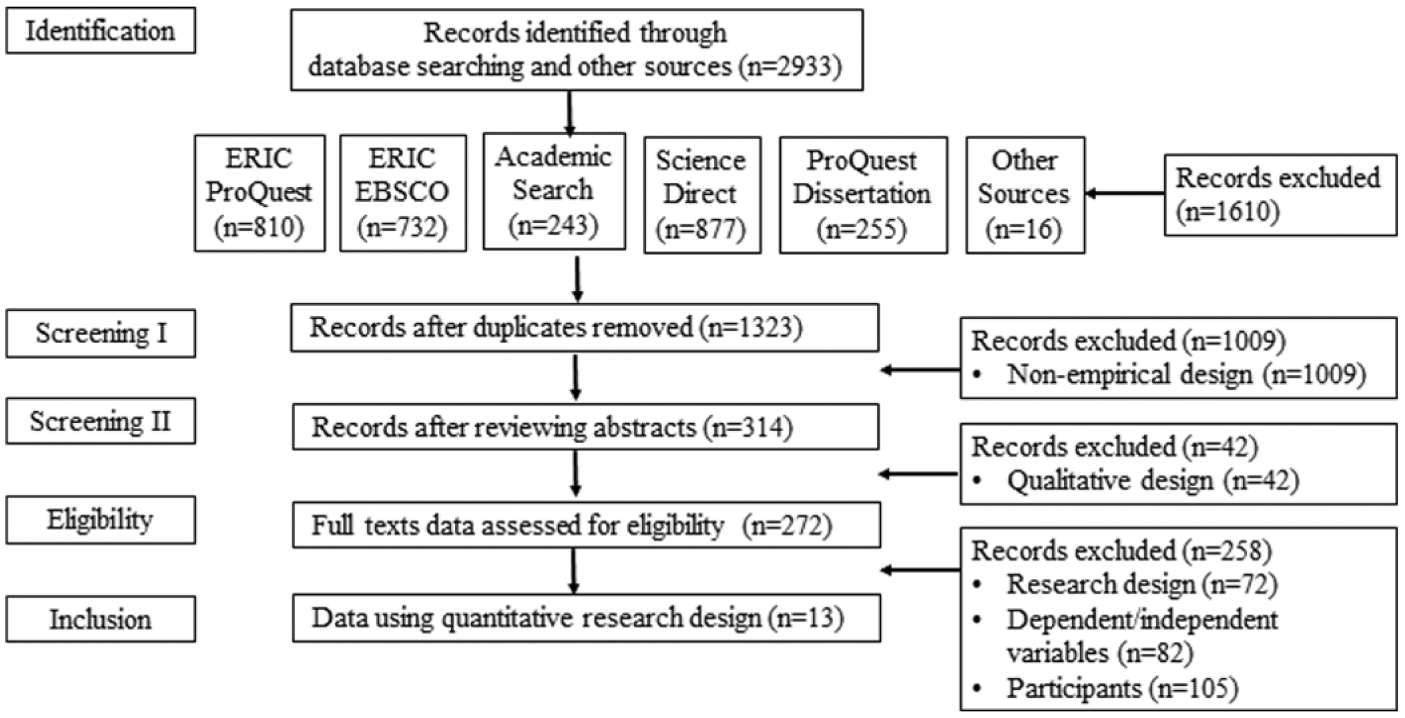
Flow diagram of selection process.
In order to decide whether to conduct a meta-analysis with the n of 13, we relied on one of the principal approaches, which considered whether the assessment of a substantial body of literature provided statistical foundations and meaningful insights (Valentine, Pigott, & Rothstein, 2010). As such, “two studies” answered the question, “How many studies do you need to do a meta-analysis?” (Valentine et al., 2010). In fact, the number of studies analyzed in our meta-analysis is reasonable as they deliver significant statistical information and valuable understanding about ethnic minority student populations in gifted programs and their academic achievement. In addition, Sidik and Jonkman (2007), who conducted a simulation study with different sample sizes for meta-analyses, specifically for random effects meta-analysis, stated that 10 to 15 articles is not an unreasonably small number for a meta-analysis. Borenstein, Hedges, Higgins, and Rothstein (2010) suggested that applying random effect is appropriate when treatments are based on a random sample and are limited to have a common effect size. In random effect size, it is assumed that an underlying distribution of effect sizes was plausible (Polanin, Espelage, & Pigott, 2012); therefore, we decided to proceed with a meta-analysis.
Coding
Based on the meta-analysis literature (Asher, 2003; Rosenblad, 2009; Schroeder, Scott, Tolson, Huang, & Lee, 2007; Wachter & Straf, 1990), we created an Excel codebook for data extraction that illustrated the essential components to be included. In this codebook, we included the following two categories: (a) study characteristics and (b) format of the data. The first category included the following information: (a) study number and citation, (b) contributor(s), (c) publication year, (d) type of article (i.e., refereed journal article or dissertation), (e) study design (i.e., experimental—complete randomization, quasi experimental—randomization used, and quasi experimental—no randomization), (f) data collection methods, (g) gifted education programs, including characteristics of the programs (e.g., length of time, program details), (h) program location/setting, (i) sample size and characteristics of study participants (i.e., ethnicity, gender, and age/grade), (j) outcome variables (e.g., type of measure, measure name, and content areas to be measured), and (k) brief study results and conclusion. The second category included the following information: (a) mean, standard deviation, and sample size of each study; (b) test statistics and associated degrees of freedom; and (c) effect size. Prior to actual coding, each of us randomly selected three journal articles and independently coded the study details to establish intercoder reliability. The results of the interrater reliability analysis indicated a substantial level of agreement with k = .804, p < .000. To strengthen the stability of findings, we exchanged our codes, cross-checked, and discussed the discrepancies. Using this process, issues of how to deal with any ambiguous data and/or missing data were discussed. Next, we independently coded the data. There was no major discrepancy among us with interrater agreement across all items. To deal with any discrepancies and determine the final findings, we again cross-checked our analysis. Throughout the coding process, we regularly communicated with each other to reach consensus on the data coding procedure.
Data Analysis
Because academic performance/achievement and ability was the main focus of our review, effect sizes were only calculated from numerical dependent measures. We calculated effect sizes from means and standard deviations. More specifically, to calculate the standardized mean difference between two groups, we subtracted the mean of one group from the other (M1 − M2) and divided the result by the standard deviation (SD) of the population from which the groups were sampled (Hedges, 1981). In this data analysis, when participants consisted of different subgroups of students (e.g., a group of Caucasian students and a group of ethnic minority students), only the subgroup of ethnic minority students as specified in each study and statistical values matched with them, was used in calculating effect size. The standard deviations of each group included in the studies we analyzed were calculated using Hedges’s formula as follows. Thus, the principal summary measures are the difference in means.
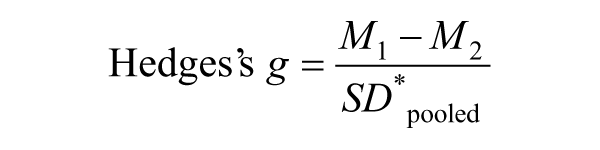
In this formula, the two standard deviations were pooled to calculate a Cohen’s d index of effect size. To calculate the pooled standard deviation (SD*pooled) for the two groups of size n and with means, the following equation was used (Hedges, 1981).

In addition, since the group sizes were dissimilar in each study, each group’s standard deviation was weighted by its sample size. Weighted standard deviations were used in the calculation of Hedges’s g (Cohen, 1988). In calculating the standardized mean difference, the following equation was used with t tests and sample size (Rosnow & Rosenthal, 2008). In the random effect model, it is assumed that effect sizes are sampled from an underlying population of effect sizes and studies, which may vary not only because of different participants but also due to differences in relation to the way studies are conducted (Borenstein, Hedges, Higgins, & Rothstein, 2009, 2010). Under the assumption of the random effect model, T2 was estimated within subgroups.

Regarding effect sizes, Cohen’s (1988) study suggested that a small effect size is 0.20, a medium effect size is 0.50, and a “large” effect size is 0.80. Regarding effect size, Cohen’s (1988) general rule of thumb is that it should not automatically apply in studies (Durlak, 2009). Researchers in the area of education have pointed out that effect sizes around 0.20 are of policy interest when measuring academic achievement (Durlak, 2009; Hedges & Hedberg, 2007). In the social sciences, effect sizes need to be understood in the knowledge and findings of the area (Volker, 2006). Thus, the effect size in this study did not reflexively resort to Cohen’s (1988) conventions. Since the true effect was not the same in all studies analyzed in the current study, the random effect model was chosen over the fixed-effect model in our analysis.
Effect Size Metric
We relied on the standardized mean difference statistic, d, applying Hedges’s (1981) bias correction. Generally effect sizes are computed from raw means and standard deviations, however, standardized effect sizes are associated with degrees of freedom (Lipsey & Wilson, 2001). The random effect model was applied in data analysis as it is deemed to be effective in estimating the distribution of average effect size among dissimilar groups (Borenstein, Hedges, Higgins, & Rothstein, 2005).
Outcome Variables
In this meta-analysis, we examined the effects of gifted education programs on the outcome variables of academic achievement and ability. To identify the effects of gifted education programs on the outcome variables, the effect sizes for each outcome variable were analyzed; academic achievement and ability was measured by curriculum- and standard-based outcome scales (e.g., California Achievements Test [CAT]). Meta-analysis allows researchers to compare the treatment/intervention effects on different outcome variables, even though these variables appear in separate studies (Borenstein & Higgins, 2013). Most studies had one or two outcome measures. For these studies, only outcome measures that directly assessed academic performance and ability were coded and analyzed. In addition, the mean of the measures was used where there were more than one outcome measures in a study. The data were analyzed using Comprehensive Meta-Analysis, Version 2 (Borenstein et al., 2005).
Subgroup Analysis
To answer the second research question, we categorized the effect sizes into several groups and conducted subgroup analyses with the random effects ANOVA-like procedures for meta-analysis (Polanin et al., 2012). The outcomes of the data analysis are described in Table 6. We calculated the homogeneity statistic Q, which provides the information on the distribution of effect sizes and a test statistic. A test statistic on the null hypothesis of homogeneity designates whether the ANOVA-like analyses were appropriate (Polanin et al., 2012). Test statistics provide information about identifying the meaningful factors that can affect the effect size of each subgroup. The subgroup analysis approach was also used to calculate effect size of group comparison(s) on intervention program(s) (for those studies that included group comparisons such as gifted minority students vs. gifted White students). Results are presented in Table 5.
We applied the random effects ANOVA-like procedures to the data analysis and associated this procedure of meta-analysis with categorical study-level variables. Three types of independent variables commonly used for meta-analysis were suggested: extrinsic variables, method variables, and substantive variables (Lipsey, 2009). Thus, we categorized the variables in the subgroup analysis; in addition, the extrinsic variable and the method variable included the study’s dissemination (i.e., published or unpublished). The substantive variable included the characteristic of the population or treatment: grade level of participants, program implementation, and measurement area (Polanin et al., 2012; Raudenbush, 2009; Song, Sheldon, Sutton, Abrams, & Jones, 2001). Subgroup analysis was performed when the data were partitioned according to the grade level of the subjects, the type of program implementation, the area of measurement, and the type of publication. Regarding the subjects, we chose the ninth grade as our cutoff point because it has been reported that students’ educational and psychological development meaningfully changes from high school on (Newman & Newman, 2014).
Risk of Bias
Risk of bias for each study was examined with regard to the following elements: selection bias, performance bias, attrition bias, detection bias, reporting bias. Risk of bias across studies can be identified through the presentation of a funnel plot. In a funnel plot, the effect estimate and measure of precision used are plotted on the x-axis and y-axis (Liberati et al., 2009). Figure 2 describes the funnel plot of standard error by Hedges’s g (also see Figure 3).

Funnel plot of standard error by Hedges’s g.
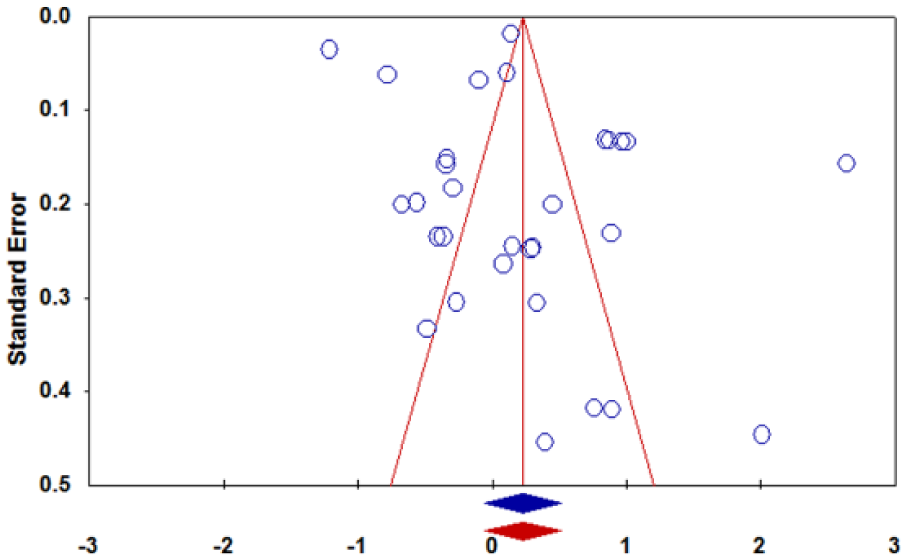
Funnel plot using trim and fill method.
Based on Cochrane’s guideline, several strategies were used to assess the risk of bias of individual studies used in the meta-analysis. The Cochrane Collaboration recommends a specific tool for assessing risk of bias in each included study (Higgins & Green, 2008). The process of assessing the risk of bias of individual studies includes the following specific stages: develop protocol, pilot test and train, perform assessment of risk of bias of individual studies, use assessment of the risk of bias in synthesis of evidence, and report assessment of the risk of bias process and limitations. The protocol in the first stage consists of checking five types of the risk of biases: selection, performance, attribution, detection, and reporting bias (Higgins & Green, 2008). Checking selection bias entails examining whether the study applied inclusion/exclusion criteria uniformly to all cases and controls that were selected appropriately. Checking performance bias includes identifying whether researchers ruled out any impact from a concurrent intervention or an unintended exposure that might bias results. Identifying detection bias refers to specifying whether interventions/exposures were assessed/defined using valid and reliable measures and were implemented consistently across all study participants. To minimize bias in this study, a comprehensive search of the literature was conducted. Rosenthal’s Fail-safe N was examined to further explore publication bias. In this study, Rosenthal’s Fail-safe N was 0. Since the potential for publication bias may affect the results of a meta-analysis by computing the “Fail-safe N,” the number of additional “negative” studies that would be necessary to increase the p value for the meta-analysis should be above 0.05 (Higgins & Green, 2008; Rosenthal & Robin, 1979). Also, the goal of the trim and fill method is to identify and correct for funnel plot asymmetry arising from publication bias (Duval & Tweedie, 2000). In dealing with publication bias, the trim and fill method was explored.
Heterogeneity
Heterogeneity is defined as the presence of variation in true effect sizes underlying different studies, and it refers to the variation in study outcomes between studies in meta-analysis (Higgins & Green, 2008; Higgins & Thompson, 2002). Under the random effect model, it is assumed that there may be true variation of effects within studies. We assessed the difference in subgroups effects relative to the difference (Borenstein et al., 2009, 2010). We examined the heterogeneity across the studies used in this meta-analysis with the subgroup analysis. Analysis results are presented in Table 7.
Results
Description of the Studies Analyzed
Table 2 provides an overview of the descriptive information for studies analyzed in this meta-analysis, including contributor(s), publication year, publication type, intervention program (e.g., location and setting), outcome variables, and a brief summary of conclusions. According to the publication trends by decade, only one study was conducted in the 1980s about gifted programs for ethnic minority populations; however, in the 1990s, there were three studies. In the 2000s, three studies were conducted, and six studies were published in the 2010s. This steady increase shows that the number of studies investigating the effects of gifted programs on ethnic minority students’ academic achievement and ability has grown; however, many of these studies were not included in the meta-analysis because they did not meet our criteria.
In terms of intervention programs, the types of gifted education programs implemented with minority students varied. For example, diverse programs were provided to ethnic minority students such as IEP, Talent Development Program, GATE program, Lighthouse Gifted Program, Self-directed Mathematics Program for math achievement in gifted minority students (e.g., Allday, 2011; Giessman et al., 2013; Jones, 2010; LaRose, 1986; Lynch & Mills, 1990). Several programs implemented were from their school districts, while others were developed based on student needs. In general, most studies did not provide rich information about the contents and structure of gifted programs examined in the studies (e.g., Cornell et al., 1995; LaRose, 1986; Lynch & Mills, 1990), although some studies (e.g., Fraleigh-Lohrfink et al., 2013) specifically addressed the elements of the gifted education programs and the knowledge that participating students would obtain through participation in the programs. Regarding the location in which each gifted program was implemented, all studies were conducted in the United States, as can be seen in Table 2.
Outcome variables analyzed in this meta-analysis, as presented in Table 1, were standardized instruments assessing academic achievement and abilities. Among 13 studies, 11 studies measured curriculum- and standard-based outcomes (i.e., academic achievement) in minority student participants in gifted programs. Specifically, the scales included ACT, Form J of the Iowa Test of Basic Skills (ITBS), SAT, Iowa Test of Basic Skills (ITBS), California Standards Test, CAT, Gates MacGinitie Reading Test (GMRT), Delaware State Testing Program (DSTP), and START Math. On the other hand, two studies measured academic/cognitive ability such as reasoning, problem-solving ability, and creativity using Cognitive Abilities Test–Form 6 (CogAT6) and Engine Test of Verbal Creativity.
Stages in Assessing the Risk of Bias of Individual Studies.

Description of Programs Used in Meta-Analysis.
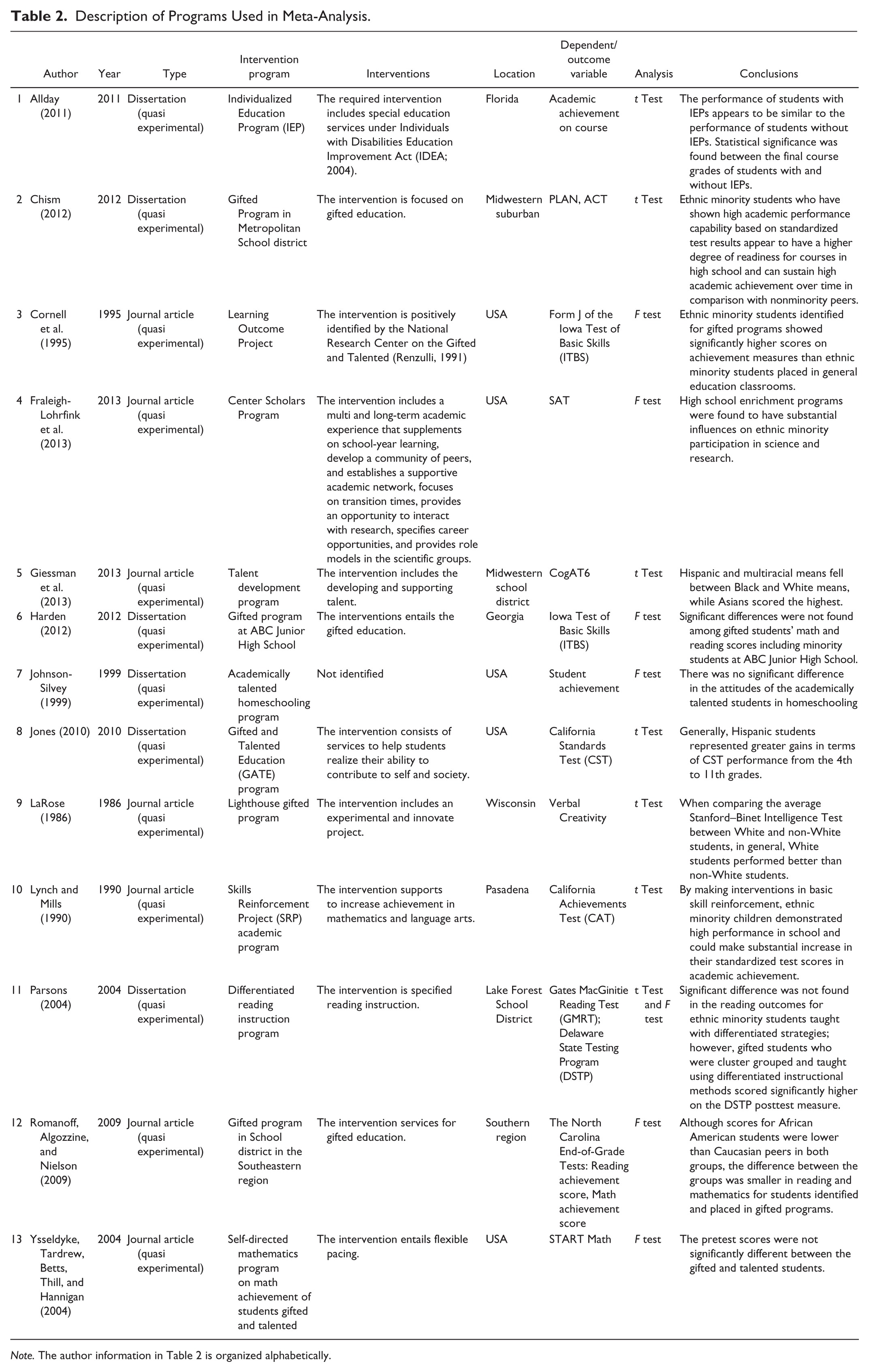
Note. The author information in Table 2 is organized alphabetically.
Participant information is presented in Table 3, including the number of participants in each study, their grade level, and ethnicity. Participants’ grade levels ranged from kindergarten to high school. Minority populations included African American, Asian, Hispanic, Native American, and Hawaiian/Pacific Islander. Regarding the specific number of participants in the ethnic minority groups, African Americans (n = 2,249) represented the highest number compared with other ethnic minority groups. The Hispanic (n = 1,222) and Asian groups (n = 411) took the second and third position, respectively. Native Americans (n = 48) took the smallest percentage within ethnic minority groups.
Ethnic Description of Participants in the Gifted Program.
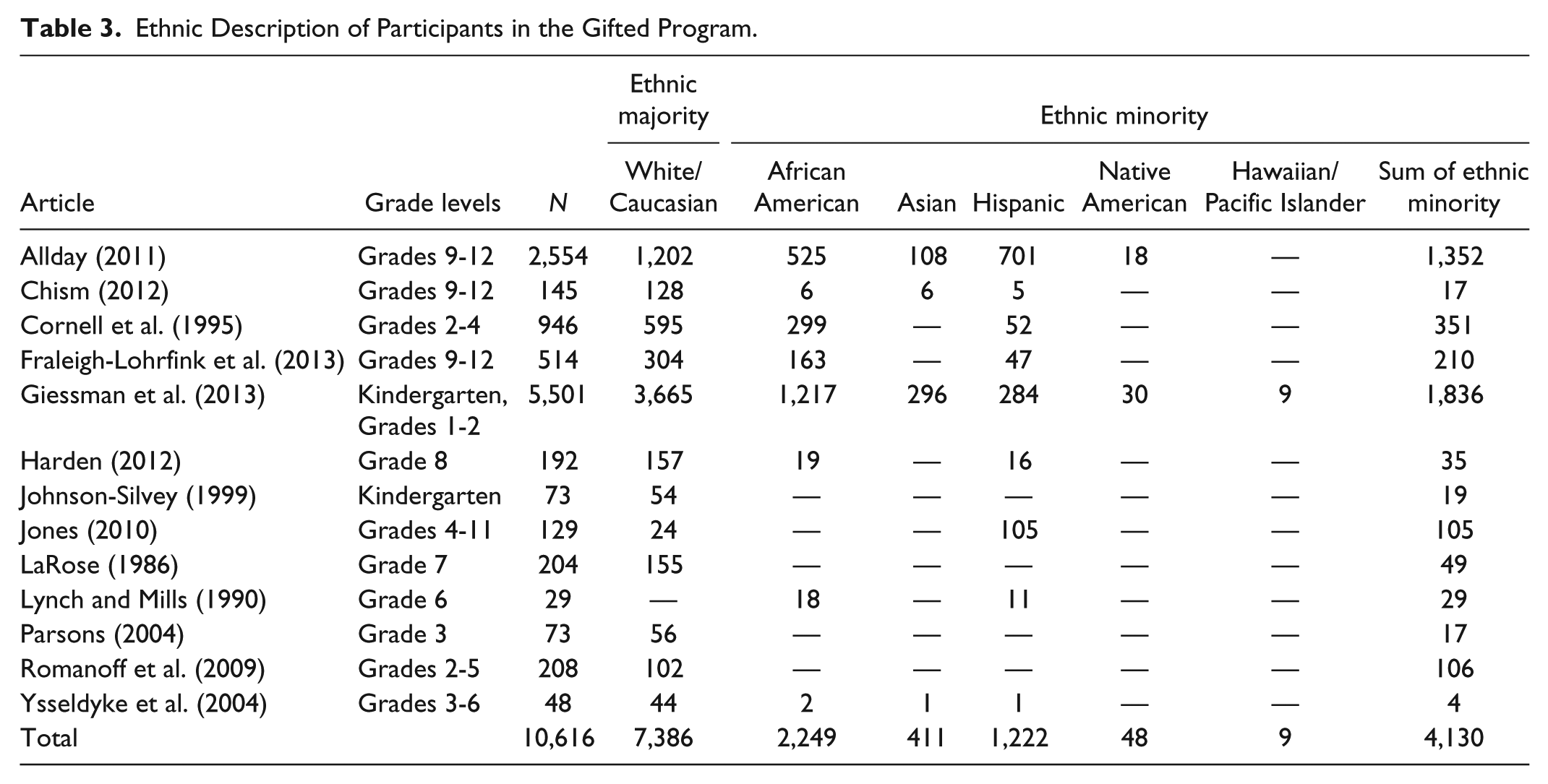
The use of study designs varied across studies. Three studies performed group comparisons between gifted minority students and gifted White students in intervention program(s). Three studies used a pretest/posttest design to compare intervention effect among gifted minority students. Five studies conducted group comparisons between gifted minority students who participated in intervention program(s) and gifted minority students who did not participate. One study compared the achievement outcomes of gifted minority students who participated in intervention program(s) with those of minority students in general education classrooms. One study conducted a group comparison between gifted minority students with IEPs and those without IEPs in an intervention program. One study compared two different outcome variables among gifted minority students. One study used a group comparison design.
Effect Sizes
The effect size of each gifted program was diverse. This may be related to the dissimilarity in the content of each gifted program, the age of participants, sample size, study designs (e.g., different group comparisons), and dependent variables of each study. Table 4 illustrates the effect sizes in individual studies analyzed. This table specifically describes the statistical information, including Hedges’s g, standard error, variance, lower limit and upper limit, Z value, and the p value of each study analyzed in this meta-analysis. In Table 4, the effect sizes of Hedges’s g by individual studies ranged between −0.618 and 2.014.
Comparisons of Effect Size by Study.
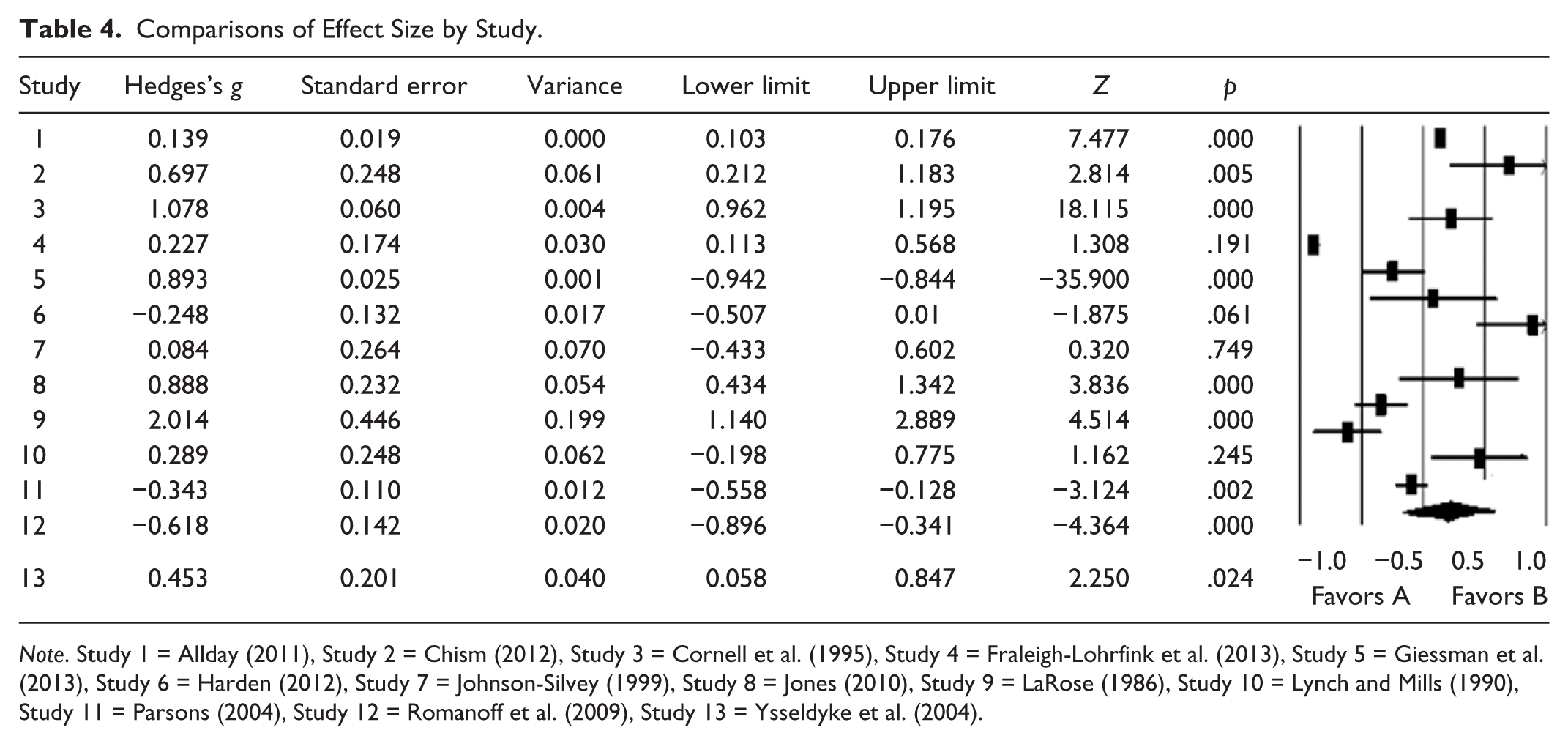
Note. Study 1 = Allday (2011), Study 2 = Chism (2012), Study 3 = Cornell et al. (1995), Study 4 = Fraleigh-Lohrfink et al. (2013), Study 5 = Giessman et al. (2013), Study 6 = Harden (2012), Study 7 = Johnson-Silvey (1999), Study 8 = Jones (2010), Study 9 = LaRose (1986), Study 10 = Lynch and Mills (1990), Study 11 = Parsons (2004), Study 12 = Romanoff et al. (2009), Study 13 = Ysseldyke et al. (2004).
With regard to the first research question, “What is the overall intervention effect, across the current literature, of gifted education programs on gifted ethnic minority students in academic achievement?” reported effect sizes of each study used to clarify the effectiveness of each gifted program were inconsistent. Table 5 shows the overall effect size results for our corpus of studies. The results revealed statistically significant positive overall intervention effect (Hedges’s g = 0.251).
Overall Effect Size and Subgroup Analysis.
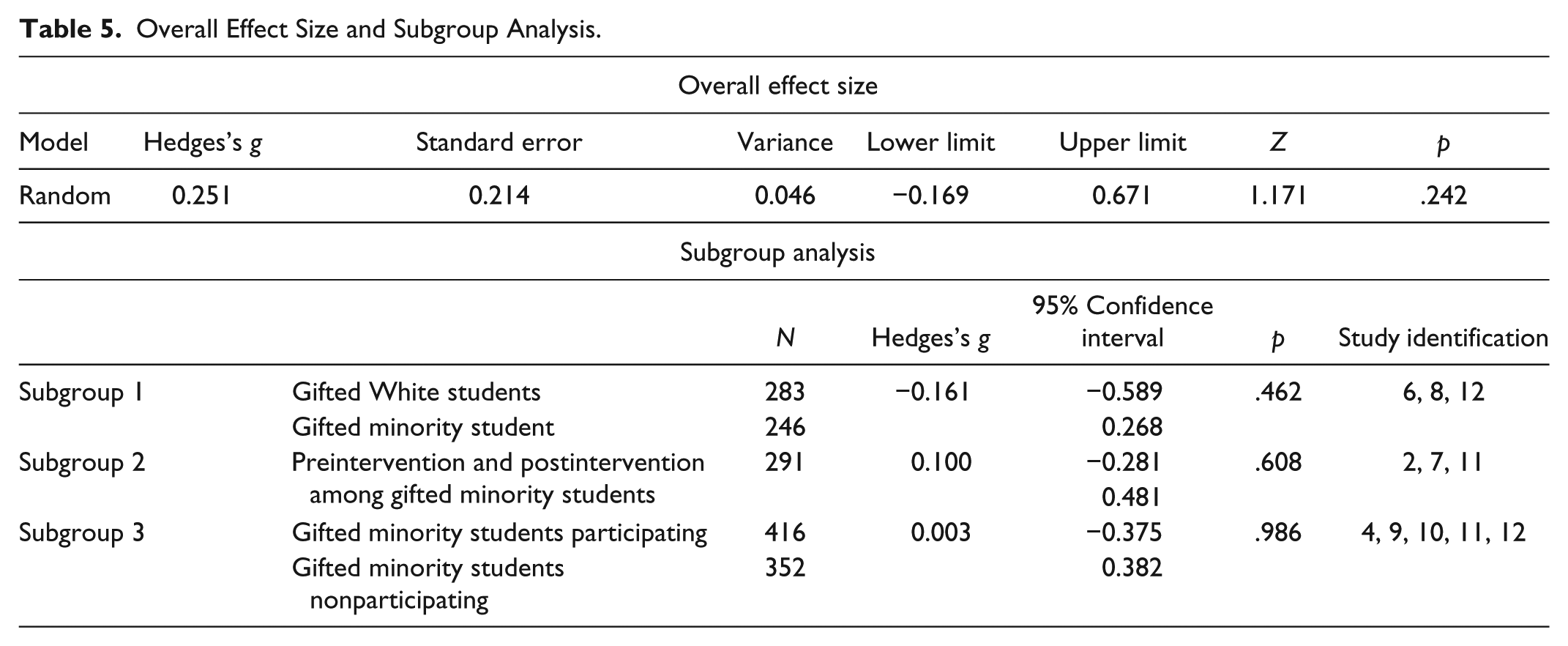
Regarding the second research question, “What study characteristics produced the significant intervention effects in gifted programs?” the results comprised significant and methodological characteristics. To evaluate group differences by population, we further assessed sample differences by conducting an analysis on program implementation, the measurement area, and publication type. Table 6 illustrates these differences (also see Table 7).
Subgroup Analysis of Gifted Education Program Effect Sizes.

Note. Study 1 = Allday (2011), Study 2 = Chism (2012), Study 3 = Cornell et al. (1995), Study 4 = Fraleigh-Lohrfink et al. (2013), Study 5 = Giessman et al. (2013), Study 6 = Harden (2012), Study 7 = Johnson-Silvey (1999), Study 8 = Jones (2010), Study 9 = LaRose (1986), Study 10 = Lynch and Mills (1990), Study 11 = Parsons (2004), Study 12 = Romanoff et al. (2009), Study 13 = Ysseldyke et al. (2004).
p < .05. **p < .01.
Analysis of Heterogeneity.
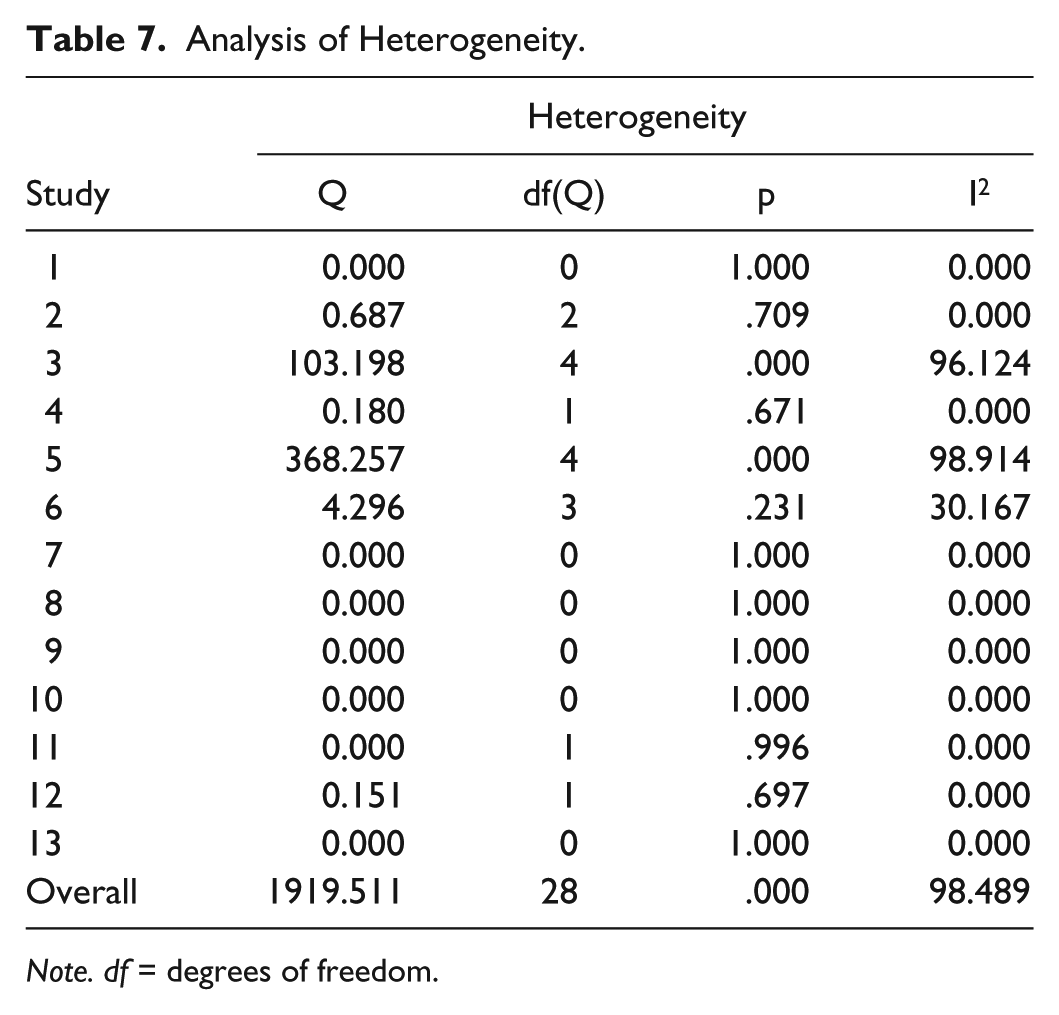
Note. df = degrees of freedom.
Concerning population, we compared the effect sizes of two types of gifted programs: one with the high school student sampling and another with the primary school student sampling. Samples consisting of high school students produced a significantly greater intervention effect (Hedges’s g = 0.227, confidence interval [CI 0.052, 0.401]), compared with samples consisting of primary school students (Hedges’s g = 0.200, CI [−0.216, 0.617]). This implies that the grade level of students who participate in a gifted program should be considered, since grade levels can be a factor that may influence the effectiveness of a gifted program.
In addition, we analyzed the effectiveness of gifted programs by examining the measurement area. Different scales were used in assessing the effectiveness of gifted programs in the 13 studies in this meta-analysis. Three gifted programs examined specific skills such as math and reading, while the other 10 studies measured comprehensive academic abilities using measures such as the CAT, Iowa Test of Basic Skills, CST, CogAT6, and so forth. Results revealed that the effect sizes of the three studies (Hedges’s g = −0.374, CI [−0.536, −0.213]) were less effective, compared with the other 10 studies (Hedges’s g = 0.461, CI [0.089, 0.832]).
On the other hand, there were no significant group differences in relation to program implementation and publication types in the meta-analysis. We examined the effectiveness of two types of gifted programs, school-based gifted programs, and non–school-based gifted programs. The non–school-based gifted programs included a summer camp, homeschooling program, and a national program implemented outside of school. In this study, results showed that the non–school-based gifted programs (Hedges’s g = 0.546, CI [−0.093, 1.185]) did not demonstrate any significant program effectiveness, compared with the school-based gifted programs (Hedges’s g = 0.188, CI [−0.140, 0.516]).
Similarly, publication type failed to produce significantly greater effects in the effectiveness of gifted programs. We compared gifted programs that were published in peer-reviewed journals with those published in non–peer-reviewed journals and dissertation studies. Gifted programs published in peer-reviewed journals (Hedges’s g = 0.322, CI [−0.187, 0.831]) did not differ significantly from gifted programs published in dissertations (Hedges’s g = 0.067, CI [−0.162, 0.296]).
Discussion
The current meta-analysis attempted to answer two general research questions. The first question was concerned with the overall intervention effect, across the current literature, of gifted education programs on gifted ethnic minority students in academic achievement. Educational researchers have indicated that effect sizes around 0.20 are of policy interest when they are based on measures of academic achievement (Hedges & Hedberg, 2007). This would suggest that a study with an effect of 0.20, which at first glance, might be misconstrued as a “small” effect if one automatically invokes Cohen’s original conventions, could be an important outcome in some research areas. As such, the study’s findings support the notion that gifted education programs have a positive impact on underserved gifted students’ academic outcomes. Although this is an important finding, the second research question which focused on study characteristics that produced the largest intervention effect, has the potential to contribute to the literature, as well, by shining much-needed light on different factors related to learning conditions associated with underserved gifted students’ academic achievement. To answer this question, the authors evaluated group differences among the following: (a) population, (b) measurement area, (c) program implementation, and (d) publication type. There were no significant group differences in relation to program implementation and publication types in the meta-analysis; however, there were differences in relation to population and measurement area.
In terms of comparisons between student populations, when we compared the effect sizes of two types of gifted programs, one with high school students and the other serving students before they entered high school, we found that gifted programs serving high school students to be more effective. This finding could be the result of a number of different factors. For instance, perhaps participants had been enrolled in gifted programs for most of their formal education, in that case, the outcomes could be due to the cumulative effect of exposure to advanced curriculum over an extended period of time. In terms of the areas in which students were measured, we found that 3 studies examined specific skills such as math and reading, while the other 10 studies measured students according to comprehensive academic abilities using such measures as the CAT, the Iowa Test of Basic Skills, CST, CogAT6, and others. This implies that the effects of a gifted program may be more influential when evaluating comprehensive academic achievement as opposed to a specific subject area.
One thing made abundantly clear by this study’s findings is the need for more outcome research with gifted underserved students, in general. The small number of studies included in the meta-analysis qualifies this assertion and prevents the authors from making declarative statements concerning the extent to which ethnic minority students can succeed academically in predominantly White gifted programs; this underscores the need for more detailed demographic information. Many programs craft demographic questionnaires as a means to collect important information about students participating in their respective programs. What is needed are more nuanced details about students in order for researchers to create more sophisticated studies using variables that can enhance understanding of within-group differences between ethnic minority students such as those related to generation. Common variables such as those related to students’ socioeconomic status were missing from many studies, for example. Given the common understanding of the relationship between familial financial security and academic performance, it makes sense to always include such valuable information in outcome research studies. In other words, more in-depth background information would be helpful in understanding the characteristics of ethnic minority populations in gifted programs such as whether they are international students, residents, or citizens since this information may represent the level of adjustment or acculturation that takes place in gifted programs and, thus, may affect students’ academic performance.
Of the 13 studies included in this meta-analysis, only 9 included Hispanic students as a population of interest. It should be noted that the Hispanic population is growing at a faster rate than any other in the country and for that reason alone, there needs to be more of an emphasis on disentangling ethnic identities in gifted education scholarship. For instance, a first-generation student of Mexican descent may be very different from a second-generation student of Mexican descent. Such subtleties have not been prominently featured in the gifted education literature. Instead, more of the attention has been focused on students who speak English as a second language. While this is certainly important, there is an enormous body of literature in other educational fields highlighting the importance of understanding the different cultural environments between schools, families, and communities. Given the increasing immigrant statuses among Hispanic and other ethnic minority families, further investigation is certainly warranted. In fact, the research detailing the influence of out-of-school factors on academic achievement, as a whole, is extraordinarily abundant. Surprisingly, the impact of gifted ethnic minority students’ home and community lives is largely unknown.
In addition to clarifying and expanding on student factors, one of the most prominent areas ripe for exploration is related to the gifted programs themselves. Specifically, very little is understood about how gifted education programs teach gifted ethnic minority students. It would behoove researchers to gather qualitative data regarding the different pedagogical practices associated with the various forms of gifted education programming. For instance, it would be useful to understand the extent to which educators in gifted programs emphasize ethnicity in curriculum (e.g., ethnic differences and associated societal issues are part of discussions, current events related to ethnic differences are brought into the classroom, etc.) versus taking a more color-blind approach. These data could then be quantified and analyzed as part of larger data sets that could be used to predict which particular pedagogical practices help and hinder students’ academic performance. Without such information, it is impossible to know how ethnic minority students’ unique needs are best met in gifted learning environments.
Limitations
As in all research studies, meta-analyses have a number of limitations that must be considered when interpreting findings. First, only 6 of the 13 studies had a sample size totaling over 100 minority participants. Given the small number of studies included in the meta-analysis, as well as the small samples sizes, it was difficult to compare program effect sizes. Second, some of the studies lacked robust demographic descriptions of study participants aside from grade and age, which made it challenging to identify other factors that may have contributed to or detracted from previous study outcomes. Third, many professional journals tend to publish only those manuscripts that report significant findings. Therefore, there is a possibility that we did not capture a full scope of the research related to ethnic minority students and academic outcomes. Finally, the exact programmatic interventions designed for underserved students in the previous studies were quite unclear. That is, it was extremely difficult to get a firm understanding of specific interventions educators employed in their work with gifted ethnic minority students.
Conclusions
The study’s findings brought needed attention to the issues associated with ethnic minority student research in gifted education. A number of studies do not disaggregate according to ethnicity, and others, when they do, fail to include important information that could improve understanding of factors associated with student academic outcomes. Given the persistent nature of excellence gaps, it stands to reason that more must be done if any progress will be made in terms of understanding the extent to which ethnic minority students benefit from gifted education programming and under what circumstances. Underserved gifted students were found to be on the receiving end of an array of in-school and out-of-school gifted education programming; however, the number of studies detailing specific interventions with respect to academic outcomes is sorely lacking. This finding highlights the need for more scholars to focus on outcome research that is specific as possible about what is going in gifted programs. As further evidence of this, all one need do is take a look at the effect sizes found in the current study; specifically, there appears to be a significant gap in understanding of the connection between program plans and implementation that needs to be addressed in the research literature. Indeed, more and higher quality research is needed concerning program implementation, student participation, and the association between participation and student outcomes.
The authors would caution against any conclusions made about the potential for gifted education programs to benefit underserved gifted students based on this, or any other study to date, for that matter. Given the small number of studies primarily focused on ethnic minority students’ academic outcomes, the lack of detailed demographic information, and poor program implementation description, it is difficult to determine anything conclusive at this time. Rather than view this in negative terms, it could certainly be thought of as an outstanding opportunity for the profession to move toward correcting these deficiencies in the hopes of developing a better understanding of what works and why with regard to ethnic minority students enrolled in gifted education programming.
Footnotes
Declaration of Conflicting Interests
The author(s) declared no potential conflicts of interest with respect to the research, authorship, and/or publication of this article.
Funding
The author(s) received no financial support for the research, authorship, and/or publication of this article.