




Abstract

Alexinia Young Baldwin.
Photo credit: Shannon McAvoy/UConn Photo.
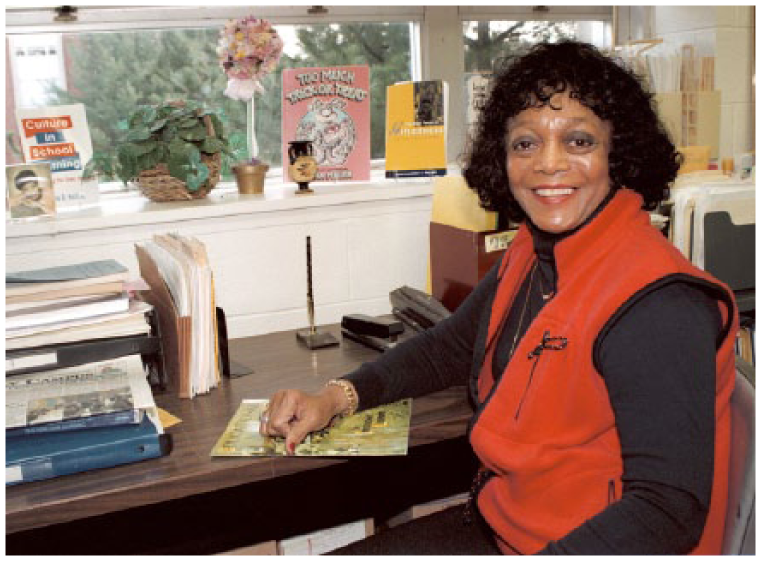
Our dear friend and colleague, Alexinia Young Baldwin, professor emerita at the University of Connecticut died on January 21, 2017. Alex was one of the true pioneers in the field of gifted education, and her work related to equity and excellence for underrepresented and minority groups continues to have an impact today as schools around the word address the issue of underrepresentation. When she arrived at the University of Connecticut in 1968 with her 9-year-old daughter Carlita, Alexinia began a journey to a long and distinguished career that resulted in significant contributions and innovations in the fields of gifted education, general education and curriculum theory, and civil rights activism.
Alex was an activist in larger societal issues in addition to her work in education. In 1956, she and her then husband Carl were arrested and jailed for sitting in a waiting room at the Birmingham, Alabama Railroad Terminal. She participated in a civil rights litigation that became recognized as a legal precedent court case known as Baldwin v. the City of Birmingham regarding the desegregation of railroad station waiting rooms (Carl L. Baldwin and Alexinia Baldwin v. J. W. Morgan, 287 F.2d 750 [5th Cir. 1961]). This litigation ended by establishing a nonsegregation rule for railroad stations throughout the entire country.
Alex’s most notable contribution to education and the field of gifted education began when she started the first gifted program in the nation for African American students in the then-segregated schools in Alabama. Her experience in this groundbreaking program was the basis of her many years of research and the development of the Baldwin Identification Matrix, an instrument that provided a much broader set of identification criteria for examining the many areas of talent potential in young people from minority and/or low-income backgrounds. Follow-up studies of the students in this pioneering program, including a reunion held at the University of Connecticut, demonstrated the remarkable professional career accomplishments of her students who participated in this trailblazing program. It was the development of her gifted program in Alabama that caused me to recruit her (and Mary Frasier) for a doctoral program at UConn funded by the Education Professions Development Act (P.L. 90-35). Alex was a superstar in our graduate program, and it is no exaggeration to say that the faculty and I learned far more from her about promoting equity issues than she learned from us. Her practical experience earned her, even during her time as a graduate student, a national reputation as both a scholar and teacher trainer.
After earning her doctorate from UConn in 1971, she was recruited to the faculty of the State University of New York in Albany, where she continued her research and developed one of the first gifted education teacher training programs in New York State. Alex was one of the founding members and subsequently the president of the New York State Association for the Gifted and Talented.
Alex returned to UConn in 1988 as a professor and head of the Curriculum Department, where she remained until her retirement in 2003. Her research focused on the education of gifted students, specifically on the recognition and development of the academic talents of children from low income and minority groups. She served as a Consultant to the United States Office of Civil Rights and had a lifelong passion and involvement in pursuing human rights and equity issues for all individuals. And she didn’t just talk and write about these issues. She actively participated in civil rights marches, and she took the city of Birmingham to court in the civil rights case mentioned above. In other words, Alex did for railroad travel what Rosa Parks did for the use of public busses.
Her many activities included service as chair of Connecticut’s Commission on the Status of Women, and she also held offices in many professional organizations, including serving as president of the Capital District Chapter of 100 Black Women and as a board member of the Connecticut Women’s Hall of Fame Foundation. In 2004, the Neag School of Education at UConn honored Alex with the Distinguished Alumni Award, and she also was named an outstanding Connecticut Woman Graduate in Leadership. She was a member of the Martin Luther King Colloquium of Scholars at Morehouse College, and in 2004, she received the Distinguished Scholar Award from the National Association for Gifted Children.
Alex was active in community activities and philanthropy as she and her late husband, Brian, contributed significantly to the arts as well civil rights and educational causes. She also was the first African American president of Altrusa International, a society dedicated to expanding and supporting leadership opportunities for women throughout the world. In her travels and international presentations, she constantly brought to the attention of her audiences the importance of developing the gifts and talents of young women, especially in third world countries where many opportunities for women are limited. She also served as a role model to many young women, including her daughter, Carlita Baldwin Cotton, who followed in her mother’s footsteps by completing a doctorate in gifted education at UConn in 2008 and is now a professor at Goodwin College. Alexinia was my first and Carlita was my last doctoral student—the bookends that have added pride and joy to my career.
Most of all, Alexinia was an enthusiastic professor who loved teaching. She devoted her life to working with students, conducting research, and contributing to the education profession in ways that always focused on equity and social progress. Her colleagues considered her a role model, a leader, and a pioneer in her field. Always a woman of style and grace, she was valued for her mentorship, sense of humor, and willingness to always give her time and talent to anyone seeking her assistance.
In spite of her many accomplishments, Alex was a very modest and unassuming person. I once asked her why she didn’t accept numerous invitations from civil rights leaders to capitalize on her action in the Baldwin v. the City of Birmingham case. Her reply characterized her basic belief about a life of remarkable service to others: “I didn’t do this for personal recognition, I did it so Black people didn’t have to stand out in the rain while waiting for a train.”