




Abstract

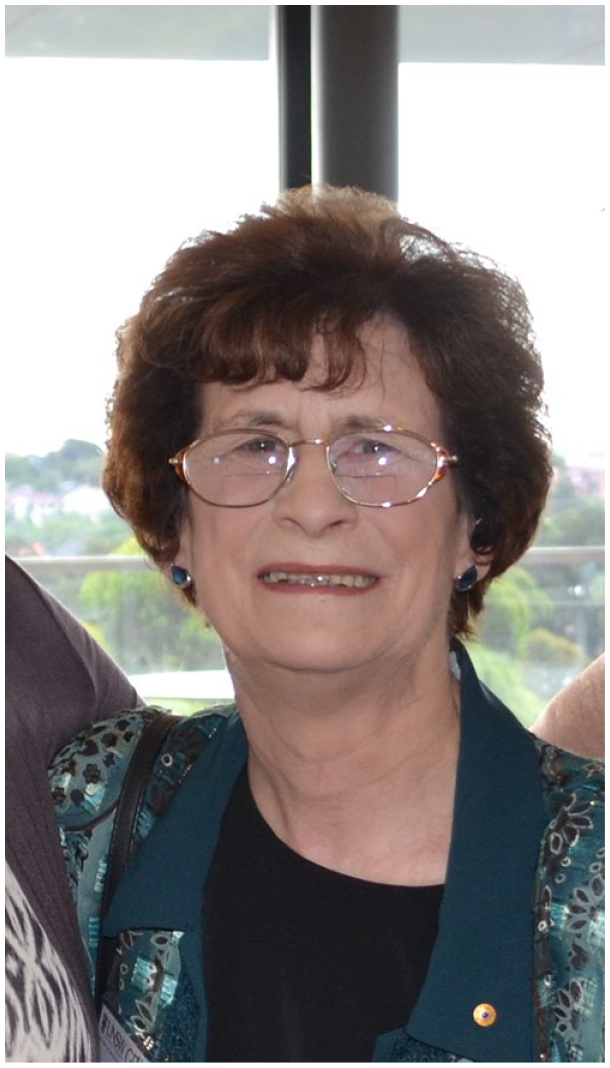
It is with great sadness that the Australian and the international gifted education community bid a fond farewell to Emeritus Professor Miraca Una Murdoch Gross on January 28, 2022. Miraca was the pioneer of gifted education in Australia, whose passionate and tireless work over multiple decades allowed for the eventual development of the field of gifted education—the infrastructure, organizations, policies, research, resources, programs, expertise, and community—that we see today in Australia. She made a huge difference to the lives of many gifted students.
I first met Miraca 17 years ago when I started training at The University of New South Wales to become an Economics/Business Studies secondary school teacher. Unlike the programs run by all of the other universities in Sydney, gifted education was a core subject at the university, which was no doubt due to Miraca’s advocacy for gifted education. This meant that I had the privilege and pleasure of learning about gifted education from Miraca every week for an entire semester. Gifted education quickly became my favorite subject and in the following year, I commenced an honors degree in gifted education with Miraca as my supervisor. I chose to study the forced choice dilemma, which is a term that Miraca gave to describe the choice that many gifted students face between achieving academic success and achieving social acceptance from peers. As will generations of her students, I will forever be grateful to Miraca for inspiring my journey into gifted education, for showing me what outstanding teaching is, for teaching me valuable research skills, for introducing me to the gifted education community, and for helping me to understand why it truly matters to support gifted students.
Miraca had humble beginnings in Scotland, where she was brought up by her mother and grandparents, after her parents separated when she was two. As a gifted child herself, she was immersed in books and story writing from a young age, and considered trips to the library as among the highlights of her childhood. It was during her schooling that she met some outstanding teachers, including Miss Kay and Joe Casciani, who were highly influential in shaping her future in gifted education. While she was offered a job as a journalist at the age of 17, she instead pursued her passion as a teacher—first in elementary schools and later in universities. After coming to Australia in her twenties, she worked as an elementary school teacher for 20 years (during which time she met an inspirational and enlightened school principal, Alf Peace), and founded the first ever Australian state association for gifted education in South Australia. It was the South Australian Department of Education that sponsored her graduate studies in gifted education at Purdue University in the United States, where she met many of the leaders in the international field of gifted education, including her mentor John Feldhusen.
Thereafter, she returned to Australia. In 1989, she was appointed as the CHIP (Children of High Intellectual Potential) lecturer at the University of Melbourne, which was the first academic position created by a university in Australasia dedicated to gifted education. Then, in 1991, she was appointed as a senior lecturer in gifted education at The University of New South Wales. She established, and became the Director of, the Gifted Education Research, Resource and Information Centre (GERRIC) in 1997. It was during her time at GERRIC and The University of New South Wales where she made some of her most significant contributions to gifted education and to the lives of gifted students. Among her major contributions was her role in the introduction of Françoys Gagné’s Differentiated Model of Giftedness and Talent (DMGT) to Australia, and the promotion of Australian policy development in gifted education. She also oversaw the development of the Professional Development Package for Teachers in Gifted Education, which was sent to every Australian school, and which continues to be used today. Moreover, she was supported by several Australian Federal Government grants to provide in-service learning in gifted education for teachers and parents. All of this was in addition to the various programs run at GERRIC, including the Certificate of Gifted Education (COGE), Mini-COGE, and the GERRIC Gifted Student Programs.
Miraca was also an outstanding scholar of gifted education, who was supported with funding from various organizations including the John Templeton Foundation in the United States. Among her key contributions was her longitudinal study of 60 exceptionally gifted Australian children, which was the source of multiple publications including Exceptionally Gifted Children. Exceptionally Gifted Children has been, and continues to be, a useful introduction to gifted education for many teachers, parents, and students. She also worked collaboratively with her close U.S. colleagues, Nicholas Colangelo and Susan Assouline, to publish A Nation Deceived: How Schools Hold Back America’s Brightest Students. That volume, along with A Nation Empowered: How Evidence Trumps Excuses that Hold Back America’s Brightest Students, continues to be used as the “bible” on acceleration today.
Prior to her retirement, Miraca was recognized with several prestigious honors that were all truly well deserved. These included the inaugural Australian Award for University Teaching in Education from the Australian Federal Government in 1997, the Sir Harold Wyndham Medal from the Australian College of Educators in 2003, the Distinguished Scholar Award from the U.S. National Association for Gifted Children (NAGC) in 2005, the International Lifetime Achievement Award in 2008 from the Mensa Education and Research Foundation (USA), and finally, induction as a Member of the Order of Australia in 2008.
Outside of her work in gifted education, I remember Miraca as an ardent reader, a devotee of contract bridge (which she used to play on Wednesday mornings), and a lover of cats.
Miraca’s legacy in pioneering the field of gifted education in Australia cannot be overstated. Without her, so many of us would not be doing what we are doing today to support gifted students. Without her, gifted education in Australia would not be what it is today. Without her, many gifted students in Australia would be left to fend for themselves, achieve at levels substantially below their potential, and face multiple hurdles in their education.
Thank you Miraca for all that you have done. You will be sorely missed by your many friends and colleagues in Australia and around the world.