



Abstract
Objective:
The use of illicit drugs by adolescents is a widespread problem in Taiwan. The aim of this study was to identify risk and protective factors.
Design:
Web-based survey of high school students.
Setting:
Senior high schools and vocational high schools in northern Taiwan.
Method:
Survey data were collected from 15,754 students. Logistic regression analysis examined potential risk and protective factors in individual, family and peer/school domains for lifetime, past-year and past-month illicit drug use and the single and/or multiple use of ketamine, methamphetamine, 3,4-methylenedioxymethamphetamine (MDMA) and marijuana.
Results:
The prevalence rates of illicit drug use varied from 1.18% to 2.19% by frequency and type of illicit drug use. Perceived availability of illicit drugs, betel nut chewing, drug use by a family member, peer drug use, missing classes and type of school were significant risk factors in lifetime, past-year and past-month use. Sensation seeking, family member and peer drug use were common factors in ketamine, methamphetamine, MDMA and marijuana use. Drug use by a family member increased the risk of multiple drug use. Smoking was a risk factor for ketamine use. Drug-related knowledge was a protective factor.
Conclusions:
These findings support the idea that there exist multilevel risk and protective factors for drug use, especially in the family and peer/school domains. School-based interventions should be designed to integrate different levels of risk and protective factors.
Background
The use of illicit drugs by adolescents has become a widespread problem. Many such drugs have been shown to damage health, and their use may be associated with criminal behaviour and damage to family and interpersonal relationships (Degenhardt and Hall, 2012; Gizzi and Gerkin, 2010). Based on the European School Survey Project on Alcohol and Other Drugs (ESPAD) in 35 countries, prevalence rates for the lifetime use of illicit drugs among 15- to 16 year-old students were 6–37% but varied considerably across the ESPAD countries (ESPAD Group, 2016). Another national survey in the USA revealed that the occasional use of illicit drugs was 39.2% among adolescents 13–14 years old and 81.4% among those 17–18 years old (Swendsen et al., 2012), which suggests an approximately twofold increase during the adolescent period. Chen et al. (2001) reported that in Taiwan, the prevalence of male adolescents who were illicit drug users at ages 16–18 (1.5%) showed an approximately twofold increase compared to that of those aged 13–15 (0.7%). Studies demonstrate that regular drug use in late childhood and early adolescence is linked to greater drug involvement. Therefore, adolescent drug abuse prevention is very important. Recent research has shown that investing in prevention can effectively save up to 10 times the cost of later treatment of alcohol or other substance abuse (National Institute on Drug Abuse [NIDA], 2003).
For the past two decades, researchers have attempted to investigate how adolescents begin to use drug and how drug abuse progresses. Risk factors may increase the likelihood of an individual or group engaging in the adverse activities, while protective factors may decrease the likelihood of adverse outcomes and counteract the impact of risk factors (Hemphill et al., 2011). One study found that youth who rapidly increased their substance abuse had high levels of risk factors and low levels of protective factors (Wills et al., 1996). Possible risk and protective factors related to illicit drug use by adolescents exist in individual, family, peer, and school domains. Bronfenbrenner’s bioecological systems theory (Paquette and Ryan, 2001) indicates that individual biology, family/community environment, and the societal landscape all have an impact on child development and, by extension, on risk and protective factors for alcohol and tobacco use (Hong et al., 2011) and the use of illicit drugs (Hemphill et al., 2011).
Of potential risk factors, sensation seeking, the perceived availability of illicit drugs and the use of other psychoactive substance (e.g. tobacco, alcohol and betel nut) are in the individual domain (Huang et al., 2013; Ogilvie et al., 2005). A study in Taiwan showed that the use of betel nut as a psychoactive substance had a significant influence on adolescents’ illicit drug use (Huang et al., 2013). Moreover, the use of illicit drugs by other family members bore a positive correlation with the use of illicit drugs by adolescents, as the parental use of illicit drugs was positively associated with illicit drug use by their children (Hemphill et al., 2011). Adolescents were also influenced by illicit-drug-using siblings (Whiteman et al., 2013). At the peer and school level, the results of a meta-analysis indicated that peers and friends were greater sources of influence than parents with regard to substance use by adolescents (Allen et al., 2003). Adolescents were more likely to report drug use when their peers or friends used drugs (Huang et al., 2013; Lundborg, 2006), or when they missed classes (Chou et al., 2006; Henry and Huizinga, 2007).
Of potential protective factors in the individual domain, drug-related knowledge (Wilson and Kolander, 2003), perceived risk of illicit drug use and disapproval of illicit drug use (Martins et al., 2008a) have been identified as protective factors. In the family domain, some studies have shown that parental monitoring apparently decreased adolescents’ illicit drug use (Schinke et al., 2008; Shorey et al., 2013; Svensson, 2003); however, other studies did not find the similar results (Fletcher et al., 2004; Stattin and Kerr, 2000). In the school domain, skills-based interventions as part of school-based drug prevention education significantly reduced drug use (Faggiano et al., 2008; Tobler et al., 2000).
Studies have found that the use of illicit drugs involves numerous risk and protective factors. Cleveland et al. (2008) found that, among young people aged 13–18, risk factors had strong effects on the lifetime use and recent use of marijuana, especially personal and peer risk factors, while protective factors had greater associations with lifetime use than with recent use. Although its findings supported the importance of different domains of risk and protective factors, this study did not discuss what risk and protective factors were in each domain. Research by Wongtongkam et al. (2014) indicated that sensation seeking was a significant risk factor for marijuana use but not for methamphetamine or 3,4-methylenedioxymethamphetamine (MDMA) use among college students in Thailand. Having friends who used drugs increased the risk of using alcohol and illicit drugs. In terms of protective factors, approximately 40–60% of students with high levels of moral belief, participation in religious activities, and social skills were less likely to use alcohol, but those protective factors did not have significant effects on illicit drug use. Moreover, some research has shown that demographic factors also affect adolescent drug use, for example, gender differences have also been noted as both risk and protective factors (Cotto et al., 2010; Svensson, 2003).
Secondary school is an important period of change in drug use behaviour. Most adolescents reduce or stop substance use in early young adulthood, but for others, heavy use in adolescence can be the beginning of multiple cycles of cessation and relapse. We hypothesised that risk and protective factors in the individual, family, peer and school domains would reveal associations with drug use. In addition, we used a variety of indicators to describe and explore the use of illicit drugs by adolescents. One type of indicator was lifetime use, past-year use and past-month use (Cleveland et al., 2008; Johnston et al., 2014). Lifetime prevalence means ever having tried illicit drugs. Past-year use and past-month use are also critical indicators that more closely reflect current levels of use compared with lifetime use. Another type of indicator was the type of illicit drug used. Marijuana, inhalants, and amphetamines are the most common illicit drugs abused by European and US adolescents (ESPAD Group, 2016; Johnston et al., 2014). In Taiwan, ketamine, methamphetamine, MDMA and marijuana have been found to be the drugs most commonly used by adolescents (Chou et al., 2006). We also explored the use of a single illicit drug as well as the use of multiple illicit drugs, and compared the impact of risk factors and protective factors. The two patterns represent different levels and severity of illicit drug use, in which the impact of risk factors and protective factors may be the same or different.
Therefore, the aims of this study were (1) to explore the effects of potential risk and protective factors on adolescent drug use in terms of lifetime, past-year and past-month use; (2) to explore the effects of potential risk and protective factors on the use of ketamine, methamphetamine, MDMA and marijuana by Taiwanese adolescents; and (3) to explore the effects of potential risk and protective factors between single-drug users and multi-drug users.
Methods
Research design and participants
A web-based survey was conducted in northern Taiwan. Stratified random sampling based on four levels of school size was used. Ten percent of a total of 294 senior high schools and vocational high schools was selected by computer-generated random numbers and 50% of the classes in each school were then invited to participate.
The research team contacted schools initially by telephone, and asked school staff to randomly select a sufficient number of classes at each grade level to participate in the study. Students went to the computer lab at each school where they completed the survey anonymously in order to decrease the influence of social expectation among adolescents and to protect their privacy (Wang et al., 2005). At the same time, the school staff was asked to report the procedural details to ensure that schools had followed the implementation process.
Finally, a total of 15,754 students in 29 schools completed the survey for an overall response rate of 83.3%. Participants were generally 15–18 years old, but a few students were older, presumably because of suspension and return.
The study was approved by the Institutional Review Board (IRB) of National Taiwan University. Informed consent was waived by the IRB because the first page of the questionnaire assured the respondent of anonymity.
Instruments
Background information and illicit drug use
We collected information about gender (male/female), family structure (lives with both parents/others) and school type (senior high school/vocational high school). We asked participants if they had ever used illicit drugs during their lifetime, the past year and the past month. They were also asked to identify the drugs they had ever used, including ketamine, methamphetamine, MDMA and marijuana.
Potential risk factors
There were potential risk factors at the individual, family, peer and school levels. At the individual level, potential risk factors included sensation seeking, perceived availability of illicit drugs, smoking, drinking and betel nut chewing. Sensation seeking was assessed via the Brief Sensation Seeking Scale (BSSS-4) (Stephenson et al., 2003) and measured four items scored from 1 (strongly disagree) to 5 (strongly agree). A sample item was ‘I would like to explore strange places’ (Cronbach’s α = .85). Perceived availability of illicit drugs (Bachman et al., 2011) was measured by asking about the difficulty of obtaining any illicit drug if wanted, and scores ranged from 1 (very easy) to 5 (very difficult). Smoking, drinking and betel nut chewing were assessed by asking participants if they had ever smoked/drunk/chewed betel nut in their lives.
At the family and peer level, illicit drug use by family members (parents and siblings) and peers/friends were ascertained by asking participants if any family member or peer/friend used illicit drugs.
At the school level, missing classes based on the World Health Organization (WHO)-Global school-based student health survey (WHO, 2013) was measured by asking participants, ‘During the past 30 days, on how many days did you miss classes or school without permission?’ This was scored: 1 = 0 day, 2 = 1–2 days, 3 = 3–5 days, 4 = 6–9 days and 5 = 10 days or more.
Potential protective factors
Drug-related knowledge, disapproval of illicit drug use and perceived risk of illicit drug use were potential protective factors at the individual level. Drug-related knowledge was measured by 25 items compiled by two drug abuse prevention specialists and three teachers on which the right answer scored one and the wrong answer scored zero, with total scores ranging from 0 to 25 points. A sample item was ‘using ketamine for a long time will cause bladders to shrink and become fibrotic, leading to frequent urination’ (KR20 = 0.80).
Disapproval of illicit drug use and perceived risk of illicit drug use were based on questions from Monitoring the Future (Bachman et al., 2011). Disapproval of illicit drug use was measured by a single item about the personal attitude of disapproval towards other people using drugs, and ranged from 1 (strongly disagree) to 5 points (strongly agree).
Perceived risk of illicit drug use was measured by asking, ‘Would people be at risk of harming themselves even if they took an illicit drug only once or twice?’ Scores ranged from 1 (strongly disagree) to 5 (strongly agree).
Parental monitoring as a potential protective factor at the family level was measured by four items based on the study by Stattin and Kerr (2000). The scale ranged from 1 (never) to 5 points (always). A sample item was ‘Do your parents know what you do during your free time?’ (Cronbach’s α = .87).
At the school level, school drug-associated education, based on the WHO (2013)-Global school-based student health survey, was measured by three items with the dichotomous scale: ‘Yes’ (1 point) or ‘No’ (0 point). A sample item was ‘During the past year, were you taught in any of your classes or school activities where to get help to stop using drugs?’
Statistical analysis
All items were scored according to the variable coding list (Supplemental Table). SPSS for Windows version 22.0 was used to analyse the data. Hierarchical binary logistic regression was used to determine the risk and protective factors for lifetime, past-year and past-month illicit drug users as well as ketamine, methamphetamine, MDMA and marijuana users. Participants were divided into three groups based on the number of illicit drugs which they had used: no drug use, single drug use or multiple drug use. Multinomial logistic regression analysis was used to analyse the risk and protective factors associated with the number of illicit drugs used. Nagelkerke R2 was used to evaluate goodness-of-fit of the logistic regression models and higher values indicated a better fit (Peng et al., 2002).
Results
The descriptive analysis of background information and study variables is shown in Table 1. In all, 54.13% of participants in the study were boys and 34.50% were vocational high school students. Approximately, 18.50% of the participants did not live with both parents (i.e. they lived with a single parent or grandparents). Prevalence rates for lifetime, past-year and past-month illicit drug use were 2.79%, 1.91% and 1.72%, respectively. Students were most likely to report the use of ketamine (1.89%), followed by methamphetamine (1.38%). There were significant differences in the distribution of risk and protective factors between boys and girls. Risk factors were more prevalent in males, and females had a higher percentage of protective factors.
Descriptive analysis of study variables.
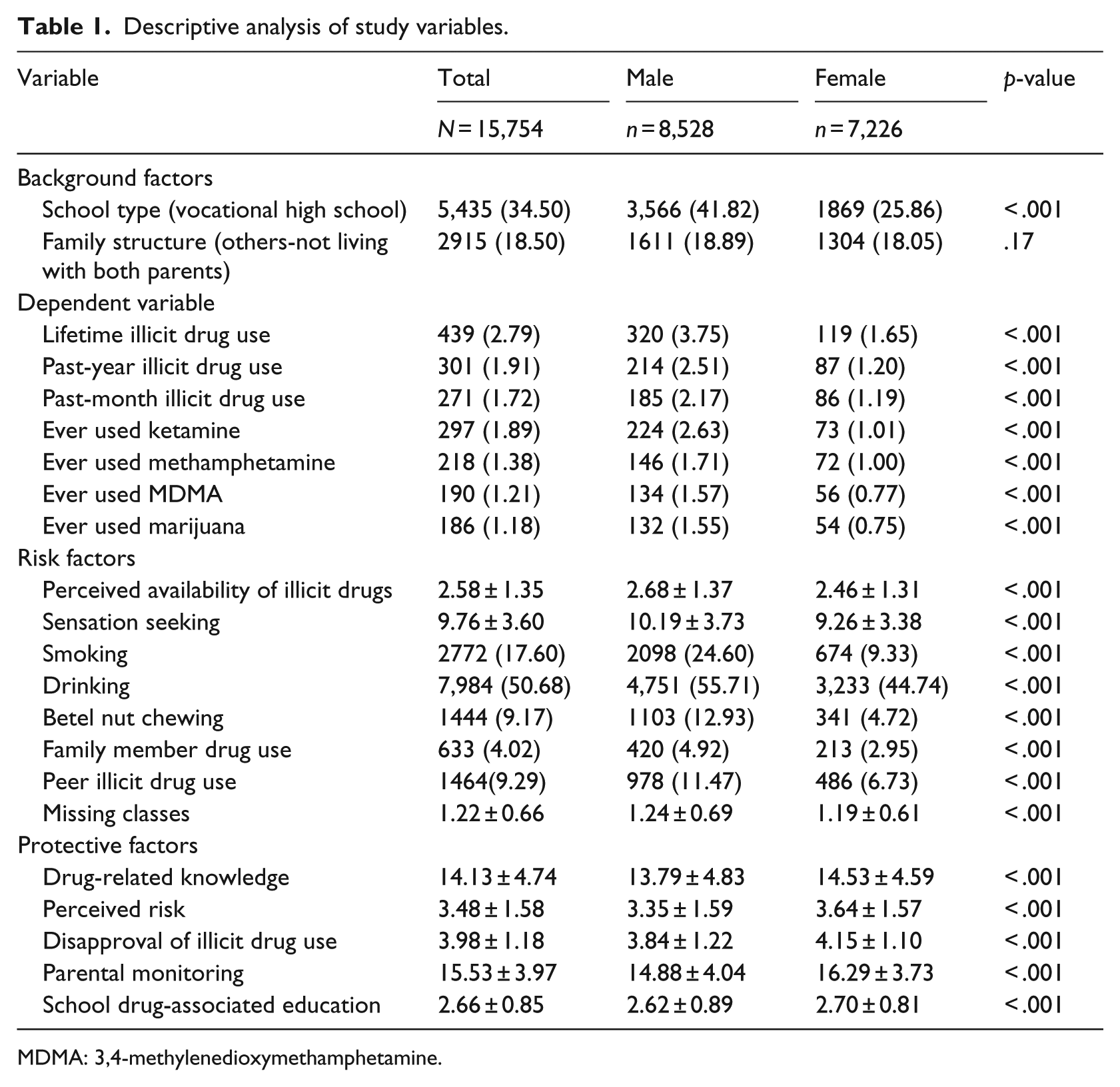
MDMA: 3,4-methylenedioxymethamphetamine.
Factors related to illicit drug use over the lifetime, the past-year and the past-month
Table 2 shows the results of the multivariate logistic regression analysis of risk and protective factors in terms of background, the individual, family, peers and school by lifetime, past-year and past-month illicit drug users. The odds of lifetime, past-year and past-month illicit drug use significantly increased when the perceived availability of illicit drugs increased, with those who chewed betel nut, with those whose family members used drugs, with those whose peers used illicit drugs, with students who missed classes and with those in vocational high school compared with senior high school. In addition, the odds ratio for family member drug use was significantly higher in past-month use than in past-year use or lifetime use. On the other hand, the odds of lifetime, past-year and past-month illicit drug use were significantly decreased when drug-related knowledge increased. Although other protective factors achieved statistical significance, their impact on the three indicators of illicit drug was inconsistent, except that parental monitoring was not a significant factor.
Logistic regression analysis a of factors related to background, individual, family, peers and school among lifetime, past-year and past-month illicit drug users.
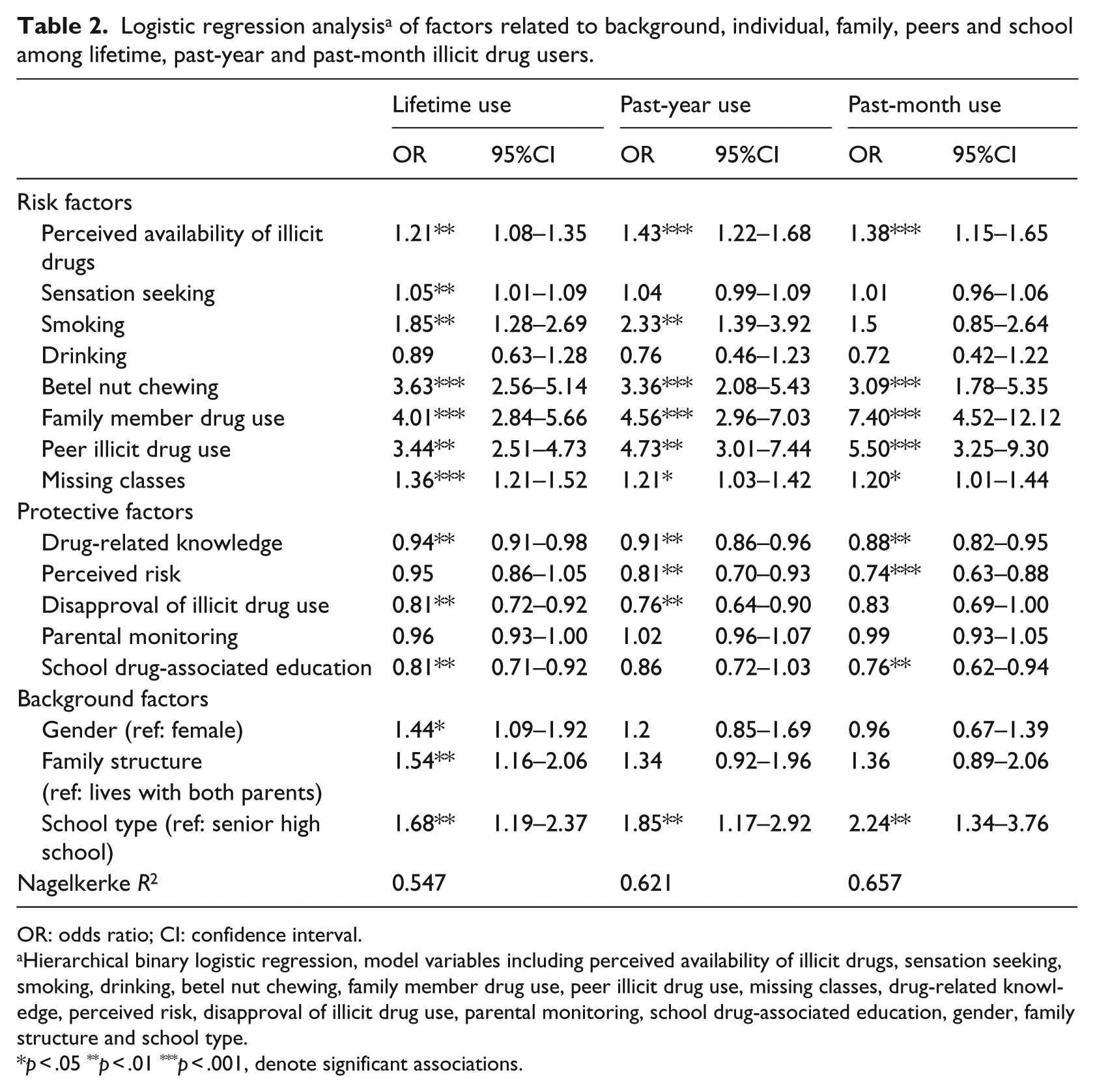
OR: odds ratio; CI: confidence interval.
Hierarchical binary logistic regression, model variables including perceived availability of illicit drugs, sensation seeking, smoking, drinking, betel nut chewing, family member drug use, peer illicit drug use, missing classes, drug-related knowledge, perceived risk, disapproval of illicit drug use, parental monitoring, school drug-associated education, gender, family structure and school type.
p < .05 **p < .01 ***p < .001, denote significant associations.
Factors related to illicit drug use among ketamine, methamphetamine, MDMA and marijuana users
Table 3 shows the results of the multivariate logistic regression analysis of risk and protective factors in terms of background, the individual, family, peers and school among ketamine, methamphetamine, MDMA and marijuana users. The results were similar to those in Table 2, as the perceived availability of illicit drugs and a family member or peer using drugs remained significant influencing factors. Furthermore, sensation seeking had a significant impact on the use of four illicit drugs, while smoking was significant only for ketamine users. Although protective and background factors reached statistical significance, their impact on the use of these four illicit drugs was inconsistent, except that parental monitoring and not living with both parents were not significant factors. Compare to females, males had a higher risk of using illicit drug during their lifetime (odds ratio [OR] = 1.44, 95% confidence interval [CI] = 1.09–1.92) and were more likely to use ketamine (OR = 1.58, 95% CI = 1.13–2.21).
Logistic regression analysis a of factors-related background, individual, family, peers and school among ketamine, methamphetamine, MDMA and marijuana users.

MDMA: 3,4-methylenedioxymethamphetamine; OR: odds ratio; CI: confidence interval.
Hierarchical binary logistic regression, model variables including perceived availability of illicit drugs, sensation seeking, smoking, drinking, betel nut chewing, family member drug use, peer illicit drug use, missing classes, drug-related knowledge, perceived risk, disapproval of illicit drug use, parental monitoring, school drug-associated education, gender, family structure and school type.
p < .05 **p < .01 ***p < .001, denote significant associations.
Comparison of single- and multi-drug users
Among the risk factors, greater sensation seeking, smoking, betel nut chewing, family member drug use, peer illicit drug use and missing classes were associated with increased odds for identification as a single-drug or multi-drug user. The risk factor of family member drug use was twofold than in multiple drug users as in single drug users. Among the protective factors, higher scores for drug-related knowledge and school drug-associated education were associated with decreased odds of being identified as a single-drug or multi-drug user. The probability of a male becoming a single-drug user was about 1.79 times that of a female (Table 4).
Multinomial logistic regression analysis a of factors related to background, individual, family, peer, and school level among multi-drug and single-drug users (ref: nonusers; Nagelkerke R2 = .518).
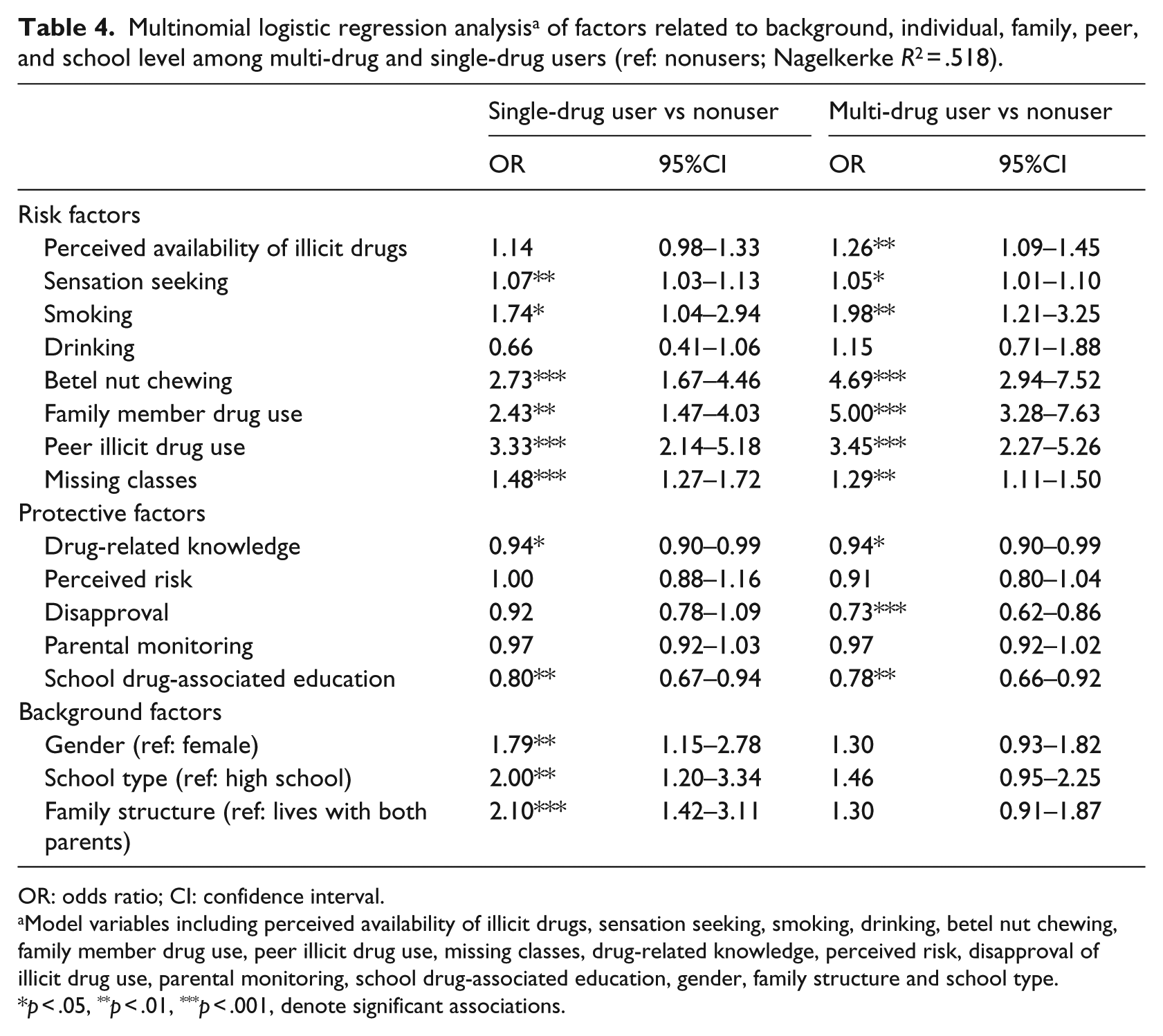
OR: odds ratio; CI: confidence interval.
Model variables including perceived availability of illicit drugs, sensation seeking, smoking, drinking, betel nut chewing, family member drug use, peer illicit drug use, missing classes, drug-related knowledge, perceived risk, disapproval of illicit drug use, parental monitoring, school drug-associated education, gender, family structure and school type.
p < .05, **p < .01, ***p < .001, denote significant associations.
Discussion
The present survey was completed by a population-based sample of adolescents. With high school students as the research subjects, we used different indicators of illicit drug use to explore the relationship between risk factors, protective factors and use. The results showed that, no matter the lifetime, past-year, or past-month use, or the types of drugs used, perceived availability of illicit drugs, family member drug use and peer illicit drug use all constituted significant risk factors, which is consistent with the results of past research (Hemphill et al., 2011). It has been shown that family members and peers are an important conduit by which adolescents obtain illicit drugs (Bahr et al., 2005). Adolescents with family members or peers who use illicit drugs may perceive that acquiring illicit drugs is easy, and have a greater tendency to use them. Our study found that drug use by family members displayed a higher association with multi-drug use than with single-drug use.
The impacts of sensation seeking and missing class were inconsistent among different indicators. Previous studies have found sensation seeking to be associated with drinking and marijuana use, but not with the use of amphetamines or heroin (Wongtongkam et al., 2014). This study found that the higher the level of sensation seeking, the more likely the student would use ketamine, MDMA or marijuana. Sensation seeking was also the risk factor for single- and multi-drug users, as sensation seeking was associated with drug use, polydrug use and the early-onset of drug use in adolescence (Crawford et al., 2003). Furthermore, high sensation-seeking plus drug use by close friends was more strongly associated with MDMA than with marijuana and alcohol/tobacco use (Martins et al., 2008b).
Betel nut chewing was a significant risk factor for lifetime, past-year and past-month use and a more powerful predictor of both single and multiple illicit drug use than were alcohol or tobacco use (Huang et al., 2013). Smoking was a significant predictive factor for ketamine use because smoking a cigarette laced with ketamine (‘a K cigarette’) is the primary means of ingestion. Moreover, missing class was a significant risk factors for lifetime, past-year and past-month drug use. Truancy was identified as a risk factor for illicit drug use because of the unsupervised, unmonitored time spent with peers and the increased opportunity for illicit drug use (Chou et al., 2006; Henry and Huizinga, 2007).
Among potentially protective factors, drug-related knowledge was the only one to reach significance among lifetime, past-year and past-month users. Furthermore, drug-related knowledge and school drug-associated education were significant protective factors among single-drug and multi-drug users. Drug-related knowledge is crucial. Adolescents may not use illicit drugs due to fear of the effects of the drugs and a concern that drug taking will compromise other valued activities or pursuits (McIntosh et al., 2005). School drug-associated education is one method of acquiring correct drug-related knowledge.
Other protective factors including the perceived risk of drug use, and disapproval of illicit drug use were partially significant factors for some types of drug users; however, they were still important protective factors. Parental monitoring was not a significant protective factor. A previous study indicated that the protective effects of family decrease as high school students got older (Cleveland et al., 2008), especially when the monitoring was based on reports by the child (Fletcher et al., 2004). The protective effect of parental monitoring works primarily in early adolescence when children are in primary school and junior high school. After high school, the influence of parental monitoring decreases.
Consistent with previous studies (Cotto et al., 2010; Svensson, 2003), we found that gender differences were significant. Males scored higher on all risk factors, particularly lifetime use and the use of ketamine. Females scored higher on all protective factors. Moreover, students in vocational high schools were also at a higher risk for drug use than were those in senior high schools. Vocational high schools emphasise the acquisition of skills, and students may have several internships during their school years and earn income as well. In work situations they may encounter more varied and complex situations than senior high school students and have easier access to illicit substances (Wu et al., 2003).
In summary, this research found that risk factors had more consistent effects on adolescent drug use than did protective ones. Effective intervention requires that multiple domains be addressed (Cleveland et al., 2008; Hemphill et al., 2011). As for the perceived availability of illicit drugs, it may be helpful to develop drug-free campaigns for families and campuses. By delivering abstinence messages, such campaigns might restrict access to drugs and exposure to drug use during school hours (Evans-Whipp et al., 2015). In terms of sensation seeking, we could promote proper leisure activities. With strengthened education in life skills, adolescents may be more likely to reject the invitation of illicit drug use from peers, and to make friends with peers who do not use drugs. About missing classes, we could encourage school dropouts to return to a more friendly and supportive campus environment. School-level factors are potentially protective for illicit drug use in adolescents. Therefore, schools could implement tobacco and betel nut-free campuses, and ask community stores not to sell cigarettes, betel nut, or alcohol to adolescents. At the same time, it is important to promote effective school-based operating programmes. Theory-based drug education (Huang et al., 2012) and the incorporation of multiple and interesting elements such as interactive drama in education (Stephenson and Jannone, 2006) and the long-term promotion of life skills (Guo et al., 2015) have been shown to have some effect on the prevention of adolescent illicit drug use. A few studies have assessed a multipronged approach targeting multiple domains, but more research is needed.
Limitations
There are limitations to this study. First, this was a cross-sectional survey so causal inferences cannot be made. Second, all data were collected as self-reported items from a school-based population, and did not involve students who had dropped out. Finally, the study survey was conducted in northern Taiwan, so the findings may not generalise to other parts of the country or to other geographic areas. The relationship between socioeconomic factors and drug use was not assessed in the study. In future studies, it will be necessary to explore how geographic diversity and socioeconomic factors moderate these relationships.
Conclusion
In conclusion, study findings support the influence of multilevel risk and protective factors on drug use, especially in the family and peer-school domains. When family members or peers use illicit drugs, adolescents are more likely to use them; this is true for multi-drug use as well. Knowledge about drugs and school-related education were protective factors. School-based interventions should be designed to integrate different levels of risk and protective factors. Future research should focus on exploring the relevance of these findings to other settings and determining how best to enhance protective factors.
Supplemental Material
supplemental_Table – Supplemental material for Risk and protective factors for adolescents’ illicit drug use: A population-based study
Supplemental material, supplemental_Table for Risk and protective factors for adolescents’ illicit drug use: A population-based study by Jung-Yu Liao, Chiu-Mieh Huang, Charles Tzu-Chi Lee, Hsiao-Pei Hsu, Chiu-Ching Chang, Che-Jen Chuang and Jong-Long Guo in Health Education Journal
Footnotes
Acknowledgements
Our gratitude goes to the Academic Paper Editing Clinic, National Taiwan Normal University (NTNU).
Funding
The author(s) received no financial support for the research, authorship, and/or publication of this article.
References
Supplementary Material
Please find the following supplemental material available below.
For Open Access articles published under a Creative Commons License, all supplemental material carries the same license as the article it is associated with.
For non-Open Access articles published, all supplemental material carries a non-exclusive license, and permission requests for re-use of supplemental material or any part of supplemental material shall be sent directly to the copyright owner as specified in the copyright notice associated with the article.
