



Abstract
Background:
Children’s participation in cooking activities at home may have positive effects on diet quality. In Japan, schools are the primary site for food education, which includes cooking. Very few studies have assessed the impact of school-based cooking programmes on children’s participation in cooking activities at home.
Objective:
The objective of the study was to assess the impact of the cooking programme on children’s participation in cooking at home and their self-efficacy and attitudes towards cooking.
Design:
Quasi-experimental study with an intervention and a comparison group. Outcomes were measured using pre- and post-programme surveys.
Setting:
Two public elementary schools (A, B) in Tokyo, Japan.
Method:
One hundred-seventy children in the third and fourth grades at School A (intervention group) and 142 children at School B (comparison group) completed pre- and post-programme surveys. Students in the intervention school received three 45-minute cooking lessons, including two lessons that focused on peeling apples and one hands-on cooking experience. The main outcome measures were participation in cooking at home, attitudes towards cooking, and self-efficacy with respect to cooking and peeling apples.
Results:
The number of children participating in cooking-at-home activities increased in the intervention group (p = .005). Children who started cooking at home during the intervention period improved their cooking self-efficacy (p = .012) and attitudes towards cooking (p = .002).
Conclusion:
Implementation of a short-duration cooking programme focused on improving children’s cooking attitudes, and self-efficacy can encourage participation in cooking activities at home.
Introduction
In 2005, the Japanese government enacted the Shokuiku Kihon Hō (Food Education Basic Law; Ministry of Agriculture, Forestry and Fisheries, 2005), a groundbreaking piece of legislation to address a host of problems related to food and nutrition, including poor eating habits among children (Asakura and Sasaki, 2017; Japan Society of School Health, 2018), an increasing number of overweight and underweight children (Ministry of Education, Culture, Sports, Science and Technology, 2018) and the decreased frequency of cooking at home and eating together. The law aims to address these problems through food education to acquire ‘knowledge about food and nutrition and [the] ability to make appropriate food choices’ (Ministry of Agriculture, Forestry and Fisheries, 2005). School is identified as a primary site for shokuiku promotion. Shokuiku is required to be systematically promoted throughout school education activities, not only during school lunch but also in each subject (Ministry of Education, Culture, Sports, Science and Technology, 2019).
Shokuiku promotion in schools involves a wide range of activities, including cooking itself. Children’s cooking experience in school aims to help them understand the importance of healthy eating, acquire the ability to manage their physical and mental health, develop an appreciation for food and respect Japanese food culture (Ministry of Education, Culture, Sports, Science and Technology, 2019). In addition, the acquisition of cooking skills is one of the aspects of shokuiku, so Japanese students learn basic cooking skills in home economics, which is a compulsory subject from fifth to ninth grade (10–15 years old).
Studies have shown that cooking at school can have a positive effect on vegetable intake among children (Caraher et al., 2013; Jarpe-Ratner et al., 2016) through improving preferences for vegetables (Cunningham-Sabo and Lohse, 2013; Liquori et al., 1998; Zahr and Sibeko, 2017) and a willingness to try new foods (Allirot et al., 2016; Jarpe-Ratner et al., 2016). Children’s participation in cooking at home may also have positive effects on diet quality (Chu et al., 2013, 2014; Nozue et al., 2016). Other research has shown that acquiring cooking skills during childhood may enhance future cooking practices, improve attitudes towards cooking and lead to better diet quality (Lavelle et al., 2016). In a survey of Japanese parents of elementary school children, about 80% of parents said that they want children to help with cooking at home (Watanabe et al., 2020). Therefore, cooking programmes in schools that aim to promote cooking participation at home are important.
To date, there are many studies focused on school cooking programmes for children. These programmes have been reported to have a positive impact on children’s food-related preferences, attitudes and behaviours. However, they have limitations (e.g. the number of structured lessons tends to be high and the lessons are long), which make delivering them difficult if time and funds are limited. A recent systematic review of cooking programmes for school-aged children identified eight studies meeting the inclusion criteria such as the median number of structured sessions of cooking programme was 10 (range, 2–12 sessions) and the median length of lessons was 90 minutes (range, 90–120 minutes; Hersch et al., 2014). Furthermore, among the eight studies included in a review by Hersch et al. (2014), there was only one study that assessed children’s participation in cooking at home (Fulkerson et al., 2010). There has been little research assessing children’s cooking participation at home since the review by Hersch et al. (2014) other than primary school-based programme described by Ensaff et al. (2016) and the community-based programme documented by Jarpe-Ratner et al. (2016).
We developed a school-based cooking programme, aimed at encouraging children’s cooking participation at home, in which the number of structured lessons was low and the lessons were short (three 45-minute lessons). We included the following features in the cooking programme: (1) gamification to enhance enjoyment, (2) opportunities to gain successful experience and improve cooking self-efficacy, (3) activities children can later practise at home, (4) homework and (5) a parent newsletter. The cooking programme itself included two apple-peeling lessons and a hands-on cooking lesson. There were several reasons for choosing the apple-peeling lesson. First, the length of the peel can be used as an indicator of this skill. We expected that the skill would improve with multiple opportunities to practise. Moreover, by peeling an apple in two different lessons, children could visually perceive an improvement in their food preparation skills. Second, peeling whole apples is considered an important skill in Japan since apples are commonly consumed in Japan without the peel. The skill can later transfer to other vegetables such as potatoes. In a home cooking skill test administered by Kagawa Education Institute of Nutrition and supported by the Ministry of Education, Culture, Sports, Science and Technology (MEXT), peeling whole apples is one of the skills used to evaluate cooking proficiency (Kagawa Nutrition University, 1987).
In most Japanese elementary schools, cooking lessons are conducted for the first time in home economics classes in the fifth grade. This particular cooking programme targeted third and fourth grade students (8–10 years old) in order to encourage cooking participation at home from an earlier grade. The objective of the study was to assess the impact of the cooking programme on three variables: children’s cooking attitudes, self-efficacy, and participation in cooking at home.
Methods
Study design, participants and procedure
A quasi-experimental study was conducted in two public elementary schools in Tokyo, Japan. Students in School A received the programme, and School B was designated as the comparison group. Participants were third and fourth grade students from five classes in School A (n = 170) and four classes in School B (n = 142). Each class had between 28 and 41 students and one teacher. Parents of enrolled students received a letter explaining the programme and study activities. Parents of students enrolled at School A were also invited to observe the cooking lessons. Pre- and post-programme questionnaires were used to determine differences between the groups in respect of the following outcomes: participation in cooking at home, cooking attitudes, and cooking self-efficacy. The questionnaires were administered by teachers who were asked to convey the following information to students: your teacher and family members will not see your responses, your responses will not impact your grades, please do not consult with your friends and there is no penalty if you do not answer a question. Teachers were also asked to refrain from looking around the classroom while students completed their questionnaires.
Baseline data were collected in June and July 2017. The programme itself was delivered between July 2017 and March 2018. Post-test data were collected in March 2018. The study was approved by the Special Ethics Special Committee for Biomedical Research at Ochanomizu University (No. 2017-7).
Intervention
The development of the cooking programme was informed by social cognitive theory (Bandura, 1977), The programme itself consisted of three cooking lessons, cooking homework and parent newsletters. Each cooking lesson was 45 minutes long and took place in a home economics classroom. The cooking lessons were taught by two instructors. The main instructor was a researcher with prior experience as a school dietitian, and the assistant instructor was the school dietitian.
In the first and third cooking lesson, students practised their knife skills by peeling whole apples (Figure 1). In the second lesson, the students worked in small groups to prepare a simple recipe. After each lesson, students were assigned homework. A parent newsletter, which described the cooking lesson activities and the homework, was distributed to parents by students after each lesson.

Students during an apple-peeling lesson.
Apple-peeling lesson
In the first lesson conducted in July 2017, the instructors explained the purpose of the lesson and showed the students how to peel a whole apple using a knife. Next, each student peeled an apple for 15 minutes. After each student had finished peeling their apple, they measured the length of the longest peel with a ruler, and a trained research assistant recorded the length. The students then put their apple in a bag to take home to eat. At the end of the lesson, the instructors distributed homework, which required students to practise peeling whole apples during their month-long summer vacation in August and to record the length of the peels on a worksheet. The same lesson was repeated in March 2018 at the end of the academic year.
Hands-on cooking experience lesson
The second lesson was conducted in October 2017 and involved students working together in small groups to cook one of three simple recipes: soup with cabbage, cherry tomatoes and sausage; cabbage and tuna salad with cherry tomatoes; and scrambled eggs with cabbage and cherry tomatoes. Each recipe chosen included two vegetables and a protein, which are ingredients commonly consumed in Japanese households and are inexpensive. After cooking their meal, each group shared a portion of their meal with other groups so that each child had an opportunity to taste all three. At the end of the lesson, the instructors distributed homework, which required students to use cabbage, cherry tomatoes, and either sausage, egg or tuna to plan a meal at home and to draw a picture of their meal.
Programme evaluation
Outcome evaluation
The children in the programme and comparison groups completed a questionnaire, both pre- and post-programme, comprising questions developed for the current study that assessed participation in cooking at home, cooking attitudes and cooking self-efficacy including self-efficacy with peeling a whole apple.
Participation in cooking at home was assessed by asking students how often they cooked at home with their family or alone. Response options were ‘almost never’, ‘several times a year’, ‘several times a month’, ‘once or twice a week’ and ‘more than three times a week’.
Cooking attitudes were assessed using a previously developed nine-item scale (Yoshii et al., 2018), which included both positive and negative cooking attitudes. Positive cooking attitudes included: ‘I like cooking’, ‘I enjoy cooking’, ‘I want to be a good cook’, ‘When I cook for my family, they are happy’, ‘I think meals cooked at home are healthier than purchased meals’ and ‘I think cooking at home saves money’. Negative cooking attitudes included: ‘I feel cooking is a hassle’, ‘I don’t have time to cook at home’ and ‘I think purchased meals are tastier than meals cooked at home’. Response options ranged from 1 (disagree) to 4 (agree). Items assessing negative cooking attitudes were reverse-scored. The total score of the cooking attitudes scale was calculated by adding each response (ranging from 9 to 36). A higher score indicated more positive attitudes towards cooking. The Cronbach’s alpha for this scale was 0.80 in this sample.
Cooking self-efficacy was assessed by asking children to select some or all ingredients from a total of nine ingredients commonly available in Japanese homes: egg, sausage, tuna, cabbage, spinach, tomato, broccoli, onion and mushrooms. Children were then asked to draw a picture of a meal that they could cook at home with the ingredients selected and asked, ‘On a scale of 1 to 4 with 1 being not at all confident and 4 being very confident, how confident are you that you could cook the meal you drew at home by yourself?’ Data on children who did not draw a dish were excluded. To assess self-efficacy towards peeling apples, students were asked, ‘On a scale of 1 to 4 with 1 being not at all confident and 4 being very confident, how confident are you that you can peel a whole apple by yourself?’
Process evaluation
After each of the three cooking lessons, children were given a second questionnaire aimed at evaluating their experience of the lesson. After the apple-peeling lessons, children were asked, ‘Did you enjoy the lesson?’ Response options ranged from 1 (not at all enjoyable) to 4 (very enjoyable). Research assistants also recorded the length of each child’s longest apple peel in order to assess apple-peeling skills. After the hands-on cooking experience lesson, children were asked, ‘Did you enjoy the lesson?’ and ‘Of the three dishes made in the lesson, how many of them do you think you can cook by yourself at home?’
Statistical analyses
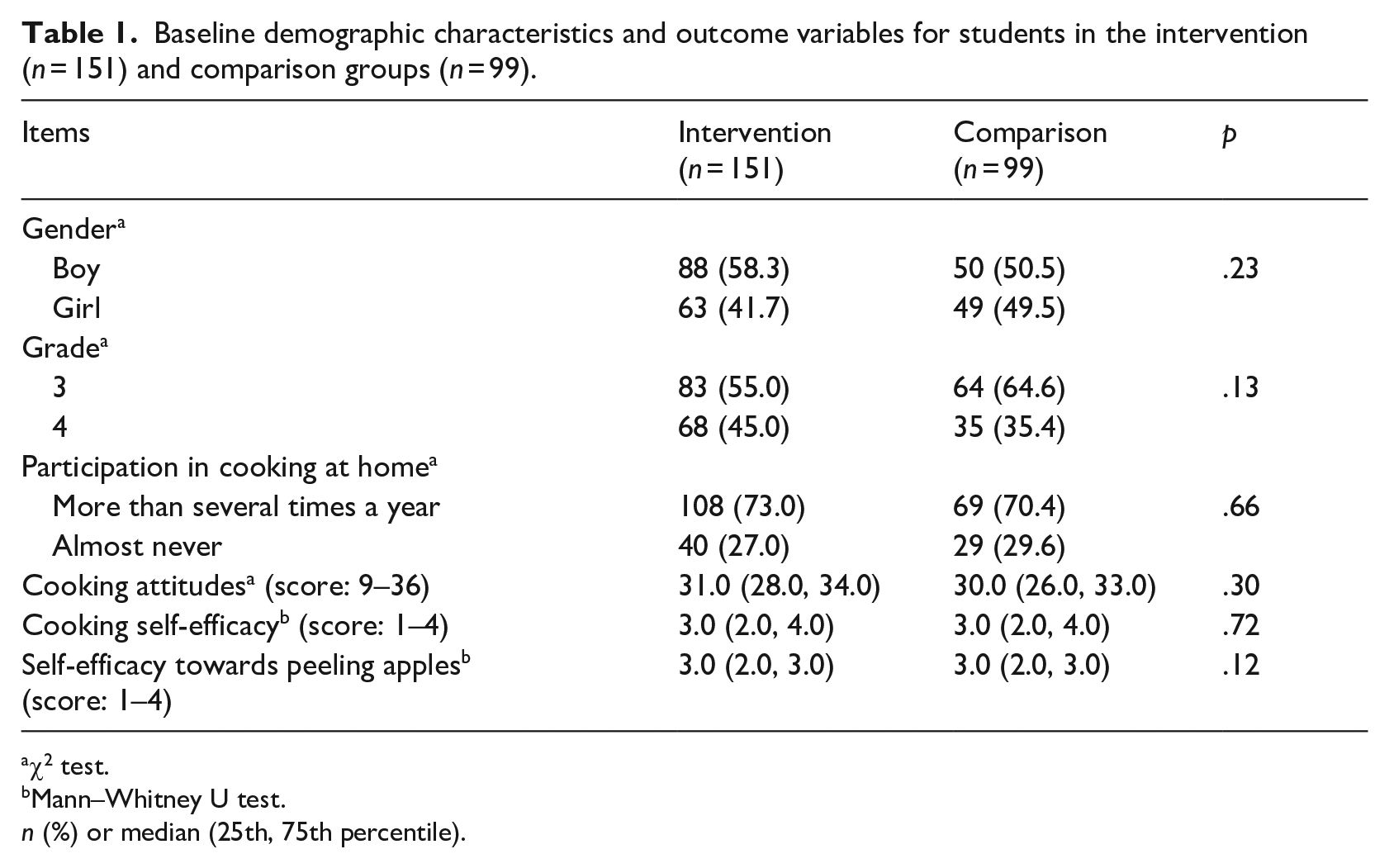
Students in the intervention group who attended all three lessons and completed both pre- and post-questionnaires, as well as students in the comparison group who completed both pre- and post-questionnaires, were included in this analysis. Differences in baseline demographic characteristics (i.e. gender, grade) and participation in cooking at home between the intervention and comparison groups were examined using χ2 tests. Differences in baseline values for cooking attitudes and cooking self-efficacy were examined using Mann–Whitney U tests. No significant differences between students in the intervention and comparison groups were observed.
Next, the potential effects of the cooking programme were examined. Cooking frequency at home variable was classified into two categories: those who ‘almost never’ cooked and those who cooked ‘more than several times a year’, and the differences between the pre- and post-scores were compared using McNemar’s tests in the intervention and comparison groups in order to investigate how many children began participating in cooking at home activities after the programme. Cooking attitudes and self-efficacy (and self-efficacy towards peeling apples) were treated as ordinal variables, and their median values (25th, 75th percentile) were calculated. The pre- and post-scores for these three cooking variables were compared within each group using Wilcoxon signed-rank tests. Differences in pre- to post-scores on the cooking variables between the intervention and comparison groups were investigated using Mann–Whitney U tests. We also performed a subgroup analysis, which included participants in the intervention group who responded that they ‘almost never’ cooked at home in the pre-questionnaire but then responded that they cooked ‘several times a year’ in the post-questionnaire. Wilcoxon signed-rank tests were used to compare the pre- and post-scores for cooking attitudes and self-efficacy.
Process evaluation data were analysed using descriptive statistics, and means and standard deviations were calculated for the longest peel lengths. IBM SPSS Statistics 19.0 for Windows (IBM Japan, Ltd.) was used for all the analyses; the significance level was less than 5 % (analysed using two-tailed tests).
Results
Participants
As shown in Table 1, 88.8% (n = 151) of the intervention group participated in all lessons; 58.3% were boys and 55.0% were in third grade. Analysing each lesson separately, 95.9% (n = 163) of the intervention group participated in the first apple-peeling lesson, 98.2% (n = 167) in the hands-on cooking experience lesson and 95.3% (n = 162) in the second apple-peeling lesson. Some students did not participate in some of the lessons because they were absent on the days the lessons were scheduled (e.g. due to illness). In terms of the comparison group, 69.7% (n = 99) responded to both the pre- and post-questionnaires; 50.5% were boys and 64.6% were in third grade. Table 1 also shows baseline data of participation in cooking at home, cooking attitudes, cooking self-efficacy and self-efficacy towards peeling apples for the intervention and comparison groups; no significant differences were found.
Baseline demographic characteristics and outcome variables for students in the intervention (n = 151) and comparison groups (n = 99).
χ2 test.
Mann–Whitney U test.
n (%) or median (25th, 75th percentile).
Outcome evaluation
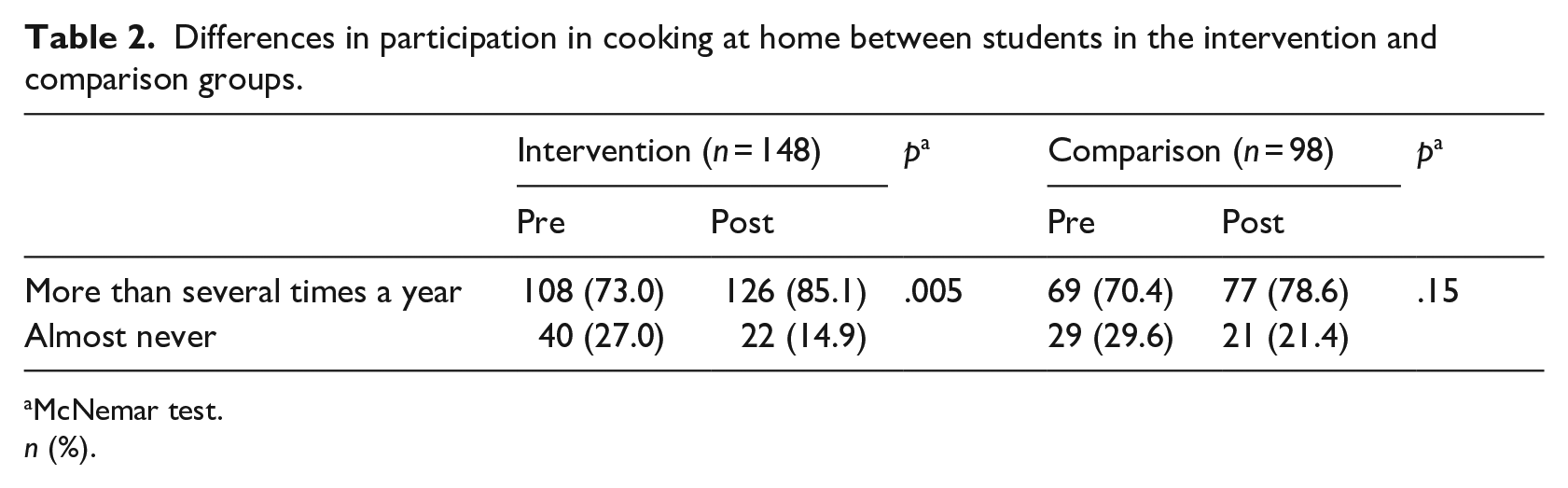
Table 2 shows differences in the participation in cooking at home at pre- and post-programme between the intervention and comparison groups. In the intervention group, the number of children who cooked at home significantly increased from pre- to post-programme (p = .005). There were 40 children who rated that they ‘almost never’ cooked in the pre-questionnaire, but 70.0% (n = 28) of them changed their rates to ‘more than several times a year’ in the post-questionnaire. No significant change in participation in cooking at home was found among students in the comparison group (p = .15).
Differences in participation in cooking at home between students in the intervention and comparison groups.
McNemar test.
n (%).
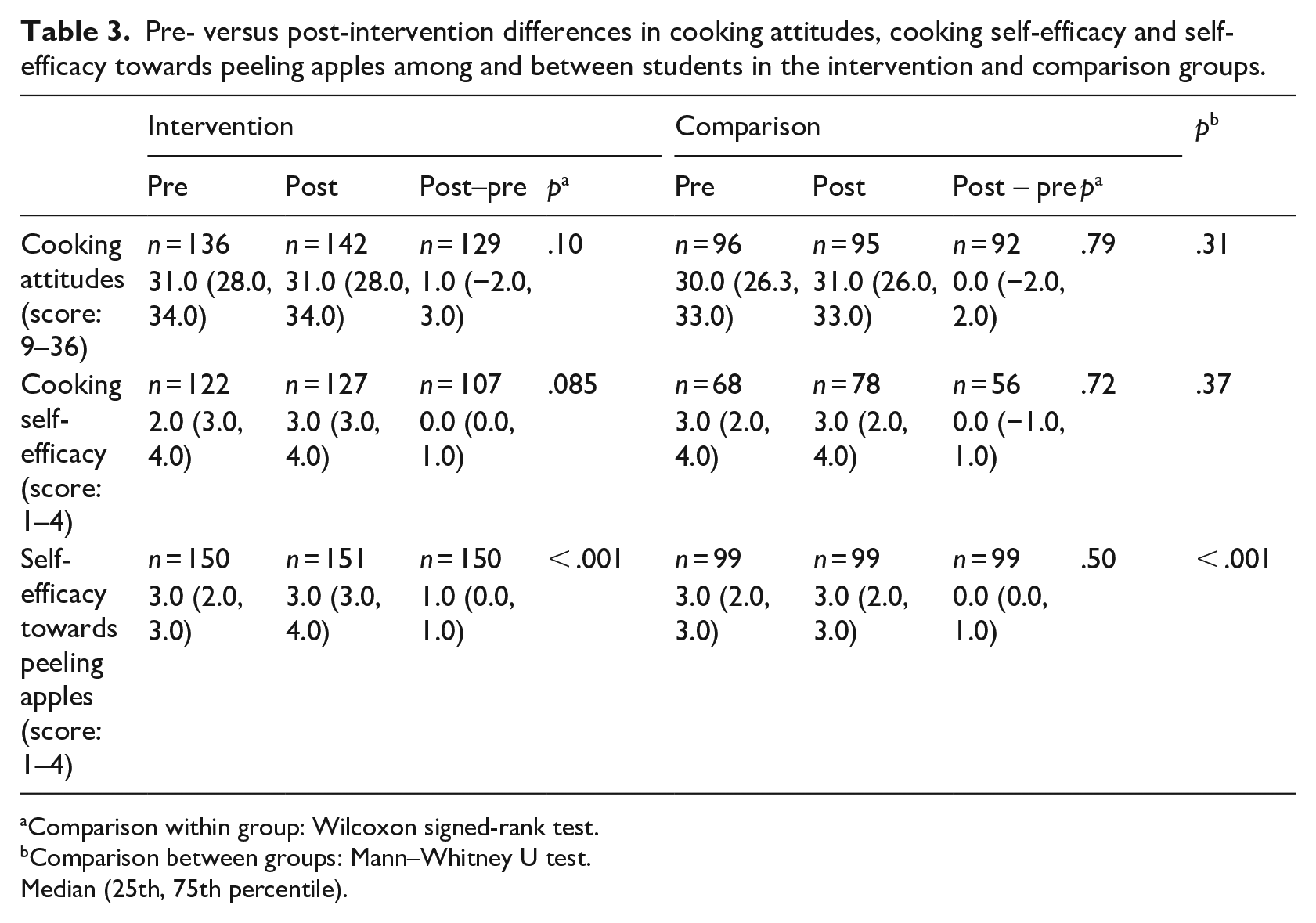
Table 3 shows differences in cooking attitudes and self-efficacy at pre- and post- programme between the intervention and comparison groups. Self-efficacy towards peeling apples significantly improved in the intervention group (p < .001) but did not improve in the comparison group (p = .50). The between-group difference for this variable was also significant (p < .001). In the intervention group, cooking attitudes (p = .10) and self-efficacy (p = .085) were expected to improve, but no significant differences were found in these variables from pre- to post-programme.
Pre- versus post-intervention differences in cooking attitudes, cooking self-efficacy and self-efficacy towards peeling apples among and between students in the intervention and comparison groups.
Comparison within group: Wilcoxon signed-rank test.
Comparison between groups: Mann–Whitney U test.
Median (25th, 75th percentile).
In addition, among the 28 children whose cooking at home participation changed from ‘almost never’ to ‘more than several times a year’, cooking attitudes, cooking self-efficacy and self-efficacy towards peeling apples significantly improved from pre- to post-programme (Table 4). The median score (25th, 75th percentile) on the cooking attitudes variable was 28.0 (24.0, 30.0) on the pre-questionnaire and 30.0 (27.0, 33.0) on the post-questionnaire (p = .002). The cooking self-efficacy score was 2.5 (1.0, 3.0) on the pre-questionnaire and 3.0 (3.0, 4.0) on the post-questionnaire (p = .012). Self-efficacy towards peeling apples score was 2.5 (2.0, 3.0) on the pre-questionnaire and 3.0 (3.0, 4.0) on the post-questionnaire (p = .002).
Pre- versus post-intervention differences in cooking attitudes, cooking self-efficacy and self-efficacy towards peeling apples among students who began cooking at home (n = 28).

Wilcoxon signed-rank test.
Median (25th, 75th percentile).
Process evaluation
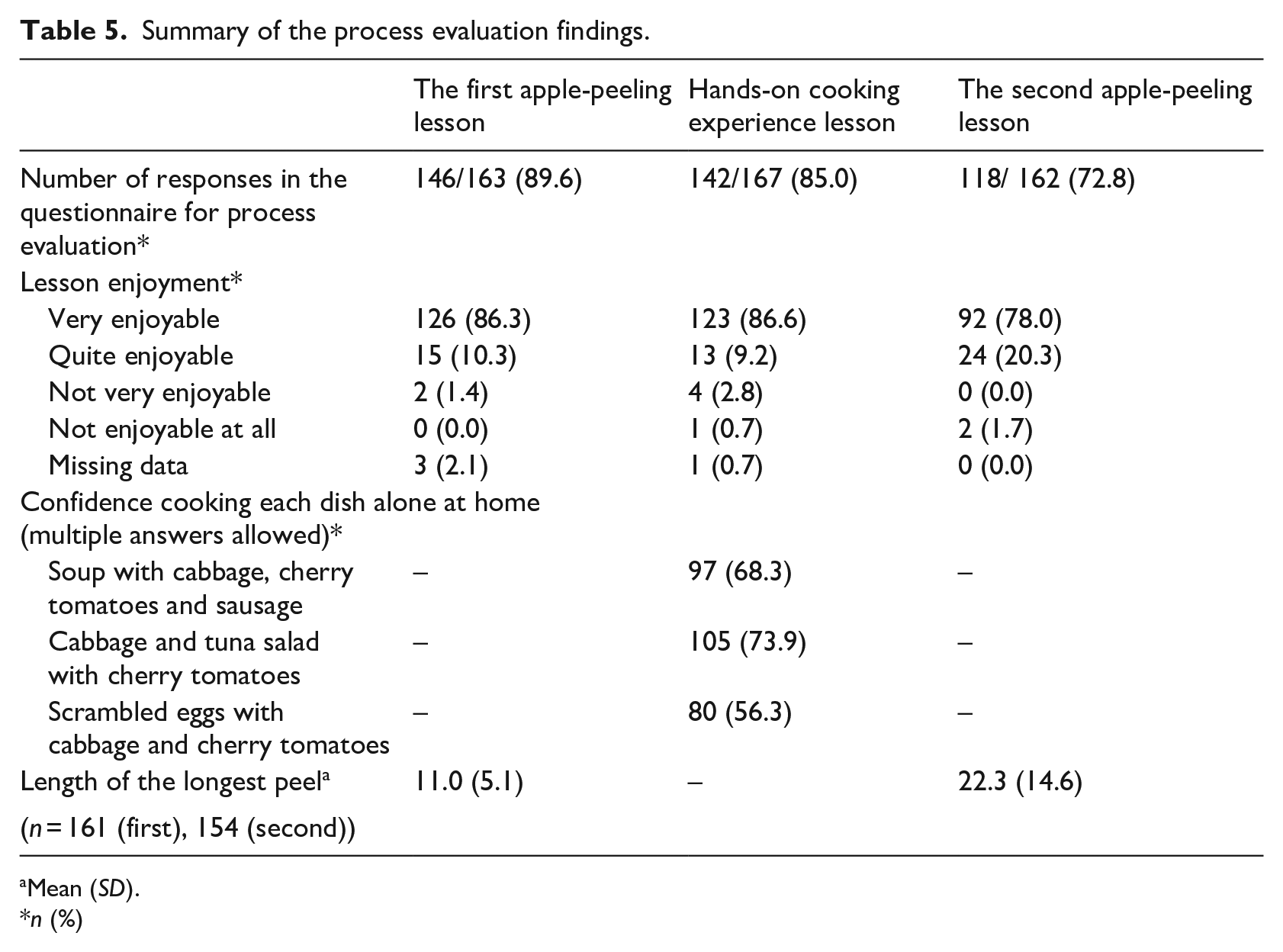
As shown in Table 5, the majority of students returned their questionnaires for all three cooking lessons. More than 95% of children indicated that each of the three lessons was ‘very enjoyable’ or ‘quite enjoyable’. Regarding the hands-on cooking experience lesson, children who thought they could cook soup with cabbage, cherry tomato and sausage at home was 68.3% (n = 97); cabbage and tuna salad with cherry tomato was 73.9% (n = 105); and scrambled eggs with cabbage and cherry tomato was 56.3% (n = 80). In the apple-peeling lessons, the mean (SD) length of students’ longest peels doubled when comparing results from the first to the second apple-peeling lesson (first: 11.0 (5.1) cm; second: 22.3 (14.6) cm).
Summary of the process evaluation findings.
Mean (SD).
n (%)
Discussion
Results indicated that the number of children in the intervention group who responded that they ‘almost never’ cooked at home significantly decreased on the post-questionnaire, whereas no change was observed for the comparison group. Furthermore, those who began cooking at home after the cooking programme showed a significant increase in cooking attitudes, cooking self-efficacy and self-efficacy towards peeling apples. Importantly, almost all of the children enjoyed this new cooking programme that focused on a culturally valued cooking skill.
Based on these findings, we believe one of the reasons for an increased number of children participating in cooking activities at home was that this programme encouraged increased cooking self-efficacy through culturally relevant, hands-on experiences. In previous studies, involvement in cooking programmes helped increase children’s cooking self-efficacy (Jarpe-Ratner et al., 2016; Liquori et al., 1998; Overcash et al., 2018). In the present study, apple-peeling lessons took place twice and the length of children’s apple peels increased after the second lesson. In addition, for the hands-on cooking experience lesson, many children indicated greater confidence in being able to independently cook a simple meal at home. Thus, we considered that children’s feelings of improvement in relation to their own cooking skills helped facilitate increased cooking self-efficacy, which may have led to an increased willingness to partake in cooking activities at home. This study is the first to report how children’s improvement in cooking self-efficacy may lead to an increase in cooking behaviour at home.
Cooking attitudes also improved among children in the intervention group, and many children responded that the lessons were very enjoyable. Previous studies have reported that hands-on activities, such as cooking and gardening result in positive evaluations from children (Dougherty, 2007; Heim et al., 2009). For example, van der Horst et al. (2014) reported that children who prepared lunch with the assistance of a parent reported positive feelings after the cooking experience. In addition, our finding that children who began cooking at home following the cooking programme showed a significant improvement in cooking attitudes is consistent with other research, observing that cooking enjoyment is positively correlated with cooking skills among adults (Hartmann et al., 2013) and cooking skills are needed in order to effectively cook at home (Hartmann et al., 2013; Jones et al., 2014).
Previous studies have found that children’s pleasure is enhanced following a cooking experience, resulting in increased vegetable intake (van der Horst et al., 2014). Additional research suggests that cooking experiences may have a positive effect on fruit and vegetable intake and preferences, as well as the willingness to try new foods (Allirot et al., 2016; Caraher et al., 2013; Cunningham-Sabo and Lohse, 2013; Ensaff et al., 2016; Jarpe-Ratner et al., 2016; Liquori et al., 1998; Overcash et al., 2018; Zahr and Sibeko, 2017). Children’s cooking enjoyment may also increase eating enjoyment, which is an important issue in mitigating picky eating among children (van der Horst, 2012).
Finally, the content of this newly developed cooking programme would be easy to reproduce at home. The ingredients chosen for the hands-on cooking experience lesson are common in Japanese homes, inexpensive and easy to prepare. Recent research indicates that parents believe that children’s participation in cooking is important for the development of cooking skills; however, there are barriers to these activities in terms of time scarcity and safety concerns (Olfert et al., 2019). Given that the recipes prepared for this programme were designed to be simple and safe, we believe the programme could promote Japanese children’s participation in cooking activities at home without extra cost or concern. Collaboration between school and home is important in the promotion of shokuiku (Ministry of Education, Culture, Sports, Science and Technology, 2019). This newly developed programme may help promote shokuiku in such a way that school and home work together.
Limitations
Several study limitations should be noted. First, the sample was not randomly selected, as both of the schools used in this study were chosen by the researchers. However, the pre-questionnaire did not reveal any baseline differences between the two schools in terms of demographics and participation in cooking at home, cooking attitudes and self-efficacy. Second, the impact of the different types of education that each school provided during the programme was not taken into consideration. Thus, future investigations should consider school curriculum differences to discern their possible effects. Third, the possible long-term effects of this programme were not evaluated. Future research should determine whether any increases in children’s cooking at home activities persist beyond the programme period. Finally, the participants were third and fourth grade students from two elementary schools in Tokyo. Our findings may not be generalisable to other grades and regions/cultures. Future studies should be conducted with a diverse set of samples to determine the feasibility and effectiveness of the programme in different settings.
Conclusion
The number of children participating in cooking at home activities increased throughout this cooking programme. Children who almost never cooked at home prior to the programme reported beginning to cook more at home afterwards and improved self-efficacy and attitudes towards cooking. Implementing a culturally relevant cooking programme in school, which focuses on improving children’s self-efficacy and attitudes towards cooking, may encourage children to participate in cooking activities at home.
Footnotes
Acknowledgements
We thank the Aomori Apple Council Incorporated Association for donating apples for use in this study, and the school dietitian, teachers, children and parents for their participation in the research.
Funding
The author(s) received no financial support for the research, authorship, and/or publication of this article.
