



Abstract
Purpose:
To evaluate the effectiveness of a practical food skills and nutrition education workshop and investigate the attitudes towards, and knowledge of, nutrition among young amateur Gaelic Athletic Association (GAA) players.
Design and method:
A quantitative study using a pre-/post-intervention study design assessed nutritional knowledge, food preparation skills, cooking skills confidence, attitudes towards nutrition, and future diet and food practices among GAA players (n = 336) across the Island of Ireland who took part in a practical food skills and nutrition education workshop.
Findings:
The workshop was effective in improving culinary knowledge, skills and confidence. Post-session, in comparison with men, women were ‘definitely’ more confident in preparing the dish they cooked during the session (p ⩽ .05) and in using a cooker to prepare a meal or snack (p ⩽ .05). While nutrition knowledge improved for many participants, women knew ‘a lot’ more about the quantity of each type of food they needed to consume (p = .013) and portion sizes (p = .003). Most participants indicated that in the future, they were likely to try out other recipes (94%, n = 310), more likely to prepare a meal themselves (93%, n = 307) and make healthier food choices (92%, n = 304).
Originality:
Results indicate the benefits of an integrated nutrition education and food skills workshop in improving players’ knowledge of nutrition and increasing confidence in relation to food preparation and cooking. As gender differences were found across a range of key knowledge and confidence outcomes, future food and nutrition education programmes may need to be tailored to take account of this.
Introduction
The Gaelic Athletic Association (GAA) takes pride in being Ireland’s largest sporting organisation with more than 1 million members internationally (GAA, 2021). Gaelic athletics (usually referred to as ‘games’) encompass the sports of football, hurling and court handball and are played at local club levels by children and adolescents, and by senior players at both club and inter-county levels (Martin et al., 2017). Although the amateur ethos of the GAA has been one of the pillars on which it has flourished, the desire for achievement of enhanced performance remains increasingly evident. Gaelic games are characterised by high-intensity performance, similar to that of elite professional athletes (Beasley, 2015), with senior players who participate in inter-county competitions particularly regarded as being elite (Martin et al., 2017).
Adequate nutrition and food skills in young athletes are vital not only for optimal athletic performance but more importantly for their growth, development and overall health as they move through an important physiological stage of life. Nutritional adequacy of an athlete’s diet is a well-established important factor in achieving success in sports in providing fuel for strength, conditioning and recovery (Cassidy et al., 2018; Daries, 2012). Conversely, nutrient deficiencies resulting from an imbalance between dietary energy intake and energy expenditure may compromise physical performance (Ó Catháin et al., 2020; Mountjoy et al., 2014; O’Brien et al., 2019). Despite the role of appropriate nutrition in sporting performance being well documented (Beck et al., 2015; Thomas et al., 2016), investigation into the nutrition knowledge (NK), food skills and dietary habits of young athletes in Ireland is limited. Research elsewhere highlights that despite having a positive attitude towards nutrition and health and an increasing desire for optimum sports performance, unhealthy dietary practices are evident among athletes (Grete et al., 2011; Spronk et al., 2015). Furthermore, studies suggest that many younger athletes exercise poor dietary behaviours due to lack of NK and poor cooking skills coupled with demanding sports schedules (Heaney et al., 2008; Rosenbloom et al., 2002). Previous nutrition education intervention studies exhibit effectiveness in increasing NK in athletes, improving dietary intakes and increasing self-efficacy in preparing food and making healthy food choices (Cholewa et al., 2015; Ellis et al., 2018; Nascimento et al., 2016).
Sport Ireland Institute is the body charged by the Irish Government to deliver nutritional guidelines and dietary advice to all National Governing Bodies of Sport in Ireland, including the GAA; however, adoption of these guidelines by various sports organisations is voluntary. In Ireland, while some recent work has focused on amateur rugby (Walsh et al., 2011) and the importance of nutrition for ‘elite’ male GAA players (Beasley, 2015), to date there is a dearth of research that assesses NK and cooking skills among amateur GAA players. The research question posed in this study was: what is the impact of a food skills and nutrition education workshop on NK, cooking skill efficacy, food literacy and willingness to make positive dietary changes among young GAA players? To our knowledge, this is the first time that food skills among young GAA players have been reported. Therefore, this study is innovative in design as it aimed to, first, evaluate the effectiveness of a food skills and nutrition education workshop delivered to young amateur GAA players, which involved a hands-on food preparation session. Second, it sought to determine their cooking confidence in preparing meals from simple ingredients and following a basic recipe from a sports nutrition/recipe booklet Recipes for Success (RFS) developed by the research team: https://www.gaa.ie/api/pdfs/image/upload/d2uyp6y6q4nibzu4kxmm.pdf. Third, it aimed to investigate the attitudes towards, and knowledge of, nutrition among young amateur GAA players.
Methods
To achieve the study aims outlined above, it was deemed necessary to measure the NK of young GAA players, their attitudes towards nutrition and dietary practices. We also sought to determine players’ cooking confidence in preparing meals from basic ingredients and following a basic recipe from the RFS booklet during the workshop. This study used a purposive sample of GAA players (n = 336) registered in established GAA Healthy Clubs across the Island of Ireland (IOI). A Healthy Club is a club that is registered with the GAA Healthy Clubs project, an initiative which was established in 2013. The project aims to facilitate GAA clubs on the IOI to support holistic health of their members by providing opportunities to develop their physical, mental, emotional, social and psychological health (GAA, 2020). Player characteristics are outlined in Table 1. It is apparent that many of the players play across different grades and age groups, competing at both club and county levels.
Participant characteristics.

Six invalid responses for jurisdiction, 11 invalid responses for club or county level and 13 invalid responses for age grade.
Club – Social GAA players.
County – Elite GAA players.
Adult refers to players over 18 years.
Underage refers to players under 18 years. Minor refers to players aged over 13 and under 17 years.
Percentage of overall sample.
The study design encompassed three phases, the first of which was a planning phase and involved the project collaborators (St. Angela’s College, Sligo and the GAA) participating in a number of pre-study planning meetings. In addition, in this phase, the researchers designed and published the RFS booklet targeting GAA players. This booklet set out nutritional guidelines for optimal sports performance and daily menu plans along with healthy easy-to-prepare recipes.
Phase 2 of the study design was the pilot phase which was executed with Healthy Clubs (n = 8) on the IOI during the period October to February 2017. The aim of the pilot was to evaluate the usefulness of the booklet, establish the most appropriate format for the workshops, and ascertain the general level of participant’s NK and culinary skills. Based on feedback from these sessions, it was decided to precede each workshop with an interactive sports nutrition information session developed by the research team and delivered by Home Economics (HE) teachers. The design and approach to the workshop were informed by Kolb’s (1984) experiential-based learning cycle. Nelson et al. (2013) argue that culinary skills education provides unique opportunity for experiential learning, which can contribute to improved future healthy food behaviours. In this study, participants were involved in a food skills element which consolidated sports NK delivered during the pre-session workshop.
The third phase encompassed the implementation of the workshops that took place between May and January 2018. This commenced with the GAA’s Community & Health Department liaising with GAA Healthy Clubs (n = 24) across the IOI to recruit players (n = 336; 89 women and 247 men) to participate in a 3-hour workshop. Teachers were recruited through the Association for HE Teachers (ATHE) in Ireland to deliver the workshops. HE teachers voluntarily participated in the project through the facilitation of the workshops that were held in a school setting at weekends or evenings. The RFS booklet was employed as a key resource in the workshops. All teachers took part in a pre-workshop briefing session that ensured a standardised approach was employed in the delivery of the workshops. Only the food skills and nutrition education workshop phase of the study (phase 3) will be reported here.
This phase used a pre- and post-intervention study design consisting of an anonymised pre- and post-questionnaire which participants across the IOI (n = 336) completed before and immediately after the 3-hour workshop. The study protocol received ethical approval from the National University of Ireland, Galway Research and Ethics Committee (REF:16/MAY/16). All participants and parents/guardians were provided with an information sheet on the study, along with consent forms prior to participating in the session. Participants under 18 years of age had parental/guardian participation consent, and informed consent was obtained from all participants aged over 18 years. All participants were informed that participation was voluntary and that they could withdraw at any time point, up to data analysis, without consequence.
Participants completed a pre-questionnaire consisting of 15 questions and a post-questionnaire comprising 8 questions. Both questionnaires were specifically designed for the study considering previously published literature and the study objectives. The pre-questionnaire gathered general background demographic data on players pertaining to age, gender, club location, team type and whether they had studied HE at school. The remaining four sections of the questionnaire focused on specific areas of NK, food preparation skills, cooking confidence and attitudes towards nutrition, measured using both open- and closed-type questions as well as Likert-type scales.
Statistical analyses were conducted using SPSS Version 27.0 (Armonk, NY: IBM Corp.). Participant characteristics were summarised using descriptive statistics (means and proportions). Differences in sample characteristics and NK, food skills, cooking confidence and attitudes towards nutrition were tested by Pearson’s chi-square tests. For significant chi-square tests, Z-tests were calculated for column proportions for each row in the chi-square contingency table and Bonferroni-corrected for multiple comparisons. Spearman’s correlation coefficients were used to test correlations between ordinal variables. Frequencies and proportions are shown for valid responses only. Within results, each similar subscript letter denotes a subset of each category whose column proportions do not differ significantly from each other at the p ⩽ .05 level. Different subscript letters indicate statistically significant differences at the p ⩽ .05 level. Significance was set at an alpha level of .05 for all tests.
Results
Food preparation and cooking confidence
To gain insight into the players’ food preparation skills, participants were surveyed on their responsibility for food preparation. Fifty-seven percent (n = 139) of male participants indicated that they were ‘always’ responsible for preparing their own breakfast and 60% (n = 146) for preparing snacks, while 70% (n = 61) and 71% (n = 62) of female participants indicated the same, respectively.
Pre-session, participants were also surveyed on their cooking confidence. Over 32% (n = 78) of male participants expressed a lack of confidence when cooking from basic ingredients, while only 16% (n = 14) of female participants indicated the same. Over 26% (n = 63) of male participants indicated they lacked confidence while cooking using a recipe book and only 10% (n = 9) of female participants indicated the same. Thus, a clear gender divide was evident in terms of cooking confidence.
The self-reported confidence in cooking from basic ingredients was statistically significantly associated with whether or not a respondent studied HE (χ2 = 32.9, 4df, p < .001), with higher confidence reported by those who studied the subject. When compared with participants who did not study HE, a significantly greater proportion of those who did were also ‘extremely confident’ at following a recipe from a book/website (χ2 = 12.6, 4df, p = .014). Levels of confidence were associated with each other (r2 = .563; p < .001), indicating that those who have higher confidence in following the recipe are also more confident in cooking from basic ingredients and vice versa. Higher confidence in cooking from basic ingredients was also associated with whether a respondent was responsible for cooking her or his own dinner and snacks (respective r2 = −.161 and −.136) and had a more adequate diet (r2 = .135).
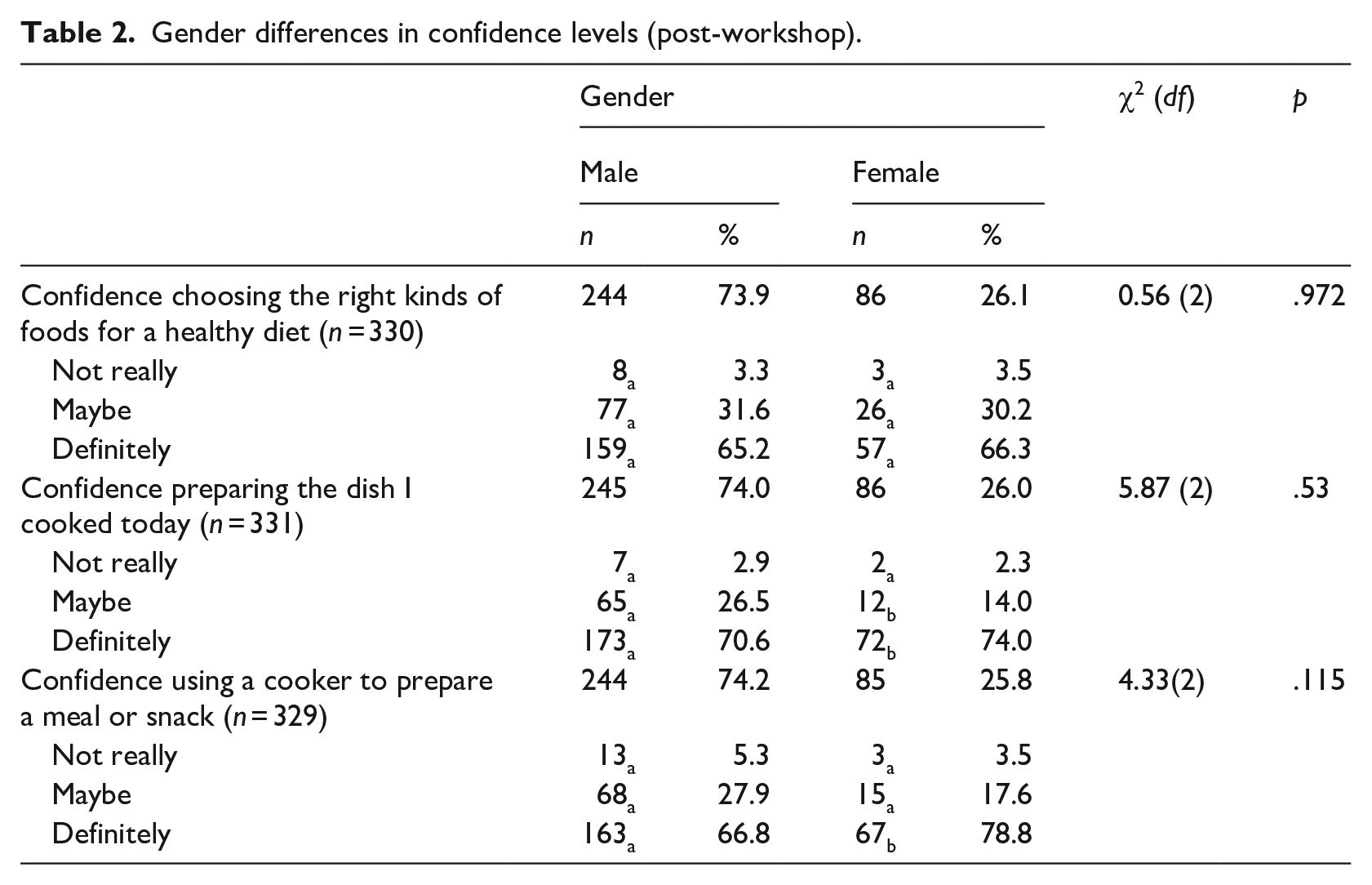
Post-session results indicated that 65% (n = 215) of participants were ‘definitely’ more confident choosing the right kinds of foods for a healthy diet, while 74% (n = 244) of participants indicated they were ‘definitely’ more confident preparing the dish they cooked during the session. The majority (70%, n = 231) of participants noted they were ‘definitely’ more confident using a cooker to prepare a meal or snack, with only 4.9% (n = 16) stating ‘not really’. Overall, more than 85% (n = 280) of participants indicated an increase in confidence after the workshop.
Table 2 presents gender differences in confidence related to cooking skills, choosing foods for a healthy diet and using a cooker at the post-intervention time point. Overall, there were no statistically significant differences observed in confidence related to cooking skills between women and men. However, after additional testing (Z-tests and Bonferroni corrections), we observed that when compared with men, a significantly greater proportion of women reported being ‘definitely’ confident in preparing the dish they cooked that day (74.0% vs 70.6%; p ⩽ 0.05) and in using a cooker to prepare a meal or snack (78.8% vs 66.8%; p ⩽ .05).
Gender differences in confidence levels (post-workshop).
Nutrition knowledge
In relation to NK, the majority of participants answered correctly questions on the body’s main source of energy and the recommended number of servings for fruit and vegetables per day, more than 86% (n = 284) of participants to both questions. However, less than 65% (n = 214) of participants got the remaining questions on nutrition correct. A lower level of NK was evident particularly regarding questions on vitamins, minerals and energy obtained from macronutrients, and for some questions, women performed better than men.
At the pre-intervention time point, gender differences were evident in NK. When compared with men, a significantly greater proportion of women responded correctly to the questions ‘Sugar, starch and fibre are examples of what macronutrient?’ (χ2 = 9.83, 3df, p = .020) and ‘Which of the following vitamins is needed for the absorption of Calcium?’ (χ2 = 14.5, 4df, p = .006). This points to a higher level of NK among female participants. Results also indicate that players who have higher self-reported knowledge of nutrition are significantly more likely to be more confident in cooking from basic ingredients (r2 = −.210, p < .001) and more confident in following a recipe from a book/website (r2 = −.274, p < .001).
Post-session, more than 60% (n = 198) of participants indicated that following completion of the workshop, their knowledge had improved on: foods which contribute to a healthy diet, the recommended servings for each food type and how to prepare a snack or meal for themselves. More than 60% (n = 198) of players also reported that they learnt a lot about what types of food they should eat before and after training and on the day of a match. Half (50%, n = 165) of the participants indicated they knew more about key nutrients required for a healthy diet after the session. There were also positive and significant correlations between having an interest in nutrition and knowing more about key nutrients required for a healthy diet (r2 = −.119, p = .032) and knowing more about the quantity and type of food required for optimal sports performance (r2 = −.131, p = .018).
Almost all players, 92% (n = 300), correctly answered a question on complex carbohydrates, while 66% (n = 203) correctly answered a question on protein. These results present considerable improvement in the pre-session data reported, where only 55% (n = 181) of participants correctly answered a question on complex carbohydrates and 52% (n = 172) correctly answered a question on protein. Furthermore, there were positive and significant correlations between own self-rated NK pre-session and self-reported NK post-workshop (r2 = −.160, p = .004).
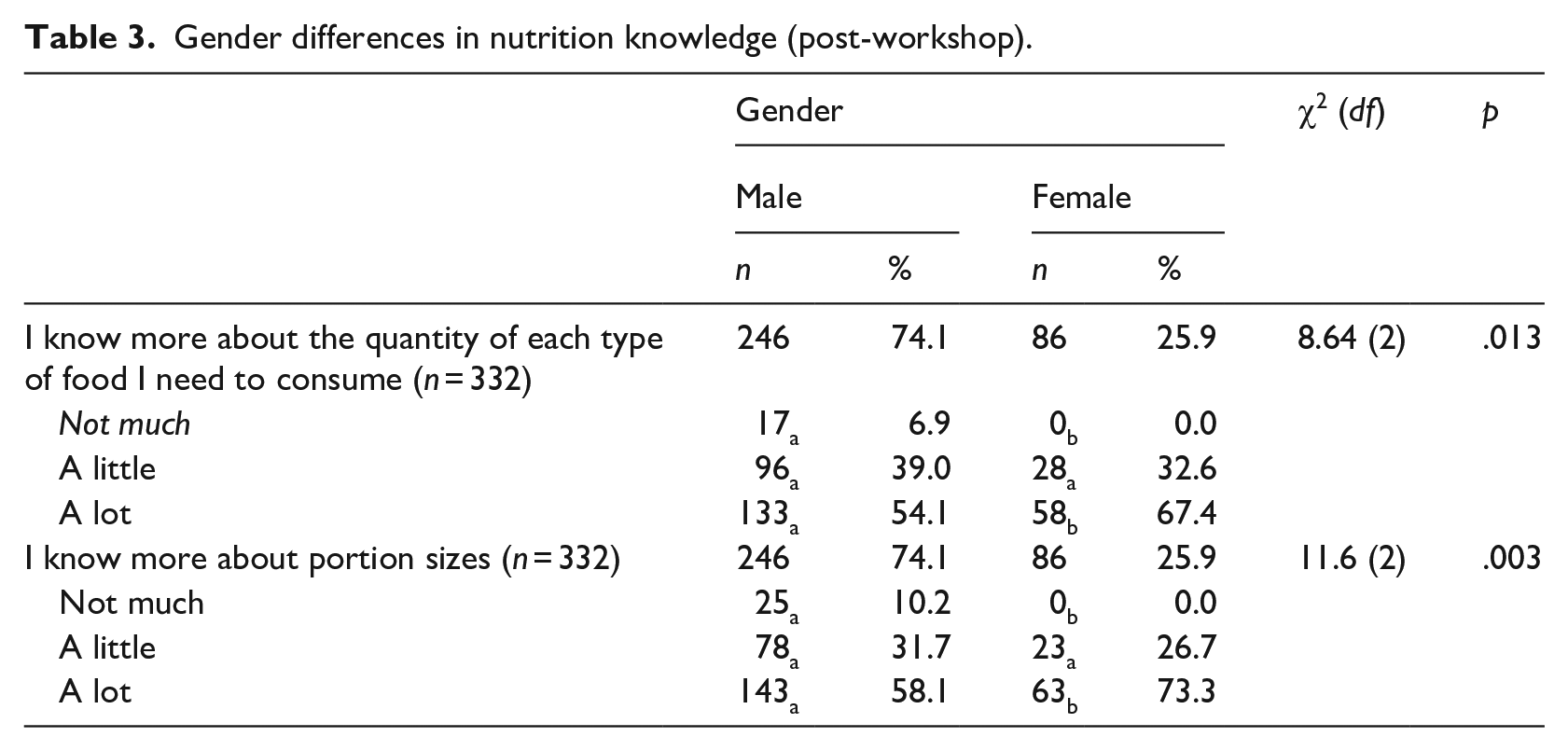
Similar to pre-session results regarding gender difference in NK, at the post-intervention time point a significantly greater proportion of women knew ‘a lot’ more about the quantity of each type of food they needed to consume (χ2 = 8.64, 2df, p = .013) and portion sizes when compared with men (χ2 = 11.6, 2df, p = .003). These results are presented in Table 3. In relation to HE, a significantly greater proportion of participants who studied the subject were more likely to know ‘a lot’ more about the quantity of each type of food they need to consume (χ2 = 9.55, 2df, p = .008). In addition, a significantly greater proportion of those who did not study HE were more likely to say they did not know much about portion sizes (χ2 = 7.43, 2df, p = .024).
Gender differences in nutrition knowledge (post-workshop).
Attitudes towards nutrition
Participants indicated a positive view towards nutrition, with over half (56%, n = 185) indicating interest or extreme interest in nutrition and almost 96% (n = 317) expressing at least some degree of interest in nutrition. Only 5.5% (n = 18) of the participants indicated they had poor knowledge on nutrition, with the same number of people indicating they had very strong knowledge on nutrition.
Overall, post-session, 94% (n = 310) of participants indicated they were likely to try out other recipes, 92% (n = 304) indicated that what they learned would influence them to make healthier food choices in the future and 93% (n = 307) indicated that what they learned would make them more likely to prepare a meal for themselves. These results highlight the positive impact of the RFS workshop on participants’ attitudes. A slightly higher proportion of female participants reported a more positive attitude to nutrition and cooking post-session compared with male participants. At the post-intervention time point, there were no statistically significant differences observed between men and women in relation to future food practices and food choices.
Nutrition education requirements
More than 60% (n = 198) of players reported that they had sought nutrition advice to enhance their performance. The main sources of nutrition advice were the Internet (32%, n = 106), a GAA coach/trainer (26%, n = 86), family member/parents (17%, n = 56) and a nutritionist (15.2%, n = 49). Although more than 38% (n = 125) of participants believed that their diet was adequate (28%, n = 92) or extremely adequate (10%, n = 33) in meeting their GAA needs, 88% (n = 290) of participants still indicated they would benefit from nutrition advice on sporting performance. Areas that players wished to seek advice on were choosing suitable snacks (53%, n = 179), match day advice (49%, n = 166), advice on getting fitter (46%, n = 156), recipes and cooking skills (44%, n = 147), building muscle mass (40%, n = 133) and advice on losing weight (25%, n = 84).
Whether or not a respondent felt that he or she would benefit from nutrition advice on sporting performance is weakly but statistically significantly associated with age (r2 = −.134, p = .029), with older participants indicating they would benefit. Players who had sought nutrition advice before also felt the need for more advice (r2 = .303). In addition, participants with higher self-reported NK and higher interest in nutrition also felt they would benefit from more nutrition advice (respective r2 = −.139 and −.194). This finding suggests knowledge and interest in nutrition reinforce more interest and the need for greater NK. Those playing at a higher level were more likely to feel that they would benefit from nutrition advice.
Additional findings related to cooking skills confidence (see Online Supplemental Table 1) and NK (see Online Supplemental Tables 2–7).
Discussion
Study findings indicate that initially, while there was a high level of interest in nutrition among all the players, actual levels of NK varied, with significant differences apparent between men and women. Following the RFS workshop, levels of NK had increased alongside knowledge regarding best nutrition practice during training and pre- and post-match.
Good nutrition is vital for all athletes to perform at their best and can help improve skill and concentration, delay fatigue and prevent injury and illness (Irish Nutrition and Dietetic Institute, 2018; Thomas et al., 2016). It has been noted that as the fundamentals of sport nutrition derive from sensible healthy eating approaches, there ought not to be a divergence between eating for health and eating for sporting performance (Gandy, 2014; Sport Ireland Institute and National Dairy Council, 2019). For younger athletes, good nutrition warrants special consideration, due to the additional demands of physical growth alongside daily training and competition (Desbrow et al., 2014).
Adequate NK plays a critical role in not only maximising sporting performance for athletes but also contributing to their growth and overall health (Bean, 2009; Benardot, 2011). NK has been positively correlated with good eating behaviours. For those engaged in sport, several studies (Alaunyte et al., 2015; Montecalbo and Cardenas, 2015; Ozdoğan and Ozcelik, 2011) report that athletes who have good NK coupled with an understanding of the importance of a balanced diet are considered to be more successful in sport. Conversely, athletes with poor NK are generally considered to also have poorer eating habits, which may impair physical performance when competing (Grete et al., 2011). The findings of this study point to a fair level of NK among all players at baseline, with a mean overall correct score of 61% (n = 201) returned for questions that assessed NK. The implication of this score is a moot point, as some variation exists as to what constitutes ‘adequate’ or indeed ‘good’ in NK tests. In comparison with other studies on adolescent athletes, this score for NK is higher than that recorded for high school soccer players (Manore et al., 2017) and school rugby players (Walsh et al., 2011). Notably, in a US study of collegiate athletes (Torres-McGehee et al., 2012), adequate NK was defined as achieving an overall score of 75%, and if that metric is applied to our results overall NK would be deemed inadequate for the sample as a whole. However, when scores are separated by gender, women (scoring 71%) come close to ‘adequate’, while scores for men, which were considerably lower at 59%, fall well below what might be considered adequate. Our findings are consistent with those reported elsewhere, with better knowledge of nutrition among female respondents overall noted as a feature for high school athletes (Spendlove et al., 2011; Alaunyte et al., 2015). Young men tend to have poorer NK on how to maximise sporting performance through good dietary practices (Rosenbloom et al., 2002; Walsh et al., 2011); however, as US male college-age athletes get older, they tend to exhibit higher NK than their female counterparts (Ali et al., 2015; Montecalbo and Cardenas, 2015; Ozdoğan and Ozcelik, 2011). This could be explained by the more competitive nature of the male collegiate sporting environment compared with the female environment (Niederle and Vesterlund, 2011) wherein there is likely to be a greater emphasis on strategies to enhance sporting performance, including nutrition. It is notable that for both male and female participants in this study, the percentage of correct answers was highest for those questions relating to energy sources and recommended intakes for fruit and vegetables. Elsewhere, knowledge among athletes of the role of carbohydrates in energy production is consistently reported as good (Ozdoğan and Ozcelik, 2011; Walsh et al., 2011).
The extent to which NK is translated into nutrition practice in the planning and preparation of meals by athletes should be considered. Previous research indicates that in seeking to optimise their performance, many athletes failed to maximise their nutrition practices, and this was often due to inadequate practical skills in selecting appropriate foods and preparing meals (Lanham-New et al., 2011; Thomas et al., 2016). Similar to the finding regarding NK, this study found that responsibility for their own meal preparation was higher among female than male athletes, which mirrors the findings of a recent all-Ireland survey that identified men and young adults as having the lowest level of cooking and food skills usage, along with possessing the lowest confidence in preparing meals (Safefood, 2016).
In this study, there was a clear gender divide in levels of confidence concerning cooking. Prior to workshop participation, almost one-third of men reported a lack of confidence in preparing and cooking dishes from basic ingredients, while this was an issue for less than a sixth of women. Notably, pre-workshop confidence levels were linked to the player having studied HE in school. Previous research has found studying HE to be associated with higher levels of food knowledge among young people (Worsley et al., 2015), as well as the development of confidence in choosing, preparing and cooking food (Caraher et al., 2010; McCloat and Caraher, 2016, 2020). Indeed, some authors (Lichtenstein and Ludwig, 2010; Vilesis, 2008) have suggested that teaching young people food skills through the medium of HE may be a means to address chronic disease.
In this study, consolidation of learning took place during the workshop in which the pre-session nutritional principles were applied to food preparation practices in an integrated manner (Kolb, 1984), potentially informing future practice (Nelson et al., 2013). Following the workshop, there was an increase in reported levels of confidence among participants regarding knowing which foods to choose for a healthy diet, cooking the dish they prepared during the session and using a cooker to prepare a snack or a meal. These results illustrate how the culinary skills workshop combined with nutrition education was effective in providing an opportunity for experiential-based learning, which Nelson et al. (2013) contend is an important dimension in improving healthy food behaviour. Indeed, research has pointed to NK alone being insufficient to enable individuals to exercise control over their food choice and diet, and refers to skills such as meal planning, food purchasing and cooking competency as prerequisites to translate NK into practice (Lavelle et al., 2016; McCloat and Caraher, 2016, 2020; Nelson et al., 2013; Safefood, 2014).
The importance of establishing good food preparation practices among young athletes through nutrition education programmes has been highlighted elsewhere (Burkhart and Coad, 2010; Manore et al., 2017; Torres-McGehee et al., 2012). Participation in meal preparation and cooking has been associated with better eating behaviours among adolescents generally (Berge et al., 2016; Utter et al., 2016) and has the potential to have a lasting impact on diet quality into adulthood (Utter et al., 2018). Following the food skills and nutrition education workshop, the post-session questionnaire indicated that half of the participants reported having better practical knowledge regarding how to translate nutrition guidelines into their dietary choices and practices, including how to prepare a meal or snack for themselves, and a higher proportion noted that the information gleaned during the session would be beneficial to their training and pre-match meal planning and preparation. Of note, knowledge scores among players had also improved post-session. This suggests that employing a practical, experiential-based approach which married NK and food skills utilising a tailored booklet was an effective starting point in addressing the knowledge and skills gaps among Gaelic players. In other studies, using collegiate athletes, similar changes were noted following a food skills and nutrition education workshop (Abood et al., 2004; Ellis et al., 2018).
The findings also indicate that despite being amateur athletes, the enhancement of sporting performance was a concern for a large proportion of the players, and more than half had actively sought nutrition advice in this regard. Interestingly, the Internet was the most prominent source for nutrition and performance information, with almost one-third of participants citing it as a source, a figure which is considerably higher than that reported elsewhere for adolescent athletes (Manore et al., 2017) and collegiate athletes (Hoogenboom et al., 2009). Similar to previous research (Grete et al., 2011; Walsh et al., 2011), the coach/trainer was also indicated as a key source for information. Notably, nutritionists were the least cited source by the players in this study. Reliance on untrained coaches for nutrition information has been highlighted previously as a concern (Couture et al., 2015; Zinn et al., 2006). The Internet was cited as the primary source of information by the players in this study, which is also concerning given the unreliable nature of information available on the Internet and perhaps warrants further investigation.
As discussed at the outset, despite being ‘amateur’ in definition, the approach, practices and training regimes of Gaelic players who compete at senior inter-county level are like those of elite athletes in other sports (Beasley, 2015; Martin et al., 2017). Research internationally has found high levels of interest in nutrition among elite athletes (Rosenbloom et al., 2002; Spendlove et al., 2011). In this study, older players exhibited higher interest in nutrition and were significantly more likely to seek nutrition advice on performance, and, particularly, older players who were competing at county level were more likely to recognise the value of nutrition advice in maximising performance.
Limitations and strengths
Limitations of this study include not having used a validated tool as part of the research design. Reporting bias was also a limitation due to the self-reported nature of the questionnaires, thus posing weaknesses in terms of the reliability and validity of responses. Participants self-selected participation in the workshop; thus, they may already have been interested in healthy eating, cooking and nutrition education and may have been self-motivated to improve their behaviours. The present study was also unable to account for confounding variables in the analysis, and a control group consisting of individuals not exposed to the workshops was not included. As a result of these limitations, further research is warranted to determine the effect of similar food skills and nutrition education workshops on players’ food literacy skills. This research should aim to apply a longitudinal design to account for causality when assessing exposure to workshops and outcomes. Nevertheless, these results demonstrate the value and need for practical workshops to teach athletes cooking skills to optimise sports performance and for healthy living. Despite its limitations, the current study drew its strength from the large sample size (n = 336). Another major strength was the standardised delivery of the workshops (n = 24) by qualified HE teachers. Clear guidelines were administered on how to execute the workshops and all content used was prescribed. In addition, the novel design of this study, which includes an experiential-based learning approach, provides players with the opportunity to apply theory to practice in a formal setting.
Conclusion
This study highlighted the relatively low pre-session knowledge of food and nutrition among this cohort of young GAA players. It also emphasised the need and desire from GAA players for more advice on food and nutrition to optimise sporting performance. Overall, the post-session results indicated multiple benefits of the food skills and nutrition education workshop to players’ knowledge and understanding of healthy food and nutrition and an increase in players’ confidence in relation to food preparation and cooking. Results indicated that HE study was associated with increased NK and cooking confidence as participants who studied the subject had significantly higher levels of both, illustrating the potential of HE in enhancing NK and food skills. The study found some gender differences regarding NK as well as levels of confidence associated with future nutrition and food preparation practices, with female participants having higher levels of both. These findings may be pertinent to sports bodies that are concerned about improving athletes’ diets and performance and highlight a need for tailored nutrition interventions targeting young men.
Overall, this study demonstrates the effectiveness of a food skills and nutrition education workshop to improve not only NK among players, which is typically reported, but also self-efficacy and improvement in cooking skills, food literacy and overall willingness to make positive dietary changes. The findings of this study highlight how cooking skills combined with NK provide an opportunity for promoting healthy food behaviour, with the study serving as a potential experiential-based model that could be adopted by other sports organisations working with young athletes.
Supplemental Material
sj-docx-1-hej-10.1177_00178969221136838 – Supplemental material for Recipes for Success: Lessons learned from the implementation of a food skills and nutrition education workshop with Gaelic athletic players on the Island of Ireland (IOI)
Supplemental material, sj-docx-1-hej-10.1177_00178969221136838 for Recipes for Success: Lessons learned from the implementation of a food skills and nutrition education workshop with Gaelic athletic players on the Island of Ireland (IOI) by Roisin Lydon, Amanda McCloat, Elaine Mooney and Eileen Kelly-Blakeney in Health Education Journal
Footnotes
Acknowledgements
We acknowledge the support of the Association of Teachers of Home Economics (ATHE) whose members partook in the workshops with the players.
Funding
The author(s) disclosed receipt of the following financial support for the research, authorship and/or publication of this article: we acknowledge the support of the GAA in funding the publication of the Recipes for Success Toolkit resource for teachers.
Supplemental material
Supplemental material for this article is available online.
References
Supplementary Material
Please find the following supplemental material available below.
For Open Access articles published under a Creative Commons License, all supplemental material carries the same license as the article it is associated with.
For non-Open Access articles published, all supplemental material carries a non-exclusive license, and permission requests for re-use of supplemental material or any part of supplemental material shall be sent directly to the copyright owner as specified in the copyright notice associated with the article.
