



Abstract
Objective:
This study evaluated Tummy Time recommendations in patient education materials and informal sources found on the Internet.
Methods:
Patient education materials, available from health professionals online, and informal sources, found outside of healthcare, were evaluated for consistency with evidence-informed recommendations. Patient education materials were also evaluated for readability and visual presentation.
Results:
Twelve sets of patient education materials were included in the top 20 search results. Only one of them addressed all the evidence-informed recommendations accurately. Fifty informal sources were included in analysis, ranging from search rank #1 to #57. Nearly half of the informal sources were judged fully consistent with evidence-informed recommendations. Counter to best practice recommendations, two-thirds of the patient education materials were written above the reading level expected of a student with no more than an elementary school education. All used strategies to enhance clarity, although none met all standards for visual presentation.
Conclusion:
Although some good resources are available, healthcare providers should exercise caution when selecting or recommending patient education materials online, even when they are available from healthcare professionals. Parents turning to the Internet will find accurate information. However, to develop a comprehensive understanding, they may need to visit multiple sites.
Practice Implications:
Healthcare professionals are responsible for providing or directing their clients to reliable, comprehensive sources of information, and for being aware of the quality of information they may discover through their own searches. Healthcare websites are responsible for communicating clearly and comprehensively with their clients and the public. Some parent education materials require revision for readability, formatting and consistency with Tummy Time recommendations.
Prone positioning for infants
With the adoption of recommendations for supine sleeping (AAP Task Force on Infant Positioning and SIDS, 1992), infants’ amount of time in prone positioning has declined (Dewey et al., 1998; Mildred et al., 1995). However, prone positioning is important for the health and development of infants. At least 30 minutes of daily prone positioning can reduce the risk musculoskeletal deficits, such as plagiocephaly and torticollis (Pathways, 2019) and promote motor skill development, such as steady head holding, pushing up on forearms and unsupported upright sitting (Pathways, 2019). In addition, the time spent in prone position is crucial for developing the ability to roll from front to back, crawl and pull up into standing (Russell et al., 2009). Research has shown that infants who spend time in prone each day tend to achieve developmental milestones earlier in life as compared to infants who spend less time in prone position (Meraviglia et al., 2014; Russell et al., 2009; Vengrow, 2018). Long-term benefits in communication skills, social skills, fine and gross motor, and problem-solving have also been associated with prone positioning (Senju et al., 2018). In addition, time spent in prone is associated with healthy rate of weight gain and body mass for length in young infants (Koren et al., 2019). To promote implantation of supervised, wakeful prone as a regular infant care practice, the phrase Tummy Time has been coined and is widely used in English-speaking countries.
Tummy Time
Tummy Time is an intentional practice and involves an adult positioning and supervising an awake infant on the stomach and chest (Pathways, n.d., Pumerantz and Zachry, 2018; Vengrow, 2018). Recommendations have been advanced by professional organisations for the implementation of Tummy Time (American Academy of Pediatrics, 2008; Coulter and Lima, 2014; National Institutes of Health, n.d.; Pathways, 2020; Pumerantz and Zachry, 2018; World Health Organisation (WHO), 2019). Parents, as well as other adults who care for infants, hold responsibility for its implementation. Therefore, it is important that parents receive and understand accurate information to safely and effectively implement Tummy Time. A lack of understanding or misinformation may pose barriers to implementation (Silva et al., 2023).
Current recommendations relate to initiation, duration, frequency, positioning methods and optional supports. The American Academy of Pediatrics (2008) recommends parents initiate Tummy Time on the day of hospital discharge. Parents are encouraged to begin in short increments, multiple times per day to increase tolerance (American Academy of Pediatrics, 2008; Pumerantz and Zachry, 2018). As infants get older, the duration of Tummy Time should increase. Pathways (n.d.), a clearing house of professional recommendations for infant development, recommends that by 3 months of age, infants should engage in Tummy Time for up to an hour; however, the WHO (2019) recommends that infants under 1 year of age should have a minimum of 30 minutes daily. Positional supports, parent interaction and stimulation with toys have been shown to increase tolerance and duration (Guidetti et al., 2017; Kadey and Roane, 2012; Mendres-Smith et al., 2020; Morea and Jessel, 2020; Silva et al., 2023).
With habitual positioning in supine for safe sleeping and infrequent Tummy Time, infants may respond negatively to prone positioning (Dudek-Shriber and Zelazny, 2007; Zachry and Kitzmann, 2011). This may lead parents to feel discouraged, to reposition infants into supine, or to hold infants for comfort (Majnemer and Baar, 2005; Ricard and Metz, 2014). Other barriers such as confusion, low self-efficacy, scheduling demands, meeting siblings’ needs and inadequate support for parents can also reduce implementation (Felzer-Kim et al., 2020; Koren et al., 2019). Together, these factors can create a negative cycle leading to parents providing fewer Tummy Time opportunities. This situation emphasises the need for accurate and understandable information to assist parents’ understanding of the importance of Tummy Time and strategies for facilitating it. With adequate information, parents may continue to implement this intervention despite the challenges they may encounter (Silva et al., 2023).
Parent education
Parents can receive Tummy Time information from professional (e.g. healthcare professionals and professional organisations) and informal sources (e.g. friends, family and media). Professional organisations provide recommendations on their websites to assist parents in the implementation as patient education materials. Working under the assumption that they contain reliable information and are written and formatted appropriately, healthcare professionals may select these readily available resources to share with their clients. Other Internet sources, such as parenting magazines, news outlets and individual bloggers, also post information on the topic. Moon et al. (2019) reported that mothers felt that the Internet served as an unlimited source of information about parenting and child health, a way to gather multiple viewpoints to aid decision-making, and allowed parents to obtain information anonymously, easing their embarrassment or fear of judgement. Information found on the Internet can be authored by health care professionals, educators, marketers, journalists, or members of the public. Interactions with search engine results pages is highest for early results and falls off steeply (Joachims et al., 2017). To be useful, results need to be readable, accurate and practical for everyday implementation.
Health literacy
According to the National Assessment of Adult Literacy (National Institutes of Health, 2018), about 14% of US residents surveyed could only comprehend basic and simple text. Subsequently, the American Medical Association and the US National Institutes of Health suggest that patient education materials should not be written higher than a sixth-grade reading level (Edmunds et al., 2013), at which typical students are 11–12 years old and finishing elementary school. Evidence suggests that health education materials commonly do not meet this recommendation, instead have reading levels ranging from the eighth- to 12th grade (Blake, 2018; Carmody, 2017; Eltorai et al., 2014; McClure et al., 2016). This creates a barrier for the audience that is intended to receive the information and implement the recommendations.
Beyond the ability to read, health literacy includes comprehending and formulating a plan of action in response to educational materials (Baker, 2006). There is a connection between an individual’s health literacy and their health outcomes. In a study conducted in the USA, individuals with lower health literacy skills were more than twice as likely to report poor health and were 52% more likely to have a hospital admission when compared to individuals with adequate health literacy levels (Baker et al., 1998). Individuals who seek health information need to be able to locate and select the materials, process the meaning of the information, and make decisions based on the information (Centers for Disease Control and Prevention, 2019). In addition to using text written at or below the sixth-grade reading level, other strategies to enhance patient education materials for individuals with lower health literacy have been recommended (Egbert and Nanna, 2009; Shoemaker et al., 2014). They include text formatting such as cohesive font choices, text boxes, and bullet points and careful selection of visual elements such as images to support the content and not distract from the content.
Information on Tummy Time needs to be accurate, as parents may not have the expertise to judge the content for themselves. All parents should have access to accurate health information to help them make informed health decisions. Zachry and Kitzmann (2011) suggest that many parents are not adequately informed of the importance of Tummy Time and the potential complications of limiting opportunities. Koren et al. (2019) assessed information about Tummy Time in the top 10 search results from a 2008 Google search. At that time, they found incomplete and inconsistent information.
Healthcare professionals have the responsibility for not only disseminating good content but also having an awareness of the information parents will be presented with when searching on their own. This study explored the readability and consistency of Tummy Time recommendations made by professionally authored sources on the Internet. In addition, this study explored the quality of Tummy Time information available to parents through informal sources on the Internet.
Methods
This study was reviewed by the Social, Behavioural, Education Institutional Review Board of The University of Toledo, Toledo, Ohio, USA, and deemed to be not human subjects research. We analysed information found on the Internet from patient education materials and informal sources.
Data collection
To identify, select and obtain information about Tummy Time for analysis, we used the Google search engine, the most used search engine, with a market share statistic of 87.35% (Chris, 2020). For each component of the study, we collected data on a single day in 2020. Using an Internet-connected computer in the Midwest region of the USA, we logged out of all personal accounts, cleared the Internet search history and cache, and used an incognito tab. We used the advanced search setting to specify search terms. Search results labelled by Google as ‘Ad’ were disregarded. We recorded the order of search results (called rank) and the website URLs. As needed, we printed websites to pdf format for offline analysis.
Patient education materials
Patient education materials were written by healthcare professionals for the specific purpose of parent education and found on websites hosted by professional organisations. Search terms were ‘tummy time’ and ‘parent education’ or ‘educational materials’. Results were included in analysis if they were (1) ranked within the first 20 results, (2) written in English, (3) labelled as educational materials, (4) intended for parents, (5) addressed the topic of Tummy Time and (6) accessed directly from the link in the search results. The cut-off of the first 20 results exceeds how far into search results consumer generally go (Joachims et al., 2017), allowing more materials to be included in the results. We found them using a search engine and documented their search rank as an indicator of their ease of discovery. Materials that downloaded as pdfs from the link in the search results were included in analysis.
Informal sources
Informal sources were websites hosted by media outlets, commercial entities and service organisations. Search terms were ‘tummy time’ and baby, infant, newborn, prone and awake prone position. Results were assessed for inclusion/exclusion until 50 sites were obtained, regardless of rank. While going this far into search engine results pages exceeds usual Internet search behaviours (Joachims et al., 2017), doing so allowed us a larger sample which may mitigate some the effects of search bias created by our geographical location and results’ recency. We documented their search rank as an indicator of consumers’ likelihood of following the links. Inclusion criteria were that each website (1) website should be in the English language; (2) have a primary focus on Tummy Time; and (3) utilise the phrase Tummy Time or prone positioning.
Exclusion criteria
Exclusion criteria included sites (1) that advertised for a specific clinic, facility, or treatment method; (2) that served as only a listing for other sources; (3) required a membership or subscription to access any of the content; and (4) where the link in the search results led to an organisation’s home page that needed further exploration to locate materials. These criteria were set to limit the impact of location, access and commercialisation on the materials used in the analysis.
Data analysis
Patient education materials
Readability
We used a combination of protocols from past readability research (Blake, 2018; Boles et al., 2016; Carmody, 2017; Eltorai et al., 2014; Gray, 2012; Lipari et al., 2019; Williams et al., 2016). In preparation for analysis, text content of materials was copied and pasted as plain text in Microsoft Word. Text in Microsoft Word was formatted in Times New Roman, size 12 font. Hyperlinks, web addresses, mailing addresses, email addresses, phone numbers, copyright information and disclaimers were removed prior to analysis. Author information, citations and references, media such as logos, advertisements, acknowledgements, images or figures, captions, quotations and other graphics were also removed. Different from similar studies, titles, subtitles and parentheses were maintained for the assessments as we judged that they are text-based and should be evaluated for their readability. Several published educational materials were set up in bulleted format, and the bulleted lists were kept for analysis.
We used two measures of readability. First, we used the Flesch–Kincaid Grade Level assessment (FKGL) (Flesch, 1949; Kincaid et al., 1975) using Microsoft Word’s Flesh–Kincaid Grade Level calculator. The mathematical formula is FKGL = [0.39 × ASL] + [11.8 × ASW] – 15.59, where ASL is average sentence length and ASW is average number of syllables per word (Flesch, 1949; Kincaid et al., 1975). The results describe the US grade level score for each document. For example, if a document scored a 7.0 on the FKGL, that meant that a seventh grader could read the document.
Second, we used the Flesch Reading Ease (FRE) (Flesch, 1949), using Microsoft Word’s Flesh Reading Ease calculator. This formula calculated the percentage of readers who would be able to read the passage with ease. The mathematical formula is FRE = 206.835 – (1.015 × ASL − (84.6 × ASW)) (Gray, 2012; Microsoft, n.d.). The FRE rates text on a scale 0 to 100, where the higher the score the easier the text was to understand.
Organisation and layout and design
We used items from The Patient Education Materials Assessment Tool for printable materials (PEMAT-P, Shoemaker et al., 2013) to assess this. Items included addressed breaking material into shorter sections, using headers and using visual cues to draw attention to key points. We inspected the patient education materials for any one or more of these elements.
Visual elements
We used the PEMAT-P to review the visual aids. As relevant, up to five elements were assessed for quality including, using visual aids, avoiding visual aids that detract from the content, titling or captioning visual aids, using illustrations/photographs that are uncluttered, and formatting tables with short and clear headings. Materials were scored on each of these elements with response options of 1 = agree, 0 = disagree and N/A = not applicable.
Consistency with professional recommendations. We assessed whether materials generally aligned with current evidence-informed recommendations for three elements of Tummy Time implementation: age of initiation, daily duration and daily frequency (American Academy of Pediatrics, 2008; Coulter and Lima, 2014; National Institutes of Health, n.d.; Pathways, 2020; Pumerantz and Zachry, 2018).
Informal sources
As informal authors are not required to adhere to professional standards, we only evaluated these materials for consistency with Tummy Time recommendations (American Academy of Pediatrics, 2008; Coulter and Lima, 2014; National Institutes of Health, n.d.; Pathways, 2020; Pumerantz and Zachry, 2018), including five elements: importance of Tummy Time, age of initiation, total duration, when to conduct Tummy Time and strategies to enhance Tummy Time. We rated each as consistent, partially consistent, or inconsistent. Across topics, we rated each website overall consistency with professional recommendations as being fully consistent (all five topic areas were rated as fully consistent), partially consistent (one to two topic areas that were rated either partially inconsistent or inconsistent), or inconsistent (receiving three or more partially consistent or inconsistent element ratings).
Interrater reliability
A researcher trained a research assistant in the analysis methods above. The research assistant then scored a second randomly selected source and presented the findings to the researcher who provided feedback. Next, the research assistant scored a randomly selected one-third of the remaining sources. The principal investigator calculated linearly weighted kappa statistics to assess agreement of scores. Interrater reliability for assessment of the professional sources was κ = .67 for FKGL, .91 for FRE, .85 for use of visual aids and .90 for consistency with professional recommendations, representing interrater reliability of substantial to excellent (McHugh, 2012). For informal sources, agreement for overall consistency scores of the informal sources was .89 indicating excellent agreement.
Results
Patient education materials
In the 20 top-ranked search results, 12 parent education materials from professional sources about Tummy Time were identified for analysis.
One was a website and 11 were downloaded as PDFs from the link in the search results. Sources included professional and special interest associations and organisations (American Occupational Therapy Association, 2020; Pathways, 2020; SIDS Illinois, 2016), hospitals (Hamilton Health Sciences, 2004; McMaster Children’s Hospital, 2016; Nationwide Children’s Hospital, 2011; Vancouver Coastal Health, 2016), and stand-alone healthcare resources (Integrated Learning Strategies Learning Corner, 2017; TummyTime!™ Method, n.d.). The length of analysed text ranged from 284 to 1,630 words, averaging 635 ± 385 words.
Readability
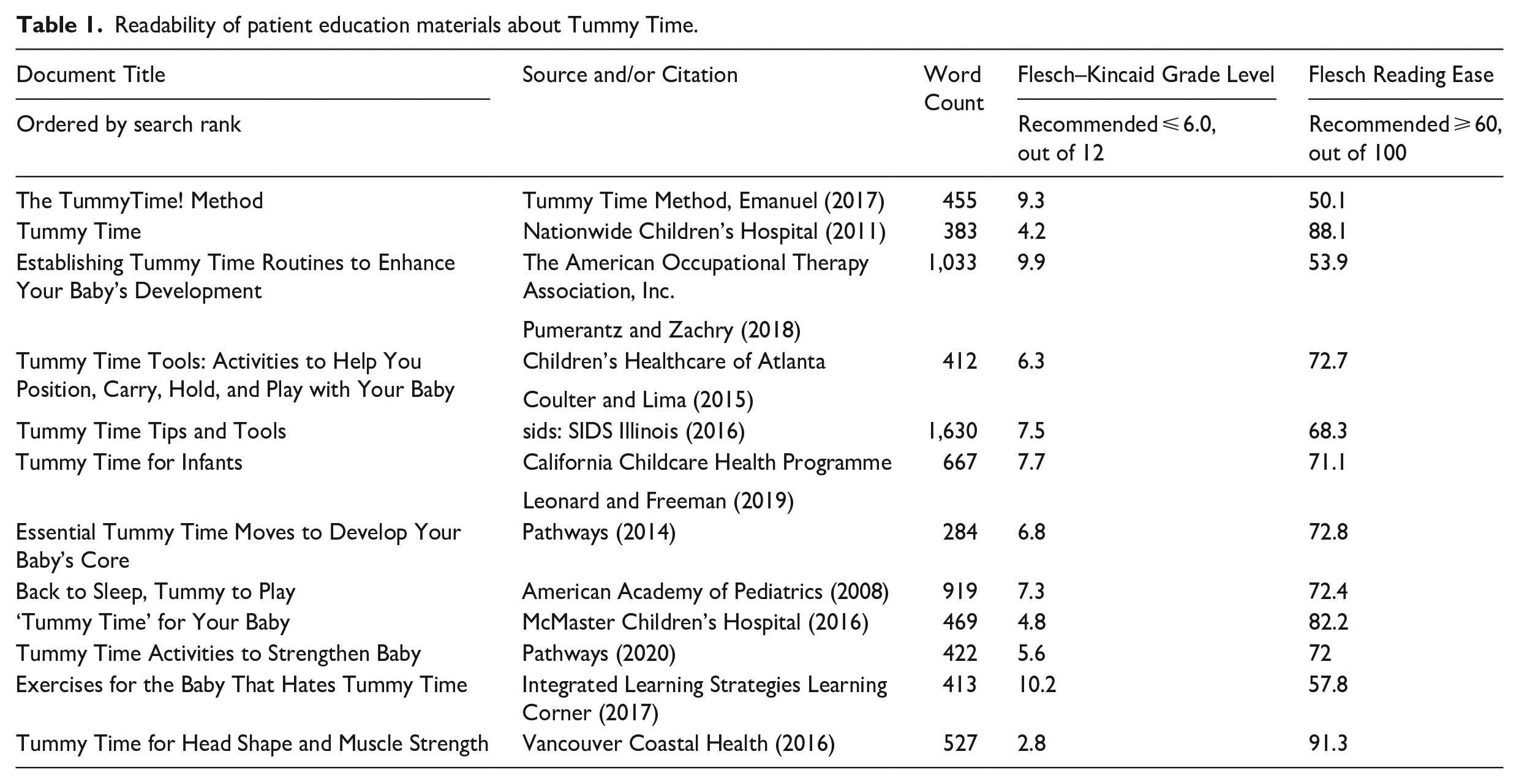
The Flesch–Kincaid Grade Level (FKGL) assessment scores, which are recommended to be no higher than the sixth-grade level, ranged from 2.8 to 10.2 (see Table 1). Four (33%) of the education materials were scored at or below the recommended reading level on the FKGL assessment, leaving two-thirds of the materials at above suggested reading level. The average score for the FKGL was 6.87 ± 2.19. The Flesch Reading Ease (FRE) assessment scores ranged from 50.1 to 91.3. Nine education materials scored at or above a 60, making them easier to read. The average score among all FRE scores was 71.06 ± 12.08. The materials with the lowest required literacy level also had the highest readability.
Readability of patient education materials about Tummy Time.
Organisation and layout and design
All the parent education materials for Tummy Time utilised at least one strategy to enhance organisation, layout and design .
One third of the materials used bulleted lists. In addition, 42% were organised with questions followed by bulleted responses.
Visual elements
Effective visual aids can enhance understanding of health care information (Shoemaker et al., 2014). Several of the parent education materials included visual aids. Some of these were stock photographs, and others were computer designed illustrations or other forms of clip art. Some included the use of tables to present information. The standards of the PEMAT (Shoemaker et al., 2013) were applied to determine if these visual aids enhanced the content (see Table 2). When rating for five aspects of the use of visual aids, no educational material met all the items. As much as 42% scored only one or two points.
Analysis of visual elements in patient education materials for Tummy Time.
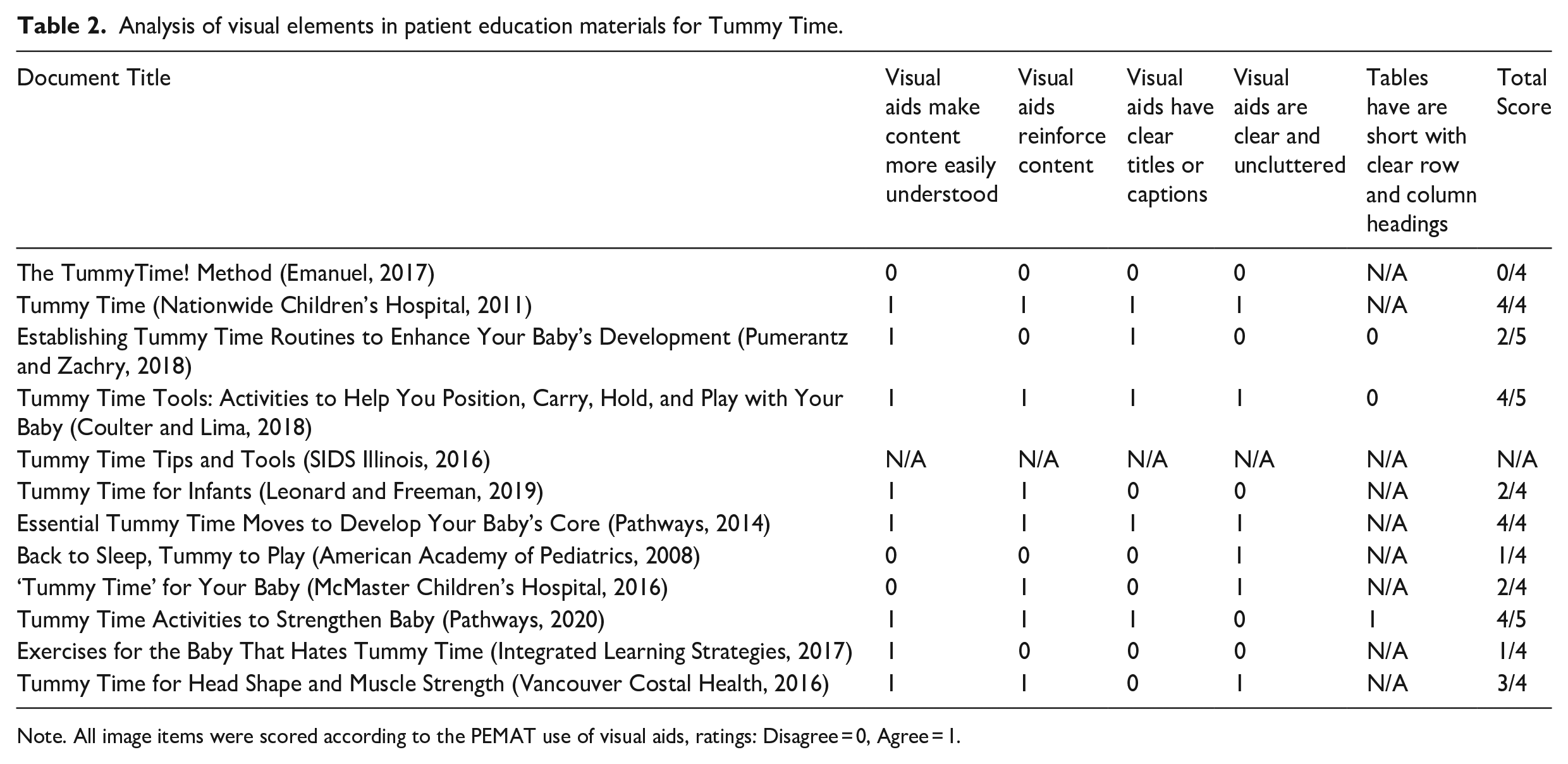
Note. All image items were scored according to the PEMAT use of visual aids, ratings: Disagree = 0, Agree = 1.
Consistency with professional recommendations
Professional organisations with expertise in infant health and development have compiled evidence-informed recommendations for the implementation of tummy time as described in the introduction (American Academy of Pediatrics, 2008; Coulter and Lima, 2014; National Institutes of Health, n.d.; Pathways, 2020; Pumerantz and Zachry, 2018). Internet parent education materials were judged to be consistent or inconsistent with four core elements of these recommendations (Table 3).
Analysis of consistency with professional recommendations in patient education materials for Tummy Time.
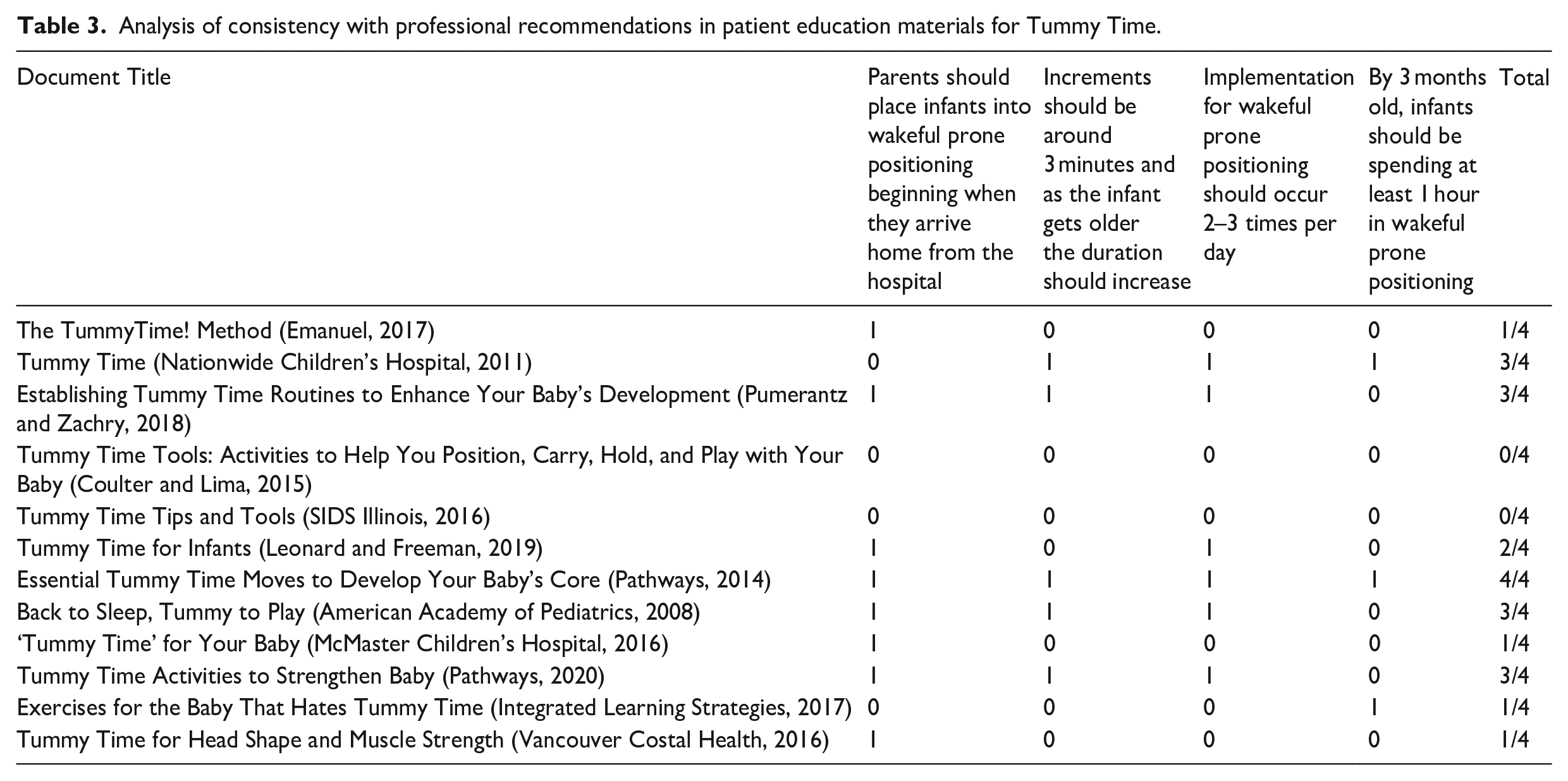
Only one resource addressed all the recommendations accurately. One-third were consistent for at least three of the four recommendations. One third of the resources provided accurate information for only one recommendation. The recommendation that was most consistently addressed is the advice to begin Tummy Time shortly after bringing infants home from the hospital. The one most frequently absent or misrepresented was the recommendation to achieve an hour of Tummy Time daily by the time infants are 3 months old.
Informal sources
To obtain full text for analysis from 50 websites, search results ranked from #1 to #57 were analysed for inclusion/exclusion. The most common reason for exclusion was advertising for a clinic or product (ranks #4, #15, #18, #24, #25). Others were excluded each for different reasons: need for a membership (rank #12) and being the professional organisations that were used for comparison (rank #1). Website content was assessed for consistency with professional recommendations (Figure 1).
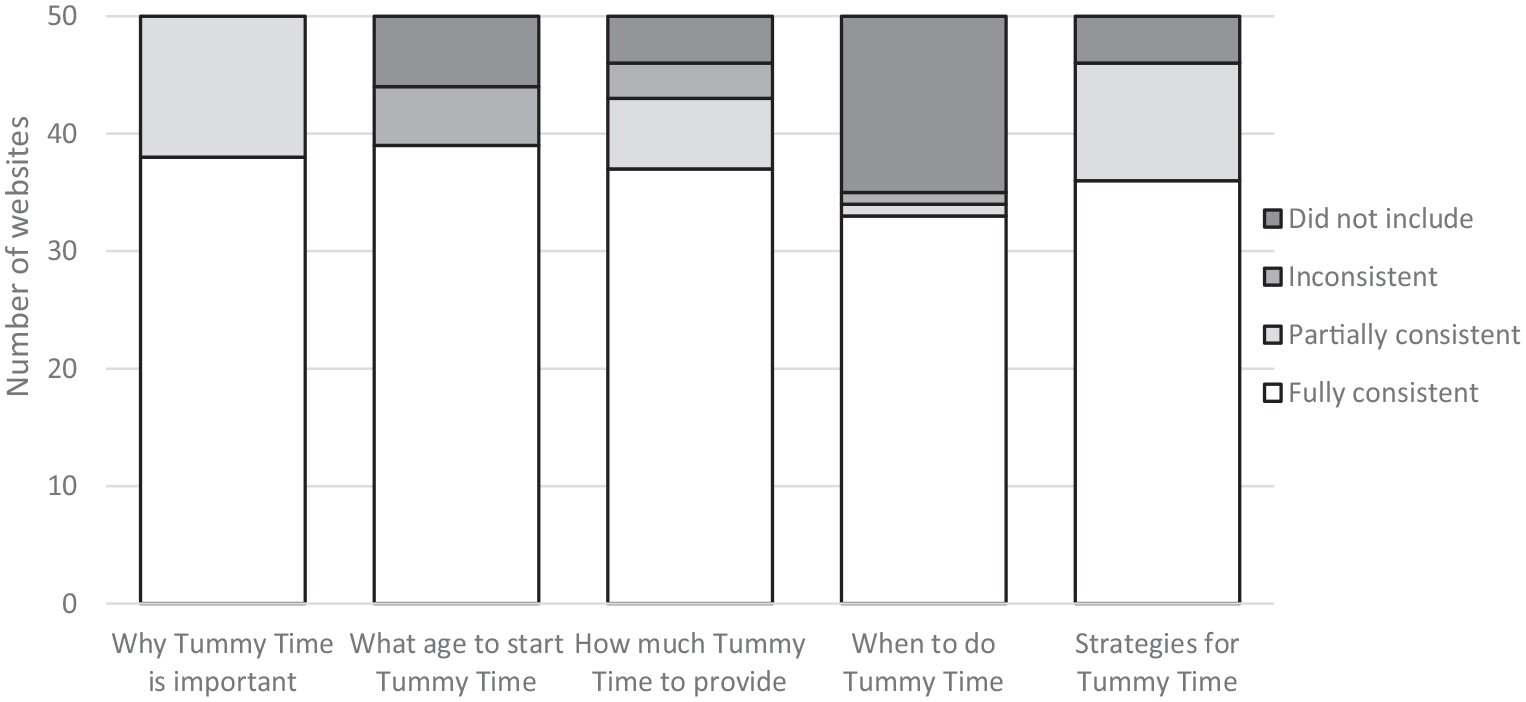
Consistency of informal sources of information with professional recommendations for Tummy Time.
When explaining the importance of Tummy Time, 76% were judged to present information consistent with professional recommendations, with search ranks from #2 to #57. Motor development was most frequently described. The remaining 24% (ranked #7 to #54) provided partially consistent information, differing from professional sources by presenting vague or overreaching descriptions. Regarding what age to start Tummy Time, 78%, accurately recommended that tummy time be started as soon as the infant is brought home from the hospital, ranking from #2 to #57. One tenth of the sites contained inaccurate information, the highest of these appearing at rank #22. For how much Tummy Time to implement, 74% gave detailed and correct suggestions, spanning ranks #2 to #57. One-tenth of the sites, ranking as early as #13, gave oversimplified suggestions and were judged to be partially consistent. Beginning at rank #9, 12% of the sites incorrectly suggested no specific target for the amount of Tummy Time. The majority, 66% and ranked from #3 to #57, gave good advice about when to implement Tummy Time. A large proportion (76% spanning rank #2 to #57) gave reasonable, reliable strategies for how to implement or facilitate Tummy Time.
Overall consistency
Each website was also analysed for its accuracy across topics (Table 4).
Overall consistency of informal sources of information with professional recommendations for Tummy Time.
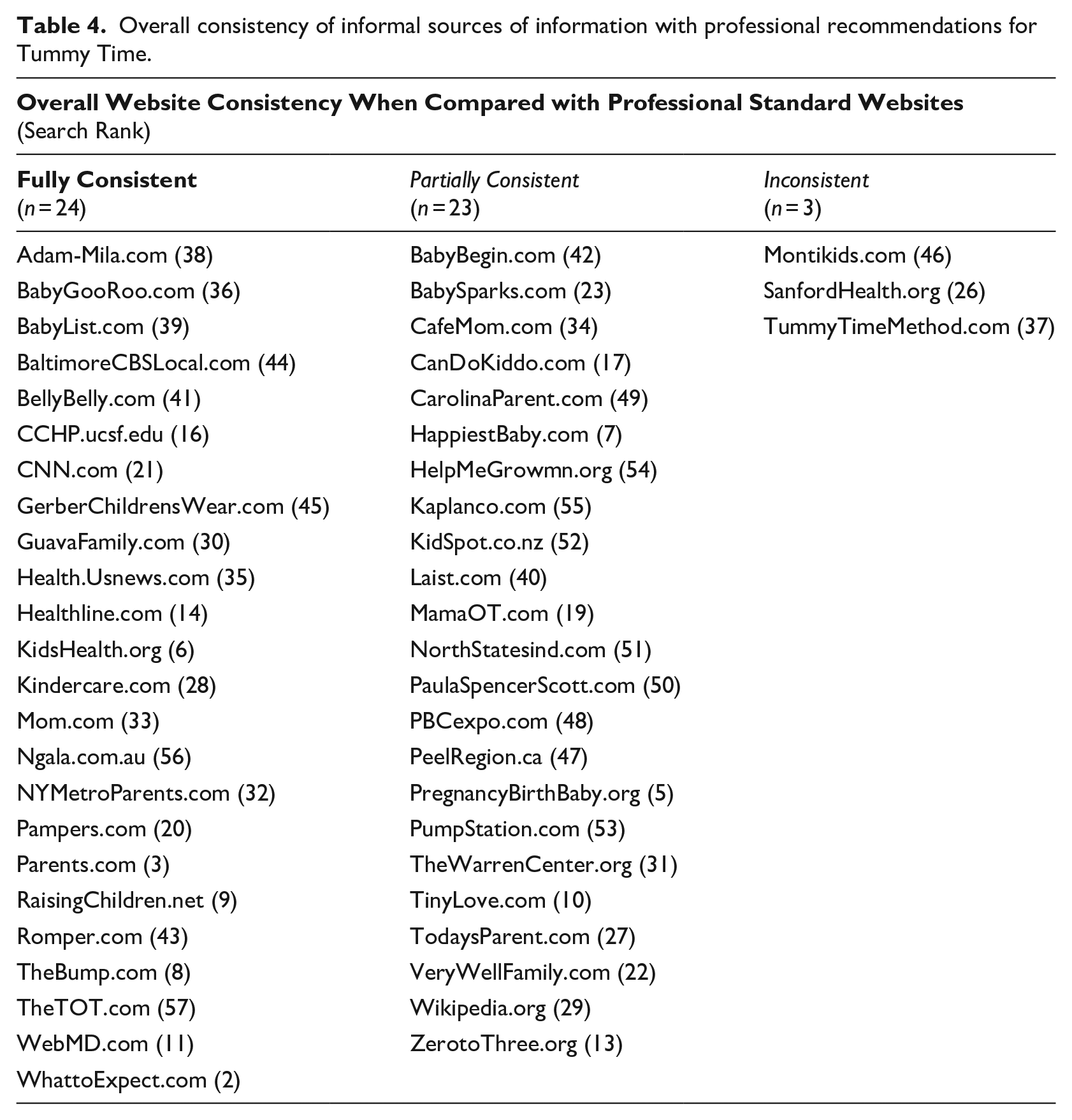
Nearly half of the websites were judged to be fully consistent with professional recommendations referenced in the methods section above. Search ranks for these accurate websites ranged from #2 to #57 and included five of the top 10 search results. Partially consistent sites ranked from #5 to #55. The small number of sites that were inconsistent with the professional recommendations did not appear until rank of #26 or beyond.
Discussion
The early implementation of Tummy Time allows infants to develop tolerance, reduce the risk of musculoskeletal deficits, and begin working on developmental milestones (Meraviglia et al., 2014; Russell et al., 2009; Senju et al., 2018; Vengrow, 2018). Inaccessible writing and incomplete information would leave parents responsible for sifting through and interpreting the information on their own unless they receive guidance from a professional. Patient education materials in this study were analysed for readability as this is a practice standard that healthcare providers should observe. Most were written above the recommended reading level. Many were lacking in the use of supportive formatting elements. The patient education materials were inconsistent in addressing all of the evidence-informed practices. Of the twelve analysed, none met the recommendations in all of these areas. Patient education materials selected from the Internet and provided to clients may not support their health literacy. Many parents use the Internet to answer questions (Moon et al., 2019). If they do not specify that they are looking for patient education materials, their results may be similar to the informal sources analysed in this study. Nearly half of these, including several ranked in the top 10, were fully consistent with evidence-informed recommendations for Tummy Time. However, there is a risk of not receiving comprehensive information on Tummy Time from any single source. Little misinformation was detected in either category of resource. The topic area that demonstrated the greatest inconsistency among websites was when to initiate Tummy Time. This inconsistency could potentially lead to parents delaying the initiation of Tummy Time.
Implications for practice
Healthcare workers cannot assume parents’ literacy, knowledge and views. In providing patient education materials found online, they must carefully evaluate the language level, layout and organisation, use of visual aids and accuracy of the content as this study found that even those on professional websites may fall short of the recommendations. If parents find that the educational material about Tummy Time written by professionals is difficult to understand, they may prefer websites from informal sources. In our analysis of informal sources, many of these sources were at least partly accurate, and several provided strategies aimed to help with implementing Tummy Time. In either case, healthcare professionals should assess parents’ understanding of the information they receive and discuss individualised strategies for implementation to assure that these are practical for families to implement (Armstrong-Heimsoth et al., 2019). Further research and development of parent education approaches are needed. For Internet-based information sources, studies could investigate whether there is a correlation between parents’ sources for, and understanding of, materials and their implementation of Tummy Time.
Limitations
Although this study can provide a picture of professional and informal health education materials, there are limitations. We did not assess the readability of informal sources. It is possible that they are written at the appropriate level, which in combination with their consistency would make them appropriate sources for parent education. Publication dates ranging from 2008 to 2020 is a limitation because of the continuously changing recommendations within the healthcare field and the dynamic nature of the Internet and its search algorithms specifically. Analysing only education materials written in English limits applicability to English speakers.
Conclusion
Healthcare professionals and parents using the Internet to find information about implementing Tummy Time with their infants will find accurate information from both professional and informal sources. However, patient education materials may be written above the recommended reading level and lack formatting elements to aid readers. Healthcare workers are responsible for communicating clearly and comprehensively with their stakeholders, including the general public. They should be advocating to relevant professional organisations to ensure readability, clarity and consistency of all health education materials prior to publishing. Healthcare professionals are also responsible for knowing where their clients receive information and for directing them to reliable and comprehensive sources. Healthcare professionals can set parents up for success by guiding them to, and providing appropriate resources and education on, Tummy Time.
