



Abstract
Objectives:
This study aimed to assess the impact of an educational intervention on middle-aged women’s knowledge and behaviour regarding various aspects of a healthy lifestyle.
Design:
Quasi-experimental study involving 150 middle-aged women (divided into experimental and control groups).
Setting:
Participants were selected from health centres of Tehran, Iran.
Method:
Data collection included demographic information, knowledge of a healthy lifestyle and healthy lifestyle behaviour. Participants in both the intervention and control groups completed the questionnaires before and 2 months after the educational intervention. The intervention involved 10 minutes of face-to-face training followed by distribution of training booklets provided by the Ministry of Health in Iran. Statistical analyses were conducted using SPSS.
Results:
Within the intervention group, significant differences were observed in total healthy lifestyle knowledge and subscales for physical activity knowledge, anthropometry knowledge, healthy diet knowledge, and smoking knowledge, between the pre- and post-intervention periods. Other than for smoking behaviour, there was no significant difference in healthy behaviours pre- and post-intervention for the experimental and also the control group.
Conclusion:
While there was an increase in knowledge about healthy lifestyles following the intervention, this knowledge increase was not associated with a change in healthy lifestyle behaviours. Attention should therefore be given to other influences including socio-economic factors, mental health status, environmental factors, cultural influences, duration of the intervention and psychological factors if changes in healthy behaviour are to be achieved.
Introduction
Middle age is a pivotal life stage characterised by unique health challenges and opportunities for intervention (Lachman et al., 2015). As individuals journey through middle age, they face physiological changes and lifestyle-related risks that may alter their health trajectories (Flegal et al., 2012). Amid the growing emphasis on preventive healthcare, educational interventions are key to promoting healthy behaviours and enhancing health outcomes, particularly in middle-aged populations (Mohammadnabizadeh et al., 2022).
Middle-aged women, in particular, face distinct health concerns, including menopausal transitions, metabolic changes and increased susceptibility to chronic diseases (Avis et al., 1994). The promotion of healthy lifestyle behaviours such as healthy diet, physical activity and not smoking among members of this demographic group is essential for mitigating disease risk and enhancing overall well-being (Amiri et al., 2019).
Many middle-aged women in Iran show desirable mental health behaviours, such as stress management and spiritual growth, but struggle with physical health behaviours such as physical activity and nutrition. This puts their physical health at risk as they grow older (Enjezab et al., 2012). To age successfully, women need to begin improving their lifestyle in early middle age through diet, regular exercise, not smoking, stress management, prioritising sleep and in other ways.
Many women are aware of the changes they need to make but lack the specific information and means by which to do so. Tailoring educational interventions to the unique requirements of middle-aged women holds the promise of equipping them with the knowledge and ability needed to make informed choices about their health (Portela Dos Santos et al., 2022).
Past studies have stressed the effects of education in improving lifestyles, as Sehhatie Shafaie et al. (2014) found in their research which had the goal of investigating the effects of education provided through a support group on the experience of early symptoms of menopause among Iranian postmenopausal women. The utilisation of health self-assessment manuals presents a promising strategy in health education, offering individuals structured guidance on how to evaluate their health status and engage in preventive behaviours (Hasanica et al., 2020). By supporting self-awareness and self-confidence, these manuals have the potential to facilitate changes in behaviour and encourage adherence to healthy lifestyles (Stonerock and Blumenthal, 2017).
However, the effects of this kind of educational intervention are not based on knowledge alone. Socio-economic factors, mental health status, environmental factors, cultural influences, psychological factors, duration and training method also have a role to play. Therefore, to reduce the likelihood of poor health outcomes later in life, it is imperative to develop multi-faceted interventions and programmes tailored to individuals’ unique circumstances. Doing so successfully requires a comprehensive understanding of the reasons behind individuals’ apparent reluctance to adopt healthy behaviours or engage in unhealthy ones (Kelly et al., 2016).
Aims of the study
Informed by the above understandings, in this study, we aimed to assess the impact of an educational intervention on middle-aged women’s knowledge and behaviour regarding various aspects of healthy lifestyle, including physical activity, bodily measurement, healthy diet and smoking.
Method
Study design
Our research took the form of a quasi-experimental study carried out in health centres in District 5 of Tehran city under the supervision of the Iran University of Medical Sciences, Iran. Out of the 19 health centres in the area, 3 were chosen as the intervention group and 3 as the control group using available sampling methods. The study included 150 middle-aged women aged 30 to 59 who had medical records in the mentioned centres and who were randomly selected according to the inclusion and exclusion criteria.
Inclusion and exclusion criteria
To be eligible for inclusion in the study, participants had to reside in District 5 of Tehran and be registered at the specified health centres; be between 30 and 59 years old; provide informed consent to take part in the research; possess at least elementary literacy; and not be pregnant at the time of the study. In addition, they were required not to have any diagnosed diseases requiring a reduction in physical activity in line with doctors’ recommendations; not to have any disability or physical limitation hindering regular engagement in physical activities; and not to have consulted a nutrition expert within the past year. Exclusion criteria included a reluctance to continue participation at any stage of the research, changing the designated health centre, and seeking advice from a nutritionist during the study.
Participants
The participants were randomly divided into control and experimental groups, each consisting of 75 individuals.
Sample size
The sample size was determined using the following formula based on prior research conducted by Mahdipour et al. (2015):
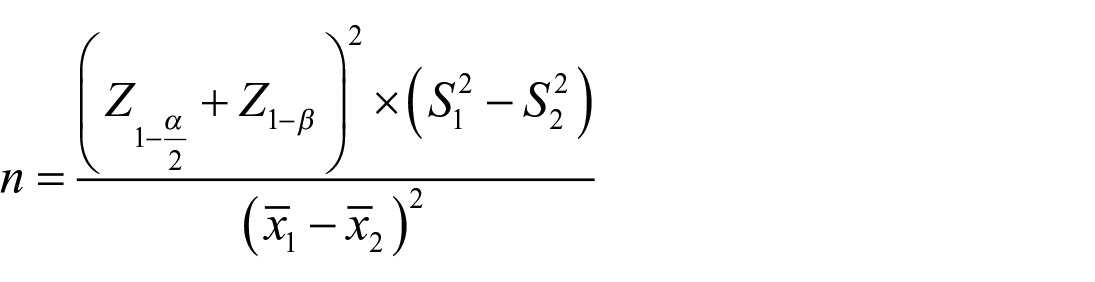
in which n was the required sample size for each group in the study, Z1−α/2 was the critical value from the standard normal distribution corresponding to the desired confidence level; Z1−β was the critical value corresponding to the power of the test (1 − β), where β is the probability of a Type II error; S21 and S22 were the variances of the two groups being compared; xˉ1−xˉ2 was the difference between the means of the two groups; and α was the significance level of the test.
The initial estimated sample size was 61 participants per group, with an additional 20% being included to allow for potential dropouts, leading to a final sample size of 75 participants per group.
Instruments
In this study, three data collection instruments were used: a demographic information inventory; a questionnaire assessing knowledge of healthy lifestyle practices; and another questionnaire evaluating healthy lifestyle behaviours.
The development of the healthy lifestyle knowledge questionnaire and healthy lifestyle behaviour questionnaire used in the study was informed by the content of the third booklet in the Iranian Middle-aged Health Self-assessment series, known as the lifestyle self-assessment booklet. The Self-assessment series for middle-aged adults is a comprehensive collection of six volumes prepared by the Office of Adolescent Health of the Population, Family, and Schools Health Department of the Ministry of Health, Treatment, and Medical Education. The initiative was developed in collaboration with the Office of Community Nutrition Improvement, the Iranian Society of Sports Medicine, the Office of Environmental Health, the Office of Health Education and Promotion, the Center for Non-Communicable Disease Management and the Association for Combating Tobacco Use among Women and Men aged 30–59 years.
The first booklet of the series introduces the self-care programme for the health of middle-aged adults. The second booklet contains a Home Health Record; the third booklet is for Lifestyle Self-Assessment; the fourth booklet focuses on Self-Assessment of Mental and Social Health; the fifth booklet covers Physical Health Self-Assessment; and the sixth booklet is entitled Self-Assessment of Cancer Risk Factors. This series is designed to assist with self-care through the self-assessment of health status, ultimately aiming to prevent disease and early death.
The third booklet in the series, used in the current study, consists of four sections entitled: ‘Are my body measurements normal?’, ‘Am I following an appropriate diet?’, ‘Do I have appropriate physical activity’ and ‘How can I help myself and those around me to quit smoking?’. This booklet provides explanations on correctly measuring height, weight, waist circumference and calculating body mass index (BMI), as well as information about food groups, physical readiness, physical activity and smoking cessation in separate sections. Individuals are asked to evaluate their body measurements, nutritional status, and physical activity monthly and sometimes weekly, recording the data in the relevant tables. Based on the self-assessment conducted, they are then encouraged to take the necessary behavioural actions.
Demographic information collected as part of the study included age, level of education, marital status and occupation status.
The researcher-made healthy lifestyle knowledge questionnaire comprised 23 questions divided into 4 subscales:
Physical activity knowledge: This section focused on the presence or absence of daily physical activity, the type of activity, its duration and its intensity (4 items).
Anthropometry knowledge: This part of the questionnaire assessed understanding of body measurements such height, weight, waist circumference and BMI (4 items).
Healthy diet knowledge: Participants were asked about their typical consumption of particular food groups based on the food pyramid, and any unhealthy eating habits (10 items).
Smoking knowledge: This section covered information related to smoking (5 items).
For scoring purposes, participants received 1 point for each correct response and 0 points for incorrect answers or responses of ‘I don’t know’.
The healthy lifestyle behaviour questionnaire used in the study consisted of 17 questions developed by the researchers, divided into 4 subscales:
Physical activity behaviour (3 items);
Anthropometry behaviour (4 items);
Healthy diet behaviour (8 items);
Smoking behaviour (2 items).
Two types of behavioural questions were included for scoring purposes. For questions with options categorised as ‘favourable’ or ‘unfavourable’, participants received 1 point for a favourable response and 0 points for an unfavourable response. For questions with options representing different levels of behaviour (‘favourable’, ‘average’, ‘unfavourable’), scoring was as follows, 2 points for a favourable response, 1 point for an average response and 0 points for an unfavourable response.
The content validity of the healthy lifestyle knowledge questionnaire and the healthy lifestyle behaviour questionnaire were assessed by feedback from 10 experts in the relevant field and utilising the content validity ratio (CVR) formula. The overall CVR value obtained for the questionnaire was 0.80, which is considered acceptable based on the Laches table criteria. Furthermore, the content validity index (CVI) scores for relevance, clarity and simplicity were found to be 0.87, 0.90 and 0.85, respectively. These scores exceeded the threshold of 0.79, indicating that the questionnaire items were deemed relevant, clear and simple by the experts. Finally, the reliability of the questionnaire was evaluated by means of a pilot study involving a sample of 30 participants. Cronbach’s alpha reliability coefficient for the total questionnaire was .72, indicating an acceptable level of internal consistency among the questionnaire items.
Intervention
In this study, the educational intervention which the intervention group received consisted of two main components:
One month after the educational intervention and the distribution of the booklet, all participants in the intervention group were contacted by telephone to remind them to read the booklet and reinforce the key health messages conveyed during the face-to-face training session. The control group did not receive any form of training or intervention during this period. Participants from both the intervention and control groups completed the questionnaires twice: once before the intervention and again (for both groups) 2 months later to assess any changes in knowledge and behaviour related to healthy lifestyle practices.
Ethical consideration
The study received approval from the ethics board of the Shahid Beheshti University of Medical Sciences (Reference: IR.SBMU.PHNS.REC.1395.143).
Analysis
Statistical analyses were performed using SPSS 16 software. Descriptive statistics were calculated in terms of percentages, frequencies, means and standard deviations. The Kolmogorov–Smirnov test was employed to evaluate the normal distribution of the data obtained from questionnaires completed by the control and intervention groups. T-tests were used to assess differences between the studied groups, and between before and after the intervention.
Results
At the start of the study, participants in both groups demonstrated similar demographic characteristics, with no significant differences between them (Table 1).
Participants’ characteristics at baseline.

The analyses revealed that there were no significant differences between the control and intervention groups at the beginning of the study regarding total healthy lifestyle knowledge and its subscales, as indicated in Table 2. Furthermore, within the intervention group, a significant difference was observed in total healthy lifestyle knowledge and its subscales between the pre- and post-intervention periods. This suggests that the educational intervention had an impact on increasing healthy lifestyle knowledge among participants in this group.
Changes in healthy lifestyle knowledge subscales between pre-test and post-test.

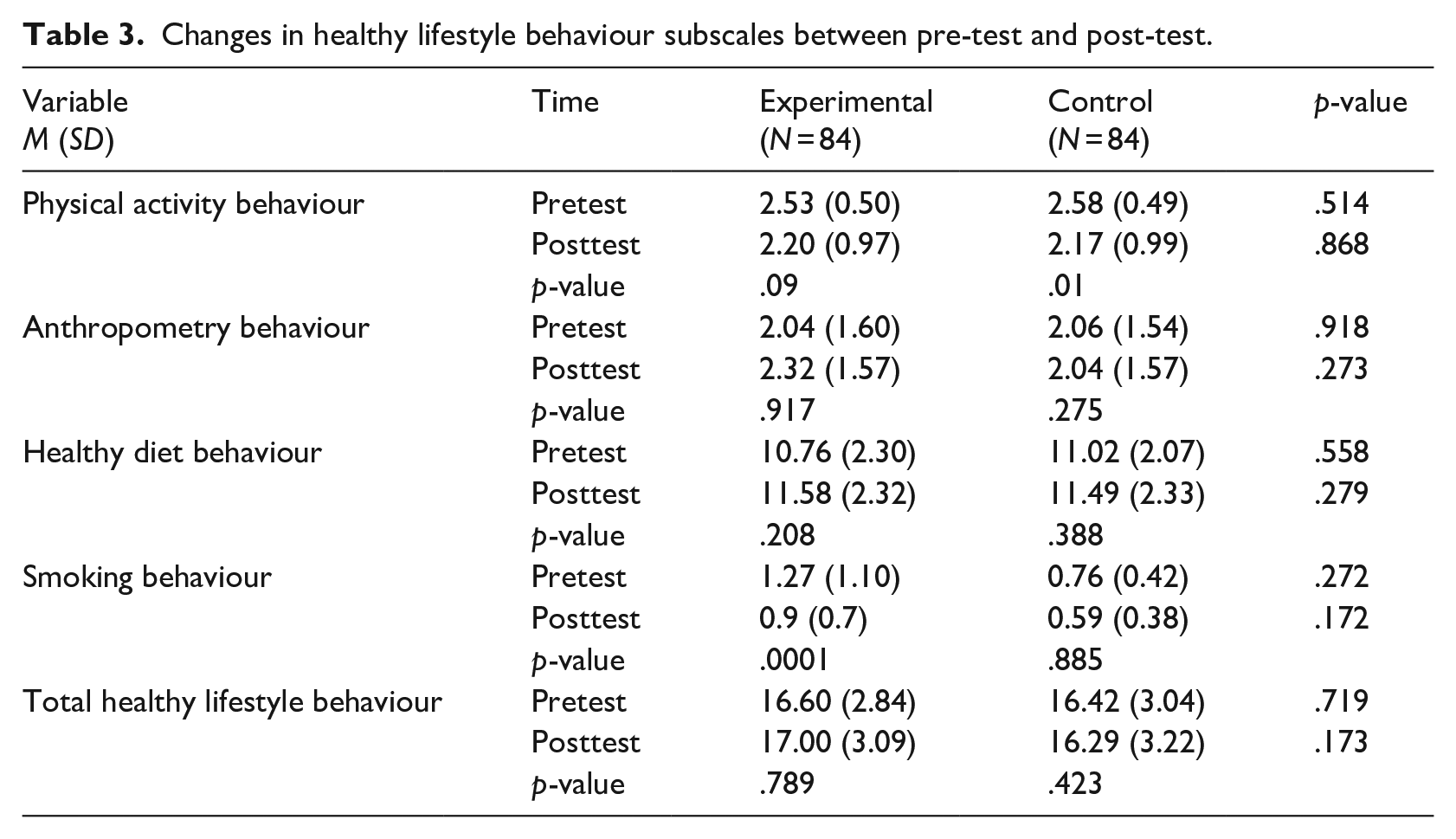
The means and standard deviations for total healthy lifestyle behaviour and its subscales in the control and intervention groups are presented in Table 3. The analysis showed that there were no significant differences between the control and intervention groups at baseline for total healthy lifestyle behaviour and its subscales. Moreover, apart from smoking behaviour, a significance was not found between the pre- and post-intervention periods in both the intervention and control groups. This suggests that the educational intervention did not lead to any significant changes in lifestyle behaviour within the groups over the course of the study.
Changes in healthy lifestyle behaviour subscales between pre-test and post-test.
Discussion
Research suggests that middle-aged Iranian women show desirable mental health behaviours such as stress management and spiritual growth, but struggle with physical health behaviours such as physical activity and nutrition. This puts their physical health at risk as they age (Enjezab et al., 2012). To age successfully, women need to begin improving their lifestyles in early middle age. Many women are aware of the changes they need to make but lack the information and strategies to do so. This study aimed to see how educating middle-aged women using a health self-assessment manual could improve their knowledge and behaviour towards a healthier lifestyle.
Our study found that while there was a notable increase in knowledge of healthy lifestyles following the intervention, this knowledge alone was not accompanied by a change in healthy lifestyle behaviours. Our analysis revealed no significant differences in total healthy lifestyle behaviour and its components between the pre- and post-intervention periods in the intervention group. While some studies suggest that increasing knowledge can impact health-related behaviours, our findings suggest that additional factors play a role in influencing behaviour. For instance, Mahdipour et al. demonstrated that nutritional behaviours are not solely determined by nutritional knowledge, but by other influential factors (Mahdipour et al., 2015). Research has identified barriers such as lack of time, marital status and educational level as factors that hinder lifestyle changes (Murray et al., 2012). Moreover, self-efficacy, stress, socio-economic status and organisational factors also play significant role in shaping healthy behaviours (Dryden et al., 2012). Social support too (from family, spouses, children and friends) has been shown to be effective in helping older women to develop a health-promoting lifestyle (Lindsay Smith et al., 2017).
Health literacy levels also influence health behaviour changes (Kickbusch, 2004). Furthermore, studies have shown that interventions based on theoretical models such as the health promotion model can effectively enhance healthy lifestyle practices among middle-aged individuals (Adeba et al., 2023). The success of such interventions may be attributed to the theoretical constructs employed, community leaders’ involvement and the use of specific behaviour change techniques.
It is important to acknowledge that our findings, which did not reveal a significant change in healthy lifestyle behaviour and its components post-training, may differ from the results of some earlier studies. For example, Nazari et al. demonstrated that a face-to-face educational intervention utilising a variety of methods led to an increase in health-promoting behaviours among middle-aged women (Nazari et al., 2016). Similarly, Sehhatie Shafaie et al. (2014) found that an educational intervention based on lifestyle education was effective in enhancing health-promoting behaviours. On the other hand, a study by Ostadrahimi et al. showed mixed results regarding the impact of educational programmes on knowledge and eating behaviours. While knowledge improved significantly, eating behaviours did not show improvements in some cases (Ostarahimi et al., 2009). Ostarahimi et al. also noted that educational programmes may vary in their effects, with nutrition-related behaviours being more easily influenced compared to physical activity. These contrasting findings highlight the complexity of behaviour change interventions and the need to consider a range of factors that can influence the effectiveness of educational programmes on promoting healthy lifestyles. Further research is needed to better understand the mechanisms through which different interventions impact behaviour change among middle-aged individuals.
The lack of significant behaviour change despite knowledge gain in our study could also be attributed to the short duration of the programme and the complexities nature of adult decision-making processes. Adults’ health choices are influenced by various factors, some of which may hinder the translation of knowledge into behavioural change. In particular, a low level of interest by participants in controlling health risks may contribute to a limited impact on healthy lifestyle behaviours following intervention. Employing educational techniques that facilitate active engagement, such as face-to-face programmes with group discussions and opportunities for participants to share personal experiences and ask questions, has been shown to be more effective in promoting health-related behaviours compared to using training materials alone (Mohammad Nabizadeh, 2018; Nooritajer, 2010). Furthermore, personal interests, social beliefs, financial constraints and food accessibility are among the contextual factors that should be considered when evaluating the impact of education on behavioural changes (Ostarahimi et al., 2009). Taking these factors into account is crucial for designing effective real-world interventions that can lead to sustainable change in health-related behaviours.
While this study did not show an association between increased knowledge and the adoption of healthy lifestyle behaviours, it is essential to recognise the significance of knowledge in influencing behaviour change, as demonstrated in previous research. Ahmadi and Roosta (2015), for example, showed that individuals with higher levels of health knowledge and who dedicate more time to reading health-related materials tend to have higher scores in healthy lifestyle behaviours, even after considering other variables. Findings from other study suggest that online nutrition education can enhance participants’ knowledge and intentions regarding healthy dietary and lifestyle choices (Zhang et al., 2019). Therefore, future interventions should continue to emphasise the importance of knowledge acquisition alongside other strategies to promote healthy lifestyle behaviour among participants.
In this study, while there was a significant increase in dietary and anthropometry knowledge within the intervention group from pre- to post-intervention, this increase in knowledge did not translate into changes in behaviour. It is interesting to note that previous research has shown that individuals with higher levels of nutrition knowledge are more likely to engage in healthier dietary behaviours, while those with lower levels of nutrition knowledge may exhibit poor eating habits, have a higher risk of nutrition-related chronic diseases and consume unbalanced diets (Kwol et al., 2020; Nabizadeh et al., 2018). Various factors other than knowledge play a role in shaping individuals’ eating habits and overall health outcomes. For instance, time constraints due to work demands and family schedules have been identified as major barriers to healthy eating (Bisogni et al., 2012). Motivation and beliefs about one’s capabilities have consistently been linked to fruit and vegetable intake in systematic reviews, underscoring the significance of psychological factors in dietary decision-making (Guillaumie et al., 2010). Moreover, socio-economic factors such as lower household income have been linked to lower consumption of vegetables, fruits and fibre, as well as higher intake of total fat (Kamphuis et al., 2006). In designing educational interventions, it is important to consider not only knowledge but also these multi-faceted factors that can influence individuals’ ability to make healthy choices.
In our study, while there was a significant increase in knowledge in the intervention group, this increase in knowledge did not translate into changes in behaviour. Despite the known benefits of physical activity in preventing chronic diseases like osteoporosis, arthritis and cardiovascular issues, managing menopausal symptoms and maintaining overall health, there seems to be a gap between knowledge and behaviour change among Iranian middle-aged women (Schenck-Gustafsson, 2009). Factors such as personal goals, social support from family, partners, friends or healthcare providers and having a companion for physical activities have been identified as facilitators of engaging in regular exercise (MacIntosh et al., 2021). Conversely, barriers like time constraints due to childcare, work and household responsibilities, as well as concerns about social discomfort or self-consciousness, can hinder women’s participation in physical activity programmes (Im et al., 2013). In addition, perceptions of lack of capability can also act as a deterrent to engaging in regular exercise (Im et al., 2013). To address these challenges and promote physical activity effectively, educational interventions should not only focus on increasing knowledge but also on removing obstacles, providing alternative solutions and enhancing motivation, positive attitudes and self-efficacy among individuals.
Based on our findings, while there was a significant increase in smoking knowledge following the intervention, this too did not translate into changes in smoking behaviour among participants. This discrepancy underscores the need to consider influences beyond knowledge in health education programmes to promote behaviour change. Studies have shown that individuals who start smoking at a younger age are less likely to quit smoking later in life, indicating the long-term impact of early smoking initiation on cessation efforts (Honjo et al., 2010). In addition, behaviours such as smoking have been linked to a higher intake of unhealthy foods high in fats, salt and sugars, suggesting interconnected lifestyle choices that may pose a challenge for individuals trying to quit smoking (Méjean et al., 2011). Intention and motivation to quit smoking have been associated with making quit attempts, but success in quitting may not always align with these factors (Mohammadnabizadeh et al., 2023). Promoting ‘feel good’ benefits such as improved self-esteem and confidence has been identified as motivators for behaviour change, highlighting the importance of addressing the psychological and emotional aspects in smoking cessation efforts (Caperchione et al., 2012).
Limitations
There are several limitations to our study. The study sample being limited to a specific group of middle-aged women from selected health centres in Tehran almost certainly limits the generalisability of the findings to a broader population. Selection bias can also be a concern when studying behaviours related to a healthy lifestyle, as individuals who choose to participate in studies or interventions may not be representative of the general population. This can introduce bias into the results. In addition, self-report data can be prone to bias as individuals may provide responses that are influenced by social desirability effects. In this study, the relatively short duration between the pre- and post-tests is also a limitation. Long-term follow-up evaluation would be beneficial in assessing the more sustained impact of the educational intervention on behaviour change over time. In addition, involving healthcare professionals or health educators in delivering the intervention through face-to-face methods and utilising a variety of educational approaches such as lectures, interactive sessions and group discussions could help engage participants and facilitate behaviour change more effectively.
Conclusion
In this study, within the intervention group, a significant difference was observed in total healthy lifestyle knowledge and its subscales between the pre- and post-intervention periods. A difference was not observed between the pre- and post-intervention periods in both the intervention and control groups for total healthy lifestyle behaviour and its subscales. While there was a notable increase in knowledge of healthy lifestyles following the intervention, this knowledge gain was not accompanied by a corresponding change in healthy lifestyle behaviour. This discovery underscores the need to take into account other factors influencing behaviour, as well as the likely need to use a longer duration, more theoretically driven and more multi-faceted educational programme in order to deliver desired goals.
Footnotes
Acknowledgements
The authors thank the vice president of research at the Shahid Beheshti University of Medical Sciences, Tehran, Iran, for their encouragement.
Funding
The author(s) received no financial support for the research, authorship and/or publication of this article.
