



Abstract
Background:
The US Individuals with Disabilities Education Act requires that children with disabilities receive a free appropriate public education. However, it does not specifically include the subject of health education. Currently, 30 US states require public schools to teach sexuality education as a part of the health education curriculum, but 36 do not include youth with disabilities in their sexuality education requirements.
Objective:
The current situation is particularly concerning due to the higher rates of unplanned pregnancy, sexual abuse, and sexually transmitted infections experienced by teenagers with disabilities. Students from across several disability groups report societal barriers, physical barriers, and poor educational outcomes with respect to sexuality education.
Results:
This review article sought to investigate the current state of sexuality education for students with disabilities, as well as best practices to support the learning of sexuality education content.
Conclusion:
Focusing sexuality education classes on practical ways so as to develop relationships, promote self-advocacy and self-determination, and incorporate privacy messages, can support students with disabilities to make healthy choices.
Status and importance of sexuality education for students with disabilities
People with disability constitute one of the largest minority groups in the USA, where approximately 15% of school-aged students are living with disabilities (National Center for Education Statistics, 2022). The Individuals with Disabilities Education Act (2019) requires that students with disabilities receive a free appropriate public education. While this law specifically states that students with disabilities should receive physical education services, it does not specifically include health education. Although at least 30 US states require public schools to teach sexuality education as a part of the health curriculum (National Conference of State Legislatures, 2020), ‘36 states fail to include YWD [youth with disabilities] in their sex education requirements or provide resources pertaining to accessible sex education curriculum for YWD’ (Holmes and SIECUS, 2021: 17). Only three states specifically include students with disabilities in their sexuality education requirements (Holmes and SIECUS, 2021). This is particularly concerning given the higher rates of unplanned pregnancy, sexual violence, and sexually transmitted infections (STIs) that teenagers with disabilities experience compared with their peers without disabilities (Decker et al., 2015; Haydon et al., 2011; Mandell et al., 2008). In addition, good quality sexuality education is an essential of developing safe and positive views of sexuality, and building healthy relationships (Houtrow et al., 2021).
Sexual violence towards people with disabilities
In the USA, 27% of incidents of rape or sexual assault involve people with disabilities. Only 19% of these crimes are reported to police, compared with 36% of those against persons without disabilities (Harrell, 2021). Overall, 31.3% of women and 39.9% of men with intellectual disabilities experience sexual assault, with higher numbers among institutionalised individuals (Tomsa et al., 2021). For children and adolescents, peers and relatives are the most prevalent abusers (Tomsa et al., 2021). Poor quality sexuality education may result in people with disabilities not possessing the knowledge or language to report abuse (Reese and Deutsch, 2020). Sexual trauma in childhood is associated with health risk behaviours in later life such as larger numbers of sexual partners, early initiation of sexual intercourse, and STIs (Fava and Bay-Cheng, 2013). However, teaching students with intellectual disabilities to identify abuse and develop healthy relationships can prevent assaults (Shapiro, 2018). In particular, comprehensive sex and relationship education guided by the US National Sex Education Standards can help prevent sexual violence (National Partnership for Women and Families and Autism Self-Advocacy Network, 2021; Schneider and Hirsch, 2020).
Current sexuality education experiences of people with disabilities
Both sexual education policy and laws governing special education overlook sexuality education for students with disabilities (Kriofske Mainella and Smedema, 2022). Students across several disability groups report poor mastery of sexuality education content (Jahoda and Pownall, 2014; Löfgren-Mårtenson, 2012; Schaafsma et al., 2015; Wild et al., 2014). People with intellectual disabilities receive less sexuality education and have trouble remembering whether or not they have received sexuality education (Löfgren-Mårtenson, 2012; Schaafsma et al., 2015). When surveyed using and adapted version of the Sexual Behaviour Scale, autistic youth report learning about sexuality topics on their own or from peers rather than from parents (Mehzabin and Stokes, 2011). Similarly, adults with visual impairments report that their sexuality education in school was not accessible, and most of their sexuality education happened outside the classroom (Wild et al., 2014).
Educators and school professionals often feel limited in what they can teach, either because of state sexual education restrictions or lack of knowledge on how to approach topics with students with disabilities (Rueda et al., 2014; WHO/UNFPA, 2009). Both parents and teachers report anxiety and fear around discussing sexuality education with students with disabilities (Collier, 2017; Treacy et al., 2018). In a review of the available literature, Treacy et al. (2018) found that few valid and reliable curricula, no standardised sexuality education testing, and no formal tools for evaluating existing programmes exist with respect to teaching adapted sexuality education. As a result, special educators often feel unprepared and anxious about teaching sexual health education. This results in special educators defaulting to teaching abstinence-only sexuality education due to a lack of preparation and resources for teaching high-quality sexuality education (Treacy et al., 2018).
Barriers to sexual health information and sexuality
Students with disabilities experience societal barriers to learning about sexual health information and sexuality, as well as physical and educational barriers. These barriers may prevent meaningful teaching about sex and sexuality from taking place in schools and communities.
Societal barriers
In the USA, people with disabilities still experience the historical impact of the eugenics movement. Throughout the 1900s, eugenicists and family planning activists argued against people with disabilities having the right to reproduce (Treacy et al., 2018). Court cases such as Buck v. Bell allowed for the involuntary sterilisation of people with disabilities in the USA (Treacy et al., 2018). Today, 31 states still have laws legalising involuntary sterilisation of people with disabilities, while only 2 states ban it (National Women’s Law Center, 2022). These laws impact public opinion about sexuality education for people with disabilities (Benoit et al., 2023). Intersections such as race and gender may further stigmatise people due to the impact of other eugenics movements (Benoit et al., 2023).
Infantilisation, or the treatment of people with disabilities as ‘eternal children’ (Collier, 2017: para. 3), also impacts people with disabilities in a variety of ways. Infantilisation appears in the perception that people with disabilities are asexual or uninterested in sex, even among the parents of children with disabilities (Clatos and Asare, 2020; Collier, 2017). Young people with disabilities are often prevented from exploring their sexuality and sexual orientation due to infantilisation and fear of exploitation (Toft et al., 2019). In addition, infantilisation can lead to the likelihood of people with disabilities experiencing an ‘erasure or dismissal of their sexual or gender identities by people who assume that they are confused’ (Sammet Moring, 2019: 9). Human sexuality curriculum often fails to take into account intersectional identities, such as gender identity, sexual orientation, and trauma history (Fava and Bay-Cheng, 2013). With disabled students receiving less sex education than their non-disabled peers, the gap in receiving accurate, inclusive information is even greater (Slater and Johnson, 2023).
Finally, the sexuality of individuals with a disability may be viewed as deviant rather than a natural part of life (Treacy et al., 2018). Staff working with adults with intellectual disabilities frequently report negative attitudes towards the sexuality of their clients, such as the view that it is inappropriate, problematic, and a source of risk (Charitou et al., 2021). People with disabilities, especially men of colour, are more likely to be viewed as sexual aggressors than their non-disabled and White counterparts (Sammet Moring, 2019). The societal barriers against sex and sexuality for people with disabilities create a social taboo about even discussing sexuality education.
Physical access barriers
Students with disabilities experience a variety of physical barriers in accessing sexual health information and curricular materials. For example, students with intellectual and developmental disabilities (I/DD) may benefit from the use of simple language and realistic pictures to support learning (WHO/UNFPA, 2009). Most research on physical access needs is focused on individuals with intellectual disabilities or visual impairments, however some literature exists on work with Deaf and autistic communities (Jones et al., 2022; Kapperman et al., 2022; Löfgren-Mårtenson, 2012; Schaafsma et al., 2015). While specific needs related to access may be different across disability groups, all students deserve education that meets their communication and learning needs.
Deaf students who utilise sign language will need interpreters who are familiar with sexuality education and sexuality-related signs (Jones et al., 2022; WHO/UNFPA, 2009). Interpreters may experience the same social biases against sex and disability as educators, and feel uncomfortable with particular signs and terms. ‘If an interpreter is not comfortable with certain materials, then it is going to have a huge impact on the children learning from them, because children can see the discomfort’ (Jones et al., 2022: 108). Deaf individuals also report discomfort with how other students sensationalise the visual nature of sexuality education signs in inclusive class settings (Jones et al., 2022).
Students who use augmentative and alternative communication (AAC) need access to words about sex, sexuality, and reproductive anatomy programmed into their devices (Denome, 2022). In particular, AAC devices should include language to support ‘safeguarding against abuse, identifying medical problems, talking about puberty and growing up, and talking about sex and sexuality’ (Denome, 2022: 4).
For students with visual impairments, these access barriers often relate to the presentation of content. Written materials must be presented in braille or large print to ensure independent access (WHO/UNFPA, 2009). Most standardised sexuality education curricula are not readily accessible in these formats, which means all content must be adapted by a teacher of the visually impaired. Existing braille books for anatomy and health education books utilise vacuum-formed and thermoformed tactile graphics (American Printing House for the Blind, 2023). However, the sense of touch is not accurate when it comes to discerning three-dimensional information from a line drawing (Kapperman et al., 2022). Audio descriptions from educators and raised-line drawings are therefore insufficient for teaching students with visual impairments about sexuality education, and real objects must be used (Kapperman et al., 2022). Furthermore, anatomically correct models are paramount (Kapperman et al., 2022). Concrete teaching strategies benefit a variety of student access needs.
Evidence-based sexuality education for students with disabilities
SHAPE America’s (2024) National Health Education Standards; National Consensus for School Health Education’s (2022) National Health Education Standards; and Advocates for Youth et al.’s (2020) National Sex Education Standards all provide evidence-based frameworks for human sexuality education. However, all of these guidance documents fail to provide specific, evidence-based information about teaching students with disabilities. In addition, many sexuality education programmes for students with disabilities ‘have an insufficient theory or evidence base and have not been properly evaluated’ (Schaafsma et al., 2015: 417).
The US Centers for Disease Control and Prevention (CDC) (2019) states that a good quality health education curriculum should adhere to 15 basic tenets:
Focuses on clear health goals and related behavioural outcomes
Is research-based and theory-driven
Addresses individual values, attitudes, and beliefs
Addresses individual and group norms that support health-enhancing behaviours
Focuses on reinforcing protective factors and increasing perceptions of personal risk and harmfulness of engaging in specific unhealthy practices and behaviours
Addresses social pressures and influences
Builds personal competence, social competence, and self-efficacy by addressing skills
Provides functional health knowledge that is basic, accurate, and directly contributes to health-promoting decisions and behaviours
Uses strategies designed to personalise information and engage students
Provides age-appropriate and developmentally-appropriate information, learning strategies, teaching methods, and materials
Incorporates learning strategies, teaching methods, and materials that are culturally inclusive
Provides adequate time for instruction and learning
Provides opportunities to reinforce skills and positive health behaviours
Provides opportunities to make positive connections with influential others
Includes teacher information and plans for professional development and training that enhance effectiveness of instruction and student learning
The CDC framework particularly addresses students with disabilities in two main ways: through the delivery of personalised information, and culturally inclusive teaching. Programmes that follow this framework and are evidence- and theory-based have better outcomes than those that are not (Schaafsma et al., 2013).
As many people with disabilities will experience sexual violence throughout their lives, trauma-informed sexuality education may be appropriate (Fava and Bay-Cheng, 2013). Trauma-informed sexuality education for students with disabilities should address ‘(1) their prior experiences of abuse; and (2) the subsequent neglect of their sexuality and sexual autonomy by others’ (Fava and Bay-Cheng, 2013: 388). Currently available curricula do not necessarily take this approach, however adhering to the National Sexuality Education Standards can support trauma-informed sexuality education (Fava and Bay-Cheng, 2013).
For students with disabilities, research identifies that comprehensive sexuality education should address standards, assess what students know prior to beginning to teach, and check for understanding throughout the learning process (Couwenhoven, 2007; Schneider and Hirsch, 2020). Human sexuality education for individuals with disabilities should also be inclusive, human rights-focused, and comprehensive (Sammet Moring, 2019): This proactive, affirming approach may be particularly important for LGBTQIA+ people with IDD, who are often infantilized and ignored; people of color with IDD who often face additional racialized inequities in access to sexual health information; and other marginalized sub-populations of people with IDD. (Sammet Moring, 2019: 9)
In addition, it is crucial to involve members of the target groups and programme implementers in the different stages of [curriculum] development, because it adds to the effectiveness of the programme and increases the chance of a programme to be successfully implemented. (Schaafsma et al., 2013: 164)
Table 1 lists sexuality education curricula that are designed for or contain published adaptations for students with disabilities, many of which have been evaluated for evidence-based outcomes. Some of these curricula are free of charge and are available online, while others are for purchase.
Sexuality education curricula for teaching students with disabilities.

Best practices
Currently literature identifies several best practices for teaching sexuality education to students with disabilities, including adaptations to class format, assessment, and teaching strategies (Couwenhoven, 2007; Kapperman et al., 2022 Swango-Wilson, 2011). For specific teaching strategies that support best practices, see Table 2. By adapted teaching strategies, pre-teaching, classes for families/ guardians, proper assessment, and content aimed at people with disabilities, students with disabilities can access essential sexuality education content.
Adapted sexuality education teaching strategies.

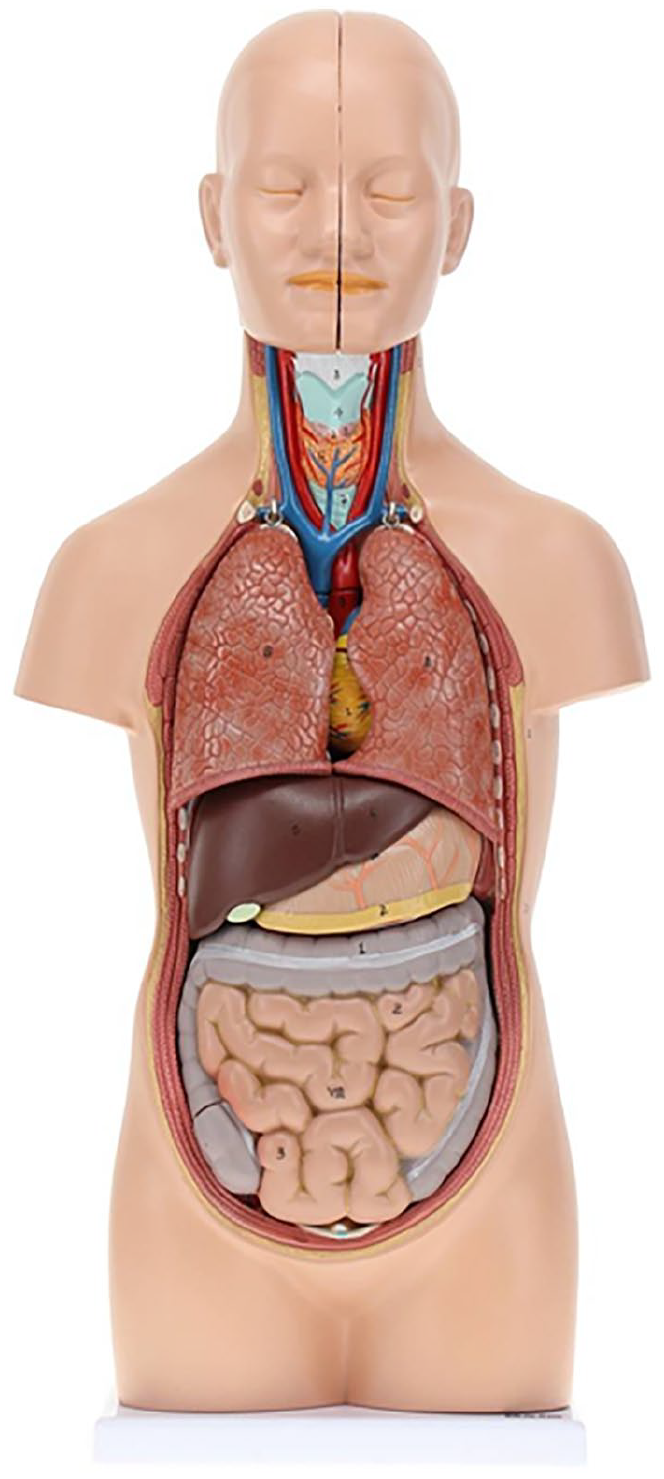
Tactile human anatomy model.
Class format
Educators should format sexuality education classes to best support student learning. One way to do this is to follow the CDC’s (2019) Characteristics of an Effective Health Education Curriculum. While single-gender classes during discussions of human sexuality are legal in the USA under Title IX (Office for Civil Rights, 2022), mixed-gender classes are more appropriate to bring a diversity of perspectives to the class (Swango-Wilson, 2011).
It is important that educators do not remove students who are typically included in general education health classes with their peers from the classroom during sexuality education instruction (Kapperman et al., 2022). Instead, for students who have visual impairments or who need to utilise hands-on instruction, educators should pre-teach privately in a secluded area (Kapperman et al., 2022; Kapperman and Kelly, 2013). In these cases, two adults should be present for the physical and emotional safety of all parties.
As previously identified, students with a variety of disabilities experience barriers in accessing information. Because of this, using both visual (or tactile) and concrete teaching strategies are critical to student comprehension (Couwenhoven, 2007). Sexuality education does not only occur in the classroom during health education classes. In accordance with CDC’s (2019) recommendations, educators should provide opportunities to practise skills such as relationship-building, self-advocacy, and consent in different settings (Swango-Wilson, 2011). Practice in developing healthy relationships with others can occur during structured class times, or be supported during informal social times such as recess and lunch. Teachers can provide homework, such as discussion questions that facilitate caregivers-student conversations (the FLASH curriculum mentioned above contains examples of this). Educators and school professionals should model appropriate relationship behaviour throughout the day, such as by asking for consent prior to physically assisting students with disabilities and respecting a student’s ‘no’. Conversations about the relationships between various members of the school setting (teacher-student, peer-peer, etc) can reinforce concepts of appropriate interactions between different people.
In addition to providing classes for students with disabilities, schools and other education agencies should consider hosting a separate class section for caregivers (Swango-Wilson, 2011). Parent interventions can change societal perceptions and enable parents to feel more confident in providing at-home sexuality education for their children (Clatos and Asare, 2020). Curricula such as Positive Prevention Plus (Special Education) (Positive Prevention Plus, 2020) and Rights, Respect, Responsibility: A K-12 Sexuality Education Curriculum (Advocates for Youth, n.d.) include resources that could be used in caregiver classes. Productive school, teacher, and guardian partnerships are essential to providing good quality sexuality education for students with disabilities (Sinclair et al., 2015). Caregiver classes held prior to sexuality education units in schools may increase guardian support of such programmes and provide them with the necessary knowledge to answer student questions at home.
Curricular content
Ideally, sexuality education classes should, at minimum, adhere to state and national standards for health education (National Consensus for School Health Education, 2022; SHAPE America 2024), but the US National Sexuality Education Standards provide a more comprehensive framework for teaching sex and sexuality topics (Schmidt et al., 2015). Research on sexuality education for students with disabilities suggests that teachers should provide information on safer sex practices but not make the act of sex the main focus (Swango-Wilson, 2011). Instead, focusing on practical ways to develop relationships and promoting self-advocacy and self-determination skills can support students to make healthy choices (Sinclair et al., 2015).
Violence and exploitation prevention
While sexuality education classes should not focus exclusively on danger, the National Sexuality Education Standards do include a strand on intrapersonal violence (Advocates for Youth et al., 2020; Collier, 2017). In particular, educators should incorporate privacy principles and exploitation prevention messages (Couwenhoven, 2007). Coursework should always use accurate terminology (Couwenhoven, 2007). As peers and caregivers are the individuals most likely to perpetrate sexual violence against students with disabilities, sexuality education classes should include information on how to safely report abuse from these groups (Swango-Wilson, 2011).
Consent
Disability can impact teaching and learning about consent in a variety of ways. Therapies for individuals with disabilities often focus on teaching compliance, which can interfere with conversations about consent and sex (Sammet Moring 2019). This is particularly concerning since ‘an individual cannot be sexually safe if they cannot be non-compliant’ (Kishbaugh et al., 2022: 4). Educators and therapists should therefore exercise caution to avoid only teaching compliance, as doing so can lead to unintended consequences for understanding consent in sexual situations. Instead, educators and therapists should strive to understand why students may act in ‘non-compliant’ ways in educational settings in order to design appropriate interventions to focus on cooperation rather than compliance (Kishbaugh et al., 2022).
For students with high support needs, ‘as far as is possible, staff must give maximum regard to the student’s right to give consent to physical contact’, while recognising that physical contact may not be avoidable when it comes to personal care (Hewett, 2007: 122). For some students, intimate physical contact is necessary when changing clothing, assisting with toileting, and supporting bathing. Modelling consent for students with high support needs may include providing choices about who will help with personal care needs, at what times of day this intimate contact will occur, and in which locations the student is most comfortable receiving support.
Sexuality
When designing sexuality education classes for students with disabilities or to include students with disabilities, educators should specifically discuss disability and sexuality (Krupa and Esmail, 2010). These conversations are beneficial to both children with disabilities and their non-disabled peers. Teaching about sexuality in inclusive settings can destigmatise disability to non-disabled students (Krupa and Esmail, 2010). In addition, incorporating images, scenarios, and other examples that include people with disabilities can create an inclusive environment in the sexuality education classroom.
Conclusion
Despite legislation such as the Individuals with Disabilities Education Act (2019) mandating free appropriate public education for children with disabilities, and state laws requiring public schools in 30 US states to teach sexuality education as a part of the health curriculum, students with disabilities still lack access to this valuable education (Holmes and SIECUS, 2021; National Conference of State Legislatures, 2020). Individuals with disabilities experience both societal and physical access barriers to learning sexuality education content. By adapting teaching strategies, pre-teaching, providing classes for guardians, and utilising content aimed at people with disabilities, educators can facilitate more positive learning outcomes for students with disabilities.
