



Abstract
Introduction:
The burden of non-communicable diseases (NCDs) is a major challenge for countries, regardless of their level of development. Social branding is an emerging approach to health promotion for NCD prevention. In this paper, the process of social branding is documented as a case study to help researchers develop similar kinds of interventions in the settings in which they work.
Methods:
The process of developing a social brand is documented through conversations with the project team, observations in the field, interaction with community local members, and information gathered through photographs, videos and newspaper clippings.
Results:
The social brand focused upon in this study was named the Aarogyachi Vaari (Health Pilgrimage) inspired by the Pandrapur Wari, a religious pilgrimage undertaken in the state of Maharashtra, India. Various stakeholders from self-help groups, panchayat raj institutions and schools from the local village collaborated successfully to implement the health event in a manner similar to the way in which diverse religious groups come together for the Pandrapur Wari religious pilgrimage. The Aarogyachi Vaari took the form of a strategically planned health event consisting of various health promotion stalls, many developed by local villagers themselves. The organisation of the event was aided by resource mobilisation within the local community.
Discussion:
Social branding can be an effective tool for health promotion in community settings. Studying people’s cultural preferences and what makes them feel connected and excited can lay the foundations for the creation of a social brand that reflects their choices and helps them take up healthy behaviours on their own. It is possible to mobilise a community for health through social branding that is culturally relevant and connected to the interests and priorities of local people.
Keywords
Introduction
Brands are defined by labels, signs or symbols, serving as tools to communicate their value and build relationships with audiences (Huhman et al., 2005). Branding goes beyond communication and persuasion; it involves positioning products, services and behaviours centrally within consumers’ lives and their broader social and physical context. Branding creates lasting associations that transcend individual advertisements or promotional activities (Evans et al., 2008a).
Social branding or brand equity is an innovative approach in health promotion that has been used in traditional branding concepts to encourage healthy behaviours such as condom use, tobacco consumption and substance use (Evans et al., 2008b, 2018). By appealing to people’s self-interests and fostering a sense of community ownership, social branding facilitates the adoption and maintenance of healthy behaviours, ultimately contributing to the prevention and control of non-communicable diseases (NCDs) (Vallone et al., 2017).
In 2017, India experienced approximately 4.7 million deaths and lost 226.8 million disability-adjusted life years (DALYs) due to NCDs. Addressing the rising trend of modifiable risk factors in India, such as unhealthy diet, physical inactivity, tobacco use and excessive alcohol consumption, is crucial for reducing the burden of NCDs (Sharma et al., 2024). However, it is also essential to create a supportive environment and raise awareness to encourage individuals to adopt healthy behaviours and to overcome challenges related to cultural norms, social influences and personal preferences (Jose et al., 2022; Price et al., 2009).
It is widely acknowledged that promoting health in the community presents a formidable challenge to public health. However, using social branding customised to the local context can help mobilise local resources, foster collective effort and engage the community meaningfully. This approach can be an effective tool in reducing risk factors for NCDs (Laverack, 2017).
In this study, we established a brand based on the popularity of a long-standing social event called the Pandharpur Wari in the state of Maharashtra, India. During this event, individuals from all over the state participate in a march to Pandharpur, where the deity Vithoba is worshipped. The participants in the march, known as warkaris, wear holy basil beads and sing praises of Vithoba. The tradition happens annually, and those involved pledge to abstain from tobacco and alcohol and to adopt a healthy lifestyle from then on. People of any religion can take part in the event (Pandhrichi Vaari, n.d.).
The concept of social branding, which engages and connects with people and fosters shared ownership among them through spiritual and cultural relevance, was used by the project to encourage people to take action against the rising burden of NCDs and associated risk factors, by linking the Wari to health. The process and effects of such efforts were documented in the form of a case study.
Context of the project which involved social branding
This social branding that took place in this study was part of a larger project funded by the Indian Council of Medical Research. The project took the form of a cluster randomised control trial to strengthen community responses towards NCD. The study was carried in four clusters comprising 100 villages: three in the intervention arm and one in the control arm. In the intervention arm, each cluster of villages implemented interventions through different channels, including schools, self-help groups, and Village Health, Nutrition, and Sanitation Committee (VHNSC) members. The control arm received the usual standard of care. The intervention involved the development and empowerment of change agents, along with the implementation of a participatory health promotion initiative. This process aimed to equip individuals or groups with the skills, knowledge and resources necessary to drive positive change within their communities. The study was implemented in collaboration with the district health system. Existing resources in Indian villages such as Village Health Nutrition and Sanitation Committees (Ved et al., 2018), members of women’s self-help groups (Khasnabis et al., 2010) and schools were engaged with for study implementation, in line with the principles of participatory development. The research protocol for the project has been published elsewhere (Mundra et al., 2023).
During the project’s implementation phase, the plan was to identify volunteers who were interested in taking responsibility for addressing NCD risk factors in their village. These volunteers were expected to actively participate in organising health events in each village to raise awareness and empower people to respond to NCDs. The goal was to establish a club in each village consisting of these volunteers and other significant people to carry out activities to empower the village members. To actively engage the community, project staff proposed the idea of social branding this process in a way related the popular social event Pandharpur Wari after discussing it with members of the community. They named it the Aarogyachi Wari or Health Pilgrimage.
Documenting the process of social branding
Information relevant to the process of social branding was collected through the following methods:
Interaction with the project team such as the primary investigator, co-investigators and field project staff involved in implementation.
Observation in the field relating to the organisation of the participatory health event.
Interaction with community members who participated in meetings for social branding and the health event.
Gathering contextual and focused information concerning the event through photographs, videos and newspaper clippings.
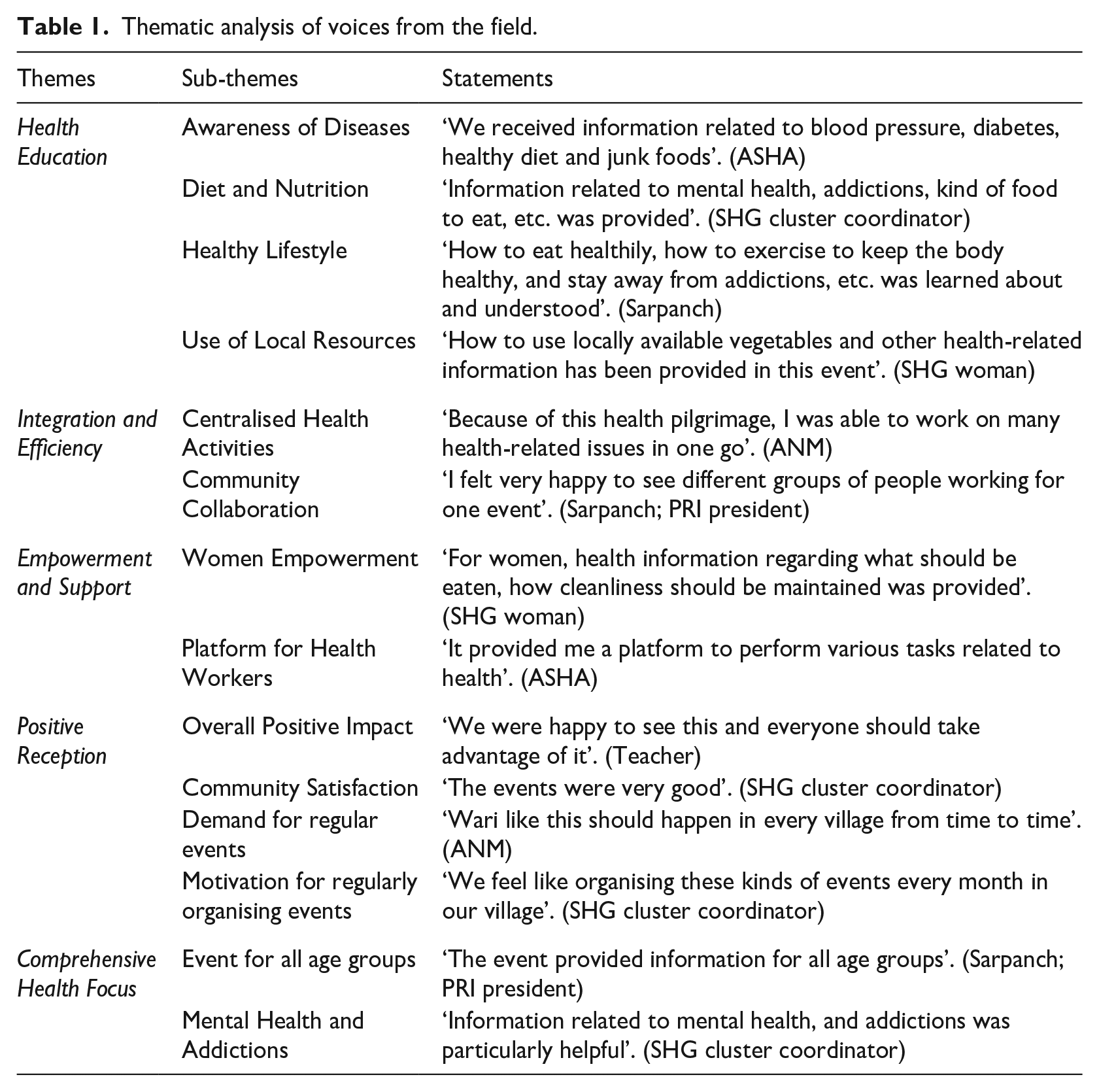
Thematic analysis was conducted based on feedback gathered from the various sources and the stakeholders who participated in the health event (Table 1).
Thematic analysis of voices from the field.
Ethical approval for the study was received from the Mahatma Gandhi Institute of Medical Sciences Ethics Committee (Reference: MGIMS/IEC/COMMEDIT 912020). Individuals diagnosed with chronic diseases received treatment from health and wellness staff, and were referred to a higher level health centre for further evaluation if necessary. It was planned that the intervention would be provided to the control group immediately after the project’s endline assessment.
What processes were involved in social branding?
The following processes were involved in developing the Aarogyachi Wari initiative.
Organising community dialogue with villagers
Discussions were conducted with key individuals in each participating village. These included members of the panchayat raj, the village governing body (Sukumar et al., 2019), educational administrators, members of the Village Health Nutrition and Sanitation Committee and members of women’s self-help groups (e.g. women’s microfinance groups). Discussion focused on what the village could do to address NCDs.
The discussions were aimed at promoting collaboration and engaging community members and local organisations. Topics included raising awareness about NCDs in the community, the importance of collective action to address NCDs, ways to involve local organisations and ways to increase community participation. In addition, the discussions focused on community’s expectations, the benefits of supporting the cause and each organisation’s interest in making the activities a success.
Discussion to determine a social brand
The project staff proposed the idea of developing an event which integrated health activities related to NCDs with those associated with the religious pilgrimage Pandharpur Wari. The focus was placed on encouraging healthy habits, promoting prevention through spiritual discourses such as bhajans and kirtans (songs praising the gods), and building on the local popularity of the pilgrimage. When community organisations and members were presented with this idea, they were excited and embraced the concept, feeling that it would help them connect their ongoing activities to social brand. The name was changed to Arogyachi Wari, which means Health Pilgrimage, to emphasise the importance of promoting health. Similar to the Pandharpur Wari, the Arogyachi Wari was to be initiated and carried out by the local people themselves without any external pressure. This approach was used to encourage people’s participation in health promotion.
Identification of key stakeholders and participatory planning
Project staff identified a wide range of stakeholders with the help of the local community. Various people such as the panchayat raj president and members; anganwadi workers from the Integrated Child Development Services (ICDS) scheme (Sachdev and Dasgupta, 2001) and the health and wellness centres (HWCs) (Lahariya, 2020); accredited social health activists; women’s community health workers, multi-purpose workers from the HWCs, school children and teachers; and members of women’s self-help groups, a community health officer, and an auxiliary nurse midwife, were involved in the health event which was heavily promoted through social branding. This collaborative approach was instrumental in creating an environment conducive to health awareness within the village.
Planning activities as part of the health event
After discussion with various stakeholders, a variety of activities were planned which involved setting up different stalls related to NCD risk factor awareness. These activities were organised by, or with the help of villagers, taking advantage of their local wisdom in various issues. The activities were designed to empower community members to find solutions to their own problems related to NCDs. During discussions related to activities, space was given for people’s opinions and suggestions to be aired regarding modifications in the activities. Villagers were actively encouraged to contribute to the planning with their local experience of issues and priorities. The resources needed for the health event were gathered from the local village through its constituent organisations, and the village residents took care of the arrangements with very little help from the project team. Following discussion with the stakeholders, a date was set for the health event which was to be promoted under the name of Arogyachi Wari – aali apli daari (the health pilgrimage has come our way).
Preparation for the health event
An awareness rally was conducted in each village a day or two before the health event. Permission was obtained from the local school to involve students in the rally. During the rally, placards with health messages about NCDs and invitations were prepared and distributed to all the households. Similar to the Pandharpur Wari pilgrimage, a religious group called Bajan Mandali, known for singing songs praising the gods, was asked to sing bhajans and kirtans to mimic the traditional Pandharpur Wari and to promote health. Printed invitations for the health event in the village were handed out to people during the rally. This collaborative approach played a crucial role in fostering a health-conscious environment within the village.
The Integrated Model of Communication for Social Change underpinned the work of the project, with the Mahatma Gandhi Institute of Medical Sciences serving as a catalyst. Community dialogue was used to enhance mobilisation, collective action led to the development and implementation of a village action plan focused on NCDs, with consideration taken of external constraints such as the COVID-19 pandemic, cultural contexts and migration. Support for the Arogyachi Wari was provided through partnerships with district authorities from various government departments, including health, education, ICDS and the MSRLM (Maharashtra State Rural Livelihoods Mission). Anticipated individual and social change, and impact, were identified – with individual change referring to behavioural shifts relevant to NCD risk factors; social change pertaining to modifications in community and social norms related to NCDs; and social impact being measured by the effect of the intervention on NCD risk factors within the community (Health Communication Capacity Collaborative, n.d.) (Figure 1).
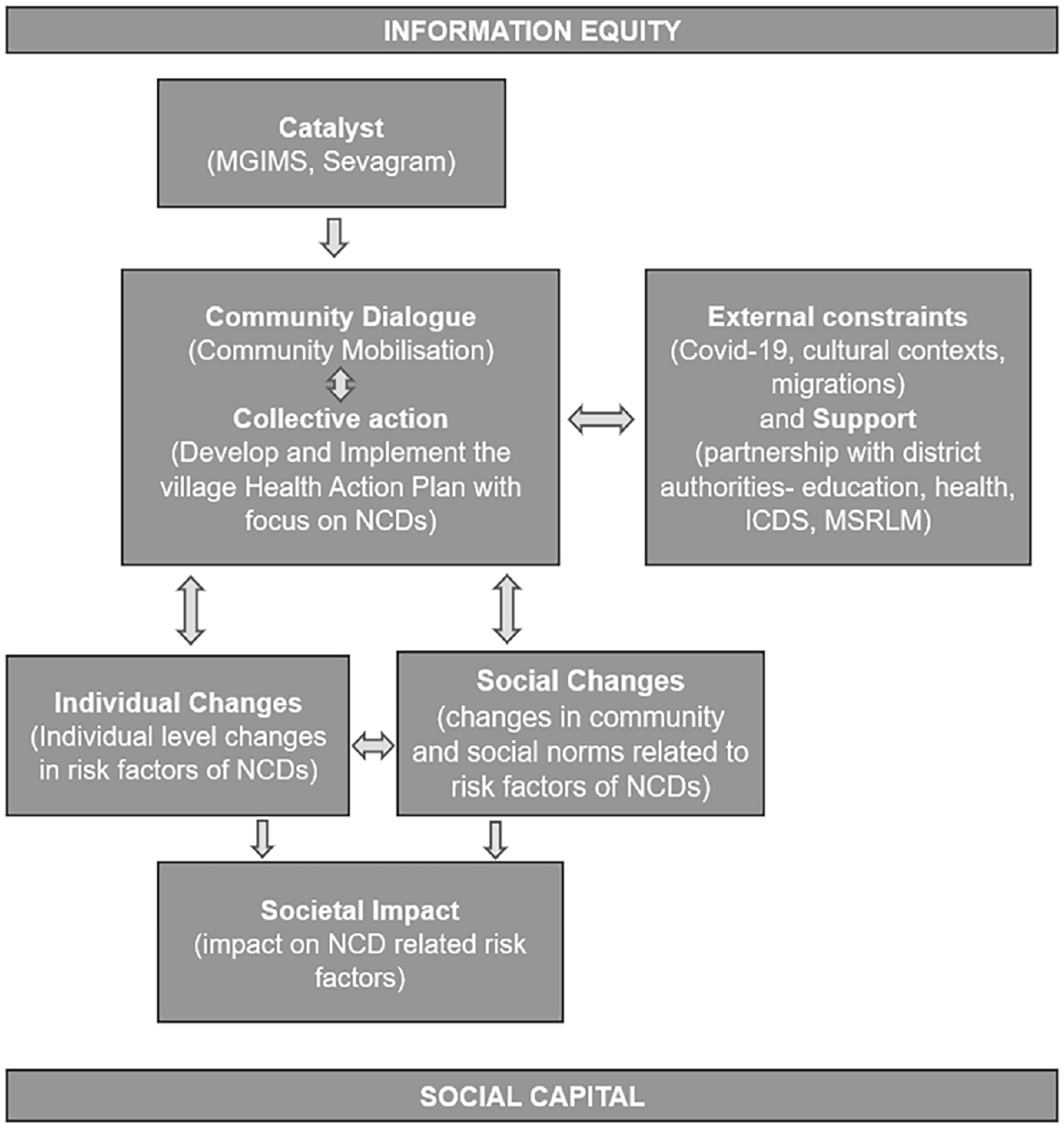
‘Integrated Model of Communication for Social Change’ theoretical framework.
What events took place as part of the social branding process?
The project team organised a number of events that included games and health education stalls. These included the following:
Khelnychi gammat jammat (a fun and enjoyable board game)
A game at this stall introduced players to NCDs by using healthy habits as ladders and unhealthy habits as snakes. It encouraged players to make healthy choices in order to achieve the goal of living a healthy life (Figure 2).
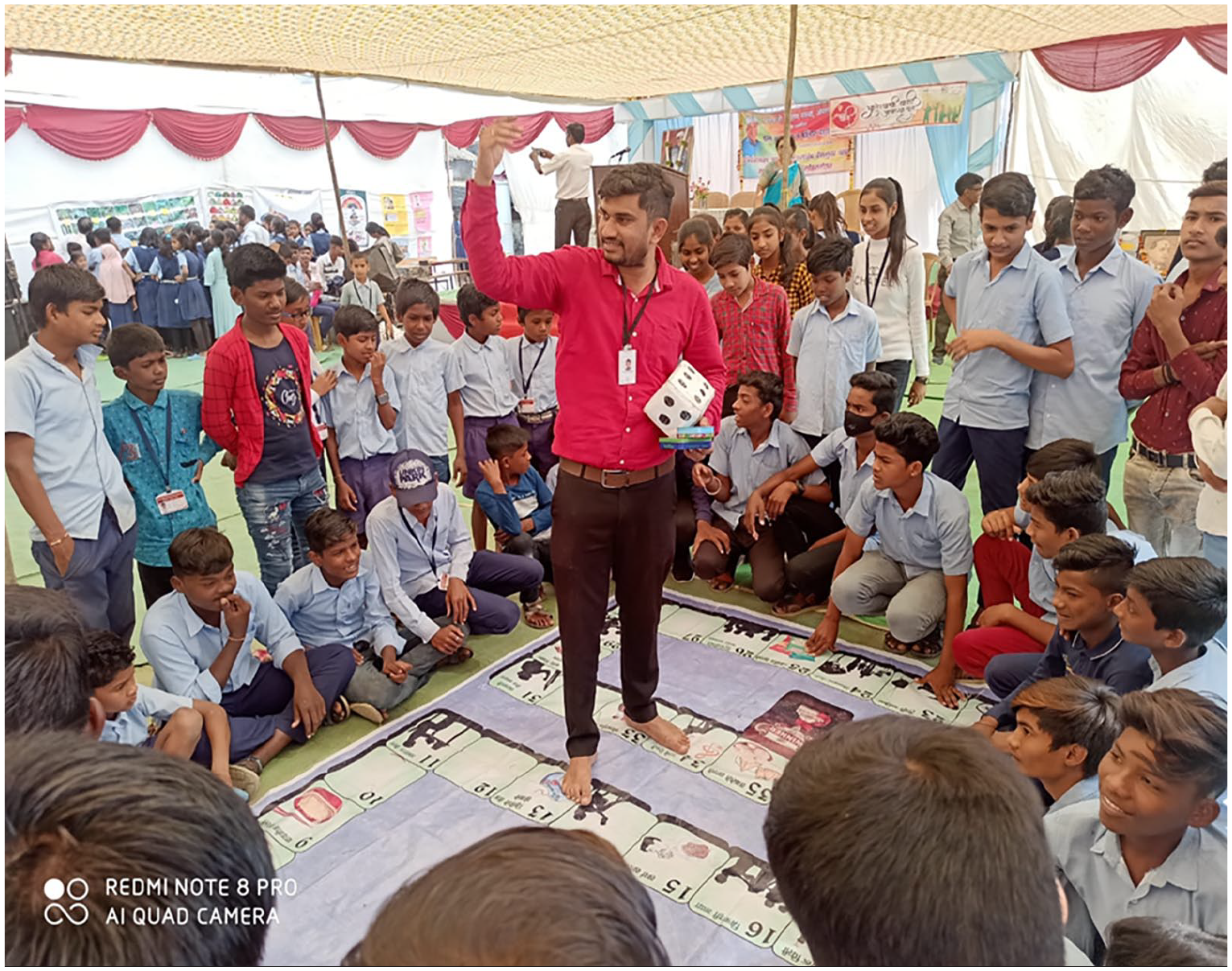
Khelnychi gammat jammat (a popular board game).
Aarogyach zaad (the health tree)
This stall featured two trees: one with healthy habits as roots leading to a healthy life in branches and leaves, and another with risk factors for NCDs in its roots and their consequences in the branches above which were without leaves. Discussion about the two trees and what they signified for villagers’ lives was encouraged.
Olkha pahu mi kon? (Guess what I am? – a game which involves identifying local food items)
This stall-based activity encouraged people to identify locally available but underused food items to promote awareness of the wide range of healthy local options (Figure 3).

A stall: Olkha pahu mi kon? (identifying local food items).
Mi kaay khato? (What do I eat? – healthy and unhealthy foods)
Plates were arranged with healthy food on some of them and fast food on the others. Participants were asked to think and write about the nutritional value of the items they ate.
Mala he mahiti hav (a body mapping exercise)
In this activity, participants were encouraged to identify the damage tobacco causes to different organs within the body. Villagers selected pictures of affected organs from a pile and placed them on a body map to show where these organs are located in the body.
Ek aisi hawa chali (a game to promote physical activity)
At this stall, participants were invited to play a musical chairs game and were educated about the importance of physical activity.
Jaye to Jaye kaha? (Where to go in life? – choosing a path for the future)
A picture showed two pathways, one representing life with a non-communicable disease and unhealthy habits, and the other joining a ‘Health Club’ to reduce NCD risk factors. Participants were asked to choose one of the paths. This activity helped identify volunteers for the health clubs that will be formed in each village for further action.
Beyond the above activities, a community health officer from the local HWC was invited to arrange to screen community members for diabetes and hypertension at one of the stalls (Figure 4).

NCD screening by the staff of the health and wellness centre (public health system) staff during the health event.
Market stalls run by women from the village were also included in the event at the villagers’ suggestions. Members of women’s self-help groups prepared healthy food items from their family kitchens and talked about methods of growing organic foods. Anganwadi workers also arranged to display some healthy food items and provided nutrition-related information to children, pregnant women and lactating women. In addition, games and toys for the children were provided.
Discussion
The social branding employed in this study under the guise of Arogyachi Wari proved successful in involving the community in activities to reduce NCD risk factors. The involvement of local village stakeholders in the project was pivotal to its success.
Similar branding initiatives among adolescents and young adults have been shown to be successful in reducing risk factors related to tobacco use and physical activity. Studies have revealed that children who engage with social branding activities are more likely to develop healthy attitudes (Vallone et al., 2017; Wong et al., 2004). While other studies have utilised social media branding as an approach to health promotion (Jamil et al., 2022; Pawlak et al., 2023), we chose not to adopt this approach since members of our village communities had limited use of social media. Instead, we used social media primarily to publicise the events we organised.
The social branding exercise reported on in this paper satisfied the effectiveness criteria recommended by the Fuzzy decision-making trial and evaluation laboratory (F-DEMATEL) for social marketing success through its focus on: using effective communication messages; meeting the needs of beneficiaries; providing greater benefit than cost; employing a mix of marketing elements; having a clear customer orientation; and playing to organisational advantage and market selection (Liao, 2020).
One of the strengths of the study was the community-based social branding approach it adopted, which allowed for an examination of the impact of branding on health behaviours related to NCDs in a real-life context. The study engaged a variety of stakeholders from the local community who were in a position to influence healthy attitudes within the community. However, the study was limited by its inability to use quantitative methods to assess the effectiveness of the social branding employed.
Learning from this social branding exercise
Inspiration from tradition
The project’s social brand, Aarogyachi Wari, drew inspiration from the well-known Pandrapur Wari pilgrimage, a cultural phenomenon in Maharashtra, India. Like the pilgrimage to Pandrapur, participants in the Aarogyachi Wari embarked on a journey towards a state of betterment, pledging to embrace healthy habits to mitigate the risks of NCDs.
Community engagement and connection
The concept of Aarogyachi Wari elicited a palpable sense of connection and enthusiasm from within the local community. Through brainstorming sessions and engaging discussions, stakeholders and community members collaboratively shaped the social branding of the initiative, fostering a deep sense of ownership and commitment to the cause. The community’s enthusiastic response underscored the resonance of the initiative’s religious connotations and its potential to unite individuals towards a common goal.
Self-sustainability and resource mobilisation
Remarkably, the Aarogyachi Wari achieved self-sustainability and resource mobilisation within the villages themselves, demonstrating the potent force of collective action and community-driven initiatives. With only minimal external funding, the initiative galvanised community members to invest time, money and effort in organising health events and promoting healthy behaviours. This grassroots approach highlights the power of belief and a shared purpose in mobilising communities for health promotion.
Unity in diversity
Similar to the harmonious convergence of diverse religious groups during the Pandharpur Wari pilgrimage, various stakeholders collaborated to orchestrate health events under the banner of Aarogyachi Wari. This collaborative spirit not only mirrored the unity of the pilgrimage but also invigorated participants, fostering a deep sense of connection and excitement for the cause. The success of Aarogyachi Wari in mobilising communities without or with only minimal external funding underscores the profound connection individuals felt with the cause, emphasising the transformative potential of collective action and community engagement.
Empowerment through participation
The core aim of the Aarogyachi Wari was to generate a sense of personal responsibility for health, achieved through a tapestry of participatory methods and research-driven approaches. Stakeholders from various sectors actively participated in organising health events and promoting healthy behaviours, empowering individuals to take charge of their health and well-being. The initiative’s inclusive and participatory approach fostered a sense of ownership and agency among community members, driving sustained engagement and commitment to health promotion efforts.
Community mobilisation and momentum
To date, the Aarogyachi Wari has mobilised 63 villages, rallied their resources and invested time and effort in combating NCD risk factors. The initiative’s success in mobilising communities and promoting health behaviours underscores the transformative potential of social branding as part of health promotion. By fostering community cohesion and empowerment, the Aarogyachi Wari has sparked a movement towards healthier lifestyles and empowered communities to prioritise health and well-being.
Implications for future policy and research
The case study presented here offers valuable insights into the efficacy of social branding as a tool for community-based health promotion, particularly in the context of efforts to prevent NCDs. A number of implications can be identified.
Policy implications
Promoting health equity. In future work, policymakers should prioritise inclusive and equitable health policies to address the social determinants of health. Activities such as social branding can contribute to reducing health disparities by engaging marginalised community members in health promotion activities that they might otherwise be hesitant to participate in and empowering them to take charge of their own health.
Investment in prevention. Given the significant burden of NCDs on healthcare systems and economies in India, policymakers should prioritise investment in prevention strategies. Social branding initiatives offer a cost-effective approach to promoting healthy behaviours and reducing the prevalence of NCDs and NCD risk factors at the population level.
Supporting community-led initiatives. In future work, policymakers should create enabling environments that support and incentivise community-led health promotion. They can do this by providing seed funding, technical assistance and capacity-building support to grassroots organisations and community groups through social branding activities.
Research implications
Evaluation of effectiveness. Future research should utilise robust evaluation methodologies to assess the effectiveness and impact of social branding interventions on health outcomes. Longitudinal studies and randomised controlled trials can provide valuable insights into the behaviour change and health benefits associated with social branding campaigns.
Scale up and adaptation. Research should explore strategies for scaling up successful social branding models to reach larger populations and diverse cultural contexts. In addition, studies examining the adaptation of social branding approaches to different health issues and settings can inform the development of evidence-based practices.
Exploration of mechanisms. Further research is needed to elucidate the underlying mechanisms through which social branding influences health behaviours and outcomes. Understanding the psychological, social and cultural drivers of behaviour change can inform the refinement of social branding strategies and interventions.
Conclusion
The Arogyachi Wari project described in this paper illustrates the influential role of religious and cultural symbolism in health promotion branding in India. By harnessing cultural symbols and community engagement, the initiative catalysed a village-led movement towards healthier lifestyles and empowered communities to take charge of their health. As a model for community-driven health promotion, the Arogyachi Wari initiative underscores the importance of using culturally relevant approaches to address the global burden of NCDs. This case study offers valuable lessons for practitioners, policymakers and researchers seeking innovative approaches to engage in NCD prevention.
