




Abstract
Objective:
To provide an evaluative overview of the life and contributions of Raja Parasuraman.
Background:
From his earliest contributions in clarifying and explaining the problematic area of vigilance to his most recent interdisciplinary advances in understanding how genotype relates to behavior in complex technical environments, Raja Parasuraman was a giant of human factors and ergonomics. Our present exposition articulates and recounts his many contributions to our science and to science in general beyond the confines of our own discipline.
Method:
We use the history of scientific contributions, biographical analysis, and reported personal experience to accomplish our overall assessment of the man and his work.
Results:
We conclude that Parasuraman’s contributions were unique, substantive, and seminal, and will continue to influence our science for many years to come.
Application:
This work will serve as a record for those to come who look to make significant contributions to the goals, aims, and aspirations that we set ourselves in human factors and ergonomics in seeking to improve the human condition.
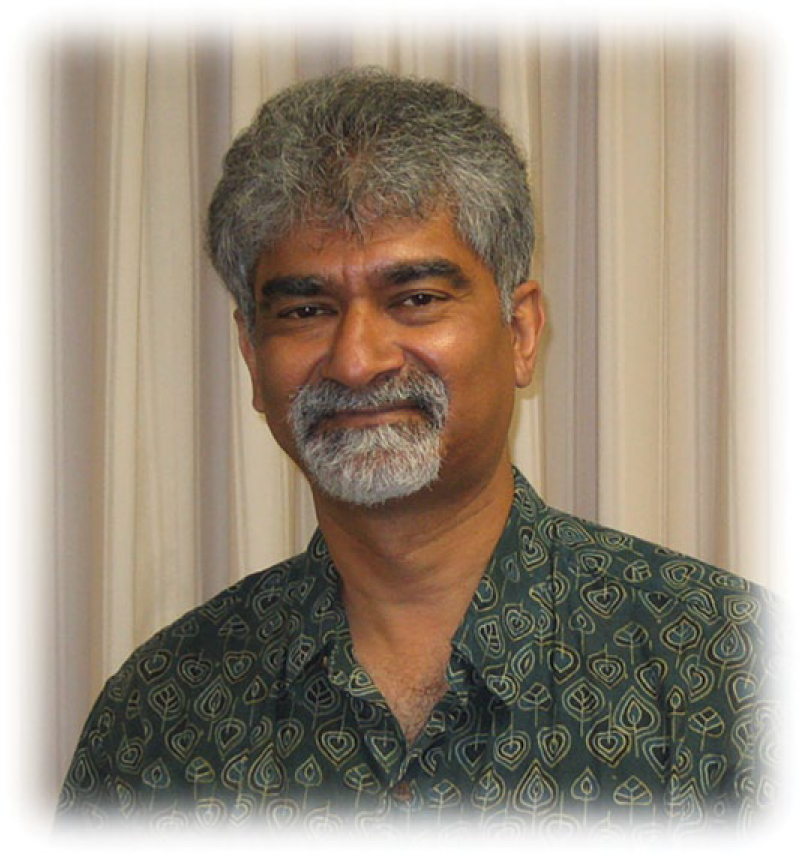
This introductory article looks to frame the life, insights, and scientific contributions of Raja Parasuraman. He was a giant of our field and was taken from it far too early. As a preeminent scientist, his overall work spanned numerous domains. With respect to his specific scientific achievements, Raja made profound contributions to the areas of vigilance (Parasuraman, 1979; and see Frankmann & Adams, 1962; Hancock, 2017; Warm, Finomore, Vidulich, & Funke, 2015), human factors/ergonomics and cognitive neuroscience, as well as founding the area of neuroergonomics (e.g., Parasuraman & Rizzo, 2007) and initiating studies in cognitive genetics. In what follows, we wish to provide an overarching assessment of Raja’s career, interspersed with personal observations that provide the necessary spice of humanity to what might otherwise be a laudable but arid litany of professional achievements. Thus, the present introduction is not simply an account of Raja’s science but also an overview of the impact that he made on our community, which was profound. In addition, we provide an overview of the articles contributed to the special issue, which reflect the broader impacts of Raja’s scientific contribution beyond his own personal work.
While no human can live the life of another, we all contain a sufficient spark of empathy to at least glimpse the unique experiences of others. Thus, we start here with Raja’s first great adventure, which even to a gifted adolescent of the Indian subcontinent must have represented a daunting challenge. For, at the relatively young age of 15, Raja had won an all-India scholarship to attend a boarding school in England. With characteristic humility and self-deprecation, Raja always liked to emphasize that he actually came second for this all-India scholarship and only “won” because of the late withdrawal of the putative winner. Raja exhibited no such metaphorical “cold feet” in going to England. Nevertheless, he must have experienced literal cold feet moving from the warmth of the Indian west coast city of Mumbai (Bombay) to the frigid confines of Oakham School, then located in Rutland, on the edges of the marshes of Lincolnshire and the flatlands of East Anglia, whence arrive winds that depart from the Urals! How different, how foreign, how alien such a new life must have seemed, not the least because the culture of any major English public school is foreign and arcane even to most Englishmen! It is to Raja’s great credit that he not simply survived but manifestly flourished under such circumstances. Truly, in his earliest formative years, he stood between two worlds. The capabilities, characteristics, and insights derived from such an ability to span multiple cultures stood him in great stead when assimilating the mastery to cross disciplines and scientific communities, as became evident in the decades to come.
His next step constituted a move to London and a degree in electrical engineering at Imperial College. The passion for logic and analytical determinacy, as embodied in such study, never left him. Indeed, we could well argue that his next step to post-baccalaureate studies at Aston University represented a logical progression in which the trained electrical engineer now embraced the greatest possible problem in that domain: unravelling the human brain. The step from the “hard” science of an undergraduate degree in electrical engineering to the “difficult” sciences of applied experimental psychology again demonstrates Parasuraman’s capacity to bestride two worlds and successfully reconcile their differing rules, perspectives, and traditions to bring new and important insights to the fore. The step to the tutelage of Roy Davies was a natural one and a very happy conjunction for our science. The moment when the future leader came under the direction of one who had already established so many important contributions of his own (e.g., see Davies & Tune, 1970) was a special one indeed. To encapsulate the years that follow, we might simply say that Davies posed to Parasuraman the then apparently intractable problem as to how to categorize vigilance tasks (see e.g., Buckner & McGrath, 1963; Jerison, 1963; Mackworth, 1950) and that Parasuraman largely solved it (see Parasuraman, 1976, 1979; Parasuraman & Davies, 1977). Of course, this overstates the case for effect. Not all of the problems and issues of vigilance were magically dispelled at one stroke (Thomson, Besner, & Smilek, 2016). However, it is not such an overstatement that it strains either reality or the importance of the order brought to the field by the vigilance taxonomy (Hancock, 2013, 2017; Parasuraman, Warm, & Dember, 1987; See, Howe, Warm, & Dember, 1995; Warm & Dember, 1998; Warm et al., 2015; Warm, Parasuraman, & Matthews, 2008). The problem that Parasuraman largely solved was that correlations of performance across vigilance tasks were consistently low, although mostly positive. Hence, performance effects of an intervention might not generalize across tasks, so vigilance effects seemed to be task specific and not reflective of an overall phenomenon. The Parasuraman and Davis taxonomy established an empirically based framework in which performance correlations were higher within categories than across categories. As that early contribution has been extensively discussed elsewhere (e.g., see Hancock, Volante, & Szalma, 2016), we do not belabor the point here. Suffice to say that vigilance research may well have withered without Parasuraman’s critical intervention.
The newly minted Dr. Parasuraman had made a series of leaps between multiple geographical and conceptual worlds. His next step recapitulated his first step in early adolescence with a move across the Atlantic to yet another new world. As one of us can attest from direct personal experience (PAH), the cultural difference between England and America is at once subtle and profound. Subtle because of the commonality of language, profound because of the many and legion differences that lie close to the thresholds of familiarity. As an experienced traveler, Parasuraman again excelled in the unique environment of southern California. On the personal level, Raja was now geographically close enough to spend occasional weekends with his much loved brother Bala (and Bala’s wife Lynelle), who were excelling in Silicon Valley; Raja even brushed shoulders with celebrity since he had the occasion to spend some months in one of Olivia Newton John’s houses taking care of some of her dogs after overhearing that their current caretaker did not spend enough time with them. On the scientific front, in collaborating with Jack Beatty at UCLA, Raja was engaged in a particularly productive phase of his career; after all, how many of us can boast three papers in Science in a short, four-year interval (Nuechterlein, Parasuraman, & Jiang, 1983; Parasuraman, 1979; Parasuraman & Beatty, 1980)? It was this record that led Raja to an associate professorship at The Catholic University of America in 1982. Thus, Raja was never actually an assistant professor!
It was at this juncture that he began in earnest to produce the next generation of outstanding researchers. The leap from West Coast to East Coast, from large public university to smaller private institution may not have been quite as stark as his previous transitions, but again, it proved his ability to adopt, adapt, and advance; to embrace multiple worlds and explore and benefit from multiple experiences.
The productive years of the Cognitive Science Laboratory (CSL) followed. The two worlds here that characterized Raja’s professional milieu were the abiding interest in the practical ramifications of human interaction with technology alongside a profound commitment to the basic understanding of brain function (see e.g., Parasuraman, 1998). It was a dualistic pursuit that, as is the case with many human factors researchers, served to energize and motivate. Here indeed were two worlds, and he was equally at home in both and equally acknowledged by his mutual colleagues. Honors naturally followed. But Raja was no vacuous “pot-hunter”; he was ever motivated by the work itself and always leavened by and tempered with an irrepressible humor. Raja could do this because he understood what was meaningful in science and could distinguish it from the trivial.
It was also during these years that, despite having physically moved to new worlds, Raja became an active mentor and advocate for cognitive science and human factors in his motherland. For example, he hosted Indramani Singh, from the oldest University in India, as a postdoctoral researcher several years in a row while at Catholic University and then helped Indramani start the Cognitive Sciences Laboratory at Benaras Hindu University (BHU) in Varanasi. Raja encouraged and persuaded well-established researchers to infuse life into the fledgling program in its early years through a series of “Cognition and Health” conferences where the likes of individuals such as Michael Posner, Thomas Rammsayer, Joel Warm, Arthur Fisk, and Wendy Rogers and many other luminaries shared an exchange of science and culture. The conference continues today. Relatively recently, Raja was again honored as the keynote speaker and driving force behind the initiation of the Cognitive Science program at BHU, now one of the most active of such programs in the country. Raja’s commitment to mentoring provides ample evidence of his ability to remain focused on the long-term meaningful contributions he could make.
Raja’s last professional move was just across town. Enticed by the vista of new and energetic colleagues as well as new challenges, he moved to George Mason University in 2004 and added immeasurably to what was already a very strong program. At one and the same time, he sought to fuse his two professional strands, and thus was neuroergonomics born (Parasuraman & Rizzo, 2007, 2015). Characterized as the brain at work, neuroergonomics seeks to add the study of the brain to human factors and ergonomics research and a study of the mind and psychological theory to neuroscience. Such a symbiosis between the rapidly growing research in neuroscience and the needs of the real world proved to be a most fruitful interdisciplinary pursuit. It has helped considerably in the search to understand action in the context of our technological environments (and see Hancock, 2009; Hancock & Warm, 1989). Such was the fecundity of that vision that the first International Conference on Neuroergonomics has just been held in Paris, a meeting attended by over 200 scientists from across the globe. Nor was this the only synthesis that Raja was engaged in. His most recent thrust was to look for genetic markers that help predict performance capacities and variations and to its associations to the practical issues of selection, training, and design. Indeed, it was specifically for such work that he won his third Ely award, given annually for the best paper published in this very journal (Parasuraman et al., 2014). Only recently, Raja had published work with his longtime colleague Pam Greenwood on research at the forefront of genetics, training, and cognitive aging as mediated by his overarching and perennial interest in attention (Greenwood & Parasuraman, 2012). This work, when it was first begun in 1998, examined the impact of variants of the Alzheimer’s susceptibility gene APOE on cognition (e.g., Greenwood, Sunderland, Friz, & Parasuraman, 2000). It was among the first studies to look at the effects of normal genetic variation on cognition and cognitive aging. Such work has now begun to serve as a benchmark from which to launch future efforts in both gerontology and gerontechnology and even help found the new field of cognitive genetics.
Raja engaged in integrative science throughout his career by synthesizing diverse areas including vigilance, neuroscience, automation, and the study of individual differences. On the surface, these areas seem only tenuously linked, but Raja saw very clearly the deep structure that interconnected them. As only one example, Raja showed us how individual differences in performance could be theoretically and empirically integrated with cognitive neuroscience and human factors (Parasuraman, 2009). He did this by investigating genetic markers that relate to basic cognitive processes (e.g., Parasuraman, Greenwood, Kumar, & Fossella, 2005) as well as more complex tasks representative of operational environments (e.g., automation; Parasuraman et al., 2014).
Raja’s legacy shall endure in his scientific achievements, but it also manifests in the many scientists he nurtured and mentored. His students have become active researchers in cognitive science, human factors, neuroscience, and all factorial combinations of these! HFES recognized this in 2006 by granting Raja the prestigious Fitts award for outstanding contributions to the education and training of human factors professionals. The influence Raja had on students extended well beyond the confines of his laboratory, however. His high expectations of people were communicated well beyond his own immediate and local sphere. One of us (JLS) initially met Raja as a first-year graduate student at a Festschrift for William Dember held in 1996. Both at that time and every year since, the kindness and humility Raja effused and his genuine interest in what students were doing never ended. Students were naturally drawn to him, not only because they had read his seminal papers on vigilance and automation but also because he always responded with friendly, engaging, and fun conversations. He never forgot the importance of the coming generation and was always appropriately generous with his time. This may be one reason Raja often had a large group of students around him at HFES meetings. For those students who “came of age” after Raja had established a well-deserved reputation as a leader in multiple fields, he was a professional mentor (even though many were not students in his laboratory) and a role model for how to conduct oneself as a scientist and human being. His was such a career replete with achievement that it is hard to know where to end this long story of his interdisciplinary and transdisciplinary achievements.
But no memorial can be complete that simply recounts the many professional and academic achievements of an individual. Most crucially, there is the personal dimension to consider. We surely liked him, for one of us (CB) even chose to marry him! Like all of the truly gifted, Raja never felt any need to “exhibit” his talents. Perennially collegial and persistently helpful, Raja’s enthusiastic commitment was the synthesis of the personal and the professional. To be a colleague was to be a friend. It is an epitaph many would aspire to achieve, but few do. We are indeed honored to write this discourse in remembrance of our friend. Our loss is not simply a scientific one; it is a deeply personal grief. With our present words, we seek to assuage that grief, to the degree that this will ever be possible.
Contributions to the Special Issue
A number of works constitute the present special issue, and each features a dimension of science to which Raja Parasuraman contributed so much. In the first paper, Hancock reexamines the nature of vigilance, with a particular eye to Raja’s earliest works. In particular, the boundaries and thresholds of the classic Parasuraman taxonomy are evaluated and their present-day relevance considered in light of more recent findings. In particular, this work considers the applicability of vigilance to a technical world, which is ever-more dominated by semi-automated, automated, and autonomous systems (Hancock, in press). The conclusion here is that problems of vigilance and sustained attention are not simply alive but are very much growing in our modern world. And we must all ask whether it is a wise and human-centered policy to leave vigilance as the one vestigial role for human operators who appear to prove intrinsically poor at such a capacity anyway.
The paper by Matthews, Warm, and Smith uses structural equation modeling in two experiments to examine the extent to which subjective state can index resource availability for vigilance. These authors also use Parasuraman’s taxonomic framework of key factors that impact vigilance and explore the theoretical fit of a unitary versus multiple resource account of simultaneous versus successive task demands. They ultimately conclude that a unitary resource account best explains their findings that loss of task engagement is associated with performance decrements in each task type.
Funke and colleagues apply the neuroergonomic method of cerebral blood flow velocity (CBFV) together with a metric of eye closure (PERCLOS) to examine the impact of spatial uncertainty on vigilance. In their manuscript, they illustrate how spatial uncertainty increases information processing demand resulting in poorer overall performance relative to conditions of higher spatial certainty. Their interpretation of these results within the resource model of vigilance (Parasuraman & Davies, 1977) is corroborated by concomitant observations of changes in both CBFV and PERCLOS.
Laurie-Rose and her colleagues employed a version of the NASA Task Load Index (Hart & Staveland, 1988), modified for use with children, to measure the effects of spatial uncertainty on the manner in which children perceived the workload of a vigilance task. As has been found previously with adult observers, spatial uncertainty also degraded the youngsters’ performance efficiency in comparison to that on a spatially certain task as well as elevating their task-induced workload. Results confirm that the modified version of the NASA-TLX can be used effectively with children, a result that can enable comparative studies of workload between adults and children on vigilance as well as a variety of other tasks. It indicates that extant tools and techniques can be very helpful in the emerging field of “educational ergonomics.”
The vigilance decrement then, and efforts to develop counter measures to it, remains a key human factors issue (see Caggiano & Parasuraman, 2004; Hancock et al., 2016; Wolfe, Horowitz, & Kenner, 2005). At present, there is an ongoing debate between those who interpret this increasing rate of failure over time on task to detect signals as being due to task underload versus those who interpret this increased failure proneness as being predominately due to cognitive resource depletion and task overload. To evaluate such competing propositions, Helton and Russell asked their participants to perform a spatial vigilance task and provided six types of interruptions midway through the vigil that varied in the amount of task demand and qualitative congruence with the primary vigilance task. Resource theory led them to make two possible predictions out of the 6!, or 720 possible orderings of the performance benefits of the six interruption conditions. One of those predictions was confirmed, thereby providing support for the resource account of the decrement.
The paper by Patterson provides an extensive review and analysis of the dual-process (i.e., analytical vs. intuitive cognition) literature. His work shows that intuitive cognition dominates human reasoning and decision making in virtually all situations examined. He discusses the implications of dual processing for the Parasuraman, Sheridan, and Wickens (2000) model and taxonomy of human-automation interaction. Patterson then presents modifications to that taxonomy that incorporates such analytical and intuitive cognition.
The study by De Visser and his colleagues (including Professor Parasuraman himself) investigated the effects of exogenous oxytocin on trust, compliance, and team decision making with agents who varied in their degree of anthropomorphism (computer, avatar, human) as well as reliability (100%, 50%). Their study showed that oxytocin increased trust, compliance, and team performance for agents with intermediate anthropomorphism. These effects provide the first empirical support for the premise that oxytocin increases affinity for social stimuli in automated aids.
Adaptive systems require real-time mental workload assessment to be capable of performing dynamic task allocations or operator augmentation (and see Hancock & Chignell, 1988). Borghetti and colleagues use machine learning algorithms and a Monte Carlo sampling method on electroencephalographic input to infer operator workload based on IMPRINT workload model estimates. Their modeling techniques demonstrate how to use neuroergonomic methods to develop operator-state assessments that can consequently be employed in adaptive systems.
The study by McKendrick and colleagues (again including Raja as a coauthor) used wireless near infrared spectroscopy (fNIRS) to monitor auditory working memory performance while participants were sitting, walking in a quiet room, or walking outdoors. During executive processing, loading of selective attention and physical work resulted in deactivation of the bilateral prefrontal cortex and degraded working memory performance. The authors conclude that physical work and concomitant selective attention may supersede executive processing in the distribution of mental resources. Their work reinforces an emerging notion that monitoring human operator capacities when they are engaged in combined physical and cognitive activity can be of great value (Block, Zakay, & Hancock, 2016).
In sum, the papers in this special issue attest to the impact made by Raja in so many dimensions of investigation. His legacy clearly lives on.
Key Points
Raja Parasuraman had a profound effect on all of human factors and ergonomics.
His many contributions are characterized as syntheses between multiple worlds of discourse.
His commitment to science was matched by his commitment to people, and as a result, he will be sorely missed.
Footnotes
Acknowledgements
We would like to thank the two unknown reviewers and the journal’s Editor for their most helpful comments in completing this work.