




Abstract
Objective
Myoelectric activity of neck extensor muscles and head kinematic variables, when using a smartphone for one-handed browsing and two-handed texting while sitting, standing, and walking, were evaluated to compare the neck muscular load during these tasks and across the posture conditions.
Background
There has been limited research on the relation between head-down postures and the muscular load on the neck of smartphone users.
Methods
Twenty-one asymptomatic young users were asked to perform one-handed browsing and two-handed texting tasks in each of the posture conditions, and the myoelectric activities of the neck extensor muscles, head kinematic variables, and upper back posture were quantified.
Results
The muscle activation level when using a phone during walking was 21.2% and 41.7% higher than that of sitting and standing on average (p < .01). Head vertical and angular accelerations were also significantly greater (p < .01) for walking than for sitting and standing conditions. Between the two conducted tasks, participants flexed their heads more significantly (p < .01) with higher activation of the neck extensor muscles (p < .01) when texting as compared to when browsing.
Conclusion
Results indicate that two-handed texting while walking would be the most physically demanding scenario for neck musculature, and it might be attributable to the dynamics of the head while walking with the head facing downwards.
Application
These findings can be used to better understand the potential relation between smartphone use and the occurrence of neck musculoskeletal problems and to inform the users of the ergonomic risks of using smartphones while walking.
Introduction
Smartphones have become a major interface for information exchange and communication in our everyday life. The percentage of the population owning a smartphone in the United States increased from 38% in 2011 (Google, 2012) to 77.0% in 2018 (Newzoo’s Global Mobile Market Report, 2018), and it has been reported that the rate has reached to almost 100% for some countries, including South Korea (Deloitte, 2017). Thus, the term “smartphone users” does not mean a specific user group anymore.
Along with the growing user population, health and safety issues associated with the intensive use of the device have also been growing. One of the frequently mentioned and less studied issues is the development or occurrence of musculoskeletal problems in the neck, often referred to as text-neck symptoms. Epidemiological studies have reported the high prevalence of neck pain symptoms or discomfort among intensive smartphone users (AlAbdulwahab et al., 2017; Almhdawi et al., 2017) and suggested a possible association between the prolonged and/or repetitive exposures to head-down postures during the smartphone use and the occurrence of the neck musculoskeletal discomfort (Berolo et al., 2011). This association, however, has not yet been well supported in ergonomics or biomechanics studies, mainly due to the shortage of quantitative data that explain the potential risk factors such as neck muscular load (Toh et al., 2017; Xie et al., 2017).
One of the quantifiable measures of the neck muscular load associated with the static head-down posture is the amount of head flexion in the sagittal plane. Head flexion angle has been used as a measure of physical risk among computer users who maintain the head in a flexed position when looking at computer displays (Burgess-Limerick et al., 1999; Villanueva et al., 1997; Young et al., 2012). It has been explained that the head flexion would increase the moment arm of the head with respect to the axis of rotation at the cervical joint, and it requires the contraction forces of the neck extensor muscles to support the weight of the head in this flexed position (Straker et al., 2008).
The quantification of head flexion for evaluating neck muscular load has also been employed in recent studies on smartphone users. In a naturalistic data collection study, head flexion angle of smartphone users was recorded continuously for 8 hr during a typical workday using a wearable motion sensor (Han et al., 2019). The study found that the smartphone users spent more time in head flexion positions, which were greater than 30° from the global vertical, when using a smartphone as compared to when not using a phone, and hence, indicating an association between the duration of smartphone use and the intensity of head-down posture. In an experimental study that measured the head flexion angle when conducting smartphone tasks in sitting and standing in a laboratory, it was found that the users maintained larger head flexion when conducting texting versus when browsing and while sitting versus while standing, indicating that the head flexion angle would vary depending on the smartphone task and user’s posture (Lee et al., 2015). The head flexion angle of smartphone users has also been quantified when conducting browsing and texting while walking (Han & Shin, 2019). In Han and Shin’s study, the median head flexion angle when conducting two-handed texting while walking was significantly greater than that of one-handed browsing while walking. In addition to the difference in the median angle of head flexion between the two tasks, the study also observed that the head flexion angle varied more than 5° during walking with significantly larger variation when browsing than when texting. The result of the study implied the potential influence of walking dynamics as well as the effect of task on the neck muscular load.
Human walking involves dynamic motions of the head and torso as well as upper and lower limbs. Specifically, the head makes harmonic translational and angular motions with respect to the torso in a coordinated fashion to maintain the stability of the head during walking (Cappozzo, 1981; Menz et al., 2003; Waters et al., 1973). The oscillating motions of the head produce linear and angular accelerations and require continuous involvement of muscles around the neck (Cromwell et al., 2001; Keshner et al., 1995). If such dynamic motions of the head exist while walking with the head in a flexed position for smartphone use, it may pose a dynamic muscular load to the neck in addition to the gravitational load from the head-down posture. The cyclic variation of the head flexion angle when using a smartphone while walking has been observed previously (Han & Shin, 2019; Schabrun et al., 2014). The quantification of the head acceleration would then be the next step of research to assess the ergonomic risks of smartphone use while walking.
Findings in previous research warrant further studies on the quantitative evaluation of ergonomic risks leading to the musculoskeletal problems of the neck associated with the use of smartphones under various usage conditions. Specifically, it was of primary interest to know how the muscular load on the neck extensor muscles would vary across smartphone tasks and posture conditions.
In the current study, the myoelectric activity (EMG) of the neck extensor muscles was quantified to evaluate the contribution of static head-down posture and that of head dynamics during walking to the neck muscular load. A positive association between head flexion angle during smartphone use and the amplitude of the neck muscle EMG has been documented in previous studies, but they were conducted in static posture conditions such as reclined sitting (Namwongsa et al., 2019) and standing (Ning et al., 2015). No study has yet quantified the EMG of neck extensor muscles during the smartphone use while walking.
In addition to EMG measurements, we have quantified head, neck, and upper back flexion angles along with head vertical and angular accelerations as intermediate factors between smartphone use and neck muscular load. The head flexion angle and the head acceleration variables were quantified to evaluate the contributions of static head-down posture and walking dynamics to the neck flexion moment, respectively. The upper back flexion angle was measured to explore the potential influence of the upper back posture on the activity of the neck extensor muscles. It has been known that a slouched upper back posture shifts the head more anteriorly relative to the torso, resulting in greater EMG amplitude of the neck extensors compared to an upright upper back posture (Edmondston et al., 2011). It was of interest whether the upper back flexion angle would differ between smartphone tasks or posture conditions. The neck flexion angle, which is an angle between the head and the upper back, has also been quantified in previous research as a potential risk factor leading to the biomechanical stress at the cervical spine musculature among tablet users (Douglas & Gallagher, 2017; Young et al., 2012). It was also of interest how the neck flexion angle would vary between the tasks and postures, and how it might be related to the neck muscular load.
The main objective of this study is to compare the EMG amplitudes of the neck extensor muscles when conducting one-handed browsing and two-handed texting while sitting, standing, and walking. Along with the EMG of the neck extensor muscles, head flexion angle, neck flexion angle, upper back flexion angle, and head acceleration variables were also quantified. It was hypothesized that the EMG amplitude would be greater for texting versus browsing, in accordance with the results of the previous research that reported larger head flexion during texting. It was also expected that using a phone while walking would demand a larger muscular load (greater EMG amplitude) than using a phone while standing, as assumed in previous studies that observed oscillating motions of the smartphone user’s head during walking.
Method
Participants
Young smartphone users having more than 1 year of experience using a touch smartphone were recruited from the university community. Individuals who had physical or cognitive difficulties in using their phones while walking as well as while standing or sitting were excluded. Individuals who reported vision impairments such as myopia and hyperopia were also excluded. Twenty-one participants (10 females and 11 males) participated (Table 1) with their own smartphones. This research was approved by the Institutional Review Board at Ulsan National Institute of Science and Technology. Informed consent was obtained from each participant.
Participants Information
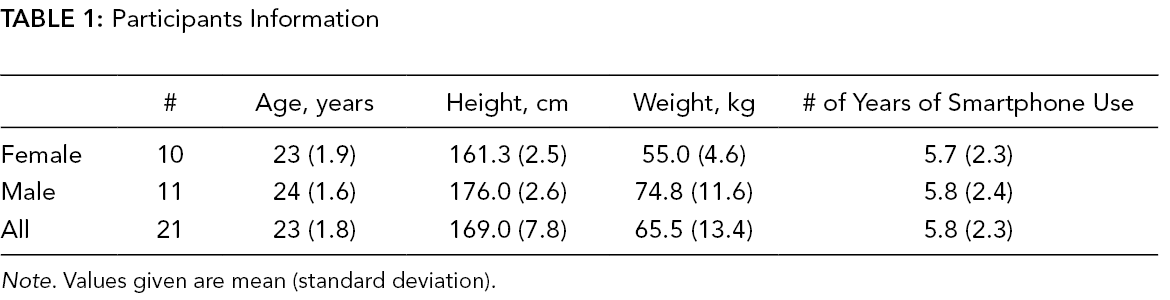
Note. Values given are mean (standard deviation).
Data Collection
A within-subject design experiment was conducted with the smartphone task and posture as two independent variables. Each participant conducted a one-handed web-browsing task and a two-handed texting task while sitting, standing, and walking with his/her own touch smartphone. During the one-handed web-browsing task, the participants were instructed to hold the phone in portrait orientation with his/her dominant hand and to browse a news portal site freely with thumb scrolling and tapping gestures (Figure 1). Switching hands and typing texts were not allowed during the browsing task. In the texting task, the participants were asked to hold the phone in portrait orientation with both hands and copy-type text messages at his/her own preferred pace, that were sent by the experimenter. Error correction was allowed during the texting task. In both tasks, the participants were asked to hold the phone at his/her preferred position without any constraints on the positioning of the phone with respect to the head.
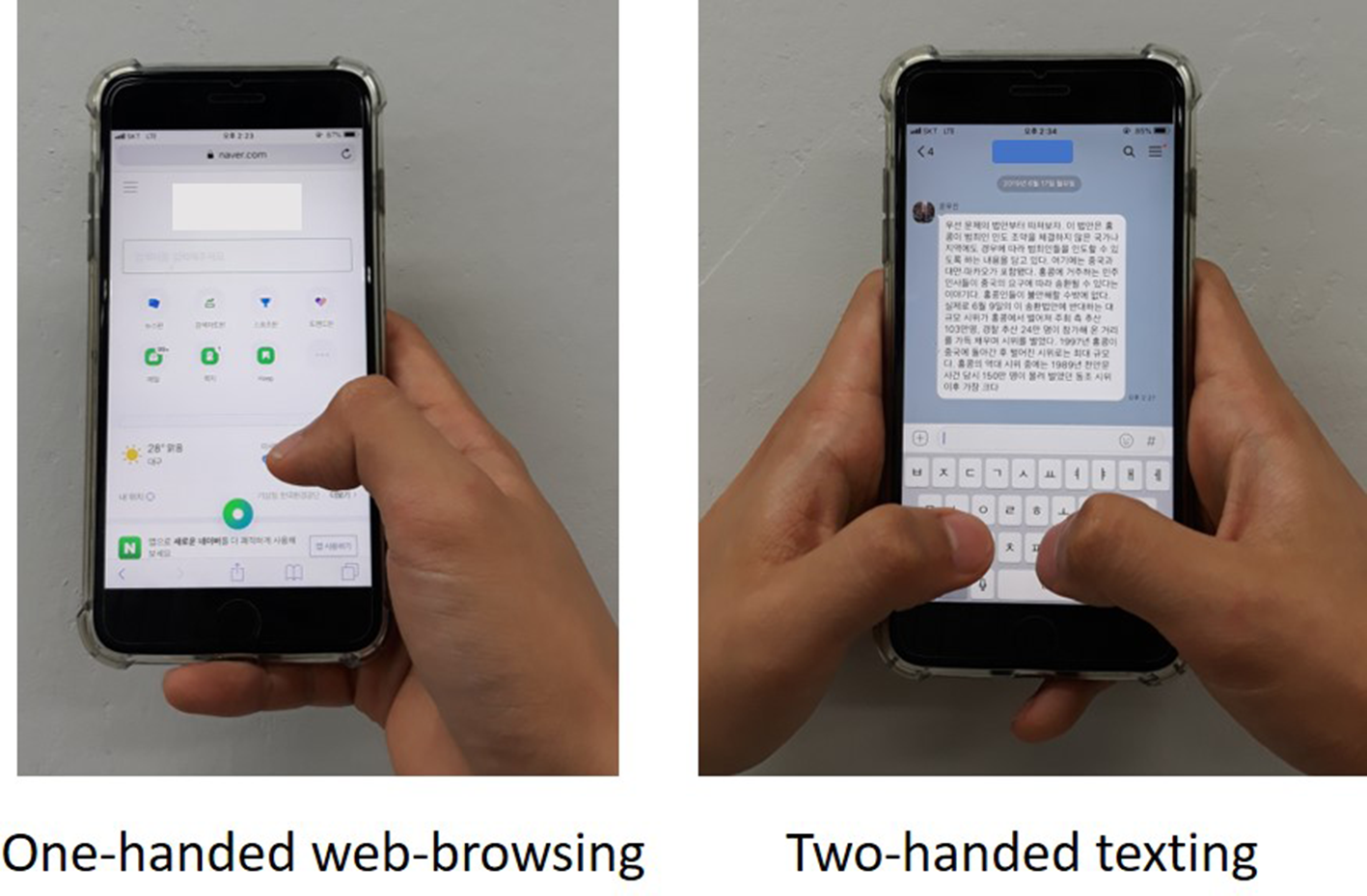
Smartphone tasks. Participants conducted tapping and scrolling gestures using the thumb of his/her dominant hand during the one-handed web-browsing task, and typed texts using the thumbs of both hands during the two-handed texting task.
Each task was performed for 1 min and repeated in three different posture conditions: (1) sitting on a backless stool with both feet on the ground, (2) standing still without moving the feet, and (3) walking on a treadmill at his/her own preferred speed (Figure 2). The order of the six experimental conditions (two tasks with three postures each) was randomized between participants, and there was a 1 min break between consecutive trials. Prior to the beginning of each 1 min task, the participants had a practice period of 30 to 60 s to familiarize themselves with the task and the posture condition.
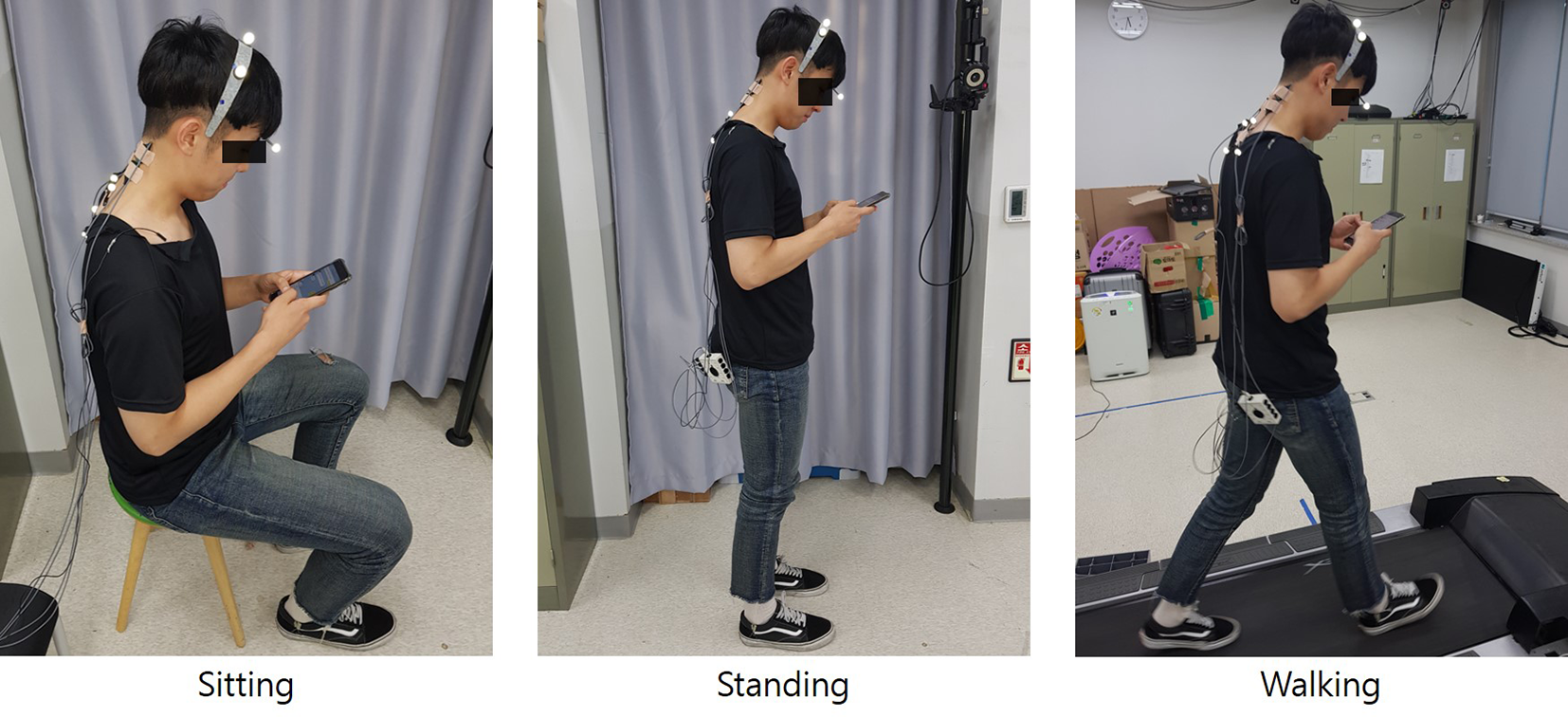
Three posture conditions. Participants conducted the browsing and texting tasks with his/her own smartphone while sitting on a backless stool, while standing still, and while walking on a treadmill at own preferred speed.
While conducting the smartphone tasks, the myoelectric signals (EMG) from the neck extensor muscles were collected using a surface EMG system (Delsys Bagnoli system, Delsys, USA). Ag-Cl bipolar electrodes were placed bilaterally at the level of the 2nd to 3rd cervical vertebra between the uppermost parts of the trapezius and the sternocleidomastoid muscles to capture the EMG signals from the splenius muscles. Electrodes were also placed bilaterally 2 to 3 cm lateral from the midline at the level of the 3rd to 4th cervical vertebra for collecting signals from the cervical erector spinae covered by the upper part of the trapezius pars descendens (Schuldt & Harms-Ringdahl, 1988). The two above-mentioned muscles were chosen for this study as their EMG have been frequently evaluated in previous research related to muscular load of individuals who commonly maintain head flexion of greater than 30° such as mobile device users (Douglas & Gallagher, 2017; Namwongsa et al., 2019) and dentists (Finsen et al., 1998). The EMG signals were collected at a sampling rate of 2,000 Hz, full-wave rectified, band-pass filtered between 10 and 500 Hz, and smoothed by the second-order Butterworth filter with a low-pass cut-off frequency of 6 Hz to produce the linear envelope of the EMG. The linear envelope EMG data of each muscle were normalized by the mean amplitude of a reference EMG, which was collected at the beginning of the experiment when the participant was standing upright and looking straight forward. The mean values of the normalized EMG (NEMG) of the middle 50 s of the standing period were calculated as dependent variables for each condition.
Simultaneously with the EMG signals, three-dimensional position and motions of the head and upper back were quantified using an 18-camera motion capture system (OptiTrack, Naturepoint, Oregon, USA) at a sampling rate of 100 Hz (Schabrun et al., 2014). Four reflective markers on the head and three markers below the 7th cervical vertebra were used to construct the head and upper back rigid bodies, respectively. The raw motion data were filtered by the second-order Butterworth filter with a low-pass cut-off frequency of 6 Hz. Then, a set of kinematic variables were defined using the sagittal plane coordinates and the orientations of the two rigid bodies. These variables are as follows: median angle of head flexion in the sagittal plane, median angle of upper back flexion in the sagittal plane, median angle of neck flexion in the sagittal plane (Figure 3), root mean square of head vertical acceleration, and root mean square of head sagittal plane angular acceleration. The head vertical and angular acceleration variables were computed by the second derivative of the filtered position and rotation data over time using the central finite difference scheme, respectively. A reference posture was defined for each participant at the beginning of the experiment. The participant flexed and extended the head and then maintained a comfortable position while standing upright and looking straightforward for 10 s (Cheung Lau et al., 2009). The sagittal plane angles of the head and upper back rigid bodies of this reference posture were defined as 0° orientations.
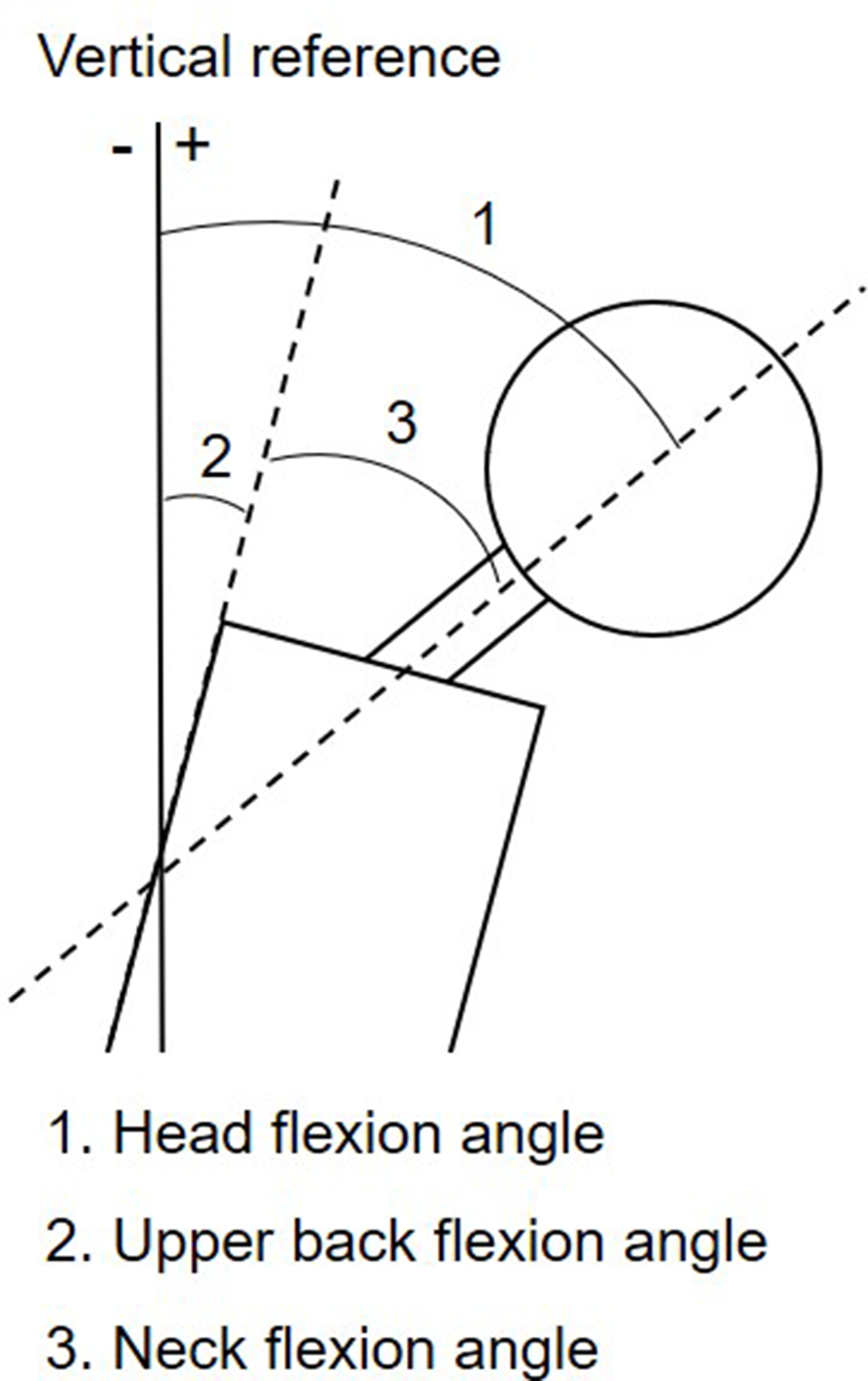
The three angular measures. Head flexion angle measured the forward tilt angle of the head rigid body from vertical. Upper back flexion angle measured the forward tilt angle of the upper back rigid body from vertical. Neck flexion angle was the difference between the head flexion angle and the upper back flexion angle.
Data Analysis
The effects of the task and posture on the mean NEMG and the kinematic variables were evaluated by the two-way repeated-measures analysis of variance (ANOVA). Normality and sphericity assumptions were confirmed by the Shapiro–Wilk test and the Mauchly’s sphericity test, respectively. A statistical package (Minitab v.18.1, Minitab Inc., Pennsylvania, USA) was used with an alpha level of .05. When the significance of the posture effect was found by ANOVA, post hoc pairwise comparison was conducted by Tukey’s test with Bonferroni-adjusted alpha levels of 0.0167 per test (.05/3). In addition, Cohen’s d effect sizes were calculated to examine the differences in the dependent variables between the posture conditions.
Results
Muscle Activation Level
The mean NEMG of the splenius muscles and the cervical erector spinae/trapezius muscles when using a smartphone, that were normalized to the amplitudes of upright standing without using a phone, ranged from 189% to 295% and from 148% to 252%, respectively (Figure 4). Significant effect of the task was found on the mean NEMG of the splenius muscles on the dominant side (F(1,19) = 9.04, p < .01) and nondominant side (F(1,19) = 9.62, p < .01), and on the cervical erector spinae/trapezius muscle on the nondominant side (F(1,19) = 10.51, p < .01), with larger activation level for two-handed texting than for one-handed web-browsing (Table 2). ANOVA also found a significant effect of the posture on the mean NEMG of the splenius muscles on the dominant side (F(2,18) = 35.21, p < .01) and nondominant side (F(2,18) = 19.22, p < .01), and on the erector spinae/trapezius on the dominant side (F(2,18) = 62.85, p < .01) and nondominant side (F(2,18) = 13.70, p < .01). Subsequent post hoc tests with Bonferroni’s correction showed that the NEMG was significantly different between posture conditions. No significant effect of the interaction between the two main factors on the mean NEMG variables was found.
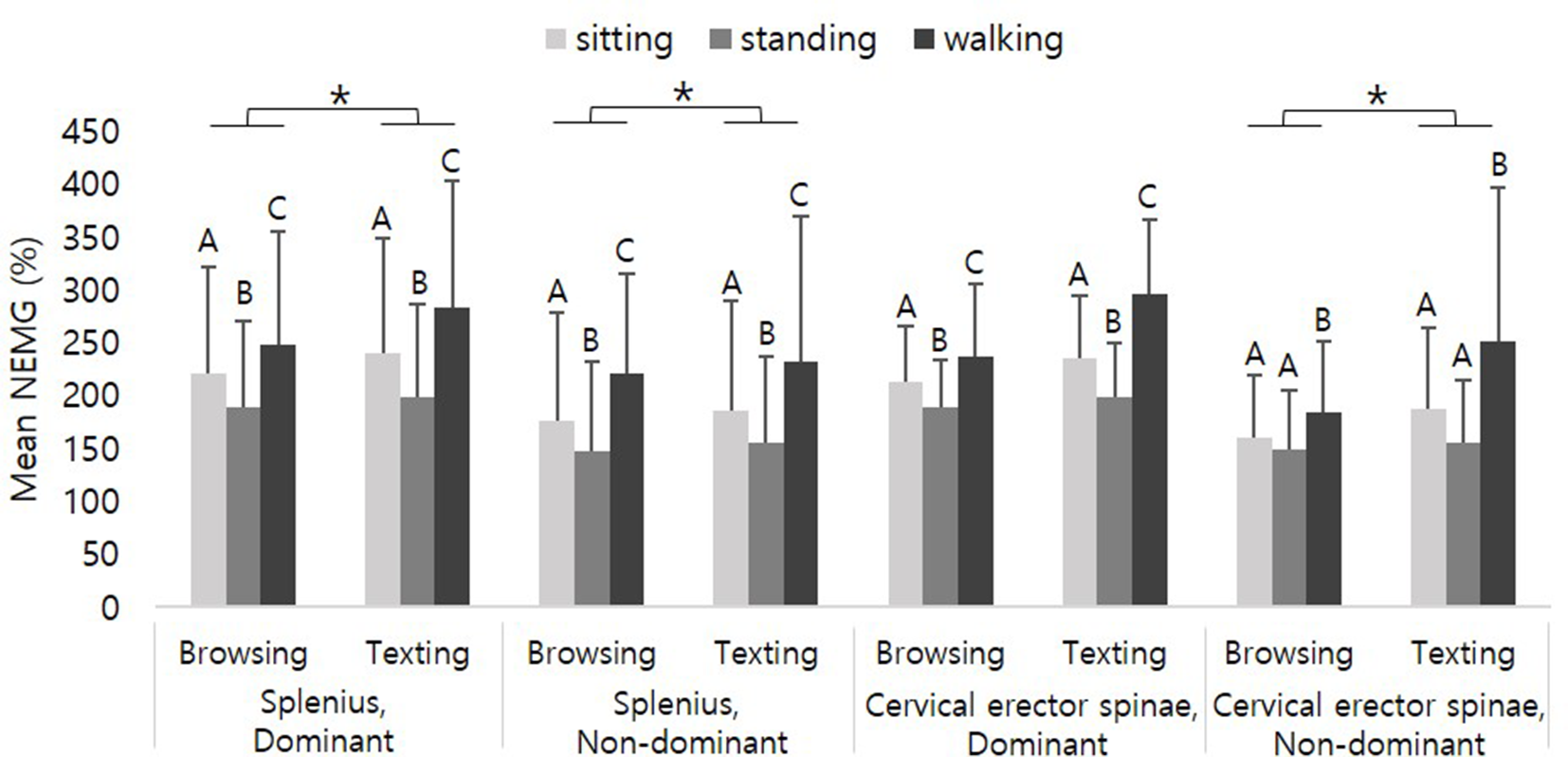
Mean EMG amplitudes of the neck extensor muscles that were normalized to the amplitudes of upright standing. Error bars indicate 1 standard deviation. Asterisks indicate significant differences (p < .05) between tasks, determined by the ANOVA. Means with different letters indicate significant differences between posture conditions (p < .0167) in Tukey’s test.
Mean (and Standard Deviation) of Dependent Variables, With p and Cohen’s d Values
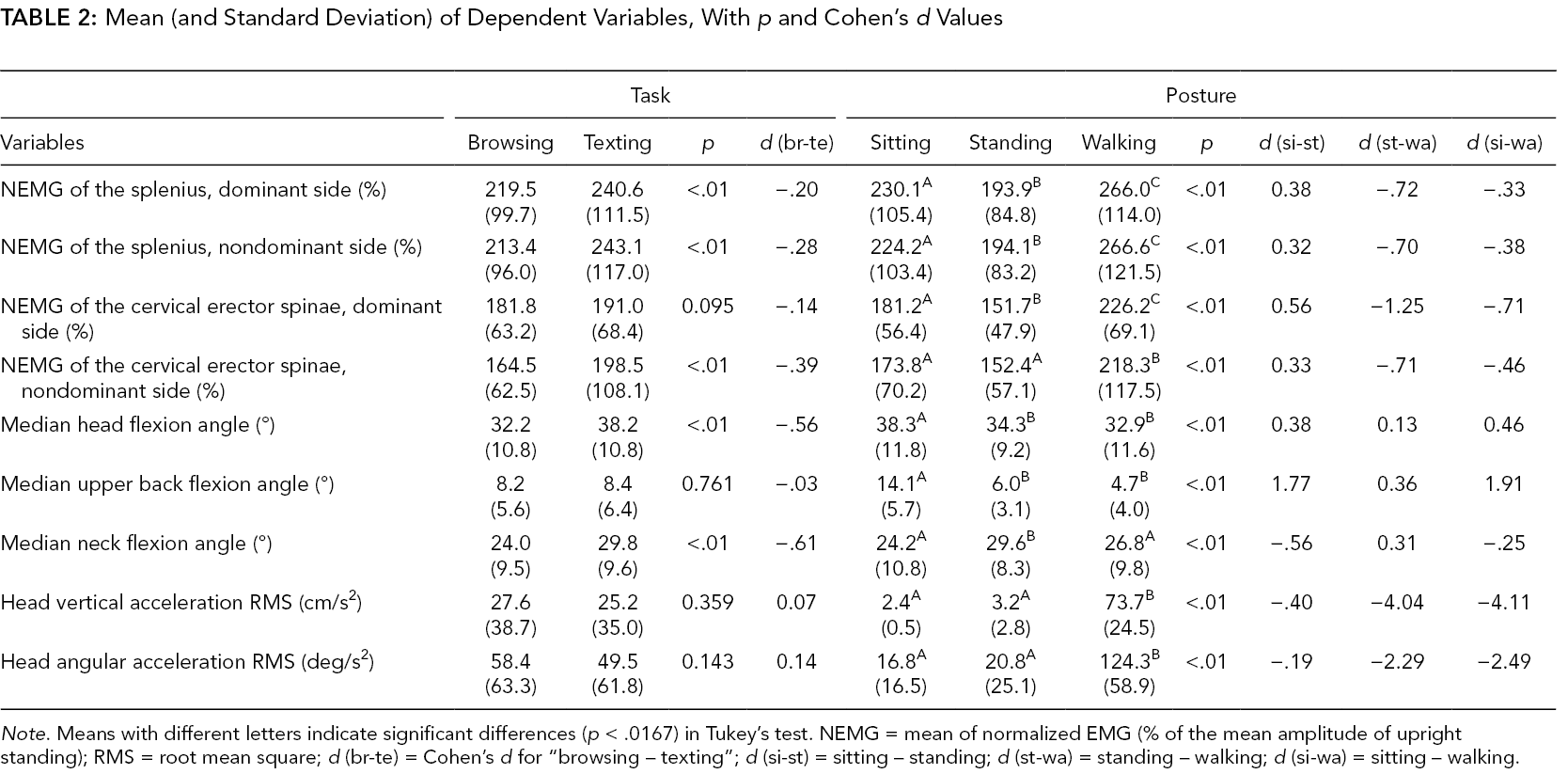
Note. Means with different letters indicate significant differences (p < .0167) in Tukey’s test. NEMG = mean of normalized EMG (% of the mean amplitude of upright standing); RMS = root mean square; d (br-te) = Cohen’s d for “browsing – texting”; d (si-st) = sitting – standing; d (st-wa) = standing – walking; d (si-wa) = sitting – walking.
Head Flexion, Upper Back Flexion, and Neck Flexion Angles
Median angles of head flexion, upper back flexion, and neck flexion when using a smartphone ranged from 29.0° to 40.3°, from 4.6° to 14.1°, and from 22.2° to 32.6°, respectively (Figure 5). Median head flexion angle differed significantly between tasks (F(1,19) = 28.58, p < .01) and between postures (F(2,18) = 8.53, p < .01). No significant effect was found from the interaction of the two main factors. Participants flexed the head more when conducting texting with both hands than when web-browsing with one hand, and when using the phone while sitting than while standing or walking. Median upper back flexion angle differed significantly only between posture conditions (F(2,18) = 61.53, p < .01), with larger flexion while sitting than while standing and walking. Neck flexion angle, which is the difference between the head flexion and the upper back flexion angles, was found to vary significantly between the two tasks (F(1,19) = 41.26, p < .01) and across the three posture conditions (F(2,18) = 11.93, p < .01). Participants maintained significantly larger neck flexion when texting than when web-browsing, and while standing than while sitting and walking.
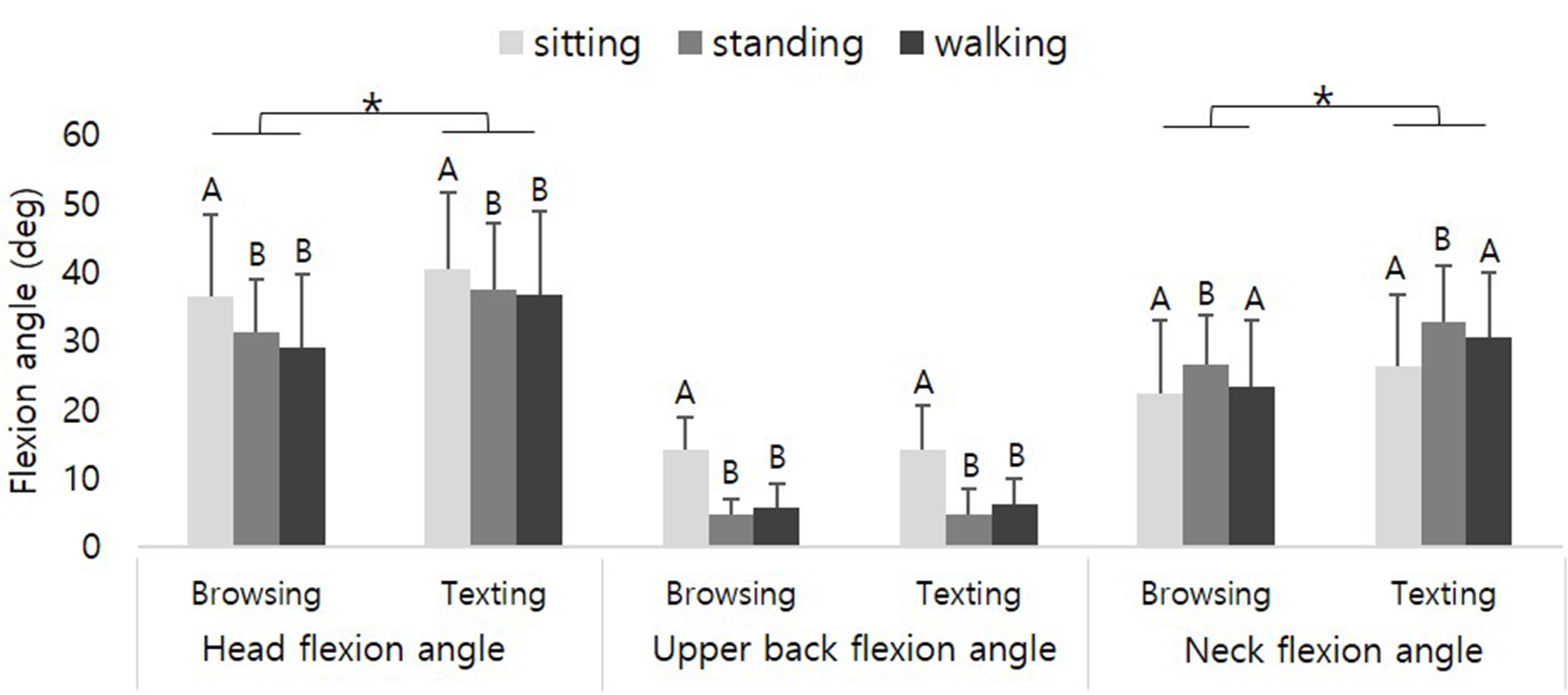
Median angles of head flexion, upper back flexion, and neck flexion. Error bars indicate 1 standard deviation. Asterisks indicate significant differences (p < .05) between tasks, determined by the ANOVA. Means with different letters indicate significant differences between posture conditions (p < .0167) in Tukey’s test.
Head Vertical and Angular Acceleration
The RMS values of the head vertical (F(2,18) = 330.55, p < .01) and angular acceleration (F(2,18) = 136.48, p < .01) differed significantly between posture conditions. No significant task effect and interaction effect was found on both variables.
Discussion
The main objective of this study was to assess the muscular load on the neck extensor muscles when using a smartphone for one-handed browsing and two-handed texting while sitting, standing, and walking. Study results showed that differences existed in the muscular load across the tasks as well as across the three posture conditions, with the two-handed texting while walking being the most demanding condition for the neck extensor muscles.
The changes in the EMG amplitude between the two static posture conditions (sitting and standing) corresponded with the change in the amount of head flexion, with greater muscle activation when maintaining a larger head flexion. Participants maintained 11.7% larger head flexion with 16.9% (average across the four muscles) larger EMG amplitude when using their phones while sitting as compared to while standing. The difference in the head flexion angle between the two posture conditions was comparable to what has been reported in previous research. In an experimental study that measured head flexion angle while sitting and standing, their participants maintained 13.6% larger head flexion when using a smartphone while sitting (median angle = 41.7°) than while standing (36.7°; Lee et al., 2015). The positive association between the head flexion angle and the amplitude of neck muscle EMG during smartphone use also corresponded with the findings in previous research that measured the neck muscle EMG in sitting (Namwongsa et al., 2019) and standing (Ning et al., 2015) while varying the height of the smartphone.
The association between head flexion and neck muscle activation level alone, however, did not explain the largest EMG amplitudes during walking. The mean NEMG of the neck extensor muscles during walking was 21.2% and 41.7% higher than that of sitting and standing across the tasks, respectively, while the median angle of head flexion was similar to or less than that of the two static posture conditions. The largest muscle activation among the three posture conditions could be attributable to the dynamics of the head during walking. When conducting browsing and texting tasks while walking, the head oscillated on step frequency with 23.0 (as compared to standing) to 30.7 (as compared to sitting) times larger RMS of vertical acceleration, and 6.0 to 7.4 times larger RMS of angular acceleration, than when using a smartphone in static posture conditions. As originally hypothesized, the oscillating motions of the head in a flexed position while walking produced accelerations and added dynamic flexion moment to the neck. The additional flexion moment from the head dynamics might demand more activation of the neck extensor muscles than when simply holding static head-down postures in sitting or standing. Specifically, when compared with the sitting condition, the result indicated that the influence of dynamic motions of the head during walking outweighed that of the larger head flexion of sitting.
Of the two smartphone tasks, greater NEMG of the neck extensor muscles was found when conducting texting in all three posture conditions. The difference in the NEMG between the two tasks corresponded well with the amount of head flexion and it might be attributable to the way of holding the phone, as observed previously (Han & Shin, 2019; Lee et al., 2015). During the texting task, participants of the current study were holding the phone with both hands. Holding the phone in front of the body with both hands would demand greater efforts of the upper limb muscles as compared to when holding it with one hand; and it might make them to hold the phone closer to the body for lowering arm and shoulder muscular load. Holding a phone near the body inevitably forced them to look down further with larger head flexion, which resulted in the larger EMG amplitude of the neck extensor muscles. Contrary to the result of the current study, no significant difference in the head flexion angle between reading and texting tasks was found in a previous study that did not control the hand grip (Schabrun et al., 2014). Findings of their study and the current study support the association between the way of holding a smartphone and head flexion angle.
Among the EMG of the four muscles that were tested in the current study, the mean amplitude of the cervical erector spinae/trapezius muscle on the dominant side did not vary significantly between the two tasks. While the nonsignificant difference could be partly attributable to large variances in the NEMG from the normalization method of this study, the physical demand on the shoulder muscles when holding a phone might have also masked the effect of task on the muscle. Since the electrodes on the cervical erector spinae/trapezius were capturing signals not only of the cervical erector spinae but also of the upper trapezius muscles (Schuldt & Harms-Ringdahl, 1988; Schüldt et al., 1987; Seghers et al., 2003), the signals from the upper trapezius when holding the phone steady might have outweighed the influence of the head flexion when looking at the phone. While the nondominant hand was used only for two-handed texting, the dominant hand was used for both tasks, resulting in the nonsignificant difference in the amplitude of the muscle activity between the two tasks.
In this study, the upper back flexion angle and neck flexion angle were quantified along with the head flexion angle. The upper back flexion angle, that has been used as a measure for slouched sitting posture (Caneiro et al., 2010; Edmondston et al., 2011), was significantly greater for sitting than for the other two posture conditions. It implies that using a smartphone on a backless chair would make participants sit with more slouched upper back compared to using the phone while standing or while walking, and it could increase the static flexion moment at the neck joint. However, even with the additional moment from the slouched posture, the overall neck muscular load during sitting did not exceed that of the walking condition.
The nonsignificant difference in the upper back flexion angle between the two tasks resulted in significantly larger neck flexion during texting. Since the neck flexion angle is an angle between the head and the upper back, the larger neck flexion would cause more strain or elongation of passive spinal tissues such as posterior ligaments or connecting tissues of the neck extensor muscles (McGill et al., 1994). Sustaining the larger neck flexion would lower the stiffness of the viscoelastic passive tissues of the cervical spine (McGill et al., 1994; Mousavi-Khatir et al., 2018) and it might demand more contribution of the extensor muscles for the generation of neck extension moment, as observed in research on the lumbar spine musculature (Shin & Mirka, 2007). The greater neck flexion during texting, if sustained for a prolonged period, would pose biomechanical stress and muscular load to the neck in addition to the already greater static moment from the larger head flexion.
The neck flexion angle also differed between posture conditions and it was attributable mainly to the difference in the upper back flexion angle. Compared to when using a phone while sitting, participants maintained their upper back more upright while standing and walking, and it resulted in the significantly larger neck flexion during standing as compared to sitting. This result suggests that, even with the less head flexion during standing, prolonged use of a smartphone while standing would produce larger neck muscular load as compared to sitting due to viscoelastic changes in the spinal tissues. This time-dependent changes in the tissue stiffness and the resultant changes in the neck muscular load of smartphone users, however, have yet to be investigated.
Overall, the findings of this study indicate that smartphone task and user’s posture can affect the neck muscular load of the user. The larger neck muscular load when conducting texting as compared to when browsing was attributable to the larger head flexion during texting, and it might be related to its two-handed operation. One-handed texting, if its typing speed can match that of two-handed texting, would be recommended for lessening the muscular load and risks for text-neck symptoms. In addition, when using a phone while sitting, it is also recommended to lean the torso against the backrest of the chair and support the arms using a cushion or the armrests to reduce the upper back flexion as well as the head flexion. The larger neck muscular load while walking as compared to while sitting or standing, however, might not be addressed by postural changes since the oscillating motions of the head were the natural responses during walking. The risks of the smartphone use while walking for the neck musculoskeletal problems should be addressed by limiting the exposures to the risk. In our preliminary analysis that evaluated neck muscular load of smartphone use while walking versus upright walking without using a phone, we found 33% to 102% more activity of the neck extensors due to smartphone use (Yoon et al., 2019). Smartphone use while walking should be avoided or minimized for lowering the risks for text-neck problems.
There are some limitations to be noted. First, participants of this study walked on a treadmill in an isolated and controlled laboratory space for the walking conditions. The lack of street distractions and walking on the treadmill might have made them less attentive to the surroundings and more focused on the stable walking itself. This testing protocol and the laboratory setting might have affected their walking behavior or attention during the experiment. Second, texting was conducted with both hands and browsing was conducted with one hand. It is not known clearly whether the differences in head kinematics and muscle activation between the two tasks resulted from the tasks or the way of holding the phone. Therefore, the study results are valid for the comparison of two-handed texting versus one-handed browsing. Third, the muscular load has been evaluated only for a short period of time (1 min) and it was not long enough to evaluate the development of muscle fatigue and/or time-dependent changes in tissue stiffness. It is assumed that users who use the phone for longer time periods in head-down postures would experience muscle fatigue development or discomfort on the neck as well as the viscoelastic changes in the passive spinal tissues. The findings of the current study show the changes in static and dynamic muscular load across tasks and postures only.
Conclusion
The findings of the current study showed that two-handed texting would pose larger muscular load to the neck extensor muscles than one-handed browsing due to larger head flexion during the two-handed texting. Also, the concurrent use of the smartphone while walking would pose larger muscular load as compared to when using the phone in a sitting or standing posture due to the dynamic oscillation of the head during walking. Combined, conducting the texting task while walking could be considered as the most demanding usage scenario for the neck extensor muscles.
Key Points
Neck muscle EMG and head kinematics were quantified when conducting one-handed browsing and two-handed texting while sitting, standing, and walking.
Mean EMG during walking was 21.2% and 41.7% higher than that of sitting and standing across the tasks due to dynamic motions of the head during walking.
Between the tasks, mean EMG was 12.3% higher when texting with both hands than when browsing with one hand due to larger head flexion and the two-handed operation of texting.
Footnotes
Acknowledgment
This work was supported by the Basic Science Research Program through the National Research Foundation of Korea (NRF) funded by the Ministry of Science and ICT [2018R1A2B2007893].

Author Biographies
Woojin Yoon is a PhD student in the department of human factors engineering at the Ulsan National Institute of Science and Technology (UNIST) in Korea. He received his MSc in human factors engineering from UNIST in 2020.
Seobin Choi is a PhD student in the department of human factors engineering at UNIST. She received her BSc in biomedical science from UNIST in 2016.
Hyeseon Han received a MSc in human factors engineering from UNIST in 2019.
Gwanseob Shin is an associate professor of the department of human factors engineering at UNIST. He obtained his PhD degree in industrial engineering from the North Carolina State University (USA) in 2005.