




Abstract
While recognizing the daunting task of defining universal indicators of job quality we may overlook something more fundamental: in North America about a third of people may not want to be employed in their current job status. Job status congruence (i.e. the extent to which people are working full-time, contract, or part-time by choice) may now be an integral part of high quality work. We test this proposition using a process-oriented theoretical model reflecting established relationships in the work design literature. Findings suggest that a socio-economic predictor (job status congruence) may rival established psychological predictors of job quality (e.g. intrinsic job characteristics and role stressors) in predicting aspects of workers’ personal and organizational functioning. Our findings also suggest that different mediators may be operating for each outcome. The model is tested on 171 full-time workers; a revised model is then supported on a holdout sample of 172 full-timers, and replicated on 132 contract/part-time workers using multi-group structural equation modeling. Implications for future research are discussed.
Keywords
Introduction
A revitalized interest in job quality is emerging in the literature, as illustrated by recent issues of Journal of Organizational Behavior (e.g. Grant et al., 2010), Journal of Industrial Relations (e.g. Knox et al., 2011), and this special issue in Human Relations. However, integration across disciplines has been lacking. On the one hand, some researchers argue that if work design theory and practice are to keep pace with the changing nature of work and labor markets around the globe, our understanding of ‘core’ job characteristics must expand (e.g. Grant, 2008; Grant et al., 2010; Vough and Parker, 2008). They also argue that we must go much further in acknowledging the role of employees in crafting their work (Berg et al., 2010) and negotiating idiosyncratic deals (i-deals) with employers (Hornung et al., 2009, 2010a, 2010b). Whether through developmental or workload i-deals, ‘jobs in contemporary organizations are increasingly more individualized’, including flexible schedules, part-time options, and remote work (Hornung et al., 2009: 739). I-deals in particular, have been linked to work-related well-being and work–life balance through increasing person–environment fit (Hornung et al., 2009).
In contrast, other researchers (from a more socio-economic perspective) argue for almost the opposite research agenda, calling for a more condensed and generalizable list of core job characteristics to be used across countries and contexts. For example, in their critical review of international indicators of job quality, Munoz de Bustillo et al. clearly outline how a ‘lack of an agreed conceptualization and operationalization of this issue is preventing it from gaining the salience it merits in terms of social and employment policy’ (2011: 447). These authors detail what is necessary for the construction of an international indicator of job quality for policy purposes (i.e. identification and modeling of the relative importance of theoretically driven individual based work attributes impacting workers’ well-being). They also note the absence of such indicators developed in North America. While any attempts to offer ‘universal’ elements of job quality are likely to be wrought with challenges (Oldham and Hackman, 2010), the need to provide policy-makers with guidelines that can generalize across disciplines and countries is also paramount given current economic and social imperatives (Osterman, 2010).
In this article, we address the tension between calls for more individualized measures of job quality with calls for international indicators, by beginning to integrate constructs from the psychological and socio-economic literatures on job quality. This article occurs in a context where, despite previous calls to integrate these literatures (e.g. Bernhard-Oettel et al., 2005), little research to date has done so. As Kalleberg (2008) points out, there is a pressing need for researchers to begin bridging inter-disciplinary boundaries – where economists and sociologists rarely assess the non-economic or non-structural aspects of job ‘mismatches’ and their impacts on workers’ psychological states – while psychologists do the reverse. Our article is an attempt to bridge this gap from a North American perspective.
The present article crosses disciplinary lines and directly responds to calls for the identification and modeling of the relative importance of theoretically driven individual based work attributes impacting workers’ well-being (Munoz de Bustillo et al., 2011). By incorporating job status congruence into a theoretically driven psychological model, testing the relative importance of work attributes, and identifying the paths through which these predictors may impact personal and organizational factors, we are able to integrate and evaluate constructs from often disparate literatures and contribute toward international indicators for policy purposes. The wisdom of these calls across disciplines is revealed in our (perhaps surprising) findings regarding the importance of job status congruence relative to other central predictors in the psychological literature. Our results have very practical implications, because while utterly ‘idiosyncratic’ in its experience, job status congruence has the potential to generalize across contexts in its importance (in both developed and developing countries). From a policy perspective, it also offers considerable potential for increasing well-being during these challenging economic times, because it is about re-aligning work that already exists (in contrast to creating new work). Consequently, we will argue that it is time to at least begin a dialogue on this topic. Opportunities for future research will also be highlighted in our discussion and concluding remarks section.
In the next few pages, we define our terms and justify relationships proposed in our theoretically grounded model of job quality (Podsakoff et al., 2007; Rodell and Judge, 2009; Weiss and Cropanzano, 1996). This model will contribute to the literature in at least three ways: (i) by comparing directly the relative importance of this more ‘individualized’ socio-economic aspect of quality (i.e. job status congruence) with empirically established psychological predictors (e.g. intrinsic characteristics, role stressors, job security); (ii) by proposing how these predictors link to personal (health) and organizational outcomes (turnover and organizational citizenship behaviors) through testing their respective mediators (i.e. negative mood vs affective commitment); and (iii) by replicating our model on a sample of both ‘standard’ (full-time) and ‘non-standard’ (contract/part-time) workers, as repeatedly called for in the literature (Ashford et al., 2007).
Literature review
Defining job status congruence
In terms of a generalizeable list of core job characteristics that can be utilized across contexts, some progress has already been made. Clark’s (2005) comprehensive review of several Organization for Economic Co-operation and Development (OECD) countries identified certain aspects of job quality that reliably rate at the top of people’s preferences (e.g. job security, and job characteristics such as interesting work, autonomy, and meaningfulness). This research supports other studies emphasizing the utility of multi-disciplinary approaches to job quality finding that both extrinsic aspects (e.g. benefits) and intrinsic aspects (e.g. interesting work and autonomy) are important indicators of quality (Kalleberg and Vaisey, 2005). Perhaps more interesting from our perspective was Clark’s (2005) finding that almost 40 per cent of people studied across seven OECD countries were not working the number of hours they wanted and/or needed to work (about 30% wanted to work less and around 10% wanted to work more). This is consistent with Kalleberg’s (2008) observations around temporal mismatches.
Despite the above findings, psychological models of work design have not typically taken such ‘structural incongruities’ into account (perhaps partially owing to measurement challenges – e.g. see Edwards, 1994). There are indeed many ways that employment status ‘incongruence’ could be studied (e.g. along physical, temporal or administrative lines, or the extent to which people identify with their organizations; Ashford et al., 2007). Other challenges include the extent to which congruence may be confounded with age, experience, and/or type of work. There may also be a tendency to treat this construct as binary (congruent vs incongruent employment; Mantler Kiel et al., 2000). Some researchers (e.g. Holtom et al., 2002) have combined work hours, schedule, shift, and status congruence into one scale in predicting organizational outcomes.
In this article, we are simply interested in the extent to which people feel trapped in their ‘standard’ or ‘non-standard’ work arrangements, and how the magnitude of this discrepancy (Lawler, 1994) relates to outcomes (we will return to this issue below). We hope this will offer insight into how one traditional socio-economic indicator of work quality (i.e. job status congruence – working full-time, contract, or part-time by choice) might be related to established constructs in the psychological quality literature, in predicting both personal (e.g. psychological and physical health) and organizational outcomes (e.g. turnover). Throughout this article, the terms ‘job’, ‘employment’, and ‘work’ status congruence will be used interchangeably.
Defining ‘standard’ vs ‘non-standard’ work
While some authors argue that traditional job boundaries (e.g. full-time vs contract work) may have little meaning in the future (e.g. Oldham and Hackman, 2010), others continue to propose more specific typologies to group workers (e.g. Martin and Sinclair, 2007). Focusing on congruence in job status may sidestep this debate and offer a better predictor of personal and organizational functioning. Because our primary goal in this article is to question whether job status congruence could be as important as more established psychological predictors, we will separate workers along lines consistent with previous research in North America (full-time/permanent = ‘standard’ and contract/part-time = ‘non-standard’).
Although in North America we often assume that most people would choose to work in ‘standard’ jobs, Barnett (2006) aptly points out that this term is better utilized as a baseline than a majority position. That is, rather than seek definitions of ‘standard’ work arrangements across countries, which will vary for numerous reasons, it may be preferable to instead view ‘standard’ work as merely a baseline (i.e. eight hours of continuous day-time employment, five week days) from which to evaluate other work arrangements (i.e. non-standard). This may help us to understand increasingly complex work configurations. This is how we have used the terms standard/non-standard in the present article.
Defining job quality
In our model, we are interested in aspects of one’s job that have been demonstrated theoretically and empirically to impact on outcomes such as individual well-being. Recent review articles have specifically called for more emphasis on these aspects of work quality not just among ‘standard’ but also ‘non-standard’ workers (Ashford et al., 2007). To this end, we measure perceptions of objective job quality. Previous research has demonstrated close correspondence between subjective and objective ratings of job quality (e.g. Breaugh and Becker, 1987; Oldham, 1996). Further, employees’ subjective ratings of their work quality have also been demonstrated to be much more related to objective job attributes than differences in job holders; these ratings are also the best predictors of individual outcomes (O’Brien, 1986).
Specific relationships in the model
Predictors.
Our model builds on earlier models (Karasek and Theorell, 1990; Sauter et al., 1990; Warr, 1987), where intrinsic work quality includes opportunities for skill utilization, involvement in meaningful work, and job-related autonomy (Hackman and Oldham 1980s job characteristics model). Among full-time workers, intrinsic quality is consistently associated with positive organizational attitudes (e.g. loyalty; Meyer and Allen, 1997) and personal well-being (Parker and Wall, 1998), although some non-standard employees have previously reported dissatisfaction with the intrinsic nature of their work (e.g. Feldman and Doerpinghaus, 1992). Intrinsic job characteristics seem to generalize across cultures (DeVaro et al., 2007). In 2005, Clark found intrinsic aspects of work (e.g. interesting work; independence) to be among the top three aspects of high quality work valued by people across OECD countries. We anticipate that intrinsic work quality will be positively related to affective organizational commitment and negatively associated with work-related negative mood in both standard and non-standard samples.
Role stressors such as role ambiguity and role conflict can exert detrimental effects on personal and organizational outcomes (Anton, 2009; Beehr, 1995). There is a direct link between both stressors and intentions to leave one’s job and actual turnover among full-time workers (Jackson and Schuler, 1985; Tubre and Collins, 2000). This being said, findings from research comparing mean differences in role stressors between standard and non-standard workers conflict. For example, Steffy and Jones (1990) found higher levels of role strain for non-standard than for standard workers, Cherry (1984) found the opposite; Anderson-Kulman and Paludi (1986) found few differences, while Barker (1993) found no differences. Oldham and Hackman (2010) emphasize the increasing importance of role stressors for all employees in the new economy. In our process-oriented model (going beyond simple mean differences), we expect that higher role stressors will be related to less organizational commitment, more work-related negative mood and higher turnover across samples.
The context in which work takes place also matters. Physical and psychosocial aspects of the work environment influence individuals’ experiences of their work and its relationship to personal and job-related functioning (e.g. Grant and Parker, 2009; Jackson, 1988; Karasek et al., 1982; Kochan et al., 1994; Sauter et al., 1990; Warr, 1987). For example, do you have stimulating co-workers who are pleasant to work with, good equipment, pleasant physical conditions, good air quality? In terms of differences across samples, research thus far has been inconsistent, showing non-standard workers to be more satisfied than (Levanoni and Sales, 1990), less satisfied than (Steffy and Jones, 1990), and equally satisfied to standard employees (Feldman and Doerpinghaus, 1992) with psycho-social aspects of work. With some exceptions (e.g. McCabe et al., 2008), empirical research has rarely focused on more physical aspects of context. We expect perceptions of the work environment to be important for both standard and non-standard workers (i.e. with higher satisfaction being positively related to their affective commitment and negatively related to their mood).
Job insecurity is a source of stress involving fear, potential loss and anxiety (Greenhalgh and Rosenblatt, 1984), and is associated negatively with personal functioning (e.g. job and life dissatisfaction, and low self-esteem; Sauter et al., 1990) and mental and physical health (Sverke et al., 2002). The feelings of powerlessness that accompany high levels of job insecurity can be associated with poorer self-rated health (Burgard et al., 2009) and diminished psychological well-being (Emberland and Rundmo, 2010). Because much non-standard work may be insecure in nature, our model incorporates job security as a work experience and predicts that it will be related to functioning for both standard and non-standard employees (individuals with higher job security should experience less negative mood and in turn better health). Job security has been rated as one of the top 3 most valued aspects of a high quality work across OECD countries (Clark, 2005).
Employment status congruence is the final predictor in our model, and reflects the degree to which individuals are employed on a full-time or contract/part-time basis by choice. Many people now find themselves working part-time who would prefer to be employed on a full-time basis, and vice versa (e.g. Clark, 2005; Kalleberg, 2008; Logan, 1994; Nardone, 1995). Job status incongruence should have important consequences for affective commitment and work-related negative mood. For example, research among employed mothers has found that women’s commitment to their employment role rather than their job status per se is related to their depression (Hock and DeMeis, 1990; Holmes et al., 2012) and their children’s behavior (Barling et al., 1988). Being forced to work when one would rather not, or vice versa, may impact both one’s affective bond to the organization and one’s work-related negative mood (Sonnentag, 2003). When a job fails to be aligned with an individual’s preferred work status this may be viewed as a lack of consideration on the part of the organization, thereby impacting on attachment. It would also seem to be related to how people feel about their work, probably because a lack of congruence can lead to problems in managing one’s personal life (Barnett, 2006). Further, if people are deprived of financial means because they can only find part-time work (when they need full-time hours) or are deprived of personal time because they can only maintain their current job by working full-time (although they would prefer to work part-time), these experiences are likely to impact on their well-being and health across most countries.
Mediators.
Our proposed model of job quality recognizes that many relationships between subjective work experiences and personal and organizational functioning will be indirect (Barnett, 2006). In this article, affective commitment is proposed to mediate the relationship between subjective work experiences and job-related functioning for three reasons: (i) subjective work experiences (e.g. intrinsic work quality) are associated with commitment in general (e.g. Mathieu and Zajac, 1990) and with affective commitment in particular (Meyer and Allen, 1997); (ii) affective commitment has been associated with work performance (Anton, 2009; Barling et al., 1996; Meyer et al., 1989), with work-related attitudes such as organizational citizenship behaviors (Morin et al., 2011; Munene, 1995; Shore et al., 1995; Shore and Wayne, 1993), and turnover intentions (Anton, 2009; Vandenberghe et al., 2011); and (iii) affective commitment has been proposed to mediate the relationship between predictors (e.g. role ambiguity; Anton, 2009) and employee behavior, and found to mediate the relationship between intrinsic satisfaction and willingness to expend extra effort among unpaid volunteers (Schaubroeck and Ganster, 1991).
In contrast, we expect that subjective work experiences will be related to personal functioning via work-related negative mood. Researchers in the work and the family area find work stressors to be associated with negative mood (e.g. Barling and MacIntyre, 1993; MacEwen et al., 1992; Stewart and Barling, 1996a, 1996b). In turn, negative mood is associated with marital and family outcomes (e.g. Barling et al., 1993, MacEwen et al., 1992; Stewart and Barling, 1996a, 1996b). We extend these findings and suggest that work-related negative mood will mediate relationships between subjective work experiences and personal functioning. For some time, the possibility of affective states mediating relationships between work experiences and health/organizational outcomes has been ignored (Muchinsky, 2000). However, there is growing recognition that these states are important to consider in our conceptual models (Brief and Weiss, 2002). Further, there is recent support for links between perceived job characteristics and work-related tension (Bernhard-Oettel et al., 2005), as well as for the role of job-related affect as a mediator between work quality and health (Lubbers et al., 2005).
Job-related and personal functioning
In terms of organizational outcomes, exit has long been considered a rational response to negative work conditions (Hirschman, 1972), and research findings support this (Greenberg, 1990). However, what employees do on the job is at least as important as whether they choose to exit from it. Accordingly, in addition to turnover intentions we assess constructive discretionary behaviors at work, namely organizational citizenship behaviors (OCBs; Organ, 1990). Organ (1988) found that intrinsic work quality predicted organizational citizenship behaviors directly, and this is reflected in our model.
We also postulate that subjective work experiences indirectly affect individuals’ personal functioning (i.e. psychological and physical health) via negative mood. Some research suggests that negative work experiences may be associated with context-free well-being via work-related mood (Warr, 1987). We expect that work-related negative mood will negatively influence psychological health which in turn will be associated with physical health reported across samples. For a discussion of the extensive (albeit conflicting) literature on employment status and health, see Bernhard-Oettel et al. (2005).
Our model of work quality
Three final points about our proposed model warrant mention (see Figure 1). First, direct paths with previous empirical support in the literature will be included in our model (i.e. between intrinsic work quality and OCBs; role stressors and turnover intentions; and job security and psychological health). Second, because support for the proposed model cannot preclude the possibility that other models might fit the data equally well, we will contrast the proposed model with an alternative model to test our propositions. Finally, while all path relationships will be reported in our results, tables and figures, our propositions and discussion will focus on the relationships central to the proposed research problematic as outlined in the Introduction.
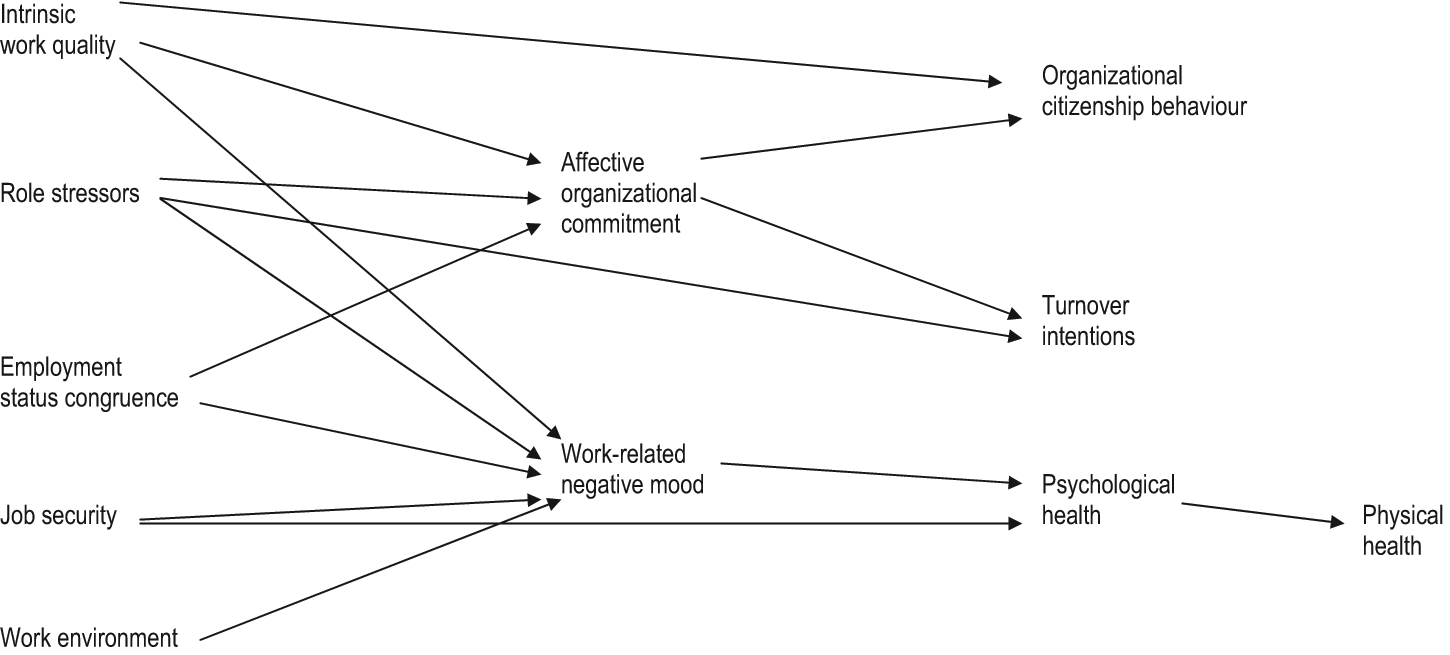
Preliminary model.
Proposition 1: In a model directly comparing employment status congruence with established psychological predictors (e.g. intrinsic work quality, role stressors, job security), congruence will be significantly related to both mediators (higher levels of status congruence will link to: (1a) less negative mood; and (1b) more affective organizational commitment) across standard and non-standard samples. Proposition 2: These mediators will in turn be related to different outcomes. Affective commitment will be associated with organizational functioning: (2a) negatively related to turnover intentions; and (2b) positively related to OCBs. In contrast, work-related negative mood will be related to personal functioning: (2c) negatively associated with psychological and in turn physical health across samples (see Figure 1).
Method
Design and procedure
Questionnaires were sent via internal mail to 1300 employees in a large public sector organization in Canada; 487 usable questionnaires were returned, of which 475 had complete data (response rate = 37.46% 1 ). Participants were told that the research involved studying the work experiences of full-time and part-time/contract workers, and anonymity and confidentiality were assured.
Participants
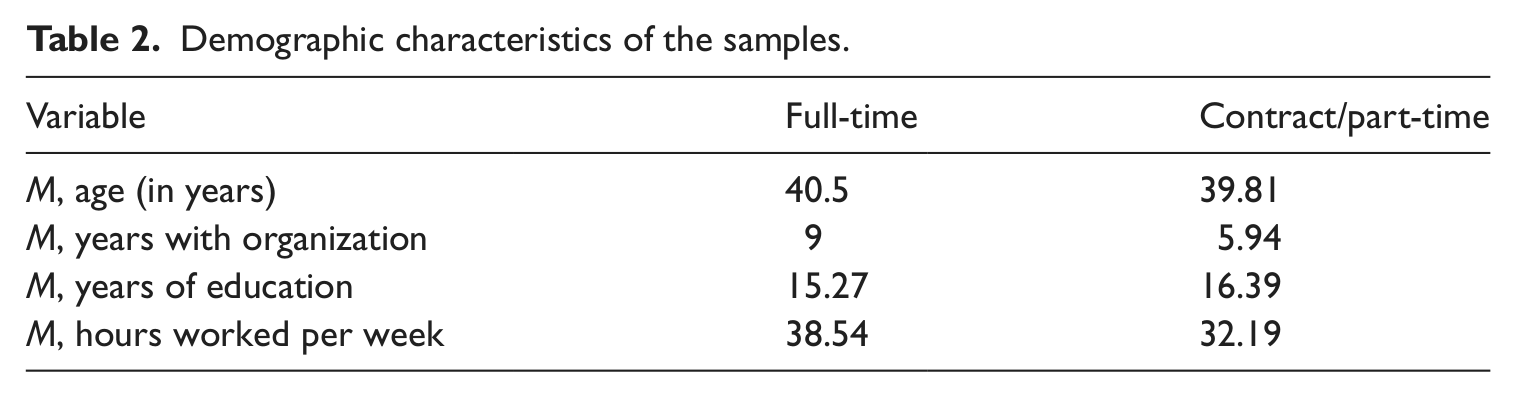
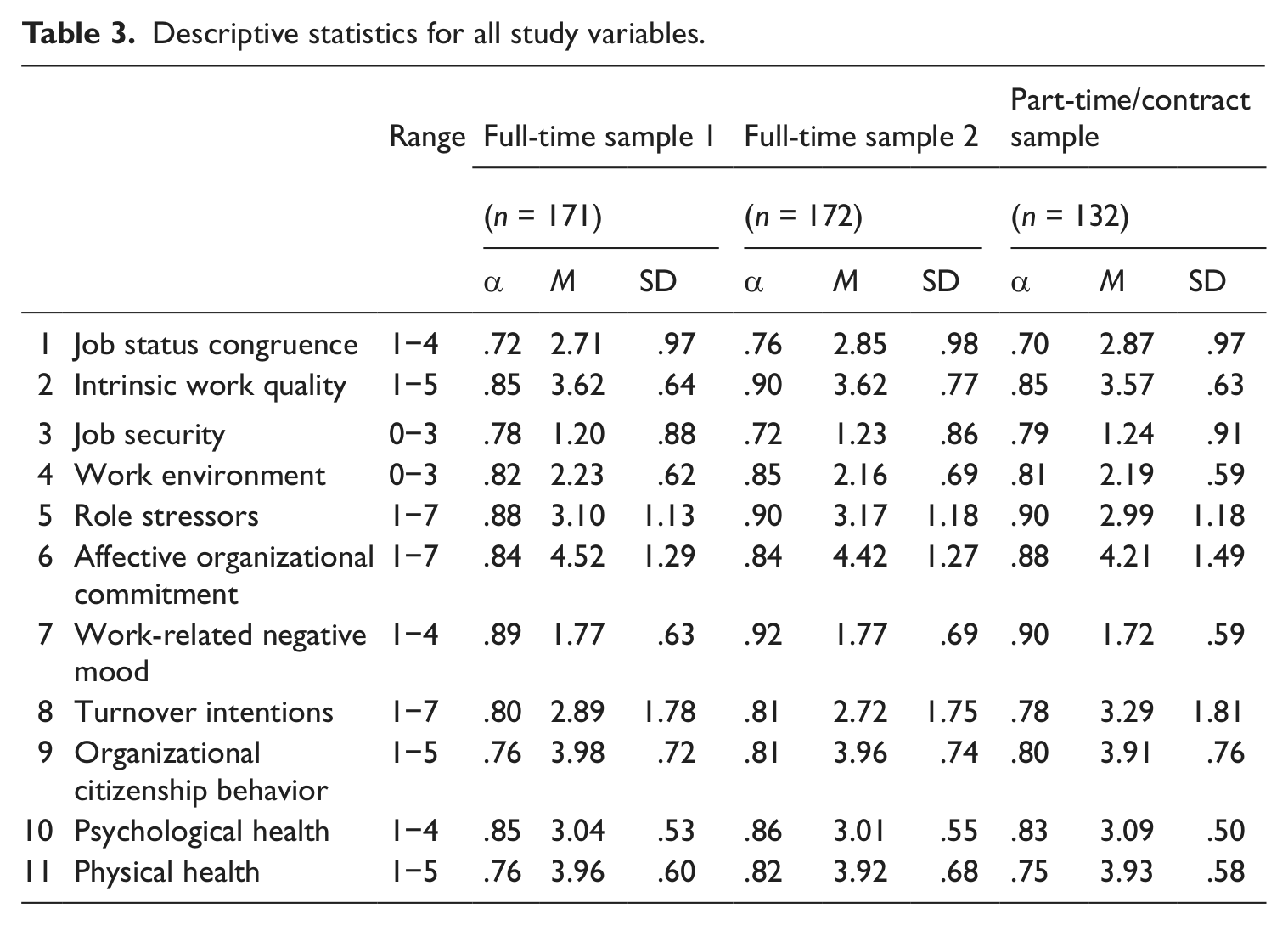
Seventy-two percent (n = 343) of the 475 respondents who completed and returned questionnaires were in standard work arrangements within the organization (29% male; 71% female), with the remaining 132 (28%) in non-standard positions (13% male; 87% female). There were no substantive differences in the positions held by individuals in the two groups (see Table 1). Aside from predictable differences in terms of the number of regular and overtime hours worked, there were no significant differences between the groups on demographic variables (see Table 2). For the purposes of data analysis, the full-time sample was split (by random number) into the first full-time sample (n = 171) and the second full-time sample (n = 172). Descriptive statistics and reliability data (α) for each sample on all study variables are in Table 3 and correlation matrices for the three samples are in Tables 4–6.
Job comparison of the samples.

Demographic characteristics of the samples.
Descriptive statistics for all study variables.
Correlation matrix: Full-time sample 1 (n = 171).
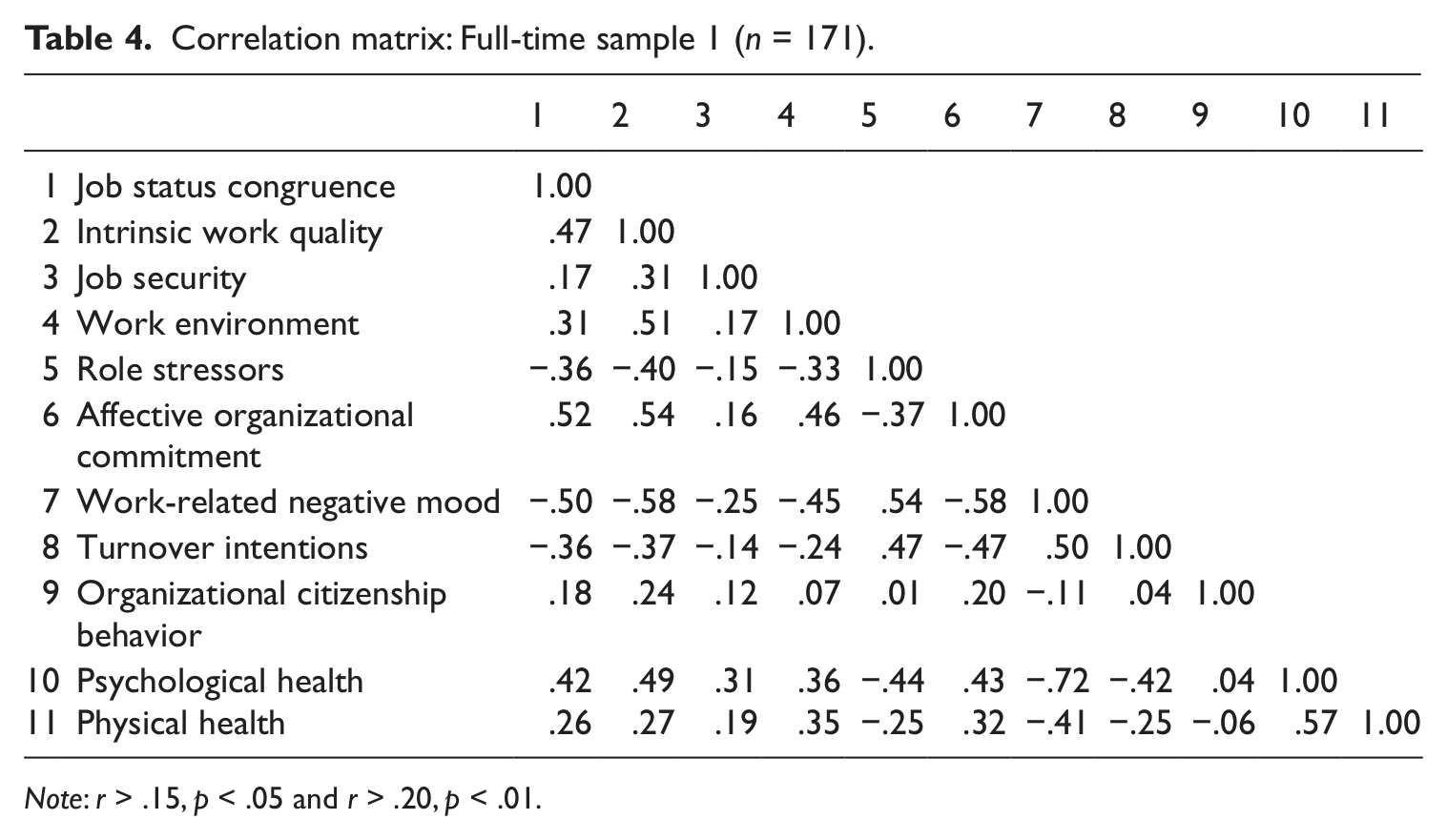
Note: r > .15, p < .05 and r > .20, p < .01.
Correlation matrix: Full-time sample 2 (n = 172).
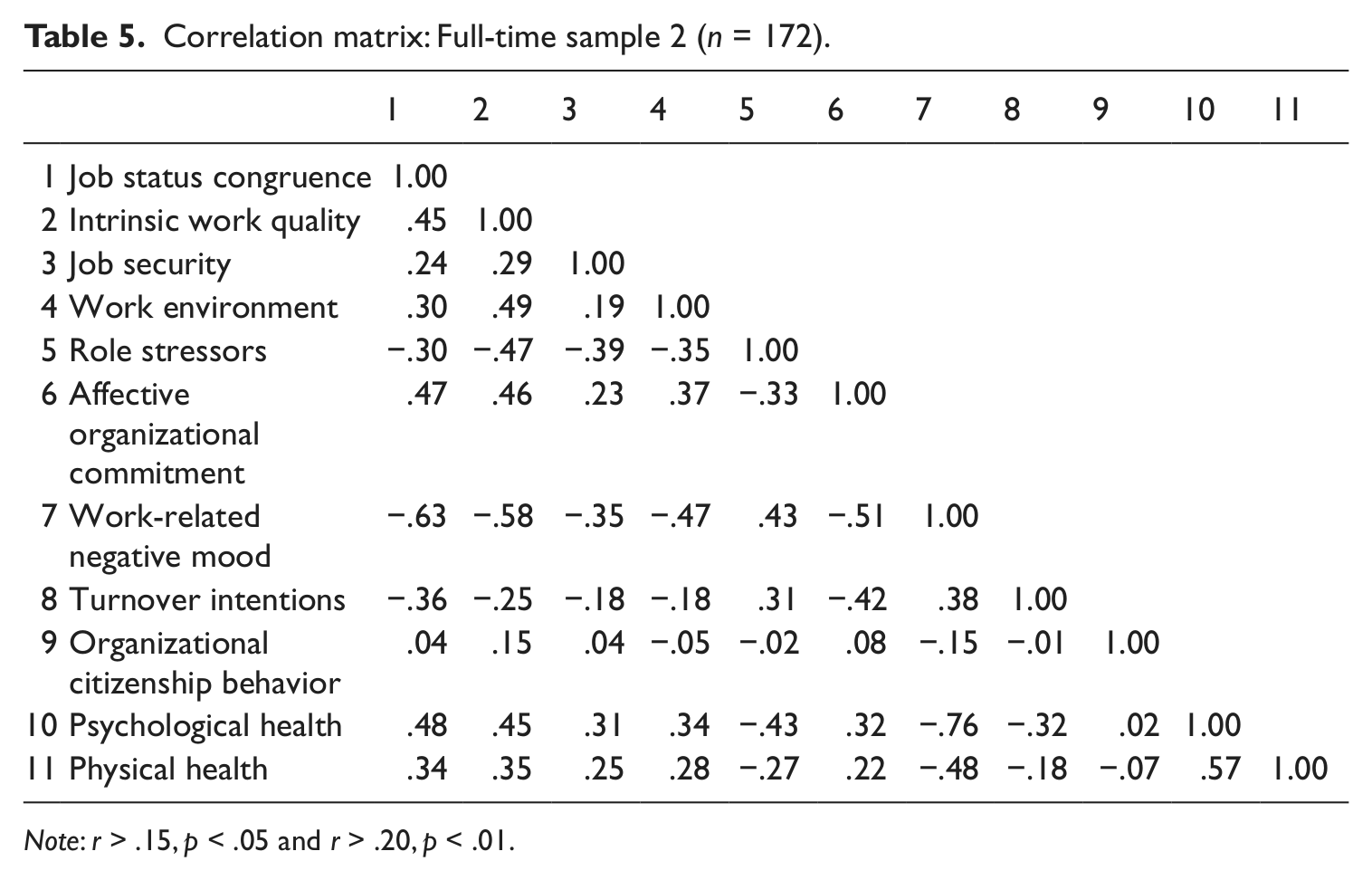
Note: r > .15, p < .05 and r > .20, p < .01.
Correlation matrix: Part-time and contract sample (n =132).
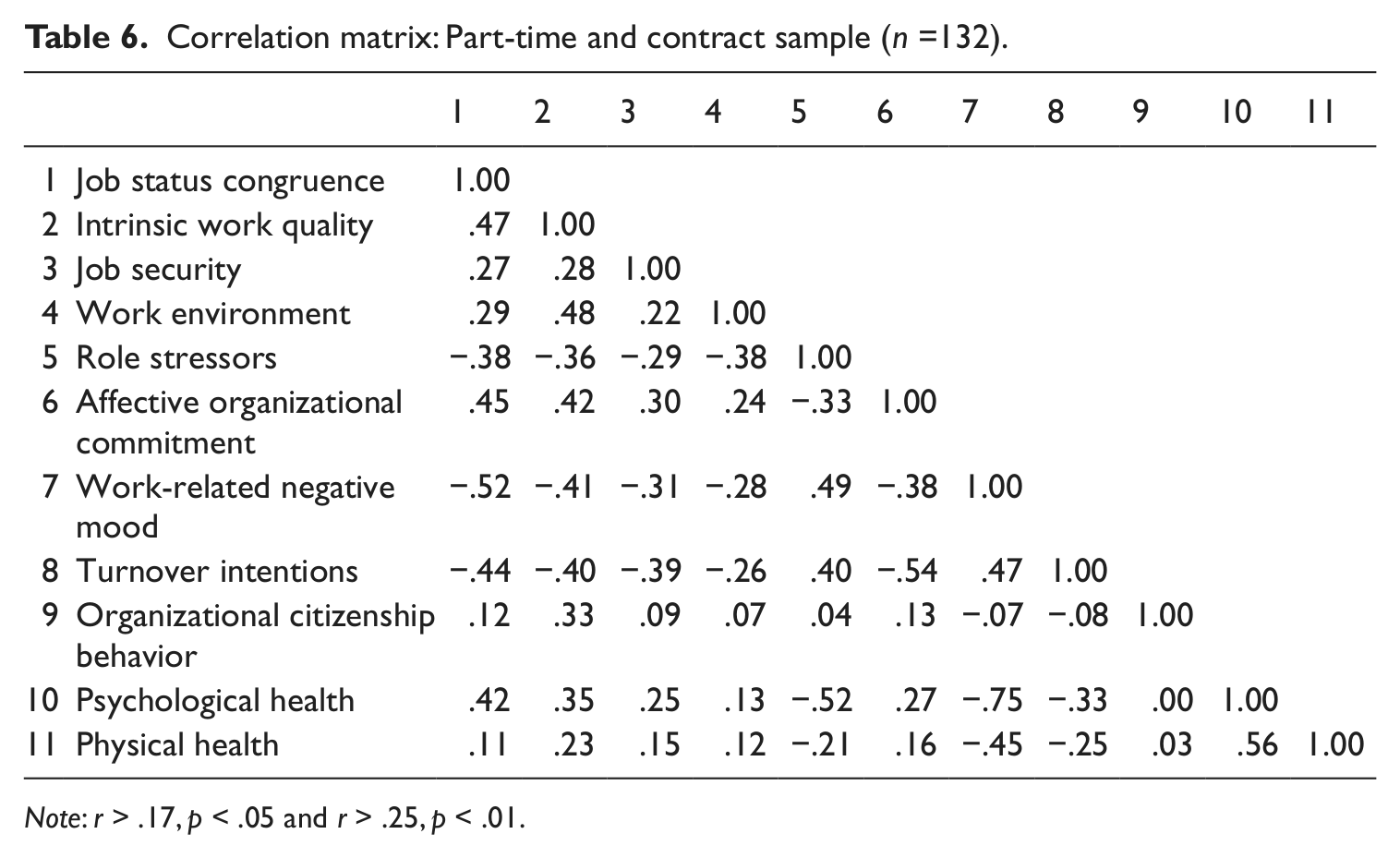
Note: r > .17, p < .05 and r > .25, p < .01.
Measures
Work experiences.
We used 12 items to measure intrinsic quality (i.e. job characteristics). Ten items (e.g. ‘the feeling of doing something which is not trivial, but really worthwhile’) were taken from Warr et al.’s (1979) measure of intrinsic job characteristics, and were rated on a five-point Likert scale, ranging from ‘there’s none of that in my job’ to ‘there’s a great deal of that in my job’. In keeping with Breaugh and Becker’s (1987) refinement of the construct of autonomy, two items were added to assess the degree of perceived autonomy or control employees have over the sequencing and scheduling of their work activities (rated on the same five-point Likert scale). Role stressors were measured using Rizzo et al.’s (1970) role ambiguity (six items) and role conflict (eight items) scales. Responses ranged from very false to very true on a seven-point Likert scale: for example, ‘I feel certain about how much authority I have’ (role ambiguity) and ‘I receive incompatible requests from two or more people’ (role conflict). Two items were generated to measure job status congruence: ‘If all external pressures were removed how likely is it that you would remain in this type of work arrangement (i.e. contract, part-time, or full-time)’ and ‘To what degree have you felt trapped in your current work arrangement’ (reverse coded); responses ranged from 1 (not at all) to 4 (a great deal). We generated seven items to assess job security (e.g. ‘my job is secure’ or ‘rumors of layoffs’), using the same format as the Job Descriptive Index (JDI; Smith et al., 1969). Finally, work environment was intended to measure satisfaction with the context in which work is done and comprised of nine items from the coworker section of the JDI and nine items using the same format intended to broaden the scope (e.g. ‘comfortable noise level’ or ‘poor working environment’).
Mediators.
We used Meyer and Allen’s (1997) eight item affective commitment scale (e.g. ‘I would be very happy to spend the rest of my career with this organization’). Respondents indicated the degree to which they agreed with each statement on a seven-point scale, ranging from 1 (strongly disagree) to 7 (strongly agree). Work-related negative mood was measured using Caplan et al.’s (1975) six-item scale. In thinking about their jobs, participants indicated the degree to which they felt sad, unhappy, or cheerful (reversed), on a scale of 1 (never or a little of the time) to 4 (most of the time).
Job-related functioning
The six-item altruism dimension of Organ’s organizational citizenship behavior scale was used (Organ, 1988; Smith et al., 1983). Participants rated the degree to which various behaviors were characteristic of themselves on a scale of 1 (not at all characteristic) to 5 (very characteristic). Items such as ‘helping other employees with their work when they have been absent’ or ‘volunteering to do things not formally required by the job’ were rated. A three-item index was used to measure turnover intentions (Cook et al., 1981). Participants rated two questions: ‘I often think about quitting’ and ‘I will probably look for a new job in the next year’ on a scale of 1 (strongly disagree) to 7 (strongly agree). They were also asked: ‘how likely is it that you will actively look for a new job in the next year’; responses ranged from 1 (not at all) to 7 (extremely likely).
Personal functioning.
The General Health Questionnaire (Goldberg, 1972) was used to measure perceived psychological health. Banks et al. (1980) have shown that this measure is psychometrically sound in occupational settings. Only nine of the 12 items were used; items 1, 4, and 9 were omitted to avoid potential item overlap (e.g. item 9, which asked about individuals ‘feeling unhappy or depressed’, was eliminated because it overlapped with questions about work-related negative mood). Twelve items from Spence et al.’s (1987) scale were used to measure perceived physical health over the last three months (e.g. respiratory infections, headaches, digestion/elimination problems), using three items for each category. Participants rated the degree to which they experienced each of these symptoms on a five-point scale ranging from ‘almost always’ to ‘almost never’.
Results
Group differences
Because most research compares the group means of standard and non-standard workers, we used a series of t-tests to compare these groups on all study variables. Group means did not differ significantly on any of the study variables except turnover intentions. Non-standard workers had significantly higher turnover intentions (M = 3.29, SD = 1.81) than standard employees (M = 2.81, SD = 1.76; t(484) = 2.71, p < .01). Consistent with Clark’s (2005) finding, 29 per cent of our standard sample would have preferred to work less (i.e. part-time). Fifty percent of our non-standard sample wanted to work more (i.e. full-time).
Model testing
Data were analyzed with structural equation modeling using a single-indicator latent variable path analysis (LISREL VIII). 2 For the model, each observed variable represented a corresponding latent variable and random error in measurement. Model fit was estimated using maximum likelihood estimation and evaluated on five criteria: the chi-square value (χ2), the goodness of fit index (GFI), the Root Mean Square Error of Approximation (RMSEA), the Non-Normed Fit Index (NNFI), and the Comparative Fit Index (CFI). Covariance matrices were analyzed, there was no reason to suspect violations of multivariate normality, and sample sizes were adequate for each analysis.
In terms of the overall fit of the preliminary model, findings were inconsistent in the first full-time sample: although GFI = .95, NNFI = .96, CFI = .98, and RMSEA = .05 were acceptable, the chi-square value was significant χ2 = 45.08 (30), p < .05, and not all paths were significant. Based on these results, theory trimming was used (Pedhazur, 1982), and a revised model was estimated retaining only those paths that were significant or approaching significance (see Figure 2). Because the second model is nested within the first, a χ2 test for the difference between these models was calculated (Long, 1983). The second model provided a significantly better fit to the data than the first model as demonstrated by the chi-square difference score (χ2) = 7.18, p < .05). It also provided a good fit to the data; GFI = .96, NNFI = .97, CFI = .98, RMSEA = .04, and the chi-square was no longer significant (χ2 (28) = 37.9, p > .05). The unstandardized parameter estimates, 3 Z-scores, and significance levels are reported in Figure 2.
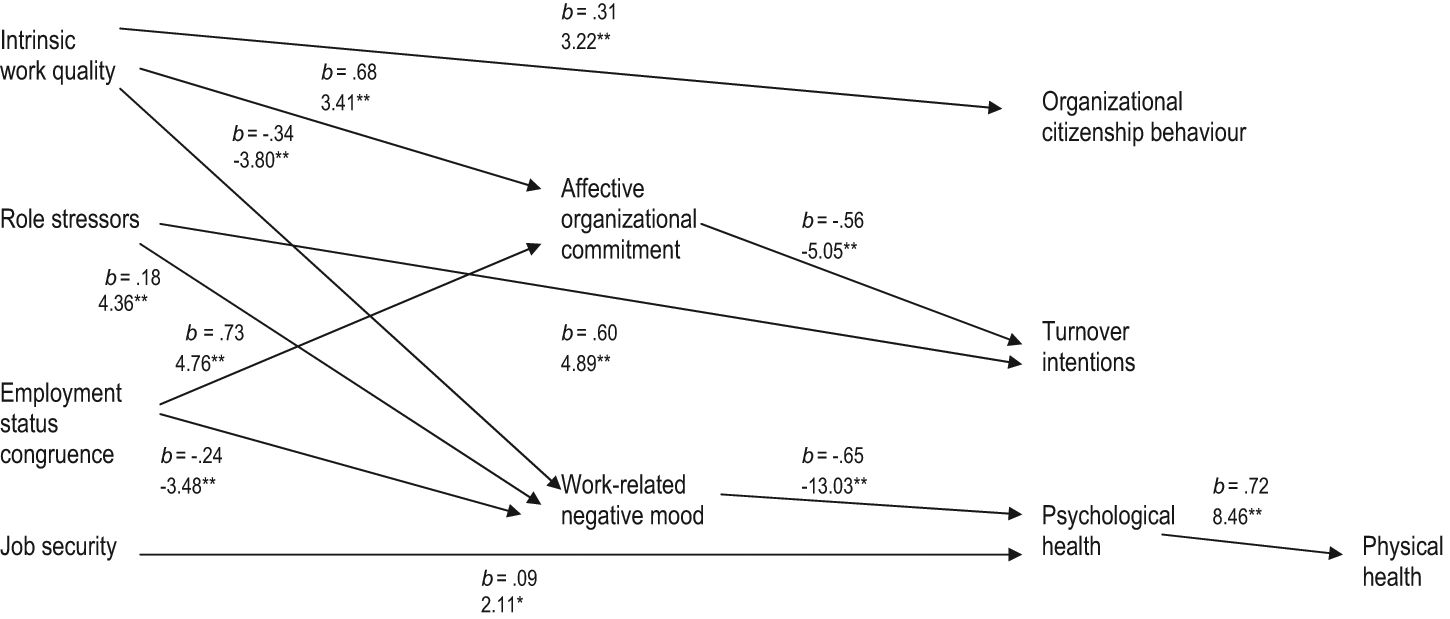
Revised model: Z-scores for full-time sample 1 (n = 171).
One of the propositions in this article was that subjective work experiences would be related to job-related functioning (organizational citizenship behaviors and turnover intentions) via affective commitment, but related to personal functioning (psychological and physical health) through work-related negative mood. The previous analysis demonstrated that turnover intentions were in fact predicted by affective commitment, and psychological and physical health by work-related negative mood. However, this does not preclude the possibility that affective commitment might also have predicted psychological health, and/or that work-related negative mood might have predicted job-related functioning if given the chance. Consequently, an alternative model allowing affective commitment to predict psychological and physical health, and work-related negative mood to predict organizational citizenship behaviors and turnover intentions, was also estimated. Although adding paths will always improve model fit, it made no significant difference in this case (χ2 (25) = 34.62, p > .05, GFI = .96, NNFI = .97, CFI = .99, RMSEA = .05). Nonetheless, because the fit of the model might not change even if individual parameter estimates do, we tested the significance of each mediator in predicting the alternate outcome. As predicted, while work-related negative mood predicted psychological health (b = −.66; z = −10.46, p < .01), affective commitment did not (b = .01; z = −.21, p > .05). Further, affective commitment predicted turnover intentions (b = −.46; z = −3.54, p < .01), whereas work-related negative mood did not (b = .40; z = 1.36, p > .05). Finally, work-related negative mood did not predict organizational citizenship behaviors (b = 19; z = 1.31, p > .05).
Multi-group model replication.
Using multi-group structural equation modeling, 4 we assessed a single χ2 goodness-of-fit statistic to contrast the model for the replication samples simultaneously. The fully free model (with all parameters estimated for each group separately) provided a good fit to the data: RMSEA = .04, NNFI = .98, GFI = .93, CFI = .98, χ2 (72) = 89.62, p > .05). The difference between this fully free model and the fully fixed model (with all parameter estimates constrained to be equal) was computed. There was no significant difference (χ2 = 13.38, d.f. = 11, p > .05) between the overall fit of the model when all parameter estimates were constrained to be equal (χ2 (83) = 103.00) compared with when they were estimated separately (χ2 (72) = 89.62). Individual parameter estimates are presented in Figures 3 and 4. In the standard sample (n = 172) all proposed parameters except two were significant (Figure 3). In the non-standard sample (n = 132), all parameters except two were significant (Figure 4).

Multi-group replication model: Z-scores for full-time sample 2 (n = 172).
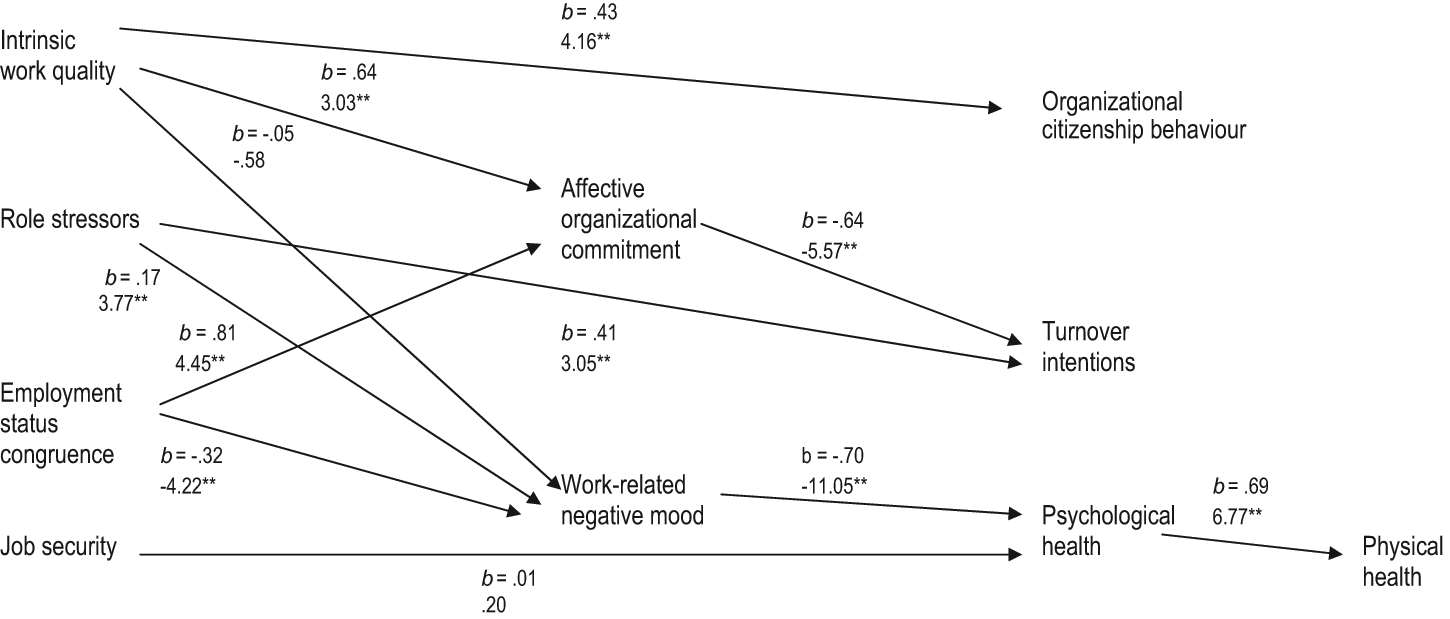
Multi-group replication model: Z-scores for part-time/contract sample (n = 132).
Discussion and concluding remarks
Calls for research bridging disciplinary boundaries in studying job quality have increased (e.g. Kalleberg, 2008; Knox, Warhurst, and Pocock, 2011; Munoz de Bustillo et al., 2011; Oldham and Hackman, 2010). More specifically, socio-economic researchers are calling for the modeling of a ‘worker-oriented, individually-constructed and theoretically grounded job quality indicator in order to measure, compare and monitor the evolution of this variable in different countries’ (Munoz de Bustillo et al., 2011: 467). In the psychological job design literature, researchers are calling for more attention to individually negotiated deals including flexible schedules and part-time options (e.g. Hornung et al., 2009). Such deals have been associated with both individual well-being and work–life balance, through increasing person–environment fit (Hornung et al., 2010a).
In this article, we have sought to: (i) incorporate one construct noted in the socio-economic literature (i.e. job status congruence – the extent to which people are working in standard or non-standard arrangements by choice) into a psychological model of work quality; (ii) clarify the mediating paths by which these predictors may relate to personal and organizational functioning; and (iii) determine the extent to which this model generalizes across samples of standard and non-standard workers in a given context.
Both of our propositions were supported:
1 In contrast to three theoretically established predictors from the job design literature (intrinsic job characteristics, role stressors and job security), job status congruence was the only predictor significantly related to both mediators across all three samples (both full-time and the part-time/contract sample). It was related to less work-related negative mood and more affective organizational commitment in all cases. In contrast, among the more established psychological predictors, although intrinsic work quality was a significant predictor of both mediators across the full-time samples, it was not significantly related to work-related negative mood in the non-standard sample (one could only speculate that this might be driven by lower expectations in this group). Further, role stressors were significantly related to negative mood across the three samples (the magnitude of the relationships appeared to be quite small), but were not related to the other mediator (affective commitment). Finally, job security did not relate to either mediator. For present purposes we will not discuss each of these paths in detail but refer the reader to note 5 for a discussion of the unsupported paths in the model.
2 In terms of different proposed mediators, we found support for our second proposition across samples. Different mediators were associated with different outcomes: work-related negative mood was a significant predictor of personal outcomes (i.e. linking to lower psychological health, which in turn predicted physical health reported). In contrast, affective commitment was a significant predictor of organizational outcomes (e.g. negatively associated with turnover intentions) across all three samples. These findings offer novel insights. For example, if we look at the proportion of variance accounted for in the mediators, in the first full-time sample only 4 per cent additional variance in negative mood is explained by including additional aspects of work quality (e.g. work environment and job security – see note 5 for a discussion of these predictors); whereas three predictors (status congruence, intrinsic quality, and role stressors) accounted for 61 per cent of the variance in predicting negative mood in the full-time replication sample, and 52 per cent of the variance in the non-standard sample. In predicting affective commitment, two of these variables (intrinsic quality and job status congruence) accounted for 37 per cent of the variance in the full-time replication sample and 52 per cent of the variance in the non-standard sample. These findings allow us to begin assessing the relative importance of these constructs in a comprehensive model of work quality across work arrangements.
While these findings are preliminary, job status congruence appears not only to be related to organizational outcomes (i.e. turnover via affective commitment), but to workers’ reported levels of psychological and physical health (via work-related negative mood). A lack of congruence between individuals’ actual and preferred work status may lead to problems in managing their personal lives. For example, if people lack financial means because they can only find part-time (vs full-time) work, or are deprived of personal time because they can only keep their job by working full-time (although they want to work part-time or on contract), these experiences may affect their mental and physical health. Further, it is perhaps not surprising that the more individuals lack status congruence, the more negative they feel about the job responsible for these personal strains.
Over 30 years ago, Hackman and Oldham (1980) recognized individual differences in their theory of job quality (i.e. growth need strength). However, most of our models in the psychological literature do not integrate such differences. Thus, while cultural influences on job design have been tested increasingly, little consideration has been given to individual agency (hence, increasing calls for such research – e.g. Parker et al., 2008; Westphal, 2010). Although much has been written about ‘job crafting’ in North America, ‘what is often overlooked is that a large fraction of Americans are employed in low wage and low quality jobs for which the kind of considerations that are standard in the job design literature … compete for importance with the more basic concerns of wages, benefits, and safety’ (Osterman, 2010: 407). Perhaps it is time to blend these literatures and begin considering models that take economic, social, and psychological perspectives into account. This article is one step in this direction. No matter how seemingly monolithic cultural and/or economic conditions may appear, individual needs and requirements for job quality may ultimately be quite unique (Barnett, 2006; Hornung et al., 2010a), and we need to begin exploring ways to integrate these individual differences into our universal models. To the extent that our findings generalize, we have supported a few ‘core’ characteristics (including one very ‘individualized’ one) with which to begin.
Pressure to explore models of work quality is likely to continue. Workers themselves are changing – for example, ‘decreasing birth rates in the US and Europe, coupled with increasing longevity, have led to a trend for a higher proportion of elderly and retired people to either continue working or return to work’ (Grant et al., 2010: 152). However, retired employees are not unified in their motivations for seeking employment; some may seek social interaction from re-entry into work, others may only seek hours and the extra income those hours provide (e.g. Canadian Business, 2011). Our findings suggest that to the extent there is status misalignment in this population, links to health and well-being could be considerable. When designing jobs in different geographical zones, national cultures and economic conditions must be taken into consideration (Erez, 2010), but policy-makers must also understand how individuals in their respective countries or regions come to possess their opinions of job quality (social expectations, economic necessity, personal/family constraints, psychological needs and others) in order to stimulate or facilitate the design of jobs that best fit the needs of their constituents. Here again, job status congruence may be an essential component to add to our models of job quality. For too long we have assumed homogeneity in workers in our psychological models. There is a green field of research potential in the years to come exploring the best ways to align work with people in this regard.
Perhaps ironically, some researchers are suggesting interventions in precisely the opposite direction. For example, Harrison and Humphrey (2010) suggest that organizational teams consider ‘casting against type’ or ‘putting square pegs into round holes’. While this may have advantages for an organization, this approach may undermine job quality from the perspective of the individual. When it comes to job status congruence, perhaps it is time for policy-makers to encourage employers to pursue internal discussions with employees around the allocation of work. To the extent that there may be ‘mismatches’ within any given context, creative solutions may be possible (e.g. Hornung et al., 2009, 2010a; Vough and Parker, 2008). However, these discussions are unlikely to take place until the stigma associated with certain forms of employment are reduced (e.g. that only standard workers are committed to their organizations) and people are allowed to move more fluidly between work categories during their life course, particularly in North America.
Much research has been conducted separately on job quality and job status congruence. However, little if any previous research seems to have explored a possible relationship between these constructs. Our research suggests that, of the various factors that go into determining job quality (e.g. intrinsic quality, role stressors), job status congruence may be an important component. In fact, our findings suggest that when compared to existing job quality indicators, it is one of the most important in predicting mediators that relate to both personal and organizational factors such as health and turnover. This finding has interesting implications. For example, are organizations wasting their money on programs and job features that are not as important to employees as job status congruence? Are organizations missing an opportunity to better understand their workforce and therefore better align jobs in ways employees value (possibly at little cost in a given workplace)?
Our article has several advantages (e.g. studying how a wide range of predictors interact with each other and two mediators in linking to outcomes across different types of workers in one context). It also has limitations. Given that we only studied workers in a white collar environment, no doubt the physical attributes of work would have been more likely to move to the forefront in a more physically taxing or dangerous context. Our article also did not address gender issues. Given that men and women are distributed differentially in the labor market there may be different implications of job status incongruence for men and women. It is also no longer appropriate to assume that women want non-standard vs standard work. Do we even know if job design is a gender neutral construct (Nicholson, 2010)? All of these are interesting questions for future research, and more gender-balanced and blue-collar samples will be required to test them.
Measurement issues will also need to be addressed in future research. Although we explored the extent to which people felt trapped by their current work arrangements (e.g. standard vs non-standard job status), future research will want to tease out the impact of strain caused by financial concerns vs time based challenges, as these are likely to have different implications for health. In fact, this is also an area with perhaps the most readily apparent policy implications. To the extent that findings such as ours and Clark’s (2005) generalize, employers and governments may want to explore just what people are willing to trade (e.g. financially) in order to work less. If even half of the estimated 30 per cent of people wanting to be out of full-time work are willing to make financial sacrifices to do so, the implications for creating new jobs could be considerable. This possibility would seem worth a frank discussion on the part of all parties concerned, including governments trying to do more with less around the globe.
Two final points should be made in regard to mediators (and moderators) of work quality: (i) our model reinforces calls in the literature for placing emotion at the center of relationships between work factors and health (e.g. Brief and Weiss, 2002). That being said, future research will also want to explore other more cognitive mediators (e.g. perceptions of justice) in relation to health outcomes; and (ii) future research will also want to consider moderators of job status congruence. Many variables are likely to impact this construct (e.g. home support, buoyant economy, skill transferability, financial security and others). For example, could a rise in net wages offset dissatisfaction with status incongruence for non-standard workers? In contrast, are standard workers resentful of obligations holding them to their organizations (given their other non-work obligations) no matter what the financial benefit?
More investigation will be needed to better understand the above relationships if we are to make progressive international policy recommendations regarding job quality. To the extent that our findings and those of other researchers generalize, the needs in regard to job status incongruence in particular may be pressing. Clark’s (2005) research across OECD countries found that 40 per cent of people were experiencing incongruence. Our article suggests that this may have important consequences for the way people experience their work and its impact on both their personal and organizational functioning.
Footnotes
Acknowledgements
The first author would like to thank the Canada Research Chairs program for enabling the preparation of this manuscript. The authors would also like to thank Dr J Barling for his input into early phases of this research. Finally, the authors would like to thank the three anonymous reviewers for their valuable suggestions during the review process.
Funding
This research received no specific grant from any funding agency in the public, commercial, or not-for-profit sectors.