



Abstract
Bottom-line mentality (BLM) describes a one-dimensional frame of mind revolving around bottom-line pursuits, which pervades most organizations today. But how does working with high BLM supervisors affect employees’ functioning both at work and at home? Guided by this question, we draw on social information processing theory and insights from the person–environment fit literature for a nuanced understanding of the effects of supervisor BLM. Using data from two field studies conducted in China (340 employees) and the United States (174 employees), we find that supervisor BLM increases employee perceptions of a competitive climate that ultimately increases employee thriving at work and insomnia outside work. We further find that employee trait competitiveness moderated the indirect relationship (via perceived competitive climate) between supervisor BLM and thriving at work but not for insomnia; employees high (versus low) in trait competitiveness were found to thrive at work under the competitive climate stimulated by high BLM supervisors. Taken together, our findings highlight the need for organizational leaders to be cautious of being too narrowly focused on bottom-line outcomes and aware of the wider implications of BLM on different domains of their employees’ lives.
Keywords
In today’s increasingly competitive business environment, leaders (hereafter, supervisors) are constantly “on their toes” to exclusively focus on bottom-line outcomes (such as financial gains) “to the neglect of competing priorities”. This phenomenon is known as bottom-line mentality (BLM; Greenbaum et al., 2012: 343). In the emerging BLM literature, the consequences of BLM have predominately been explored within the work domain, with a dominant view that supervisor BLM disrupts employee functioning. For instance, when employees perceive their supervisors as BLM-oriented, these employees are more likely to socially undermine their co-workers (Greenbaum et al., 2012), engage in unethical behavior (Babalola et al., 2020), and experience intensified feelings of shame due to unethical behavior (Bonner et al., 2017). While these empirical ramifications alert people to potentially costly outcomes for organizations, it appears too early to make conclusions about the nature and impacts of supervisor BLM on employee functioning due to at least two research limitations.
First, recent BLM studies have begun to explore the complexities involved in its effects. While the initial view conceptualizes supervisor BLM as disruptive for employee functioning (Greenbaum et al., 2012; Mawritz et al., 2017), these seemingly dysfunctional influences are in essence related to interpersonal or moral domains that are overlooked due to the sole focus of supervisors on bottom-line outcomes. The BLM literature remains, however, underspecified for employee responses that address profit-driven activities (see Babalola et al., 2020; Quade et al., 2020 for exceptions). In recent years, research has put forth thriving at work as employees’ adaptive functioning that benefits goal attainment of both individuals and organizations (Paterson et al., 2014). Defined as “the psychological state in which individuals experience both a sense of vitality and learning at work” (Spreitzer et al., 2005: 538), thriving at work is an important aspect of employee functioning in the workplace (Walumbwa et al., 2018). Thus, investigating how supervisor BLM influences thriving at work provides an opportunity to sharpen the understanding of its effects on employee functioning that is central to an organization’s bottom-line pursuits.
Second, human functioning entails individuals’ capacity, strength, and well-being in multiple domains of life (Seligman and Csikszentmihalyi, 2000). Thus, a mere focus on the work domain is inadequate to fully capture BLM effects. Instead, it overlooks the importance of work–home transitions, thereby limiting the theoretical advancement of BLM literature. Work–family literature has well advocated home-life connections as a way to create a more realistic understanding of organizational phenomena (Hoobler and Brass, 2006). For instance, working under an abusive supervisor at work has been shown to increase follower dysfunctional behavior at home (Hoobler and Brass, 2006; Restubog et al., 2011). However, BLM literature has not yet explored such work–home connections. This limitation is unfortunate because BLM signals a zero-sum mindset that encourages whatever it takes to compete and win at work (Babalola et al., 2020; Greenbaum et al., 2020). Yet the home provides a potential place to recover from competitive and stressful days at work (Hamilton et al., 2008). Insomnia, defined as subjective sleep complaints in one’s inability to initiate and/or maintain sleep (Benbir et al., 2015), is one of the most prevalent forms of impaired recovery at home. Therefore, it is both theoretically important and practically relevant to investigate how the stimuli offered by supervisor BLM influence employees’ sleep functioning (insomnia) at home alongside their experiences at work.
Thus, drawing on social information processing (SIP) theory (Salancik and Pfeffer, 1978), we suggest that supervisor BLM influences employees’ functioning in both beneficial and harmful ways. SIP theory relies on the fundamental premise that individuals adapt attitudes, beliefs, and behaviors to a social context (e.g. leadership) and that the characteristics of this social context are not necessarily objective but socially constructed (Zalesny and Ford, 1990). Thus, people develop their perceptions and interpretations of the work environment based on their experiences or observations within that environment. Accordingly, they are inspired to demonstrate commensurate attitudes and adjust the way they function (Salancik and Pfeffer, 1978). Within a workplace, supervisors provide the immediate context to which employees interpret and respond (Mayer et al., 2010). When supervisors approach their work with a BLM, they signal to employees that it is important to be on top of their game, and this encourages employees to compare their performance against that of their peers, a defining characteristic of a competitive climate (Brown et al., 1998). From this perspective, we propose that supervisor BLM enhances employees’ perception of a competitive climate (i.e. perceived competitive climate; “the degree to which employees perceive organizational rewards to be contingent on comparisons of their performance against that of their peers”; Brown et al., 1998: 89), which in turn influences two domain-specific outcomes: improved functioning at work (i.e. employees’ thriving at work) and impaired functioning outside work (i.e. insomnia or difficulty falling or staying asleep).
Furthermore, we explore the complexity of these aforementioned relationships by testing the moderating effects of employee trait competitiveness. Extant research shows that individuals differ in how they interpret and respond to social information (Kristof, 1996). This suggests that supervisor BLM might influence employee thriving at work and insomnia differently, depending on the fit between employee attributes and the work environment (Edwards, 2008). According to person–environment fit literature, the greater the fit with individuals’ perceptions of the current realities around them, the more likely they will experience optimal functioning (Edwards et al., 1998; Kristof, 1996). Thus, by integrating SIP theory and the idea of person–environment fit, we ascertain whether the indirect effects of supervisor BLM on thriving at work and insomnia via perceived competitive climate are dependent on employee trait competitiveness. We contend that employees high on trait competitiveness are more likely to thrive in an environment characterized by BLM supervisors and perceived competitiveness because these characteristics are consistent with such an environment. In contrast, employees low on trait competitiveness are more likely to experience higher levels of insomnia due to poor subjective fit. We progressively test these hypotheses in two studies using samples from employees in China and the United States. Figure 1 depicts our theoretical model.
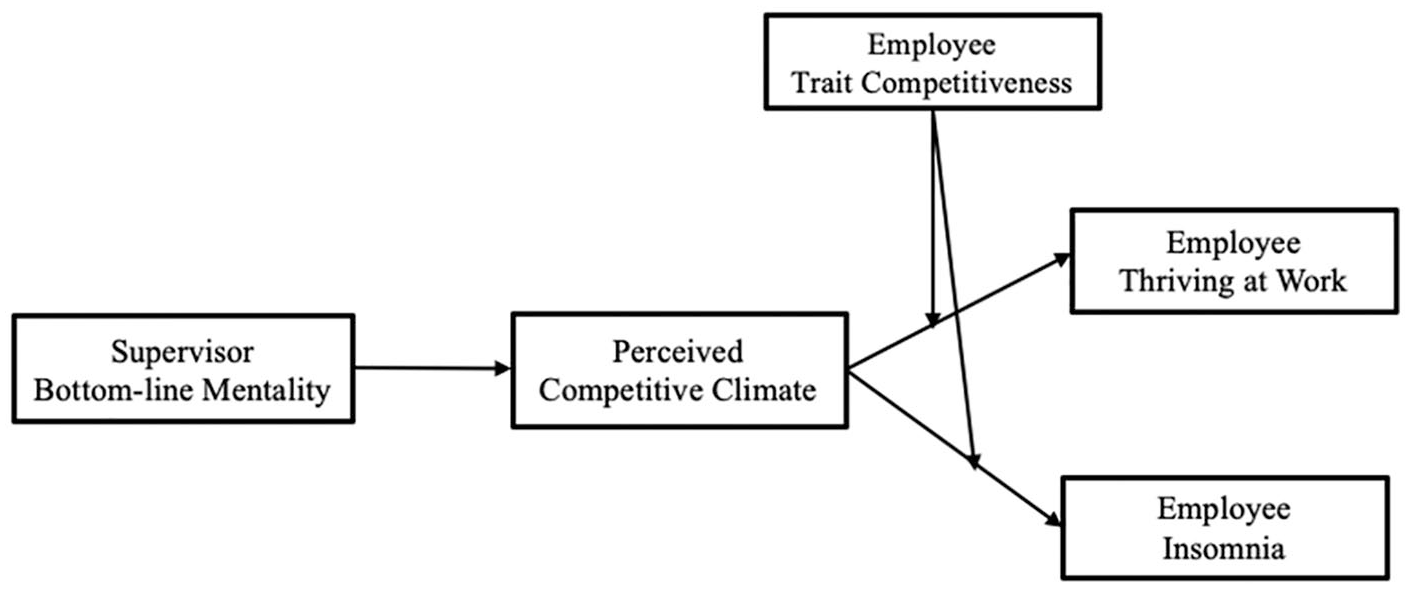
The proposed model.
With this research, we offer important contributions to the emerging BLM literature. First, we expand the literature by investigating a fuller picture of supervisor BLM influences in two important domains of human functioning, represented by thriving, an energetic state at work, and insomnia, an impaired energetic recovery at home. To date, the dominant focus on the work domain in past BLM research overlooks the fact that human functioning and energetic activation are domain-specific (Quinn et al., 2012). In this vein, our research demonstrates that the social information offered by supervisor BLM differs in their impact on the energetic state at work and recovery at home, respectively. Second, we enrich the BLM literature by identifying the underlying mechanism—perceived competitive climate—that accounts for the effects of BLM in two domains of human functioning. Third, we add nuances to BLM effects by further exploring the role of employee trait competitiveness as a key boundary condition for which the mediating effects of perceived competitive climate become stronger or weaker. Practically, we provide organizations with a more holistic view of BLM’s effects and hence a useful starting point to better develop strategies to reap its potential benefits (if any) and reduce its harms.
Theoretical development and hypotheses
Social information processing theory
As mentioned earlier, SIP theory (Salancik and Pfeffer, 1978) posits that individuals adapt their attitudes, behaviors, and the way they function based on their interpretations of a social context. Characteristics of the social context (e.g. style of supervision, difficulty of the task) are not given but constructed as the ways in which individuals come to perceive them (Salancik and Pfeffer, 1978). A defining feature of SIP theory compared to other theories, such as need-based approaches to attitudes and behavior (Hackman and Oldham, 1976) or the job characteristics model (Griffin and McMahan, 1994), is the explicit link between the social environment and the processing of information (Zalesny and Ford, 1990).
In explaining how people perceive social context, Salancik and Pfeffer (1978: 228) viewed perception as “a retrospective process” and argued that individuals develop perceptions from salient information they are immediately aware of. In the workplace context, extant research has shown that individuals tend to rely on their direct supervisors’ behaviors (Zohar, 2000). As employees attempt to make sense of their work environment, they consider what their direct supervisor focuses on and use this interpretation as a cognitive representation of what is expected, supported, and valued (James et al., 1978), or in other words, “the way things are done around here” (Zohar and Luria, 2004: 322). Because individuals need to perceive and make sense of cues in their work environment before acting upon them, the individual-level construal of climate (i.e. facet-specific “perceptions” of climates such as perceived ethical, justice, safety, and service climates) is a more proximal predictor of attitudes and behaviors (James et al., 2008; Parker et al., 2003).
Consistent with SIP theory, the cognitive product of information processing of supervisors’ focus stimulates an employee’s perception of a specific climate within the workplace, which in turn influences how they function, improve, and direct efforts (Chan et al., 2014). Here, we focus on perceived competitive climate as the psychological mechanism through which supervisor BLM influences employee thriving at work and insomnia.
Supervisor BLM, perceived competitive climate, and employee thriving at work
Supervisors who focus on bottom-line pursuits above all else are likely to stimulate a narrow, competitive, game-like approach to work whereby people around them believe that there can be only one winner (Greenbaum et al., 2012). For high BLM supervisors, the only way to win is to work harder and contribute to bottom-line goal attainments more than anyone else (Babalola et al., 2020; Callahan, 2004; Wolfe, 1988). For employees, these social cues may trigger the perception of a competitive climate such that winning at work is tied to achieving superior performance over one’s peers. Employees are likely to constantly compare their status with others to gauge who is ahead (Sims and Brinkman, 2002). In this regard, supervisor BLM is likely to stimulate a sense of competition where others are seen as potential rivals, and performance against peers is believed to shape an individual’s success.
Furthermore, an intense and exclusive focus on bottom-line outcomes indicates resource scarcity in a particular work context, which motivates employees to actively compete with their peers for workplace accolades (e.g. Bonner et al., 2017; Greenbaum et al., 2012). Specifically, employees who perceive that their supervisor focuses exclusively on the bottom line may feel that it is acceptable to compete with their peers to obtain the most recognition and rewards. In this line of thinking, winners are likely to put themselves ahead and secure their place in the organization, whereas losers may risk their place in the organization.
In turn, we expect supervisor BLM, through its effects on perceived competitive climate, to positively influence employee thriving at work. Thriving at work is, by definition, the joint experience of vitality and learning at work that reflects growth and momentum marked with a sense of aliveness as well as continuous improvement, respectively (Spreitzer et al., 2005). Based on SIP theory, as employees navigate through a competitive climate, they are likely to adapt their attitudes and actions as well as the way they function accordingly. Learning new things and remaining vital at work are a likely result. First, the perception of a competitive climate shifts employees’ attention to outperforming their co-workers (Brown et al., 1998; Fletcher et al., 2008), and thus, these employees may seek out creative ways to develop themselves and maximize rewards or recognition. Indeed, to survive in a competitive environment, scholars have argued that employees need to continuously learn new things and develop as well as maintain high levels of energy at work (Paterson et al., 2014), as so doing may put them ahead of their peers. In this regard, employees are likely to seek momentum and opportunities for growth at work when they feel challenged by their immediate work environment (Prem et al., 2017), and in the case of a competitive climate, are stimulated to become more focused at work (e.g. Babalola et al., 2019b; Niessen et al., 2012).
Furthermore, evidence suggests that competition makes people hyper-alert to their work so they can effectively function in such an environment (Brown et al., 1998; Hanton et al., 2005). Because supervisor BLM creates the perception of a competitive climate and stimulates an urgency to win (Greenbaum et al., 2012), employees may need to expend a considerable amount of energy to keep up with organizational clients and other stakeholders who are vital to the bottom line. As a result, employees become adaptive to meeting the challenging and changing demands of the business environment. In this vein, employees who perceive a competitive climate are likely to thrive, learn new ways of doing things, and maintain a high level of energy at work to survive in the workplace. Taken together, supervisor BLM may create the perception of a competitive climate that stimulates employees to thrive at work to guarantee their place in a competitive work environment.
Hypothesis 1: Supervisor BLM will be positively and indirectly related to employee thriving at work through perceived competitive climate.
Supervisor BLM, perceived competitive climate, and employee insomnia
Although we have argued that supervisor BLM will stimulate the perception of a competitive climate and in turn, enhance employee thriving at work, it may also have negative effects on employees’ functioning outside work (e.g. increased insomnia). Insomnia simply means no sleep (Scott and Judge, 2006), or difficulty falling and staying asleep (Barber et al., 2013). Extant research not only highlights sleep as an important aspect of employee functioning but also an important driver of long-term effectiveness (Barnes et al., 2011, 2015, 2017; Christian and Ellis, 2011; Lim and Dinges, 2010; Siegel, 2005). Thus, it is crucial for determining whether and how supervisor BLM might influence employee functioning outside of work.
There are several ways in which the perception of a competitive climate induced by supervisor BLM can increase insomnia. Specifically, perceiving such a climate may cause employees to constantly devote substantial time and effort to thinking about how to get ahead of others (Brown et al., 1998; Hanton et al., 2005) even when at home (Babalola et al., 2019b). This, in turn, might make it difficult for employees to fall or stay asleep. Moreover, in a competitive climate where success depends on how well one can outshine others, employees may find it hard to unwind after work, to stop overthinking work-related activities, and get some sleep (Perlow, 2012; Querstret and Cropley, 2012; Sonnentag et al., 2008). Instead, employees may continuously attend to work-related matters even while in bed, which can disrupt their sleep quality (Lanaj et al., 2014). Thus, when a supervisor only emphasizes bottom-line outcomes, the resulting perception of a competitive climate becomes inherently stressful, as individuals stay mentally/physically alert and adjust their work efforts to win at all costs (Babalola et al., 2019b; Hanton et al., 2005). In this regard, employees might experience difficulty falling or staying asleep (i.e. insomnia).
Hypothesis 2: Supervisor BLM will be positively and indirectly related to employee insomnia through perceived competitive climate.
The moderating role of employee trait competitiveness
SIP theory points to possible moderators to enhance our understanding of supervisor BLM’s impact on employees. Specifically, SIP theory suggests that individuals’ reactions to their perceived work environment are also influenced by their personal characteristics (Salancik and Pfeffer, 1978), particularly those that align with the work context (Edwards et al., 1998; Salancik and Pfeffer, 1978). Thus, the degree to which the environment encountered or perceived by employees is central to their self-concept and personal characteristics will influence how they react to the perceived environment (Edwards, 2008; Edwards et al., 1998). Indeed, research on person–environment fit also indicates that a match between the perceived context and individual characteristics could have positive consequences for employee functioning, whereas a mismatch is likely to have adverse consequences (Edwards et al., 1998; Kristof-Brown et al., 2005). In line with this reasoning, we argue that employees whose personal characteristics align with the subjective characteristics of a competitive environment are more likely to better understand the climate and respond favorably (Edwards, 2008; Kristof, 1996). Accordingly, we identify trait competitiveness as an important individual characteristic that will moderate the indirect effects of supervisor BLM on thriving at work and insomnia via perceived competitive climate.
Trait competitiveness refers to individual differences in “the enjoyment of interpersonal competition and the desire to win and be better than others” (Spence and Helmreich, 1983: 41). It determines how individuals direct their efforts in response to the immediate work environment (Brown et al., 1998; Fletcher et al., 2008; Karatepe et al., 2006). Individuals high in trait competitiveness tend to be goal-driven and desire to win at all costs (Brown et al., 1998). They are better positioned to adapt and thrive in a competitive climate given that they are more enthusiastic about competition and have a stronger inclination toward winning or performing better than others (Brown et al., 1998). In addition, research shows that highly competitive people tend to perform better when they perceive a competitive work environment compared to those low in trait competitiveness (Fletcher et al., 2008). This is because high trait competitiveness induces confidence in a competitive work climate and allows employees to exert intense efforts in such an environment (Brown et al., 1998). This enhanced confidence and intensified effort can strengthen employees’ ability to learn new ways and remain energized to perform better than others (Karatepe et al., 2006). As such, high trait competitiveness is expected to strengthen the relationship between perceived competitive climate and thriving at work.
Hypothesis 3: The relationship between perceived competitive climate and thriving at work will be positively moderated by employee trait competitiveness such that the relationship will be stronger (weaker) when trait competitiveness is high (versus low).
Given that we have argued earlier that perceived competitive climate is an important intermediary mechanism through which supervisor BLM relates to employee thriving at work (Hypothesis 1) and that employee trait competitiveness strengthens this indirect relationship (Hypothesis 3), we also expect that trait competitiveness conditionally influences the strength of the indirect association between supervisor BLM and employee thriving at work. This suggests a moderated mediation pattern as below:
Hypothesis 4: The indirect relationship between supervisor BLM and thriving at work, through perceived competitive climate, will be positively moderated by employee trait competitiveness such that the mediated relationship will be stronger (versus weaker) when trait competitiveness is high (versus low).
Similarly, we also predict that trait competitiveness will negatively moderate the effects of supervisor BLM on employee insomnia via perceived competitive climate. Specifically, employees low on trait competitiveness may perceive a competitive work climate as daunting due to the misalignment of such a climate and their personal characteristics. These employees may be ill-equipped to handle the pressure and challenges of outperforming their peers as they do not necessarily enjoy interpersonal competition, or be keen to reach their goals through interpersonal competitive strategies. Indeed, research has shown that employees low in trait competitiveness are less likely to be vigorous in managing high pressure in demanding work environments (Byron et al., 2018; Fletcher et al., 2008). Fletcher et al. (2008), for example, found that those low in trait competitiveness felt more stressed when faced with competition.
Using insomnia as an indicator of poor functioning and well-being (Kessler et al., 2011), we argue that compared to employees high on trait competitiveness, those low on trait competitiveness are more likely to struggle in a highly competitive work environment. This perceived competitive climate may not align with what they value, and thus they may experience higher levels of insomnia. Based on the above arguments, we hypothesize:
Hypothesis 5: The relationship between perceived competitive climate and insomnia will be negatively moderated by employee trait competitiveness such that the relationship will be stronger (versus weaker) when trait competitiveness is low (versus high).
As we have argued that perceived competitive climate is the intermediary mechanism through which supervisor BLM also relates to employee insomnia (Hypothesis 2) and that employee trait competitiveness weakens this indirect relationship (Hypothesis 5), we also expect trait competitiveness to conditionally influence the strength of the indirect association between supervisor BLM and employee insomnia. Thus, we hypothesize:
Hypothesis 6: The indirect relationship between supervisor BLM and insomnia, through perceived competitive climate will be negatively moderated by employee trait competitiveness such that the mediated relationship will be stronger (versus weaker) when trait competitiveness is low (versus high).
Overview of studies
We test our hypotheses in two studies using different populations (i.e. China, the United States), which helps to increase the generalizability of our research findings (Johns, 2006). To date, most BLM research has been undertaken in well-established economies like the United States, and as such, testing BLM effects in a non-western context extends the field’s understanding of BLM and demonstrates the robustness of its effects to multiple contexts (Babalola et al., 2019b). Using a sample of Chinese employees in Study 1, we adopt a study design involving three separate surveys administered at different times to examine the indirect effects of supervisor BLM on thriving at work via perceived competitive climate and the moderating role of trait competitiveness. Then, to achieve constructive replication, we expand our investigation in Study 2 by adding insomnia and testing the full theoretical model using a sample of employees from the United States. Study 2 uses a similar survey design as Study 1. Study 2 also extends Study 1 by demonstrating that our findings are robust with thriving at work and insomnia simultaneously tested in the analysis. Our multi-study design demonstrates the generalizability of our findings and strengthens our contributions to the literature.
Study 1
Participants were professional employees in China from a wide range of industries registered in the database of a headhunting company. To begin with, 500 members were randomly selected as potential participants, with three separate surveys administered at three different points in time separated by one month. To encourage participation, participants were offered a USB. The one-month temporal separation was chosen to reduce common method bias (Podsakoff et al., 2012). Podsakoff et al. (2012) noted that the choice of time lag should be neither too short nor too long. If the time lag is too short, memory effects may artificially inflate the relationship between variables. On the other hand, if the time lag is too long, certain factors (e.g. strong response attrition, leadership development programs) may mask existing relationships between variables (Ployhart and Vandenberg, 2010). Hence, we considered that a month provides an optimal choice of time lag (see also Mitchell et al., 2018).
At Time 1, 500 employees received an email invitation explaining that their participation was completely voluntary, confidential, and for research purposes only. The invitation also included a web link for the survey that assessed supervisor BLM and their basic demographics. Four hundred and eighteen employees completed the first survey, with a response rate of 83.6%. One month later, at Time 2, these 418 employees received the second survey assessing perceived competitive climate and trait competitiveness, of which 377 responded. Then at Time 3, one month after Time 2, these 377 participants received the third survey assessing their thriving at work. We received 340 usable responses, achieving an overall response rate of 68%. This study design helps to keep the survey as short as possible to increase the response rate and alleviate response bias (Bennett and Robinson, 2000). The final sample (N = 340) included 155 male and 185 female respondents. In total, 42.1% of respondents were aged 30 years old or under, followed by 36.2% between 31 to 40 years old, with the rest aged above 40. In terms of qualification, 68.5% completed undergraduate studies, with graduates from Master’s or above (15.9%) and vocational education (15.6%) roughly equally represented.
Measures
All measures were originally developed in English and then translated into Chinese using the back-translation procedure recommended by Brislin (1986). We used a five-point Likert type scale ranging from 1 (strongly disagree) to 5 (strongly agree).
Supervisor bottom-line mentality
At Time 1, supervisor BLM was measured using the four-item scale developed by Greenbaum et al. (2012). A sample item is “My supervisor treats the bottom line as more important than anything else.” The Cronbach’s alpha was .86.
Perceived competitive climate
At Time 2, perceived competitive climate was measured with a four-item scale from Brown et al. (1998). Sample item is “The amount of recognition you get in this organization depends on how you perform compared to others.” The Cronbach’s alpha was .74.
Trait competitiveness
At Time 2, we measured employee trait competitiveness using a four-item scale developed by Helmreich and Spence (1978). A sample item is “It is important to me to perform better than others on a task.” The Cronbach’s alpha was .80.
Thriving at work
At Time 3, we measured thriving at work using the 11-item scale used by Russo et al. (2018), which assessed learning and vitality at work. Sample items included “I learn new things at work” and “I feel active and energetic at work.” The Cronbach’s alpha was .92.
Control variables
At Time 1, we controlled for basic demographic variables, which might influence the relationships in our study (Paterson et al., 2014; Russo et al., 2018). We controlled for age (0 ⩽ 30, 1: 31–40, 2: 41–50, 3: > 50); gender (0: Male, 1: Female); qualification (0: High school, 1: Bachelor’s degree, 2: Master’s degree or above); and tenure (measured in years).
Analytical strategy and results
We used Mplus version 7 to test our hypothesized relationships simultaneously, with Bootstrap estimates based on 5000 resamplings. Before the analyses, we mean-centered our predictor to reduce multicollinearity. To quantify the weight and size of the hypothesized relationships, we computed an index of moderated mediation (Hayes, 2015).
Table 1 summarizes the means, standard deviations, and correlations among study variables. A five-factor model with distinct but correlated factors for supervisor BLM, trait competitiveness, perceived competitive climate, and two components of thriving at work fit the data well (χ2 = 626.22, df = 220, CFI = .90, TLI = .89, RMSEA = .07, SRMR = .06) and performed better than alternative models. 1 Table 2 summarizes the test results of our hypotheses.
Means, standard deviations, and correlations.
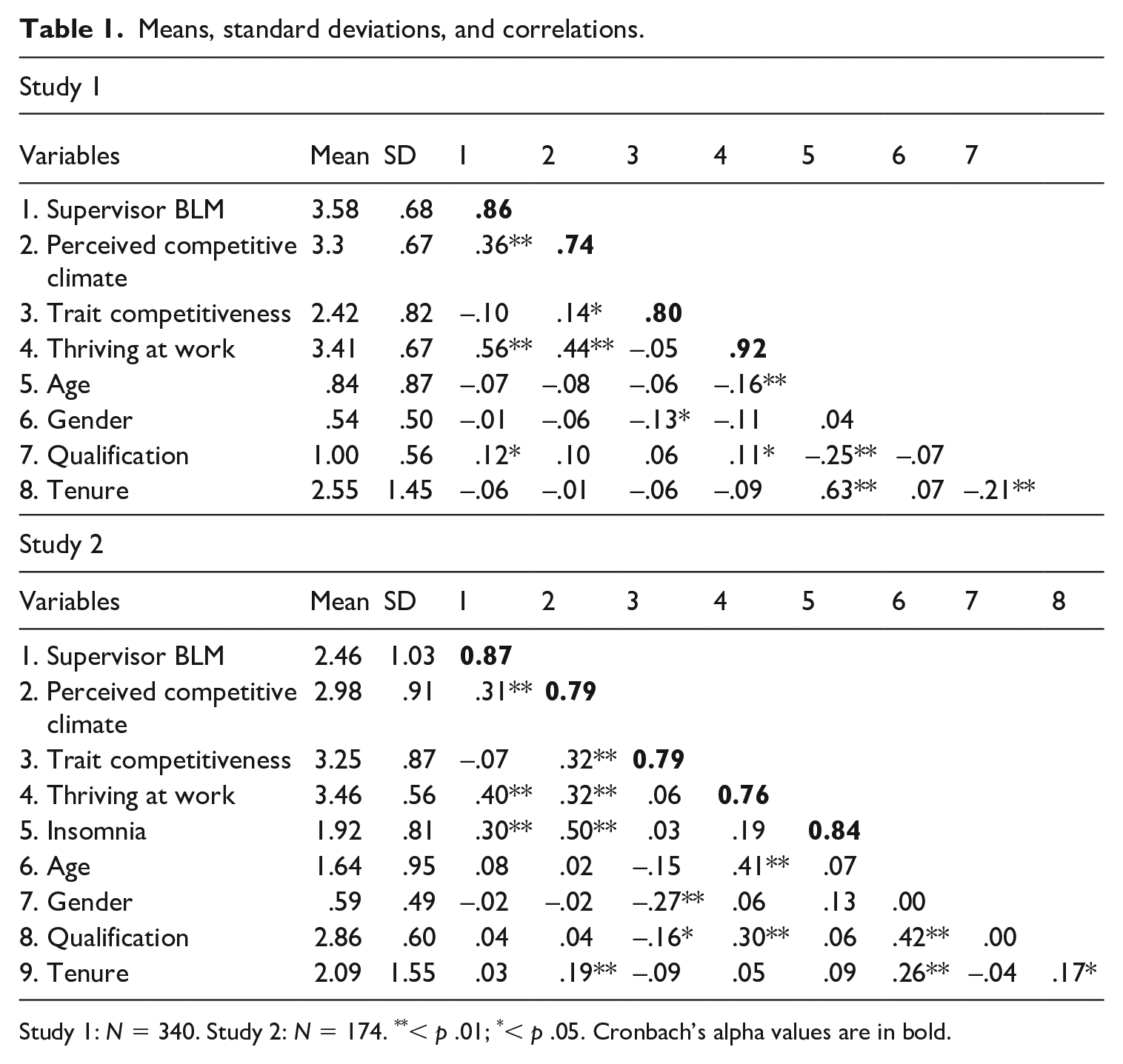
Study 1: N = 340. Study 2: N = 174. **< p .01; *< p .05. Cronbach’s alpha values are in bold.
Unstandardized regression results of hypotheses testing.

Study 1: N = 340. Study 2: N = 174. **< p .01; *< p .05.
Hypothesis 1 proposed that supervisor BLM has a positive indirect relationship with thriving at work via perceived competitive climate. Results revealed that the direct effect of supervisor BLM on thriving at work was statistically significant (B = .44, SE = .06, p < .001), mediated by perceived competitive climate (indirect effect = .10, SE = .03, 95% CI [.04, .15]), thus supporting Hypothesis 1. Hypothesis 3 proposed that the relationship between perceived competitive climate and thriving at work is moderated by employee trait competitiveness. As shown in Table 2, the interaction term between perceived competitive climate and trait competitiveness was positively and significantly related to thriving at work (B = .16, SE = .06, p = .010). The nature of this interaction is further plotted in Figure 2. The positive relationship between perceived competitive climate and thriving at work was stronger and positive at a high level of trait competitiveness (simple slope = .45, p < .001), whereas it was non-significant at a low level of trait competitiveness (simple slope = .12, p = .057). Altogether Hypothesis 3 was supported. In Hypothesis 4, we proposed a moderated mediation hypothesis in which the indirect effect of supervisor BLM on thriving at work via perceived competitive climate depends on the level of trait competitiveness. The index of moderated mediation was statistically significant, supporting this hypothesis (index = .06, SE = .02, 95% CI [.01, .10]).
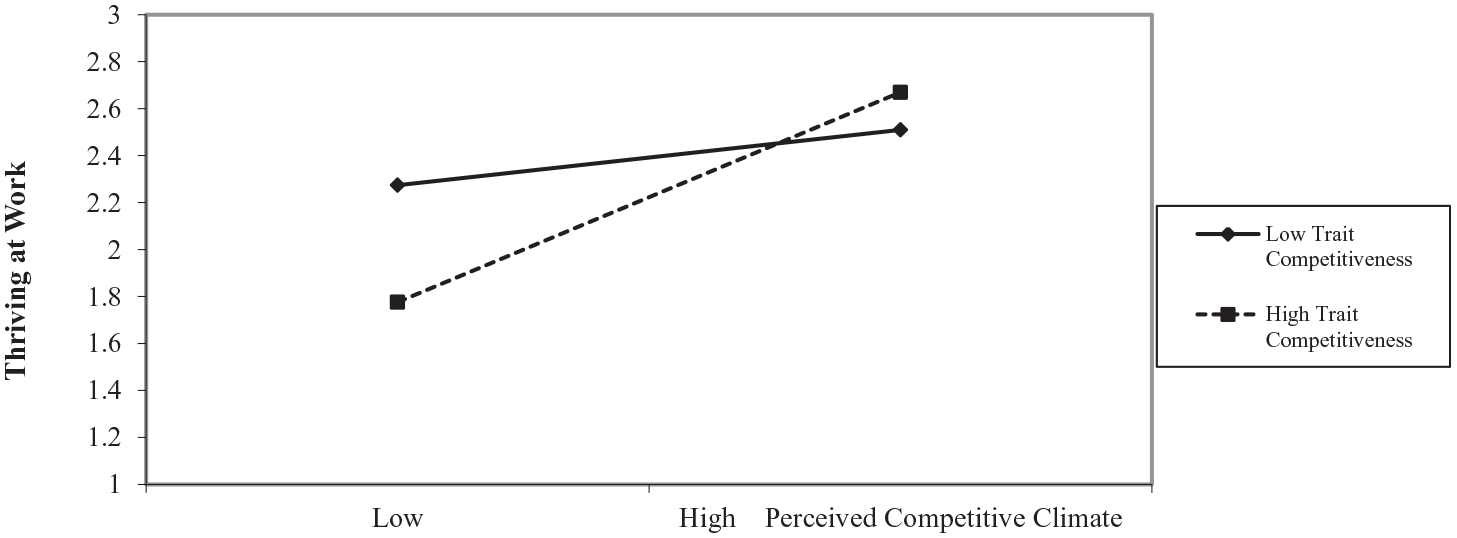
Interactions of perceived competitive climate and trait competitiveness on thriving at work (Study 1: China).
Study 2
With the inclusion of insomnia and using a similar research design as Study 1, we invited 500 full-time employees from a wide range of industries in the United States to participate in online surveys hosted by Qualtrics (for recent studies using this online survey platform, see Long et al., 2011). Again three different surveys were administered at three different points in time, separated by a one-month interval between each of the three surveys. To encourage participation, participants were entered in a raffle draw to win an iPad. They completed the measure of supervisor BLM at Time 1, measures of perceived competitive climate and trait competitiveness at Time 2, and the measure of thriving at work and insomnia at Time 3. The final participants who filled in all variables of interest included 174 employees, a response rate of 34.80%. The sample included 71 male and 103 female respondents. In total, 61.5% of participants were aged under 30, 19% were aged between 30 and 40 years old, followed by 14.4% between 40 to 49 years old, with the rest aged above 50. In terms of qualification, 25.9% completed high school or an associate degree, 62.1% undergraduate studies, with the rest graduating with a Master’s degree or above.
Measures
We measured supervisor BLM, perceived competitive climate, and trait competitiveness as in Study 1. The Cronbach’s alphas were .87, .79, and .79, respectively. We measured thriving at work using Porath et al.’s (2012) 10-item scale (Cronbach’s alpha .76). As in Study 1, this thriving at work scale also assessed vitality and learning at work.
We measured insomnia using a four-item scale developed by Jenkins and colleagues (1988), where participants were asked to report the extent to which they experienced insomnia over the past four weeks. The sample items include, “Having difficulty falling asleep” and “Having difficulty staying asleep.” The Cronbach’s alpha was .84.
As in Study 1, we controlled for age (0 ⩽ 30, 1: 31–40, 2: 41–50, 3: > 50); gender (0: Male, 1: Female); qualification (0: High school, 1: Bachelor’s degree, 2: Master’s degree or above); and tenure (measured in months).
Analytical strategy and results
Table 1 presents descriptive statistics. Due to multiple parameters in the measurement model, relative to sample size, we followed previous research (e.g. Babalola et al., 2019a; Christensen-Salem et al., 2020; Ogunfowora et al., 2019) and created two parcels for each longer scale with more than four items (i.e. all our study variables) using random item distribution (Landis et al., 2000). The proposed six-factor model with supervisor BLM, trait competitiveness, perceived competitive climate, insomnia, and two components of thriving at work fit the data better (χ2 = 107.29, df = 39, p < .001, CFI = .93, TLI = .89, RMSEA = .10, SRMR = .05) than alternative ones. 2
We tested all the hypothesized relationships simultaneously in Mplus version 7, with Bootstrap estimates based on 5000 resamplings as in Study 1. As shown in Table 2, supervisor BLM was positively related to perceived competitive climate (B = .27, SE = .06, p < .001), which was in turn positively related to thriving at work (B = .13, SE = .04, p = .001) and insomnia (B = .43, SE = .06, p < .001). The indirect effects were significant for both thriving at work (indirect effect = .04, SE = .01, 95% CI [.01, .07]) and insomnia (indirect effect = .12, SE = .03, 95% CI [.05, .18]), thus supporting Hypotheses 1 and 2, respectively.
Concerning Hypothesis 3, our results revealed that the interaction term between perceived competitive climate and trait competitiveness was significantly related to thriving at work (B = .18, SE = .05, p < .001). The nature of this interaction is plotted in Figure 3. For low trait competitiveness, the relationship between perceived competitive climate and thriving at work was not significant (simple slope = –.02, p = .742.), whereas it was positive and significant for high trait competitiveness (simple slope = .28, p < .001). Therefore, Hypothesis 3 was supported. For Hypothesis 4 that concerns the indirect relationship of supervisor BLM on thriving at work moderated by trait competitiveness, the index of moderated mediation was significant (Index = .05, SE = .01, 95% CI [.02, .08]), thus supporting Hypothesis 4.
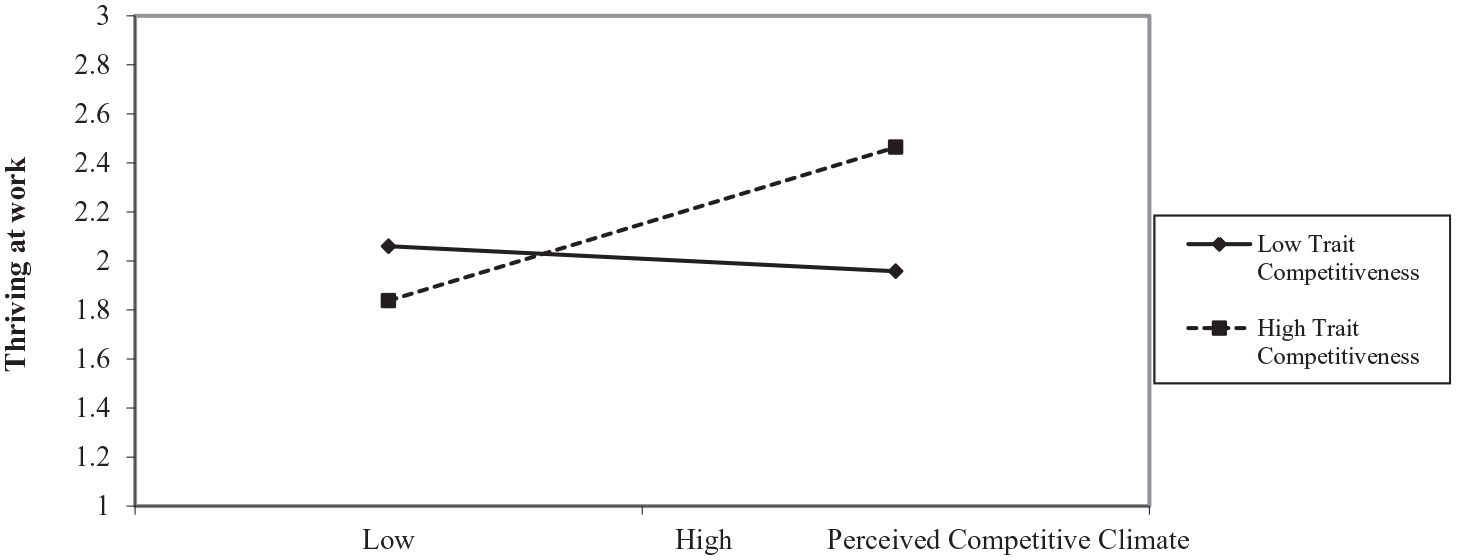
Interactions of perceived competitive climate and trait competitiveness on thriving at work (Study 2: United States).
Concerning Hypothesis 5, the interaction term of perceived competitive climate and trait competitiveness (B = .05, SE = .07, p = .477) was not statistically significantly related to insomnia, thus rejecting Hypothesis 5. In addition, the index of moderated mediation for the indirect relationship of supervisor BLM on insomnia moderated by trait competitiveness was not significant (Index = .01, SE = .02, 95% CI [–.03, .05]). Therefore, Hypothesis 6 was not supported.
Taken together, these results suggest that supervisor BLM is positively associated with employee thriving at work and insomnia via perceived competitive climate. However, our hypotheses regarding the moderating role of trait competitiveness were only supported for thriving at work, not for insomnia.
Discussion
In two field studies conducted in China and the United States, we provided a comprehensive understanding of how and when supervisor BLM influences employee functioning at work and outside work. Specifically, we found consistent support for the idea that supervisor BLM increases employees’ perceptions of a competitive climate, which ultimately increases employee thriving at work. We also found that this mediated relationship was stronger for employees high on trait competitiveness. In expanding these findings in Study 2 to include an indicator of employee functioning outside work (i.e. insomnia), we found that supervisor BLM increases employee insomnia via perceived competitive climate. Contrary to expectation, however, we did not find support for our hypothesis that the indirect effect of supervisor BLM on insomnia will be greater for employees low on trait competitiveness. Overall, the findings demonstrate important complexities around BLM effects.
Theoretical contributions
Our research makes several contributions to emerging BLM literature. First, our work sheds new light on how supervisor BLM may influence employee functioning. To date, prior research has primarily explored the effects of supervisor BLM in the work domain and mostly from a dysfunctional perspective (e.g. Eissa et al., 2019; Greenbaum et al., 2012; Mawritz et al., 2017; Quade et al., 2020; see Babalola and colleagues (2019b, 2020) for exceptions). This line of inquiry has shown that supervisor BLM facilitates abusive supervision (Mawritz et al., 2017), lowers employee performance (Quade et al., 2020), increases employee turnover intention (Mesdaghinia et al., 2019), and triggers social undermining behavior (Greenbaum et al., 2012). On the surface, these studies suggest that supervisor BLM can hinder employees’ functioning.
However, our study deviates from this tradition by showing that the effects of supervisor BLM are more complex than previously assumed. On one hand, our findings suggest that supervisor BLM signals the need for employees to continually learn new things and show vitality to secure their place in a competitive work environment, thus contributing to emerging evidence on the bright side of supervisor BLM (e.g. Babalola et al., 2020). On the other hand, our research suggests that the social information and contextual stimuli conveyed by supervisor BLM are less relevant when employees try to relax at home and get some sleep, and more relevant when they activate an energetic state toward vitality and learning. These findings illustrate the importance of exploring home-life connections to gain a more holistic understanding of supervisor BLM’s effects on employees.
Second, we enrich BLM literature by introducing a new psychological mechanism through which supervisor BLM might influence employee outcomes in both work (thriving) and home (insomnia) domains. Available research has begun exploring the effects of supervisor BLM on employees via leader–member exchange (Quade et al., 2020) and felt responsibility (Babalola et al., 2020). Our findings offer a complementary explanation, depicting perceived competitive climate as an important conduit through which employees’ interpretation of supervisor BLM might encourage thriving at work, but also make it difficult for them to unwind after work. This SIP-derived mediator points to the cognitive product of information processing of supervisor BLM and highlights employees’ adaptive capability in the work context.
Third, our work extends extant BLM literature by identifying personal characteristics that enable employees to thrive at work under a perceived competitive work climate. In particular, individual differences in terms of trait competitiveness emerged in the current study as an important ingredient for explaining when employees respond differently to supervisor BLM. The findings that perceived competitive climate is more likely to mediate the supervisor BLM–thriving at work nexus for employees high on trait competitiveness highlight the importance of person–environment fit in the work domain. Thus, by integrating SIP theory and research on person–environment fit theory (Edwards, 2008; Kristof, 1996; Kristof-Brown and Guay, 2011; Kristof-Brown et al., 2005), our findings suggest that despite the strong perception of competitive climate induced by high BLM supervisors, employees are still able to thrive at work if they are high in trait competitiveness. In this regard, our research helps scholars and practitioners better understand when supervisor BLM is most likely to enable thriving at work or yield other positive benefits.
Furthermore, our study has direct implications for research on person–environment fit. To date, research emphasized the fit between a person and the subjective environment as a critical pathway to human functioning and well-being (Edwards et al., 1998). However, the argument that a mismatch between personal characteristics and the environment negatively influences human functioning and well-being (Kristoff-Brown, 1996; Kristoff-Brown and Guay, 2011; Kristof-Brown et al., 2005) was not supported in our research, particularly when considering employee functioning outside work (in our case, insomnia). On the surface, this seems to be contrary to the basic tenet of person–environment fit (Edwards et al., 1998).
We believe the overall findings portray a more nuanced picture of fit at different domains of human functioning. Person–environment fit literature largely focuses on work outcomes (Edwards, 2008; Edwards et al., 1998; Van Vianen, 2018). Hence, it is in line with our finding that the fit between trait competitiveness and perceived competitive climate enhances thriving at work (Edwards et al., 1998). The conventional notion of fit, however, did not transfer to the non-work domain. A closer look at the simple slopes showed positively significant effects at both high and low levels of trait competitiveness for insomnia. This suggests that certain aspects of the work environment (in our case, perceived competitive climate) may increase employees’ experience of insomnia, regardless of whether they fit or failed to fit into the specific, subjective environment (e.g. those who are high or low on trait competitiveness). Together, these findings suggest that while some employees may fit and even thrive in a competitive work climate, all employees’ home life suffers as evidenced by increased insomnia. Thus, it may be necessary for scholars to further explore when the effects of a match between individual characteristics and the work environment is most likely to spill over to the home domain.
Managerial implications
Our findings offer practical suggestions for managing employee functioning in today’s business environment marked by heated competition and mounting pressure to sustain the bottom line. First, organizations need to be aware that a sole focus on bottom-line outcomes has more complex implications than simply increasing the perception of a competitive climate or a sense of vitality and learning. There is also a ‘dark-side’ with serious implications for employees’ sleeping patterns at home. While employee thriving in the workplace, as a behavioral outcome, is beneficial to organizations (see Porath et al., 2012), insomnia experienced outside of work may have negative consequences for employees’ work-related behaviors, emotions, and performance in the long run (e.g. Barnes et al., 2013; Kessler et al., 2011). Therefore, there is a need for organizations to educate people occupying supervisory positions to enact family supportive behaviors (Crain et al., 2014). These supervisors also need to be trained about the fuller picture of the potential effects of their attitudes toward the bottom line. For instance, when managers undertake performance reviews with their employees, they could incorporate influences on both thriving at work and insomnia into the conversation and help employees understand the importance of sleep for creating a more sustainable workforce.
Upon closer examination of supervisor BLM effects, our study suggests that employees with higher levels of trait competitiveness thrive better under high-BLM supervisors. Yet, employees tend to experience insomnia regardless of this characteristic. Therefore, it is advisable for organizations to help employees better understand the importance of relaxing after work, and the psychological benefits of detaching oneself from work-related activities after work hours. In this vein, we recommend that organizations view our research, in conjunction with those in the sleep literature, for effective treatments of insomnia (Barnes et al., 2017). For instance, a meta-analysis shows that psychological treatment produces a considerable enhancement of sleep patterns and subjective sleep experience (Murtagh and Greenwood, 1995). Meditation is one such treatment that helps people relax and addresses insomnia. Thus, organizations could provide mindful meditation programs to train and encourage employees to practice progressive muscle exercises and spiritual relaxation (Goldstein et al., 2018). The ideal situation is to strengthen the positive influence of BLM on thriving at work and reduce its influence on insomnia.
Limitations and future research directions
Despite the strengths of our study (e.g. adopting a time-lagged research design, and testing our propositions with two samples of employees from different countries), it is not without limitations. First, because we relied on survey designs like most studies in organizational science, we cannot draw strong causal inferences. Nonetheless, research and theory suggest that supervisors’ emphasis and behaviors are likely to predict employee climate perceptions and functioning in causal order (James et al., 2008). We also believe that we modeled our data (using three waves) appropriately given that the causal direction in our model was consistent with theory and existing evidence. Yet, we encourage future research to utilize alternative designs (e.g. experimental designs) to enable stronger causality. A longitudinal design could also provide promise if future research collects data on all variables over an extended period of time and models the relationship both at the within- and between-person levels. In addition, we note the different response rates in the two studies. While we acknowledge that they are within the range identified by Baruch and Holtom (2008) regarding the average response rates in organizational research, future research might devise more effective ways to boost response rates in the non-Chinese context. Further, data were self-reported, which raises questions of common-method bias (Podsakoff et al., 2012). However, the use of self-reported data in our study seems appropriate given that our research focuses on employees’ personal experiences and characteristics. Moreover, the use of time-lagged designs in our study helped minimize concerns of common method bias (Podsakoff et al., 2012). Indeed, time-lagged designs have been shown to be effective for reducing common-method variance (Doty and Glick, 1998).
Second, this research concerns the generalizability of BLM effects in multiple contexts and hence did not include cultural variables that might enable a cross-cultural comparison between Chinese and US samples. As such, we encourage future research to take a cross-cultural lens and investigate how national cultures (e.g. individualism versus collectivism) may influence social interactions between high BLM supervisors and employees. Furthermore, the current research focused specifically on individual employees’ perceptions of supervisor BLM and competitive climate. We acknowledge, however, that both leadership and climate can also operate at the team or organizational level (e.g. Luria, 2019). Thus, a fruitful line of research is to investigate how group-level phenomena related to BLM and competitive climate yield unique findings beyond individual-level phenomena.
Generally speaking, BLM research is still in its early stage and as such, we hope our research generates new insights to inspire future research. First, our findings suggest that BLMs are not always dysfunctional. A fruitful line of research is therefore to extend the scope of inquiry by exploring how supervisor BLM influences other positive employee, team, and organizational outcomes (e.g. employee/team motivation, creativity, performance). Second, our findings that supervisor BLM may increase employee insomnia points to another interesting avenue for future inquiry. Specifically, beyond its potential benefits, supervisor BLM might have negative impacts on employees’ health and well-being. For instance, such a mentality may increase somatic complaints, deplete employees’ mental health, and diminish overall well-being. Although this seems plausible, it remains mere speculation without a thorough empirical investigation. Doing so would shed further light on the health implications of BLMs.
Conclusion
By integrating SIP theory with research on person–environment fit, our research sheds light on the effects of supervisor BLM on employees across different domains of life and unraveling some of the most important mediating and moderating mechanisms for such effects. Our findings suggest that supervisor BLM increases employee perception of a competitive work climate that enables employee thriving at work, but simultaneously insomnia outside work. Furthermore, we show that employees high on trait competitiveness are particularly more likely to thrive at work in the competitive work climate stimulated by high BLM supervisors than those low in trait competitiveness. Taken together, our research highlights the need for organizational leaders to be more cautious about being too narrowly focused on bottom-line outcomes. Our research also points to interesting areas that management scholars can build upon in moving forward with research on BLM.
Footnotes
Acknowledgements
The authors would like to thank Matthew J Quade for his feedback on an earlier version of the manuscript.
Funding
The authors disclosed receipt of the following financial support for the research, authorship, and/or publication of this article: United Arab Emirates University G00002948.
