



Abstract
Departing from the conventional feature-oriented approach, this study introduces event system theory to highlight the importance of salient workplace events in shaping employees’ motivation for entrepreneurship and to uncover how the spatial and temporal issues inherent in the event of ex-leaders’ entrepreneurial endeavor may combine to influence employees’ entrepreneurial intention. The results of two time-lagged studies reveal that ex-leaders’ entrepreneurial success, relational proximity, and time proximity interact to affect employees’ entrepreneurial intention such that the positive impact of ex-leaders’ entrepreneurial success on employees’ entrepreneurial intention is stronger in the presence of high relational proximity and time proximity. The results further indicate that employees’ entrepreneurial self-efficacy functions as a crucial mechanism in translating this impact of ex-leaders’ entrepreneurial endeavor. These findings highlight the value of an event-oriented approach to investigating the impact of workplace events on employee outcomes.
Keywords
Over the last decade, the role that the workplace plays in shaping entrepreneurial motivation has begun to receive more theoretical and empirical attention (Agarwal et al., 2016; Shah et al., 2019) given that organizations usually act as “fonts of entrepreneurship” (Sørensen and Fassiotto, 2011) and that many entrepreneurs start their new businesses following a period of employment in established firms (Bhidé, 2000). However, most of the research in this tradition has been confined to feature-oriented theories and has focused on studying how static features of incumbent organizations or the stable attributes of individuals in the workplace may relate to employees’ decisions to become entrepreneurs (Campbell et al., 2012; Nanda and Sørensen, 2010). Little attention has been devoted to the potential influence of discrete events in the workplace on the entrepreneurship entry of employees. This is unfortunate because workplace events permeate today’s increasingly dynamic business context, and there is increasing recognition of the significant influence that salient workplace events can have on employees’ cognitions and behaviors (Jiang et al., 2019; Liu et al., 2021; McFarland et al., 2020). Therefore, to address this gap, drawing on event system theory, this study aims to examine the effects of a crucial workplace event that has been overlooked by previous research, namely, ex-leaders’ entrepreneurial endeavor, on employees’ entrepreneurial intention.
Event system theory emphasizes the importance of events in organizational studies and defines events as “discrete, discontinuous happenings, which diverge from the stable or routine features of the organizational environment” (Morgeson et al., 2015: 519). The crucial power and status of leaders make them particularly prominent and visible in the workplace, and a considerable amount of research has found that employees usually look to their leaders for behavioral guidance, especially in ambiguous and complex circumstances such as entrepreneurship (Mayer et al., 2009). In this sense, ex-leaders’ entrepreneurial endeavor, which refers to the leader of employees leaving the company and starting his or her own business, is likely to be a particularly important workplace event that would exert a significant impact on employees’ entrepreneurial intention (McFarland et al., 2020; Seibert et al., 2021). Event system theory further contends that events are “bounded in space and time” (Morgeson et al., 2015: 516) and that the impact of an event should be understood as the effect of a system that involves the interaction of the event strength, event space and event time (McFarland et al., 2020; Morgeson et al., 2015; Seibert et al., 2021). A major purpose of this study is thus to expand beyond the conventional and overly simplistic “monkey see, monkey do” explanation of leader influence and uncover the synergistic effect of the characteristics of the critical event of ex-leaders’ entrepreneurial endeavor on the entrepreneurial intention of employees who are left behind. Additionally, event system theory indicates that the processes through which events cause outcomes might involve cognitive elements (Morgeson et al., 2015). Therefore, another purpose of this study is to test this key notion of event system theory and explore the underlying cognitive mechanisms through which ex-leaders’ entrepreneurial endeavor affects employees’ entrepreneurial intention by integrating insights from the entrepreneurship literature.
In summary, building on event system theory, this study develops an integrative model to examine whether, when, and how ex-leaders’ entrepreneurial endeavor impacts employees’ entrepreneurial intention (see Figure 1). In doing so, we aim to extend the extant literature in several meaningful ways. First, this study offers new insights into the interpersonal precursors of employee entrepreneurship and extends event system theory to the domain of entrepreneurship by departing from the dominant feature-oriented models of entrepreneurship and embracing an event-oriented approach to unpack the salient role of workplace events in facilitating employees’ entrepreneurial intention. Second, by uncovering how event strength, event space and event time intermingle to ultimately affect event outcomes, this study is valuable for illuminating the complexity of the event impact and can provide a more fine-grained understanding of the impact of workplace events (Morgeson et al., 2015). Additionally, this study fills a critical knowledge gap in current event-oriented research and answers the calls for future research to account for the missing link between events and outcomes (Chen et al., 2021; Morgeson et al., 2015) by revealing the cognitive mechanism underlying the influence of ex-leaders’ entrepreneurial endeavor. Third, by empirically investigating the impact of ex-leaders’ entrepreneurial endeavor in the transition to entrepreneurship, which has traditionally been neglected in entrepreneurship research, this study adds to the entrepreneurship literature and speaks to the emerging research that expands the antecedents of entrepreneurial intentions from fixed, innate individual traits to organizational context (Agarwal et al., 2016; Shah et al., 2019).
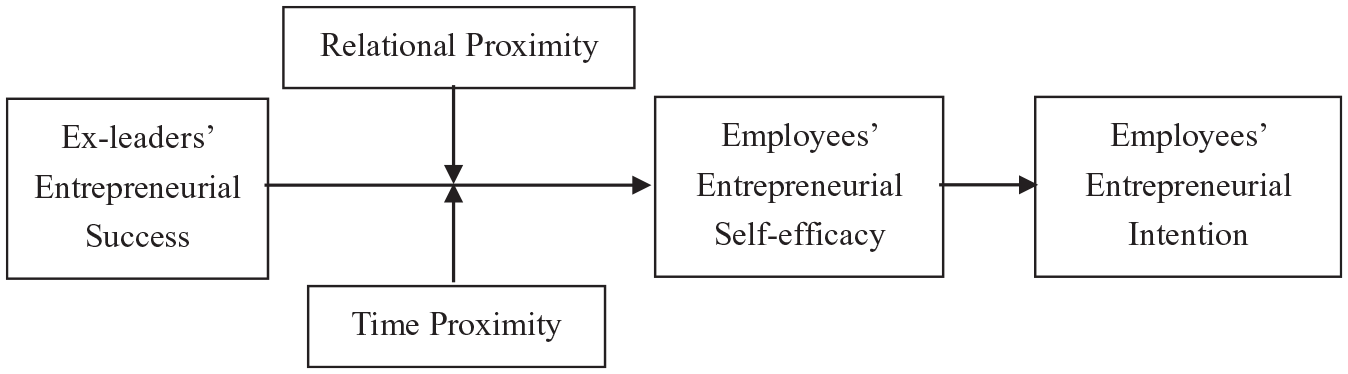
Proposed conceptual model.
Theory and hypotheses development
Event system theory posits that a robust explanation of the impact of an event needs to take an integrative approach to investigate the interactive effects of the event strength, event space, and event time and that the causal processes through which events cause outcomes usually involve cognitive elements (Morgeson et al., 2015; Seibert et al., 2021). Below, we elaborate on our hypotheses based on these key propositions of event system theory.
Main effect of event strength: Ex-leaders’ successful entrepreneurial endeavor
According to event system theory, event strength, determining the extent to which an event is impactful, is characterized by three elements: novelty, criticality, and disruption (Morgeson et al., 2015). Novelty indicates the extent to which an event is unexpected or uncommon, disruption reflects the magnitude of disturbance or change to an individual’s ongoing activities and criticality refers to the extent to which an event is “important, essential, or priority” to an entity (Morgeson and DeRue, 2006: 273). The more an event is perceived as novel, critical, and disruptive, the stronger the influence it has on an individual’s attitudes and behaviors (McFarland et al., 2020; Morgeson et al., 2015).
In line with this perspective, ex-leaders’ successful entrepreneurial endeavor is relatively novel because failure is the norm for entrepreneurial endeavors and the frequency of successful cases is low (Aldrich and Fiol, 1994; McMullen and Shepherd, 2006), is disruptive because it is likely to disrupt employees’ regular work activities and bring significant changes to their work relationships (Hoffman and Ocasio, 2001; Laulié and Morgeson, 2021), and is critical because it might shape employees’ career aspirations toward entrepreneurship and prompt employees to modify or change their career goals (Laulié and Morgeson, 2021). Owing to this relatively high degree of novelty, disruption, and criticality, ex-leaders’ successful entrepreneurial endeavor is more likely to capture employees’ attention and increase employees’ perceptions of the feasibility and desirability of entrepreneurship (BarNir et al., 2011; Krueger, 1993), which in turn stimulate employees’ entrepreneurial intention. That is, when employees are exposed to ex-leaders’ successful entrepreneurial endeavor, it is likely that they will attribute greater value to entrepreneurship and view entrepreneurship as an alternative and a more viable career option than regular routinized employment (Kacperczyk, 2013; Nanda and Sørensen, 2010). Additionally, the success of ex-leaders’ entrepreneurial endeavor interrupts the inherent inertia maintaining an employee’s current career path and signals to employees that entrepreneurship is achievable (Laulié and Morgeson, 2021; Nikolaev and Wood, 2018); therefore, their inclination to pursue entrepreneurship increases. In combination, ex-leaders’ entrepreneurial success captures the event strength of ex-leaders’ entrepreneurial endeavor and exerts a significant impact on employees’ entrepreneurial intention. Therefore, we propose the following hypothesis:
Hypothesis 1: There is a positive association between ex-leaders’ entrepreneurial success and employees’ entrepreneurial intention.
Event space as a moderator: The role of the relational proximity
Event space, which refers to the specific location at which an event originates, is another critical component of the event system that helps determine the salience of the impact of an event (Morgeson et al., 2015). An event that occurs within proximity to an individual will more likely impact that person’s behavior than an event that occurs in a distant place (Morgeson et al., 2015). In this regard, we suggest that event space, as captured by relational proximity in this study, may regulate the impact of ex-leaders’ entrepreneurial success on employees’ entrepreneurial intention since relational proximity, as an important determinant of the spatial proximity between a leader and an employee, shapes the way employees feel about and react to ex-leaders’ entrepreneurial success (Sparrowe and Liden, 1997).
Specifically, in the context of high relational proximity, which is usually characterized by liking, trust, and respect (Graen and Uhl-Bien, 1995; Sparrowe and Liden, 1997), employees are more likely to view their leaders as attractive and credible role models who should be emulated (Mayer et al., 2009), thus increasing their motivation to mimic the entrepreneurial endeavors of their leaders. Similarly, the strong socioemotional exchanges and affective attachment inherent in high relational proximity are likely to drive employees to be more attentive to their ex-leaders’ entrepreneurial endeavors and to have higher entrepreneurial intentions when they observe their ex-leaders exhibiting successful entrepreneurial endeavor (Lankau and Scandura, 2002). In addition, employees in high relational proximity are more likely to identify with their leaders and to view the outcomes that their leaders obtained to be informative for their own achievements (Blanton et al., 1999). Accordingly, their intention to engage in entrepreneurship increases when they perceive ex-leaders’ entrepreneurial success (BarNir et al., 2011; Gibson, 2004). Furthermore, high relational proximity makes it easier for employees to access the positive information associated with the ex-leaders’ entrepreneurial success owing to the high-quality relationships with their leaders (Graen and Uhl-Bien, 1995; Sparrowe and Liden, 1997), thereby enhancing the positive effect of ex-leaders’ entrepreneurial success on employees’ entrepreneurial intention. In contrast, in the context of low relational proximity, employees are less likely to identify with their leaders and are less sensitive to the influence of their leaders’ behaviors (Blanton et al., 1999); thus, they will feel less motivated to engage in entrepreneurial endeavors even if they observe their ex-leaders’ entrepreneurial success. Additionally, employees with low relational proximity are more likely to perceive their situations as different from those of their leaders and are less likely to seek the information and knowledge necessary for entrepreneurship from their leaders (Graen and Uhl-Bien, 1995), hence having lower entrepreneurial intention. Therefore, we propose the following hypothesis:
Hypothesis 2: Relational proximity moderates the positive relationship between ex-leaders’ entrepreneurial success and employees’ entrepreneurial intention such that this relationship is stronger for employees with high relational proximity to their leaders than for those with low relational proximity.
Event time as a moderator: The role of time proximity
Another important component of event system theory is event time, which refers to the temporal aspect of a given event (Morgeson et al., 2015). Event system theory contends that the timing of a given event determines the potential of its impact and that the strength of an event decreases as its time proximity decreases (McFarland et al., 2020; Morgeson et al., 2015). Therefore, time proximity might serve as another boundary condition that moderates the impact of ex-leaders’ entrepreneurial success on employees’ entrepreneurial intention.
Specifically, according to the recency and primacy effects, attention and memory generally fade over time, and people tend to forget events that occurred in the distant past and rely on proxy events for information retrieval (Pinsker, 2011). Building on this logic, the more proximal the event of ex-leaders’ entrepreneurial endeavor is, the stronger the impact its success will exert on employees’ entrepreneurial intention since time proximity helps attract employee attention and induces more salient and efficacious information (Jiang et al., 2019; Morgeson et al., 2015). In contrast, the influence of ex-leaders’ entrepreneurial success is reduced as time proximity decreases because the time interval obscures the information associated with such success (Trope and Liberman, 2003). As a result, ex-leaders’ entrepreneurial success in the distant past becomes less predictive of employees’ entrepreneurial intention. We therefore propose the following hypothesis:
Hypothesis 3: Time proximity moderates the positive relationship between ex-leaders’ entrepreneurial success and employees’ entrepreneurial intention such that this relationship is stronger when time proximity is high than when it is low.
The joint effect of event space and event time: A three-way interaction
Although the arguments presented above suggest that event space and event time have independent moderating effects, event system theory also indicates that the event space and event time may interact to regulate the event strength–event outcome relationship (Morgeson et al., 2015), thereby providing a basis for positing a three-way interaction among event strength, event space, and event time. Specifically, as mentioned above, high relational proximity strengthens the positive influence of ex-leaders’ entrepreneurial success on employees’ entrepreneurial intention by affecting employees’ perceptions of the desirability and feasibility of entrepreneurship (Graen and Uhl-Bien, 1995; Sparrowe and Liden, 1997). A decrease in time proximity increases the abstractness of memories (Trope and Liberman, 2003) and thus is likely to influence the strength of this moderating effect by obscuring information related to employees’ perceptions of the desirability and feasibility of entrepreneurship (Katz and Kahn, 1978). Additionally, the more temporally and spatially distant an employee is from an ex-leader’s entrepreneurial success, the more segregated he or she feels from that ex-leader’s entrepreneurial success (Trope and Liberman, 2003). Such temporal and spatial segregation facilitates the process of forgetfulness and leads to an increased inaction inertia effect (Pinsker, 2011), thereby decreasing the impact of ex-leaders’ entrepreneurial success on employees’ entrepreneurial intention. Accordingly, we propose the following hypothesis:
Hypothesis 4: There is a three-way interaction among ex-leaders’ entrepreneurial success, relational proximity, and time proximity such that ex-leaders’ entrepreneurial success has the strongest effect on employees’ entrepreneurial intention in the context of high relational proximity and time proximity.
The mediating effect of employees’ entrepreneurial self-efficacy
According to event system theory, the processes through which events induce outcomes usually involve cognitive elements (Morgeson et al., 2015). In this section, we propose that entrepreneurial self-efficacy is one such cognitive mechanism that transmits the effects of the above three-way interaction on employees’ entrepreneurial intention. Specifically, in the context of high relational proximity and time proximity, employees are more likely to rely on the information generated by their leaders’ behaviors when judging their own abilities and capabilities (BarNir et al., 2011; Gibson, 2004). As a result, employees’ observations of ex-leaders’ entrepreneurial success are more likely to strengthen their beliefs about their own abilities to successfully execute entrepreneurial activities (BarNir et al., 2011; Boyd and Vozikis, 1994; Gist and Mitchell, 1992), thereby increasing their entrepreneurial self-efficacy. In addition, the assessment of situational constraints, such as individuals’ capabilities to deal with the difficulties associated with entrepreneurial activities, is an important determinant of self-efficacy (Bandura, 1997; BarNir et al., 2011; Gist and Mitchell, 1992). Ex-leaders’ entrepreneurial success is likely to enhance employees’ confidence about their own abilities to cope with the challenges and control the risks associated with entrepreneurship in the condition of high relational proximity and time proximity (BarNir et al., 2011; Zhao et al., 2005). This perception of controllability is likely to increase employees’ entrepreneurial self-efficacy (BarNir et al., 2011; Gist and Mitchell, 1992). Accordingly, it is logical to assume that the interaction among ex-leaders’ entrepreneurial success, relational proximity, and time proximity enhances employees’ entrepreneurial self-efficacy.
Given the complex tasks and high level of uncertainty involved in the process of entrepreneurship, employees’ entrepreneurial self-efficacy, which is “a construct that measures a person’s belief in their ability to successfully launch an entrepreneurial venture” (McGee et al., 2009: 965), is especially important in determining their intentions to execute entrepreneurial activities (Boyd and Vozikis, 1994; Chen et al., 1998). Specifically, employees with higher levels of entrepreneurial self-efficacy are usually more confident in their abilities to overcome the difficulties associated with starting a new business and have stronger beliefs that they will be able to establish a successful new business (Chen et al., 1998; Krueger, 1993), which may increase their willingness to quit their current jobs and to start a new venture (Chen et al., 1998; Fitzsimmons and Douglas, 2011). Empirically, many studies in the field of entrepreneurship have found a significant positive association between entrepreneurial self-efficacy and entrepreneurial intention (BarNir et al., 2011; Krueger, 1993). Based on these arguments, we posit the following hypothesis:
Hypothesis 5: Employees’ entrepreneurial self-efficacy mediates the effect of the three-way interaction among ex-leaders’ entrepreneurial success, relational proximity, and time proximity on employees’ entrepreneurial intention.
Overview of methods
We examined our theoretical hypotheses via two time-lagged studies that adopted complementary sampling strategies and measurements. In Study 1, we recruited employees through a snowballing method and considered only those who had encountered the event of an ex-leader’s entrepreneurial endeavor. In Study 2, we tested the hypotheses with Master of Business Administration (MBA) students and collected the entrepreneurial intention of all participants. Study 2 further complements Study 1 in two other ways. First, we addressed some limitations of the measurement of Study 1, such as using five items instead of a single item to measure ex-leaders’ entrepreneurial success and using a more entrepreneurial-oriented measure of employees’ entrepreneurial intention that aligns with our definition of employee entrepreneurship. Second, we controlled for more factors that may influence employees’ entrepreneurial intention.
Study 1
Participants and procedures
The data for the present study were collected from the full-time employees of a variety of companies located in Zhejiang, Shanghai, Jiangsu, Beijing, and Shenzhen, China, at three time points. These companies were in the manufacturing, electrical, finance, software, construction, service, e-business, and chemical industries. The participants were recruited through a snowballing method that has been used in previous organizational behavior studies (e.g. Van Dijke et al., 2010). At Time 1, 1800 participants were asked to complete an online survey containing measures of their ex-leaders’ demographics and entrepreneurial endeavor-related information, including ex-leaders’ entrepreneurial success and time proximity. A total of 1680 employees completed the survey (a 93.3% response rate). This high response rate is one of the advantages of using the snowballing method. We then excluded employees who did not have experience with ex-leaders’ entrepreneurial endeavor, which reduced the sample to 298 employees. After three months, at Time 2, these 298 participants were asked to report on their entrepreneurial self-efficacy and relational proximity, and we received 276 responses. Three months later, at Time 3, the remaining 276 participants were asked to report on their entrepreneurial intentions. To match the data, the participants were invited to write the last four digits of their phone numbers on each questionnaire; all participants were assured of the confidentiality of the study and received 20 RMB for participation in each round.
We ultimately received 266 matched responses across the three time periods. The average age and organizational tenure of the participants were 29.6 and 5.1 years, respectively. In total, 54.9% were male, 41.0% had a master’s degree or above, 52.2% had a bachelor’s degree, and 6.8% had a college degree or lower.
Measures
Except for the measures of ex-leaders’ entrepreneurial success and time proximity, all other measures were originally developed in English and then translated by a bilingual expert into Chinese using Brislin’s (1970) translation procedures. All the variables were recorded on a seven-point Likert-type scale ranging from 1 = “strongly disagree” to 7 = “strongly agree”.
Ex-leaders’ entrepreneurial success
We captured employees’ perceptions of the performance of ex-leaders’ entrepreneurial endeavor to indicate ex-leaders’ entrepreneurial success. If employees reported that they had experience with an ex-leader’s entrepreneurial endeavor, we asked them to rate their perceptions of the ex-leader’s entrepreneurial performance on a seven-point scale. The use of a single-item measure is consistent with other studies in entrepreneurship and organizational behavior studies (Mungai and Velamuri, 2011).
Employees’ entrepreneurial self-efficacy
We used a four-item scale developed by Zhao et al. (2005) to assess the construct of entrepreneurial self-efficacy. The participants were asked to rate their confidence in four entrepreneurial tasks: “Identify new business opportunities”, “Think creatively”, “Create new products”, and “Commercialize an idea or a new development” (Zhao et al., 2005: 1268). The Cronbach’s alpha for entrepreneurial self-efficacy was 0.93.
Relational proximity
We used a seven-item scale of the leader–member exchange (LMX) relationship developed by Scandura and Graen (1984) and adapted by Graen and Uhl-Bien (1995) to assess relational proximity because LMX, which is defined as the overall quality of the relationships between leaders and their followers (Graen and Uhl-Bien, 1995), is an important indicator of the relational proximity between leaders and employees in the workplace. A sample item is “My leader understands my problems and needs well enough.” The Cronbach’s alpha for LMX was 0.96.
Time proximity
With respect to time proximity, the participants were asked to indicate the timing of the occurrence of the ex-leader’s entrepreneurial endeavor through the following categories: within one month (coded as 1), one to three months (coded as 2), four to six months (coded as 3), seven to nine months (coded as 4), 10 to 12 months (coded as 5), 13 to 15 months (coded as 6), or more than 15 months (coded as 7). It is reverse coded to create the time proximity variable in the analyses.
Employees’ entrepreneurial intention
Based on the definition of employee entrepreneurship, we used a three-item scale adapted from the turnover intention scale developed by Konovsky and Cropanzano (1991). The original items, which measured general turnover intention, were rewritten to focus on employees’ entrepreneurial intention by asking employees how likely, how strongly, and how frequently they considered leaving their organizations to start their own businesses. The Cronbach’s alpha for employees’ entrepreneurial intention was 0.91.
Control variables
Following previous studies in entrepreneurship, we controlled for gender and age, as both have been found to be significantly related to entrepreneurship (Bates, 1995; Schlaegel and Koenig, 2014). We also controlled for educational background, as previous research indicates that education level significantly influences the intention to become an entrepreneur (Crant, 1996). In addition, we took organizational tenure as a control variable, as there is evidence that it can affect employees’ propensity to start a new venture (Van Breukelen et al., 2004). We further controlled for industry that has been found to be associated with employee entrepreneurship (Klepper and Sleeper, 2005).
Results
Confirmatory factor analysis
First, we conducted confirmatory factor analysis (CFA) to examine the discriminant validity of our key variables. The CFA results showed that the proposed model fit the data well (χ2/df = 3.10, RMSEA = 0.08, SRMR = 0.04, CFI = 0.96, TLI = 0.95) and fitted significantly better than the one- and two-factor models (see Table 1).
Summary of model fit indexes (Study 1).
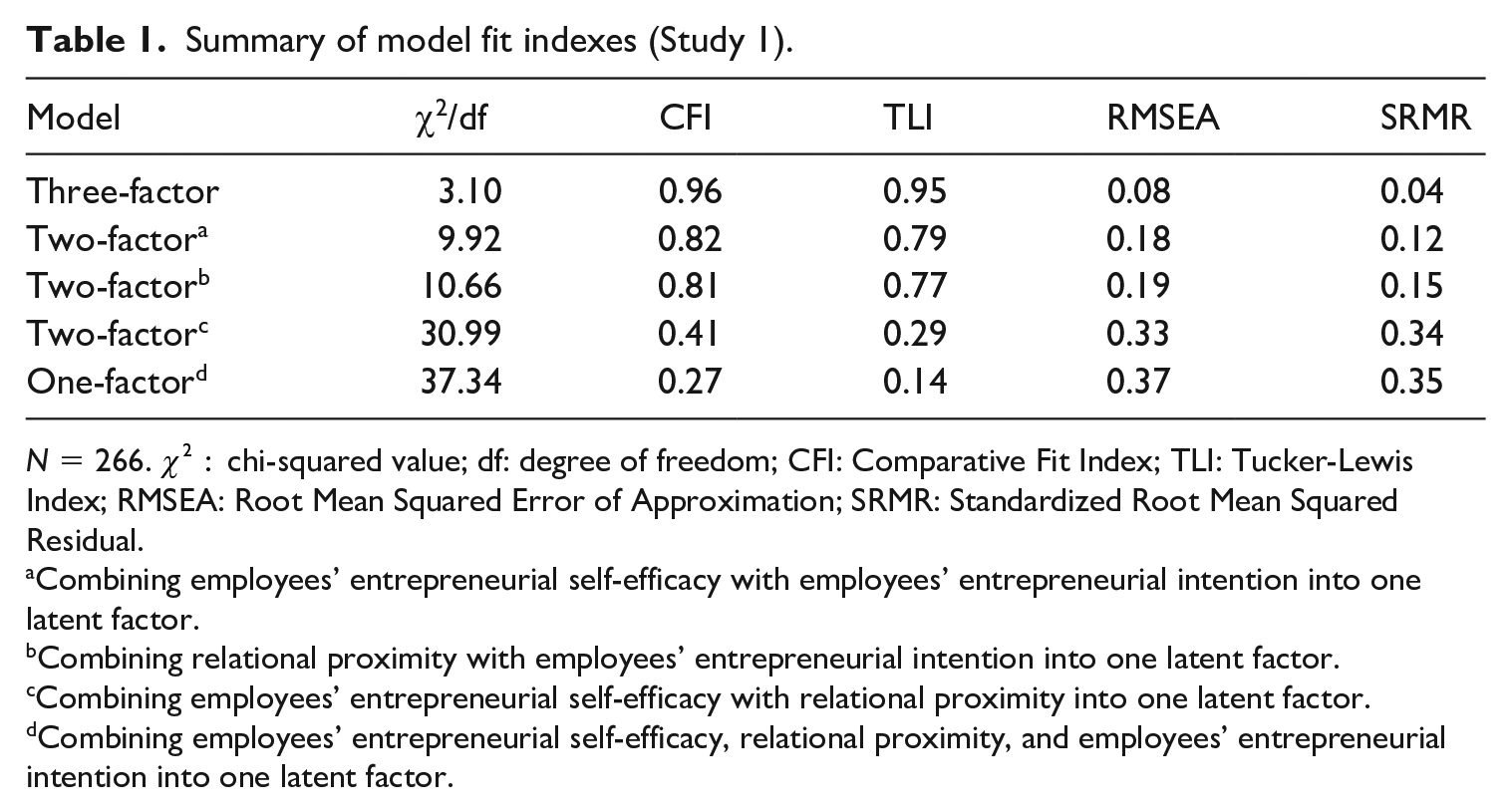
N = 266.
Combining employees’ entrepreneurial self-efficacy with employees’ entrepreneurial intention into one latent factor.
Combining relational proximity with employees’ entrepreneurial intention into one latent factor.
Combining employees’ entrepreneurial self-efficacy with relational proximity into one latent factor.
Combining employees’ entrepreneurial self-efficacy, relational proximity, and employees’ entrepreneurial intention into one latent factor.
Hypothesis testing
Means, standard deviations, and correlations are presented in Table 2. Model 5 in Table 3 showed that ex-leaders’ entrepreneurial success was positively related to employees’ entrepreneurial intention (β = 0.21, p < 0.01), thereby supporting Hypothesis 1.
Means, standard deviations, and correlations (Study 1).

Results of regression analyses (Study 1).
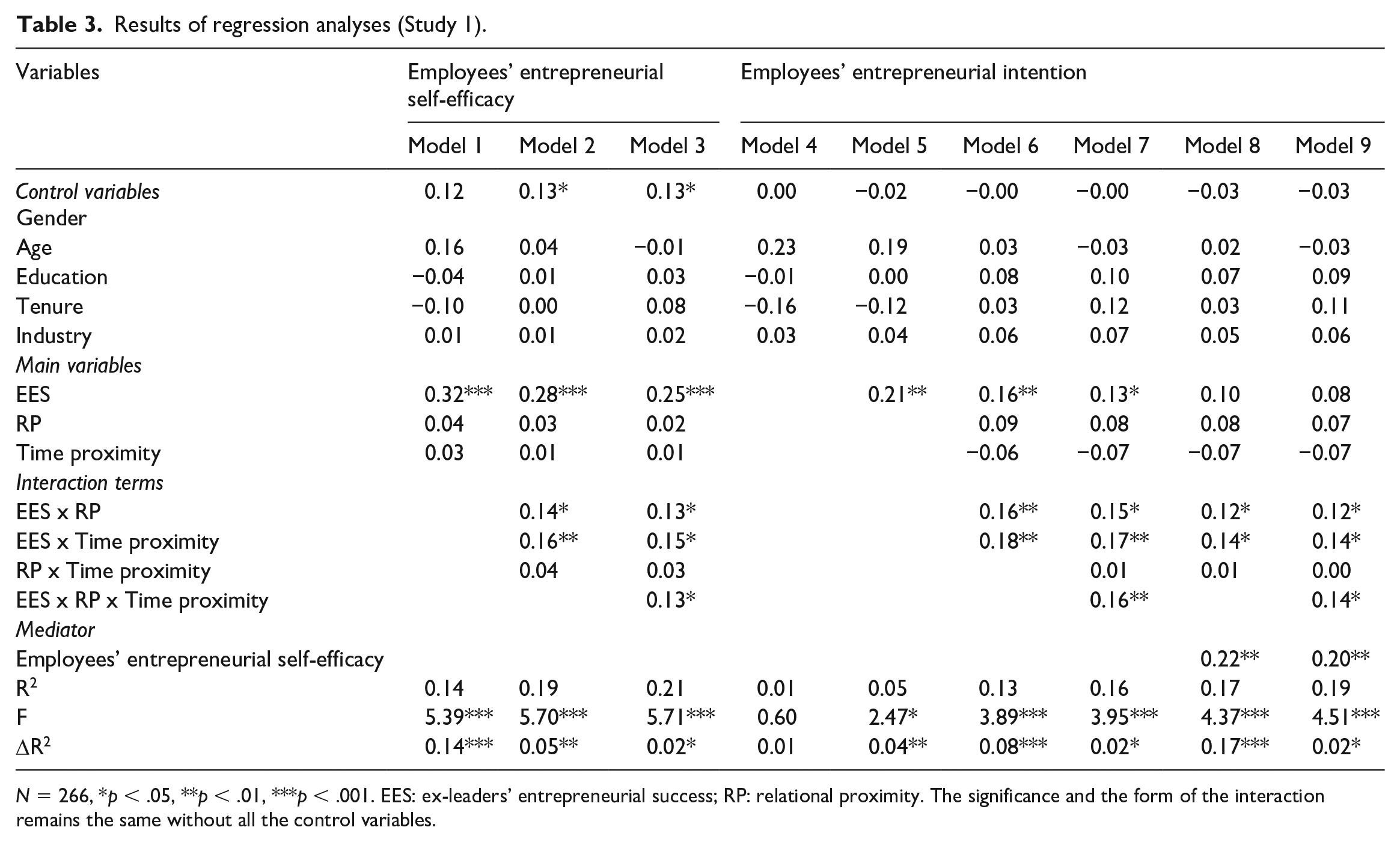
To test Hypotheses 2 and 3, we used three-step hierarchical regression analysis and centered the related variables before creating the interaction terms. The results of Model 6 in Table 3 indicated that the interaction between ex-leaders’ entrepreneurial success and relational proximity was significantly related to employees’ entrepreneurial intention (β = 0.16, p < 0.01). Similarly, the interaction between ex-leaders’ entrepreneurial success and time proximity was significantly related to employees’ entrepreneurial intention (β = 0.18, p < 0.01). To further confirm these results, we plotted these interaction effects following the approach recommended by Dawson (2014). In line with Figure 2, the simple slope analysis revealed that at high levels of relational proximity, there was a significant positive relationship between ex-leaders’ entrepreneurial success and employees’ entrepreneurial intention (β = 0.39, p < 0.001), but at low levels of relational proximity, the relationship was nonsignificant (β = −0.02, p > 0.1). In line with Figure 3, the relationship between ex-leaders’ entrepreneurial success and employees’ entrepreneurial intention was significant at the higher level of time proximity (β = 0.43, p < 0.001) and was nonsignificant at the lower level of time proximity (β = −0.04, p > 0.1). Therefore, Hypotheses 2 and 3 received support.

The two-way interaction of ex-leaders’ entrepreneurial success and relational proximity (Study 1).

The two-way interaction of ex-leaders’ entrepreneurial success and time proximity (Study 1).
For Hypothesis 4, as shown in Table 3, the three-way interaction was significant (β = 0.16, p < 0.01, Model 7). Figure 4 also indicated that ex-leaders’ entrepreneurial success had the strongest impact on employees’ entrepreneurial intention when relational proximity and time proximity were both high (β = 0.67, p < 0.001). Thus, Hypothesis 4 was supported.
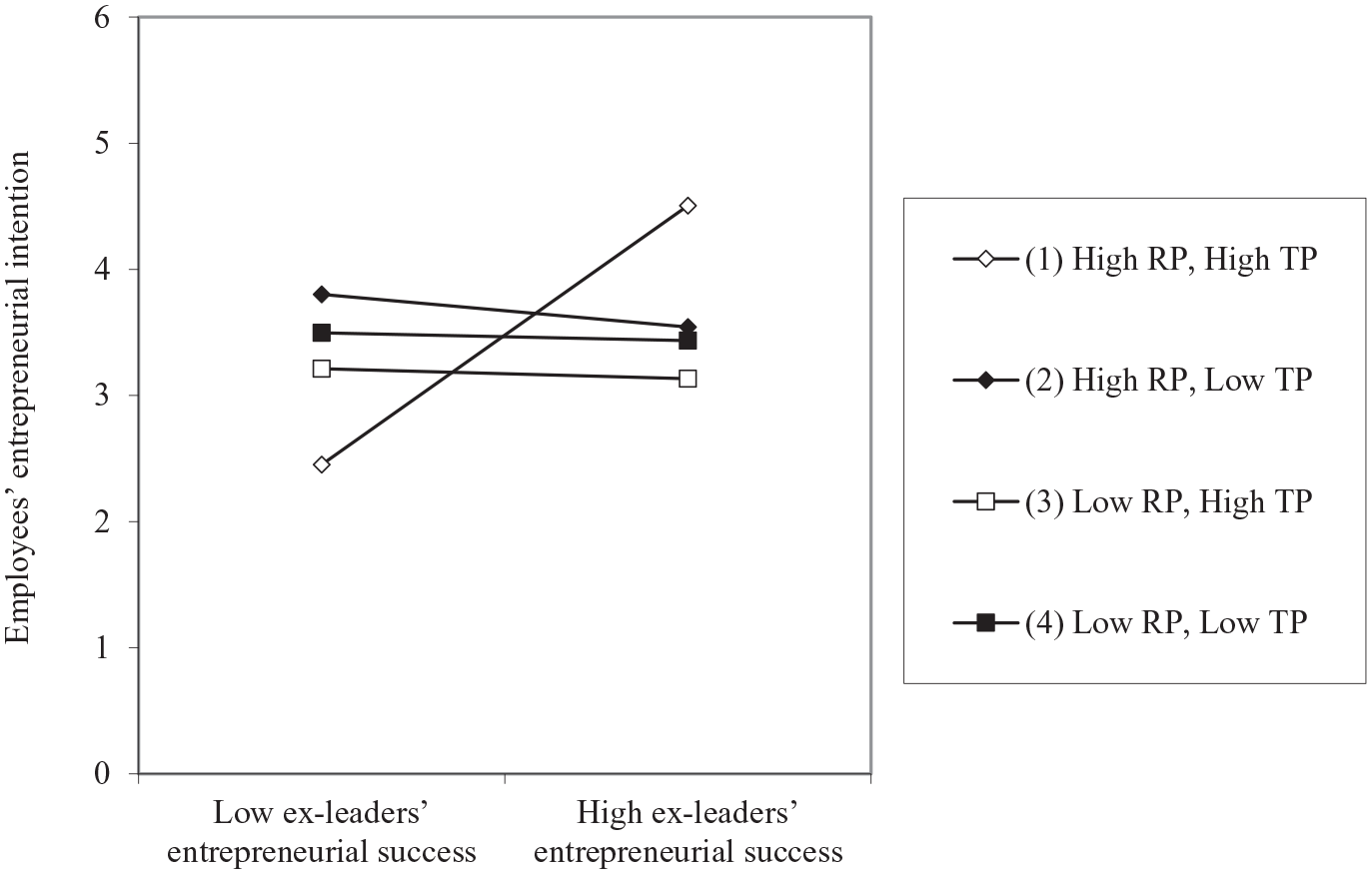
The three-way interaction between ex-leaders’ entrepreneurial success, relational proximity, and time proximity (Study 1). RP: relational proximity; TP: time proximity.
Supporting Hypothesis 5, the results in Table 3 showed that: (1) the three-way interaction was significantly related to employees’ entrepreneurial self-efficacy (β = 0.13, p < 0.05, Model 3) and significantly related to employees’ entrepreneurial intention (β = 0.16, p < 0.01, Model 7); (2) employees’ entrepreneurial self-efficacy was positively related to employees’ entrepreneurial intention (β = 0.22, p < 0.01, Model 8); and (3) the three-way interaction effect on employees’ entrepreneurial intention became less significant after employees’ entrepreneurial self-efficacy was entered (β = 0.14, p < 0.05, Model 9). The results of bootstrapping analysis further indicated that the indirect effect of the three-way interaction on employees’ entrepreneurial intention via entrepreneurial self-efficacy was significant (indirect effect = 0.14, SE = 0.05, 95% bias-corrected CI = [0.04, 0.25]). Overall, these results indicated a partial mediation model; therefore, Hypothesis 5 was partially supported.
Discussion of Study 1
The results supported our assertion regarding the relationship between ex-leaders’ entrepreneurial endeavor and employees’ entrepreneurial intention from an event system perspective. However, several limitations existed, which were addressed in Study 2. First, in this study, we focused only on participants who experienced the event of an ex-leader’s entrepreneurial endeavor and discarded the data of those who had not experienced such events from Time 1. As a result, we cannot provide information on the difference in employees’ entrepreneurial intentions within event versus non-event subsamples. Second, the use of a single item to measure ex-leaders’ entrepreneurial success has its limitations. Moreover, we used an adapted measure from the research on turnover to measure employees’ entrepreneurial intention, which may not be able to fully capture the specific elements related to entrepreneurship. It is necessary to complement it by adopting a more entrepreneurial-oriented measure of employees’ entrepreneurial intention. Third, although we controlled for some demographic variables, our research design may not offer a cogent investigation because some scholars have suggested that the entrepreneurial culture and the entrepreneurial behaviors of parents or peers may also influence employees’ intention to engage in entrepreneurial endeavor (Criaco et al., 2017; Nanda and Sørensen, 2010). Therefore, whether the impact of ex-leaders’ entrepreneurial endeavor on employees’ entrepreneurial intention could still hold after controlling for these variables needs to be examined further.
Study 2
Sample and procedure
Data were collected from 201 part-time MBA students at three universities in China. These students were employees of various software, consulting, electrical, finance, construction, tourism, and internet companies. Again, we collected data at three time points. At Time 1, the employees rated their ex-leaders’ entrepreneurial endeavor-related information including ex-leaders’ entrepreneurial success, time proximity, and relational proximity. At Time 2 (three weeks later), the employees rated their entrepreneurial self-efficacy. At Time 3 (three weeks later), the employees reported their entrepreneurial intentions. All participants received 20 RMB for their participation in each round.
In total, we sent questionnaires to 1315 MBA students and ultimately received 989 matched responses across the three time periods. Since we propose that ex-leaders’ entrepreneurial endeavor is a critical event that influences employees’ entrepreneurial intention, we separated the sample into two groups—those who had encountered the event of an ex-leader’s entrepreneurial endeavor and those who had not. For the 201 participants who had experienced an ex-leader’s entrepreneurial endeavor, 53.7% were male. The average age was 30.4 years, and the average tenure was 5.7 years. Regarding education, 7.0% had a college degree, 53.7% had a bachelor’s degree, and 39.3% had a master’s degree or above. For the 788 participants who had not experienced an ex-leader’s entrepreneurial endeavor, 51.9% were male. The average age was 29.9 years, and the average tenure was 5.0 years. Regarding education, 10.2% had a college degree, 49.5% had a bachelor’s degree, and 40.3% had a master’s degree or above.
Measures
The scales used in Study 2 to measure employees’ entrepreneurial self-efficacy, relational proximity, and time proximity were the same as those used in Study 1.
Ex-leaders’ entrepreneurial success
We assessed ex-leaders’ entrepreneurial success using a five-item scale developed by Criaco et al. (2017). This scale asks employees to rate their perceptions of the entrepreneurial performance of their ex-leaders with reference to sales growth, profit growth, market share growth, innovativeness, and job creation. This measure is more detailed than the single-item measure used in Study 1. The Cronbach’s alpha was 0.93.
Employees’ entrepreneurial intention
We assessed employees’ entrepreneurial intention using a six-item scale adapted from Linan and Chen (2009), and we emphasized both turnover and entrepreneurship intention based on the definition of employee entrepreneurship in our study. A sample item is “I am ready to do anything to leave the company and become an entrepreneur.” The Cronbach’s alpha was 0.96.
Control variables
As in Study 1, we included gender, age, educational background, organizational tenure, and industry as control variables. In addition, we also took the regional entrepreneurial culture and the entrepreneurial endeavors of parents and peers as control variables (Nanda and Sørensen, 2010). Entrepreneurial culture was measured with a five-item scale developed by McGrath and MacMillan (1992), and the entrepreneurial endeavors of parents and peers were measured by asking the respondents whether their parents, friends, or coworkers had ever founded their own businesses (0 = no, 1 = yes).
Results
T-tests
T-tests were performed to determine whether there were any significant differences between the group with the experience of ex-leaders’ entrepreneurial endeavor and the group without the experience. No significant differences were identified between the two groups on any of the demographic variables, but a significant difference was found in terms of entrepreneurial intention (mean for the group who experiences ex-leaders’ entrepreneurial endeavor = 4.70, mean for the group without such experience = 3.44, t = 10.88, p < 0.01), indicating that ex-leaders’ entrepreneurial endeavor is a critical event that will influence employees’ entrepreneurial intention. All the following analyses were conducted by using the sample who had experienced ex-leaders’ entrepreneurial endeavor.
CFA
The CFA results showed that the proposed model fit the data well (χ2/df = 2.37, RMSEA = 0.08, SRMR = 0.05, CFI = 0.94, TLI = 0.94) (see Table 4).
Summary of model fit indexes (Study 2).

N = 201.
Combining employees’ entrepreneurial self-efficacy with employees’ entrepreneurial intention into one latent factor.
Combining ex-leaders’ entrepreneurial success with employees’ entrepreneurial self-efficacy into one latent factor.
Combining ex-leaders’ entrepreneurial success with employees’ entrepreneurial intention into one latent factor.
Combining relational proximity with employees’ entrepreneurial intention into one latent factor.
Combining ex-leaders’ entrepreneurial success with relational proximity into one latent factor.
Combining employees’ entrepreneurial self-efficacy, relational proximity, and employees’ entrepreneurial intention into one latent factor.
Combining ex-leaders’ entrepreneurial success, employees’ entrepreneurial self-efficacy, and relational proximity into one latent factor.
Combining ex-leaders’ entrepreneurial success, employees’ entrepreneurial self-efficacy, relational proximity, and employees’ entrepreneurial intention into one latent factor.
Hypothesis testing
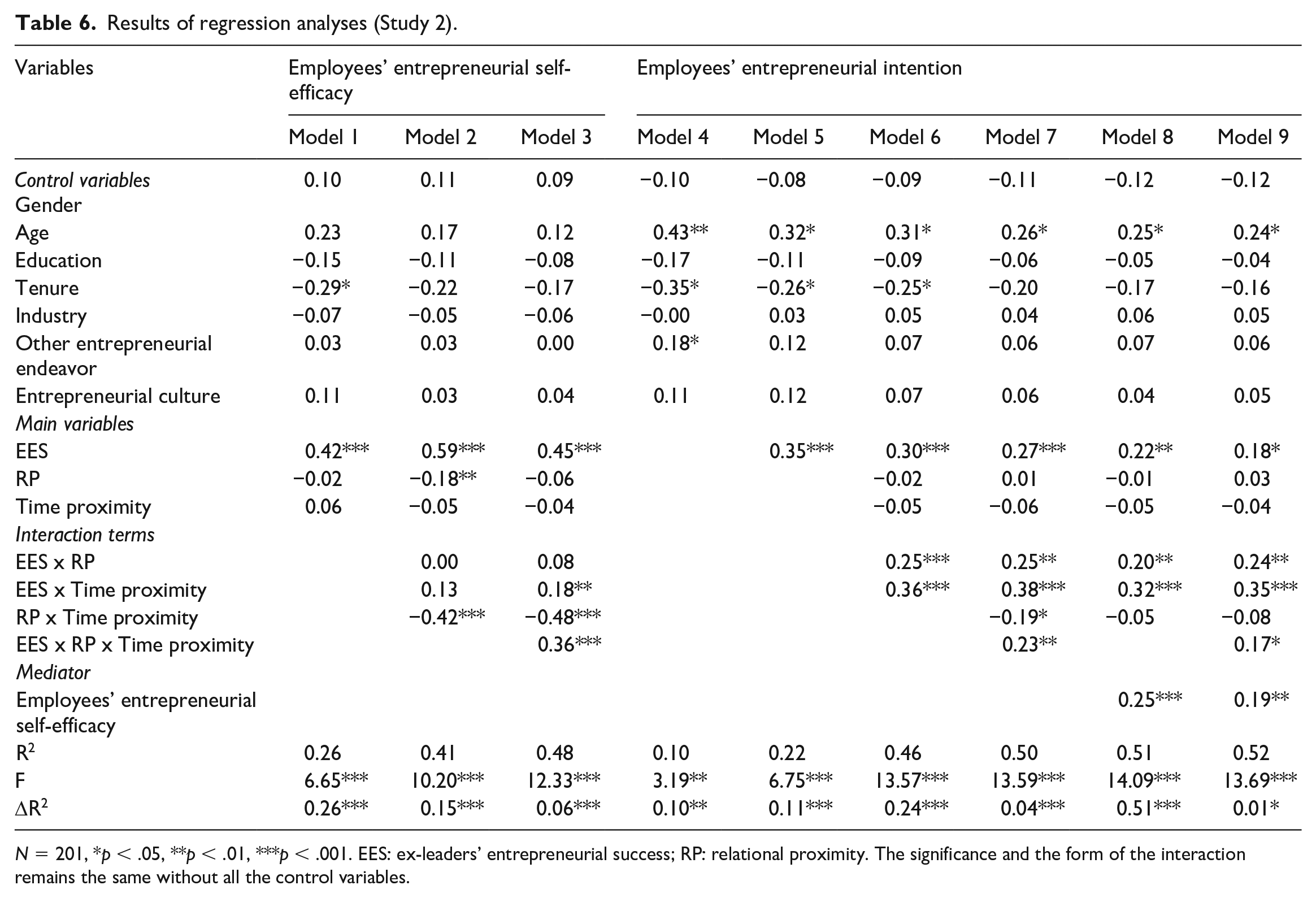
Means, standard deviations, and correlations are presented in Table 5. Consistent with Study 1, ex-leaders’ entrepreneurial success was positively related to employees’ entrepreneurial intention (β = 0.35, p < 0.01; Model 5 in Table 6); thus, Hypothesis 1 was supported. The results of Model 6 in Table 6 indicated that the interaction between ex-leaders’ entrepreneurial success and relational proximity and the interaction between ex-leaders’ entrepreneurial success and time proximity were both significantly related to employees’ entrepreneurial intention (relational proximity, β = 0.25, p < 0.01; time proximity, β = 0.36, p < 0.01). Figures 5 and 6 showed that there was a significant positive relationship between ex-leaders’ entrepreneurial success and employees’ entrepreneurial intention at high levels of relational proximity (β = 0.74, p < 0.001) and at high levels of time proximity (β = 0.78, p < 0.001), but the relationship was nonsignificant at low levels of relational proximity (β = −0.05, p > 0.1) and at low levels of time proximity (β = −0.16, p > 0.1). Therefore, Hypotheses 2 and 3 were supported.
Means, standard deviations, and correlations (Study 2).

Results of regression analyses (Study 2).
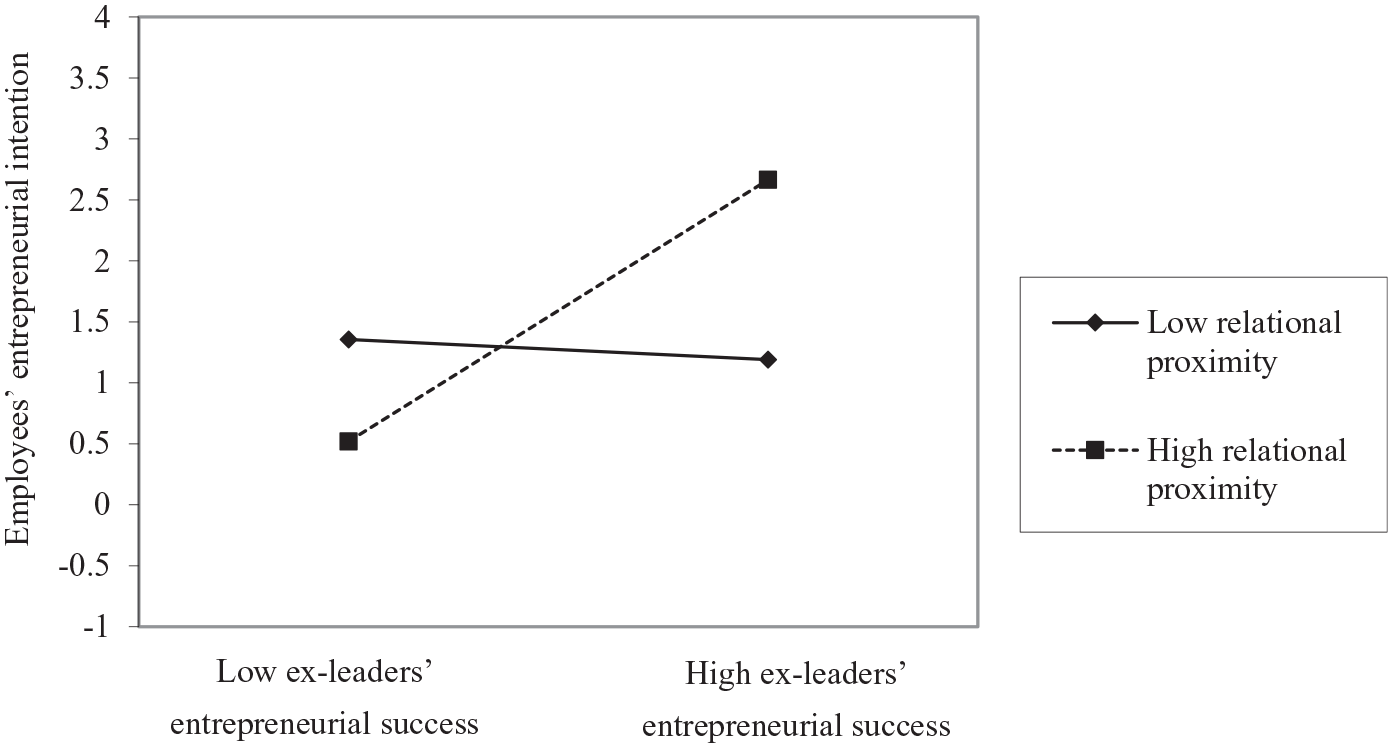
The two-way interaction of ex-leaders’ entrepreneurial success and relational proximity (Study 2).

The two-way interaction of ex-leaders’ entrepreneurial success and time proximity (Study 2).
Hypothesis 4 was also supported based on the results of Model 7 in Table 6, which indicated that the three-way interaction was significant (β = 0.23, p < 0.01, Model 7), and Figure 7, which suggested that ex-leaders’ entrepreneurial success had the strongest impact on employees’ entrepreneurial intention when relational proximity and time proximity were high (β = 1.16, p < 0.001).
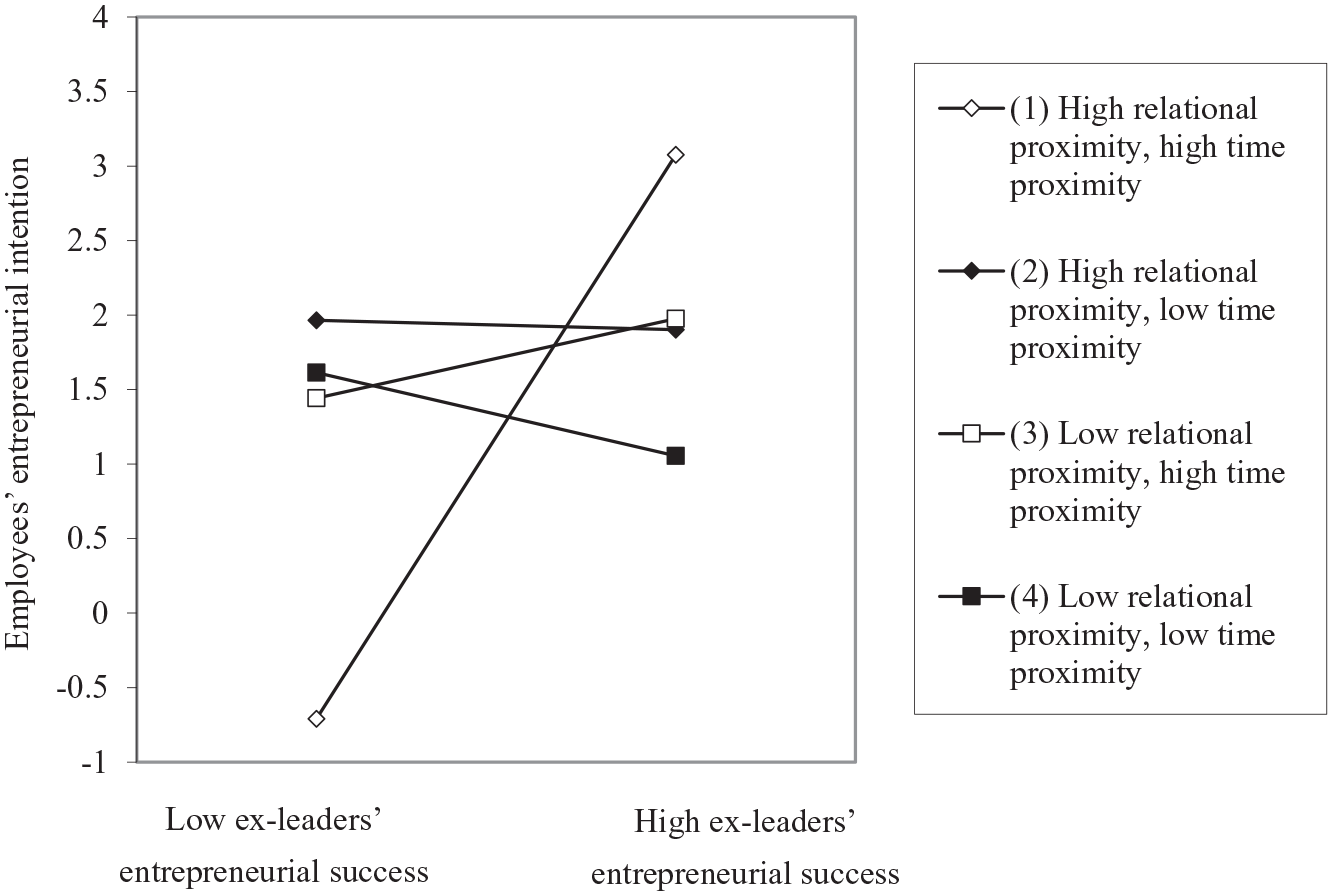
The three-way interaction between ex-leaders’ entrepreneurial success, relational proximity, and time proximity (Study 2).
In support of Hypothesis 5, the results in Table 6 showed that: (1) the three-way interaction was significantly related to employees’ entrepreneurial self-efficacy (β = 0.36, p < 0.01, Model 3) and significantly related to employees’ entrepreneurial intention (β = 0.23, p < 0.01, Model 7); (2) employees’ entrepreneurial self-efficacy was positively related to employees’ entrepreneurial intention (β = 0.25, p < 0.01, Model 8); and (3) the three-way interaction effect on employees’ entrepreneurial intention became less significant after employees’ entrepreneurial self-efficacy was entered (β = 0.17, p < 0.05, Model 9). The results of bootstrapping analysis further indicated that the indirect effect of the three-way interaction on employees’ entrepreneurial intention via employees’ entrepreneurial self-efficacy was significant (indirect effect = 0.21, SE = 0.08, 95% bias-corrected CI = [0.05, 0.38]), partially supporting Hypothesis 5.
Discussion of Study 2
Overall, the results of this study confirmed the findings of Study 1. Specifically, in Study 2, we found that ex-leaders’ entrepreneurial success is positively associated with employees’ entrepreneurial intention and that this positive effect is strongest under the condition of high relational and time proximity. Additionally, in line with our findings from Study 1, Study 2 also found support for the hypothesis that employees’ entrepreneurial self-efficacy functions as a critical mediating mechanism that transmits the effect of this three-way interaction of ex-leaders’ entrepreneurial success, relational proximity, and time proximity to employees’ entrepreneurial intention. These effects remain significant and stable even after controlling for the regional entrepreneurial culture and the entrepreneurial endeavors of parents and peers. Therefore, this study provides additional evidence that ex-leaders’ entrepreneurial endeavor is a critical event that influences employees’ entrepreneurial intention.
General discussion
Generally, building on event system theory, this study explores the impact of ex-leaders’ entrepreneurial endeavor on employees’ entrepreneurial intention. The findings from two time-lagged studies demonstrated the importance of ex-leaders’ entrepreneurial success for employees’ entrepreneurial intention and supported the moderating roles of relational proximity and time proximity as well as the mediating role of employees’ entrepreneurial self-efficacy in the relationship between ex-leaders’ entrepreneurial success and employees’ entrepreneurial intention. These findings yield important implications for theory and practice.
Theoretical implications
First, this study has important implications for event system theory. Although Morgeson et al. (2015) indicated the importance of events in entrepreneurial start-ups, our study is among the first to extend event system theory to the field of employee entrepreneurship by theorizing and demonstrating the effect of the event of ex-leaders’ entrepreneurial endeavor on employees’ entrepreneurial intention. Moreover, the significant three-way interactive effect of ex-leaders’ entrepreneurial success, relational proximity, and time proximity on employees’ entrepreneurial intention found in our study attests to the importance of the event space and event time in the functioning of event strength and advances the system perspective of events. Although event system theory has suggested that we should construct an integrative theory-building approach to reveal how multiple event characteristics interact to exert synergetic effects on event outcomes (Morgeson et al., 2015), to date, the existing event-oriented studies have mainly focused on investigating the main effects of event strength (Morgeson and DeRue, 2006). The interactive effects of event strength, event space and event time have rarely been investigated (Chen et al., 2021). By taking an interactionist approach to reveal how the ex-leaders’ entrepreneurial success, relational proximity, and time proximity interact synergistically to impact employees’ entrepreneurial intention, this study provides empirical support for the fundamental but untested tenet of event system theory and can help explain the heterogeneity in the impact of workplace events.
Another contribution of this study to event system theory is its revelation of employees’ entrepreneurial self-efficacy as the pivotal mechanism underlying the impact of ex-leaders’ entrepreneurial success. Although the cognitive processes through which events affect behaviors lie at the core of event system theory, the mechanisms underlying the influence of events have not been well investigated (Morgeson et al., 2015). By integrating event system theory with the entrepreneurship literature, this study conceptualizes and demonstrates that entrepreneurial self-efficacy is a crucial mechanism that translates ex-leaders’ entrepreneurial success into employees’ entrepreneurial intention, thereby clarifying the intricacies of this process and heeding the call for further studies to uncover the cognitive processes that underlie the links between events and outcomes (Morgeson et al., 2015).
Finally, this research also advances the literature on employee entrepreneurship. Despite the growing salience of employee entrepreneurship in management practices, the research on this topic remains limited (Agarwal et al., 2016; Campbell et al., 2012) and has largely neglected the role of workplace events in shaping employees’ aspirations toward entrepreneurship. By providing suggestive evidence of the effects of ex-leaders’ entrepreneurial endeavor on employees’ entrepreneurial intention, this study uncovers novel predictors of employees’ entrepreneurial intention and highlights the role of workplace events in facilitating employees’ motivation to leave employment for entrepreneurship (Seibert et al., 2021). Additionally, by adopting a social interaction perspective, this study contributes to the literature regarding the social transmission of entrepreneurship among individuals in organizations (Dobrev and Barnett, 2005) and advances the broader entrepreneurship literature, which has predominantly focused on social influences outside organizational boundaries, such as those of parents (Criaco et al., 2017) or peers at schools or universities (Kacperczyk, 2013).
Practical implications
From a practical standpoint, this study also has some implications for managers. Some recent studies have indicated that as a specific type of turnover behavior, employee entrepreneurship is particularly harmful for organizations, as it not only means a loss of human capital but also creates potential competitors for incumbent organizations (Campbell et al., 2012). By revealing the impact of ex-leaders’ entrepreneurial endeavor on employees’ entrepreneurial intention, this study highlights the role of critical workplace events in employee entrepreneurship, which has been neglected by previous research. According to the research on proactive coping with stressful events, forecasting and anticipating the occurrence of disruptive events and then engaging in preparatory activities constitute an effective strategy for managing the negative outcomes of such events (Aspinwall and Taylor, 1997). In the context of employee entrepreneurship, one way for organizations to limit the extent to which employees experience workplace events such as ex-leaders’ entrepreneurial endeavor is to create a management support system that is conducive to entrepreneurial activities within organizations (Ireland et al., 2009). In fact, some companies, such as Apple and Google, have already recognized the importance of the internal environment for entrepreneurial activities and have attempted to develop work contexts to be more supportive of entrepreneurial efforts for the purposes of catalyzing and facilitating entrepreneurial endeavors in organizations (Kuratko et al., 2015). By providing more internal entrepreneurial opportunities for employees who have strong entrepreneurial aspirations, granting them more autonomy in their work, and fostering an innovation-supportive climate in the organization, organizations may retain their employees and reduce the occurrence of entrepreneurship events.
Limitations and future directions
Despite its theoretical and practical contributions, this study should be interpreted in light of limitations that open avenues for future research. First, this study relied on self-reported data, which could raise the possibility of response bias and common method variance (Podsakoff et al., 2003). Moreover, the perceptual measure of ex-leaders’ entrepreneurial success may not accurately capture ex-leaders’ entrepreneurial performance, and retrospective reconstructions of ex-leaders’ entrepreneurial endeavor open the door to issues of retrospective bias. A longitudinal study that includes objective measures and gathers data from various sources is needed in the future. Second, we focused on entrepreneurial intention but not on the actual entrepreneurship behavior of employees as our dependent variable. Intention is not equal to behavior. It is important for future research to extend our research by exploring employees’ actual entrepreneurial behavior. Third, although we tested the moderating effects of relational proximity and time proximity, owing to their theoretical significance in event system theory, other individual-level or organizational-level contingencies might also shape the relationship between ex-leaders’ entrepreneurial endeavor and employees’ entrepreneurial intention. For example, employees’ specific attributions of ex-leaders’ entrepreneurial success may influence their motivations and actions. Therefore, another interesting and promising direction for future study might be to empirically track how individual difference variables interact with contextual conditions to influence employees’ entrepreneurial intention. In the future, scholars may also explore how the effect of ex-leaders’ entrepreneurial endeavor may be influenced by the three-way interactions among individual, organizational, and environmental factors. Finally, all of the participants in this study were employees in China, and the sample size was relatively small in both field studies, which limits the generalizability of the results. It would be worthwhile for future studies to replicate the present findings with a larger sample and undertake cross-cultural comparisons.
Conclusion
Drawing on event system theory, this study provides a comprehensive explanation of the top–down effect of ex-leaders’ successful entrepreneurial endeavor on employees’ entrepreneurial intention and uncovers how specific spatial and temporal factors combine in complex ways to affect the impact of such events. In this way, this study deepens the existing insights into why, how, and when ex-leaders’ entrepreneurial endeavor is more likely to impact employees’ entrepreneurial intention and suggests that while leaders’ behaviors do influence employees’ behaviors, this influence is more complex than has been previously thought. We hope this research can initiate a shift toward more event-oriented organizational research and spark further studies on exploring the influence of workplace events on employee behaviors.
Supplemental Material
sj-pdf-1-hum-10.1177_00187267221084495 – Supplemental material for An event-oriented approach to the transmission of ex-leaders’ entrepreneurial endeavor to employees’ entrepreneurial intention
Supplemental material, sj-pdf-1-hum-10.1177_00187267221084495 for An event-oriented approach to the transmission of ex-leaders’ entrepreneurial endeavor to employees’ entrepreneurial intention by Qingyan Ye, Duanxu Wang and Kai Zeng in Human Relations
Footnotes
Funding
The authors disclosed receipt of the following financial support for the research, authorship, and/or publication of this article: this work was supported by the Philosophy and Social Science Foundation of Zhejiang Province [grant number 20NDQN293YB]; National Natural Science Foundation of China [grant number 72102211]; Natural Science Foundation of Zhejiang Province [grant number LQ20G020003].

Supplemental material
Supplemental material for this article is available online.
References
Supplementary Material
Please find the following supplemental material available below.
For Open Access articles published under a Creative Commons License, all supplemental material carries the same license as the article it is associated with.
For non-Open Access articles published, all supplemental material carries a non-exclusive license, and permission requests for re-use of supplemental material or any part of supplemental material shall be sent directly to the copyright owner as specified in the copyright notice associated with the article.
