




Abstract
In all, about a billion people rely on forests for their food, fuel and income. In India alone, forests account for over a fifth of the country’s total geographical area. Of this, Jharkhand consists of 23,605 sq. km, that is, 29.61 per cent. Here, eight out of ten tribals live in and around forests. About 60 per cent of these tribals are dependent on forests. Despite this, it is a matter of extreme paradox that nothing is being done in the state to utilise forests and its minor produce though things are being done to strengthen the horticulture mission catering to only 17 per cent of cultivable land. This article brings out the facts how ‘value addition’ to minor forest produce (MFP) can not only generate income opportunity for tribals of Jharkhand but can also add to the state’s revenue in a huge way. Till date, MFP and its significance on ‘value addition’ have not even been flagged as an economic issue in Jharkhand. For instance, products made after ‘value addition’ done to an MFP like tendu leaves is generating a heavy revenue to the state. If the same is done to other MFPs such as lac and karanj, it can transform the economic condition of forest dwellers in the state. Figures reveal that value addition done to horticulture, globally, is around 70 per cent but what has been done in India forms a mere 5 per cent. To cater to this small portion, the Ministry of Food Processing Industries has been constituted at the Centre but for forest produce none exists. In Jharkhand too, Mega Food Parks are being developed and only recently, foundation for an agriculture university has been laid at Barhi. This research suggests that the state needs a forest-centric research institute. Why cannot we have a Jharkhand Forest University on the lines of Birsa Agriculture University? Thereafter, the article talks about how amendments need to be made in archaic forest laws making community forest rights more significant. It also shows how panchayats have a significant role to play in the protection of forests. Above all, the study depicts the way out as to how Jharkhand can be the epitome of forest-centric research in the country.
Introduction
About 60 million indigenous people around the world are wholly dependent on forests and about 350 million people live in or near forests (Belcher, 2012). In all, a large number of people rely on forests for their food, fuel and income. In India alone, forests account for over a fifth of the country’s total geographical area. Jharkhand has 29.61 per cent of the country’s forest area (Ministry of Environment, Forest and Climate Change, 2016). In Jharkhand, every eight out of ten tribals reside in a forest or in proximity to it. More than half of the tribal population is dependent on forests. Despite the state being both resource-rich and inhabited by a highly forest-dependent population, it is a matter of extreme paradox that Jharkhand is home to some of the poorest tribes in the country. The study through its research brings out remedies in the form of suggestions as to how the economic status of the languishing millions can be uplifted by just ‘refining’ the gifts of nature’s bounty. Value addition to minor forest produce (MFP) can not only add to the state’s revenue but also bring about a revolutionary change in the economic and social life of Jharkhand tribals.
Methodology
The methodology used in this study is systematic and theoretical analysis of the data collected. It is based on both primary and secondary sources. The primary data were collected using a well-prepared interview schedule. The schedule included questions related to general information about the forest dwellers’ agriculture practices, financial support mechanism for the family, income cycle, livelihood activities and consumption, credit system and their market transactions. The secondary data were collected through various literature and official websites and also from various acts, rules, regulations, notifications, etc., issued by the central and state governments.
Minor Forest Produce—Not Yet a Major Livelihood Resource
Agriculture, until now, has been a major source of income, attainment of food security, growth, employment and development for the tribal communities in Jharkhand. In this way, they only manage to achieve food security for half of the year for their families as there are small landholdings and for the rest of the year, they have to depend on other means to sustain themselves. In this situation forest produce plays a vital role in the life of the tribal family whose women and children are involved in collection and trading activities in the seasonal period of the year. The produce acts as a mini bank for the family for fulfilling its needs. However, not much attention has been paid to the development and value addition of the product.
The result of this ignorance of MFP has been such that forests have contributed about 1.3 per cent of Jharkhand’s Gross State Domestic Product in 2005–2006 which is less than half of what used to be in 2001–2002 (Government of Jharkhand, 2006). Jharkhand’s poverty percentage ratio was 44 as against the national average of 26 per cent in 2000 (Ramaswamy, 2014). Rural poverty though was highest in all states at 49 per cent. Of the 49 per cent rural poverty, 60 per cent of the people live either inside or on the periphery of forests. The survival of these 60 per cent poverty-stricken people depends a whole lot on forest resources as forests are their main source of livelihood (Finance Department, 2013–2014).
Just a small comparison with tendu leaves, one important MFP of Jharkhand, depicts how a MFP, if exploited commercially through value addition, can contribute to the state exchequer heavily. Tendu leaves are found abundantly in Jharkhand. They fetch the state around ₹500 crore, annually, in the manufacture of bidi (Nandi, Guindon, Jha, Joseph, & John, 2011). The figure can go up, exponentially, if the leaves are used to make cigars. So why not replicate the same for other MFPs in the state, most of which are sold by tribal villagers at throwaway prices?
Reforms in the Forest Sector
Naxalism is often said to be an impediment whenever the development of forests and their dwellers is discussed. However, the cause of Naxalism in Jharkhand is different from that in other states. For instance, following the Naxalbari movement of West Bengal, it spread to the Bhojpur district of Bihar in the early 1970s because of the rift between landlords and labourers. But in Jharkhand, there are no landlords. Then, who are behind the flourishing menace of Naxalism here? In Jharkhand, landlords have been replaced by officials of the Forest, Excise and Revenue Departments. They had been misusing the legal provisions creating apprehension and unrest among the indigent dwellers for quite sometime; stopping them from utilising what is their own (Kumar, 2012).
Section 52(1) of the Forest Act is one such provision being misused by forest officials. It says ‘Where there is reason to believe that a forest offence has been committed in respect of any forest produce, such produce, together with all the tools, boats, carts or cattle used in committing any such offence, may be seized by any forest officer or Police Officer’ (Government of India, 1927). Reports show that forest rangers hand in glove with the local mafia often indulge in the malpractice of booking poor tribals under frivolous pretexts by using this section of the Act.
For instance, local people are free to brew mahua up to 10 kg for personal consumption. Generally, what excise officials do is that they make false cases against these tribals alleging that the mahuabeing brewed by them is for sale which is not permissible under excise rules. Then, there are officials of the Revenue Department who harass them for mutation of the land. The poor tribals being bogged down by all the above tracks cannot even think of vending the MFP in urban markets. The thought of value addition is a thing too far for them!
Another impediment is the non-regulation of the Transit Permit Rules, 1973 (Government of India, 1980). But Section 32(c) of the Indian Forest Act, 1927 provides for ‘the granting of licences to persons felling or removing trees or timber or other forest-produce from such forests for the purpose of trade, and other production and return of such licences by such persons’. But only if a consignment fulfils the conditions laid under these rules, MFP is transported from one place to another. Most MFP persons requiring transportation for value addition are often denied this permit leading them to the confinement of the territory where they grow. Thus, we see that the landlords of the past have been replaced by the unjust officials of the Excise and Revenue Departments coercing the forest-dependent population to vend its produce at throwaway prices.
Why a Strong Forest Policy in Jharkhand?
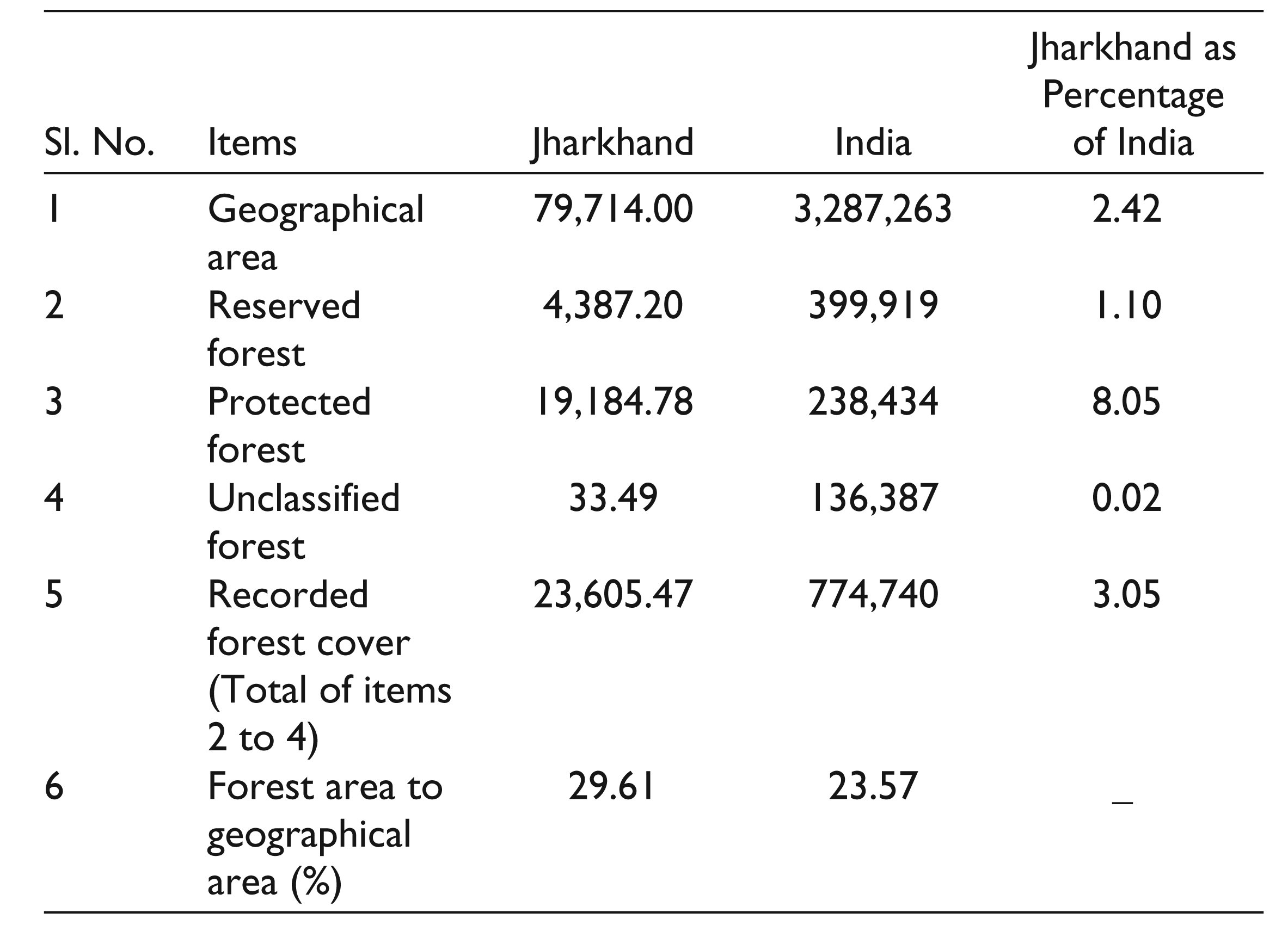
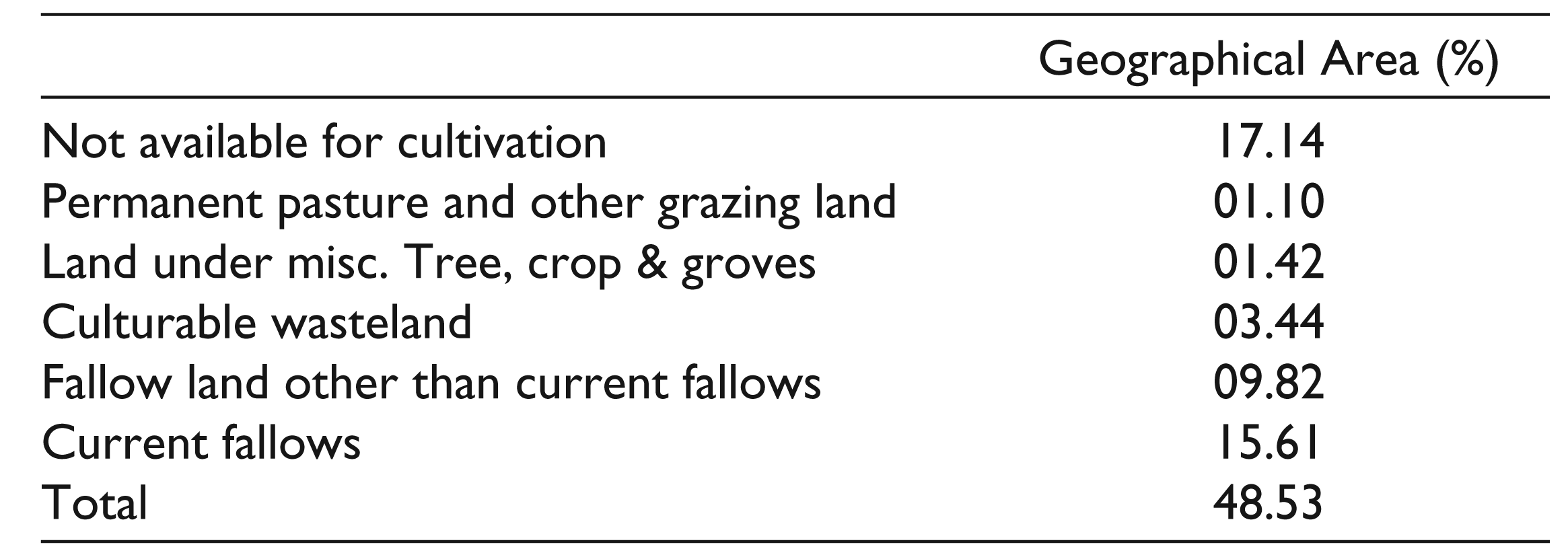
A look at Tables 1 and 2 reveals certain significant facts. In Jharkhand, only 15 per cent of the forests have been declared as ‘Reserved Forest’ whereas 85 per cent of the forests are ‘Protected Forest’. Of the total geographical area in the state, 82 per cent falls under protected forests and 17.5 per cent of the land falls under reserved forests. Now, a Protected Forest is an area or mass of land notified under the provisions of the Indian Forest Act or the State Forest Acts having limited degree of protection. In protected forests all activities are permitted unless prohibited (Government of India, 1980). A Reserved Forest, on the other hand, is an area of land duly notified under the provisions of Indian Forest Act or the State Forest Acts having full degree of protection. In Reserved Forests all activities are prohibited unless permitted (Ministry of Environment and Forest, 1972).
Forest Area in Jharkhand Vis-à-vis India (in sq. km)
Land Use in Jharkhand
Possessing such a large chunk of ‘Protected Forests’ gives us a major reason to double our efforts in protecting forests and their produce as they can become a key source of livelihood for the people of the state. Although the indigenous people of Jharkhand have the history of protecting forests much before proper governments came into picture (Forest Act, 1878), the recent Act, that is, Forest Rights Act, 2006 vests elaborate powers on forest dwellers.
The Forest Rights Act, 2006, for whose implementation the Ministry of Tribal Affairs is responsible, confers both Individual Forest Rights (IFRs) and Community Forest Rights (CFRs). Any person belonging to the Scheduled Tribes can claim IFRs to live in and cultivate up to four hectares provided he/she occupied it and was dependent on it as on 13 December 2005. In the case of a non-tribal, in addition to this requirement, he/she will have to prove his/her family’s residence in the vicinity of the forest land for seventy-five years prior to December 2005. But the more important provision of the Act is CFR which transfers the powers back to the inhabitants of the forest from the Forest Department. Rights can be claimed on reserved, protected or unclassified forests. Even protected areas, which include national parks and wildlife sanctuaries, are included.
It further says that no project of the government or a private entity in the forest can be implemented without the approval of the gram sabha (the SCs and Other Traditional Forest Dwellers Act, GOI, 2006). However, not much is being implemented from what has been stated. Unlike other departments, where a mukhiya of the gram Panchayat heads any monitoring committee, the Joint Forest Management (JFM) committee formed for the purpose is powerless. JFM committees, if fully empowered, can play an important role in village administration. All members of JFM committees should be given voting rights. Even decisions under Section 52(1) should be allowed to be taken by the JFM committee members. They should be given the freedom to conduct social and environmental audit of villages. Above all, it is the members of the JFM committee who should decide whether the cases filed under the Forest Act are of compoundable nature or not. There has been as much resistance from the Forest Department to IFRs too. Only the recognition of CFRs and an empowered JFM committee can shift forest governance in Jharkhand towards a community conservation regime which is more food security and livelihood oriented (Seetharaman, 2015).
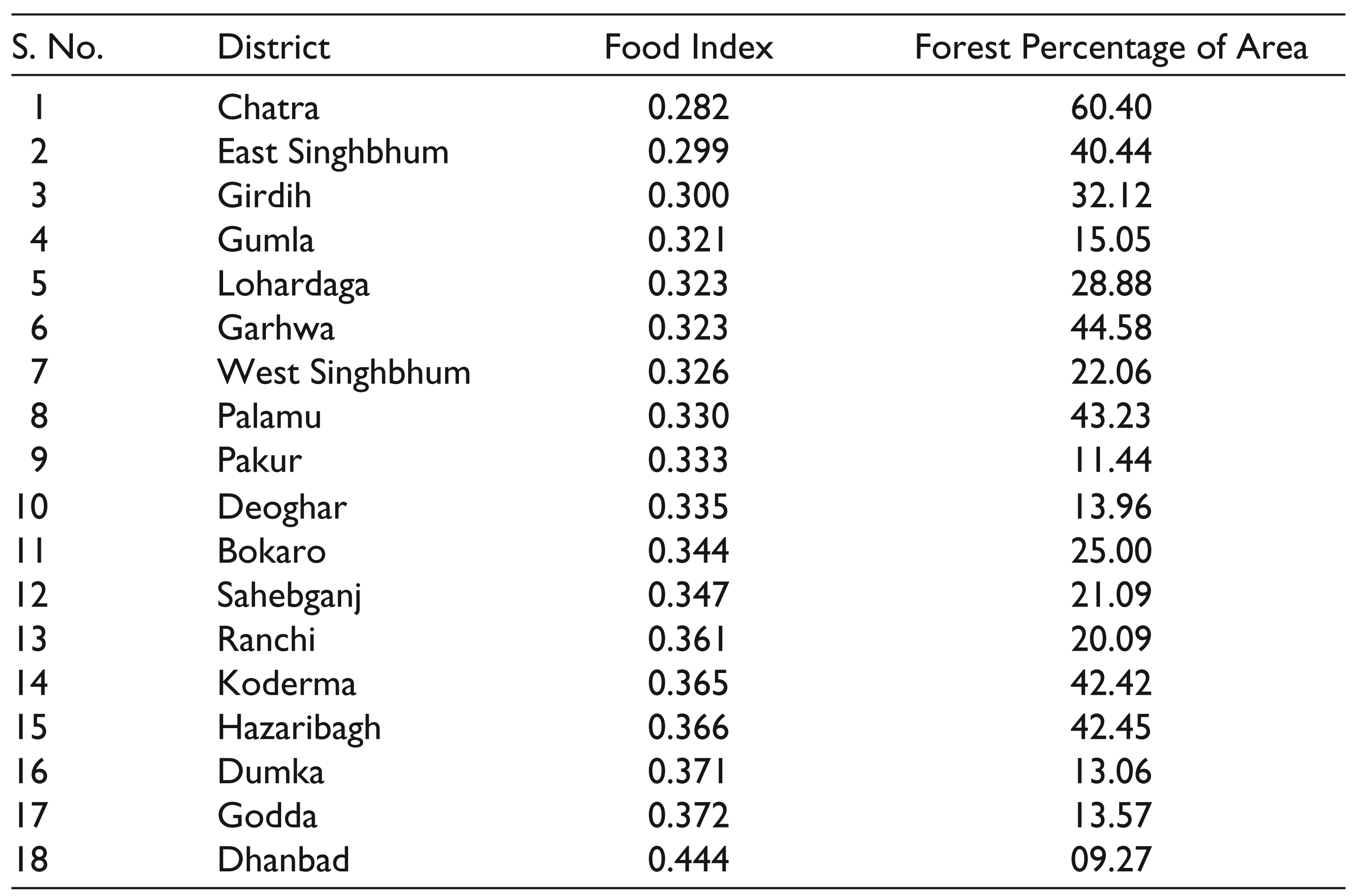
Forest Cover and Availability of Food in Jharkhand
Table 3 depicts how resources if not properly utilised can turn into a bane. Normally, a place having a huge forest cover should have abundance of food availability and vice versa but in Jharkhand the scenario is opposite. We see that Chatra district has the highest percentage of forest cover but when it comes to the food index (availability of food), it ranks the least. The figures depict that districts having large forest cover have a low food index. Is it not a paradox that where there are more forests, there is less food which otherwise should have been the opposite?
District-wise Food Index
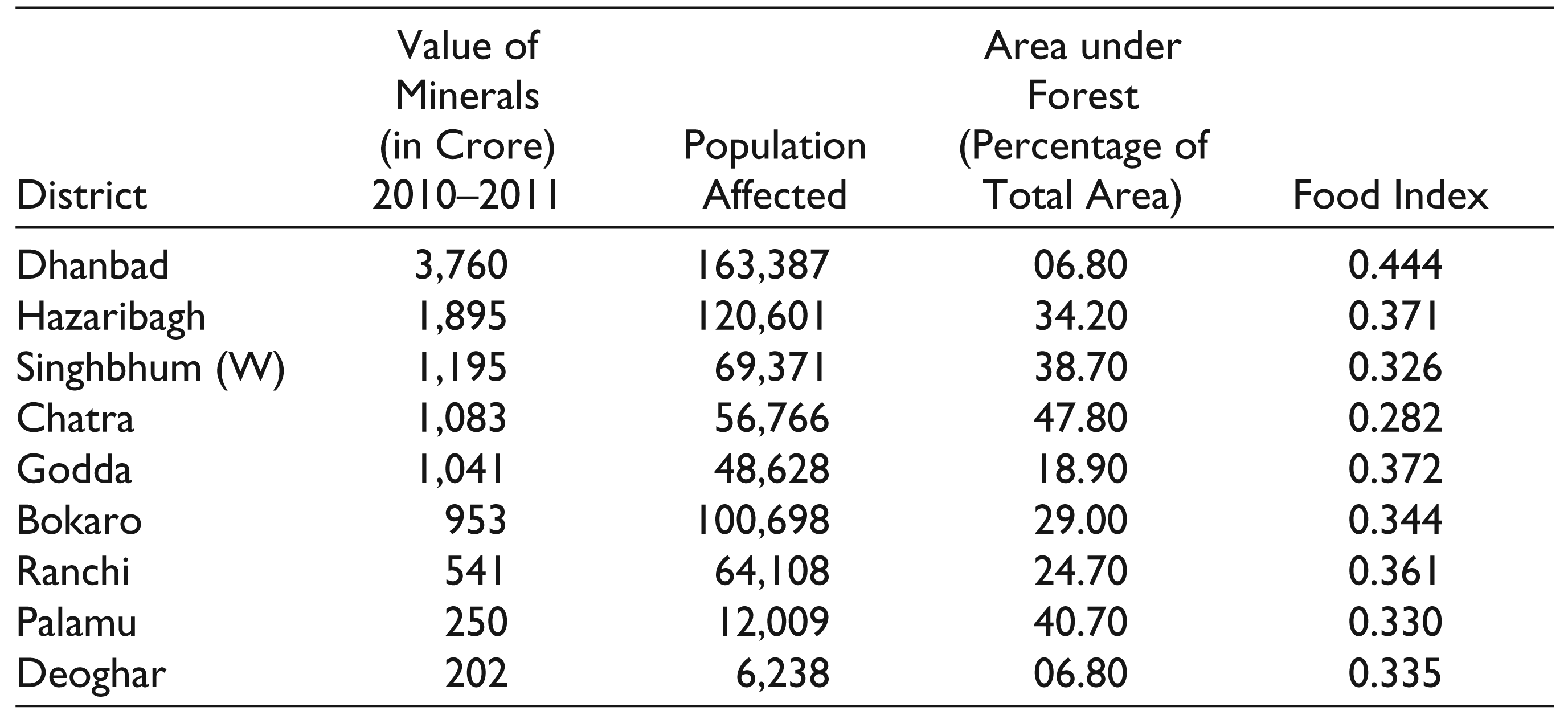
Jharkhand is mineral-rich and this is the insignia of the state’s economic resources. However, the availability of mines has its drawbacks too as a huge chunk of population living in proximity to them is highly affected by their pollution. The same is not true of forest resources which are salubrious to human health. Table 4 shows that Dhanbad has the highest worth of minerals with the highest population affected and the least percentage of forest cover. Here, the food index is high due to industrial development but at the cost of human health. Almost all districts reflect a similar story.
Mining Districts of Jharkhand
The Poverty-stricken Green Districts
Now, Table 5 shows that districts having a high per capita forest cover (Chatra and Garhwa) are largely affected by Naxal activities but their per capita rural income is less than that of other districts. This means that more forests are leading to more Naxalism.
Comparison of Per Capita Forest Area, Per Capita Income (Rural) and Population Affected by Naxalism
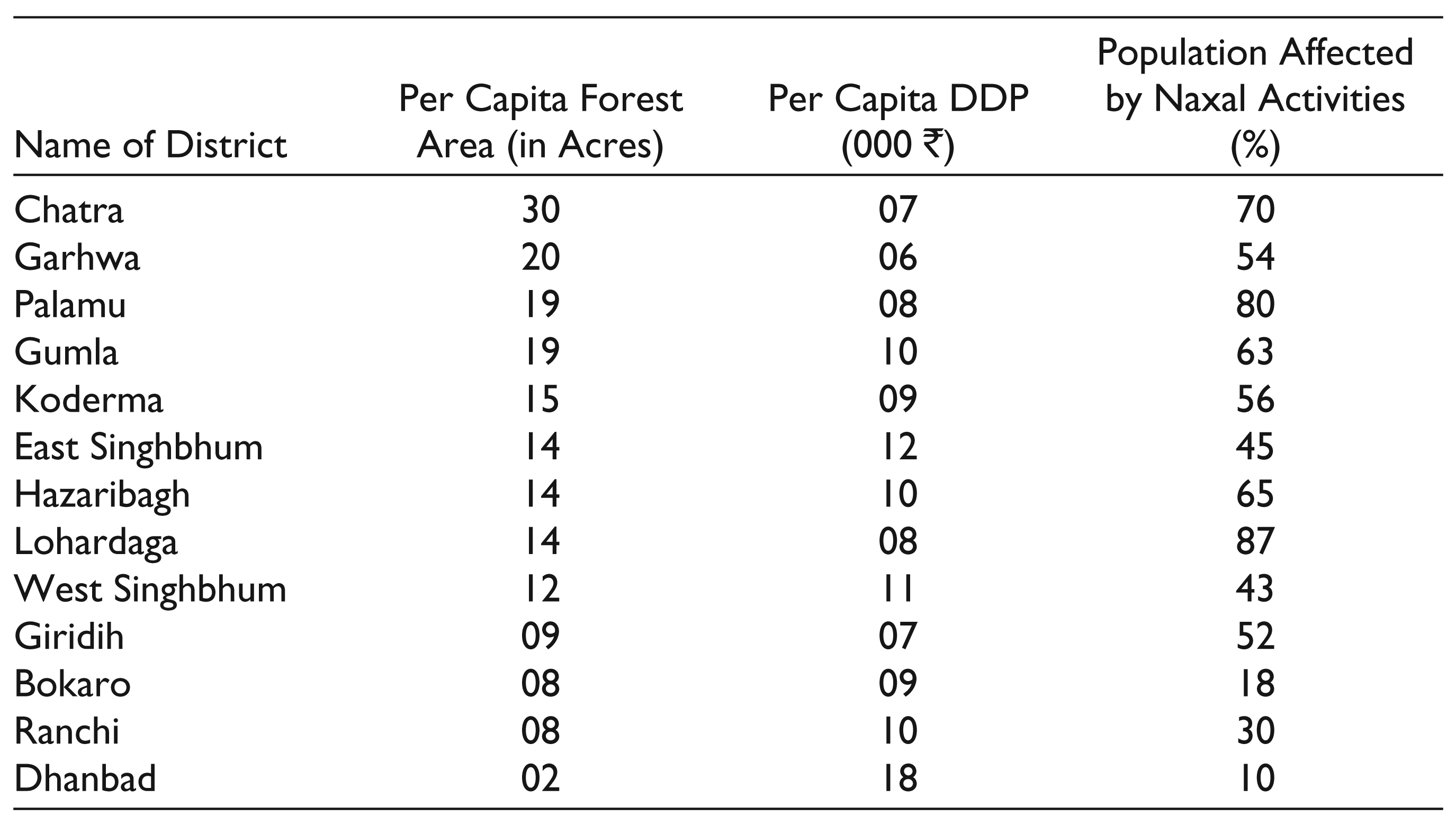
The above analysis underscores that forests which have become a curse should be converted into a boon. The only condition is that whatever they give must have optimum utilisation. And when it comes to optimum utilisation, not only are agriculture and land their two dimensions but there is much more to it in the form of MFP. And value addition to them through processing is required to make them commercially viable.
Minor Forest Produce—A Hidden Treasure Trove
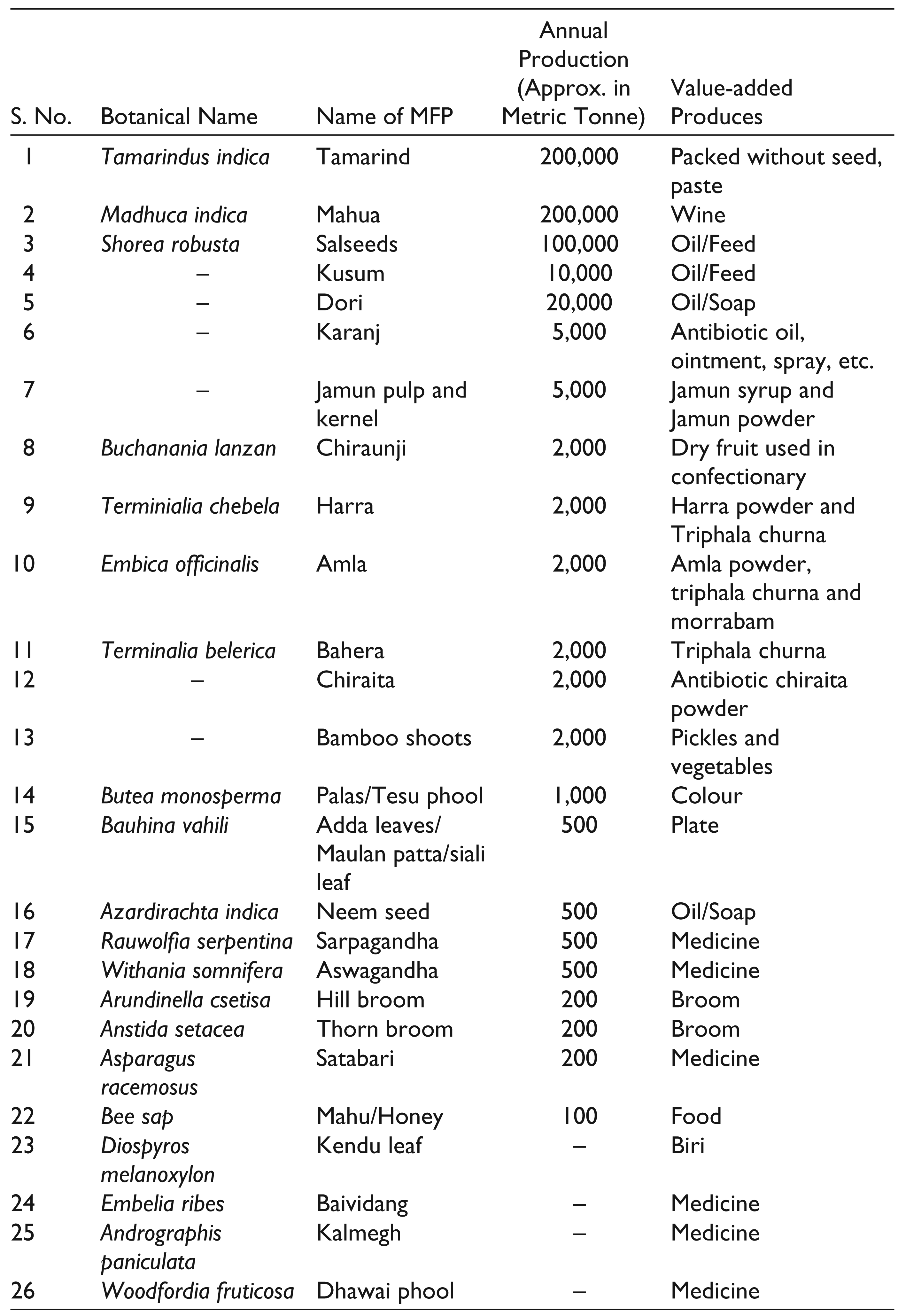
Jharkhand forests comprise biological and geophysical diversities. Due to variations of altitude and rainfall, diverse types and species are available in Jharkhand forests. Many species are economically important for the people living in and around the forest areas. These people, mainly tribals, are engaged in the collection of leaves, barks, gums, roots, flowers, fruits and entire plants from the forest areas for their livelihood out of which many species are medicinally and industrially important.
Tables 6 and 7 are a microcosm of the myriad species of MFP in which Jharkhand abounds.
List of Some Minor Forest Produce in Jharkhand
Some Major MFP Trees of Jharkhand and Production/Tree/kg
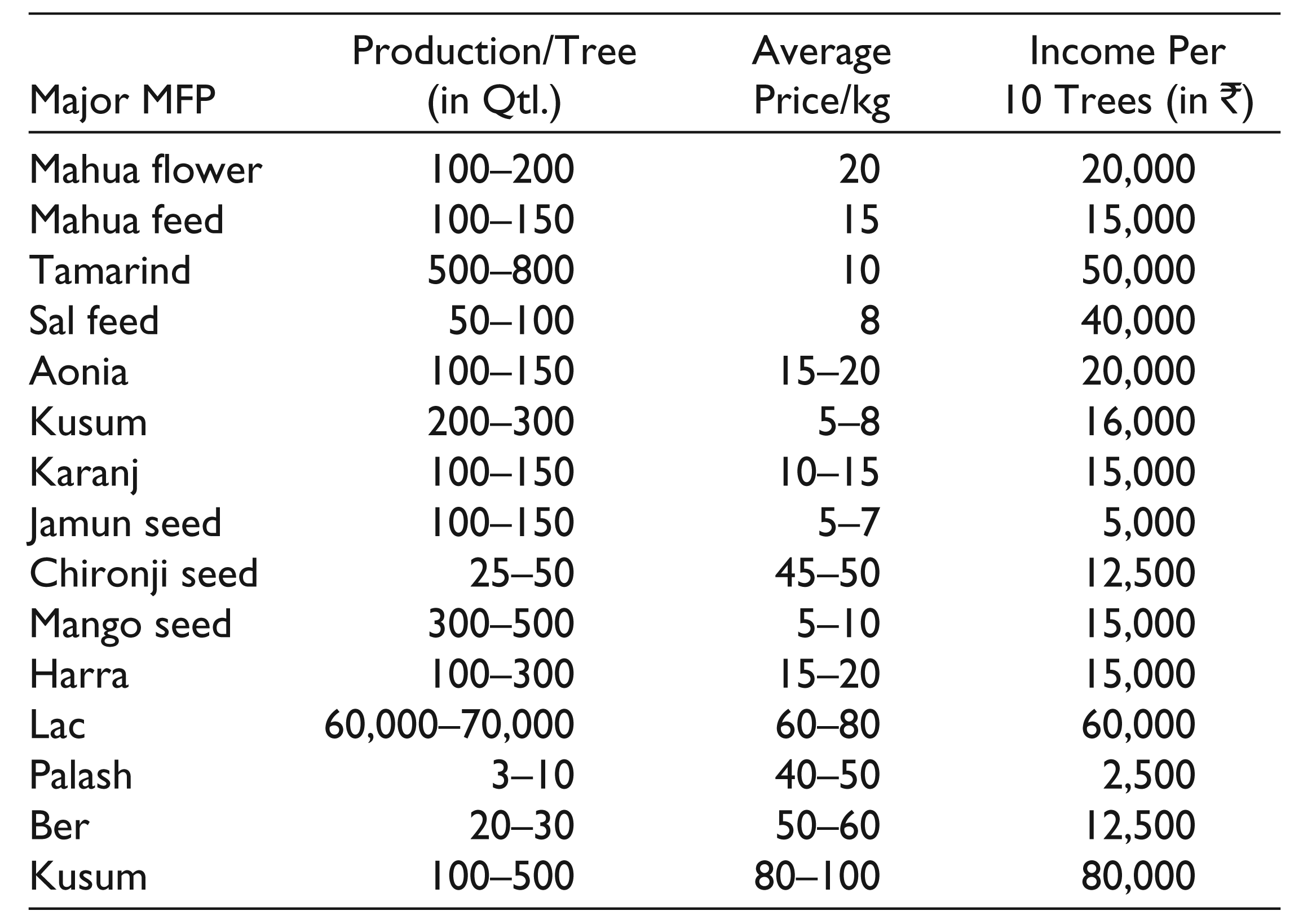
Thus, the list below reveals that Jharkhand is sitting amidst a mine of gold. The only problem is that it has not yet realised its value. Only if it processes them through adequate value addition, it can add to the income of forest dwellers bringing a transformation in their lives. For instance, let us compare potato, a horticulture produce and karanj. The raw potato, which is sold at a mere 6–7 rupees a kilogram in the remote villages of the state, when processed in the form of chips by companies, is vended at an exorbitant 125–150 rupees a kilogram. Thus, there is value addition to the extent of several times to fetch such a good price for a processed product of potato. The same value addition if done to karanj (say ten times or so), another MFP produced abundantly in the state, can give a huge income to tribals in the forests. Now, karanj is used by villagers for a variety of purposes. Apart from being an edible oil, it is used in the form of cosmetics and antiseptics. If only proper processing is done to it, karanj oil can be a substitute for the coconut oil we use in urban areas. Have we ever wondered why tribal women have healthier hair than women in the urban areas? Unlike their counterparts in cities who use branded shampoos and conditioners, they apply karanj oil to their hair. Karanj, if processed, may compete with Parachute oil. Then, it is also a substitute for palm and mustard oil. A thorough research in this area is required. Maybe, karanj can prove to be a cheaper substitute than other oils. Lac, another MFP, of which Jharkhand is the leading producer (the state contributes 40 per cent of the total lac production of the country) offers excellent scope for enhancing the shelf life of certain fruits and vegetables. Similarly, a number of gums produced here, like karaya, are used in the processed foods. Mahua, another MFP, is a health food often eaten in villages by pregnant and lactating women.
Jharkhand—In Crying Need of Forest-centric Research
Value addition done to horticulture globally is around 70 per cent of that done in India. It forms a mere 5 per cent (Ministry of Environment, Forest and Climate Change, 2016). To cater to this small portion, the Ministry of Food Processing Industries has been constituted in the country but for forest produce where the value addition is nil, nothing of such nature exists. In Jharkhand too, Mega Food Parks are being developed and only recently, the foundation for an agriculture university has been laid at Barhi village of the state. The state actually is in dire need of a forest-centric research institute. Why can’t we have a Jharkhand Forest University on the lines of Birsa Agriculture University? As it is, India till date has only two forest research institutes located in Bhopal. Given the abundance of forest resources and such a huge scope for value addition to the MFP they give, there should be many such institutes in India: Dehradun and Jharkhand can undoubtedly be the centre of forest-centric research in the country.
Do you know that the famous ‘Body Shop’ products we use in the form of soaps, creams, oils, face wash, etc., are sourced from the forest produce of jungles in Africa, Canada, Brazil and other forest-rich countries? The same can be done here in Jharkhand if we focus on value addition to MFP of the state.
Conclusion
The study concludes that MFP plays a vital role in tribal life traditionally, economically and socially. One thing we must understand is that MFP in comparison to horticulture is a ready-made gift of Nature. Whereas in horticulture, fruits and vegetables have to be grown and nurtured manually, MFP grows by itself. We only need to add value to it through processing to take commercial advantage. For this to happen, bodies at the grassroots level like JFM committees need to be empowered and legislation needs to be made a little pro-tribal. Thus, first of all, value addition should be flagged as an economic issue of the state. Second, proper infrastructure (lab for nutrition) should be established. And third, research in the area should be encouraged. Governments and policy makers often talk of alternative model for sustainable development. Nothing but value addition to MFP is the way out.
Declaration of Conflicting Interests
The author declared no potential conflicts of interest with respect to the research, authorship and/or publication of this article.
Funding
The author received no financial support for the research, authorship and/or publication of this article.
Footnotes
Acknowledgements
Inputs from Mr Sudhir Prasad, President, Jharkhand Food Commission and former Director-General, Sri Krishna Institute of Public Administration, Ranchi, are gratefully acknowledged.