



Abstract
Grievance redressal is often a general administrative exercise which is adopted by various state governments and agencies with varying degrees of commitment and efficacy. An ideal redressal mechanism aims at safeguarding degrees against official apathy, corruption and systemic aberrations. It also implicitly acts as a deterrent to erring agencies and functionaries as well as sets a benchmark for a higher executive’s oversight to peoples’ complaints. A revisit to the course and manner of this hitherto routine exercise reveals that the functional and effectual system for addressing people’s grievances has to include a mechanism which is specific as well as achievable and includes a procedure for measurable performance. The CM Window initiative of the Government of Haryana has set its sight at unrestricted grievance redressal across departments and geographical spreads of the state through a process of decentralised complaint recording, prompt solutions and centralised monitoring at the highest level. This article offers a closer insight into the focus, working, effectiveness and limitations of the ambitious exercise to ameliorate citizens’ hardships.
Introduction
Being the tangible expression of the legitimate authority within an organised society, the government has traversed through a long transformational journey since its very inception. Its various forms and features have been the logical responses to the dynamic expectations of the people as well as to the challenges faced by it in a volatile environment. The government, as a matter of fact, does share the citizens’ concern for a responsive, accountable, transparent, decentralised and people-friendly government at the local, state and the national levels. The state government has gone to expand its role dimensions with focus on country’s development and management of its economy in an efficient and targeted manner.
The Grievance Redressal Mechanism (GRM), as a matter of fact, is an indispensable component of administration that aims at ensuring efficient, responsive and transparent governance. It has, as a matter of fact, become a prime attribute of ‘good governance’. It could be a formal or informal process of complaint redressal that can be used by those individuals, communities and civil society organisations that are being impinged by governmental operations and activities. For the sake of citizen focus and legitimacy of purpose, an administration needs to be accountable, responsive and user-friendly by establishing an efficient and effective GRM. In other words, this is a measure to evaluate its competence to the extent it provides an important channel for getting feedback from people on its working. Effective redressal of public grievances has, therefore, become a touchstone for mapping the degree of responsiveness in a governance system. GRM has thus emerged as a mechanism for receipt and processing of citizens’ complaints for the removal of grievances and provisioning efficient service delivery. Consequently, efficacy of the GRM has become a barometer to gauge the sensitivity and effectiveness of administration. Its weakness indicates an unhealthy scenario. If the grievances remain unresolved despite their serious nature, these are liable to become unmanageable and could lead to legitimacy of the mechanism being put to question. Hence, an effective redressal of grievances is an essential attribute of a citizen-friendly administration.
Grievance Redressal: A Public Administration Challenge
A tendency towards systemic tolerance for administrative apathy, delay, poor work quality and lack of accountability lead to grievances among the public. It would be improbable to presume that grievances can altogether be avoided; the most practicable measure can be to mitigate their impact by restricting these to a realistic and manageable number. Governments and their managers are aware of existence and recurrence of grievances in various service delivery processes and policy implementation procedures. A responsible and responsive administration considers these as part of governance and includes a meaningful GRM that can identify grievance-prone areas and is vigilant towards procedures that are susceptible to corruption.
Any system of public grievance redressal can be sustained only if it delivers redress and becomes instrumental in making the organisation citizen-centric and capable of instituting responsive governance. The organisation finds it productive as it can save it from public resentment and improve its public image as well as the capacity to deliver by facilitating corrective and preventive action in respect of the various tasks undertaken by the organisation (Arora, 2008).
It is a challenge to identify and remodel outdated and discordant rules, regulations and processes. The government and its agencies need a continuous and focused introspection to identify fault lines within their working and embark upon simple and practicable systemic changes. Another challenge lies in the paradigm shift towards outsourced service delivery wherein the major stakeholders and players have come to define and determine the mechanism, quality and costs of services. This shift has a momentous consequence for government’s role. The interests of citizens cannot be ideally forsaken by the government to private service providers or market forces. Citizens’ grievances in such a scenario need to be addressed through strengthening of regulatory authorities who are vigilant towards problems of common citizenship and ensure prompt and effective redressal of their grievances. A GRM, whether formal, legal or quasi-judicial, is needed to address the aspirations of society for an accountable and responsive governance.
A well-meaning public administration will consider public grievances as opportunity rather than nuisance. It will offer public institutions an occasion to capture and analyse public grievances and appropriately address its performance issues. A participatory and citizen-centric approach to grievance redressal prove to be more effective than a bureaucratic and patriarchal model which is sometimes developed by a service provider.
Background
Public services have had a long history of often being marred by apathy, delays, rent-seeking and red tape. The situation becomes further compounded when efforts made to get resolution of these barriers are met with an uncaring response. Indifferent and insensitive attitude faced by citizens in seeking redressal against these glitches needs to be addressed through a policy driven GRM. A beginning was made by several states in India by putting in place a grievance redressal machinery either through departmental channels or a district-level complaints monitoring and resolution machinery.
Over the last two decades, particularly since the launch of National e-Governance Plan of India on 18 May 2006, a host of services are being provided online through state and Central government portals. To a large extent, this has addressed people’s aspirations for state services in a fast, seamless and transparent mode. Online availability of information and web-based transactions have offered the much-needed transparency as well as given citizens a reprieve from undue delays and corruption. However, such an ethos and functional transformation in citizen service delivery needs to be backed up by an efficient and credible resolution of grievances, wherever these tend to arise.
With the proliferation of Information and Communication Technology (ICT)-led governance initiatives, the states could install an integrated and transparent redress machinery at the state headquarters. The idea behind such initiatives was to develop a system where peoples’ problems could be solved at one platform within a stipulated time frame. Grievance redressal modules like Lokvani in Uttar Pradesh (UP) set the tone for future grievance redressal regime. The Lokvani project was initiated in 2004 in public–private mode in Sitapur District of UP. It aimed at providing information to citizens and redress their grievances in a time-bound, transparent and corruption-free manner. It used ICT to create a horizontal system of accountability replacing the need for the citizens from both urban and distant rural areas to physically visit concerned offices. The initiative is still relevant although it was one of the initial attempts at effective use of e-governance with intensive citizen engagement for a populous state like Uttar Pradesh—known to be a laggard with respect to technology adoption (World Bank, 2009). On the national level, presently a web-based Centralised Public Grievance Redress and Monitoring System (CPGRAMS) has been designed and implemented in all the ministries/departments of the Government of India. A customised software with regional language interface has also been designed for the state governments. This software is called CPGRAMS States. The state module of CPGRAMS has been implemented in nine states/Union Territories, namely Haryana, Odisha, Rajasthan, Puducherry, Meghalaya, Mizoram, Uttarakhand, Jharkhand and Punjab.
CM Window: The Grievance Redressal Initiative of Haryana
An effective GRM is the basic prerequisite for a citizen-centric government that offers a listening post at the cutting-edge level. Recognising this positive attribute of governance, Manohar Lal Khattar-led BJP government in Haryana had initiated path-breaking steps for the ventilation of grievances of the people of the state right since the assumption of its office on 28 October 2014. The prominent steps, inter alia, have been the Right to Service Act, 2014 for the time-bound delivery of services by various departments, boards and corporations; Swachh-Map App (2018) to enable the people to get their surroundings cleaned within 24 hours; and Haryana Real Estate Regulatory Authority (HARERA) (2016) for the redressal of grievances pertaining to the real estate within 60 days; HARPATH 1 (2017) for the maintenance of roads; Social Media Grievances Tracker (2017) for resolving complaints sent via social media; HARSAMAY, citizen portal for Haryana Police (2018) for dealing with the grievances pertaining to as many as 30 services of the police department round the clock; CM Window (2014) to ensure prompt redressal of the grievances of the people. Although all of these are laudable steps, the CM Window has come to be recognised as a great landmark not only for grievance redressal but also for bringing about the much-needed transparency in the working of state government for ensuring good governance in Haryana. It had been set up on 25 November 2014, with the Chief Secretary to the Government of Haryana as its administrative secretary.
An attempt has been made in this paper to discuss the purpose, focus and working of CM Window in Haryana. It delineates the rationale and the salient features which make this a unique initiative. A step-by-step key to procedures for using the CM Window is provided to highlight its user-friendliness. Some suggestions based on its actual performance and efficacy are also made.
An Exercise in Citizens’ Empowerment
This unique grievance redressal interface aims at providing a listening post with direct access to highest political executive in the state. The CM Window has been designed to meet the twin objectives of minimum government and maximum governance. It also seeks to seamlessly provide the benefits of various welfare schemes to the people. Besides, it is also likely to help in bridging the gap between the government and the common people through speedy redressal of complaints. Since it is entirely online, it leaves no scope for complacency and undue delays. The grievances are registered at the CM Window counters and the citizen gets an SMS on their mobile phone with a Grievance Registration Number. This may be used by them for online tracking of the status of grievance redressal. The portal has been made available in English, Hindi and Punjabi for making it user-friendly. People can also connect to it by social media platforms such as Facebook and Twitter. There are almost 100 centres of CM Window in Haryana. It is functioning at CM’s Residence (Chandigarh), Civil Secretariat (Chandigarh), Haryana Bhawan, Delhi, at district level in City Magistrate’s Office (e-Disha Kendras), and at sub-divisional level in the office of the Sub-Divisional Officer (Civil) for gathering the grievances from common citizens. The nodal officers and the other dealing officers, who operationalise the CM Window, are given regular training by National Informatics Centre (NIC). Efforts are also being made for continuous improvements in the system.
Steps for Streamlining the Working of CM Window
The CM Web portal operates through a link to CM grievances redressal website for the redressal of public grievances. A customised toll-free number has also been started to register grievances on phone. 2
To register and classify the complaints, nodal officers have been appointed in each department and every district to monitor the nature and volume of grievance and the departmental Action-Taken Reports (ATRs) on CM Window. They are required to create/update a departmental hierarchy for this purpose and also to categorise the subjects being dealt with by their departments for intimating the same to the Officer on Special Duty (OSD), grievances (CM cell), Haryana Civil Secretariat, Chandigarh. 3
The complainant is directed to bring along two respectable persons of their choice for counselling them regarding the non-practicability of their grievance, 4 if that is the case.
The departments are required to send the ATRs on grievances/complaints online instead of sending hard copies to the CM’s Secretariat. 5
The CM Window officials in the concerned districts identify the complainant at the time of receipt of complaint/grievance. 6
Its officers/officials, who ask the applicant to mention their name, address and mobile number, which is mandatory, and the Aadhaar number, which is optional, in the online application while uploading the application on CM’s Grievances Redressal System (GRS). 7
The timeline for the redressal of specific grievances is three months. 8
The acknowledgement/compliance reports are sent within 15 days. 9
The complaints made against the Groups C and D officials are to be examined by the officers two levels above the delinquent official’s level. In the cases where the complaints are made against the Group A and B officials, and these have to be examined at one level above the level of the said officer. 10
The grievances/complaints of working employees of the state government related to their departments in respect of pay anomalies, arrears, reimbursement claims, promotions and transfers are not uploaded on CM Window. However, retired employees can also do the same on this portal. 11
The ATRs are uploaded in the standardised format (both in English and Hindi). The grievance identified as critical has to be disposed off on priority basis as per norms. 12
The concerned officer shall personally contact the applicant and an eminent citizen of that area (list of whom is uploaded on CM Window portal) so that neither the applicant nor the official could make false complaints or reports. No ATR shall be accepted without the signatures of either complainant or any one of the persons out of list of eminent persons or both; this is in effect from 8 May 2017. 13
The officer signing the ATR writes his/her name in capital letters and affixes office stamp on it. 14
Facility of Call Centre
A dedicated call centre interacts with the applicants on the ATRs forwarded to it by the respective departments and obtains the feedback. It informs the applicants about the status of their grievances. If they are satisfied, the complaints get disposed off automatically. In the case of any standoffs, the ATRs are re-examined in terms of the existing rules and regulations.
‘Share Your Ideas’ Section
The people can give suggestions to the CM’s Office to help the government in revising or formulating its policies. The link for CM’s GRS has also been provided for the submission of complaints on the website.
Steps for Using Haryana CM Window Complaint Portal
The complaints are received through the CM Window to minimise the cases of omission and commission in the state. The process of registering a complaint is given in Figure 1.

Current Metrics of CM Window
The status of grievances, demands and suggestions received till May 1, 2019, has been given on the CM Window is given in Table 1.
Status of Grievances and Others, on 1 May 2019.

The year-wise status of grievances received till February 28, 2019 online are given in Table 2.
Status of Grievances Received Online.

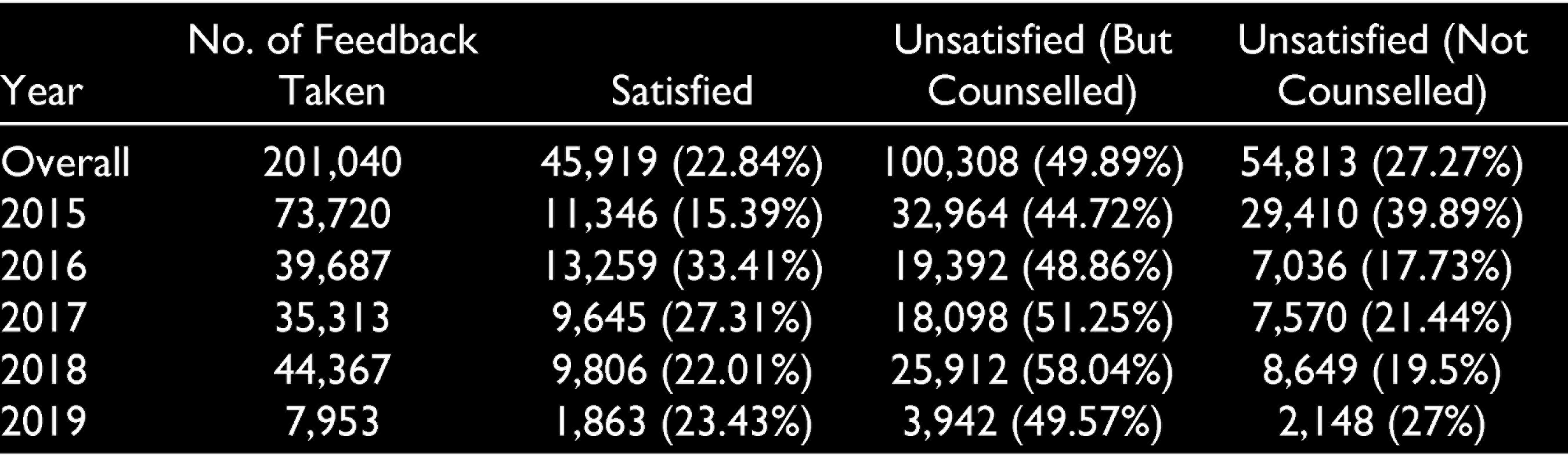
The year-wise status of call centre report is given in Table 3.
Call Centre Report Status.
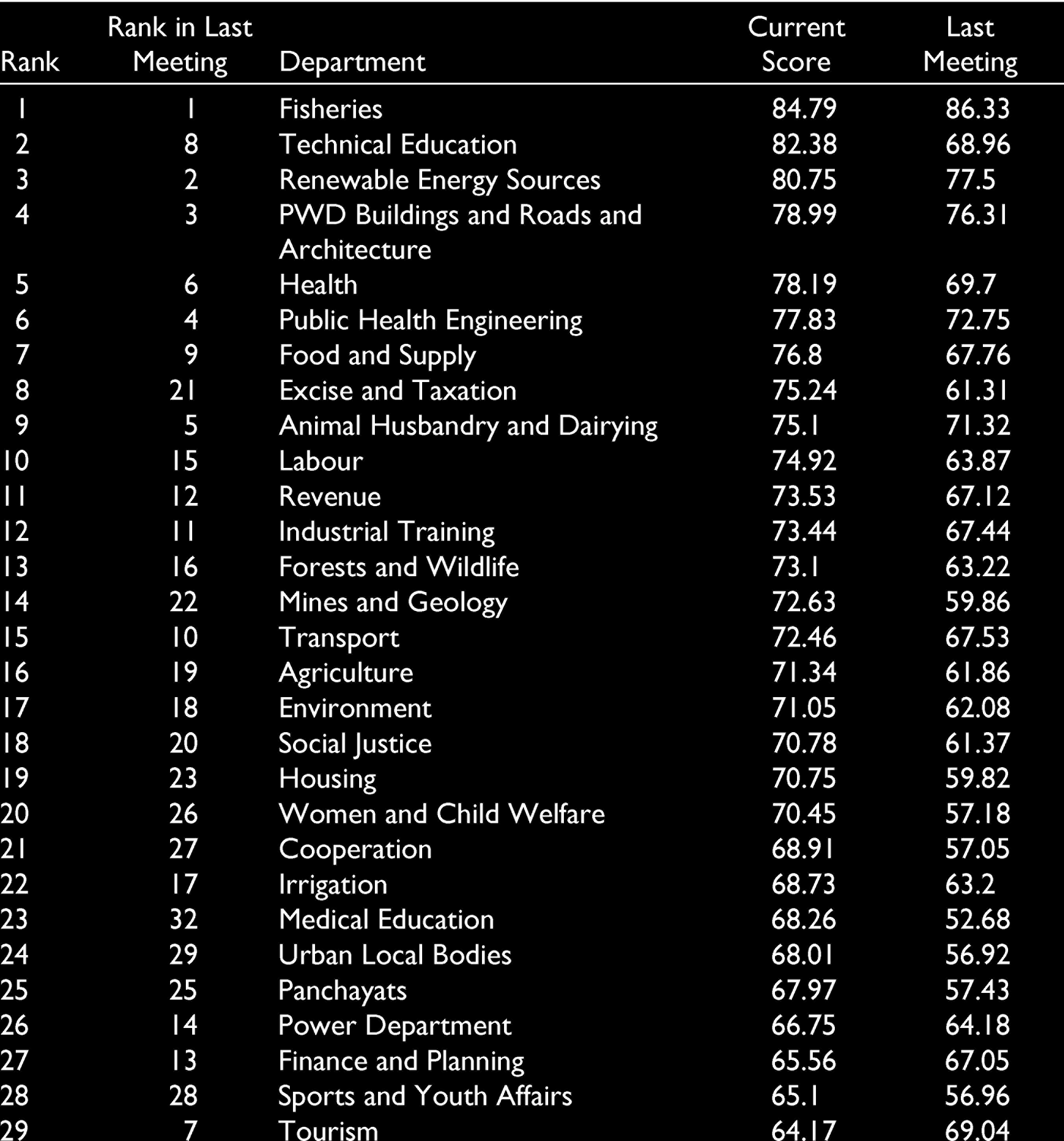
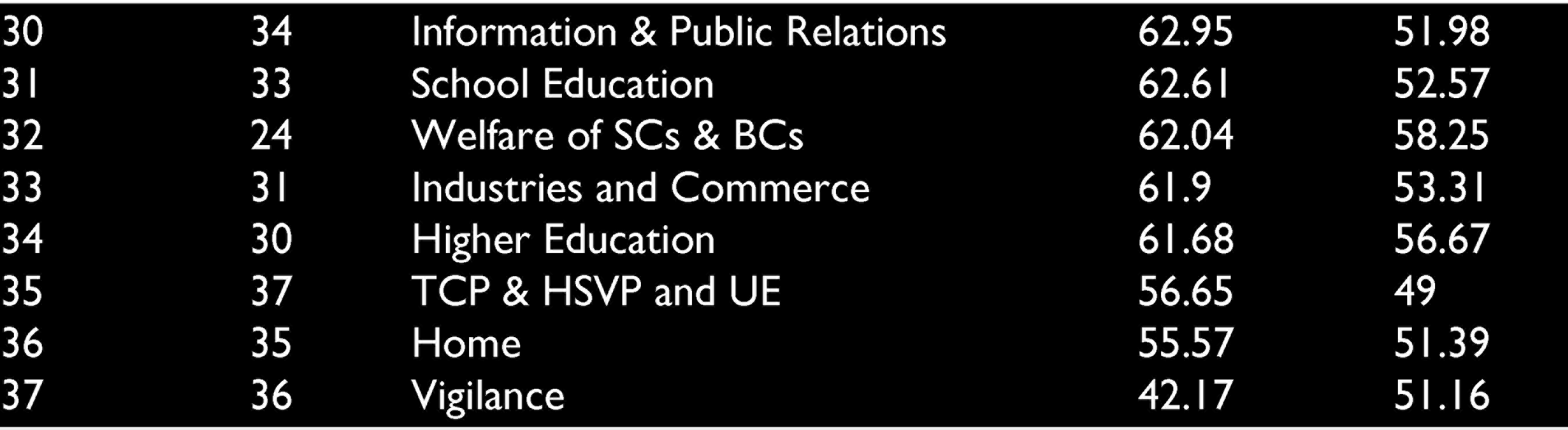
The performance rank of various departments related to redressal mechanism are tabulated in Table 4.
As is evident from Table 4, the Department of Fisheries, Technical Education, Renewable Energy Sources, PWD (B&R), and Architecture and Health figures are at top in the overall composite score. The Departments of Public Health Engineering, Food and Supply, Excise and Taxation, and Animal Husbandry and Dairying fall in between, but the remaining departments are also not far behind. However, the Transport, Agriculture and Environment departments need to improve their performance as they play an important role in the lives of the people of Haryana. Further, the working of the Departments of School Education, Welfare of the SCs and BCs, Higher Education, Town and Country Planning, and Haryana Shahri Vikas Pradhikaran (HSVP) and Urban Estates (UE), Home and Vigilance too need to be streamlined in the above context.
Grievance Redressal Performance of Departments on 22 November 2018.
The department-wise pendency status for various departments is presented in Table 5.
The data in Table 5 show that the largest number of pending complaints were related to the police department. Those against the Departments of Environment and Industries were much lower. The overdue was lowest in the Departments of Technical Education and Women and Child Development.
Department-wise Pendency Status on 21 November 2018.
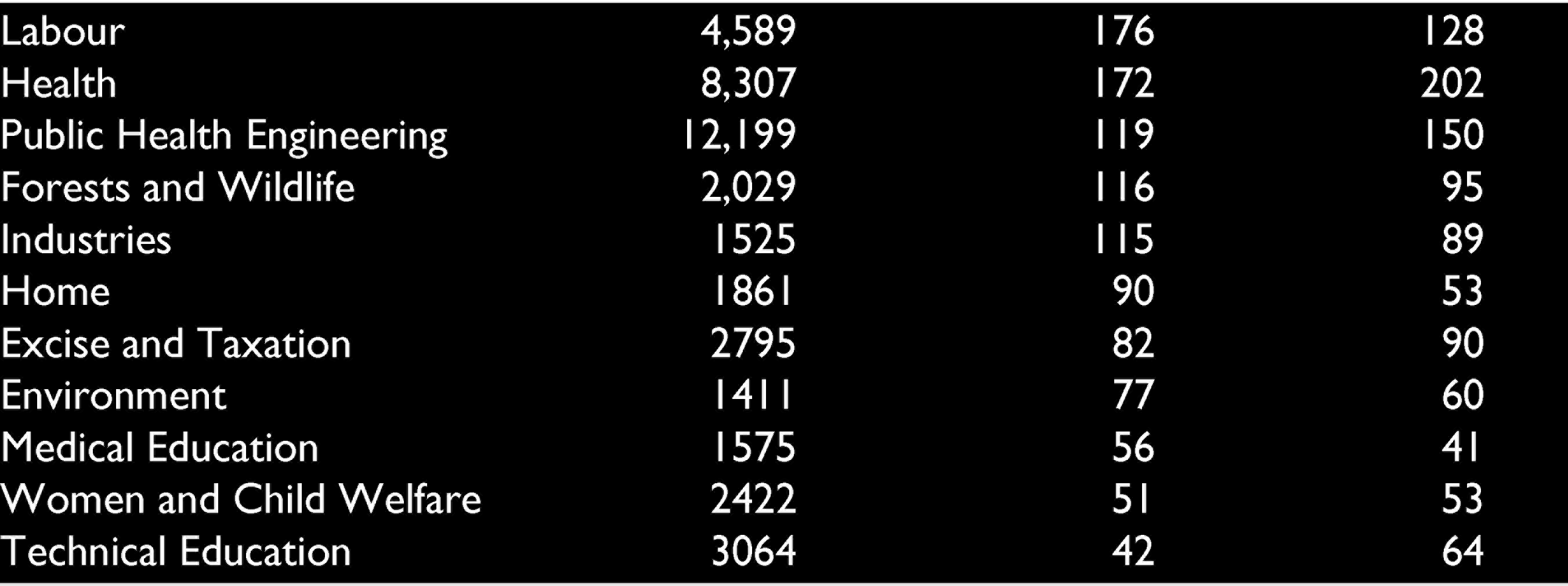
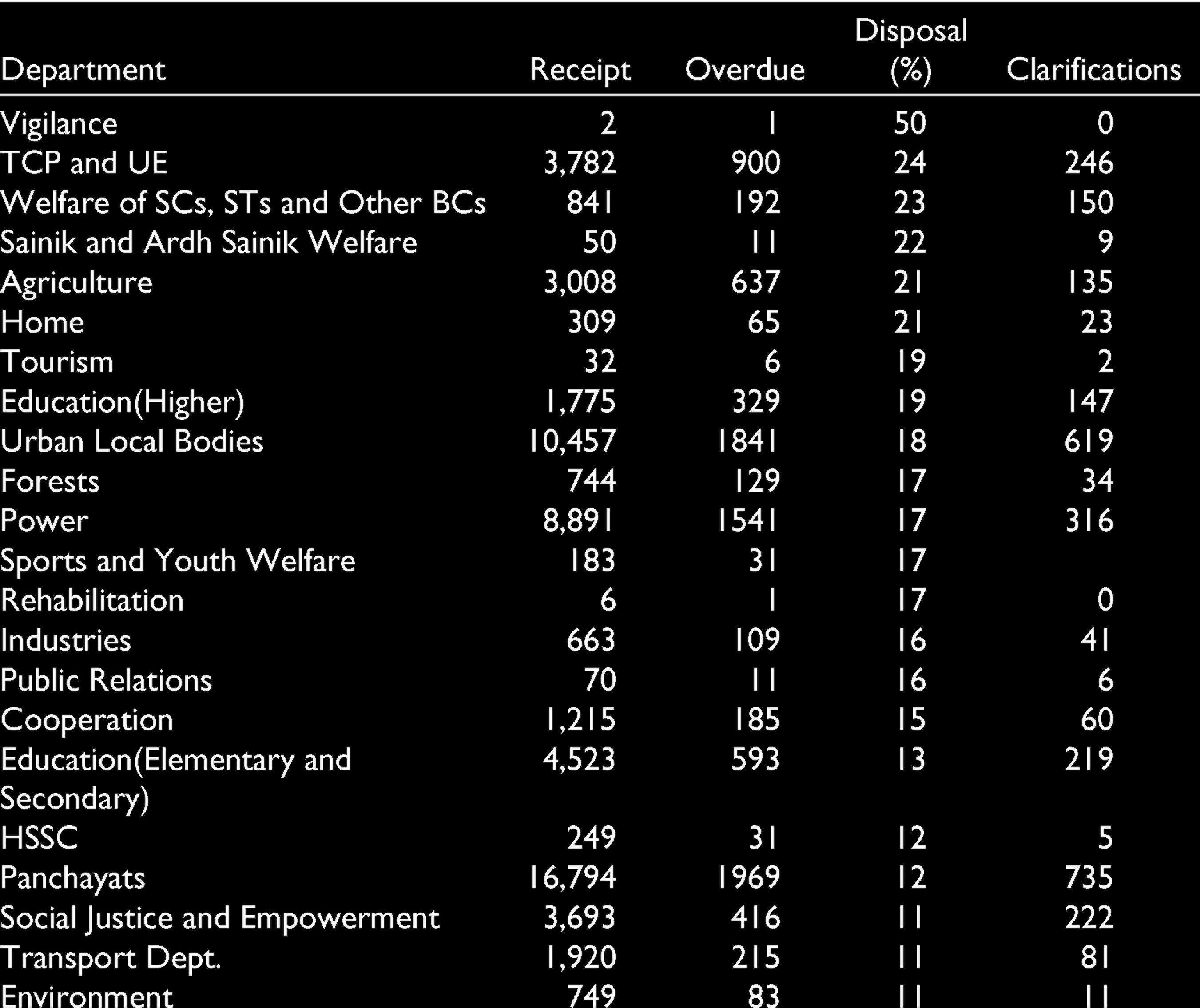
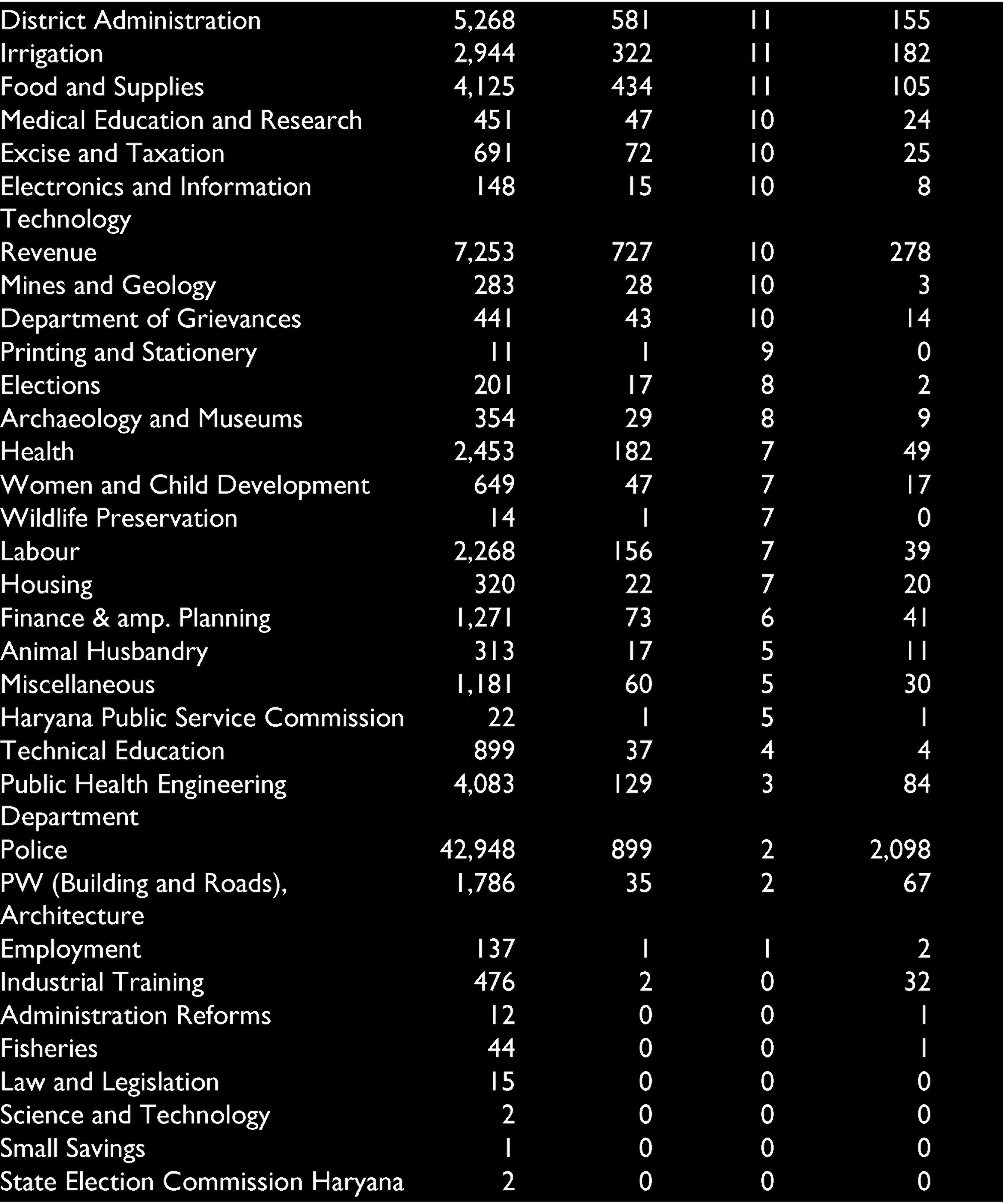
The overdue status of last one year of grievances received from 12 November 2017 to 12 November 2018, is given in Table 6.
An overview of the data in Table 6 reveals that the largest number of complaints received (42,948) were also against police department. It was followed by the Development and Panchayats department (16,794), whereas their number was the lowest for the Vigilance and Small Savings departments. While the overdue was the highest in the police department (899), it was conspicuous by its absence in the departments of Administrative Reforms, Fisheries, Law and Legislative, Science and Technology, Small Savings and in the State Election Commission Haryana. The percentage-wise position of overdue cases was ironically, however, the worst in Vigilance department. In terms of ‘clarifications’ too the police department was the most adversely placed, followed by the Development and Panchayats department. This may be attributed to the fact that these two departments have the largest interface with the people.
Overdue Status (November 2017–November 2018).
The department-wise overdue status for 2018 on 21 November is given in Table 7.
The data in Table 7 show that Panchayats and the Urban Local Bodies departments have the highest pendency as the larger number of complaints pertain mainly to these two departments which have greater public interface than other departments. The figures given under the subheads ‘Disposal’ percentage and ‘last meeting’ leave no doubt about the fact that the CM Window has been functioning very efficiently.
Department-wise Overdue Status on 21 November 2018.

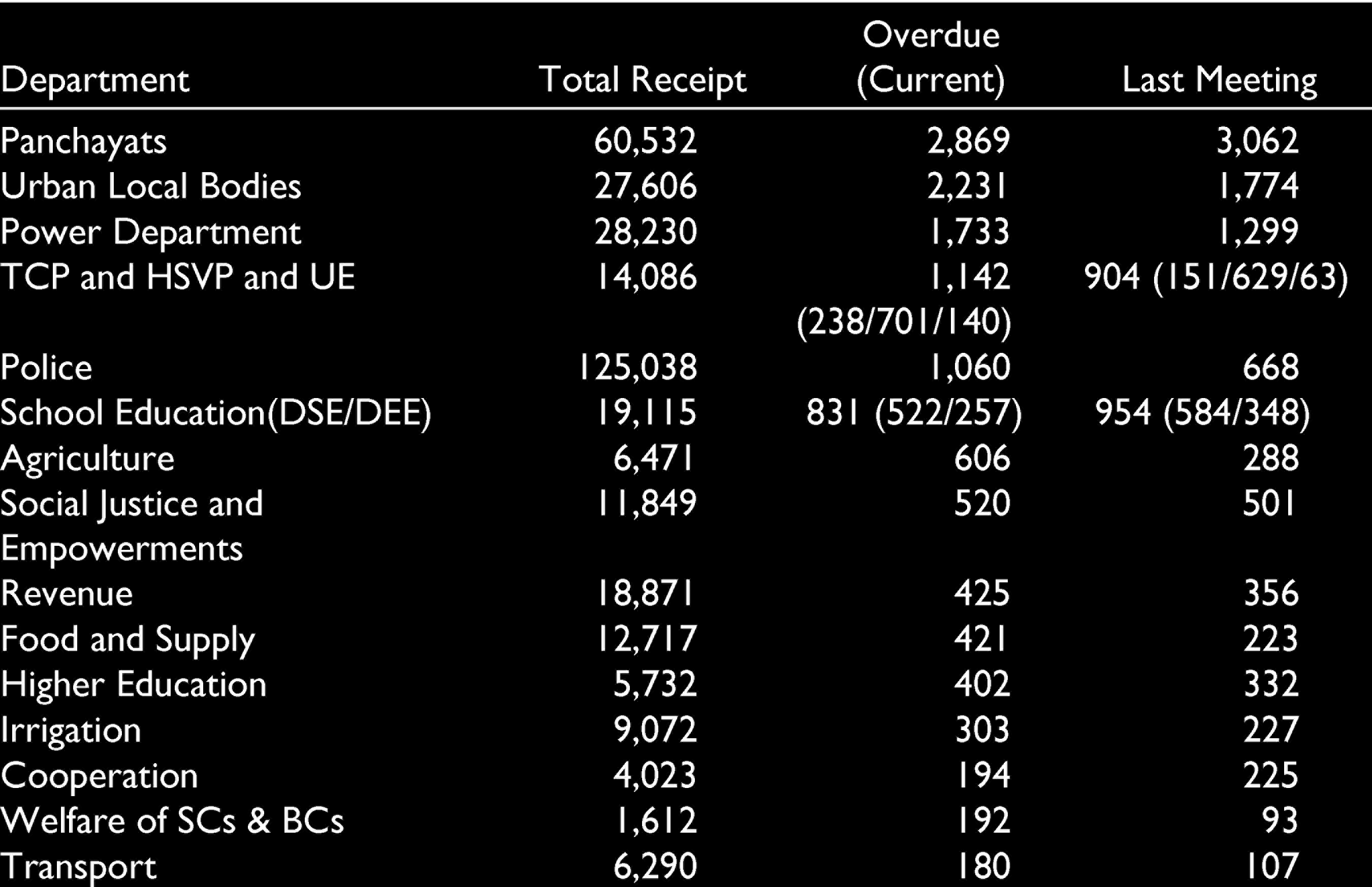
The current status of overdue complaints of three months in 2018 is given in Table 8.
Status of Overdue Complaints Between Two Meetings (November 2018).

The data in Table 8 reveal that in this period also largest number of overdue complaints pertains to the police and the Development and Panchayats department. In terms of ‘Current’ status, performance of the Department of Industries was followed by the Irrigation department. As per the ‘Last Meeting’ figures, the Development and Panchayats department has the highest overdue complaints and the Department of Industries has the lowest. This has to be understood by keeping in view the fact that Development and Panchayats department has to do considerable public dealing owing to the predominantly rural character of Haryana state in spite of rapid urbanisation after the attainment of statehood by it in 1966, whereas the Department of Industries has relatively much lesser interaction with the people in the predominantly agrarian state.
The pending additional marking on 21 November 2018 is offered in Table 9.
Pending Status of Complaints with Additional Markings (November 2018).

The data in Table 9 show that the maximum pendency pertains to police department followed by the Development of Panchayats department. In terms of current pending additional markings, the Urban Local Bodies department is on the top and the Forest and Wildlife department and the Department of SC and Backward Class Welfare are at the bottom. In terms of status of pending additional markings in the ‘Last Meeting’, the Urban Local Bodies department is on the top followed by the Panchayats department whereas, the Department for the Welfare of SCs & BCs is at the bottom. While the performance of police department has been the most satisfactory, that of the Department of Urban local Bodies has been the worst. The identification of the reasons for these large-scale variations in the performance of these departments, however, needs a deeper inquiry.
The number of ATRs (uploaded till 2017) is presented in Table 10.
Department-wise Status of Action Taken Reports (Year 2017).

The data in the Table 10 reveal that the performance of the Departments of Development and Panchayats, School Education and Urban Local Bodies, leaves much to be desired in the context of ATRs. The reasons for large-scale pendency/inefficiency in these three departments require a deeper probe as to their failure, in the above context, as it defies any rational comprehension.
The data on pending, the overdue and the clarification cases are given in Table 11.
Consolidated Periodical Status of Pending, Overdue and Clarification Cases in 2015–2017.

It suggests that the position was the worst in case of Development and Panchayats department, followed by the Urban Local Bodies in terms of the Status in 2017 (current) while it was the best for the Health department. The figures as at the last meeting (2017) also reveal that the situation was the worst in the Development and Panchayats and Urban Local Bodies departments and the best for the Transport and the Welfare of SCs and BCs departments. The data on the status in 2016 and 2015 reveal more or less the same pattern. As has already been stated, the Panchayats and the Urban Local Bodies departments have to handle larger number of complaints because of their greater public dealings.
Operational Problems and Other Limitations
A study of the working of CM Window has revealed the following weaknesses:
Flawed awareness about its scope: People are unaware of the types of complaints/grievances that should be made in CM Window. The cases that have already been settled by the Supreme Court and High Court, or even the sub-judice matters at the level of magistrates in the courts, are also being raised again and again on this portal. People send complaints and grievances regarding the non-availability of basic facilities or infrastructure even in the unapproved colonies. Such complaints cannot be taken up by the CM Window. Complaints raised against policies: A large number of complaints being raised by the people are against the policy mandate. People seek issue of Yellow Cards, Kisan Samman Cards, arms license and so on that are being issued as per state policy and are not eligible under existing policy. Absence of independent investigation agency: It has also been noticed that CM Window is unable to redress the grievances against police department in the absence of an independent investigating agency other than the police department itself. CM Window orders re-enquiry and that too is done by the police alone. In most of the cases, the enquiry conducted initially is upheld as correct. Encroachment removal grievances: CM Window also finds it difficult to redress the grievances pertaining to removal of encroachments from common lands and especially in municipal areas as police department and encroachment removal agencies find it difficult to get it done due to heavy pressure of politicians and the public against such moves. Public perception about it as a suggestion portal: Many applications received on CM Window are neither in the form of a complaint nor a grievance; these are suggestions instead. People wrongly perceive it as a suggestion portal. Therefore, instead of raising complaints/grievances, they put up applications making suggestions against the existing policies. Therefore, satisfaction level among such people remains low. Inadequate efforts on operational awareness: There is lack of adequate efforts made by the government agencies, particularly the public information services to create awareness among the people about this facility and the way it is to be used and also creating awareness about its usage/availability. Technically driven procedure: Instead of being considerate about the public’s knowledge and understanding, the medium of the grievance/complaint procedures designed are more technically driven and are not user-friendly.
Suggestions
The following suggestions need to be considered for policy interventions and course-correction in the above context:
To apprise people about their service entitlement and delivery timelines, the Citizen’s Charters need to be prepared and updated periodically by all the departments/corporations/boards. Haryana Right to Service (HRTS) Act needs to be implemented with full spirit in order to reduce the grievances due to delays. The HRTS Commission’s functioning has not been to the level perceived at the time of its constitution. Although, 370 services of departments/corporation/boards have been notified under HRTS Act, these fall short of the mandate and need to be provided effectively. The GRM must be made need-driven instead of allowing it to remain system-driven. The first step in this direction would be to filter out the frivolous and repetitive complaints at the very outset. Apart from being easily accessible, a GRM needs to be quick, fair and simple to operate, and it should also have a provision of free flow of feedback to administration for possible reforms. The system should be driven by a mechanism for regular tracking/monitoring of processing of complaints/suggestions for ensuring responsiveness, promptness and quality redressal (outcome oriented) so that goal of minimum government, maximum governance could be achieved. There is a need to redefine the motivational role of the deputy commissioner for ensuring a prompt and an effective redressal of grievances at the district level itself. On the pattern of test audit, about 5% of public grievance files should be scrutinised at senior levels for ensuring that redressal work is dispensed with in a dutiful manner. The time-honoured system of periodic, regular and surprise inspections by the supervisory officers must be encouraged. It should be in consonance with prescribed norms. In the case of detection of scams involving organised evasion of duty/tax/levy/cess in inspection/audit, the concerned department should be alerted and other related departments/organisations/districts be directed to unearth/prevent similar scams. Some instrumentality of public/social control also needs to be set up in the departments that are working on multiple outsourcing of supplies and services, for properly safeguarding the public interest. Increasing involvement of the civil society in governance by way of providing public services and creating awareness among the people. The state government should constitute a grievance redressal tribunal, headquartered at a place in the state, convenient to the people and notify all the divisional commissioners as the grievances redressal commissioners and vigilance commissioners in their respective areas for ensuring close monitoring for the redressal of complaints in a systematic and innovative manner. Frivolous complaints with ulterior motives by hostile colleagues or rivals should not be allowed to retard promotion or be permitted to stand in the way of honourable exit of innocent and well-meaning officials. Instructions, for this purpose, must find a place in the vigilance manuals. The statutory authorities such as HARERA, the Right to Service Commission, the Lokayukta and the Haryana Right to Information Commission need to be adequately strengthened and made more vibrant. Strict compliance of the time-bound services notified by the government under Haryana Right to Service Act needs to be ensured and regularly reviewed to judge the quality and the timeliness of the services provided after taking the complainants and stakeholders into confidence. The procedures and formalities required for the time-bound delivery of services should also be simplified and made more client-friendly. Capacity-building of government functionaries on the technical know-how of handling of and the understanding of sensitivity of the issues must be done. Some mechanism also needs to be put in place to penalise those persons who misuse CM Window for blackmailing or harassing their colleagues and others. The officers having public spirit, a sense of empathy and sensitivity be posted in key positions in the grievance redressal centres. Last but not the least, inculcation of the work culture is also the need of the hour for improving the efficiency of the government. It has been aptly said, ‘Any system that is being regularly watched, viewed and monitored is bound to improve and deliver’.
But these suggestions should in no way be interpreted as reflections on the working of the CM Window which has, generally, proved to be a game changer in grievance redressal. These are meant for future reforms.
Data Observations and Implications
The number of grievances registered against particular departments and services give an opportunity to identify areas and broad reasons for citizens’ dissatisfaction with the agency and overall performance of the redressal mechanism. It can be categorised as follows:
Performance review Foreseeing areas of dissatisfaction Identification of grievance prone areas and analysis
Such an identification can be put to performance audit for determining areas susceptible to delays, indifference, corruption and/or grievance generation. The purpose of data analysis is to divide emphasis as much on addressing root cause of grievance generation as on the redressal aspect.
Further, based on this analysis, government can consider employing external/social audit in areas of high public interface. The nature and pendency of grievances is a definite indicator of erring officials and impeding processes and mechanisms. Besides the analysis of the nature and causes of grievances, the government stands to ascertain legal, procedural and systemic deficiencies. The conclusions emerging from the present study will usher initiative to restructure laws, rules, regulations, policies, directives, archaic practices and procedures.
Redressal Versus Disposal
The data tabulated here portray a clearer picture if disposals are being done at the cost of redressal. Some departments may find it convenient to dispose the grievance by advising the complainant to approach another agency. Often, the complainant is not assigned grounds for closure when a complaint is closed by the department for no valid reason. Also, when a complaint involves two agencies, each of them tries to avoid responsibility for its disposal by shuttling it back and forth. Such a tendency may defeat the very purpose of GRM.
A further and in-depth analysis of the data collected may reveal non-disposal of registered complaints owing to complex issues and overlapping jurisdictions needing a higher-level intervention and clarity over rules, regulations, processes, jurisdictions and appropriate mechanisms for redressal.
Impact on the Key Sectors
Traditionally, certain department have been known for their large interaction with the people, and, because of this factor, complaints and grievances are also large in number and vastly varying in nature. The quest for achieving higher citizen consummation is often hit by the magnitude of dissatisfaction against these agencies. The monitoring process in the CM Window has found a reliable tool to assess and address laxity and interruptions in service delivery. It is observed from the tabular data that a substantial number of grievances were received pertaining to urban and local bodies, power sector, panchayats, social justice and empowerment and school education. However, the pendency ratio is minimal for these departments, showing the government’s focus on governance in these niche areas. Due attention is being paid to the grey areas by regular monitoring based on the feedback and by drawing comparison with the compliance and disposal figures of the preceding meetings. Areas related to the indicators of Human Development Index like health and education as well as the departments implementing democratic decentralisation through urban and rural local governance have shown better redressal record.
Concluding Observations
The instruments for grievance redressal have been closely monitored by the authors, and it has been found that their usage has been very effective in achieving quality redressal in an efficient manner. It has also been reported that over 83% of complainants, across the state, are satisfied with the speedy and real-time redressal to their grievances through the CM Window. The districts of Ambala, Jhajjar, Charkhi Dadri, Panipat, Jind, Kurukshetra and Karnal have achieved a high satisfactory level (90%–96%). But it is also worth noticing that Gurugram, which earlier was among the worst performers out of 22 districts of the state in the redressal of complaints filed by the citizens at CM Window, has now been included among the top four performing districts. It has been ranked after Yamuna Nagar, Karnal and Kurukshetra. As has been reported in the media, as many as 5,182 complaints were filed in Gurugram since the inception of CM Window. Out of these, 4,895 had been disposed off until 19 May 2019 (Hindustan Times, Gurugram News, June 07, 2019). Our study has also shown that, on an average, as many as 50 complaints are being received per day. It has also been reported that the district heads have been taking personal interest in the quick disposal of the complaints. This inspires us to explore the ways and means to further hone up these tools for securing better dividends. As far as CM Window is concerned, its institutionalisation has proved to be a game changer in the state by delivering redressal of grievances on a time-bound basis. No doubt this initiative of the chief minister has gone a long way in ensuring good governance in Haryana. It has proved immensely useful to the underprivileged sections of the society for voicing their grievances. They are able to reach the redressal authorities and get justice within their limited resources. Above all, it has also brought about an effective check on the abuse of authority by the officials.
Nevertheless, we cannot afford to rest on our laurels in this matter as the use of grievances and their redressal is a dynamic process. No reform process can be a one-time shot; its flow has to be continuous for keeping pace with the fast-changing nature of the society with the ever-increasing popular aspirations and expectations in this age of information revolution ushered in by the information technology reinforced by the Right to Information Act, 2005 and recognised by the Haryana in Right to Service Act, 2014.
Footnotes
Declaration of Conflicting Interests
The authors declared no potential conflicts of interests with respect to research, authorship and/or publication of this article.
Funding
The authors received no financial support for the research, authorship and/or publication of this article.