



Abstract
Cooperative mission planning for heterogeneous unmanned aerial vehicle (UAV) fleets operating in contested or post-disaster environments remains a significant challenge due to the diversity of UAV capabilities and the unpredictability of operational conditions. This paper proposes HeteroDRIME-Lite, a dynamic cooperative planning framework for heterogeneous multi-UAV systems comprising three specialized types: Scout (reconnaissance), Relay (communication), and Carrier (delivery). The framework couples strict type–task matching, an event-triggered replanning mechanism, and a warm-start population initialization for the RIME optimizer. We evaluate the framework over five benchmark scenarios with 30 independent runs each and compare it against eleven baselines, including the published methods NSGA-II, MOEA/D, PSO, GA, DE, ACO, and consensus-based bundle auction (CBBA). Event-triggered replanning sustains 100% task coverage in every scenario, whereas a single-allocation static variant covers only 64–71%. HeteroDRIME-Lite attains significantly lower makespan and energy than all population-based metaheuristics (Wilcoxon signed-rank test,
Keywords
Introduction
The deployment of multi-UAV systems in complex defense and emergency missions, such as battlefield reconnaissance, post-disaster search and rescue, and logistics resupply under hostile conditions, has attracted growing research attention. In military operations, UAV swarms are relied upon for intelligence, surveillance, and reconnaissance (ISR), communication relay in denied environments, and rapid delivery of critical supplies. Heterogeneous fleets comprising UAVs with specialized capabilities can match each agent's strengths to specific mission requirements. However, planning missions for such fleets introduces significant challenges in task allocation, path planning, and dynamic coordination.
A fundamental limitation of many existing methods is their reliance on static allocation paradigms, where tasks are assigned once and executed without modification. This rigidity is at odds with the dynamic nature of operational environments, where new targets may be discovered, threat zones may appear, and agents may fail due to hostile interference. Dynamic replanning addresses this but introduces its own challenges: replanning too frequently wastes computational resources and energy, while replanning too infrequently causes delayed responses.
This paper proposes HeteroDRIME-Lite, an event-triggered cooperative planning framework for heterogeneous UAV fleets with warm-start optimization. We emphasize that the individual ingredients, heterogeneous task matching, event-triggered replanning, warm-start initialization, and the RIME optimizer, are each known in isolation. The contribution of this work is therefore not their mere combination, but the following specific and empirically validated claims:
A task-identity-keyed warm-start population transfer scheme that allows the RIME optimizer to inherit structure from the previous solution when the task set changes. We show on 30-run experiments that this reduces convergence iterations by about 40% (median An event-triggered replanning design whose three triggers (new target arrival, threat/obstacle discovery, and progress timeout) sustain 100% task coverage at an average replanning latency near 40 ms, compared with 64–71% coverage for a static single-allocation policy. A controlled empirical study showing that, under the small per-event compute budget characteristic of online replanning, this combination significantly outperforms seven established planners (NSGA-II, MOEA/D, PSO, GA, DE, ACO, CBBA) on makespan and energy, and we analyze why. We additionally give an honest account of the role of heterogeneity, which we find to be a feasibility constraint rather than an efficiency gain.
The remainder of this paper is organized as follows. Section 2 reviews related work. Section 3 formulates the problem. Section 4 details the proposed framework. Section 5 presents experiments. Section 6 discusses findings. Section 7 concludes.
Related work
Multi-UAV task allocation
The Multi-Robot Task Allocation (MRTA) problem has been studied extensively, and several taxonomies organize it along the axes of single- versus multi-task robots, single- versus multi-robot tasks, and instantaneous versus time-extended assignment.1–4 For heterogeneous systems, effective coordination requires explicit modeling of agent capabilities and task requirements. 5 Two broad solution families dominate. Market- and auction-based methods, of which the consensus-based bundle algorithm (CBBA) 6 is the canonical decentralized representative, achieve fast, conflict-free assignments but optimize bids myopically and can leave makespan far from optimal when assignment and routing are tightly coupled. Optimization- and metaheuristic-based methods cast allocation and routing jointly as a single combinatorial program and search it with evolutionary or swarm operators; this yields higher-quality plans at greater computational cost. Our work belongs to the second family but targets the online regime, where the compute budget per planning episode is small and is the binding constraint.
Dynamic replanning methods
Dynamic environments demand adaptive planning strategies. Existing dynamic vehicle routing studies generally identify event-driven and periodic replanning as the two main paradigms. Rolling-horizon optimization offers a middle ground but does not discriminate between situations that require urgent replanning and those where the current plan remains adequate. Event-triggered control, in which computation is invoked only when a measured condition crosses a threshold, has become a standard tool for reducing resource usage in networked and multi-agent systems; we adapt this principle to mission replanning. A recurring difficulty is that recomputing a plan from scratch at every event is wasteful, since consecutive plans are usually similar. This observation motivates our warm-start transfer, which is conceptually related to solution reuse in receding-horizon control and to population seeding in dynamic evolutionary optimization.
Swarm intelligence and metaheuristic optimization
Swarm intelligence and evolutionary algorithms have been applied widely to multi-robot optimization. Single-objective methods include particle swarm optimization (PSO), 7 genetic algorithms (GA), 8 differential evolution (DE), 9 and ant colony optimization (ACO). 10 Multi-objective methods such as NSGA-II, 11 NSGA-III, 12 and MOEA/D 13 return a Pareto set rather than a single scalarized solution. The RIME algorithm, 14 inspired by rime-ice formation, introduces a soft-rime search operator for global exploration and a hard-rime puncture operator for local refinement; its low parameter count is advantageous for online replanning where per-instance tuning is impractical. We use NSGA-II, MOEA/D, PSO, GA, DE, ACO, and CBBA as baselines in Section 5 so that the proposed framework is benchmarked against established, published methods rather than only against self-designed variants.
Beyond task allocation, metaheuristic and model-predictive techniques have proven effective for the lower-level guidance and control of individual UAVs, including metaheuristic-optimized path planning and tracking for payload hold-release missions 15 and model predictive control of UAV-mounted gimbal systems for disturbance-aware target tracking. 16 These works address trajectory generation, real-time decision-making, and disturbance rejection at the single-vehicle level and are complementary to the fleet-level coordination problem studied here. Broader surveys of multi-robot target detection and tracking, 17 UAV applications and small-scale UAV platforms,18–24 UAV communication networks,20–23 and disaster-response deployment 22 provide the general operational background for this study.
Problem formulation
System model
Consider a heterogeneous multi-UAV system comprising n UAVs operating in a 2D workspace
Each UAV
The system consists of 3 Scout, 2 Relay, and 3 Carrier UAVs

Comparison of three heterogeneous UAV types. Scout UAVs feature high speed for reconnaissance tasks; Relay UAVs have superior communication capability for network relay; Carrier UAVs possess high payload capacity for delivery missions. The bottom panel illustrates task–UAV matching relationships.
Task model
The task set evolves dynamically as
Type–task matching constraints
A strict type–task matching rule governs task assignment:

This rule encodes a physical reality: a Recon task requires the sensor suite and speed of a Scout, and a Delivery task requires the payload capacity of a Carrier. It is therefore a feasibility constraint, not a tunable design choice, a point we return to in Section 6.
Objective functions
The cooperative planning problem involves three competing objectives. The makespan is the time at which the last UAV completes its assigned route,

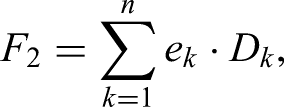
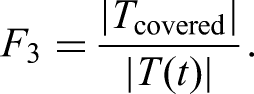
For algorithmic consistency,
Constraints

where
Scope of the model
The present model is a 2D kinematic abstraction: UAVs move along obstacle-aware piecewise-linear paths at constant cruise speed, and threats are modeled as circular no-fly regions. We deliberately exclude battery-discharge curves, turning-radius and altitude dynamics, wind, and explicit collision-avoidance maneuvering. This scope isolates the contribution of this paper, namely the allocation-and-replanning layer, from lower-level guidance and control. The communication limit is modeled through
HeteroDRIME-Lite algorithm
System architecture
The overall architecture consists of four interconnected modules: an Input Module containing UAV fleet specifications, the task set, and environmental information; the RIME Optimizer for task allocation and path planning; the Dynamic Replanning Engine with event-trigger detection and warm-start initialization; and the Output Module generating task assignments and flight trajectories Figure 2.

Overall architecture of the HeteroDRIME-lite algorithm, comprising the input, RIME optimizer, dynamic replanning engine, and output modules. The runtime monitoring loop enables continuous adaptation to evolving mission conditions.
Chromosome encoding
A two-segment encoding captures both task assignment and execution sequencing:

Each gene lies in
RIME-based optimization with weighted-sum scalarization
The RIME algorithm uses two operators. The soft-rime (rime-ice formation) operator pulls a growing fraction of dimensions toward the incumbent best,


The three objectives are aggregated into a scalar fitness:

Event-triggered replanning
The replanning mechanism is event-driven:


Flowchart of the event-triggered replanning mechanism, monitoring new target detection, threat/obstacle discovery, and progress timeout. When triggered, the warm-start module seeds the RIME population from the previous solution before re-optimization.
Warm-start initialization
When replanning is triggered, the previous solution is usually a good starting point because the task set typically changes only incrementally. The warm-start strategy constructs the initial population from three parts. A fraction (30%) is inherited: each new task that already existed in the previous solution copies that task's assignment and priority genes, keyed by task identity, so the previously chosen UAV and ordering are preserved; genuinely new tasks receive random genes. A second fraction (30%) is mutated: the inherited vector is perturbed by Gaussian noise to explore nearby assignments. The remaining 40% is generated at random to retain global exploration. The 30/30/40 ratio is validated by the sensitivity sweep in Section 5.5. The procedure is given in Algorithm 1. Figure 4

Measured convergence of cold-start versus warm-start RIME during replanning, averaged over runs. Warm-start reaches cold-converged quality in far fewer iterations.

Overall procedure and complexity
Algorithm 2 summarizes the full mission loop. The per-episode computational complexity is

Experiments
Experimental setup
Five benchmark scenarios with increasing complexity were designed within a

A real instance of the large scenario S4 (seed 0): UAV launch cluster, tasks distinguished by marker type, static obstacles shown as shaded regions, and dynamic obstacles shown with dashed boundaries, with the type-matched routes of the initial plan overlaid.
Benchmark scenario configurations.

UAV type parameter settings (energy coefficient and maximum range are model parameters expressed in the units stated in Section 3.1).

Baselines and statistical methodology
HeteroDRIME-Lite is compared against four internal variants (StaticRIME, a single-allocation policy; HomogeneousRIME, which disables type matching; GreedyAssignment; and RandomReplanning) and seven published methods: the Pareto-based NSGA-II and MOEA/D, the single-objective metaheuristics PSO, GA, DE, and ACO, and the auction-based CBBA. For a fair online comparison, every population-based baseline is given the same per-event iteration budget and is driven by the same event-triggered loop. Following standard practice for stochastic optimizers and nonparametric statistical testing,
25
we report the mean and standard deviation over 30 runs, 95% confidence intervals, the paired Wilcoxon signed-rank test against HeteroDRIME-Lite, Cohen's
Comparison with baselines
Table 3 reports performance across the five scenarios. HeteroDRIME-Lite sustains 100% coverage everywhere. Against the population-based metaheuristics (NSGA-II, MOEA/D, PSO, GA, DE), it achieves both lower makespan and substantially lower energy in every scenario; the gap widens with scale, reaching a factor of roughly two in energy on the large scenario S4. The Friedman test rejects the null of equal performance in every scenario (
Performance comparison across the five benchmark scenarios (mean

Effect size (Cohen's

Ablation study
Table 5 reports the ablation over all five scenarios (30 runs each). Removing warm-start inflates replanning energy sharply (for example
Ablation study: contribution of each component, across the five scenarios (mean

Warm-start convergence and ratio sensitivity
Across all replanning events, warm-start reaches cold-converged solution quality in 22.7 iterations on average versus 37.4 for cold start, a median speedup of

Warm-start ratio sensitivity: convergence iterations and final fitness across inheritance/mutation/random ratios.
Analysis
Replanning trigger analysis over all HeteroDRIME-Lite runs shows new-task detection as the dominant trigger (53.9%), followed by obstacle discovery (37.0%) and progress timeout (9.2%); Figure 7 shows the split. Computational-time analysis confirms an average per-event replanning time near 40 ms, well within real-time budgets. Coverage figures across the methods are shown in Figure 8.

Replanning trigger composition across all scenarios.

Task coverage by algorithm and scenario. HeteroDRIME-Lite holds 100% throughout, whereas the static single-allocation policy degrades to 64–71%.
Discussion
The experiments support three clear conclusions and one important caveat, which we examine in turn rather than merely listing.
Why event-triggered replanning matters
The static policy plans once over the initially known tasks and never revises, so every task discovered mid-mission goes unserved; this is exactly why its coverage settles at 64–71% while the event-triggered policy holds 100%. The cost of this gain is bounded because the trigger fires only on genuine change, keeping the average replanning latency near 40 ms.
Why warm-start dominates the efficiency picture
Under the small online compute budget (30 iterations per event), an optimizer that restarts from scratch cannot recover a good plan, which is visible both in the ablation (removing warm-start raises S4 energy by 98%) and in the baseline comparison: the cold-restarted metaheuristics NSGA-II, MOEA/D, PSO, GA, and DE spend their budget rediscovering structure that warm-start simply inherits, and therefore return plans with up to twice the energy. ACO is the instructive exception: its pheromone memory acts as an implicit warm-start and brings its quality close to ours, but it pays for that memory with an order-of-magnitude longer runtime, which disqualifies it for online use. In other words, the comparison is not RIME-versus-the-rest in the abstract; it is warm-started reuse versus cold restart under a tight latency budget.
The role of heterogeneity, stated honestly
Removing type specialization lowers makespan by about 9% and barely changes energy. We do not hide this: a generic fleet of identical average-capability UAVs has no slow Carrier to bottleneck the makespan. The crucial point is that such a fleet is a mathematical fiction. A real Carrier cannot fly at Scout speed and a real Scout cannot lift a Carrier payload; the type–task matching of Section 3.3 is a physical feasibility requirement, not a performance knob. Heterogeneity is therefore the premise of the problem, and the contribution of this paper is to coordinate a heterogeneous fleet effectively under that premise, accepting the modest makespan price that specialization imposes. The communication-limited scenario S3 makes the same point in miniature: forcing dedicated Relay UAVs into bridge roles under reduced range raises energy relative to an unconstrained generic fleet, again a consequence of realism, not a deficiency of the planner.
Theoretical perspective and limitations
The framework admits the per-episode complexity
Conclusions
This paper presented HeteroDRIME-Lite, an event-triggered cooperative planning framework for heterogeneous multi-UAV systems combining type–task matching, event-triggered replanning, and warm-start RIME optimization. Across five benchmark scenarios with 30 independent runs each, the framework sustained 100% task coverage where a static policy reached only 64–71%, significantly outperformed seven established planners on makespan and energy under an online latency budget, and reduced convergence iterations by about 40% and replanning energy by up to 60% through warm-start, whose 30/30/40 ratio was validated by sensitivity analysis. We also clarified that heterogeneity functions as a feasibility requirement, and we quantified the makespan trade-off it imposes. Average per-event replanning time remained near 40 ms, demonstrating suitability for time-critical operations. Future work will target 3D environments with realistic propagation and battery models, a Pareto-based inner solver, and physical UAV validation.
Ethical statement
This study did not involve any experiments on human participants or animals performed by any of the authors; all results were obtained from numerical simulations. Therefore, ethical approval was not required.
Footnotes

Consent to participate
Not applicable. This study did not involve human participants.
Consent for publication
Not applicable. This study did not involve human participants or any individual person's data.
Author contributions
Jichao Wang: Conceptualization, Methodology, Software, Resources, Formal analysis, Writing – original draft, Data curation, Supervision, Project administration, Funding acquisition.
Hanyu Zhang: Validation, Investigation, Data curation, Visualization.
Zhenqiao Hui: Conceptualization, Validation, Writing – review & editing, Supervision.
Shuai Zhang: Formal analysis, Writing – review & editing.
Sicong Pang: Software, Validation, Investigation, Data curation, Visualization, Writing – original draft.
Funding
The authors disclosed receipt of the following financial support for the research, authorship, and/or publication of this article: This work was supported by the The Natural Science Foundation of Cangzhou, The Scientific Research Program of the Hebei Provincial Department of Education, The Innovation and Entrepreneurship Training Program for College Students of the Hebei University of Water Resources and Electric Engineering, The Fundamental Research Funds for the Hebei University of Water Resources and Electric Engineering, (grant number No. 23244101025, 23241002014N, No. ZC2025095, No. 202510085003, No. SYKY2308).
Declaration of conflicting interests
The authors declared no potential conflicts of interest with respect to the research, authorship, and/or publication of this article.
Data availability
The simulation source code, scenario-generation rules, parameter settings, and per-run result files that reproduce every table and figure in this paper are available from the corresponding author upon reasonable request.