



Abstract
Our focus is on Canadian defence and security activities in the Asia Pacific arena between 1990 and 2015. While governments have asserted the growing primacy of the Asia Pacific, we ask the following: What does Canada’s recent military and security record tell us about the policies and operational aspects of Canadian engagement? How might we assess these in comparison with Ottawa’s declared importance of the Asia Pacific? What might this tell us about the near-term future of Canada’s role and pursuit of interests and opportunities in this complex region? We present and analyze empirical materials drawn from primary sources that inform an assessment of Canada’s presence in the defence and security agenda of the Asia Pacific, during the period that saw Canadian governments declare a deep interest in relations with the Asia Pacific, yet fail to make Canada a full partner with sustained commitments.
Keywords
Introduction
It has become commonplace for Canada’s political leaders to speak of Canada as a “three-ocean country,” or to declare that Canadian interests extend “from sea to sea to sea.” The transatlantic relationship has a deep history extending well before Canada’s nineteenth-century coming of age, and moving to centre stage during the twentieth century. The Arctic and Far North share a romanticized portrayal including exploration, maritime transit routes, and Indigenous peoples, along with land and sea claims more recently. The Pacific is more inchoate, tied to the “mysteries” of the East, missionaries, great power claims, and intrusions. The Cold War brought emergent Canadian links to East Asia and South Asia, consolidated over the ensuing decades through various policy and operational commitments concerning the Asia Pacific as a theatre of war, participation in United Nations (UN) security and development commitments, and a variety of bilateral diplomatic, trade, and economic relations. Only the first two “seas” can claim a reasonably rich literature on Canada’s defence and security policy and operations.
In this article, we focus on Canadian defence and security activities in the Asia Pacific arena from 1990 through 2015. 1 While federal and provincial governments have asserted the growing primacy of the Asia Pacific, we ask the following: What does Canada’s recent military and security record say about the policies and operations that constitute Canadian engagement? How might we assess these in comparison with Ottawa’s declared importance of the Asia Pacific? What might this tell us about the near-term future of Canada’s role in pursuit of interests and opportunities in this complex region?
Canada’s Department of National Defence (DND) says little in any formal or organized way about the government’s defence and security commitments to this area of the world. The most recent statement, the National Defence Review’s paper, Strong, Secure, Engaged, again pays little attention to the Asia Pacific region, although it does announce long-term investments intended to strengthen Canadian Armed Forces (CAF) capabilities. Most relevant to the future of Canada’s presence in this vast arena is the commitment to acquire fifteen ships to replace existing frigates and retired destroyers. This is matched by the acquisition of “88 future fighter aircraft ... while recapitalizing many of its exiting aircraft fleet such as the CP-140 Aurora anti-submarine warfare and surveillance aircraft.” Further, Canada’s Special Operations Forces Command will expand its capacity and capabilities. It is too soon to identify deployment that might occur between the Pacific and Atlantic theatres. 2 However, the paper does note both the South China Sea and North Korea as arenas of concern.
Global Affairs Canada (GAC) and its predecessors have had occasion to note the growing significance of Canada’s relations with the region and with a number of countries, especially China, and with regional institutions such as the Association of Southeast Asia Nations (ASEAN) and the Asia-Pacific Economic Cooperation (APEC) forum. Their focus, however, is usually on economic opportunities, trade and investment, and immigration. The most recent statement (not a full policy review) came in the House of Commons when the minister of foreign affairs spoke to the government’s principles, perspectives, and priorities concerning Canada’s international policies and commitments. The Asia Pacific was not mentioned. This was not a statement about regions, but about large themes—peace, security, prosperity—and the defence, as well as promotion, of core Canadian values and interests. 3 In this context, the Asia-Pacific region and specific theatres of threat could be arenas of concern for the Canadian government.
Our interest in the presence of the DND’s assets and activities in the Asia Pacific is informed by a historical position of Canada as committed to supporting the peace and security of friends and allies. What drives our research is the observation of Canada’s as-yet unfulfilled quest to be acknowledged by most Asian countries as a serious and committed full participant in the political well-being and security of Southeast and Northeast Asia. Our analysis of available evidence suggests that one result of Canada’s record in the region from 1990–2015 has been a limited place for Canada in the more serious discussions on regional security across the Asia Pacific.
Canada, in spite of its history of responsible participation in expeditionary multilateral security and defence operations, has rather modest capacity. Naval force, arguably the most important for a sustained presence in the far-flung Asia Pacific arena, is limited to the five Halifax-class frigates for trans-Pacific deployment out of Maritime Forces Command on the west coast (MARPAC), with the smaller warships (e.g., maritime coastal defence vessels, or MCDVs) usually deployed for interdiction in the western hemisphere. Normal rotation means that usually, at any one time, only two are available for extended deployment. With the loss of its sole supply ship to a training accident in 2013, MARPAC’s blue water capacity has been limited further. 4
The purpose of this paper is not to review literature on Canadian foreign policy, on the larger security architecture of the pre- and post-Cold War worlds, or on Canada’s bilateral economic, trade, and investment patterns in Asia. 5 This existing literature provides the international context well known to informed observers. Our focus is on presenting and analyzing empirical materials drawn from primary sources directly relevant to Canada’s defence and security projection into the Asia Pacific. Canada’s presence in the defence and security agenda of the Asia Pacific from 1990 through 2015 occurred during arguably the most significant period of socioeconomic and political transformation since the mid-1800s for much of this region. 6
In this post-Cold War period, Canadian governments declared interest in strengthening relations throughout the Asia Pacific, yet Canada failed to be considered a full partner with sustained commitments by countries within the region. Canadian bilateral trade and investment increased, as did immigration, and Canadian government as well as non-governmental presence was evident across diverse areas—including development, education, human rights, and governance. Canada endorsed and supported new regional and sub-regional organizations, including the nascent ASEAN Regional Forum, which evolved as a principal site for regional security and defence conversations. Whether the CAF were as actively engaged in having a sustainable commitment to the security of principal Asian partners, or of the region, is a matter that this paper attempts to address.
Overview and context
While this article is not intended to address the relative lack of sustained academic publications on Canada’s defence and security relations with, and in, the Asia Pacific, a few basic comments are appropriate, especially reflecting upon the two recent federal government statements. As Minister Freeland stated, Canada “stepped up” when crises occurred, committed to the post-war multilateral institutions and the related responsibilities regarding peace and security. However, outside of the Canada–US defence agreements, our standing alliance with the North Atlantic Treaty Organization (NATO), and our Five Eyes intelligence arrangement, Canada is no longer a country that sustains defence and security capabilities abroad.
Part of this is because Canada is privileged; it does not face a proximate state-based enemy. Defence and security concerns for the Canadian government and citizens are unusual. 7 In deep partnership with the United States, whether by choice or necessity, Canada’s geographic defence is ultimately tied to the US. 8 The government had no formal national security policy until 1994, 9 for defence was perceived principally as Canadian forces involved in expeditions abroad, whether as part of an alliance (e.g., NATO) or in support of multilateral (UN) operations. Coastal, Arctic Ocean, and land operations were the government’s “near abroad” 10 security and defence priorities employing Canadian force capabilities; entry and exit dealt with immigration and trade as well as smuggling (whether of people, goods, or services), all of which were handled by other domestic services.
The end of the Cold War raised numerous uncertainties around the new security architecture, and this in turn resonated in Ottawa. 11 However, only limited published research has addressed the Canadian policies or operational commitments to security and defence issues regarding inter-state dynamics among Asia-Pacific countries. 12 While Canadian scholars have undertaken research about security or defence issues with Asia-Pacific content, 13 we contend that connections between security and defence issues within the large Asia Pacific arena and the place of Canada have not received sustained attention in the research literature, although Canada’s turn westward is both declared and can be viewed in other sectors. 14 Other than the opportunities afforded to Canadian academics who participated in the national Canadian Consortium on Asia Pacific Security (CANCAPS) and the international Council for Security Cooperation in the Asia Pacific (CSCAP), little sustained research on the connections between Canadian defence and security capabilities and Canada’s interests and activities in the Asia Pacific has been undertaken. 15 This makes Canadian defence and security policy “engagement” in the Asia Pacific arena challenging. For Canadian policymakers and academics alike, defence and security matters work that focuses on the Asia Pacific, or even on some of the more significant bilateral partnerships, is usually secondary to the larger panoply of foreign and defence policy and practice.
However, more recently there has been debate in the media on the importance of Washington’s “pivot to Asia.” 16 Former US President Obama’s statement may be indicative of the importance of Asia to global affairs. The United States and other Western partners have been systematic in their approach to securing a presence in various parts of both maritime and land Asia. 17 Still, in Canada there remains a paucity of literature on the policies, commitments, and operational activities of Canada’s DND and the CAF despite arenas where security and defence matters remain of heightened concern from within East Asia and South Asia. In contrast, trade, foreign direct investment, human rights, student exchanges, tourism, migration, resource extraction, and cooperation in international institutions are but some of the leading-edge areas in which Canadian governments have cooperated with Asian partners, with Canada’s prime ministers over the past twenty-five years having promoted and often led trade and investment missions to China and to India.
How congruent is the evidence of Canada’s defence capability commitments to Canada’s overall relations with the countries of the region? What is the evidence of active two-way cooperation between Foreign Affairs and National Defence on the Asia Pacific security files? The next section on operations and force deployments seeks to present concrete evidence that can be used to draw out answers to these questions. If we acknowledge (as most “Asia hands” do) that Asian governments seek full status with serious partners, what explains the relative absence of Canadian military and security assets over the recent twenty-five-year period? Moreover, what have been the implications of the relative lack of Canadian presence on security and defence matters in the Asia Pacific, for the present and for the near future?
Operations and force deployments 18
This section presents data demonstrating how Canadian presence through operations and force deployments can be evaluated as consistent over time—albeit sporadic in geospatial reach with relatively low political impact—and clearly beholden to larger political and economic incentives that are often detrimental to Ottawa’s goal of sustained engagement. This section examines the extent to which the Canadian Forces participated in, and in some cases led, one or more operations during any specific year. A few key takeaways from our evaluation of the twenty-five-year period include:
Many of these operations were routine multilateral exercises, such as RIMPAC or BELL BUOY, designed to strengthen the CAF’s interoperability with the United States Navy (USN) and other regional partners.
19
Others, including WESTPLOYS, were designed to train crews in longer overseas deployments and to “show the flag” at various ports while building relationships with foreign navies. Having a clear and visible presence in the region lends credibility to political claims and interests. This visibility and physical presence is an often-neglected aspect of Canada’s political and economic strategy in the Asia Pacific.
20
In addition to exercises, the CAF were tasked with multiple humanitarian force deployments, most notably through the Disaster Assistance Relief Team (DART). It should be noted that many competing priorities, both military and civilian, have constricted the Royal Canadian Navy’s (RCN) ability to continuously engage in the Asia Pacific.
CAF operations in the Asia Pacific from 1990 through 1998 remained modest yet relatively consistent year-to-year. There are larger political considerations to take into account in this period that may have had an impact upon decision-making within the DND. The start of this period emerges from the shadow of the Cold War, and coincides with Canadian commitments in Kuwait and Iraq, and shortly afterwards in the former Yugoslavia. In a recurring theme of the last twenty-five years, crisis commitments around the world deflected what might have evolved into Canadian commitments to Asia-Pacific security needs.
21
With the publishing of the 1995 foreign policy white paper that emphasized economic relations, and the addition of the international trade portfolio to the Department of Foreign Affairs, Canada’s outward-facing policy added a decidedly commercial slant to its standard diplomatic agenda. These factors produced an Asian engagement strategy that appeared distracted. Nevertheless, the period has the following characteristics:
Most common missions, termed WESTPLOYS, were a mix of crew training, multilateral integration exercises, and diplomatic missions. While every year there was at least one mission across the Pacific—usually to multiple East Asian countries—external factors, such as the Gulf War, led to plans being scaled back or altered to reflect new priorities. WESTPLOYS culminated in 1997 (Canada’s year of the Asia Pacific) when HMCS Huron and Vancouver deployed to the Western Pacific.
22
During this deployment, the ships conducted bilateral training exercises with the Malaysian, Thai, Brunei, and Philippine navies, and visited ports in Hawaii, Guam, Brunei, Indonesia, Singapore, Malaysia, Thailand, and the Philippines.
23
In the first half of this decade, the CAF participated in a limited number of training exercises, mainly RIMPAC.
24
In 1994, the commander of Maritime Forces Pacific (COMMARPAC) was the commander of the coalition forces during RIMPAC 94, and controlled elements of the USN, the Royal Australian Navy and Air Force, as well as Canadian ships and aircraft.
25
In addition, the CAF started to undertake leadership roles, starting with BELL BUOY 95. During this operation, COMMARPAC was the officer scheduling and conducting the exercise; this was the first time MARPAC undertook this responsibility.
26
From 1998 to 2014, the CAF Pacific strategy shifted, reflecting changes both in Canada and Asia. Fiscal austerity measures influenced government decisions regarding military costs and allocations. In what General Rick Hillier has described as the military’s “decade of darkness,” the DND drew down activities in the region following Canada’s “Year of the Asia Pacific” (1997), further demonstrating an inability to sustain commitments to Asian partners. Moreover, the political situations in both India and China contributed to Canada’s limited engagement with these two largest countries in the region. With the attacks of 11 September 2001, the security and defence focus of Canada (and much of the world) shifted to Afghanistan and then contiguous arenas in South and Central Asia and in the Middle East. All of these factors affected Canadian Asia-Pacific engagement in the following ways:
Commitments to yearly training exercises, RIMPAC, BEST BUOY, and others continued. WESTPLOYS were replaced with participation in PACEX (focused mostly on South Korea and Japan).
27
This allowed Canadian ships to participate in a large multilateral training exercise while visiting ports of Asia-Pacific allies. Involvement in these larger operations had the benefit of more training and closer ties with Western allies (specifically Australia, New Zealand, and the US), but had the drawback of decreasing interactions with smaller Asian allies. While Canada was engaging East Asia diplomatically at the ASEAN Regional Forum (ARF) and at APEC, among other venues, this decreasing hard security engagement would have undermined efforts to appear committed in a sustained way. There were no deployments to the Asia Pacific in 2003 due to constraints imposed by operations surrounding Canadian involvement in Afghanistan.
28
In 2006, the CAF resumed WESTPLOYS in a limited capacity. Where, previously, multiple ships would undertake these missions every year, these WESTPLOYS involved only one ship and were reported only in 2006 and 2009. Operation ALTAIR concluded in the fall of 2008; the next two years saw a return to form for MARPAC’s annual engagement with the Asia Pacific. As seen in operational planning and overall command structure during the International Safety Assistance Force missions in Afghanistan, and reflecting the Canadian government’s desire to play a recognized role in global security in conjunction with the intensive interoperability of the Canadian Forces with their US counterparts, since 2010 there has been a shift towards more of a leadership role in multilateral exercises. In 2012, the CAF-organized Operation BELL BUOY and Canadian officers were the first non-American officers to command components of the combined task force during RIMPAC; this continued in 2014.
29
Canadian involvement in Afghanistan diverted substantial resources away from the usual annual engagement strategy. While this situation is not unique, even within the time period under study, such diversion of resources away from the DND’s Asia Pacific strategy occurred on the tail end of a larger government austerity program. So while the DND saw increases in funding in the early 2000s, very little of it was directed towards the Asia Pacific. As efforts in Afghanistan drew down, Canada was dealing with the fallout of the 2008 recession, resulting in greater budget constraints. As of 2014, engagement activities had not returned to the pre-2000 level, as illustrated in Figure 1. The figure also shows a marked increase in the number of ships deployed to or through the region starting in 2010. This increase in ships is followed in 2012 with a return to more frequent port visits and engagement. The 2012 increase has been dubbed the “mini-pivot” as a nod to President Obama’s 2008 Asia Pivot strategy, and showing high-level recognition of the Asia Pacific’s future strategic and economic value. MARPAC’s ability to maintain a presence in support of Ottawa’s Asia Pacific engagement strategy is an issue that continues to challenge the Canadian government.
MARPAC engagement in the Asia Pacific, 1990–2014.
32
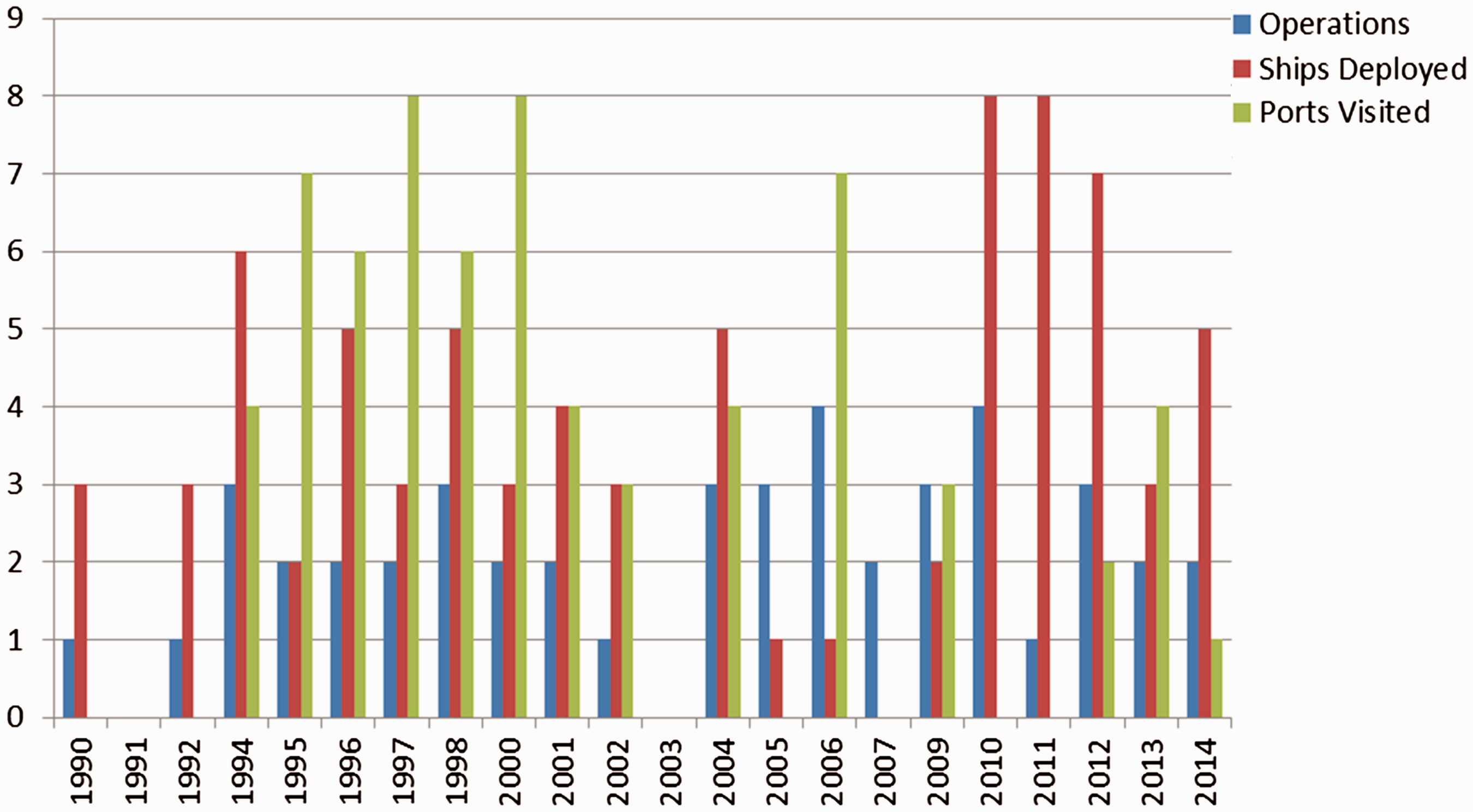
Figure 1 indicates where a noticeable decline in MARPAC activities coincides with the start of Operation Apollo. 30 This drop is reminiscent of the impact that operations in support of Desert Storm had in 1991. 31
The CAF have made concerted efforts to increase their effectiveness and interoperability with the USN and its allies. 33 The various leadership roles held by CAF personnel in multinational naval operations, along with platforms and doctrine Canada shares with the United States, demonstrate their success in this endeavour. 34 This reality of Canada–US operational defence relations provides a strong foundation upon which Canada should be able to build in consolidating cooperative relations with the defence communities in the Asia Pacific.
As illustrated by Figure 2, Canadian engagement in the Asia Pacific has fluctuated in terms of numbers and types of activities across this vast region. Reaching out to many is an important facet of the Canadian strategy, complementing Canada’s traditional approach to diplomacy. However, diplomacy with resident missions and staff offers fungibility across issue areas, often at modest costs. Reliable and visible armed forces cooperation and engagement, without forward deployments and a standing alliance headquarters (as with NATO), is by definition sporadic. In such a context, focusing on a select few high-priority countries—as the Australians have done—reinforces a sense of presence and commitment. Developing deeper relationships contributes to furthering desired access to regional forums. A funding increase for sustained engagement with key allies, in addition to yearly regional exercises in the vein of WESTPLOYS, would benefit Canada’s political and economic standing in the Asia Pacific. This region is of great importance in the future global economy, as demonstrated by Canadian interest in a restructured Trans-Pacific Partnership (TPP) initiative and the anticipated broad impact of China’s One Belt One Road program.Hence, security and defence engagement in the Asia Pacific is an important part of any major country’s policy toolbox.
Figure 2 reveals that Canada did not visit any country every year. Our two closest allies in the region, Japan and South Korea, only received a visit every other year, on average.
Infrequency is not the only issue facing the operational component of Ottawa’s Asia Pacific strategy. The agenda for most port visits has been limited, merely short-term refuelling or shore-leave stops, with only a few being larger security or political operations. For example, Singapore, Malaysia, and the Philippines have had some of the highest number of port visits. While they have little overall defence forces interaction with Canada, they do have large ports and facilities to house and restock military vessels. In comparison, Indonesia—which ranks above the other three in terms of trade with Canada and projected bilateral, as well as regional, importance—has received comparatively few visits from the CAF. 36 Most port visits, especially those that are not attached to some larger diplomatic initiative, appear to have been selected for criteria such as infrastructure and proximity to sea lanes to and from the Gulf of Aden. Singapore’s sixteen port visits and its location at the mouth of the Strait of Malacca speak to this point.
Political considerations cannot be ignored in this analysis. Engagement is skewed towards Canada’s largest historical trading partners, Japan and South Korea. Although both India and China have seen an increase in visits during the past fifteen years, indicating their growing political and economic importance, the negative political impact of India’s nuclear program and China’s focus on internal political and economic development also help explain the dearth of engagement in the 1990s.
One could view this trend in engagement as reflecting a gradual change in Ottawa. The foreign policy of the Cold War which was informed by democratic values, a particular set of moral commitments, and strong interests overlain by the East–West security architecture, transitioned to a post-Cold War one which gave priority to economic and trade relations. Simultaneously, it addressed the growing national debt and shrinking federal budget. The prioritization of efficiency and return on investment helped determine priorities for military missions. To this end, many port visits occurred during passages to operations west of South Asia. While this was an intelligent and efficient use of resources, it was less effective for fostering a strong reputation among putative partners, which cannot rely only on port visits of convenience.
There are other ways for Canada to demonstrate its security value to the Asia Pacific, including the posting of Canadian defence attachés (CDAs), individuals that perform an important set of functions in Canadian embassies throughout the Asia Pacific. While specific information on CDA postings is often lacking, it is worth mentioning that CDAs appear to be used rather sparsely: our 2016 report shows a count of two in Southeast Asia, three in Northeast Asia, two in South and Central Asia, and one in Oceania. 37
Another important demonstration of Canadian commitment to the Asia Pacific lies in crisis response, which is also a core mission of the Canada First Defence Strategy. 38 Canada’s history of assisting Asia-Pacific countries in crisis is a boon to its standing in the region. Over the last twenty-five years, Ottawa has supplied emergency aid to the region on numerous occasions. While Humanitarian and Disaster Relief (HADR) operations are less frequent than force deployments, the direct impact of these operations on the affected population is important. They generate good will, both in terms of lives saved and human security restored. As the next section demonstrates, Canada has the expertise to assist in endeavours of this nature.
Humanitarian and disaster relief operations
While there is considerable debate on Canada’s commitment to traditional security matters in the Asia Pacific, there is relatively less regarding HADR operations. Canada has consistently answered the few calls it has received for disaster relief. A brief survey of humanitarian operations in the Asia Pacific region over the last twenty-five years illustrates the limitations and successes of Canada’s commitment. During this time, the DND created the DART, and deployed it more to the Asia Pacific than to other regions. Since its inception, the DART has been effective in its specialized role, providing vital services that save lives. Through its services, including engineering and logistical supply, DART has the most visible and positive impact of any Canadian military endeavour in the region. 39
There have been four DART missions in the Asia Pacific, during which DART members treated 22,627 patients, purified 4.8 million litres of water, and delivered 1.4 million pounds of food and aid supplies. Depending on the mission, the DART has cleared rubble, opened roads, and provided water purification units and radios.
40
Further examples of DART contributions include:
Operation STRUCTURE, wherein the DART was sent to the Ampara area of Sri Lanka following the 2004 Indian Ocean tsunami.
41
Operation PLATEAU, wherein the DART was deployed to Pakistan in October 2005 following a massive earthquake. Operation RENAISSANCE13-1, the DART mission to the Philippines after Typhoon Haiyan hit on 8 November 2013; the team was deployed to Iloilo. Operation RENAISSANCE 15-1 had DART members deployed to Nepal after the deadly earthquakes in 2015.
In total, the DART has assisted nearly 300,000 people. This is a valuable contribution towards regional security which has the added benefit of garnering good will.
The Asia Pacific has seen an increase in natural disasters over the last twenty-five years, 42 leading the ARF to prioritize regional HADR preparations. 43 Canadian assistance in developing and training initiatives such as the ASEAN-ERAT (Emergency Response & Assessment Team) would lend Canada regional credibility. This is a task the DART is specially trained to carry out. The ASEAN-ERAT fulfills nearly the same role as the DART, and the teams can share direct, applicable, and life-saving best practices.
Military and peacekeeping training
Canada also has a history of military and peacekeeping training efforts, which have provided opportunities for building relationships, sharing best practices, advancing Canadian technology interests abroad (especially in aviation), and engaging in ARF capacity building programs. However, while Canada has contributed to UN peacekeeping operations in several Asia-Pacific countries (Cambodia and East Timor), and while the Military Training Assistance Program (described below) has involved partners from many countries, most actual training efforts have been with other regions (Latin America, the Caribbean, and Africa). Resources are often too dispersed and ad hoc to be strategically effective, pointing to the tendency to use training assistance more for short-term development projects, and less for sustained security diplomacy.
Available evidence indicates that many of the Asia-Pacific training efforts happen in isolation rather than being coordinated into longer-term projects. For many programs, there are also regular gaps between rhetoric and delivery. Additionally, there is a dearth of monitoring and evaluation (and even records) of training programs, due to the sometimes-distributed nature of project ownership and the subsequent coordination challenges between the DND and other partner agencies (the Royal Canadian Mounted Police (RCMP), the Canadian Commercial Corporation, GAC, INTERPOL, and CAE Inc.).Below, we describe a sample of activities that show the tendency of the DND to support private sector-led programs rather than lead through initiating collaborations or responding to requests for coordinated training with other countries.
Regardless of whether such passivity was intended, it is problematic in a context where since 1990 there has been a general increase in security and defence activity in the Asia Pacific, but no corresponding increase by Canada (see Figure 3). As with operations and force deployments, one explanation for this relative absence or minimalism is the substantial resource diversion to Afghanistan in the early 2000s (see Figure 1). Another is that successive Canadian governments—when compared to the US, China, Russia, and even Australia—have continued to view the Asia Pacific as less of a priority, despite regional dynamism. Ottawa’s efforts have been mostly reactive, suggesting that neither Canada nor Asia-Pacific countries regard Canada as a full participant, viewing its activities as simply “minimalist commitments and episodic attention.” 44
Turning to specific activities, the Military Training Assistance Program (MTAP), dating from 1964—later becoming the Military Training and Cooperation Program (MTCP)—is the most well-established program. 45 The MTCP provides training in language, professional and staff development, and peace support operations. While the majority of MTCP training takes place in Canada, the program also supports several “supplemental projects” in Jamaica, Africa, and Afghanistan. Various DND sources acknowledge training programs in Afghanistan, Bangladesh, Indonesia, Malaysia, Mongolia, Nepal, Pakistan, Philippines, the Republic of Korea, Singapore, and Thailand, and that “[s]ince the inception of the MTCP … over 2,000 military students from the region have been trained under its auspices.” 46 However, there is scant information regarding the country breakdown of foreign military officers trained. Budgetary information is either inconsistent or too vague to evaluate the DND’s training commitment to the region. Moreover, the MTCP’s long-term impact is uncertain, as it is not embedded in more comprehensive bilateral relationship building. 47
The Canadian Forces also have important connections with Canada’s private sector, particularly in technology and aerospace, with companies like CAE Inc. and Pratt & Whitney Canada. Exchanges in training, simulation systems, and exercises also include Asian defence counterparts, and point to trends in greater private sector involvement in niche areas. Partly driven by financial constraints, the Canadian air force has endured major budget cuts while still maintaining its obligations by relying on private companies for depot-level support.
For example, the NATO Flying Training in Canada (NFTC) has been provided by the Canadian Forces and CAE Inc. since 2000. Several Asia-Pacific countries involved in the MTCP, including Singapore, have sent students and instructors to the NFTC. Since 2012, CAE has also operated the Brunei Multi-Purpose Training Centre (MPTC), a joint venture between CAE and the government of Brunei. While Canada is not an official partner in this venture, Canadian air force officials participated in the initial setup; it is not clear whether the DND plays a continuing role. 48 The Centre develops defence, aviation, and emergency or crisis management in Brunei and other ASEAN countries. 49 Both the NFTC and MPTC can be examples of the concept of “other diplomacies,” 50 where the activities of organizations outside of government serve a relationship-building and diplomatic function. But the question for Canada is how to best make strategic use of these kinds of training activities to further its overall security diplomacy in the Asia Pacific. 51
There have also been opportunities for Asian engagement in Canada’s Counter-Terrorism Capacity Building Program (CTCBP). Established in 2005, it provides training, funding, equipment, and technical and legal assistance to other states to prevent and respond to terrorism. 52 This program has received significant coverage in Canada’s ASEAN Regional Forum Annual Security Outlook contribution. Between 2008 and 2014, it was reported that Canada funded approximately twenty assistance projects to ASEAN member states in 2007, and fourteen in 2008, in a considerable number of areas, 53 while earlier reports noted anti-narcotics training to national police organizations and training in undercover operations for law enforcement agencies, 54 and more recently a number of new policy and law enforcement programming. 55 Many of the CTCBP’s initiatives involve collaboration with other international organizations. In one example, the CTCBP funded a conference examining foreign terrorism fighters in the ASEAN region, led by the UN Office on Drugs and Crime (UNODC). In the Philippines, the CTCBP supported a multi-year port security project through INTERPOL. The Program has also worked with both the Asia/Pacific Group on Money Laundering (APGML) 56 and the World Bank on countering terrorism financing. 57
Within the CTCBP is the International First Responder Training Program (IFRTP), in which Canada cooperated with Asian counterparts in Thailand, Indonesia, Malaysia, and the Philippines from 2005 to 2012 to expand chemical, biological, radiological, and nuclear (CBRN) counterterrorism capacity. 58 The program trained approximately 4,000 first responders in these countries on CBRN incident response, as well as around Chemical and Explosive Systems Exploitation (CESE). 59 Additionally, the CTCBP via the DND has been supporting a multi-year counter-improvised explosive device (C-IED) training program for Indonesia and the Philippines, showing a degree of departmental coordination. However, this initiative ends in 2017.
A recent evaluation of the CTCBP and another capacity building program noted that while consultation between various capacity building programs was “good,” “coordination could be improved with other GAC security and development programs.” 60 The evaluation also called for better record keeping and data collection, and recommended a focus on multi-year projects within target regions/themes and increased “coordination and synergy with other security programs.” 61 This finding is consistent with our overall argument for long-term security-related strategy, and more sustained analysis.
This brief overview of Canadian military and peacekeeping training is illustrative in several ways. First, we observe a strategy problem that is particularly salient in the Asia Pacific, where Canada is trying to secure a seat at the table at some of the most prominent security organizations (i.e., ADMM-Plus).Without an Asia Pacific engagement strategy, training efforts emerge in an ad hoc and reactive fashion. Second, there is a data problem: a lack of consistent records means that researchers, Foreign Affairs officers, and DND officials are unable to understand how training and exchange programs contribute to Canada–Asia Pacific relations. Third, the data highlight the complexity of operational and strategic relationships between government departments, private organizations, and international organizations. Specific suggestions for addressing this triad of problems are linked with other recommendations at the end of this paper.
Regional security activities
This section provides an empirical overview of Canada’s engagement with regional defence and security organizations and track 1 activities in Asia Pacific, and discusses track 1.5 and 2 activities (t1, t1.5, and t2). 62 As with military and peacekeeping training, there are similar issues here regarding ad hoc efforts, data inadequacy, and a lack of sustained strategic planning. 63 But this section also shows some promising areas where such ad hoc involvement has produced notable engagements worthy of Canada’s continued interest.
Canada has engaged with ASEAN since 1977 when it became a dialogue partner. This has provided Canada with remarkable opportunities to be an active participant in forums on the emergence and consolidation of a regional security community. Canada’s diplomats and academics were at some of the foundational meetings related to the emergence of regional security efforts and dialogues. Somewhat less contentious activities focused on trade and development, including the inclusive annual ASEAN Post Ministerial Conference and the ASEAN-Canada Dialogue.
Appropriately, Foreign Affairs rather than Defence led Canadian engagement in ASEAN, given its broad regional mandate. However, within Ottawa there were missed opportunities for inter-departmental collaboration, including resource allocation for strategic priorities, increasingly to include non-traditional security areas. There is little evidence that the DND showed much interest between 1990 and 2015, despite the engagement by the militaries of other member states. For example, the ASEAN-Canada Joint Cooperation Committee (1985–1997) never involved Canadian defence officials. 64 Canada is one of sixteen ARF dialogue partners, but DND attendance at ARF activities has often been limited to one or two defence personnel (e.g., Canadian defence attaché) rather than more senior officials or officers. One exception was the steady DND participation in the ARF Annual Meeting of Heads of National Defence Universities (1998–2007). While there are dozens of ARF working groups and inter-sessional meetings, Canada is engaged only in a few, and the DND is rarely specifically named.
The record of Canada’s relationship with ASEAN and ASEAN countries reveals fairly passive, tag-along traits. Canada was the last of the dialogue partners to sign the ASEAN-Canada Joint Declaration for Cooperation to Combat International Terrorism (on 28 July 2006) 65 and last to accede to the 1976 Treaty of Amity and Cooperation in Southeast Asia, in 2010. 66 Most recently, and following the appointment of a dedicated Canadian Ambassador to ASEAN, Canada adopted the Plan of Action to Implement the Joint Declaration on ASEAN-Canada Enhanced Partnership for the period 2016–2020. 67 However, much of the plan is arguably rhetoric, reiterating what Canada has done with ASEAN and the ARF over the last two decades.
The Shangri-La Dialogues tell a slightly bleaker story, even though Canadian participation in these dialogues has been fairly consistent since the mid-2000s. These important meetings have been attended occasionally by the minister of defence, the deputy minister, and the chief of defence staff. As a result of its modest presence, Canada has often failed to utilize this opportunity. In contrast, other countries regularly ensure that their foreign minister and/or defence minister actively participates, thereby enhancing the possibilities of deepening relationships.
Although DND participation in military-to-military symposiums and American-led defence forums has provided important t1 platforms, 68 Canada has not engaged with any other significant security organizations or forums in the region, including the ADMM-Plus, to which it has wanted to be invited. 69
Canadian scholars as well as Canadian International Development Agency (CIDA) and Foreign Affairs officials provided considerable support to t1.5 and t2 initiatives between 1990 and 2015. However, the frequency and scale of these activities, especially post 9/11, quickly outpaced Canada’s ability or interest. Figure 3 illustrates that Canada’s commitment remained relatively constant while overall activity in the region dramatically increased. 70
While these data do not represent all the t2 meetings where Canada might have had citizen involvement, we anticipate a similar trend line based on conversations with leading Canadian scholars of Asia-Pacific security issues. Here, we observe how Canadian commitments to t1 activities were limited and financially constrained in the context of draw-down in Afghanistan and the 2008 recession, similar to trends described in the earlier section on operations and force deployments.
A relatively small group of Canadian academics also participated in several key initiatives. Their role in creating and co-creating CANCAPS and CSCAP respectively provided two principal venues. Other projects receiving Canadian leadership and/or support included the North Pacific Cooperative Security Dialogue (NPCSD), Development and Security in Southeast Asia (DSSEA), the Canada-China Seminar on Multilateralism and Cooperative Security (CANCHIS), and the annual Asia-Pacific Roundtable conference organized by the consortium of ASEAN institutes of international and strategic studies. Academic focus on these activities was particularly strong in the 1990s, even though these meetings rarely involved DND officials or Canadian Forces officers. Afterward, modest Canadian academic participation continued but was notably reduced, resulting from Ottawa’s cutbacks to research and conference funding.
Canada is no longer a member of CSCAP, the principal t2 Asia Pacific–wide forum on peace and security issues, although Canadian academics are invited on occasion to participate in their individual capacities at regional or study group sessions. While Canada continues its annual bilateral t2 meetings with the Canada-Korea Forum (not on security) and the Canada-Japan Symposium on Peace and Security, these have a reduced footprint in GAC and almost no presence in the DND. And while Canada’s earlier commitments to ASEAN, the ARF, and CSCAP enabled Canadian participation in the t1.5 Eminent Persons Group, the country remains outside the ADMM-Plus and the East Asia Summit. Canada is no longer involved in shaping the region’s future security architecture. 71
The exception to the lack of DND participation was the participation of MARPAC, the only division within the DND that regularly participated in t1, 1.5, and 2 meetings, high- and mid-level visits, briefings, and conferences. Significantly, MARPAC is also the only government unit that recorded details concerning these various meetings, represented by its special advisor on policy, a non-uniformed member of the DND. It seemed as if the Asia Pacific had been completely delegated to MARPAC; however, unlike operations and force deployments (see Figure 1), MARPAC engagement in t1, t1.5, and t2 activities has been declining since 2010, potentially undermining the recently increased naval presence in the region.
There seems to have been very little evaluation of the effectiveness of MARPAC or other Canadian participation in these tracks. 72 In addition, while the principal role allocated to MARPAC for Asia-Pacific defence and security activities— especially naval and other maritime—is understandable, it has led to a siloed approach. Such fragmentation does not create confidence among Asian counterparts, such as the ASEAN member nations that appear unconvinced of Canada’s commitment to the region despite Canadian-expressed interests in joining the East Asia Summit and the ASEAN Defence Ministers’ Meeting Plus (ADMM+8).
Conclusions and recommendations
Some might ask, “Why bother?” Canada, unlike Australia or New Zealand, does not seem to prioritize the Asia Pacific beyond trade and other economic opportunities. Unlike the case of these other two countries, it is not expected that Canadian defence and security policies, capabilities, or operations are defined by, or focused primarily on, that region. To the extent that Asian immigration and two-way investments have enhanced Canadian governmental and societal interests, it could be argued that a domestic political agenda, along with a range of diplomatic interests, could be pursued without a notable Canadian defence or security presence.
Since 1990, a stronger, dynamic, and capable China; emerging layers of regional and sub-regional organizations addressing a host of inter-state issues; and the “pivot” by the United States towards Asia, have all affected the region significantly. In this context, power transitions must be managed to reduce the likelihood of military confrontation. This is complicated further by the changing strategic relations and tactical positioning of the United States, China, and Russia. The emerging places of India, Japan, and the Korean Peninsula, along with Indonesia, are also non-trivial contributors to the future of the Asia Pacific. 73
To manage the region away from possible sites of conflict and towards enhanced cooperation, a positive entanglement of commitments and overlapping interests must be developed to moderate and mitigate potential disruptions and power transitions.
74
For this purpose, the paper offers the following recommendations:
For Canada to be a more engaged, effective, and productive partner, it must both be committed to, and be seen as, fully immersed in the peace, security, and prosperity of the Asia Pacific.
75
This will require significant material contributions, with more Canadian military and security assets having sustained presence within the region; not just economic interests. Naval presence for operations, as well as platforms for other Canadian goals, should be emphasized. For Canada to secure invitations to the table of important regional meetings, it must provide sustained and tangible contributions to reducing and managing tensions, assisting in the pursuit of international laws and treaty enforcement, protecting international norms, and enhancing trust, empathy, confidence, and security among the states.
76
This will require active diplomacy along multiple tracks, as well as in-country presence. To achieve its goals in the Asia Pacific, Canada must have the ability to operate for extended periods in the region; new ships—especially a supply ship—will be necessary.
77
Effective diplomacy leading to strengthened bilateral relations and a regional presence requires participating in the full agenda of inter-state relations. Canada should also recognize and capitalize on the political and social impact of the DART’s specific role and impact. There is a need for enhanced collaboration, better communication and coordination, and synergistic use of resources. For example, if the Canadian government were to increase the DART’s current yearly budget of $500 million to fund annual workshops in conjunction with the pre-existing annual ASEAN-ERAT seminars, this could increase Canadian access to important regional forums (see also the section on regional security activities). Military and peacekeeping training activities could be situated in a wider Canadian engagement strategy for the Asia Pacific so that training efforts and relationships are synchronized to their full advantage. Regarding t1 and t2 activities, the point is not that Canada needs to engage in everything; rather, a focused and efficient allocation of scarce resources would best serve Canada’s longer-term interests, both at home (by stimulating cutting-edge research and providing support for Canadian academic involvement in t1.5 and t2 forums), and internationally, with a visible sustained commitment. Canada’s policymakers need to be aware that the siloed approach, as demonstrated in the earlier discussion on an overreliance on MARPAC as primarily responsible for Asia-Pacific defence and security activities, needs to be re-evaluated. While this approach may be the result of default, rather than deliberate design, it can have an unintended effect of signalling to Asian counterparts that there is a lack of Canadian commitment to the region.
Aside from the absence of any recent Canadian directive on Canada’s policy priorities and commitments to Asia, neither Foreign Affairs (now GAC) nor National Defence have presented clear visions along with budgetary commitments regarding Asia (other than overall enhanced force capabilities), even if on the military side this means continued involvement in American-led exercises, shared expertise with allies, training and education for officers, or more port visits, never mind the more intrusive willingness to pre-position personnel and material. 78
The data we have been able to access suggest that any deepening of commitment to the Asia Pacific by the DND is likely to occur only under the following circumstances:
in coordination with, or in response to, decisions by the United States administration, including military (notably maritime) exercises and protecting the “rules of the road” as defined by the UN Convention on the Law of the Sea (UNCLOS), with specific regard to the sea lines of communication in the South China Sea through the Strait of Malacca, as well as the assertion of territorial claims; as a result of enhanced commitments to a mix of disaster relief and humanitarian aid; in response to new opportunities for training, public-private partnerships in military technology and services, and other forms of military assistance, including some newer and even unconventional areas of security; as part of multilateral commitments in response to peace support operations; as a second-tier asset to the role of GAC in any efforts it may pursue to become a recognized diplomatic partner to countries in the region.
All but the last bullet require a mix of investments in material and personnel within the DND’s budget and a reconsideration of priorities; neither is very likely. However, what we have noted as a “second-tier” asset is not a trivial matter. Serious participation in t1.5 and t2 activities by Canadian experts is not only a material contribution to security and defence dialogue, but it creates a climate of support for sustaining existing, and stimulating new, Canadian expertise on the Asia Pacific. While GAC must continue to be the lead within the federal government, it should more intentionally coordinate with the DND in bringing their assets forward as an enhanced contribution to the pursuit of Canada’s policy interests in the Asia Pacific. Such commitments would not only resonate well with Asia-Pacific partners, but also within Canada. Similarly, we need further consideration of how more proactive and innovative engagement of private sector partnership arrangements should take form.
Short of evidence to the contrary, the inability of Ottawa to mobilize more effective coordination between GAC and the DND on the Asia Pacific file means that the DND’s assets likely will not be leveraged in ways that could strengthen Canada’s overall relationship within the region and with specific partners.
Footnotes
Declaration of Conflicting Interests
The author(s) declared no potential conflicts of interest with respect to the research, authorship, and/or publication of this article.
Funding
The author(s) disclosed receipt of the following financial support for the research, authorship, and/or publication of this article: Funding provided by Defence Research and Development Canada, 2014-007-RMC SLA-PA 15004.
1
We use the term “Asia Pacific” to refer to a geographical area that includes countries bordering the Pacific Ocean, but also those countries commonly referred to as belonging to the “Indo-Pacific” region. We recognize that the term is contested and that the implied distinction between “Canada” and the “Asia Pacific” is a constructed and problematic one, as the flows of people, ideas, identities, and values are much more fluid than implied by these bounded spatial terms.
2
3
4
We acknowledge with thanks this information provided by an anonymous reviewer. We also recognize that rotational refits often lessened the numbers available at any one time. Moreover, as alluded to later in this analysis, Canadian deployment to Afghanistan interrupted much of the standard planning and operations, diverting assets to roles directly related to the Afghan conflict, as did corollary commitments to interdictions in the seas around the Gulf and Horn in support of the war on terror. However, these observations merely reinforce how seriously constrained Canadian defence capabilities would be should there be an effort to have a sustained presence throughout the Asia Pacific.
5
We also recognize that Canada’s participation in allied military operations from World War II through Korea, and its role in UN-led observatory missions in Southeast Asia, as well as a sustained presence in the UN commitment to South Korea, generated significant published research.
6
Much of the empirical materials to be presented are drawn from our previous report, “A mapping exercise of DND and CF activities related to Asia Pacific and Indo Pacific security, 1990–2015” (Ottawa: Defence Research & Development Canada, Centre for Operational Research and Analysis, April 2016): 1–116. As of this writing, the paper has yet to be posted on the CANDIS website. Those interested can contact the first author, at ddewitt@yorku.ca.
7
See Freeland’s comment to this effect (Ottawa, 6 June 2017).
8
For a recent example relevant to the Asia Pacific arena, see Tsuyoshi Kawasaki, “Where does Canada fit in the US-China strategic competition across the Pacific?” International Journal 71, no. 2 (2016): 214–230; and David B. Dewitt’s critical review and response in H-Diplo ISSF, 6 January 2017,  (accessed 14 November 2017).
9
In 1994, a defence white paper was released, followed a few months later by a foreign policy paper. That the Department of National Defence (DND) is supposed to follow foreign policy and yet published first resulted in some peculiarities and discrepancies between the two documents. This appears to be happening again with the National Defence Review of the Justin Trudeau government being undertaken not just before but without, as of date of writing, an equivalent process in GAC.
10
The “near abroad” is a term that has been favoured in the post-Soviet area as Russia identifies former Soviet republics now independent but constituting security and defence concerns. The term seems appropriate for Canada since reaching beyond the areas of the Arctic and coastal waters requires some measure of Canadian sovereignty responsibilities, although even here it involves some mix of bilateral or multilateral diplomacy.
11
Examples of this literature include David B. Dewitt, David G. Haglund, and John J. Kirton, eds., Building a New Global Order: Emerging Trends in International Security (Oxford: Oxford University Press, 1993); David B. Dewitt, “Directions in Canada’s international security policy: From marginal actor at the centre to central actor at the margins,” International Journal 55, no. 2 (2000): 167–187; Denis Stairs, “Being rejected in the United Nations: The causes and implications of Canada’s failure to win a seat in the UN Security Council'” (Calgary & Ottawa: Canadian Defence and Foreign Affairs Institute, 2011); James Fergusson and Francis Furtado, eds., Beyond Afghanistan: An International Security Agenda for Canada (Vancouver: UBC Press, 2016).
12
This literature would include Elinor Sloan, “US-China Military and security developments: Implications for Canada,” International Journal 66, no. 2 (2011): 265–283; Richard Stubbs, “ASEAN’s leadership in East Asian region-building: Strength in weakness,” The Pacific Review 27, no. 4 (2014): 523–541.
13
For examples, see Global Asia (spring 2016), notably contributions by Paul Evans and Chen Donxiao, David A. Welch, as well as Paul Evans, “Middle powerism in the 21st century: Mission impossible?”; Brian Job, “Grappling with an elusive concept,” in William Tow, ed., Security Politics in the Asia Pacific: A Regional-Global Nexus (Cambridge: Cambridge University Press, 2009); David B. Dewitt, “Common, comprehensive, and cooperative security in Asia-Pacific,” The Pacific Review 7, no. 1 (1994): 1–15, David B. Dewitt, “Cooperative Security: A Canadian approach to the promotion of peace and security in the post-Cold War era,” Canadian Defence Quarterly 23, no. 3 (1994): 11–18; David B. Dewitt and Brian Bow, “Proliferation management in Southeast Asia,” Survival 38, no. 3 (1996): 67–81
14
In 2003, in a paper for the Asia Pacific Foundation of Canada (APFC) as part of its response to then minister of foreign affairs Bill Graham’s “Dialogue on Canadian foreign policy” launched earlier that year, Paul Evans wrote, “As an economic player, Canada is less important to Asia that [sic] was eight years ago. In 1993, our market share of Asian imports and exports was 1.6% and the Asian share in Canada 9%. The respective figures in 2001 were 1.2% and 5.5%.” Asia’s New Regionalism: Implications for Canada (Vancouver: Asia Pacific Foundation of Canada, Foreign Policy Dialogue Series, 2003), 4. In 2015 data reported by Industry Canada, exports to Asia/Oceania accounted for 1.1 percent of Canada’s total exports; imports from Asia/Oceania equalled 16.8 percent of total imports that year. These calculations are drawn from the APFC website as of June 2016: “Canada’s Trade with the World, by Region,” (accessed 5 December 2017).
15
See the conference proceedings from the annual Asia Pacific Round table convened by the Institutes of Strategic & International Studies from across Southeast Asia, at the ISIS Malaysia website: http://www.isis.org.my/index.php?option=com_content&view=article&id=308&Itemid=186 (accessed 5 December 2017).
16
Hillary Clinton, “America’s Pacific century,” Foreign Policy, 11 October 2011. On Canada’s economic “mini-pivot,” see James Manicom, “Troubled waters: Canada and the South China Sea,” The Globe and Mail, 31 May 2012; Adam P. McDonald, “A Canadian military turn to East Asia,” East Asian Forum, 9 September 2013; Santha Oorjitham, “Canada pivots back to Asia,” New Straits Times, KL, 28 May 2013; Hugh Stephens, “Strengthening the China-Canadian military relationship: Will Canada follow through?” Asia Pacific Foundation, op-ed, 19 September 2013.
17
Perhaps most indicative of this consistent investment by China has been both ongoing and sustained efforts either to create new regional bodies (e.g., Shanghai Cooperation Council), to become active in emerging ones (e.g., ASEAN Regional Forum, ADMM ++), or to undertake its own impressive initiatives, such as the One Belt One Road (OBOR) multi-year, multi-billion-dollar, multi-country set of infrastructural engagements that will provide land and maritime corridors for trade, investment, political arrangements, and diplomacy. Most recently is the mixed story of the proposed Trans-Pacific Partnership (TPP) led by the US while excluding China, and by President Trump’s executive order of the withdrawal of American participation, almost immediately followed by a new initiative involving various governments previously part of the TPP process.
18
Due to the multi-year nature of many operations, they will be listed by their start date.
19
RIMPAC and BELL BUOY are regular multilateral exercises. RIMPAC tends to focus on force interoperability in combat manoeuvres; BELL BUOY changes focus depending on what country is hosting it that particular year.
20
Interviews with former Foreign Affairs officials confirm that a greater DND and CAF presence on a more regular basis with specific countries in the Asia Pacific would have been welcomed, and would have brought weight to a range of diplomatic interests and initiatives.
21
One sees this most clearly with the allocation of CF combat capabilities in Eastern Europe, East Africa, the Gulf, Afghanistan, Iraq, Libya, and Syria, along with humanitarian (DART) deployments in East Timor, Philippines, Haiti, and Nepal.
22
MARPAC Annual Historical Report (AHR), 1997.
23
Ibid.
24
Due to RIMPAC’s scale and the resources required to adequately participate, years with that exercise tend to have fewer overall engagement activities.
25
MARPAC AHR, 1994.
26
MARPAC AHR, 1995.
27
Canada’s participation in PACEX started in 1998; in purpose PACEX and WESTPLOY remained very similar.
28
MARPAC AHR, 2003.
29
MARPAC AHR, 2012, and MARPAC AHR, 2004.
30
CAF participated in the Afghanistan war through eight operations stretching over thirteen years. For the purposes of this paper, Operation APOLLO (October 2001–October 2003), ALTAIR (July 2004–September 2008), and ATHENA (August 2003– December 2011) are the three primary operations impacting activities in the Asia Pacific arena.
31
Due to reporting guidelines implemented by the Harper government, the level of detail found in Annual Historical Reports (AHRs) was scaled back. Sections on operations that previously included locations of visits, names of ships, operations undertaken, and at-time personnel involved were shortened to a list of ships involved in overseas operations in a given year, with no mention of operation names or locations of visits.
32
Missing years (1993, 1999, and 2008) are due to absent MARPAC AHRs; the lack of port visit statistics in 2010 and 2011 are due to a change in AHR reporting format whereby specific ports were not mentioned by name and no overall numbers were given. This policy appears to have been reverted in later years.
33
As outlined in the 1994 defence white paper and highlighted again in the Canada First Defence Strategy.
34
MARPAC AHR, 1994, 2012, and 2014.
35
China, India, and the Philippines are Canada’s top three Asian immigration locations. Since 2000, those have been the top three port visit locations (except Singapore). While circumstantial, it is easy to view Canada’s engagement in Asia as merely economic and an extension of domestic politics. RCN activities in the Asia Pacific, 1990–2015.
35

36
http://www.statcan.gc.ca/tables-tableaux/sum-som/l01/cst01/gblec02a-eng.htm (accessed 5 December 2017). Also, consider that this may have been due to Indonesia’s eighty-fifth ranking in the world in terms of port infrastructure, below countries such as Lebanon or even the land-locked Czech Republic. (accessed 5 December 2017).
37
“A mapping exercise of DND and CF activities,” 27.
38
39
Tara Yap, “Canadian military arrives in Panay,” Manila Bulletin, 14 November 2013, https://web.archive.org/web/20140101073126/http://www.mb.com.ph/canadian-help-arrives-in-panay/ (accessed 5 December 2017); “Canada announces reconstruction aid,” Kathmandu Post, 1 March 2016, http://kathmandupost.ekantipur.com/news/2016-03-01/canada-announces-reconstruction-aid.html (accessed 5 December 2017); Allison Dunfield, “Canada to send DART to Asia on Thursday,” The Globe and Mail, 3 January 2005, (accessed 5 December 2017). Also see Bernard J. Brister, “Back to the future: Canada’s re-engagement in the Asia-Pacific region” in Canadian Military Journal 14, no. 2 (2014): 15–34; and Louis A. Delvoie, “Canada and international security operations: The search for rationales,” Canadian Military Journal 1, no.2 (summer 2000) pp. 13–24.
41
Ibid.
42
UN ESCAP, 2013.
43
ARF, 2013. Canada has attended the ASEAN Disaster Relief Exercises on a few occasions, yet has not committed to these exercises in any significant fashion.
44
Brian Job, “Revitalizing Canada–Southeast Asia relations: The TAC gives us a ticket … but do we have a destination?” Canada-Asia Agenda 11 (2010), Asia Pacific Foundation. t1 & t2 activities in Asia.
45
Current objectives of the program are: “to enhance peace support operations’ interoperability among Canada’s partners to lessen the operational burden on Canada; to expand and reinforce Canadian bilateral defence relations; to promote Canadian democratic principles, the rule of law, and the protection of human rights in the international arena; and to achieve influence in areas of strategic interest to Canada.” National Defence and the Canadian Armed Forces, “Directorate of Military Training and Cooperation (DMTC): Military Training & Cooperation Program (MTCP),” (accessed 5 December 2017).
46
Mike Jeffery, “The future of foreign military training” (Strategic Studies working group papers, CDFAI, 2013). One exception is military personnel exchange programs, another way the DND exchanges training with foreign militaries. However, most of these—including OUTCAN and CANZEX—are with the US, the UK, Australia, and New Zealand (i.e., rather than new potential relationships). The data on these programs are sparser than on MTCP/MTAP.
47
Ibid.
50
Mary M. Young and Susan J. Henders, “‘Other diplomacies’ and the making of Canada-Asia relations,” Canadian Foreign Policy Journal 18, no. 3 (2012): 375–388.
51
Another notable initiative is the International Association of Peacekeeping Training Centres (IAPTC), established by Canada via the Pearson Peacekeeping Centre (PPC) in 1995. Because of the emphasis on regional associations and other groupings, the IAPTC has included an Asia-Pacific element since Japan hosted the conference in 2001. However, an official Asia Pacific chapter of the IAPTC was not established until 2010. While the PPC was closed in 2013, Canada is still a member of the IAPTC, though engagement in the Association and attendance at its conferences has waned significantly. See 20th IAPTC Report, 2014, 107; and IAPTC, “Regional groupings, associations and other networks,” (accessed 5 December 2017).
52
Global Affairs Canada (GAC), “Helping others to build counter-terrorism capacity,” 6 December 2012, http://www.international.gc.ca/crime/ctcbp-parca/index.aspx?menu_id=33&menu=R&lang=eng (accessed 5 December 2017).
53
ARF Annual Security Outlook 2008, 12; ARF Annual Security Outlook 2009, 16–17; ARF Annual Security Outlook 2010, 16. Among the more important are information sharing and intelligence exchange; legislative drafting assistance; anti-money laundering and anti-terrorism financing policy and capacity building; response-capability training regarding chemical, biological, radiological, or nuclear (CBRN) incidents; in-flight security officer training; developing training manuals for maritime security drills and exercises of port facilities; funding of training for counter-terrorism prosecutors, judges and correctional staff.
54
ARF Annual Security Outlook 2004, 11.
55
Canada also contributes to international efforts (including various training programs) against proliferation of weapons of mass destruction (WMDs) to terrorist groups via the Global Partnership Program (GPP), funded by Foreign Affairs. There has been some collaboration with the DND, including some personnel secondments (e.g., a chemical weapons expert and a DND engineer). See GAC, “Summative evaluation of the Global Partnership Program,” January 2013; ARF Annual Security Outlook 2015, 36 (for financial details/contributions).
56
Canada has been an active member of the APG since 2006, and became a member of the Steering Group in July 2013. See ARF Annual Security Outlook 2015, 40.
57
ARF Annual Security Outlook 2015, 34–35.
58
ARF Annual Security Outlook 2010, 16.
59
ARF Annual Security Outlook 2015, 34. Other training initiatives and programs that Canada and the DND have been involved in include the Multinational Planning and Augmentation Team (MPAT) Program, of which Canada is a participant, and the Frontline Officers’ Awareness Training on people smuggling in Indonesia, among other anti-smuggling initiatives in Southeast Asia. See “Multinational Planning Augmentation Team (MPAT) programme,” UN Tempest Express 15, (accessed 5 December 2017); and ARF Annual Security Outlook 2013, 35.
60
61
Ibid.
62
Track 1 diplomacy (t1) refers to official government-to-government activity; t1.5 formally involves a mix of officials with non-official experts, usually academics; t2 refers to activities involving senior academics or other non-official experts that brings together original research with a concern for policy, both initiatives and critique, and usually leads to the results of this work purposefully informing policymakers.
63
During our research, personnel in both GAC and the DND noted the problems faced with poor record-keeping; inadequate access to institutional history regarding policies, rationale, and operations; and even a useful breakdown of budgetary information accessible in terms of informing new policy and deriving lessons learned.
65
ARF Annual Security Outlook 2010, 16; ARF Annual Security Outlook 2008, 55.
66
Job, “Revitalizing Canada–Southeast Asia relations.”
67
68
Including the International Seapower Symposium, 2003–2014; the Tokyo Defence Forum and Sub-Committee meetings, 2004–2009; the Pacific-Area Senior Officers Logistics Seminar (PASOLS), 1994–2007; the Western Pacific Naval Symposium (WPNS), 1995–2015; the US PACOM Chiefs of Defense Conference, 1999–2015; and the Proliferation Security Initiative, 2003–2015.
69
Richard Stubbs and Mark S. Williams, “The poor cousin? Canada-ASEAN relations,” International Journal 64, no. 4 (2009): 927.
70
Data are drawn from the Dialogue Research Monitor (DRM) and the CSCAP Reader, “Assessing track 2 diplomacy in the Asia-Pacific region,” as well as from our original report. The overall level of security-related t1/t2 activity for 2007–2015 is not available, as the DRM ceased operations in 2008 and is now only an archive. “Canadian involvement” and “DND involvement” include both t1 and t2 activities; “DND involvement” is a subset of activity included in the overall “Canadian involvement.”
71
During the period immediately following the end of the Cold War, Canada was “at the table” both in initiating proposals about the future of Asia-Pacific security and in investing in an array of initiatives in both Northeast Asia and Southeast Asia.
72
In conversations with officials in the DND and Foreign Affairs, consistent reference was made to MARPAC being the lead on this area. However, even with the assistance of Ottawa, more detailed information about MARPAC was not made available during this research project. A search for public records or research reports emanating from MARPAC, and in particular the civilian advisor, came up with little.
73
It has been reported that President Obama indicated to incoming president Donald Trump that the Korean Peninsula likely would emerge as his principal foreign policy challenge. As of writing, the rhetorical exchanges between Kim Jong Un and President Trump, following a series of nuclear and missile tests by the DPRK, has pushed Northeast Asia into the forefront of the defence and security agenda.
74
While this may seem like a legacy of the liberal international period influenced by realist power politics following the end of World War II (where great energy was placed in the mix of constraint and opportunity afforded by various types of international institutions and norms), the foundational principal of engaging interests and seeking mutually beneficial transactional processes is instructive.
75
For a recent overview of Canada–China relations in the context of the Asia Pacific written specifically for consideration by the new Trudeau government, see Asif B. Farooq and Scott McNight, eds., Moving Forward: Issues in Canada-China Relations Toronto: (Asian Institute and China Open Research Network, Munk School of Global Affairs, University of Toronto, 2016).
76
There is considerable literature on confidence and security-building emerging primarily from Western scholars; on trust-building from a small but influential cohort of Asian scholars; and most recently, by David Welch, on the place of empathy in dealing more effectively with situations of tension and uncertainty. See, for example, Welch, “Confidence, trust, and empathy in Asia-Pacific security,” CIGI, 5 February 2014, (accessed 11 December 2017).
77
The announcements in the new Canadian Defence Policy for refurbishing and purchasing new ships, especially new supply ships, will go some way to increasing the reach and duration of Canadian naval engagement.
78
Along with the previously referenced statements from the ministers of foreign affairs and of national defence, see the prime minister’s letters of mandate to the minister of GAC and the minister of national defence, neither of which offers clear Asia-Pacific initiatives or priorities coupled with a commitment of increased material support. See http://pm.gc.ca/eng/minister-foreign-affairs-mandate-letter (accessed 5 December 2017) for the foreign minister, which includes five principal points. While “ensur[ing] a close link between defence policy, foreign policy and national security,” is specified, the Asia Pacific is not mentioned. See (accessed 5 December 2017) for the defence minister, which includes ten major points. Again, the Asia Pacific is not mentioned, although of concern is coordination with various members of Cabinet relevant to improving the CAF’s capabilities while also developing a new strategic policy to replace the previous government’s “outdated Canada First Defence Strategy.”
Author Biographies
David Dewitt is University Professor of Political Science at York University and Adjunct Professor, Canadian Forces College. He served two terms as Associate Vice-President Research, and for eighteen years was director of the York Centre for International & Security Studies (YCISS). From 2011–2015, Dewitt was on leave as Vice-President Research & Programs at the Centre for International Governance Innovation (CIGI). Dewitt has published on Canadian foreign, defence and security policy, international security politics with particular reference to the Asia-Pacific and the Middle East regions, arms control, disarmament, and proliferation. With Paul Evans he directed Canada’s North Pacific Cooperative Security Dialogue (NPCSD). He was co-founder, with Paul Evans and Brian Job, of CANCAPS (Canadian Consortium on Asia Pacific Security) and of the international CSCAP (Council for Security Cooperation in the Asia Pacific).
Mary M. Young (PhD, York University) specializes in international relations, political economy, political ecology, and international development, all with a focus on eastern Asia and Canada. She has written about food security, environment, diplomacy, development, human rights and aid. Her ongoing research includes “greater Asia,” food and financial crises, economic security, development aid linkages, non-state actors and other diplomacies, and Canadian-Asian relations. Young is a Research Associate of the York Centre for Asian Research (YCAR) and has taught courses at York University and the University of Toronto.
Alex Brouse has an MA in Global Governance from the Balsillie School of International Affairs, University of Waterloo. This was followed by an internship at CSIS Jakarta focusing on maritime security and economics. His academic work has focused on security and economics in the Asia Pacific. He is currently a policy analyst for the Government of Nunavut, and is enjoying exploring Northern Canada.
Jinelle Piereder is a PhD candidate in Global Governance at the Balsillie School of International Affairs, University of Waterloo, where she specializes in conflict and security. Her dissertation research focuses on ideological conflict in public policymaking and global governance from a complex systems perspective. Additional research areas include food security and sovereignty, conventional arms trade and control, nuclear non-proliferation, non-state actors in the Canadian peace sector, and, methodologically, emerging applications of network theory and analysis. She has participated in a project focusing on air defence identification zones (ADIZs), and land and sea disputes in East Asia.