



Abstract
Utilizing James C. Scott’s germinal concept of everyday resistance, we examine the subtle, daily acts of resistance carried out by Mexican and Jamaican migrant farmworkers in the Okanagan Valley, British Columbia. We argue that despite finding themselves in situations of formidable constraint, migrant farmworkers utilize a variety of “weapons of the weak” that undermine the strict regulation of their employment by employers and state authorities. We also argue that everyday forms of resistance are important political acts and as such, they warrant inclusion in scholarly examinations. Indeed, by reading these methods neither as “real” resistance nor as political, we risk reproducing the same systems of power that de-legitimize the actions, agency, and political consciousness of subaltern and oppressed peoples. After a brief discussion on the concept of everyday resistance, we provide an overview of Canada’s Seasonal Agricultural Worker Program (SAWP), establishing the conditions that drive migrant workers to resist and drawing connections between the regulatory framework of the SAWP, the informality of the agricultural sector, and migrant labor. Finally, we examine specific instances of resistance that we documented over 3 recent years through ethnographic fieldwork and as community organizers with a grassroots migrant justice organization. We assert the importance of situating migrants’ everyday acts of resistance at the center of conceptualizations of the broader movement for migrant justice in Canada and worldwide.
Keywords
Introduction
The past decade witnessed a steady expansion of literature that is generally critical of Canada’s treatment of temporary migrant workers, and specifically upbraiding of its federal Temporary Foreign Worker Program (TFWP). In particular, scholars criticize the TFWP’s implications for nation building and citizenship (Goldring, 2010; Perry, 2012; Thobani, 2007), disregard for migrants’ human and labor rights (Hennebry and Preibisch, 2012; Nakache and Kinoshita, 2010), and creation of a two-tiered system that privileges national, permanent workers over foreign, temporary “others” (Goldring, 2010; Paz Ramirez, 2013; Reed, 2008; Sharma, 2006). Despite migrants’ legal incorporation into the formal economy via the TFWP, numerous studies show that racialized, non-citizen migrant workers are differentially included in Canadian society, have limited access to the rights afforded to citizen workers, and ultimately constitute a precarious workforce (Basok, 2007; Goldring et al., 2009; Hennebry and Preibisch, 2012; Lenard, 2012; McLaughlin, 2009b; Paz Ramirez, 2013). As Arendt (1951) so famously wrote in her discussion of statelessness and Basok et al. (2014) discuss in their paper on migrants’ deportability, “the right to have rights”—perhaps the most fundamental right of all—remains elusive for many migrant workers in Canada, documented or otherwise.
Building from this foundation of critical literature, we expand the discussion of migrant worker precariousness to include an explicit focus on agency by calling attention to the ways that migrants resist their structural vulnerability. To do this, we present examples gathered from ethnographic and solidarity work with Mexican and Jamaican migrant farmworkers employed in the Okanagan Valley of British Columbia via Canada’s primary agricultural stream of the TFWP, the Seasonal Agricultural Worker Program (SAWP). As non-citizen workers employed via this federal program, migrants must navigate incongruous conditions—the oppressive regulations of the SAWP and the notorious informality of the agricultural sector. We argue that despite finding themselves in situations of social and political constraint, migrant farmworkers nevertheless find creative, powerful, and sometimes collective ways to resist the overwhelming restrictions imposed upon them by their own and Canadian state authorities as well as their employers. Rather than focusing on large-scale and open resistance such as protests, riots, or strikes, (which are extremely rare among migrant workers for reasons that we will outline below), we turn our attention to subtler acts of everyday resistance which frequently go undetected and, perhaps by extension, have garnered less scholarly attention. 1 Everyday forms of resistance are important for understanding the experiences of migrant workers who, through these acts, are negotiating power relations on their farms, and in some cases undermining the strict rules that structure their lives in Canada.
Our article is organized in the following manner. We begin by describing our research methods which combine scholarship and activism. Then we move on to a discussion of the concept of everyday resistance and argue, in line with James C. Scott and others, that subtle acts of defiance must be read as legitimate forms of resistance undertaken by oppressed peoples expressing agency and political consciousness. We then provide an overview of the SAWP in order to flesh out the context within which these acts of resistance take place. In the section that follows, we detail four specific types of resistance, which include finding work outside of legal contracts, collective work pacing, altering time sheets, and reappropriation of farm produce. We conclude by situating migrants’ everyday acts of resistance on Okanagan farms within the more public migrant justice movement that continues to gain traction across North America and the world. Ultimately, we suggest future avenues for scholarship combining activist and academic traditions in the pursuit of justice for migrant workers.
Research methods
The case studies presented below emerged from 3 years of ethnographic fieldwork and solidarity building among migrant farmworkers in the southern interior of British Columbia (see Figure 1). 2 The Okanagan Valley produces the second-highest tree fruit yield in British Columbia and as such is the number two migrant-receiving region in the province after the Fraser Valley (Hjalmarson, 2016). The authors’ ongoing work as community organizers with the migrant justice group Radical Action with Migrants in Agriculture (or Red de Apoyo para Migrantes Agrícolas, hereafter RAMA) facilitated first contact with hundreds of migrant farmworkers employed under the SAWP from Jamaica and Mexico. After several seasons of building relationships with workers and their families through our solidarity work, we became integrated into their social networks and are in daily communication with many of them, even while they are at home in the Caribbean or Mexico during the winter months. Our privileged position as community organizers who gained workers’ trust over several seasons of direct support work proved essential to the success of this study.
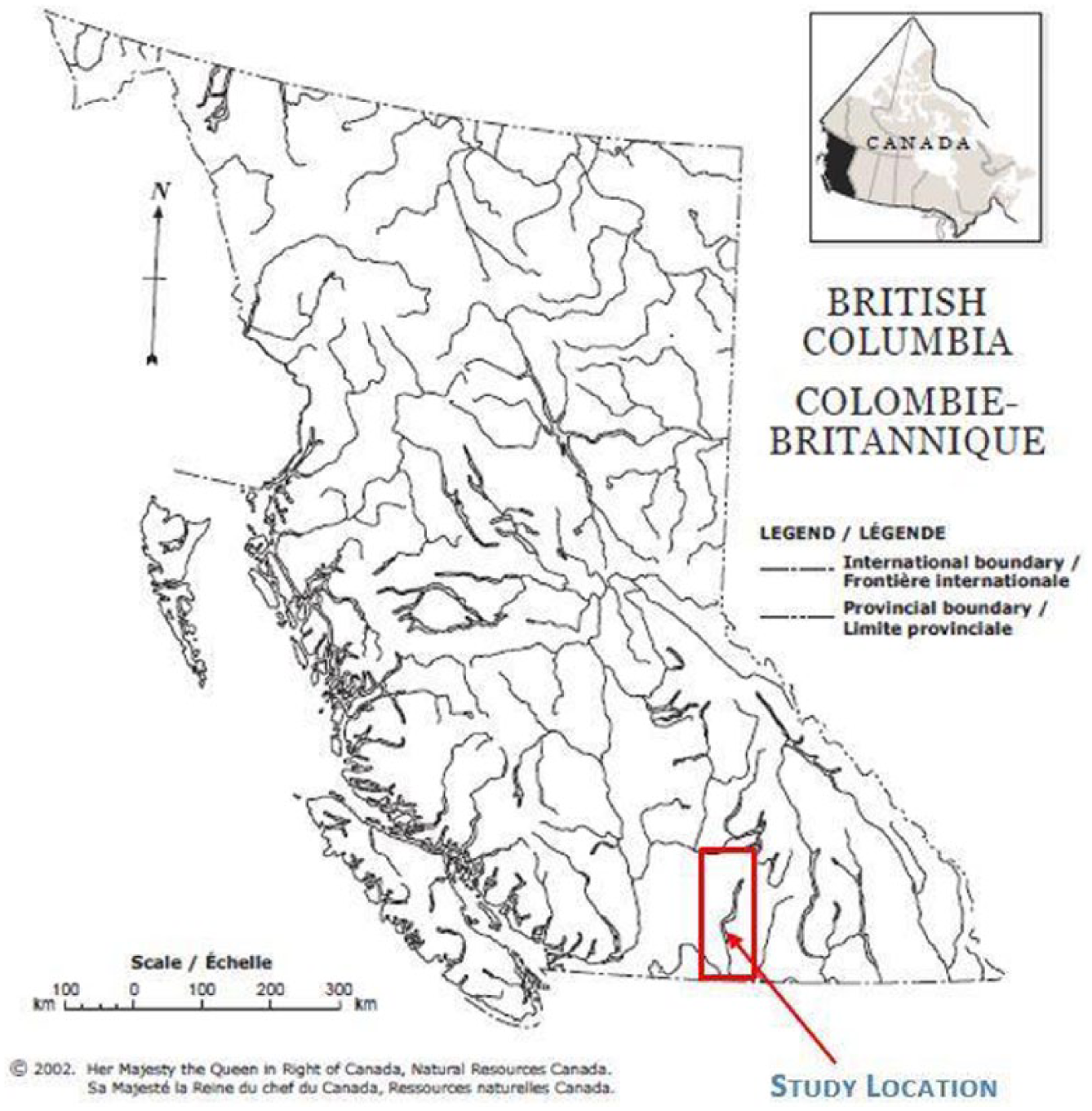
Location of fieldwork.

Migrant women sort cherries in the Okanagan Valley. Photo by Elise Hjalmarson.
In total, we conducted formal interviews with 14 farmworkers and 4 grassroots organizers who either took part in or witnessed everyday acts of resistance. 3 All of the interviews were semi-guided, audio recorded, and transcribed. They lasted from between 35 minutes and 2 hours and were conducted in person and on the phone in either English or Spanish (or a combination). All interviews with Mexican workers were conducted in Spanish and translated into English by the authors. Recruitment involved purposive snowball sampling in order to emphasize key incidents and priority areas identified by migrant workers and to maintain a network of trust and accountability. Because it is a single case study, our findings are not generalizable. However, the experiences of migrant workers in the Okanagan documented here are reflective of the experiences of others working in British Columbia and across Canada, as many of this study’s participants themselves were employed in other provinces prior to working in the Okanagan. Furthermore, while small, this study is important as it foregrounds the experiences and voices of migrants and demonstrates that, at least in some cases, they are negotiating the field of power from below and contesting the strict regulations that structure their lives and labor in Canada.
Everyday resistance
The ways that power is wielded are constantly shifting and, similarly, resistance is neither universal nor homogeneous. It is multidimensional, complex, and nuanced. In his original articulation of everyday resistance, James C. Scott (1985) challenged the exclusive focus of traditional social movement theory on overt political action by asserting the importance of subtle, informal acts. To discount these acts, according to Scott (1985), would be to “ignore the most vital means by which lower classes manifest their political interests (p. 33).” At times, everyday resistance is carried out just under the surface, accompanied by public performances of subordination and deference to authorities so that it remains undetected (Scott, 1989; see also Barber, 2008; McLaughlin, 2010). These performances of subordination may be what allow “quiet” protest to continue. Because these strategies are meant to go undetected and because they are often neither perceived nor intended to be political, they are frequently overlooked as political strategies.
Since Scott’s initial work, the relationship between everyday acts of resistance and broader social movements continues to generate considerable scholarly debate. In his fascinating account of peasant mobilization in Bangladesh during the 1986 elections, Shapan Adnan (2007) shows that in some cases, everyday forms of resistance are in fact precursors to more open dissent. Through a detailed analysis, Adnan (2007) reveals that the poor peasantry: did not restrict itself only to the ‘weapons of the weak’ at all stages of the mobilization, from its growth to its collapse. Rather, the specific options chosen by them at different conjunctures were shaped by fluctuations in the nature and intensity of domination. (p. 222)
Similarly, Vinthagen and Johansson (2013) conceptualize everyday resistance as constituting “initial, off-stage, or later stage activity in relation to other more sustained, organized and conventional political forms of resistance. Thus, everyday resistance sometimes goes on between or at the side of the dramatic resistance events” (p. 9).
Scholars also debate to what extent everyday resistance must be consciously undertaken with a political end in mind. Vinthagen and Johansson (2013) argue that everyday resistance should be understood as such informal and covert acts carried out in the course of daily life which either directly or indirectly undermine capitalist power relations or colonial state sovereignty. In considering actors’ aspirations for political change, Bayat (1997, 2009) suggests that while the motivation of the subordinated groups may not always be political in nature (often they are designed to obtain a more just and dignified existence or to release building tensions and frustrations), when taken cumulatively, they must be considered quiet, prolonged social movements in and of themselves. From Bayat’s (1997, 2009) perspective then, it is not necessary that the intention or consequence of acts of resistance be shown to successfully undermine capitalist relations or state sovereignty, or that they result in any significant political change. Even in those situations where no broad social or political change occurs and where subtle acts never transform into open resistance, resistance is still resistance. As Chandra (2015) aptly notes, “the failure of resistance ought to be differentiated from the failure to resist” (p. 565). Chandra (2015) goes on to remind us that the Latin root of the word “resist” means to endure or withstand, and so: to resist… is to minimally apprehend the conditions of one’s subordination, to endure or withstand those conditions in everyday life, and to act with sufficient intention and purpose to negotiate power relations from below to rework them in a more favourable or emancipatory direction. (p. 565)
Resistance, then, rather than being measured by the emergence of a broader social movement, could be more accurately conceptualized as small scale negotiations of circumstances using methods that, if detected, would cause the least amount of damage to those resisting (see for discussion Camp, 2004; Chandra, 2015; O’Brien and Li, 2006).
Precisely to avoid backlash, subtle methods of resistance have long been employed by those for whom overt forms of protest would result in loss of livelihood (and in some cases, life). Everyday resistance has been documented among groups including peasants (Scott, 1985, 1989, 1990) enslaved peoples (Camp, 2004), undocumented migrants (Ellerman, 2010; Zlolniski, 2003), new permanent and temporary immigrants (Barber, 2008; McLaughlin, 2010), women workers in free trade zones (Hewamanne, 2008), sex workers (Masvawure, 2010; Rivers-Moore, 2010), and Japanese homemakers (Kurotani, 2005). In the instances presented in this article, migrant farmworkers risk deportation and losing their place in the SAWP if they are perceived as discontented or critical of conditions. In our experience, migrant workers (especially those with lower levels of education and women) are regarded by employers, state and consular officials, and to a certain extent by scholars, as being apolitical or unlikely to protest working or living conditions.
It is worth nothing that, in some cases, migrants do engage in more visible acts of resistance including unionization drives, work stoppages and strikes, public protests and rallies, as well as by speaking to the media and government representatives, participating in documentary films, and pursuing legal action against employers. Therefore, a lack of overt political action is not always attributable to migrants’ lack of political consciousness or the absence of resistance. On the contrary, it can often be an indication of migrant workers’ keen awareness of the consequences of overt protest and their strategic decisions to engage in subtler forms of resistance. Everyday resistance, therefore, is not always chosen as an alternative to, or in lieu of, outright defiance. Rather, the relationship between everyday and overt resistance is complex. As migrant farmworkers’ strategies so tellingly illustrate, one form sometimes precedes the other while at other times they are performed concurrently and sometimes, for a variety of reasons, one form of resistance is selected over another. Nevertheless, we find it necessary to clarify that in our view, even when everyday resistance remains subtle and never becomes overt or large scale, it must still be viewed at the very least as a critique of existing social structures of domination, something that is inherently political, and that may still lead to incremental social and political change.
Canada’s SAWP
The oldest and longest-standing of Canada’s temporary migrant worker programs, the SAWP was first introduced in the province of Ontario in 1966 as a response to lobbying by farmers (Basok, 2007). It began as a bilateral agreement between the Canadian province of Ontario and Jamaica, later expanding to include Barbados, Trinidad and Tobago, Mexico, and the Organization of Eastern Caribbean States. Its first year saw 264 Jamaican farmworkers employed on a tobacco farm in Ontario. In 2004, the program was introduced to British Columbia and the Okanagan Valley, the principal site of this study. In 2017, the SAWP brought nearly 45,000 farmworkers to Canada, of which 7000 workers were employed on farms across British Columbia (Government of Canada, 2018).
In spite of its international reputation as a “model” program (Basok, 2007; Hennebry and Preibisch, 2012; Lenard, 2012; McLaughlin, 2009b; Martin et al., 2006), the SAWP has been criticized for rendering workers highly exploitable, isolated, and precarious (Aguiar et al., 2011; Fairey et al., 2008; Lenard and Straehle, 2012; Walia, 2010). Concerns include workers’ geographical, cultural, and linguistic isolation (Hennebry, 2012; McLaughlin, 2009b; Preibisch and Encalada Grez, 2010), limited access to healthcare and transportation (Fairey et al., 2008; Gabriel and MacDonald, 2011; Hennebry, 2008; Hennebry et al., 2016; Horgan and Liinamaa, 2012; McLaughlin, 2009a; Preibisch and Otero, 2014), as well as ongoing racial and gender-based discrimination and segregation (Cohen and Caxaj, 2018; Hjalmarson et al., 2015; Horgan and Liinamaa, 2017; Paz Ramirez, 2013; Perry, 2012; Preibisch, 2010). The SAWP has also been decried for its failure to live up to international standards of human and labor rights (Hennebry and Preibisch, 2012). The frequent provision of racially segregated, substandard housing for migrant farmworkers is another serious concern (Aguiar et al., 2011; Faraday, 2012; Hennebry and Preibisch, 2012; Tomic et al., 2008), as is the formidable power and surveillance exercised by employers over workers’ daily lives (Clarkson, 2008; Sharma, 2006). The program has also been denounced for its dependence on and reproduction of particularly draconian mechanisms of social control (Basok et al., 2014; Encalada Grez, 2006; Paz Ramirez, 2013; Preibisch and Encalada Grez, 2010). Notably, the exercise of this social control over workers is often gendered and involves infringements on the freedom of women workers including restrictions not only on their movements, but also on their sexual and reproductive freedom (see Cohen and Caxaj, 2018; Encalada Grez, 2011; Preibisch and Encalada Grez, 2010; Weiler and Cohen, 2018).
The intensity of the discipline and surveillance to which many migrant farmworkers are subject is in some cases reminiscent of Orwell’s 1984. Study participants tell of security cameras inside and outside of their accommodations, overt surveillance by employers using telescopes and binoculars, direct questions from bosses about their whereabouts during their time off, and police vigilance in the community. Many of these experiences have been documented in other parts of Canada as well (see Huesca, 2015; McLaughlin, 2009b; Preibisch, 2004). Furthermore, in order to maintain their place in the program, participants undergo invasive medical screenings and have biometric data collected (fingerprints, photographs, and criminal record checks), all of which contribute to a disciplinary regime that ensures a compliant workforce (see Faraday, 2014). Martin, a 43-year-old father from near Mexico City described the psychological effects of working and living under the constant surveillance of his employer: On that farm I felt like caged in, trapped, like when they are watching you all the time, you can’t work in peace. You can’t work comfortably, and to a certain extent you’re distracted, no? When the boss is always checking on you or watching you, you want to do as he says—work faster.
Many scholars agree that under the SAWP, migrant agricultural workers constitute a bonded labor force (see, for example, Preibisch, 2010; Walia, 2010). Although their work permits legally entitle them to work for any SAWP-approved employer, the transfer process is complicated and requires the approval of the foreign consulate, current employer, and new employer. Very few worker-initiated transfers are successful. Their contracts, on the other hand, tie them to a single employer alone. Moreover, migrant farmworkers’ ongoing employment depends on their receipt of positive reviews by their employers and consular officers who can repatriate workers at any time or opt to replace them the following season. An Ontario-based study showed that between 2001 and 2011, 787 workers were repatriated for medical reasons (Orkin et al., 2014), an average of 4.62 workers per every 1000 workers. While the experience of being injured on the job is not unique to farmwork, as Orkin et al. (2014) point out, “there are perhaps no other Canadian occupational settings where workplace injuries and illnesses… result in employment termination and deportation without further medical care or income security.” As a result, many farmworkers hide injuries, illnesses, and pregnancies, endure workplace harassment and abuse, and put up with unsafe or unsanitary living conditions to avoid the perception that they are “causing trouble” (Cohen and Caxaj, 2018; Hennebry et al., 2016).
The SAWP’s regulatory oversight is negligible and largely relies upon a complaint-driven reporting system. Migrant farmworkers are expected to come forward and report violations of labor laws, housing regulations, or SAWP contracts by making an official complaint to their consular or liaison officer, or directly to Employment and Social Development Canada. That workers rarely make use of these official communication lines reflects their acute awareness of their vulnerability rather than a lack of problems with the program. As McLaughlin and Hennebry (2013) show, complaining about working or living conditions, attempting to unionize, or refusing to work for almost any reason, not excluding work-related injuries, illness, or trauma, can result in migrants’ immediate dismissal and deportation from Canada. SAWP contracts are sufficiently vague to permit the termination of workers’ contracts for effectually any reason. Migrants’ legal status is, in other words, always inconclusive, incomplete, and partial. This ambiguity creates space for the disciplinary power wielded by the state, employers, and fellow migrants themselves (De Genova, 2002). As Basok et al. (2014) show, very few migrants have to be deported each year for these mechanisms to be effective—the potential for deportation is sufficient to ensure even that migrant workers legally employed via the SAWP feel disposable and remain compliant. Indeed, while repatriation is rare, most SAWP workers personally know or have heard of someone who was removed from the program for complaining about working or living conditions, or engaging in overt political action such as attempting to unionize. The knowledge that their employment is so precarious and that there is no legal recourse to contest termination or repatriation only adds to workers’ reluctance to complain or organize collectively. Sandra, a single mother from Chihuahua describes her dilemma like this: Most of the time we don’t say anything about what happens to us. We bear it, mostly for our families. If they were to kick us out of the program, we wouldn’t have the money we earn here which helps us out a lot in Mexico. We know if we raise a fuss or try to demand our rights, what they [consular officials] do is remove us from the program.
Francisco, a soft-spoken father of three from Tlaxcala, describes the situation on his farm in similar terms. He told us of his boss’s technique of ensuring a compliant and productive workforce: This boss has been hiring Mexican workers for seven years and no one has reported him because they’re scared. The boss threatens that he’ll call the ministry [of labor in Mexico], that he’ll call the consulate and get them kicked out of the program.
It is this keen understanding of the risks associated with complaining or protesting openly that leads SAWP workers to reject overt forms of resistance.
Migrant farmworkers and informal labor
Informal work, according to Mosoetsa et al. (2016) is “labor that creates goods or services, but does not offer the standard terms, conditions, and benefits specified for jobs under law–either because the law does not cover these particular jobs or because the law is not effectively enforced” (p. 89). Despite the extensive regulations of the SAWP, it is clear that migrant farmworkers are engaging in highly informal work that does not offer them standard conditions or benefits under the law, and the few protections that do exist for them are poorly enforced. A 2016 report by Canada’s Auditor General found that federal oversight of the SAWP was minimal, with only 13 of 173 planned inspections completed in the 2016 fiscal year (Office of the Auditor General of Canada, 2017). The report also revealed that migrant workers were not interviewed during any of the completed inspections.
The agricultural sector has always been characterized by a high degree of informality and precarity. In Canada, not only is farm labor traditionally seasonal and temporary, work schedules are “inconsistent, demanding, and unconventional” (Preibisch and Otero, 2014: 179). Workers across Canada describe serious concerns about occupational health and safety, such as lack of training and safety equipment, inability to refuse unsafe work, as well as limited oversight and enforcement to curb poor employment standards (Aversa, 2015; McLaughlin et al., 2014). In British Columbia, Fairey et al. (2008) report that regulatory mechanisms to maintain employment standards have significantly declined in the agricultural sector, providing limited pathways to ensure the health and safety of farmworkers. Wage structures for citizen farm laborers, many of whom never sign an employment contract, vary significantly with some earning below minimum wage for piece work and receiving limited to no benefits (Preibisch and Otero, 2014). Country-wide, agricultural labor sits on the lowest rung of the occupational ladder and farmworkers have been historically excluded from provincial employment standards legislation that protects workers in other sectors (Preibisch and Otero, 2014). Moreover, the exclusion of farmworkers from employment protections often coincided with exclusive immigration policies that disproportionately impact racialized new immigrant and migrant populations employed in agriculture (Preibisch and Otero, 2014).
We argue that migrant farmworkers are placed in a paradoxical situation whereby their circulation in the labor market is legally regulated at the same time that the on-farm labor conditions are continuously made more flexible and informal. This paradox is noted by other scholars. For example, Likic-Brboric et al. (2013) explain that integral to informalization in advanced economies is the drive for increased flexibility, which carries significant consequences for company–employee relations. For employers, flexibility signifies that “companies can quickly get rid of that part of the labor force that is not needed at the moment, and which then can be quickly re-employed when they are once again needed” (Likic-Brboric et al., 2013: 685). The SAWP facilitates such flexibility by design in two important ways. First, participating migrants are only legally permitted to work in Canada for a maximum of 8 months each year. SAWP work permits expire annually on 15 December and, consequently, workers are sent home to wait out the winter. Second, as mentioned, the vagueness of the SAWP contract allows for the quick dismissal, deportation, and subsequent replacement of a migrant farmworker in cases where an employer expresses dissatisfaction. As Type 1 explores below, workers can also be dismissed and sent home early as a result of bad weather or a poor harvest, which decrease the need for farm labor. At the same time that SAWP farm workers’ labor is strictly regulated in Canada, farm employers have a reduced responsibility to their SAWP workers both individually and collectively. While a more flexible labor force undoubtedly benefits company owners and shareholders, it makes workers’ employment (and in the case of migrant workers, their legal status in Canada) more informal and insecure (Heintz and Pollin, 2003; Likic-Brboric et al., 2013; Sassen, 2003; Slavnic, 2010).
The practice of everyday resistance in the Okanagan Valley
In the face of intense constraint, migrant workers employed in Canada’s SAWP engage in subtle forms of resistance everyday. These include such acts as lying, foot-dragging, collective work pacing, working “under the table,” falsifying hours on work logs, ignoring curfews and other farm rules, secretly giving away the products of their labor, clandestinely documenting housing and labor conditions, hiding injuries, and building and maintaining concealed relationships with migrant justice groups and other individuals. In the following section, we explore four such cases in-depth. We choose to focus on these four types of resistance as they demonstrate the range of everyday strategies employed by migrant farmworkers. Furthermore, each act described represents some degree of collective action and solidarity between workers. For example, even the tactics that on the surface seem spontaneous and individual require the collusion and dissimulation of other workers to cover up the resistance. In the instances of collective work pacing and the reappropriation of farm produce, more intensive collective planning and execution is required, fostering greater solidarity and unity among those resisting. Finally, each type of resistance presented below can be read as farmworkers’ attempts to gain a measure of control over their own lives and circumstances and renegotiate the restrictions on their labor mobility and relations of power with their employers.
Type 1: working “under the table”
Once in Canada and having left their families behind, farmworkers tend to want as much work as possible so that they can send the maximum amount of money to families back home. Si vamos a dejar a nuestras familias, queremos que valga la pena (If we are going to leave our families, we want it to be worth it), stated one worker. When the harvest is poor due to weather, it is common for individual workers to be sent home before their contract expires or for all workers to log less hours per paycheck. Furthermore, as it is the responsibility of employers to reserve (and in British Columbia, pay for) airline tickets for workers to return home, employers inevitably choose the cheapest fares which often means that workers are left to sit on the farm for weeks without pay until the date of their departure. Others are promised a certain number of hours per week only to find out that, in actuality, they receive far fewer.
Some have responded to this situation by secretly seeking additional work under the table during their time off from their SAWP jobs. Of the participants in this study, five reported either currently holding a second job or having done so in the past, and in informal conversations during our grassroots organizing, we have heard of dozens of workers who worked under the table while also being employed through the SAWP. While it is relatively common for employers themselves to sanction and arrange “loaning” their workers to other employers for days or weeks in violation of the SAWP contract and provincial labor law, in other cases migrant workers themselves find outside employment without their bosses’ or consular officials’ knowledge or consent. In this second situation, workers actively contest the bonded nature of their employment by refusing to accept the legal stipulations that restrict their labor mobility. Rather than sitting on the farm and waiting for a consular official to arrange a transfer or for their employer to send them home, many workers talked about seeking a second job as a way to make their time in Canada count. Others choose to take second jobs on their days off from their primary positions. Ximena, a young mother from northern Mexico explains: It’s not worth it for us because we only work 8 hour days, and everything is really expensive there. There’s only one store and everything is really expensive. Food, all the deductions like rent, our visas, really working only eight hours isn’t worth our while. It’s going to take over a month of working just to pay off our visas and rent! And of course we want to make enough to send money home to our families. What we plan to do is look for extra work on a different farm.
Other workers responded similarly, and many successfully worked extra hours on nearby farms without their bosses’ approval and in direct violation of labor laws and their restricted work permits. Some workers, experienced in other occupations such as hospitality or trades, sought secondary employment in sectors other than agriculture. Working a second job often requires that their co-workers cover for them to their employers when they are absent at evening checks or during random visits. Two study participants told us that they used church as a cover, as they worked their second job on Sundays.
This case highlights farmworkers’ use of dissimulation (one of the primary “weapons of the weak” according to Scott) and the mobilization of their contacts in the migrant and larger community to maximize their own goals. In addition, the act of working for a non-SAWP-approved employer undermines the authority of the Canadian and foreign states to restrict their labor mobility to a single farm or only preapproved employers. Interestingly, in their efforts to ensure wage security, migrants are simultaneously both resisting the informalization of their labor and intensifying it. When SAWP workers seek under the table work on other farms or in sectors other than agriculture, they push back against their precarity by choosing to labor in conditions of potentially intensified informality. Also, somewhat paradoxically, the act of working under the table, while benefiting the farmworkers in the form of extra wages, also aids the employer who benefits from tax-free labor and little or no labor oversight.
Most workers who did work under the table told us their primary motivation was economic—to ensure that their time in Canada was lucrative and that they were able to return home having earned a sufficient amount of money. Workers were also keenly aware that what they were doing was in violation of provincial and federal labor laws as well as their SAWP contracts, and many also told us that they felt it was unfair that their labor was restricted by their narrow work permits. In this case, therefore, we contend that despite the motivation being largely personal and economic in nature, workers were not unaware of the political and legal implications of their actions. In interviews conducted by both authors, when asked what they would change about the SAWP, more than half of all workers stated that they would like to be able to change employers freely. Therefore, we see the act of seeking work under the table (and the dissimulation and covering up that goes along with it), as important everyday resistance strategies, not only in that it disregards the ability of the government to restrict workers’ labor mobility, but also because it is linked to workers’ own ideas about an unjust system that provides unequal rights to different classes of workers.
Type 2: collective work pacing
If you give him 100% in the beginning, tomorrow he wants 110%, and the next 120%. So you never give him 100% in the beginning. We are not machines. You can put gas in a crane and make it run but it is a machine. I am a human. You cannot take out my heart or take out my liver when they give out. I am not a machine. When I am dead, you can’t fix me up. —Raul, Jamaican farmworker
Workers on three farms mentioned work pacing as a method to counter their employers’ demands to work faster. Depending on the task they were carrying out that day, the workers would discuss in advance what they felt was an appropriate amount of work to finish in an hour. Everyone would then pace themselves so that no one worker could be targeted by the employer as working too slowly, and together they could withstand the boss’s pressure and abusive treatment.
This kind of action falls under the umbrella of subtle tactics rather than open resistance against labor control as workers determined the pacing in private and kept the boss in the dark about their collective plan. Collective work pacing has the advantage of being very difficult to detect, a common characteristic of successful strategies of everyday resistance. It is also of interest for this study because, in contrast to the previous example, this tactic is not aimed at subverting temporary immigration status or bonded work visas but at impeding bosses’ efforts to extract ever-increasing amounts of labor from workers.
Work pacing not only illustrates how workers respond to extra-legal disciplinary mechanisms, it also provides an example of how a subtle form of resistance can precede or become a more overt action. On one occasion, workers on a farm who practiced collective work pacing staged an impromptu work stoppage to protest the poor treatment of a fellow worker by the boss. The workers were picking apples when the boss approached one of the older workers and threatened him with a pair of pruning shears. The worker was terrified and went back to his accommodations visibly shaken. His co-workers, having witnessed the incident, put down their tools and stopped working. They called the Mexican consulate and explained what had taken place, and the consular representative admonished the boss and found transfers for four of the workers within a week. The others chose to remain at the farm.
In line with Adnan’s (2007) findings, this example shows that “the switch from covert to overt forms of resistance indicates that the poor have a repertoire of strategies to oppose domination, upon which they can draw in accordance to changing circumstances” (p. 185). Instead of turning only to covert forms of resistance and conscious of the risks they face for speaking or acting out, migrant farmworkers in the Okanagan engage in a variety of methods of resistance including, in select cases, overt forms. This case is also interesting in that it hints at workers’ political awareness and willingness to employ overtly political strategies in certain circumstances. Perhaps, the everyday practice of secretly organizing work pacing provided the space for strengthened relations of solidarity that were then able to be called upon when one of their co-workers was threatened. It would be an interesting avenue of future research to examine whether workers on farms that practice collective forms of subtle resistance are more likely to engage in more overt forms such as work stoppages or unionization, or whether the example we present here is unique.
Type 3: falsifying hours on timesheets
On another farm, we spoke to four workers who falsified hours on their timesheets and covered for others who did the same. “If we finish working at 4:15, we write 4:30,” explained Oscar, a 32-year-old single father from Michoacán. Oscar and his co-workers spoke of this practice as a way to reclaim some of the money that the boss owed them for requiring them to use their own cell phones for work. Oscar explains: The boss calls me at all hours of the day to talk about work. He’ll call me to tell me where we’re going to work the next day and what we’re going to do. He’ll tell me where to drive the vans and which tractors or other machines we’ll need. He expects me to be available all the time. At a regular company, they would give me a work cell phone, but here I am forced to use my personal phone at my expense! The least he can do is pay me a few minutes or half an hour of extra work.
As highlighted by this example, even the most mundane and quotidian acts such as filling out time cards can be transformed by workers into sites of struggle. Fudging hours in an interesting case in that it is simultaneously a covert and hidden tactic which also blurs the line between individual and collective resistance as at least four workers (and by their accounts many more) had to tacitly agree to go along with this act and collectively hide it from their boss. Also in line with the previous example, it is possible that such acts, no matter how small, which require the collective cooperation of many workers, do set the stage for further resistance.
While the fudging of timesheets occurs in many sectors and is therefore not unique to the SAWP, in this case, adding an extra few minutes to timesheets represents a subtle negotiation of capitalist relations on the farm. Workers felt that the boss was exploiting their labor by expecting them to be on call at all hours of the day and use their personal phones to discuss work-related issues. Keenly aware that they could not openly challenge the boss (workers on this particular farm had been sent home in the past for being “problematic”), the workers instead decided to discreetly reappropriate some of what they felt they were owed. It is unlikely that even the cumulative effect of half a dozen workers adding several minutes to their timesheets would represent any serious economic impact on the farmer. However, this does not detract from the fact that these acts were meaningful to those carrying them out. Furthermore, the workers themselves viewed their actions as resistance to their employer’s unfair labor practices. In our discussions, it was clear that the workers saw their doctoring of timesheets as a way to alter, however slightly, the balance of power on their farm.
Type 4: reappropriation of farm produce
Another illustration of farmworkers’ practice of everyday resistance is the reappropriation of produce for their own consumption or for distribution to friends and other community contacts. On a number of occasions, workers reported giving away cherries, grapes, carrots, tomatoes, or whatever produce they were able to harvest and hide away without their bosses noticing. We witnessed this act on at least half a dozen different farms, always carried out in secret. On one farm, workers asked representatives of a migrant rights group to come late at night when they knew the boss had left the orchard for the day, and then proceeded to load into their van 100 pounds of cherries which they had picked from a particularly isolated part of the property. Para agradecerles por el apoyo que nos han brindado they said, to thank you for all the support you have given us.
There are several facets to this example of everyday resistance that we would like to consider. First, by asserting control over the food they produce and either consuming it themselves or redistributing it for consumption by others, workers push back against their employers’ total appropriation of their labor power. As Scott (1990) points out in regard to enslaved peoples’ resistance in the antebellum south, pilfering, along with other low-profile stratagems such as shirking or careless labor, or sabotage of crops, were not only aimed at minimizing appropriation. Accounts by former slaves indicate that these acts were seen as reappropriating one’s own labor. Indeed, as Scott (1990) continues, underground slave culture actually promoted theft by slaves from their masters and encouraged them to keep such theft a secret within the community. While drawing links between the institution of slavery and the SAWP may on the surface seem hyperbolic, it is a connection drawn by migrants themselves.
Half a dozen migrant farmworkers we spoke to for this project compared their experiences with those of enslaved people and the SAWP to “modern day slavery.” Clearly the SAWP is not identical to the institution of slavery; however, in making these assertions, migrants are expressing their fundamental lack of freedom in Canada. Many feel coerced into migration because of a lack of opportunities in their home countries, and in Canada their freedom continues to be heavily restricted by the legal and extra-legal mechanisms of the SAWP that dictate every aspect of their daily lives including where they live, who they work for, when they can leave the farms, and even their relationships with other workers. Moises, a grandfather from near Mexico City summed up what many of his fellow SAWP workers also articulated: The housing is undignified, but when we complain about the conditions to the boss, he says “why are you complaining, in Mexico you live in huts and sleep on the floor?” The boss yells at us, harasses us to work harder. I am not allowed to leave the farm without asking permission. I am not allowed to go find another job no matter how badly I’m treated. Slavery hasn’t ended, it has just become modernized (La esclavitud no se ha terminado, solo se ha modernizado).
Importantly, and in addition to diverting their labor to harvest produce for their own personal gain, gifting produce to friends in the community and representatives of migrant justice groups serves to forge and strengthen relationships and maintain networks of solidarity through reciprocity. This is significant in that it represents a calculated strategy to minimize exclusion and physical isolation and to give back to those in the local community who have offered support to migrant workers. During the years in which we carried out this research, both Jamaican and Mexican workers reported being instructed by officials in their respective ministries of labor not to speak to representatives of migrant rights groups. 4 Similarly, workers report that some bosses employ a suite of tactics aimed, at least in part, at controlling their ability to form community connections and to collaborate with community organizations. These tactics include curfews, video surveillance, random inspections of living quarters, roll calls, no-visitor policies, and, almost incredibly, the outright denial of permission for workers to leave the farm premises. Therefore, secretly fostering relationships with individuals in the community, and especially with migrant justice organizers, constitutes a direct but subtle challenge to the authority exercised by both state officials and bosses over workers’ everyday lives in Canada. This calculated relationship-building may constitute a type of resistance in and of itself.
Conclusion
In this article, we examine four types of everyday resistance employed by Mexican and Jamaican migrant participants in Canada’s SAWP. The already robust body of existing literature on the SAWP documents the intensive social control by state authorities and Canadian employers to which migrant farmworkers are subjected. While these structures make it dangerous to engage in overt, organized, and public expressions of insubordination, migrant farmworkers nonetheless employ masked and covert forms of resistance. This resistance is exercised in ways intended to diminish migrants’ precarity in a sector characterized by a high degree of informality, where citizen and non-citizen workers alike are generally more vulnerable than workers in other sectors of the Canadian economy. At the same time as shifting farm labor demands produced by unpredictable weather and harvests lead to agriculture’s exemption from some areas of provincial labor law, the SAWP facilitates the early dismissal, deportation, and replacement of migrant farm workers (if not during that same season, certainly in the subsequent one).
While the narrow scope and size of this case study limit us from drawing general conclusions, they also highlight avenues of future research. First, there is the relationship between migrants’ practice of everyday resistance and their propensity to take part in more overt, public acts or collective action. Second, while we believe evidence exists that migrants’ actions are politically motivated, a thorough investigation of workers’ political consciousness and views fell outside of the scope of this study. Workers’ own conceptual frameworks and the extent to which they apply these frameworks in other areas of their lives, as well as links to any political involvement, affiliations, or history they may have in their home countries, may provide insight into which resistance strategies they utilize in Canada. Third, and following a similar vein, it may be fruitful to compare the varying practices of everyday resistance employed by Mexicans versus Caribbean workers, the results of which we suspect may challenge employers’ preconceived, racialized ideas about the distinct groups and their “natural” predilection to contest poor treatment or defy their employers or consular officials.
The present research is important in light of the growing attention being paid to an increasingly organized, global movement for migrant justice. Like many researchers, we have been at times guilty of foregrounding the work of organized migrant justice groups in Canada, the majority (though certainly not all) of whose members are in possession of regular immigration status. Where the body of work on migrant rights intersects with the social movement literature, it largely focuses on the advocacy efforts of civil society and faith-based groups, and union and grassroots organizers (see, for instance, Encalada Grez, 2006; Gabriel and MacDonald, 2011, 2014; Russo, 2011; Valarezo and Hughes, 2012). The disproportionate emphasis on the very public efforts of civil society actors casts a shadow over the everyday efforts of migrant workers themselves. By itself, this tendency reflects Scott’s (1985) observation that the vast majority of scholarship concerned with resistance and social movement focuses on outright and large-scale rebellion such as national liberation movements and revolutionary wars. Nevertheless, just as exploitation is commonplace and everyday, so is resistance (Scott, 1985).
The everyday resistance employed by migrant farmworkers plays an integral part in the movement for migrant justice. Beneath the performances of subordination, and clenched fists and teeth, migrants are actively struggling for dignity and humanity—for respect, recognition, and the right to have rights (which they have been continually denied in Canada). Their everyday acts cannot be reduced to simple coping mechanisms or minimized as “just” survival strategies. Instead, we believe migrant workers are actively, continuously, and creatively renegotiating power relations on farms across the country, subtly resisting the “legislated inequalities” (Lenard and Straehle, 2012) bound up in their precarious status in Canada. In our view, these acts of resistance, carried out on farms and orchards across the country, constitute the heart of the greater movement for migrant justice.
Footnotes
Acknowledgements
The authors would like to thank the editors and reviewers for their constructive comments on this paper. They are also grateful for Leslie Barton’s encouragement and willingness to review its various versions. Finally, the authors express their gratitude to the migrant workers who participated in this study—for their insight, trust, and friendship.
Funding
The author(s) disclosed receipt of the following financial support for the research, authorship, and/or publication of this article: The research this article is based on was partially funded by a Grant-in-Aid from Okanagan College.