



Abstract
Background:
Mass media depictions of people with mental illness have a strong influence on public attitudes, to the extent that changes in these depictions can reduce public stigmatization of people with such illness. Journalists’ mental health may influence their depiction of those with mental illness, but little is known about this.
Aims:
To investigate mental illness among journalists in five key areas: (1) journalists’ mental health status; (2) journalists’ personal attitudes towards mental illness; (3) attitudes and support journalists expect or have experienced from colleagues when they have a mental health problem; (4) effect of journalism’s professional culture on the course of mental illness; and (5) effect of journalism’s professional culture on mass media depictions of people with mental illness.
Methods:
We performed a systematic screening of MEDLINE, PsycINFO, EMBASE, Web of Science and the Cochrane Library regarding the study aims.
Results:
We identified 19, 12, seven and four studies for aims 1, 2, 3, and 4, respectively. No articles were found for aim 5.
Conclusions:
The prevalence of post-traumatic stress disorder (PTSD) among journalists is higher than that among the general population. Journalists have positive personal attitudes towards mental illness, but there are perceived workplace disincentives to disclose mental health problems.
Introduction
The mass media is the main source of information on mental health and mental illness for the general population (Yankelovich, 1990). A great deal of research conducted on newspaper portrayals of mental illness has concluded that most often stories about mental illness focus on negative aspects, especially danger and violence, and include pejorative and discriminatory terminology (Lawrie, 2000). These representations play an active part in shaping and sustaining what mental illness means in society (Wahl, 1995). However, one study showed that changes in mass media coverage of mental health could change attitudes towards mental health among the general population (Henderson & Thornicroft, 2009).
Why do journalists describe mental illness in such negative ways? One survey reported that their primary concern is to attract and maintain readership (Henderson, 1996). Therefore, news reports emphasize the newsworthy rather than the worthy.
On the other hand, journalism can be a stressful occupation (Kelly, 2008). Journalists need to be on site at scenes of disaster or brutality that may traumatize them psychologically. When there is reason to suspect that the rate of mental illness among journalists may be at least as high as among the general population in every country, why do many journalists continue to portray mental illnesses with so little sympathy or understanding?
In this context, the aim of this paper was to conduct a systematic review of mental illness among journalists. Our objectives were five-fold and assessed: (1) the mental health status of journalists; (2) journalists’ personal attitudes towards mental health problems; (3) how journalists are supported when mentally unwell; (4) the effect of journalism’s professional culture on the course of mental illness; and (5) the effect of journalism’s professional culture on mass media depictions of people with mental illness.
In particular, we aimed to test the following five interlinked hypotheses:
Journalists have higher prevalence rates of mental illness, especially post-traumatic stress disorder (PTSD), depression and alcohol dependence, compared to the general population.
Journalists have positive personal attitudes towards people with mental illness.
The professional culture of journalism makes the disclosure of mental illness difficult.
Concealment has a negative impact on the course of mental illnesses among journalists by delaying recognition and treatment.
Journalism’s professional culture contributes to negative portrayals of mental illnesses.
Method
To achieve these objectives we performed a systematic review in the following way.
Eligibility criteria
Participants
Identified as journalists or journalism students in any relevant field.
Study characteristics
Cohort or cross-sectional studies with original quantitative data and no restrictions on the location, number of participants or response rate. Narrative descriptions were excluded. We included studies that contained the following information related to hypotheses 1–5, respectively:
Mental health problems diagnosed/evaluated using standardized criteria.
Journalists’ personal attitudes towards people with mental health problems.
Journalists’ experiences or expectations about the attitudes of their colleagues or employers regarding mental illness.
Any quantitative data or source regarding the influence of journalistic culture on mental health problems among journalists.
The relationship between the culture of journalism and how journalists portray mental illness.
Information sources
The PRISMA statement (Liberati et al., 2009) for a systematic review was followed. A systematic search of abstracts written in English, Italian and Japanese was conducted in MEDLINE, PsycINFO, EMBASE, Web of Science and the Cochrane Library. Potentially relevant studies written in German and Chinese were translated by colleagues. Reference lists were also scanned. All studies were published between January 1980 and June 2010. We also used Google, checked and emailed the relevant official associations’ websites (Dart Center for Journalism & Trauma, International Federation of Journalists, European Journalism Centre, Association of European Journalists, and Vlaamse Verenigning van Journalisten) to find grey literature and ongoing studies.
Search strategy
The lead reviewer initially screened all studies. A selection of excluded studies and all that met the inclusion criteria were screened by the second reviewer. Agreement was reached with the first researcher regarding any contested studies. Figure 1 shows the flow chart of the search strategy. The search terms used are provided in Appendix 1.
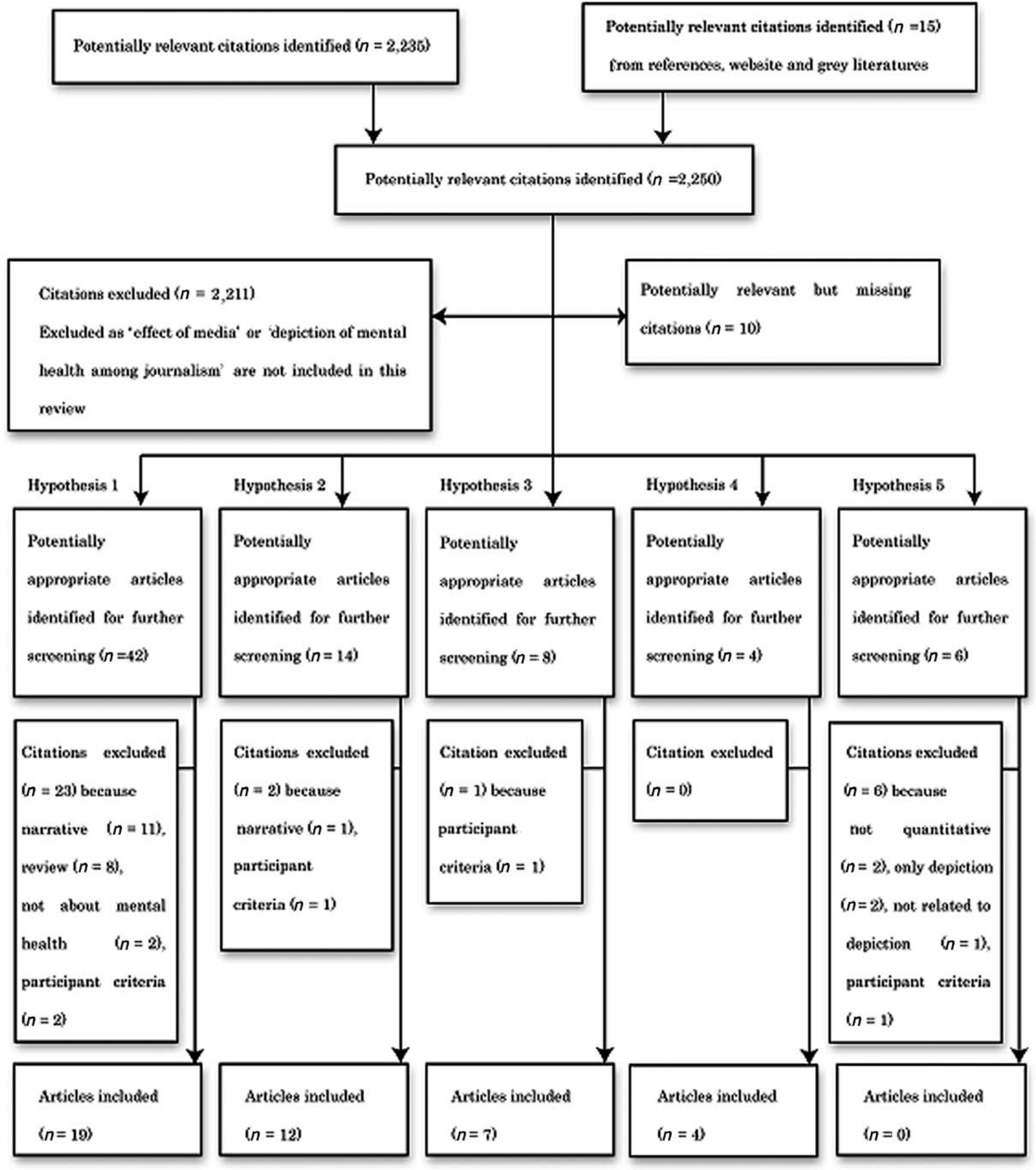
Process of study selection.
Results
Exclusions
Our search strategy identified 2,250 studies. Most that were excluded were studies about the ‘influence of journalism’ or ‘depictions of mental health’ rather than papers focusing directly on mental illness among journalists.
Objective 1: Prevalence of mental health problems among journalists
Exclusions
From a review of abstracts and references, 42 studies were considered eligible for hypothesis testing. Among these, 23 were excluded because they were reviews (n = 8), narratives (n = 11), not about mental health (n = 2), or did not meet participant criteria (n = 2).
Included studies
Nineteen studies (Table 1), all of which were cross-sectional surveys, met the inclusion criteria and were published between 1982 and 2010. Seven studies were from North America, five from Europe, four from Asia, and one each from Australia and Africa. Sample sizes ranged from 12 to 876. The proportion of men ranged from 48.5% to 90%. Random sampling was adopted in three studies (Campbell, Heath, Bouknight, Rudd, & Pender, 2009; Feinstein, Owen, & Blair, 2002; Finzen, 1996), stratified sampling in one (McMahon, 2001), and one study (Feinstein et al., 2002) covered the target population almost completely. In almost all studies, the authors evaluated participants using self-report measures. For the diagnosis of PTSD, the Impact of Event Scale (IES) (Mastroianni & Noto, 2008; Pyevich, Newman, & Daleiden, 2003; Reed, 2008), the Impact of Event Scale-Revised (IES-R) (Engelhard et al., 2007; Feinstein et al., 2002; Hatanaka et al., 2008; Liberati et al., 2009; Marais & Stuart, 2005; Smith, 2009), the PTSD Checklist Civilian Version (PCL) (Cosper & Hughes, 1982; McMahon, 2001; Newman, Simpson, & Handschuh, 2003; Pyevich et al., 2003; Simpson & Boggs, 1999) and the Post-traumatic Diagnostic Scale (PDS) (Yankelovich, 1990) were used. For depression, the Center for Epidemiologic Studies Depression Scale (CES-D) (Simpson & Boggs, 1999; Weidmann, Fehm, & Fydrich, 2008) and the Beck Depression Inventory-II (BDI-II) (Engelhard et al., 2007; Feinstein et al., 2002) were used. The General Health Questionnaire (GHQ) (Engelhard et al., 2007; Mastroianni & Noto, 2008; Reed, 2008; Smith, 2009) was also commonly used for evaluation of general mental health.
Papers identified to test hypothesis 1.
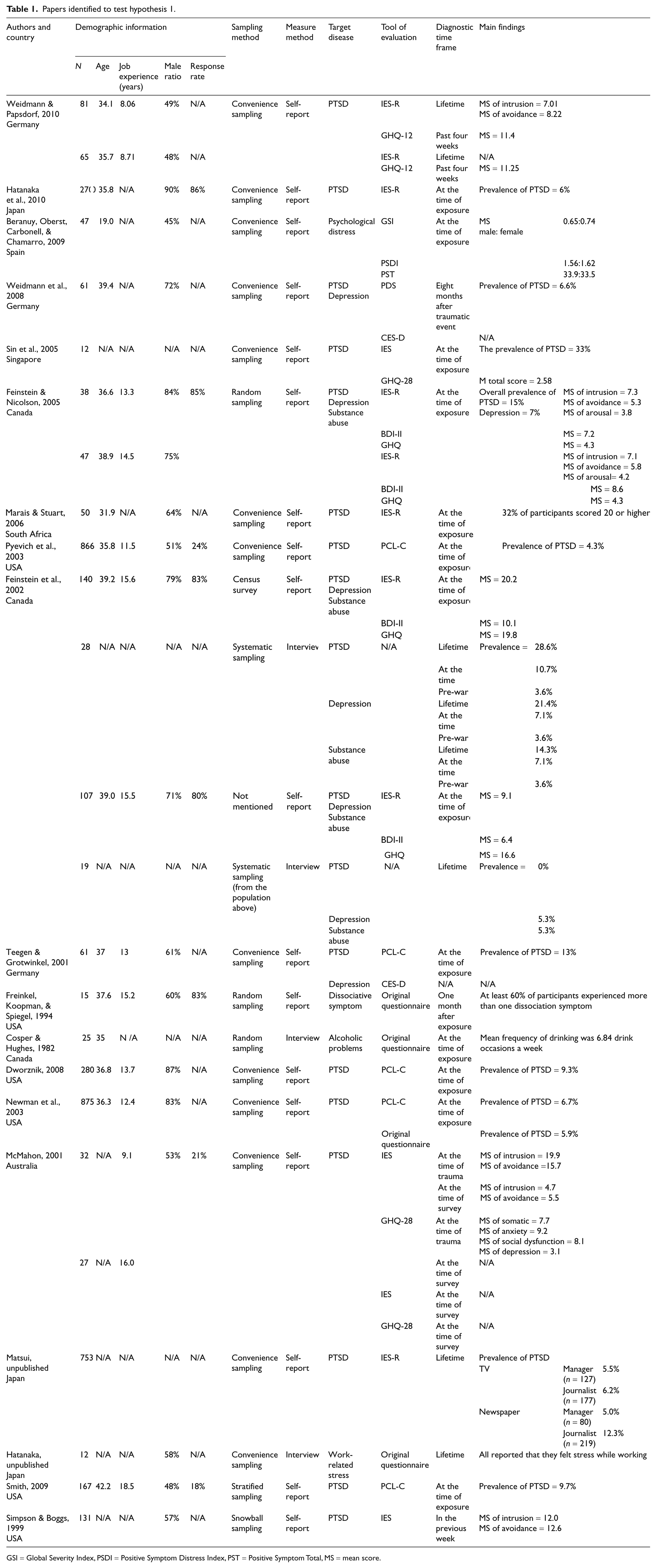
GSI = Global Severity Index, PSDI = Positive Symptom Distress Index, PST = Positive Symptom Total, MS = mean score.
PTSD
The prevalence of PTSD among journalists ranged from 0% to 33%. The overall prevalence of PTSD from 11 studies (Dworznik, 2008; Feinstein et al., 2002; Feinstein & Nicolson, 2005; Fukuoka, 2008; Hatanaka et al., 2010; Newman et al., 2003; Pyevich et al., 2003; Sin, Chan, & Huak, 2005; Smith, 2009; Teegen & Grotwinkel, 2001; Weidmann et al., 2008) with 15 subgroups (n = 3,327) was calculated to be 7.2%. The prevalence of PTSD tended to be high among journalists who had faced extraordinary events like war or a tsunami. Some studies showed that type and number of traumatic events were independent risk factors for scoring higher on quantitative evaluations of symptoms of PTSD and for the diagnosis of PTSD (Dworznik, 2008; Newman et al., 2003; Pyevich et al., 2003; Simpson & Boggs, 1999). For example, journalists who developed PTSD tended to have reported on more events (Dworznik, 2008). In addition, those who had reported on events involving death or injury were more likely to develop PTSD (Pyevich et al., 2003).
Major depression
There were only two studies by the same author (Feinstein et al., 2002; Feinstein & Nicolson, 2005) about the prevalence of major depression among journalists. Prevalence rates ranged from 5.3% to 21.4%. The samples in these studies were mainly war journalists, although there was one group of domestic journalists as a comparison.
Alcohol abuse or dependence
Not enough information was obtained to discuss alcohol problems among journalists, although some studies (Cosper & Hughes, 1982; Feinstein et al., 2002) suggested that journalists tended to be heavy drinkers and had high rates of abuse of substances such as cannabis.
Objective 2: Journalists’ personal attitudes towards mental health problems
Exclusions
From a review of abstracts and references, 14 studies were considered eligible to be read in full for this hypothesis. Among these, two were excluded for not meeting participant criteria and not being quantitative.
Included studies
Twelve studies (Table 2) were eligible and were divided into three thematic categories. For the first category, ‘journalists’ attitudes towards their own mental health problems’, four studies were included (Dworznik, 2008; Greenberg, Gould, Langston, & Brayne, 2009; Reed, 2008; Simpson & Boggs, 1999). All of the studies targeted PTSD and used questionnaires that were not widely used or accepted to assess favourable personal attitudes towards PTSD.
Papers identified to test hypothesis 2.

All studies but this one were designed as a cross-sectional study, or data from cross-sectional survey in the longitudinal study were included in the current study.
For the second category, ‘journalists’ attitudes towards mental health problems among other people’, five studies were included (Abasiubong, Ekott, & Bassey, 2007; Campbell et al., 2009; Finzen, 1996; Gutiérrez-Lobos & Holzinger, 2000; Holzinger, Kaup, & Gutierrez-Lobos, 2002). With the exception of a study from Nigeria (Abasiubong et al., 2007), journalists showed favourable and liberal attitudes towards other people’s mental health problems (Gutiérrez-Lobos & Holzinger, 2000; Holzinger et al., 2002). One interventional cohort study was conducted. The survey involved journalism students and psychiatric residents who attended weekend workshops over a six-month period. Professors from both journalism and psychiatry departments gave lectures, and attitudes towards mental illness were evaluated using original questionnaires before the lectures began and after they had been running for six months. Findings suggested that education can change the attitudes of journalists (Campbell et al., 2009).
For the third category, ‘journalists’ own help-seeking’, four studies were eligible (Feinstein et al., 2002; Newman et al., 2003; Ruggiero, Rheingold, Resnick, Kilpatrick, & Galea, 2006; Weidmann et al., 2008). In these four studies, 13% to 39% of journalists stated they were seriously thinking of seeking or had already sought professional help.
Objective 3: Attitudes and support journalists expect or have experienced from colleagues or employers when they have a mental health problem
Exclusions
From a review of abstracts and references, eight studies were considered eligible to be read in full for this hypothesis. Among these, one was excluded because participants did not meet the inclusion criteria.
Included studies
Seven studies (Cameron, 2007; Greenberg et al., 2009; Hazell, Hazell, Waring, & Sly, 1999; Newman et al., 2003; Pieton, 2009; Reed, 2008; Simpson & Boggs, 1999) were included in the current review. All studies administered original questionnaires or conducted interviews. These studies comprised two groups. One group explored the kinds of reactions journalists expect when they disclose their mental health problems (Cameron, 2007; Greenberg et al., 2009; Reed, 2008). The other investigated support, knowledge or counselling from employers or educators (Hazell et al., 1999; Newman et al., 2003; Pieton, 2009; Simpson & Boggs, 1999).
Expectations
Forty per cent of journalists feared losing the confidence of their employer and colleagues by confessing they had been traumatized (Reed, 2008). In one study, 40% felt some stigma attached to being traumatized and thought it was evidence of weakness (Cameron, 2007) (Table 3).
Papers identified to test hypothesis 3.
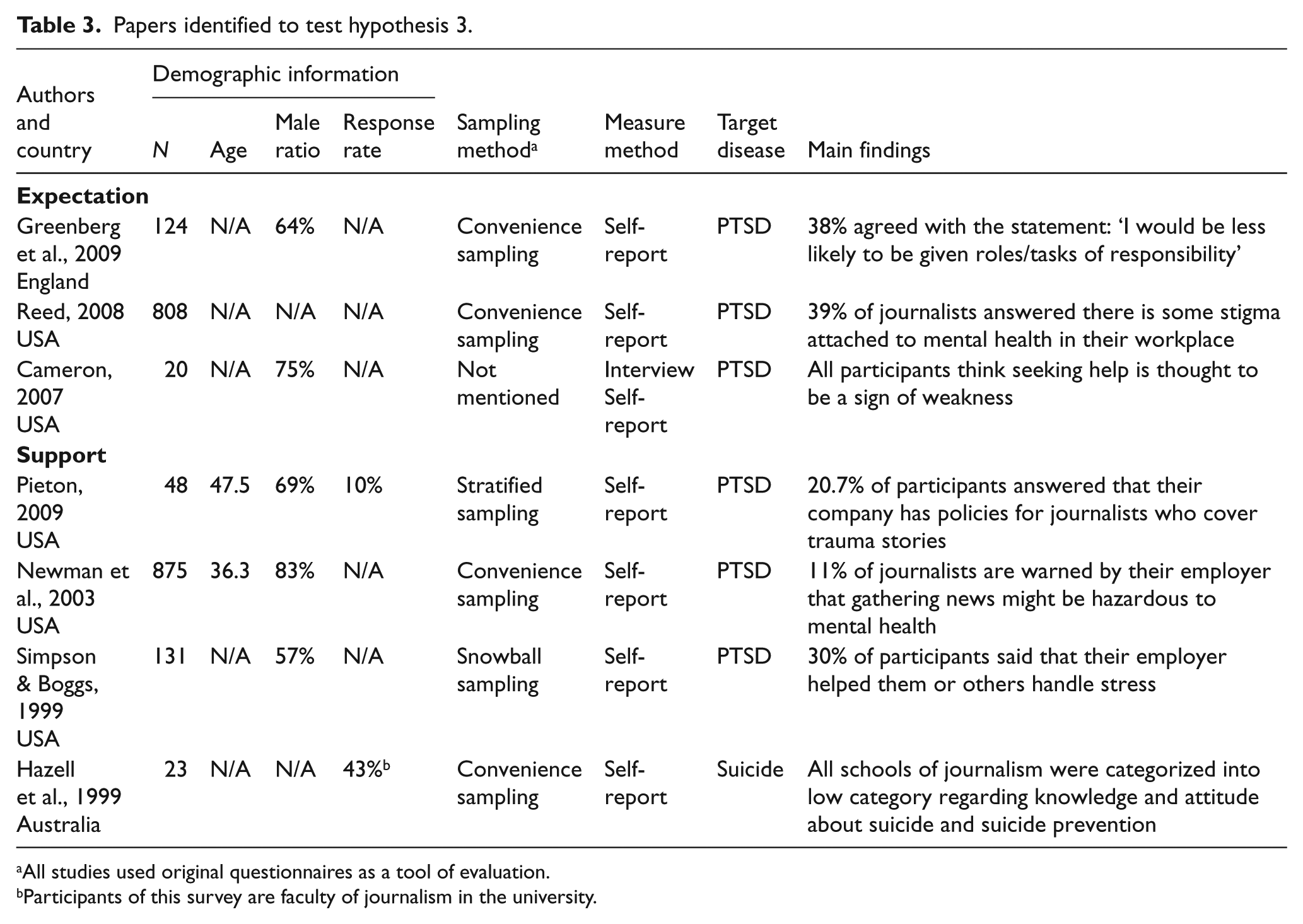
All studies used original questionnaires as a tool of evaluation.
Participants of this survey are faculty of journalism in the university.
Support
Only 20% of journalists indicated that their company had support policies for journalists who cover trauma stories (Pieton, 2009), and 11% had been informed of the risk of being traumatized (Newman et al., 2003). Thirty per cent of journalists had employers who offered them one-to-one meetings related to their stress. However, 70% of journalists felt ‘stressed out’ without any support from colleagues (Simpson & Boggs, 1999).
Objective 4: The effect of journalism’s professional culture on the course of mental illness
Exclusions
No studies were excluded.
Included studies
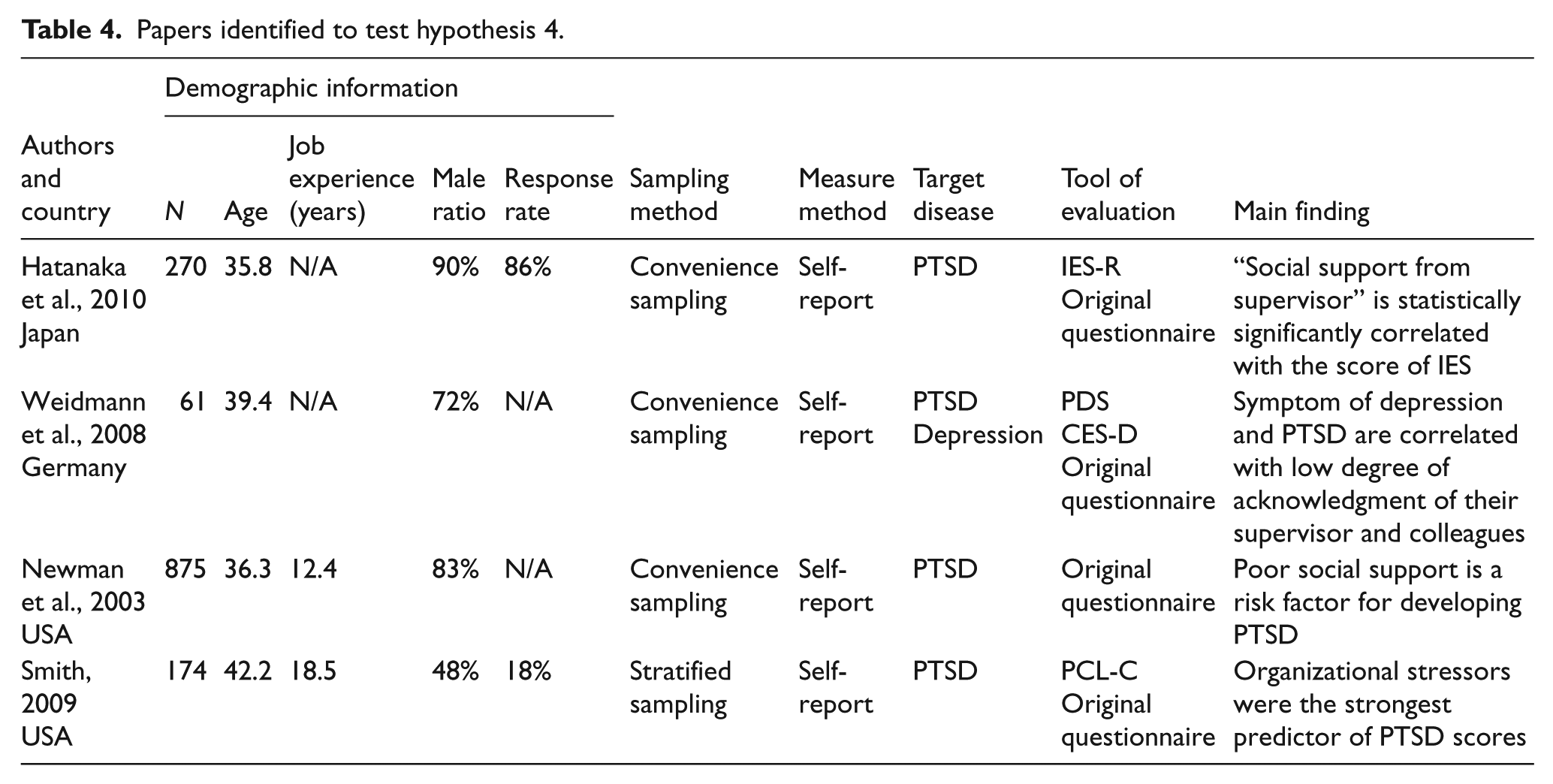
Four studies (Table 4) were eligible. Three reported lack of support (Hatanaka et al., 2010; Newman et al., 2003; Weidmann et al., 2008) as a risk factor for high symptom scores for PTSD, and the other (Smith, 2009) reported that organizational stress was the strongest predictor of high PTSD scores.
Papers identified to test hypothesis 4.
Objective 5: The effect of journalism’s professional culture on mass media depictions of people with mental illness
Exclusions
From a review of abstracts, six studies were eligible to be read in full for the hypothesis. All studies were excluded because they did not include the original quantitative data (n = 6), were not quantitative (n = 2), were only about depiction and not the relationship between mental illness and mass media depiction (n = 2), were not related to depiction (n = 1), or did not meet participant criteria (n = 1).
Included studies
None were eligible for the current review.
Discussion
This is the first systematic review of studies addressing mental health problems among journalists. The prevalence of PTSD in this profession tends to be higher than that among the general population relevant for comparison. For example, 11 subgroups of domestic journalists (n = 3,148 participants in total) (Dworznik, 2008; Feinstein et al., 2002; Fukuoka, 2008; Hatanaka et al., 2010; Pyevich et al., 2003; Smith, 2009; Weidmann et al., 2008) showed an average prevalence of PTSD of 6.5%, although the samples reported were predominantly male. To compare this figure with that of the general population, it is necessary to consider the diagnostic time frame, the gender ratios in the samples, and their age distribution.
Regarding the diagnostic time frame, four studies with five subgroups reported lifetime prevalence (Feinstein et al., 2002; Fukuoka, 2008; Hatanaka et al., 2008; Weidmann & Papsdorf, 2010). Among the domestic journalist samples, the weighted mean of the lifetime prevalence of PTSD of included studies (n = 622) was 7.9%. This rate was equal to the 7.9% lifetime prevalence in the general population (Kessler, Sonnega, Bromet, Hughes, & Nelson, 1995).
On the other hand, six subgroups reported a point prevalence (Dworznik, 2008; Hatanaka et al., 2010; Newman et al., 2003; Pyevich et al., 2003; Smith, 2009; Teegen & Grotwinkel, 2001). The weighted mean of the point prevalence of PTSD of included samples (n = 2,526) was 6.4%.
These results should be interpreted cautiously because of possible participant gender bias. It has been reported that women are twice as likely as men to have PTSD at some point in their lives.
Unfortunately, the gender ratio of five domestic samples assessed for lifetime prevalence was not available. Among the six domestic groups assessed for point prevalence, 70% of participants were male. For adult Americans, the lifetime prevalence of PTSD in women and men has been reported as 10.4% and 5.0%, respectively. We calculated the weighted mean point prevalence of PTSD among a 70% male population as 6.6%. To control for gender bias in the total sample of included studies, lifetime prevalence in the current analysis, 7.9%, should be compared with 6.6%.
We used a meta-analytic approach to evaluate gender bias in each of the studies. To assess the effect of gender on the prevalence of PTSD, we performed the Pearson correlation test using the male ratio and the prevalence of PTSD in studies that included that information (Dworznik, 2008; Feinstein & Nicolson, 2005; Hatanaka et al., 2010; Marais & Stuart, 2005; Newman et al., 2003; Pyevich et al., 2003; Smith, 2009; Teegen & Grotwinkel, 2001; Weidmann et al., 2008). Results revealed no correlation between them (p = .242). This suggests the importance of other known risk factors for developing PTSD such as perceiving a threat to one’s life (Voges & Romney 2003) or factors specific to journalists such as length of career.
The prevalence of PTSD among foreign correspondents who cover extraordinarily disastrous situations such as wars (Feinstein et al., 2002; Feinstein & Nicolson, 2005) and tsunamis (Sin et al., 2005; Weidmann et al., 2008) tends to be higher than among domestic journalists recruited in the included studies who mainly covered less extreme situations that citizens may face as well, such as fires or car accidents. This prevalence ranged from 6.6% to 28.6%, which is similar to the figure among war veterans (Engelhard et al., 2007).
Because of the paucity of information about potential confounding factors except age and gender, we were not able to investigate potential risk factors in the meta-analysis. However, included studies reported length of career (Simpson & Boggs, 1999; Weidmann et al., 2008), type and number of trauma exposures (Dworznik, 2008; Newman et al., 2003; Pyevich et al., 2003; Simpson & Boggs, 1999), and poor social support (Hatanaka et al., 2010; Nairn, Coverdale, & Claasen, 2001; Sin et al., 2005; Weidmann & Papsdorf, 2010) as risk factors for symptoms of PTSD. These suggested risk factors correspond with the psychological resilience model (King, Vogt, & King, 2004). This model is supported by previous studies (Connor, 2006; Gold et al., 2000) and implies the importance of the role of journalists’ managing editors in mitigating these risk factors by providing workplace systems to identify and respond to employee mental health problems. Some studies (Pieton, 2009; Simpson & Boggs, 1999) have shown that journalists are neither sufficiently informed of risks nor supported in terms of mental health problems. Journalists’ personal attitudes towards mental illness are generally positive (Reed, 2008), but many think they will lose the confidence of employers and colleagues if they disclose that they were traumatized. Considering the anxiety journalists have about being stigmatized as having a ‘mental disorder’, the prevalence of mental health problems among them should be interpreted with particular caution. Because all included studies except one (Feinstein et al., 2002) relied on self-report questionnaires, the accuracy of the diagnosis is debatable compared with that obtained from interviews (Adkins, Weathers, McDevitt-Murphy, & Daniels, 2008; Brewin et al., 2002; Foa, Riggs, Dancu, & Rothbaum, 1993). The anxiety of being stigmatized could affect accuracy of self-report measures. A convenience sampling method could also affect the estimated prevalence of PTSD.
Although we found no studies with quantitative data that analysed the effect of journalism’s professional culture on the depiction of mental illness, some addressed this theme indirectly. They reported that the combination of reporting a few crimes committed by people with mental illness, creating a stereotype of people with mental illness (Mastroianni & Noto, 2008) and the lack of differentiation in other portrayals of mental illness invite the reader to generalize the stereotype to other persons with mental health problems (Nairn et al., 2001). Furthermore, media practices directed at engaging readers require the use of cases and a style of writing that force readers to draw upon common-sense knowledge of mental illness to understand the text (Allen & Nairn, 1997). Last, to sell stories, danger is emphasized (Matas, el-Guebaly, Peterkin, Green, & Harper, 1985). The Glasgow Media Group (Henderson, 1996) showed how news stories or dialogues closely resemble fictional writing in the first section after the headline. Although these findings were not evaluated quantitatively, they suggest that journalists write articles to emphasize fear using a stereotype of mental illness to capture readers’ interest, even though they personally know the facts are different.
Limitations
Several attributes of the studies reviewed showed that the overall scientific quality of these papers varied. Thus, the current review has a number of limitations. Relying on self-report questionnaires is the major limitation. Previous studies have found that the prevalence of PTSD estimated this way is higher than the figure obtained by structured psychiatric interviews (Engelhard et al., 2007; Ruggiero et al., 2006). The accuracy of a diagnosis of major depression by self-report has been questioned (Eaton, Neufeld, Chen, & Cai, 2000). Furthermore, a convenience sampling method, low response rate or small sample size in some studies limited our ability to draw conclusions. Finally, some studies in the current review included similar but different occupations, and the definition of a journalist was often unclear.
Conclusions
To test the five key hypotheses, we performed a systematic review. The studies included showed that prevalence of PTSD among journalists was higher than among the general population. Some studies showed that journalists were aware of their risk of developing PTSD, and a minority had already used psychiatric services. However, there were perceived disincentives to disclosing mental health problems. It is not clear whether employers are reluctant to inform journalists about the potential for mental health problems and to provide help, or whether they lack the knowledge and resources to do so. Some studies suggested that despite journalists’ positive attitudes towards people with psychiatric problems, they write articles in a way contrary to these attitudes to keep readers’ attention. However, the lack of evidence for this meant we could not test our fifth hypothesis that the professional culture of non-disclosure adversely affects coverage of mental illness.
Future research
These findings indicate a clear direction for future research. To assess the prevalence of mental health problems among journalists and their attitudes towards people with mental illness, studies of sufficient sample size and response rate are required. Structured diagnostic interviews with well-established properties should be considered. Research regarding the effects of personal attitudes versus perceived professional culture on mass media depiction of those with mental illness requires prospective studies linking news coverage to participants. The interpretation of this would be further enhanced by qualitative interviews with journalists and editors on the apparent contradiction between personal attitudes and coverage. Finally, key issues for future research are: (1) whether development of workplace policies in media organizations to facilitate disclosure and help-seeking for mental health problems would promote positive change in coverage of mental health-related topics; and (2) whether educational interventions specifically targeted at this type of news coverage are needed.
Footnotes
Appendix 1. Search strategy
The following terms were included: