



Abstract
Background:
Previous study has indicated that perceived discrimination affected the children’s behaviors, but whether belief in a just world moderates the relationship between perceived discrimination and problem behaviors among left-behind children and whether there are differences between boys and girls are still unknown.
Aims:
This study aims at exploring whether perceived discrimination influences the left-behind children’s behaviors and the moderating role of belief in a just world among both boys and girls.
Methods:
Using cross-sectional data on rural left-behind children in Henan Province of China, this study examined the relationships among perceived discrimination (personal and group), belief in a just world and problem behaviors for both boys and girls. The participants included 336 boys and 310 girls. Self-report questionnaires captured perceived discrimination, belief in a just world and problem behaviors.
Results:
The results demonstrated that Chinese left-behind boys who perceived a high amount of personal discrimination were prone to exhibit problem behaviors. Yet, neither perceived personal nor group discrimination was associated with problem behaviors among the left-behind girls. Moreover, the children’s belief in a just world moderated the association between perceived discrimination and problem behaviors among the boys; in those who reported higher levels of belief in a just world, the negative effect of perceived personal discrimination on problem behaviors appeared weaker, comparing to those who reported lower levels of belief in a just world. In addition, the negative effect of perceived group discrimination on problem behaviors appeared stronger among the left-behind boys who reported higher levels of belief in a just world.
Conclusion:
Belief in a just world provided a protect function for the left-behind children when facing perceived personal discrimination. More attention should be paid on belief in a just world, perceived discrimination and problem behaviors among left-behind children.
Introduction
The problem of left-behind children in rural areas is a growing problem that has aroused widespread concern in Chinese society. Left-behind children in rural areas refer to minors below the age of 18 years, with at least one parent who has migrated to secure work elsewhere (Duan & Yang, 2008; Zhao, Liu, & Shen, 2008). There are over 68 million left-behind children in China (Duan, Lai, & Qin, 2017), which is a very large number that should draw the attention. Because of the separation from their parents, left-behind children usually show difficulties in adaptation. For example, many studies have found left-behind children experience more emotional and behavioral problems than other children (J. Guo et al., 2012; Y. Liu, Li, Chen, & Qu, 2015; Zhao & Liu, 2010). Studies on left-behind children that identify internal and external factors that impact their growth prove important to illuminate means by which to provide greater support to this group of young people.
There exists a high incidence of problem behavior among left-behind children (X. W. Li, Zou, Jin, & Ke, 2008; X. Liu, Fan, & Shen, 2007). Problem behavior includes actions that fail to conform to societal norms or that negatively impact the child’s development. According to existing research, the rate of left-behind children problem behaviors such as smoking, drinking and school truancy are significantly higher than the other children in rural areas whose parents have not migrated (Chi, Hu, & Shen, 2008; F. Fan & Sang, 2005; X. H. Fan & Fang, 2010; Wen & Lin, 2012). Studies also have shown that left-behind children exhibited an increased likelihood of problem behaviors such as fighting and rule-breaking as well as participation in criminal activities, such as theft and extortion (Huang, 2004). Besides, with the increase of problem behaviors among left-behind children, the drop-out rate is also rising, even further leading to the crime (Nie, 2009). In summary, because the incidence of problem behaviors among left-behind children is relatively high, and the consequences which problem behaviors cause are comparatively severe, the factors that might shape these behaviors merit attention.
Among the various factors that affect children’s behaviors, perceived discrimination represents an important variable. Perceived discrimination refers to a person’s perception that they or the group to which they belong are treated in different or inequitable ways (Sanchez & Brock, 1996). Perceived discrimination has two dimensions: perceived personal discrimination and perceived group discrimination (Cameron, 2001; Fuegen & Biernat, 2000; X. Liu, 2008). Perceived discrimination has proven to be an important risk factor for problem behaviors among disadvantaged children (Deng, Kim, Vaughan, & Li, 2010; Kam, Cleveland, & Hecht, 2010; H. Y. Li, Shen, Wang, & Zhang, 2011; Zhu, Guo, Pan, & Lin, 2015). But the previous researches have mainly focused on the perceived discrimination that permanent aspects bring, such as race (Bogart et al., 2013; Park, Schwartz, Lee, Kim, & Rodriguez, 2013; Rivera et al., 2011; Tobler et al., 2013), which is inherent and will not change. While as for the perceived discrimination among left-behind children, it is parents going out for work that results in the temporary changes in the structure of the family, which in turn leads to the perceived discrimination. In other words, the perceived discrimination among left-behind children is relatively temporary compared with perceived racial discrimination. Because of these differences, it is necessary to specifically discuss the relationship between perceived discrimination among left-behind children and problem behaviors. According to the researches on perceived discrimination among left-behind children, perceived discrimination is significantly associated with left-behind children’s positive affect, negative affect and life satisfaction (Shen, Hu, & Liu, 2009). And also, a high level of perceived discrimination correlated with decreased positive affect and increased negative affect (Zhao, Yang, Ma, & Huang, 2016). These previous studies focusing primarily on the influence of perceived discrimination on emotional adjustment among left-behind children can bring us some enlightenment, but the relationship between perceived discrimination and behavioral changes (e.g. problem behaviors) has yet to be fully explored.
Although negative factors may contribute to an increase in problem behaviors, individual differences among children remain important (Diaz, 2011; Maes, Stevens, & Verkuyten, 2014). A child’s understanding of the world plays a significant moderating role. For example, a child’s belief in a just world may impact their actions. Belief in a just world was first proposed by Lerner (1965). When people believe that they live in a just world, they expect to be rewarded for their efforts, to receive what they deserve. Belief in a just world can be seen as an aspect of individual internal cognition, helping to moderate subjective feelings (Dalbert, 2002; Ritter, Benson, & Snyder, 1990), which means people who strongly believe in a just world experience more positive emotions, whereas those who doubt the existence of a just world may experience more negative emotions.
Belief in a just world is highly valued in the studies of special groups, especially those who are treated unfairly and those who are in disadvantaged groups. For example, the previous studies focused on the teachers who suffer from student violence (Dzuka & Dalbert, 2007), victims of bullying at work (Cubela Adoric & Kvartuc, 2007) and the old (Dzuka & Dalbert, 2006). What’s more important, in the researches of adolescents, belief in a just world is also a vital factor. The previous study showed that belief in a just world is positively correlated with the mental health among the middle school students (Correia & Dalbert, 2007). Furthermore, when focusing on the groups that have been in disadvantaged environment during the adolescent period, belief in a just world is a necessary variable to protect the mental health. In a study of the relationship between belief in a just world and hostile, it found that the higher the belief in a just world they have, the less hostile they are in the frustration situation (Bègue & Muller, 2006). Besides, the study among children with AIDs (Meng, Zhong, & Tian, 2015) has also found the positive effect of belief in a just world on adaptation difficulties.
There are currently two hypothesis models on the role of belief in a just world in promoting mental health, which are belief in a just world as an independent, main contribution to predicting outcomes or as a psychological buffer (Zhou, 2013). In the independent and main contribution model, belief in a just world directly influences the other psychological variables. Some researches approved this model (Correia, Kamble, & Dalbert, 2009; Dalbert, 2009). And as for the psychological buffer model, it means belief in a just world plays a moderating role between the events and the outcomes. And the previous studies have also certificated the viewpoint. For example, a research among the flood victims showed that belief in a just world is negatively correlated with anxiety, depression and sadness, which means the higher belief in a just world the one has, the less negative emotions he feels (Otto, Boos, Dalbert, Schöps, & Hoyer, 2006). But for these two models, little attention has been paid to the problem behaviors among the disadvantaged children group.
Research on left-behind children in rural areas has demonstrated that belief in a just world influenced children’s subjective well-being (Zhang & Shen, 2011); children who held a stronger belief in a just world evidenced greater satisfaction with their lives. In addition, researchers have found that belief in a just world moderated their emotional experiences (Ye & Zhang, 2017). Yet, very little research has examined the relationships between left-behind children’s perceived discrimination and behavior adjustment and the moderating role that belief in a just world may play. Given the importance of belief in a just world to children’s psychological adaptation, it would prove imperative to examine how it might affect the relationship between perceived discrimination and problem behaviors. The relationships among the three variables – perceived discrimination, problem behaviors and belief in a just world – were the focus of this research. A child’s gender has also been shown to represent an important variable related to problem behaviors; boys usually exhibit more problem behaviors than girls (H. F. Guo, 2008; S. R. Guo, 2006). Also, it there may be significant gender differences in the relationship between negative events and problem behaviors (B. Liu, 2013; Wang, Chen, & Li, 2013). Thus, it should be speculated that there are significant gender differences in the relationship between perceived discrimination and problem behaviors.
This research addresses the gap in the literature through an examination of the impact of perceived personal and group discrimination on problem behaviors among left-behind children. In addition, particular attention is paid to potential gender differences among the children with regard to problem behaviors. Finally, this study attends to the moderating role that the belief in a just world might play in the behaviors of left-behind children. The research was designed with the expectation that perceived discrimination and problem behaviors would show significant correlations, with differences among boys and girls. There also was the expectation that belief in a just world would prove to moderate problem behaviors; children who held a strong belief in a just world would exhibit less problem behaviors. The study was intended to shed light on the factors that shape left-behind children’s problem behaviors to help identify strategies to assure their healthy development.
Method
Participants
The sample comprised 646 children (336 boys, 310 girls), recruited from 18 elementary and junior high schools in a rural county of Henan Province, China. Many adults have migrated from Henan to seek work elsewhere, leaving their children behind to live with family members. The mean age of the boys was 12.73 years (SD = 1.44; range: 8–17 years) and of the girls was 12.75 years (SD = 1.37; range: 9–16 years). No child had obvious physical or developmental disabilities. All participants belonged to the Han nationality, which is a prominent ethnic group in China.
Procedures
Permission was obtained from each school to conduct the study. The participants received written and verbal instructions about how to complete the questionnaires and were informed about the confidentiality of their responses. Once participants were recruited, they were divided into groups and completed the questionnaires in their classroom after school. Consent was obtained from the parents or guardians of participating students.
To ensure the scientific rigor of the study, the administration of the questionnaires was carried out by psychologists and psychology students at Beijing Normal University. The study protocol was approved by the Institutional Review Board at Beijing Normal University in China.
Measures
Demographic form
Participants finished a brief demographic form which provided background information on age, gender, school type, ethnic group, left-behind time, left-behind type and socioeconomic status.
Perceived discrimination
The children’s perceived discrimination was assessed by a scale that included six questions, which has been successfully used among the left-behind children (Shen et al., 2009). Three questions covered the dimension of perceived personal discrimination, such as ‘I feel I have been treated unfairly’. The other three questions captured perceived group discrimination with questions such as ‘In general, I feel that students whose family situation are like mine have been treated unfairly’. Responses to the questions ranged from 1 (strongly disagree) to 5 (strongly agree). The results were analyzed using means; a higher score indicated that the child had a greater sense of inequitable events. The Cronbach’s alpha coefficients of perceived personal and group discrimination were .64 and .70, respectively.
Personal belief in a just world
The children’s personal belief in a just world was measured by the General Personal Belief in A Just World Scale (Dalbert, 1999), which has been used successfully among left-behind children in China (Zhang & Shen, 2011). The scale included six items, with responses ranging from 1 (strongly disagree) to 6 (strongly agree). The results were analyzed using means; higher scores represented a stronger belief in a just world. The Cronbach’s alpha coefficient was .62.
Problem behaviors
The children’s problem behaviors were assessed with a 12-point scale (Shen, 2009). Two aspects were measured, including criminal behavior such as ‘steal’ and behavior against a regulation such as ‘escape from classes or school’. The scale ranged from 1 (never) to 4 (always). The results were analyzed using means; a higher score represented a higher incidence of problem behaviors. The Cronbach’s alpha coefficient was .80.
Results
Preliminary analyses
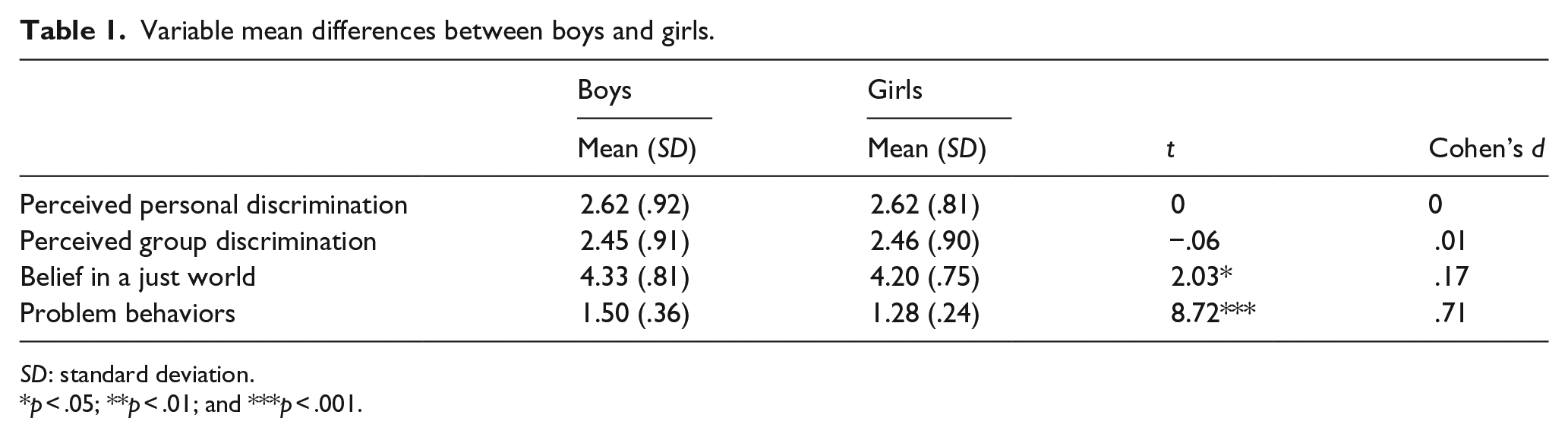
The means and standard deviations of the perceived personal discrimination, perceived group discrimination, personal belief in a just world and problem behaviors by gender can be found in Table 1. T-tests showed that boys reported significantly higher levels of personal belief in a just world and problem behaviors than girls. There were no significant differences between these boys and girls with regard to perceived personal or group discrimination.
Variable mean differences between boys and girls.
SD: standard deviation.
p < .05; **p < .01; and ***p < .001.
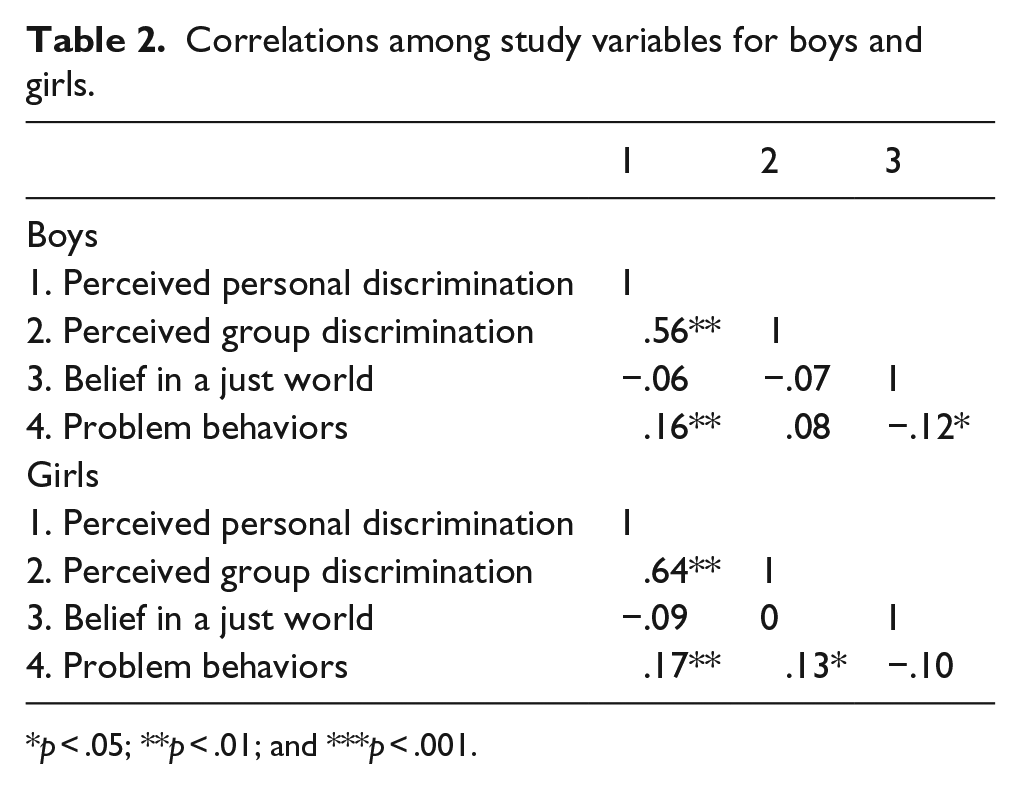
Table 2 shows the correlations among the study variables for the boys and girls. The information provides that, for both sexes, perceived personal discrimination was positively correlated with problem behaviors. Interestingly, perceived group discrimination was positively correlated with problem behaviors among the girls, whereas no such correlation could be identified among the boys. Moreover, personal belief in a just world was negatively correlated with problem behaviors among boys yet not related to problem behaviors among girls.
Correlations among study variables for boys and girls.
p < .05; **p < .01; and ***p < .001.
Data analysis
A series of regression analyses evidenced the independent and interactive associations linking perceived discrimination and belief in a just world with problem behaviors for both boys and girls. First, the control variables (left-behind time, left-behind type, socioeconomic status) were entered. The predictors (perceived personal discrimination, perceived group discrimination) and the moderator (belief in a just world) were then analyzed. Finally, the interaction between perceived personal discrimination and belief in a just world and perceived group discrimination and belief in a just world were included in the third stage of analysis. Predictor variables were centered for all regression analyses.
Moderating effects of belief in a just world
To identify significant interactions, an interaction tool (Preacher, Curran, & Bauer, 2006) was used to conduct the calculations of simple intercepts and simple slopes according to standard procedures (Aiken & West, 1991; Bauer & Curran, 2005). The subsequent analyses identified intercepts and slopes that represented the relationships between the predictor variables (perceived personal and group discrimination) and the outcome variable (problem behaviors) at the higher (+1 standard) and lower (−1 standard) levels of the moderator variable (personal belief in a just world).
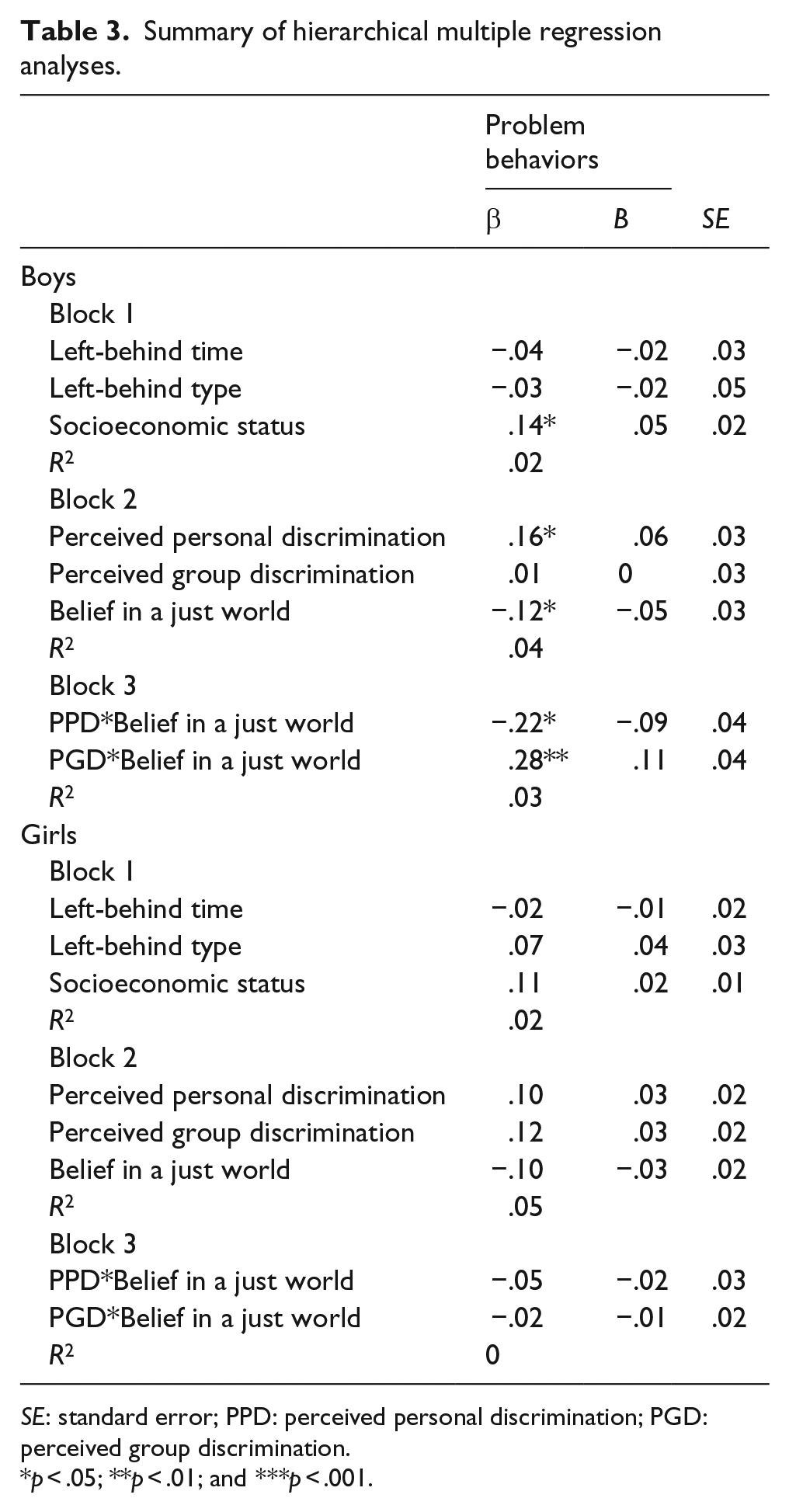
For boys, perceived personal discrimination was positively and significantly associated with problem behaviors (p < .05, see Table 3). However, perceived group discrimination was not significantly related to problem behaviors. Moreover, belief in a just world was negatively and significantly associated with problem behaviors (p < .05). In addition, the two interactions examined (perceived personal discrimination and belief in a just world as well as perceived group discrimination and belief in a just world) were both significant; belief in a just world moderated the relationship between both perceived personal discrimination and problem behaviors as well as perceived group discrimination and problem behaviors. The full set of predictors accounted for 9% of the variance in children’s problem behaviors.
Summary of hierarchical multiple regression analyses.
SE: standard error; PPD: perceived personal discrimination; PGD: perceived group discrimination.
p < .05; **p < .01; and ***p < .001.
After getting rid of the effects of the control variables, neither perceived personal discrimination nor perceived group discrimination was significantly associated with problem behaviors together with belief in a just world for the girls (Table 3). Moreover, the interaction terms among the predictor variables were not significantly associated with problem behaviors. The full set of predictors only explained 7% of the variance in the children’s problem behaviors.
Simple slope analysis demonstrated that, among the left-behind boys who held low levels of belief in a just world, there was a significant positive correlation between perceived personal discrimination and problem behaviors (β = .14, t = 3.50, p < .001). Yet, among the boys who held a strong belief in a just world, there was no significant relationship between perceived personal discrimination and problem behaviors (β = −.01, t = −.28, p > .05). As evidenced in Figure 1, the left-behind boys who held a weak belief in a just world, the increase of perceived personal discrimination was accompanied by a corresponding increase in problem behaviors. Yet, no similar pattern appeared among the boys who held a strong belief in a just world.
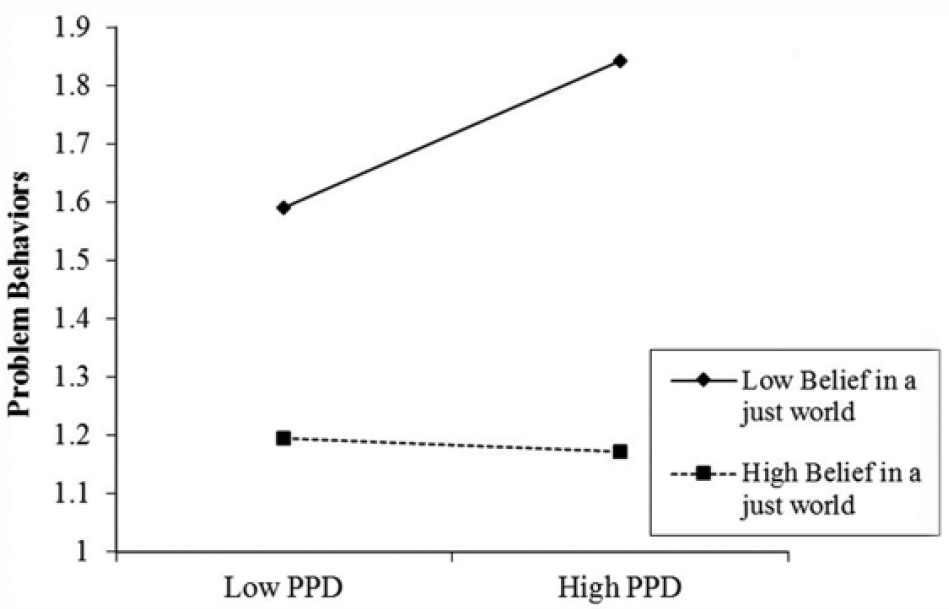
Two-way interaction of perceived personal discrimination and belief in a just world on the problem behaviors of boys.
Simple slope analysis also revealed that an association between perceived group discrimination and problem behaviors was significantly and positively related among the left-behind boys who held a strong belief in a just world (β = .09, t = 2.16, p < .05), in contrast to the significant and negative relationship found among those who held a weak belief in a just world (β = −.09, t = −2.23, p < .05). These findings suggest that an increase in perceived group discrimination among the boys who held a strong belief in a just world exhibited an increase in problem behaviors, and the boys with a weaker belief in a just world did not (Figure 2).
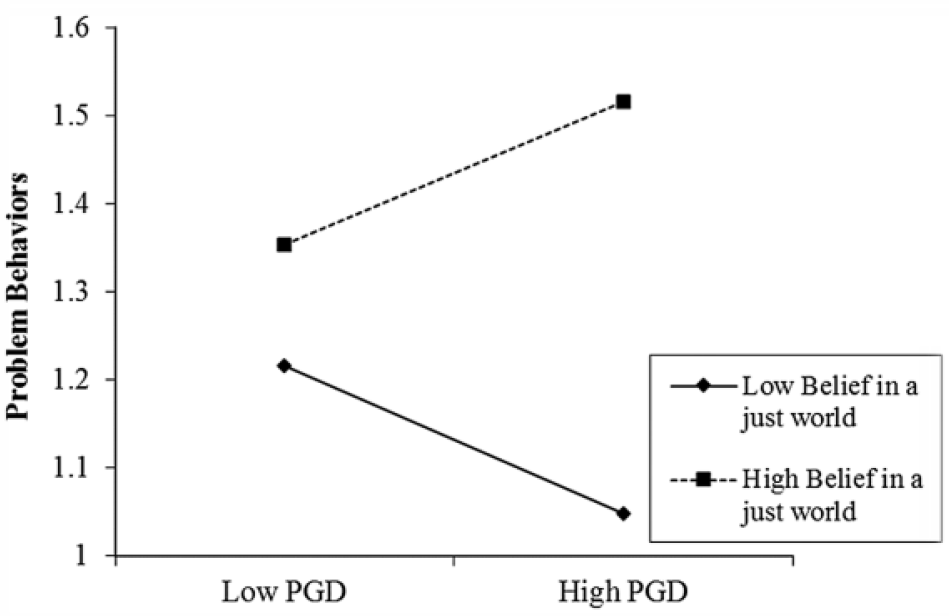
Two-way interaction of perceived group discrimination and belief in a just world on the boys’ problem behaviors.
Discussion
Most research about left-behind children in rural China that examines problem behavior has focused on individual psychological factors. This study is the first to explore the impact that belief in a just world might have on the relationship between perceived discrimination and problem behaviors. The study revealed three key findings. First, perceived personal discrimination evidenced a significant effect on boys’ problem behaviors, whereas neither perceived personal nor group discrimination significantly proved to predict problem behaviors among girls. And also belief in a just world has a significant effect on the problem behaviors among the boys. Second, holding a belief in a just world significantly moderated the relationship between perceived personal discrimination and problem behaviors among boys. Among the boys who held a strong belief in a just world, there was no significant relationship between perceived personal discrimination and problem behaviors. Yet, for the boys with low scores with regard to belief in a just world, an increase in perceived discrimination was accompanied by a corresponding increase in manifestation of problem behaviors. Third, belief in a just world significantly moderated the relationship between perceived group discrimination and problem behaviors among boys. For the left-behind boys who held strong beliefs in a just world, an increase in perceived group discrimination was accompanied by a corresponding increase in problem behaviors. Yet, an increase in perceived group discrimination was accompanied by decreased manifestation of problem behaviors among the left-behind boys with a weaker belief in a just world.
The results of this study partially supported the hypothesis that perceived discrimination would prove positively related to the left-behind children’s problem behaviors. For boys, perceived personal discrimination served to positively predict their problem behaviors. Yet, contrary to our expectations, girls responded differently than boys; no significant relationship between perceived personal and group discrimination and problem behaviors was observed. These findings are paralleled with the previous study. For example, a study focusing on Black and Latino adolescents examined the relationship between perceived discrimination and smoking (Wiehe, Aalsma, Liu, & Fortenberry, 2010). The results showed that smoking positively associated with perceived discrimination only among boys. Also, Brody, Kogan, and Chen (2012) found that for African American male adolescents, perceived discrimination significantly linked with increasing substance use. A possible explanation for this could be that boys respond to stressful events by acting out (B. Liu, 2013; Wang et al., 2013), whereas girls tend to internalize problems, exhibiting signs of depression, loneliness and escape mechanisms (Bao, 2006; Devet, 1997; Eisenberg et al., 2001; Gaylord-Harden & Cunningham, 2009; Yang, Bian, Chen, & Wang, 2016). The results suggest that the negative effects of discrimination stress on boys’ behavior need to be paid more attention.
And belief in a just world has significant main effect on problem behavior among boys, which partially certificated the model above that belief in a just world is an independent, main contribution to predicting outcomes. Previous studies have demonstrated this model based on general considerations. In our research, we considered the gender differences in the relationship between belief in a just world and problem behaviors. The results found that among the boys, belief in a just world has a main effect on the problem behaviors. The higher belief in a just world they have, the less problem behaviors they express. The cause may be that belief in a just world plays an important role, which makes people identify with the principles of justice and are more willing to abide by the principles of justice and commit to investing time and energy in their long-term goals, and think they will finally get what they deserve (Zhou, 2013). That means people who have high belief in a just world have more faith in the future, and they tend to use impartial means to achieve their goals and the less they will violate the rules (Correia & Dalbert, 2008; Sutton & Winnard, 2007). According to the interpretation above, the left-behind boys who have higher belief in a just world will use more correct ways when facing the life. As for the girls, belief in a just world has no significant predicting effect on problem behaviors. The reason may be that there are other, more important variables, such as peer relation (Chen, 2007). Follow-up studies need further attention.
Another aim of the study was to test the moderating effect and the psychological buffer of belief in a just world on the relationship between perceived discrimination and problem behaviors. The results partially supported the hypothesis. Specifically, we found that for boys reporting higher levels of belief in a just world, there was not a significant relationship between perceived personal discrimination and problem behaviors. Among the boys reporting lower levels of belief in a just world, the problem behaviors significantly increased with the increase of perceived personal discrimination. This finding supported the argument that belief in a just world represented a variable that influenced perceived personal discrimination (Choma, Hafer, Crosby, & Foster, 2012; Crosby, 1984) and provided an interpretive framework for individuals that helped them explain events in a meaningful way. When faced with events that they deemed unfair, the belief in a just world could temper their responses on an individual level. For the left-behind children who held a strong belief in a just world, discrimination possibly served as a growing experience, as they attempted to employ positive ways to address the problem (Zhang & Shen, 2011). On the contrary, the children with low levels of belief in a just world could not develop positive ways to understand the discrimination experienced, which would compel them to learn incorrect and negative responses that result in problem behaviors.
However, the moderating effect of belief in a just world on the relationship between perceived group discrimination and problem behaviors proved surprising. Among the boys who held a strong belief in a just world, with an increase in perceived group discrimination, there was a higher incidence of problem behaviors. Yet, for the boys who held lower levels of belief in a just world, an increase in perceived group discrimination accompanied a decrease in problem behaviors.
What could explain these differences? A possible explanation would be that members of vulnerable groups generally feel that the meaning of perceived personal discrimination and perceived group discrimination is different. When facing the perceived discrimination, it directs at individuals themselves. While confronting perceived group discrimination, individuals may understand that the group to which they belong is the target of the discrimination, and that the affront was not directed at them personally (Crosby, 1984; Moghaddam, Stolkin, & Hutcheson, 1997). Hence, when the left-behind boys who held a stronger belief in a just word, understood that their group was the target of discrimination, they could exhibit problem behaviors as a way to resist and to draw others’ attention to the situation. Other researchers have found this to be the case among Chinese school children in general (Ding, 2013; Z. Y. Li, 2016) and among left-behind children specifically (X. Liu, 2017). The idea is that because these boys believed the world to be fair, they also believed that others would be concerned about an unjust situation. Therefore, their actions could be interpreted as a way to call attention to injustice with the hope that others would respond by helping change the situation. The boys who do not believe in a just world would not respond in the same way because they would not think that calling attention to the situation would change anything. Therefore, when they perceive group discrimination, they are not compelled to act out or engage in what would be viewed as problem behaviors.
Several limitations of the study merit attention. First, because the research was conducted among left-behind children in Henan Province of China, the ability to generalize the findings to other populations of young people might prove limited. Second, because data were collected through the use of self-reported questionnaires, common method variance could be an issue. Third, because the sample is cross-sectional, no causal relationship between the variables studied could be determined. Despite the study’s limitations, it represents one of the first research efforts to understand the relationship between perceived discrimination and problem behaviors among left-behind children in China. In addition, the research attended specifically to differences in children’s responses by gender of the participants. Moreover, the study demonstrated that discussions about possible links between perceived discrimination and problem behaviors demand consideration for children’s belief in a just world. Future research should expand the number of the participants and collect samples from other parts of the country. Longitudinal research design that captures the process by which perceived discrimination and belief in a just world shape problem behaviors over time should be examined. Finally, to avoid bias based on self-reporting, the inclusion of multiple reporters or various means by which to collect data should be considered for future assessment of children’s problem behaviors.
Although there are many studies supporting the relationship between perceived discrimination and problem behaviors among adolescents, the researches mainly focus on the different racial groups (Acosta, Hospital, Graziano, Morris, & Wagner, 2015; Flores, Tschann, Dimas, Pasch, & De Groat, 2010; Gray & Montgomery, 2012). And besides, it need to be further explored that how the perceived discrimination affects problem behaviors. This research focuses on the left-behind children group whose parents are not around. And what’s more, our study pays close attention to the relationship between perceived discrimination and problem behaviors in different gender groups and the moderating effect of belief in a just world, which has an important contribution to deeply revealing the mechanism of perceived discrimination to the problem behaviors.
This research, respectively, examined how perceived discrimination influenced problem behaviors among left-behind boys and left-behind girls, which is rarely explored in the previous research. Our findings suggest that facing perceived discrimination about their identification, boys engaged in more problem behaviors, which is consistent with previous studies about other types of perceived discrimination. Our study fills gaps in this area and also suggests that it is important to focus on the perceived discrimination among the left-behind children group, especially the left-behind boys, to prevent the occurrence of problem behaviors. Besides, we examined the moderating role of belief in a just world, which is seldom concentrated about the relationship between perceived discrimination and problem behaviors. The results show that belief in a just world moderates the relationship between perceived discrimination and problem behaviors. It suggests that belief in a just world, which is an individual inner variable, plays an important role in the development of left-behind children, and therefore future intervention should focus on the formation of belief in a just world among left-behind children.
