



Abstract
Aims:
To qualitatively characterize the experience, impact and needs of informal family caregivers around the communication of a diagnosis of schizophrenia.
Methods:
In all, 13 informal family caregivers were recruited. All were parents. Semi-structured interviews were used to explore their experience of the diagnosis of schizophrenia, the impacts of the diagnosis and the needs related to the diagnosis around its communication. Interviews were recorded, transcribed, codes generated and mixed deductive–inductive thematic analysis undertaken.
Results:
Participants described receiving the diagnosis of schizophrenia for their relative as a devastating experience, although some nuanced the experience with a sense of relief of finally naming the disorder and getting access to care. Caregivers’ experience and representations prior to hearing the diagnosis played an important role in the way the ‘news’ was internalized. The communication of the diagnosis constituted a starting point for acceptance of the reality of the illness in participants. Numerous unmet needs around the communication of the diagnosis were reported by participants, including personnalized support, specific explanations about the disorder and guidance on their role as caregiver.
Conclusion:
A specific attention must be given to the communication of the diagnosis of schizophrenia to the informal family caregivers. Information giving must be early, comprehensive, personalized and embedded into tailored education and support programmes for caregivers to facilitate illness acceptance and adaptation.
Introduction
Schizophrenia is a chronic psychiatric disorder that affects 1% of the population worldwide. The diagnosis is made primarily on the basis of symptoms including delusions/hallucinations (‘positive symptoms’), disorganized thoughts/odd behaviour (‘disorganized symptoms’) and flattened affect/avolition (‘negative symptoms’) associated with reduced psychosocial functioning (Owen et al., 2016). Schizophrenia is stressful and burdensome not only for the patients, but also for the family members who become informal caregivers; in other words, unpaid individuals who have regular close contact with a relative with schizophrenia (Gater et al., 2014; Magliano et al., 2005; Millier et al., 2014; Schulze & Rössler, 2005). The vast majority of persons with schizophrenia live with their family and rely on family members as their only source of support (Seeman, 1988; Shor & Birnbaum, 2012). Furthermore, in the effort to transfer care from mental health institutions to the community, family members have been progressively identified as competent partners for keeping patients in their natural living environment (Brekke & Mathiesen, 1995; Carpentier, 2001; Pickett-Schenk et al., 2007). Unsurprisingly, participation in family services such as psychoeducation, peer-led programmes and involvement in ongoing clinical care have been associated with better illness outcome and better family functioning (Ashcroft et al., 2018; Pitschel-Walz et al., 2001; Yesufu-Udechuku et al., 2015), even in the early stages of the disorder (Claxton et al., 2017; Ma et al., 2018). Further, informal family caregivers are now recommended to be fully considered in the schizophrenia treatment process (Drapalski et al., 2009; NICE, 2014).
Provision of a clear diagnosis constitutes a critical prerequisite for treatment planning and success. It is demonstrated that diagnostic information helps patients with schizophrenia to accept and adapt to their illness, and to participate knowledgeably in their health care (Fisher, 2000). Efficient involvement of informal family caregivers requires prior naming of the diagnosis. When the difficult news of a chronic disease is given well, hope can be conveyed, and this can transform a family member’s experience of their ill relative and determine satisfaction with the healthcare system (Dagenais et al., 2006; Villani & Kovess-Masfety, 2020). However, research has consistently reported that most informal caregivers of individuals with schizophrenia deplore a lack of provision of sufficient information about the diagnosis resulting in exclusion from the decision-making (Caqueo-Urízar et al., 2017; Perkins et al., 2018; Schuster et al., 2020; Winefield & Burnett, 1996). A recent qualitative study that explored the family caregiver’s experiences about communicating a schizophrenia diagnosis reported difficult and long pathways to being given a diagnosis, haphazard means of finding out the diagnosis and high unmet needs for information (Outram, Harris, Kelly, Bylund et al., 2015).
To avoid these pitfalls and successfully initiate the inclusion of informal family caregivers in the patient’s care, the quality of the diagnosis announcement to the caregiver during the psychiatric consultation needs to be carefully considered (Outram, Harris, Kelly, Bylund et al., 2015). While research about diagnosis communication has predominantly focussed on patients’ experience, issues related to caregivers of persons with schizophrenia are yet to be explored comprehensively (Perkins et al., 2018). The aim of this study is to qualitatively characterize the experience, impact and needs of informal family caregivers around the communication of a diagnosis of schizophrenia. We believe that our results will provide relevant knowledge to help clinicians develop their timing and communication skills around diagnosis, and ultimately promote better involvement of informal family caregivers in the treatment process of their ill relative.
Methods
The study was conducted following the Consolidated Criteria for Reporting Qualitative Research (COREQ) (Tong et al., 2007). The experiment was approved by research ethics committees (National Data Protection Authority (CNIL) and Comity for the protection of persons South West and Overseas III Bordeaux, France) and qualified as a non-interventional study, in which only verbal consent is required.
Participants
Participants were recruited using purposive sampling to achieve maximum variation. Eligible informal family caregivers were identified through medical records of patients with a diagnosis of schizophrenia treated at the Alpes-Isère Hospital Center (France). Caregivers were contacted by phone after patient oral consent to introduce the study, screen for inclusion criteria and schedule an interview for data collection.
Inclusion criteria were (i) age over 18 years old, (ii) fluent spoken French, (iii) first or second degree family caregiver of a relative with a clinical diagnosis of schizophrenia established by a psychiatrist using with the Structured Clinical Interview for DSM (SCID), (iv) absence of lifetime history of schizophrenia or related psychotic disorder according to the SCID, (v) had cared for the relative for more than 1 year before diagnosis, (vi) diagnosis of schizophrenia communicated to the caregivers by a psychiatrist during a medical consultation with presence and acceptance of the patient, (vii) in order to minimize memory bias effect, diagnosis must had been given to the caregivers within the past 2 years before the interview.
At the time of the interview, consent information was reviewed in-depth with all participants and verbal consent was obtained prior to study commencement.
Interview
Interviewers were trained psychiatrist (authors 1 and 2; both were female and Adult Psychiatrists) working at the Alpes-Isère Hospital Center clinical settings, interacting on a regular basis with adult patients and their relatives, competent in the field of qualitative research and fully interested in the explored research topic. Their main interested was to improve the inclusion of relatives in the rehabilitation process of patients with schizophrenia. Lack of inclusion of caregivers in the decision-making process accorded with the interviewers’ preconceived notions on the subject.
Basic demographic data including age, gender, marital status and relationship with the patient were collected from the caregivers at the beginning of the interview. In parallel, socio-demographic and clinical variables were extracted from patients’ medical records. These included age, gender, housing, delay before diagnosis in years and if the diagnosis was given during inpatient or outpatient consultation. There were no prior relationships between the interviewers and study participants.
Interviews were conducted using a semi-structured interview guide, which had not been pre-tested but evolved over the course of the interviews. Each interview started with basic demographic data collection and explored the routes that caregivers took through the healthcare system from illness onset to diagnosis. Then, the interviewers asked open-ended questions about the participant’s own experience, impacts of the diagnosis of schizophrenia, and the needs related to the diagnosis communication (See Supplementary material 1). Each interview consisted of a single visit. All interviews were conducted in quiet meeting rooms in the hospital, were audio-recorded and transcribed verbatim. No one else was present besides the participant(s) and interviewers. Interviewers did not know the participants and their ill relatives prior to interviews.
Analysis
While this study is phenomenological in nature, thematic analyses were conducted using an iterative mixed deductive–inductive approach. A pre-existing framework involving three major structures (experience, impact, needs) was applied to the data (i.e. deduction) while the analysis permitted themes to emerge and be discovered directly from the data (i.e. induction) (Krippendorff, 2018). Data was coded using NVivo 12 qualitative software.
In the first stage of the analysis, we developed an initial codebook using the three apriori structures from the semi-structured interview guide (i.e. experience of the diagnosis of schizophrenia, impacts of the diagnosis and needs related to the diagnosis around its communication). During this stage, the verbatim of the three first interviews gave sufficient material for a structural coding process, where text sections were categorized according to the three apriori structures. The intention was to continue analyzing within these structures and derive new themes from the data (Saldaña, 2016).
In the second stage of the analysis, we used a generalized inductive process of open coding to provide more nuanced descriptions of caregivers’ experience, impact and needs (Thomas, 2006). Regular meetings between interviewers were held to control the data quality, to discuss any discrepancies and emerging themes, and to refine and finalize the codebook (Mays & Pope, 1995). Investigator triangulation was used throughout the data collection process by means of interview debriefings between authors 1, 2 and 3 in attempts to reduce bias and broaden understanding of themes emerging from the interviews (Carter et al., 2014; Denzin, 2006). In addition, a field notebook was kept throughout the study. Notes played an important role in emerging codes and themes during interviews and debriefings. All transcripts were returned to participants for comment and/or correction. Participants concurred with the transcripts and only minor changes that did not alter their substance were made. Once coding agreement was achieved, all interviews were recoded using NVivo qualitative software and themes were extracted. All participant interviews started in September 2020 and finished in February 2021 when we reached data saturation; that is, when the ability to obtain additional new themes was attained and further coding was no longer feasible (Guest et al., 2006).
Results
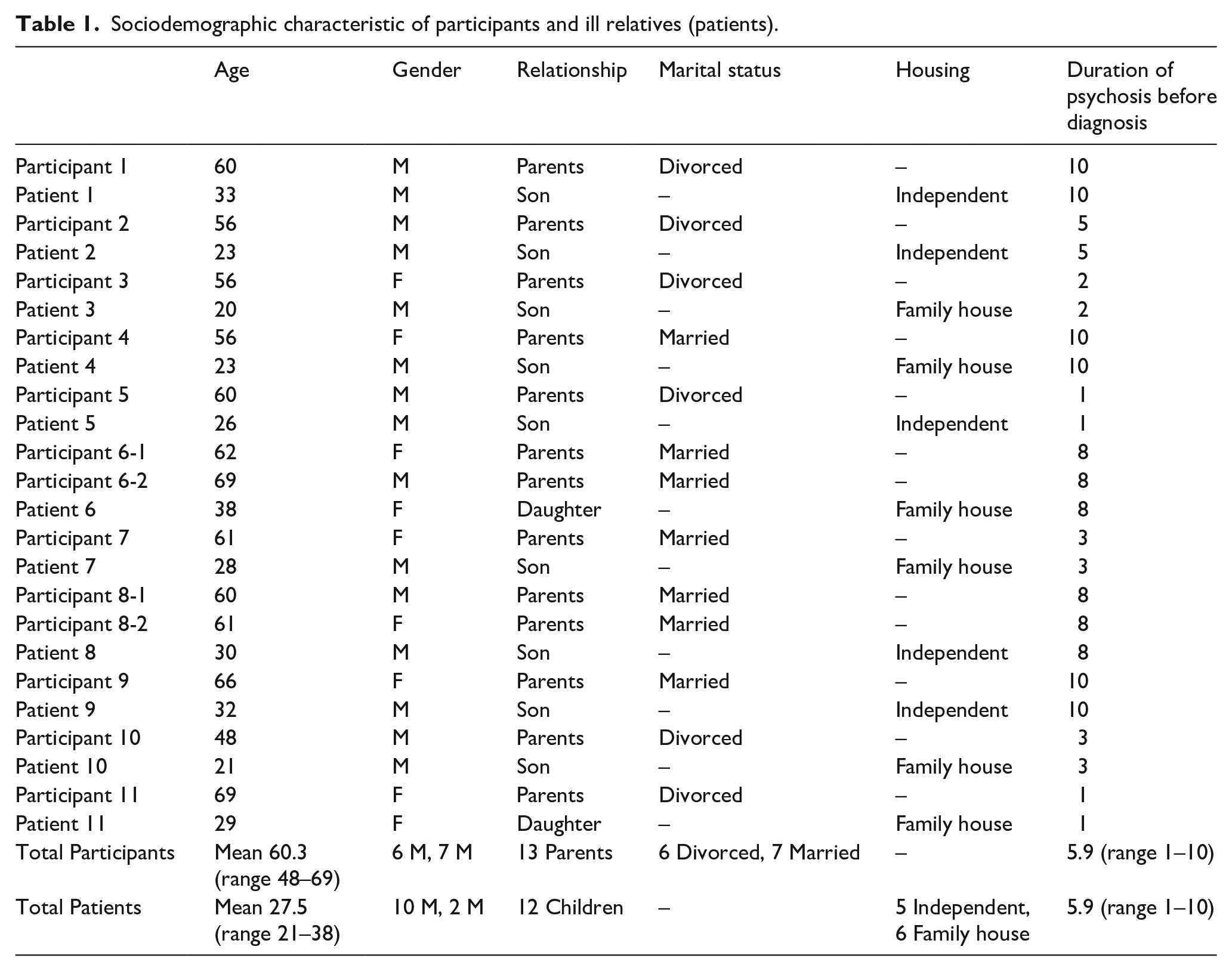
Seventeen contacted participants agreed to participate in the study and were scheduled for interview. Two patients did not show up for the scheduled interview and expressed an unwillingness to participate when the interviewers called them back. Interviews lasted between 25 and 62 min. The point of information saturation was reached at the thirteenth interview. Nine participants were interviewed individually and four as married couples. All were parents of a patient with schizophrenia. Participants ranged between the ages of 48 and 69 years, six were female and seven were married. Regarding patients, age ranged between 21 and 38 years, nine were male, seven lived at their parents’ place at the time of the interview, 11 of them were given diagnosis as inpatients and none were married. Five different psychiatrists provided diagnosis information. Duration of clinical manifestations of schizophrenia before diagnosis communication was superior to 2 years in the majority of cases. Socio-demographic and clinical characteristics are provided in Table 1.
Sociodemographic characteristic of participants and ill relatives (patients).
The three apriori structures (experience of the diagnosis of schizophrenia, impacts of the diagnosis, needs related to the diagnosis) are further elaborated in conjunction with participant quotations below.
Experience
Three main themes emerged from the ‘experience’ structure: the lived experience, the experience as a complex process and stakes related to the experience.
The lived experience: Antagonistic feelings
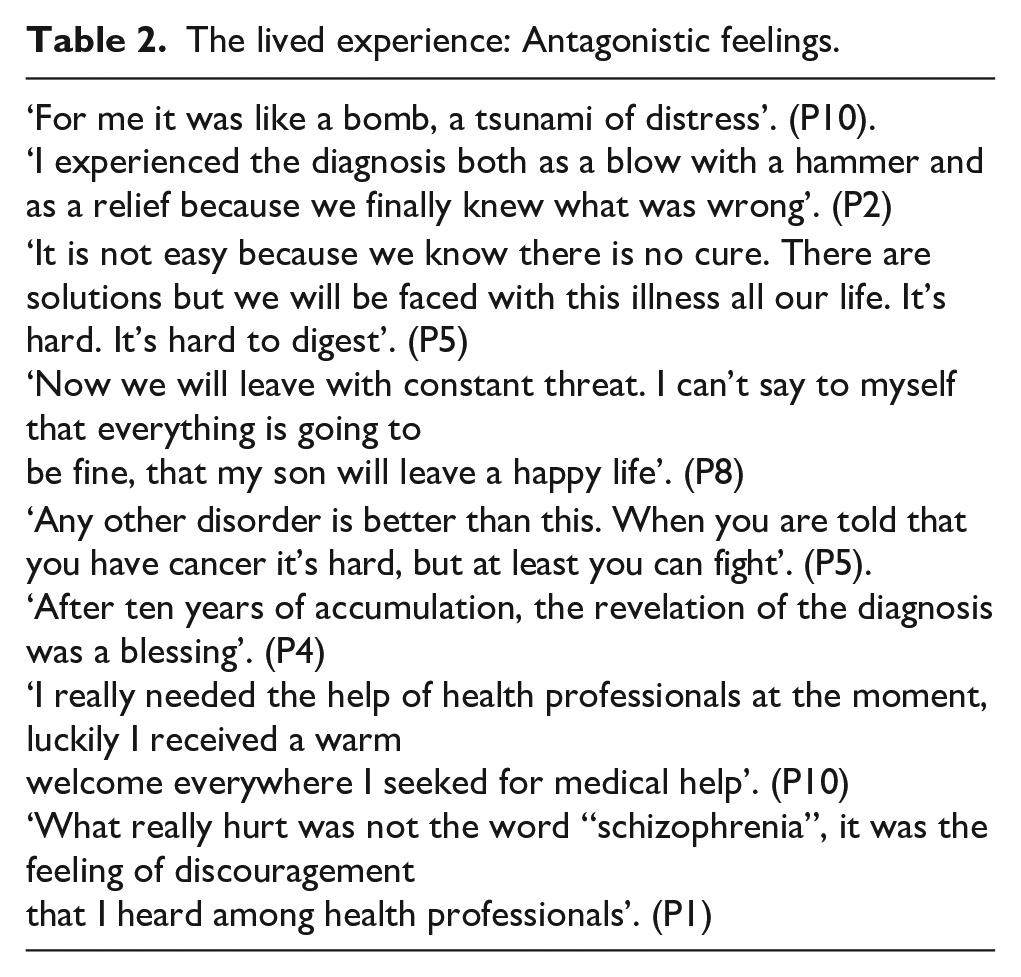
All participants described receiving the diagnosis of schizophrenia for their relative as a devastating experience, although some nuanced the experience with a sense of relief of finally naming the disorder and getting access to care (Table 2, line 1). As part of the experience of the diagnosis, the qualitative analysis outlined emergence of concerns about the prognosis and outcomes of the disorder (Table 2, line 2). Several patients developed on factors that shaped their experience of the diagnosis. These included caregivers’ previous representations of schizophrenia, stigma conveyed by the illness itself, delay before diagnosis, perception of support available after diagnosis and interactions with health professionals involved in the patient’s care (Table 2, line 3).
The lived experience: Antagonistic feelings.
The diagnosis experience is a more complex process that it seems
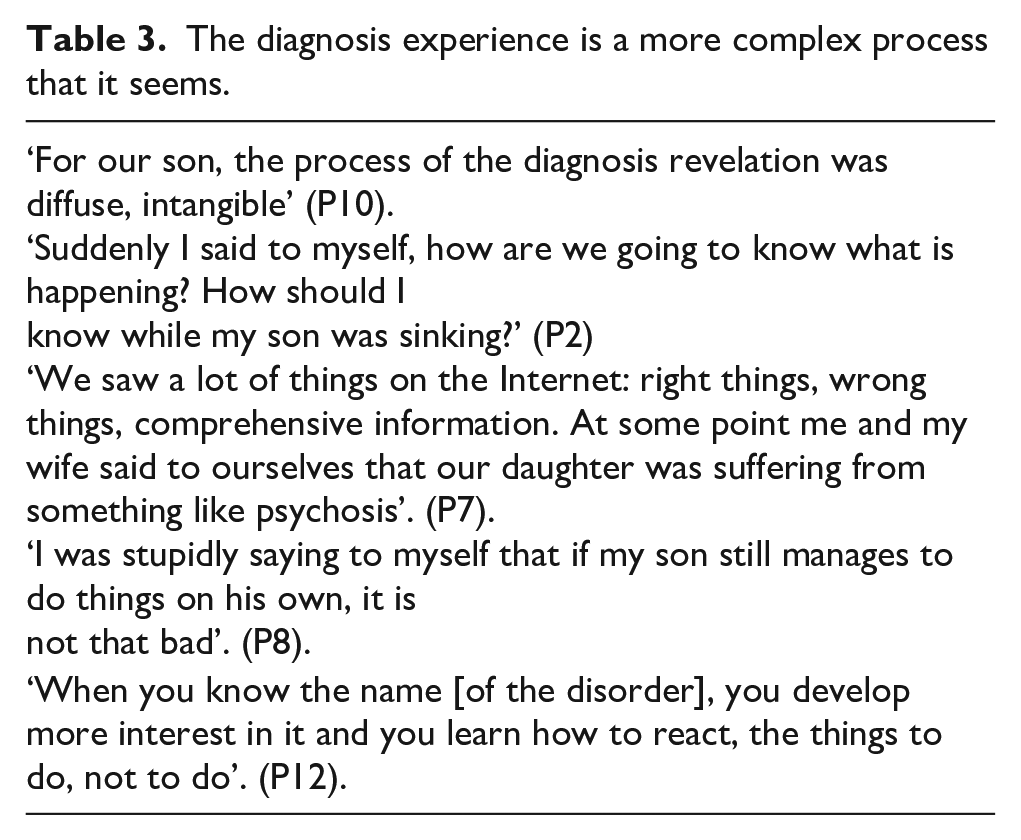
Participants described their experience of receiving the diagnosis as a complex process rather than as a specific moment bound in time limited to the official communication of the news. Long and difficult aspects of this process were the facing barriers to accessing mental healthcare, feeling of helplessness and urge for diagnosis before its revelation. Online and book searches gave rise to pre-diagnosis awareness of schizophrenia or to wrong but less stigmatizing explanations such as adolescent behaviour and temperament. The complexity of the process was related to increasing but uncertain levels of awareness of the diagnosis (Table 3, line 1). Finally, the diagnosis revelation anchored the diagnosis in reality, raised interest in the disorder and helped participants to project themselves as informal caregivers (Table 3, line 2).
The diagnosis experience is a more complex process that it seems.
Rising stakes of the experience
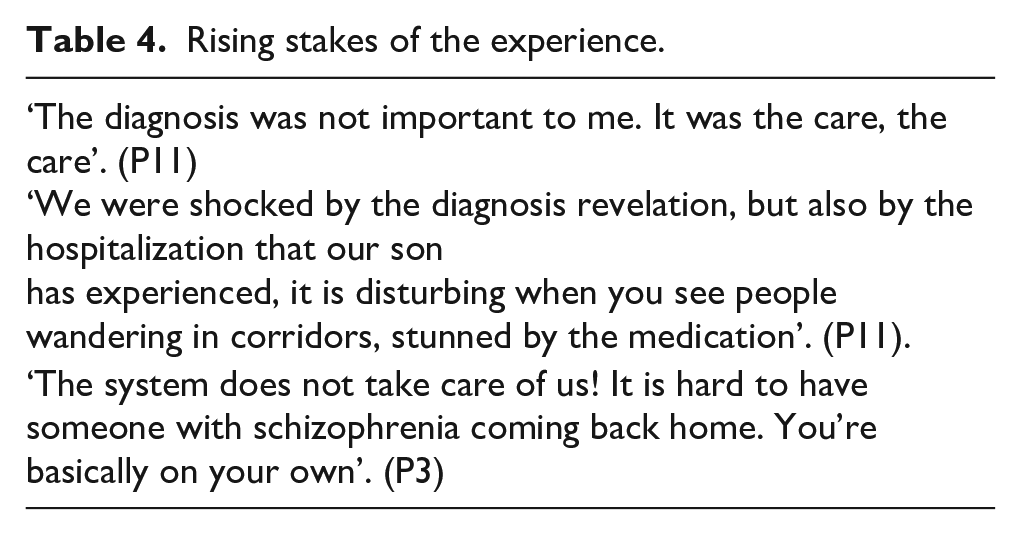
The experience of the diagnostic revelation also included the emergence of multiple stakes. Concerns about the individualized treatment plans provided after the diagnosis was a major concern. As ill relatives of the vast majority of participants were diagnosed as inpatients, participants were also concerned by the context surrounding the diagnosis revelation, which involved acute clinical manifestations of the relative and the institutional characteristics (Table 4, line 1). After the diagnosis revelation, some participants identified their status as informal caregivers as an important stake. Feeling of exclusion, mistrust of care providers, lack of support and information unsecured their engagement in this challenging status (Table 4, line 2). Participants’ declarations about their experience of the diagnosis conveyed that the psychiatric care system is not adapted enough to the suffering of families. Their traumatic experience is not always taken into consideration as it should be. Declarations suggested that informal family caregivers often present as ‘secondary’ patients.
Rising stakes of the experience.
Impacts . . .
Two main themes emerged from the ‘impact’ structure: impacts on the participant-patient relationship and personal impacts.
. . . On the participant-relative relationship
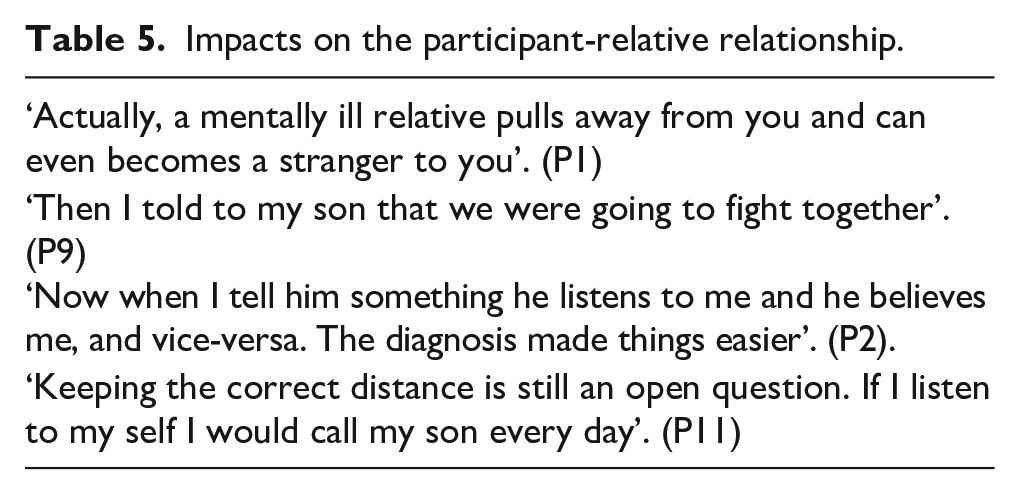
All participants reported that the participant-relative relationship is globally undermined by the manifestations of the disorder, prior the diagnosis. These made the participants feel helpless in the face of their relative’s distress, worried about the stigma of schizophrenia, and confused or embarrassed by their strange behaviours (Table 5, line 1). By contrast, the vast majority of participants reported that the diagnosis revelation brought a positive change in their thwarted relationship with their relative. Putting a name on the disorder induced more confidence and less fear toward the clinical manifestations and, in turn, better communication with the relative. Some participant described being able to provide better support to their relative and face the disease together since the diagnosis (Table 5, line 2). In parallel, finding the right relational balance between intrusive support and abandonment was reported as a major concern (Table 5, line 3).
Impacts on the participant-relative relationship.
. . . On the participants themselves
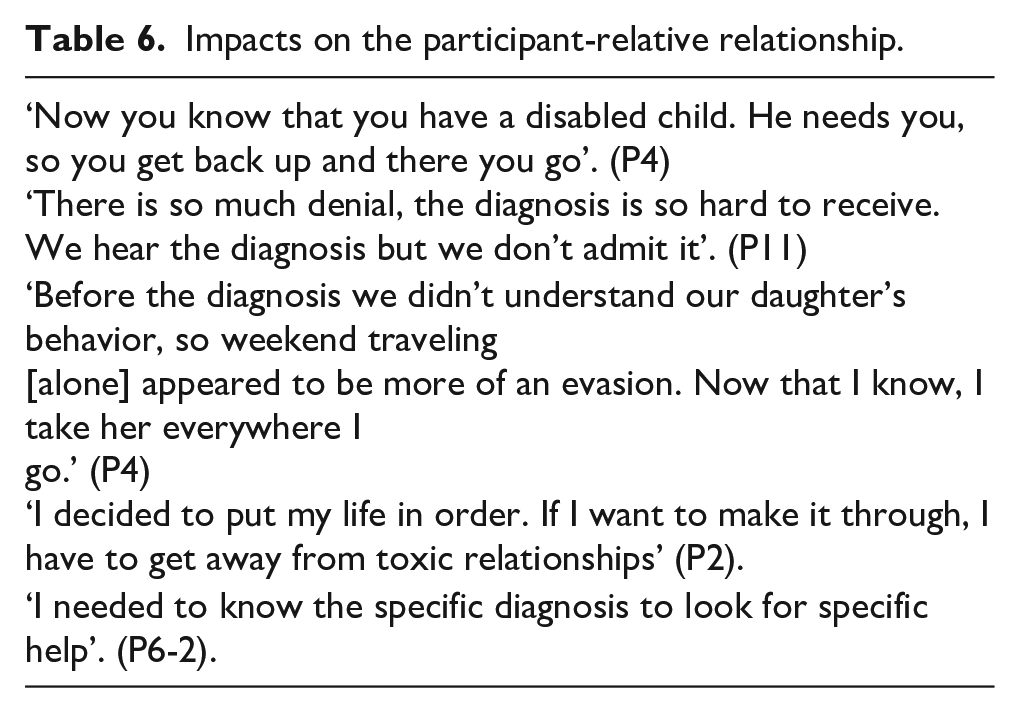
After the lived experience of the diagnosis revelation, either intense shock or, conversely, putting forth efforts to regain control of the situation were reported. Defence mechanisms and acceptance of the disorder by both the caregiver and the relative were involved in the process of coming to terms with schizophrenia (Table 6, line 1). Some participants reported adverse health consequences including depression, insomnia and physical pain after diagnosis. Consequences on daily life were described, including arrangements of the relative’s living at home and ways to invest time with the relative. In parallel, the diagnosis induced impairments in family relationships. Some participant reported having cautiously distanced themselves from other relatives that could have made them feel guilt or stigmatization. Both positive and negative impacts on parental couples were observed: some were brought closer together while others ended their relationship (Table 6, line 2). Finally, the diagnosis revelation led relatives to seek for personal guidance and support. The diagnosis appeared as a crucial point for relatives to feel legitimate to ask for help (Table 6, line 3).
Impacts on the participant-relative relationship.
Needs
Four main themes emerged from the ‘needs’ structure: needs at diagnosis, support service for relatives, integration of informal caregiving into the psychiatric care and proposals for clinicians.
At the very ‘day’
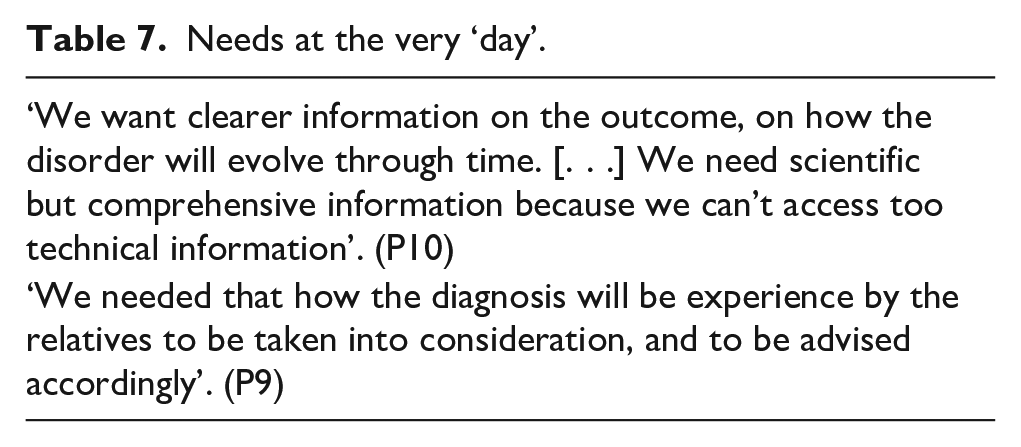
At the ‘day’ of hearing the news, participants would have liked more complete information on schizophrenia, including symptoms, outcomes, functioning and healthy attitudes to adopt. In addition, some participants told that the information was often provided too late. They reported a lack of clarity and regretted the absence of more comprehensive information (i.e. written summaries, educational material). A more comprehensive inclusion of loved ones and a right to information was called for (Table 7, line 1). Several participants expressed needs for a better consideration of their subjective experience and vulnerability at the time of the diagnosis revelation (Table 7, line 2).
Needs at the very ‘day’.
Support services for informal caregivers
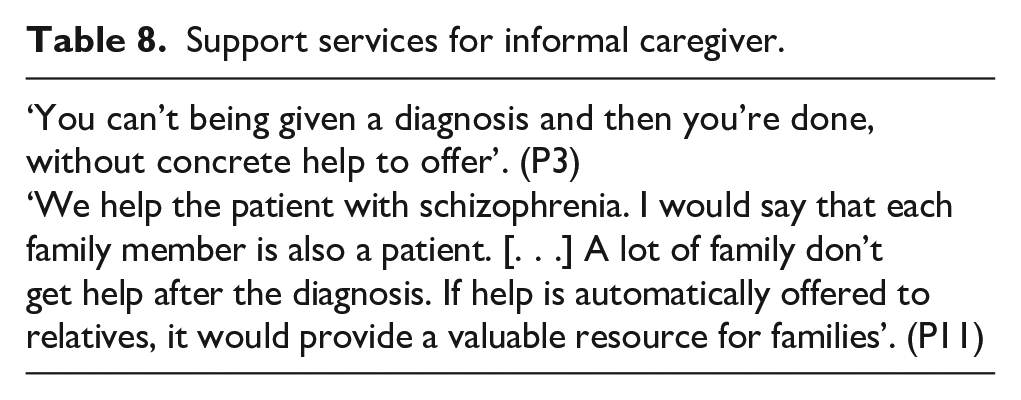
In general, participants emphasized the need for support services after the diagnosis revelation. Participants asked for better information on resources and support to help their relative as informal caregivers. Several type of support services emerged from interviews, including individual medical follow-up after the diagnosis revelation, guidance for daily life with the sick relative, psychoeducational skill training for informal caregivers and multifamily support groups (Table 8).
Support services for informal caregiver.
Definition of a new identity
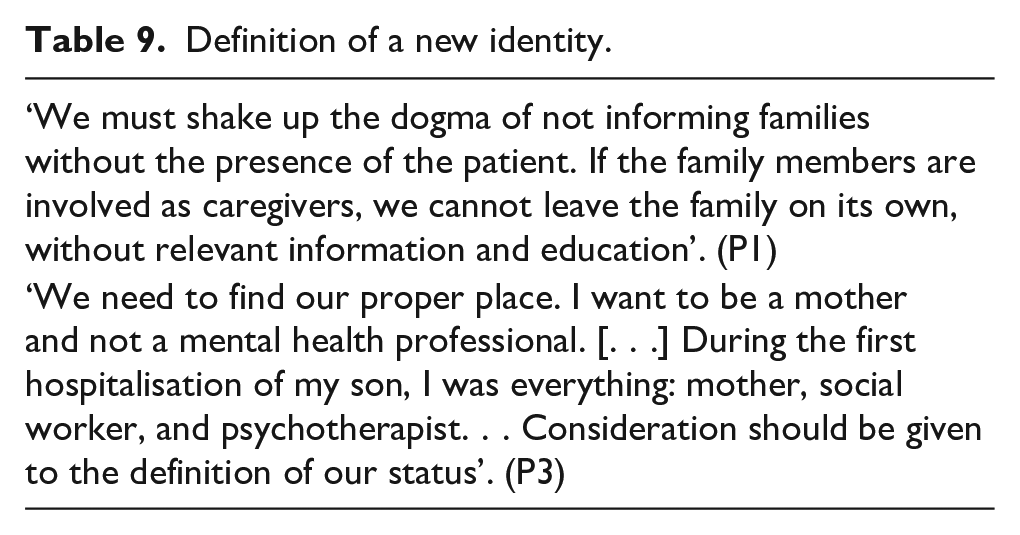
As participants asked for better integration of informal caregiving in the care provided to their relative, needs regarding the definition of informal caregiver’s rights emerged. For example, the right to be informed regardless of their relative’s will was strongly expressed (Table 9, line 1). Some participants had to find balance between being a parent and an informal caregiver. They needed a clearer definition of informal care and informal carers (Table 9, line 2).
Definition of a new identity.
Caregivers help clinicians to help them
Proposals for clinical practice emerged from the needs structure of the interview, including earlier communication on the clinical manifestations to the relatives by the psychiatrist, strengthening of the partnership between relatives and mental health professionals to improve the diagnosis revelation, systematic availability of post-diagnosis consultations for relatives to prevent impacts on relatives’ mental health, and more education and information of primary healthcare professionals on the diagnosis of schizophrenia (Table 10). Expectations were different according to the participants, suggesting the necessity to include panels of family stakeholders with different profiles in the development and implementation of progresses in diagnosis communication to families.
Caregivers help clinicians to help them.

Discussion
Through this qualitative study, we explored the effect of schizophrenia diagnosis communication in 13 parents of patients with schizophrenia at the experience, impact and needs levels.
Our results highlight the traumatic aspects of the experience of the diagnosis of schizophrenia, which is consistent with similar qualitative studies among caregivers (Ferriter & Huband, 2003; Jansen et al., 2015; Outram, Harris, Kelly, Bylund et al., 2015; Schneider et al., 2004). The relief associated to the traumatic experience is in line previous research showing that families are comforted by a named entity, no matter how bad, to the alternative of struggling with uncertainty (Outram, Harris, Kelly, Bylund et al., 2015; Schneider et al., 2004). A critical finding of our study is how caregivers’ experience prior to hearing the diagnosis played an important role in the way the news was internalized. Here, most participants described the diagnosis experience as a ‘stepwise journey’ encompassing contextual events such as previous representation of the diagnosis, perception of support and online or book search occurring before the ‘day of the news’ and surrounding the diagnosis of schizophrenia. This process have been extensively described in the field of oncology among both patients and caregivers (Schaepe, 2011), and observed by psychiatrists as well (Milton et al., 2016). Our results reproduce the observed families’ coping mechanisms to deal with the fear of the official label of a mental illness which, in turn, can make them avoid consulting psychiatrists and further delay proper diagnosis and treatment initiation (Corcoran et al., 2007; Franz et al., 2010). Strategies such as addressing stigma and tailoring to the family’s situation and representation have been suggested to reduce this period of undiagnosed schizophrenia (Cairns et al., 2015; Seeman, 2010).
Although the disorders’ manifestations are associated with family burden, the communication of the diagnosis constituted a starting point for acceptance of the reality of the illness in participants. We reported positive effects that derived from the establishment of the diagnosis including better support provided to the ill relative and active search for personal guidance, which corroborates previous studies (Caqueo-Urízar et al., 2017; Outram, Harris, Kelly, Bylund et al., 2015). In parallel, we confirm that the diagnosis communication can leads relatives to review their family and spousal relationships, identity as parents, and relationship to their ill relative (Caqueo-Urízar et al., 2017; Darmi et al., 2017). Numerous nuances of the relative-patient relationship dynamic have been described. For instance, a pre-diagnosis special relationship characterized either by increased dependence or by distance can evolve to being unable to recognize the child in a « intimate stranger » when the diagnosis is communicated. This can result in the formation of a healthy symbiotic parent-child relationship over time (Darmi et al., 2017). Long-term positive impacts of caregivers’ relational engagement have been demonstrated both on the therapeutic process of the relative and on the well-being of the caregiver (Drapalski et al., 2009). Furthermore, a formalized diagnosis confers ‘social’ legitimacy on illness and caregiver status, which can facilitate personal help-seeking behaviours among caregivers (Jutel, 2009). For these reasons, it appears necessary for informal family caregivers to get provided not only with a timely diagnosis but also with immediate support to foster positive changes in the relationship with the ill relative.
Numerous unmet needs around the communication of the diagnosis emerged from the interviews. Requests for personal help and specific explanations and guidance on their role as caregiver highlighted the necessity for improving consistent implementation of recommendations for emotional and education family support into practice (Bucci et al., 2016). In addition, participants wished better information of primary healthcare professionals for earlier and undisclosed communication on the diagnosis at suspicion, to adapt the communication of the diagnosis to their traumatic experience and history, strengthened partnership with mental health workers, and systematized post-diagnosis follow-up. Since there is growing evidence of clinical manifestations that predate and initiate the expression of full-blown schizophrenia, educating primary care professionals and community members may promote rapid access to diagnosis and early inclusion of caregivers (Domingues et al., 2011; Dondé et al., 2021; Larsen et al., 2011). In parallel, careful consideration of the subjective experience of the caregivers before diagnosis might be fruitful to inform diagnosis communications frameworks and accurately plan a tailored follow-up (Outram, Harris, Kelly, Bylund et al., 2015; Outram, Harris, Kelly, Cohen et al., 2015). Several issues may also be addressed through training to best practice communication with caregivers. These include fear of negative outcomes, lack of team-coordinated effort, need for an exclusive patient-physician relationship and large volumes of consultations (Eassom et al., 2014; Winefield & Burnett, 1996). Finally, both our results and findings from others studies suggest that diagnosis information is not always communicated in a language or a way that is understood and useful to families (Seale et al., 2006, 2007).
Several limits of our study should be mentioned. First, given that stigma related to mental health and inpatient hospitalization is known to affects families of people with schizophrenia (Corcoran et al., 2007; Krupchanka et al., 2016, 2017), it is likely that factors associated with the institutional environment, in which the diagnosis was communicated among the majority of participants in our study, compounded the experience of the diagnosis. Second, the interviewers introduced themselves as physicians to participants, which may have caused reporting biases. Third, since only parents were included, experience, impact and needs of siblings and spouses have not been explored while they have specific needs as caregivers (Amaresha et al., 2014). Further studies including relatives of patients diagnosed as outpatients, non-psychiatrists investigators with neutral position and different types of family relationships are warranted. Fourth, the sample size was small. However, it has previously been recommended that qualitative studies require a minimum sample size of at least 12 to reach data saturation (Fugard & Potts, 2015; Guest et al., 2006). Therefore, a sample of 13 was deemed sufficient for the qualitative analysis and scale of this study.
In parallel to putting the patient at the center of her/his care, a specific attention must be given to the communication of the diagnosis of schizophrenia to the informal family caregivers. An early and comprehensive diagnosis communication that takes into account the traumatic aspects of the news might constitute a starting point for informal family caregivers to strengthen their adaptive capacity, find right relational balance with their ill relative and help reduce family burden. Information giving must be personalized and embedded into tailored education and support programmes for caregivers to facilitate illness acceptance and adaptation. Incorporating these aspects into training frameworks should drive changes and improvement in how psychiatrists communicate the diagnosis of schizophrenia to informal family caregivers. In addition, presentation of testimonies from family caregivers that emphasize their hurtful experience, impacts and needs, precise knowledge about the caregiver status and prerogatives, as well as training in communicating to the patient-caregiver dyad instead to a patient alone should be considered. Another core challenge for informal family caregivers will be the recognition of their status as key stakeholders by health policies.
Supplemental Material
sj-docx-1-isp-10.1177_00207640211068978 – Supplemental material for Experience, impact and needs of informal parental caregivers around the communication of a diagnosis of schizophrenia
Supplemental material, sj-docx-1-isp-10.1177_00207640211068978 for Experience, impact and needs of informal parental caregivers around the communication of a diagnosis of schizophrenia by Véra Forcheron, Elodie Sacareau, Jérôme Bourgeois, Arnaud Pouchon, Mircea Polosan, Yoann Gaboreau and Clément Dondé in International Journal of Social Psychiatry
Footnotes

References
Supplementary Material
Please find the following supplemental material available below.
For Open Access articles published under a Creative Commons License, all supplemental material carries the same license as the article it is associated with.
For non-Open Access articles published, all supplemental material carries a non-exclusive license, and permission requests for re-use of supplemental material or any part of supplemental material shall be sent directly to the copyright owner as specified in the copyright notice associated with the article.
