



Abstract
Intellectual capital approaches become critical at universities mainly due to the fact that knowledge is the main output as well as input in these institutions. Although some attempts to measure intellectual capital have been made so far, there is still a long way to go. The purpose of the present article is to provide a model for the measurement of intellectual capital in higher education institutions. The results of a study done at Spanish public universities are used to indicate which intangible elements need to be measured, and a new framework for the measurement and management of intellectual capital is presented.
Points for practitioners
The main contribution of this article is the validation of the consensus on the key intangible elements and indicators that should comprise a university intellectual capital model. Our proposed intellectual capital model helps universities on the path to presenting information that is useful to their stakeholders, contributing to greater transparency, accountability and comparability in the higher education sector. This article offers useful and specific guidelines for intellectual capital reporting practice in universities. The creation of a framework of intellectual capital reporting facilitates benchmarking analysis and comparative studies in order to help decision-making processes, improve the articulation of public policies and increase transparency in the whole system.
Introduction
In the actual knowledge-based economy, investments in human resources, information technology, research and development, and customer relations have become essential in order to maintain the organization’s competitive position and to ensure its future (Cañibano et al., 2000; Elena and Warden, 2011; Goldfinger, 1997; Nakamura, 1999). The source of economic value and wealth is the set-up and handling of intangible assets, frequently grouped under the generic term ‘knowledge’ or ‘intellectual capital’.
Intangibles and intellectual capital have become a very important issue during the last decade, not only for academics, but also for users, governments, regulators, enterprises, investors and other stakeholders (Sánchez and Elena, 2005). This growing interest has extended from firms to public institutions (Melián-González et al., 2010), such as universities and research centres (Bezhani, 2010; Melián-González and Bulchand-Gidumal, 2009).
Intellectual capital approaches become critical mainly due to the fact that universities’ main goals are the production and the diffusion of knowledge and their more important investments are in research and human resources (Elena, 2004). Therefore, both inputs and outputs are mainly intangibles.
Universities become critical elements for the production, transmission and dissemination of knowledge: due to the key role they play in the three fields of research and use of its results, thanks to industrial cooperation and spin-off; education and training, in particular training of researchers, and regional and local development, to which they can contribute significantly. (European Commission, 2003)
In this context, European higher education institutions are currently immersed in a process of profound change, the intention of which is to improve the effectiveness, efficiency and transparency of these institutions with the aim of contributing to the development and improvement of the competitiveness of the European economy (Dixon and Coy, 2007; European Commission, 2010; Ramírez et al., 2007; Sánchez and Elena, 2007; Silvestri and Veltri, 2011).
Since there is presently no common international framework for managing information on the intangible determinants of corporate value (only scattered efforts around the world), it seems appropriate to devote efforts to the development of new measurement and management techniques in order to help universities to identify, measure and monitor their intangible sources of value, and thereby increase the efficiency and effectiveness of their management.
New measurement and management systems allow universities to be in a better position to:
create transparency about the use of public funds; explain the achievements of research, training, innovation and their benefits to stakeholders; illustrate the development of intangible assets; reveal leverage effects and externalities; communicate (new) organizational values; and demonstrate their competitiveness (Warden, 2003). The analysis of existing models proposed at Spanish universities, The identification of the key intangible elements in a public university. This involves identifying the intangible elements that university stakeholders demand most. To this end, a questionnaire was designed and sent to every member of the Social Councils of Spanish public universities in order to identify the intangible items that they consider essential for universities. The elaboration of a battery of indicators to measure these key intangible elements.
However, despite all this, only a few universities are trying to measure and manage their intellectual capital, but they are finding many difficulties. In order to solve those problems, this article will develop a proposal for a new intellectual capital measurement model for Spanish public universities. This purpose is to be achieved via the following operational objectives:
The article is structured as follows. In the second section, we briefly explore the concept of intellectual capital in higher education institutions and justify the importance of measuring and managing their intellectual capital. The third section describes the most significant initiatives in measuring and managing intellectual capital in Spanish universities. In the fourth section, we present our proposal of an intellectual capital measurement model for Spanish public universities. Final conclusions are drawn in the fifth section.
Relevance of intellectual capital for universities
The term ‘intellectual capital’ is used to cover all of the non-tangible, or non-physical, assets and resources of an organization, including its processes, innovation capacity, patents and the tacit knowledge of its members and their network of collaborators and contacts. So, intellectual capital has been defined as the combination of intangible resources and activities that ‘allows an organization to transform a bundle of material, financial and human resources in a system capable of creating stakeholder value’ (European Commission, 2006).
Intellectual capital is often represented as consisting of three basic and strongly interrelated components: human capital, structural capital and relational capital (Cañibano and Sánchez, 2008; Leitner, 2004; Rafiee et al., 2010; Ramírez et al., 2007; Secundo et al., 2010).
In the case of universities, we could define the components in the following way:
Human capital: The set of explicit and tacit knowledge of the universities’ personnel (professors, researchers and assistants) acquired through formal and informal educational and actualization processes embodied in their activities. Structural capital: The explicit knowledge related to the internal process of the dissemination, communication and management of scientific and technical knowledge in the organization. Structural capital may be divided into:
○ Organizational capital: This refers to the operational environment derived from the interaction between research, management and organization processes, organizational routines, corporate culture and values, internal procedures, the quality and scope of the information system, and so on. ○ Technological capital: This refers to the technological resources available at the university, such as bibliographical and documentary resources, archives, technical developments, patents, licenses, software, databases, and so on. Relational capital: This gathers the wide set of economical, political and institutional relationships between the university and its non-academic partners: enterprises, non-profit organizations, the local government and society in general. It also includes the perception that others have of the university: its image, appeal, reliability and so on.
The following are some of the reasons why it is a major necessity for higher education institutions to measure and manage their intellectual capital:
Knowledge is the principal output and input of higher education institutions. Universities produce knowledge, either through scientific and technical research (the results of investigation, publications, etc.) or through teaching (students trained and productive relationships with their stakeholders). Their most valuable resources also include their teachers, researchers, administration and service staff, university governors, and students, with all their organizational relationships and routines (Leitner, 2004). It is true to say, then, that universities’ inputs and outputs are largely intangible (Cañibano and Sánchez, 2008). Continual demands for greater information and transparency about the use of public money exist (Warden, 2003), mainly due to the fact that most of the funding for public universities is handed over by the government (Sánchez and Elena, 2006). The greater independence of universities regarding their organization, management and budget distribution requires greater social responsibility, which will lead universities to prepare accounting information to report to society, as well as to facilitate and satisfy the information needs of participants in the institution itself. The implementation of the European Space for Higher Education promotes the mobility of both students and teachers within the territory of Europe, while, at the same time, encouraging both collaboration and competition between universities. This environment of greater competition and necessary collaboration means that these institutions are now committed to accessing citizens and transmitting relevant information on their activities. All this could well play an important role in the decision-making processes of the users of the accounting information, for example, in the case of potential students choosing where to study. Lastly it is important to point out that universities are now facing growing competition due to lower funding, which puts them under greater pressure to communicate their results.
In our opinion, higher education institutions have to elaborate models especially designed to identify and provide information on the organisations’ strategies, objectives, visions, activities and key intangible resources, based on financial and non-financial indicators. The intention of these models is to contribute to the progressive recognition of intellectual capital as a key strategic factor to confront the competitive challenges currently facing universities.
Models for measuring and managing intellectual capital at Spanish institutions of higher education
This section describes three important initiatives in measuring and managing intellectual capital that are being developed at Spanish universities:
the Programa de Capital Intelectual (PCI) Project in the Madrid region; the Observatory of the European University (OEU) at the Autonomous University of Madrid (UAM); and the Knowledge Management Project at the University of the Basque Country.
The PCI project in the Madrid region
This project was carried out by a research group from the Institute for Business Administration (IADE), belonging to the UAM, and directed by Professor Eduardo Bueno. This studied the intellectual capital of universities and public research centres (PRCs) in the Madrid region.
The project aims to discover the research capability of universities and PRCs through an efficient management of their intellectual capital, and how to attain the maximum economic and social return of the resources. The investigation was carried out in two separate parts. One of them developed an Intellectual Capital Indicators Program applied to research activity; the other part was a proposal of a knowledge management model for the research activities of universities and PRCs.
Generic enumeration of intellectual capital indicators for the measurement and management of the research activities of universities
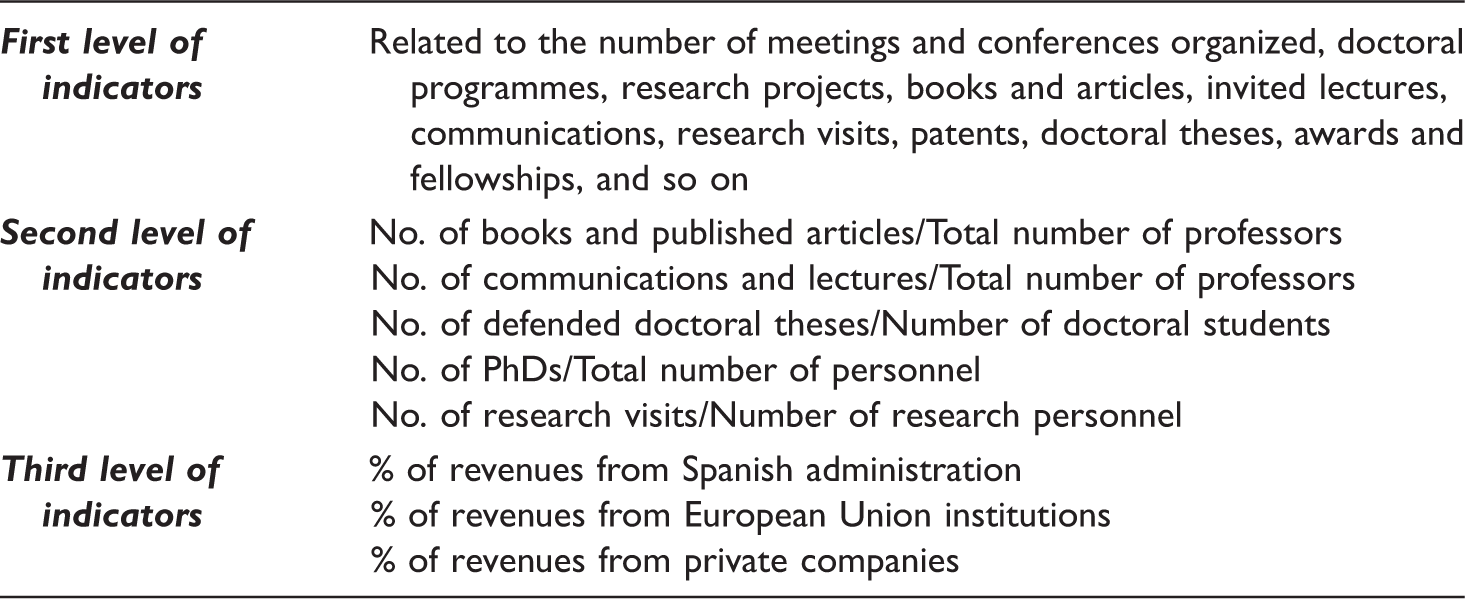
Source: Adapted from Bueno et al. (2002).
Afterwards, a Model of Intellectual Capital Management is developed, considering the universities’ and PRCs’ research activity as the source of creation diffusion and the reuse of knowledge. This model considers the research activity made by these institutions as the result of using intellectual capital, with the aim of estimating the most important intellectual capital variables for the studied organizations. Also, it considers that research processes are fed by resources (inputs) in order to get results (outputs), and tries to assess the relationships between them, as it is indicated in Figure 1.
Knowledge leadership and management model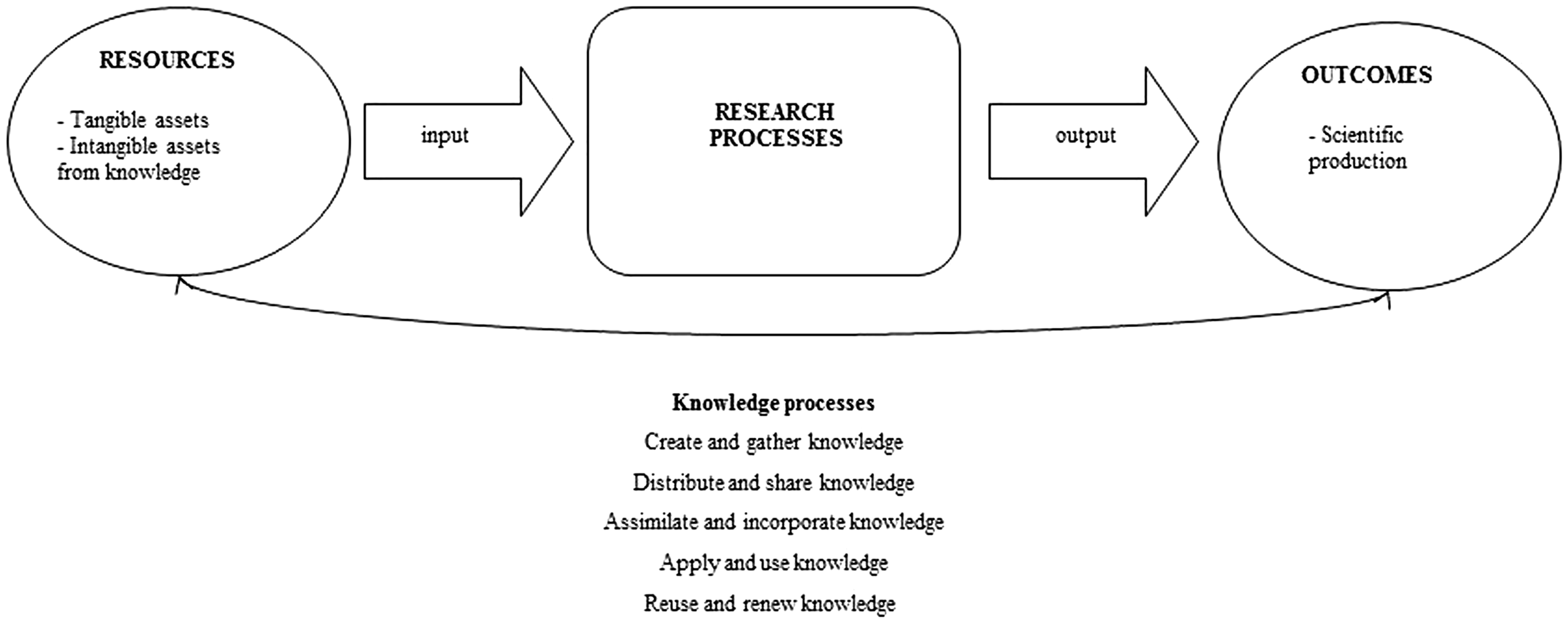
Specifically, the inputs or resources considered would be those outlined in Figure 2.
Intellectual capital structure for research activity in universities and research organizations in the Madrid region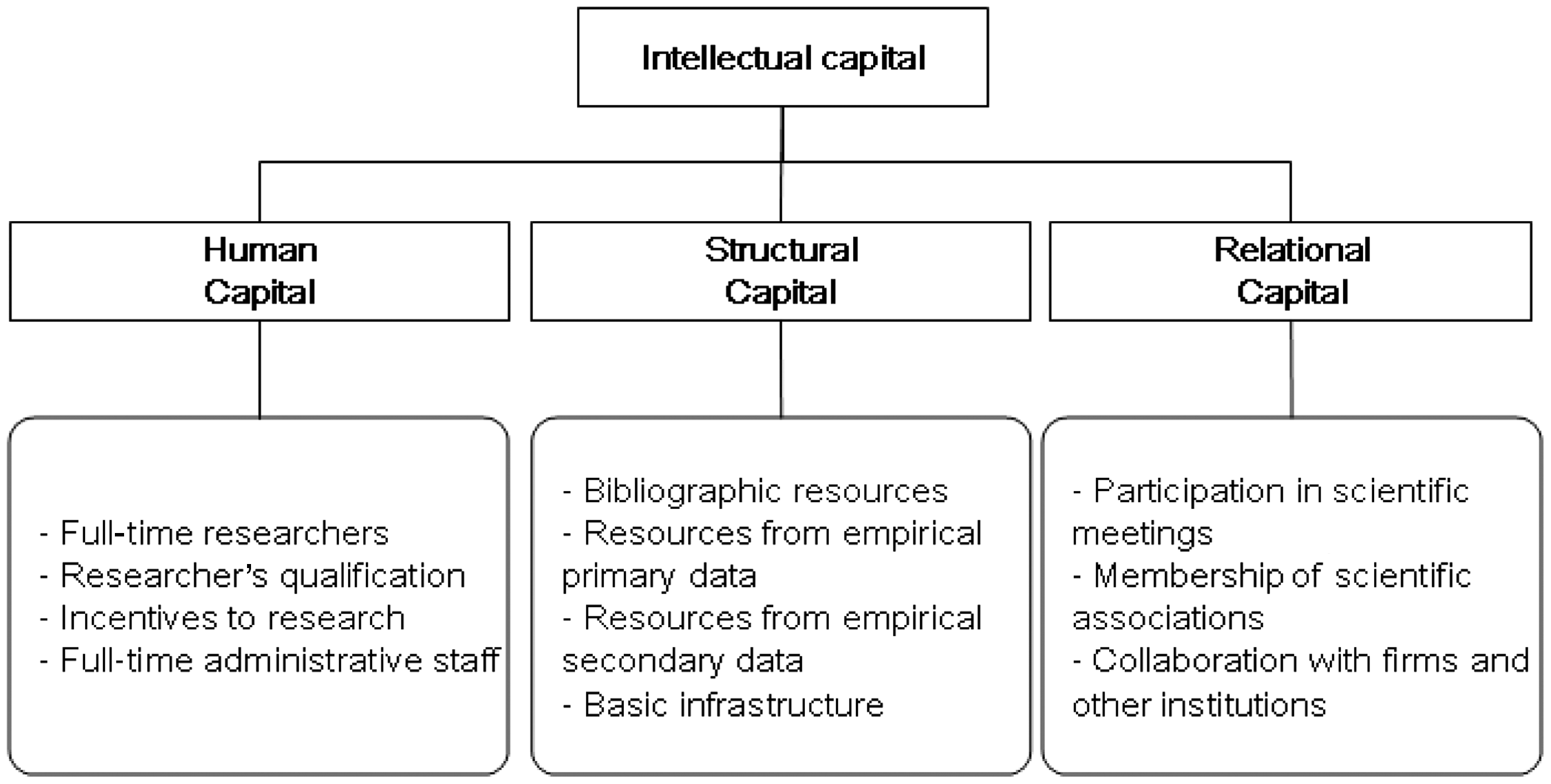
Universities and PRCs use the resources (inputs) to achieve different research processes (with important differences according to scientific traditions in each knowledge area) in order to obtain the following results (outputs):
Scientific production:
○ books published; ○ articles and book chapters; ○ patent rights and any other type of copyright; ○ research projects carried out; and ○ lectures and communications at conferences and meetings. Social perception of the organization. Intellectual capital increase in the organization. Research networks established among organizations.
Intellectual capital assessment and evaluation are made by means of the results of the research (dynamic evolution of the indicators), comparative analysis and benchmarking, and analysis of their social consideration.
The OEU at the UAM
The OEU, created in June 2004, is a project developed within the ‘European Policies for Research and Innovation in the Move towards European Research Area’ (PRIME) ‘Network of Excellence’, involving the cooperation of 15 European universities.
One of the aims of the OEU is to better understand the importance of managing intangibles in public universities in order to improve their level of quality and competitiveness (Sánchez and Elena, 2005). Its overall objective is to provide universities with adequate tools for the governance of their research activities. For this purpose, the OEU will initially develop procedures for data collection in order to, subsequently, produce indicators for universities’ strategy and management procedures. This will require discussing and testing new indicators of university performance and activity, as well as finding methods for the representation and measurement of the multidimensional aspects of performance. The final objective is to provide universities with a benchmark for comparisons with similar universities thanks to the development of a platform of quantitative data at the university level across Europe.
The OEU research team (OEU, 2005) has developed a framework for the characterization of research activities undertaken by universities: the Strategic Matrix. This two-dimensional matrix facilitates the analysis of, and helps to characterize the status of, university research management in order to identify the best performing universities and to compare the setting in which universities operate. The first dimension of the matrix deals with the thematic aspects of university research management (funding, human resources, academic outcomes, third mission and governance). The second dimension of the matrix deals with transversal issues that cross these thematic categories (autonomy, strategic capabilities, attractiveness, differentiation profile and territorial embedding). A few Key Questions were selected for each cell of the Strategic Matrix. For each one, a few relevant indicators and possible schemes for collecting the data required for these indicators was proposed.
Furthermore, the OEU proposed the presentation of an intellectual capital report, called the ICU report (Sánchez et al., 2006), specifically designed for universities and research centres, with the aim of improving transparency and promoting the homogeneous publication of the indicators of intellectual capital. The proposed ICU report consists of three fundamental sections that describe the logical movement from internal strategy and management (the design of the vision and objectives of an institution) towards a system of indicators (OEU, 2006: 211): (a) the vision of the institution; (b) intangible resources and activities; and (c) the system of metrics.
UAM strategic objectives, critical intangibles and possible indicators

Source: Elena (2004).
Finally, UAM highlights the main methodological problems that emerge in the gathering and analysis of the data and provides suggestions for some of them.
The Knowledge Management Project at the University of the Basque Country
The University of the Basque Country developed a knowledge management case-study project in a key and strategic cross-organizational process, ‘Research–Development–Transfer’ (R&D&T), of scientific and technological knowledge within universities. The aim is to show an original methodology for the assessment of that process through the search for critical knowledge. The knowledge embodied in the process creates the R&D&T capital.
The idea that underlines this project is that ‘knowledge management in universities can be defined as a whole process that increases their intellectual capital, that could be defined as all the administrative, scientific and technical knowledge that generates or will generate benefits in the future’ (Araujo, 2000). An important portion of intellectual capital at universities is the R&D&T capital, that is, the intellectual capital due to the process of creation of scientific and technical knowledge and its transference to the social environment (companies, governmental institutions and other social agents).
The starting methodological framework was the Intellectus Model (CIC, 2003). Intellectual capital is divided into three categories: human capital, structural capital (made up of organisational capital and technological capital) and relational capital (formed by business capital and social capital).
Key types of knowledge as drivers of R&D&T capital at universities
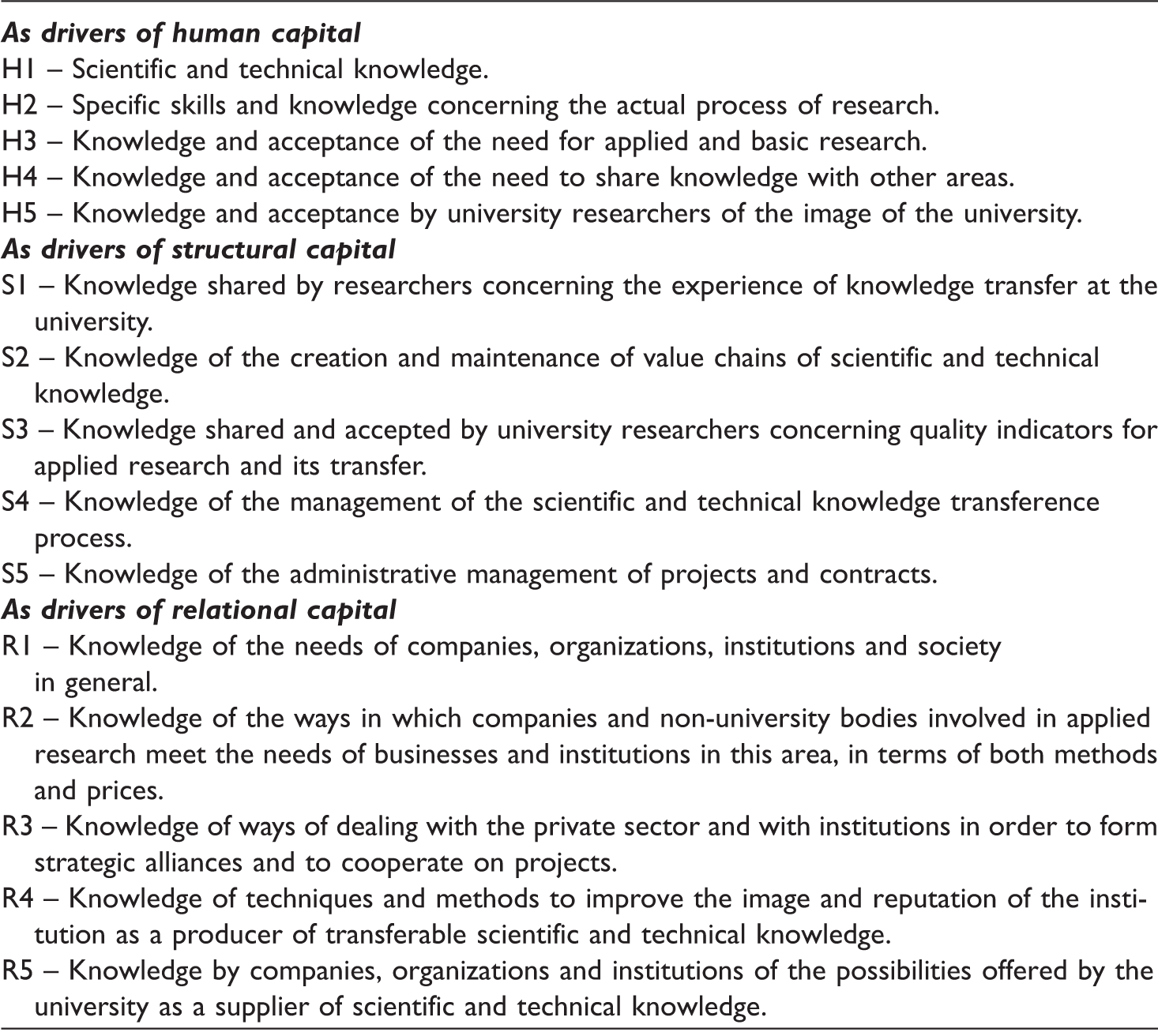
Source: Rodríguez et al. (2004).
Intellectual capital indicators for university research
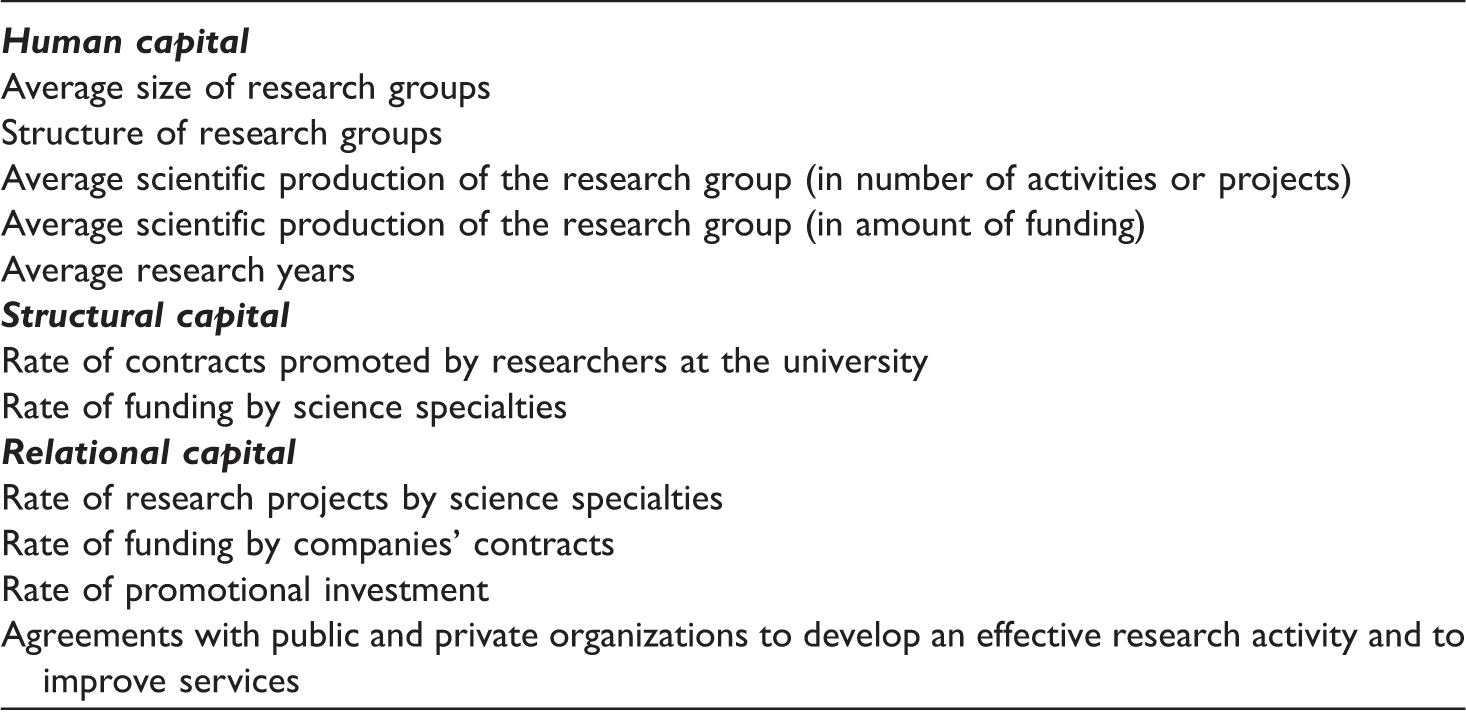
Source: Adapted from Landeta et al. (2004).
Proposal for an intellectual capital measurement model for Spanish public universities
A new intellectual capital measurement model for implementation at Spanish public universities will now be discussed. Our aim is to design a model that identifies a detailed list of the key intangible elements in a university and to define a battery of indicators that allows these intangible elements to be measured.
The methodology used to elaborate a new intellectual capital measurement model for Spanish public universities has been:
First, identification of the strategic objectives of the Spanish public universities through examination of documents concerned with the objectives and strategic plans of the university. Second, identification of the key intangible elements in a university. This identification has been determined through a questionnaire sent to the members of the Social Council of the Spanish public universities. The results of the interviews have received statistical analyses. Third, elaboration of a definitive list of indicators to measure these key intangible elements.
Our intellectual capital model is a tool especially designed to identify, measure, manage and provide information on Spanish public universities’ intangible resources. This tool allows for identifying and providing information on the organisations’ strategies, objectives, visions, activities and key intangible resources, based on financial and non-financial indicators.
Figure 3 shows the stages to be followed in the development and implementation of an intellectual capital model in universities.
Stages in the development and implementation of an intellectual capital model in universities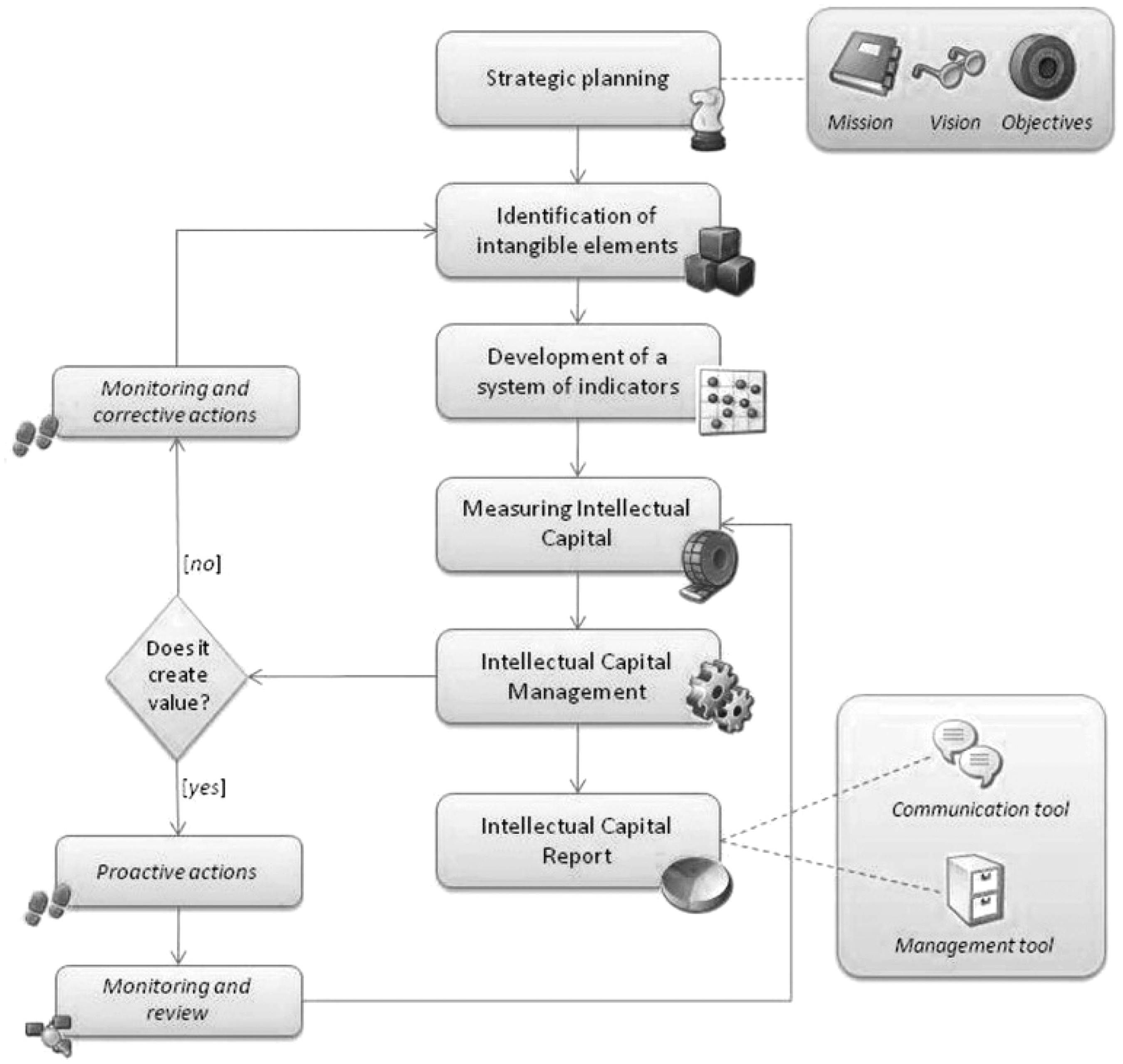
In what follows, each of these phases is analysed.
Definition of strategic objectives for intangible elements
First, it is necessary to discuss the corporate objectives and strategies that lead managers to focus on the essential processes of value creation. Defining the organization’s strategic framework will then facilitate the formulation of objectives for intangible elements, which, in turn, define the areas where specific skills, structures and relationships are to be created or improved.
We have examined the documents concerned with the objectives and strategic plans of the different Spanish public universities. These documents give a complete description of the mission and vision of the university and the institution’s current strategic objectives.
Overall, it was found that the mission of Spanish public universities is:
the transmission of knowledge and culture; training and research support; the social integration and employment of graduates; and the enrichment of the social, cultural and economic environment.
Also, the main strategic objectives, outlined in the function of the mission and vision, are:
improvement in university teaching; improvement in university research; and relationship with the environment (knowledge transfer).
Identification of key intangible elements in a university
Proposed intangible elements

In order to identify which intangible elements are the most relevant for university stakeholders, a questionnaire was designed and sent to every member of the Social Councils of Spanish public universities. It was thought that these participants would provide a good example of the attitude of university stakeholders since they represent the different social groups connected with universities: university governors, students, teaching and research staff, administration and services staff, union organizations, business organizations, and public administrations.
The population to be studied was therefore composed of the 1904 members of the Social Councils of Spanish public universities. Replies were received from 247 members, 22.57 percent of the total. The size of the sample was considered sufficient since in a binomial population, the estimation error would be 5.37 percent for a reliability level of 95 percent.
The information was collected via an online survey during May–July 2011. The questionnaire consisted of five-point Likert scale questions. Those surveyed were asked to rate on a five-point Likert scale the importance they gave to the different intangible elements in universities.
Intangible variables used in the study

First, it must be observed that, in general, a high mean value was awarded to the different intangible elements relating to human, structural and relational capital, which shows a strong emphasis on the need for universities to measure and manage their intellectual capital.
Spearman correlations between human capital indicators
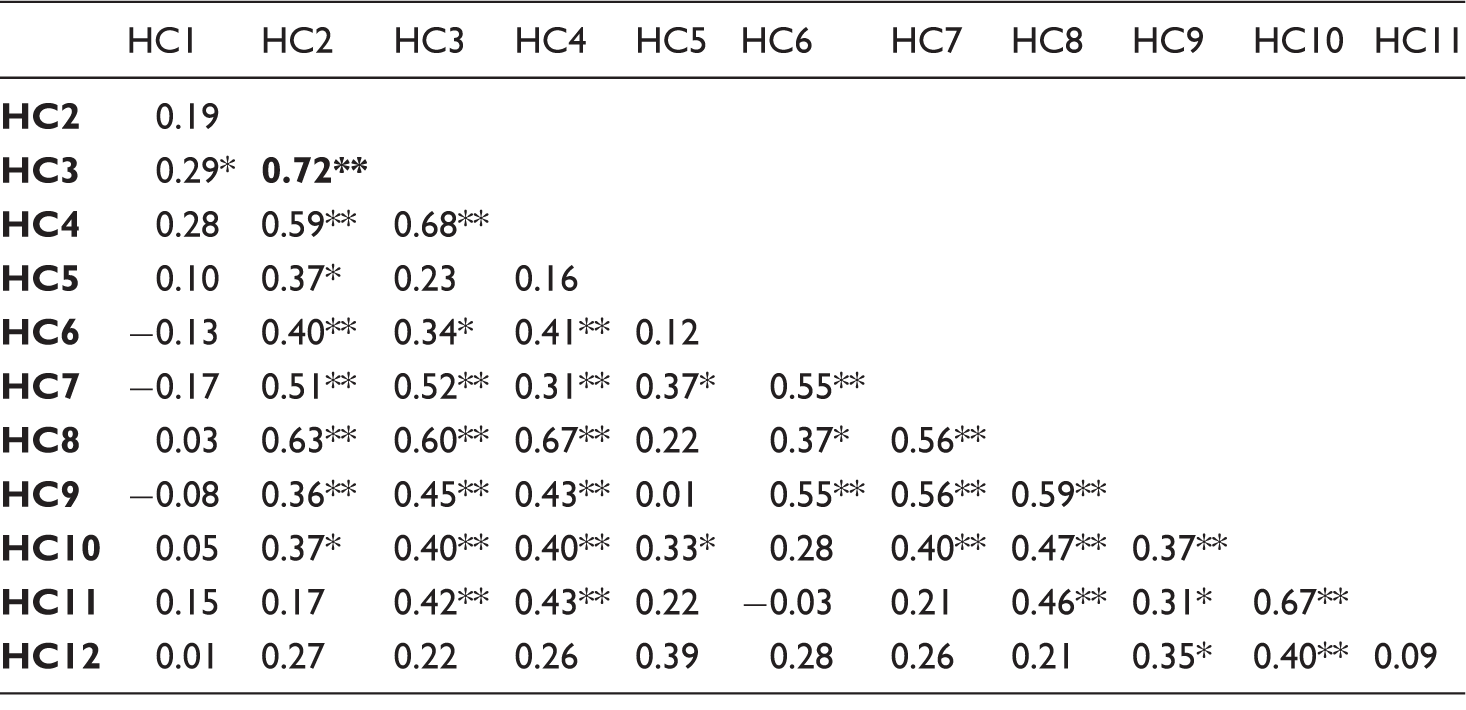
Notes: Variables are described in Table 5. * Significant bilateral correlation at the level of 0.05; ** significant bilateral correlation at the level of 0.01.
Spearman correlation between structural capital indicators
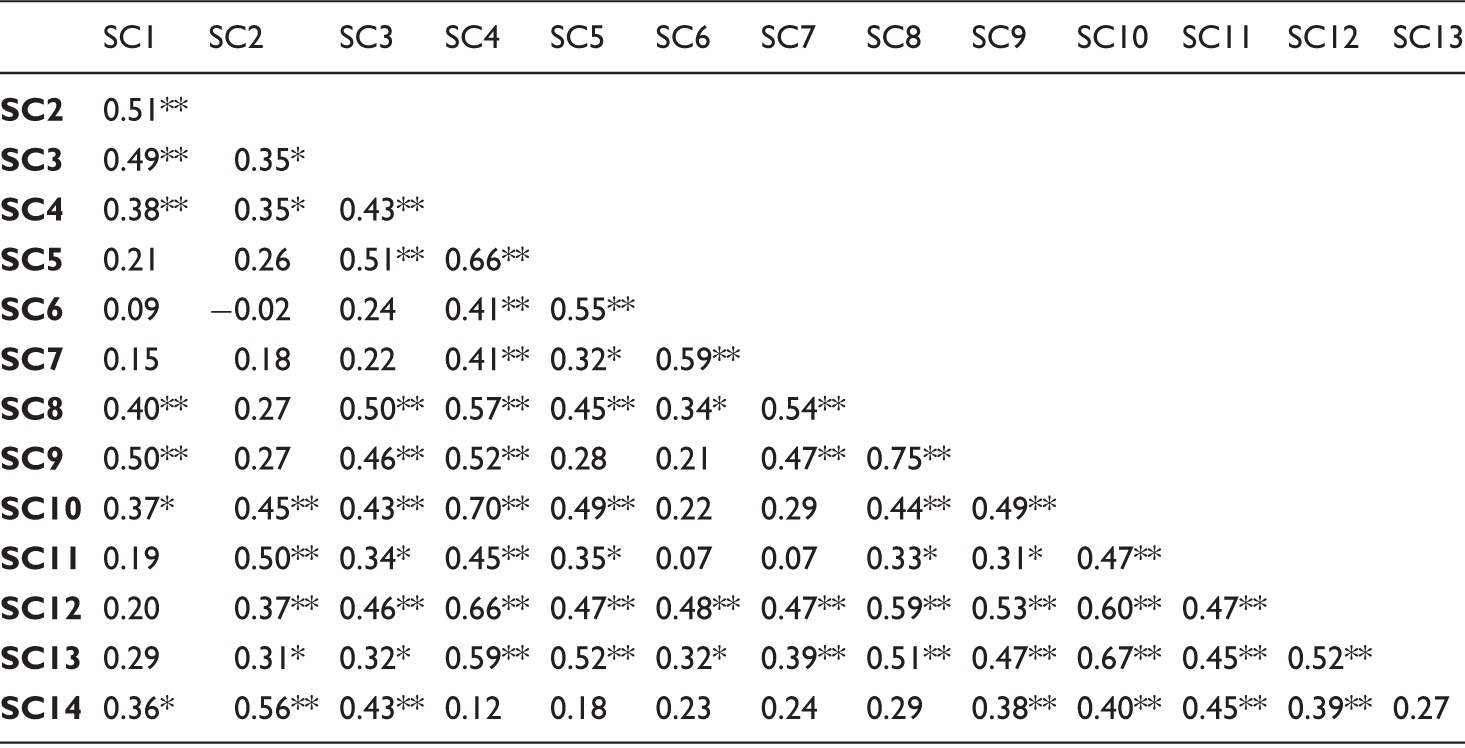
Notes: Variables are described in Table 5. * Significant bilateral correlation at the level of 0.05; ** significant bilateral correlation at the level of 0.01.
Spearman correlation between relational capital indicators
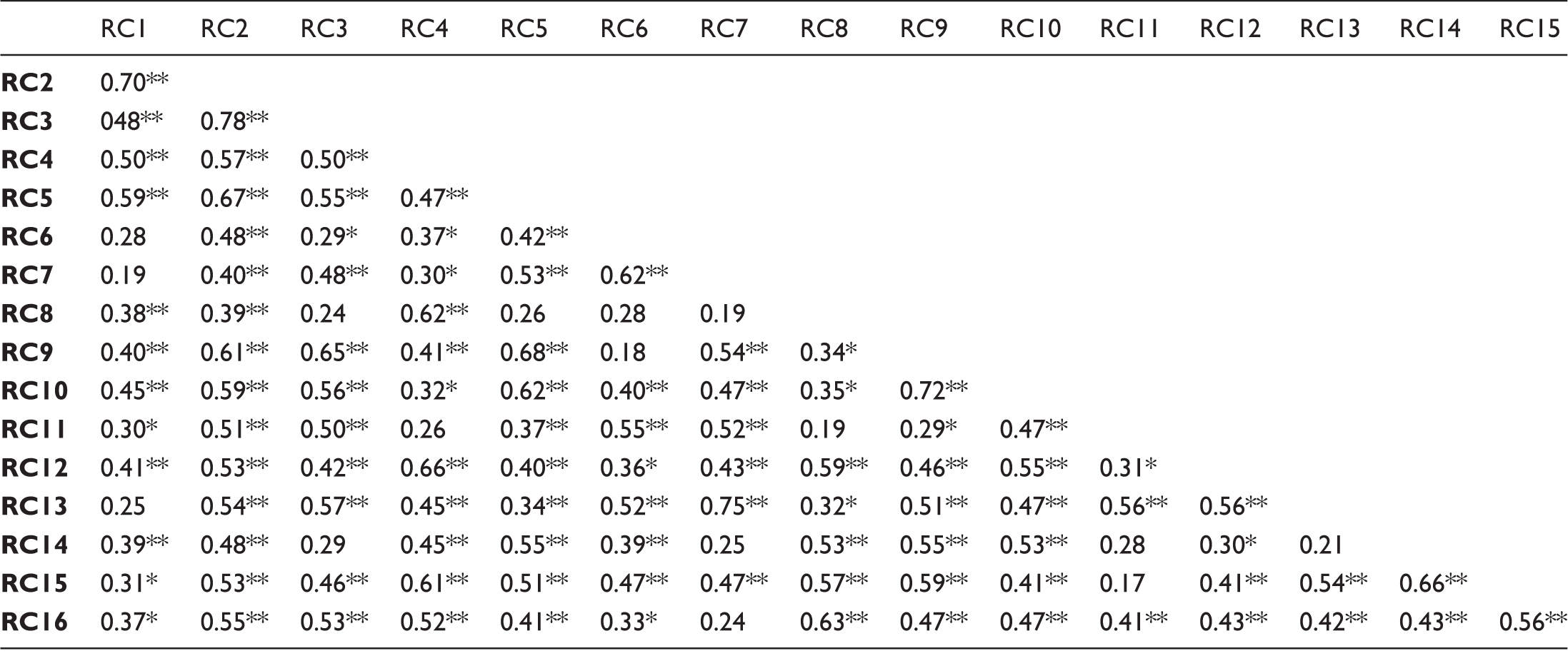
Notes: Variables are described in Table 5. * Significant bilateral correlation at the level of 0.05; ** significant bilateral correlation at the level of 0.01.
Specifically, the analysis of the data obtained from the various statistics (mean, median, mode, range, typical deviation, 25th and 75th percentiles, and bivariate Spearman correlations) led to classifying the following intangible elements as essential and not redundant to universities:
Human capital: academic and professional qualifications of the teaching and research staff, scientific productivity, and teaching capacities and competences. Structural capital: teaching management and organization, effort in innovation and improvement, management quality, and intellectual property. Relational capital: efficiency of graduate teaching, student satisfaction, graduate employability, relations with the business world, the university’s image and collaboration with other universities.
Selection of indicators and data collection
Valid indicators must now be drawn up for each intangible element considered as key in Spanish public universities. This phase is critical since the interest and viability of this intellectual capital model depends primarily on the characteristics and quality of the indicators and the data sources used to design them. During data collection, it is of prime importance to motivate employees to carry out the task and convince them of the benefits of an intellectual capital model.
The indicators should have the following characteristics (Meritum Project, 2005):
they must promote a visualization that allows actions to be translated into a system of indicators; they must have an array of indicators that describe the university’s value creation process; they must include indicators from all three components of intellectual capital; they may contain a mix of financial and non-financial indicators; and all indicators must be verifiable. Proposed intellectual capital model for Spanish universities
Finally, a set of 31 indicators was proposed (see Table 10). Again, these indicators were validated through interviews with the members of the Social Councils of Spanish public universities. All indicators achieve high mean and median values – approaching 5 points. Therefore, these indicators are classified as fundamental or essential for measuring university intellectual capital.
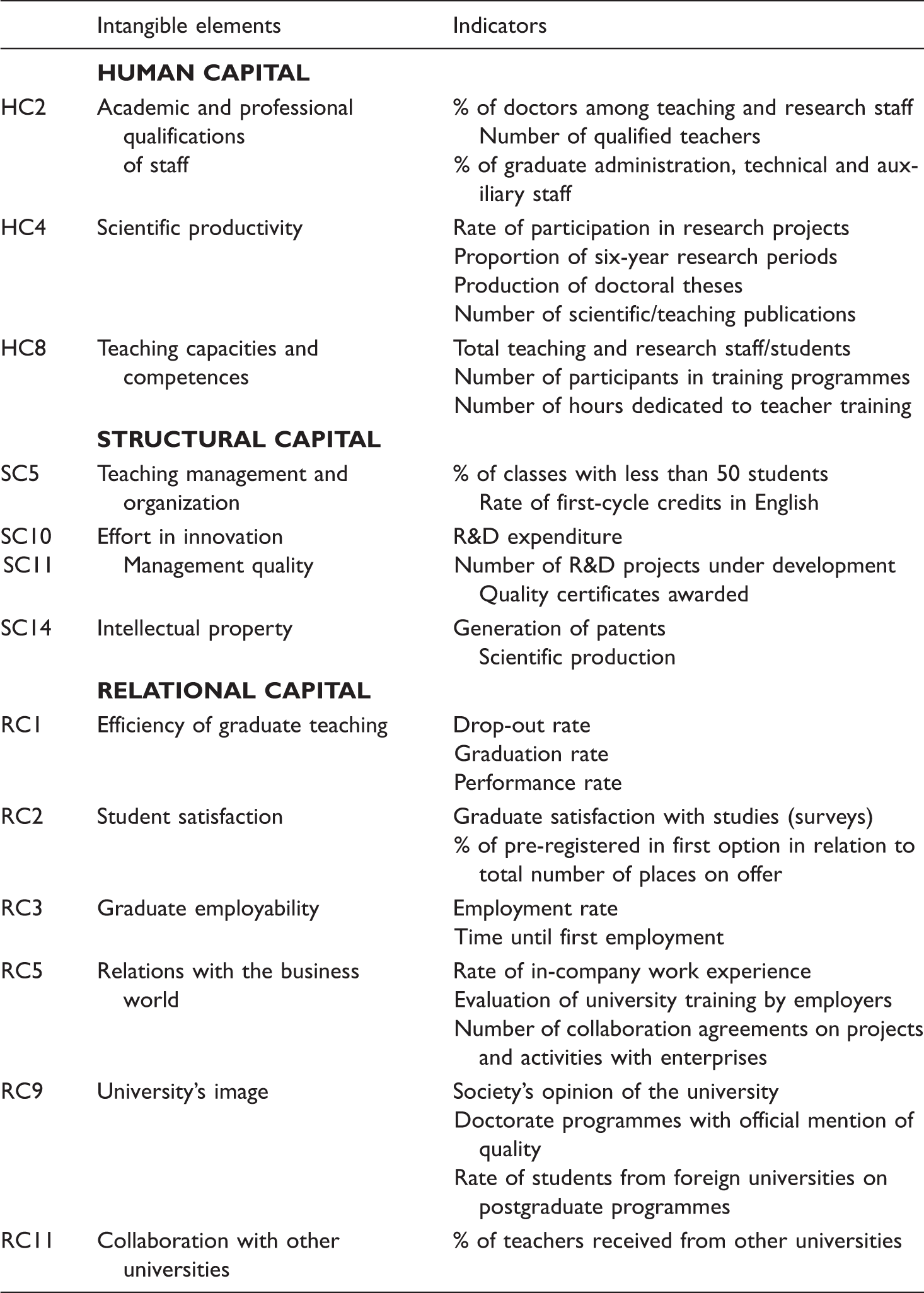
The values of the indicators can be calculated and presented for different successive periods, which permits a time-based comparative analysis. The main benefit of using an intellectual capital model is its potential to function as a management tool to help to allocate resources, define a strategy, prioritize challenges, monitor performance and facilitate decision-making.
Conclusions
This article presents a model for measuring the success of reaching university goals through the management of their intellectual capital. Specifically, based on the results of our empirical study, a proposal for an intellectual capital measurement model for Spanish public universities was developed.
Some of the success factors to be considered when drawing up intellectual capital models include: (1) defining strategic objectives as exactly as possible; (2) discussing corporate objectives and strategies; (3) using a non-complex model; (4) drawing up exact, transparent indicators; (5) reducing the number of indicators while making sure that they are significant; (6) initiating a learning process in the interpretation of the indicators; (7) defining a project team with clear responsibilities; (8) ensuring higher management commitment; (9) explaining the benefits of an intellectual capital model to all employees participating and ensuring that they all participate; and (10) initiating a discussion process at all levels of the organization.
The implementation process of our intellectual capital model basically comprises the following phases:
the definition of strategic objectives for intangible elements; the identification of key intangible elements in a university; and the selection of indicators and data collection.
Therefore, the first step was to know the mission and strategic objectives of Spanish public universities as a means of identifying the intangible elements needed in obtaining those objectives. Then, a basic task was to find the intangible elements of relevance to universities. In this sense, according to the Spanish public universities’ characteristics, a set of 42 intangible elements was proposed. These intangible elements have been analysed through in-depth interviews with the stakeholders of Spanish public universities. The results obtained show 13 intangible elements considered key in Spanish universities. Agreement on the disclosure of a list of intangible elements means that the university is willing to commit to transparency and accountability, which is a highly positive signal.
Finally, for this new framework to be successful, all of the key intangible elements must be measured in terms of some indicators that tap into the contribution that each will make to the management of intellectual capital at the university. Therefore, a battery of 31 indicators was presented, which were validated in our empirical study. The publication of these indicators would be a healthy exercise in transparency for these institutions in order to facilitate access for their stakeholders to a variety of information relevant to their decision-making. Therefore, these intellectual capital indicators could facilitate benchmarking analysis and comparative studies to help decision-making processes, improve the articulation of public policies and increase transparency in the whole system.
One of the basic premises is that intellectual capital is specific to each organization and its value and relevance depend on its potential contribution to the key objectives of the institution. This means that there is no homogeneous pattern of reporting on the intellectual capital of universities. Consequently, based on the results of our empirical study and in order to obtain a balance between standardization and the idiosyncrasies of each university, our work suggests: first, that all Spanish universities should provide information on a set of basic and general intangibles that are useful for all the institutions; and, second, that every university should present a set of specific intangible elements of the institution, thereby serving the demands of their stakeholders.
As a whole, the results obtained in our research not only advance the research into stakeholders’ expectations in the university community, but also offer useful and specific guidelines for intellectual capital reporting practice in Spanish universities. Our proposed intellectual capital model is intended to be an effectively practical application and easy to use, contributing to greater transparency and comparability in the higher education sector. The intention of our proposal for an intellectual capital model for universities is to contribute to the progressive recognition of intellectual capital as a key strategic factor to confront the competitive challenges currently facing universities. In this sense, the selection of the intangible elements for the model has been made on the basis of the most relevant strategic objectives for Spanish universities. A broad consensus on the relevance of information on intellectual capital according to these objectives is clear from the results of this work. For example, a high percentage (89.1 percent) of those surveyed in our study showed great interest in Spanish universities presenting information on intellectual capital. Also, in general, a high mean value was awarded to the different intangible elements relating to human, structural and relational capital, which shows a strong emphasis on the importance of intellectual capital.
The main contribution of this article is the validation of the consensus on the key intangible elements and indicators that should comprise a university intellectual capital model. This article helps universities on the path to presenting information that is useful to their stakeholders, contributing to greater transparency and comparability in the higher education sector, according to their strategic objectives.
Despite the contributions of this empirical study, the authors recognize several limitations that suggest future lines of analysis. One of the main limitations refers to the sample under study and the structure of the survey. The fact that only members of the Social Councils in Spanish universities were analysed means that there are other groups of users that have not yet been analysed (e.g. investors and suppliers of resources, the media, etc.). Hence, it would be interesting in the future to expand the sample to a broader community of representation.
Some other lines of future research are: a) to compare our proposed intellectual capital indicators with other reports (a benchmarking approach); b) the analysis of the different perceptions of each group of stakeholders regarding the importance of disclosing information about intellectual capital (university, government, teaching staff, students, etc.); and c) the creation of a structural equation model of intellectual capital for empowerment in universities.
Footnotes
Funding
This research received no specific grant from any funding agency in the public, commercial or not-for-profit sectors.