



Abstract
Despite the relative success of poverty alleviation over the last two decades, the issue of social safety nets remains an intriguing issue in the area of the strategic intervention of the government of Bangladesh. This article aims at exploring two sets of challenges: adverse political incentives and obstinate behavioural norms. In doing so, the current article proposes a conceptual framework that highlights the effects of clientelism, institutional frameworks and their enforcements, and social, human and technological factors on social safety nets. Further, it also shows how social safety nets influence the reduction of poverty, vulnerabilities and risks, leading towards the capacity building and empowerment of vulnerable people. The case of Bangladesh is discussed in the light of the proposed conceptual framework.
Points for practitioners
State decision-makers and implementers may take cognizance of the importance of the participation of pro-poor civic forums at different stages of social safety net intervention, the allocation of adequate resources, and addressing numerous management deficits confronting social safety nets. International development organizations also need to consider the contextual variables while providing assistance to developing countries in general and Bangladesh in particular. Political actors and administrators also need to take into account major contradictions in the formulation and implementation of social safety net programmes in Bangladesh.
Introduction
Bangladesh, once known as a ‘bottomless basket’, has emerged as one of the countries on the world map making considerable progress in economic and social development (Hossain, 2017). For many, the Bangladesh case is a ‘development paradox’ in that despite a very poor governance record, the country has made remarkable headway in all probable indicators of economic growth and social development (Ahmed et al., 2014a; Asadullah et al., 2014; Hulme et al., 2014; Mahmud et al., 2008). The gross domestic product (GDP) growth rate has consistently been 6% and above over a long period of time. Progress in human development indicators has been very impressive compared to many countries with similar income levels. One set of estimates reveals that the percentage of poverty-stricken people (using figures for consumption below the official upper poverty line) decreased from 48.4% in 2000 to 31.5% in 2010. On the other hand, the numbers of extremely poor people (consumption below the lower poverty line) declined from 34.3% in 2000 to 17.6% in 2010 (BBS, 2011).
Contemporary literature has identified, increased interventions by both government and non-governmental organizations (NGOs), massive urban construction, increased remittance flows from overseas Bangladeshis, and the thriving ready-made garment (RMG) sector’s labour absorption and export earnings as critical factors for consistent economic growth rate (Hulme et al., 2014; Mahmud et al., 2008). There is no denying the fact that social safety net programmes (SSNPs) have played considerable roles in achieving all these. However, despite the relative success of SSNPs, some key challenges remain omnipresent. The purpose of this article is to explore two sets of challenges: adverse political incentives and obstinate behavioural norms associated with the formulation and implementation of social safety nets (SSNs). While adverse political incentives are reflected in the contents of the institutional frameworks of SSNs, obstinate behavioural norms are gauged through the indices of mal-coordination, overlapping, corruption, pilferage and patronage distribution (World Bank, 2016). In the context of Bangladesh, most evaluation studies of SSNs have mainly focused on obstinate behavioural norms (Ahmed et al., 2014b; Hossain, 2007; Paul and Islam, 2015; Rahman and Kappestein, 2014). This article will employ a comprehensive political-economy framework by integrating both adverse political incentives and obstinate behavioural norms to understand the dynamics of SSNPs in Bangladesh. This study aims to investigate the following research questions:
How do clientelism and institutional frameworks and their enforcement, in unison, affect the role of the state in SSN interventions? How do social, technological and human development factors affect clientelism, institutional frameworks and their enforcement, and the role of the state in SSN interventions? How does the role of the state, circumscribed by social, technological and human development factors, clientelism, and institutional frameworks and their enforcements, impact the reduction of poverty, vulnerabilities and risks for poor people, leading towards their capacity building and empowerment?
Literature review: existing concepts, models and programmes
This section reviews the contemporary concepts, models and different types of SSNs, and identifies their limitations in comprehending the acute poverty and vulnerabilities of the poor in the developing world. Based on a comprehensive review, a conceptual framework will be developed to analyse the dynamics of SSNs in Bangladesh.
The meaning of SSNs has undergone changes over the years. In the 1980s, the World Bank narrowly defined an SSN as ‘a system of income insurance to help people through short-term stress and calamities’ (Paitoonpong et al, 2008: 460). The financial crisis in the 1990s propelled the World Bank to expand the horizon of intervention. The World Bank report of 2015 (World Bank, 2015: 7) observes that SSNs are: non-contributory measures designed to provide regular and predictable support to poor and vulnerable people. They are also referred to as safety nets, social assistance, or social transfers, and are a component of larger social protection systems. In general, social protection also includes social insurance, such as health insurance, as well as labour market programs.
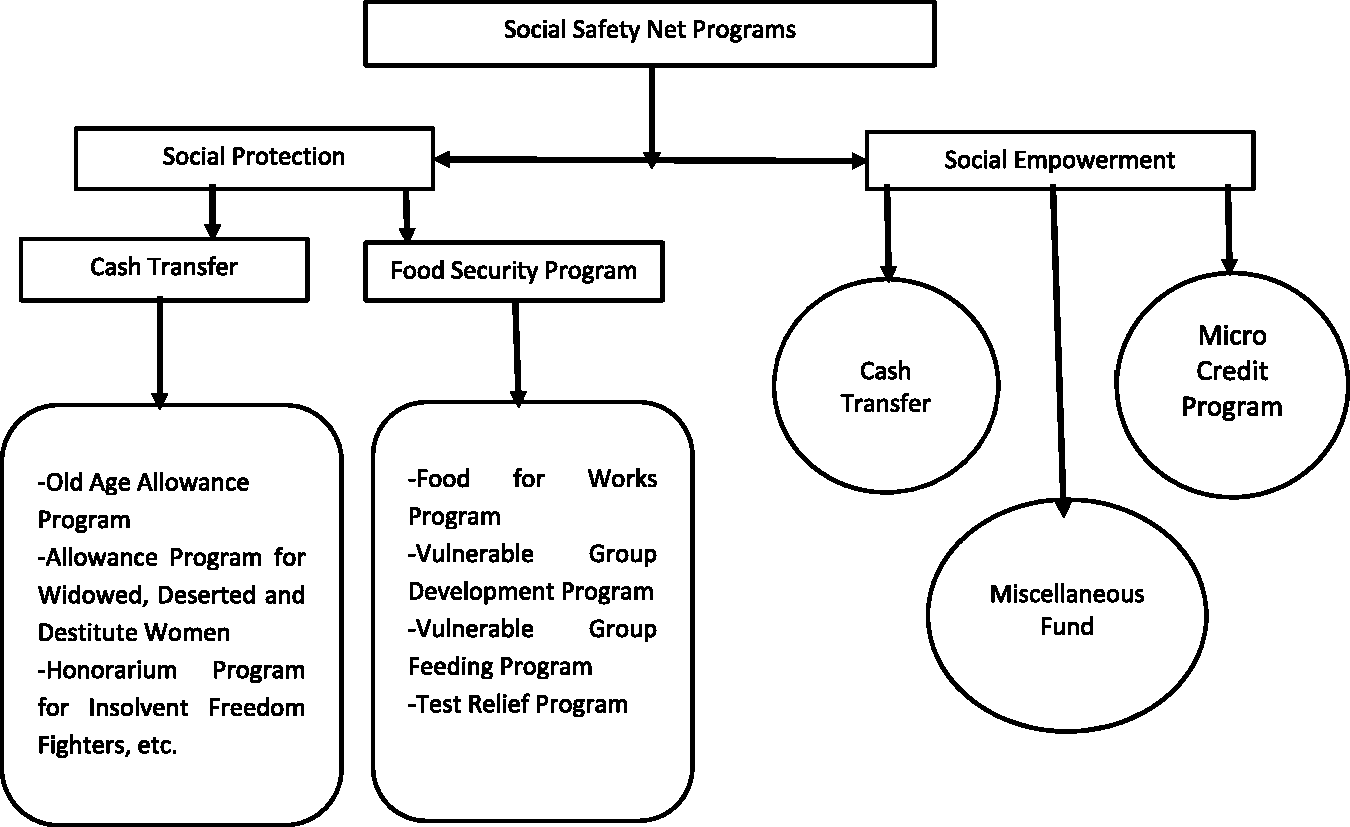
Anatomy of SSNs in Bangladesh.
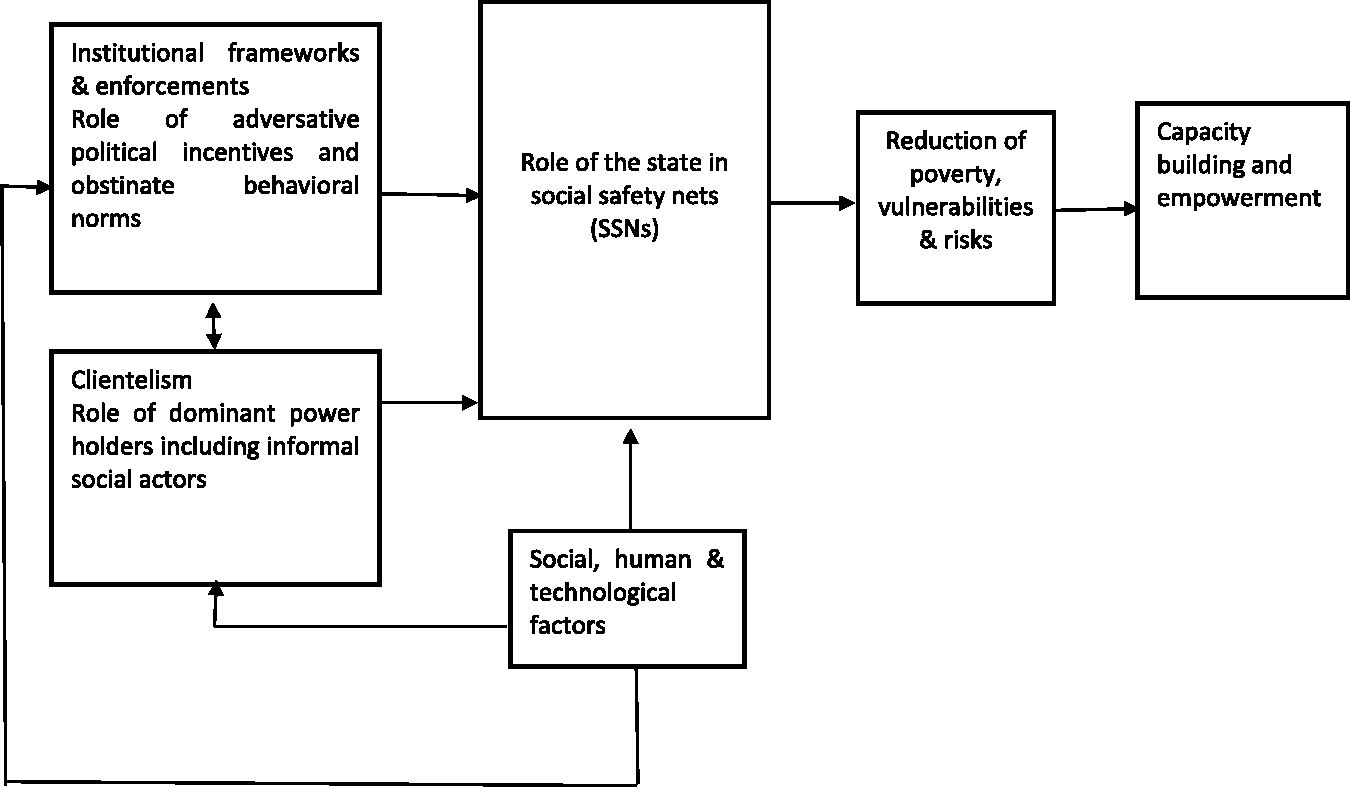
Conceptual model.
Since the Second World War, numerous models have been tried to overcome poverty and insecurity in the developing world. In the 1980s, the neoliberal model, popularly known as the Washington Consensus and primarily backed by multilateral and bilateral international agencies, provided a reform formula for developing countries. It was, indeed, necessary as a response to the caprices of imperfect markets in the developing world, which were reinforced further by Asian economic crises in the late 1990s and by global economic crises in 2007–2010.
While selective state intervention in the 1980s focused on a system of income insurance to help people through short-term stress and calamities, financial crises in the 1990s and a heightened awareness of the negative effects of global poverty propelled international multilateral organizations to expand the horizon of interventions (Bourgon, 2017; Haan, 2015; Merrien, 2013). Therefore, on account of the shortcomings of the orthodox neoliberal market model, the inclusive growth model received prominence in development discourse. Increased economic growth must be accompanied by not only poverty reduction, but also the distribution of income, wealth and opportunities as the latter are the preconditions for sustained growth. For the Commission on Growth and Inclusive Development (2008), the systematic inequality of opportunity is toxic. It should be mentioned here that, in the early 1990s, the concept of inclusive growth was dominated by the ‘growth first’ approach, emphasizing the importance of growth for poverty reduction. However, from the late 1990s, inequality came back onto the agenda (Haan, 2015). According to Rauniyar and Kanbur (2010), inclusive growth implies growth with declining income inequality. Ali and Zhuang (2007) emphasize expanded equal opportunities and access. They further observe that ‘growth is inclusive when it allows all member of a society to participate in and contribute to the growth process on an equal basis’ (Ali and Zhuang, 2007: 10). This notion of inclusive growth seems to be similar to distributive justice (Haan, 2015), though Saad-Filho (2010) observes that distribution is incidental to inclusive growth. It is of utmost necessity to respond to, as Saad-Filho (2010: 17) emphasizes ‘the imperatives of sustainability, equity, democracy and social justice, and fostering economic growth, mass employment, social inclusion, satisfaction of basic needs and the provision of welfare for the vast majority’.
It is worth mentioning here that contemporary SSNPs are modelled along the inclusive growth model. Now, development scholars and state policymakers think that SSNPs play a crucial role in promoting inclusive economic growth in the developing world (Commission on Growth and Inclusive Development, 2008; Conning and Kevane, 2002). However, empirical studies on diverse SSNPs, such as conditional cash transfers, work and relief programmes, social insurance, graduation programmes, and so forth, have mixed results.
Some studies (Fiszbein et al., 2014; World Bank, 2015) have reported a reduction of poverty through SSN interventions. Fiszbein et al. (2014) reveal slow progress in South Asia, the Middle East and North Africa (MENA), and Africa. The inadequacy of budgetary allocations remains a contentious issue in these regions.
Mcloughlin (2015) and Niño-Zarazúa et al. (2012) focus on the problems of the implementation of SSNPs. At this level, the good intentions of the policies very often faltered due to the interference of local vested interest groups. However, the structure of incentives facing providers and recipients is a very crucial factor.
In the context of Bangladesh, both negatives and positives have emerged from different studies conducted by government agencies, international donor agencies, national and international research organizations, and individual academics (GoB, 2015a, 2015b; Hossain, 2007; Rahman et al., 2014; World Bank, 2013). Rahman and Kappestein (2014), in their study, have identified the unavailability of SSN-related information, local clientelism and the propensity of bribes as critical factors that exclude adivasis (indigenous people) from SSNPs.
Ahmed et al.’s (2014b) research findings reveal inadequate macroeconomic response to poverty and vulnerability, scanty budgetary allocations, regional disparities and the unequal distribution of wealth, improper targeting, and the lack of coordination among different ministries. According to Akter and Mallick (2013), although SSNPs was well targeted towards post-disaster relief and recovery aid disbursement programmes in the cyclone-prone coastal areas, the insufficiency of the aid supply compared to overwhelming demand, patronage distribution and inadequate monitoring were also observed.
Haque and Marschke (2016) observed that the majority of the programmes aimed towards livelihood vulnerabilities were designed decades ago, rendering them inadequate for addressing new forms of vulnerabilities emerging from changing environmental patterns. Some other studies have also identified inadequate funding, poor coverage, patronage distribution and corruption in SSNPs (Hossain, 2007; Hossain and Osman, 2007).
Limitations of the existing models and developing a conceptual model
Both the neoliberal market and inclusive growth models have been widely criticized for being unable to apprehend the dynamics of vulnerabilities and provide proper solutions (Bourgon, 2017; Haan, 2015). Now, there are newer ways of understanding the dynamics of poverty alleviation through SSN interventions. Haan (2015) considers mainstream SSN interventions as a ‘residual approach’. Poverty is interpreted as a side effect of market operations that necessities the state to undertake programmes for the poor people. This analysis is analogous to the heterodox institutional economic approach that underscores the need for power sharing in governance for extracting maximum impact on the distribution of income and opportunities (Khan, 2012). Haan (2015) elaborates on this issue by bringing growth, distribution and participation under one umbrella. First, citizens’ values and aspirations, as well as their preferences for associations, have to be reflected. Second, for practical political and social pressures, growth must be accompanied with distribution. Third, economics, institutions or politics, and social development have to be considered in tandem. However, despite the many burgeoning issues raised by many scholars, a proper understanding of the socio-economic and political dynamics underpinning the course of SSN interventions is clearly absent in contemporary literature.
Our conceptual framework (see Figure 2) takes cognizance of the interplay of incentives, politics and institutions to impact SSN interventions in the context of Bangladesh. We have integrated the two broad sets of challenges into a single framework that gives sufficient insights into the actual scenario of SSNPs in Bangladesh.
In the conceptual model, clientelist politics, the framing of policies and their enforcements are interrelated. Together, they shape the role of the state in relation to SSNs, which, in turn, determines the outcomes. There are specific written rules (formal institutions) that arise from the engagement of powerful groups with the benefits of the poor, keeping in view long- and short-term stability (e.g. Five Year Plan or Safety Net Policy). If there are grey areas in formal policy pronouncements, they again have to be understood in terms of the informality (informal institutions) prevailing in the social order or political settlement (Khan, 2013). In addition, when government agencies or organizations enforce these SSNPs on the ground, they are likely to be influenced by potential intermediate mobilizers (informal social actors who are important for the dominant power coalition), which eventually culminates in the skewed distribution of the benefits of SSNPs (Hasan et al., 2016). In this article, by powerful groups, we mean state decision-makers, including the selected political elites, the army, the bureaucracy and selected members of rising industrial conglomerates. Informal social actors include those such as rural elites and ruling party activists at the local level (Hasan et al., 2016; Hassan, 2013).
Clientelism is defined as whenever dyadic relationships have long existed in which ‘two or more actors (or groups of actors) of unequal political status engage in an informal, extra-legal pattern of voluntary, particularistic exchange in which public resources are traded for private benefits’ (Paik and Baum, 2014: 677). The pervasiveness of patron–client relations throughout Bangladesh society has triggered the adoption of clientelism as an analytical form of inquiry (Wood, 2000). It has received further momentum with the tagging of political economy with clientelism (Grindle, 2017; Khan, 2012). In a recent report, the World Bank (2016) admits that the development programmes in the developing world are commonly inflicted with two major problems: adverse political incentives and obstinate behavioural norms. As regards adverse political incentives, the dynamics within the dominant power coalition prevents state actors from adopting pro-poor policies as these policies may deter them from focusing on capitalist growth-enhancing activities. Since the poor or pro-poor associational groups are kept outside the policymaking process, SSNPs render only residual services without qualitative transformational impacts on the lives of the poor people (Haan, 2015; Kabeer, 2014; Khan, 2012). On the other hand, obstinate behavioural norms stipulate that when the populist section of the dominant power coalition stresses adopting redistributive policies, opportunistic groups within the coalition sway the benefits of such policies and programmes for their personal gain (World Bank, 2016). In other words, obstinate behavioural norms connote significant management deficits at the level of implementation. In fact, for quite some time, scholars in the field of development have emphasized the interlocked relationships between power configurations, institutions, incentives and state–society relations (Grindle, 2017; Khan, 2013).
In our discussion, the role of civil society, particularly NGOs, is also quite important. They have played a commendable role in arresting rising poverty trends through their innovative methods of service delivery (Haque, 2004; Hossain, 2007; Hossain and Osman, 2007; Rosenbaum, 2006; World Bank, 2013). However, their roles are also conditioned by the dynamics of clientelism and institutional frameworks (Haque and Mostofa, 2013; Kabeer, 2011). Contextual factors, including social, human, technological, clientelist and institutional frameworks, are also likely to affect the role of the state in SSNs.
SSNs in Bangladesh
Poverty and vulnerabilities
Bangladesh emerged as an independent country in December 1971. Independent Bangladesh commenced its journey as one of the most poverty-stricken countries in the world. For many decades, Bangladesh has conjured up such images as poverty, natural catastrophes, political and social turmoil, corruption and so forth (Hossain, 2017). While commendable progress has been attained over the years in economic and social arenas, numerous uncertainties have darkened the landscape of Bangladesh.
Table 1 reveals significant improvements in the poverty situation between 2000 and 2010. Despite the improvements, around 50 million people were still living in poverty in 2010, including 28 million in extreme poverty (Hulme et al., 2014). The rate of poverty reduction moved progressively during this period. Titumir (2014), however, reports that the rate of poverty reduction slowed down after 2010, largely caused by rising urban poverty due to rural–urban migration, climate-induced vulnerabilities and a hike in prices of essential commodities (Titumir, 2017).
Rate (%) of poverty based on report on Household Income & Expenditure Survey (HIES), 2010.
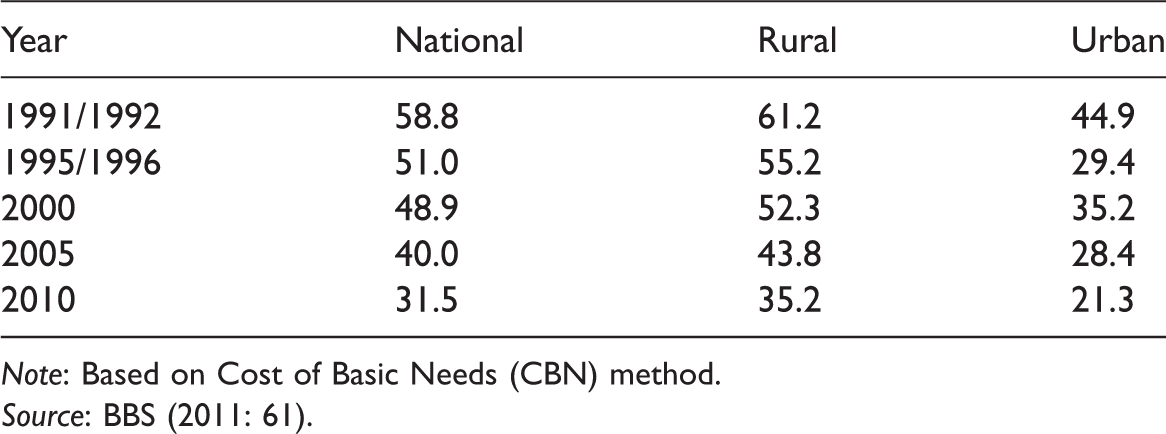
Note: Based on Cost of Basic Needs (CBN) method.
Source: BBS (2011: 61).
Associated with poverty are different kinds of vulnerabilities in the form of shocks of various kinds. One set of estimates gives alarming evidence that 22% of reported shocks are concerned with expenses related to illness (Ahmed, 2009). Vulnerability caused by the vagaries of climate has become a serious concern in recent years (Alam et al., 2017; Haque and Marschke, 2016; Islam and Shamsuddoha, 2017). All these shocks induce the poor to sell their household effects and productive assets, to borrow money at a very high interest rate, and to remove children from schools, culminating in rapidly declining long-term economic potential (Ahmed, 2009). Vulnerabilities are triggered by the fluctuations of commodity prices that affect the Bangladeshi poor (Alam and Rahman, 2014; Hulme et al., 2014). Against this backdrop, the Bangladeshi government has initiated a comprehensive strategy that aims at redressing different aspects of poverty and vulnerabilities.
SSN policy and programmes of the government
At the outset, it is worth mentioning that the Bangladeshi government does not have a coherent institutional framework as regards SSNs and social protection. Since these kinds of programmes have been in place since the birth of the nation, successive governments have always relied on ad hoc policies without clear vision, strategies and organizational frameworks (Hulme et al., 2014). The National Social Security Strategy (NSSS) (GoB, 2015b) adopted in 2015 provides the institutional framework for SSNs currently in place in Bangladesh.
The institutional framework envisions ‘an inclusive Social Security System for all deserving Bangladeshis that effectively tackles and prevents poverty and inequality and contributes to broader human development, employment and economic growth’ (GoB, 2015b: 48). It reiterates the government’s commitments to adhere to the fundamental state principles included in Part II (Article 15) of the Constitution in relation to SSNs, including the provision of the basic necessities of life and the right to social security (GoB, 2015b: 48).
The history of SSNPs in Bangladesh is quite old. In a country devastated by a nine-month-long war, two major SSNPs were undertaken: food rations and relief work. Gradually, SSNPs as a protective mechanism have expanded for vulnerable groups since 1971 (GoB, 2015b; World Bank, 2013). Bangladesh has made remarkable progress in lifting 16 million people out of poverty over the past decade. One of the most significant strategies undertaken by the Bangladeshi government is to implement a number of SSNPs to reduce poverty and vulnerability (World Bank, 2013). Figure 1 provides a glimpse of different kinds of SSNPs in Bangladesh.
NGOs have supplemented government intervention quite effectively in SSNPs. Their performance in different sectors, including health, education, employment generation and so forth, has been lauded in different studies (Krishna et al., 2012; World Bank, 2013). Their micro-credit intervention has received particular attention in poverty alleviation (Khandker and Samad, 2016). NGOs also have a number of collaborative programmes with the Bangladeshi government, particularly in the area of SSNs. Positive outcomes are reported in many of these programmes (Haque, 2004; Krishna et al., 2012).
Analysis and discussion
There is no denying the fact that Bangladesh has made considerable strides in the area of SSN as regards most of the parameters, such as poverty reduction, increased employment, increased purchasing power, increased literacy, better mothers’ health, sanitation and so forth. Very often, the progress is referred to as the Bangladesh conundrum (Asadullah et al., 2014) because of the very poor rate of good governance (Ahmed et al., 2014a; Azmat and Coghill, 2005). The consistent rate of economic growth over the last two decades, led by the export of RMG, the increasing inflow of remittances of Bangladeshi expatriates, the rapid decline of fertility rates, increased agricultural production and the developmental roles of NGOs, has largely been responsible for the decline in the poverty rate (Asadullah et al., 2014; Hulme et al., 2014). It is also evident that poor governance may have dented the effectiveness of public expenditure in the social development sector (Gupta et al., 2002; McGuire, 2006).
Despite these achievements, serious concerns remain in relation to the achievement of a poverty-free Bangladesh by 2030. There are certain grey areas that stifle the maximum efficiency and effectiveness of SSNPs in Bangladesh. The first grey area is adverse political incentives, culminating in policy deficits as regards SSNs. The second one is obstinate or perverse behavioural norms, which are observed at the implementation level. Both these grey areas stem from political settlements prevailing in Bangladesh.
Like many other developing countries, Bangladesh has had a clientelist political order defined in terms of the dyadic relationship between state decision-makers (patrons) and numerous social, economic and political groups scattered throughout society (clients). Bangladesh has faced a tumultuous political history marred by populist authoritarianism (1972–1976), authoritarian clientelism (1976–1990), competitive clientelism (1991–2006) and semi-authoritarian clientelism (2009–) (Khan, 2013).
While highlighting the improvements in the social development sector, Mahmud et al. (2008) have applauded the ‘genuine’ role of the government in this regard and found ‘political incentives’ formulating and implementing social protection policy. The evidence provided in connection with supposedly political incentives includes budgetary allocations in the social protection sector (see Table 2). However, our evidence reveals more political disincentives than political incentives if we look at the decreasing resource allocation to GDP ratio. The findings of the research reveal that although the total budget allocation for SSNs increased over the years, its contribution to total has GDP decreased. Therefore, it is evident that the budgetary allocation for SSNPs is not adequate (see Table 2). Our analysis is further supported by Kidd and Khandker (2013).
Budgetary allocations for SSNPs.
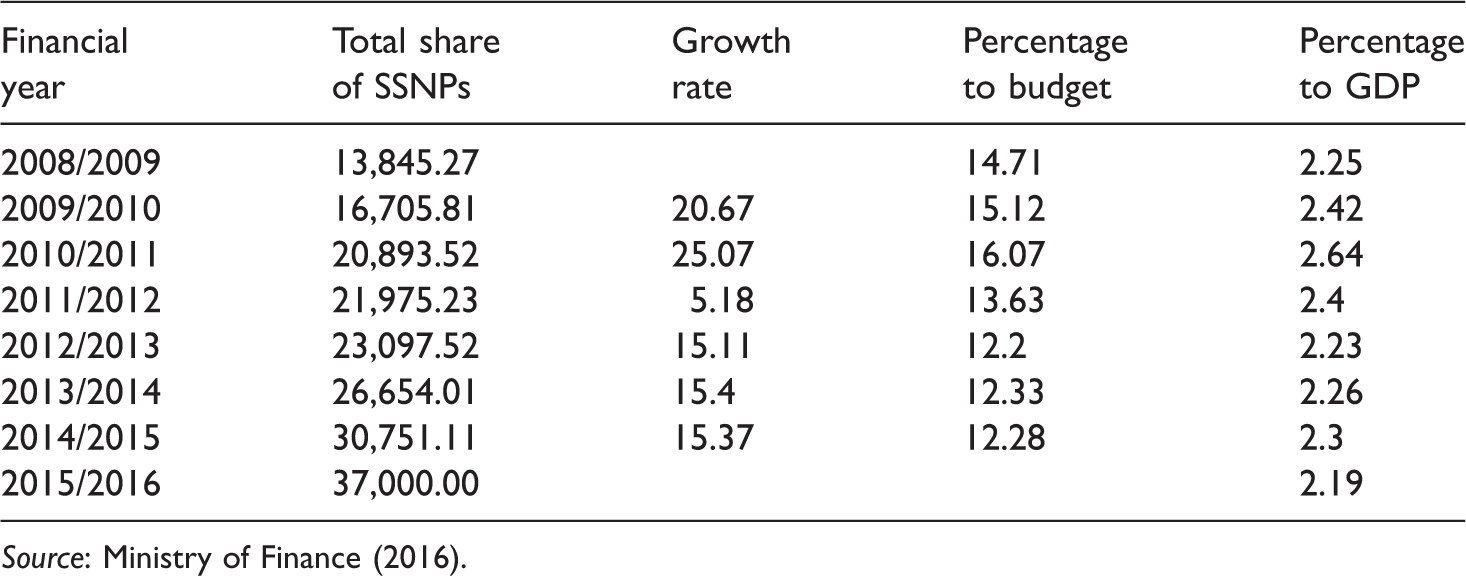
Source: Ministry of Finance (2016).
Another indication of the political disincentives is the lack of participation of the poor or any organized group on their behalf in policymaking. According to Kabeer and Kabir (2009), the democratization of the state and the democratization of society are intertwined. There is no denying the fact that there are deep-rooted barriers of clientelism. Poor people are afraid of the loss of patronage, and the modicum of security that it offers. It has negative implications on the capacity of subordinate groups to exercise political agency in pursuit of their rights (Kabeer and Kabir, 2009; Kabeer et al., 2012; Shepherd, 2000). On top of it, there exists the apathy of the Bangladeshi elites towards poverty and the poor (Hossain and Moore, 1999).
The onus is now on associational groups, such as civil society organizations that can help the downtrodden to voice their concerns. NGOs are more comfortable working with development services than with a rights-based approach to development (Kabeer and Kabir, 2009; Kabeer et al., 2012). Probably, it is better to designate NGOs as ‘excluded elites’ (Hassan, 2013) as they are just another group of lower-level elites without any strong position within the dominant power coalition. This is evident from the peripheral role played by civil society organizations in policy matters (e,g, the Poverty Reduction Strategy Paper and NSSS) (Kamruzzaman, 2013).
If there is any positive political incentive on the part of the members of dominant power holders, then it lies in the dynamics of the political settlement. As indicated by a number of researchers (Hassan, 2013; Khan, 2013), maintaining stability is one of the prime objectives of any regime like Bangladesh. Increased allocation of resources and dispatching them through clientelist networks involving MPs and local government functionaries in coalition with the field administration have proved relatively successful for both the poor people tied into clientelist networks and lower-level political intermediaries and accumulators of the dominant power coalitions (the local administration, contractors, different organizations tied with the ruling coalition) (Hossain, 2007; Hasan et al., 2016). Some scholars make a clear distinction between clientelism and corruption in terms of the effects that they may have. While corruption is just an outright plundering for personal accumulation on the part of the political clientelist intermediaries, clientelism helps distribute at least a portion of resources by political mobilizers to real destitute people and contribute to local community development (Hossain, 2007; Mahmud et al., 2008). We, however, disagree with this perspective as a large number of potential destitute claimants remain outside the patronage network and are deprived of their entitlements (Gupta et al., 2002; Hasan et al., 2016; McGuire, 2006).
The article also argues that the implementation of existing SSNPs suffers from obstinate behavioural norms, such as corruption, overlapping and lack of coordination, monitoring and transparency, which need to be critically addressed in order to get maximum benefits from the programmes. Since inception, SSNPs have been accused of ‘leakage’ – a phrase that basically denotes corrupt practices by a number of intermediaries and patronage distribution along political party or factional lines. Both have negative implications for the effectiveness of the programmes. A number of studies (Hossain and Osman, 2007; Mahmud et al., 2008) condone the patronage system and find its efficacy for local development. In a sense, a group of the poor get benefits from their ties with local leaders. However, there could be other poor people aligned with opposition parties who are likely to be deprived of their entitlements (Hasan et al., 2016; Hassan, 2013).
In fact, there is hardly any SSNP that is immune to leakage, paying for entry, fake muster roll (i.e. ghost workers), nepotism and the coverage of clientele. Moreover, the poor in urban areas, minority-ethnic-inhabited areas, char areas and other climate-afflicted vulnerable areas are also being neglected, and many of the poor are even unaware of their rights (CARE-Bangladesh, 2014; Haque, 2001; Paul and Islam, 2015; Titumir, 2014; World Bank, 2013). Some positives have been gained (Siddiki et al., 2014) at the cost of tens of thousands of the poor in almost all areas of SSN interventions afflicted by social exclusion (CARE-Bangladesh, 2014; Siddiki et al., 2014; Titumir, 2014).
The foregoing discussion points to the interlocked relationships between clientelism and institutional frameworks and their enforcements that lead towards ineffective state action for the capacity building and empowerment of vulnerable people. There are a number of human, social and technological factors that contribute to inept state actions in terms of policy towards SSNs. As indicated in the conceptual model, social, human and technological factors also affect clientelism and institutional frameworks and enforcements. As indicated in Table 3, social, human and technological indicators display a low level of attainment, which implies that these will not have a very positive impact on SSNs through state intervention. Similarly, these factors also do not have satisfactory contributions to the development of rights-based political mobilization and participation in institutional domains of vulnerable groups. For example, one of the indicators is the number of individuals using the Internet. In the case of Bangladesh, only 14% of individuals were users of the Internet in 2015. This underlines that technology is underutilized in Bangladesh for state actions to implement SSNs.
Selected indicators of the social, human and technological state of Bangladesh.
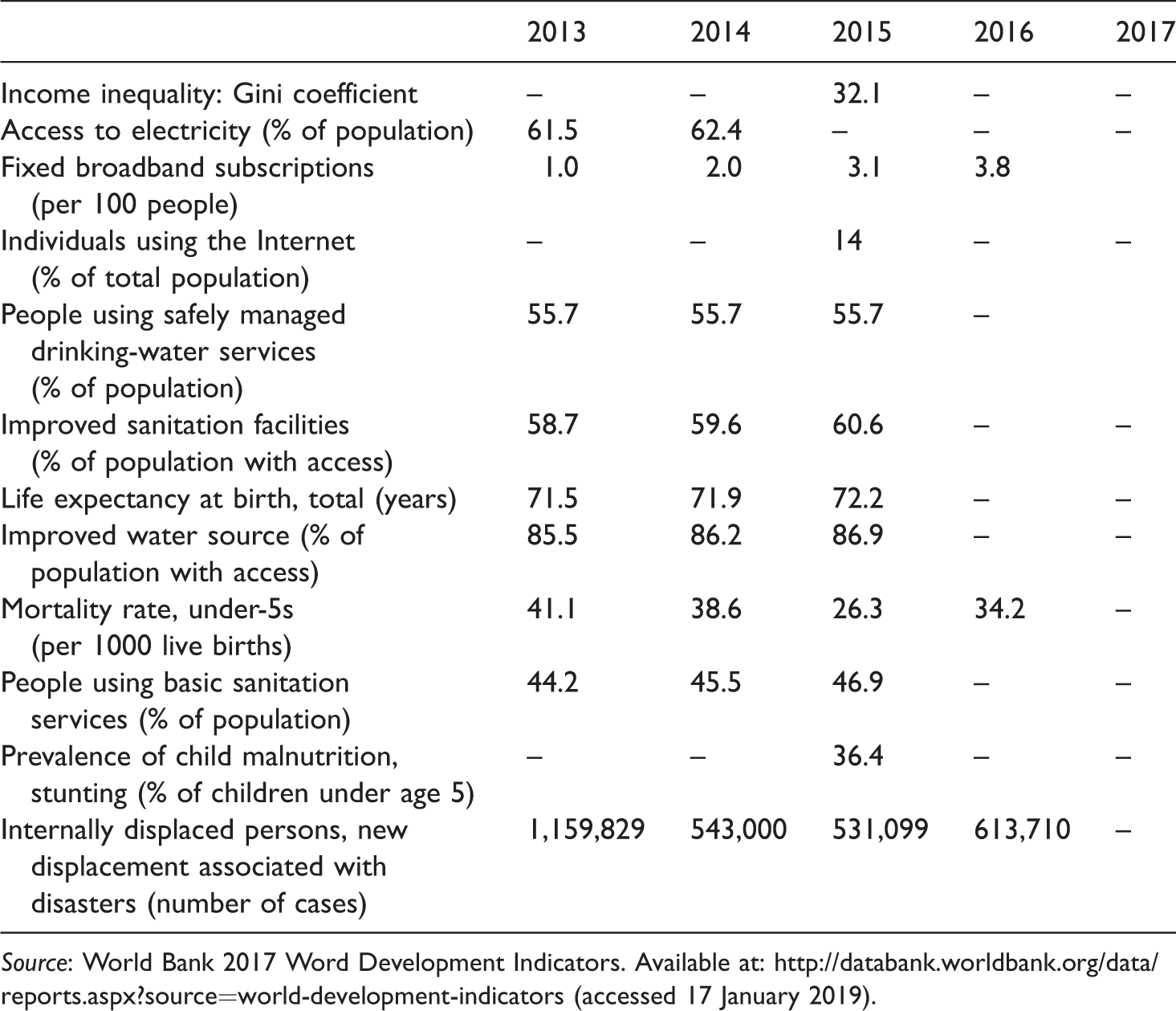
Source: World Bank 2017 Word Development Indicators. Available at: http://databank.worldbank.org/data/reports.aspx?source=world-development-indicators (accessed 17 January 2019).
Conclusions and policy implications
The findings of our article have identified two major obstacles for SSNs in Bangladesh. One is adverse political incentives and the other is obstinate behavioural norms. These two challenges have been brought under a single framework in our article, which unravels the recent dynamics of SSNPs in a holistic way. While existing SSNs basically focus on rural poverty, urban poverty is completely out of focus. Social exclusion, urban poverty, vulnerability and risks will aggravate the stability of the country.
The foregoing discussion provides strong evidence that the serious concerns expressed by Bangladeshi state decision-makers regarding SSNs have not really been translated into a coherent institutional framework, the intentions of which are destined to be lost due to the drivers of social exclusion. Social exclusion is exacerbated by discriminatory beliefs and social norms, the patriarchal social structure, and social institutions that culminate in the differentiated impacts of SSN protection interventions. We have argued that the formal institutional design of SSNs at the macro-level corresponds to the dynamics of political settlements that ultimately result in the lack of a coherent and integrated policy design. Failure to enforce formal institutions due to the interference of party-based local-level mobilizers results in leakage, a perennial problem of the service delivery system. This is further aggravated by the weaknesses of formal accountability mechanisms and the absence of countervailing social and political forces, which are prominent phenomena in a developing country like Bangladesh.
In order to tackle poverty and vulnerabilities, there is a need to work on several fronts. The fact that poverty, vulnerability and risks will aggravate the stability and sustainability of the economy has to be recognized. Keeping that in mind, an all-encompassing and coherent policy framework has to be developed in consultation with all the relevant stakeholders in order to meet context-specific needs. Mere policy pronouncements are not enough. Special laws have to be enacted to this end. The most intriguing issue at the moment is the political space inundated by partyarchy, which is detrimental to the long-term viability of SSNs in Bangladesh. While some visible economic benefits for the poor and vulnerable people are apparent, political and social contents have to be added to these benefits. The need for political and associational awareness and social activism on the part of the poor is of utmost necessity. Economic emancipation cannot be achieved without social and political mobilization. On the other hand, focus on social and political mobilization while disregarding the economic packages is a futile exercise. Therefore, both have to be mutually inclusive. The onus is on both the state and the NGO sector (Kliksberg, 2004). The state has to provide the deliberative space for the poor and the poor-based NGO sector. At the same time, NGOs, along with providing services including micro-credit, need to mainstream the beneficiaries into a political and social rights regime.
This study is basically conceptual in nature. Its chief contribution lies in the development of a conceptual framework that has been tested in the context of Bangladesh with the aid of secondary sources of data. The model can also be applied to other developing countries. The next stage of this study would be empirical research in Bangladesh.
Footnotes
Declaration of conflicting interests
The author(s) declared no potential conflicts of interest with respect to the research, authorship and/or publication of this article.
Funding
The author(s) received no financial support for the research, authorship and/or publication of this article.