




Abstract
This article continues the conversation on public service innovation and transformation in the International Review of Administrative Sciences. Political, socio-economic and technological changes drive public service transformation in rendering current service delivery models increasingly ineffective. However, public service transformation introduces risks. This article finds a paucity of academic research into those risks, highlighting need for their management. The key conclusion is that risk management, leadership and public participation can facilitate or hinder public service transformation.
Points for practitioners
Risk management features prominently in public and private sector discourse, and is perceived as a core element of corporate governance and a tool for achieving strategic objectives. It is key to facilitating public service transformation and ensuring that organizational objectives are achieved because it can optimise inherent opportunities while mitigating associated risks. This article contributes to public administration practice by developing a new conceptualization of the role of risk management in public service transformation.
Introduction
This article continues the conversation on public service innovation and transformation in the International Review of Administrative Sciences (IRAS) (De Vries et al., 2018; Evans et al., 2018; Godenhjelm and Johanson, 2018; Hartley and Rashman, 2018; Lewis et al., 2018; Van Acker and Bouckaert, 2018). It considers the internal institutional context and factors facilitating or hindering public service transformation (PST), and then seeks to promote understanding of those factors. PST is a discontinuous process of change in which the new position differs fundamentally from the previous service scenario (Roggema et al., 2012), thus creating problems for policymakers, service managers and their clients (Osborne and Brown, 2011).
This article reports on a systematic literature review (SLR) that minimizes the risk of selection bias, ensures methodical rigour and encourages transparent processes and the accumulation of collective insights via theoretical synthesis (Tranfield et al., 2003). The key conclusion is that risk management, leadership and public participation can facilitate or hinder PST.
Methods
The SLR was conducted in three phases: SLR 1 articles were published between 2010
1
and 2015; SLR 2 articles were published between 2015 and 2017; and SLR 3 articles were published between 2018 and March 2019.
2
The Preferred Reporting Items for Systematic Reviews and Meta-Analyses (PRISMA, 2015) approach was adopted. Relevant studies were identified by searching databases and journals. Search strings were:
(‘public service’) AND (transform* OR reform*) AND (barrier* OR challenge*); and (‘public service’) AND (transform* OR reform*).
SLR 1 articles were mostly UK-focused, which limits the generalizability/external validity of the results. SLRs 2 and 3 3 addressed these limitations. NVivo guided thematic and content analyses and were used to extract and integrate data from the literature (Braun and Clarke, 2006) (see Figure 1). Content analysis was used to: (1) explore large volumes of text in order to determine their frequency and discourses of communication (Gbrich, 2007); and (2) interpret data in line with a clear codification system (Elo and Kyngäs, 2008).

Approach to thematic analysis.
Results
First research objective
Risk management, leadership and public participation emerged as the three main internal institutional influencing factors of PST, thus addressing the first research objective. They were identified using a codification system that enabled the synthesis of sub-themes around the main themes that emerged from the literature.
The SLR 1 database search yielded 20,498 articles, of which only 81 met the inclusion criteria (see Figure 2). There were some country-specific (86.4%), non country-specific (6.1%) and cross-national (7.5%) studies. Of the 70 country-specific papers, 26 focused on the UK, five on the US, five on Australia, three on Finland, two on South Korea, two on South Africa, two on Norway, two on Serbia and 23 on other countries. The predominance of UK-related studies on PST is probably because of its adoption of the public management tradition (Simonet, 2015). Most studies were qualitative (43%), some were quantitative (21%), a few used mixed methods (9%) and the remaining 27% were either theoretical papers, discussion papers or critical literature reviews.
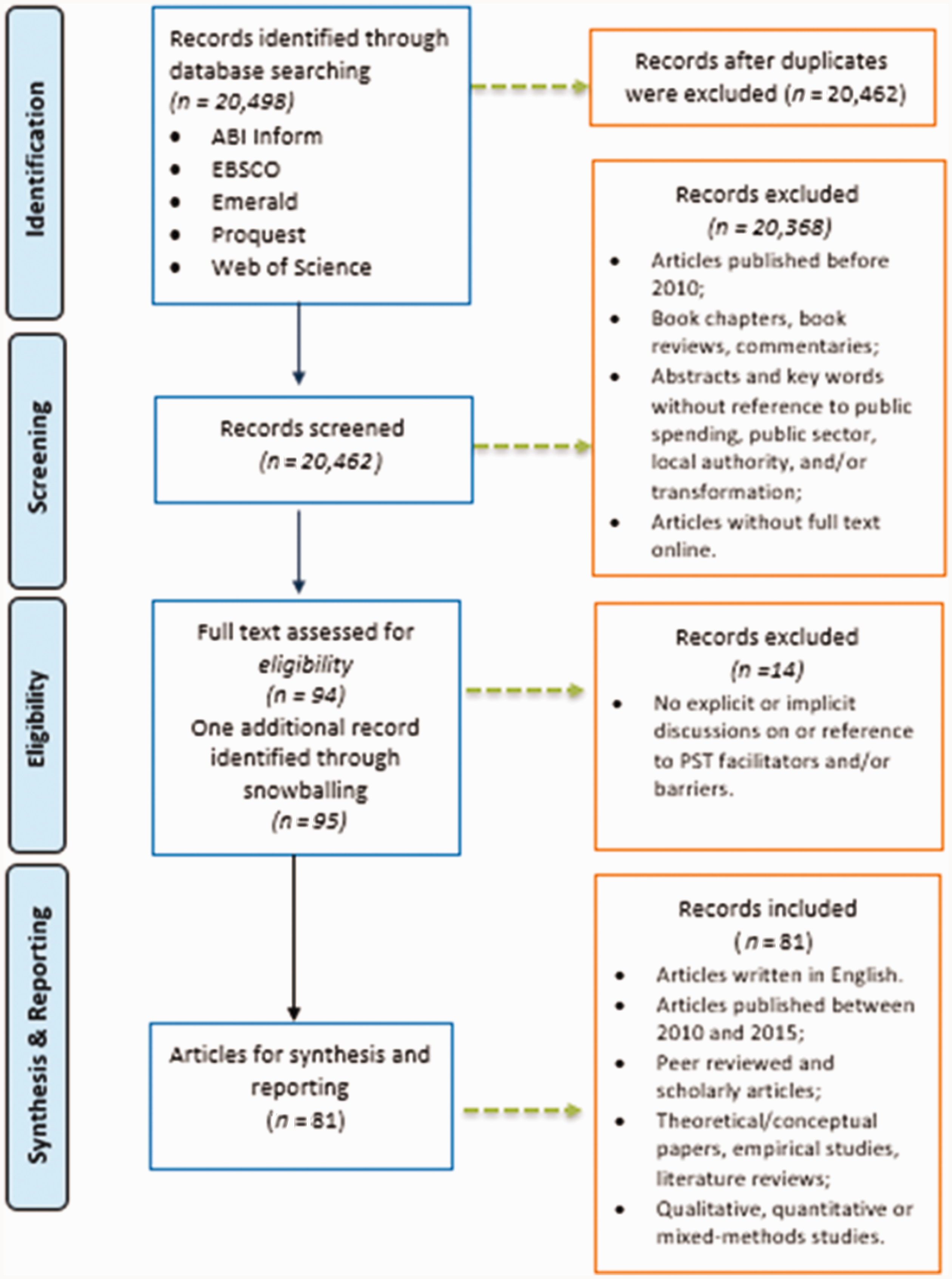
SLR 1.
SLR 2 and 3 database searches were conducted via the Elton B. Stephens Co. (EBSCO) database because it hosted seven of the eight selected journals. IRAS was not available on EBSCO, hence that journal search was manual (see Table 1).
Journals selected for updated 2015–2017 SLR 2.

The SLR 2 database and journal search yielded 183 records, with only 17 meeting the inclusion criteria, 12 being in IRAS (see Figure 3). Of the 17 studies, 82.3% were country specific. One was cross-national (Central Eastern European region), two were British, another two were French, two did not specify a location and 10 were evenly distributed across Australia, Greece, Italy, Lebanon, Lithuania, Spain, South Korea, Switzerland, Turkey and Vietnam. A total of 41% of the studies were either theoretical papers, discussion papers or critical literature reviews, and 36% were qualitative, 12% were quantitative and 12% involved mixed methods.

SLR 2.
The SLR 3 database and journal searches yielded 67 records, with 11 meeting the inclusion criteria, six being in IRAS (see Figure 4). In SLR 3, eight of the 11 studies were country specific (72.7%). Three were cross-national studies: one focused on Denmark, Rotterdam and the Netherlands; a second on Belgium, France, the Netherlands, Romania, Slovakia and the UK; and the third on England, Germany and Scotland. Therefore, the results of SLRs 2 and 3 are generalizable and address the limitations of SLR 1. Of the 11 studies, seven (63.6%) were quantitative, two (18.2%) were qualitative and two (18.2%) used mixed methods. Like SLRs 1 and 2, none of the reviewed studies included an SLR to identify key institutional factors that can influence PST.
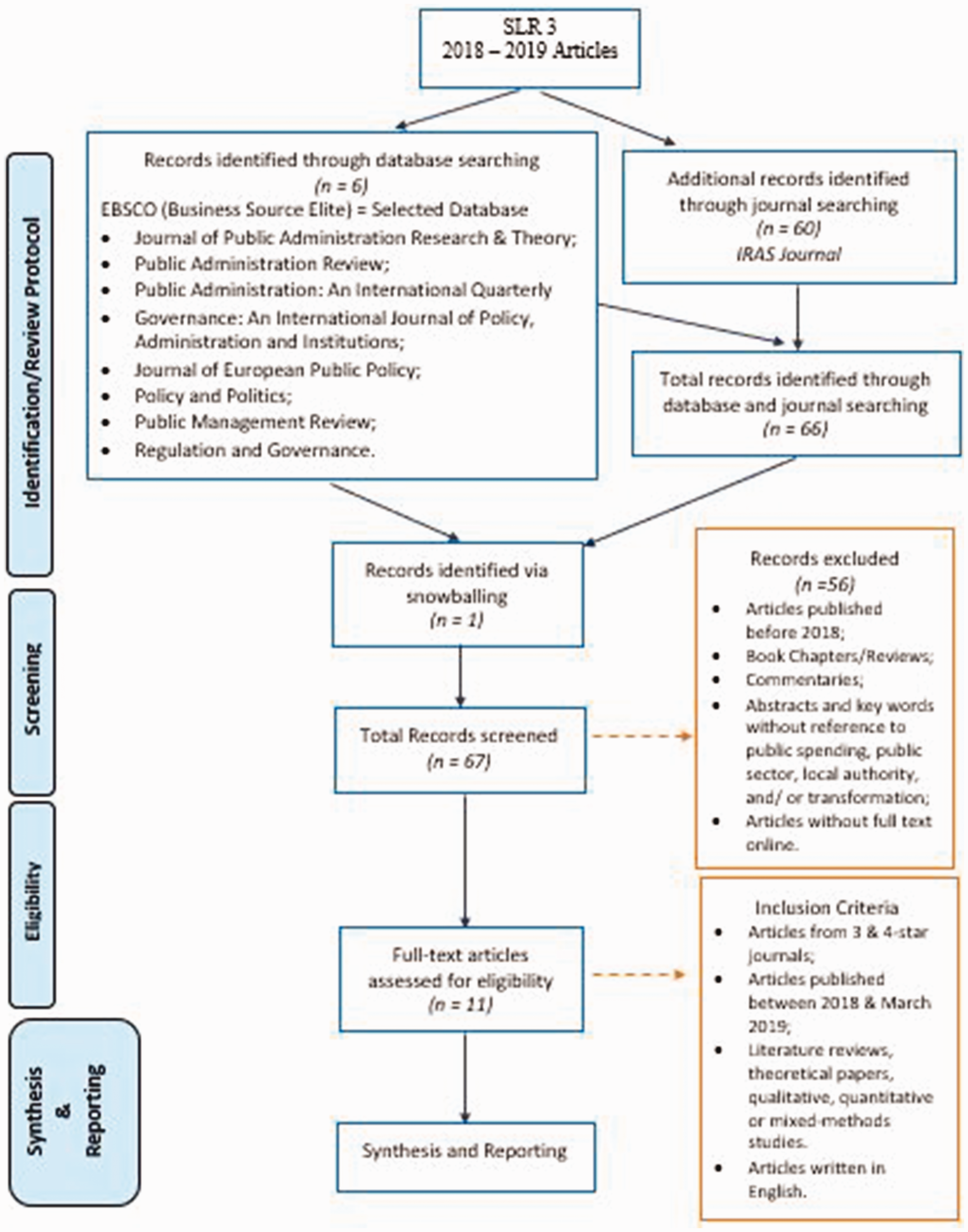
SLR 3.
Second research objective
The missing data technique was used to ‘identify the least researched factor’ (Ryan and Bernard, 2003). Risk management coverage in SLR 1 (see Tables 2 and 3) was lower than leadership coverage but higher than public participation coverage. In SLR 2 and 3, leadership coverage (see Tables 4–7) was the highest, followed by public participation and then risk management.
SLR 1: Explicit references.
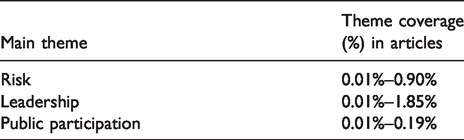
SLR 1: Implicit references.
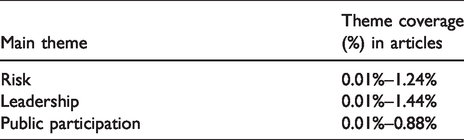
SLR 2: Explicit references.

SLR 2: Implicit references.
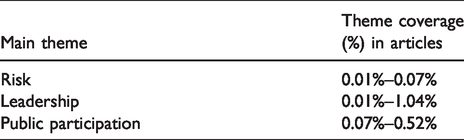
SLR 3: Explicit references.
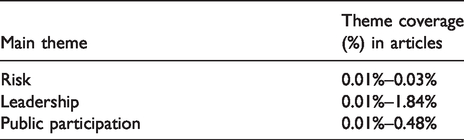
SLR 3: Implicit references.
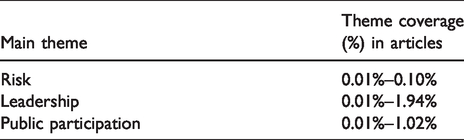
In SLR 1, discourse revolved around identifying and stressing the relevance of different groups (citizen, customer, community, employee, third and private sector participation) in PST. Terms like government accountability and transparency, public–private partnerships and partnership working across public sector bodies also represented public participation. In SLR 2, articles expounded on the roles of different groups in PST, hence the use of concepts such as citizen monitoring, collaborative inertia, stakeholder agreement, stakeholder compromise and political compromise, categorized as public participation. SLR 3 articles identified different groups and discussed their roles in PST.
Leadership discourse in SLR 1 articles addressed leadership roles in PST initiatives, such as: public administration and governance; change, human resources and performance management; fiscal consolidation; and global competition. SLR 1 and 3 articles also identified the contextual environment of leadership as critical to PST, for example, organizational culture/structure, but not to the same extent as SLR 2 articles. Beyond organizational culture, the latter considered the administrative and cultural contexts of leadership. Additionally, SLR 2 articles identified some leadership models such as ambidextrous leadership, political leadership, visionary leadership and public service middle managers, including the lifespan of leadership in terms of long-termism. SLR 3 articles associated a different set of leadership models with PST. They include altruistic, entrepreneurial, network governance, transformational and transactional leadership. The articles acknowledged the role of leadership as a transformation determinant, discussing how leadership capacity can sustain PST.
SLR 1 and 2 articles identified financial, operational and social risks associated with PST. Discourse in SLR 1 articles focused more on different risk management strategies that can be deployed during PST, such as crisis management, project management, programme management, change management, corporate governance, government transparency and public engagement. Discussions in SLR 2 articles addressed risks associated with some PST models, such as collaboration, competition and decentralization. SLR 3 articles established links between PST and risk-taking, on the one hand, and risk aversion and the lack of PST, on the other. They highlighted the need to exchange ideas and resources, while sharing benefits and risks.
Discourse around PST influencing factors in SLRs 1, 2 and 3 considered various aspects of risk management, leadership and public participation. Despite the different years and volume of articles covered in all phases of the SLR, there were no significant differences in their outcome; risk management was still under-researched.
Synthesizing the relevant literature retrieved during SLRs 1, 2 and 3 shows that the literature:
presented PST as involving major restructuring (Birrell, 2010; Davis et al., 2010; Eakin et al., 2011; Hiroko, 2010) and/or innovation (Godenhjelm and Johanson, 2018; Hartley and Rashman, 2018; Van Acker and Bouckaert, 2018) in public service provision; identified political (Ayhan and Üstuner, 2015; Hiroko, 2010; Kim and Han, 2015; Ngouo, 2017), socio-economic and technological changes (Eakin et al., 2011; Hassan, 2015; Hiroko, 2010) as PST drivers
4
; indicated that the term ‘PST’ encompasses a range of concepts, such as public service/management reform, innovation, reconfiguration, restructuring, modernization, improvement and alteration; showed that across different geographical contexts, PST was necessary for addressing adaptive challenges relating to changing political and socio-economic contexts; and showed a recognition of the role of risk management, leadership and public participation as factors that can influence PST.
Most importantly, the SLR exposed the dearth of social risk management research, with discourse on risk management during PST being more implicit than explicit in the few articles that addressed the subject.
Discussions
Public participation
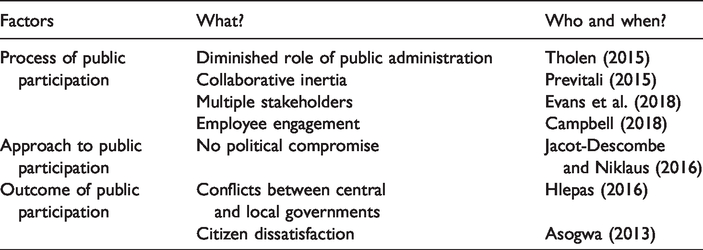
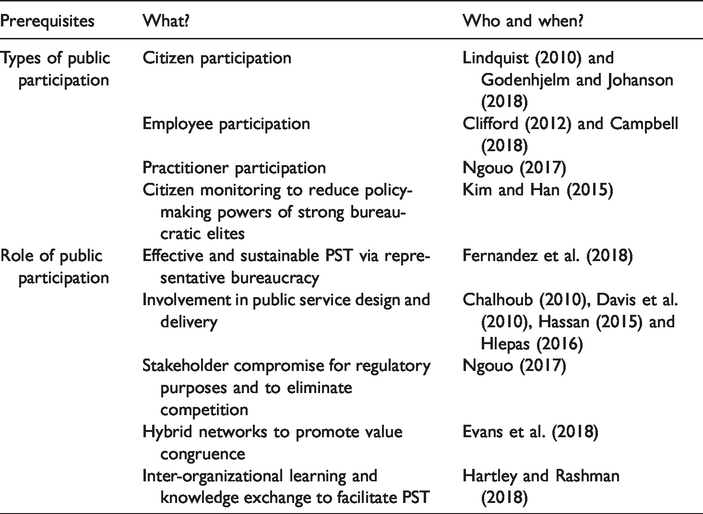
SLR 1, 2 and 3 articles show that public participation can assume various forms (see Tables 8 and 9), including co-production. 5 However, gaps exist between the rhetoric and reality of PST (Lindquist, 2010). PST initiatives could take years, so policy and service provision should be adaptive if they are to mitigate the challenges/risks associated with PST by:
Public participation: factors causing PST failure.
Public participation: prerequisites for PST success.
including citizens in discussions on emerging concerns;
measuring citizen satisfaction regarding the quality of public services offered;
exploring engagement opportunities presented by innovative technologies; and
identifying when information sharing can be deployed effectively and efficiently.
Lewis et al. (2018) revealed that most studies of PST failed to articulate what external participation and collaboration between networks mean, how they are enacted, and how their relationship with transformation can be measured. External participation can improve decision-making, service design and delivery while enabling customer-focused services. Conversely, citizen participation could lead to the diminishing accountability of public administration, a substantial reduction in government expertise, declining citizen satisfaction if service designs do not meet expectations and disagreement between groups. Collaborative inertia can lead to blame and burden shifting, poor public participation, and conflicts.
External participation does not always facilitate decision-making, institutional embeddedness and conformity. Unproductive interactions require the development of strategies to align them. Most health-care systems develop hybrid networks 6 for this purpose. Likewise, internal participation at all stages of PST increases its effectiveness and sustainability because competing interests can be addressed.
Employee participation facilitates PST through problem definition, as well as encouraging innovative thinking and debates around internal incentive structures and their impacts upon PST. Conversely, employee participation can hinder PST in the absence of alignment between employee and organizational values.
Representative bureaucracy (Johnston and Houston, 2018; Miller and McTavish, 2014) encourages the recruitment of historically misrepresented and disadvantaged groups (like black ethnic groups and women) in national departments (Fernandez et al., 2018). This promotes more awareness of the needs of the aforementioned group during strategy formulation and implementation.
Leadership
Tables 10 and 11 list different types of leadership models and the role of leadership in PST. Some articles discussed the need to develop leadership skills because it facilitates PST (see Table 11). Others identified administrative/ministerial capacity, and a long-term view of PST as essential leadership skills. Considering effective policymaking and organization, authors recognized transformational stewardship, including transformational, distributed, multidimensional, political and public service leadership as suitable during PST. Likewise, network governance and entrepreneurial and altruistic leadership were linked to PST capacity. Authors discovered that entrepreneurial leadership had the greatest positive impact on innovation/transformation capacity, while altruistic leadership was negatively linked in cities in Spain, Denmark and the Netherlands.
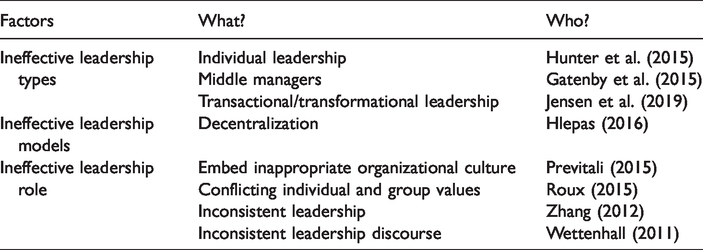
Leadership: factors causing PST failure.
Leadership: prerequisites for PST success.
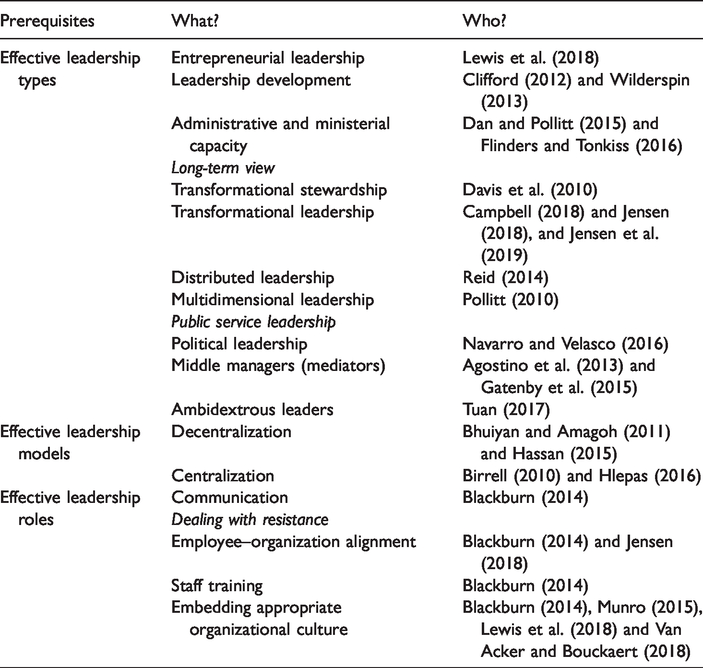
Reviewed articles highlighted different PST models adopted by leaders: decentralization, adaptation and the co-production of public services. Discussions addressed the role of mediators (middle managers) in driving change by ensuring that the strategic intent of senior managers within the context of PST is effectively translated into positive outcomes for users. Middle managers can make valuable contributions by linking the strategic aspirations of senior managers with the operational requirements of front-line managers. This is consistent with the view that leadership, particularly transformational leadership, can facilitate PST by aligning employee and organizational values. However, in cases where values are incongruent, transformational and transactional leadership (goal-oriented leadership strategies) can demotivate employees.
Conversely, middle managers may be reluctant actors if they cannot manage change during PST (see Table 10). The role of ambidextrous leaders 7 in facilitating PST was recognized. They are responsible for resource heterogeneity 8 and can rearrange these resources during PST into relevant practices and behaviours. Therefore, a PST that focuses mainly on citizens is more likely to succeed under ambidextrous leadership if public servants excel in their routine operations by applying their knowledge for effective engagement with the PST process.
Decentralization has been identified as an effective leadership model for promoting good governance (see Table 11). However, a centralized, top-down, uniform approach to PST can be more effective during fiscal consolidation if it reduces the number and simplifies the operations of public bodies. This perception was backed by results from Hlepas’s (2016) study of six Greek cases, showing that austerity policies unintentionally triggered municipalities’ resistance, blocking additional decentralization (see Table 10).
Strong leadership in PST has been noted as a means for:
communicating organizational vision; dealing with resistance; ensuring alignment between employees and the organization’s mission; providing adequate staff training; embedding cultural change; encouraging employee engagement; and providing customer-focused services.
Leadership was also touted as a tool to drive citizen and employee engagement. However, inconsistent leadership and a lack of clarity in leadership discussions on PST (e.g. the use of devolution rather than delegation or decentralization) were considered potential barriers to PST. Another barrier to the collaborative model of PST is an organizational culture that resists change. Also, conflicting individual and group values may hinder the successful implementation of new information and communication technology (ICT). Organizational leaders can address this through ‘sense making’, whereby they help employees to understand their personal and collective experiences as part of the change process. Similarly, organizational amnesia was identified as a PST barrier because public service leaders do not adequately archive and learn from historical information. Thus, organizational culture and learning can facilitate PST in promoting a systematic and holistic approach to collaborative thinking and the development of commitment and trust in the long term (Roux, 2015).
Leadership can create an organizational culture that encourages inter- and intra-department information feedback, learning processes to clarify information, and accountability, which seems to enhance transformation viability and sustainability over time. A key feature of learning processes is tolerance for risk-taking and errors. Studies have corroborated this by identifying risk aversion as one of the barriers to PST (Lewis et al., 2018; Munro, 2015).
By identifying leadership as a strong determinant of transformation, the agency of leadership in enabling an innovation-friendly (and perhaps risk-aware) environment is emphasized. In the reviewed articles, leadership was perceived as a PST driver if transformational leaders formulate and execute new organizational goals. Leaders are expected to identify, negotiate and mitigate risks while implementing strategic change.
Risk management
Although associated with PST, risk discourse barely constituted 0.4% of SLR 1 articles. There are very few exceptions, including: Asenova et al. (2015b), with 289 references to risk and 1.23% coverage; Asenova et al. (2015a), with 138 references and 0.52% coverage; Eakin et al. (2011), with 41 references and 0.11% coverage; McTaggart and O’Flynn (2015), with 24 references and 0.12% coverage; and Davis et al. (2010), with 23 references and 0.07% coverage.
In SLR 2 articles, the highest coverage on PST-related risk management discourse was 0.04%, with Flinders and Tonkiss (2016) having 16 references and 0.04% coverage, and Carey and Mathews (2017) having 10 references and 0.04% coverage. In SLR 3 articles, the highest coverage allocated to explicit PST-related risk management discourse was 0.03% by Munro (2015). She made five references to risk. Lewis et al. (2018) followed closely with 0.02% coverage and four references. Campbell (2018) and Van Acker and Bouckaert (2018) each made two references to risk, with 0.01% coverage. Of the reviewed articles, those with the highest number of references and percentage coverage of risk management were published in 2015, followed by 2011 and then 2010. Articles published in 2016, 2017 and 2018 had the lowest percentage coverage of risk management. The only PST-related article included in SLR 3 was published in the first quarter of 2019 and did not explicitly refer to risk. This implies that PST-related risk management discourse is on the decline.
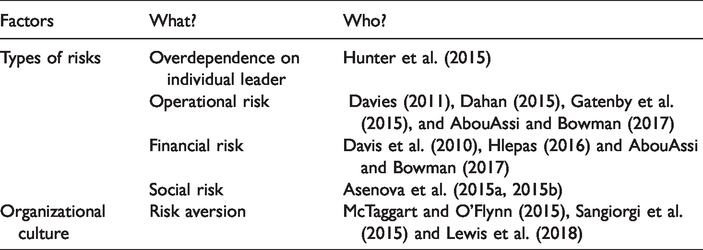
According to Ryan and Bernard (2003), during the analysis of qualitative data, information that is conspicuously absent may reveal vital insights. Bodgan and Taylor (1975: 82) recommend being ‘alert to topics that your subjects either intentionally or unintentionally avoid’. In this case, risk management was not the main thrust of public administration and management discussions. Tables 12 and 13 show that PST-related risk discourse revolved around the role of organizational culture in hindering or facilitating PST, as well as different types of risks associated with PST.
Risk management: factors causing PST failure.
Risk management: prerequisites for PST success.

From the leadership perspective (see Table 12), PST-related risks include overdependence on an individual leader, which can be managed through adaptive leadership, also known as distributed or shared leadership. Adaptive leadership improves the effectiveness of front-line staff and encourages them to collectively tackle the problems that affect them. Other leaders, like middle managers, can mitigate operational risks by strongly opposing change. More recently, ambidextrous leadership has been identified as an effective model of leadership to adopt during PST as it encourages risk-taking and experimentation among employees (Table 13).
Operational risks during PST may be introduced or exacerbated by complex relationships involving the public and third sectors, citizens, regulatory bodies, donors, and government structures. Other operational risks include work duplication, jurisdiction overlap, inefficiencies in resource allocation, the increased role of governments, poor public participation (municipal support and citizen engagement) and the absence of relevant resources, which all hinder PST. These related risks can supposedly be managed by adopting the transformational stewardship model of leadership. This is because leaders can proactively identify transformation risks in public and third sector organizations, strategize with relevant groups, and develop relevant change management skills.
PST-related financial risks are associated with the selection of certain PST models. The decentralization policy implemented in Greece is a form of PST involving the creation of bigger municipalities. Similarly, the existence of Special Purpose Authorities in Lebanon is a form of PST aiming to improve decentralization. Rather than reduce public debt, both PST models appear to exacerbate financial risks by increasing debts (AbouAssi and Bowman, 2017; Hlepas, 2016).
Only two (Asenova et al., 2015a, 2015b) of the 109 9 SLR articles discussed social risks in PST, that is, the potential to exacerbate the social exclusion and poverty of vulnerable, disadvantaged individuals and communities. The authors stressed the need for an innovative, proactive and holistic approach to local decision-making processes and the management of ensuing social risks using a social risk impact assessment framework. They noted the absence of social risk discourse and argued for its inclusion in the risk management literature and practice.
Public employees are under close public scrutiny and their performance is measured by multiple indicators. This encourages a risk-averse culture in public service organizations, which acts as a PST barrier because it negatively impacts upon engagement between the public sector and its external service providers. It stifles PST because risk failures have been penalized, while reasonable risk-taking goes unnoticed in public services. Compared to the private sector, service transformation has thus been slower in the public sector because of their differing risk cultures (Radnor and O’Mahoney, 2013).
Carey and Mathews (2017) argued for a more risk-aware culture in public organizations (Table 13). They acknowledged that the regulatory risks associated with evolutionary interventions like experimentation and implementation are highly complex but stressed the need for governments to foster adaptation and learning, while encouraging policy experimentation. Leadership at agency and sectoral levels (including auditors-general) needs to engage in discussions regarding risk appetite, risk-taking, risk negotiation, risk perception and risk frameworks before and during PST in order to encourage a more risk-aware culture.
Originally, most risk management endeavours focused mainly on project risk management until reports by Cadbury (1992) and Turnbull (1999) stressed the need for risk management at strategic levels. Similarly, there has been an increase in the amount of guidance on public sector risk management from professional bodies (COSO, 2004; EY, 2014). Nevertheless, the SLRs revealed high levels of uncertainty during PST.
Figure 5 shows that in the British private sector, only 33% of transformational programmes succeed (Gardini et al., 2011). Even worse, between 2009 and 2015, only 29% of British public sector staff were satisfied with internal transformation, and only 26% believed that it delivered better results (Cabinet Office, 2015).
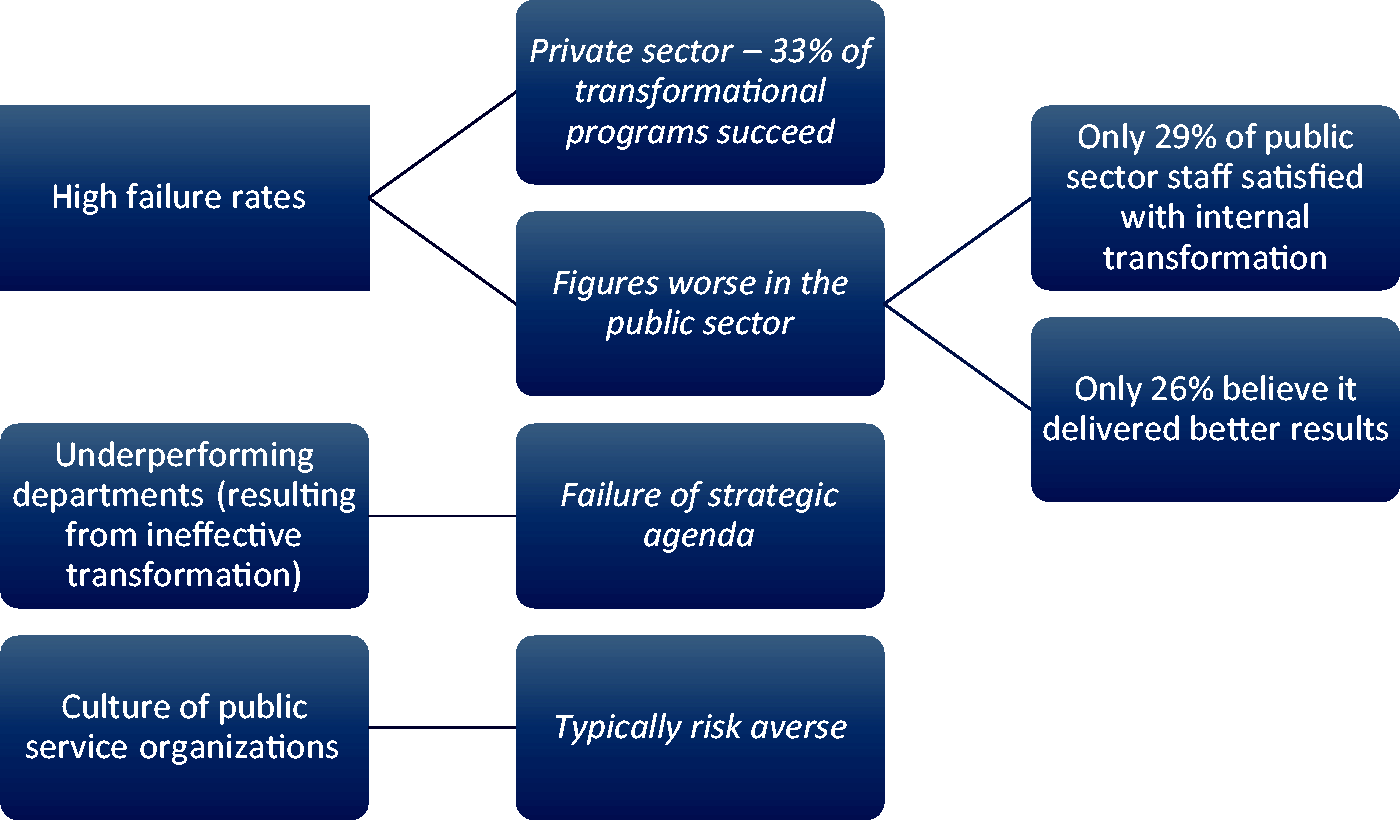
Challenges with implementing PST.
Conclusions
This article has undertaken an NVivo-guided SLR to identify the internal institutional context and factors facilitating or hindering PST, and to promote understanding of them. This is the first research objective. Risk management, leadership and public participation emerged as main themes and therefore key influencing factors of the PST process depending on context, content and culture, including political and institutional power. The abilities of employees to work in teams and their willingness to facilitate transformative change are crucial.
The second research objective addressed the adequacy and sufficiency of information about the identified factors, and aimed to identify any areas requiring further research. Of the three factors, PST discussions focused heavily on public participation and leadership, with risk management receiving little attention.
There was a lack of consideration of the short-, medium- and long-term implications of risk and uncertainty, including the possible failures of transformative initiatives in most of the reviewed articles. This research gap could be attributed to a lack of sufficient awareness of the role and relevance of risk management in PST. Therefore, the ‘why and how’ of risk management in facilitating PST remains unclear. More specifically, in-depth information regarding the origin, nature and management of social risks associated with PST is lacking. Furthermore, the possibility of achieving positive outcomes based on the positive exploitation of risk was not discussed in most of the reviewed articles. The evolution of PST-related risks to strategic risks arises from how PST is implemented and may hinder the realization of strategic PST intent. Risk management must: (1) address the risks that arise as PST initiatives are developed and implemented to address adaptive challenges; and (2) prevent the evolution or progression of PST-related operational and/or social risks into strategic risks.
The results clearly evidence the, at best, inadequate (at worst, incoherent) consideration of risks, particularly social risks, associated with the process of PST. Further studies are required to address this gap by also analysing the social risk implications of transformative models recommended at macro-levels of governments and implemented at meso-levels of public sector managers. Put simply, research has to be much more holistic in identifying, analysing, managing and mitigating PST-related risks.
Footnotes
Acknowledgements
The authors are grateful for comments provided by Associate Professor Greta Nasi on an earlier version of this article presented at the 2018 International Research Society for Public Management Conference.
Funding
This work was supported by Glasgow Caledonian University.
Declaration of conflicting interests
The authors declared no potential conflicts of interest with respect to the research, authorship and/or publication of this article.
