



Abstract
While the environment is fundamental to humankind’s wellbeing, to date, social work has been largely focused on the social, rather than the physical, environment. To map how the broader environment is captured in the profession’s foundational documents, an exploratory sequential mixed methods study (QUAL → quan) analysed data from 64 social work codes of ethics. Findings indicate that although the environment is mentioned in the majority of these, there is a continued focus on the social, overlooking to some degree the physical, predominantly the built, environment. A more holistic understanding of the environment would enable social work to better fulfil its commitment to human rights and social justice.
Introduction
As the determiner of the growth and operation of all living organisms, the environment plays a fundamental role in the survival, health and development of humankind (Cistulli, 2002; Platt et al., 1964; Prüss-Ustün and Corvalán, 2006). In this article, the environment is considered as holistic, comprising social and physical aspects. However, as a clear and agreed definition is currently missing in social work discourse, more established ideas and interpretations are borrowed from other disciplines. The social environment captures social and cultural institutions and processes (National Centre for Biotechnology Information [NCBI], 1973). The physical environment, however, is understood as ‘land, air, water, plants and animals, buildings and other infrastructure . . . natural resources . . .’ (Ministry of Social Development [MSD], 2003, para. 1). Correspondingly, the physical environment incorporates the natural world and the built environment: the material, spatial and cultural products constructed by human labour and imagination, including physical buildings and their supporting infrastructures (Australian Department of the Environment and Energy, 2011).
Social work pioneers described the social and physical environment’s impact on human welfare: Mary Richmond stressed social interactions and social networks, while Jane Addams emphasised the built environment, including housing conditions, heating, food and sanitation (Närhi and Matthies, 2016). As the profession developed, however, social work’s interpretation of the environment became largely social. Some argue (e.g. see McKinnon, 2008; Mulvale, 2017; Zapf, 2010) that the physical aspect has not only been marginalised, but sometimes intentionally avoided. As an internationally recognised profession with clear commitments to human welfare and social change (International Federation of Social Workers [IFSW], 2014a), it is timely for social workers to consider our understanding of the environment, including the physical, and its implications for social work practice and future development in a century with multifarious crises challenging human rights and social justice in various contexts.
The physical environment: A contemporary social challenge
The physical environment poses complex yet clear challenges. Natural disasters such as bushfires and earthquakes can cause longer term economic effects, while directly and immediately threatening life, and physical and mental health (So and Platt, 2015; United Nations Environment Programme [UNEP], 2020). Air and soil pollution and unsafe water are endangering the economy, health, food safety and life (Food and Agriculture Organization of the United Nations [FAO], 2018; United Nations Department of Economic and Social Affairs [UNDESA], 2014; World Health Organization [WHO], 2018). Moreover, climate change, one of the 21st century’s most critical challenges, has provoked increasingly severe and frequent extreme weather events, unprecedentedly threatening the lives, self-determination and development of current and future generations (Bouwer, 2019; Office of the High Commissioner for Human Rights [OHCHR], 2015).
Due to climate-sensitive economies or insufficient infrastructure and funding which can intensify damage and jeopardise recovery and adaptation (Bathiany et al., 2018; International Monetary Fund [IMF], 2017; Mirza, 2003), developing countries are more vulnerable to climate change. Other than natural events, the global waste trade presents another form of environmental injustice (Frazzoli et al., 2010; Williams, 1991). Within national borders, indigenous communities, women and girls, children, older people, those with disabilities, people in poverty and racial minorities have disproportionately experienced environmental consequences, and/or are less resilient to environmental threats (Abate and Kronk, 2013; Bullard, 1993; Filiberto et al., 2008; Graham et al., 2016; Knibbs and Sly, 2014; McGeehin and Mirabelli, 2001; Quaill et al., 2018; Sly and Carpenter, 2012). Streets, buildings, supporting infrastructures, urban landscapes among other parts of the built environment often reflect gender, economic, racial and other social injustices (ActionAid, 2013; Laws, 1994).
Environment-related challenges are also interrelated with other social, technological, economic and political crises (World Economic Forum [WEF], 2020). For instance, existing air pollution caused more severe COVID-19 conditions (Wu et al., 2020), vulnerability from overcrowded housing and certain industries’ physically harsh work environments were exacerbated in a pandemic (Haley et al., 2020; Middleton et al., 2020). Overall, human rights and social justice issues arising from the physical environment suggest social work must reconsider its current understanding of ‘the environment’.
Social work initiatives in the physical environment
Theoretical exploration and institutional awareness
During recent decades, social work academics have explored different paradigms pertaining to the physical environment. For instance, Rogge and Darkwa (1996), and later Norton (2009), suggested redefining the person-in-environment framework to explicitly include the natural world. However, Besthorn and Canda (2002) and Zapf (2010) noted the person-in-environment framework’s inherent limitations when applied to the natural context: the phrase’s anthropocentrism and separation of humans from the environment. In contrast, an ecological framework takes a de-centred approach, with humans as part of a holistic interactive ecosystem (Bay, 2015). While aiming to achieve social, economic and environmental justice with a focus on sustainable development, some eco-social workers have further questioned social work’s modernist tradition and proposed a transformative eco-social approach to respond to ecological and social issues (e.g. see Alston and McKinnon, 2016; Boetto, 2019; Coates, 2003). Emphasising interdependency and sustainability, green social work theory urges social workers to expand their scope and modes of practice to resolve structural inequalities in power and resources distribution (Dominelli, 2012).
Contemporaneously, increasing environmental awareness is evident in some social work professional bodies’ core documents, however, with a broader focus on physical aspects. The IFSW’s (2014b) Policy statement on globalisation and the environment recognises the direct influence of both the natural and built environments on people’s potential for development and promotes sustainability. Similarly, the US National Association of Social Workers (NASW, 2016) has acknowledged the physical environment’s importance for human rights and social work practice in its Standards for social work practice in health care settings. The expanded focuses may indicate a gap between current theoretical reflections and professional expectations.
Imbalanced research focus
Research has also constituted a significant part of social work’s environmental engagement. Through systematically reviewing 112 social work research articles in English from 1985 to 2015, Mason et al. (2017) investigated the extent of social work’s response to global environmental changes. They found that most studies focused on significant natural disasters, while those about social work interventions lacked rigorous outcome-focused data; therefore, providing limited support for any evidence-based practices. Moreover, Mason et al. (2017) identified another limitation: North America, Asia and Australia accounted for over 80 percent of published papers. Krings et al. (2020) also noted these limitations in their systematic review of social work peer-reviewed publications (1991–2005) focused on environmental issues, finding acute, natural disasters and environmental crises were the most discussed. Through conceptualising ‘environmental social work’ to involve any work involving the environment, empirical and non-empirical research, Ramsay and Boddy (2017) examined broader literature, finding an emphasis on reaction more than prevention, with Africa, Europe and South America the least mentioned. Despite these thematic and geographical limitations, social work research into environment-related topics is growing, with Mason et al. (2017) reporting almost one-half of reviewed articles as published within the previous 5 years, with Krings et al. (2020) verifying the increase not being directly caused by growth in social work publications overall.
Inadequate environmental education and constrained social workers
This interest in the physical environment is also evident in European and US studies of social work students (Decker Sparks et al., 2019; Faver and Muñoz, 2013; Miller and Hayward, 2014; Osmanaga, 2014) with US participants noting the lack of relevant education in their programmes (Decker Sparks et al., 2019; Miller and Hayward, 2014). Harris and Boddy (2017) analysed 937 subject descriptions of all 44 social work degrees in Australia then qualifying for Australian Association of Social Workers (AASW) accreditation, finding only 0.43 percent were dedicated to providing environmental education. Despite insufficient training, however, most US participants reported recognising the importance of addressing environmental challenges in practice (Nesmith and Smyth, 2015; Shaw, 2013). Yet 20 Australian social workers self-identifying as ‘environmentally conscious’ revealed some implementation barriers, including a lack of institutional recognition (McKinnon, 2013). The disparity might be due to different focuses on the environment. Social workers in Nesmith and Smyth’s (2015) study mainly focused on the environment’s specific impacts on existing practice, while McKinnon’s (2013) participants drew more on the implementation of environmental values.
Interestingly, despite evidenced interest from social work academics, practitioners, students and professional bodies, mainstream social work still seems reluctant to deal directly with environmental issues (Dominelli, 2014; Gray and Coates, 2012; Jarvis, 2019). With the physical environment posing acute and complex challenges around the world, effective social work responses require effort and collaboration among the entire global profession, rather than a limited number of environmentally conscious social workers. Social work is a profession with its foundations in moral philosophy and theories of ethics. Its codes of ethics (CEs) provide an overall framework outlining core values and principles to guide the profession (Keeney et al., 2019). Therefore, one way to begin to understand, in the contemporary context, how the social work profession considers the environment, is to explore whether the environment has been discussed in social work codes of ethics (SWCEs), and if so, how it is conceptualised and represented. Furthermore, the knowledge from CEs can provide crucial triangulation with the previous studies from a policy perspective.
Review of global SWCEs
Bowles et al.’s (2018) pioneering review of sustainability and natural environment themes in SWCEs in Australia, the United Kingdom, and the United States concluded that the natural environment was not a core professional concern. However, possibly caused by the study’s theoretical focus on nature, the built environment, which is also stressed by the IFSW (2014b), was not examined. This is a common feature of existing environmental social work studies. In addition, the findings of a review of social work research (Roche and Flynn, 2018) indicate that globally research from this discipline has been overwhelmingly represented by the global north. While Bowles et al.’s (2018) work is seminal, as a study which only covers three developed countries, the situation of many more vulnerable parts of the world, remains undiscovered. This article seeks to redress these imbalances, investigating how the environment is represented in SWCEs from across the globe, with a broadened understanding of what the physical environment means.
Methodology
To answer the research question of ‘How is the environment conceptualised and represented globally in social work codes of ethics?’ with a sub-question of ‘How is the physical environment specifically conceptualised and represented globally in social work codes of ethics?’ an exploratory sequential mixed methods design (QUAL → quan) was applied. As an inductive-sequential design, the core component is qualitative and the quantitative is supplemental (Schoonenboom and Johnson, 2017).
Sampling and data collection
Social work as a profession exists in many countries; however, it is not known how many have formal CEs to guide practice, and not all are members of the IFSW. Convenience sampling, therefore, was used to identify all SWCEs from IFSW’s 129 members (as of 25 December 2019). To address previous studies’ linguistic and geographical restrictions and reduce possible selection bias often related to convenience sampling (Taherdoost, 2016), all members’ CEs were searched for through the IFSW website and external internet sources including each member organisation’s website and corresponding governing body’s website, with no pre-determined exclusion criteria such as language or location. However, CEs requiring purchase, and those that could not be further translated, were excluded, leaving 67 available. Thirty-seven were translated into English through Google Translate, with two excluded for not relating solely to the social work profession (Norway and Luxembourg). One more was excluded for poor translation quality (Bahrain), providing 64 documents in the final sample.
A search was conducted via Text Search Queries of keywords and their stemmed words in NVivo. Specifically, the primary keyword used for data extraction was ‘environment’; this produced data pertaining to both social and physical aspects. Additional keywords were used in a subsequent search: nature, sustainability, disaster, pollution, ecology, ecosystem, biodiversity, plant, animal, climate, water, air, soil, land, food, infrastructure, buildings, transportations, neighbourhood, landscape and street. The aim of this additional search was twofold: to examine how physical contexts specifically had been discussed and to examine if the physical environment had been presented in other ways in CEs that did not mention ‘environment’ directly. Whole sentences or sections containing the keywords were recorded as raw data and printed for later manual analysis. The section titles and content around the data were also frequently referred to during the analysis. All data were acquired from public sources with no human ethics oversight required.
Data analysis
The raw data were subject to a set of sequential analytic processes as outlined in Figure 1.

Analytic process.
The thematic network method aims to build initial understandings of a topic by identifying the main themes within a data set and connecting various ideas with a network; it is particularly useful when the data present a core theme with several sub-themes (Attride-Stirling, 2001; Thomas, 2013). The analysis was both inductive and deductive – drawing from concepts identified in previous research. Notably, Bowles et al. (2018) verified that CEs’ mentions of the ‘environment’ contain both sociocultural and natural aspects, and that sometimes these are not distinctly separated. Therefore, in the current study, the three pre-determined themes for the data’s initial classification included: (1) the social environment, (2) the physical environment and (3) that which was unspecified (interpretable as either social or physical, or both). The specific inclusion criteria are based on the definitions presented in the beginning. The data relating to physical and unspecified themes were then further coded and redefined; however, the data within the social environment theme were not further analysed, being outside this study’s focus. A network that combines themes, sub-themes and codes was constructed to facilitate and illustrate the analysis. The deductive process is shown via solid lines, the inductive by dotted lines (see Figure 4 below in Section ‘Findings’). The relevant statistics were also recorded in the graph for presenting the size of each topic within a holistic structure.
Keyword in context (KWIC) is a largely enumerative approach to identifying the frequencies of certain ideas within qualitative data (Flynn and McDermott, 2016). To understand if the interest in the physical environment was more focused on the natural environment, as the reviewed literature suggested, KWIC was applied to the physical environment themed data, ‘environment’ being the specific keyword. After qualitative analyses, descriptive analyses were conducted on the quantitative data collected from the previous processes for year of document issue and each topic’s frequency. A correlation analysis was also conducted on the sample’s geographical distribution.
Findings
The sample
The 64 CEs that comprise the sample came from all five regions classified by the IFSW (see Figure 2); however, the specific inclusion rate (compared to the number of IFSW members) in each region varied: 29 percent in Africa; 57 percent in Asia and the Pacific; 58 percent in Europe; 44 percent in Latin America and the Caribbean; and 100 percent in North America. This was simply the result of varying availability of online documents.
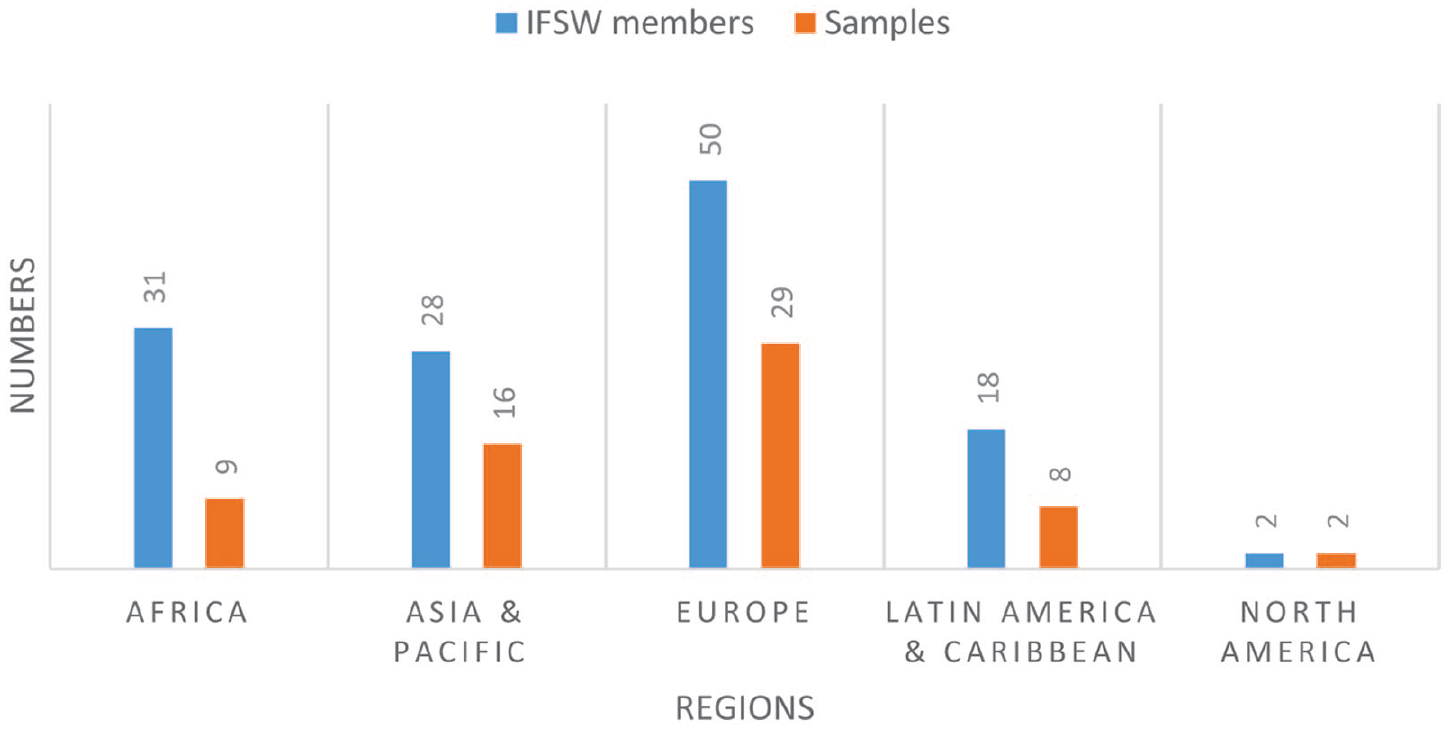
The sample’s geographic distribution.
Fifty-eight percent of SWECs (n = 37) were translated. The publication years range from 1977 to 2019 (see Figure 3); however, 19 percent (n = 12) of the sample’s year of publication was not stated by documents or source websites.
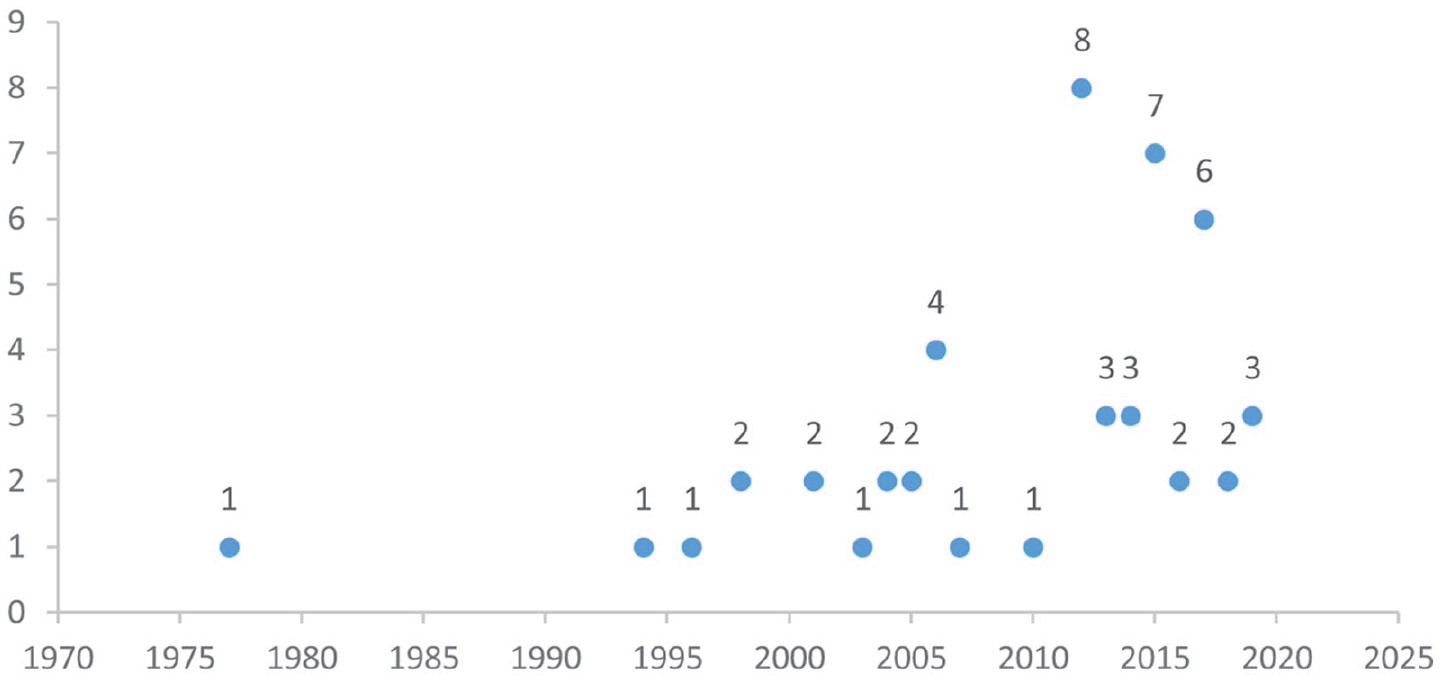
Number of documents per publication year.
The relatively low inclusion rate for Africa (29%) implied the sample might be over-represented by regions with better economic conditions.
Overall notions of the environment
Figure 4 shows how notions of the environment in SWCEs are captured thematically with emerging sub-themes presented.
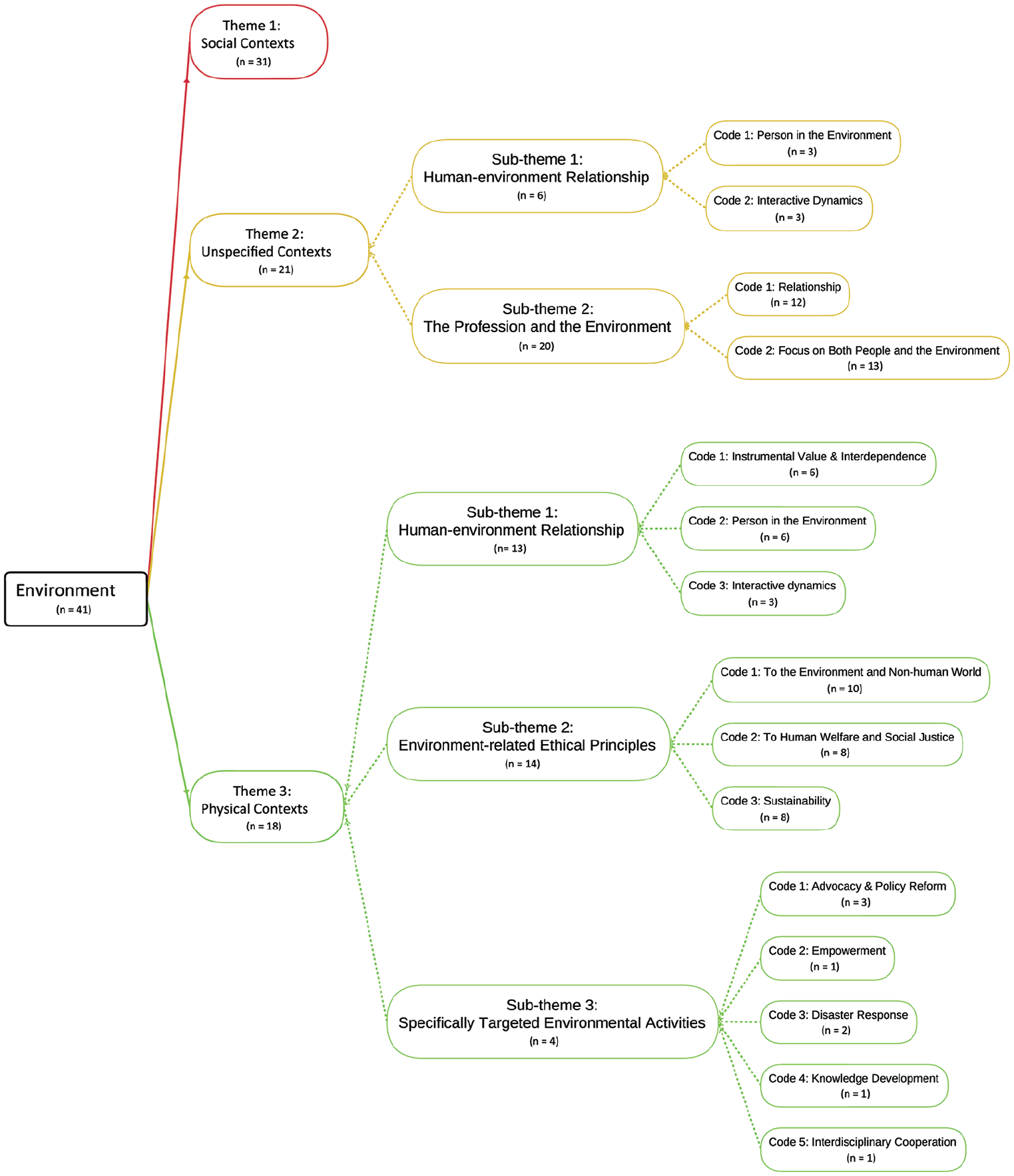
The thematic network of the ‘environment’ within codes of ethics.
Although the environment’s multidimensional contexts have been identified from the qualitative data, the numeric data clearly presents CEs’ unbalanced focus on the different themes, as only 18 documents mentioned the environment in physical contexts, while 31 stressed it in social aspects. Details are illustrated in Figure 5.
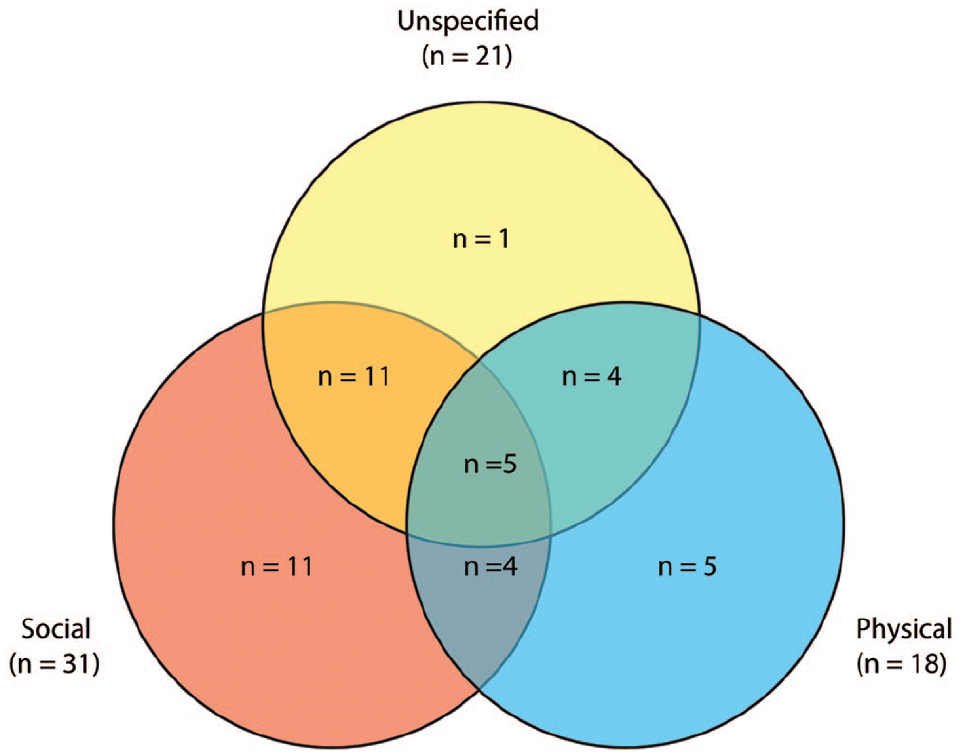
Number of documents that mentioned the environment.
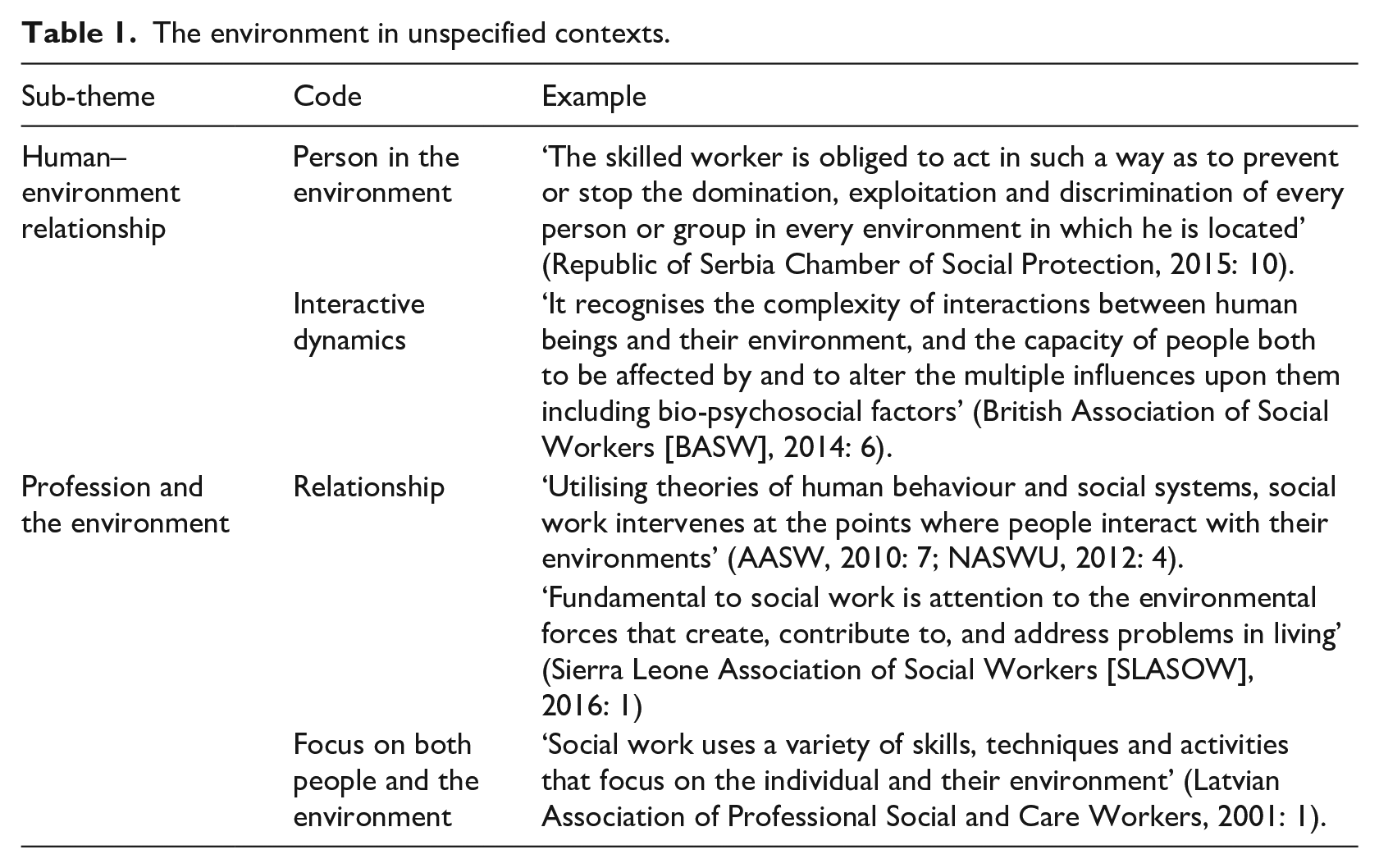
As indicated in Figure 5, in 64 percent of the sample (n = 41), the environment was mentioned directly. Among these, 11 documents referred to the environment only in terms of the social context, five referred to it solely in physical terms, while one referred to it exclusively in unspecified contexts. In four documents, the environment was mentioned separately in both social and physical contexts, in four, in both unspecified and physical contexts, while in 11, in both social and unspecified contexts. Five CEs included the environment in all three contexts. For example, other than the quotes provided in Table 1 (unspecified theme) and Table 2 (physical theme), the National Association of Social Workers of Uganda’s CE also stated: ‘. . . the very work environment and culture foster or discourage corrupt practices’ (NASWU, 2012: 12), which can clearly be understood in a social context. Overall, the term ‘environment’ was directly addressed in social contexts among 48 percent of the sample (n = 31) and the physical context in 28 percent (n = 18).
The environment in unspecified contexts.
Findings from the thematic network analysis of the physical environment.

Notions of the unspecified and physical environment
As Figure 4 indicates, the data in unspecified contexts have reflected the human–environment relationship and social work’s role in terms of the interrelations. It is difficult, however, to determine whether this content was intentionally focused on the physical context. Some illustrative examples are given in Table 1.
Partly as a result of the enriched data brought by the additional keywords, the findings within the physical environment theme tend to be more comprehensive and specific than those in the unspecified theme. Data about the physical environment indicate both philosophical consideration of human–environment relationships, as well as practical actions towards such relationships/interactions (as shown in Table 2).
Natural and built environment
A search of the keyword ‘environment’ within the data from the physical environment theme came back with 48 results, with 36 exclusively referring to the natural environment, some specific phrases being: natural environment, environmental wellbeing, preservation of the environment, environmental sustainability, environmental destruction and protection of the environment. Eleven results could be interpreted to include both natural and built environments, for instance: environmental management, environmental resources, physical environment, environmental justice and environmental contexts. The only result that exclusively referred to the built environment was found in the AASW’s CE (AASW, 2010: 34): ‘Social workers will provide and/ or advocate for staff to have a physical working environment which supports effective practice . . .’. Figure 6 presents the specific percentages of each category, showing the predominant natural environment focus.
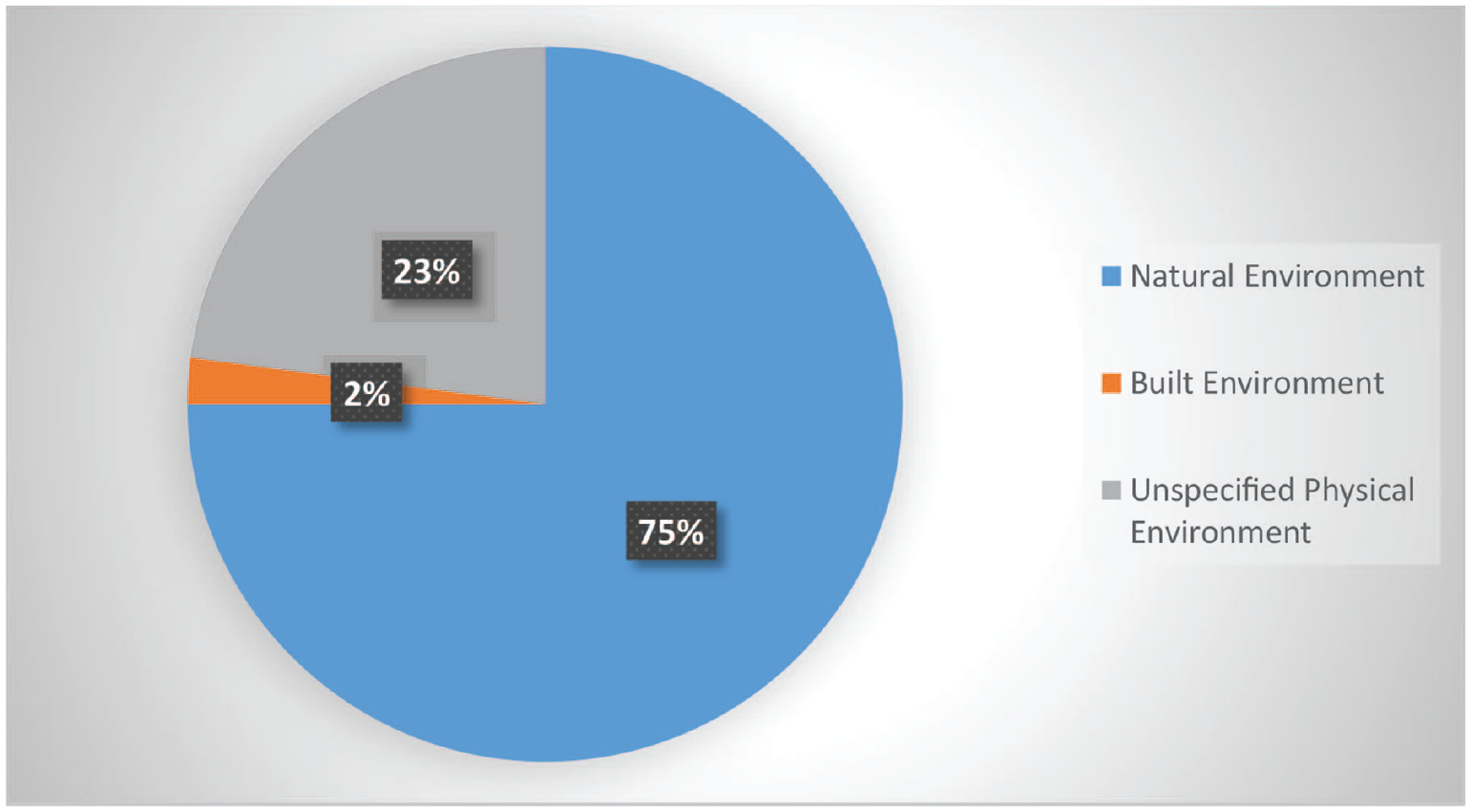
Composition of the physical environment.
Trends within the notions of the physical environment
Among the 18 documents directly addressing the physical environment, 14 emphasised social work’s environment-related ethical principles, and in 13, the human–environment relationship (specific examples are provided in Table 2). However, 78 percent (n = 14) gave no practical guidance on how to engage with environmental obligations (see Figure 7). This suggests that while the physical environment was mentioned in various CEs, the related content is more abstract than specific.

Physical environment sub-themes distribution.
These 18 CEs came from all five IFSW-classified regions with their geographical distribution highly correlating with that of the entire sample (Pearson’s r = 0.984), indicating no specific region presented significantly more or less interest in the physical environment.
The results of this descriptive analysis also suggest global social work’s interest in the physical environment is growing; the mean of all issue years is 2010, and the mean of CEs with a physical environment theme is 2014. Figure 8 shows the specific changes in each year.
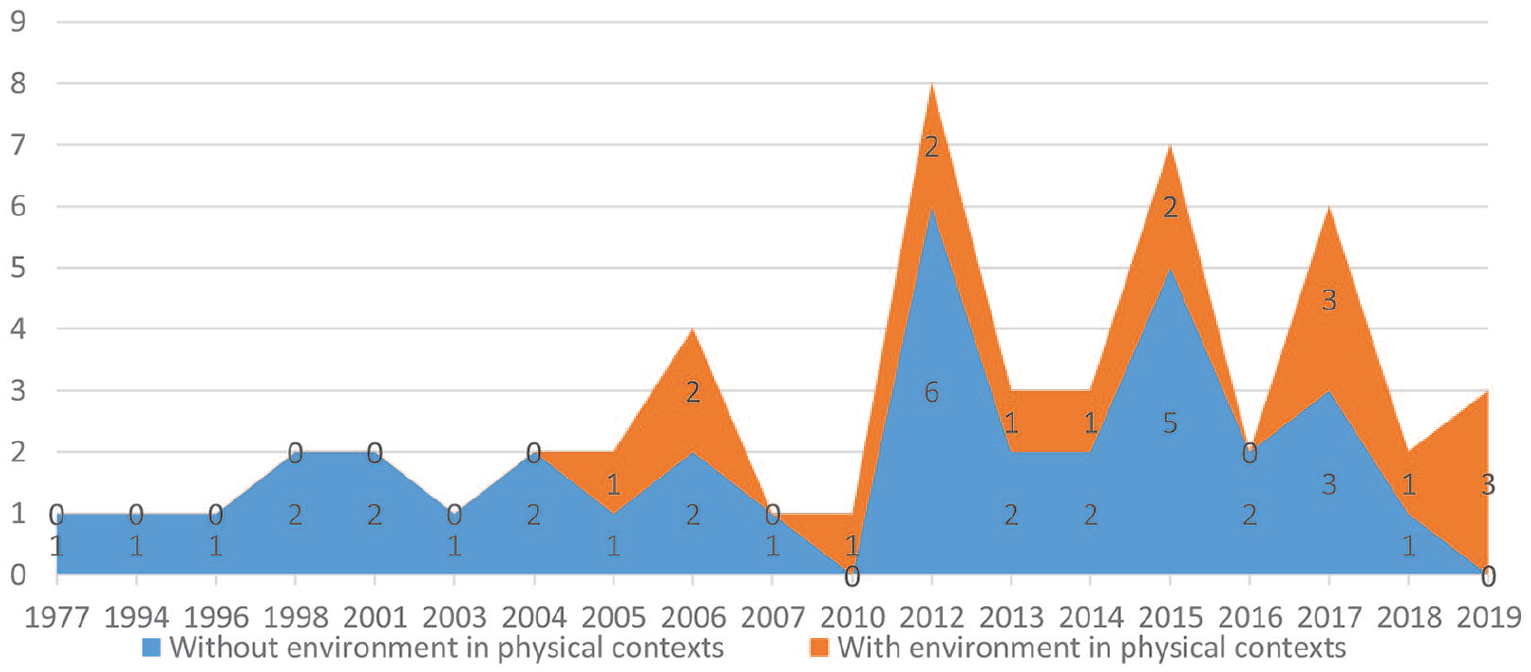
Numbers of codes of ethics per publication year.
Other findings
Three source documents did not directly address the ‘environment’ with regard to physical contexts, but mentioned specific environment-related topics including sustainability and disasters. For instance, the Nigeria Association of Social Workers (NASoW) (n.d.: 1) stated: ‘Our members are bound by the following code of ethics as enshrined in the Code of Ethics of the IFSW in conformity [to] the Sustainable Development Goals of The United Nations . . .’. The Iranian Social Workers’ Manifesto (Iran Association of Social Workers, 2012: 1) stated: ‘I declare my readiness for offering the required professional service at the time of force majeure and unpredicted disasters’. These findings indicate that, even when the word ‘environment’ was not directly stated, SWCEs were influenced by significant topics concerning the physical environment. Therefore, this might indirectly indicate the physical environment plays a critical role in social work core concerns.
Discussion
Overall notions of the environment
Through thematic network analysis, the notions of the environment have been identified and constructed within a holistic framework. As with Bowles et al. (2018), this study found that the ‘environment’ has been conceptualised in three different contexts: social, physical and unspecified. Consistent with Hoff and Rogge’s (1996), McKinnon’s (2008) and Mulvale’s (2017) concerns that social work has largely ignored the physical environment, we found that although the environment is frequently mentioned within a wide range of SWCEs from across the globe, its focus remains largely social. This reconfirmation suggests that narrowly focused views of the environment not only exist in research and practice, but are also deeply rooted in the fundamental policy documents of social work, regardless of decades of critical reflection on this topic.
Notions of the physical environment
Where notions of the physical environment are included, these typically focus on three elements: considering the human–environment relationship; noting ethical obligations with regard to the environment; and suggesting practical, environmentally focused, activities.
With regard to the human–environment relationship, three quite different narratives are evident in CEs. Some simply acknowledge that humans live within the physical environment; some only highlight the physical environment as crucial to human welfare; while others stress humankind’s reciprocal impact on the physical environment, reflecting an interactive relationship (specific numbers are provided in Figure 1). Despite these differences, recognition of the human–environment relationship overwhelmingly seemed to focus on the physical environment’s instrumental value to humanity, with only the natural environment mostly referred to. Although Ramsay and Boddy (2017) found some scholars focusing on the natural environment’s innate value, the current findings suggest that this view has not been embedded in CEs.
Second, other than ethical responsibilities to humans, such as promoting environmental justice and equal distribution of environmental resources, two more interesting findings also emerged. Some CEs have expanded social workers’ ethical obligations to the physical environment itself, meaning they should not simply focus on people and social structures, but also take action benefitting the physical environment as a basic principle to be upheld by the entire profession. The pursuit of sustainability reflected in CEs seems to offer a balanced approach to humans and the environment.
Finally, some CEs indicate specifically targeted and practical environmental activities for social workers, albeit still very limited in variety and quantity. This suggests notions of the physical environment in worldwide SWCEs are more conceptual rather than practical, potentially providing social workers little guidance.
Trends within the notions of the physical environment theme
The natural environment and the built environment
We also sought to examine the specific focuses within the physical environment, finding in 75 percent (n = 36) of instances where the ‘environment’ is mentioned in physical contexts, the natural environment is specifically referred to; the built environment was explicitly mentioned only once. Although social work scholars and professional bodies have noticed the critical role of the natural environment, this one-sided focus may lead to neglect of various challenges, including gender and racial justice issues and other structural inequalities, which often occur in the built environment even without the threat or impact of natural events (ActionAid, 2013; Laws, 1994). To some degree, the built environment might be considered an extension of the social environment, as it is ‘built by humans’. However, the social work profession seemingly lacks a clear understanding of the neglected built environment’s impact. Hence, other than considering the built environment’s intersections with the natural environment, such as building climate- or disaster-resilient communities, future social workers might address the built environment where social inequalities are often embedded as normal.
Time and locations
The current study appears to support Mason et al.’s (2017) and Krings et al.’s (2020) findings that social work’s interest in the physical environment has been growing. However, in contrast to the geographical limitations shown in previous literature, the current study found Europe, Africa, Latin America and the Caribbean showed no more or less interest than North America and Asia and the Pacific. Two reasons might contribute to this divergence from earlier research. First, the studies by Mason et al. (2017) and Krings et al. (2020) were built on published social work research, which has been over-represented by the global north (Roche and Flynn, 2018). Second, both studies involved materials published in English, a limitation we sought to address.
Implications
Future research
Where the physical environment has been integrated into policy documents, better understanding of the obstacles known to prevent environmental discussions from being integrated into practice and education is needed. For instance, the AASW (2010) CE offered a relatively comprehensive environmental discussion, yet Harris and Boddy (2017) still found the related contents missing from most Australian social work curricula. Where environmental topics have been less frequently mentioned or researched, future studies may explore local social workers’ opinions. Currently, while the IFSW regions’ heterogeneity calls for localised knowledge and understandings, existing studies have only revealed opinions from a few Western countries. The urgency and complexity of environmental challenges also mean future studies need to build closer connections with communities and other disciplines, adopting approaches like action research, interdisciplinary research to achieve more immediate and effective social changes. The built environment is another direction that requires more attention, although the related issues can often be interpreted from a traditional social lens, considering the built environment from a physical perspective may help us with a clearer focus on somewhat neglected vulnerabilities.
Future social work practice
A clearer definition and more balanced focus
Although the environment is a holistic concept containing different aspects, and the word ‘environment’ has been frequently used in social work theory, literature and policies, understandings of ‘environment’ in social work discourse predominantly involve the social context, obscuring the physical environment’s impact, and also interactions between social and physical elements.
This prevents the profession from achieving its fundamental pursuit of human rights and social justice in a century full of environmental challenges. Social workers should not confine their attention to natural environment topics such as climate change and significant natural disasters. They should consider the planning and design of houses, buildings, neighbourhoods, communities and supporting infrastructures. These subtly affect people’s health and opportunities and also often deeply reflect injustices within the social structure (ActionAid, 2013; Bullard, 1993; Evans, 2003; Laws, 1994; Renalds et al., 2010).
Social work’s interest in the physical environment is still marginal, mostly ignoring the importance of the physical environment built by humans. Hence, a clearer definition within is needed in social work discourse to guide future policy discussions and developments. We also support Bowles et al.’s (2018) appeal that CEs should distinguish the uses of the term ‘environment’.
Expanding visions, beyond here and now
One of the unique features of environmental challenges is their borderless impacts, with unequal distribution of environmental burdens eventually jeopardising everyone’s basic rights in an integrated world. The profession needs to actively respond in each region and collaborate across boundaries, to strengthen interregional and international communication and cooperation. This is particularly important when the social work profession apparently shows different levels of environmental awareness in various parts of the world. Environmental challenges are also unpredictable. While Krings et al. (2020) found environmental social work literature strategies to be more reactive than preventive, the worldwide SWCEs do not particularly favour reactivity. This suggests social workers also need to proactively aim for the future, building community resilience and promoting sustainable changes to reduce environmental risks for future generations.
Future developments
The general neglect of environmental topics might require the profession to reflect on its future directions. On the one hand, social work has been a highly professionalised occupation with various areas of practice. On the other, mainstream social work has largely ignored efforts to integrate the physical environment into the profession (Coates, 2005; Gaba, 2016; Philip and Reisch, 2015). This is a possible side effect of past developments. When social workers are so accustomed to being agents of the state, within specific social structures, even significant challenges to the profession’s core values can somehow be marginalised or even become invisible for decades, particularly when reparatory actions do not fall into the expertise or occupational roles defined by the very structures that are contributing to these issues.
Therefore, one critical question for the future profession is whether social workers should become value-directed ‘social activists’ again. Should we explore knowledge from various fields and creatively operate in any contexts where the core values of human rights and social justice have been challenged? Or should we continue serving in fixed roles and pursue social work’s values within the given social contexts? This will affect how social work engages with the environment and determines how the profession identifies itself in the future.
Limitations
The study has some limitations. The use of machine-translated documents may cause incorrect understanding of the original intent, thus compromising the analyses’ validity. Also, the internet as the sole sample source may favour regions with relatively well-developed Internet infrastructures, potentially over-representing regions with better economic conditions. Furthermore, using pre-determined keywords could overlook unexpected information within the data set, especially when the keywords related to the built environment are limited; however, the CEs that did not come back with any result were fully reviewed after keyword search to prevent possible neglect.
In addition, this research does not reflect progress shown in other important social work documents. For instance, although the environment was not mentioned within the Armenian Association of Social Workers (2015) Social Work Professional Standards’ Ethics Standards, the environment was addressed several times in its Educational Standards, including ‘Bachelor [graduates] must: . . . be familiar with the basic principles of modern science and concepts, global environmental and territorial issues’. Moreover, relying on secondary data from policy documents comes with some innate limitations. As Bryman (2016) stressed, documents present information to be read by diverse stakeholders and such documents’ formation takes account of prospective scrutiny. Hence, while they tend to include important issues, the actual implementation might vary. This means the progress shown in this study may only be illustrative of the worldwide CEs, rather than the realities in the field. Still, as CEs are fundamental documents for social work, the results presented the profession’s broad position on the environment.
Conclusion
Instead of applying existing social work frameworks to evaluate the CEs, definitions were borrowed from other disciplines to review social work’s understanding of the environment. Findings indicate that, regardless of the human environment’s connection with social work’s core commitments of social justice and human rights, we as a global profession cannot yet consider the concept holistically, with our CEs continuing to focus on the social context. The physical context attracts limited attention, and little to no attention for the built environment. Furthermore, content related to the physical environment is more conceptual than practical. Nevertheless, social work’s interest in the physical environment is apparently expanding, and this should continue for social work policymakers, researchers, educators and practitioners. While a clearer and more comprehensive definition of the environment is needed for social work, we must go from the environment to beyond, as proposed by emerging theories. Not only are intertwined environmental, political, economic and other challenges unable to be addressed individually, but a fundamental shift in the profession’s identity seems warranted, to ensure that a focus on the environment moves beyond being marginal interest in the profession, to a central concern.
Footnotes
Acknowledgements
The authors acknowledge the input of professional editor Julie Martyn.
Declaration of conflicting interests
The author(s) declared no potential conflicts of interest with respect to the research, authorship and/or publication of this article.
Funding
The author(s) received no financial support for the research, authorship and/or publication of this article.
