



Abstract

In a 1787 address at the University of Altdorf, Johann P. Gabler sought to differentiate “biblical theology,” which he took to mean “what the holy writers felt about divine matters,” and “dogmatic theology” that asks “what each theologian philosophises rationally about divine things, according to the measure of his ability or of the times, age, place, sect, school, and other similar factors.” 1 In making this pioneering distinction, Gabler argued that the practitioner of biblical theology explores the original meaning of content in Scripture and does not assume every passage to be normative for contemporary theology and ethics. At the same time, Gabler claimed that certain passages and declarations in the Bible have a timeless quality that transcends their particular circumstances, “those pure notions which divine providence wished to be characteristic of all times and places.” 2
Gabler’s remarks sparked considerable debate over the precise nature of “doing” biblical theology, much of it during the twentieth century. 3 Among the significant efforts, Gerhard von Rad explored the historical developments in Israelite religion and the nature of divine faithfulness. He argued that the “tradition” of the Old Testament testifies to an ongoing relationship between God and Israel, or “continuing divine activity in history.” 4 This focus on the texts as “history” continued with what is commonly known as the Biblical Theology movement that was spearheaded by G. Ernest Wright, among others. 5 Another comprehensive project was that of Brevard Childs, who framed a “canonical approach” to biblical theology. He sought to look at the “discrete witness” of both testaments by focusing on the final form of each book in order to illuminate “the church’s path of theological reflection in its understanding of scripture.” 6
In recent decades, new voices and approaches have joined the conversation about biblical theology and have questioned longstanding assumptions in the process. For example, certain commentators have pointed to the remarkable diversity of the biblical corpus and the difficulties in postulating a theological core to the Old Testament. The welcome inclusion of Jewish commentators to the enterprise has called necessary attention to the significance of the rabbinic tradition when exploring the theology of the Hebrew Bible. 7 In addition, more diverse voices have critiqued the a priori assumptions of much of what passed as biblical theology among white, male, Protestant scholars of previous generations, to the exclusion of feminist, post-colonial, and African American voices, among other interpreters. 8 Finally, some scholars have questioned whether we can even speak of a “theology” of the Hebrew Bible, since “theology” is a Greek term that reflects later philosophical developments. Can we extrapolate from the sacred texts of ancient Israel a systematic portrait of the Deity? Is it more accurate to describe the biblical content as hymnic testimony and mythological exploration of the living God, rather than a refined set of theological principles? 9
These diverse perspectives raise the question of motive: why does someone engage in biblical theology in the first place? The primary reason often has to do with confessional assertion about the centrality of the Word. Conversations about biblical theology frequently proceed with the assumption that the text has enduring relevance for contemporary believers and for humanity as a whole. Most commentators ask the question of modern applicability, echoing Rudolf Bultmann’s claim (speaking of the New Testament) that inquiries about biblical theology have bearing on the life of the church. 10 Yet as interpreters have learned more about ancient cultural assumptions that might conflict with modern sensibilities or ethical norms, such tension can make the biblical theologian’s task even more difficult, particularly if he or she wishes to cite Scripture as the primary repository of divine truth.
Where does this unresolved state of affairs leave us? The editors of Interpretation have decided to devote two issues to this topic, in order to celebrate the seventieth anniversary of the journal—which from its inception in 1947 has figured prominently in the conversation about biblical theology—and to explore the relevance of biblical theology for understanding Scripture and the life of faith. The current issue brings together a range of important voices, scholars who have examined biblical theology throughout their careers and are willing to engage in penetrating analysis, even at the risk of reevaluation of longstanding assumptions about the content of Scripture.
In the opening essay, John Barton considers the pivotal figure of James Barr, undoubtedly one of the most important and versatile biblical scholars of the twentieth century. Many readers have understood Barr’s work in this area to be more critical than constructive: his monumental study, The Concept of Biblical Theology: An Old Testament Approach, reads as a critique of others, rather than a new proposal. 11 Barton notes Barr’s tendency “to analyze rather than to systematize,” yet he also cites a few of Barr’s key publications where a more constructive effort appears. Barr maintained that theological explorations of the Bible should proceed with complete freedom to elucidate the content, unencumbered by confessional constraints. In this respect, Barton astutely notes that Barr was calling for “a theology that follows the natural contours of the biblical text without paying any attention to the theologies the churches have produced.” Subsequent dialogue can and should occur between the biblical theologian and systematic thinker, but the initial inquiry should be open. Barton’s own work has greatly enhanced our understanding of the relationship between the Bible and theology, and here he implores those who want to engage in this pursuit to participate in “a wider humanistic discipline in the history of ideas.” This essay is sure to spark spirited discussion from many quarters, just as the incisive work of James Barr did.
John J. Collins explores the relationship between the provocateurs of Job and the anguished protagonist as a window into some of the tensions inherent in biblical theology. Collins claims that Job’s friends represent a traditional retribution theology that is common in the Hebrew Bible and subtler than many interpreters allow. He explains that the standoff between Job and the friends represents “a conflict between tradition and experience,” and biblical theologians, like Job’s friends, often engage in confessional apologetics, whitewashing or, even worse, legitimizing disturbing elements of the Bible. As one example, Collins vigorously questions whether one can defend the violent, genocidal language of Joshua through spiritualizing interpretations or appeals to the fictional or ideological character of the story.
Here, as he has done throughout his career, Collins defends historical criticism as a necessary method for interpretation and for the biblical theologian in particular. In response to the postmodern literary criticism of Dale Martin and others, Collins claims that faithful exploration requires historical inquiry into the cultural circumstances of the human authors and texts, and this provides a “necessary guardrail for interpretation” and protection against supersessionist readings. The careful exegete has to acknowledge some of the disturbing theological assertions in the Hebrew Bible, rather than subsume them into an ethical framework that denies the actual content. In other words, we cannot fall into the same mentality as Job’s friends by minimizing disturbing assertions or applying that content in a manner that is disingenuous to the text. Like Barton (and Barr), Collins insists on honest appraisals of what we find in the Bible, based on our knowledge of the language and historical circumstances of the ancient texts and authors.
Marvin Sweeney demonstrates how Jewish modes of interpretation frequently differ from what passes as biblical theology. He cites the importance of the rabbinic tradition for biblical interpretation, in contrast to the salvation-oriented framework of much (Christian) biblical theology. Within Jewish tradition, there is perpetual dialogue between text and interpreter, such that the task of faithful inquiry into divine instruction (Torah) falls on successive generations. Sweeney also unpacks the different structures of the Jewish and Christian Bibles: in contrast to the linear structure of the Old and New Testaments, the Tanak (or Jewish Bible), reflects a more “cyclical understanding of history” through the Torah, Prophets, and Writings. Sweeney’s useful overview reminds us that the biblical theologian’s conclusions depend greatly on the perspective of the interpreter: the central concerns for one interpreter (e.g., temple, covenant, Torah) might differ from another’s (e.g., the Christ event).
Walter Brueggemann has explored the rhetoric and theology of the Old Testament for decades, and his scholarship has highlighted prophetic voices in the text and their discontinuity with a consumerist, stratified culture. The present essay is no exception: through his non-foundational approach, Brueggemann maintains that attempts at rationality often fail when doing biblical theology, since
Finally, Kathleen O’Connor focuses on divine ineffability. She questions the very concept of biblical theology when examining the ancient texts: “Theology has to systematize, make order, abstract and organize, and the Bible refuses.” Building on her illuminating work with Jeremiah and trauma theory, O’Connor turns to Genesis, while continuing to argue that we get only periodic glimpses of God in the stories. Rather than differentiating the painful evocations of Jeremiah from the book of Genesis, O’Connor finds traumatic experience also in the latter text, including the flood narrative, the destruction of Sodom and Gomorrah, and the binding of Isaac. These stories, according to O’Connor, highlight both divine presence and divine ineffability, so that efforts at a comprehensive biblical theology are tenuous. Yet she points to God’s insistent promises as a means of overcoming barrenness, famine, and “landless sojourning” in Genesis. Such reassurance is critical to the Judean people who had to endure the trauma of exile.
Dedication
This journal, launched by Union Theological Seminary in 1946, with the first issue appearing in 1947, became a vital resource for engagement with Scripture, theology, and the life of the church. This was in many respects due to Dr. James Luther (“Jim”) Mays, who joined the Union faculty in 1957 and provided editorial direction for Interpretation for 28 years. In October of 2015, Jim Mays died at the age of 94, after a long and distinguished career at the seminary. Under his remarkable leadership as editor, this journal fostered sustained conversation on the task of biblical theology for scholars, pastors, and the church. Thanks to Mays, Interpretation has made a signal contribution to the discussion.
James L. Mays. Photo Credit: Union Presbyterian Seminary, Richmond, VA.
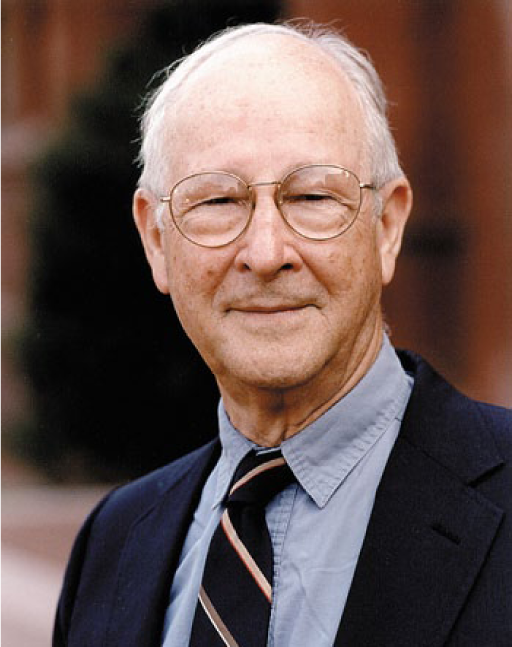
Mays’s larger contributions to the field of biblical studies also deserve mention. His work on the prophetic books, including commentaries on Amos, Hosea, and Micah for the Old Testament Library series and magisterial treatments of the book of Psalms, continue to be standard resources for scholars and pastors alike. Moreover, Mays edited the series Interpretation: A Bible Commentary for Teaching and Preaching, and was general editor of the HarperCollins Bible Commentary. He also served as president of the Society of Biblical Literature in 1986.
Mays mentored generations of students at Union, both doctoral students and future ministers who served in churches for many decades. He demanded patient, rigorous attention to the exegetical task and modeled for students the importance of theological inquiry when pursuing this work.
His passions extended into decidedly nonacademic pursuits, including tennis, birding, and fly-fishing. Mays delighted in fishing as an avocation; indeed, he was a founding member of the Old Testament Fishing Society. He loved sports and classical music and took pleasure in a soaring symphony or an exciting baseball game, even in his final years. Jim Mays was devoted to Mary Will Mays, his wife of 63 years, to his daughters Sarah Mays Rogerson Passard and Mary Frances Mays, and to his grandchildren.
In his inaugural address at Union (1960), Mays discussed “Exegesis as a Theological Discipline.” Already at this early stage in his career, he understood the complexity of biblical interpretation and the need to explore the theological contours of every text under consideration. In the lecture, he highlighted the need for attentiveness to language and historical circumstances, while also examining the implications of a text for the life of faith. He concluded his lecture with a colorful, inviting description: “Exegesis is the journey back to the time of the witnesses, to the world of prophets and apostles. It is the vigorous discipline of learning to think in the situation and with the language and in the frame of reference of those whose testimony makes up the Bible.”
The lively discussion of biblical theology in the current issue demonstrates the importance of an ongoing dialogue in which Mays has played a central role. His wisdom, wit, and passionate dedication to Union Presbyterian Seminary and to its flagship journal Interpretation are a continuing source of inspiration to all of us who carry on the work of the journal. This issue, together with a companion issue on Biblical Theology: New Testament Perspectives, to follow in October 2016, is dedicated to Jim Mays. We seek to honor Jim not only by marking the journal’s important legacy but also by advancing the conversation as we begin our next seventy years.
Footnotes
1
Johann P. Gabler, “An Oration on the Proper Distinction between Biblical and Dogmatic Theology and the Specific Objectives of Each,” in The Flowering of Old Testament Theology: A Reader in Twentieth-Century Old Testament Theology, 1930-1990, ed. Ben C. Ollenburger, Elmer A. Martens, and Gerhard F. Hasel, Sources for Biblical and Theological Study 1 (Winona Lake, IN: Eisenbrauns, 1992), 495–96. The original lecture was in Latin and has subsequently been translated into German and English.
2
Ibid., 496.
3
As this conversation has unfolded, archaeological discoveries have enhanced our understanding of the social world of the Bible and the background for various books, while raising questions about the historicity of many events.
4
Gerhard von Rad, Old Testament Theology, Vol. 1, OTL (Louisville: Westminster John Knox, 2001), originally published in 1957; the second volume appeared in 1960. For a useful overview of von Rad’s project in these volumes, see Andreas Schuele, “Theology as Witness: Gerhard von Rad’s Contributions to the Study of Old Testament Theology,” Interpretation 62 (2008): 256–67.
5
See the study of G. Ernest Wright, God Who Acts: Biblical Theology as Recital, SBT 8 (London: SCM, 1952).
6
Brevard S. Childs, Theology of the Old and New Testaments (Minneapolis: Fortress, 1992), 78–87.
7
Jon D. Levenson, “Why Jews Are Not Interested in Biblical Theology,” in The Hebrew Bible, the Old Testament, and Historical Criticism (Louisville: Westminster John Knox, 1993), 33–61.
8
See, e.g., Phyllis Trible, Texts of Terror: Literary-Feminist Readings of Biblical Narratives, OBT 13 (Philadelphia: Fortress, 1984); R. S. Sugirtharajah, Postcolonial Criticism and Biblical Interpretation (Oxford: Oxford University Press, 2002); Cain Hope Felder, Stony the Road We Trod: African American Biblical Interpretation (Minneapolis: Fortress, 1991).
9
See most recently Konrad Schmid, Is There Theology in the Hebrew Bible?, Critical Studies in the Hebrew Bible 4 (Winona Lake, IN: Eisenbrauns, 2015).
10
Rudolf Bultmann, Theology of the New Testament, vol. 2 (New York: Scribner’s Sons, 1955), 251; for further discussion, see John J. Collins, Encounters with Biblical Theology (Minneapolis: Fortress, 2005).
11
James Barr, The Concept of Old Testament Theology: An Old Testament Approach (London: SCM, 1999).