




Abstract

T
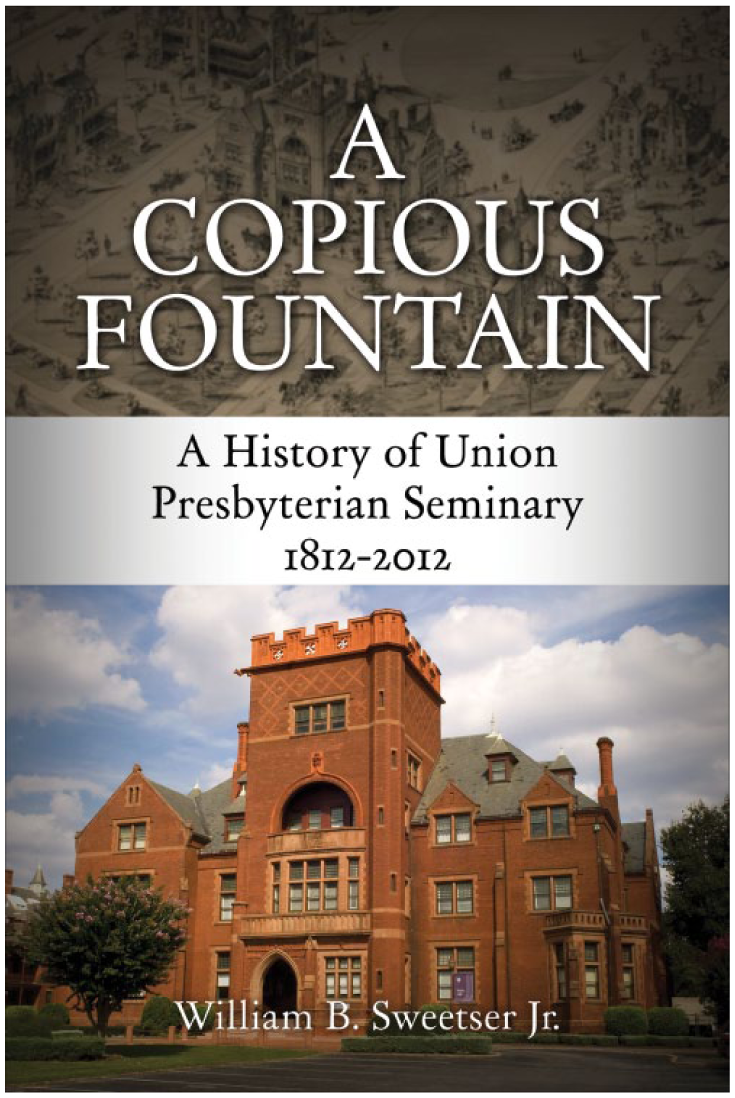
Sweetser develops five themes that have guided this curricular constant through two hundred years. These themes include the changing nature of an educated ministry, the role of the seminary as both a Southern and a national institution, the seminary’s struggle to serve a small regional denomination while opening students to a wider world, the challenge of upholding tradition while advocating for religious and social reform, and the role the seminary has played in influencing regional denominational and theological education. These themes provide a flexible structure to the overall history.
Sweetser demonstrates how Union has maintained the core curriculum. Only twice did this core curriculum come under threat. In the late nineteenth century an attempt to revamp the curriculum to include more classes in apologetics (in order to refute the claims of Darwinian evolution) was defeated because it would undercut the study of biblical languages. In the mid-twentieth century, Union’s faculty rejected the need for pastoral counseling as a requirement for several years before yielding. Sweetser argues that this change did not diminish the emphasis on the older core curriculum, which had already made room for less controversial courses in Christian education and fieldwork. The preponderance of required courses given to the traditional curriculum remains to the present day.
Several of the underlying themes that Sweetser proposes relate to a larger issue. Throughout most of its history, Union Presbyterian Seminary has struggled to decide whether it is a regional or national institution. Certainly until the 1930s Union emphasized its Southern roots. Since the Great Depression, Union has made explicit efforts to promote the seminary’s reputation on a national and even an international stage. In the more regional phase of its history, Union employed progressive means as a way to bolster Southern orthodoxy. In the more national and international phase of its history, Union has sought to maintain a strong allegiance to the ethos of a smaller institution that values community and collegiality.
Sweetser supplies ample evidence of this tension throughout the book. Perhaps most surprising, Sweetser shows that the seminary’s founder, John Holt Rice, who was considered an ecumenical and progressive, promoted the need for a regional seminary because Southern-trained ministers would preserve Southern culture. Walter Moore, the seminary’s first president and the progressive force behind the relocation of the seminary from its rural setting at Hampden-Sydney College in Farmville, Virginia to the city of Richmond in 1898, opposed discussion of reunion of the Northern and Southern branches of the Presbyterian Church. Throughout his presidency (1904–1926), Moore promoted the seminary as a servant of the South “willing to live with the contradictions of race” (p. 208). The Sprunt lectures, which were endowed under his presidency to aid the development of an educated ministry, initially maintained a conservative tone, with William Jennings Bryan and John Gresham Machen as invited lecturers.
Sweetser describes both Rice and Moore as heroes who stood as beacons of progressivism, while their opponents supported slavery and racism. Rice and Moore worked to overcome the provincial racist heritage of Union alumni like Robert Lewis Dabney (1820–1898), an influential Southern Presbyterian theologian and pastor who served as a professor of church history at Union before the Civil War and then taught systematic theology as an adjunct professor at Union while he was a Confederate army chaplain and chief of staff for General Stonewall Jackson. Unfortunately, because of Dabney’s fame and influence, Union Seminary was associated with Dabney well into the twentieth century. As a result, no Northern Presbyterian taught on the faculty until 1938, and over ninety percent of the student body was Southern well into the twentieth century. One of the great ironies of this provincialism is that it was largely funded by contributions from the North, as Northern financial support allowed Union to keep its doors open in the years following the Civil War. An unanswered question in this history, and perhaps beyond its scope, is what compelled Northern philanthropists to open their pocketbooks to an institution that promoted Southern provincialism during these years.
Sweetser’s account reveals that Union Seminary did not transition from a regional to a national institution overnight. The change becomes apparent under the presidency of Moore’s successor, Benjamin Rice Lacy. The cause of this shift is less apparent. Certainly the Great Depression, which endangered the Southern middle class, highlighted economic disparities, and ultimately caused people to see the immorality of segregation, played a role. Much credit for promoting and leading this shift belongs to Lacy. He protected progressive members of the faculty, especially E.T. Thompson, from fundamentalist attacks from within the seminary’s denomination. He also brought an ecumenical and broadminded faculty to the campus. As Sweetser notes, the additions to the biblical department of Howard Kuist (1938), Balmer Kelly (1939), John Bright (1940), and Donald Miller (1944) marked the beginning of the biblical theology movement and a transformation at the seminary. Kelly and Miller played key roles in establishing the journal Interpretation in 1947, which had a major impact on Union’s growing national and international reputation. At the same time, Lacy maintained the connection of the seminary with its Southern constituency. He continued the tradition of identifying promising students and subsidizing their graduate studies so that they could return to the seminary to teach.
The seminary’s desire for a national reputation ultimately required a graduate program and a corporate structure to support it. Advanced degrees began with a Th.M. in 1924, followed by a Th.D. in 1930. The graduate program complicated the seminary’s relationship with the denomination. The growing bureaucracy of a professional and graduate institution demanded secular accreditation, which further diminished the role of the denomination in the seminary’s work.
Union Presbyterian Seminary’s move to national prominence, with all the benefits and dangers this entailed, occurred during the years in which Southern Presbyterians and the Northern Presbyterians moved toward ultimate reunion in 1983. As a result of this reunion, the challenges and tensions facing Union Seminary remained, but in a new context. Once national identity became the norm, the role of community within the seminary and the relationship between academic graduate training and professional ministerial training increasingly became matters of co006Ecern.
Sweetser concludes his narration of the history of the seminary with a statement of certainty that Union Presbyterian Seminary will continue to serve the church and remain vital in the proclamation of Jesus Christ. His certainty is perhaps more a prayer, for challenging times remain ahead for theological schools. Sweetser’s excellent work, by showcasing the successes and failures of the past, may help lead theological education into a brighter future.