



Abstract

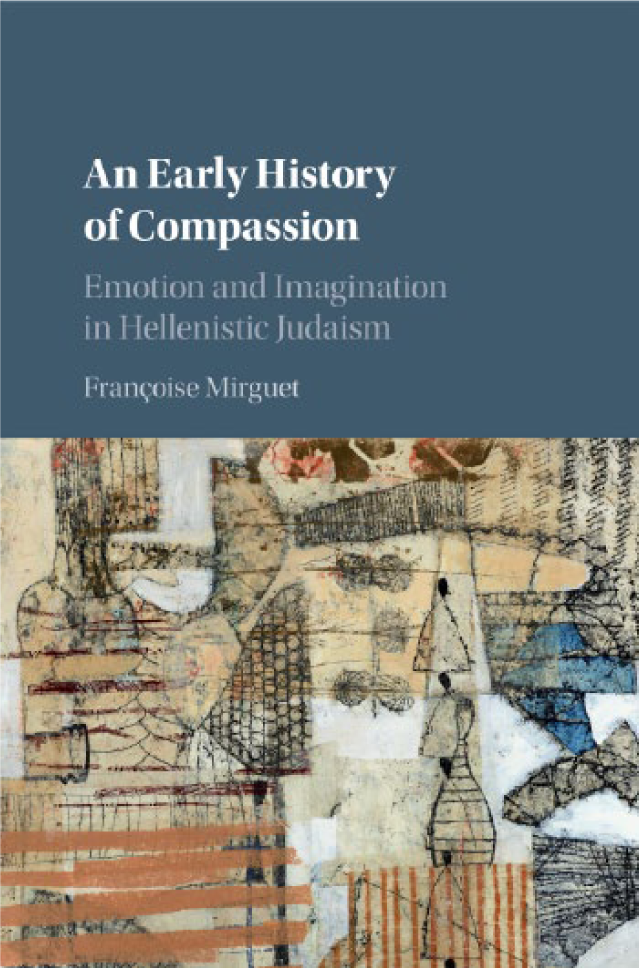
Mirguet’s book provides a wealth of critical insight into the complex experience of compassion, though not in a way readers of this journal might expect. Mirguet is not a theologian, ethicist, psychologist, or pastoral counselor, but rather a historian of ancient Jewish literature and professor of Hebrew and Near Eastern studies at a large state university. To be sure, she knows her Bible, but here she focuses on Judeo-Hellenistic writings from the third century BCE–first century CE. These works include Greek versions of the Hebrew Scriptures and books of Sirach and Tobit (canonical in Catholic and Orthodox traditions); moreover, Luke’s parables of the Good Samaritan and Prodigal Son have a notable cameo. But Mirguet also delves into treatments of compassion in the Testament of Zebulon, Testament of Job, 4 Maccabees, Letter of Aristeas, Antiquities and War of Josephus, various treatises of Philo, and Sentences of Pseudo-Phocylides, which hardly make the top-ten list of sermon resources. But that is a pity (to evoke the theme), because these works offer a valuable trove of faith-rooted, identity-clarifying reflection on compassion in the midst of a “global” cultural crisis. To whom and how ought minority Jews show compassion in a world dominated by Greek and Roman might and morality? That is the key question.
Mirguet argues that the aggressive dissemination of all things Greek in the wake of Alexander’s conquests engendered an “affective shift” in Diaspora communities struggling to negotiate their beloved scriptural heritage and belittled social position within the new order (p. 181). The dynamic network of thoughts, feelings, and actions informing the Greek lexical domain of compassion (“pity/mercy” [eleos/oiktos], “sympathy” [sympatheia], “gut feelings” [splanchna]) sparked various (re)assessments of “power and vulnerability.” To show compassion to a needy person places one on the delicate precipice of a “privileged position” of “moral superiority” over the miserable pitied one, on the one side, and a precarious state of being emotionally sucked into their pitiable condition, on the other side (see pp. 21–49, 226–35).
Greek offered a richer emotional repertoire than biblical Hebrew, a more developed conceptualization of pathos (“emotion/passion”). Not that the Hebrew Bible is void of feeling or experiences we would label as emotions (like fear, love, anger); but these biblical expressions operate in a wider legal-ritual-behavioral milieu than in a “strictly defined emotion realm.” As for compassion, Greek “opens up a space for responses to others’ pain to be conveyed as emotions per se” by Hellenistic-Jewish translators and commentators (p. 228). Such infusion of emotion was not simply an aesthetic exercise to round out the Bible’s relatively flat affect, but rather a serious diplomatic move to reimagine Jewish identity in an imperial order that threatened to swallow the old tradition whole.
Among the impressive array of writings that Mirguet sifts, she gives particular attention to the Testament of Zebulon as a “narrative tour de force” on compassion’s multifaceted functions as “a familial emotion, an index of Jewish identity, and a factor of incorporation into the larger human community; it is both a gut-felt emotion and an ethical requirement” (p. 178). Embellishing the Genesis story, this Testament poignantly depicts the distress Zebulon feels over Joseph’s ill-treatment at the hands of his ten brothers (Zebulon is Jacob’s tenth son, closest in age to Joseph, by a different mother). Zebulon becomes overwhelmed with “pity” (oiktos) toward Joseph, weeping with him and melting in his “inner parts” (splanchnōn) as his heart rate spiked and bones shook to the point of collapse (T. Zeb. 2:4–6). Such vehement physical-emotional sympathy motivates rational-ethical action toward all who suffer, as if they were kin. With respect to brother, neighbor, stranger—and even to animals—one must “do pity (poein eleos) . . . and have compassion (eusplanchnian) . . . . without distinction” (5:1; 7:2).
By fleshing and feeling out core biblical duties to love God and people as oneself, the Testament of Zebulon and related texts forge a creative blend of ancient Hebrew and recent Greek worldviews, blurring binaries of reason/emotion, mind/body, theory/praxis, family affiliate/foreign alien, superiority/vulnerability that still haunt us today. Although I see more evidence in the Hebrew Bible than Mirguet grants of a dynamic nexus between ethics and emotion—calls to love obediently and affectively with all one’s “heart and soul” in the Torah (Deut 6:4–5; Lev 19:17) and to do justly and love mercy with fervent passion in the Prophets (see Abraham Heschel’s classic work)—the move to Greek undoubtedly raised the emotional tenor of the cultural script. Mirguet has done the academy—and the church and society—an enormous service in providing such a carefully nuanced analysis of the purpose and practice of compassion in a significant Jewish (and early Christian) historical period, highlighting the critical support and motivation (not an action-limiting crutch!) that deep-seated feeling with and for sufferers generates for mending—not simply bemoaning and demeaning—a broken and divisive world.