



Abstract

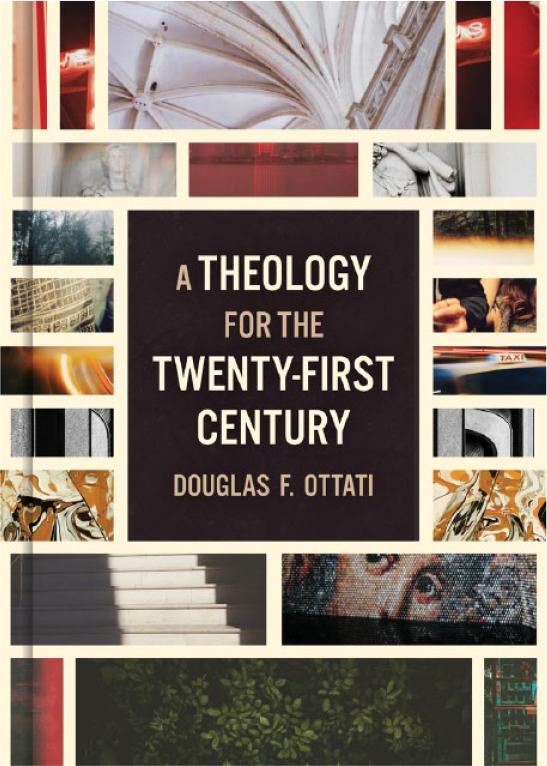
I
No review can possibly capture all the elements of a book of this length and complexity, so a few remarks must suffice. Of particular delight is the way in which Ottati drinks deeply from the well of Augustine’s thought, especially with his rejection of Gnostic dualism and concomitant affirmation of the goodness of creation. Gnosticism has been a perennial temptation for Christianity, although classical theology thankfully reflects the tempering influence of its Jewish roots. Gnostic dualism affirms the immortality of the soul rather than the worth of our creaturely existence, escape from the world rather than its renewal, and systems of hierarchy that associate some with the “higher” realm of soul or mind and others with the “lower” levels of the body. While Ottati does not engage the extensive theological conversation on dualism by, for example, Rosemary Radford Ruether (whom he cites on several other points), his embrace of Augustine’s rejection of Gnostic dualism nevertheless runs like a golden thread throughout this book. This is perhaps most clearly seen in his discussion of creation, which he presents not as something that takes place in a mythic past, but rather as sustained divine activity. This line of thought runs into his discussion of eschatology, where the focus is not on world escape, but on world renewal, which calls the faithful to responsibility.
The denunciation of a Gnostic distinction between God the Creator and God the Redeemer finds further expression in the third section of the book, where Ottati’s discussion of Christology takes place within the framework of the Calvinist rejection of bifurcation of law and grace. This explicit emphasis on the oneness of God’s work constitutes a repudiation of the “recurrent malformation of theology and piety” that is anti-Semitism (p. 20). One particularly fascinating consequence of this line of thinking is Ottati’s approach to soteriology. Agreeing with Barth’s critique of speculative elements in the doctrine of election, but also going beyond Barth’s Chalcedonian “solution,” Otatti makes an eschatological move in which he presents Christ’s work within the framework of the one covenant of grace that is “coextensive with creation itself” (p. 358). This leads to the suggestion that the reconciling work of Christ has cosmic implications. Here Ottati brings in the extra calvinisticum to support the idea that the activity of the Logos is not necessarily confined to the life of Jesus of Nazareth, but might be present in “other manifestations and disclosures of the gratuitous divine dynamic” (p. 378).
Another noteworthy element in Ottati’s soteriology is that he chooses to discuss sin with regeneration in the section on redemption. Removing sin from its traditional spot alongside the doctrine of creation might help address the common misunderstanding that Christian theology sees sin as natural (which would indeed be a Gnostic heresy). This placement also suggests that sin is to be understood in light of the drama of salvation, instead of vice-versa.
Ottati’s approach to the Trinity warrants some critical inquiry. Despite the fact that the book concludes with a chapter labeled “The Sense the Trinity Makes,” in which Ottati points to the Trinitarian nature of his theology, the classical doctrine of the Trinity receives little more than dismissal. Declaring himself “agnostic about the possibility of distinctions within the Godhead” (p. 749), he instead opts for a biblical approach to the divine mystery in terms of Christian “experiences of reconciliation in Jesus Christ, of the creating and sustaining God of Israel, and of renewal and new community through the Spirit” (p. 75). There is significant value in an approach to the Trinity that traces the doctrine back to the church’s experience of salvation, but would it not be more helpful to point to the ways in which classical approaches to the Trinity are in fact rooted in this salvific experience, and not simply speculative?
Finally, it is perhaps in his discussion of the Spirit that Ottati’s Calvinist roots are most evident. In both Scripture and Christian history, the Spirit sometimes acts as the “wild one” of the Trinity who breaks through limits and limitations, including the structures of the church. As an example, consider the way a medieval female mystic like Hildegard von Bingen gained authority in a male dominated church because she was seen as a vehicle for God’s Spirit. But the church has also been rightly aware that claims to inspiration by the Spirit open the door to false prophets; thus it has traditionally “tamed” the Spirit through canon, apostolic succession, and appeals to Scripture. In line with Calvin, Ottati takes the latter route, beautifully emphasizing the life-giving and renewing work of the Spirit in the community of the church, thereby tying the Spirit quite closely to church, Word, and sacrament. This does beg the question: can a theology for the twenty-first century function without the pneumatologies of the global South, the new center of gravity for the church, where the Spirit is often more central to the church’s worship than in the West, and even seen as blowing well beyond the borders of the church?
Indeed, it is likely that theologians of the global South will shape the theology of the twenty-first century in ways that will go well beyond this book. Nevertheless, Ottati’s tome deserves a place alongside those current and future works. By tapping into the thought of Africa’s most eminent theologian, Augustine of Hippo, by returning to the biblical roots of the faith (but not in a fundamentalist fashion), by embracing the critical spirit of the Enlightenment, by relocating humanity in a theocentric humanism that includes all of God’s creation, by presenting theology as a practical wisdom, and by insisting on the world-affirming roots of Christian thought, Ottati provides an important guide for further theological reflection.
In sum, this is a well-structured book that densely weaves together various strands of thought in an intricate pattern. It offers welcome rethinking of some of the best that the Christian theological tradition has to offer, even as it embraces modern knowledge and understanding. Although its length and complexity might challenge beginning students, it is well-suited for those who want to delve more deeply into the rich theological heritage of the church, or for pastors who want to expand their theological horizons.