




Abstract

T
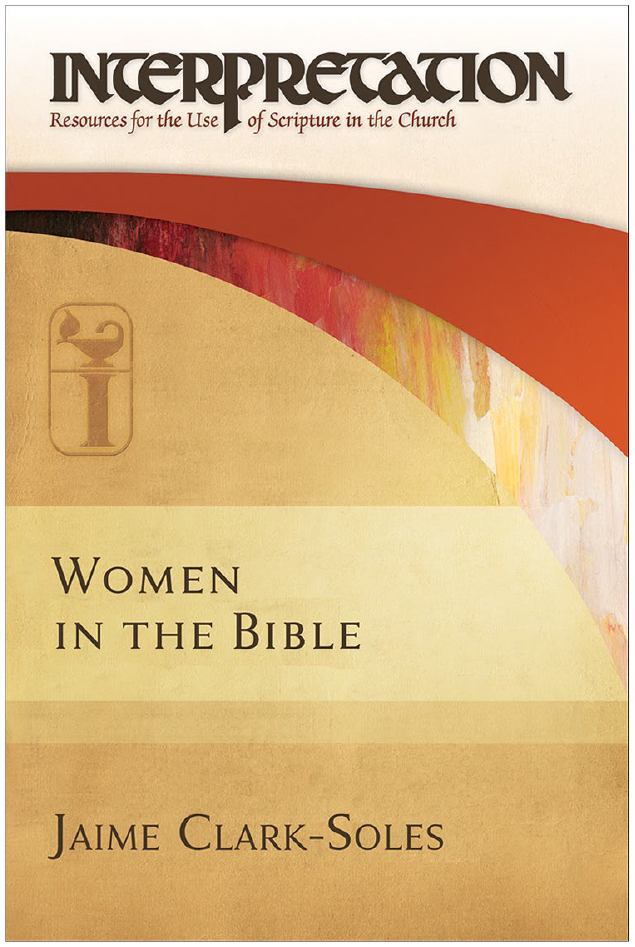
Clark-Soles assumes a stance of “reading toward wholeness and liberation for everyone and everything in God’s creation” (p. 5). She asks “in what ways does the text have liberative potential, and in what ways does it present potential obstacles for those seeking abundant life (John 10:10)?” (p. 7). These are the right questions to ask.
The volume features ten chapters. In ch. 1, “Of Canaanites and Canines: Matthew 15,” Clark-Soles uses the story of the Canaanite woman to “display a variety of hermeneutical methods and considerations” (p. 10) relevant to her project. She gives four traditional interpretations of the text and then a sampling of newer interpretations that present the woman as “strong, savvy, and even subversive” (p. 25). Next, in “God Across Gender” (ch. 2), Clark-Soles shows the problematic aspects of using exclusively male language and images for God. Before lifting up texts that depict God with female imagery, she lists the kinds of work women did in antiquity. The remainder of the chapter relies heavily on, and quotes extensively from, the work of L. Juliana M. Claassens (Mourner, Mother, Midwife: Reimagining God’s Delivering Presence in the Old Testament [Westminster John Knox, 2012]).
Chapter 3 enters into the topic of “Women and Violence in the Bible.” Clark-Soles notes that the Bible never names violence against women as wrong and asserts that the antidote is to cultivate the biblical virtues of truth-telling, solidarity, and hope to avoid perpetrating violence and to dismantle the systems that perpetuate it. In ch. 4, “Women Creating,” Clark-Soles lifts up Eve, Woman Wisdom, the wise women of Abel Beth-maacah and of Tekoa, and prophets Miriam and Deborah, who “model creativity” so as to inspire believers today to respond similarly to “the ruin of the world” (p. 107). Next, Clark-Soles explores “The Book of Ruth” (ch. 5), celebrating female ingenuity as displayed by Ruth and Naomi. She paints them within a larger community of women of Bethlehem, before comparing Naomi to Job and Ruth the Moabite to Tamar the Canaanite.
Chapter 6 takes up “Magnificent Mary and her Magnificat.” Clark-Soles examines the role Mary plays in the Gospels of Luke, Matthew, and John, and then explores extra-biblical traditions about Mary and her ongoing impact. She encourages Protestants not to miss out on the richness that Marian traditions offer. Chapter 7 offers a sweeping overview of “Women in Jesus’s Life and Ministry,” clustering them into categories: Jesus’s foremothers, prophetic women in Jesus’s early life, women who anoint him for death, women patrons, women unloosed by Jesus, women who engage Jesus in theological debate, and women at the passion, crucifixion, and empty tomb. The chapter also includes a brief treatment of figurative women in the Gospel parables. In the following chapter, “Jesus Across Gender” (ch. 8), Clark-Soles looks at New Testament presentations of Jesus as Woman Wisdom, Mourner, Lifebearer, Nurser, and Mother Bird. She concludes with implications for Christian discipleship.
The final two chapters treat “Women in Paul’s Ministry” (ch. 9) and “The Muting of Paul and His Female Coworkers” in the deutero-Pauline epistles (ch. 10). Clark-Soles examines Pauline texts with named women, texts where Paul uses maternal metaphors to describe his ministry, and finally, women in 1 Corinthians 7, 11, and 14. She concludes that Paul “enthusiastically and unapologetically considers women to be no different from men in value or vocation” (p. 278). In the last chapter, she examines leadership models, ambiguities toward women in the Pastoral Epistles, and the legacy of the household codes, concluding that Jesus and Paul embraced “egalitarian, gender-bending, charismatically based models of leadership” that were then undone in part by the deutero-Pauline authors, bent on silencing women and “putting them in their place” (p. 303).
This book is a good introduction for those who are unaware of the numerous texts that feature women in the Bible or who are new to feminist approaches to biblical interpretation. The topics Clark-Soles addresses are relevant to the lives of contemporary believers, and she makes important connections, as when she relates the journeys of Ruth and Naomi to those of present-day migrants. She has many good insights that will help spark discussion in Bible study groups. The inclusion of interpretations from feminist, womanist, Latina, Asian, LGBTQIA, and postcolonial perspectives, as well as disability studies, is a laudable feature of the book. Also helpful is the section at the end of every chapter mapping where the women or topics appear (or not) in the Roman and Revised Common Lectionaries, along with advice to preachers on how to deal with the omissions and the stereotypes the lectionary perpetuates.
For those who are more versed in feminist biblical interpretation, this book will be disappointing. Clark-Soles offers little that is new; this book is more of a compilation of others’ work, some of it rather dated. For example, the interpretation of Eve in ch. 4 relies heavily on Phyllis Trible, whose groundbreaking work appeared in 1978. As important as Trible’s work is, one would hope that more recent works would also be referenced. Another lacuna: Clark-Soles lauds the Wisdom Commentary series for the advances it offers in contemporary feminist biblical scholarship (p. 1) but does not use volumes from that series in the remainder of the book.
Clark-Soles states in the introduction that she has not aimed for “contrived consistency” (p. 11) in the design of the chapters, a decision that affects the cohesion of the book. The absence of a clear articulation of her method adds to lack of cohesion. She says she will use “a variety of interpretive methods” (p. 4), but she does not state what those are. In much of the book, she lifts up women in the Bible, an approach she acknowledges is outdated. Many scholars today look more broadly at gender in the Bible, an approach Clark-Soles also uses. The result is that Clark-Soles tries to do too much in one book. And while she achieves her aim of exposing readers to a variety of newer approaches, she does not provide guidance on how to evaluate the different interpretations. Clark-Soles includes feminist interpretations, but she does not define feminism or explain what feminist approaches to biblical interpretation are, what they aim to do, or identify various feminist methods, noting why they are important or what their drawbacks might be. Later in the book, she includes works of womanist scholars but neglects to explain what womanism is and how it is related to feminism. It is also notable that Clark-Soles does not speak of herself or of her approach to women in the Bible as feminist.
Another problematic aspect is that Clark-Soles opens up topics that need more in-depth treatment than she is able to give. For example, at the end of the discussion of Woman Wisdom in ch. 4, a final paragraph notes that Jesus is depicted in the New Testament as Woman Wisdom incarnate, and that both are characterized by joy and love. She does not identify biblical references to substantiate this claim or recommended resources for readers interested in exploring this topic further.
Many scholars will find Clark-Soles’s analysis of women disciples and leaders in the lives of Jesus and Paul inadequate, taking insufficient account of the complexities and ambiguities of the traditions in the Gospels and the Pauline and deutero-Pauline letters. Her advocacy for servant leadership at the end of ch. 7 cries out for feminist cautions about such language and models. In sum, this book offers many rich insights but does not advance the work of feminist biblical interpretation as one might hope.