




Abstract
This study is based on intentional change theory and supports cognitive-emotion and social complexity perspectives regarding positive and negative affect. We examine how a coaching experience guided by a specific theoretical approach within a leadership development program at a European business school influences cognitive-emotional processing of MBA students with regard to their levels of personal vision comprehensiveness and strength, goal-directed energy, and resilience. A within-subjects pre–post Non-Equivalent Dependent Variables design with a total of 76 students was conducted using survey methods. A rigorous analysis sheds light on how intentional change theory–based coaching enhances individual self-development processes. Participants stated higher levels of personal vision, goal-directed energy, and resilience postcoaching. A series of moderator effects were identified regarding the quality of the coaching connection (i.e., overall emotional saliency) and the general self-efficacy of participants. Implications concerning how coaching processes may be enriched through the establishment of high-quality coaching connections are discussed.
Introduction
Coaching has recently emerged as a discipline, a profession, a leadership style, and a new area of empirical research. The practice of coaching has been around for millennia in the form of individualized professional advice and training, but has only recently been formally recognized as a psychological construct within corporate and academic arenas (Poelmans, 2009). Current research on coaching seems to be primarily occupied by the question, “does it work?” This is reasonable since evidence of effective outcomes is critical for establishing legitimacy (Gregory, Levy, & Jeffers, 2008; Segers, Vloeberghs, Henderickx, & Inceoglu, 2011). But how do coaches help clients make meaningful and lasting change in their lives? This question is fundamental for coaching practice, and is particularly relevant for high-engagement coaching relationships that involve a holistic and developmental approach to enhancing leadership capability (Segers et al., 2011). Little attention has been given to the systematic study of theoretical frameworks, methodologies, or approaches that guide the coaching process (Gregory et al., 2008; Segers et al., 2011). Indeed, due to the rapid growth of practice, coaches adopt frameworks and methodologies to guide the process in an effort to structure their work—but many of these frameworks and methodologies lack a strong evidence base of research that examines the complex web of cause and effect that affects coaching outcomes (Bennett, 2006; Spence, 2007).
Two approaches typically occur in coaching: one approach focuses on performance targets and individual weaknesses and another seeks to inspire stronger performance by focusing on the coachee’s strengths, aspirations, and personal development. In fact, in the past 15 years, coaching has refocused toward strength-based approaches, orienting individuals to focus on things they do well. A number of approaches to coaching have adopted this broad framework, including Fredrickson’s flourishing (Fredrickson & Losada, 2005); Higgins’s promotion versus prevention (Higgins, Roney, Crowe, & Hymes, 1994); Deci and Ryan’s self-determination theory (Ryan & Deci, 2000).
Concern about the theory gap in coaching has triggered numerous calls for more empirical investigation on the elements that differentiate successful coaching outcomes from mediocre or unsuccessful results (Brotman, Liberi, & Wasylyshyn, 1998; Kilburg, 2001; Wasylyshyn, 2003). Calls have additionally been made for research on: coaching antecedents (coach/coachee characteristics, and organizational/client support); coaching process (coaching approach, coaching relationship, and feedback receptivity); proximal coaching outcomes (self-awareness, behavioral change, and learning); and distal coaching outcomes (individual success and organizational success; Baek-Kyoo, 2005). In addition to the research agendas above, Bennett (2006) published a metareview and qualitative content analysis of scholarly works on coaching in which he specifically challenged researchers to generate work that will help build a scholarly and evidence-based foundation for coaching practice and teaching. From their suggested theoretical framework, Segers et al. (2011, p. 208) observed that the largest gap in the existing coaching literature exists within the “how” dimension of their “coaching cube” (i.e., which coaching approaches are being used) and particularly, with regard to differences in impact and effectiveness of diverse approaches.
Simultaneously, the fact that coaching has become part of leadership development programs has prompted studies that empirically or theoretically justify the use of coaching techniques that increase self-awareness through consciousness-raising experiences in executive development programs (Mirvis, 2008; Sadler-Smith & Shefy, 2008), boost reflective practices by managers and enhance decision-making processes within the context of MBA programs (De Déa Roglio & Light, 2009), accelerate career learning in terms of personal development (Parker, Hall, & Kram, 2008), and improve performance following an executive education program by supplementing the coaching with multisource feedback (Hooijberg & Lane, 2009; Smither, London, Flautt, Vargas, & Kucine, 2003).
Despite the increased use of coaching practices in leadership development processes, few empirical studies have examined the coaching process itself and its influence on the internal processing of the individual being coached (Feldman & Lankau, 2005; Kampa-Kokesch & Anderson, 2001). Additionally, there is a lack of theory related to the crucial elements on the quality of the relationship between the coach and coachee and its potential implications for coaching outcomes, although this is a growing field (i.e., see Baron & Morin, 2009; Boyatzis, Smith, & Beveridge, 2012; Howard, 2006; Kampa-Kokesch & Anderson, 2001; Passarelli, 2014).
It is evident that one cannot, for instance, increase the quality of coach training or improve the selection process of coaches used in leadership development programs if one does not know the characteristics of the industry in terms of the approaches being used and the most relevant elements that need to be incorporated in the coaching process to maximize success in coachee leadership development processes (Maltbia, Marsick, & Ghosh, 2014; Segers et al., 2011). Coaching therefore extends beyond a process or technique for developing competencies and reaching ambitious goals, and represents a new paradigm in management based on a new type of formalized high-quality relationship in which skilled professionals assist clients make desired life changes.
Establishing a Coaching Relationship
Many researchers hold that it is within the context of a high-quality relationship that growth and transformation occur (Dutton & Heaphy, 2003; Josselson, 1996; Miller & Stiver, 1997). The research literature on coaching that focuses on outcomes related to the relational competencies is relatively recent and somewhat limited. The coach–coachee working relationship has been identified as one of the key variables of the coaching process (Kampa-Kokesch & Anderson, 2001; Smither, London, & Reilly, 2005). Many of these early studies were qualitative in nature. Wasylyshyn (2003) evaluated one coach from the perspective of 86 clients. Findings indicated the top three personal characteristics of an effective executive coach as: (a) the ability to form a strong “connection” with the executive (86%), (b) professionalism (82%), and (c) use of a clear and sound coaching methodology. Gyllensten and Palmer (2007) also found the coaching relationship to be of critical importance. Positive coaching relationships were established on a foundation of high levels of trust and transparency, which promoted psychological safety and active participation in the process. Bluckert (2005) added rapport, support, challenge, and trust as key elements of a successful coaching relationship. Although these earlier qualitative studies provide rich explorations of smaller case study samples, the field has also begun to see the emergence of mixed methodology, quasi-experimental, and field studies. An example of this is one of the larger studies provided by Boyce, Jackson, and Neal (2010) in which 74 coach–client pairs participated in a voluntary leadership coaching program. Results indicated that trust was the most important coaching attribute for all rater groups, signaling the primacy of the relationship aspects of coaching. Specifically, relationship processes of building rapport, trust, and commitment positively predicted coaching program outcomes, including coach and client responses, and changed behavioral and coaching program results.
The mixed-methods study of Beets and Goodman (2012), who employed the success case method using 80 participants in a training program comparing successful with less successful cases of skill transfer, show that establishing mutual trust, respect, and freedom of expression were among the highest predictors of successful outcomes. A field study by Baron and Morin (2010) also provided precoaching and postcoaching measures on the Learning Transfer System Inventory and the Working-Alliance Inventory–Short revised and demonstrated a statistically significant increase in coachee’s self-efficacy.
According to Gregory and Levy (2010), high-quality coaching relationships are evidenced by a genuineness and comfort in the relationship, as well as positive communication and the facilitation of development. A series of longitudinal studies indicated that coaching based on positive emotional attractors (PEAs), which refers to coaching relationships characterized by an overall positive emotional tone, foster psychological states that optimally support behavioral change by facilitating the formation of trust, rapport, and interpersonal closeness in the coaching relationship (Passarelli, 2014). Indeed, the ability to establish resonant relationships is fundamental to coaching practice, and arises from striking the optimal balance for the coachee’s emotional attractors (positive and negative emotional attractors; PEAs/NEAs). In this scenario, the coach demonstrates empathetic attunement, understanding, and shares in the affective-cognitive experience of the client (Passarelli, 2014), and by sensing this level of acceptance and affirmation, the client experiences safety and positive emotional bonding that enhances the affective state of both parties (Boyatzis, Smith, & Blaize, 2006).
Overall, a number of studies have shown that the quality of connection between coach and coachee that is evident throughout the coaching process plays a fundamental role for coaching success (Boyatzis et al., 2006; Maethner, Jansen, & Bachmann, 2005; Parker et al., 2008; Runde & Bastians, 2005). Indeed, according to intentional change theory (ICT; Boyatzis, 2001, 2006, 2008), high-quality resonant relationships are the center around which desired and sustained change evolves. Such relationships have been found to ease career transitions (Ibarra, 2003), enhance and enrich identity (Roberts, Dutton, Spreitzer, Heaphy, & Quinn, 2005), and establish interpersonal trust that facilitates learning from failure (Carmeli, Brueller, & Dutton, 2009; Carmeli & Gittell, 2009). Resonant relationships also have physiological benefits, including improved immune system functioning, cardiovascular health, and patterns of neuroendocrine activity that contribute to resilience and engagement at work (Heaphy & Dutton, 2008).
In the current study, some of those reviewed vital dimensions of the coaching connection are represented as shared vision, shared compassion, and overall positive mood between coach and coachee, what will be referred to throughout this study as “emotional saliency” with regard to the positive emotional tone attained through the coaching space as the subjective sense of being in synchrony with one another (from the coachee’s perspective). Hence, this article proposes ICT-based coaching as an alternative to traditional coaching approaches to primarily emphasize the exploration and articulation of an individual’s ideal self (IS) as the driver of a developmental process.
Conceptual Framing of the Study
As a coaching framework and having evolved from self-directed learning theory (Kolb & Boyatzis, 1970), ICT (Boyatzis, 2001, 2006, 2008) is a comprehensive integrative self-directed learning theory that embraces a nonlinear process model. It can be considered developmental because it adopts a holistic perspective on human growth and behavior change (Segers et al., 2011). Specifically, ICT-based coaching assists individuals in creating sustained and desired change through a process involving several epiphanies: discovery and articulation of one’s IS (values, core identity, dreams, and aspirations); assessment of one’s real self (current realities) as compared with the IS; formulation of learning goals; implementation of deliberate practices; and the development of a mutually positive coaching relationship.
In the following section, we first present a brief overview of the conceptual umbrella (ICT) on which the current study is framed and include an examination of the relevant variables analyzed. We then outline an analysis conducted on the influence of a coaching session (independent variable) on each of the dependent variables (i.e., personal vision, goal-directed energy, and resilience) in relation to the quality of the connection between the coach and coachee (i.e., in terms of the emotional saliency perceived by the coachee) and with the coachee’s general self-efficacy as possible moderators. Finally, we discuss the results and limitations of the present study, as well as potential implications for future research and practices based on the conceptual framework specified.
Intentional Change Theory and the Role of PEA/NEA
ICT (Boyatzis et al., 2006) is a change methodology often used in coaching that may help bridge the current theoretical coaching research gap. According to ICT, sustainable learning, change, and development are stimulated by primarily arousing the PEA, which is a state that reflects what a person would love to be and what he or she would love their life to be, as in their IS (Howard, 2006). Coaching with regard to the PEA involves focusing on the client, emphasizing his or her IS, and maintaining an overall positive emotional tone (Boyatzis & Akrivou, 2006). In contrast, coaching to the NEA involves imposing external standards, pressures, or controls on the individual being coached (Boyatzis et al., 2012; Higgins et al., 1994). The NEA often arises in the context of an individual’s real self as he or she explores the question, “Who am I now?” (Taylor, 2006), whereas the PEA arises from the question, “Who do I wish to be?” (Boyatzis & Akrivou, 2006).
The psychological components of the PEA state are embodied in its physiological correlates (Cacioppo & Tassinary, 1990). PEA states have been associated with autonomic activity that supports the release of bonding hormones (oxytocin in women and vasopressin in men; McCall & Singer, 2012), neurological activity in regions of the brain associated with social cognition (the default mode network; Jack, Boyatzis, Khawaja, Passarelli, & Leckie, 2013), and social engagement and recovery from stress (increased parasympathetic activity; Porges, 2003). However, highly intense or prolonged periods of NEA trigger individual defense mechanisms and may hinder learning and development (Passarelli, 2015) since it has been associated with the experience of negative emotions, cognitive impairment, and a greater influence of the sympathetic nervous system on autonomic functioning (Boyatzis, 2008).
Longitudinal studies have shown that coaching on the basis of PEA results in dramatic improvements in MBA students’ social and emotional competencies, resulting in more effective management performance (Boyatzis, Smith, Van Oosten, & Woolford, 2013; Boyatzis, Stubbs, & Taylor, 2002). Subsequent work provides evidence that PEA coaching improves outcomes in other contexts. For example, in medicine, research has attempted to improve the degree to which patients listen to advice from their doctors and take their medicine (treatment adherence is low at 50% for diagnosed type 2 diabetics worldwide and 50% for orthopedic surgery patients [Khawaja, 2011]). Khawaja (2011) showed that treatment adherence was enhanced when the patient experienced the relationship with the doctor as having more shared vision and positive mood—key aspects in a PEA mentoring relationship. Other work has looked at medical student–standardized patient interactions (Dyck, 2010); father–daughter relationships in family businesses (Overbeke, 2010); information technology manager–subordinate relationships (Pittenger, 2012); and physician leadership effectiveness (Quinn, 2013). In each of these studies, the perception of shared vision was the statistically strongest factor in predicting an effective outcome for the dependent variable; sharing a vision for the desired future is mutually exciting and motivating.
ICT posits that PEA has a calming or energizing effect that is activated by the experience of hope, compassion, mindfulness, and/or playfulness (Ayan, 2009; Boyatzis & McKee, 2005), and the sequencing and salience of PEA and NEA have a profound effect on coaching effectiveness (Howard, 2006). Using a mixed-method approach, Buse (2011) also found that career longevity among women engineers was predicted by a sense of purpose and feelings of hope that were congruent with their profession (both aspects of ICT). Thus, increasing evidence suggests that the PEA and NEA states are associated with distinct emotional, cognitive, and physiological characteristics that affect behavior at both conscious and unconscious levels (Buse, 2011; Jack et al., 2013; Khawaja, 2011; Passarelli, 2014, 2015). Although both states are necessary and contribute to the developmental process, ICT posits that the clients who experience greater PEA (relative to NEA) are more likely to sustain meaningful changes in their lives.
Study Overview
Our ultimate aim in this study is to shed light on how coaches using ICT effectively help individuals engage in desired and sustainable change, which in the context of this study is considered a developmental process that enriches both their leadership careers and lives. Hence, this study makes a unique contribution by better understanding how a coaching interaction (understood as a 90-minute conversation that is intended for the purpose of developing others) affects the motivational resources of the participants (i.e., emotional and cognitive) and subsequently helps coaches more masterfully facilitate personal and professional change.
Specifically, we aimed to understand the extent to which a coaching session based primarily on participants’ PEA affected the emotional-cognitive processing that supports the developmental process with regard to the IS construction of participants (revealed in their personal vision), goal-directed energy, and resilience. In addition, we examined whether the quality of the coaching connection (in terms of emotional saliency as relational energy perceived by the coachee) and the coachee’s general self-efficacy affected the expected coaching outcome.
The following section introduces each of the relevant variables that were included in this study. The independent variables are the treatment (i.e., coaching session), the perception of the quality of the coaching connection, and the general self-efficacy. The treatment (i.e., coaching session) refers to a 90-minute coaching conversation that has two values, which will be referred to as pre–post. Each of the following subsections presents the research questions that provoke our analysis and subsequent hypotheses.
The Ideal Self as Personal Vision
The personal vision refers to the outward expression of the IS (i.e., “Who do I wish to be?”). The IS, according to ICT, combines the future-focused nature of Higgins et al.’s (1994) ideal self with present state elements of Roberts, Dutton, Spreitzer, Heaphy, and Quinn’s (2005) best self (Passarelli, 2015). Greater awareness of the IS is accompanied by affirming thoughts, a connection to something which is deeply meaningful, and a sense of optimism and self-efficacy that correspond to an increase in positive emotions (Howard, 2006). The IS serves as a catalyst for the change process by creating a discrepancy between one’s current real self and the self to which one aspires (Higgins et al., 1994; Oettingen, Pak, & Schnetter, 2001). It also gives rise to a growth-oriented psychophysiological state (Howard, 2006). Indeed, the development of alternate future scenarios, which was first referred to as prospection by Gilbert and Wilson (2007) is a cognitive process with profound emotional features. This process enables behaviorism and cognitive determinism to be transcended (Seligman, Railton, Baumeister, & Sripada, 2013) to envision a version of a future self that is consistent with a person’s core values and that is both aspirational and inspirational (Boyatzis, Rochford, & Taylor, 2015).
Positive visioning helps guide future behavior in sports psychology (Loehr & Schwartz, 2003), medical treatments (Roffe, Schmidt, & Ernst, 2005), musical performances (Meister et al., 2004), and academic performances (Curry, Snyder, Cook, Ruby, & Rehm, 1997). Focused goals without the context of a broader meaningful picture can result in short-term behavior modification that lacks the emotional commitment required to sustain one’s strivings over an extended period of time. Specifically, personal vision includes (a) a compelling image of a person’s IS; (b) a comprehensive sense of his or her real self as the core identity (e.g., strengths, traits, and other dispositions); and (c) hope (with its constituents, self-efficacy and optimism; Boyatzis et al., 2012). When the coaching process engages in exercises such as envisioning a desired future, reconnecting with personal values, discovering strengths, and expressing gratitude for supportive relationships, the PEA state is evoked (Boyatzis et al., 2006). In this study, the specific influence of a coaching process related predominantly to participants’ PEA is examined with regard to the dimensions that the IS theoretically comprises: holistic vision, an integral imagery of a desired future; sense of purpose, the articulation or realization of deep dreams; hope, described here as the affective driver caused by the degree of optimism; fun, as the result of the intrinsic motivation and self-satisfaction attached to the holistic imagery created; and deeper meaning, 1 as connected to the individual’s values, philosophy, and calling or purpose (Boyatzis, Buse, & Taylor, 2010; Buse & Bilimoria, 2014).
The research question underlying our study is as follows: “Does a coaching process connected primarily to PEA significantly influence the coachee’s personal vision?” We hypothesize that the coaching session will positively influence at least four of the five dimensions for the IS, as follows; however, we propose that more than one coaching session is needed to influence deeper meaning.
Goal-Directed Energy
The IS contains imagery related to a desired future that is an articulation or realization of a person’s aspirations and fantasies (Boyatzis & Akrivou, 2006). Associated with that imagery are goals that provide a clear route and are a critical component of coaching. Once a person has reflected on and developed goals, the hard work of pursuing these goals can begin (Morin & Latham, 2000). During coaching processes, goals that are associated with factors that make life worth living and work worth doing may generate the psychological energy needed to pursue and attain them (Smither, London, Flautt, Vargas, & Kucine, 2003). Research has shown that having and progressing toward significant goals are associated with personal growth, greater meaning, having a purpose in life (Green, Oades, & Grant, 2006) and well-being (Sheldon, Kasser, Smith, & Share, 2002). Previous studies (Grant & Dutton, 2012; Howard, 2009; Passarelli, 2014) suggest that the distinction between PEA- and NEA-based coaching approaches is not simply whether or not coachees set goals; but rather the distinction is in the nature of the goals set and the degree to which these differences affect striving toward one’s goals.
Snyder (1991) defines goal-directed energy through the construct of “hope” as, “a cognitive set that is composed of a reciprocally derived sense of successful (a) agency (i.e., goal-directed determination) and (b) pathways (i.e., planning ways to meet goals)” (p. 571). In other words, from a primarily cognitive perspective, hope is the perceived capability to derive routes or pathways to desired goals and motivate oneself to reach those pathways (Snyder, Sympson, Ybasco, Babyak, & Higgins, 1996). We were interested in exploring how a coaching session primarily focused on PEA may stimulate participants’ ability to find new ways to achieve their goals—considering positive emotions as a component within an individual’s PEA, and their role in broadening the scope of cognition through an enhanced ability to see interconnections between concepts and more inclusive cognitive categories as well as enhanced creativity. Thus, the subsequent research question emerges “Does a coaching experience primarily related to PEA influence the coachee’s goal-directed energy?” We hypothesize the following:
Resilience
The IS serves as a mechanism that is associated with self-regulation, as it aids in (a) organizing the will to change and directs a person to desired future accomplishments despite potentially harsh conditions and (b) maintains and sustains current ideal states in life and work (i.e., see Boyatzis & Akrivou, 2006). Within cognitive-affective processing, the capacity to rebound from adversity with greater strength and resourcefulness is essential for flourishing during developmental processes such as coaching (Sutcliffe & Vogus, 2003). However, it is essential to distinguish between resiliency as a personality trait (which is derived from ego-resiliency) and resilience as a process that can be leveraged (i.e., see Masten, 1994). We focus on the latter due to its developmental component, as an examination of the personal connections established between coach and coachee will provide insights regarding how specific aspects of the coaching process (such as the quality of the connection built by the coach and perceived by the coachee in terms of emotional saliency) may be related to leveraging resilience. Therefore, we propose the following research question: “Does a coaching experience primarily based on PEA significantly influence the coachee’s resilience?” We hypothesize the following:
General Self-Efficacy
The IS is hypothesized as being emotionally powered by hope. Although the psychological processes related to hope are still being studied (i.e., see Buse & Bilimoria, 2014; Curry et al., 1997; Snyder et al., 1996), most researchers agree that hope is caused by the level of a person’s optimism and that it is the expression of a person’s degree of self-efficacy (Boyatzis & Akrivou, 2006). Self-efficacy refers to an individual’s belief in his or her capacity to muster the cognitive, motivational, and behavioral resources required to perform in a given situation (Bandura, 1977, 1982). In recent years, a derivative of self-efficacy called general self-efficacy has been developed (Scherbaum, Cohen-Charash, & Kern, 2006). General self-efficacy refers to, “individuals’ perception of their ability to perform across a variety of different situations” (Judge, Erez, & Bono, 2000, p. 170) and is a trait-like belief in one’s competence. This operationalization is in contrast to Bandura’s (1982) original formulations of self-efficacy as a state-like belief in one’s competence. General self-efficacy is a more stable situation-independent competence belief. This distinction becomes crucial given that general self-efficacy’s consideration as a general trait-like belief may influence conclusions regarding its relationships with other variables (Lee & Bobko, 1994). Indeed, these varying results are relevant when considering that general beliefs in their efficacy influence the type of anticipatory scenarios that individuals construct and rehearse when working with a coach (Baron & Morin, 2010). The relationship between self-efficacy and various aspects of an individual’s organizational life (Gist,Stevens, & Bavetta, 1991; Stajkovic & Luthans, 1998), learning processes (Colquitt, LePine, & Noe, 2000), and posttraining variables, such as performance, have been observed in numerous studies (Gaudine & Saks, 2004; Mathieu, Martineau, & Tannenbaum, 1993; Morin & Latham, 2000).
Given the power of the IS to arouse a positive emotional state (i.e., PEA) that, on activation, has executive and motivational functions within the self via monitoring and guiding actions and decisions in a direction that ensures deeper self-satisfaction (Boyatzis & Akrivou, 2006), we propose the following research question: “To what extent does the coachee’s general self-efficacy moderate the potential influence of coaching?” We hypothesize that general self-efficacy may moderate the expected influence of coaching when the PEA coaching focuses on personal vision, such that participants who rate their self-efficacy as high will also report higher levels of personal vision (i.e., IS overall score) and higher levels of resilience than participants who rate their self-efficacy as low.
Quality of the Coaching Connection
Drawing on previous studies examining positive affect and high-quality connections, scholarly research has expanded management knowledge to include the influence of emotions on positive interpersonal interactions (i.e., high-quality connections; Heaphy & Dutton, 2008). For example, research has shown that the quality of the coaching relationship (i.e., perceived shared vision, compassion, and overall positive mood) between bank executives and an executive coach enhanced the influence of emotional and social competence on the leadership effectiveness of bank executives in terms of performance and engagement (Van Oosten, 2013). To be successful, a coach utilizing the ICT-based coaching must establish a safe and trusting connection with his or her coachees, such that they feel comfortable discussing their hopes and dreams. Coachees must feel sufficiently safe to explore their new thoughts and behavior and so attain their vision (Kampa-Kokesch & Anderson, 2001). Thus, we hypothesize that coaching, when properly developed by a skilled coach, should lead to a high-quality connection, which is reflected in a short-term dyadic interaction that is positive with regard to the subjective experience of the connected individuals (Stephens, Heaphy, & Dutton, 2011). This positive interaction should lead to increases in relationship closeness, relational enjoyment (Berry & Hansen, 1996; Waugh & Fredrickson, 2006), and self-disclosure (Cunningham, 1988; Vittengl & Holt, 2000).
ICT posits that coaches who anchor their coaching process according to the coaching recipient’s IS will cause positive cognitive-affective processing that (a) is associated with low dimensional chaotic attractors and highly flexible emotional space (Fredrickson & Losada, 2005; Losada & Heaphy, 2004) and (b) optimizes the coachee’s sustainable learning, development, and changes. Therefore, our research question is the following: “To what extent does the quality of the coaching session, as perceived by the coachee, moderate the potential influence of the coaching session?” We hypothesize that the coachee’s perception of the quality of the connection moderates the effect of the coaching session on resilience and personal vision. Specifically, participants who perceive the coaching session as highly emotionally salient will gain more from the coaching session with regard to higher levels of resilience and personal vision than participants who rate the coaching connection as low in emotional salience.
In sum, we aim to enrich the theorizing regarding ICT-based coaching processes by examining the effect that a coaching session primarily tied to participants’ PEA may have on select relevant variables—with consideration granted to both the quality of the coaching experience (as perceived by the coachee) and the coachee’s general self-efficacy as potential moderators.
Method
Data (n = 76) were collected from MBA students attending a leadership development course as part of an MBA program at a European business school. Students were all postgraduates with an average age of 28.9 years with a standard deviation of 3.21, and 68.4% of the participants (n = 52) were men. Approximately 36% of the sample were Asian, 25% were South American, 22% were European, 11% were North American, 4% were Central American, and 3% were African. All participants were fluent in English (which was the program and questionnaire language).
Procedure
This study used a within-subject pre–post design. Systematic random sampling among the 2013-2014 MBA course participants was used to collect the data. The MBA attendees were informed that participation in the study was entirely voluntary and that their responses would be confidential. No compensation or incentives were provided for participation in this study. Participants serving as coachees voluntarily completed three self-report measures regarding personal vision, goal-directed energy, and resilience. The precoaching (pre) occurred approximately 48 hours prior to participation in a 90-minute coaching session, and the postcoaching (post) occurred immediately after the coaching session. The pretest was administered approximately 48 hours before the coaching session to avoid testing threats to the internal validity of this study (Campbell, 1967; Campbell & Standley, 1963). During the posttest, participants completed two additional measures regarding the quality of the coaching connection and their general self-efficacy.
A total of 10 senior coaches with an average age of 45 years (of which 60% were women and 40% men) developed the coaching sessions with participants (all of whom has a psychology and/or business administration educational background). In addition to the coaches’ initial coaching training and more than 10 years of coaching practice, all received identical specific training in ICT-based coaching in order to explicitly develop their sessions according to the theoretical umbrella. The sessions were focused on invoking individuals’ ideal self (primarily based on the individual’s purpose, values, strengths, and their image of the desired future) to initiate and guide changes and developmental processes among the participants, while also considering their reality (i.e., 360° feedback, current challenges, and potential gaps; real self). Although the major anchor of the coaching session was PEA, the role of NEA and its crucial balance with PEA was used to motivate participants to achieve their vision and stimulate their drive from vision to action.
Measures
Three questionnaires were administered during the pre–post coaching sessions:
The ideal-self test (Boyatzis et al., 2010) measures personal vision comprehensiveness and strength as an outward expression of one’s IS. The development of this measure used the research paradigm suggested by Churchill (1979). The initial instrument contained 32 items built on theory that were measured on a 7-point Likert-type scale. Doctoral students at a Midwestern American university completed the initial instrument and participated in a focus group to provide feedback. Twenty items were selected for appropriateness, uniqueness, and ability to convey the concept of the IS (Boyatzis et al., 2010). A pilot study was then undertaken to assess the validity and reliability of the measure. The survey instrument included the 20 items along with demographic questions. Respondents were asked to “think about your ideal life in 10 to 15 years” and how it might include, “your legacy” and “sense of purpose.” The survey was distributed to members of four nonprofit organizations known to the first author (n = 96) and to business students at a Midwestern university (n = 16), resulting in 112 completed instruments. In previous studies (Buse, 2011; Buse & Bilimoria, 2014), data analysis yielded a scale with five theorized factors. The IS hope factor included eight items relating to feelings of possibilities, the IS sense of purpose scale included four items assessing relative priorities related to one’s legacy or calling, the IS holistic vision assessed family and relationships using four items, the IS deeper meaning had two items relating to one’s values, and the IS fun included two items relating to the importance of fun in leisure. Overall, this measure provided an appropriate sense of the comprehensiveness and strength of an individual’s personal vision (i.e., see Boyatzis & Akrivou, 2006). Internal consistency was shown to be 0.86 or greater (Buse & Bilimoria, 2014; Jack et al., 2013; Passarelli, 2014, 2015). The following are example items: “My vision reflects many possibilities”; “My vision includes my work in terms of my job and career”; “My vision includes my physical health”; “I am excited about my vision”; and “I have a clear vision of my desired future.” A 7-point scale was used for scoring in which 1 = strongly disagree, 2 = disagree, 3 = somewhat disagree, 4 = neither agree nor disagree, 5 = somewhat agree, 6 = agree, and 7 = strongly agree.
The hope scale (Snyder et al., 1996) is an internally consistent cognitive measure of goal-directed energy that evaluates the pre–post levels of the theorized participant agency and pathway components. It consists of three items for each dimension measured. Snyder et al. (1996) discussed four studies that were conducted to validate this construct 2 with alpha reliabilities ranging from .83 to .95. Additionally, convergent and discriminate validities were tested in each of the four studies with the authors using correlational and causal designs to conclude that there was construct validity. Specific items included were as follows: “At the present time, I am energetically pursuing my goals”; “There are a lot of ways around any problem that I am currently facing”; “I can think of many ways to reach my current goals”; and “At this time, I am meeting the goals that I have set for myself.” An 8-point scale was used for scoring in which 1 = definitely false, 2 = mostly false, 3 = somewhat false, 4 = slightly false, 5 = slightly true, 6 = somewhat true; 7 = mostly true, and 8 = definitely true.
The resilience scale, which measures individual resilience and consists of five items that were first proposed by Caza and Bagozzi (2010) and later incorporated as a subscale of resilience in a survey measuring relationship quality and virtuousness (i.e., see Stephens, Heaphy, Carmeli, Spreitzer, & Dutton, 2013). This resilience scale provides specific information regarding the levels of an individual’s strive todeal with adversity and move forward, sturdier than before. The reliability was .87.A sample of the items is as follows: “I am getting better at my work because I learn from my mistakes”; “Dealing with difficult colleagues (or situations) enables me to grow”; and “I see current challenges as an opportunity to develop.”
Two additional measures were administered during the posttest to collect information regarding the two possible moderators that were theoretically justified in the previous section.
The quality of the coaching connection measure, which was based on the PNEA (i.e., Positive and Negative Emotional Attractors Survey; Boyatzis, 2008) consists of 20 statements inquiring about the quality of the connection with the coach. It measures how the coachee perceived the coach according to the following three main dimensions: (a) shared vision, (b) compassion, and (c) overall positive mood. The reliability was .84 (i.e., see also Mahon, Taylor, & Boyatzis, 2014; Van Oosten, 2013). This measure includes items such as the following: “I felt inspired by my vision while working with my coach”; “I feel trusted by my coach”; “We discussed possibilities for the future”; and “I care about my coach.” The overall PNEA scores were used to classify individuals into two extreme groups (first and fourth quartiles) as either high or low in emotional salience. Thus, groups were formed to aggregate participants who reported similar qualities with regard to the coaching connection in order to analyze whether this factor moderates the expected effect of coaching on the dependent variables.
The general self-efficacy scale was administered only once (post). General self-efficacy is a stable dimension that many researchers consider to be a motivational trait 3 (Chen, Gully, & Eden, 2001); therefore, this measure was included in our analysis as a possible moderator. In samples from 23 nations, reliability alphas ranged from .76 to .90 and most were in the high .80s. This 10-item scale is unidimensional, and higher scores indicate higher levels of general self-efficacy as a trait-like belief. Notable psychometric properties have been reported by several item response theory analyses that support its reliability evidence and basic measurement properties (e.g., item parameters), as well as the discriminant and convergent validity of this measure (i.e., for more details, see Scherbaum et al., 2006). Its items reflect a general set of expectations that an individual may have regarding new situations. Specific items include the following: “I am confident that I can deal efficiently with unexpected events”; “Thanks to my resourcefulness, I know how to handle unforeseen situations”; “If I am in trouble, I can typically think of a solution”; and “I can usually handle whatever comes my way.” Items were scored on a 4-point basis in which 1 = not at all true, 2 = hardly true, 3 = moderately true, and 4 = exactly true. The measure of general self-efficacy was used to analyze whether it moderates the expected effect of coaching on the dependent variables.
Data Analysis Strategy and Statistical Models
Based on the supporting theory, we developed three models to guide this quantitative study, which are presented in Figures 1, 2, and 3. Analyses were first conducted examining the main effects of the coaching session on the five dimensions related to participants’ personal vision (i.e., hope, sense of purpose, holistic vision, fun, and deeper meaning); goal-directed energy (i.e., agency and pathways); and resilience. We also examined whether the following two independent variables moderated the effects on the coaching session: (a) participant perceptions regarding the quality of the coaching connection (i.e., what we refer to as emotional saliency) and (b) participants’ general self-efficacy.
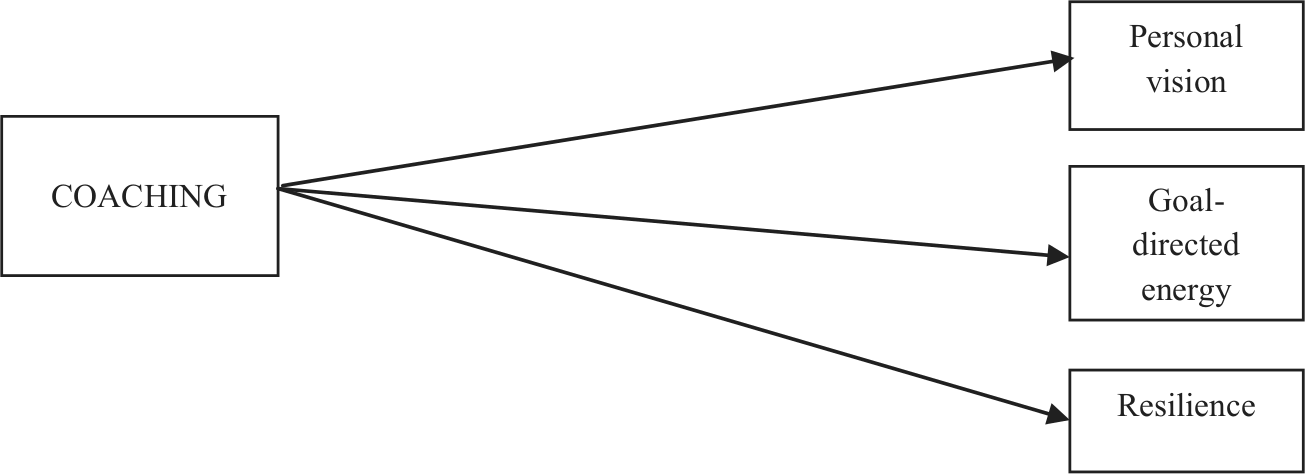
Theoretical Model 1: Direct effects of coaching on the dependent variables.

Theoretical Model 2: Moderating effect of the quality of the coaching connection.
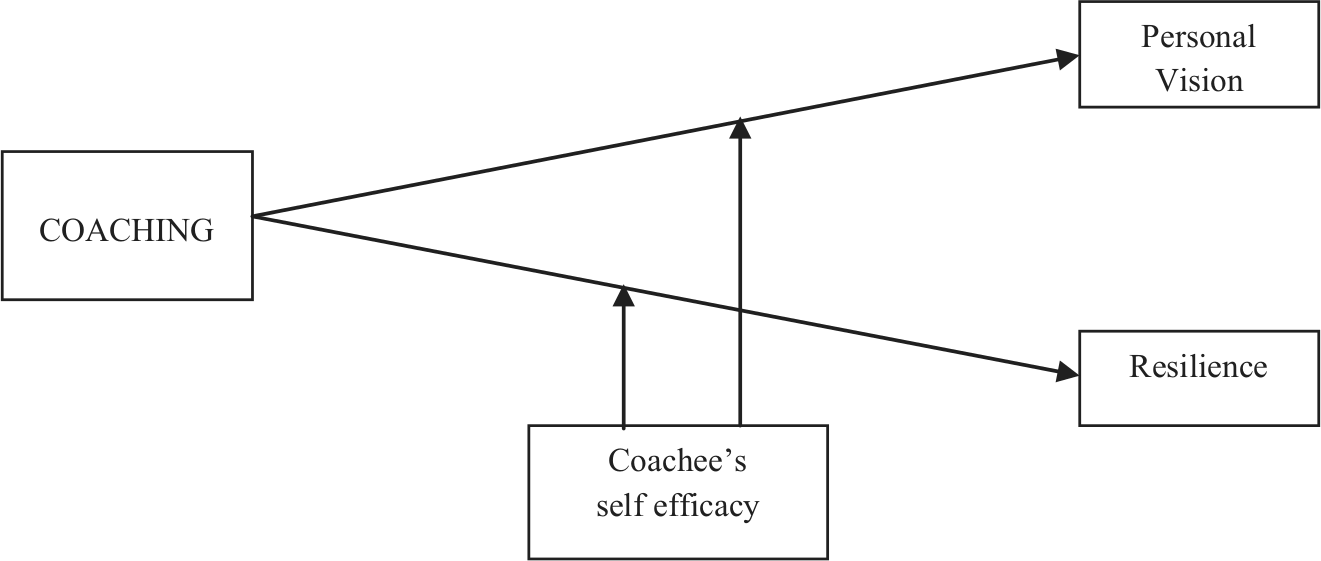
Theoretical Model 3: Moderating effect of the coachee’s self-efficacy.
Design
A pre–post design with the same individuals is powerful when there is no control group available. Each subject serves as his or her own control, and the difference between his or her pretest and posttest scores represents a stringent measure of the degree to which “real-life” program goals have been achieved (i.e., see Duckart, 1998; Gottman, McFall, & Barnett, 1969; Trochim, 1986). Furthermore, a within-subjects pre–post design was appropriate for this study given the specific characteristics of our sample, as none of the potential threats to internal validity were plausible (i.e., maturation, history, testing, and attrition). Specifically, given the average age of the participants (M = 28.9) and the short time span between pre–post measures (approximately 48 hours), maturation, and history were not likely to influence our results. To avoid the threat of testing, we collected the premeasures about 48 hours prior to the coaching session. Attrition was not likely to occur given that participation in this study was voluntary and that coaching is an essential part of the leadership development program. Therefore, students take advantage of the opportunity to engage in the coaching process as part of their growth processes. Due to the single group pre–post design, we are able to consider the whole set of personal vision or IS dimensions to aid in building a pattern-matching nonequivalent dependent variables design. Because our program consisted of only one 90-minute coaching session, our expectations were that this program may change some dimensions of the IS, such as hope, sense of purpose, holistic vision, and fun, but not others, such as deeper meaning (see Hypothesis 1e), as this may require multiple coaching sessions.
Findings
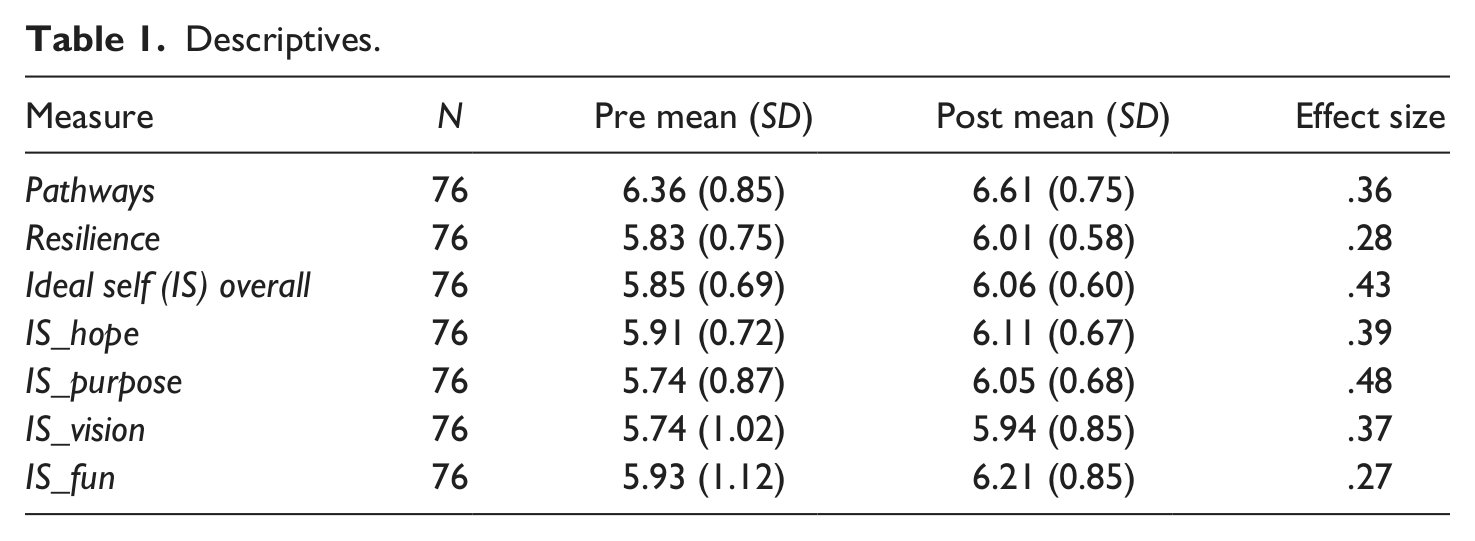
A series of paired-samples t tests were conducted to examine participant responses with regard to the three dependent variables (i.e., personal vision, goal-directed energy, and resilience). Descriptive data for these analyses are presented in Table 1 (see Descriptives). Regarding personal vision (IS), the participants endorsed a significantly greater degree of overall IS after their coaching session, t(71) = −3.35, p = .001. Specifically, the participants endorsed a significantly greater degree on four of the five dimensions that comprise IS, as follows: hope (IS Test), t(71) = −2.84, p = .006; sense of purpose, t(71) = −3.65, p < .001; holistic vision, t(71) = −2.01, p = .048; and fun, t(71) = −2.45, p = .017. As expected, the participants did not report a significant change with regard to the fifth dimension of personal vision (IS), which was deeper meaning. An analysis of goal-directed energy revealed that the participants endorsed a significantly greater degree on the pathways dimension, t(69) = −2.89, p = .005, whereas there was no significant increase with regard to the agency dimension, t(69) = −1.91, p = .061. However, this result may be considered slightly significant as our relatively small sample size may have led to a low power situation for this particular dimension. Furthermore, the participants endorsed a significantly greater degree on the resilience dimension after the coaching session, t(75) = −2.21, p = .030 (see Figure 4, for a visual representation of these changes). These results support Hypotheses 1a, 1b, 1c, 1d, 1e, 2b, and 3.
Descriptives.

Visual presentation of the pre–post changes in the dependent variables.
Furthermore, the variability for each measure decreased after the coaching session (see Table 1), which suggests that the participants more accurately evaluated the dependent variables after the coaching session. This result may be due to the participants’ familiarity with the variables from the preevaluation. These more homogenous patterns of responses suggest that some awareness process is a desirable by-product of the coaching session.
General Linear Models
To examine the effects of a single coaching session primarily focused on participant PEA (i.e., treatment) on the relevant variables, a series of 2 (Time point) × 2 (Group) split-plot (or mixed-design) analyses of variance (ANOVAs) were conducted. In all of the analyses, time point was a within-subjects variable with the following two levels: (a) precoaching and (b) postcoaching session. To examine the differential effects of the coaching session according to the participants’ self-reported perception of the quality of the connection (i.e., emotional saliency), groups were formed to aggregate the participants who reported similar quality levels (low vs. high emotional salience in the coaching connection) using the PNEA overall scores. For each of the between-subject independent variables, participants were divided into the following two groups: low (scores below the 25th percentile) and high (scores above the 75th percentile; for statistical approach justifications, see Abrahams & Alf, 1978; Borich & Godbout, 1974; Kagan, Snidman, & Arcus, 1998; Preacher, Rucker, MacCallum, & Nicewander, 2005; Torgesen, 1991). Table 2 presents the mean scores for each group included in the following 2 × 2 split-plot ANOVAs.
Pre Versus Post and Group Mean Scores for the General Linear Model Analyses.
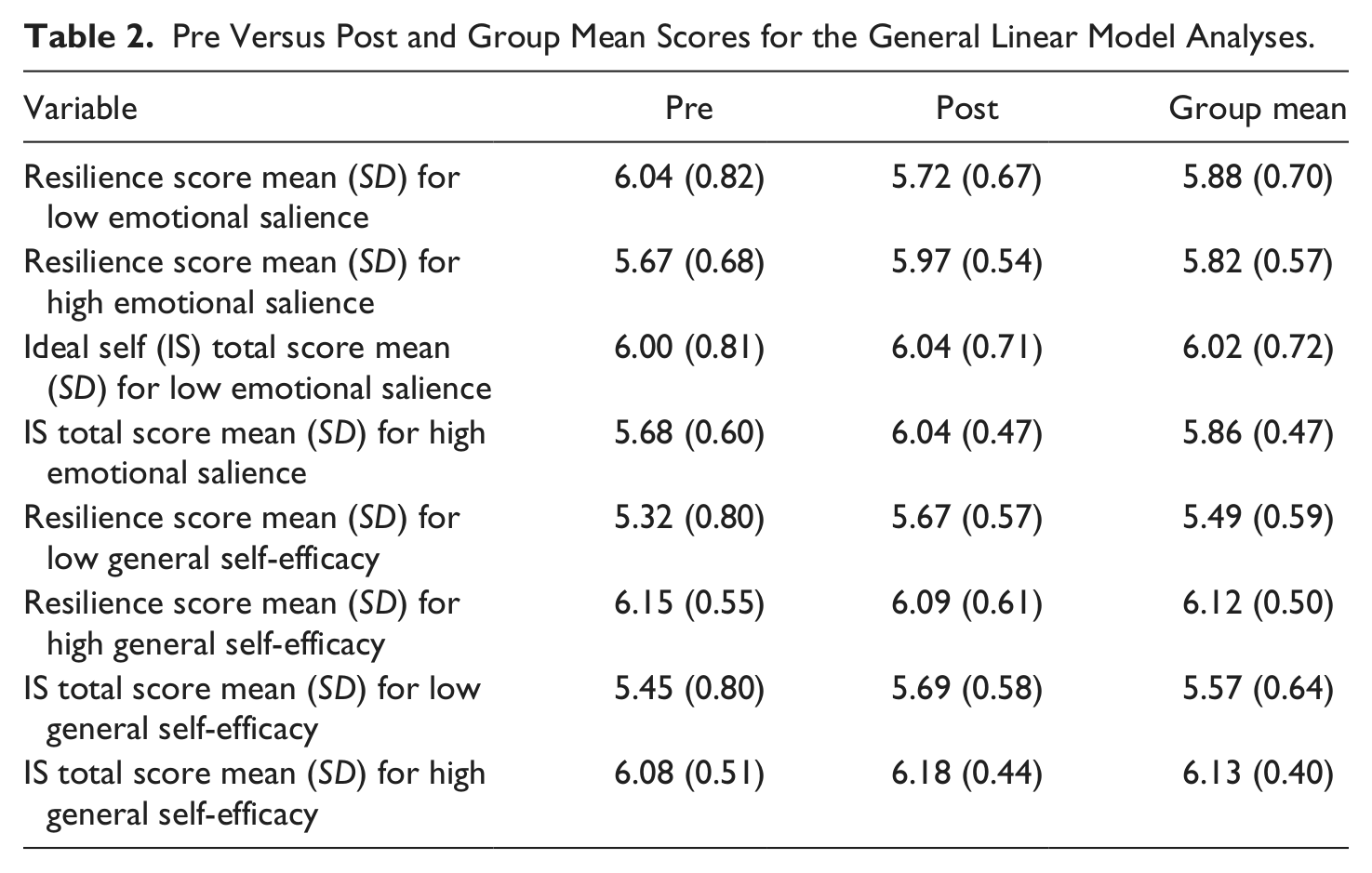
A 2 × 2 split-plot ANOVA was conducted using the resilience scale as the dependent variable and including the factors of time point (pre vs. post) and group (low vs. high emotional saliency). Neither the main effect of time point, t(35) = 0.115, p = .909, nor group, t(34) = 0.314, p = .756, was significant. Importantly, a significant interaction between time point and group was evident, F(1, 34) = 14.463, p = .001. Post hoc t tests indicated that resilience scores decreased significantly from precoaching to postcoaching session in the low emotional saliency group, t(17) = 2.549, p = .021, whereas the resilience scores increased significantly in the high emotional saliency group, t(17) = −2.889, p = .010 (see Figure 5). Thus, low emotional saliency regarding the perceived quality of the coaching connection was associated with a decrease in resilience scores after the coaching session, whereas high emotional saliency, as perceived by the coachee, was associated with an increase in resilience scores after the coaching session. Accordingly, conclusions about the effect of the coaching session related to participants’ PEA on resilience should consider the quality of the coaching session as perceived by the coachee (at least when examining the upper and lower quartiles of participants when grouped by their overall PNEA scores). Thus, Hypothesis 5a was supported.

Preresilience versus postresilience scores at the different levels of emotional salience (PNEA total score low vs. high).
A 2 × 2 split-plot ANOVA was conducted using IS Total Score as the personal vision dependent variable and including the factors of time point (pre vs. post) and group (low vs. high emotional saliency). There was a significant main effect of time point, t(34) = −2.208, p = .034. The main effect of group was insignificant, t(41) = 0.764, p = .450, and there was no significant interaction, F(1, 33) = 3.143, p = .085, as shown in Figure 6. According to this analysis, the participants who reported the quality of the coaching session as emotionally salient (high score group) showed a significant increase in their IS scores. Therefore, Hypothesis 5b was supported. Furthermore, participants who reported the quality of the coaching session as emotionally low did not show any significant increase in their IS scores (indeed, they showed a ceiling effect; see Figure 6) what might be seen as a signal of how powerful coaching was for those who did not have a clear image of their IS precoaching with regard to both the emotional saliency of the coaching experience and their personal vision construction.
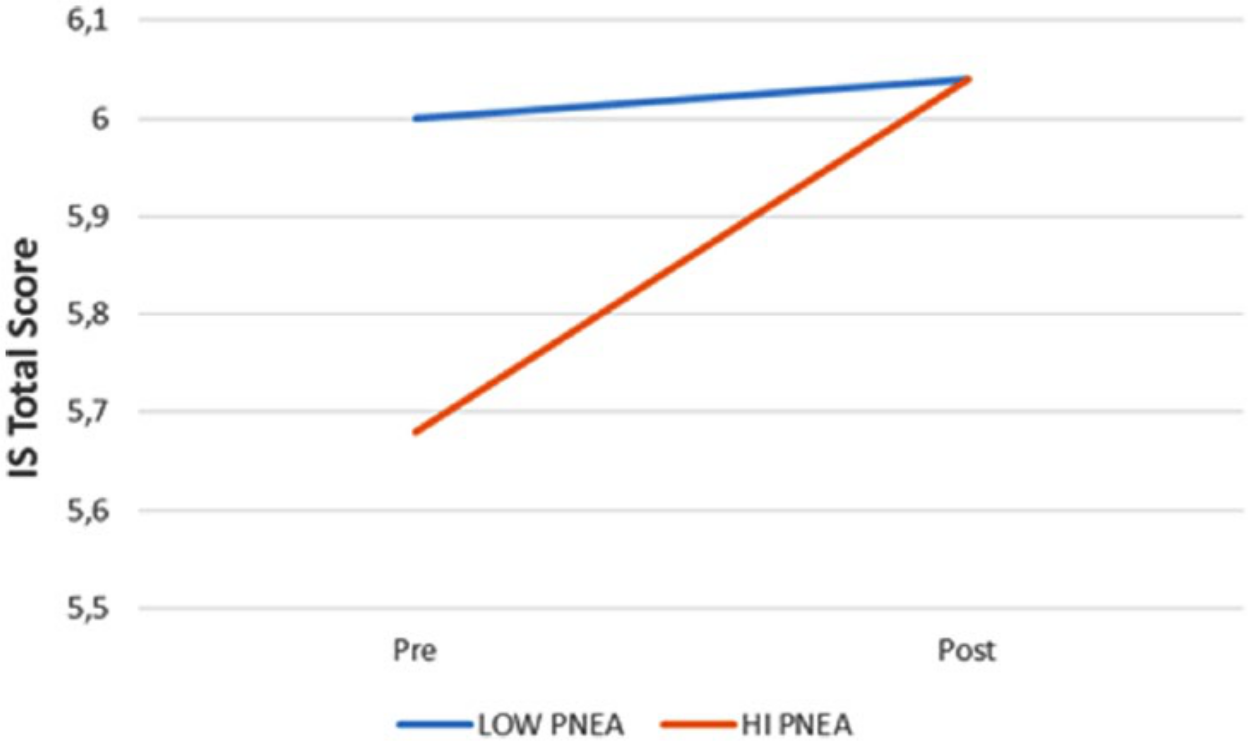
Pre- vs. post-IS total scores at the different levels of emotional salience (low vs. high emotional saliency).
A 2 × 2 split-plot ANOVA was conducted using the resilience scale as the dependent variable and including the factors of time point (pre vs. post) and group (low vs. high self-efficacy). The main effect of time point was insignificant, t(37) = −1.375, p = .177, whereas the main effect of group was significant, t(36) = −3.521, p = .001. There was no significant interaction between time point and group in this analysis, F(1, 36) = 3.668, p = .063 (see Figure 7). This analysis reveals that the high self-efficacy group scored higher on resilience than the low self-efficacy group. According to this analysis, overall (pre + post) resilience scores were significantly higher for the high self-efficacy group compared with the low self-efficacy group. Therefore, Hypothesis 4b was supported.
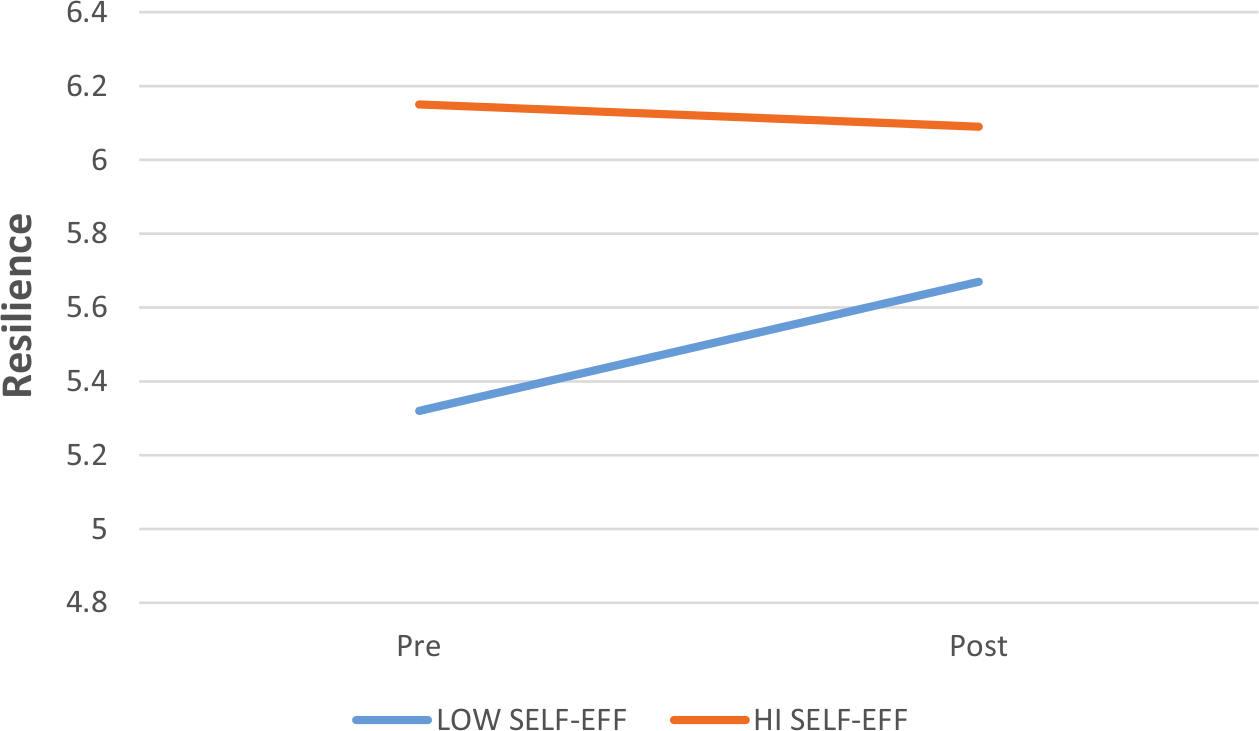
Preresilience versus postresilience at the different levels of self-efficacy (low vs. high emotional saliency).
A 2 × 2 split-plot ANOVA was conducted using IS total score as the personal vision dependent variable and including the factors of time point (pre vs. post) and group (low vs. high self-efficacy). The main effect of time point was not significant, t(34) = −1.847, p = .074, whereas the main effect of group was significant, t(33) = −3.175, p = .003. There was no significant interaction between time point and group in this analysis, F(1, 33) = 0.564, p = .458, as shown in Figure 8. This analysis reveals that the high self-efficacy group scored higher on personal vision than the low self-efficacy group after the coaching session. There was no effect of time (across the groups) and no interaction effect. According to this analysis, overall (pre + post) personal vision was significantly higher for the high self-efficacy group compared with the low self-efficacy group. Thus, Hypothesis 4a was supported.

Pre- versus post-IS total scores at the different levels of self-efficacy (low vs. high).
Discussion
This article aims to enrich the theorizing on coaching and its outcomes, with a focus on the theorizing associated with ICT-based coaching. Our study provides several theoretical contributions and bears significant potential to influence the teaching and application of effective coaching, a critical development for a professional field in which the rapid growth of practice has outpaced research. First, the results indicated a significant increase in several variables related to the participants’ cognitive-affective processing as a result of a 90-minute coaching process as part of a leadership development program. Specifically, the participants reported a significantly greater degree of personal vision comprehensiveness and strength, which was reflected in the increases in their overall IS scores. This increase was evident in four of the five dimensions related to the operationalization of the IS (i.e., hope, sense of purpose, holistic vision, and fun; with the exception of deeper meaning). Given that previous research has shown that visioning helps guide future behavior (Roffe et al., 2005) and that the effects of arousing PEA, even during a 30-minute coaching session, are substantial and enduring (Boyatzis, Jack, Cesaro, Khawaja, & Passarelli, 2010; Passarelli, 2015), we expected that the effects on personal vision reported by the participants of this study as a result of a 90-minute coaching session, could significantly enhance their developmental processes. The result that there was significantly higher scores on participants’ levels of “planning to meet goals” and on individual resilience due to coaching (Figure 4) provides specific empirical evidence with regard to the power that stimulating the IS within a safe and emotionally salient space may have on enhancing cognitive openness, flexibility, and learning processes.
In addition to the main effects of the coaching session on the IS dimensions, pathways (i.e., one of the two dimensions within goal-directed energy) and resilience, we also identified a series of moderation effects regarding the quality of the coaching connection and participants’ general self-efficacy. The quality of the session with regard to emotional salience was an important factor, as it may have a moderating effect on resilience and personal vision, with a stronger increase when high emotional saliency was reported (see Figures 5 and 6). This reflects the crucial role of creating a safe atmosphere through a high-quality connection in terms of shared vision, shared compassion, and overall positive mood (relational energy deployed through the interaction) that a skilled coach should be able to enact in every coaching process. According to our results, coachees experience greater emotional salience and stronger impacts on their cognitive-emotional processing with regard to these specified variables.
Moreover, it is important to note that the significant changes that were evident for both resilience and personal vision (reflected by participants’ overall IS scores) were also moderated by the coachees’ general self-efficacy levels. Higher levels of general self-efficacy were evident for those participants who reported higher levels of resilience and overall IS as a result of the coaching session (see Figures 7 and 8), which highlights the need for future research regarding the moderating effects on coaching outcomes.
Given that few research studies have reviewed and tested hypotheses according to an integrated, multilevel theoretical model of coaching and that there is still a lack of empirical evidence examining coaching processes that are incorporated in MBA leadership development programs, our contribution is twofold. First, we are contributing empirically to ICT as a multilevel research-based model that employs a mixed-method coaching approach with elements from the behavioral, person-centered, cognitive emotion, systems, leadership development, emotional and social intelligence, complexity, and psychoneurobiology traditions. Second, we are providing empirical evidence regarding the impact of coaching and specially in regard to elements that serve as moderators that may enhance the effectiveness of coaching as a result of a set of contingencies (such as the skill of the coach in creating an emotionally salient space, in helping the coachee to pursue a strong comprehensive personal vision, and in considering the coachee’s general perception of self-efficacy). Overall, we are contributing to shed light on the largest gap that is evident in the existing literature, which concerns the specified how dimension (i.e., coaching approaches; Segers et al., 2011).
Implications for Practice
Two goals of managerial education are to facilitate learning and leadership development processes in students and induce behavioral change (Kirkpatrick, 1996). Previous research suggests that coaching is a basic component in almost all efforts related to change and developmental processes. ICT contributes an integrated processing model for change. The practical implications of this research are vast: first, the results of this study indicate that (a) coaching individuals with predominant regard to their dreams, values, and passions (i.e., their IS) necessarily involves building a specific emotionally salient space as this has a significant positive effect on the coachees’ perception of the quality of the coaching and (b) significant emotional salience of the relational space contributes to higher levels of cognitive, perceptual, and emotional performances in the coachee (i.e., increased pathways as cognitive routes and higher vision comprehensiveness and strength), as well as achieving open and healthier states in preparation for present and future challenges (i.e., resilience), what optimally support behavior change. Second, this evidence will help shape how coaches frame coaching conversations and develop coaching relationships; help coaches understand and manage the “embodied” coaching experience, which may have strong implications for the coachee by illuminating how clients deploy their ISs more efficiently; and subsequently provide information on how to best train and develop coaches. Thus, the results of the current research should be considered when developing coaching certification programs (whose theoretical models still lack empirical evidence) by showing that there are specific ways to conduct the coaching and specific consequences. Third, (c) university management education programs should expand their platforms to support ongoing ICT research and evidence-based coaching theory building. Evidence would suggest this would help the students develop as leaders and specifically be able to increase their emotional intelligence and social intelligence competencies (Batista-Foguet, Boyatzis, Guillén, & Serlavós, 2008; Boyatzis et al., 2002).
This study addresses the paucity of research on how coaching works (Bennett, 2006; Segers et al., 2011) and adds to a growing body of evidence that supports the efficacy of ICT as a coaching framework for fostering sustained desired change (Howard, 2009; Jack et al., 2013; Passarelli, 2014, 2015; Van Oosten, 2013).
Limitations and Avenues for Future Research
The design utilized in the current study was appropriate given that it allowed for a thorough examination of the questions we posited. However, this study has a number of limitations. First, the absence of a control group decreases the current study’s internal validity. A pretest–posttest design with a control group would have been preferable. Notwithstanding, although there was no control group per se, we devised two strategies that may satisfy the desired counterfactual role. First, by utilizing a repeated-measures design, participants may be considered as their own controls (the pretest serves as the control prior to the intervention). Second, as previously discussed, we were able to utilize a pattern-matching nonequivalent dependent variables design. Therefore, given that the pre–post behavior of each IS component may be affected by the same internal validity factors (such as history or maturation) the pre–post deeper meaning factor should act like a counterfactual as it models what should have occurred with the other IS pre–post scores had the program not been provided.
Another limitation is that this study exclusively utilized self-reported measures, which are prone to bias. Alternative measurement instruments (such as expert evaluations, the coding of learning plans after coaching, and using the critical incident interview method) would be informative and may help clarify these findings in future studies. Furthermore, the use of only a single 90-minute coaching session may be perceived as a limitation, as a longitudinal perspective would provide insight regarding the sustainability of these changes over time. Yet, from a different perspective, the use of a single session could be considered as positive: If significant thought-provoking findings are evident following just one coaching session according to this specific approach, it leaves open the question of how powerful this approach would be with regard to developmental processes when applying a coaching process that included a series of multiple sessions. Furthermore, considering broaden-and-built theory (Fredrickson & Losada, 2005; Fredrickson, Tugade, Waugh, & Larkin, 2003), the personal resources accrued during states of positive emotions (as in this study by primarily working on PEA) are durable, they outlast the transient emotional states that led to their acquisition.
One next step for this type of research would be to consider each specific coach–coachee dyad as the unit of analysis. An examination of the quality of the coaching, as perceived by both the coach and the coachee (and not only from the coachee’s perspective, as reported in the present study) may shed light on the crucial elements that generate a positive feedback loop, with the inclusion of control variables such as gender and culture.
Regarding our decision to split the sample into high and low emotional saliency (according to the PNEA), we are aware that there are a number of trade-offs associated with the use of this approach (e.g., an increase in statistical power—signal enhancement—but a decrease in sample size and the applicability of the findings); however, forming these groups was an appropriate way to transform the data for a specific type of analysis that would be impossible to conduct otherwise (i.e., a split-plot ANOVA) due to the nature of the data (i.e., there are both within-subjects [i.e., time point] and between-subject factors). Yet we recognize that we have excluded information and that these groupings may not exist in such a dichotomous manner in the real world. Therefore, future research should be combined with alternative methods for analyzing the perception of the quality of the coaching connection.
Conclusion
The results of this study suggest that ICT-based coaching (as a theory-based alternative coaching that emphasizes exploration and articulation of an individual’s IS as the driver of any evolving process) significantly influences its recipients’ cognitive-emotional processing in terms of increasing clarity, awareness, comprehensiveness, and strength of personal vision; increasing capacity to generate cognitive routes or pathways; and increasing ability to face challenges and adversity (which is referred to as resilience). All of these are pillars in developmental processes (Boyatzis et al., 2006; Boyatzis et al., 2012; Fredrickson et al., 2003; Stephens et al., 2013). Beyond the statistically significant results, the average effect sizes for the coaching approach with regard to the theoretically relevant variables included in the current study reveal that it is important to deeply investigate how a coaching process primarily based on a coachee’s PEA supports building an emotionally salient coaching space (i.e., with shared vision, shared compassion, and overall positive mood). Results also revealed that the quality of the connection built by the coach, as perceived by the coachee, may indeed leverage the coachee’s cognitive-emotional processes (something that stands out as particularly relevant within a coaching that involves a holistic and developmental approach to enhancing leadership capability).
In summary, these results posit that coaching relationships marked by an overall tone of PEA play a growth-oriented role in preparing individuals emotionally and cognitively by fostering a sense of positive emotional energy or inspiration, and that this sense of energy generates a host of relational and motivational resources critical to the developmental process—given that it can move an individual to adopt a new mind-set or challenge a deeply held belief, try a new behavior, reflect more deeply, or even to make a major life change. Researchers should continue to empirically examine the critical factors that influence coaching outcomes and coaching processes, but particularly the factors that may moderate the hypothesized influence of a coaching intervention.
Footnotes
Acknowledgements
We acknowledge the decisive assistance of Dr. Eva Marco and Dr. Carlos Royo, both of them professors at ESADE Business School and collaborators at the Leadership Development Research Centre (GLEAD). We also acknowledge the coaches’ willingness to voluntarily collaborate throughout the whole process of data collection as well as the participants’ acceptance to voluntarily be part of the study.
Declaration of Conflicting Interests
The author(s) declared no potential conflicts of interest with respect to the research, authorship, and/or publication of this article.
Funding
The author(s) disclosed receipt of the following financial support for the research, authorship, and/or publication of this article: Leticia P. Mosteo acknowledges the financial support of the Spanish Ministry of Economy and Competitiveness for the Spanish National Research Project on Emotional and Social Competencies Development Program within the European Higher Education Area (EHEA) which has been developed at ESADE Business School (reference project: EDU2010-15250).