




Abstract
The tendency to resist changes is generally viewed in a negative light. In the present studies, I aim for a more balanced view and focus on the relationship between dispositional resistance to change and task performance. I demonstrate in three studies that whereas resistant individuals rate more poorly on nonroutine tasks, they outperform nonresistors on routine tasks. In Study 1, using data from 79 job applicants demonstrated, dispositional resistance to change was negatively associated with participants’ performance on nonroutine tasks and positively associated with their performance on routine tasks. These effects were replicated among 73 lab participants who performed an unstructured and dynamic nonroutine task (Study 2) and 108 participants who performed a routine and monotonous task (Study 3). The findings support a more balanced view of dispositional resistance to change, acknowledging its potential benefits for performing routine tasks, alongside its detrimental effects for performance on nonroutine tasks.
The tendency to resist change is typically viewed in negative terms (e.g., Battilana & Casciaro, 2013; Hon, Bloom, & Crant, 2014). To keep up with rapid changes in markets, technologies, and geopolitical trends, organizations are continuously required to develop and execute processes of change. As such, dispositional resistance to change, defined as a negative personal orientation toward the notion of change (Oreg, 2003), is generally viewed as an obstacle on the way to effective adaptation and improvement. Correspondingly, traits such as flexibility, openness to change, and innovation are viewed positively, and those who possess them are highly revered (Oreg & Goldenberg, 2015).
Change in organizations, however, is not ubiquitous or constant. At some point, most employees experience some degree of stability and routine in their jobs. Moreover, in many jobs, stability may be predominant, whereby the main part of the job involves performing routine, and sometimes even monotonous and mundane tasks. In these cases, individuals who are typically resistant to change, and feel more comfortable in stable and routine settings, may actually flourish, be more satisfied, and perform better than their flexible and change-ready counterparts. Based on a person–job fit perspective (Edwards, 1991; Kristof, 1996), I wish to examine the relationship between dispositional resistance to change and task performance, as a function of the type of performance that is expected.
Even beyond the context of organizational change, resistant individuals may perform more poorly than nonresistant individuals on some types of tasks, such as those that require the breaking of routines. Contrarily, when tasks are very routine, resistant individuals may actually outperform their nonresistant counterparts. It is the one-sided view of dispositional resistance to change that I wish to challenge in the present research, specifically with regard to its implications on task performance.
Dispositional Resistance to Change and Performance
My view of resistance to change in this article is as a dispositional orientation toward change (Oreg, 2003). The focus in this view is on those aspects in people’s personality that make some more likely to resist changes than others (e.g., Judge, Thoresen, Pucik, & Welbourne, 1999; Oreg, 2003). Specifically, dispositional resistance to change has been conceptualized as an individual’s personality-based inclination to resist changes (Oreg, 2003; Oreg et al., 2008). It comprises four dimensions: Routine seeking involves the degree to which people feel comfortable with and maintain routines in their lives; the emotional reactions dimension captures the degree to which imposed change elicits anxiety and discomfort; the short-term focus dimension involves the degree to which people focus on the short-term inconveniences of change versus its long-term benefits; finally, cognitive rigidity involves a form of stubbornness whereby cognitively rigid individuals find it difficult to change their opinions or attitudes. Each of these dimensions constitutes a different source of people’s negative reactions to change.
Overall, those who are high on dispositional resistance are less likely to initiate changes in their lives and tend to exhibit particularly negative reactions to changes that are imposed on them (Hon et al., 2014; Nov & Ye, 2009; Oreg, Nevo, Metzer, Leder, & Castro, 2009). The concept of dispositional resistance to change is related to, yet distinct from traits such as risk aversion (Slovic, 1972), intolerance for ambiguity (Budner, 1962), sensation seeking (Zuckerman, 1994), and openness to experience (Digman, 1990) and was specifically formulated to capture those aspects of personality that pertain to people’s orientation toward the notion of change (Oreg, 2003). Since its development, the concept has been used in numerous studies (for recent reviews of the concept, see Burnes, 2015 and Walk, 2017) and has been found useful for understanding people’s attitudes and behaviors in change contexts, above and beyond other, related, traits (Oreg, 2003).
According to the person–job fit perspective, a high fit between the attributes of individuals and those of their jobs will be positively associated with work-related outcomes such as job attitudes and job performance (Edwards, 1991; Kristof, 1996). Specifically, when individuals’ personal orientations and preferences are consistent with job attributes (also known as needs–supplies fit), performance is likely to improve (Kristof-Brown, Zimmerman, & Johnson, 2005). Accordingly, personality has been linked with task performance, such that greater fit between people’s personal attributes and those of the task generally yields better performance (e.g., Gellatly, 1996; Kamdar & Van Dyne, 2007; Matthews, Jones, & Chamberlain, 1989). More specifically, in several studies, person–job fit was directly linked with individuals’ performance (Chi & Pan, 2012; Lin, Yu, & Yi, 2014; Vogel & Feldman, 2009). In a meta-analysis of person–situation fit research, person–job fit was shown to be positively associated with performance (Kristof-Brown et al., 2005). Thus, both theory and data indicate that people tend to perform better on tasks that correspond with their personal orientations. I argue accordingly that the relationship between dispositional resistance to change and task performance will depend on the change-related attributes of the task.
Change-Related Task Attributes
I distinguish between tasks that involve low versus high levels of change. As I explain below, in low levels of change I am referring to tasks that involve a consistent and prolonged execution of the same patterns of thought and behavior. Contrarily, tasks with high levels of change are more dynamic in nature and require frequent divergences from these specific patterns of thought and behavior. This distinction corresponds with the distinction between routine and nonroutine tasks (Jehn, 1995). Routine tasks are characterized by low levels of task variability and high repetitiveness of task processes (Jehn, 1995). These tasks involve a consistent use of a given set of cognitive and behavioral schemas or scripts (Diefendorff, Richard, & Gosserand, 2006).
Contrarily, nonroutine tasks “require problem solving, have few set procedures, and have a high degree of uncertainty” (Jehn, 1995, p. 260). They involve a greater degree of complexity, do not have standard solutions and require deviating from extant scripts (De Dreu & Weingart, 2003; Diefendorff et al., 2006). Examples of nonroutine tasks therefore include tasks in which individuals are required to show flexibility in their patterns of thinking (e.g., creativity-related tasks), behaving (e.g., dynamic tasks with changing requirements), or both. Thus, there is much change over time in the types of thought processes and behavioral patterns that are required for performing nonroutine tasks and very little change in those required for performing routine tasks.
In line with the person–job fit perspective, I expect that a fit between individuals’ personal orientation toward change and the change-related attributes of their tasks, will be related to individuals’ task performance. Given that individuals who are dispositionally resistant to change prefer and seek out stable and routine settings and aim to avoid those that are dynamic, unstructured, and require continuous change and adaptation, I expect that dispositional resistance will be positively associated with performance on routine tasks and negatively associated with performance on nonroutine tasks.
Although the relationship between dispositional resistance and performance has been seldom investigated, the little research that has been conducted is restricted to performance that could be classified as nonroutine, and indeed supports a negative relationship between dispositional resistance and this form of performance (e.g., Hon et al., 2014). Specifically, I came across only one study that linked dispositional resistance to change with performance, in which the focus was on creative performance, as assessed by individuals’ team leaders (Hon et al., 2014). The performance assessed was not on a given task, but rather was leaders’ overall impressions of their subordinates’ level of creativity (e.g., a sample item with which performance was assessed was: “[this employee] suggests new ways to achieve goals or objectives”).
Such evidence is therefore consistent with the overall negative view of dispositional resistance to change, at least with regard to performance on dynamic tasks. To date, however, this negative relationship has only been demonstrated with respect to individuals’ overall nonroutine performance and not their specific performance on a nonroutine task. As a first step, I wish to replicate this relationship and extend the evidence for it to include performance on a specific nonroutine task.
Dispositional Resistance to Change and Performance on Routine Tasks
As noted above, whereas dispositional resistance is expected to yield negative relationships with performance that involves performance on nonroutine tasks, I propose that it will yield positive relationships with performance on routine tasks. In particular, the routine seeking dimension of dispositional resistance indicates that a primary reason for people’s resistance to change is their preference for routine and stable environments. The same factors that lead resistant individuals to react negatively to change situations lead them to react positively to stable and routine ones.
This is in line with some of the findings from research on the job characteristics model (Hackman & Oldham, 1976, 1980). According to the model, the positive effects of job characteristics such as task variety on employees’ motivation, satisfaction, and performance, are contingent on people’s dispositional tendencies. Depending on their personality, some individuals are less likely to seek out and benefit from increased task variety. In particular, the positive effects of task variety have been established primarily for individuals with stronger growth needs, who are oriented toward the achievement of self-expression and autonomy, rather than stability and security (e.g., O’Reilly, 1977; Orpen, 1985; Wanous, 1974).
Accordingly, individuals who are high on dispositional resistance and are therefore less oriented toward autonomy and stimulation and more toward security and stability (Oreg et al., 2008), would be less likely to benefit from enhanced job characteristics such as autonomy and task variety. Extending this line of thought, I propose that dispositional change resistors may actually benefit from tasks with limited variety and should outperform low resistors on tasks that are highly routine. This is consistent with findings from one study of sensation seeking—a disposition both conceptually and empirically (negatively) linked with dispositional resistance to change (e.g., Oreg, 2003), which was negatively associated with monotonous driving performance (Thiffault & Bergeron, 2003). Low sensation seekers showed better driving performance and were less likely to report past occurrences of falling asleep at the wheel, especially when the road environment was repetitive and monotonous. Accordingly, I expect that dispositional resistance to change will show a positive relationship with performance on routine and monotonous tasks:
To test my hypotheses, I conducted three studies, with different types of routine and nonroutine tasks, and among different populations. In Study 1, I first aim to replicate the negative relationship between dispositional resistance to change and an overall assessment of job applicants’ nonroutine performance, to support Hypothesis 1. I then retest this hypothesis in Study 2 with a specific nonroutine task among student participants. Hypothesis 2 was also tested in two studies. In Study 1 it was tested among job applicants and in Study 3 among student participants.
Study 1
Method
Participants and Procedure
Seventy-nine job applicants (42 female, 37 male) attended an assessment center at a personnel selection institute. Because performance data were not available for some of the participants, 1 70 observations remained for predicting nonroutine performance, and 71 observations for predicting routine performance. Job candidates are referred by their prospective employers to the institute, which conducts day-long assessment centers, run by 4 to 6 occupational psychologists (depending on the number of applicants that day). The positions and organizations for which the study participants were applying varied considerably and included jobs such as sales, secretaries, technicians, and customer service. Although data about the age of participants in this study were not provided by the institute, the age of the institute’s applicants typically ranges between 18 and 60 years.
The assessment center involved a series of paper-and-pencil personality and ability tests, personal interviews, and leaderless group tasks. The psychologists who run the assessment centers accompany applicants throughout the day, record their observations, and ultimately write up psychological reports in which applicants are rated on a variety of criteria (e.g., cognitive ability, social skills). Each applicant is assigned to one of the psychologists, who is responsible for writing the report about the applicant at the end of the assessment center. In addition to the standard tests that are ordinarily administered in these assessment centers, participants were also asked to fill out a measure of dispositional resistance to change. The psychologists who run the assessment center did not have access to the resistance to change test scores while preparing their reports.
Measures
Dispositional resistance to change
Dispositional resistance to change was measured with Oreg’s (2003) 17-item scale. The scale used a 6-point scale ranging from Strongly disagree (1) to Strongly agree (6). Sample items include “I’d rather do the things I’m used than try out new and different things,” “I’d rather be bored than surprised,” and “Once I’ve come to a conclusion, I’m not likely to change my mind.” The scale has been validated in a variety of contexts, in samples from more than 20 countries (e.g., May, Stewart, McCarthy, Puffer, & Ledgerwood, 2007; Oreg et al., 2008), and has consistently demonstrated high structural stability, reliability, and validity. The scale’s reliability coefficient (Cronbach’s alpha) in the present study was .79.
Nonroutine performance
The assessment center did not include a particular task that could be classified as involving nonroutine performance. Nevertheless, among the criteria on which applicants were rated, psychologists also rated the extent to which each applicant is characterized as being original. These assessments were based on the entire set of materials from the assessment center, including the personal interview, the leaderless group task, and paper-and-pencil tests, excluding the dispositional resistance to change measure. Although this form of measurement does not constitute a direct assessment of task performance, it is consistent with how nonroutine performance has been measured in previous research, (e.g., Hon et al., 2014). Originality scores in the present assessment lay on a 10 to 90 scale, with 5-point increments, ranging from Extremely low (10) to Extremely high (90).
Routine performance
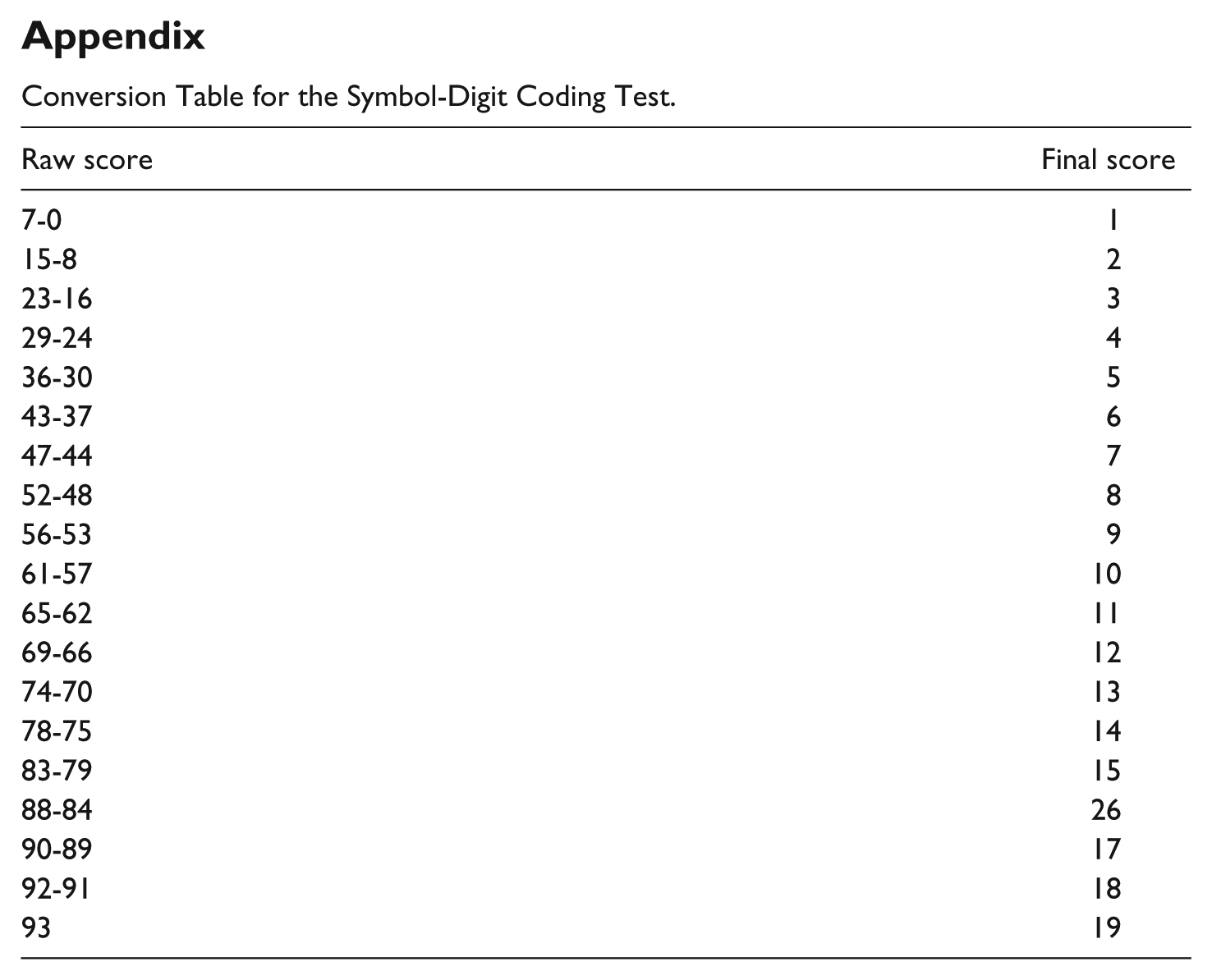
Routine performance was measured more directly, with a Digit-Symbol Coding part of the Wechsler Adult Intelligence Test–III (WAIS-III, Wechsler, 1997). The test’s most common use is as a test of visual-motor coordination, yet it also measures respondents’ ability to maintain focus and performance motivation in a routine and monotonous task. The test requires respondents to copy nine different geometric symbols that correspond to nine numbers. Participants are provided with a table, on which each symbol is paired with a number (e.g., $ = 1, @ = 2, etc.). It consists of a series of 93 symbols that participants are required to sequentially convert to numbers, based on the provided legend. The test was timed and the number of correct symbols produced in 120 seconds was recorded. Based on the instructions for scale scoring, raw scores are then converted to a final score, ranging from 1 to 19 (see the appendix).
Cognitive ability
Given the expansive work that links cognitive ability with performance, across types of tasks (e.g., Kuncel, Hezlett, & Ones, 2004; Schmidt & Hunter, 2004), it is important to control for it when using other variables to predict task performance (e.g., Farh, Seo, & Tesluk, 2012; LaHuis, Martin, & Avis, 2005). This is important both to reduce error terms and thus increase statistical power (Schwab, 2013) as well as to rule out alternative explanations for one’s findings (Klimoski & Schmidt, 1991). We therefore controlled for cognitive ability in the present study. Among the paper-and-pencil tests that are administered during the assessment center, a variation of the Raven’s matrices intelligence test (Raven, 1978, 1989) is used to assess participants’ cognitive ability. Scores on the test ranged from 1 to 9.
Results and Discussion
Descriptive statistics and correlations among study variables are presented in Table 1. In line with the hypotheses, dispositional resistance to change yielded a significant negative correlation with originality scores (r = −.24, p < .05) and a significant positive correlation with routine task performance (r = .31, p < .05). Beyond the effect of the overall trait, it is interesting to explore the relationships between performance and the subscales of dispositional resistance. As can be seen in Table 1, of the four dimensions of dispositional resistance to change, the routine seeking dimension yielded the strongest relationships with both performance measures, although it was statistically significant only with routine task performance.
Descriptive Statistics and Correlations for the Variables in Study 1 (N = 79). a
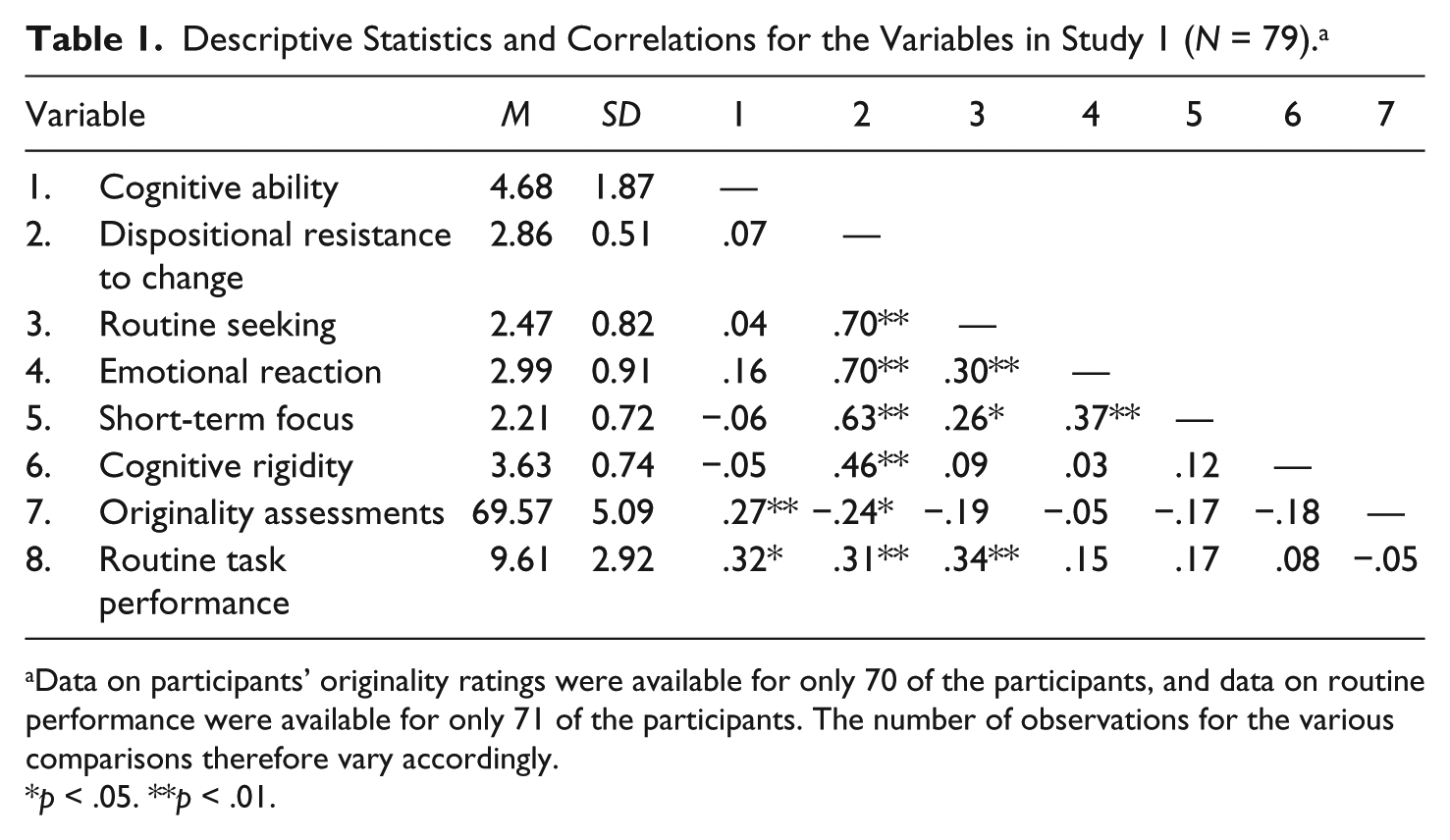
Data on participants’ originality ratings were available for only 70 of the participants, and data on routine performance were available for only 71 of the participants. The number of observations for the various comparisons therefore vary accordingly.
p < .05. **p < .01.
Multiple linear regression analyses were used to test if the hypothesized relationships hold while controlling for cognitive ability. To test Hypothesis 1, applicants’ originality ratings were regressed onto their dispositional resistance scores and cognitive ability scores. As expected, dispositional resistance retained its significant negative effect on applicants’ originality scores (β = −.26, p < .05). To test Hypothesis 2, routine task performance was regressed unto the dispositional resistance scores, while controlling for cognitive ability. Dispositional resistance to change retained its positive relationship with routine task performance (β = .30, p < .01). Similarly, further exploring the dispositional resistance subscales, the routine seeking subscale yielded a significant effect on routine task performance while controlling for cognitive ability (β = .36, p < .01). Not surprisingly, when tested alongside dispositional resistance to change, cognitive ability yielded a significant relationship for both performance outcomes (β = .28 [p < .05] for originality and β = .32 [p < .01] for routine performance).
The findings thus correspond with the hypotheses and counter a one-sided view of resistance to change as a necessarily negative, performance-hindering, characteristic. The higher an applicants’ level of dispositional resistance, in particular the dispositional preference for routines, the lower was their display of originality, but the higher was their performance on a routine task.
Although the findings support the hypotheses, the performance outcomes available for this sample were not designed with the aim of assessing routine and nonroutine performance. In particular, the fact that nonroutine performance was not assessed through performance of a specific nonroutine task, provides for only an indirect test of Hypothesis 2. I therefore conducted Studies 2 and 3, in which performance was assessed on nonroutine (Study 2) and routine (Study 3) tasks, designed specifically for testing the hypotheses.
Study 2
Method
Participants and Procedure
Seventy-three undergraduate students at an Israeli university participated in the study in return for class credit or a monetary reward worth US$8.00. Participants included 31 women and 42 men. The average participant age was 23.56 years (SD = 1.97). The measurement of participants’ dispositional resistance to change and task performance took place in two steps, two weeks apart. In Step 1, participants were asked to fill out a short questionnaire, which included questions about their demographics and the dispositional resistance to change scale. Approximately two weeks later they were invited to the lab to perform a nonroutine task (see description below).
Measures
Dispositional resistance to change
Dispositional resistance to change was measured using the same scale used in Study 1. The scale’s internal reliability in the present study was .81.
Nonroutine performance
Nonroutine performance was assessed using a task that was designed to meet the criteria of nonroutine tasks (Jehn, 1995). Specifically, the task was to require problem solving, have few set procedures, and have a high degree of uncertainty. The performance session therefore involved a combination of two subtasks, which alternated to contribute to the nonroutine and dynamic nature of the overall task. The first was an in-basket exercise. Participants were told they would be playing the role of an employee in an accounting firm. Each participant was given a set of 50 letters, addressed to the accounting firm, and was asked to rank order the letters based on their degree of urgency. Participants were given 15 minutes to complete the task. The letters provided were fictitious and were designed so that there was a correct ordering of urgency levels and so that no accounting background was required for performing the task. Similar in-basket tasks have been used in previous studies and are known to be particularly unstructured and dynamic (e.g., Davidson, Slotnick, & Waldman, 2000; Gill, 1979). Participant ratings were compared with the correct ordering and were scored based on the number of correctly ranked letters.
Half-way through their performance, participants were asked to put the in-basket task on hold, until completing a different subtask. This second task was a brainstorming creativity task, in which participants are asked to come up with as many uses as they can for a sheet of paper. Like the in-basket task, this task is often used as an unstructured, dynamic, and nonroutine task (e.g., Guilford, 1975; Porath & Erez, 2009). The number of uses produced constitutes the participant’s score. After completion of the brainstorming task, participants were asked to return to the in-basket task and complete it. Nonroutine performance was then assessed on their overarching performance during the session by calculating the average score on the two tasks. Because of the different scales used for each task, subtask scores were standardized before calculating the nonroutine performance score.
Cognitive ability
As in Study 1, cognitive ability was assessed as a control variable. In this case, it was assessed through participants’ reported scores on the standardized test used for university admission in Israel (equivalent to Scholastic Aptitude Test [SAT] scores). Scores of such psychometric exams have been shown to constitute a close proxy for general cognitive ability (e.g., Beaujean et al., 2004; Frey & Detterman, 2004) and self-reports of SAT scores have been found to closely match official records of these scores (Cassady, 2001; Noftle & Robins, 2007).
Results and Discussion
Descriptive statistics and correlations among study variables are presented in Table 2. The relationship between dispositional resistance to change and nonroutine performance was negative and marginally significant (r = −.22, p = .07). As in Study 1, the subscale with which nonroutine performance was most strongly related was routine seeking, with which the relationship was statistically significant (r = −.32, p < .01). These relationships maintained their levels of significance in regression analyses, controlling for cognitive ability, for both the overall dispositional resistance score (β = −.23, p = .07) and the routine seeking subscale (β= −.32, p < .01).
Descriptive Statistics and Correlations for the Variables in Study 2 (N = 73).
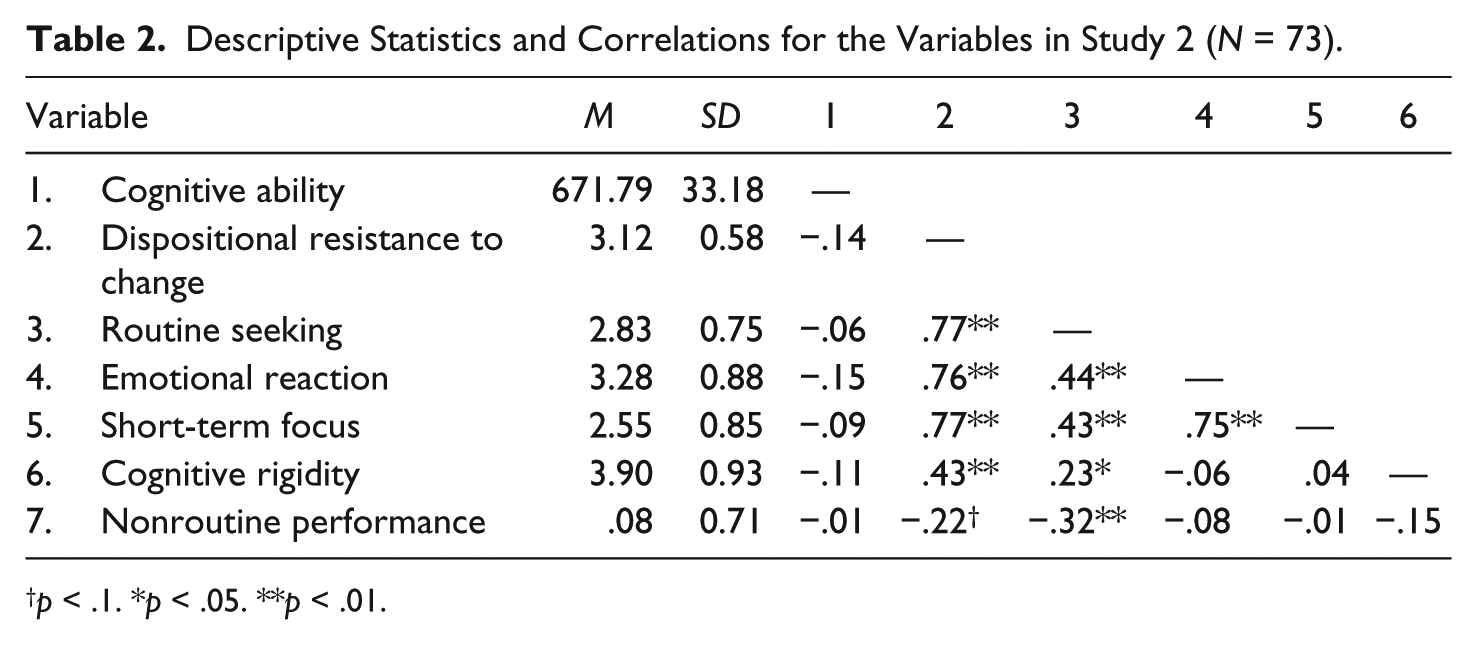
p < .1. *p < .05. **p < .01.
Like the findings in Study 1, the findings in this study correspond with the negative relationship resistance to change has been said to have with performance. In the present case, the evidence for the relationship is with performance on an unstructured and dynamic task. Furthermore, as in Study 1, individuals’ personal preference for routines seems to be the most meaningful predictor of this kind of performance. This finding thus provides further evidence for the negative implications of resistance to change and explicitly for the negative implications of dispositional resistance on nonroutine task performance. I proceed in Study 3 to replicate the the positive effect found in Study 1 of the dispositional resistance to change and performance on a routine task.
Study 3
Method
Participants and Procedure
A total of 108 undergraduate students at another Israeli university (70 female and 38 male) participated in the study in return for a monetary reward worth US$15.00. In addition, to increase participants’ engagement in the task, participants could participate in a lottery for the chance of winning one of two monetary rewards, one worth $25 and the other $75, to be awarded to the two top performing participants. Participants’ mean age was 23.43 years (SD = 3.58). Participants were invited to the lab, where they performed a computerized task. Before beginning the task, they filled out the dispositional resistance to change scale and answered questions about their demographics. They then performed a routine task (see below) that lasted approximately 20 minutes.
Measures
Dispositional resistance to change
Dispositional resistance to change was measured using the same scale used in Study 1. The scale’s internal reliability in the present study was .86.
Routine performance
Routine performance was assessed with a task devised to meet with the criteria of routine tasks—low levels of task variability and high repetitiveness of task processes. The task devised was a mail-sorting task, consisting of a long series of postal codes that appeared on the screen, one at a time, which participants were required to sort based on a conversion chart that was provided. The chart appeared on the top of the screen, and remained there, unchanged, throughout the task. Postal codes were to be sorted into one of six possible cities. Their names and corresponding numbers (1-6) appeared on the bottom of the screen (see Figure 1). Sorting was performed by pressing the number key that corresponds with the number of the designated city. The postal codes to be sorted were presented in the center of the computer screen. Pressing one of the number keys resulted in the provision of response feedback—a green checkmark when the response was correct, and a red X when it was incorrect, followed by the next postal code to appear in the center of the screen. Participants were asked to sort postal codes as quickly and with as few mistakes as possible. Before beginning the task, participants were given six practice postal codes to sort, after which the main part of the task began, which included 200 postal codes. Each participant’s average response time throughout the task, after removing erroneous responses, constituted his or her routine performance score.

Demo of computer screen during the routine task in Study 3.
Cognitive ability
Cognitive ability was assessed in this study as it was in Study 2, through participants’ reported scores on the SAT-equivalent test used for university admission in Israel.
Results and Discussion
Descriptive statistics and correlations among study variables are presented in Table 3. Because performance in this study was assessed through participants’ average response times, and because larger response times represent poorer performance, the signs of the correlation and regression coefficients were reversed before entering them here, so that larger values of performance represent better performance. As hypothesized, the relationship between dispositional resistance to change and routine performance was positive and significant (r = .19, p = .05). Consistent with Study 1, the routine seeking subscale as well was significantly related to routine performance (r = .19, p < .05). In addition to routine seeking, however, the short-term focus subscale was also positively related to routine performance, with an even stronger effect (r = .29, p < .01).
Descriptive Statistics and Correlations for the Variables in Study 3 (N = 108).

p ≤ .05. **p < .01.
Performance scores are average response times in seconds, such that larger values represent poorer performance. To avoid confusion, correlation coefficient signs of the relationships with routine performance were reversed before entering them into the table, such that positive correlations represent associations with increases in performance.
All of these effects remained significant in regression analyses, controlling for cognitive ability (β = .20, p < .05, for dispositional resistance; β =.21, p < .05, for routine seeking; and β = .26, p < .01, for short-term focus). In addition to the hypothesized effects, cognitive ability also yielded a significant effect (r = .35, p < .01). This corresponds with a similar effect found in Study 1 (although was, oddly, not replicated in Study 2) and is not surprising given the well-established relationship between cognitive ability and performance, across task types (Schmidt & Hunter, 2004).
These findings further substantiate the findings of Study 1 and demonstrate the positive effects that dispositional resistance to change can have on performance, in the context of routine tasks. In particular, the routine seeking subscale, which captures individuals’ preference for, and comfort with routines, is consistent in predicting this type of performance. Beyond this effect, the significant effect of the short-term focus subscale suggests that, at least with respect to the particular mail-sorting task used in this study, the degree to which individuals focus on the short-term aspects of change may be beneficial when performing monotonous tasks. 2 When tasks are monotonous and tedious, and in particular when the overarching goal for which they are performed is not apparent, it may be difficult to maintain focus and motivation while seeking a long-term purpose. In such cases it may be better for performance to simply focus on the task at hand, which comes more naturally to those with a dispositional short-term focus. I propose this, however, tentatively and additional studies will be necessary for determining the robustness of this effect.
General Discussion
My aim in this research was to counter the one-sided view of resistance to change as necessarily detrimental. Focusing on the relationship between dispositional resistance to change and performance, I set out to demonstrate that whereas resistance may be detrimental for dealing with many aspects of organizational change, including performance on unstructured, dynamic, and nonroutine tasks, it can be beneficial to performance on routine and monotonous tasks. Results of the three studies described provide support for this notion among different populations and using different types of routine and nonroutine tasks.
Overall, dispositional resistance to change was negatively associated with individuals’ performance on nonroutine tasks and positively associated with their performance on routine tasks. Thus, the performance of those who typically hold a negative orientation toward the notion of change, who feel uncomfortable when changes are introduced and are generally disinclined to initiate and adopt changes in their lives, may suffer when performance requires nonroutine responses or adjusting to dynamic settings, but may actually be advantageous when working conditions or requirements involve stability and routines. This is in line with research on the implications of person–job fit on performance (e.g., Kristof-Brown et al., 2005), which highlights the differential relationships between person factors and performance as a function of the nature of one’s job. The fact that the effects were obtained with both students in the lab and job applicants in the field provides some evidence for their robustness. The trait’s effects ranged from r = |.19| to |.31| and are comparable to the effects of personality on performance in other contexts (Barrick, Mount, & Judge, 2001).
When comparing the effects of the overall construct of dispositional resistance to those of its dimensions, only the overall concept was significant across all the relationships tested. This is similar to other cases in which broad personality constructs yield stronger effects than the effects of the components that comprise them, as addressed in discussions of the bandwidth-fidelity dilemma (e.g., Ones & Viswesvaran, 1996). It suggests that it is the aggregation of the trait’s dimensions that contributes to the trait’s effects, rather than either of the specific components.
Nevertheless, among the dimensions of dispositional resistance, relationships were most consistent for the routine seeking dimension of dispositional resistance, highlighting the potential disadvantages and advantages of individuals’ preference for and comfort with routines. This can be expected considering that the main attribute of the tasks tested in these studies had to do with the degree to which they are routine or require routine responses. One could expect that the other dimensions of dispositional resistance to change would be more relevant for other types of tasks. For example, the emotional-reaction dimension has to do with the degree of anxiety individuals experience in the context of change. Accordingly, this dimension may have a more prominent effect on the performance of routine and dynamic tasks in which emotions are involved, such as those involving customer service. Contrarily, the cognitive rigidity dimension constitutes a form of stubbornness and has to do with the degree to which individuals hold on to their views over time and across situations. As such, this dimension would be expected to be negatively related to performance on tasks that require flexibility in one’s viewpoint, as in negotiation contexts, and positively related to performance that requires decisiveness, especially when under time pressure.
The findings of these studies extend the literature in a number of ways. First, they join and bolster the growing criticism of the prochange perspective that characterizes much of the organizational literature in general and the change literature in particular (e.g., Palmer & Dunford, 2008; Sturdy & Grey, 2003). The widespread assumption is that change is good, and thus resistance to it is bad. A growing number of researchers and practitioners, however, are questioning these assumptions and acknowledging the benefits, and often importance, of resistance to change (Dent & Goldberg, 1999; Ford, Ford, & D’Amelio, 2008). In the present research I provide further support for this more balanced view of resistance.
Second, the present findings correspond with a person–situation perspective (Mischel, 1977), whereby the implications of personality on outcomes depend on the particular context within which people perform. This has been demonstrated in several contexts, including ethical decision making (e.g., Trevino, 1986), helping behavior (e.g., Graziano, Habashi, Sheese, & Tobin, 2007), contributions to open-source initiatives (Oreg & Nov, 2008), and leadership (e.g., Oreg & Berson, 2015). This perspective has also been demonstrated for explaining job performance across management jobs that involve more or less autonomy (e.g., Barrick & Mount, 1993). The present work extends this perspective by demonstrating the differential relationships between personality and performance across tasks that involve more versus less routine.
Third, although dispositional resistance to change has been linked with many outcomes (e.g., Nov & Ye, 2009; Oreg, 2006; Oreg & Sverdlik, 2011), most of these have been attitudinal and were measured with self-report questionnaires. By demonstrating relationships with actual performance, this research highlights the value of the dispositional resistance to change concept and provides additional, important, evidence for the validity of its measurement scale.
From a more practical perspective, the present findings have implications for personnel selection and placement. Despite the negative connotation that resistance to change involves, the present findings highlight the advantages it holds when performing routine tasks. As such, selection and placement decision makers should set aside any prochange bias they may have and consider these advantages when the job at hand involves a significant degree of routine. The other side to applying these findings involves the design of people’s tasks and jobs. Corresponding with applications of the job characteristics model (Hackman & Oldham, 1976, 1980), whenever possible, tasks should be designed to involve more or less routine, as a function of the predispositions of those due to perform them. As the results of the present studies suggest, the key assumption that variety increases motivation may be less valid for individuals who are dispositionally resistant to change.
Limitations and Future Research
Despite the fact that this research includes a number of studies, with data from both students in the lab and job candidates in a selection context, the external validity of the findings is still restricted by not including actual workers. Although there is not much reason to believe that performance on routine and nonroutine tasks in an actual work setting would be substantially different from the type of performance assessed here, this is nevertheless an empirical question for which field data would be required to answer it.
Related to this is the fact that the time given for performing tasks in the present studies was limited, offering participants a relatively short amount of time for routines to form. Tasks in actual workplaces are conducted day after day, for many hours each day, which allows for a much more substantial routinization of tasks. This, on the one hand, suggests that even the routine tasks in the present studies may have yet to become fully routinized, in which case the performance advantage of dispositional change resistors in routine tasks could be even more pronounced in actual work settings than it was in the present studies. On the other hand, it is also possible that even nonroutine tasks may become somewhat routinized with enough time (Ohly, 2006), forming some degree of structure and continuity, alongside some degree of fluidity (Brown & Eisenhardt, 1997). If so, the performance advantages of low change resistors in nonroutine tasks may gradually dissipate. Future research can consider the role of time in moderating the effects of dispositional resistance to change on performance of routine and nonroutine tasks.
In addition, the types of tasks sampled in these studies vary across studies, in particular with respect to nonroutine performance. Whereas the measurement of nonroutine performance in Study 1 relied on an overall assessment of individuals’ originality and creativity, the measure in Study 2 involved performance and a specific combination of unstructured tasks. This makes it less clear as to which types of performance the findings could be generalized, but at the same time extends the relevance of these findings to a wider range of performance types. Furthermore, given that the negative implications of dispositional resistance to change constitute the backdrop against which this research was developed, this lack of consistency across the nonroutine task types, on which dispositional resistance to change had the expected negative effects, may be of less consequence. Some evidence for the negative relationship between dispositional resistance to change and nonroutine performance was already available, and my primary goal was to demonstrate the positive relationships that could exist with other types of performance. Certainly, future research could further examine the degree to which these findings could be generalized to other forms of routine and nonroutine tasks.
Future research could also consider additional personality predictors of performance on routine and nonroutine tasks. Certainly there are other personality dispositions that may show similar patterns of relationships such as that shown for dispositional resistance to change, including sensation seeking, tolerance for ambiguity, and openness to experience. Sensation seeking, for example, captures the degree to which individuals seek out thrills, tolerance for ambiguity captures the degree of uneasiness that people experience in unstructured environments, and openness to experience captures aspects of individuals’ cognitive flexibility. All these elements are relevant for explaining individuals’ performance of routine and nonroutine tasks. Yet each of these traits captures only a subset of the change-related elements in such tasks, whereas dispositional resistance to change more directly captures their combination.
Accordingly, dispositional resistance to change has been shown to predict responses to other forms of change above and beyond these other traits (e.g., Oreg, 2003). It nevertheless remains an empirical question whether and to what degree the trait shows incremental validity, beyond other traits, in predicting performance. Given the very limited amount of personality research aimed at differentially predicting performance on routine and nonroutine tasks, demonstrating the effects of dispositional resistance to change was an important first step.
Footnotes
Appendix
Conversion Table for the Symbol-Digit Coding Test.
| Raw score | Final score |
|---|---|
| 7-0 | 1 |
| 15-8 | 2 |
| 23-16 | 3 |
| 29-24 | 4 |
| 36-30 | 5 |
| 43-37 | 6 |
| 47-44 | 7 |
| 52-48 | 8 |
| 56-53 | 9 |
| 61-57 | 10 |
| 65-62 | 11 |
| 69-66 | 12 |
| 74-70 | 13 |
| 78-75 | 14 |
| 83-79 | 15 |
| 88-84 | 26 |
| 90-89 | 17 |
| 92-91 | 18 |
| 93 | 19 |
Acknowledgements
The author would like to thank Avi Sander for writing the mail-sorting task program used in Study 3, Naftali Leder and Dotan Castro for their assistance in collecting the data for Study 1. He would also thank Noga Sverdlik for helpful comments on an earlier version of this manuscript.
Declaration of Conflicting Interests
The author(s) declared no potential conflicts of interest with respect to the research, authorship, and/or publication of this article.
Funding
The author(s) received no financial support for the research, authorship, and/or publication of this article.