



Abstract
The study examined the association between transformational leadership and organizational identification of employees. The relationship between transformational leadership and psychological empowerment and the possible mediating role of psychological empowerment in the relationship between transformational leadership and organizational identification of employees was also studied. A hypothesized model was developed to examine the relationship between the constructs. Sample for the study comprised 199 employees from the IT sector. Instruments used were Multi-factor Leadership Questionnaire, Smidts et al.’s (2001) Organizational Identification Questionnaire and Spreitzer’s (1995) Psychological Empowerment Questionnaire. Data were analyzed using SPSS and structural equation modeling in AMOS. It was indicated that transformational leadership had positive and significant impact on organizational identification as well as psychological empowerment of employees. Psychological empowerment acting as a mediator between these two constructs was established. It was found that the developed model would pave way for more attention toward psychological empowerment among leaders and employees in organization.
Keywords
Introduction
The achievement of an employee career and organizational fate are based on the competence of leader’s activities (Lussier & Achua, 2009). In particular, leadership is viewed as main aspect for organizational success. Many investigators have stated that leadership is considered as crucial ingredient in majority of the organizational studies (Denis et al., 2010; Lussier & Achua, 2013; Probert & James, 2011). On the other hand, Kuchler (2008) declared that both failure and success of an organization relies on the capacity of leadership.
According to Allen et al. (2009) and Ghapanchi and Aurum (2011), information technology (IT) is an energetic and important part of each business concern. IT employees with organization-oriented skills and knowledge are obtained through training and experience. Such professionals are seen as human capital and intellectual assets for delivering a rapid promotion in commercial competitiveness which extends beyond the business operations. The capacity for capitalizing such assets is minimized when professionals in the IT are not satisfied with their surroundings and lose hopes to reach goal effectively. Their dedication level would reduce and they would leave the concern. For protecting such assets, these kinds of professionals have to work in positive environment which have impact on behavior and attitudes in the organization. Thus good leadership skills are required to enhance job performance. Satisfaction is correlated with the OI (organizational identification) stated by Knight and Haslam (2010). OI focus on self-perception of an individual on how they merge as one within the organization, which shows self-being of an individual is considered as main referent (Knippenberg & Sleebos, 2006). In the OI process, for determining their identity in the organization, subordinates choose what they trust are main characteristics of their organization. Subordinates believe themselves by similar organizational characteristics, which means they work based on common qualities seen among other members.
Cultures in the organization are contextual factors which have high impact on effectiveness and development of leadership in the settings of the organization. In particular, they emerge and transformed by different departments and divisions. Most vital characteristic of organizational leadership is to affect the behavioral, beliefs, and value expectations which is held by members of organizations, and thus leaders put more input toward the change, maintenance, and development of cultures in the organization (Berson et al., 2008; Hartnell & Walumbwa, 2011; Xenikou & Simosi, 2006). At the same time, Albion and Gagliardi (2007) pointed out that it is a complicated job to manage individual who are ethnically, psychologically, unique from others. In addition to that, leadership is a connection that makes individuals to work jointly. Nowadays organizations are fully focused toward enhancement, growth, and understanding of their leadership. Transformational leadership (TL) is a contemporary perspective toward leadership.
Mwangi and Kwasira (2015) highlighted that transformational leader’s change alter the organizational culture by stimulating a logic of mission and reason on importance of teamwork and inspiring new ways of thinking and solving the problem. This motivates workers in the company to function better. TL has an impact on main attitudes and assumptions of organizational members to develop a general mentality for achieving the objectives and goals of the organization. TL shows higher efficiency when compared with other styles of leadership.
Yukl (2006) pointed out that application of TL style will enhance performance since TL expands knowledge and potential of an employee. Leader with TL gives confidence and chance to his followers for performing the duties based on his mind-set for achieving goals in the organization. Similar to that, TL style is one of styles in leadership that highlights on contract between subordinates and leaders. TL also encourages and controls subordinates by giving recognition with specific performance. Behaviors of TL include innovative behavior and intellectual stimulation (IS) like recommending new ways for solving issues and various angles for addressing problems (Gong et al., 2009; Shin & Zhou, 2007). According to Suharto dan Cahyo (2005), the most common TL behaviors executed would bring positive and significant impact on improving the PE (psychological empowerment) quality of employees. Transformational leader gets focus on individual can direct organizational mission and vision, innovating new ways for working effectively and giving motivational support.
Numerous researchers and research scholars have investigated about the TL style and their performance. Wang et al. (2011) reviewed about the TL and performance across criteria and levels. Henker et al. (2015) studied about the TL and employee creativity and also reviewed the promotion focus and engagement of creative process. In particular, TL and social identity as predicators of perceived care quality, team climate, turnover intention, and burnout among nurses (C. Cheng et al., 2016). Apart from these, Jha (2014) also investigated the TL and PE and also studied the determinants of citizenship behavior in organization. Moreover, there are researchers who focused on TL and knowledge sharing and also discussed about the mediating role of employees citizenship, commitment, and empowerment (Han et al, 2016). In addition to these, there are also studies that focus on relationship between TL, organizational commitment, and empowerment. Ibrahim et al. (2015) highlighted impact of PE and TL on organizational commitment. This research examines about the relationship between TL, PE, and OI with respect to the IT sector in India.
This study also reviews the components of TL, PE, and OI with specific reference to the IT sector in India.
Theoretical Framework and Hypothesis Development
TL and OI
Numerous scholars and researchers (M.-Y. Cheng & Wang, 2015; Epitropaki & Martin, 2005; Zhu et al., 2015) have proved that there is positive relationship between styles of leadership and OI. OI of employees was identified to be positively correlated with a number of styles in leadership namely transformational, paternalistic, transactional, and ethical. TL and transactional contingent reward are interdependent leadership forms that perform through various methods for facilitating the growth of positive attitudes among employees as well as enhancing effective performance (Wang et al., 2011), and it have a positive effect on cognitive identification in the organization (Henker et al., 2015).
Components of TL in organization are as follows: in the idealized influence, leaders are considered as a role model (Moss & Ritossa, 2007) and such type of leaders are reliable, admired and valued; followers recognize and follow their leaders as stated by Bass et al. (2003). Inspirational motivation, here leaders support employees by examining the future by confidence (Antonakis et al., 2003) and perform innovatively (Limsila & Ogunlana, 2008) as well as solve organizational issues with new perspective (Judge & Piccolo, 2004). Yukl (2006) argued that in the individualized consideration, leaders give coaching, encouragement and support to followers. In the IS, leaders hear cautiously to individual desires of followers and hand over few tasks to assist followers to expand through personal issues (Bass et al., 2003; C. Cheng et al., 2016; Northouse, 2007).
Moriano et al. (2014) proved that TL has a positive effect on workers behavior toward intrapreneurship; at the same time, transactional leadership have negative impact. Such impacts are identified to be partially mediated by OI. Liu et al. (2010) summarized that OI mediated the link between TL and behavior of voice. It was added by Çeri-Booms (2012), which trust in behaviors of leaders who mediates the link between OI and TL. It was also noted that exchange of leader and follower mediates the link between relational identification and TL (Carmeli et al., 2011). Also TL establishes a supportive work environment to harness employees’ skills and also help in solving various work challenges (Bose & Patnaik, 2015). This develops a positive feeling in the employees and they feel a sense of pride and belongingness for the organization thus enhancing their identification with the organization.
TL and PE
As stated by Lan and Chong (2015), transformational leaders support individuals toward charisma, visionary motivation, individualized consideration, and moral modelling. Theory of PE recommends that transformational leaders are significant supporters toward empowerment of an employee. This kind of leaders put effort toward achieving the firm’s success and encourages employees to grow toward the goals of individual and organization as cited in Spreitzer (2008). Numerous investigators have examined about the relationship between TL and PE (Afsar et al., 2014; Han et al., 2016; Ibrahim et al., 2015; Ismail et al., 2011; Jha, 2014; Krishnan, 2012; Lee et al., 2013; Sagnak et al., 2015; Sun et al., 2012) and found out that TL has a significant and positive relationship with PE. Employee empowerment is modern practice that is adopted by leaders for increasing productivity through development of commitment among employee with respect to organization.
Components of PE are self-determination, competence, meaning, and impact. Self-determination is a control of an individual over the behavior in which task is completed and associated with cognition of choice (Kitayama & Cohen, 2010). Competence is the ability of an employee for performing job performances with skill and it also explained that competence is scale to which an individual could carry out the job performances skilfully with their abilities (Kara, 2012). Impact is considered as scale in which an employee could impact administrative, strategic, and operating results at job. Meaningfulness is the degree in which an employee beliefs that their work is significant to them (Thomas & Velthouse, 1990).
Attari (2013) studied about the impact of TL on employees’ PE. It was found out that there is strong effect on TL toward employees’ PE and its dimensions namely impact, competence, meaning, and self-determination. It was pointed out by Hechanova et al. (2006), Avolio et al. (2004), and Laschinger et al. (2004) that TL is positively linked with work attitudes of the employees and verified that partial role of PE (Li et al., 2006) mediates the link between TL and work attitudes of the employee (Lan & Chong, 2015).
Prabhakar (2005) established that true leaders instil a sense of confidence among their employees, thus enhancing their self-determination. This helps the employees act more than their expectations. Transformational leaders also empower their employees by modifying the ways they work (Bowler, 2006). This increases the morale of the employees thus boosting up their confidence levels (Bose & Patnaik, 2015). This results in the employees feeling confident and psychologically empowered.
The Mediating Role of PE Between TL and OI
Leadership plays a vital role in developing commitment to the organizational aspirations by empowering their employees (Yukl, 2010). Employees who are more empowered tend to be more loyal to the organization (Wang & Lee, 2009). Ashforth et al. (2008) proclaimed that the transformational leaders’ confidence and passion could develop spirit among team members and give sense and challenge subordinates’ jobs, improving subordinates’ feelings of effect, autonomy, competence, and meaning linked with PE. Such factors make organization members to feel pride as they are also part of their concern and also maximize their identification in the concern. Transformational leaders offer subordinates with high chance for responsibility, decision opportunity, and challenge that implies subordinates to feel more significant and secure and thus empower the employee psychologically. Empowered employees develop a sense of meaningfulness and feel pride in being a member of the organization, this results in having a greater identification with the organization (Wang & Lee, 2009).
This assists the subordinates to fulfil the requirement for affiliation within the concern by maximizing their self-esteem that would improve their OI (Sosik & Jung, 2010). Patchen (1970) have listed the components of OI, which are shared characteristics, solidarity, and support. Many of the OI are explained with respect to commitment in the organization that involves affective component or moral and emotional element (Harris & Cameron, 2005; Lopes, 2002) and cognitive constructs (Shamir & Kark, 2004).
Zhu et al. (2012) identified that followers’ PE composes meaning, competence, self-determination, and impact, partially mediated the impact of TL and active TL on followers’ OI. Followers’ OI are highly significant for their job attitudes like commitment in the organization and for other measures of work performance linked with quality in marketplace. At the same time, Balaji and Krishnan (2014) highlighted that TL is positively linked with empowerment of followers and it is mediated by social identity of followers. TL is positively linked with social and personal identity of followers. Followers’ PE are positively linked with TL and to social and personal identity of followers. Bose and Patnaik (2015) claimed that transformational leaders acts as visionary leaders in communicating their vision to the employees and enable them to believe in it. These leaders help their employees in understanding the importance of their work and also make them believe in achieving their vision. Thus, the employees feel psychologically empowered and develop a sense of ownership with their respective organization. Thus, their sense of identification also increases.
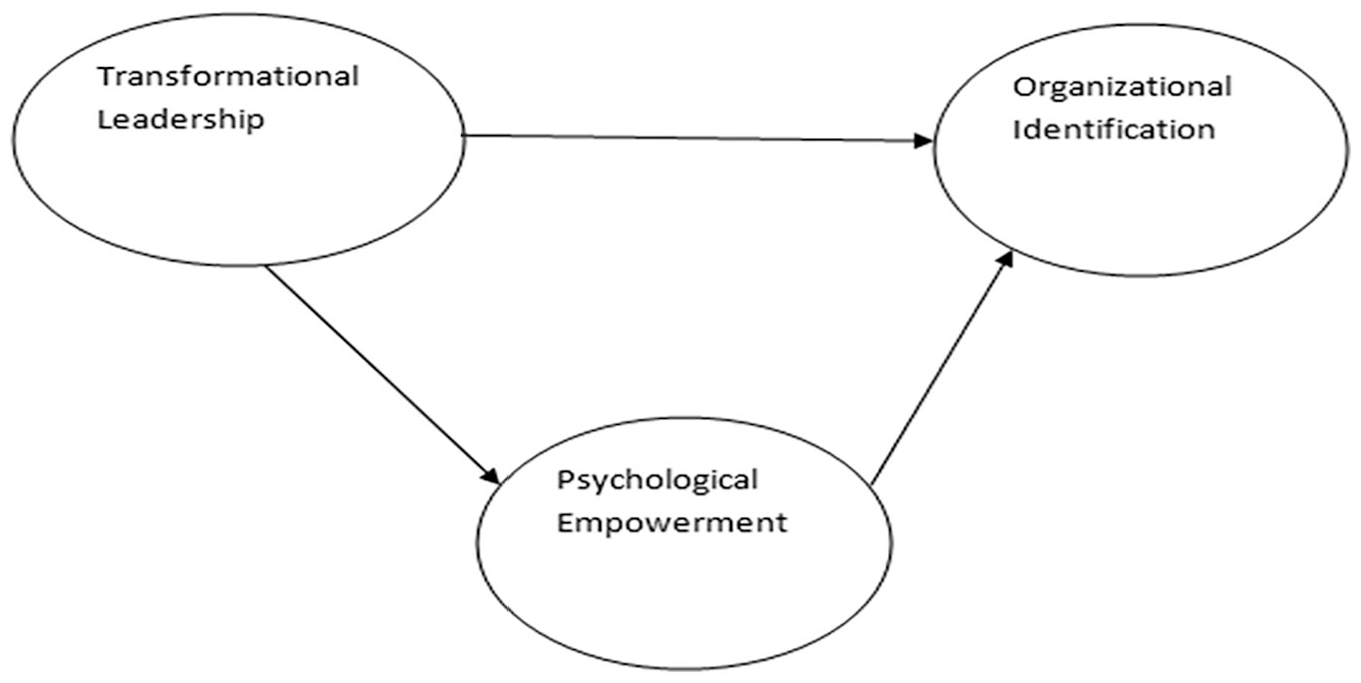
Conceptual framework developed for this research. (Source: Author)
Methodology
Research Approach and Collection of Data
This research adopted quantitative approach to carry out the investigation. Descriptive statistics was calculated using SPSS (as in Table 1) and the hypothesized model was analyzed using structural equation modeling in AMOS, primary data were gathered from IT organizations with specific reference to India. Sample taken for the study was 350, out of which 199 valid responses were received. This research adopted simple random sampling technique. Standard Structured Questionnaires have been used in this research. Three main constructs were taken into consideration for investigation; namely, TL, OI, and PE. Each constructs were taken from these standard questionnaires; namely, Multifactor Leadership Questionnaire (from 36 items, 20 items were selected) for TL, Smidts, Pryun, and Van Riel’s 5-item questionnaire for OI, and Spreitzer’s 12-item questionnaire for PE. A 5-point Likert-type scale has been used for the sake of uniformity in measuring the variables. The scales ranged from strongly disagree (1) to strongly agree (5).
Descriptive Statistics: Mean and Standard Deviation of the Items.
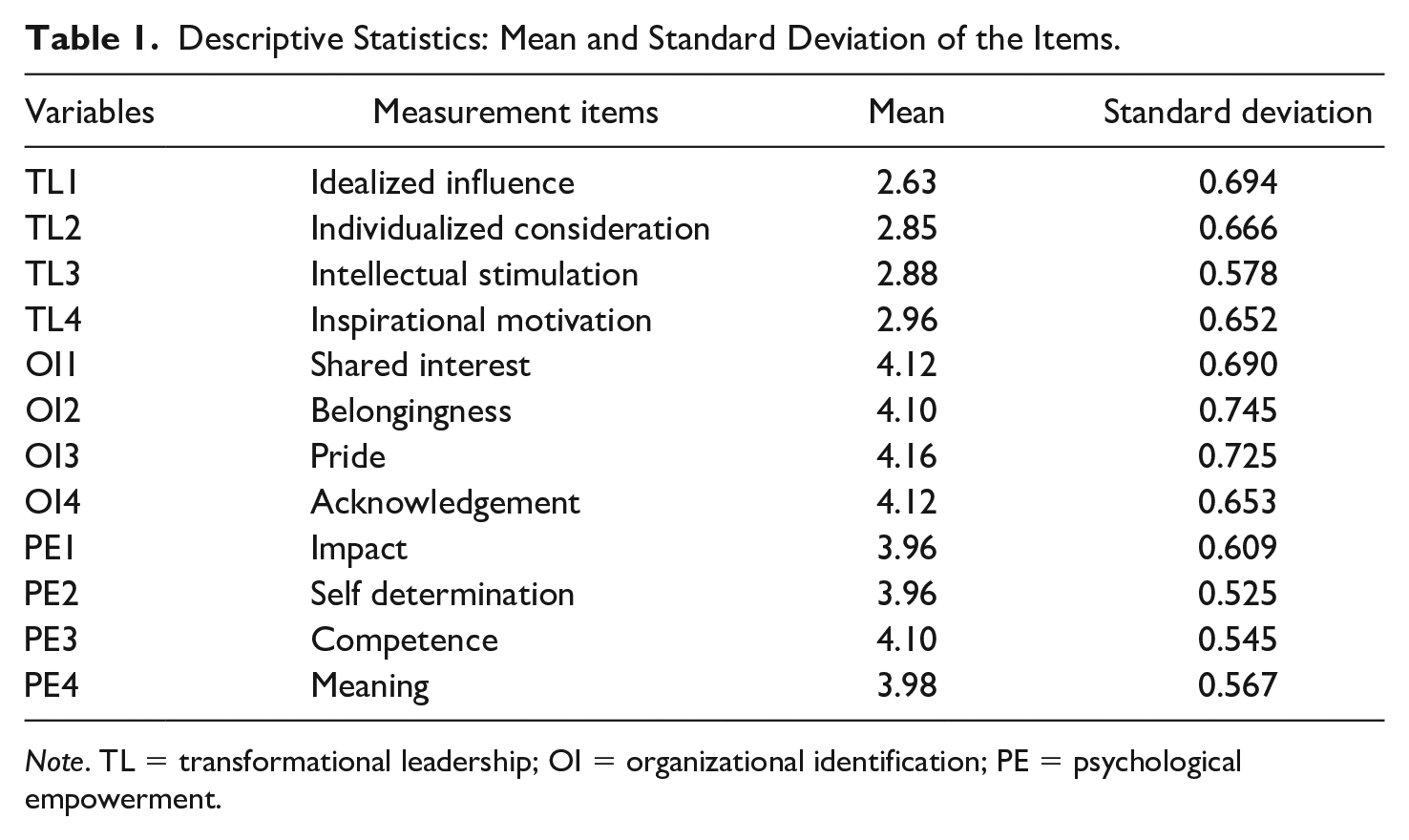
Note. TL = transformational leadership; OI = organizational identification; PE = psychological empowerment.
Demographic Profile
Demographic statistics revealed that out of 199, 60% are males. Majority of the respondents (56%) are in the age group of 21 to 30 years. Most of the employees (57.5%) have 6 to 10 years of work experience and about 83% of them are in the middle management level with 70% holding a BTech degree.
Results
Reliability and Validity Analysis
Measurement model has been designed to access the convergent validity (as in Figure 2). Convergent validity has been established through standardized estimates >0.5.and average variance extracted (>0.5). To check internal consistency, Cronbach’s alpha has been used as it is the indicator of the reliability of the construct (Cronbach, 1951). In this present study, alpha values for all the constructs is above .80. Thus, the Cronbach’s alpha and composite construct reliability indicate that the scales are quite reliable (Table 2).
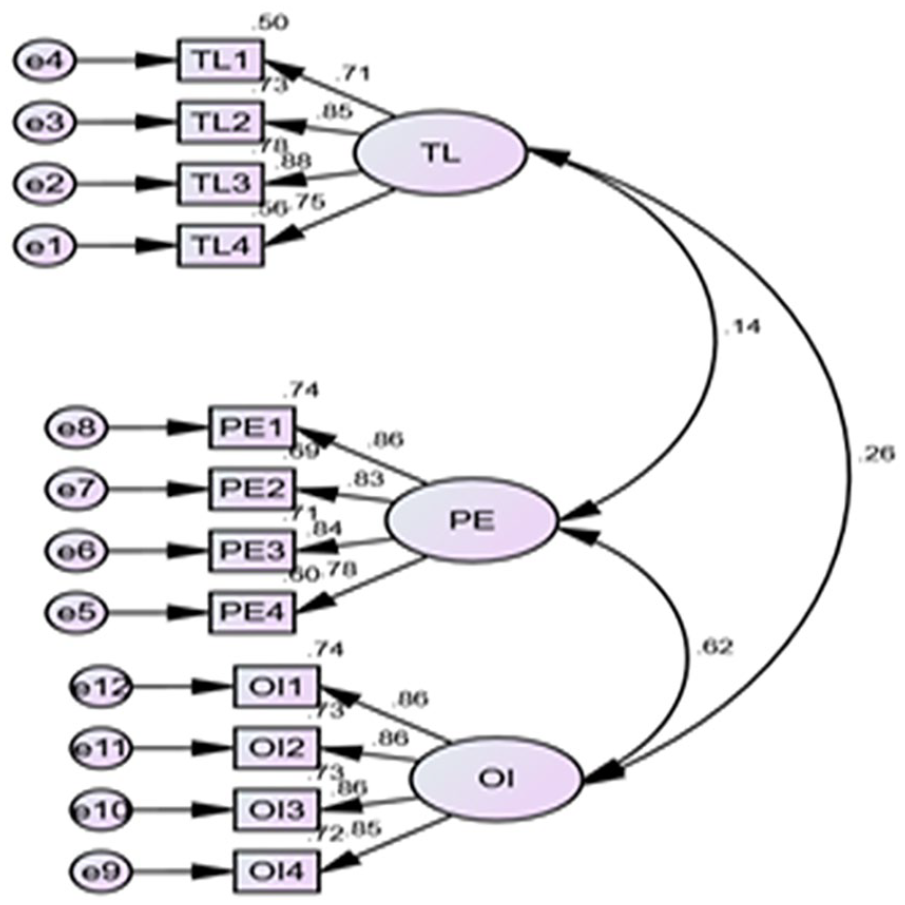
Measurement model developed for the research.
Reliability and Validity of the Constructs with Composite Reliability (CR) >0.7 and Average Variance Extracted (AVE) <CR at p < .005.

p < .005.
After the construct validity, the variables extracted from the factor analysis were tested through confirmatory factor analysis to check whether they conform to each other when taken together in a model. In total, 3 latent constructs were chosen with 12 observed variables. For the measurement model (Figure 2), the results showed that there is a reasonable fit to the data. It was found that the CMIN/df (minimum discrepancy per degree of freedom) is less than 3, goodness-of-fit index (GFI) is .899, comparative fit index (CFI) is .958, Tucker–Lewis index (TLI) is .948, normed fit index (NFI) is .939, and root mean square of error approximation (RMSEA) is .070. These values show that the model is a good fit between the three items considered for the study. All the model fit indices are well above their acceptable levels in which CMIN/df was less than 5 as suggested by Schumacker and Lomax (2004). The values of NFI, GFI, and CFI are greater than .90, .90, and .93, respectively, as put forward by Byrne (2006), suggesting that the CFA model fits well.
Measurement Model
After the correlational analyses and measurement model, the study applied a structural equation model to verify hypotheses for the causal relationships between variables in accordance with literature. Figure 3 shows the results of a structural equation model aimed at testing the hypothesized effects among the latent variables. For the structural model (Figure 3), the results showed that there is a reasonable fit to the data. It was found that the CMIN/df is less than 3, GFI is .953, CFI is .96, TLI is .948, NFI is .939, and RMSEA is .070. These values show that the model is a good fit between the three items considered for the study.
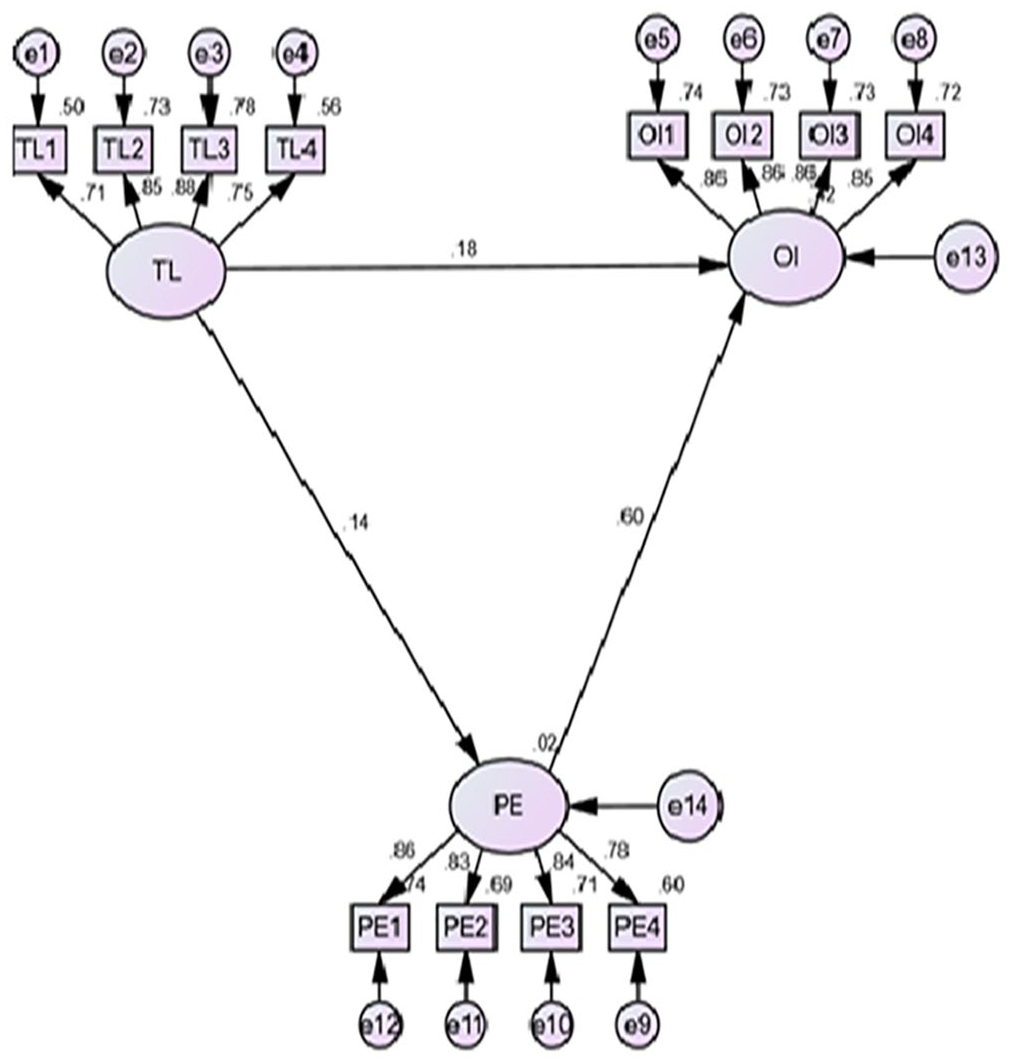
Structural model developed for the research.
Structural Model
Structural equation modeling has been used to check various relations proposed, it is a multivariate technique that seeks to explain the relationship among multiple variables (Kaplan, 2009). In the present study, the relationship between TL, PE, and OI have been assessed. To test the mediating effect, the following steps were followed: (a) the relationship between the independent variable (TL) and the dependent variable (OI). It is found that the path between TL and OI is positive and significant (Standard Regression Weight = 0.318 at p < .05). This supports our Hypothesis 1: TL has a positive and significant impact on OI of employees (Figure 4).

Relationship between TL and OI.
(b) The relationship between independent variable (TL) and the mediator variable (PE). It is found that the path between TL and PE is also found to be positive and significant (Standard Regression Weight = 0.153 at p < .05). This supports our Hypothesis 2: TL has a positive and significant impact on PE (Figure 5).
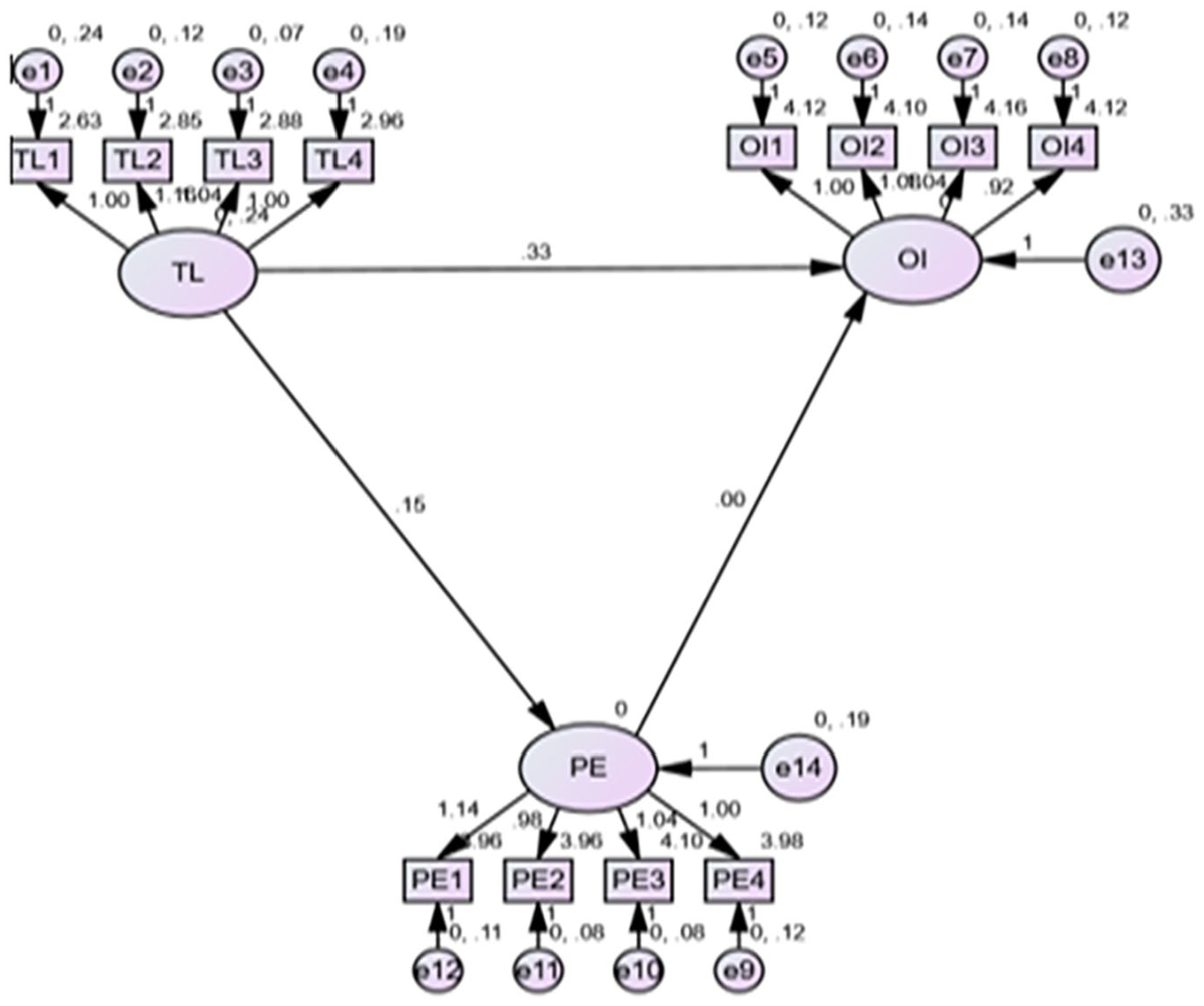
Relationship between TL and PE.
(c) Regressing the mediator (PE) on both the independent variable (TL) and the outcome variable (OI; Figure 6).
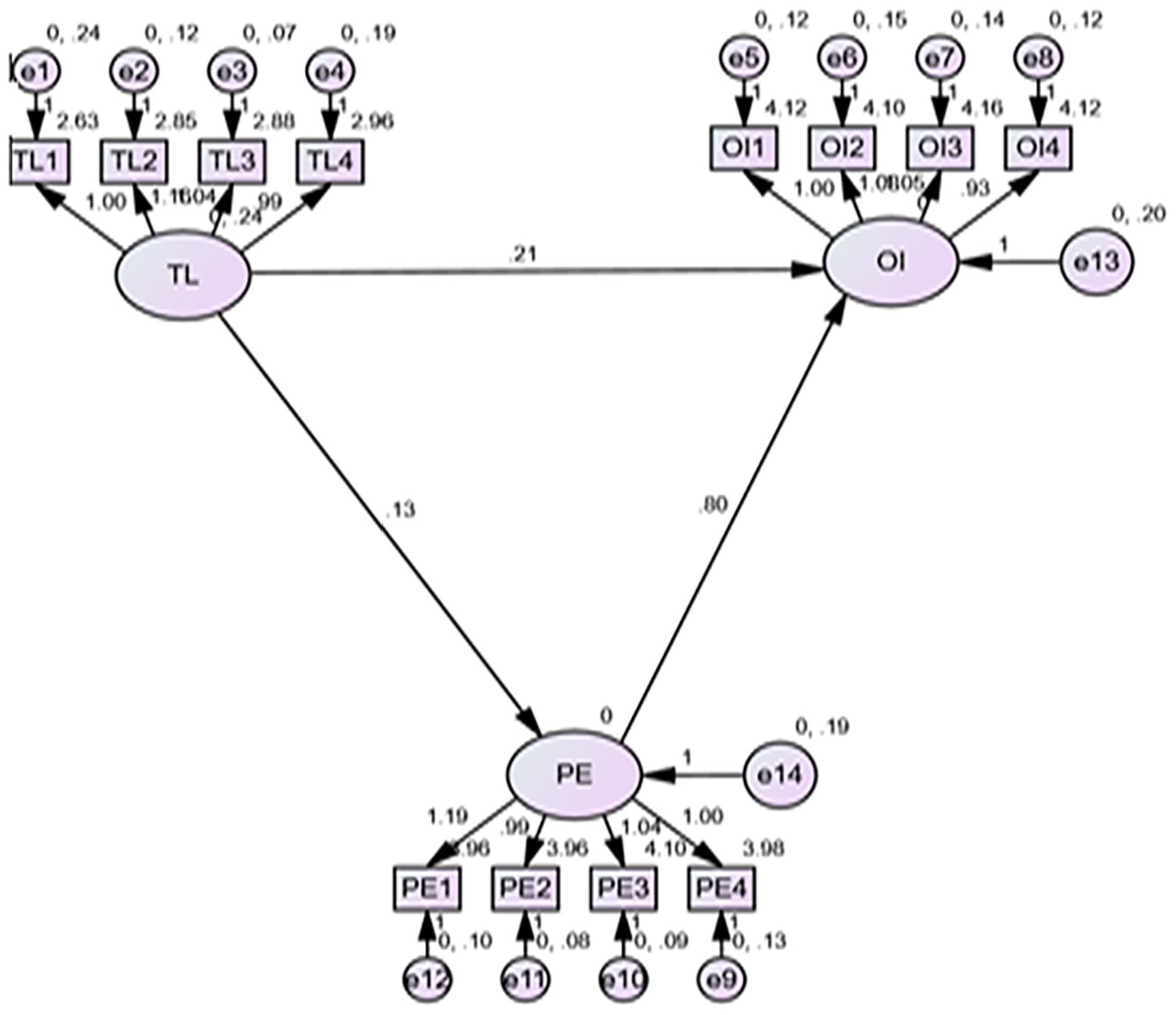
Regressing PE on both TL and OI.
On introducing the mediator, It is found that the mediation path is significant. And the magnitude of TL on OI (indirect effect) is less than the magnitude of the coefficient of TL and OI (direct effect) as found out in Step 1.
Thus, it is concluded that on introduction of the mediator variable the path between TL and OI is positive and significant (Step 1). The path between TL and PE is positive and significant (Step 2). The path between TL and OI (with introduction of PE as mediator) is positive and significant and the magnitude is less than the magnitude in Step 1. This shows that PE acts as a partial mediator between TL and OI (Table 3).
PE Acting as Mediator Between TL and OI.

Note. TL = transformational leadership; PE = psychological empowerment; OI = organizational identification; SE = standard error; CR = composite reliability.
p < .005.
The summary of the hypotheses have been depicted in Table 4.
Summary of the Hypothesis.

Note. TL = transformational leadership; PE = psychological empowerment; OI = organizational identification; SE = standard error; CR = composite reliability.
p < .005.
Discussion
TL and OI
TL can inspire, encourage, and assist followers; employees are dedicated toward organization and it can be noticed that TL can improve OI of employees. Such type of leaders supports their achievement by connecting self-concept of employees to organizational goals and interests, thus the employees who work for organizational sake also will work for their own satisfaction. As Knight and Haslam (2010) also pointed out that job satisfaction is correlated with OI of employees. Furthermore, it can be stated that self-enhancement and reduction of uncertainty are main intentions that underlay OI. TL is all about minimizing the uncertainty of the followers. Leaders minimize the followers’ uncertainty in the organization by informing subordinates what they are supposed to follow, schedule, coordinate work, provide particular guidance, and clarify procedures and policies. With the support of leaders, followers will view their part to be more constant and clear in the organization. Such awareness makes the subordinate to know themselves within the organization. TL focuses on the self-esteem of the individual in the organization. Leaders focus on self-evaluation and pride in work on the basis of personal success, thus when leaders make clear about role of followers, they will carry out successfully.
TL and PE
It was analyzed from the research that every leader has the ability to move self-confidence level, exhibit work opportunities, think about prior issues with new ways, strengthen group members determination, provide perfect ideas for subordinates, leaders’ satisfaction of intentional opinion will give the base for reinforcing competency feeling, independent, meaningful, and being efficacy and efficient. It was observed that transformational leaders adopt IS for empowering employees. To share particular decision-taking authority with individuals is requirement in order to promote IS. Individuals who were given decision-taking authority will build trust and accomplish goals of an organization. Moreover, it was noted that handing over of authority provides employees the feel that they are given priority in the organization. Empowerment plays a vital role in the correlation between individual creativity and TL. TL maximizes PE that implies the subordinates view more value and meaning in their job and sense more secure and positive when affected by such kind of leaders. At the same time, it was noted that PE promotes innovation since it gives the needed autonomy to engage in innovation. Empowerment among employees acts as a self-directed motivation, which provides an absolute picture for accomplishing the organizational goals.
Thus, it is clear that transformational leaders encourage and empower subordinates for enhancing their work and explore new options for accomplishing their job by maximizing their focus on promotion.
The Mediating Role of PE
From the findings of the analyzed data, PE acts as a mediating role in the connection between OI and TL. Behaviors of leaders complement the followers’ environment by giving psychological support and constitution, assist mutual interaction between members, positive correlation is maintained between larger organizations and unit and improve work legitimacy. Furthermore, it can be added that strategic part of the TL is to improve psychological states of followers, which will outcome in motivation to achieve or in job satisfaction. Leaders’ encouraging activities gives a psychological caring environment in the organization as well as make OI more attractive as well as individuals recognizes more within the organization.
Leaders mostly highlight collaboration, accomplishment of responsibilities cooperatively, liberty and organize of decision making, learn through shared experience, and hand over influence for implementing ideas that encourage participation of employee in carrying out and structure of ideas. TL builds a work atmosphere where employees feel competent, self-motivated, and independent for experiencing PE. TL paves special attention to growth and achievement of employee through mentoring and coaching, clear vision, and motivates employees for showing innovation in novel ways, thus individuals have identification with norms, goals, and values of an organization.
Theoretical Contribution
This study investigated a theoretical framework that distinctively accommodates TL and OI. While previous researches have scrutinized the impact of TL (Holten et al., 2018; Pan & Lin, 2015; Patiar & Wang, 2016) on dedicated workplace outcomes, the underlying mechanisms through which they affect the behavior was absent. To acknowledge the need for maintaining the enthusiasm at work, this research strengthens the TL literature by disclosing the positive influence of TL on OI of employees. Furthermore, the study enhances the literature on OI and enriches our knowledge of the antecedents of such construct, particularly in progressing countries such as India. Leaders have an indispensable role in the connection between employees and organizations, and may promote positive work behavior more effectively by establishing meaningful work for their employees thus enhancing the sense of identification with the organization.
Additionally, the study refines the TL literature by divulging the mediation process by which TL exercises influences on OI of employees. Although plentiful research has been administered on TL, the processes by which TL affects certain work outcomes has not been adequately tested. The study investigated the significance of PE as a mediator between TL and OI of employees. The findings thus not only improves the TL literature but also acknowledges to the call from previous researchers (Bass, 1985; Sosik & Jung, 2010) for merging TL with other appropriate theoretical frameworks. Furthermore, by identifying PE as an important mental mechanisms through which TL exerts effect on employees’ identification our study is vital for advancing the existing theoretical models regarding the influence of TL on the OI of the employees.
Managerial Contribution
The findings of the research highlights various managerial contributions with respect to managers and organizations. Employees who find meaning and self-worth in their work, identify with their organizations. TL plays an important role in achieving this. These employees are the best contributors to organizations in a competitive environment. To encourage a greater sense of PE in employees, the managers should enunciate their foresight and motivate their employees to take accountability of their tasks at all organizational levels. Articulating the goals and specifying the tasks results in promoting feelings of empowerment and greater sense of identification. Understanding employee concerns, developing a constructive work environment and involving confidence gathering workshops may foster feelings of empowerment and greater OI in employees. Additionally, management may organize TL training programs for their managers. Such programs may help managers promote and stimulate their employees to build greater perceptions at work. Furthermore, such programs may result in promoting information sharing with their employees, thus resulting in greater empowerment and identification among employees.
Conclusion and Future Work
The primary data collected from the analysis states that before mediation between TL, PE, and OI of employees. It was identified that TL has a positive and significant influence on OI of employees. At the same time, when PE acted as mediator and independent variable among TL and OI and found that TL has a positive and significant influence on PE. After mediation with PE, It was evident that PE acts as a mediator between TL and OI of employees. In addition to that, it was also found that PE has positive and significant impact on OI. TL has positive and influence of OI of employees. The outcomes acquired are in line with analysis work performed by few research scholars; namely, Ashforth et al. (2008), Ibrahim et al. (2015), Krishnan (2012), Afsar et al. (2014), M.-Y. Cheng and Wang (2015), and Wang et al. (2011), which shows that the analysis data hold ethical and valid.
To conclude, this research clearly indicates that the PE plays an important part in the success of the organization. Empowerment will assist leaders for encouraging and contributing their subordinates to reach the goals of an organization through creative performances. Empowerment acts as encouraging aspect that assists individuals, leaders, and the organization. PE is not only giving task and handing over high power but also involve followers who allow the roles which was given to them. Workers who are emotionally empowered feel secure with the work they are performing and observe it as important and difficult. Psychologically empowered employees can able to carry out better and show higher OI. In addition to this, it can be concluded that PE motivates workers for taking idea and illustrate patience at work, providing higher importance of workers to perform and inspiring higher OI within employees. This research inferred that TL adopts IS to encourage employees. To share particular decision-taking authority with individuals is requirement in order to promote IS. Individuals who were given decision-taking authority will build trust and accomplish goals of an organization.
This research is not free from restrictions. Participants chosen for this research were particularly selected from informational technology companies. This research is carried out only in Indian informational technology companies. This is restricted to TL, OI of employees, and PE, and thus the identified cannot be global among other industries. This research further could be expanded by analyzing the verified hypothesis on information gathered from a diverse group of respondents from other sectors; namely, business, educational institutions, health care, automobile companies, and so on to assure proven data works with other industries as well.
Footnotes
Declaration of Conflicting Interests
The author(s) declared no potential conflicts of interest with respect to the research, authorship, and/or publication of this article.
Funding
The author(s) received no financial support for the research, authorship, and/or publication of this article.
